
Once the tree comes down, the house can feel bare — but the right winter decor ideas keep it warm and welcoming all through January and February. This is post-Christmas, whole-home decorating for the coldest weeks of the year: no ornaments, no red-and-gold, just the quiet textures and soft glow of the season itself.
Start with a simple rule. Pack away the ornaments, tinsel, Santa figures, and anything red-and-gold. Keep the greenery, pinecones, candles, knit textiles, and warm lighting — those are winter, not Christmas, and they carry your home beautifully into February. Designers at Decorilla make the same keep-the-greenery case in their winter decor guide, and these 36 ideas follow it room by room.
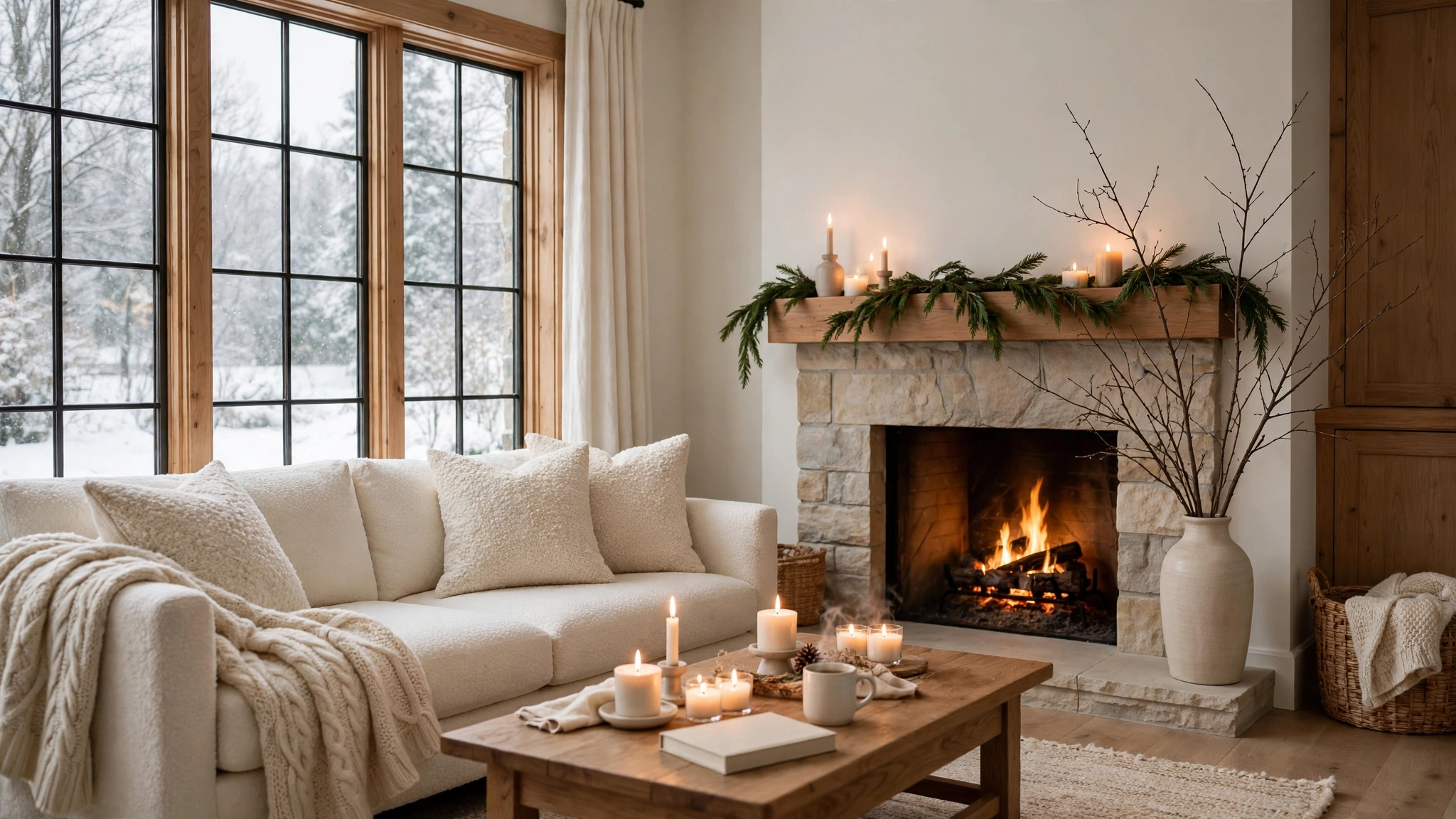
The Post-Christmas Reset
1. Pack Away the Ornaments, Keep the Greenery

Box up the baubles and tinsel on the first weekend of January, but leave every green branch in place. Fresh cedar, pine, and eucalyptus read as winter, not holiday, and they soften a room long after the tree is gone.
Best for: anyone who hates the bare-house feeling after the holidays.
Styling tip: store ornaments in one labelled box per room so next December takes minutes, not a day.
Pro tip: mist cut greenery every two days and it stays fresh for three to four weeks indoors.
2. Swap Red and Gold for a Neutral Winter Palette

Pull the red cushions and gold throws and replace them with cream, warm white, soft grey, and natural wood. The room instantly feels calmer, and the palette works from January right through to spring.
Best for: living rooms that feel loud and cluttered after Christmas.
Styling tip: keep one warm accent, like rust or camel, so neutrals never look cold.
Pro tip: three neutrals plus one warm accent is the easiest ratio to shop for — and the cheapest to repeat.
3. Style a Bare-Branch Arrangement
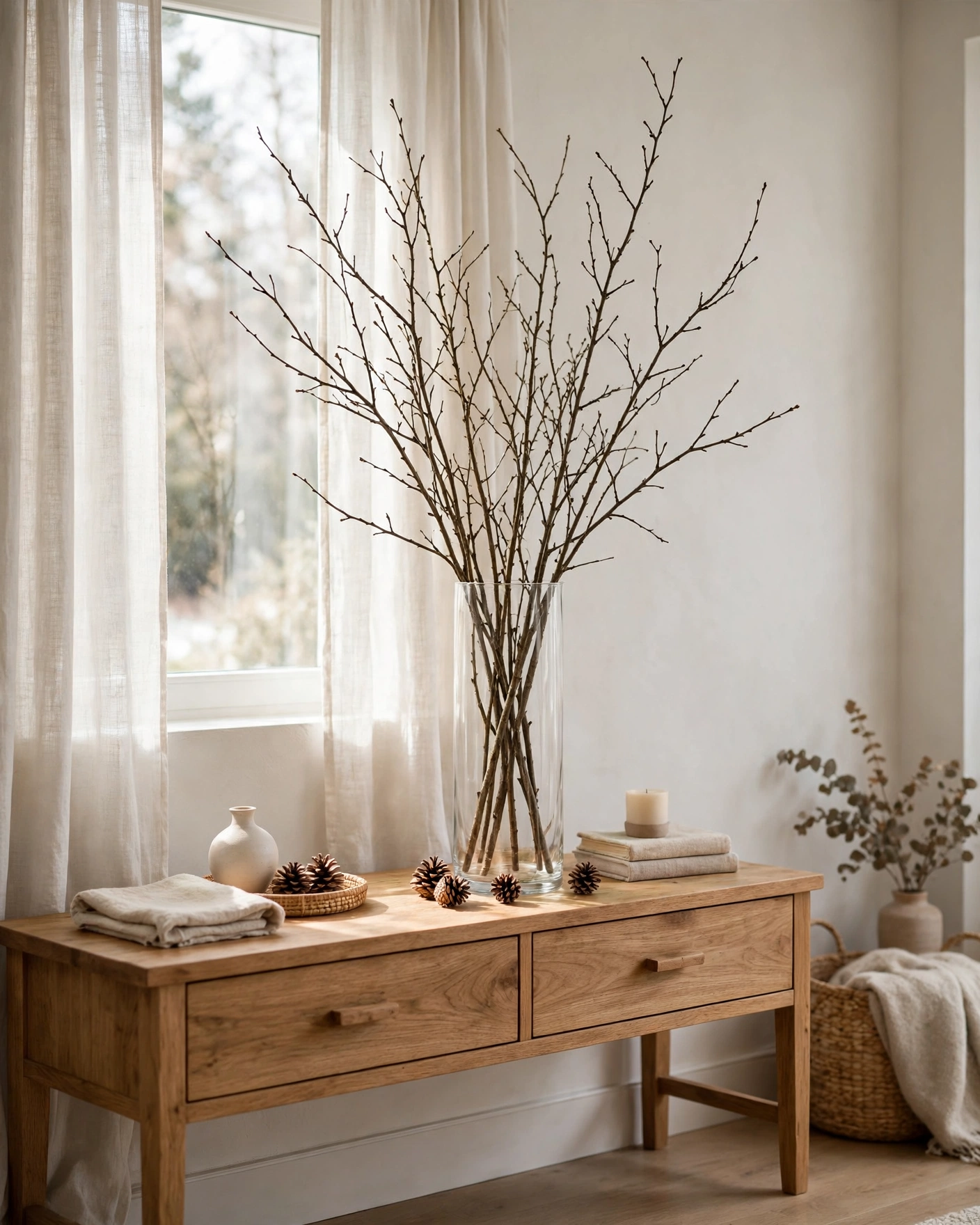
A few bare branches in a tall vase give you winter shape with zero upkeep. Cut them from the garden or pick up a bundle at the florist, and let their bare lines do the decorating.
Best for: console tables, dining sideboards, and empty corners.
Styling tip: choose branches with interesting forks, not straight sticks, and trim them to different heights.
Pro tip: branches should stand about one and a half times the height of the vase, or the arrangement looks stubby.
4. Fill a Bowl with Pinecones
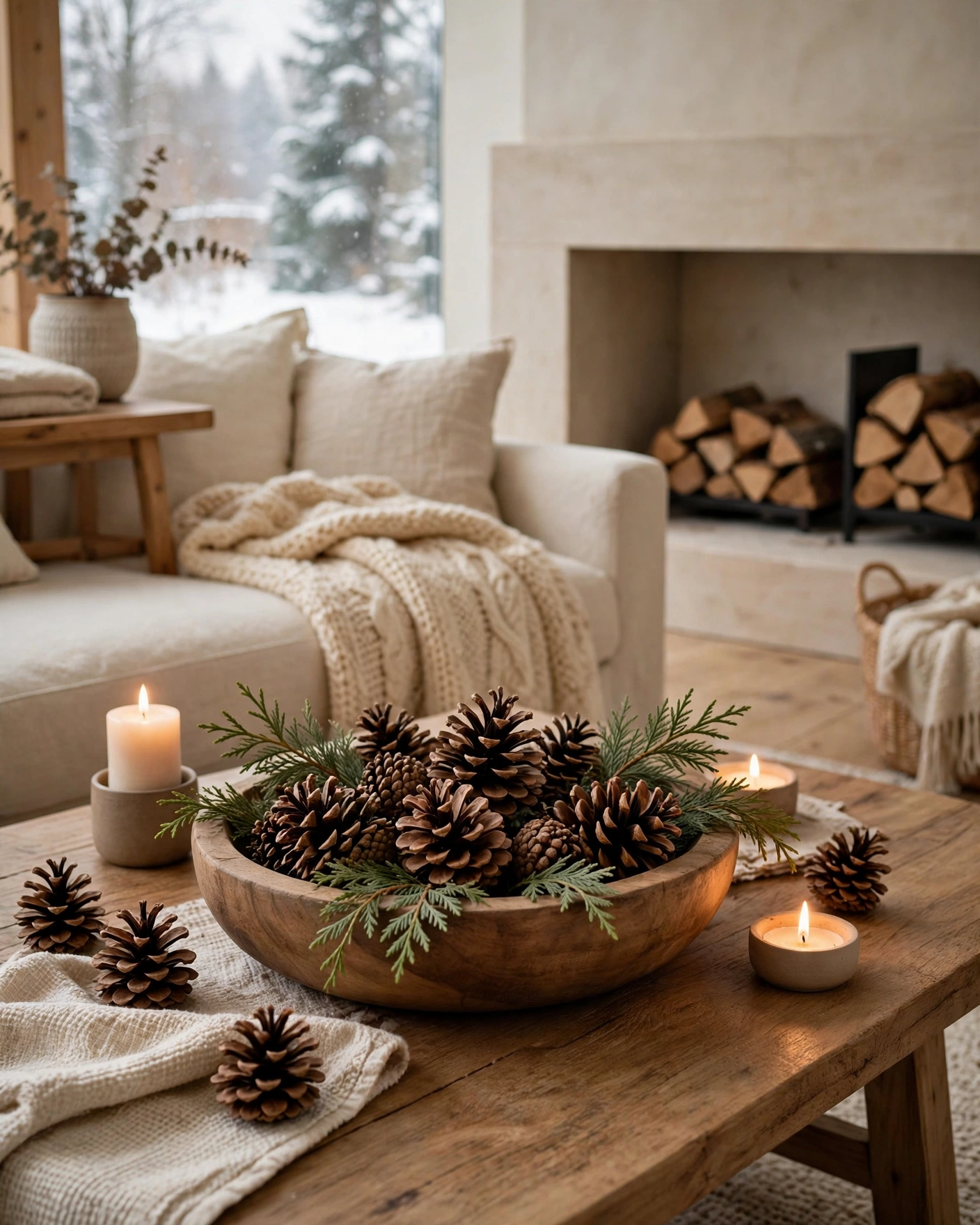
A low wooden bowl of pinecones is the simplest winter centerpiece there is. Add a few cedar sprigs and it looks gathered, not bought, and it costs almost nothing.
Best for: coffee tables and dining tables that need one low, easy focal point.
Styling tip: mix large and small cones so the bowl looks full without stacking.
Pro tip: bake gathered cones at 200°F for 30 minutes first — it kills hidden bugs and opens the scales.
5. Drape a Chunky Knit Throw on the Sofa
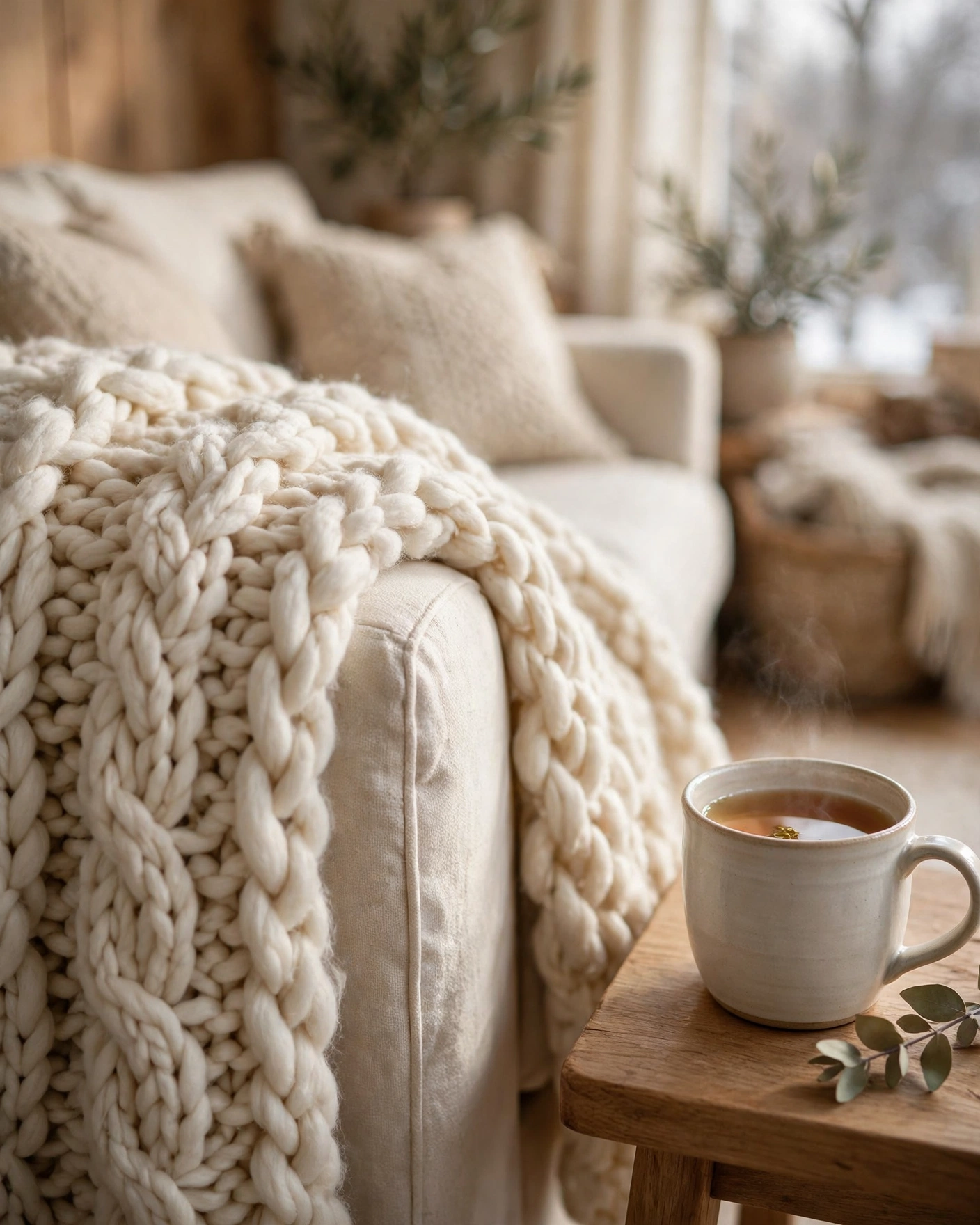
Nothing says winter faster than a thick knit throw folded over one sofa arm. It warms the look of the whole room and it is right there when the evening turns cold.
Best for: sofas that get used every evening in January and February.
Styling tip: fold it in thirds lengthwise, then drape it so the folds show — it looks styled, not tossed.
Pro tip: a 50 by 60 inch throw fits a standard three-seat sofa without pooling on the floor.
6. Switch to Bouclé Pillow Covers
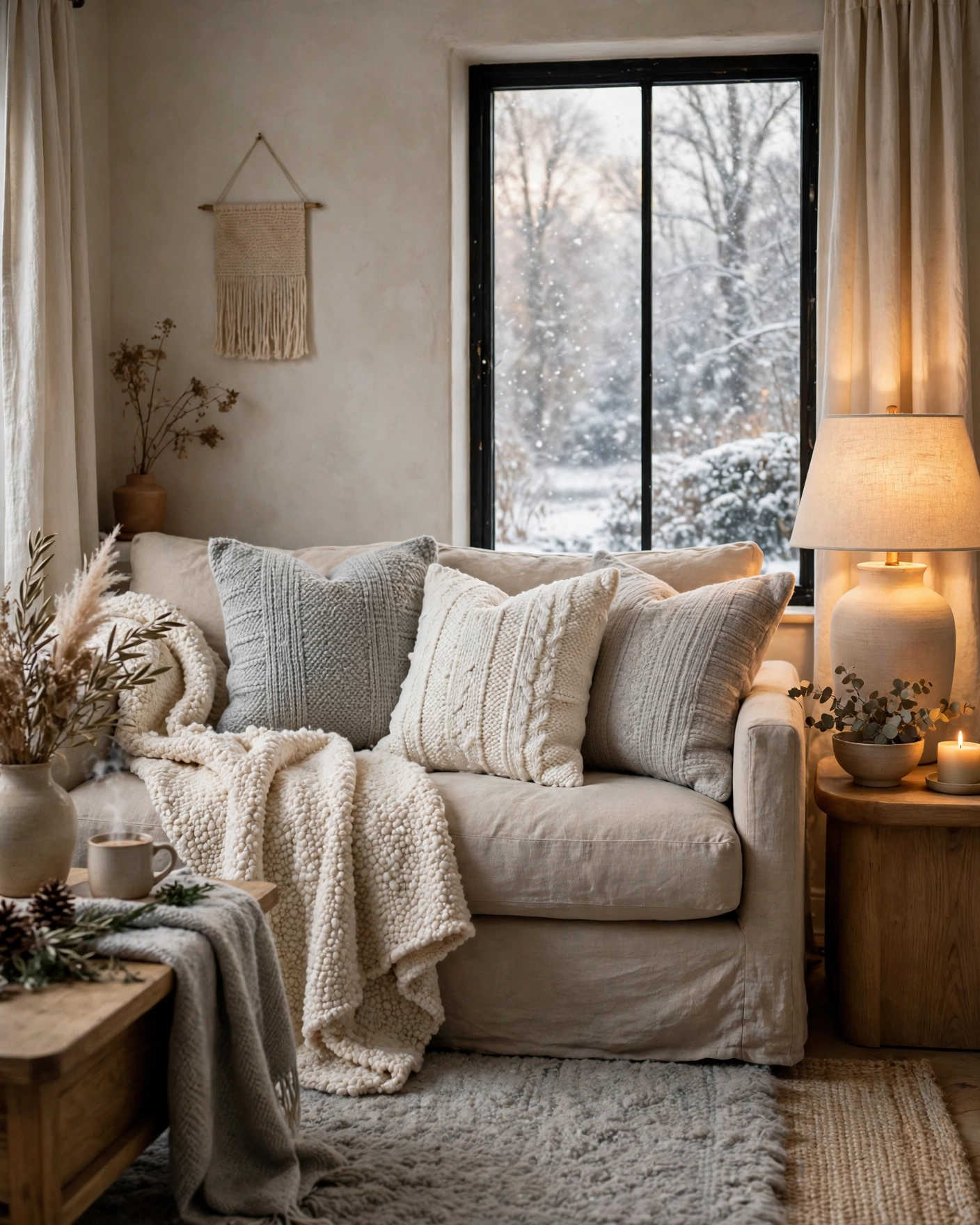
Bouclé pillow covers add soft, nubby texture that photographs beautifully and feels warm to the touch. Swap just the covers, not the inserts, and the whole sofa changes for the season.
Best for: sofas and beds that need a winter refresh on a small budget.
Styling tip: pair one boucle pillow with one smooth linen pillow so the textures contrast.
Pro tip: 18-inch covers suit most sofas; go 20-inch only if your sofa is deep-seated.
7. Add a Faux-Fur Accent Blanket
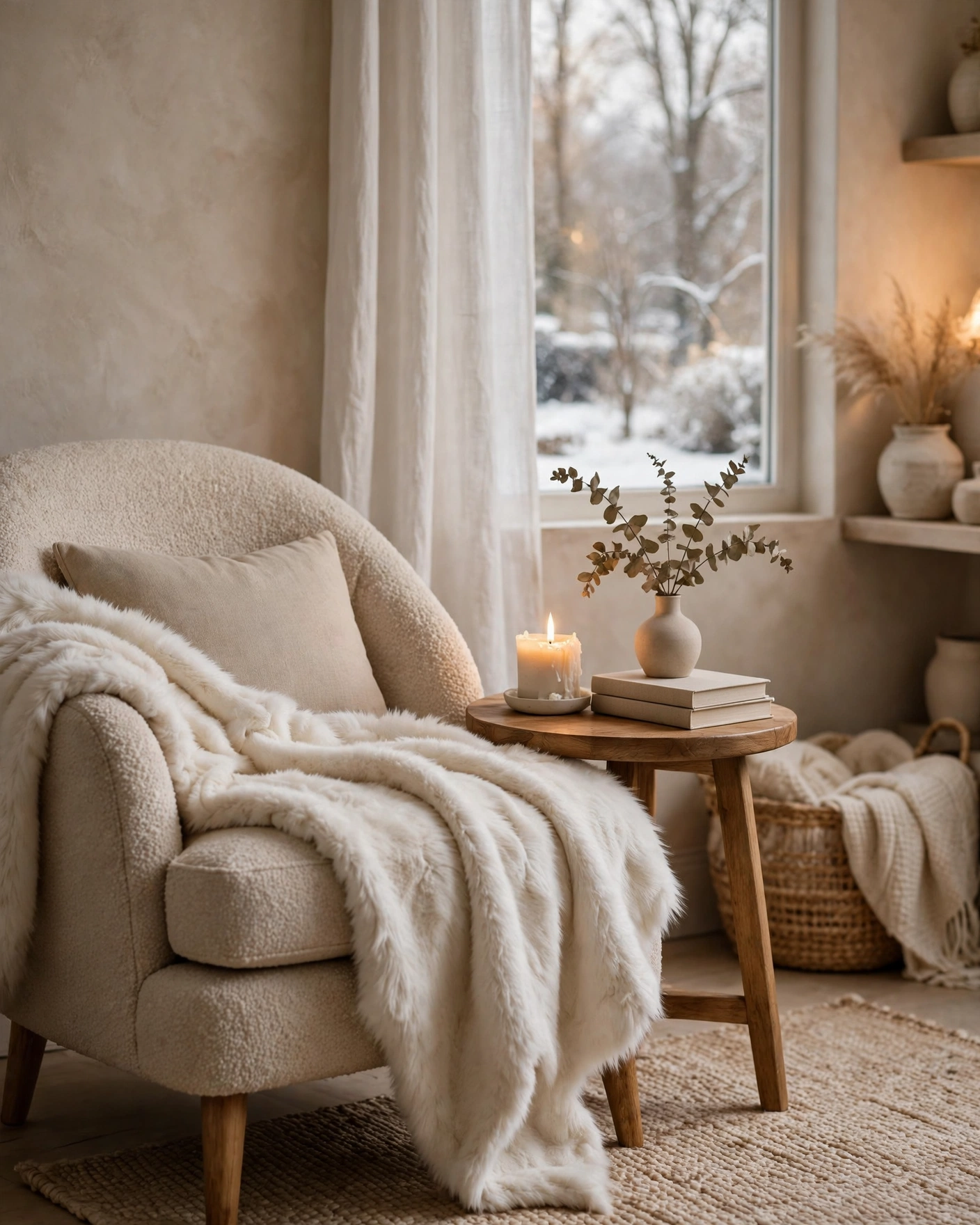
A faux-fur blanket over an armchair turns one seat into the warmest spot in the room. It is the one texture guests always reach out to touch.
Best for: reading chairs and the cold side of the living room.
Styling tip: keep faux fur to one piece per room, or it starts to look heavy.
Pro tip: shake it outside weekly and brush it with a wide-tooth comb to stop it matting.
Warm Textiles Everywhere
8. Layer Two Rugs for Instant Warmth
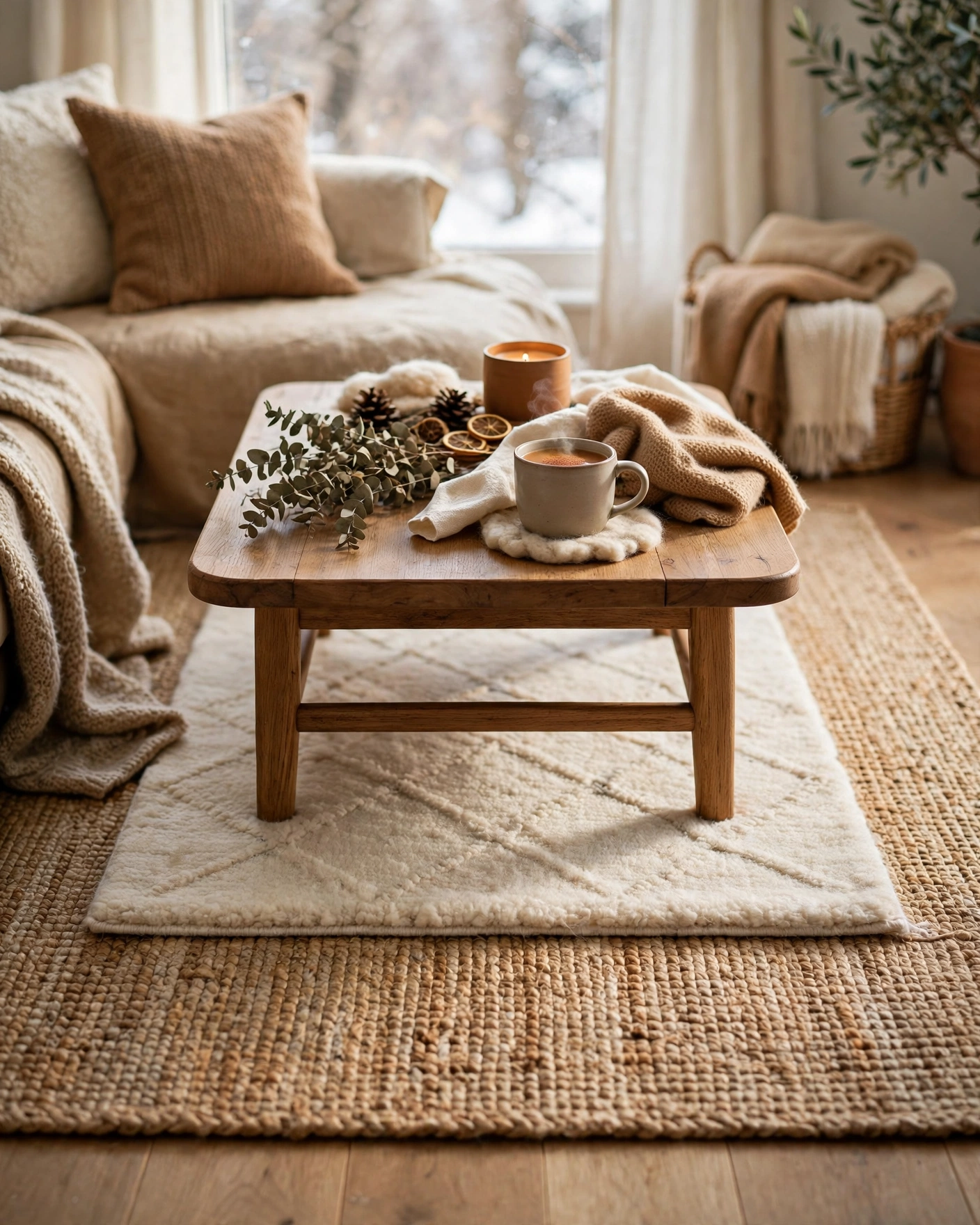
Layer a smaller wool rug over a larger jute one and the floor feels warmer underfoot at once. The two textures together also make a plain room look finished and intentional.
Best for: hard floors and rooms that feel cold first thing in the morning.
Styling tip: leave at least 6 inches of the base rug showing on all sides so the layer reads clearly.
Pro tip: a thin rug pad between the layers stops the top rug from creeping across the floor.
9. Park a Knit Pouf by the Fireplace
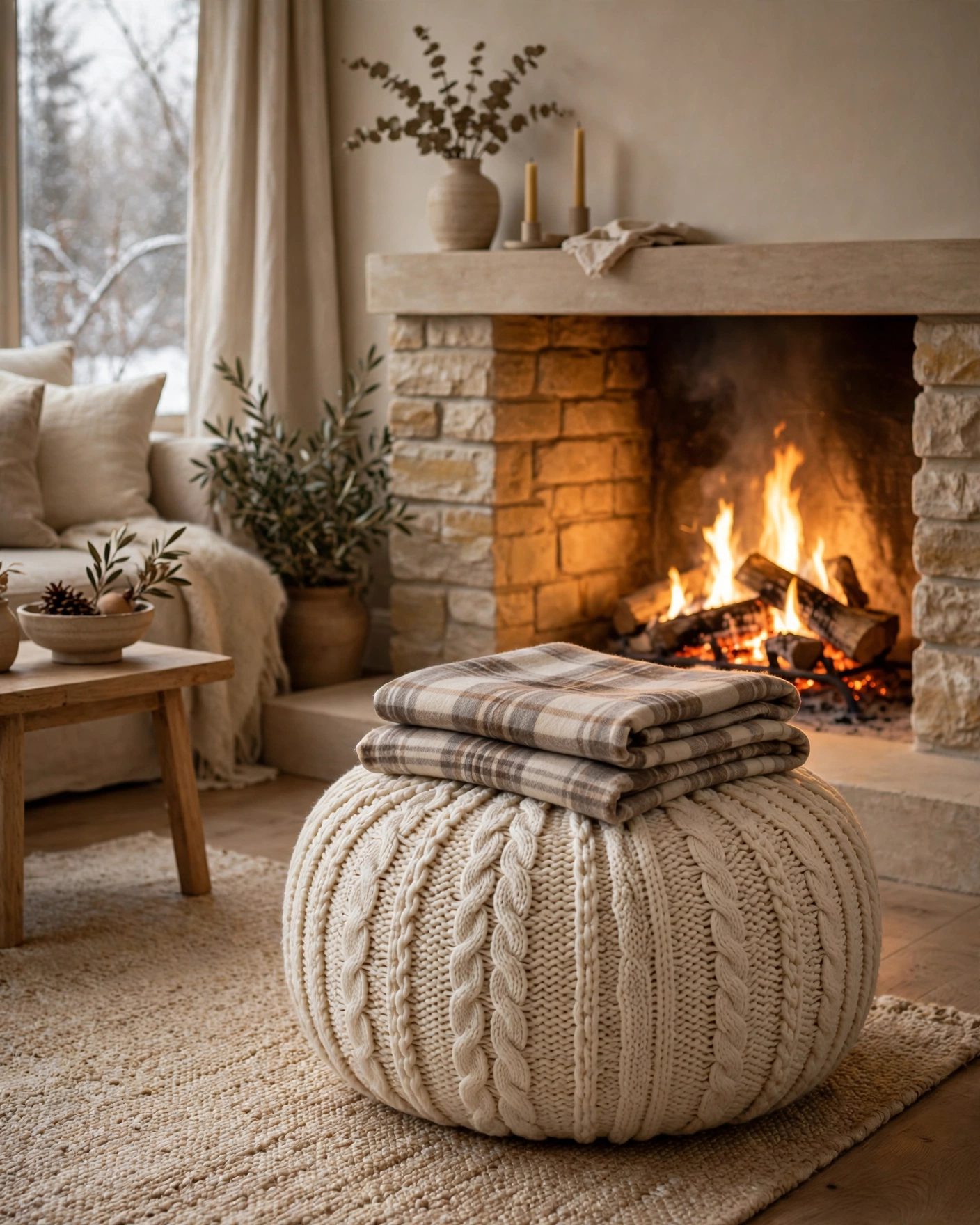
A round knit pouf by the fire is a footrest, an extra seat, and a soft sculpture in one. It fills the awkward gap beside the hearth better than any side table.
Best for: fireplace corners and small living rooms that need flexible seating.
Styling tip: top it with a folded plaid blanket so it doubles as blanket storage.
Pro tip: keep it at least 24 inches from the firebox opening so the knit never scorches.
10. Swap Sheers for Velvet Curtains
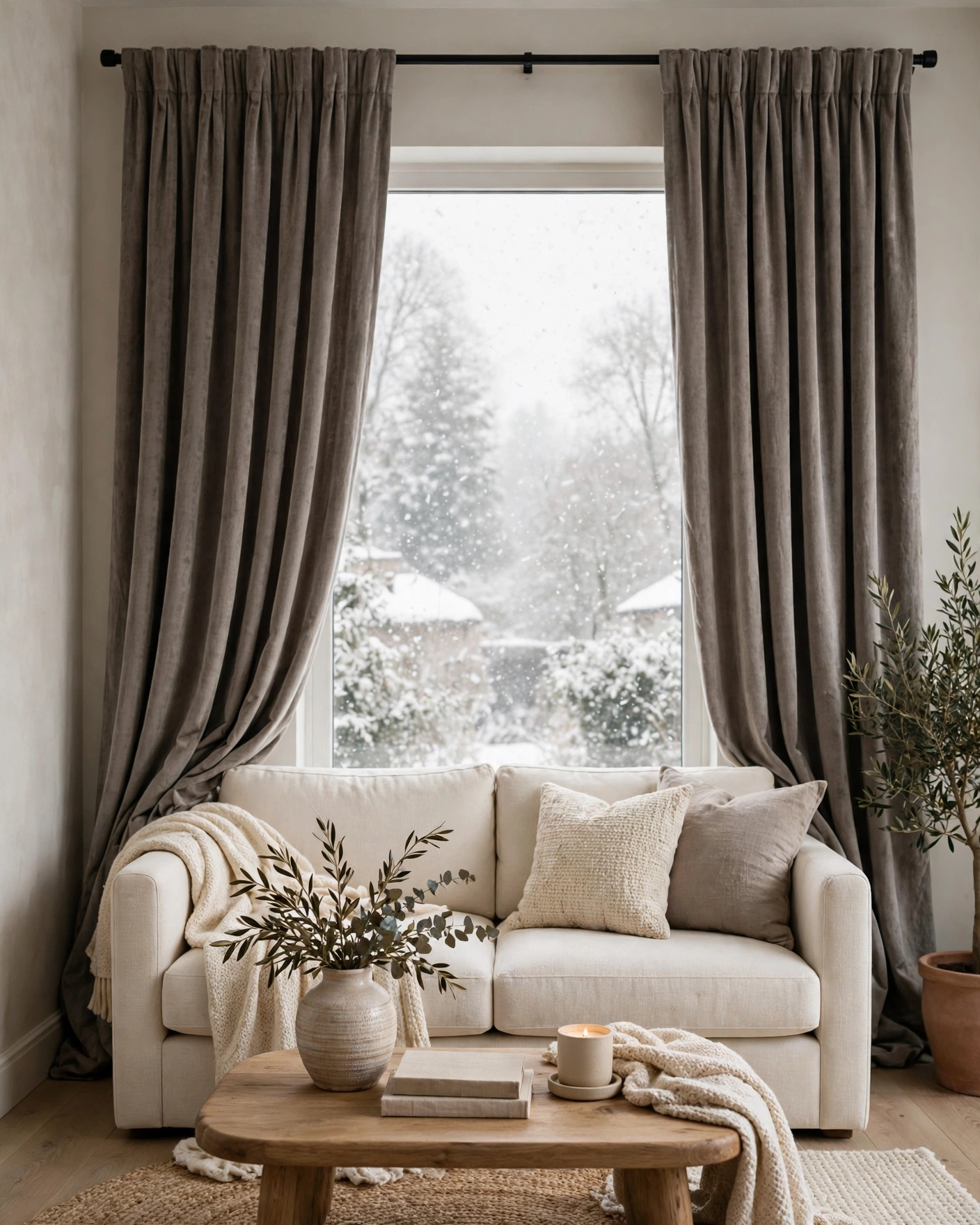
Heavy velvet curtains change a room’s temperature and its mood in one swap. They block draughts, soften sound, and make evening lamplight feel richer.
Best for: draughty windows and living rooms that feel echoey in winter.
Styling tip: hang them high and wide so the window looks bigger, not boxed in.
Pro tip: curtains should puddle no more than 1 inch on the floor, or they collect dust and trip feet.
11. Keep a Wool Throw on Every Armchair
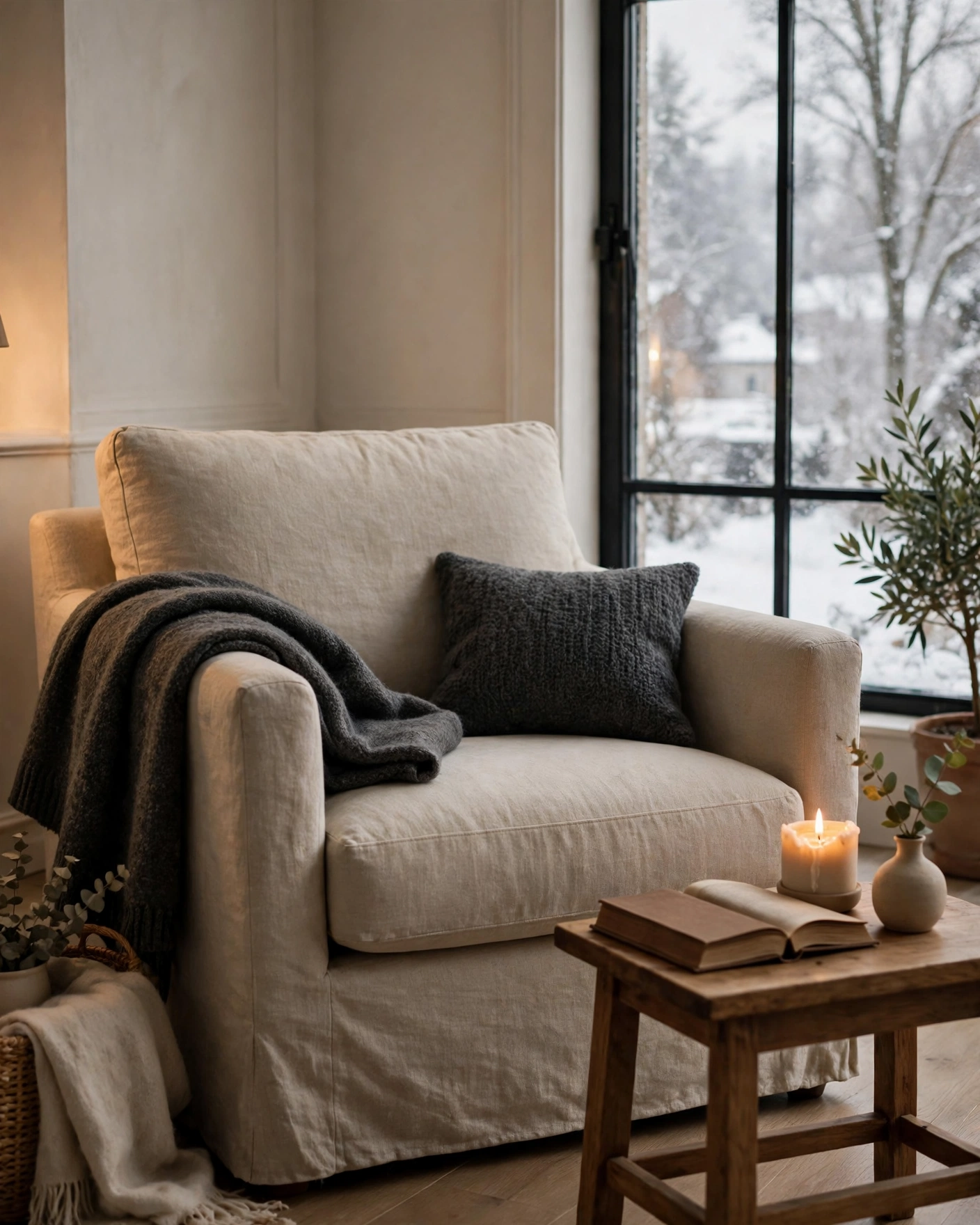
One wool throw per chair means nobody has to fetch a blanket from another room. It also repeats the same warm texture around the room, which ties everything together.
Best for: homes where everyone claims a different chair in the evening.
Styling tip: use the same colour family in different textures so the throws match without looking identical.
Pro tip: wool throws air out better than synthetics — hang them over a chair back for an hour after use.
12. Refresh the Bed with Flannel Bedding
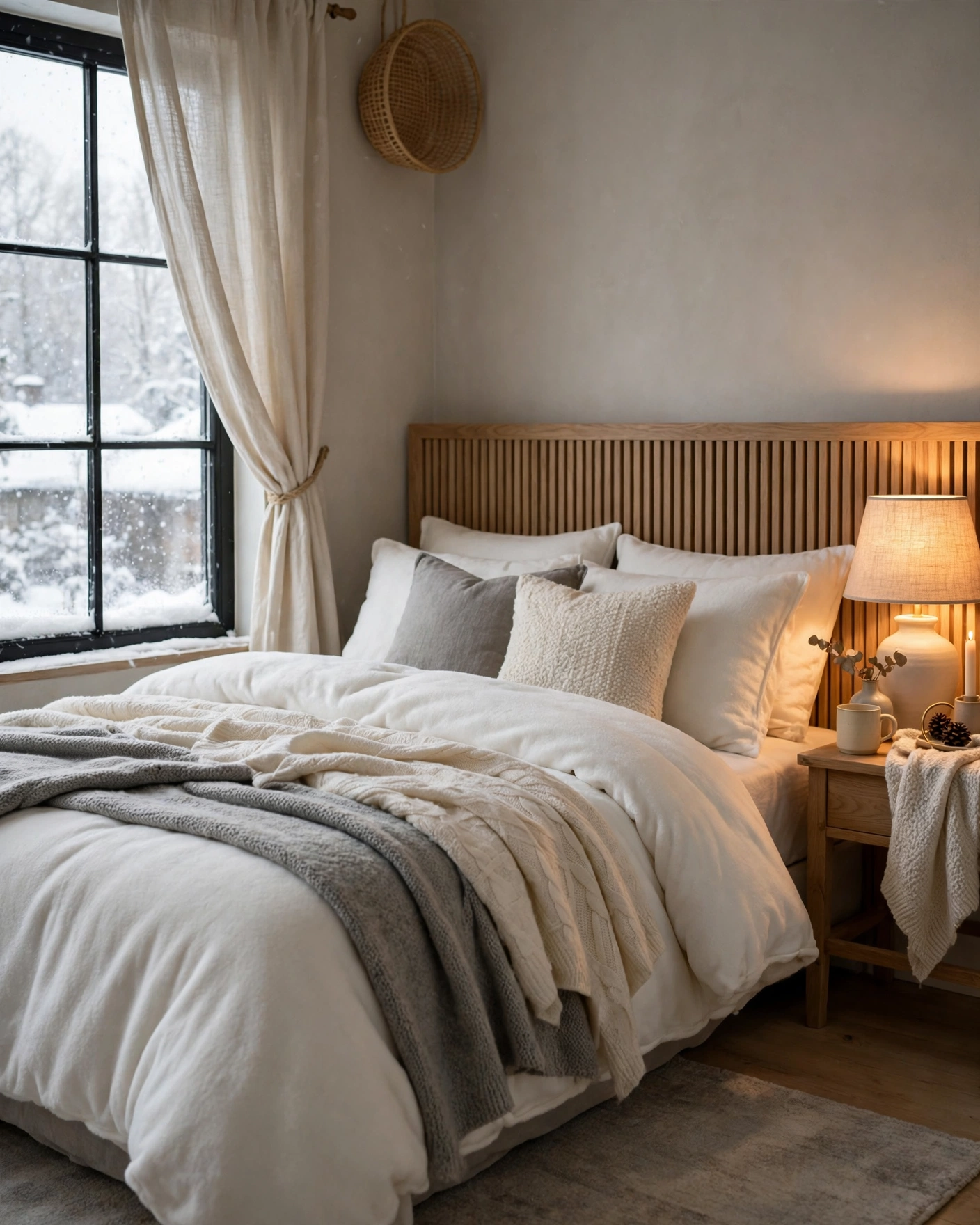
Flannel sheets are the fastest way to make a cold bed feel inviting. They warm up the moment you climb in, and they look soft and relaxed even when the bed is barely made.
Best for: cold bedrooms and anyone who dreads getting into a chilly bed.
Styling tip: layer a knit throw across the foot of the bed for a finished, hotel-like look.
Pro tip: wash flannel inside out on cold and skip fabric softener — it keeps the nap soft for years.
13. Lean a Blanket Ladder by the Sofa
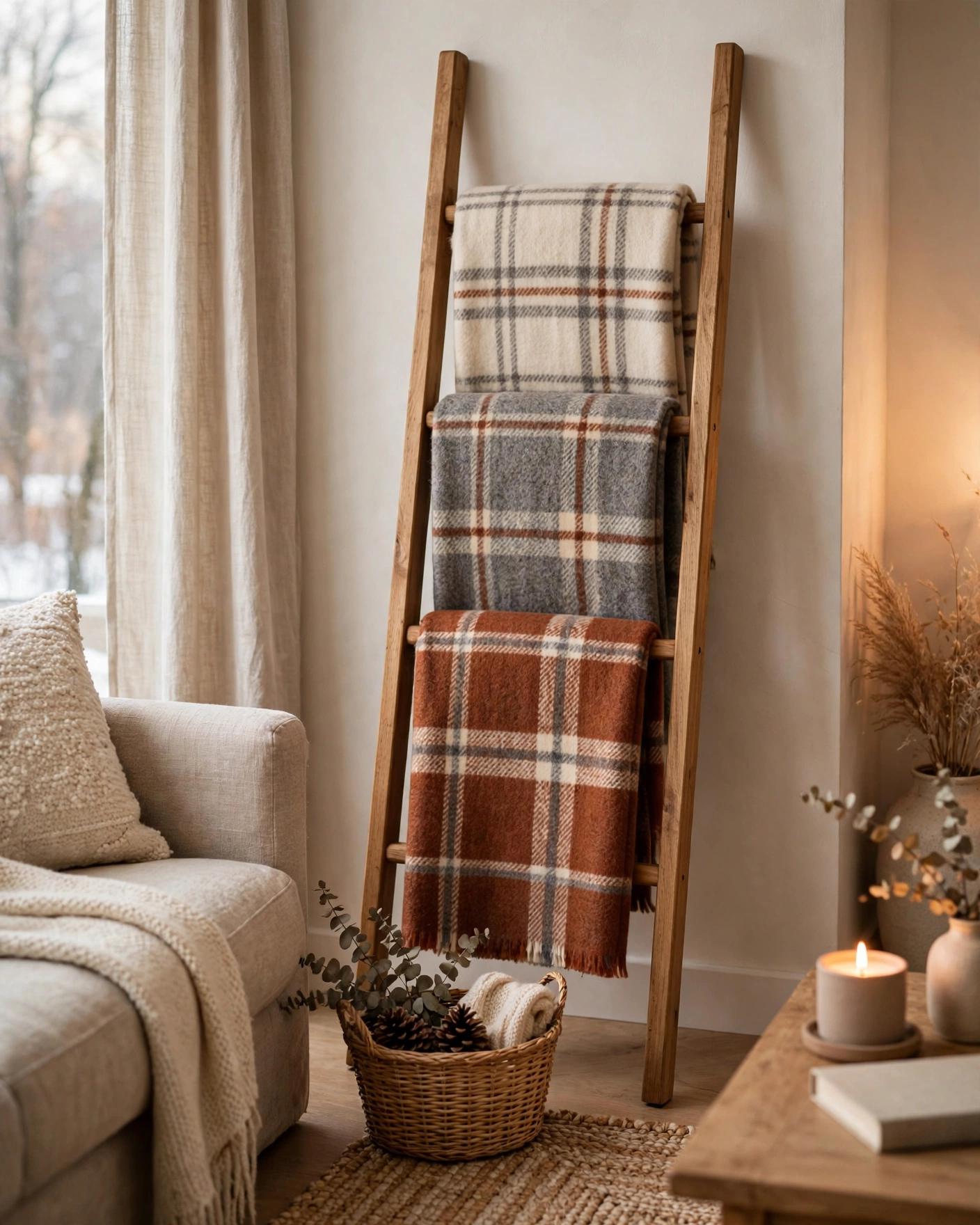
A wooden blanket ladder keeps three or four throws visible, reachable, and tidy. It turns storage into decoration and ends the pile of blankets on the sofa arm.
Best for: living rooms with more throws than storage space.
Styling tip: fold each blanket to the same width so the rungs look neat from across the room.
Pro tip: lean it at about 75 degrees and anchor the top to the wall if you have small children.
14. Drape Sheepskin Over a Bench
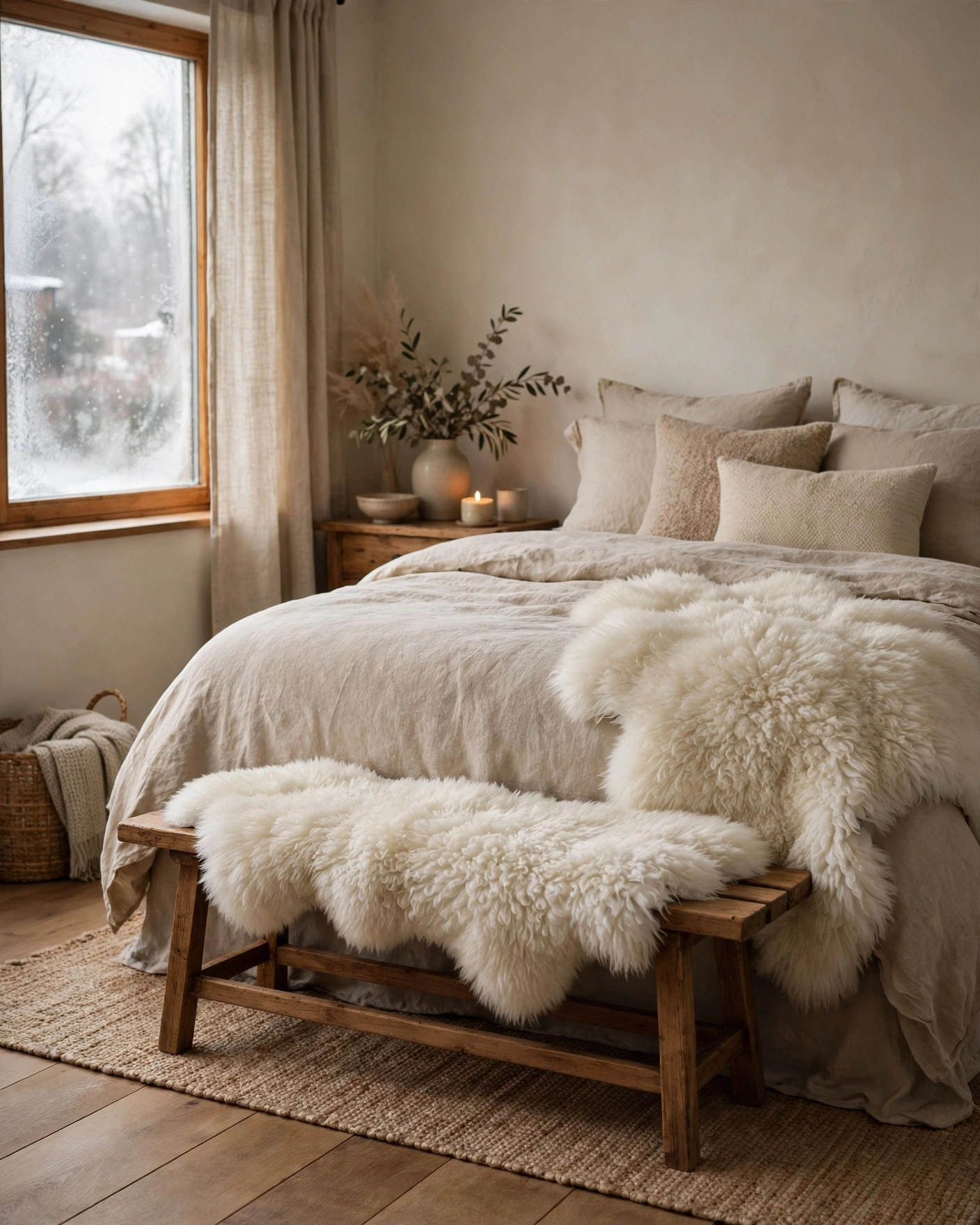
A sheepskin draped over a bedroom bench or dining bench adds instant softness to hard wood. It is a small touch, but it is the one people notice when they sit down.
Best for: bedroom benches, entryway benches, and hard dining benches.
Styling tip: let one corner hang over the edge — a perfect square looks stiff.
Pro tip: a single sheepskin costs less than reupholstering a bench and can move to any room.
Natural Winter Greenery
15. Dress the Mantel with a Eucalyptus Garland
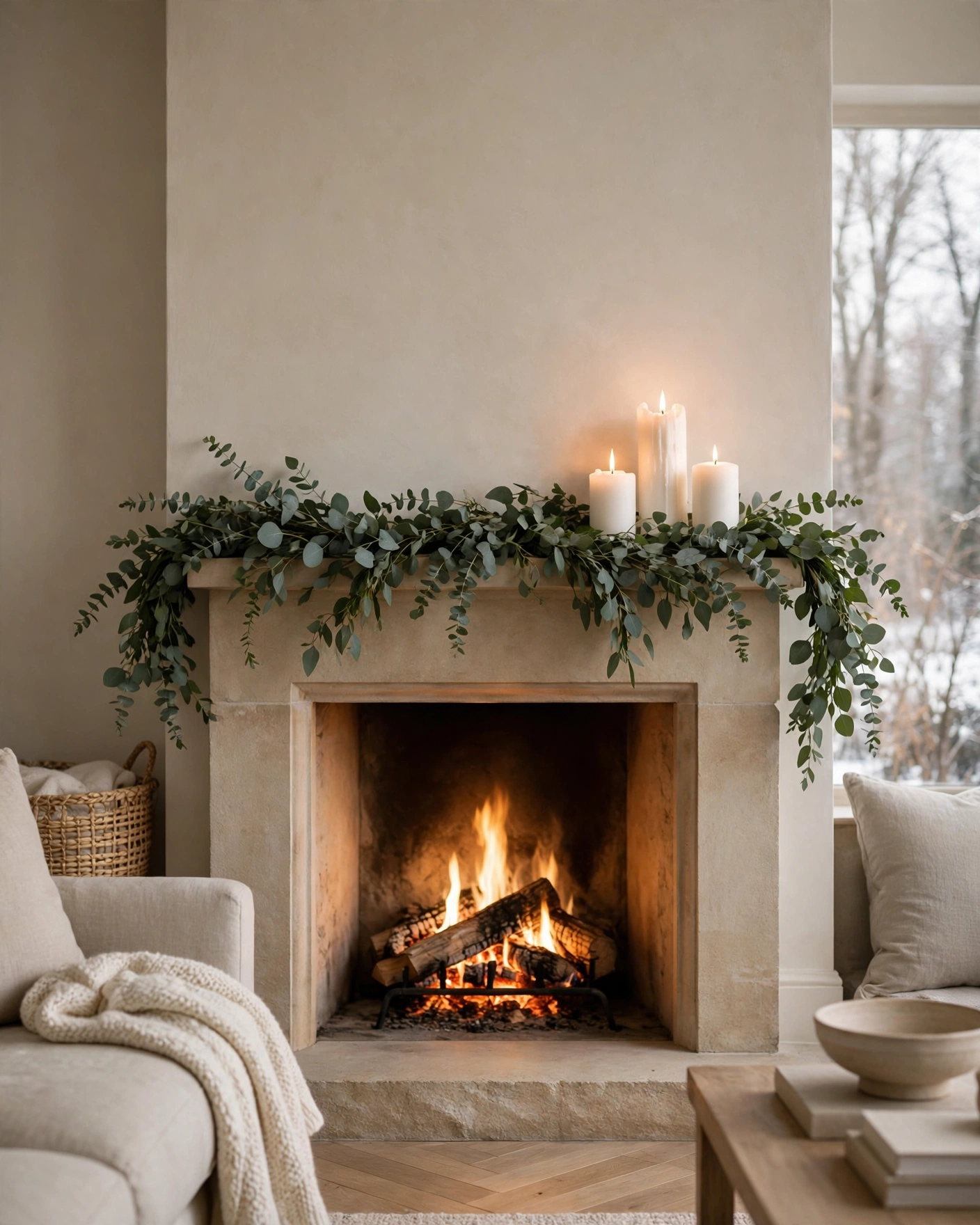
Swap the stockings for a plain eucalyptus garland and the mantel shifts from Christmas to winter in one move. Add two white pillar candles and the whole fireplace looks calm and finished. For the festive version of this same spot, see our Christmas mantel decor ideas.
Best for: mantels that feel empty once the stockings come down.
Styling tip: let the garland dip in the middle and trail a few inches past each end.
Pro tip: fresh eucalyptus dries in place and keeps its shape for six to eight weeks.
16. Hang a Cedar Wreath Without Ornaments
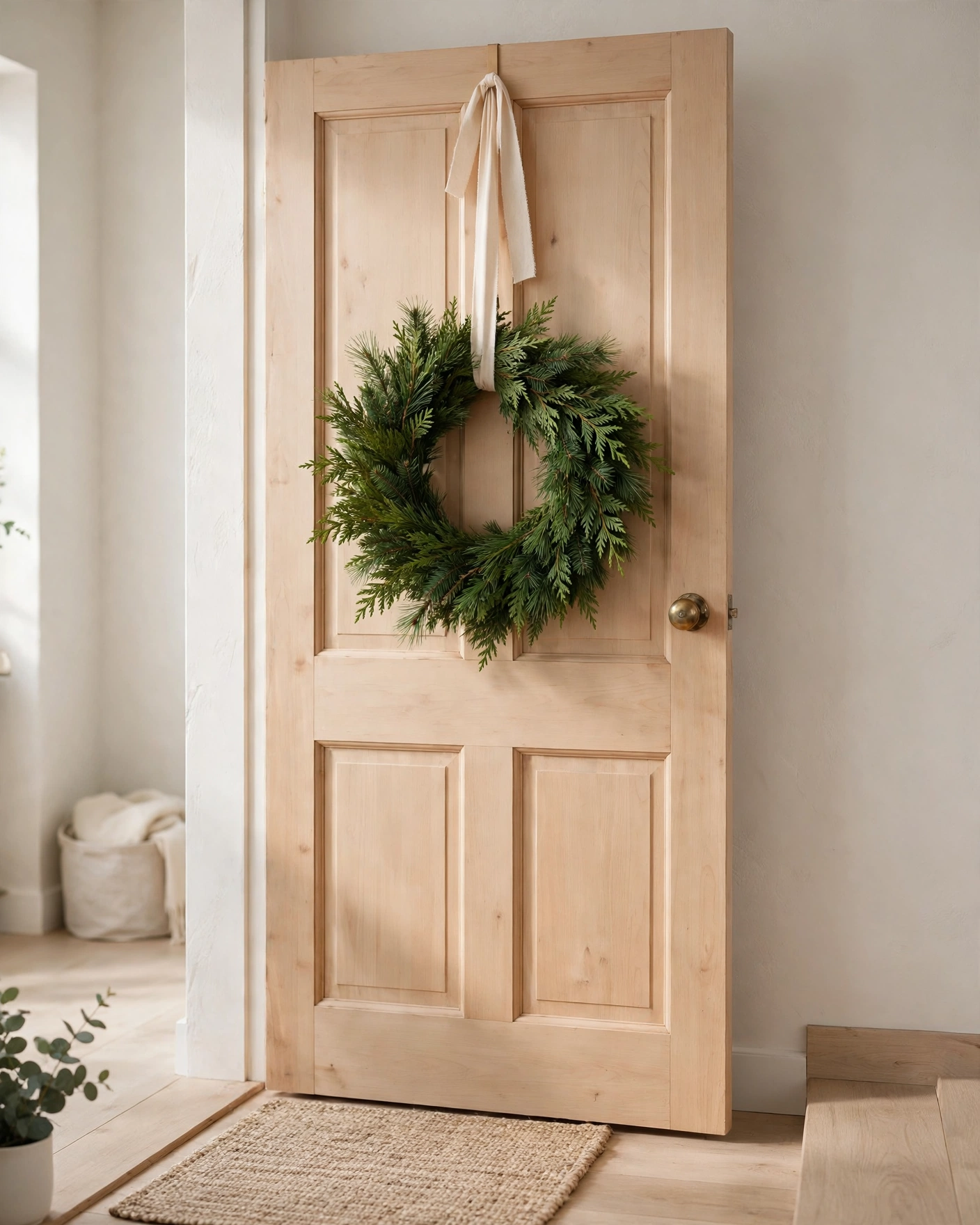
A plain cedar wreath with one cream ribbon is winter, not Christmas. Hang it on an interior door or a mirror and it brings green into a room that has none.
Best for: interior doors, bedroom mirrors, and bare hallway walls.
Styling tip: hang it at eye level, about 60 inches from the floor, so it reads as art.
Pro tip: a 24-inch wreath suits a standard door; anything smaller gets lost.
17. Grow Paperwhites on the Windowsill

Paperwhites are the easiest winter flowers: plant the bulbs in a pot of pebbles and water, and white blooms appear in about four weeks. Their scent fills a small room.
Best for: kitchen windowsills and anyone who wants fresh flowers in January.
Styling tip: plant three bulbs per pot so the blooms look full, not sparse.
Pro tip: paperwhite bulbs are toxic to pets, so keep pots on a high sill, out of reach.
18. Pot a Single Amaryllis
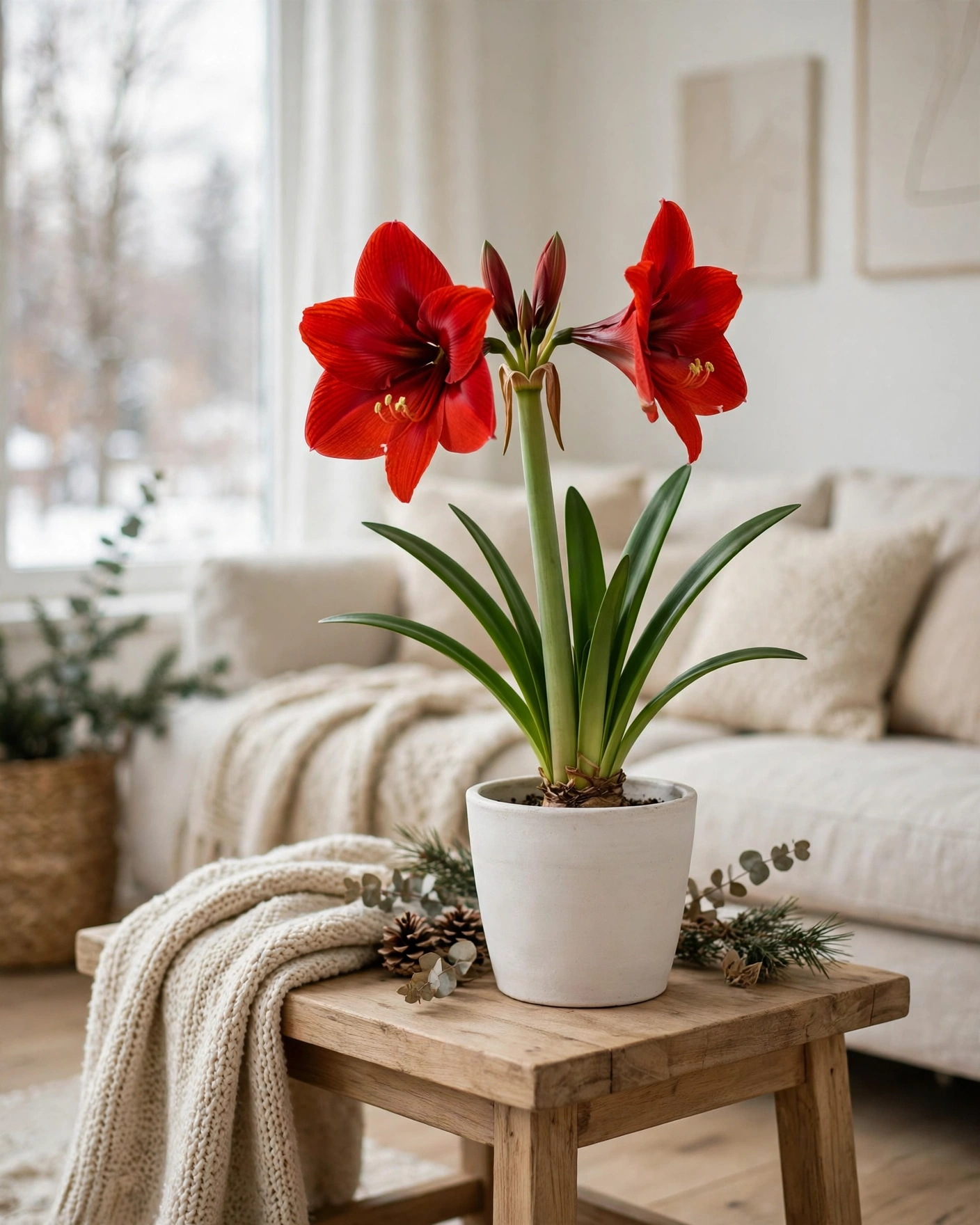
One amaryllis in a plain pot is a bold winter statement without any Christmas baggage. The tall stem and wide bloom need nothing else around them.
Best for: side tables and shelves that need one strong focal point.
Styling tip: stake the stem with a thin bamboo cane once the bud opens, or it can topple.
Pro tip: amaryllis bulbs are toxic to cats and dogs, so place the pot where pets cannot chew the leaves.
19. Fill a Vase with Dried Orange Slices
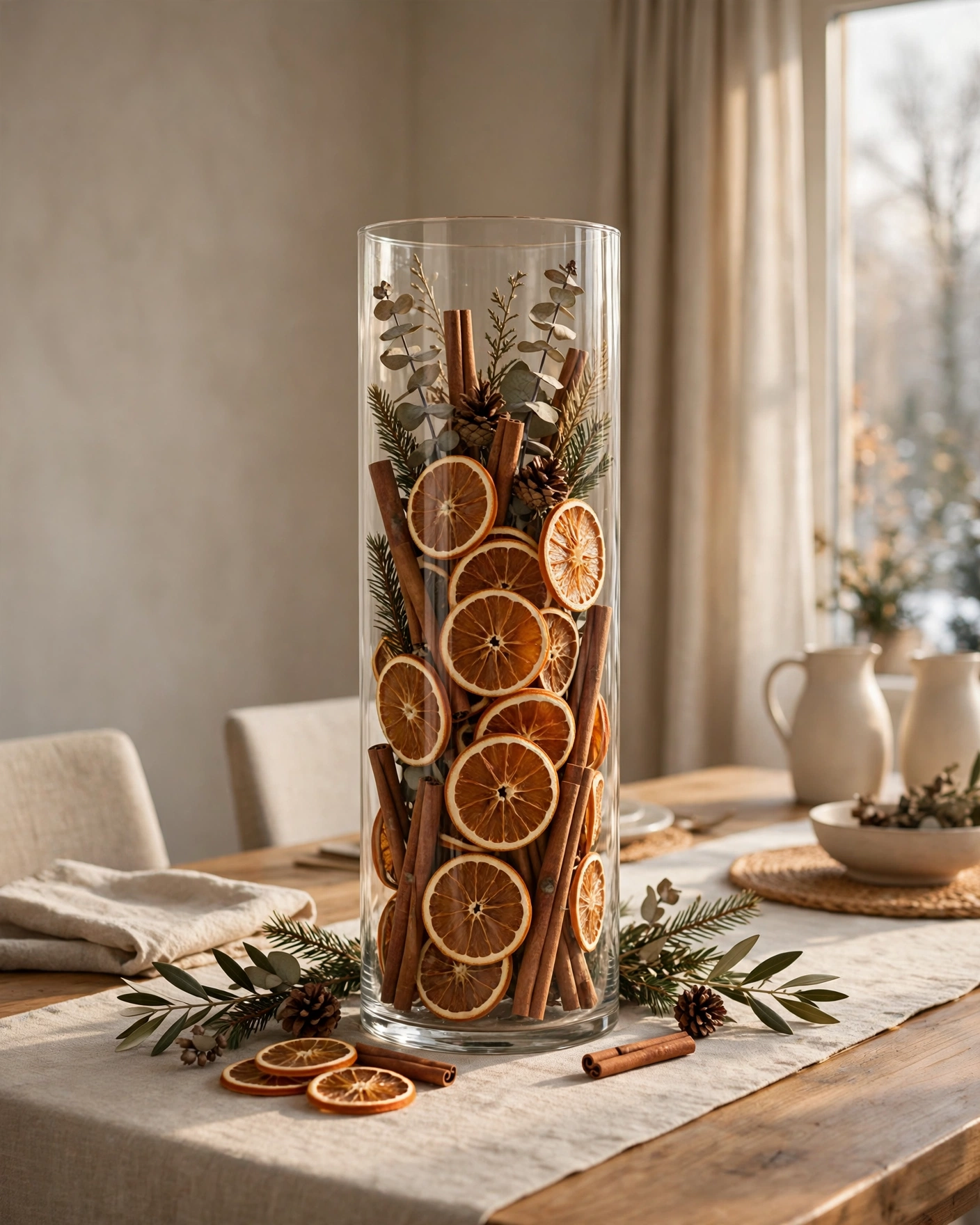
Dried orange slices and cinnamon sticks in a tall glass vase bring warm colour and a faint spice scent to the dining table. They last all season with no watering at all.
Best for: dining tables and kitchen islands that need a low-maintenance centerpiece.
Styling tip: alternate orange slices and cinnamon sticks so the vase looks layered.
Pro tip: dry slices at 200°F for two to three hours, flipping once, and they keep for months.
20. Start a Winter Herb Planter in the Kitchen
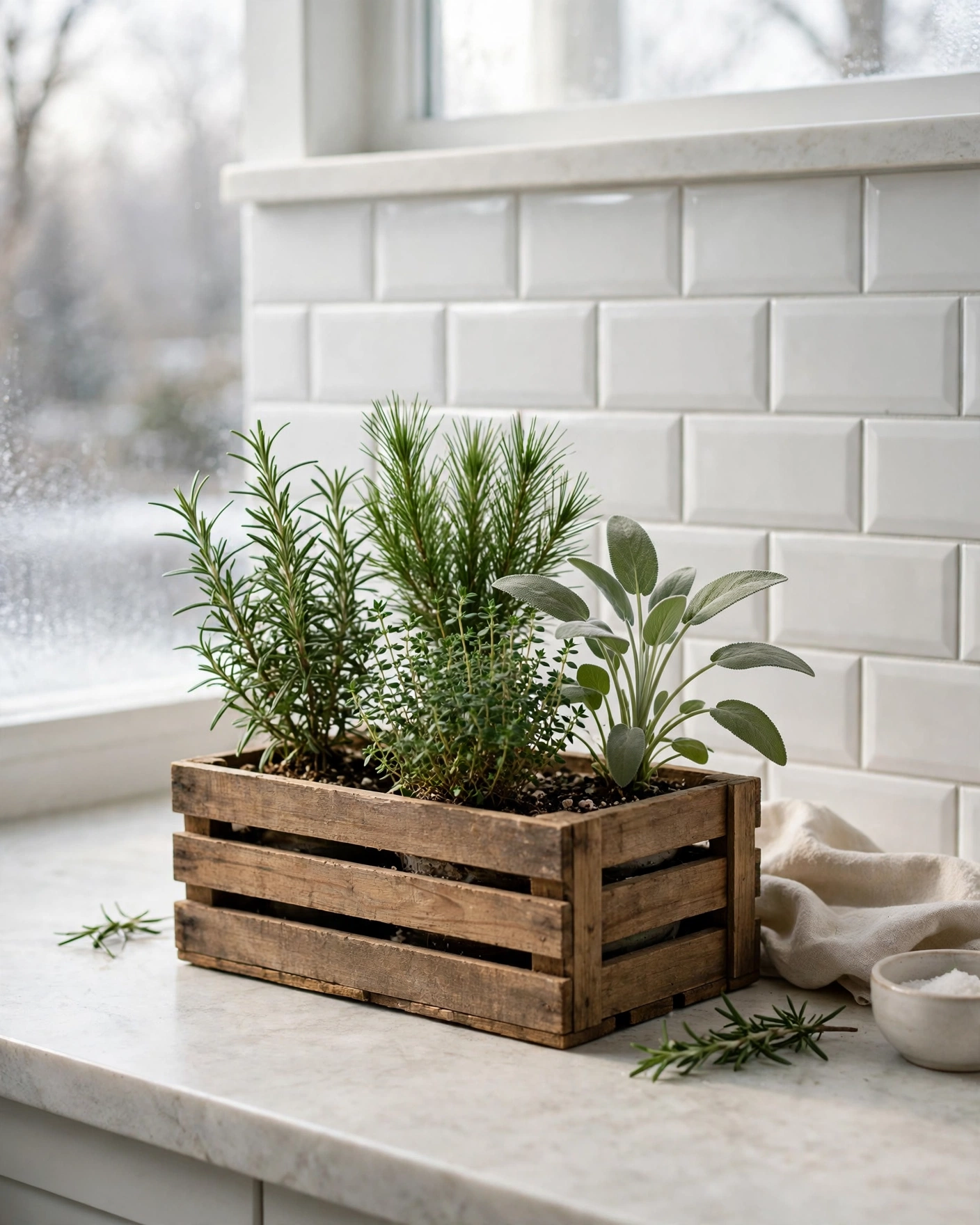
A crate of rosemary, thyme, and sage on the kitchen counter is decor you can cook with. The green softens the kitchen, and the herbs are at hand for winter soups and roasts.
Best for: kitchen counters near a sunny window.
Styling tip: use one wooden crate for all three herbs so it reads as one arrangement.
Pro tip: herbs need at least six hours of light a day — a south-facing sill is ideal.
21. Hang a Snowy-Branch Wreath on the Front Door
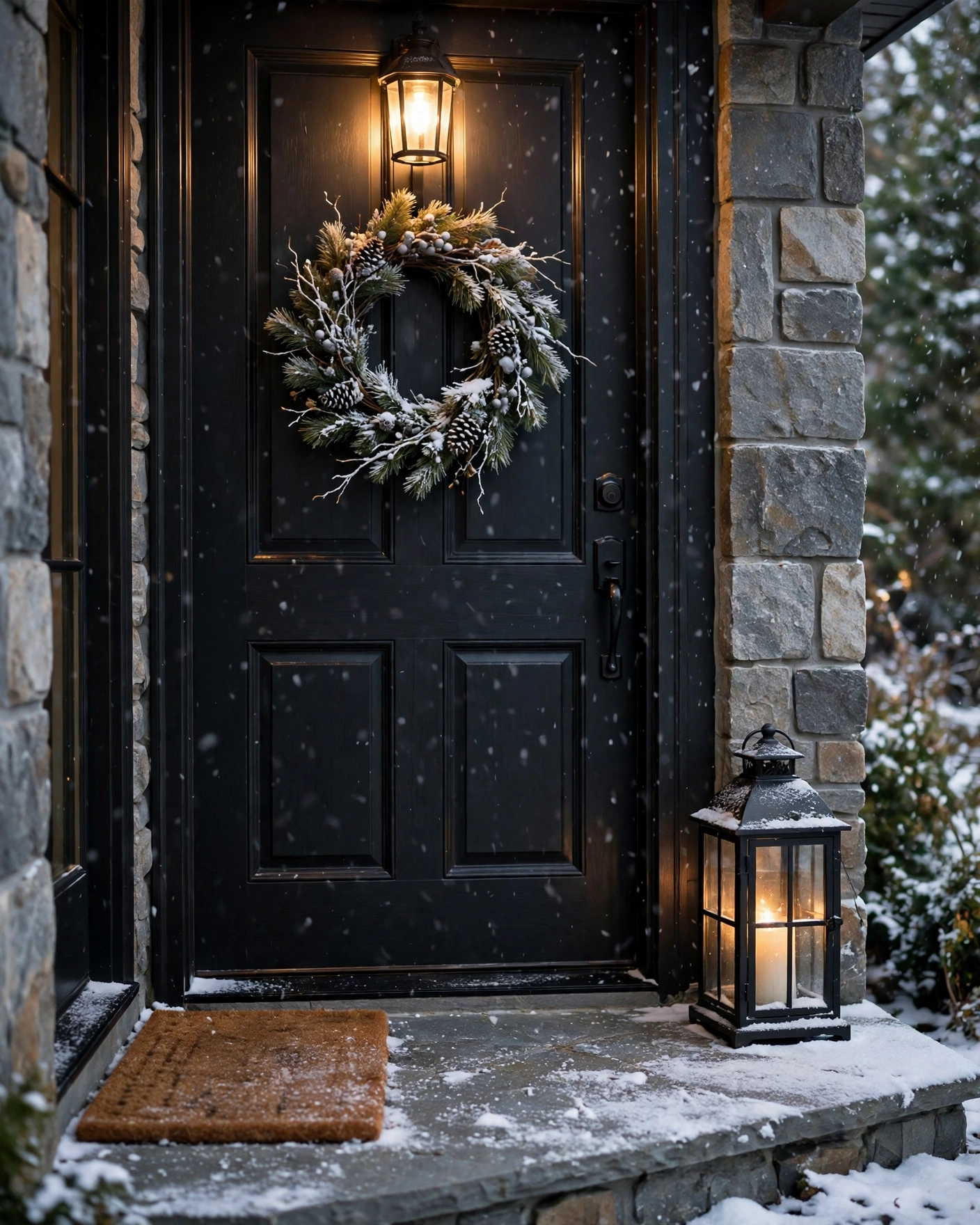
A twig-and-pine wreath with a dusting of faux snow welcomes guests without a single bauble. It suits the front door from January through February and survives frost.
Best for: front doors and covered porches.
Styling tip: hang it with a wide ribbon over the top of the door so no nail holes show.
Pro tip: choose a wreath with wired branches — you can reshape it after wind and snow.
Candlelight & Glow
22. Cluster Pillar Candles on the Coffee Table
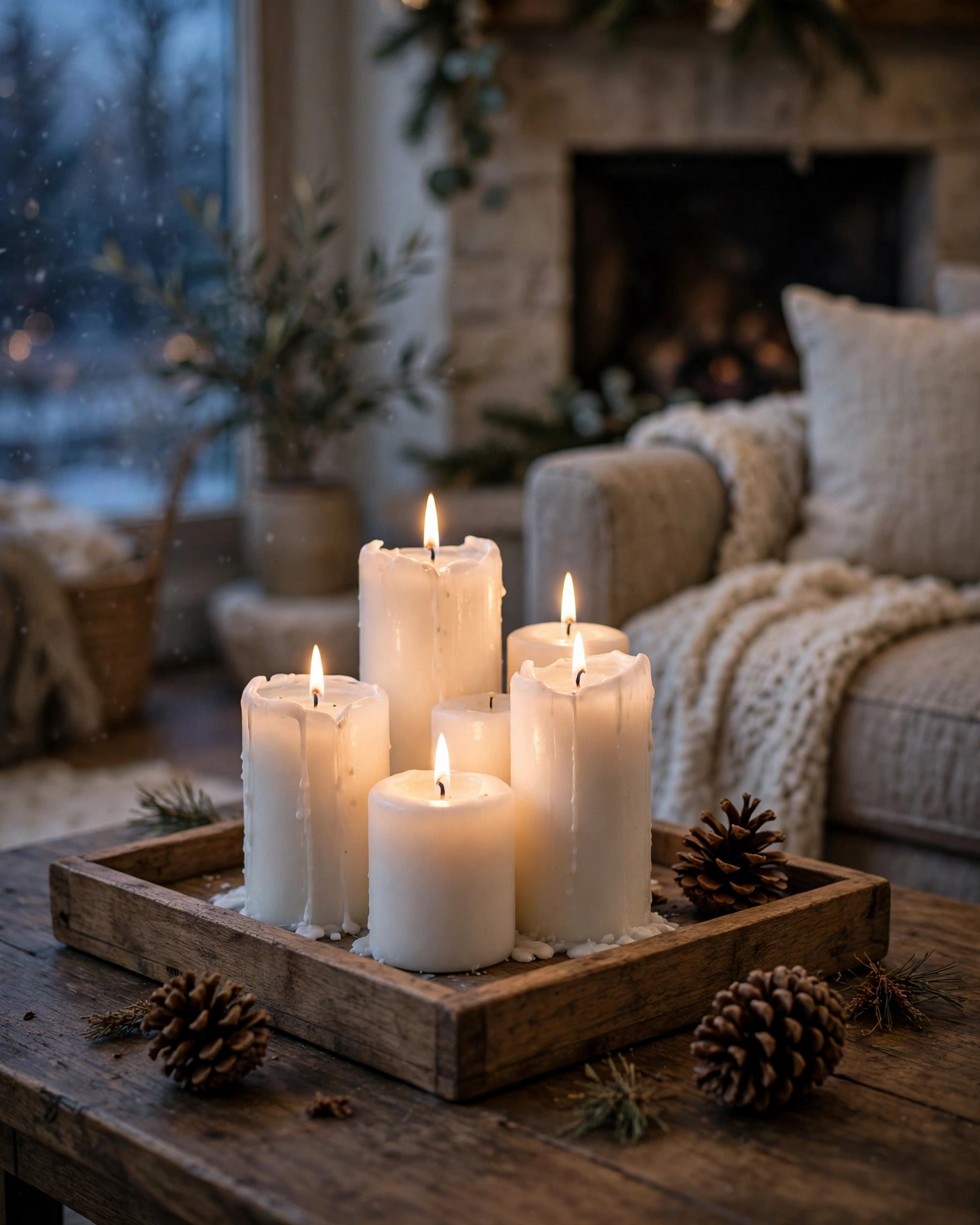
Three pillar candles of different heights on a wooden tray make a low, warm centerpiece. Light them at dusk and the whole living room changes in minutes.
Best for: coffee tables and evenings when the fire is not lit.
Styling tip: use odd numbers and vary the heights by at least 2 inches.
Pro tip: keep every flame at least 12 inches from anything flammable, including curtains and throws.
23. Set Lanterns on the Hearth
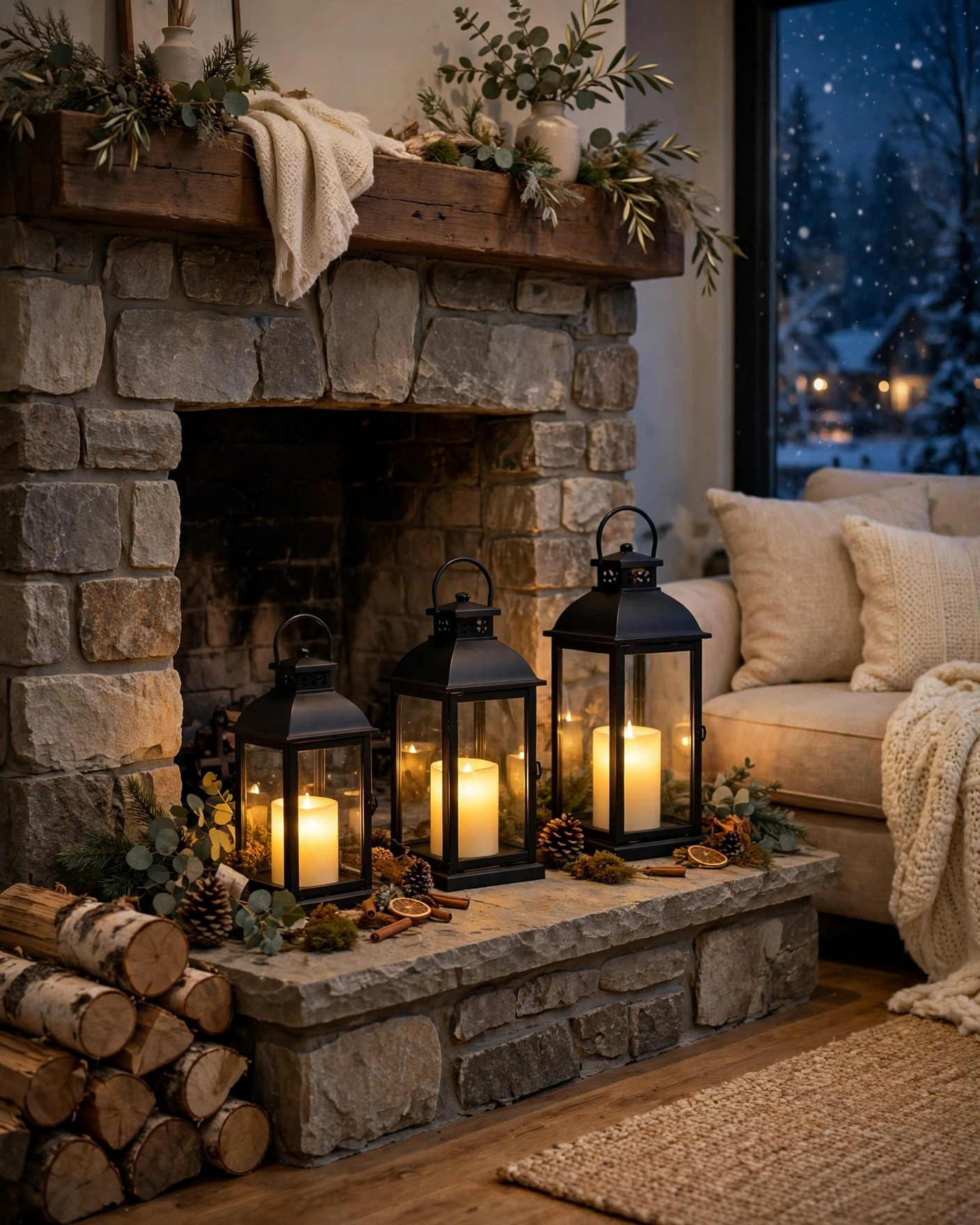
Metal lanterns with LED candles on the hearth give you firelight without the fire. They are safe around children and pets, and they look good even unlit during the day.
Best for: hearths, stair landings, and homes with small children.
Styling tip: group two lanterns of different heights rather than lining up a matching set.
Pro tip: LED candles with a timer save batteries — set them for six hours from dusk.
24. Tuck Fairy Lights Inside a Glass Cloche
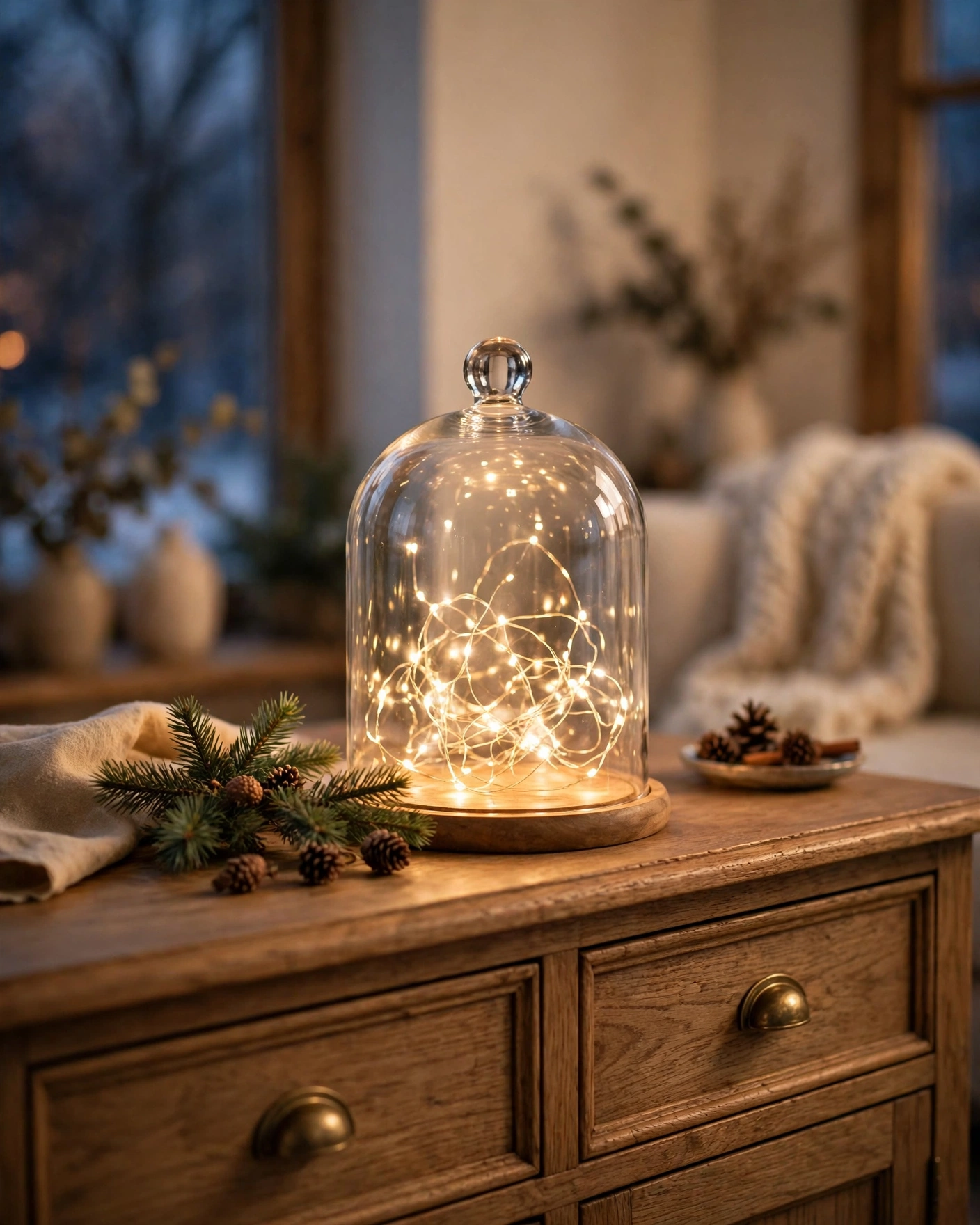
A coil of warm-white fairy lights under a glass cloche glows like a little lantern. It is one of the cheapest winter touches there is, and it works on any shelf or sideboard.
Best for: sideboards, bookshelves, and mantels that need a soft evening glow.
Styling tip: add a few pine sprigs at the base so the cloche looks gathered, not empty.
Pro tip: choose battery lights with a built-in six-hour timer so you never forget them on.
25. Build a Candlelit Dining Centerpiece
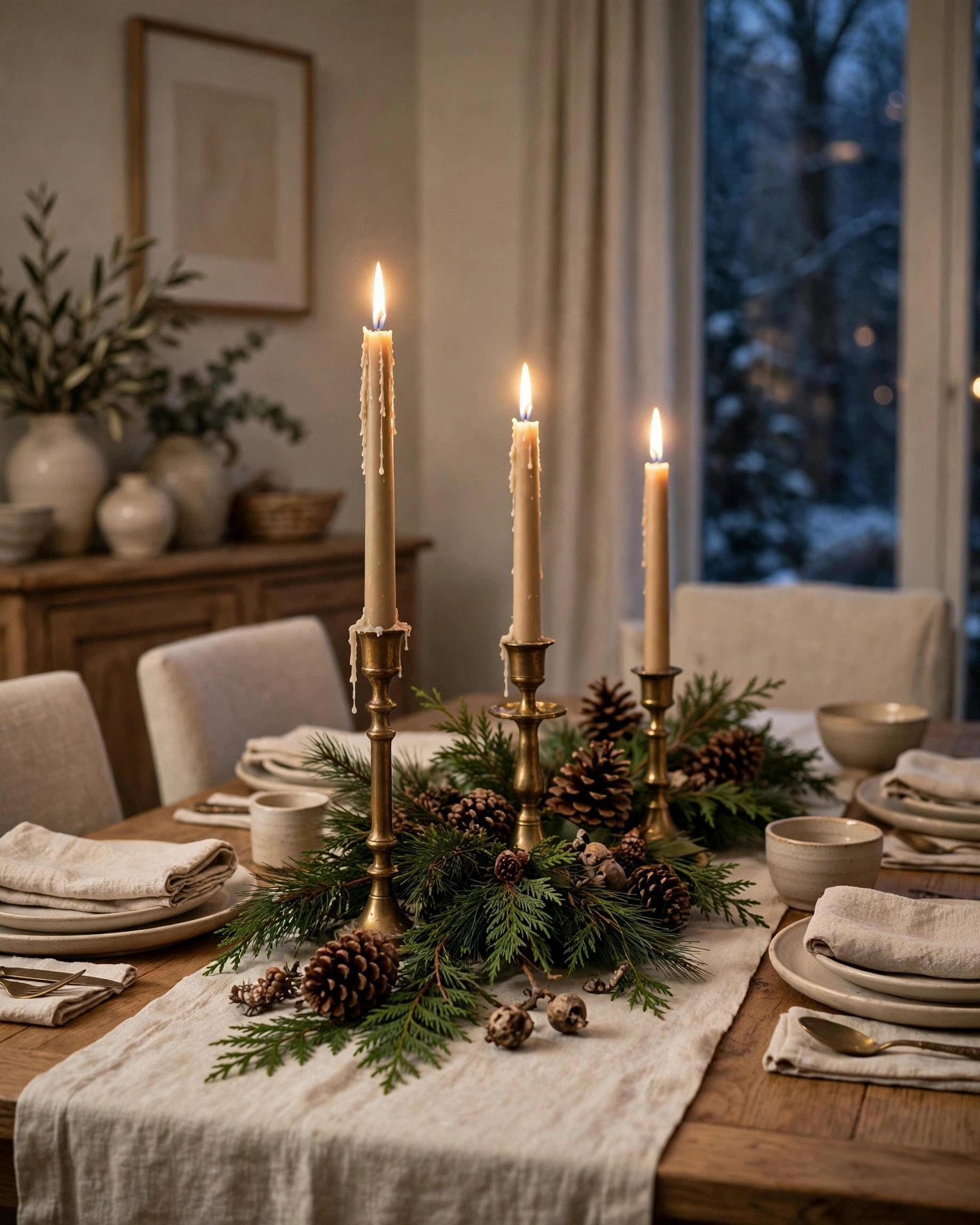
Tall taper candles in brass holders, laid along a linen runner with cedar sprigs, turn an ordinary weeknight dinner into something worth sitting down for. It takes five minutes to set up.
Best for: dining tables that get used every night, not just on special occasions.
Styling tip: keep the centerpiece under 12 inches tall so guests can see each other across the table.
Pro tip: chill taper candles in the fridge for an hour before lighting — they drip far less.
26. Add a Salt Lamp to the Bedside Table
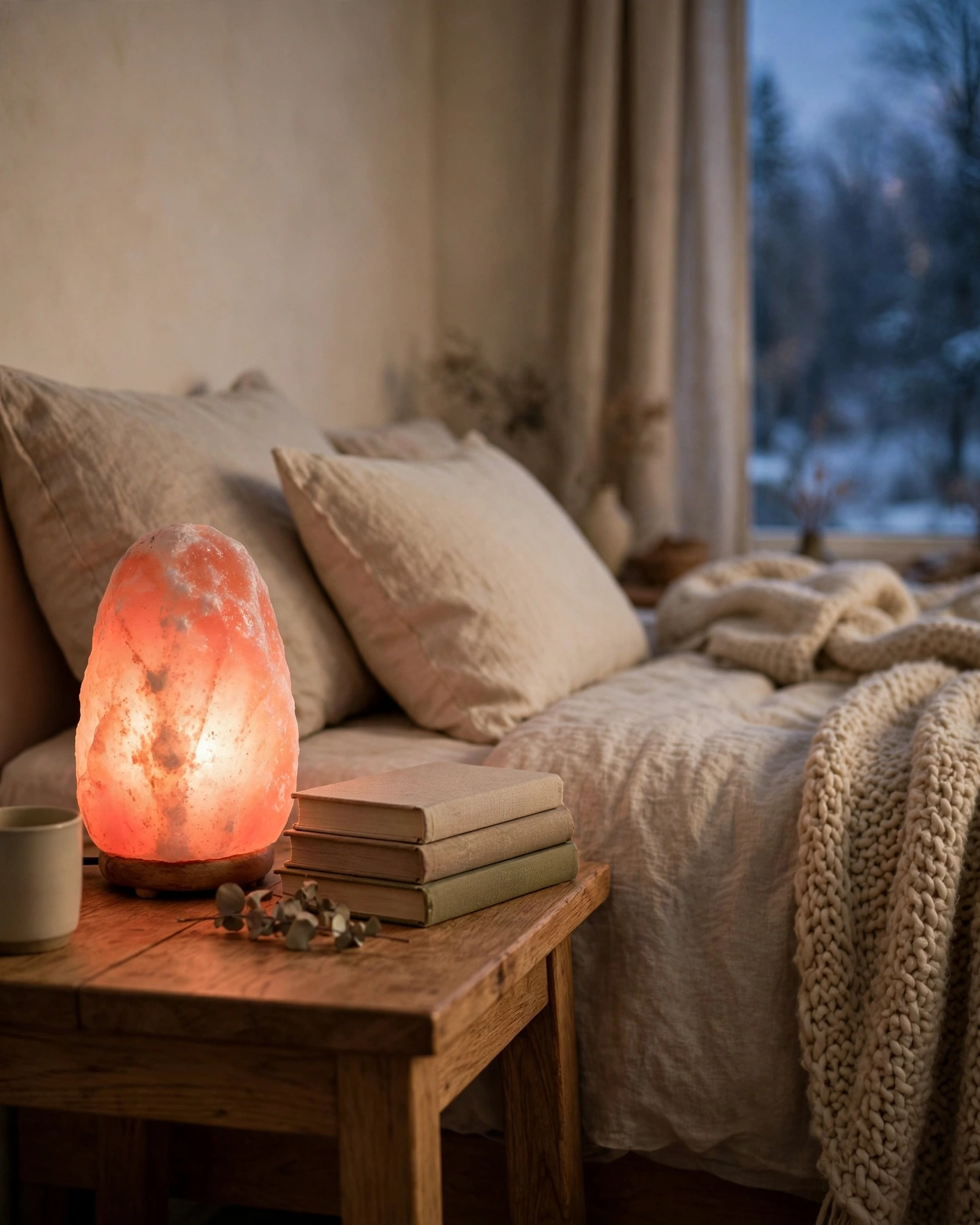
A salt lamp gives the bedroom a soft amber glow that is easy on the eyes at night. It is small, cheap, and it makes the whole room feel warmer than a bare bulb ever could.
Best for: bedside tables and bedrooms that feel cold and stark in winter.
Styling tip: place it on the side away from the bed so the glow washes the wall.
Pro tip: salt lamps attract moisture, so wipe the base weekly and keep it off damp sills.
27. Stack Firewood Beside the Fireplace
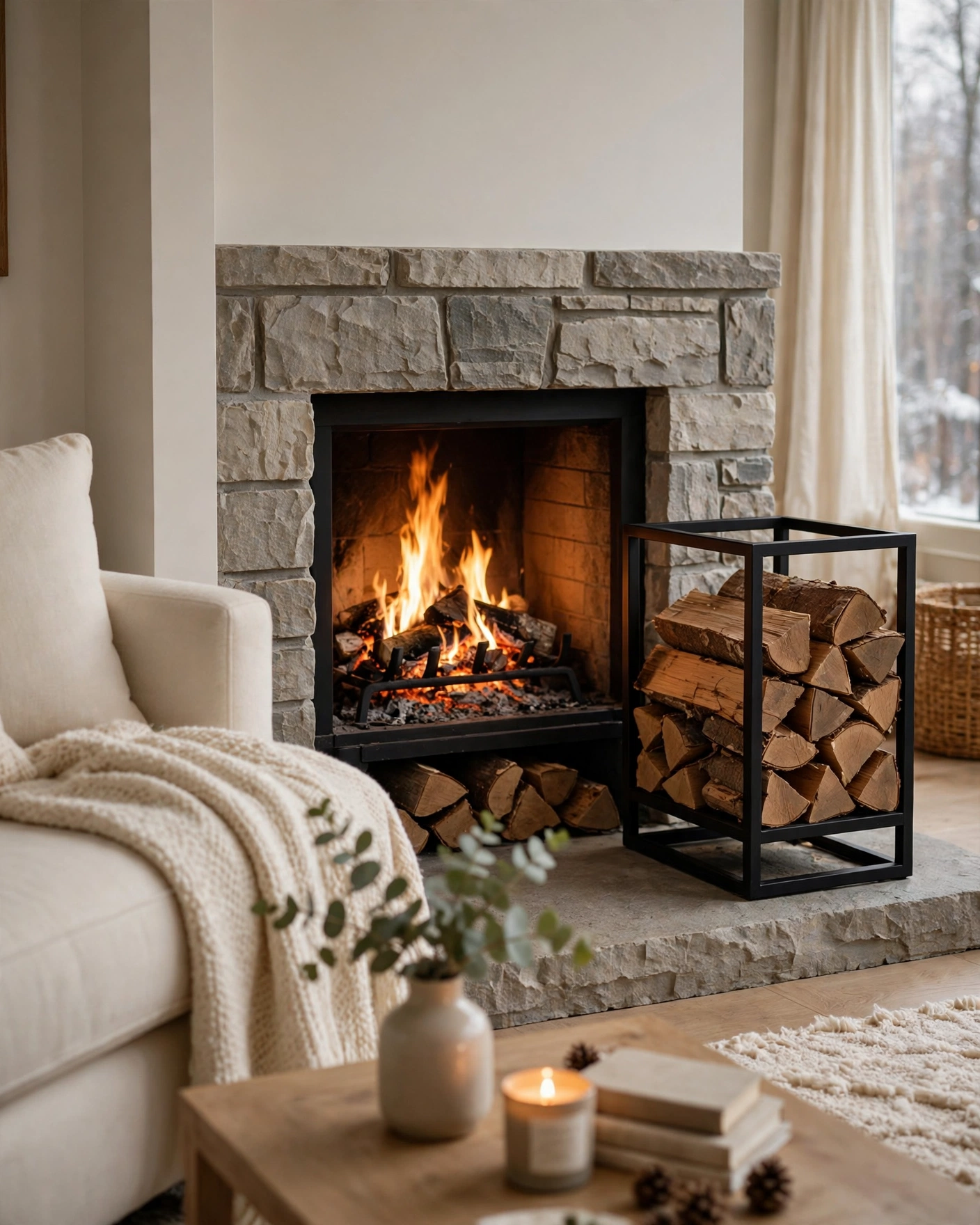
A neat stack of firewood in a metal log holder is decor even before the fire is lit. The bark, the grain, and the shape of the logs add natural texture to the whole wall.
Best for: working fireplaces and living rooms with a bare hearth wall.
Styling tip: stack the cut ends facing out for a clean, patterned look.
Pro tip: keep indoor wood to one day’s worth — a full cord indoors brings in bugs and damp.
28. Switch to Warm Dimmer Bulbs
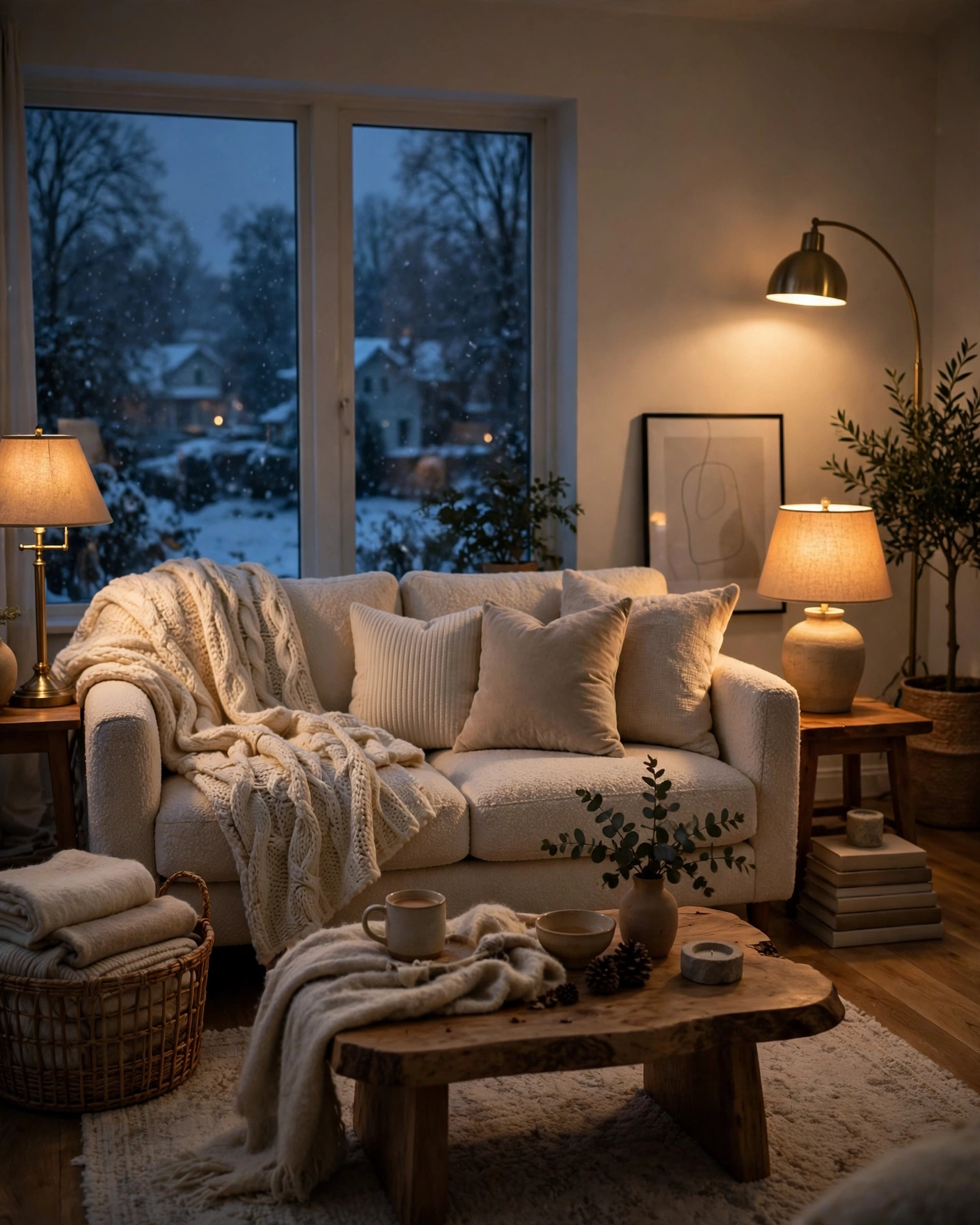
Swapping cool daylight bulbs for warm 2700K dimmers is the cheapest mood change in the house. Everything — wood, knit, skin — looks better in warm light after dark.
Best for: every room you use after sunset in winter.
Styling tip: dim the overheads and lean on lamps at sitting height for a layered glow.
Pro tip: check the dimmer switch matches the bulb type, or LEDs can flicker and buzz.
Room-by-Room Winter Touches
29. Style One Cozy Living-Room Corner
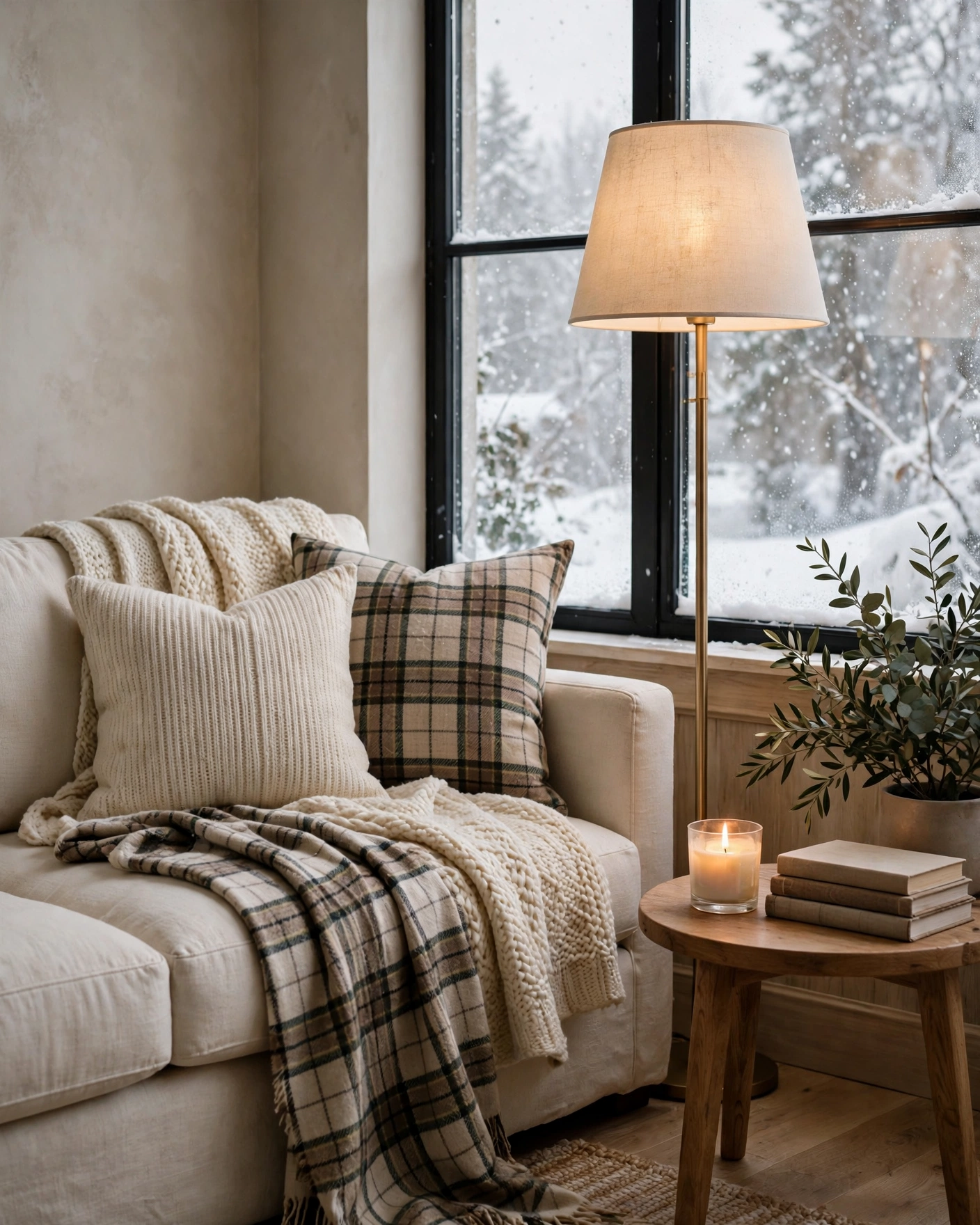
You do not need to redecorate the whole living room. Pick one corner — sofa, lamp, side table, candle — and make it the warmest spot in the house. The rest of the room follows.
Best for: big living rooms that feel cold and unfinished in winter.
Styling tip: anchor the corner with a floor lamp, then build the throws and candle around it.
Pro tip: a corner rug at least 5 by 7 feet defines the zone so it feels like a room within a room.
30. Give the Bedroom a Winter Refresh
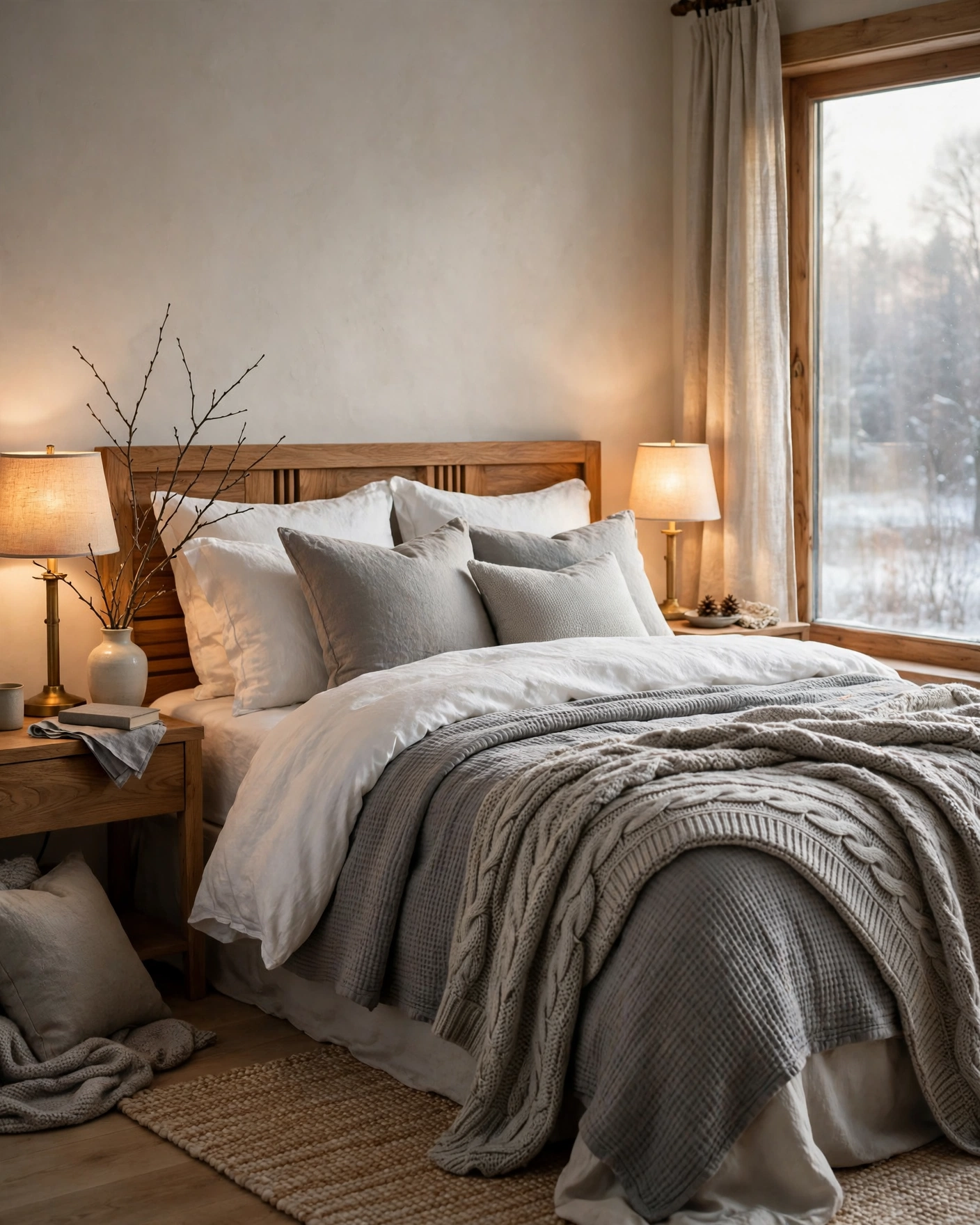
Swap in flannel sheets, add a knit throw at the foot of the bed, and put a small vase of bare branches on the dresser. Three changes, ten minutes, and the bedroom feels like a retreat.
Best for: bedrooms that feel cold, bare, or hard to wake up in.
Styling tip: keep the palette to two neutrals plus one soft colour so the bed looks calm.
Pro tip: a throw across the foot of the bed should cover about one third of the bed’s length.
31. Style the Dining Table for Winter Weeknights

A linen runner, a few cedar sprigs, and two taper candles are all a weeknight table needs. Leave it set all week — it makes every dinner feel a little more cared for.
Best for: dining rooms that only get dressed up for guests.
Styling tip: run the runner the full length of the table, with 6 inches of overhang at each end.
Pro tip: linen runners wash easily, so do not be afraid to use a light colour at the table.
32. Add Winter Warmth to the Bathroom

Thick cream towels, a small eucalyptus sprig by the sink, and one candle turn a cold bathroom into a warm one. It is the smallest room in the house and the easiest to change.
Best for: cold bathrooms and guest bathrooms that feel stark.
Styling tip: roll towels instead of folding them — they look fuller and take up less shelf space.
Pro tip: eucalyptus in a steamy bathroom releases scent naturally, no candle needed.
33. Make the Entryway Feel Like a Warm Welcome
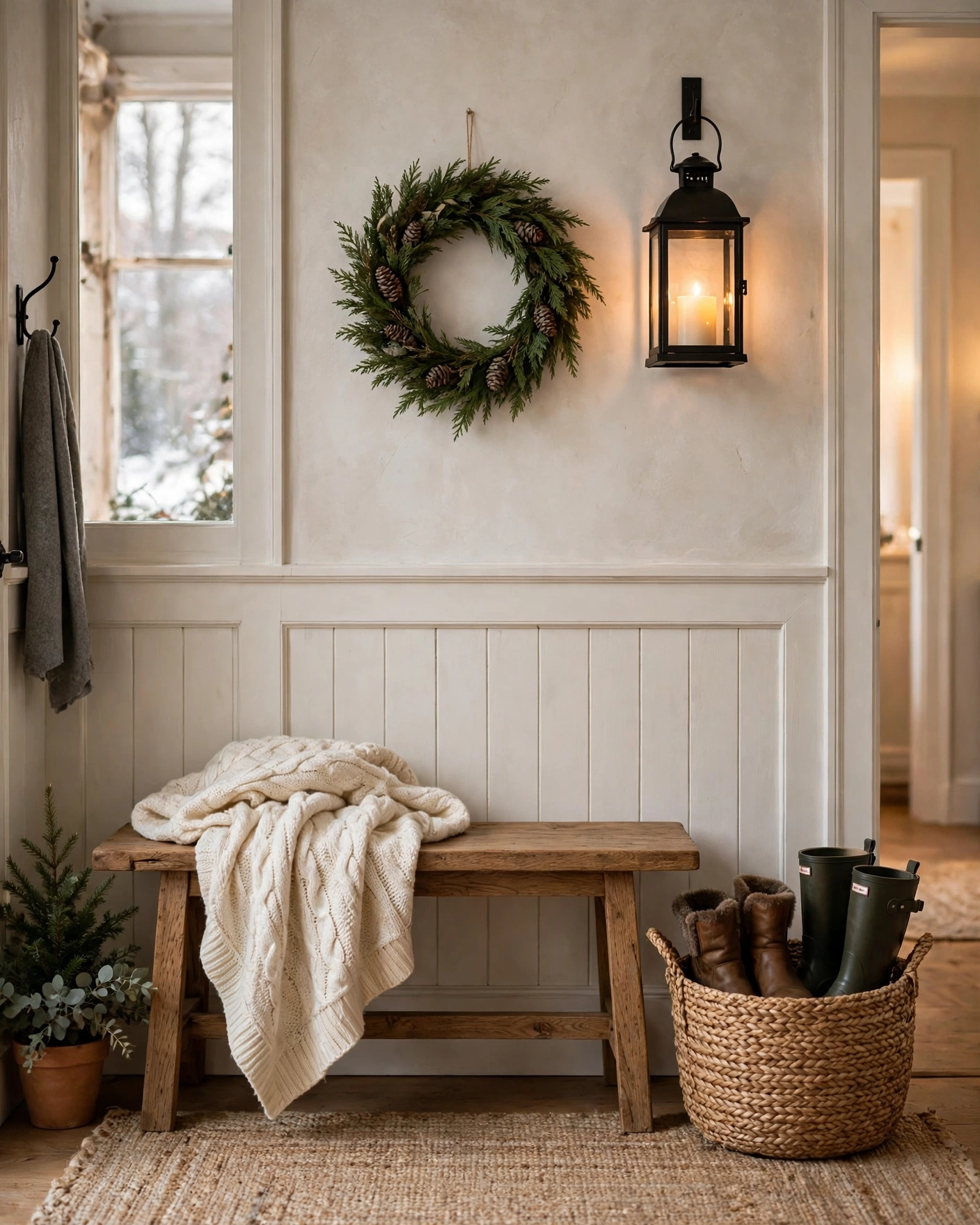
A bench with a knit throw, a basket for boots, and a small cedar wreath on the wall make the entryway feel warm the moment the door opens. It is the first room guests see and the last one you pass each day. For the full plan, see our winter entryway decor ideas.
Best for: entryways that feel like a cold hallway instead of a welcome.
Styling tip: one basket per person keeps boots and coats from piling on the floor.
Pro tip: a boot tray at least 30 inches wide catches slush from two pairs at once.
34. Create a Cozy Kitchen Corner
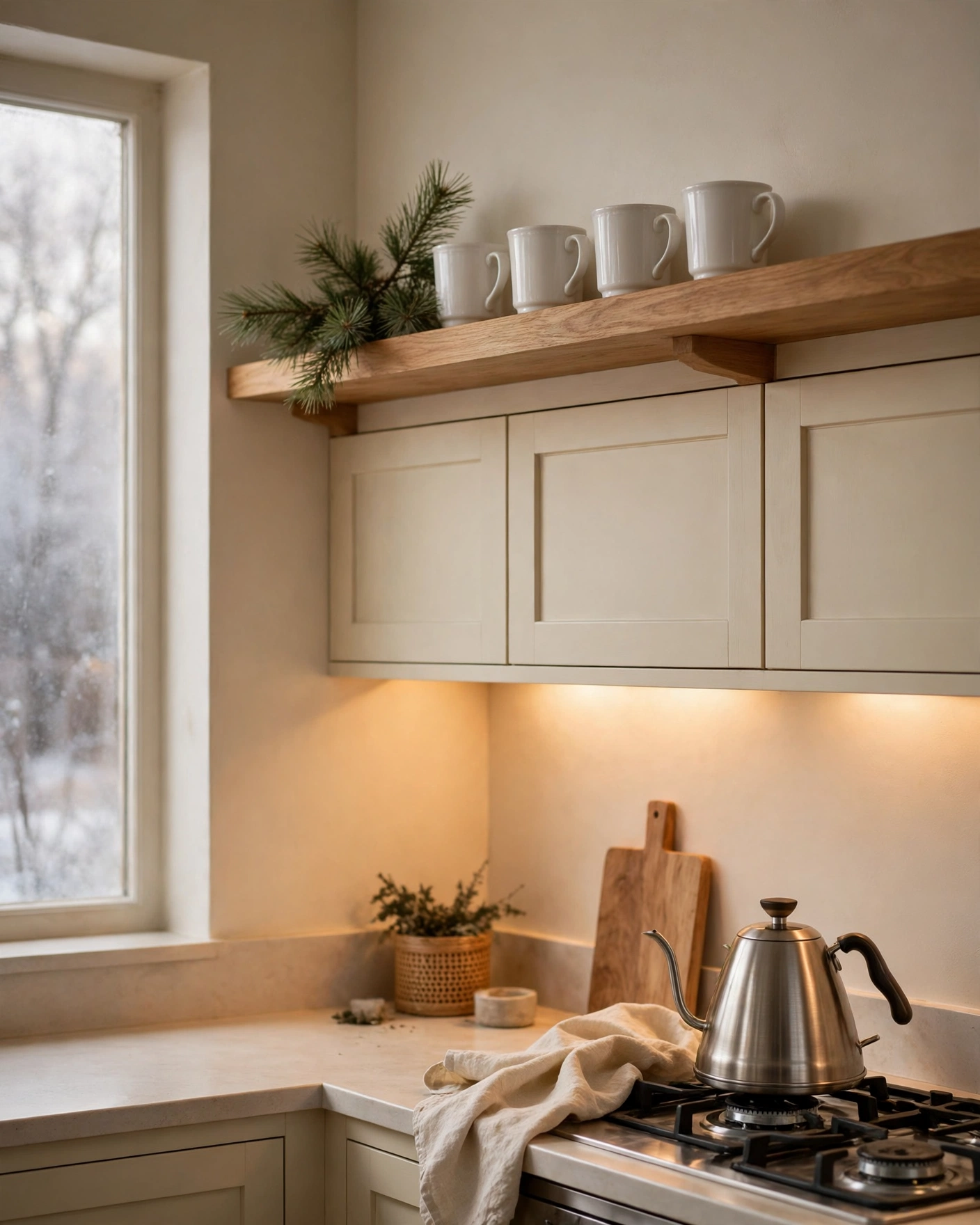
Style one kitchen shelf with white mugs, a small pine sprig, and a jar of tea, and the whole kitchen feels warmer. It is a five-minute job that you see every morning.
Best for: kitchens that feel all hard surfaces and no softness.
Styling tip: group mugs in threes and leave breathing space between groups.
Pro tip: keep the styled shelf at least 18 inches from the stove so steam never reaches it.
35. Build a Reading Nook with Knit and Candlelight
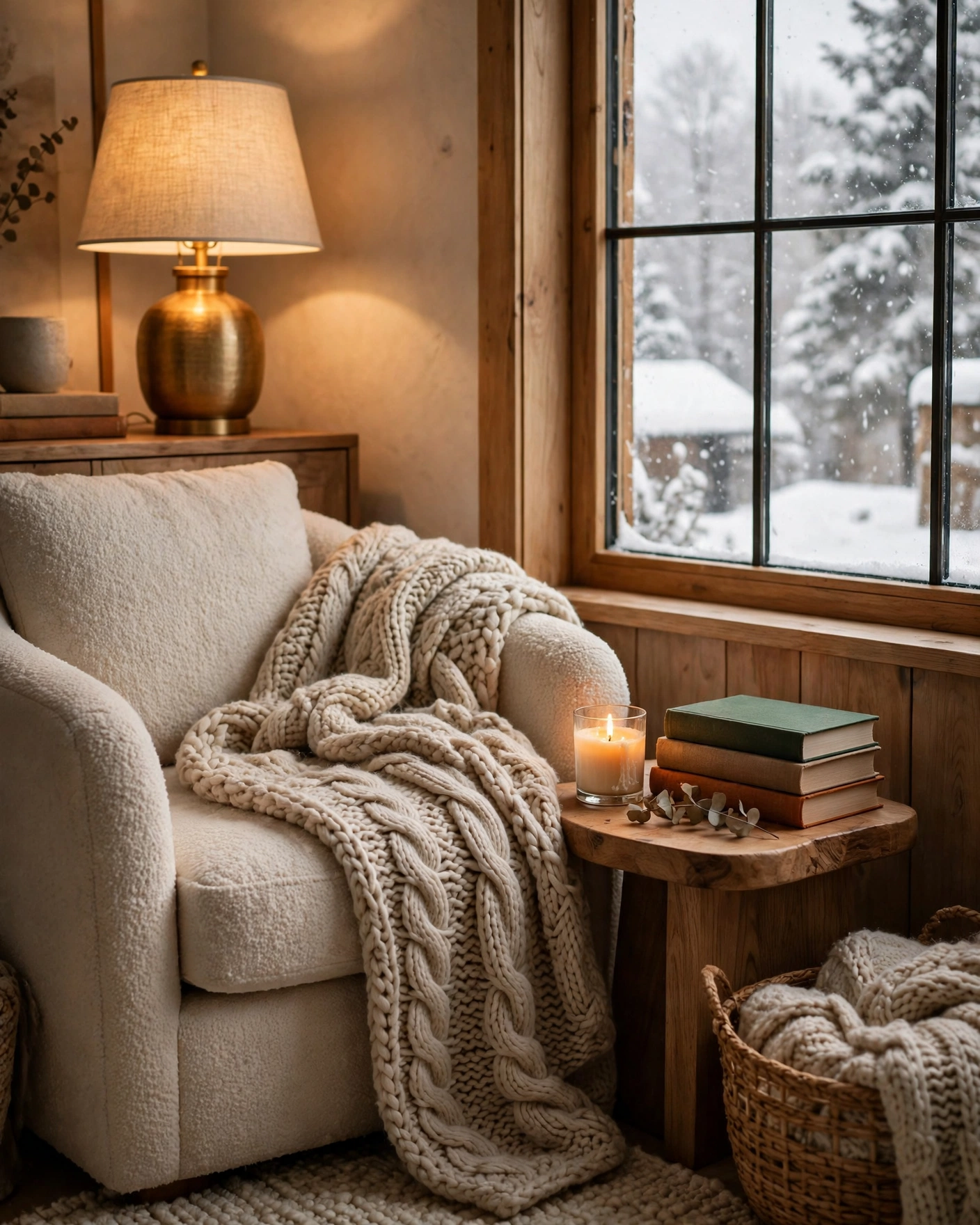
An armchair, a chunky knit blanket, a small table with a candle and a book — that is a reading nook. Put it by the window and winter afternoons suddenly have a favourite spot.
Best for: quiet corners, bay windows, and anyone who reads in winter.
Styling tip: the lamp should sit at shoulder height when you are seated, so the light falls on the page.
Pro tip: a nook needs only about 4 square feet — a chair, a table, and a light are enough.
36. Dress the Front Porch for Winter
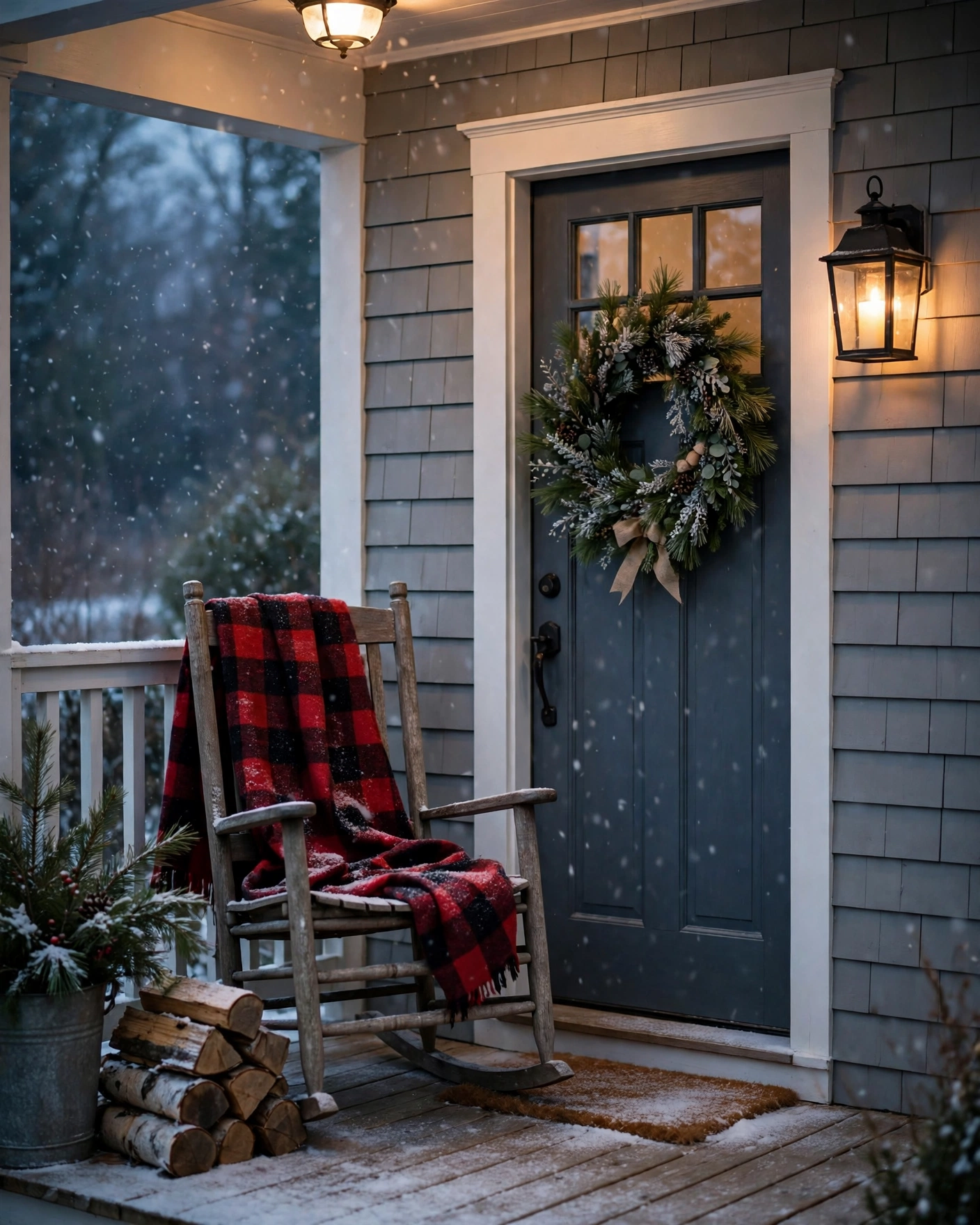
A rocking chair with a plaid blanket, a glowing lantern, and a pine wreath make the porch feel cared for all winter. It is the first thing visitors see, and it sets the tone before the door even opens.
Best for: front porches and homes that want kerb appeal in January, not just December.
Styling tip: keep the palette to two colours plus green so the porch looks calm, not busy.
Pro tip: outdoor lanterns with LED candles run for weeks on one set of batteries, even in the cold.
Frequently Asked Questions
When should I take down Christmas decor and switch to winter decor?
Most homes take the tree and ornaments down in the first week of January, often by the 6th, and that is the right moment to switch. Pack away anything red-and-gold, tinsel, and Santa figures, then keep the greenery, pinecones, candles, and knit textiles in place. The room will feel bare for a day, so add one or two winter pieces — a pinecone bowl, a chunky throw — on the same day you pack the ornaments away, and the house never looks empty.
What is the difference between Christmas decor and winter decor?
Christmas decor is festive and specific: ornaments, tinsel, red-and-gold, Santa figures, and anything that names the holiday. Winter decor is seasonal and calm: bare branches, pinecones, greenery, knit and wool textiles, candlelight, and neutral colours. The first belongs to December; the second works from January through February. If a piece would look odd in February, it is Christmas decor — pack it away and keep the winter pieces out.
How can I make my home feel cozy in winter without spending much?
Start with what you already own: move throws and cushions to the chairs you use most, cluster the candles you have on one tray, and cut bare branches from the garden for a vase. Then spend small — a pinecone bowl, a eucalyptus garland, and warm 2700K bulbs cost very little and change a whole room. Layering textiles and light matters more than buying new furniture, so add warmth in layers and stop when the room feels done.
What greenery lasts longest indoors in winter?
Fresh cedar and pine last three to four weeks indoors if you mist them every couple of days, and eucalyptus dries in place and keeps its shape for six to eight weeks. Pinecones and bare branches last all season with no care at all. Paperwhites and amaryllis bloom for two to three weeks, then fade — enjoy them while they last and compost the bulbs. Keep all cut greenery away from radiators and fireplaces, or it dries out in days instead of weeks.
Are candles and fairy lights safe to leave on in winter?
Real candles should never be left burning unattended — blow them out when you leave the room or go to sleep, and keep every flame at least 12 inches from curtains, throws, and greenery. Battery fairy lights and LED candles are the safer choice for overnight glow, especially with a built-in timer. Check cords for damage before the season, keep lights away from water, and never drape real candles or hot bulbs over dried greenery.
How do I decorate for winter if I have pets?
Choose pet-safe plants first: skip amaryllis and paperwhites, which are toxic to cats and dogs, and use pine, cedar, eucalyptus, and dried oranges instead. Keep candles behind glass or switch to LED candles, secure garlands so they cannot be pulled down, and avoid small pinecones and ornaments on low tables where pets can chew them. A stable, heavy vase for branches stops the whole arrangement ending up on the floor.
Final Thoughts
Winter decor after Christmas is not about buying a whole new house — it is about keeping what already works and letting the season be quiet. Pack away the ornaments, keep the greenery and the glow, and layer in the textiles that make January feel warm instead of bare.
Start with one room, or even one corner, and try three or four ideas from this list this weekend. Save the ones you love, and by February your home will feel like the warmest place to be — no tinsel required.
