
Dining room storage ideas work best when the storage disappears into the decor — a sideboard that looks like furniture, a bench that hides drawers, shelves that feel like a gallery. A sideboard is the classic starting point. Below are 33 dining room storage ideas that hide serving clutter.
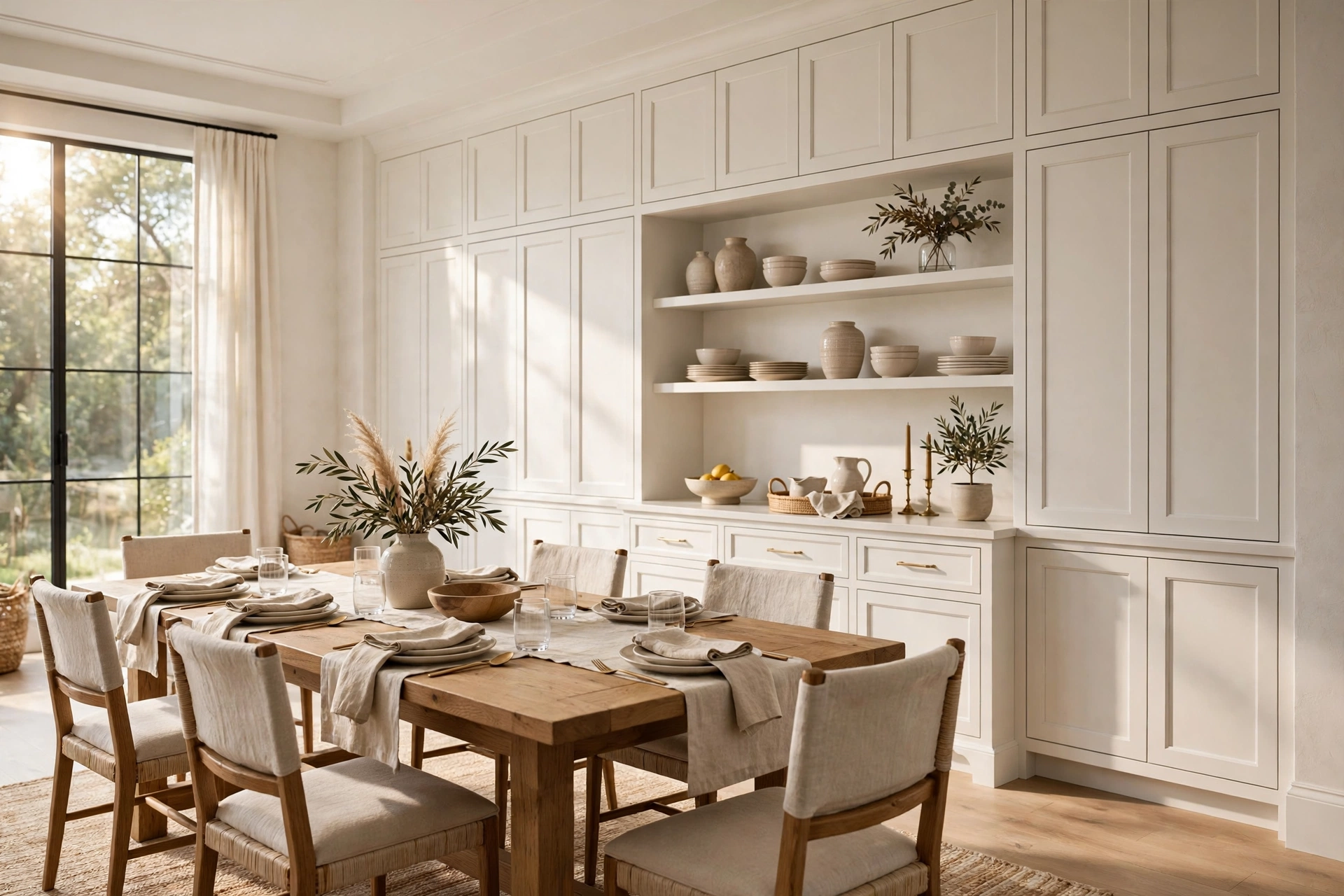
1. Go Classic With a Sideboard Against the Long Wall
A sideboard is the dining room workhorse. Its wide drawers hold placemats, napkins and runners, while the top doubles as a serving ledge.
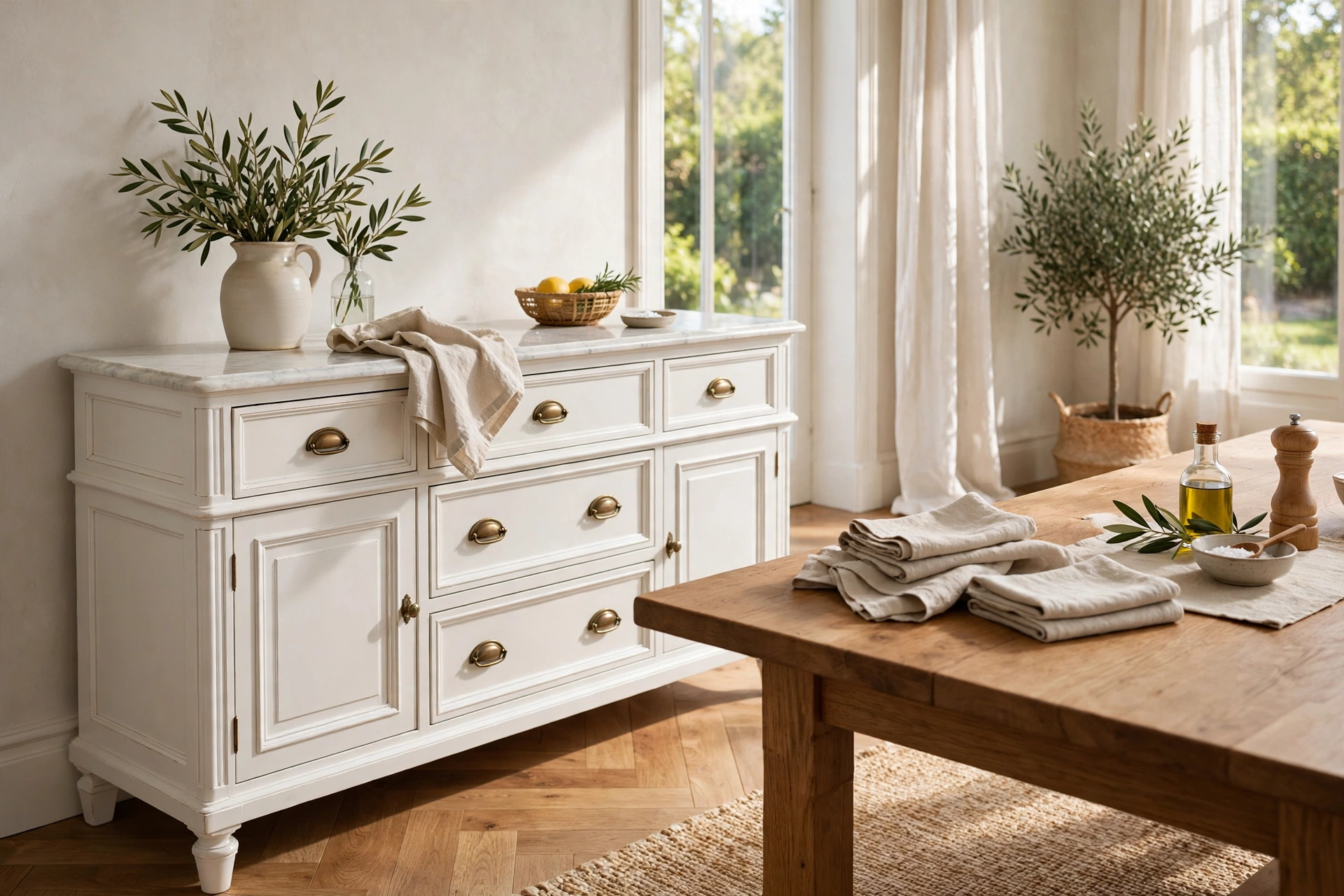
2. Build Floor-to-Ceiling Built-In Cabinets
Floor-to-ceiling built-ins use every inch of wall. Closed lowers hide serving bowls, while open uppers display the pieces you love.
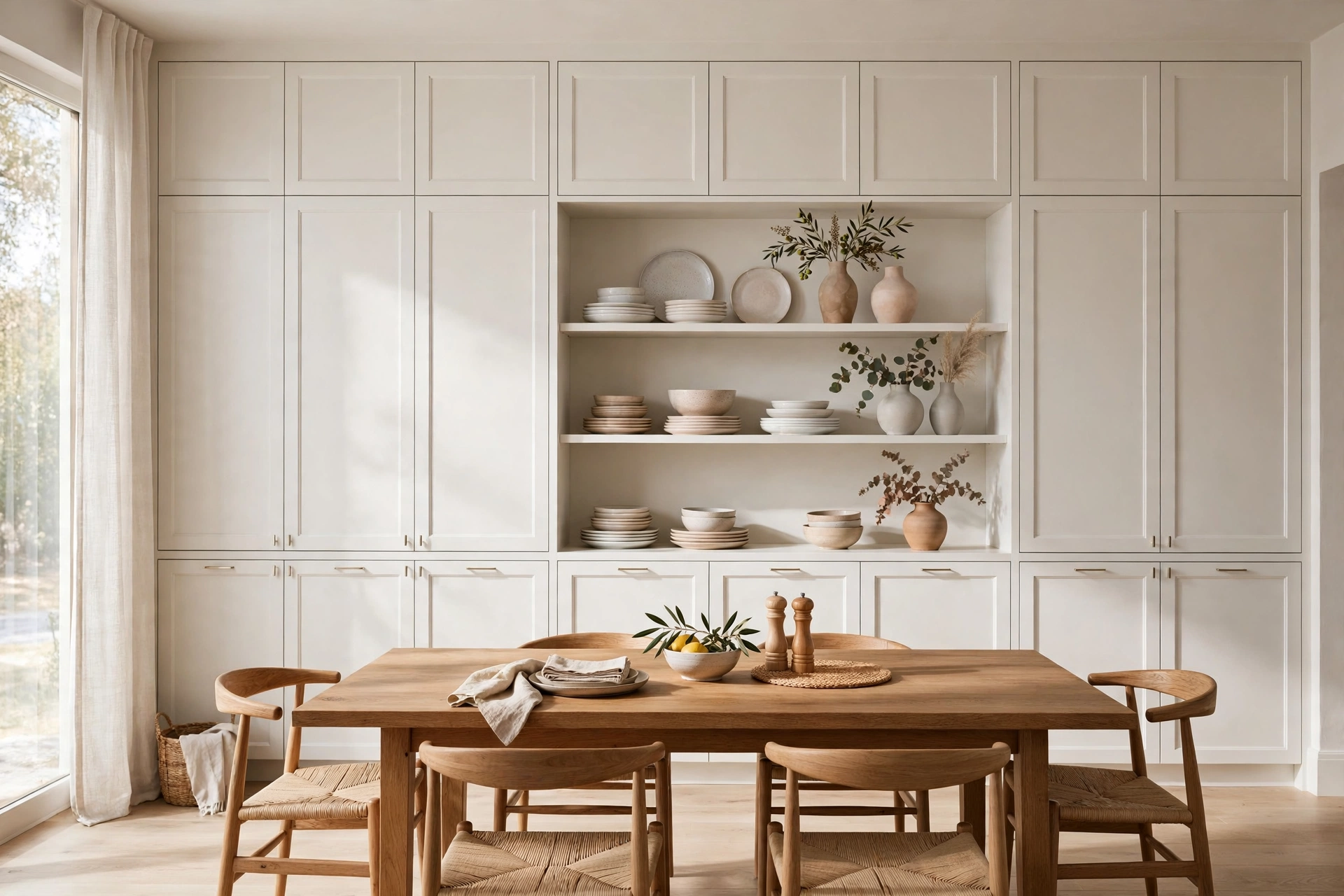
3. Show Off the Good China in a Glass-Front Cabinet
A glass-front china cabinet keeps dust off your best dishes while showing them off. Add LED strips inside and it glows like a display case.
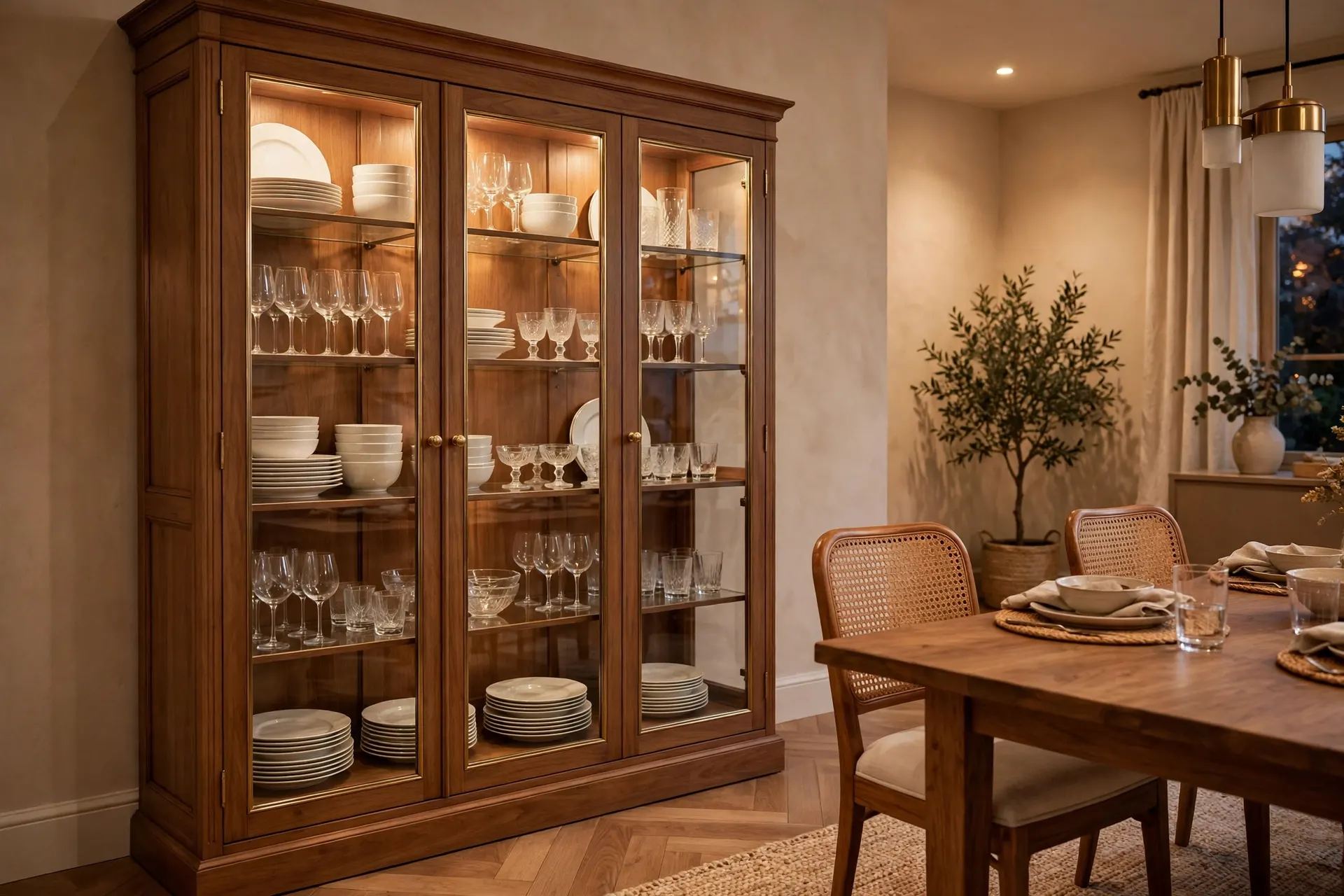
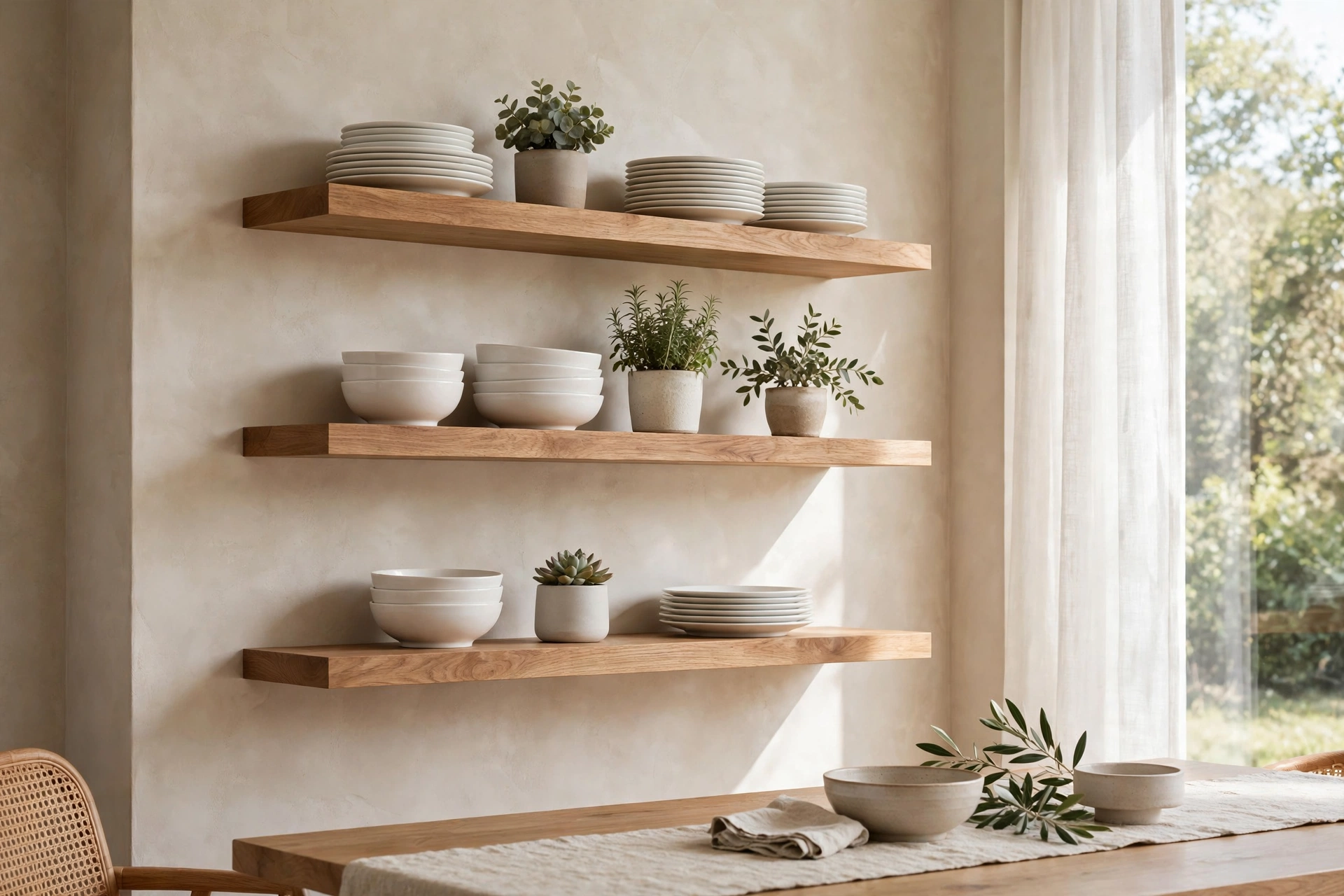
4. Hang Floating Shelves for Everyday Dishes
Floating shelves keep everyday plates and glasses within reach. Style them with a few vases so they feel like decor, not a crowded shelf.
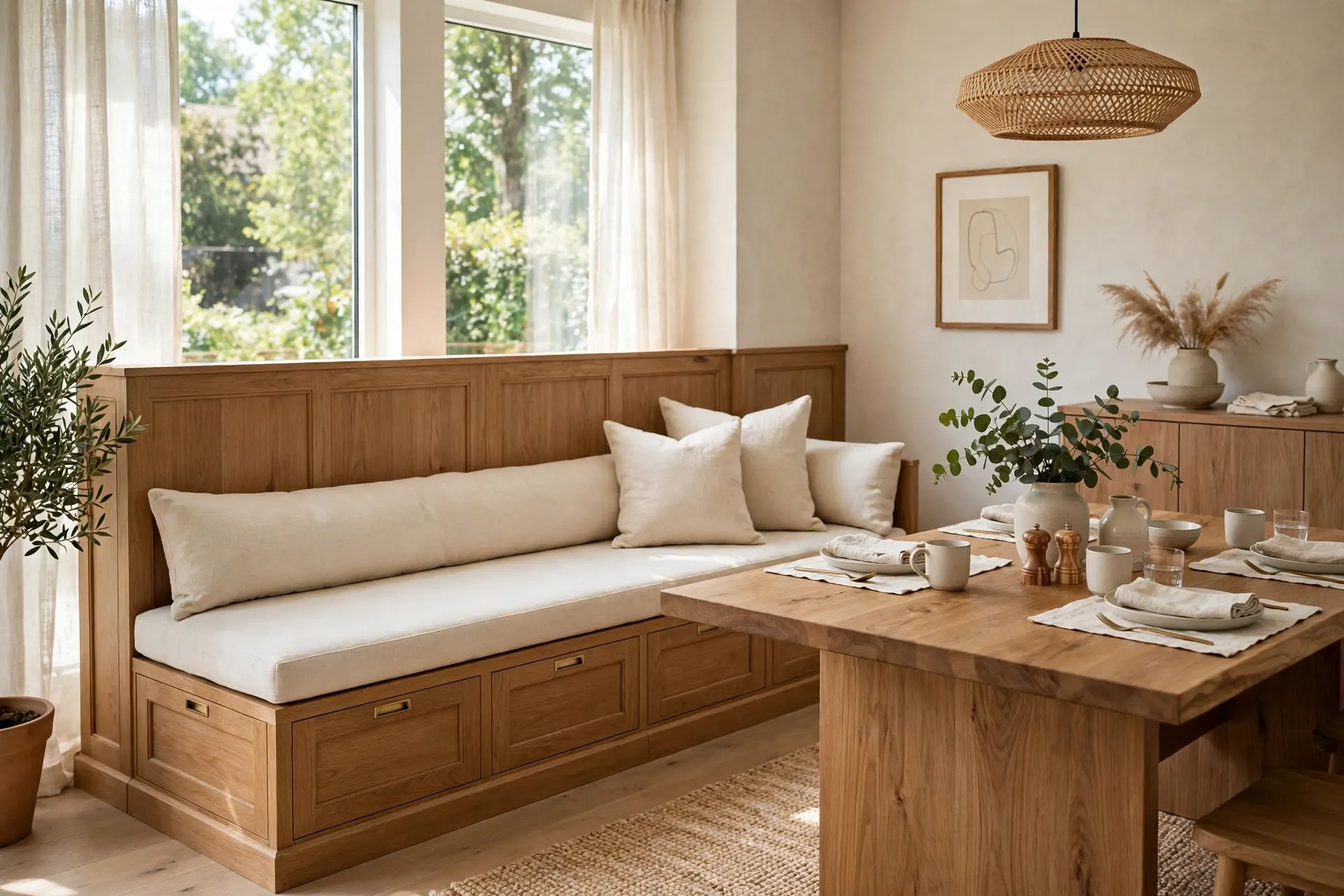
5. Choose a Banquette Bench With Hidden Drawers
A banquette bench adds seating and secret storage in one. Deep drawers underneath hold tablecloths, board games and spare cushions.
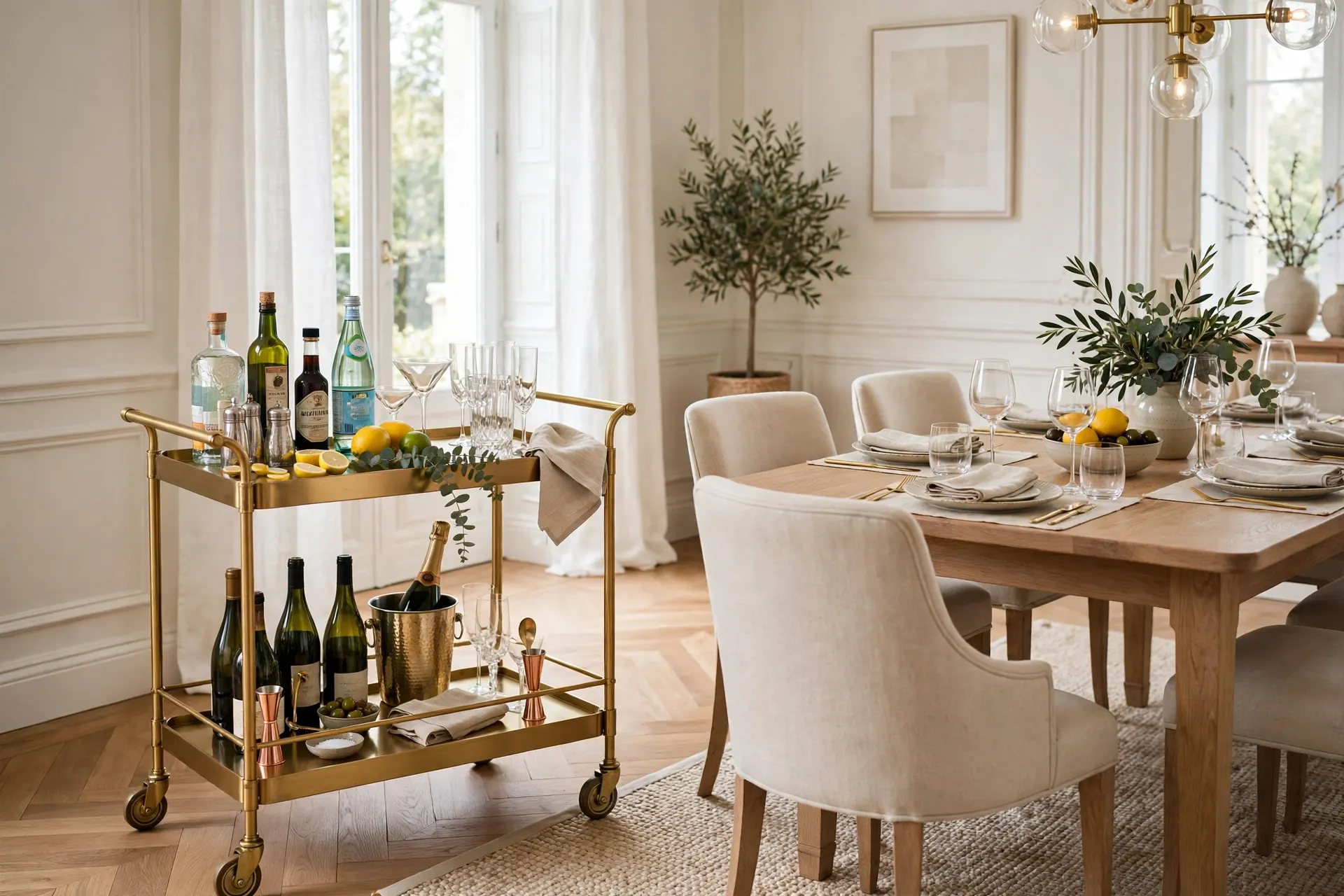
6. Roll In a Bar Cart for Drinks and Glassware
A rolling bar cart holds bottles, glasses and cocktail tools, then wheels away when dinner is served. Pick brass or black metal for a polished look.
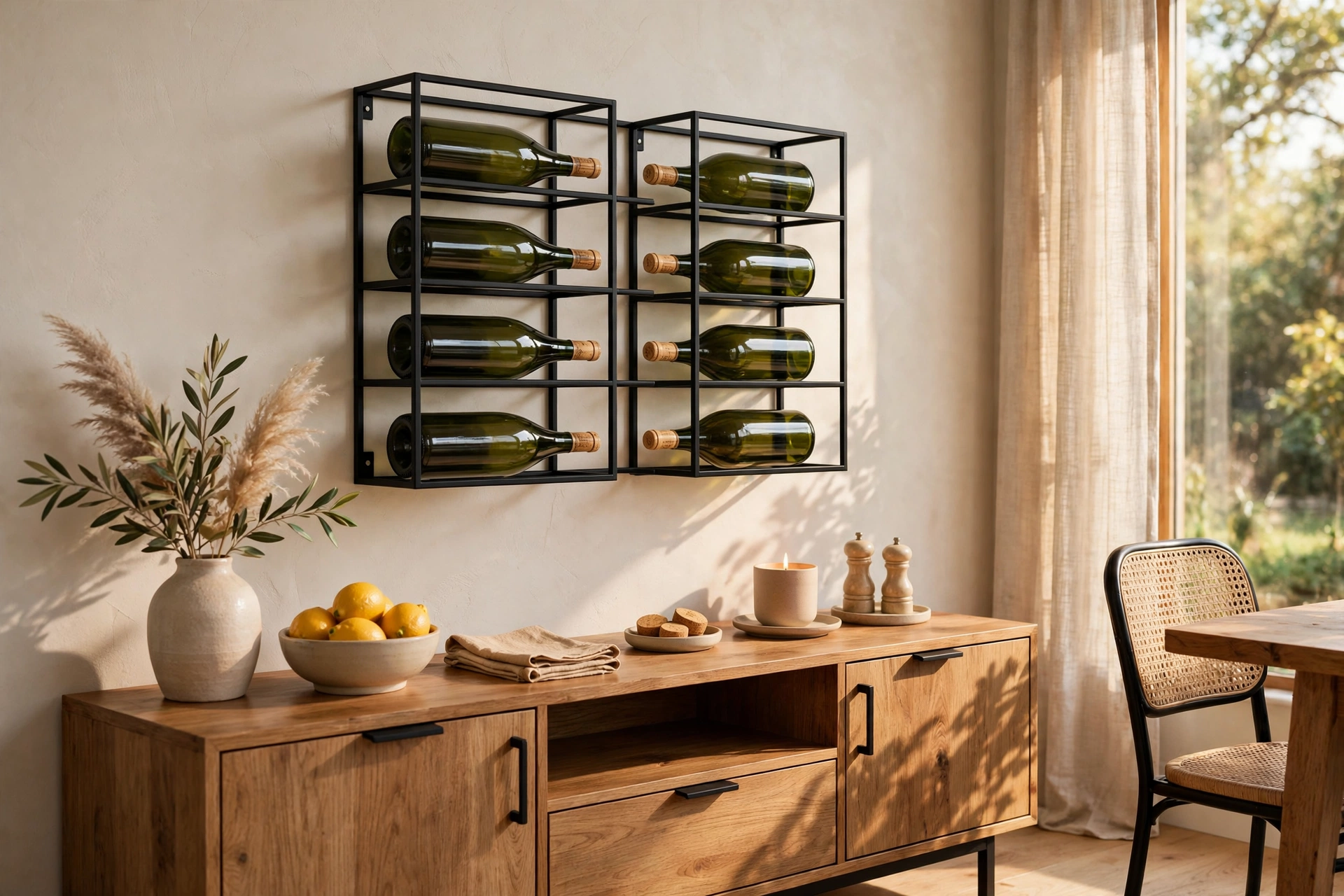
7. Mount a Wall-Mounted Wine Rack
A wall-mounted wine rack stores bottles horizontally and frees cabinet space. It turns the collection into wall art above the sideboard.
8. Turn the Buffet Into a Serving Station
A long buffet works as a serving station during dinner parties. Set platters along the top and keep serving spoons in the drawers.

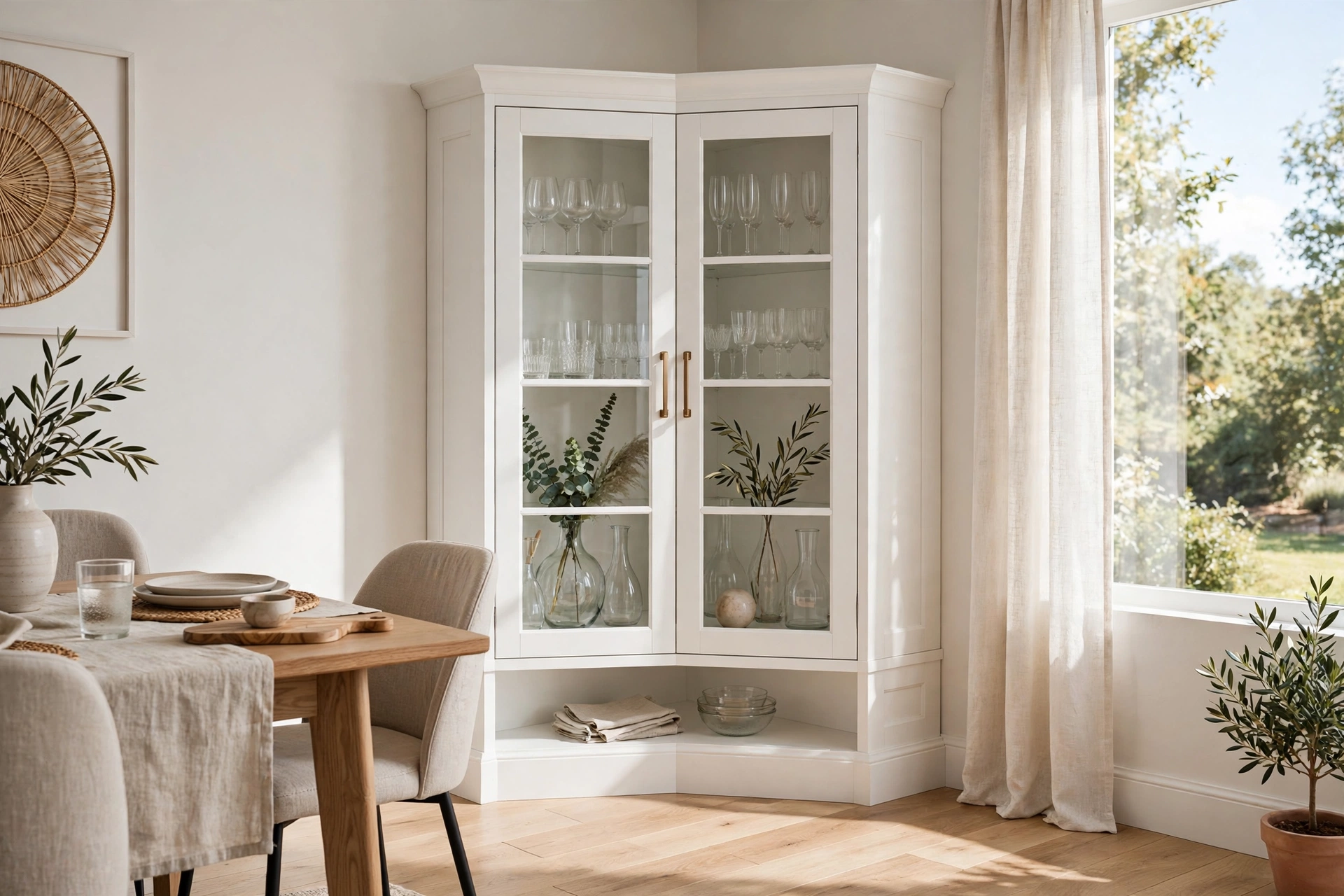
9. Tuck a Corner Cabinet Into Awkward Angles
A corner cabinet turns dead space into useful storage. Its angled shelves fit tall vases and glassware that never fit elsewhere.
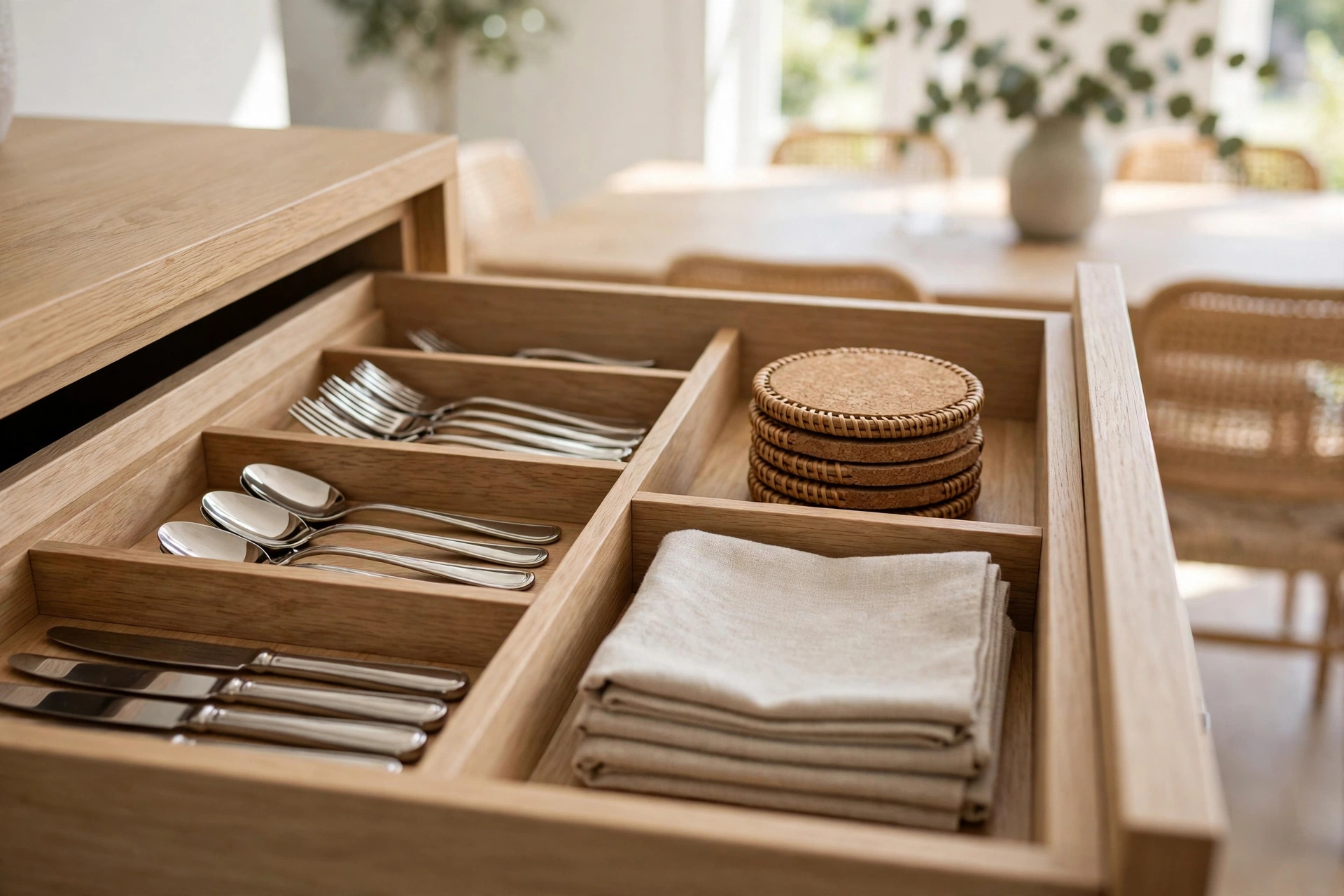
10. Add Drawer Inserts for Cutlery and Linens
Drawer inserts stop cutlery and linens sliding into a jumble. Divided trays keep forks, napkins and coasters separate, so setting the table takes seconds.
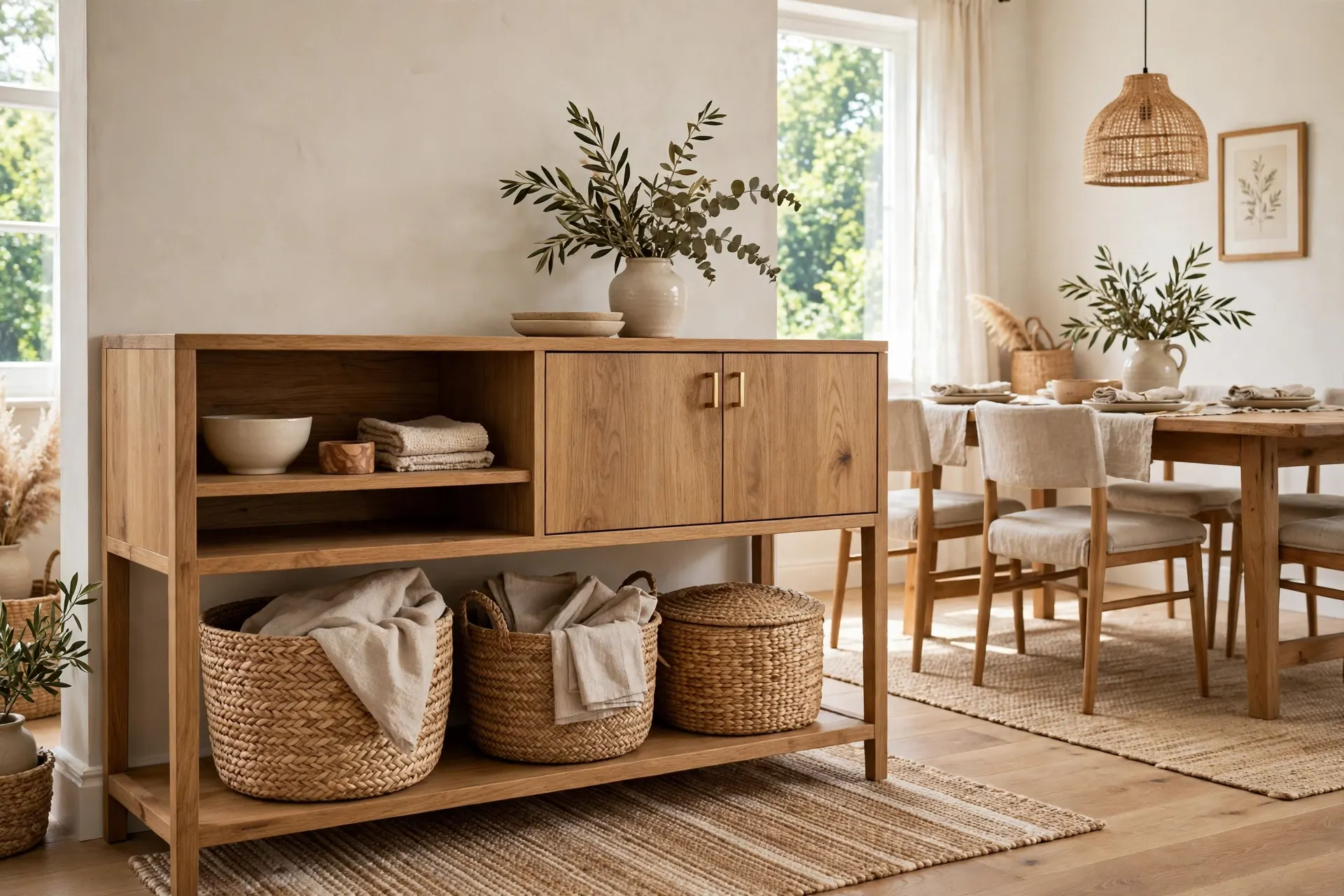
11. Slide Woven Baskets Under the Sideboard
Woven baskets under a sideboard hide spare linens and placemats in style. They add warm texture and cost far less than new furniture.
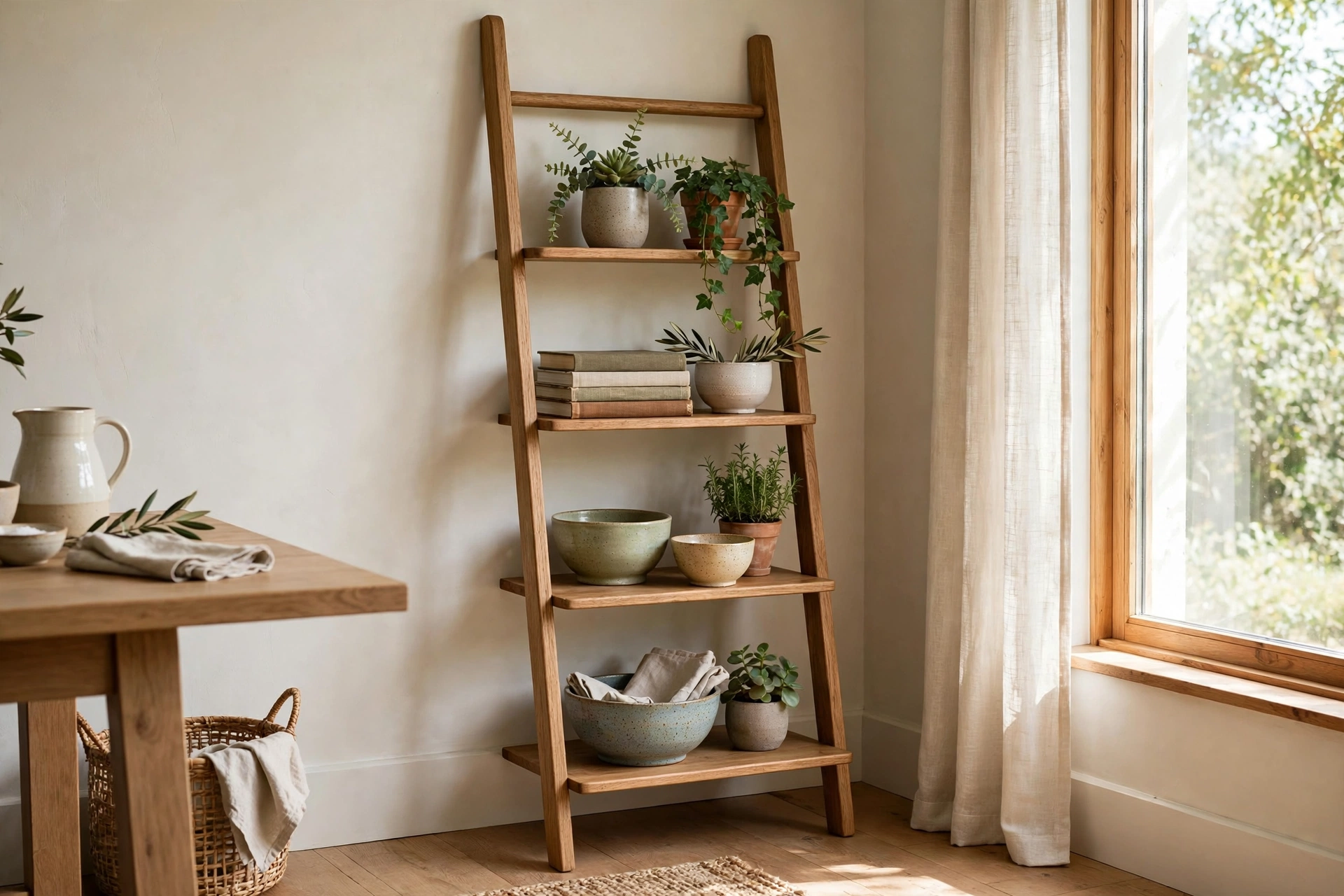
12. Lean a Ladder Shelf Into the Corner
A ladder shelf adds vertical storage without a heavy footprint. Use it for cookbooks, plants and bowls, keeping heavy pieces low.
13. Repurpose a Dresser as a Sideboard
An old dresser makes a charming dining room sideboard. Its deep drawers swallow table linens, and fresh paint ties it to the room.
14. Create an Open Shelving Gallery Wall
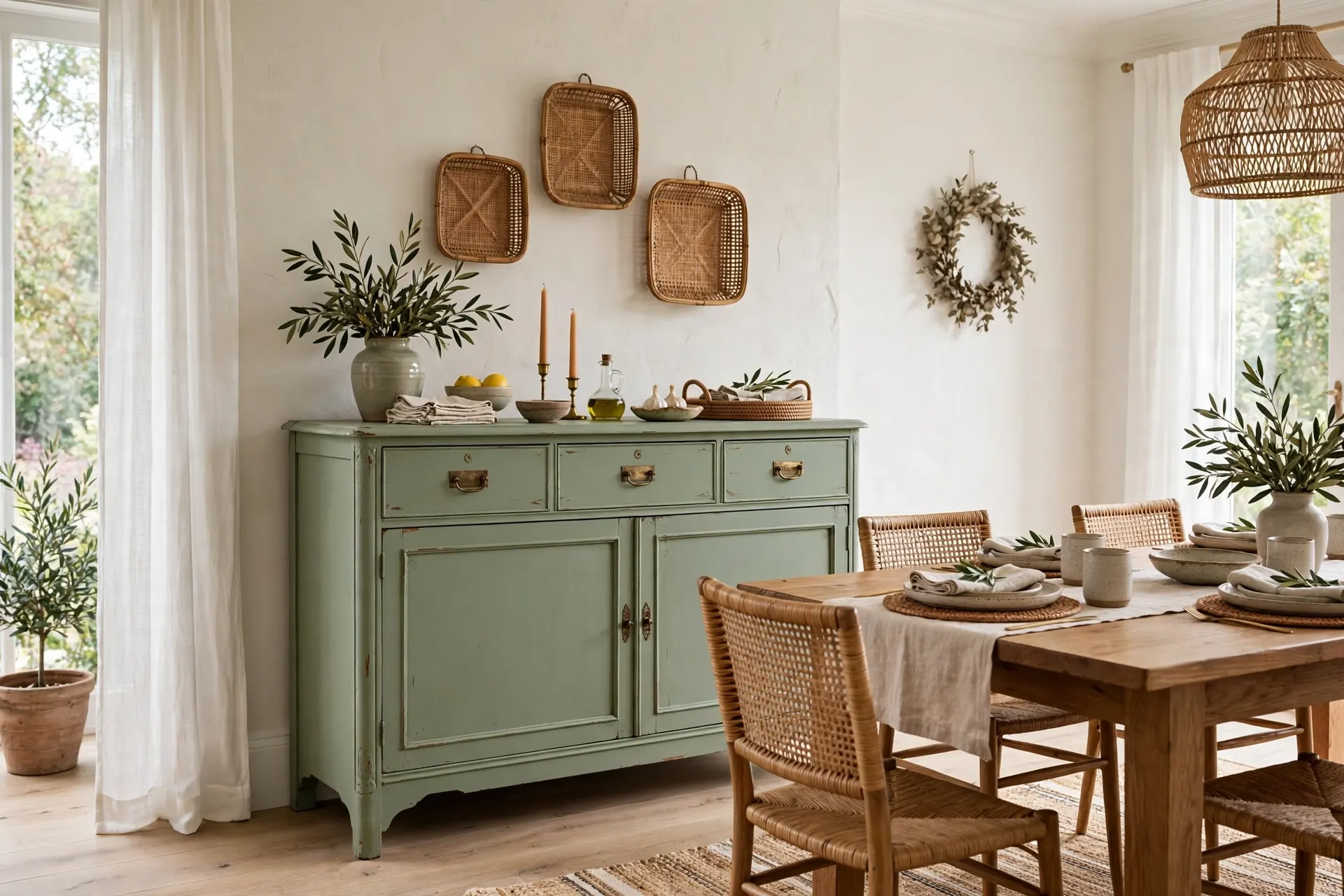
An open shelving gallery wall mixes plates, art and plants for a collected look. Keep the palette tight so the shelves read intentional, not cluttered.
15. Display Plates on a Wall Rack
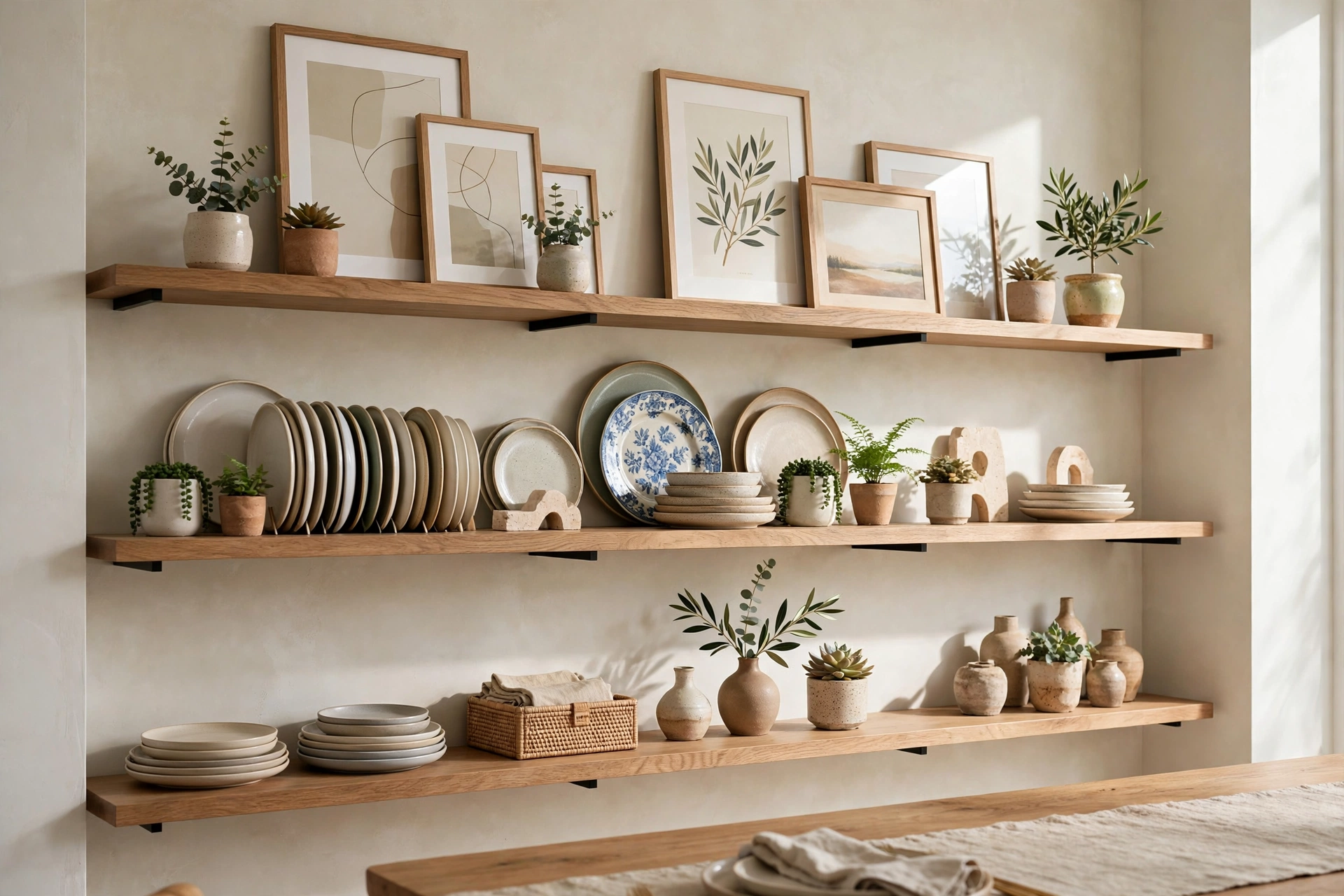
A wall plate rack turns pretty dishes into decor and frees cabinet shelves. Hang your favourite pattern where guests can admire it.
16. Pick an Extendable Table With Storage
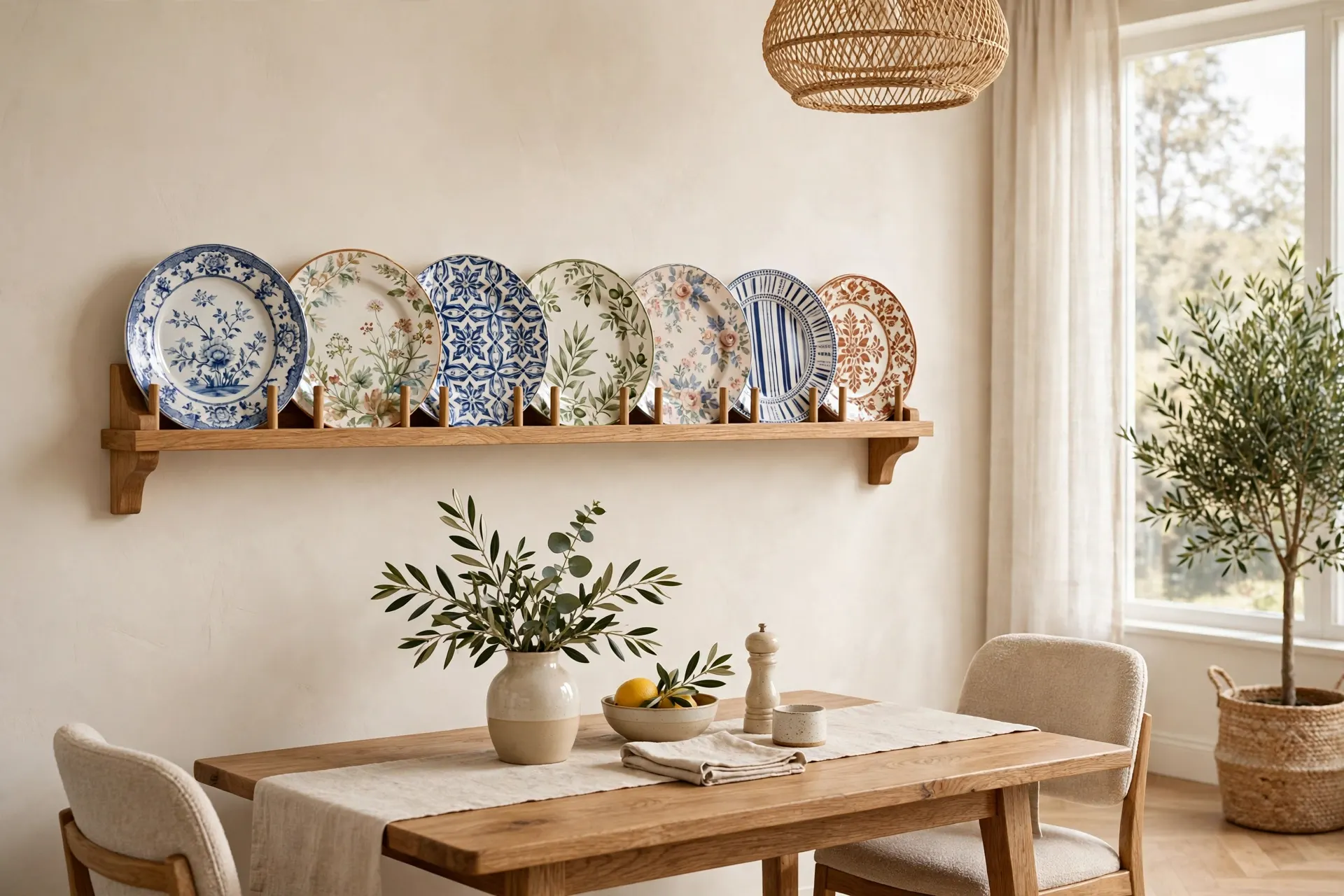
An extendable table with a built-in leaf drawer solves two problems at once. The leaves stay inside, ready whenever guests arrive — see our dining table decor ideas for styling it.
17. Use Storage Ottomans as Extra Seats
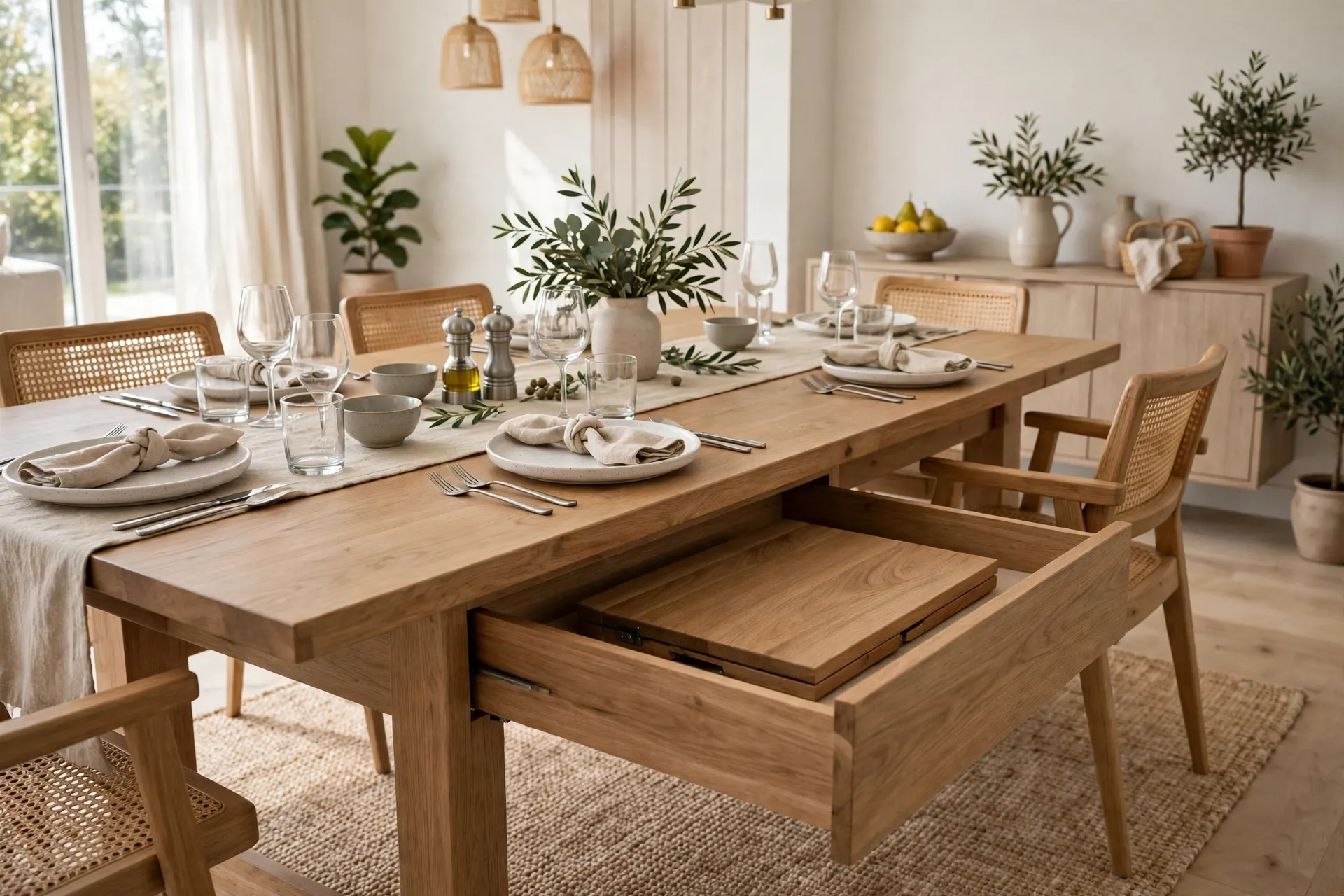
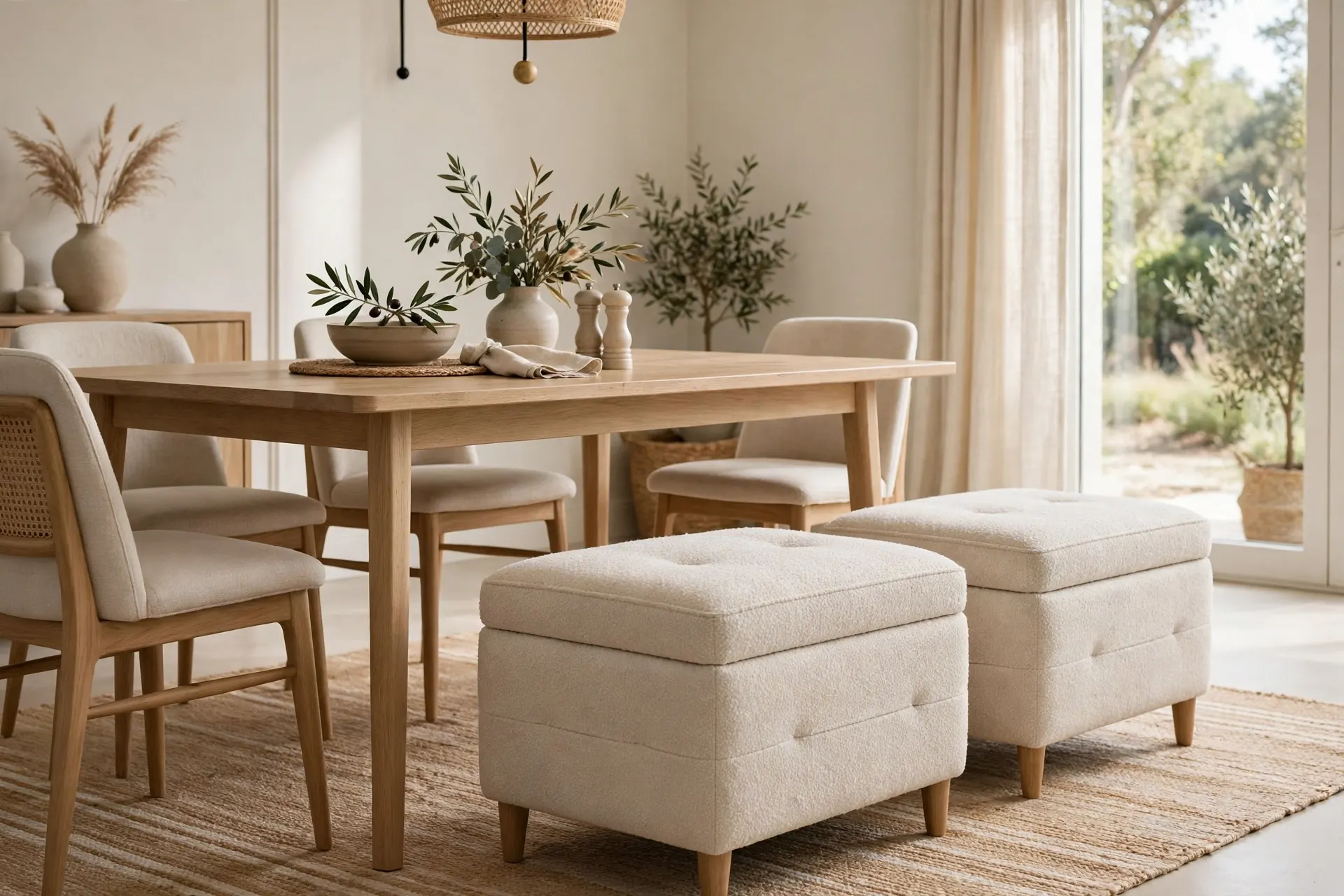
Storage ottomans pull up as extra seats and hide napkins and placemats inside. Choose washable fabric so spills at the table are no drama.
18. Add a Sideboard With a Charging Drawer
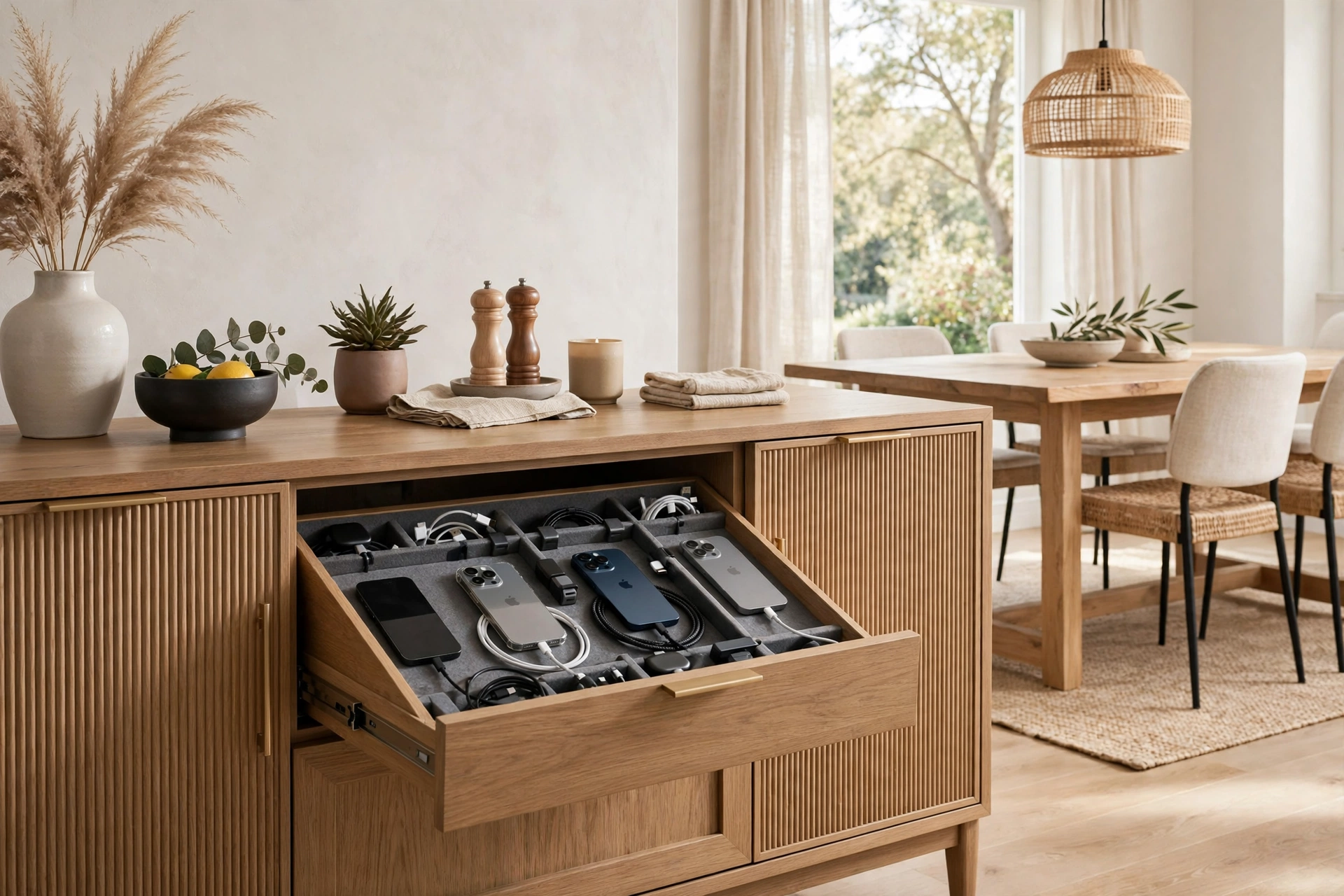
A sideboard drawer with a power strip charges phones and tablets out of sight. It keeps cables off the table and the room looking calm.
19. Carve Out a Recessed Wall Niche
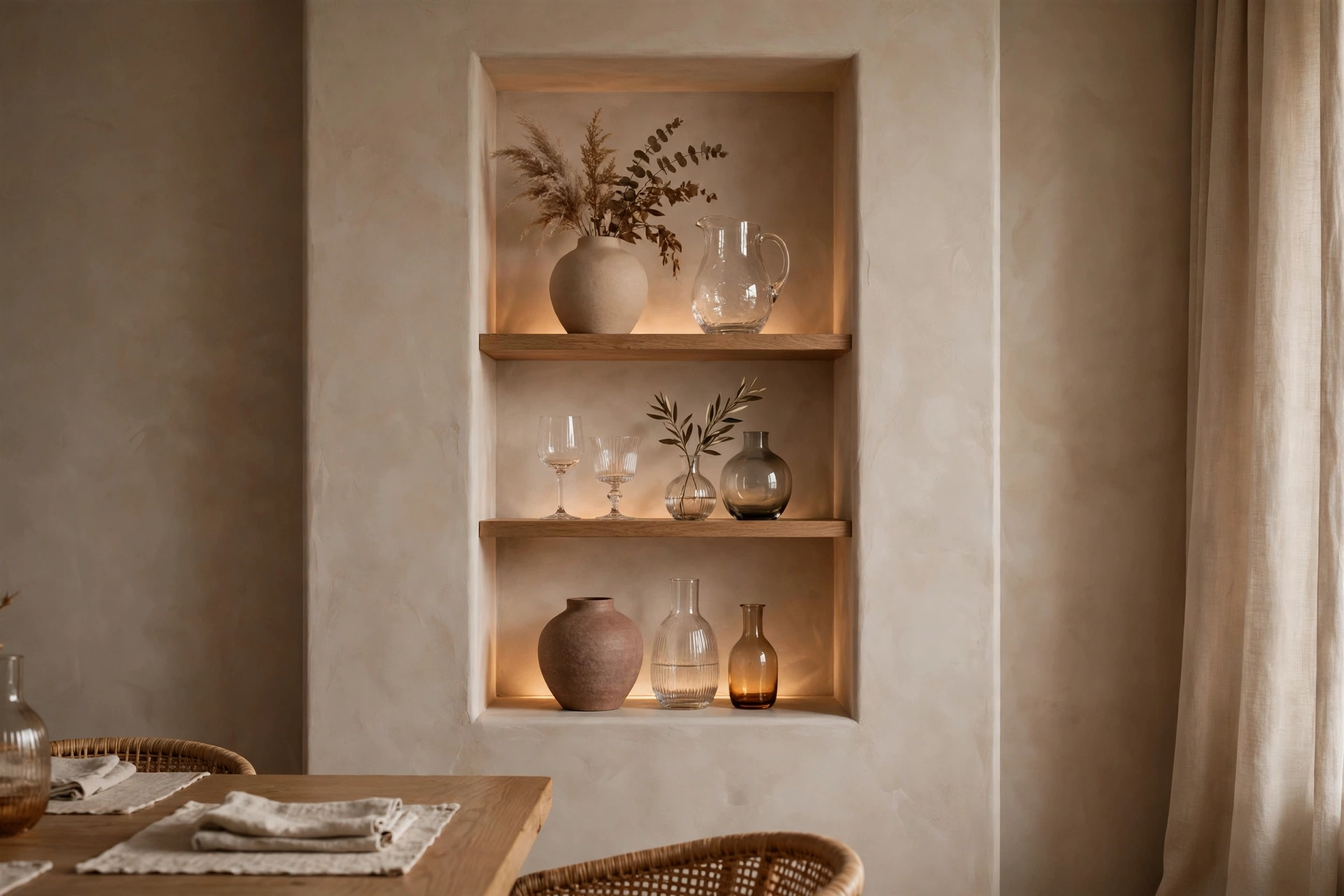
A recessed wall niche adds shelves without stealing floor space. Paint it the same colour as the wall and it looks built in.
20. Buy a Tall Hutch for the Good China
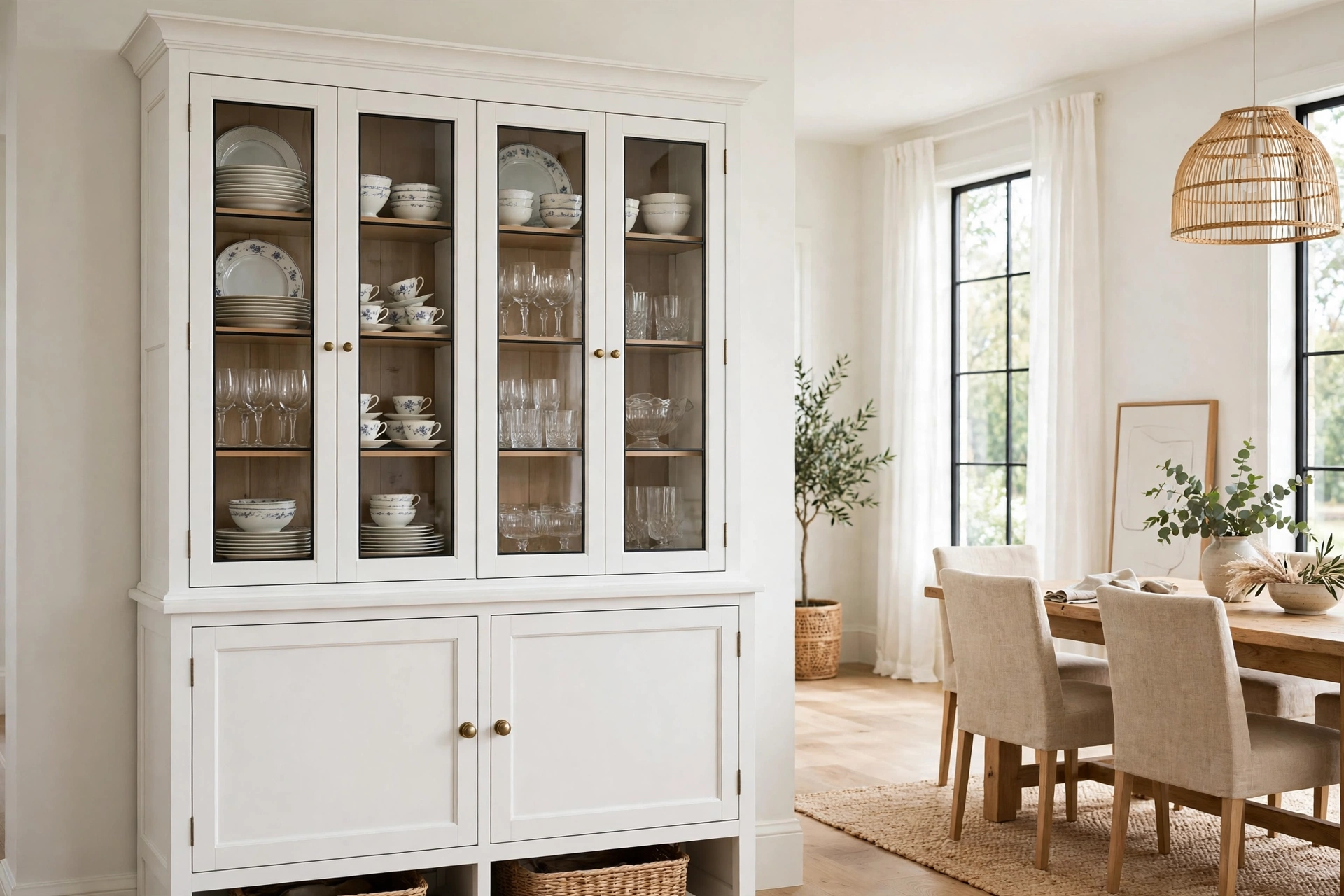
A tall hutch stores the full service for twelve in one narrow footprint. Keep everyday dishes low and rarely used pieces up high.
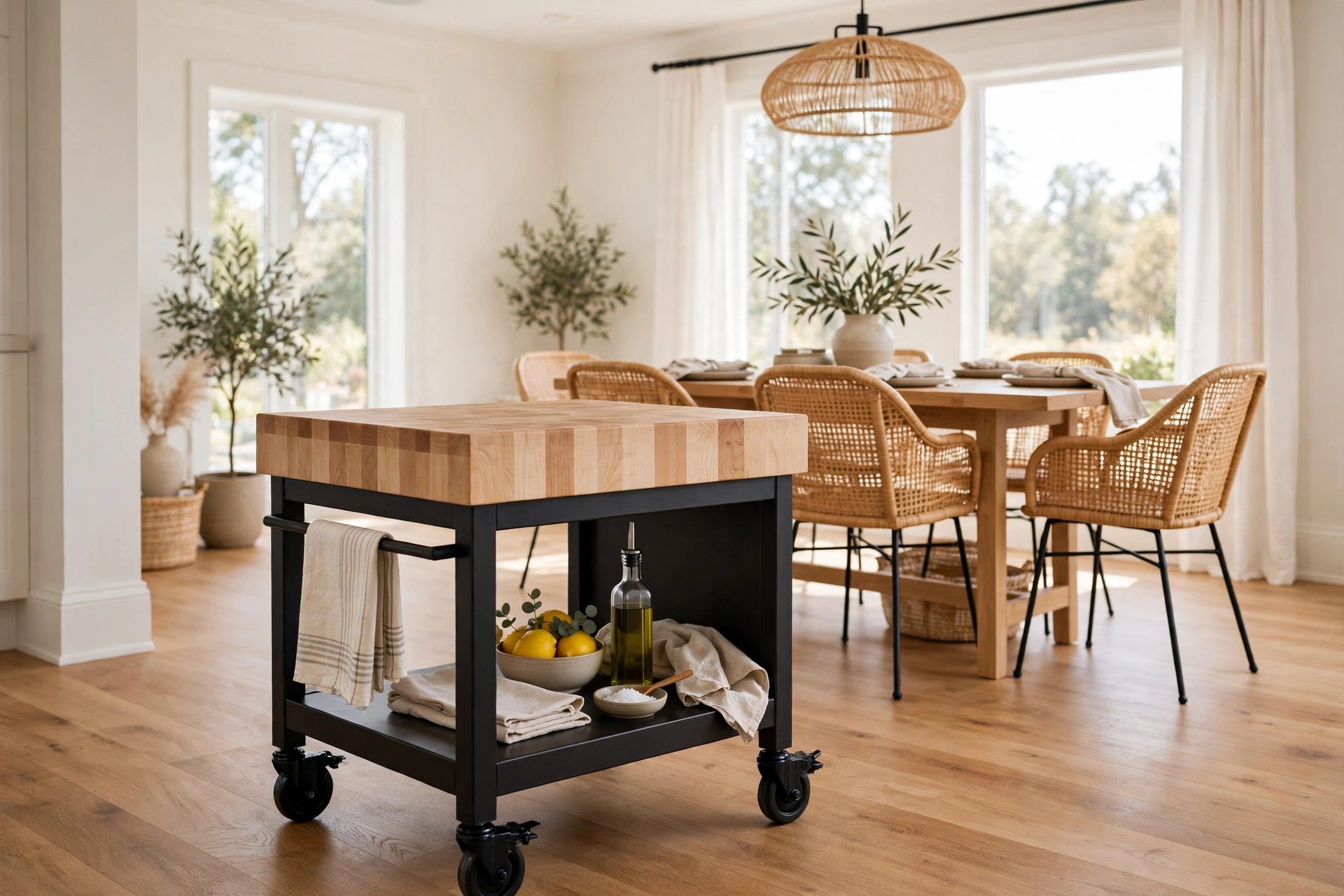
21. Roll In a Kitchen Island as a Serving Cart
A small rolling island doubles as a serving cart. Wheel it in with desserts, then roll it back to the kitchen after dinner.
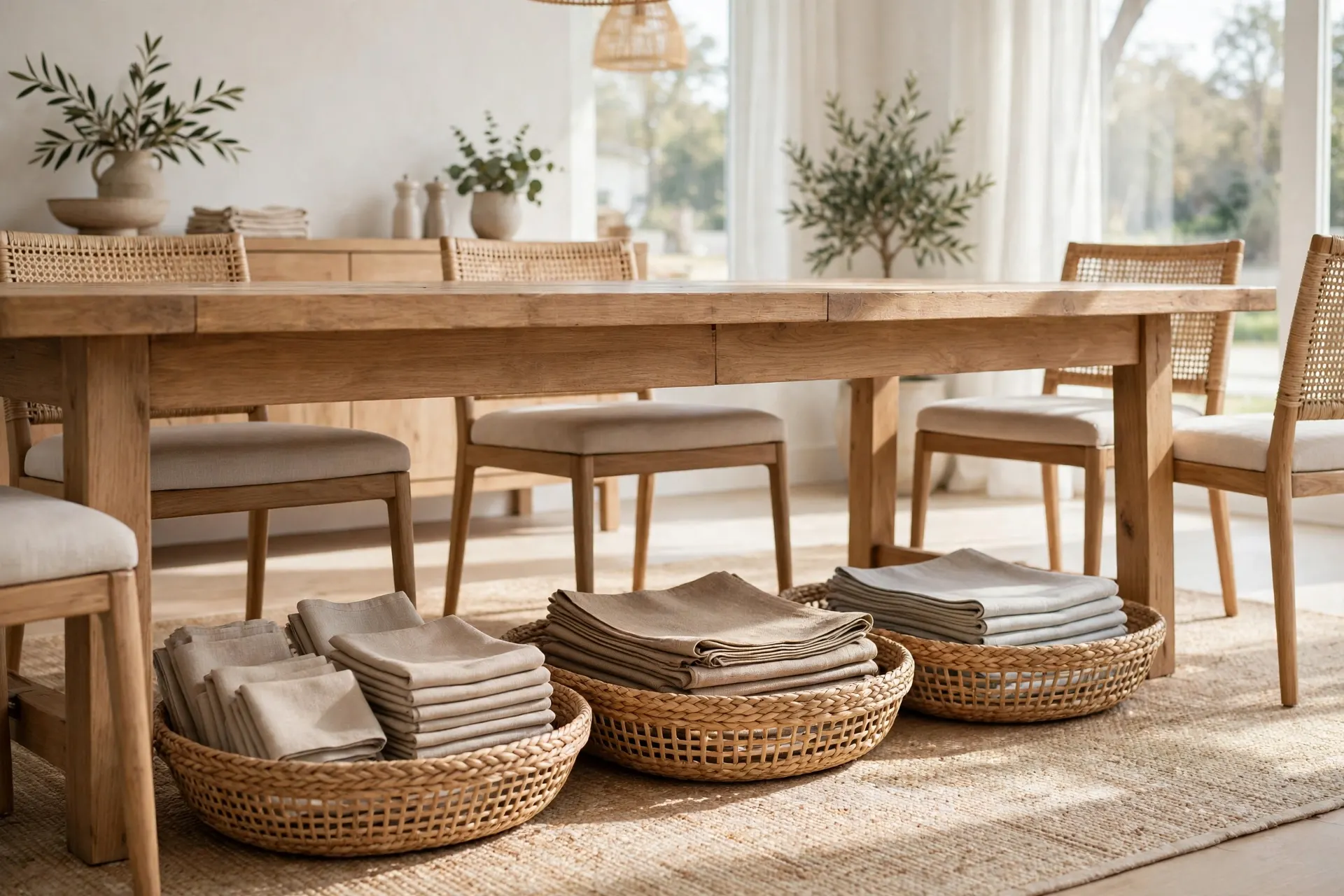
22. Stash Baskets Under the Dining Table
Low baskets under the dining table hold extra napkins and placemats where you need them. Pick shallow ones so chairs still slide in easily.
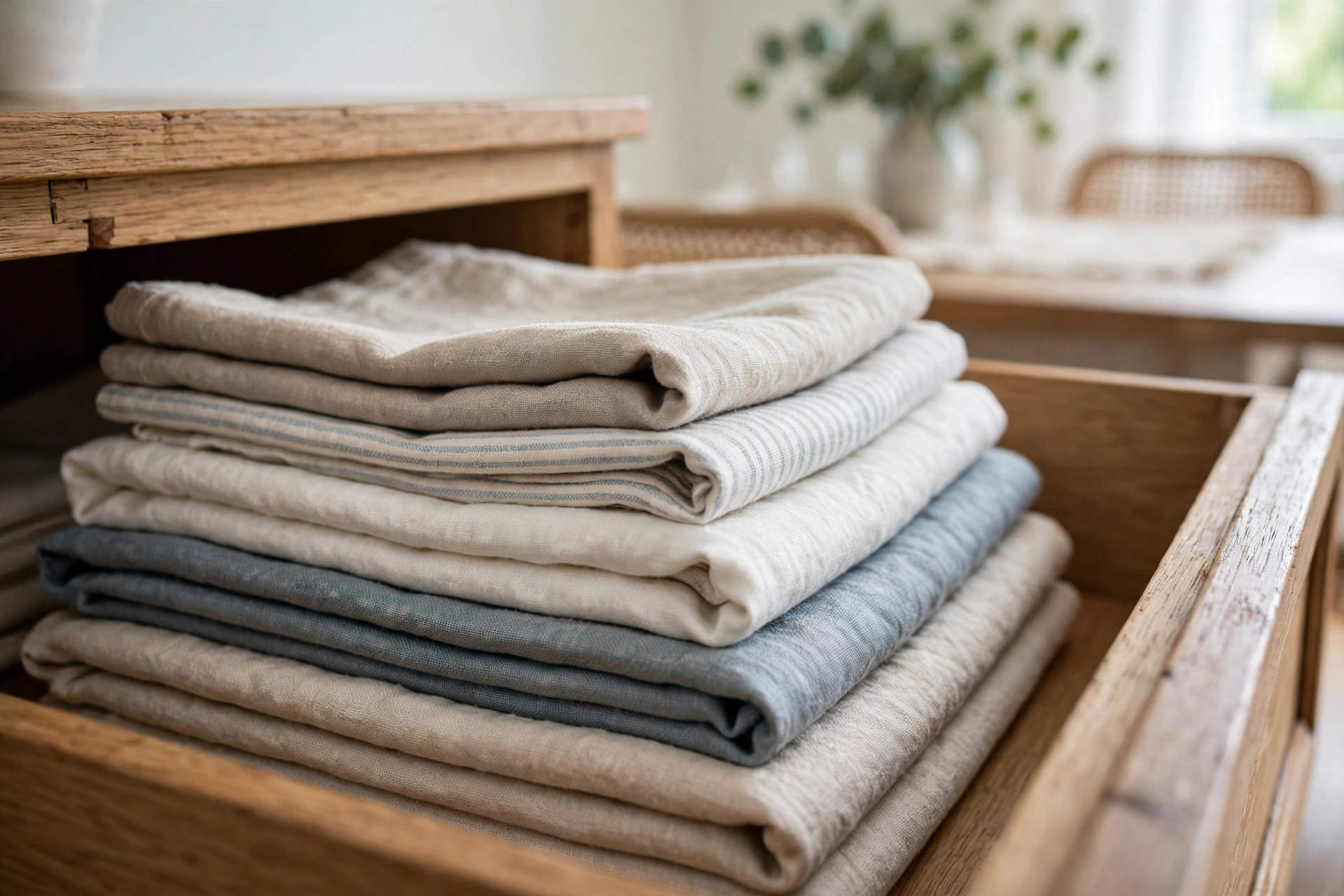
23. Keep One Dedicated Linen Drawer
Give table linens one dedicated drawer and they stop migrating around the house. Fold tablecloths by size so the right one is on top.
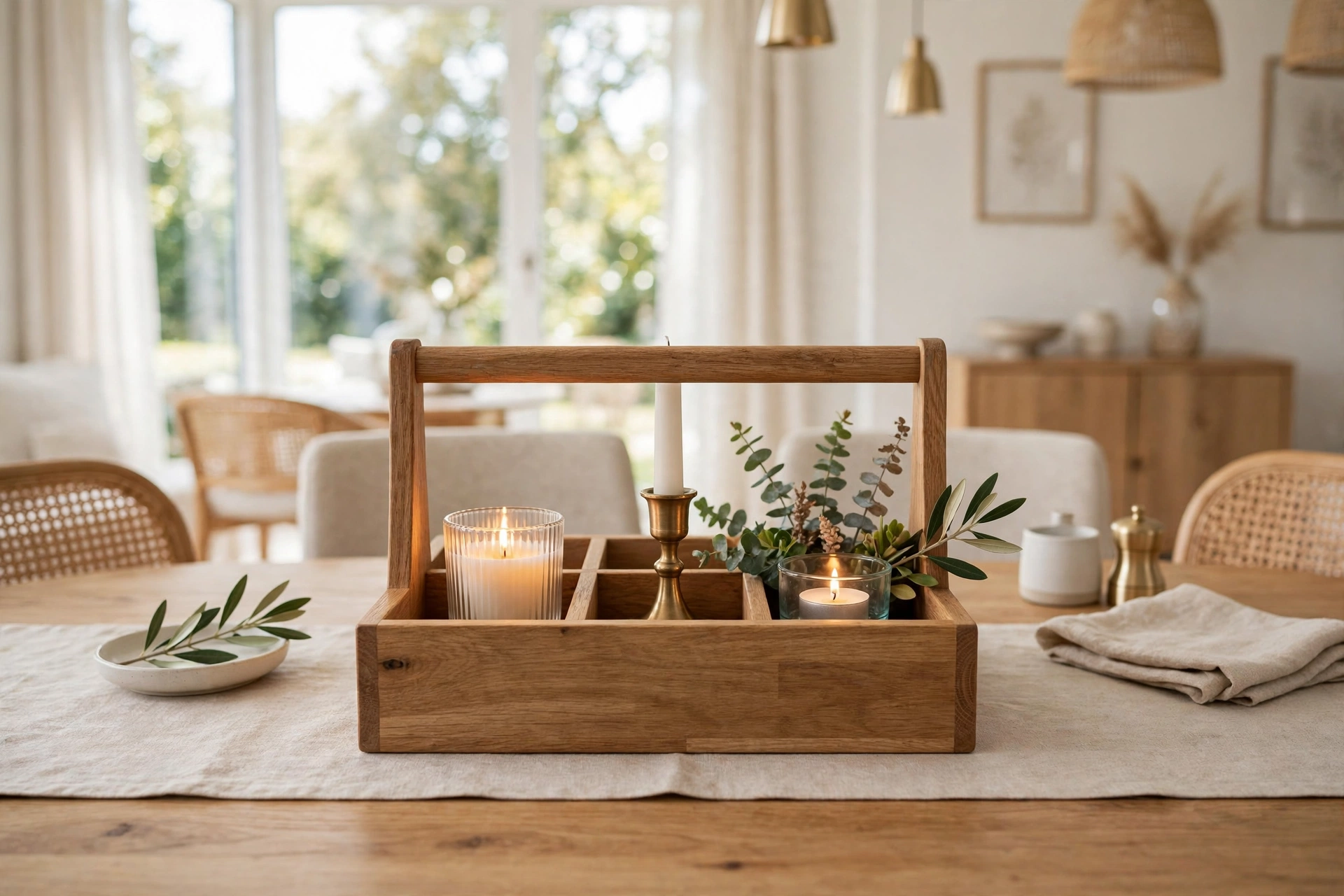
24. Set Up a Centerpiece Caddy for Candles
A centerpiece caddy keeps candles, holders and matches in one tray. Lift it off at mealtimes and the table is instantly clear.
25. Hang a Mirrored Cabinet to Bounce Light
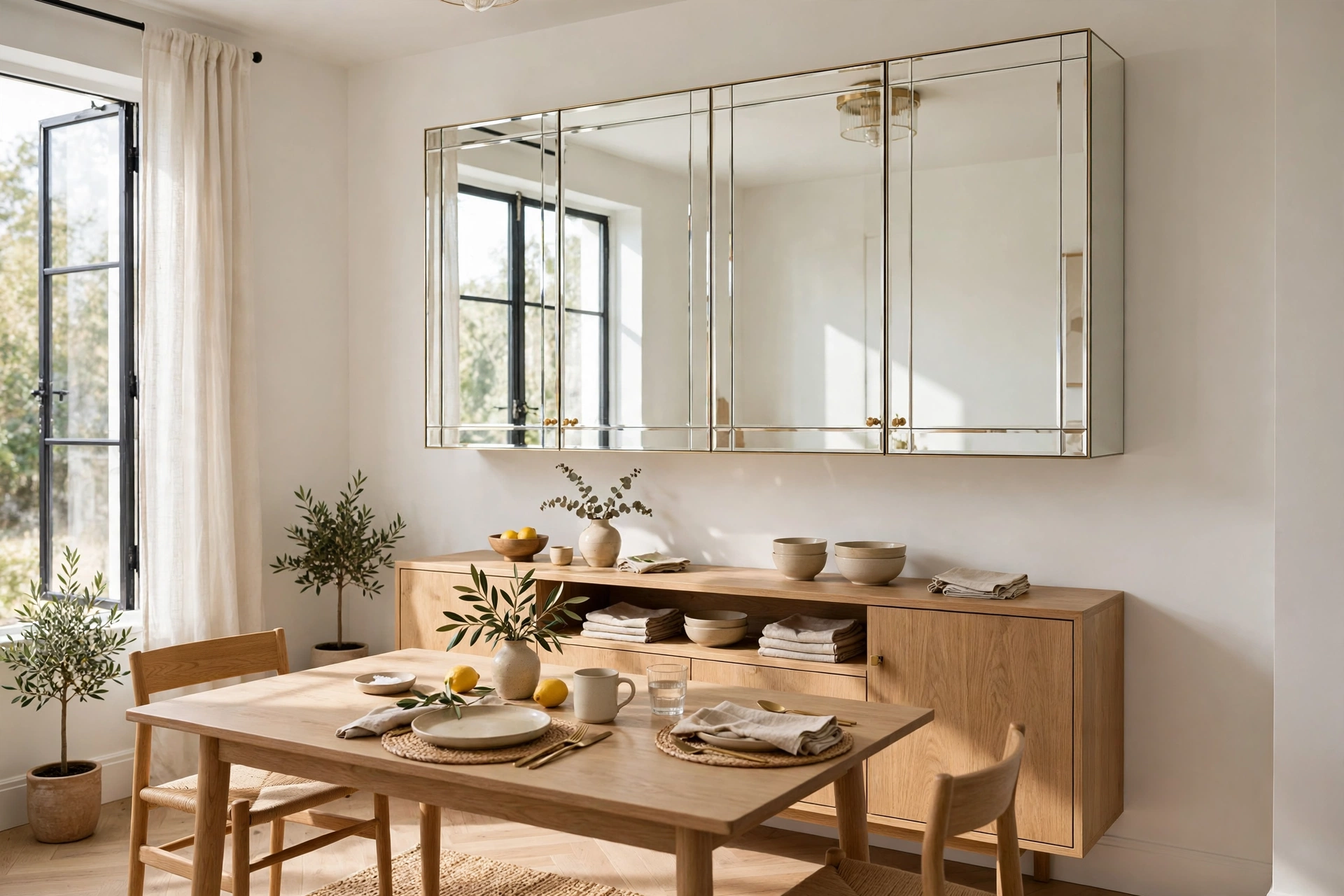
A mirrored cabinet reflects daylight and makes a small dining room feel bigger. It hides glassware behind the mirror — pair it with our dining room light fixtures guide.
26. Stack Serving Trays for Easy Access
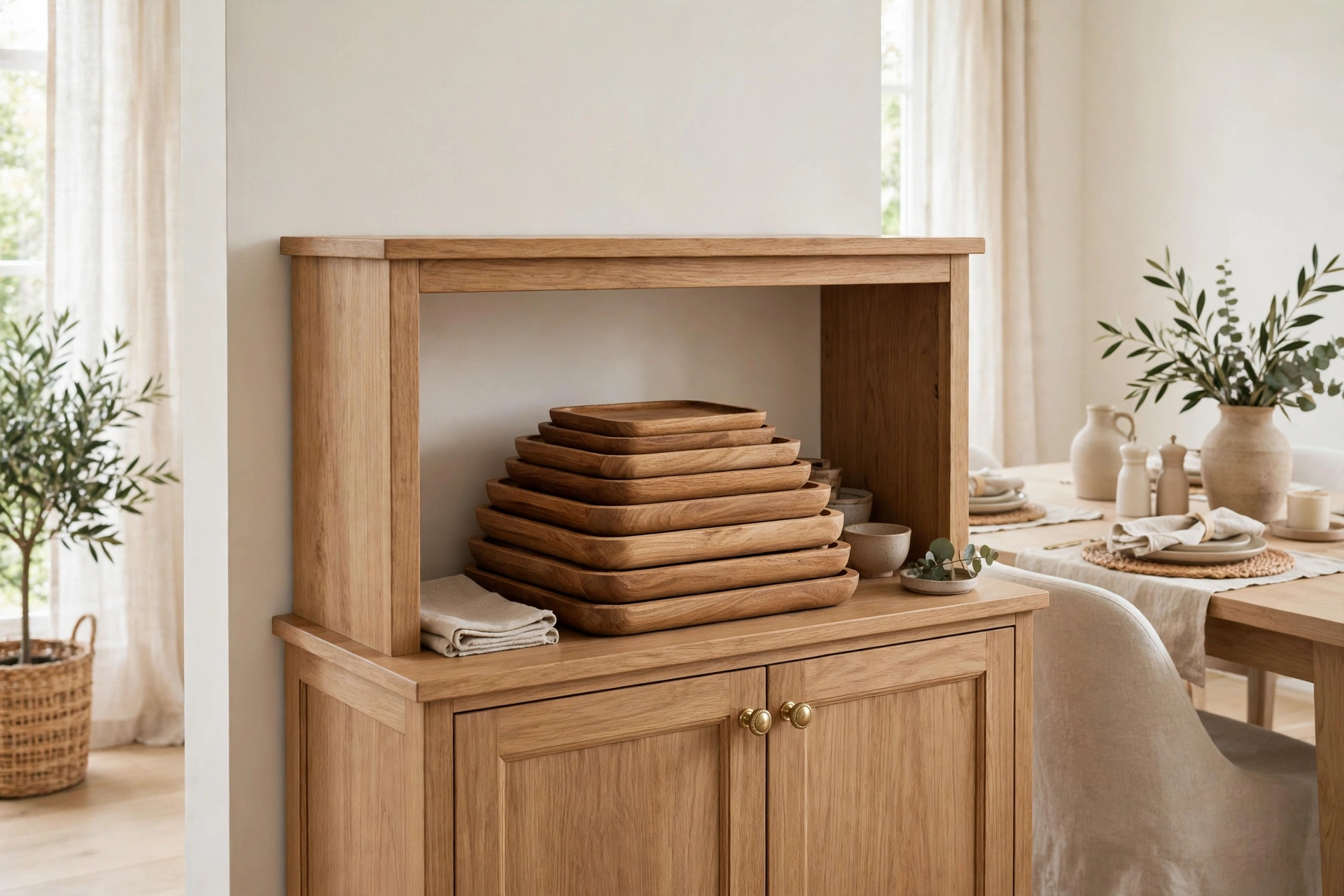
Stackable serving trays store flat and lift out one at a time. Keep a set near the sideboard so carrying dishes never needs a second trip.
27. Add Hooks Behind the Dining Room Door
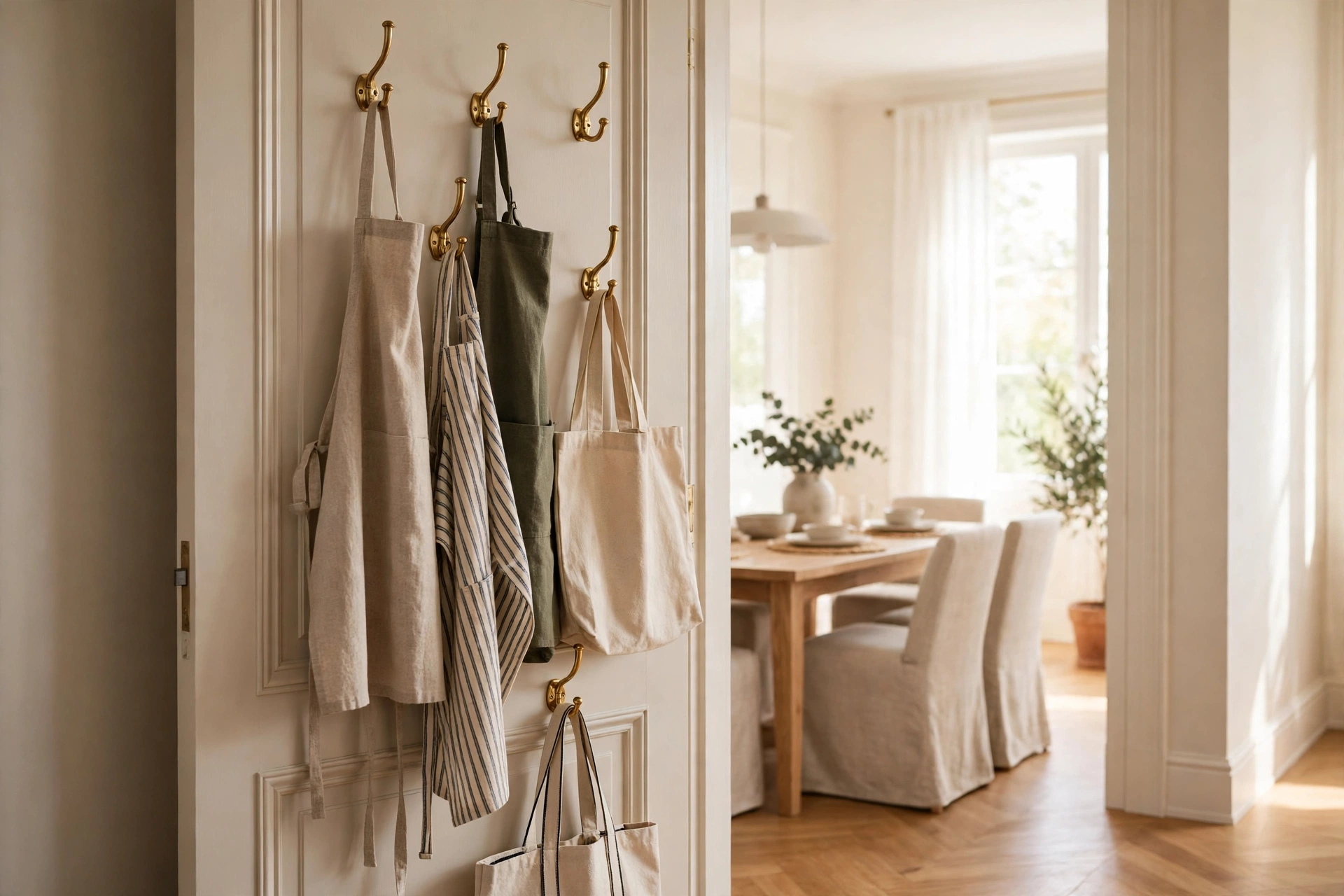
Hooks behind the door hold aprons and tote bags. It is the smallest storage win in the room, and one of the most used.
28. Style the Sideboard Top as a Vignette
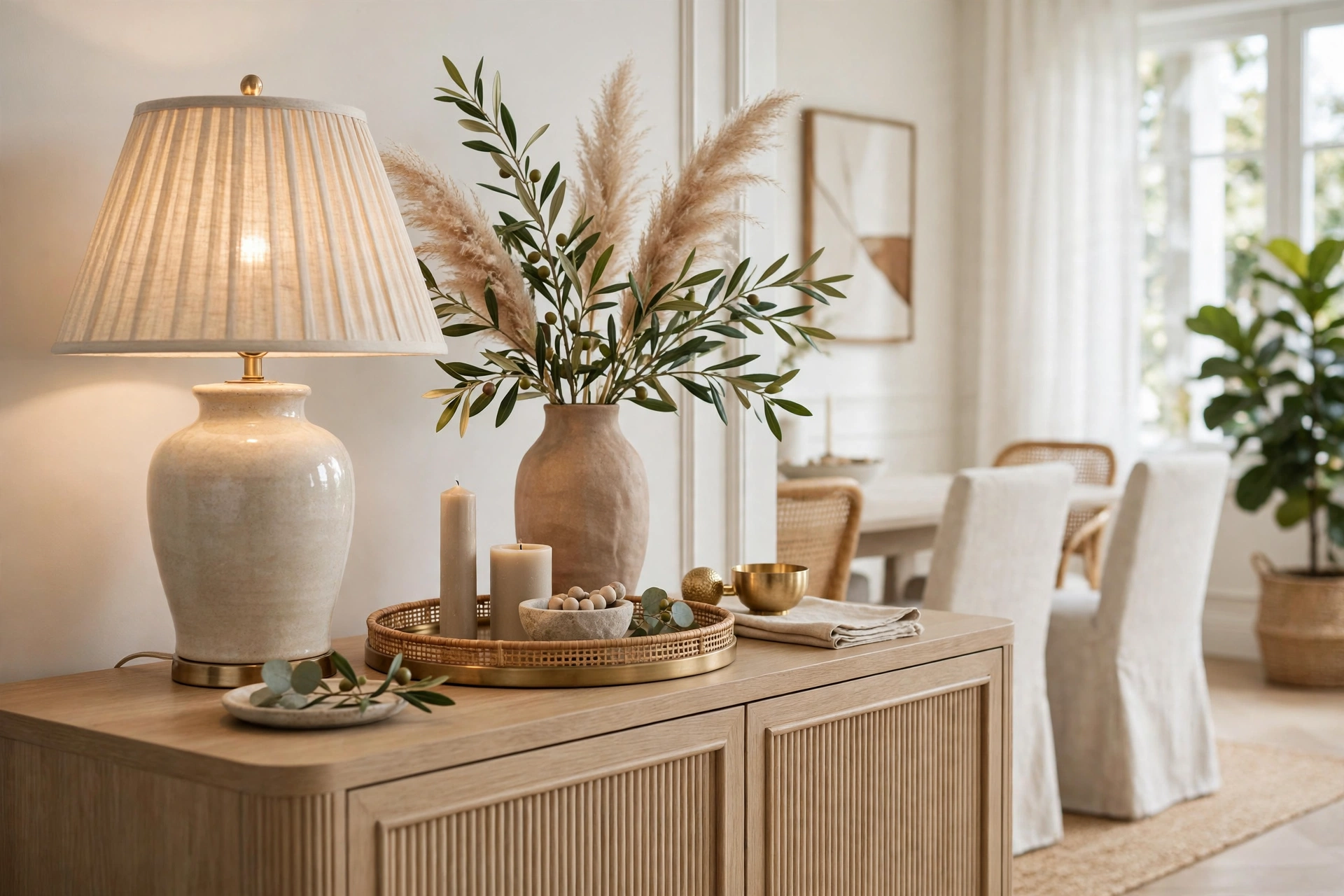
A styled sideboard top with a lamp, vase and tray looks like decor while hiding the drawer below. Keep it to three pieces so it stays tidy.
29. Keep a Seasonal Bin for Holiday Serveware
A labeled seasonal bin holds holiday platters and themed linens in one place. Store it high and swap it in when the season arrives.

30. Fit Pull-Out Trays in Deep Cabinets
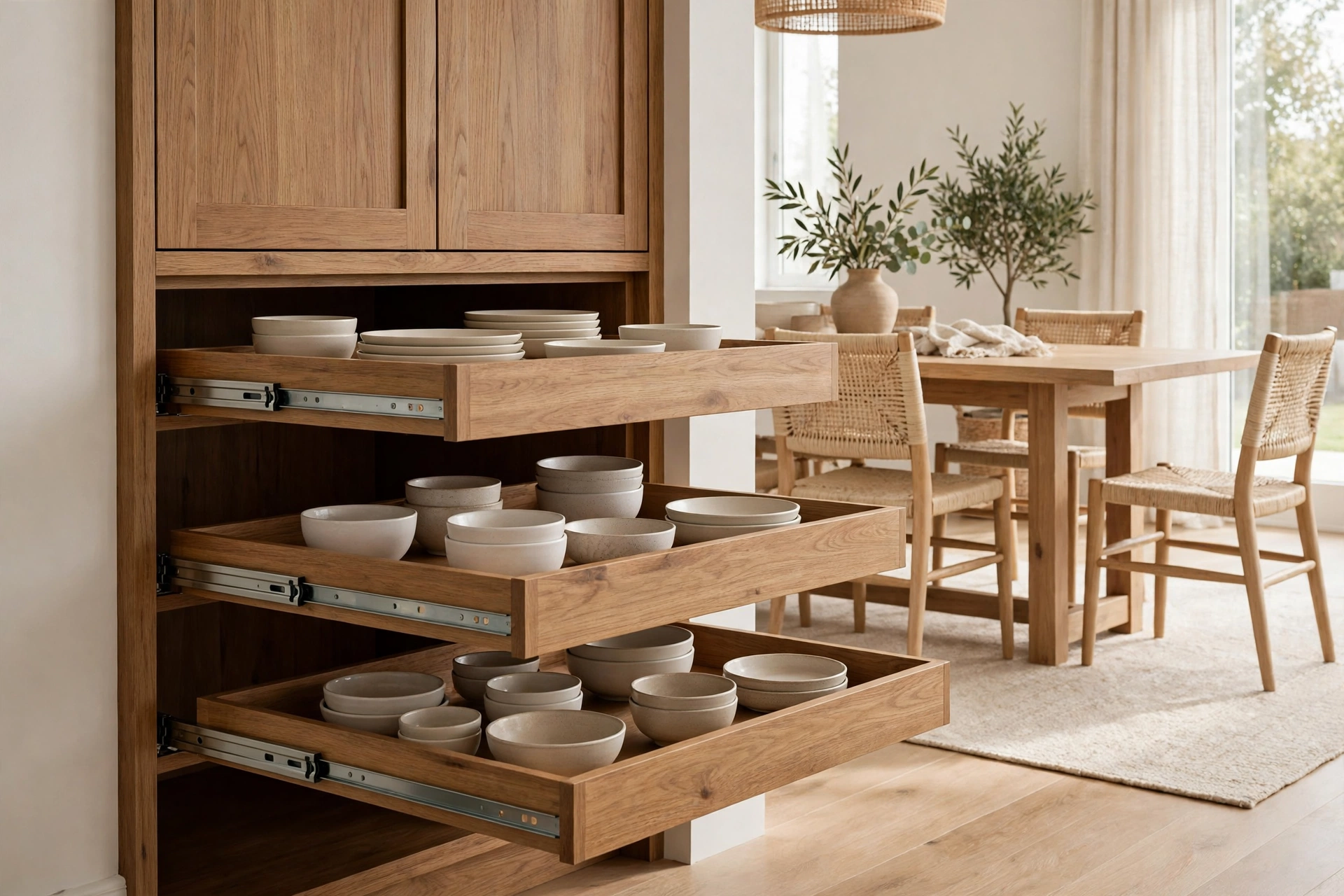
Pull-out trays bring the back row of deep cabinets forward. No more reaching past stacks of plates for the serving bowl at the back.
31. Choose a Glass-Door Pantry Cabinet
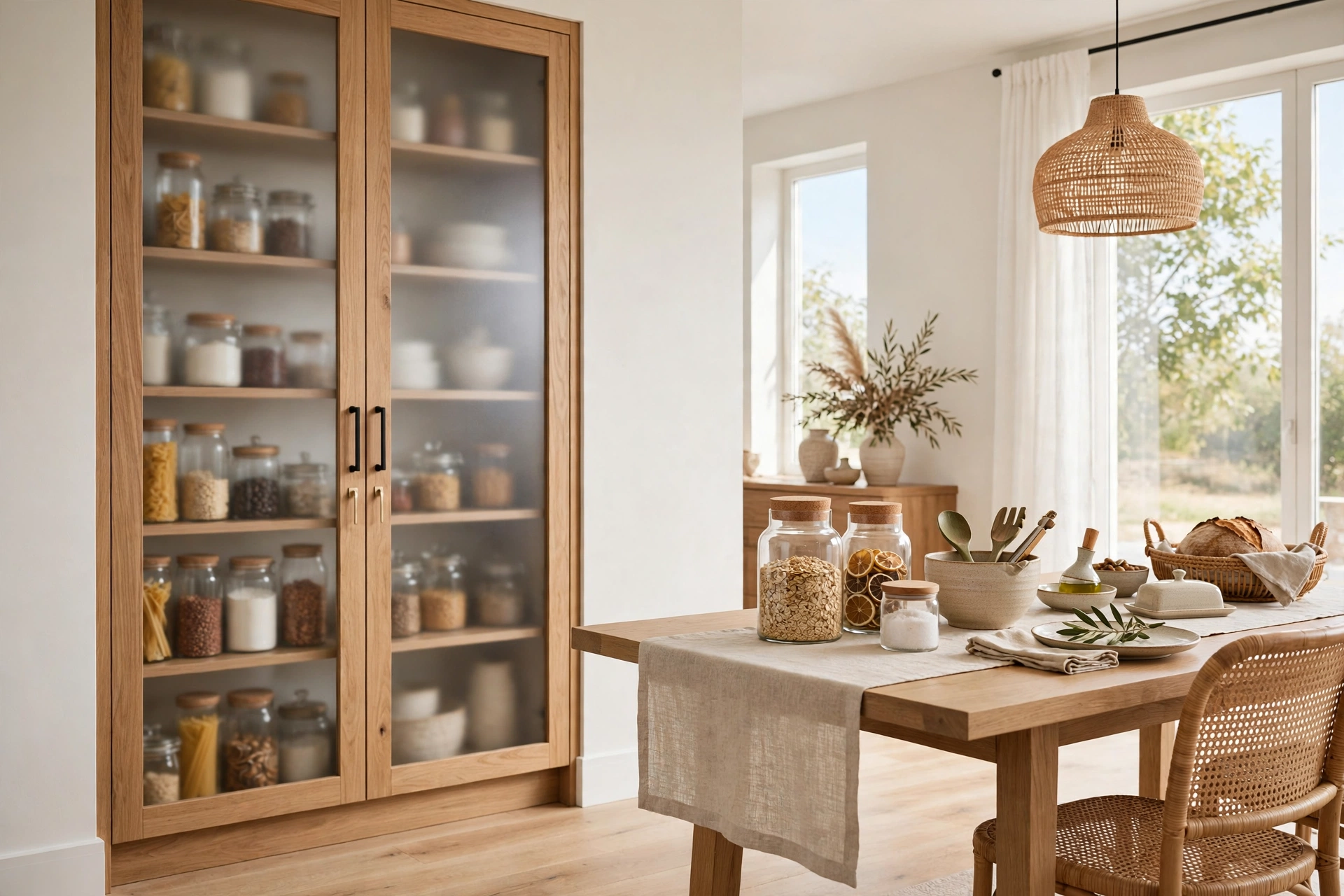
A glass-door pantry cabinet near the dining room holds overflow dry goods and serving pieces. Frosted glass hides the mess while keeping things visible.
32. Pick a Bench With a Lift-Up Lid
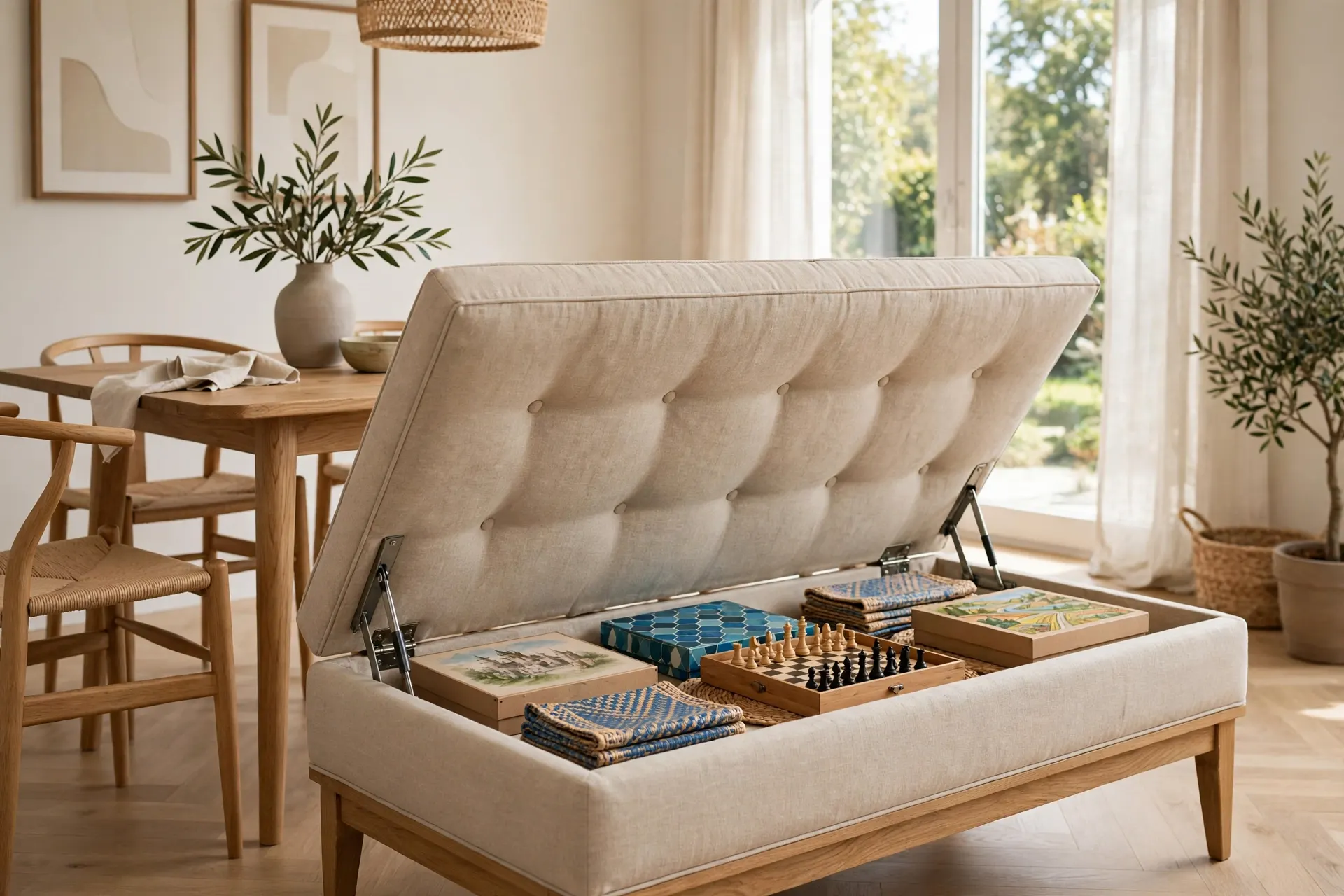
A cushioned bench with a lift-up lid hides board games, placemats and spare cushions. It seats three at dinner and stores like a chest otherwise.
33. Finish With Labeled Jars and Apothecary Style
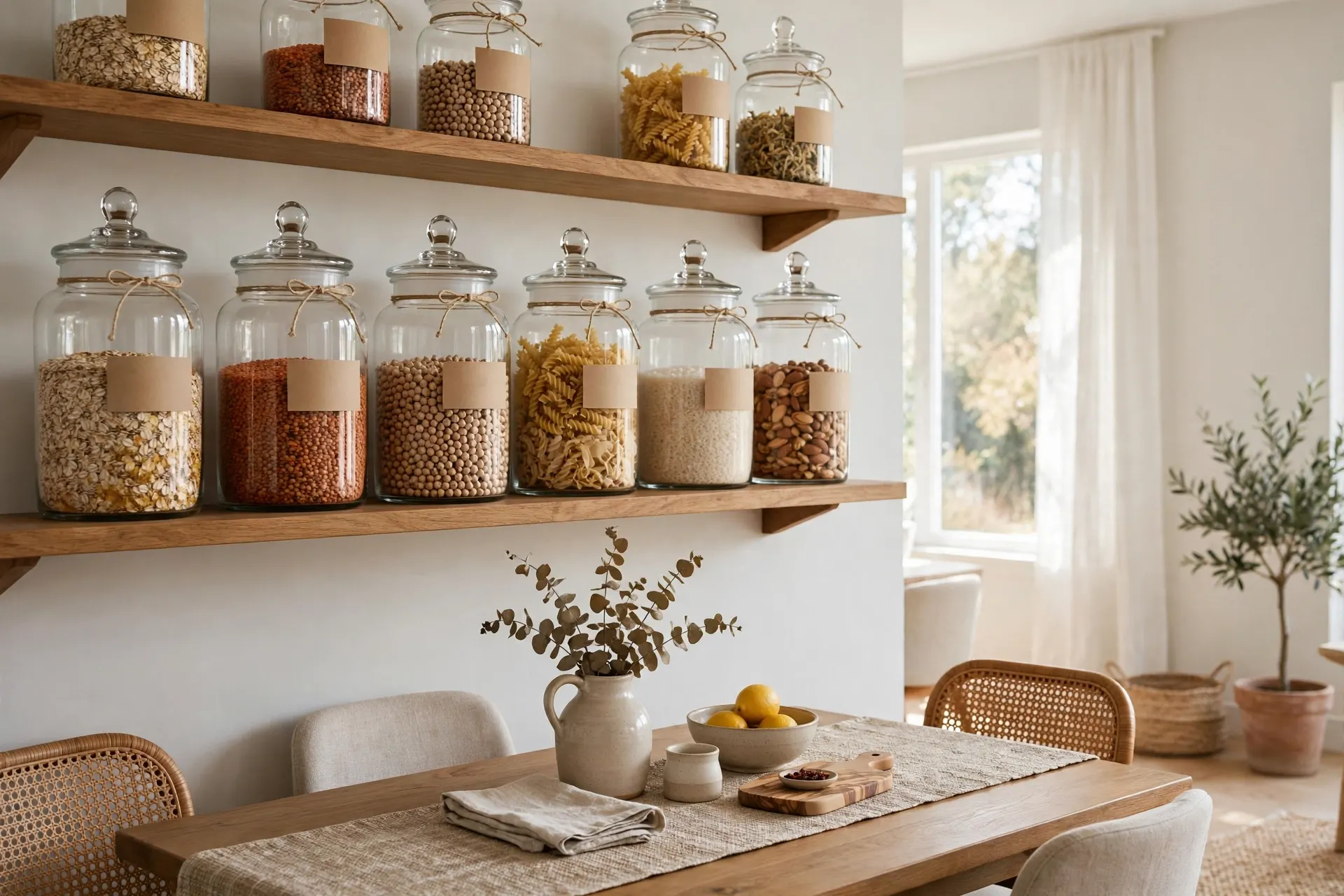
Labeled glass jars turn pantry overflow into a display on open shelves. Uniform jars and simple labels keep the look calm, not cluttered.
Good dining room storage is invisible storage. Pick two or three ideas from this list, start with the sideboard or banquette, and your dining room will stay tidy.
What is the best storage furniture for a dining room?
A sideboard or buffet is the best all-round choice because it combines closed storage with a serving surface at waist height. Choose one about two-thirds the length of your dining table, with drawers for linens and cupboards for platters. Built-in cabinets beat freestanding pieces only when you need maximum capacity.
How do I hide clutter in a small dining room?
Use furniture that does double duty: a banquette with drawers, a storage bench, or a table with a leaf drawer. Keep closed storage low and open display high, so the eye sees decor instead of clutter. Baskets, labeled bins and drawer inserts keep small items corralled, while a mirrored cabinet bounces light around.
What should I store in a dining room sideboard?
Store the things you use at the dining table: placemats, napkins, table runners, tablecloths, candles, serving spoons and extra cutlery. Keep heavy platters in the lower cupboards and lighter linens in the top drawers. Reserve one drawer for party supplies like place cards and matches so setting the table takes minutes.
Are built-in cabinets worth it in a dining room?
Built-ins are worth it when freestanding furniture cannot use a wall well, or when you need serious capacity for china and serveware. They cost more than a sideboard, but they use awkward corners fully and look like part of the room. For renters, a tall hutch or matching cabinets give most of the benefit.
How do I organize a china cabinet without it looking messy?
Group pieces by type and colour, keep stacks low, and leave breathing room between groups. Put everyday dishes at eye level and rarely used pieces up high. Limit each shelf to one or two colours so the display reads as a collection, not a jumble. A small plant or vase between stacks keeps the cabinet feeling styled and calm.
What is the difference between a sideboard, a buffet and a credenza?
The three names describe one furniture family with small differences. A sideboard is a long, low cabinet with drawers and cupboards, usually against the dining room wall. A buffet is similar but often longer and lower, designed for serving food. A credenza is the shallowest, often with sliding doors, and suits tight rooms.
