
Mudroom flooring ideas have one job above all: survive mud, snow, salt, and muddy paws without looking like a garage. The floor is the hardest-working surface in the house, so it needs to be waterproof, easy to clean, and tough under boots — and it can still look beautiful. Block Renovation’s mudroom flooring comparison puts porcelain tile first for most homes, with luxury vinyl plank as the warmer budget pick. Below are 25 mudroom flooring ideas that handle daily chaos and still look like part of your home.
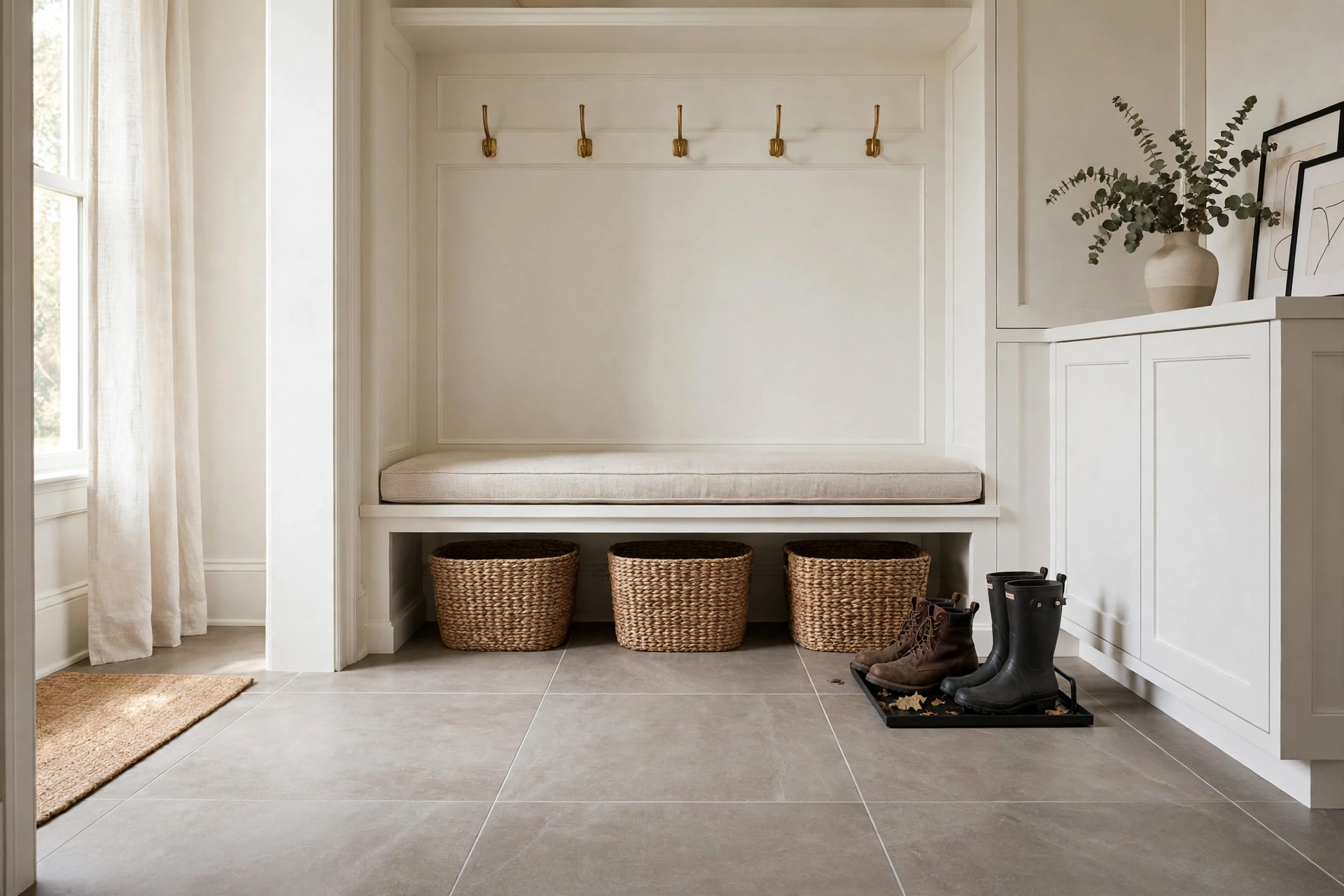
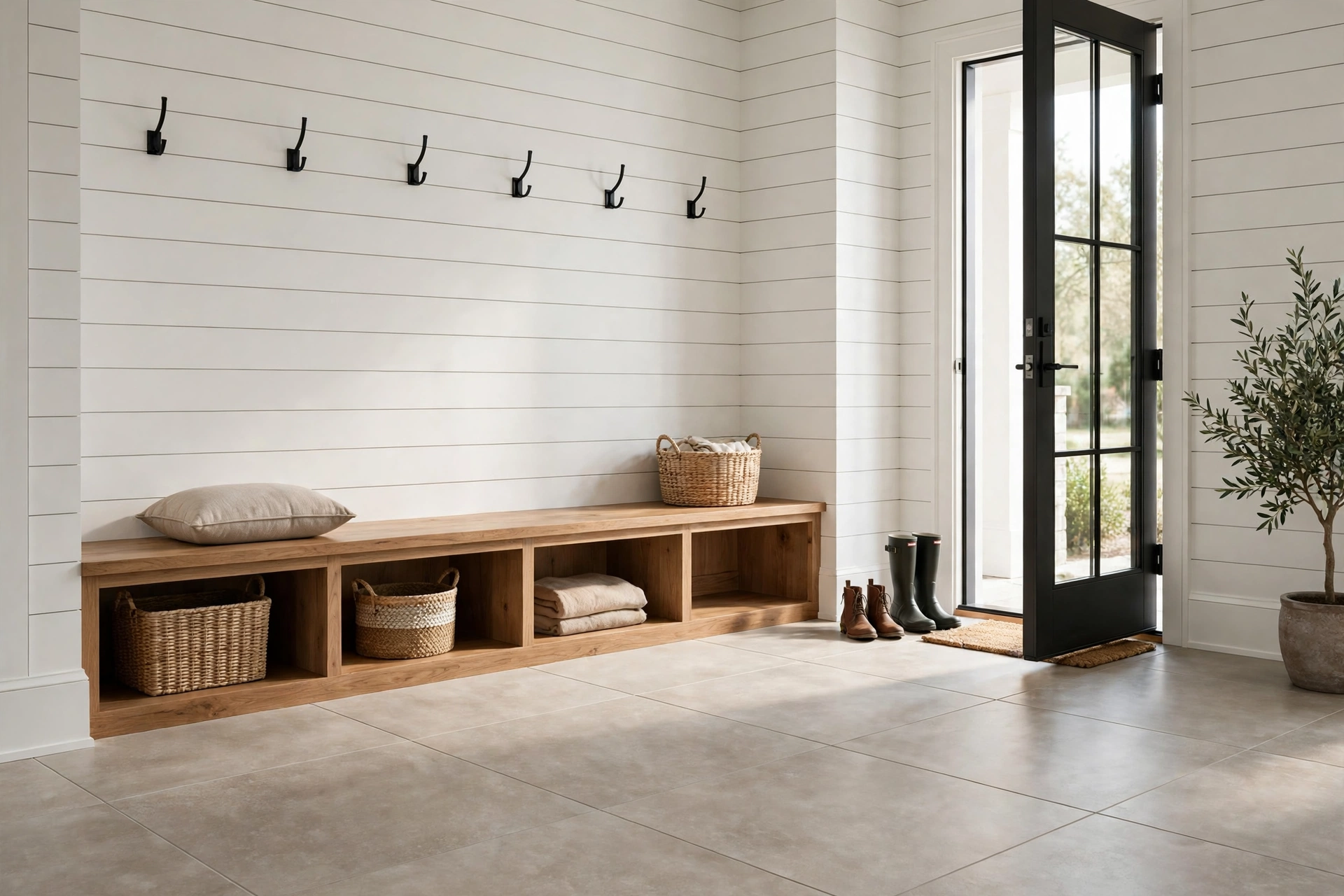
1. Lay Large-Format Porcelain Tile
Large-format porcelain is the strongest all-around mudroom floor. It barely absorbs water, shrugs off grit and salt, and fewer grout lines mean fewer places for dirt to hide.
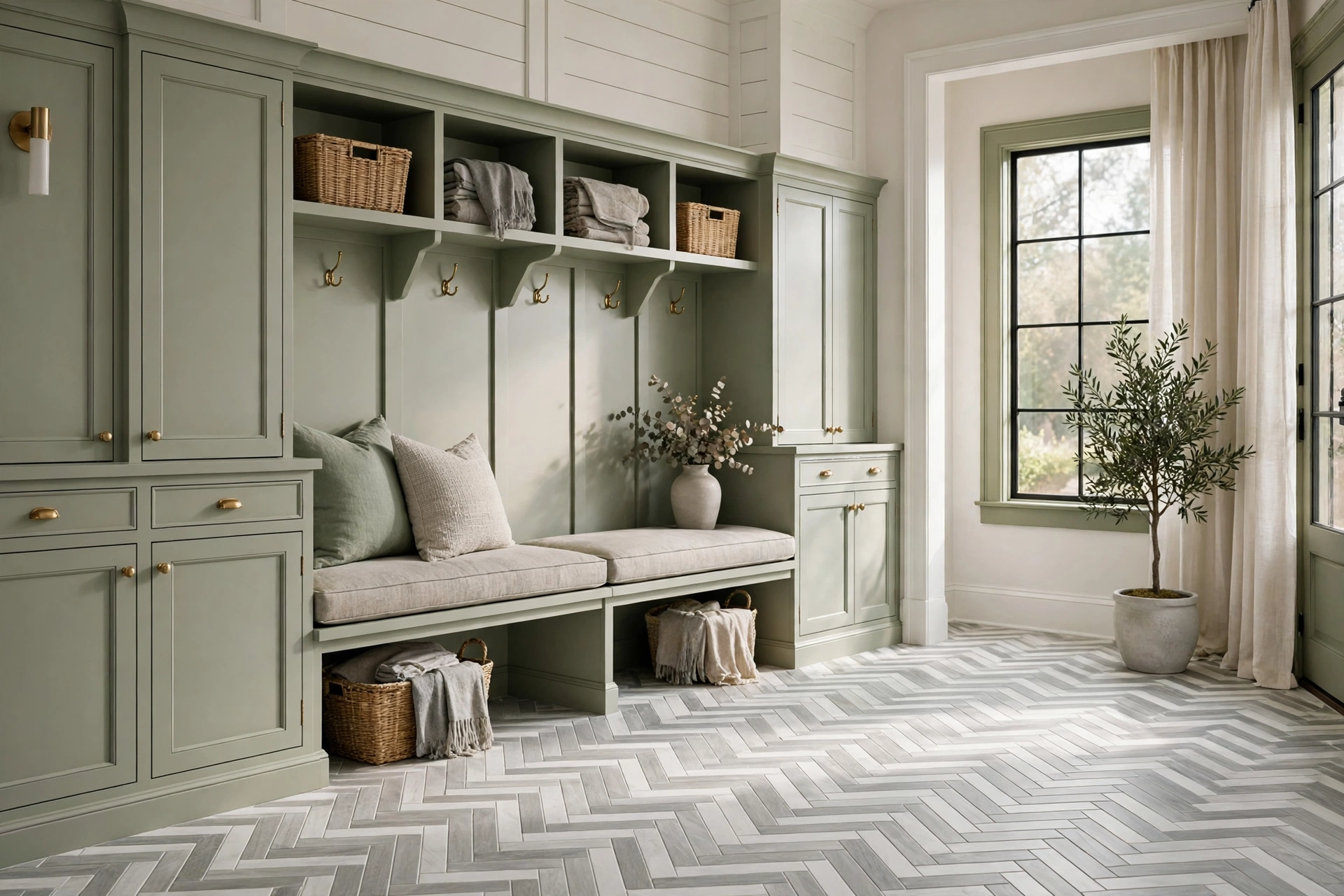
2. Try Herringbone Porcelain Tile
Herringbone porcelain turns a practical floor into the room’s feature. The zigzag pattern adds movement and depth, and it hides scuffs far better than a plain grid.
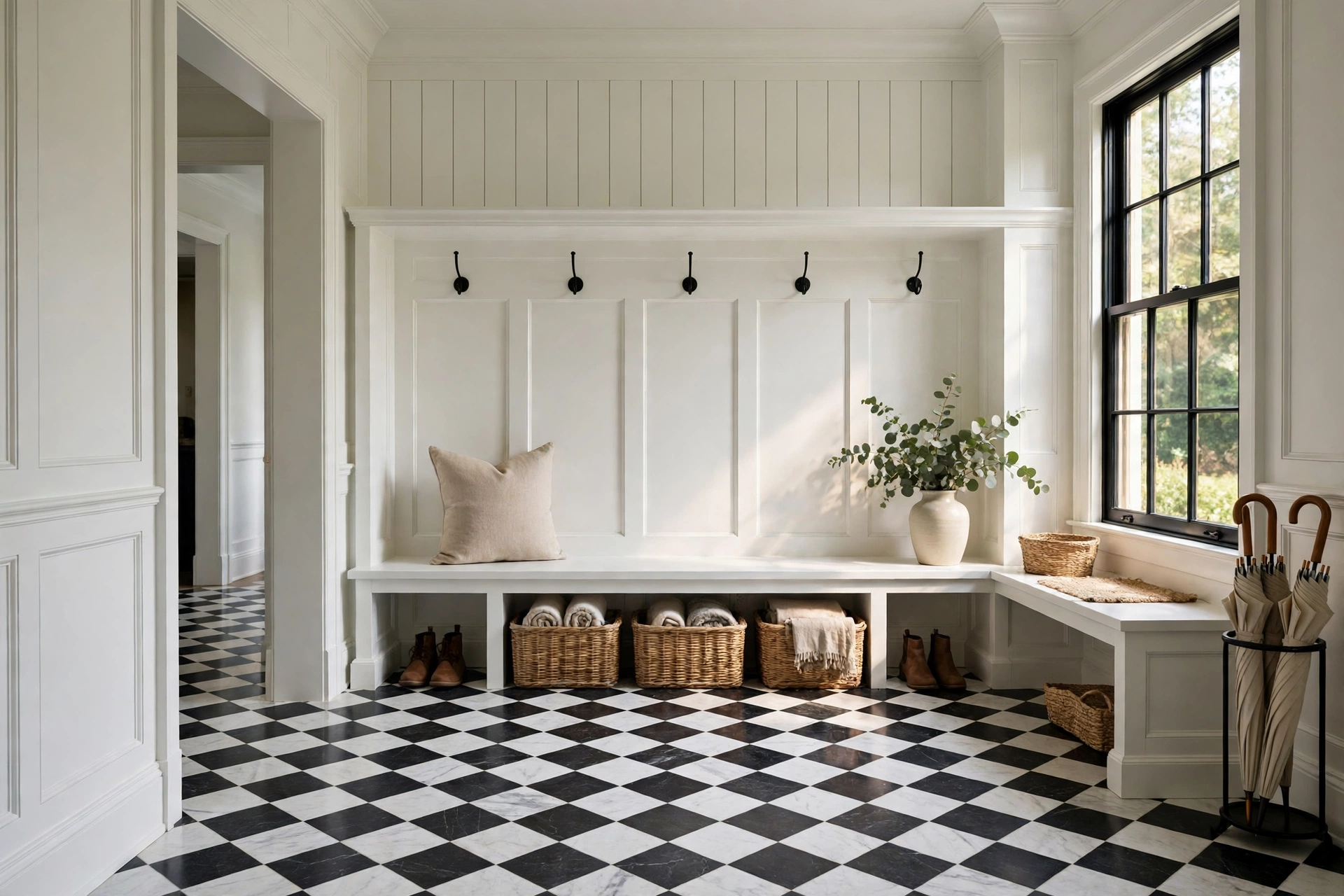
3. Go Classic With Checkerboard Marble
Black-and-white checkerboard marble is timeless in an entryway. It suits every style from farmhouse to classic, and the bold pattern disguises muddy footprints between cleanings.
4. Choose Wood-Look Porcelain Planks
Wood-look porcelain gives you the warmth of oak with none of wood’s water worries. The grain looks convincing, and the surface handles wet boots without swelling or staining.
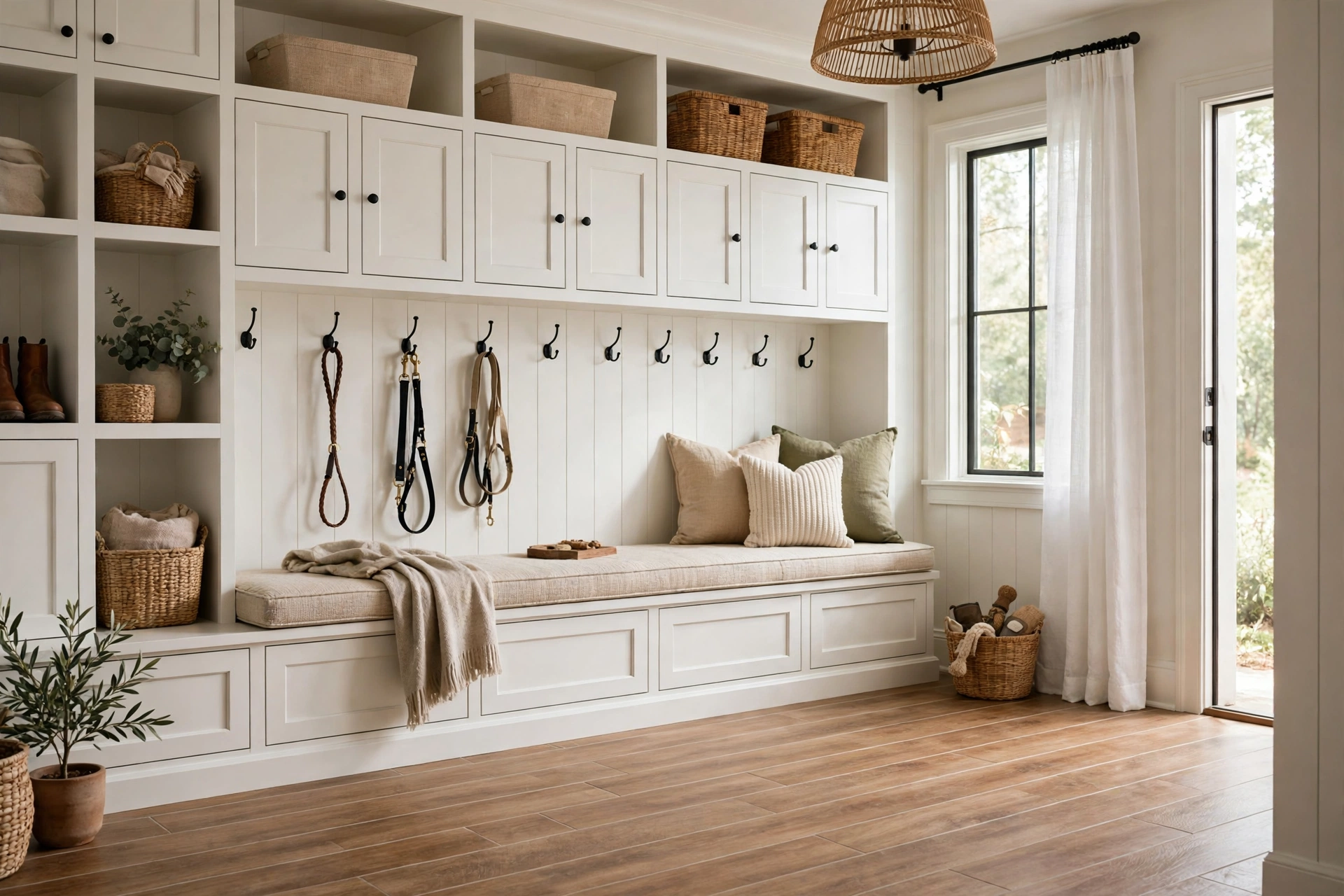
5. Pick Luxury Vinyl Plank for Warmth
Luxury vinyl plank is warmer underfoot than tile and far easier on the budget. Good rigid-core planks resist water well and install quickly over most existing floors.
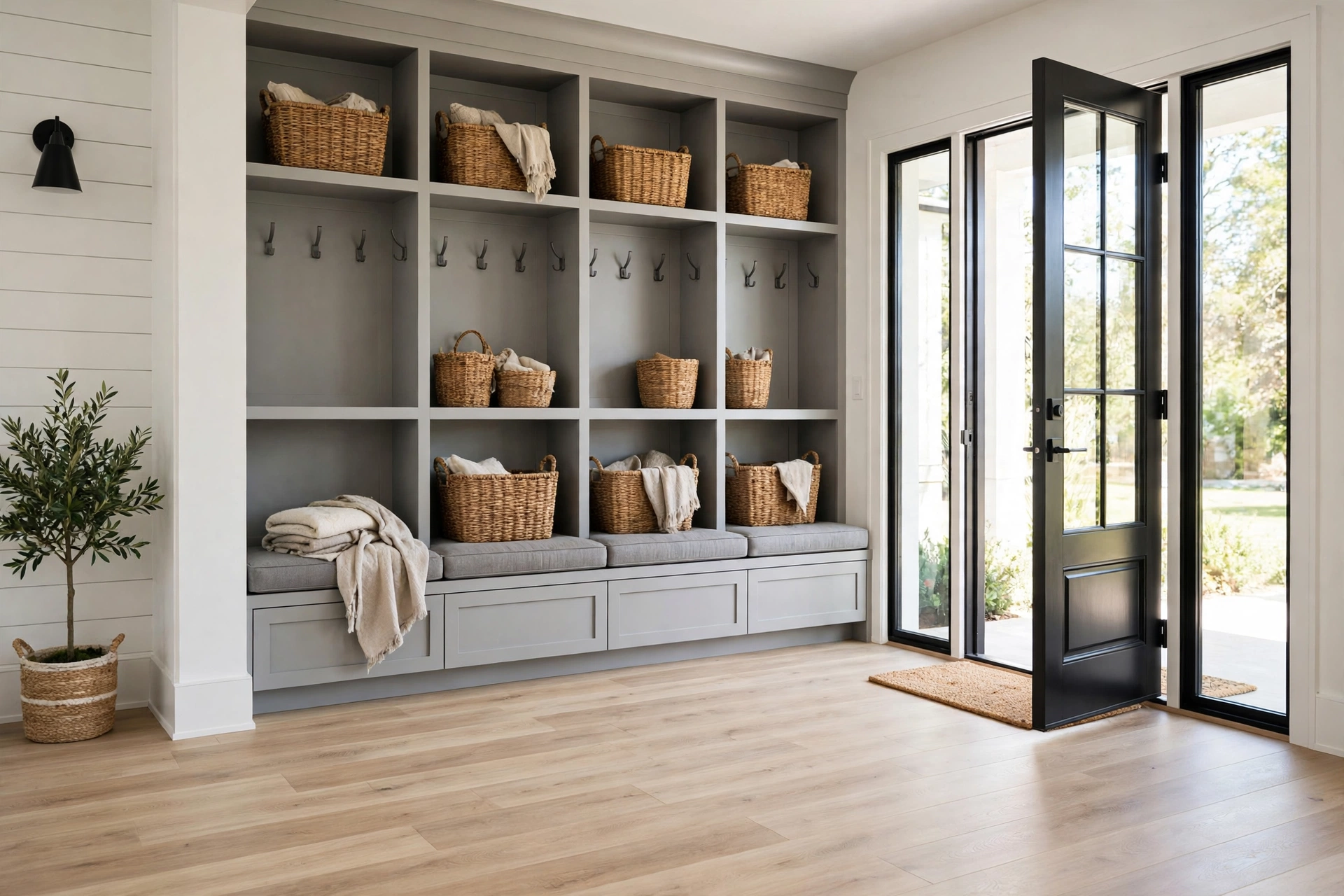
6. Seal the Concrete You Already Have
If your mudroom sits on a slab, sealed concrete is the simplest tough floor. A matte seal resists salt and stains, and a stain or polish can make it look intentional.
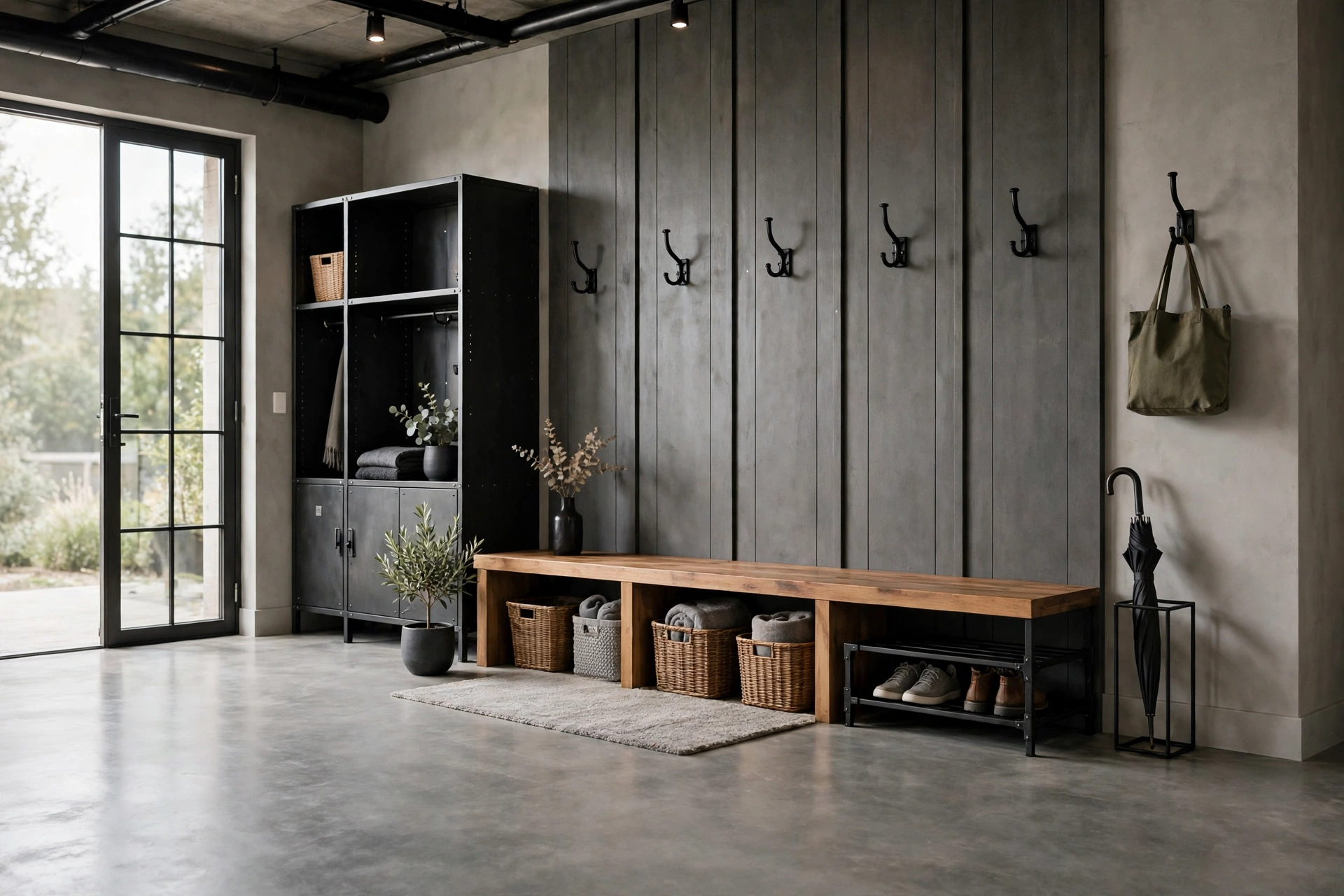
7. Lay Natural Slate for Character
Slate brings natural texture and variation no manufactured tile can match. Its rough surface grips well when wet, though it needs sealing to resist salt and stains.
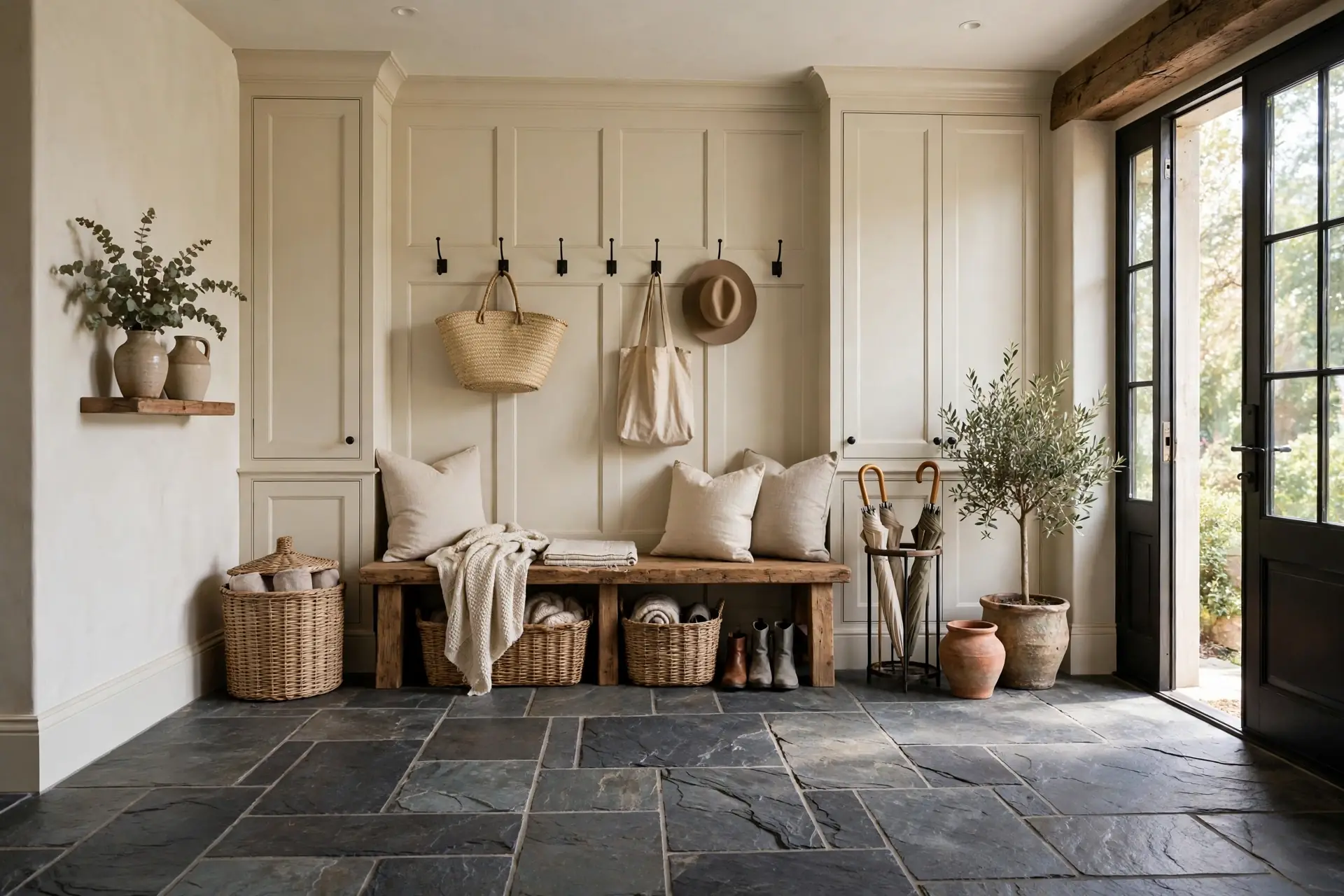
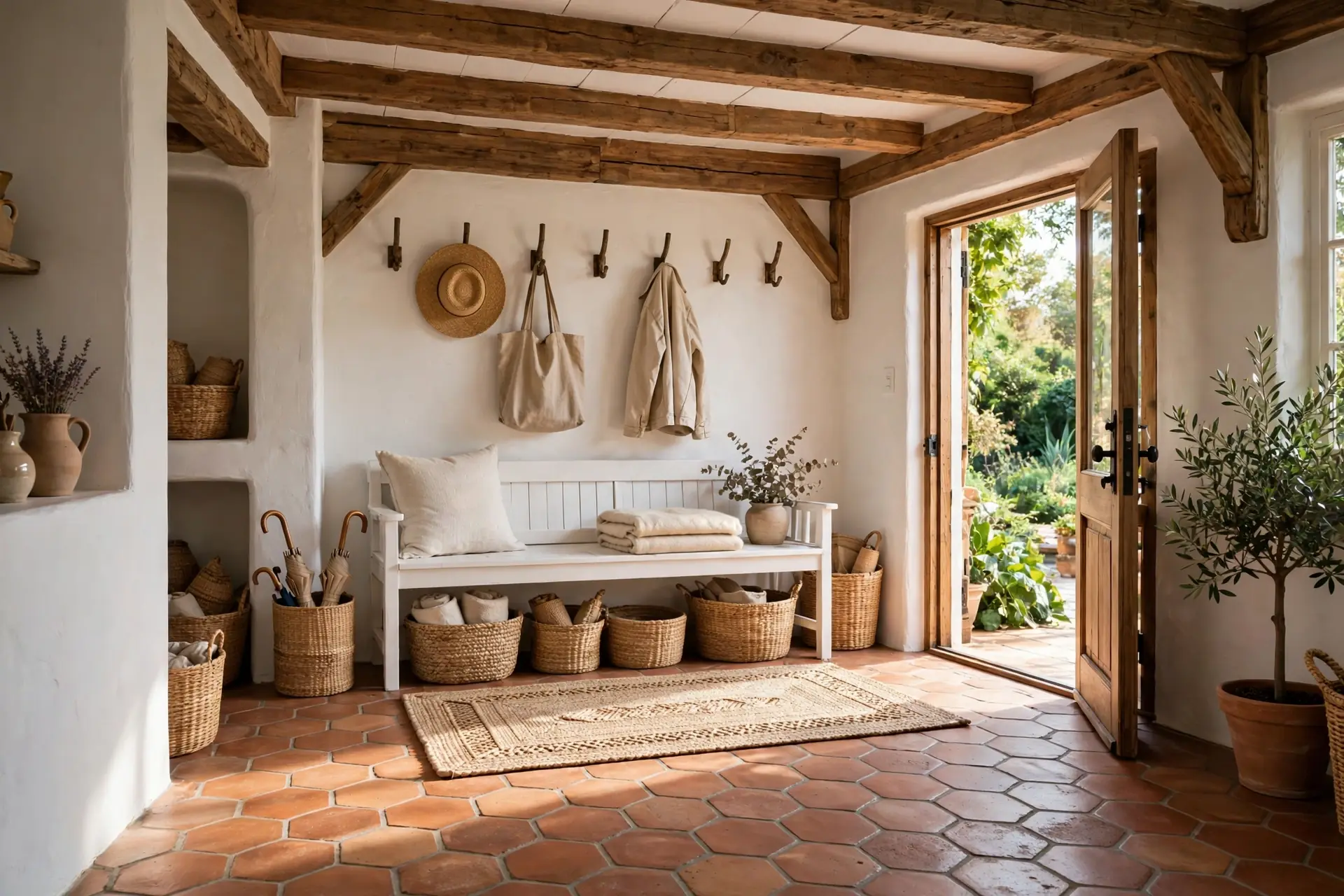
8. Warm It Up With Terracotta Tile
Terracotta tiles add earthy warmth that makes an entry feel welcoming. Their handmade variation hides dirt well, and they pair beautifully with wood benches and beams.
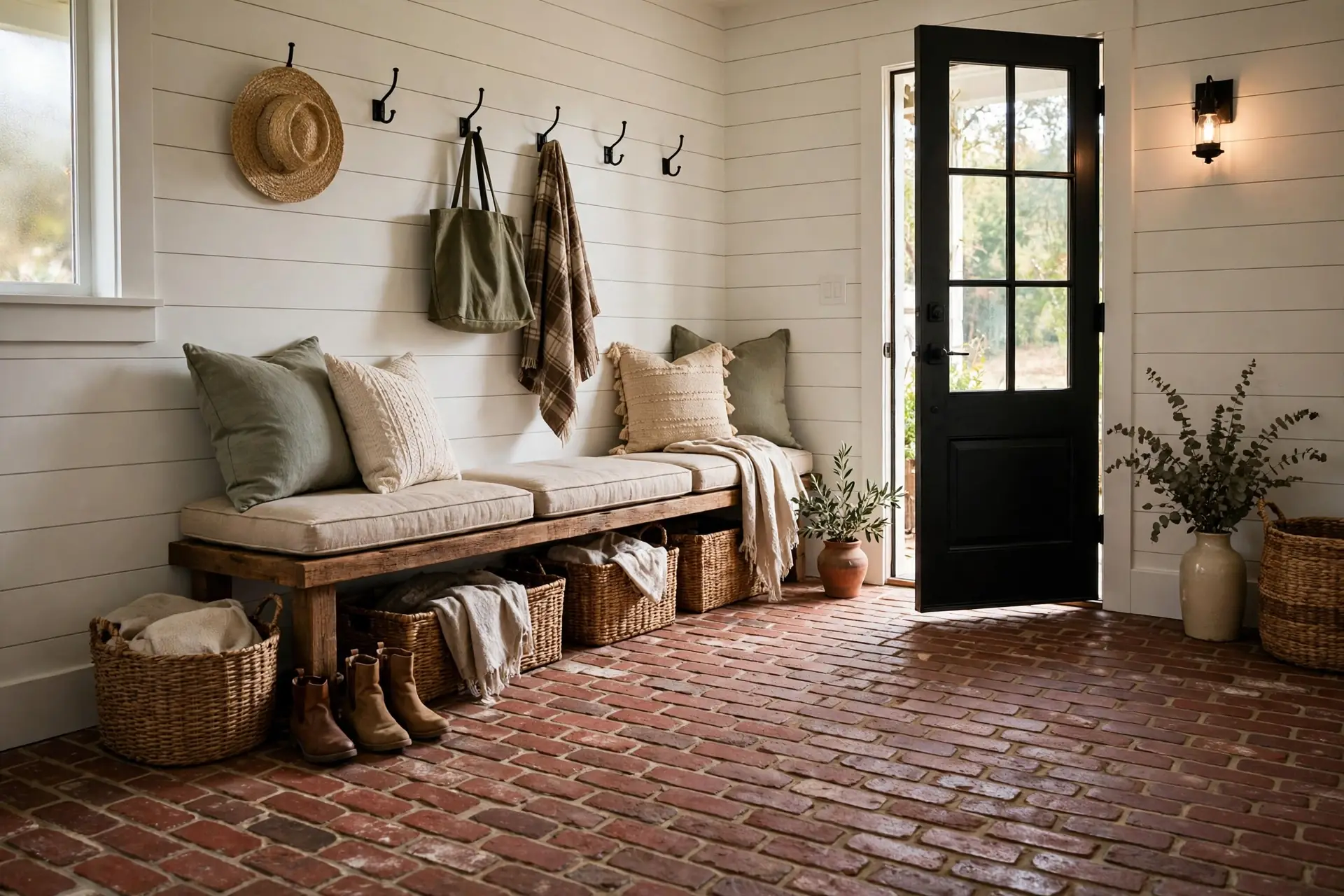
9. Try Rustic Brick Pavers
Brick pavers give a mudroom old-world charm and serious durability. They handle heavy traffic and wet boots with ease, and their warm red tones age gracefully.
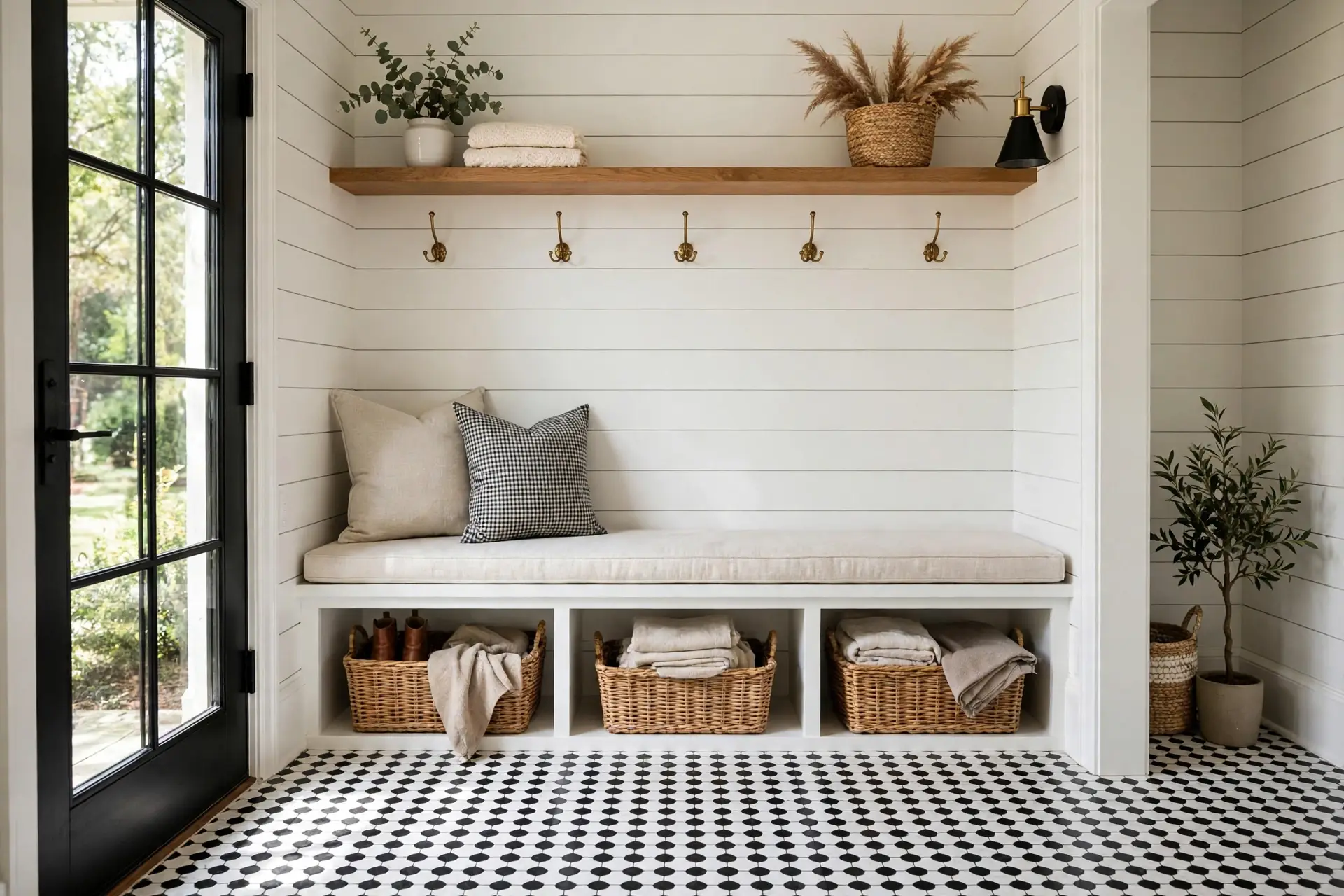
10. Pattern It With Hexagon Tile
Small hexagon tiles add a classic, crafted feel underfoot. Black-and-white hex with dark grout is the farmhouse favorite, and the busy pattern hides daily grime.
11. Make a Statement With Patterned Cement Tile
Bold encaustic cement tile turns the floor into the room’s artwork. One strong pattern in blue and white can carry a whole mudroom — keep the walls plain to let it shine.

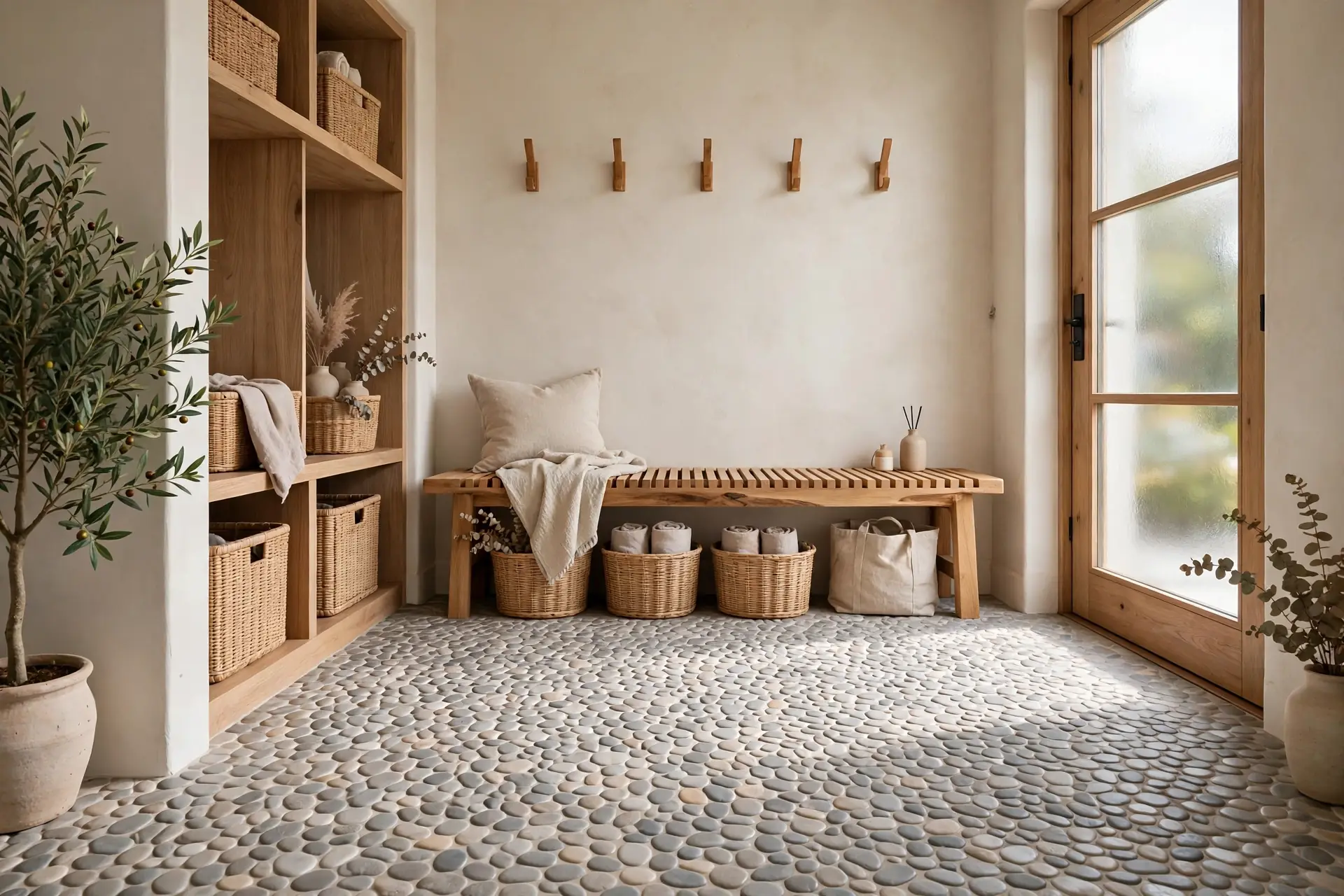
12. Add Pebble Tiles for a Natural Feel
Pro tip: smooth river pebble tiles feel wonderful under bare feet and grip well when wet. Their organic texture softens a hardworking entry and suits spa-like homes.
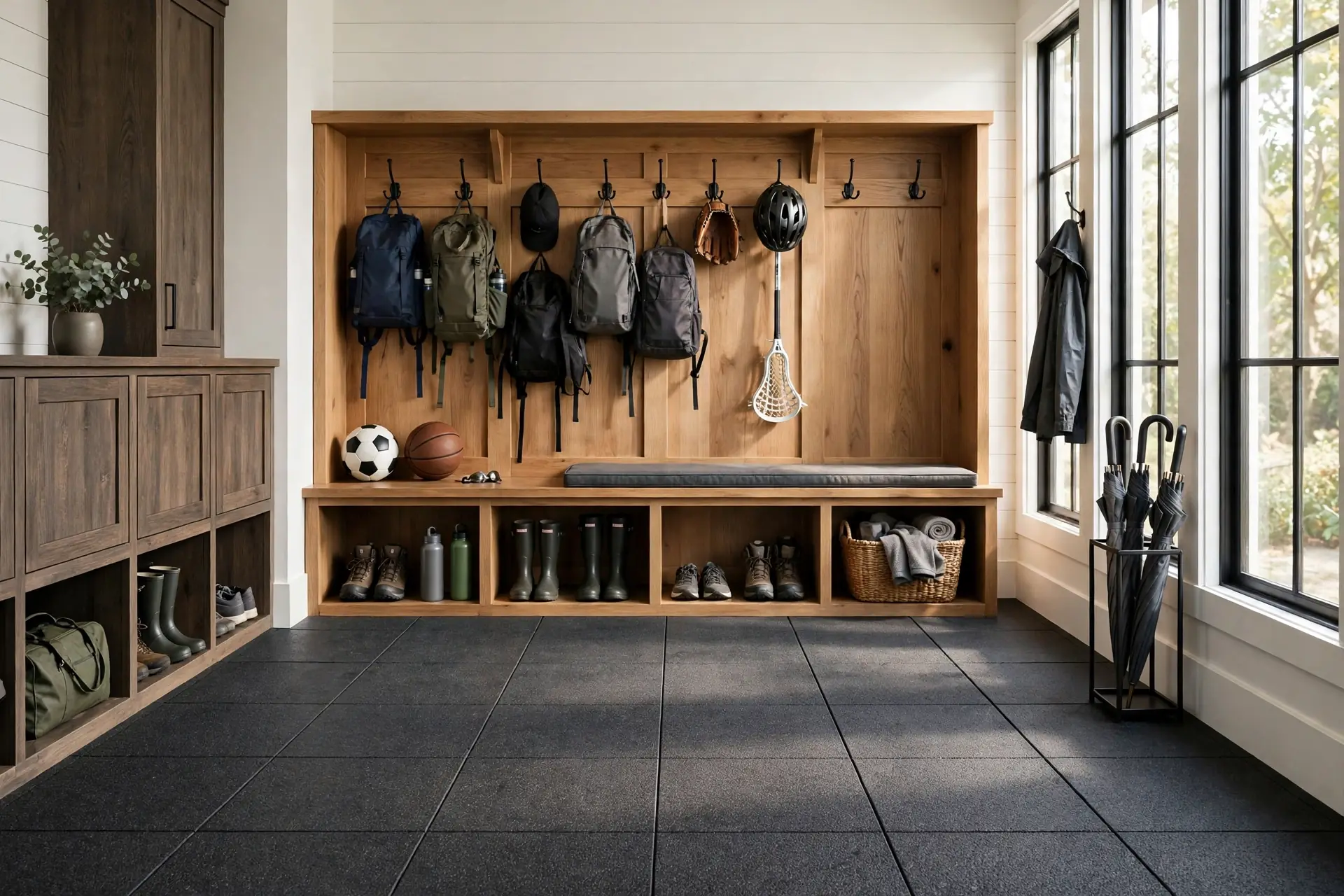
13. Choose Rubber Flooring for Gear Rooms
Rubber tiles are the practical pick for ski boots, bikes, and big dogs. Slightly forgiving underfoot and nearly impossible to damage, they suit true working mudrooms best.
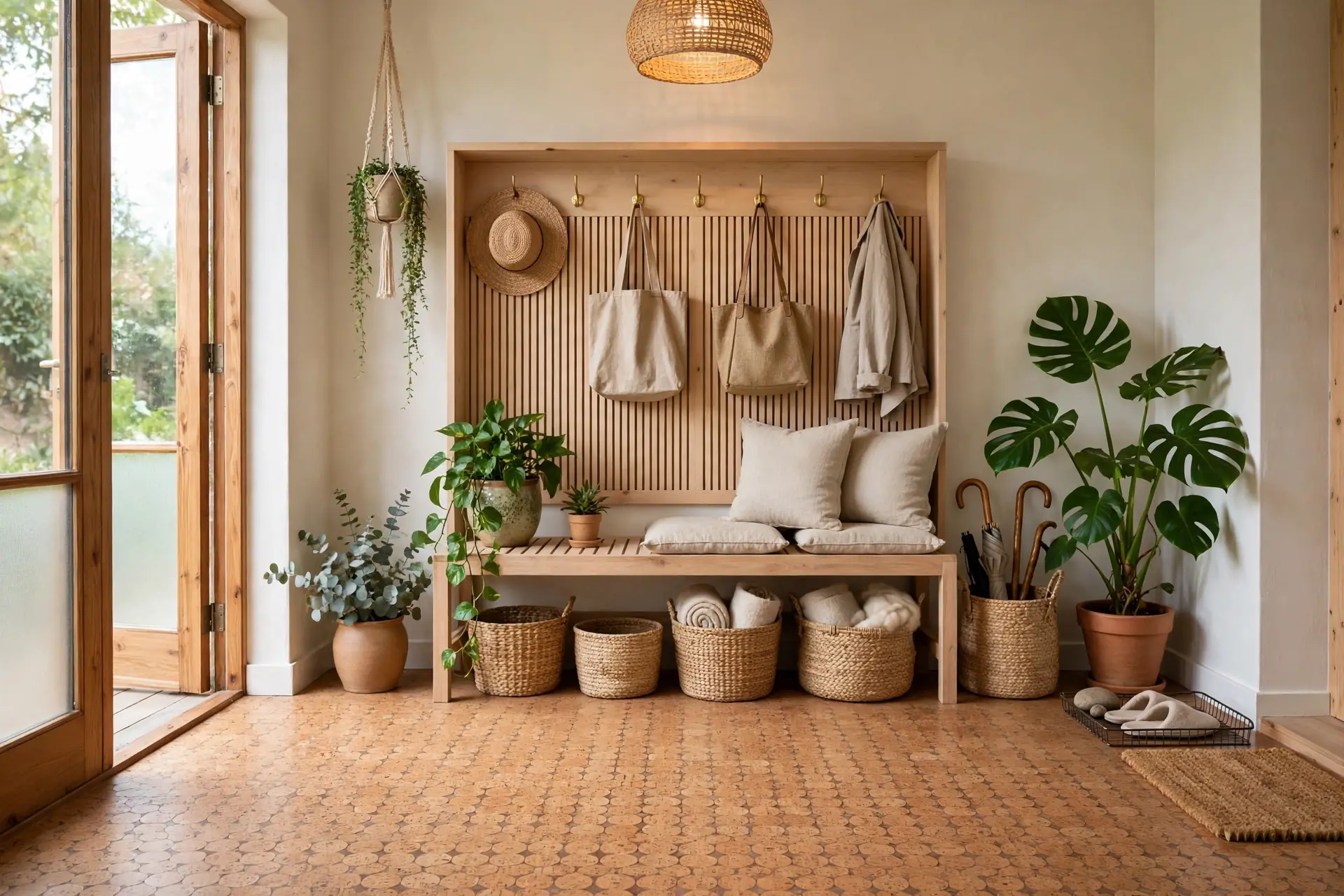
14. Soften the Step With Cork
Cork is warm, quiet, and surprisingly tough when sealed. It cushions tired feet and never shows scuffs, making it a gentle choice for a family entry.
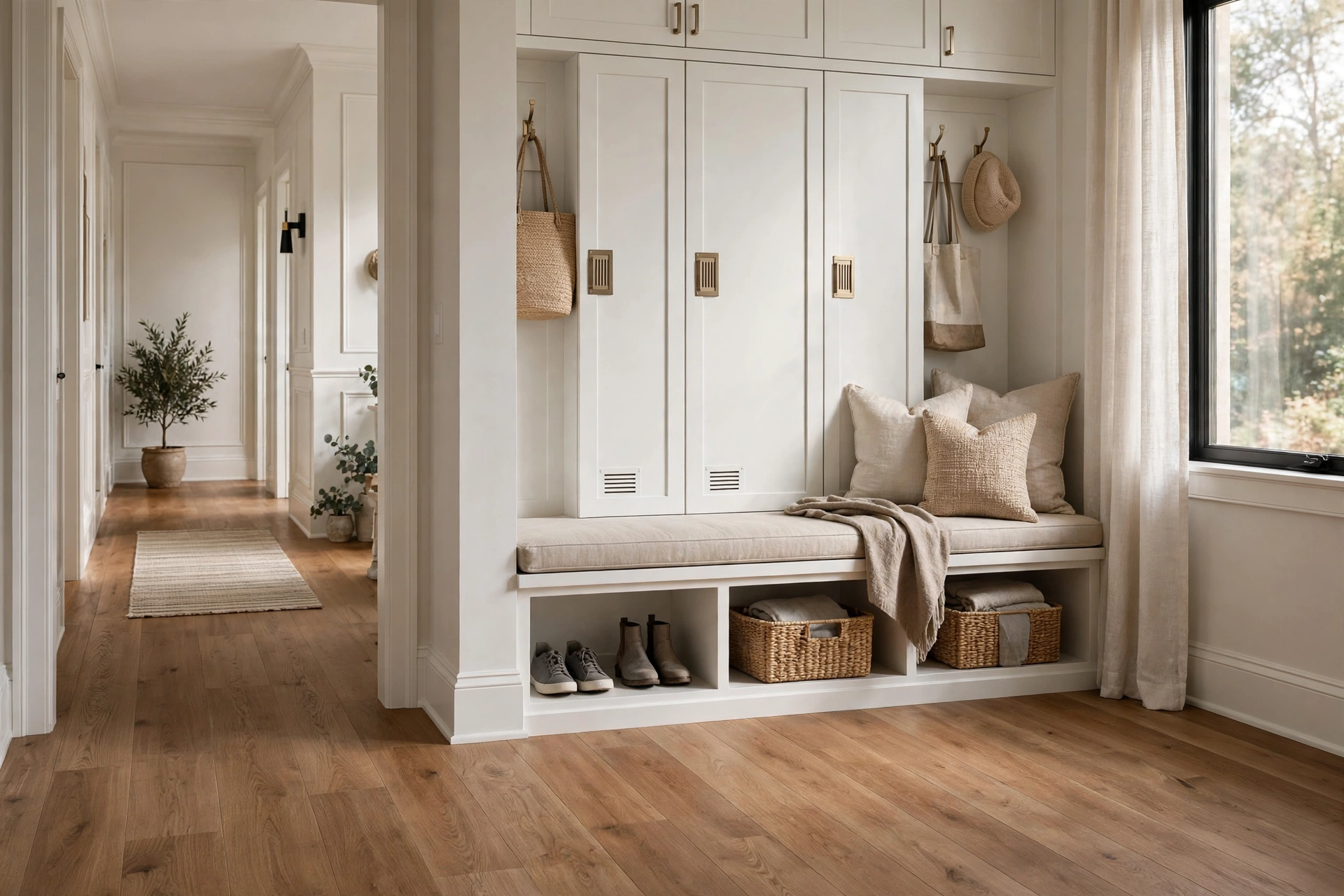
15. Continue Engineered Hardwood In
When the mudroom opens onto wood floors, engineered hardwood keeps the flow seamless. Choose a tough finish and a good mat, and it handles normal entry traffic well.
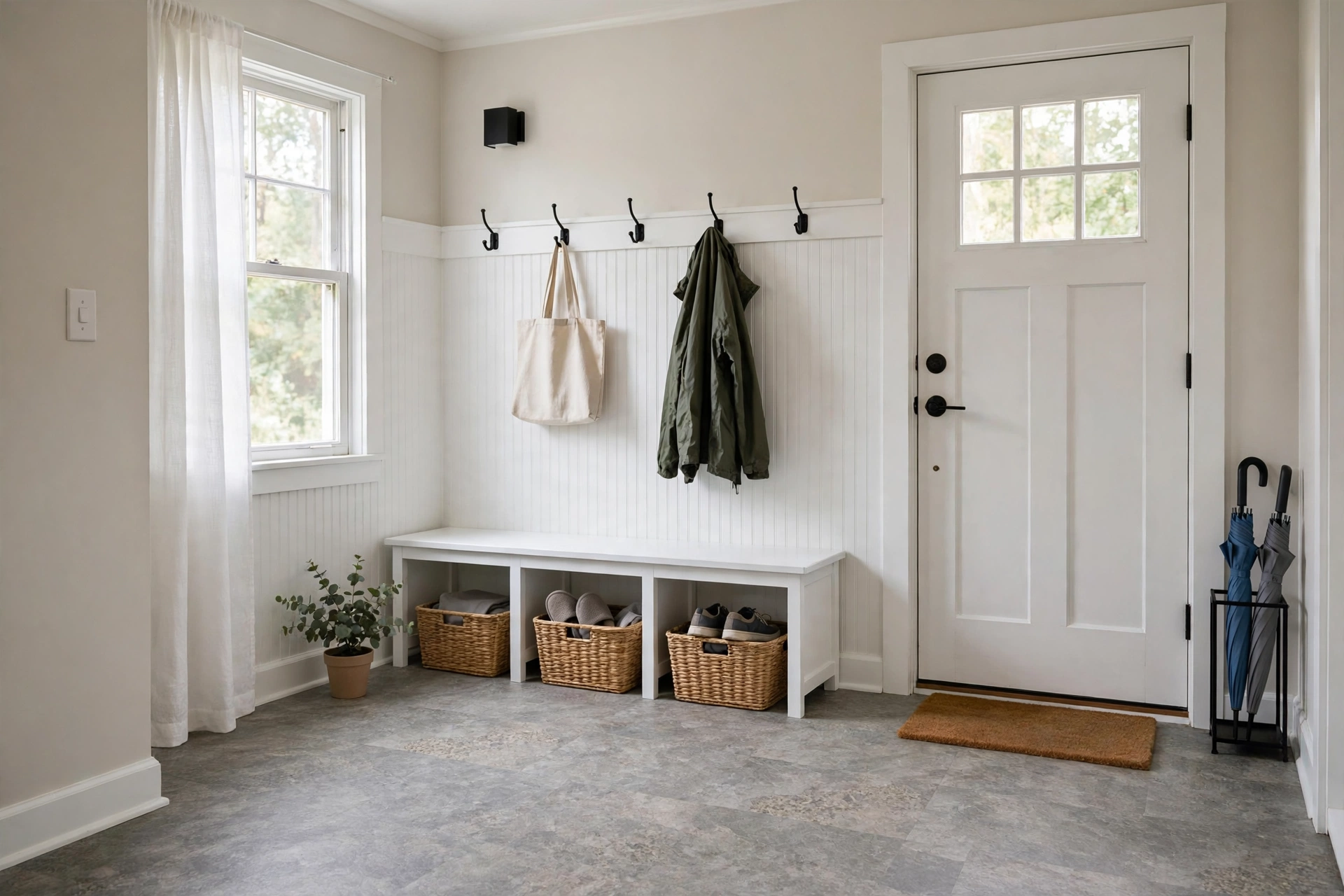
16. Save Money With Sheet Vinyl
Sheet vinyl has almost no seams, so water has nowhere to sneak under. It is the cheapest waterproof option and comes in convincing stone and wood looks.
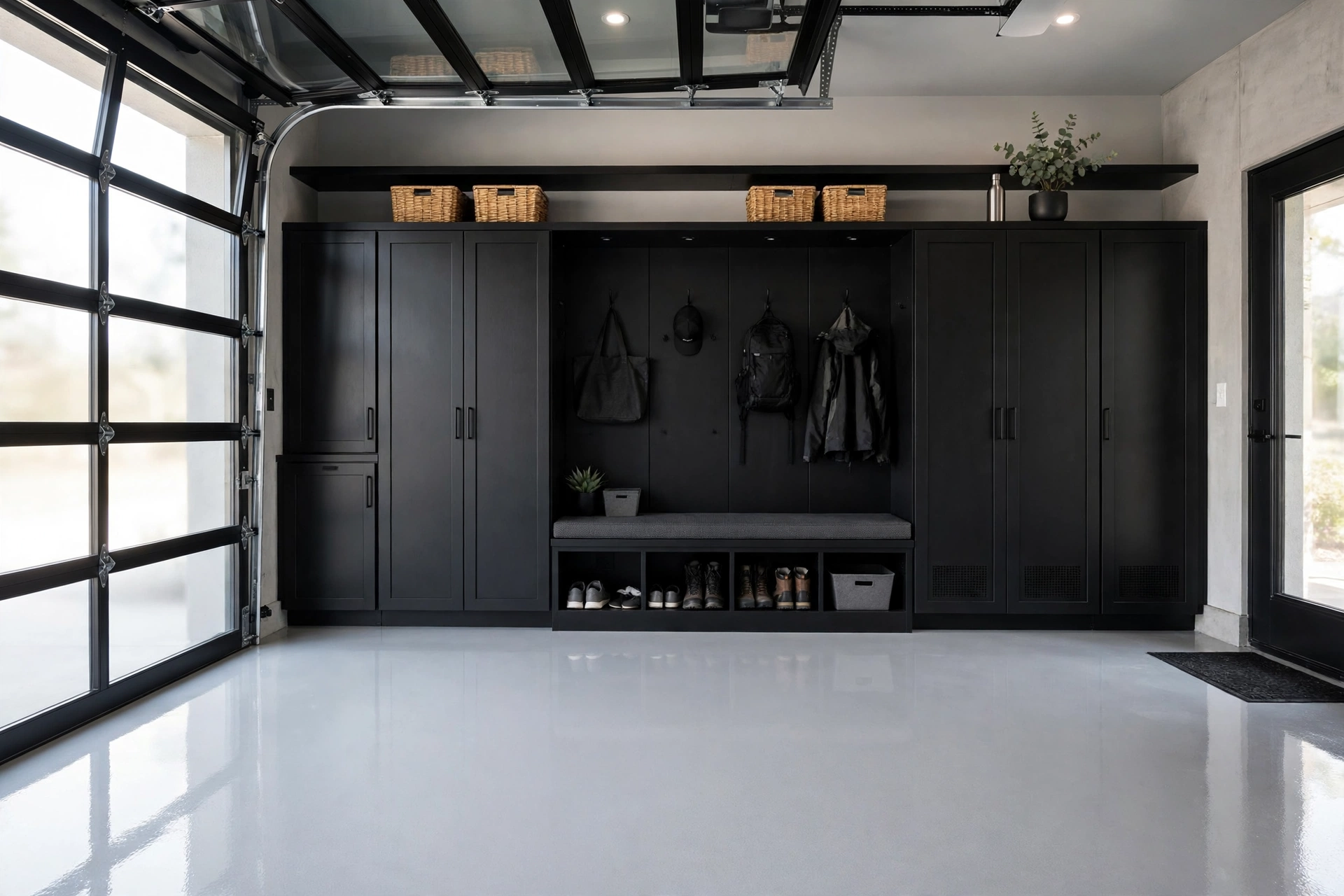
17. Go Glossy With Epoxy
A glossy epoxy floor is seamless, waterproof, and wipes clean in minutes. Light grey with subtle flakes looks modern and hides dust far better than plain concrete.
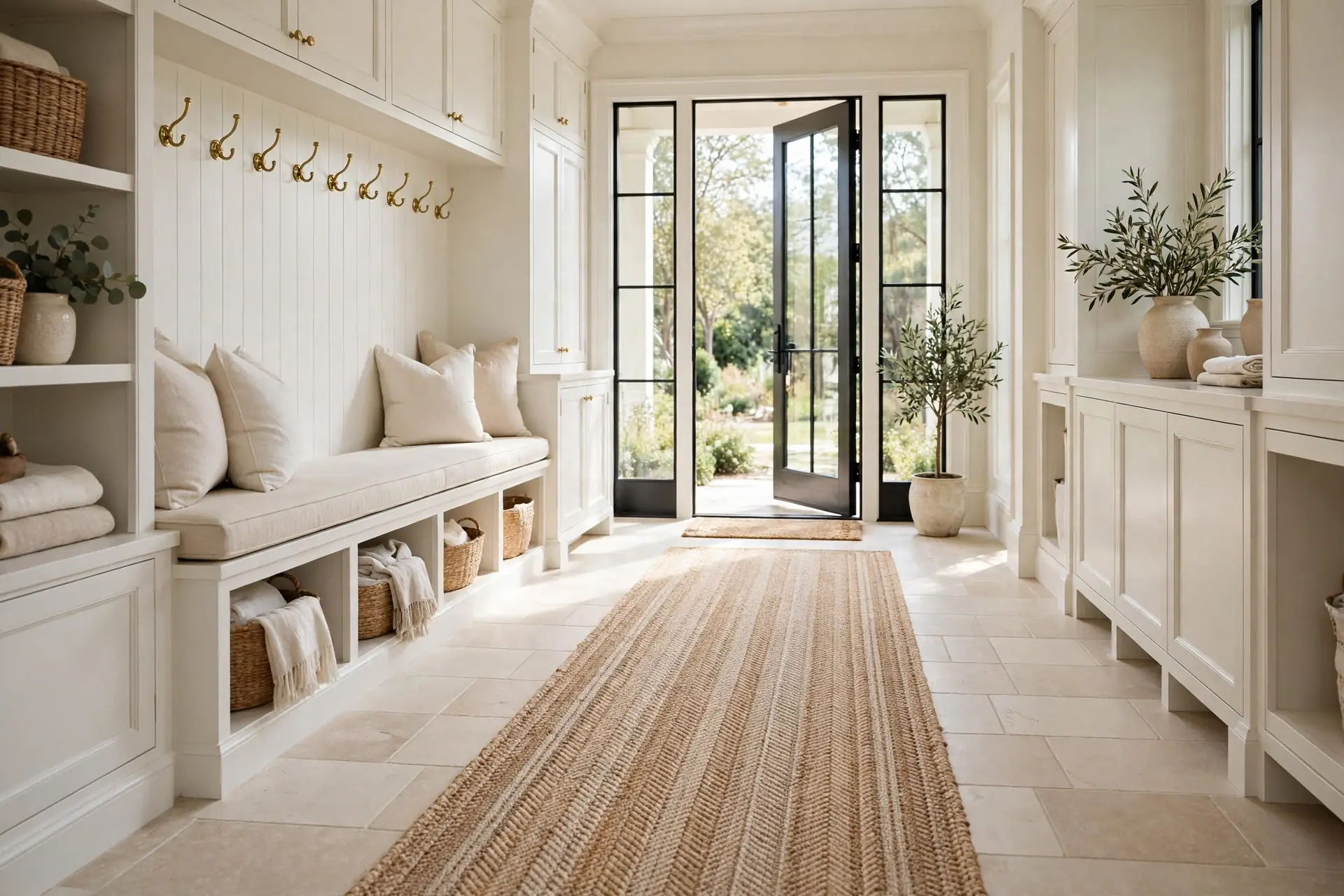
18. Keep It Calm With Limestone
Honed limestone in soft cream gives a mudroom quiet luxury. Layer a patterned runner over it for warmth, and seal it well — limestone is beautiful but porous.
19. Add Mediterranean Warmth With Travertine
Travertine’s warm beige tones and natural pits suit sunny, Mediterranean-style entries. Fill the pits and seal the surface, and it will handle daily traffic gracefully.

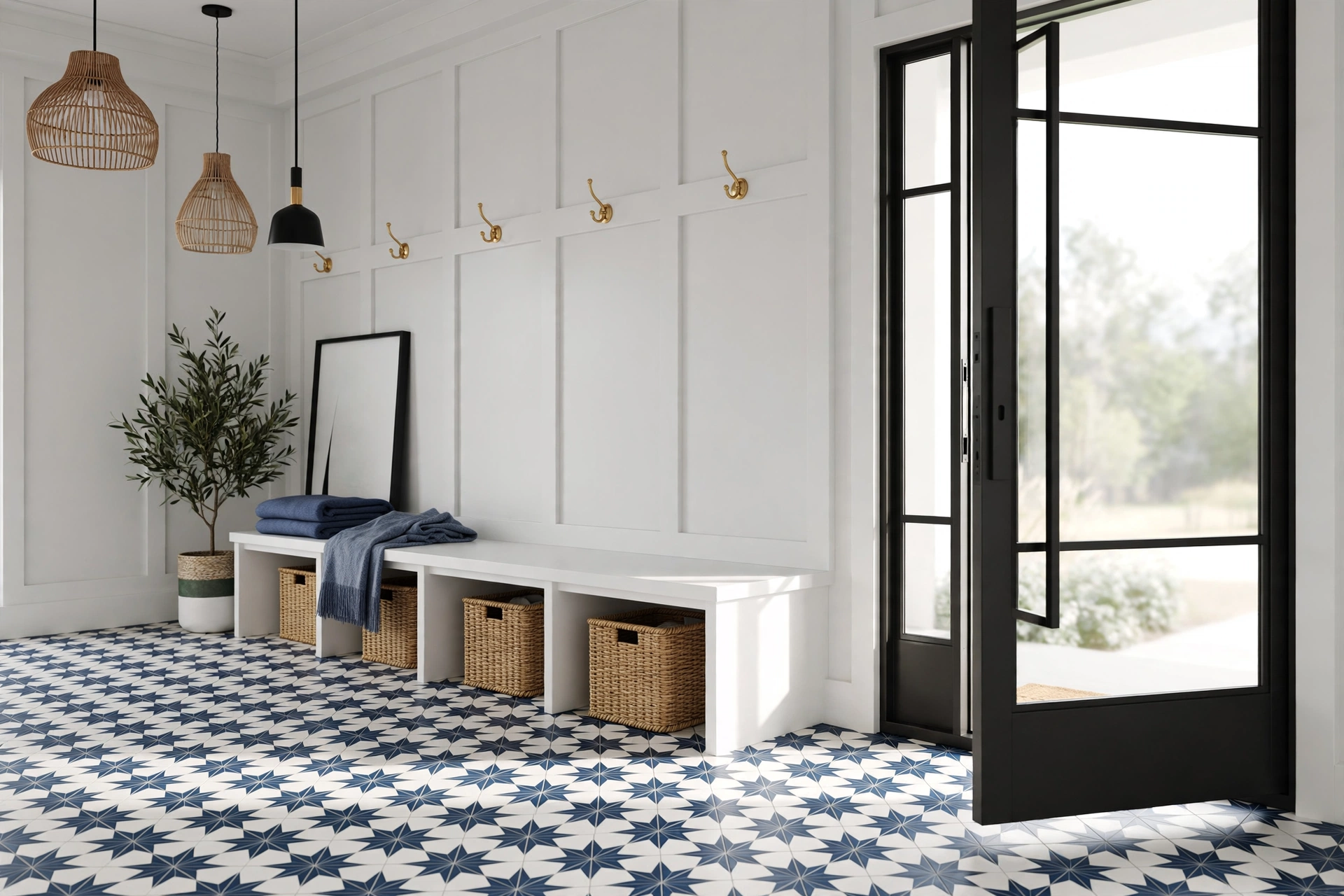
20. Play Bold With Geometric Tile
Star-and-cross geometric tile in navy and white makes the floor the room’s talking point. It is a confident choice that turns a small entry into a design moment.
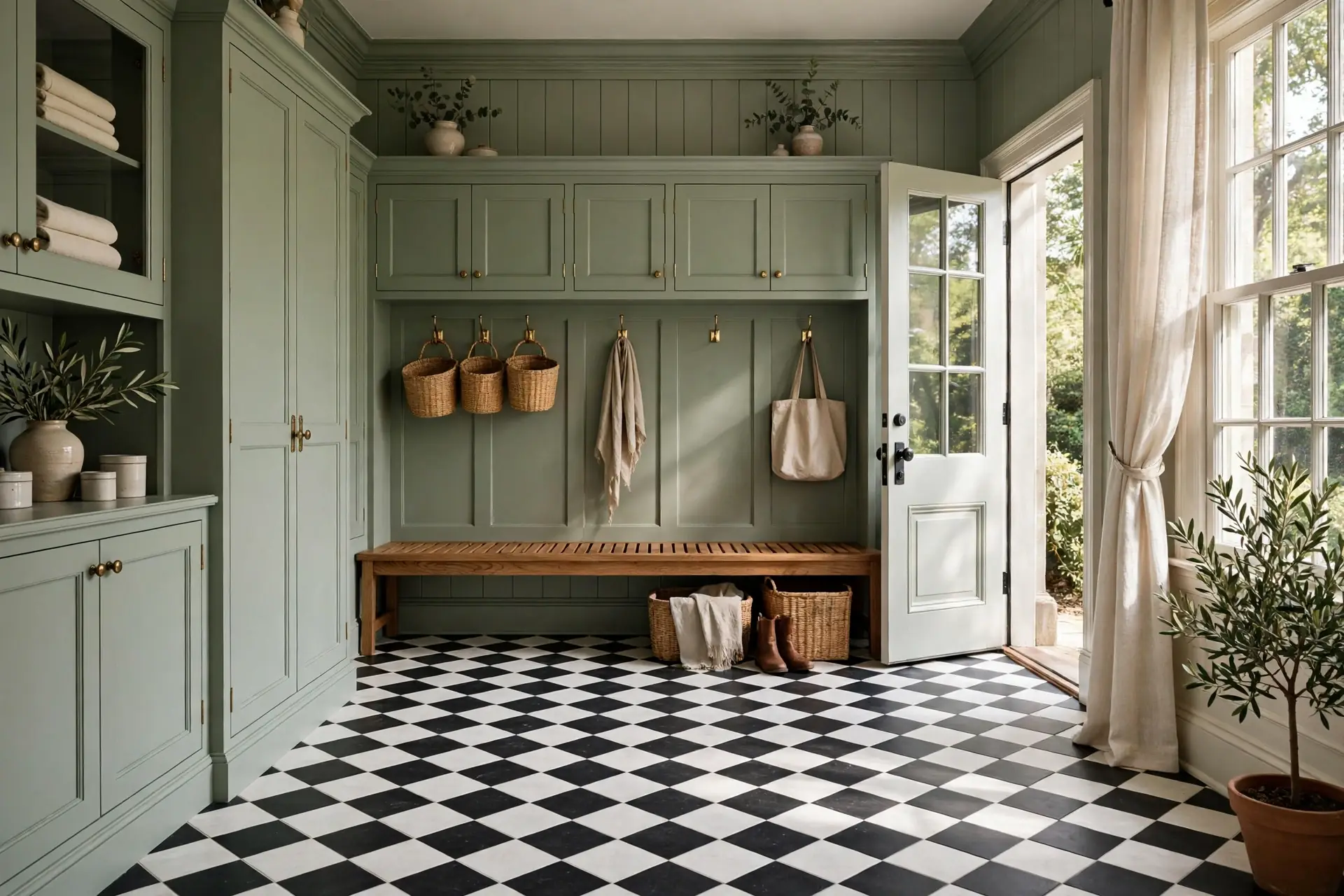
21. Lay a Black-and-White Diamond Floor
Diamond-pattern tile feels tailored and classic, especially against sage cabinets and wood benches. The two-tone pattern hides dirt while looking deliberately designed.
22. Warm Cold Mornings With Radiant Heat
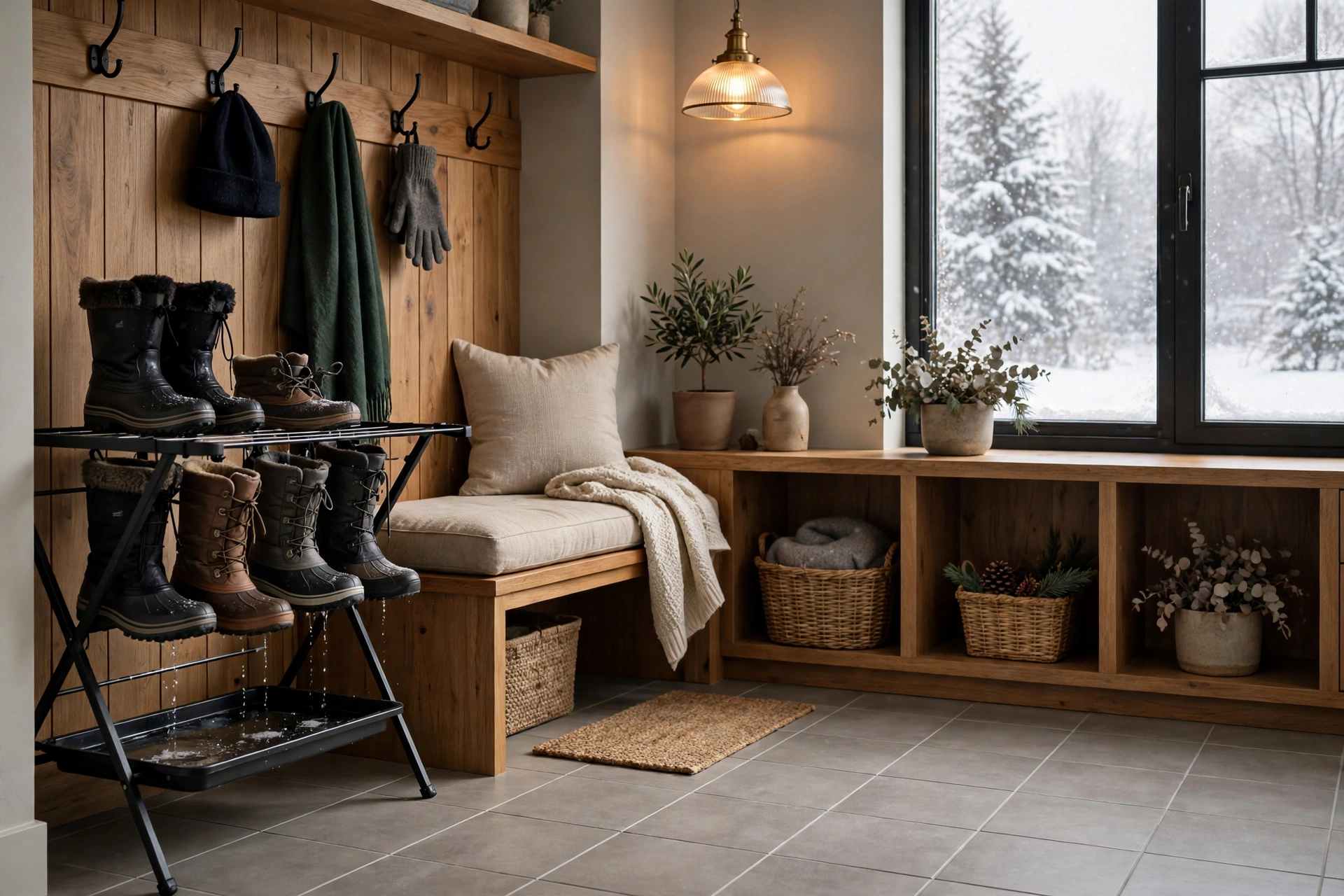
Radiant heat under tile turns a cold mudroom floor into the warmest spot in the house. It also dries wet boots faster — for bench and storage pairings, see our mudroom bench ideas — and feels wonderful in snowy climates.
23. Hide Dirt With Dark Grout
Dark charcoal grout with matte tiles is the low-maintenance secret. It never shows the grey grime that ruins white grout, and it makes the tile pattern pop.

24. Zone the Mess With a Boot Tray Area
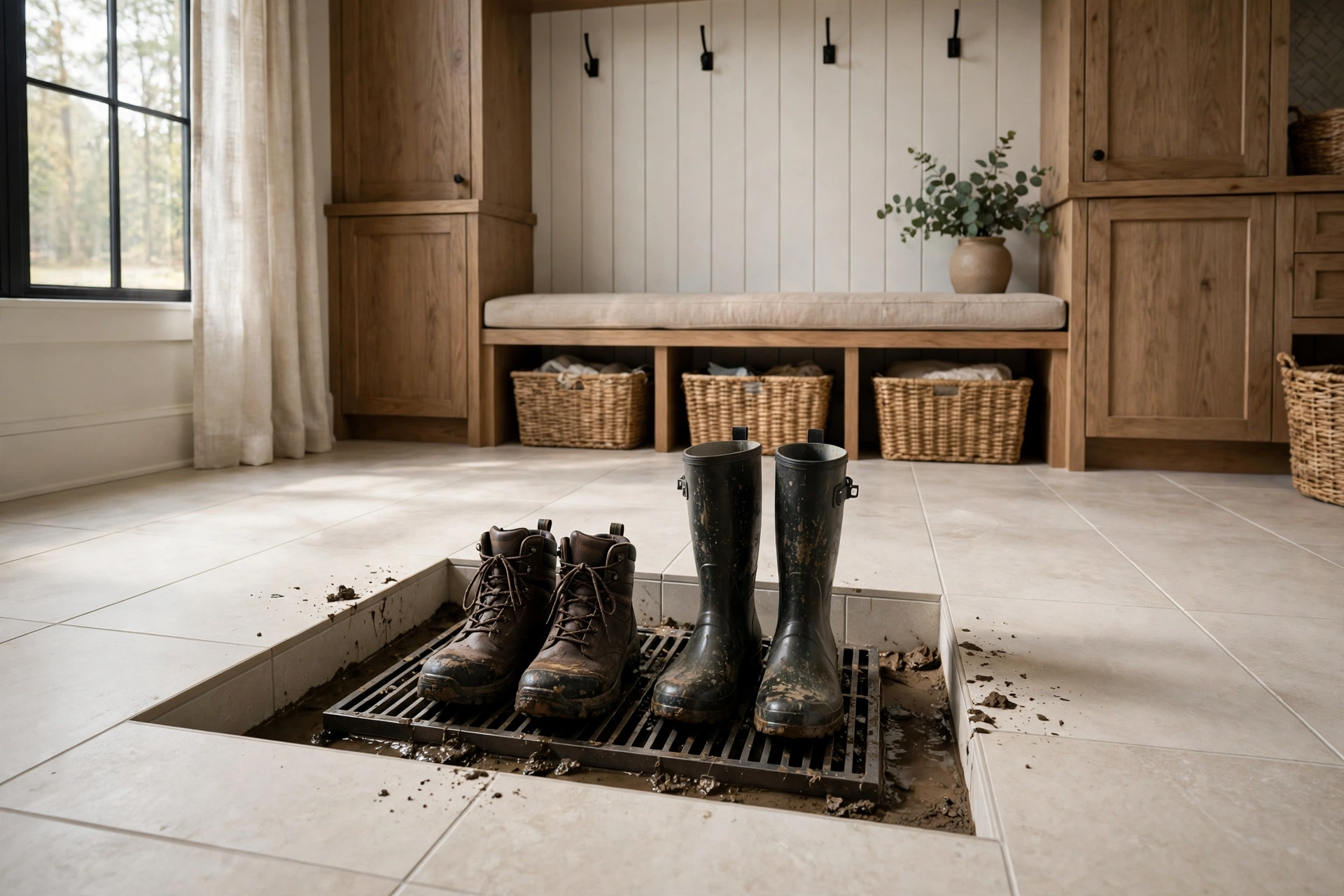
Design a recessed boot-tray zone right inside the door so muddy boots never reach the main floor. A raised grate tray contains melting snow and keeps the rest spotless.
25. Add a Floor Drain for the Ultimate Mudroom
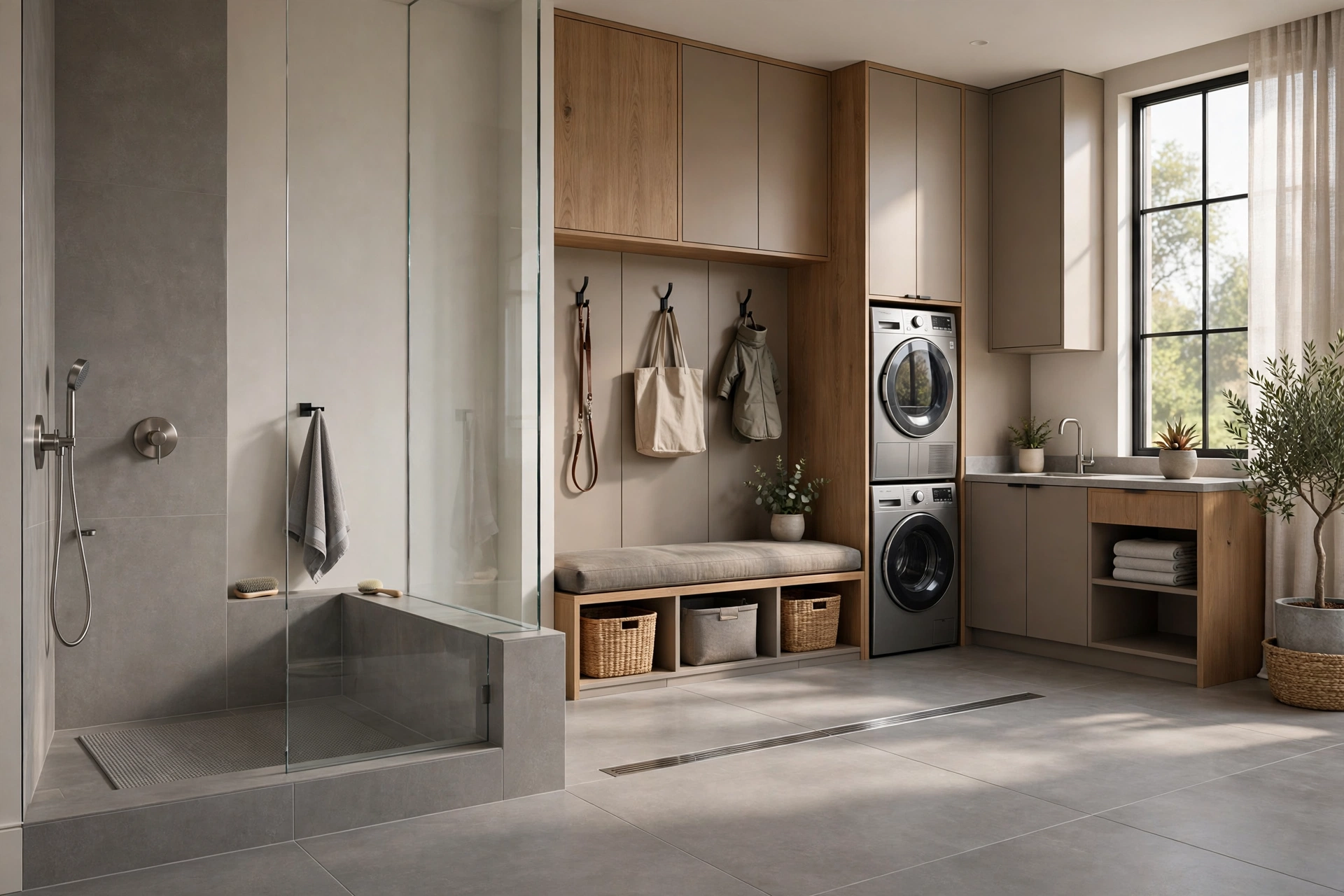
A linear floor drain lets you hose the whole room down — the dream for dog owners and snowy climates. Pair it with large porcelain tiles and a dog-wash corner for a mudroom that truly does it all. For the organization side, see our mudroom organization ideas.
What is the best flooring for a mudroom?
Porcelain tile is the best all-around mudroom flooring for most homes because it absorbs almost no water, resists scratches and salt, and handles heavy traffic. Large-format porcelain has fewer grout lines, which means fewer places for dirt to collect. Luxury vinyl plank is the best alternative when you want a warmer floor or a lower budget, while sealed concrete suits mudrooms built on a slab.
Is vinyl plank flooring good for a mudroom?
Yes, good-quality rigid-core luxury vinyl plank works well in a mudroom. It is water-resistant, warmer underfoot than tile, and easy to install over most existing floors. Choose a product with a thick wear layer and a waterproof core, and keep the seams tight. Cheaper flexible vinyl can dent under heavy furniture, so it is worth spending a little more here.
What mudroom flooring is best for dogs?
For homes with dogs, choose a floor that resists scratches and cleans easily: porcelain tile, luxury vinyl plank, or sealed concrete. Avoid solid hardwood and carpet, which hold moisture and show claw marks. A matte or textured finish gives paws grip when wet, and a floor drain or a boot-tray zone makes washing muddy paws far easier after walks.
Can you put hardwood in a mudroom?
Solid hardwood is not a good mudroom choice because it swells and stains with repeated water exposure. Engineered hardwood is a better option when the mudroom flows into wood-floored rooms, but it still needs a good mat, prompt drying of puddles, and a tough finish. For the wettest entries, wood-look porcelain gives the same appearance with none of the risk.
How do I keep mudroom floors clean in winter?
The secret is containment: a scraper mat outside, an absorbent mat inside, and a boot tray for melting snow. Sweep grit daily, since it scratches floors, and mop with a pH-neutral cleaner once a week. Dark grout hides winter grime between deep cleans, and sealed grout stops salt and meltwater from staining the lines permanently.
Is heated flooring worth it in a mudroom?
Yes, especially in cold or snowy climates. Radiant heat under tile dries wet boots faster, keeps the room comfortable, and stops meltwater from pooling into puddles. Electric mats are the simplest retrofit under tile and cost little to run in a small room. The comfort alone is worth it on winter mornings, and it also helps the floor dry between uses.
The right mudroom floor is the one that survives your household — boots, paws, snow, and all — and still looks like it belongs in your home. Pick the material that fits your climate and your cleaning habits, and the entry will take care of itself.
