
Once the holiday decorations come down, the entryway still has to work hard. These winter entryway decor ideas are made for January and February: snow on boots, cold air at the door, short dark afternoons. Every idea stays up all winter — no ornaments, no red bows, nothing to box up.
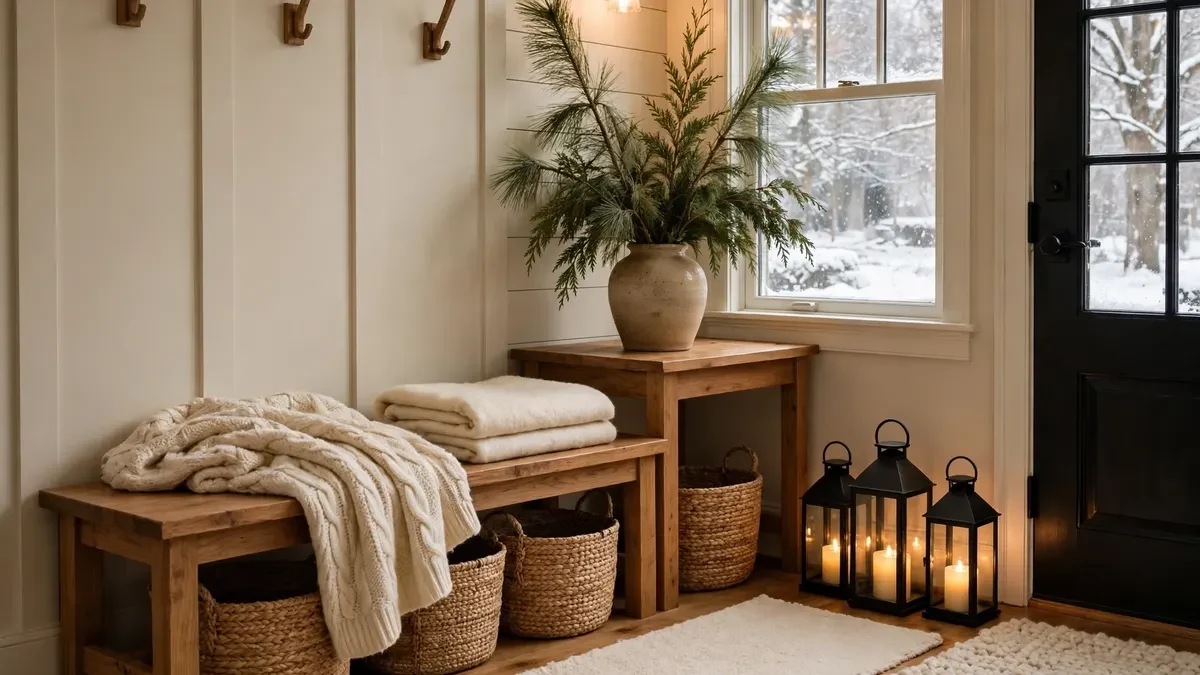
Why You’ll Love These Winter Entryway Decor Ideas
A winter entryway has two jobs: handle wet coats and melting snow, and feel warm the moment you step inside. Start with the practical pieces — a boot tray, hooks at the right height, a bench to sit on — then layer wool, evergreen, and warm light. Nothing here depends on a holiday, so the look carries from first frost to last cold snap.
How to Choose the Right Winter Entryway Decor for Your Home
Measure first: the door swing, the walking path, and how many coats and boots your household really uses. Pick warm neutrals — cream, camel, charcoal, natural wood — and repeat them in rug, baskets, and textiles. Use washable, water-friendly materials at floor level; save soft pieces for bench height and above.
Winter Entryway Foundations That Handle Snow and Slush
1. Deep Boot Tray with a Raised Lip
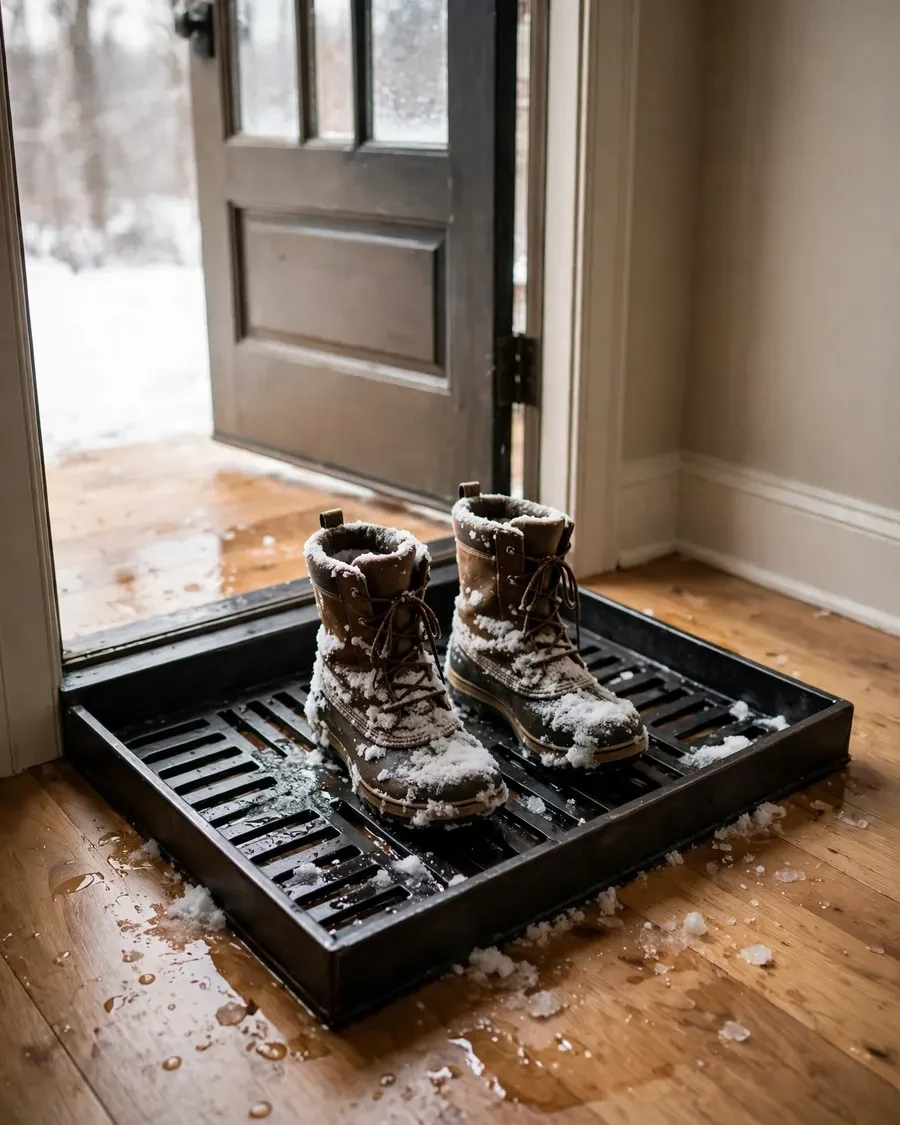
A flat mat becomes a puddle under snowy boots; a raised-edge tray with a slatted base contains meltwater. Best for: busy boot rooms. Styling tip: dark metal disappears against the floor. Pro tip: empty it nightly so boots dry.
2. Two-Height Hook Rail for Every Coat
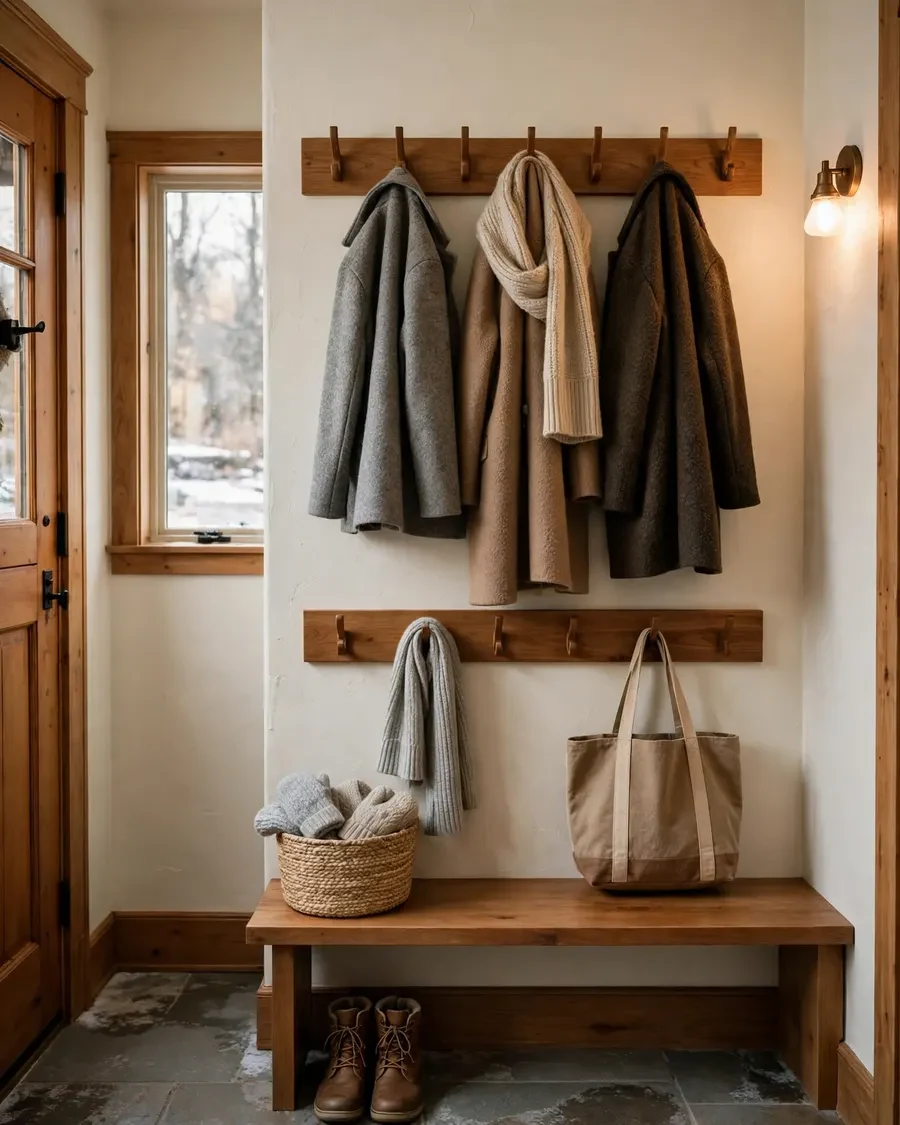
One row of hooks is never enough in winter — add a lower row so kids reach their own coats. Best for: families with children. Styling tip: space hooks 15 cm apart so bulky coats do not crush. Pro tip: one hook per person for the everyday coat.
3. Sit-Down Storage Bench
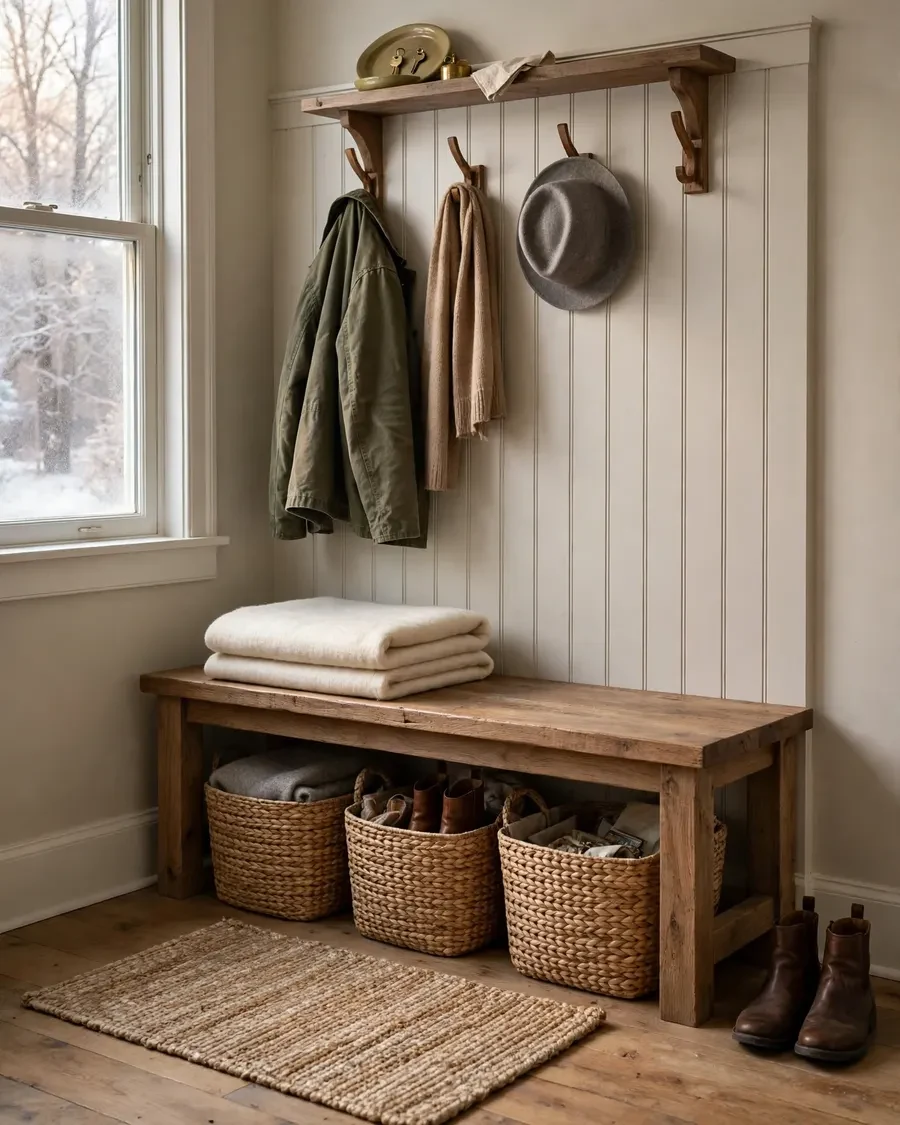
A bench earns its floor space only if someone can sit on it to pull off boots — solid wood, about 45 cm high, baskets underneath. Best for: wet-boot households. Styling tip: add a folded wool cushion you can wash. Pro tip: keep one basket empty for the next gloves.
4. Coir Mat Outside, Washable Rug Inside
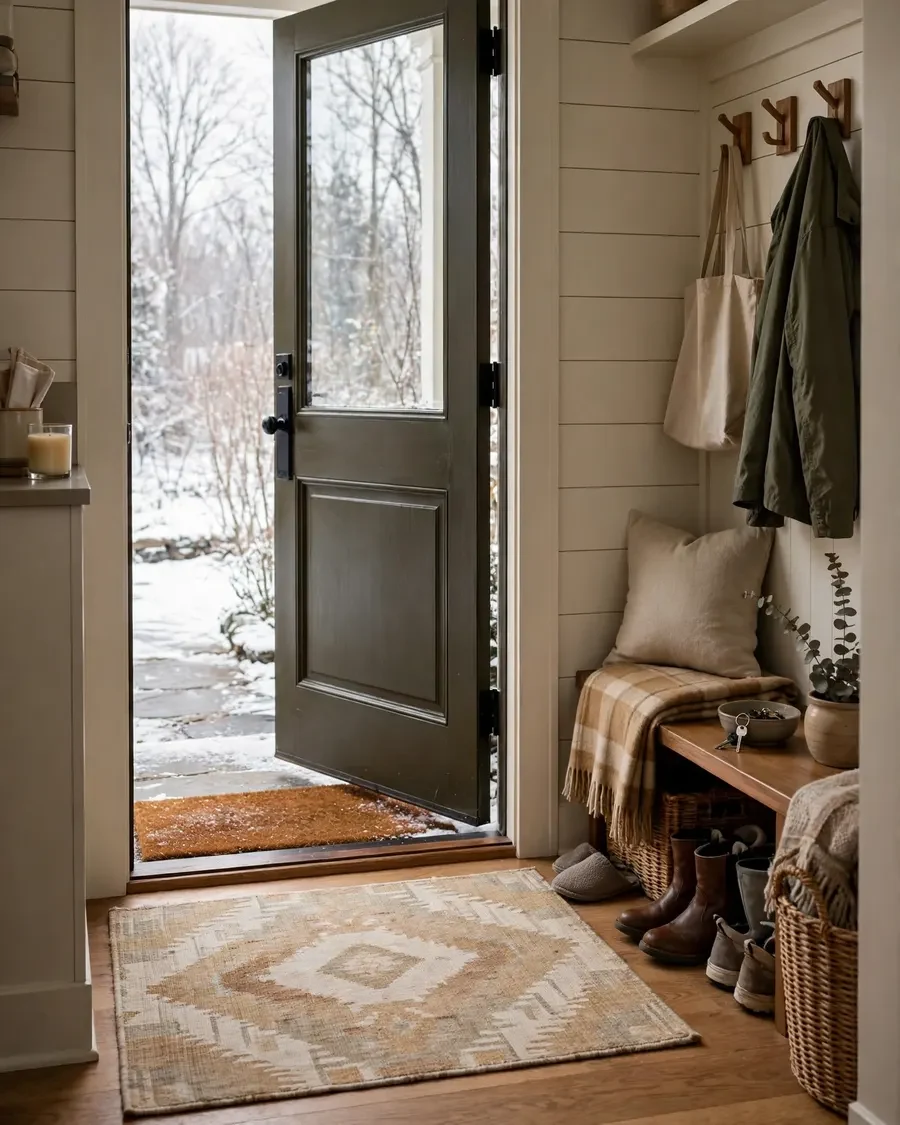
Two layers catch what one cannot: a stiff coir mat scrapes slush off outside, a washable patterned rug catches the rest indoors. Best for: snowy, salty climates. Styling tip: let the indoor rug run wider than the door. Pro tip: wash it every two weeks.
5. Umbrella Stand with a Drip Tray
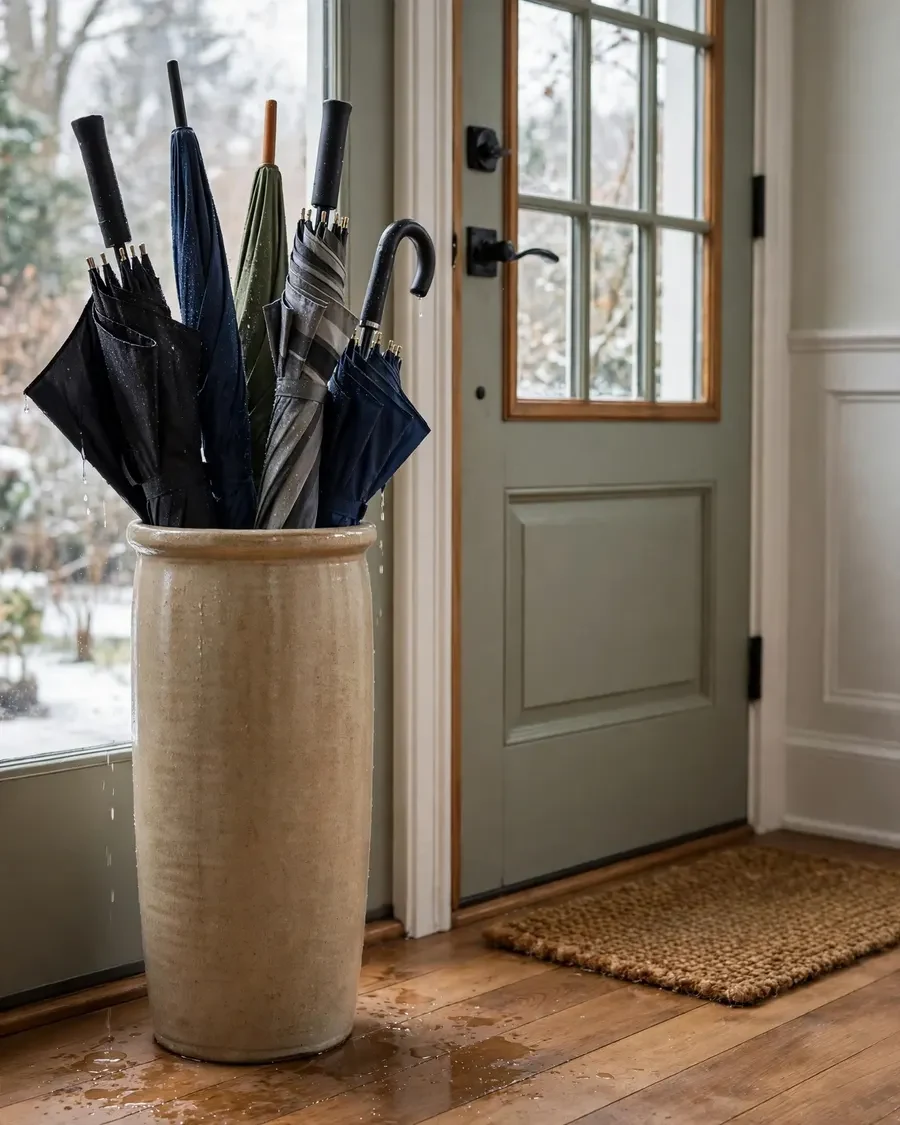
Wet umbrellas leaning on a wall leave rings on paint and floors; a tall stand with a removable drip tray solves it. Best for: rainy, snowy climates. Styling tip: a heavy ceramic stand doubles as sculpture. Pro tip: air-dry umbrellas open for an hour first.
6. Labeled Baskets for Hats, Gloves, and Scarves
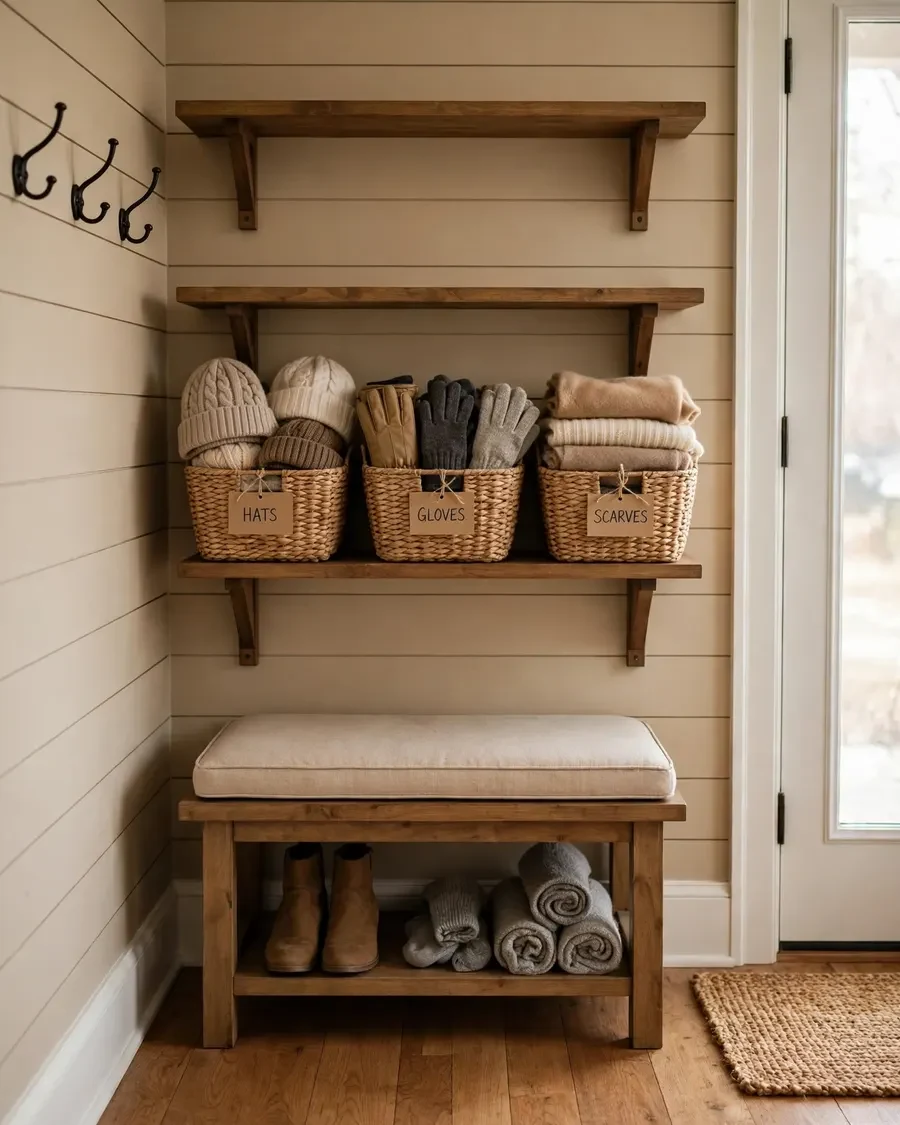
Small winter gear disappears into one big bin — give each person a labeled basket and the morning search ends. Best for: busy families. Styling tip: matching baskets in one natural fiber keep shelves calm. Pro tip: these mudroom organization ideas show how to zone baskets, hooks, and benches together.
7. Slim Closed Shoe Cabinet
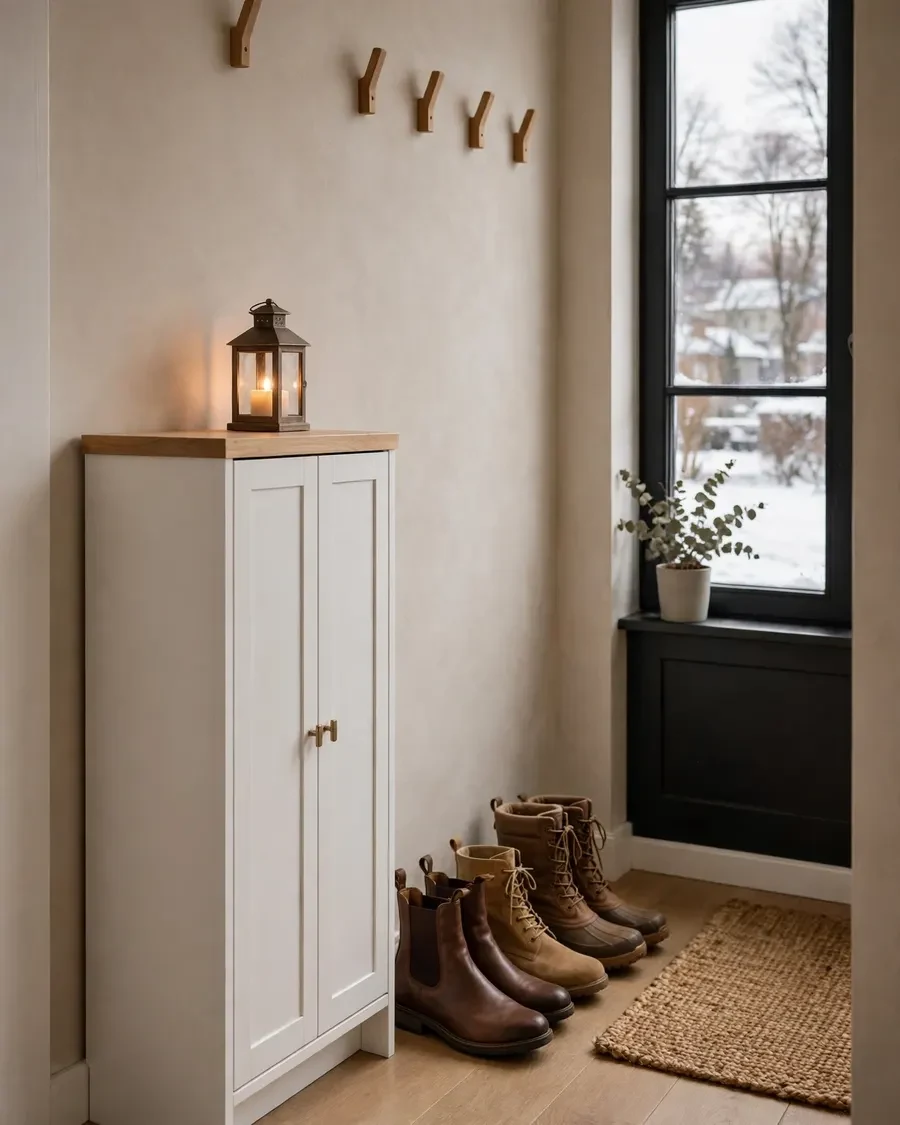
Open shoe piles look messy within a day; a slim cabinet about 20 cm deep hides everyday shoes and tops out as a display surface. Best for: narrow halls. Styling tip: keep the top nearly empty — one lantern is enough. Pro tip: keep only the current week’s shoes inside.
Warm Layers and Textures for a Cozy Winter Entryway
8. Thick Wool Runner Down the Hall
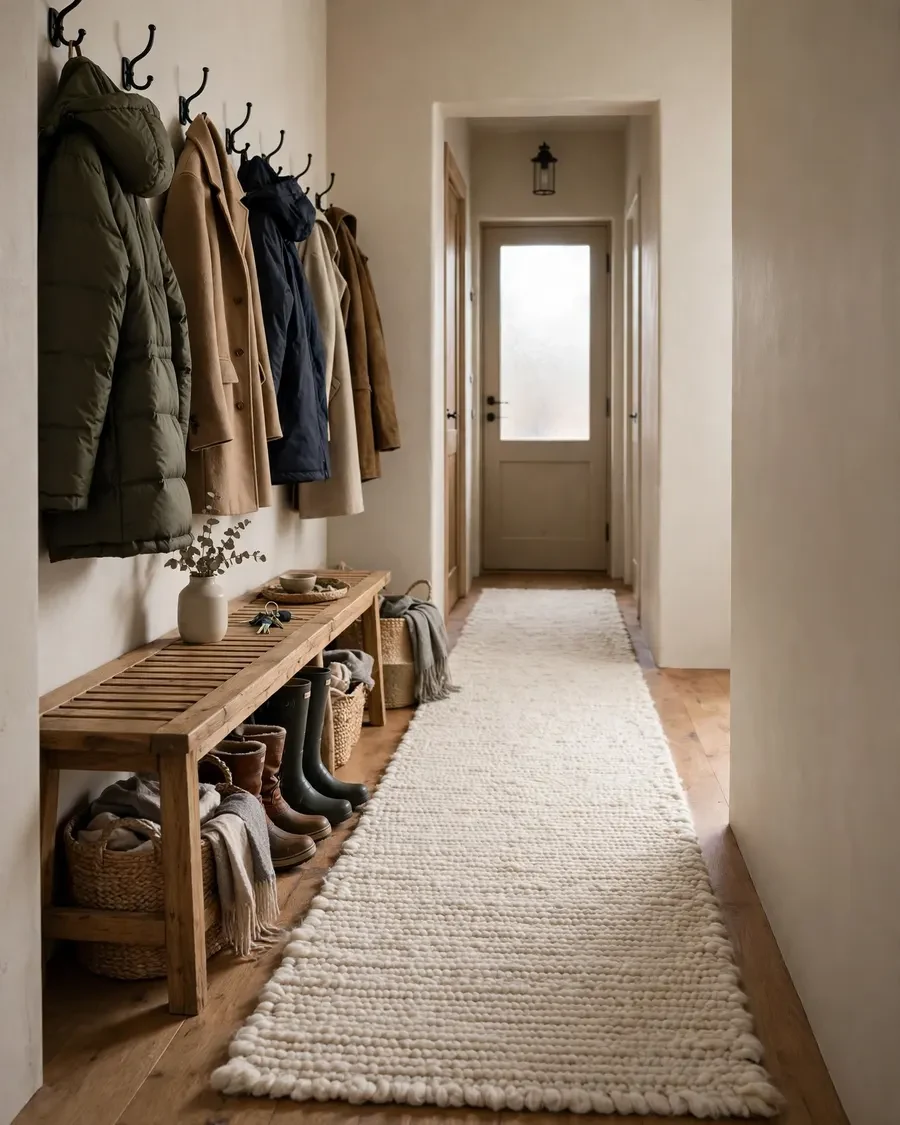
A wool runner warms cold floors, muffles boot steps, and defines the path from door to house. Best for: hard floors in cold homes. Styling tip: leave 15 cm of bare floor showing on each side. Pro tip: pick a low, tight pile — deep pile traps salt.
9. Chunky Knit Throw on the Bench
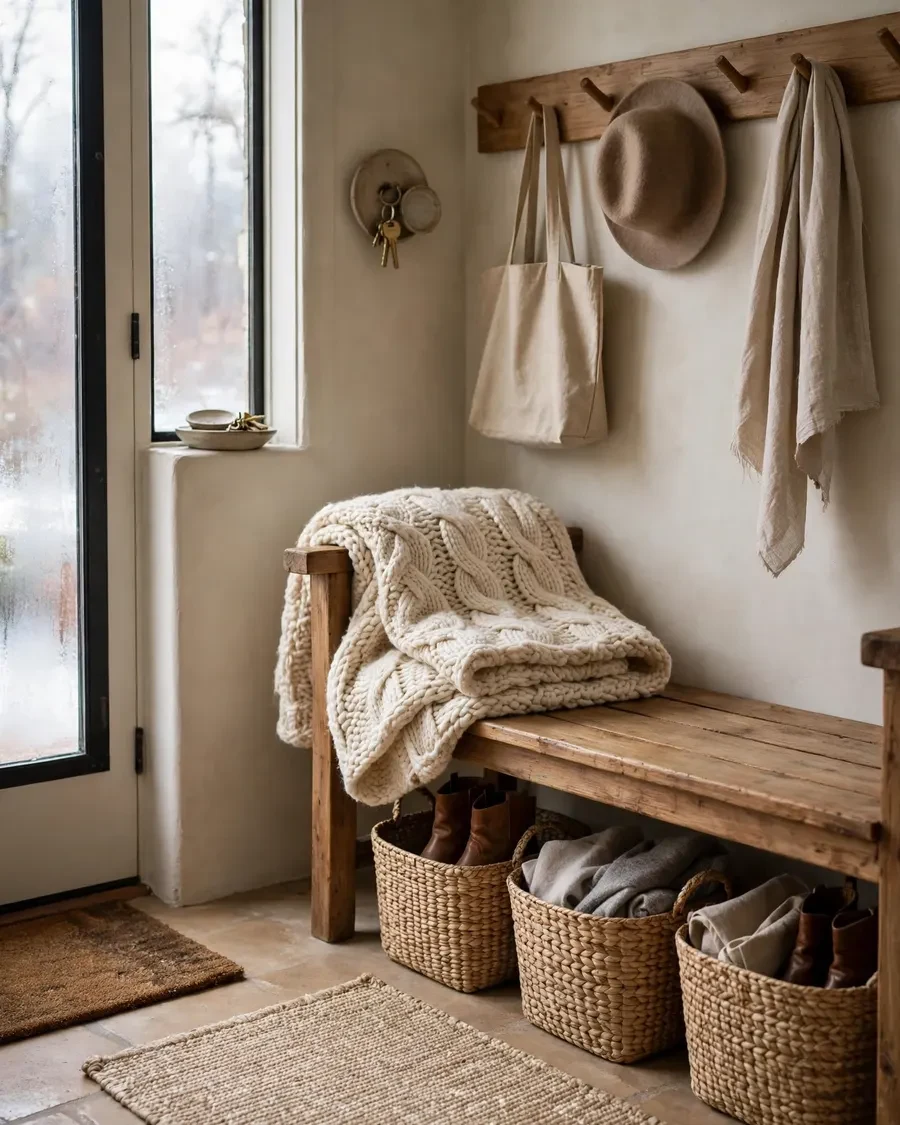
One chunky knit throw folded over the bench arm signals warmth before anyone sits down. Best for: cold, bare entries. Styling tip: fold it in thirds so the texture shows. Pro tip: pick machine-washable knit — bench throws collect boot dust fast.
10. Faux-Fur Bench Cushion
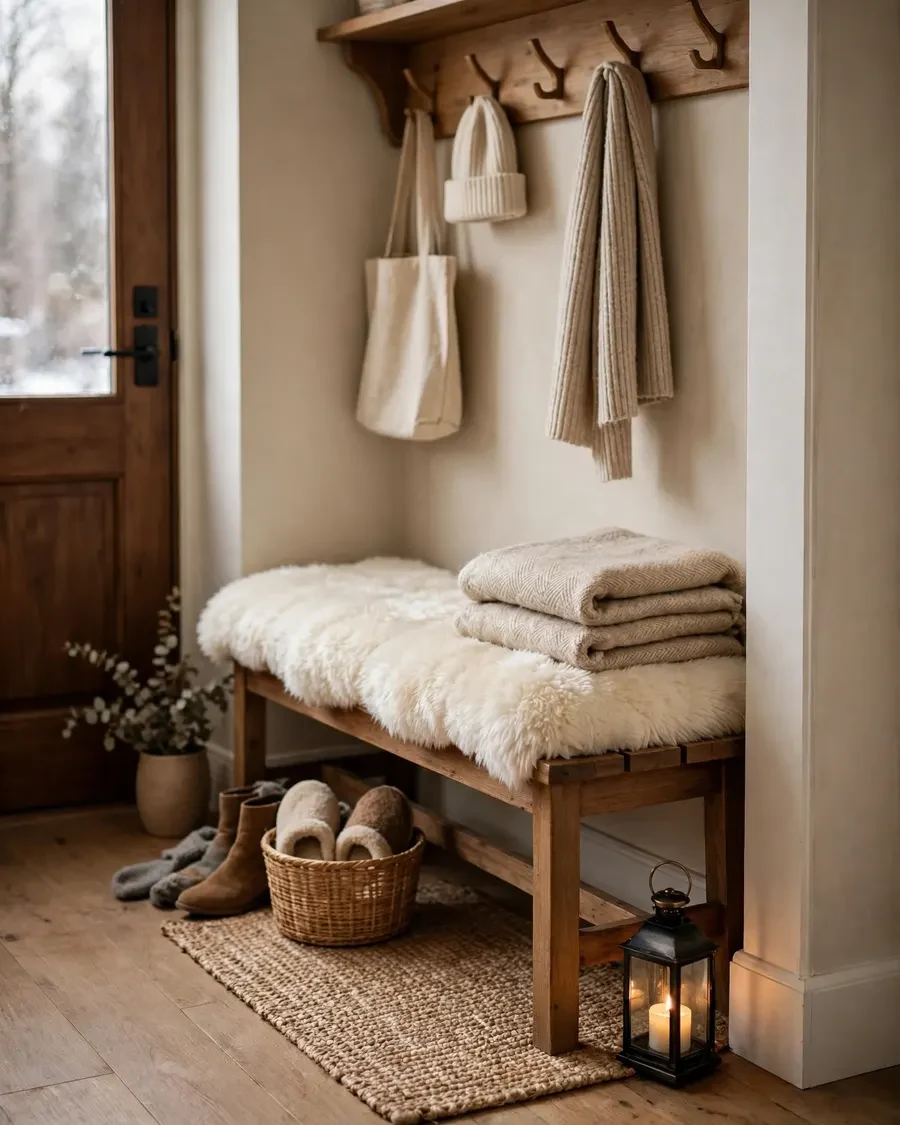
A soft faux-fur cushion turns a hard bench into the warmest seat in the house. Best for: wood or metal benches that feel icy. Styling tip: keep it ivory or warm grey to match every neutral. Pro tip: shake it outside weekly; spot-clean salt marks early.
11. Layered Rug Duo in Warm Neutrals
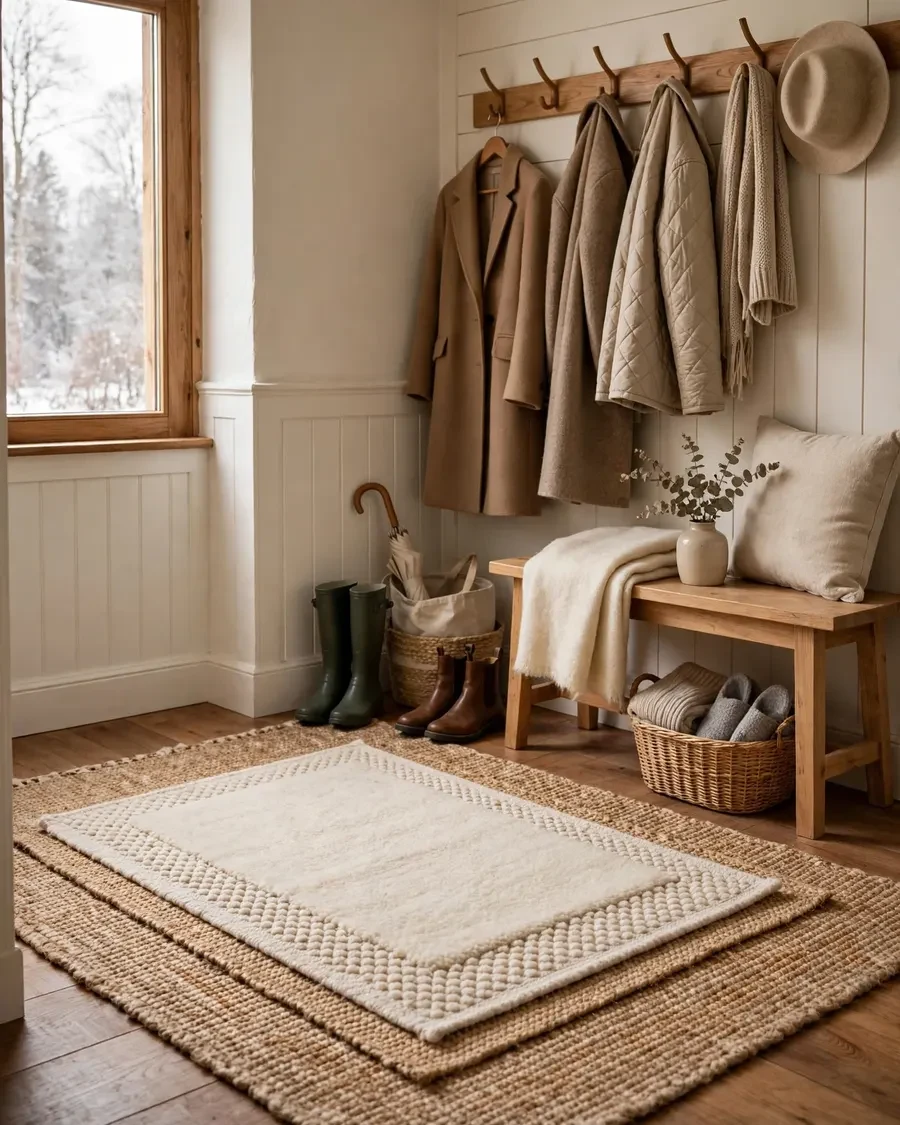
Layer a larger jute rug under a smaller wool rug for instant depth and double dirt-trapping. Best for: entries needing warmth without a remodel. Styling tip: keep both rugs in one warm-neutral family. Pro tip: a non-slip pad between layers stops the top rug creeping.
12. Woven Seagrass Baskets by the Bench
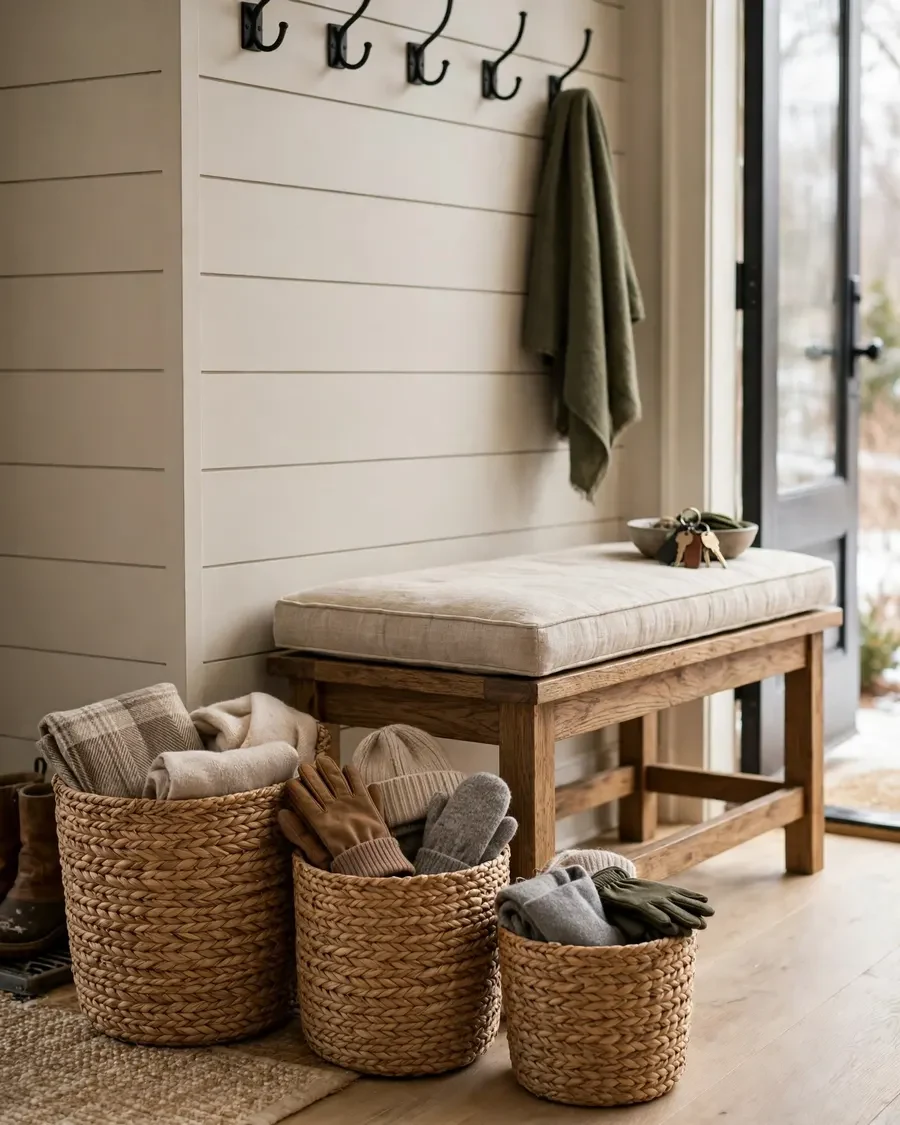
Seagrass baskets hold the overflow — spare scarves, dog towels, unclaimed gloves — and look good doing it. Best for: entries with no closet. Styling tip: vary basket heights in a group of two or three. Pro tip: line the wet-gear basket with a washable cloth.
13. Muted Plaid Wool Blanket on a Hook
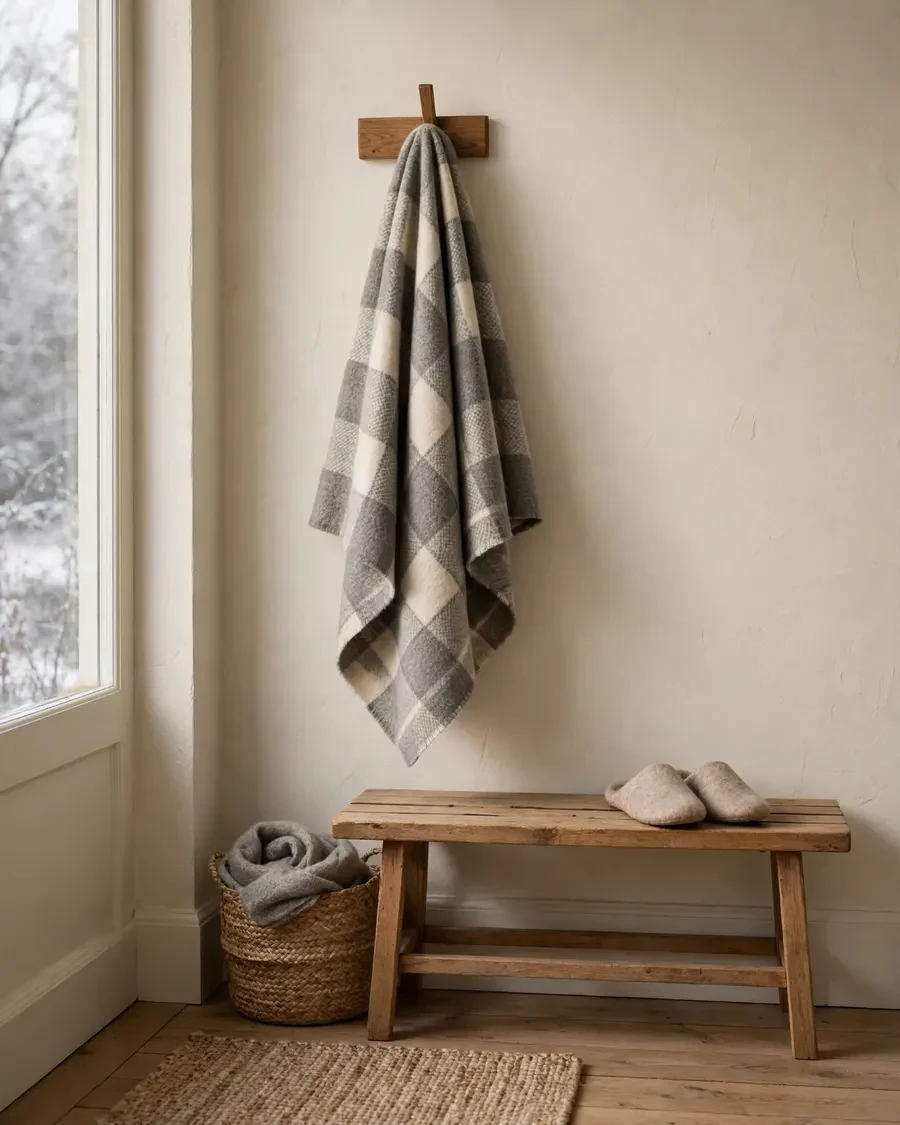
A muted plaid wool blanket on its own hook adds pattern and warmth without holiday colors. Best for: plain walls needing one soft accent. Styling tip: choose grey, cream, or charcoal plaid — never bright red. Pro tip: hang it by the door as the grab-and-go car blanket.
14. Sheepskin-Look Seat Pad
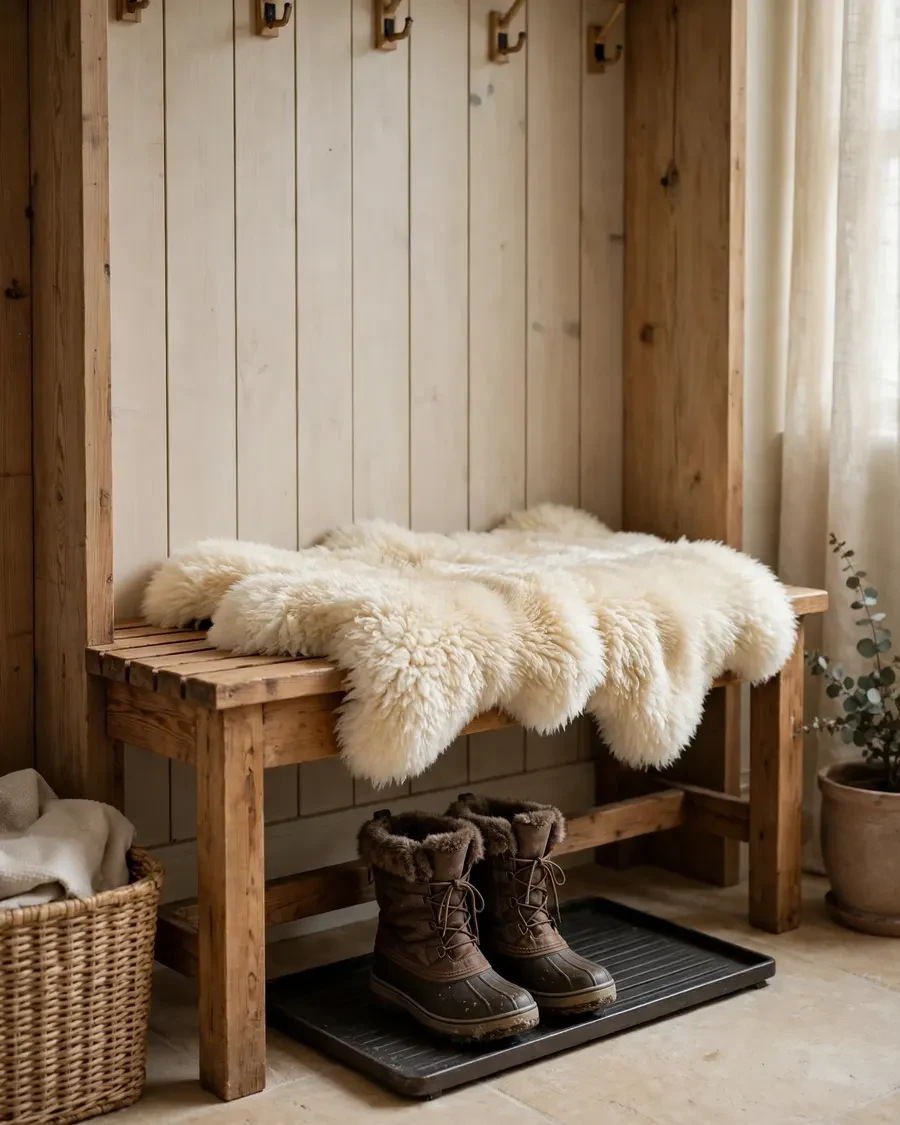
A sheepskin-look pad is the smallest change with the biggest comfort payoff in a cold entry. Best for: benches used every day. Styling tip: let it drape slightly over the bench edge. Pro tip: brush it monthly with a wide-tooth comb.
Winter Greenery and Light Without a Holiday Look
15. Tall Evergreen Branches in a Heavy Vase
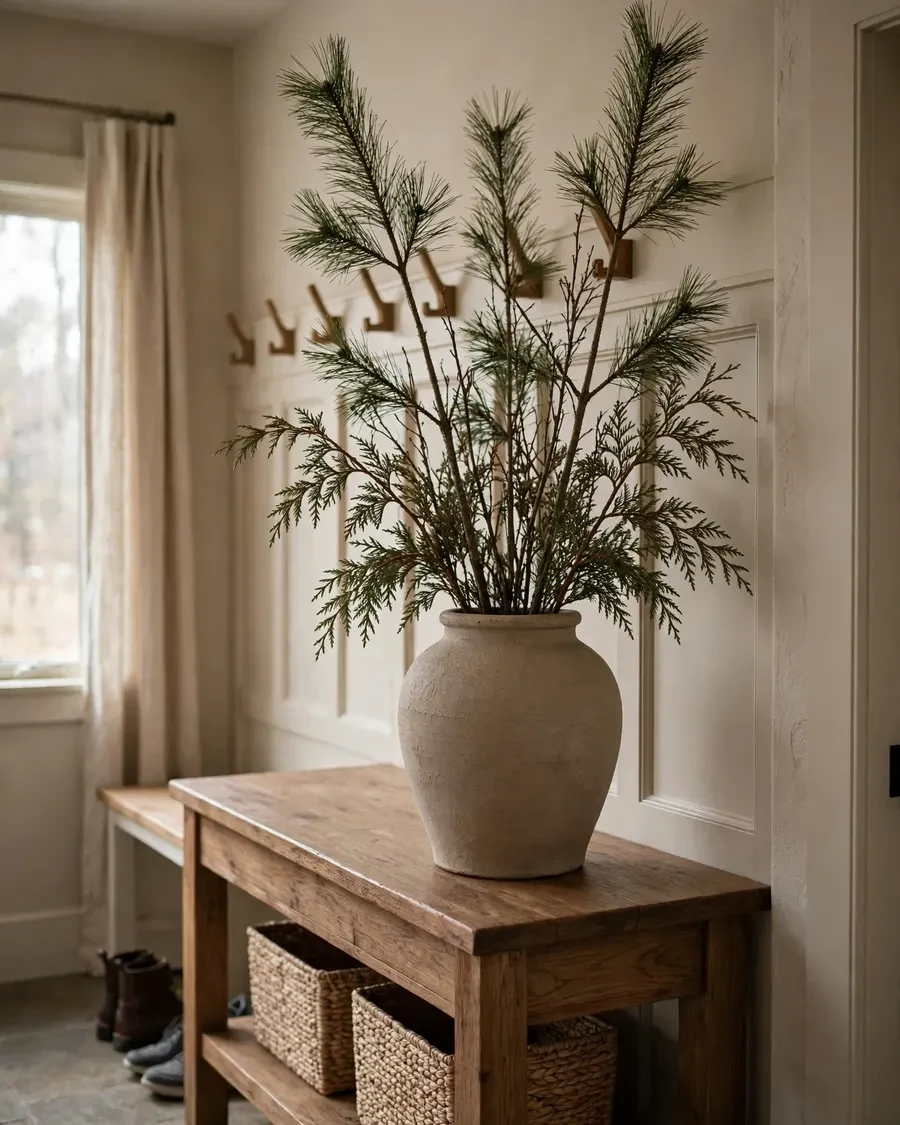
Pine and cedar branches in a heavy vase give winter greenery with no festive references at all. Best for: consoles and entry tables. Styling tip: cut stems at different heights for a gathered look. Pro tip: fresh cedar lasts about three weeks; go faux in February.
16. Bare Birch Branches in a Tall Vase
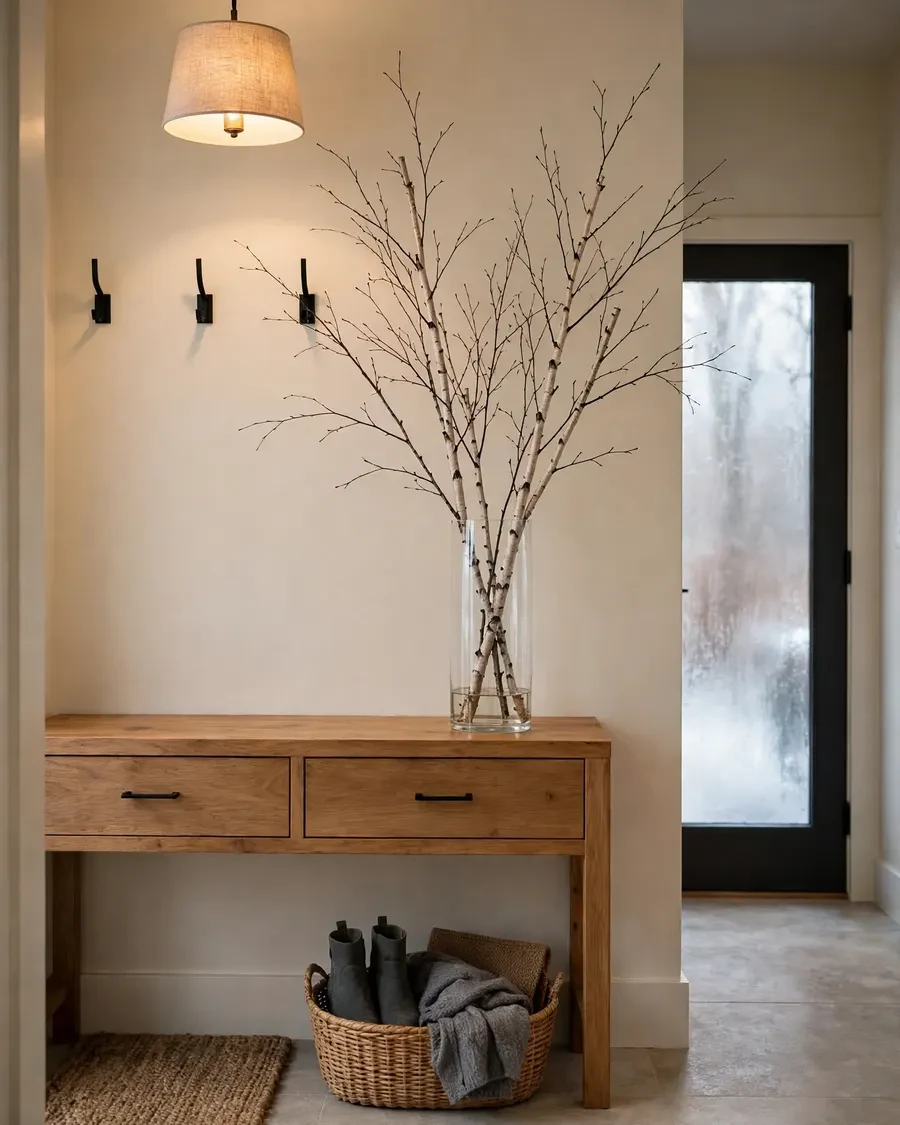
Bare birch branches are the quietest winter statement: pale bark, clean lines, nothing to tidy up. Best for: modern, minimal entries. Styling tip: use three to five stems at slightly different angles. Pro tip: birch keeps for months indoors.
17. Cluster of Three Lanterns by the Door
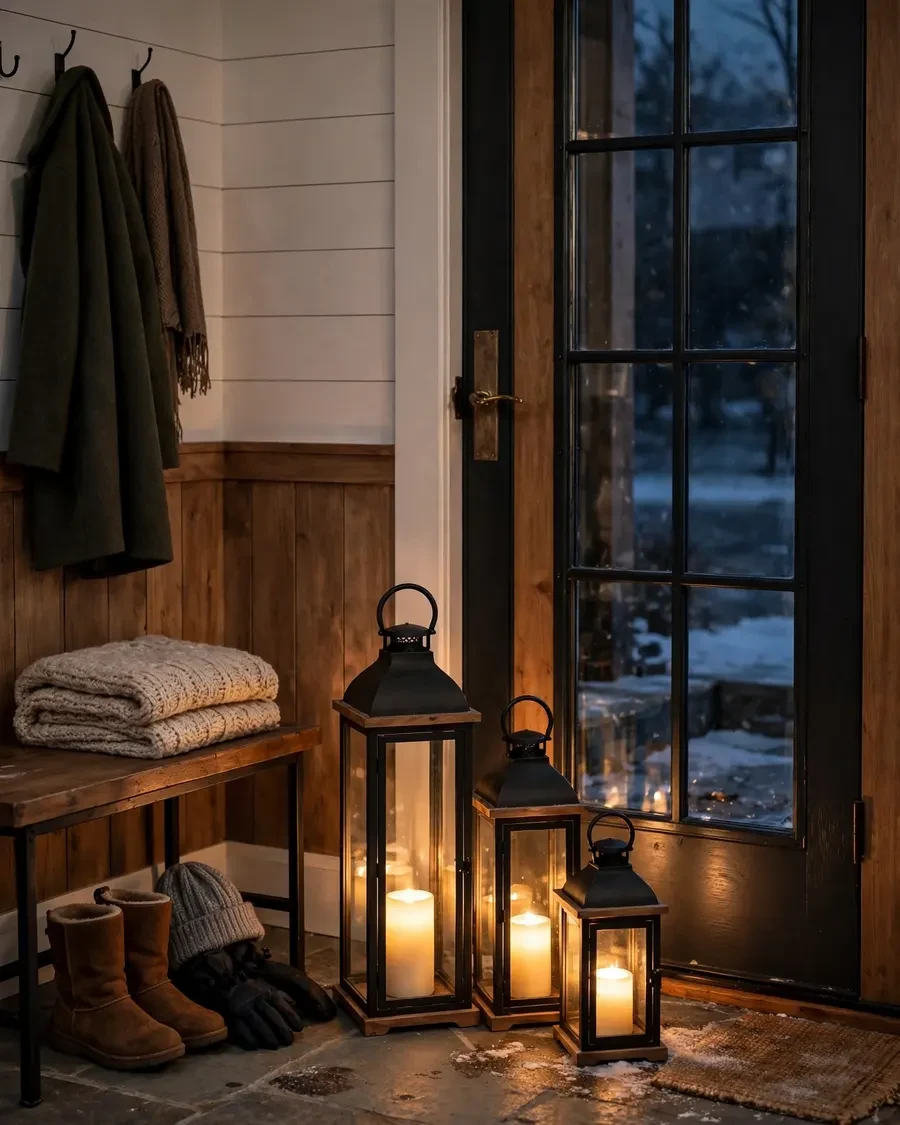
Three lanterns at different heights by the door glow like a small hearth every dark afternoon. Best for: entries with no table lamp. Styling tip: mix metal and wood frames in one finish family. Pro tip: use battery candles — real flames near coats are a risk.
18. Warm 2700K Bulbs on a Timer
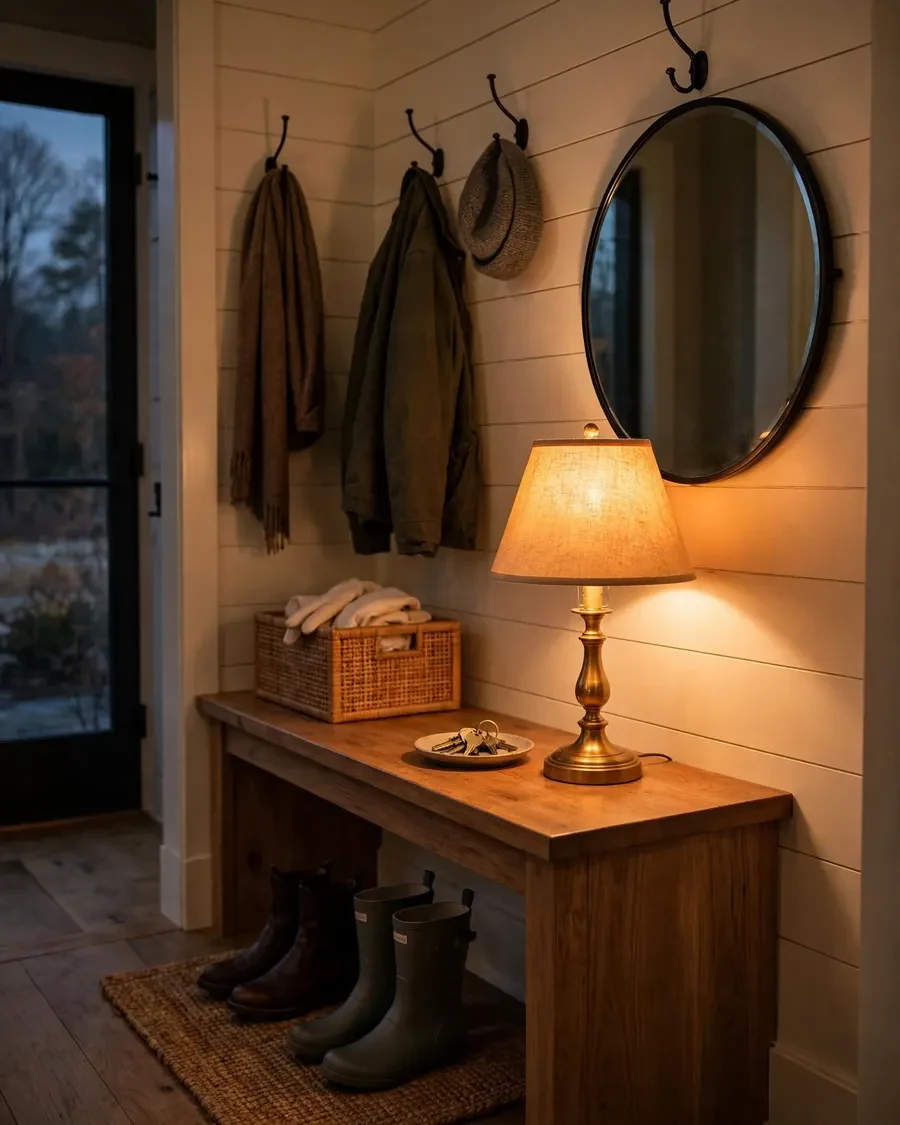
Swap the entry bulb for a warm 2700K one on a timer that follows sunset, so you are never greeted by darkness. Best for: every entryway — the cheapest transformation here. Styling tip: match the lamp shade tone to the rug. Pro tip: Homes & Gardens’ cozy entry shield for winter storms guide covers timed lighting and draft blocking.
19. Dried-Grass Wreath on the Inside of the Door
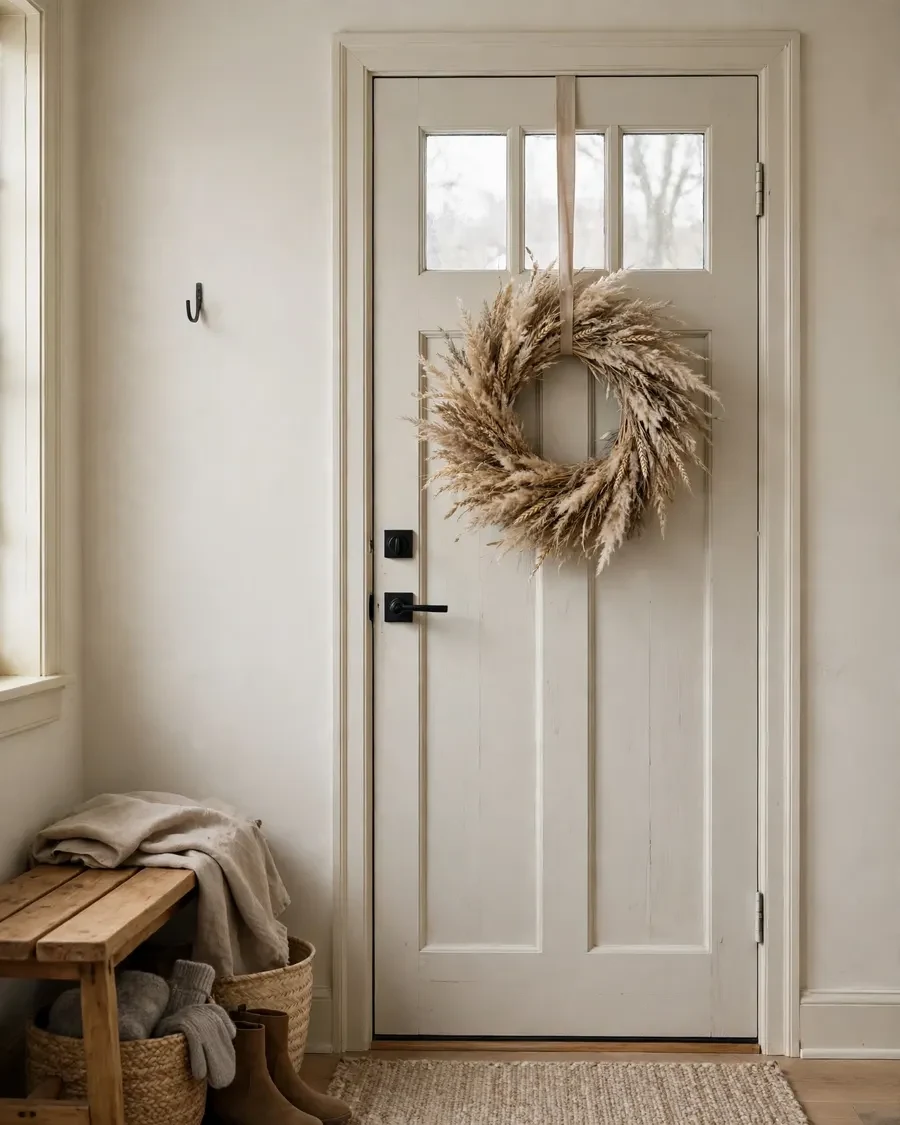
A dried-grass wreath gives the door a finished look with zero holiday meaning — texture, not a symbol. Best for: renters and all-season wreaths. Styling tip: hang it inside the door, away from wind and snow. Pro tip: a light coat of hairspray stops shedding.
Small-Space and Guest-Ready Winter Entryway Ideas
20. Slim Console with a Landing Ledge
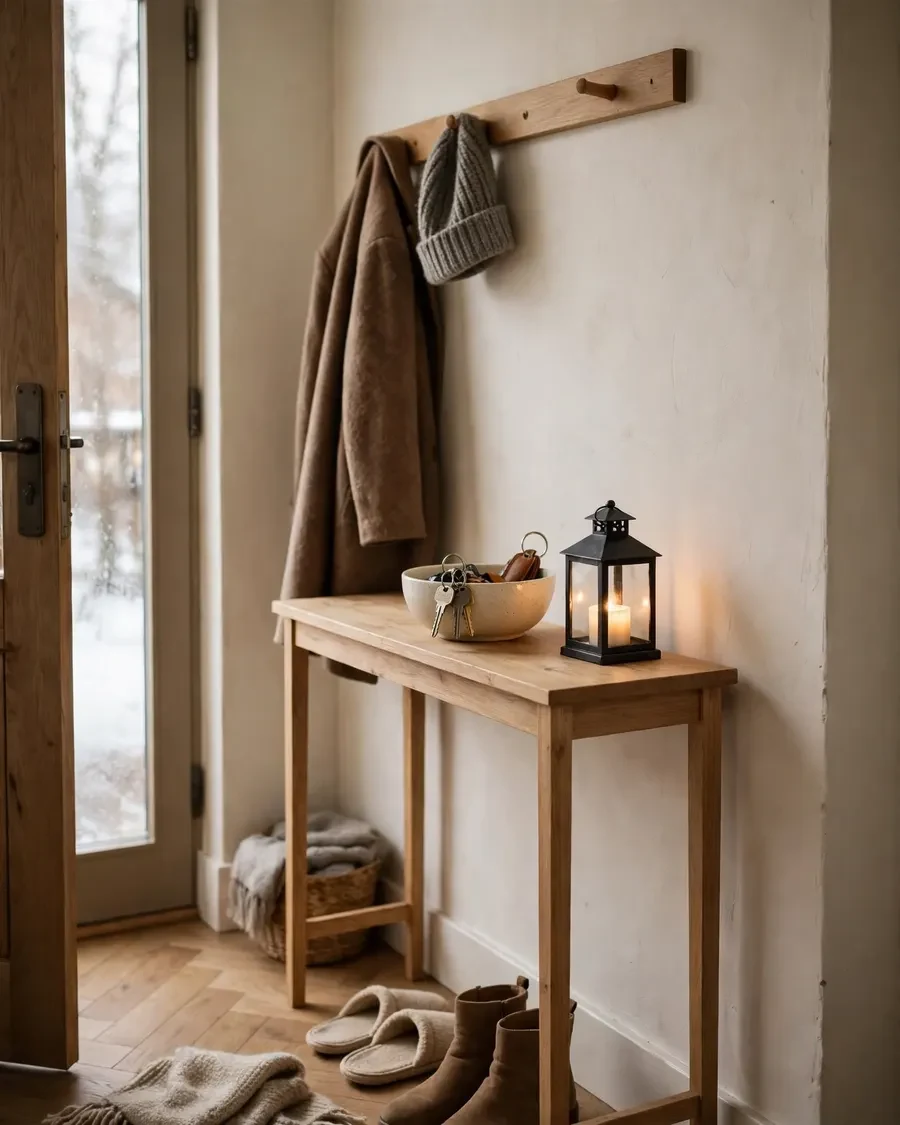
A console about 25 cm deep gives keys, mail, and sunglasses a home without eating the walking path. Best for: small entries with no mudroom. Styling tip: one ceramic bowl for keys and one small lantern is all the top needs. Pro tip: these small mudroom ideas show how slim furniture fits a full winter setup into a few square feet.
21. Guest Station with Slippers and a Hook
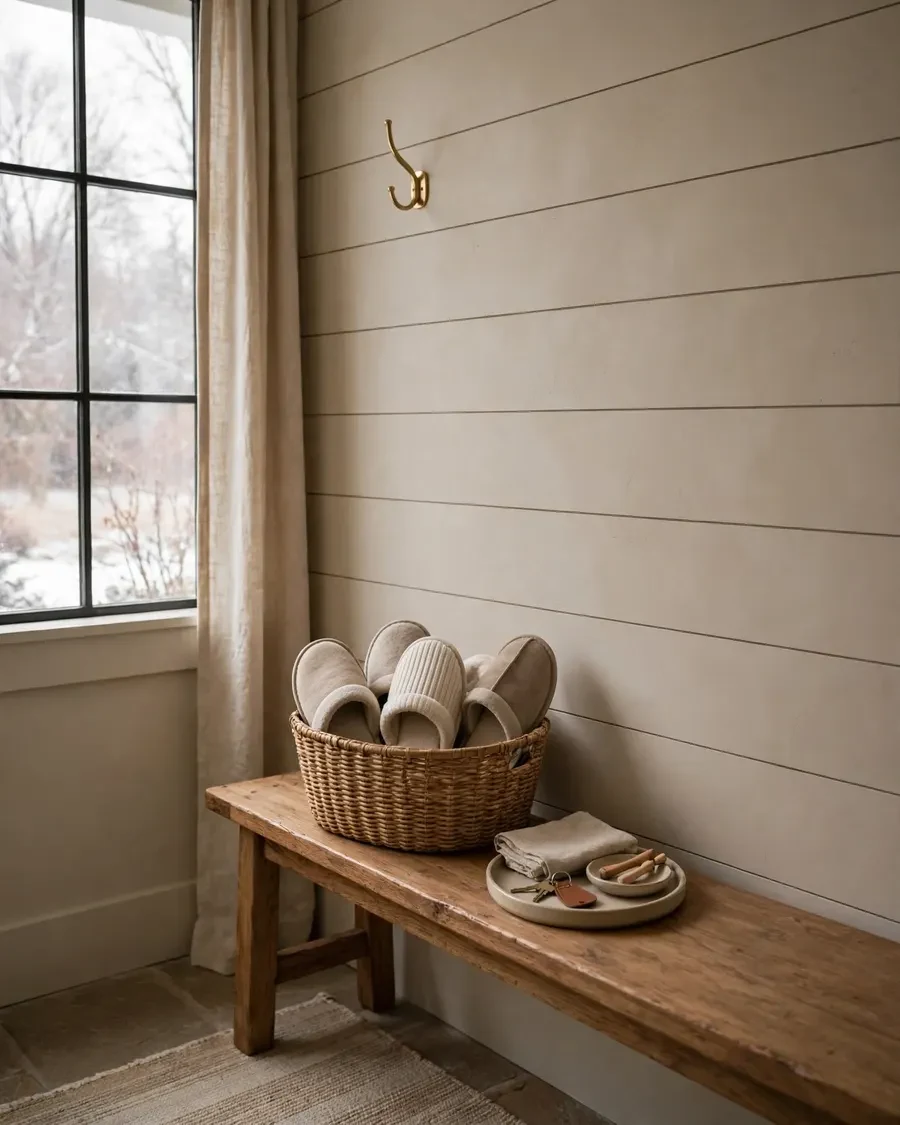
Set aside one hook, one small tray, and a basket of spare slippers so guests settle in without asking. Best for: homes that host often. Styling tip: keep slippers in one neutral color so the basket looks tidy. Pro tip: wash guest slippers after each visit.
22. Heavy Curtain Across a Drafty Doorway
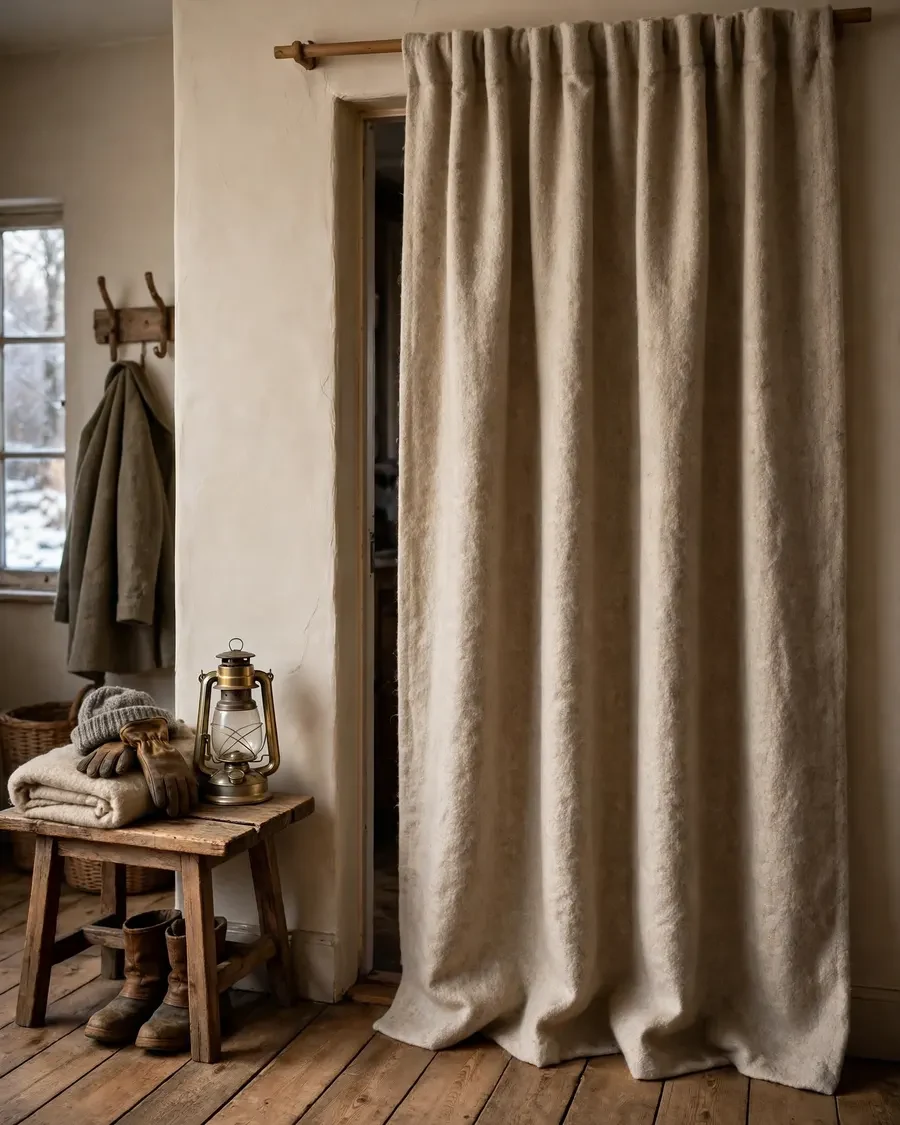
A heavy curtain is the warmest thing an entryway can wear — it blocks drafts and softens a hard doorway. Best for: older homes and open-plan entries. Styling tip: hang the rod above the doorway; let the curtain pool slightly. Pro tip: thermal lining makes it insulate all winter.
23. Mirror to Bounce Low Winter Light
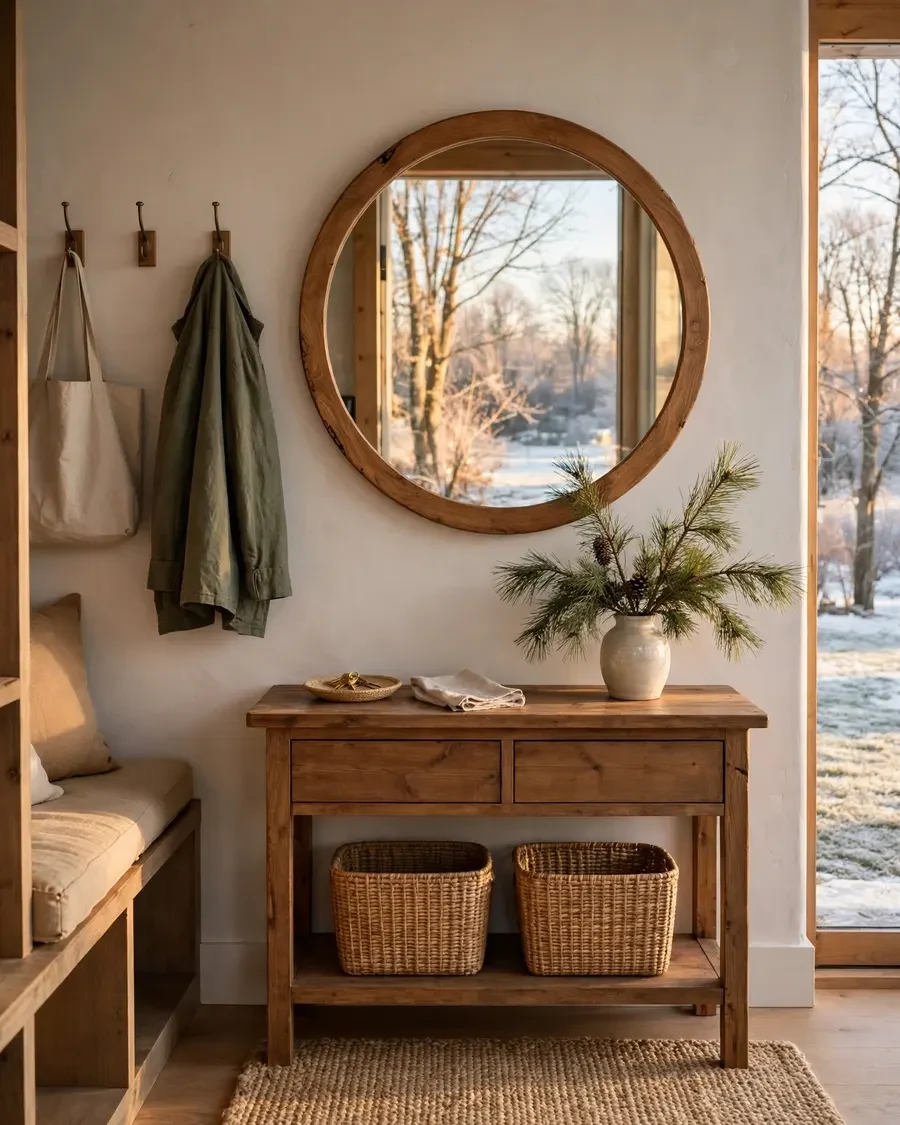
Winter daylight is scarce, so a mirror opposite a window or beside the lamp doubles whatever light you have. Best for: dark, north-facing entries. Styling tip: a round wood-framed mirror softens straight lines of hooks and benches. Pro tip: hang it at eye level for the tallest person.
24. Boot Drying Rack by the Radiator
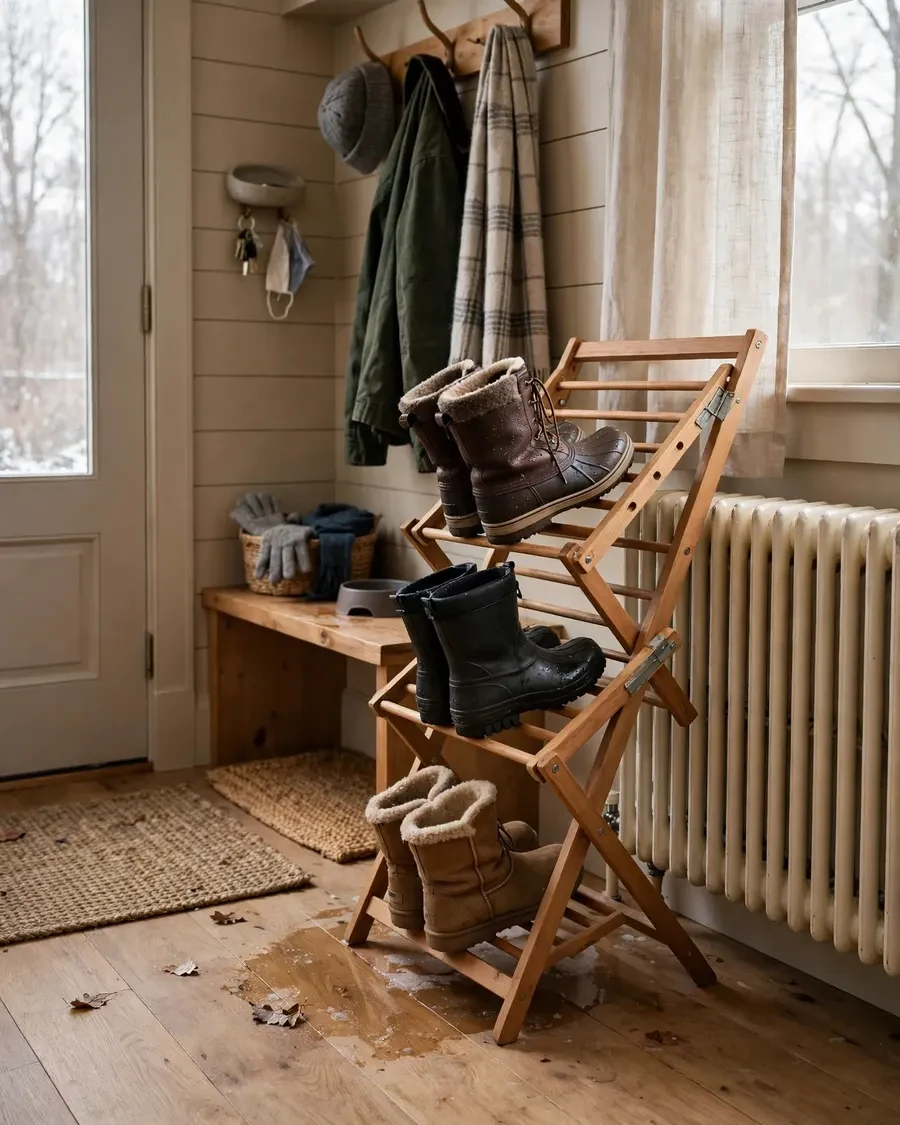
Wet boots left on the floor stay damp for days; a simple drying rack near — not on — the radiator gets them dry by morning. Best for: snowy climates and kids’ boots. Styling tip: choose a folding wooden rack that tucks flat in spring. Pro tip: stuff damp boots with newspaper overnight.
25. Winter Scent Sachet on a High Shelf
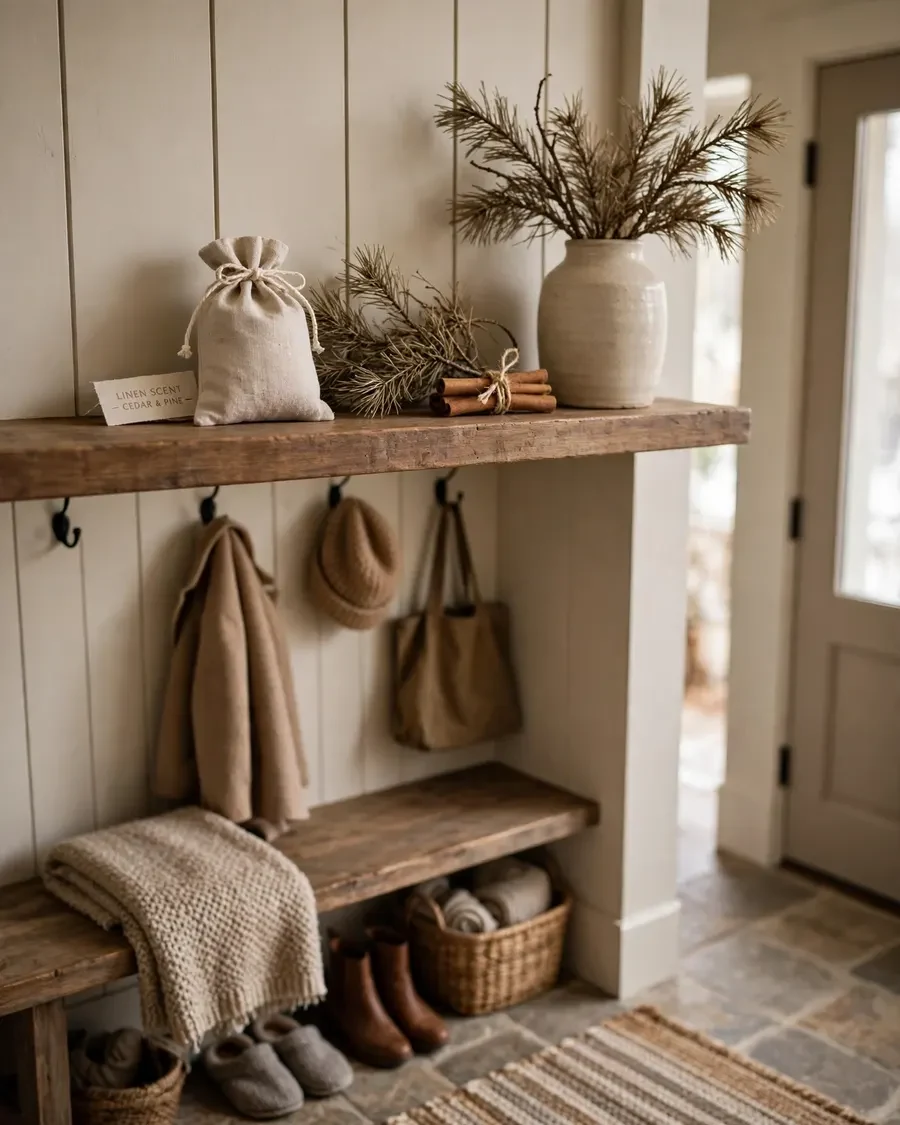
A small sachet of dried pine and cinnamon on a high shelf greets you with winter scent as the door opens. Best for: entries smelling of wet wool by February. Styling tip: tuck it behind a vase so it scents without cluttering. Pro tip: refresh monthly — scent fades fast in drafts.
Winter Entryway Care & Maintenance
Empty boot trays and drip trays every evening, and wipe salt rings off wood and floors before they dry into white marks. Wash rugs and bench cushions every two weeks, shake out baskets weekly, and check hooks monthly — wet coats are heavy and screws loosen. In February, swap tired fresh greenery for faux stems and refresh the sachets.
FAQs
How do I decorate my entryway for winter after Christmas?
Keep the winter pieces and remove anything tied to the holiday: ornaments, red bows, and tree-shaped decor come down, while plain evergreen, wool textures, lanterns, and warm light stay. A boot tray, hooks, a bench, and a washable rug do the practical work, and pine branches, a knit throw, and a dried-grass wreath keep the look seasonal through January and February.
What should I put in a winter entryway?
Start with three practical pieces: a boot tray with a raised lip, hooks at two heights for coats, and a bench you can sit on. Add a washable rug, baskets for hats and gloves, and a place for keys and mail. Then layer warmth with a wool runner, a knit throw, evergreen branches in a vase, and lanterns with warm light.
How do I keep snow and slush from ruining my entryway floor?
Use two layers: a stiff coir mat outside the door to scrape off slush, and a washable rug or deep boot tray just inside. Empty the tray every evening so boots dry overnight, and wipe salt rings off wood and tile before they dry into white marks. A slim shoe cabinet and a drying rack near the radiator handle the wettest boots.
What colors work best for winter entryway decor?
Warm neutrals work best: cream, camel, charcoal, natural wood, and soft grey, with deep green from plain evergreen as the only strong color. Avoid bright red and metallic holiday colors, which read as Christmas. Muted plaid in grey or cream adds pattern safely, and one palette across rug, baskets, and textiles keeps a small entry calm.
How can I make a small entryway feel cozy in winter?
Use slim, vertical pieces: a console about 25 cm deep, hooks at two heights, and a mirror to bounce the scarce winter light. A thick wool runner warms the floor without taking wall space, and one lantern plus a knit throw adds warmth fast. Keep the floor clear except for the boot tray, and store off-season shoes elsewhere.
When should I take down winter entryway decor?
Plain winter decor can stay up until the weather turns, usually late February or early March, because none of it is tied to a holiday. Take it down when you stop needing boot trays and heavy layers, and swap the wool runner and knit throw for lighter spring textures. Evergreen branches and lanterns can stay longest.
Final Thoughts
The best winter entryway works on the wettest, darkest day of the year and still looks good doing it. Start with the boot tray, hooks, and bench, then add wool, evergreen, and warm light. Pick two or three ideas this weekend, and your entryway will feel warm every time you come in from the cold — all the way through February.
