
A small laundry room can still wash, dry, fold, and store everything your household needs — it just needs a smarter plan than a big room does. These small laundry room ideas are built for real tight spaces: closets, nooks, galleys, under-stair corners, and rooms barely wider than the machines themselves. Every idea below works in a compact footprint, uses the walls instead of the floor, and keeps daily supplies within arm’s reach.
Pick the two or three ideas that fix your biggest annoyance first — usually the machines, the drying, and the clutter — then add the pretty touches. A tiny laundry space rewards measuring before buying, so keep a tape measure handy as you read.
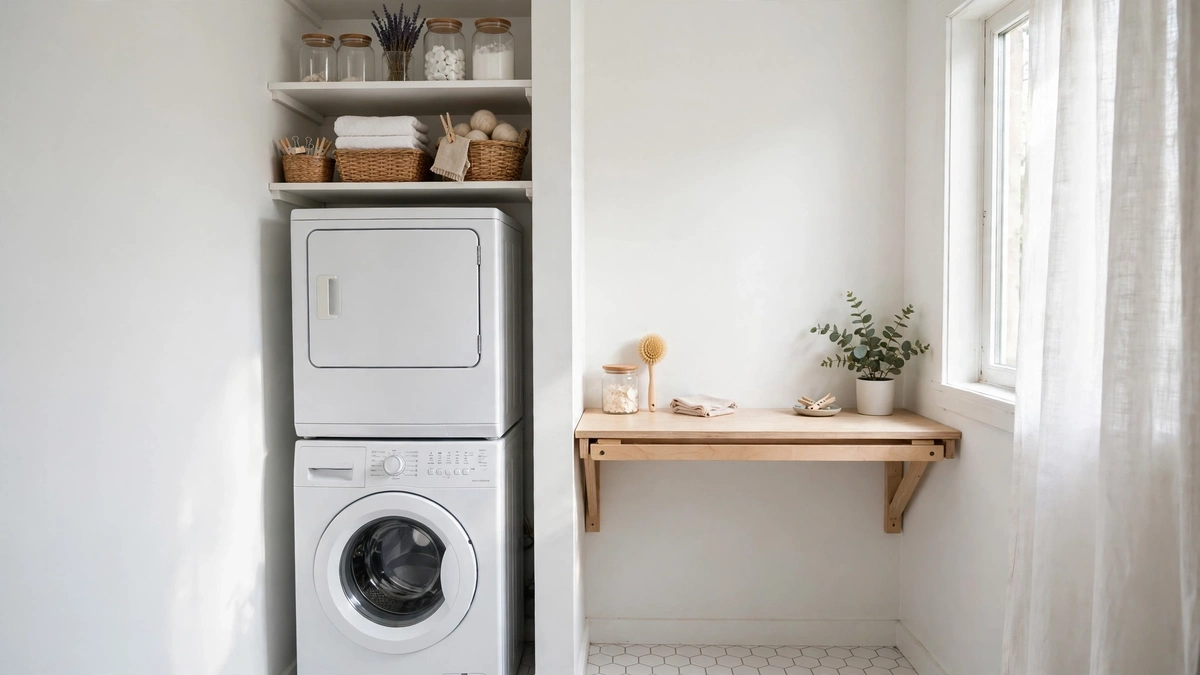
Why You’ll Love These Small Laundry Room Ideas
Small laundry rooms fail in the same quiet way: the machines take the floor, detergent ends up on top of the dryer, and clean clothes pile on whatever flat surface is free. The fix is not more space — it is giving every job its own small zone. Stack the machines, build up the walls, hide the mess behind a door, and suddenly a closet-sized room runs like a full laundry. These ideas do exactly that, and most of them need no remodel at all.
How to Choose the Right Small Laundry Room Ideas for Your Home
Measure first: width, depth, ceiling height, and the 4 to 6 inches behind the machines for hoses and vents. A standard stacked pair needs about 27 inches of width and 75 to 80 inches of height, so check your numbers before ordering anything. Renters should favour freestanding, tension-rod, and peel-and-stick fixes, while owners can add cabinets and counters. If your laundry shares space with the entry, borrow the sorting logic from these mudroom organization ideas so coats, shoes, and laundry each get their own zone.
Stacked and Vertical Layouts That Save the Floor
1. Stacked Washer and Dryer with a Slim Tower

Stacking the dryer on the washer frees a whole machine-width of floor in one move. Best for: any room under 5 feet wide. Styling tip: paint the wall behind the stack a soft white so the tall pair reads as one clean column. Pro tip: use only a manufacturer-approved stacking kit and leave 1 inch of side clearance for vibration.
2. Stackable Pair Tucked Behind Bifold Doors

Louvered bifold doors hide the machines completely and still let air circulate. Best for: hallway and bedroom-corner laundries. Styling tip: match the door colour to the hallway trim so the laundry disappears. Pro tip: louvered doors beat solid ones here — a dryer needs airflow even when the doors are shut.
3. Ceiling-High Cabinets Above the Stack

Run cabinets from just above the machines to the ceiling and the room gains a full closet of storage. Best for: homes with no linen closet nearby. Styling tip: keep daily bottles on the lowest shelf and bulk refills up high. Pro tip: 12 to 15 inches of cabinet depth holds a full row of supplies without bumping your head.
4. A Tall Pull-Out Tower Beside the Stack

A pull-out tower on smooth runners turns a dead 8-inch strip into detergent, stain remover, and clothespin storage. Best for: narrow rooms with one spare strip of wall. Styling tip: label the tower shelves so every bottle has a home. Pro tip: full-extension runners matter — cheap runners jam when the tower is fully loaded.
5. Wall-Mounted Drying Rack Above the Machines

A rack that folds flat against the wall gives delicates a drying spot without stealing floor space. Best for: homes without an outdoor line. Styling tip: mount it at shoulder height so wet shirts hang clear of the machines. Pro tip: a rack that opens to about 24 inches wide and folds to 2 inches deep is the sweet spot for tiny rooms.
6. Over-Stack Shelf for Daily Detergent

One shelf above the stack holds the three bottles you reach for every load. Best for: renters who cannot install cabinets. Styling tip: decant detergent into matching jars for a calm, tidy shelf. Pro tip: keep the shelf 18 inches above the machines so bottle lids and dryer doors clear it easily.
7. Slim Rolling Cart in the 6-Inch Gap
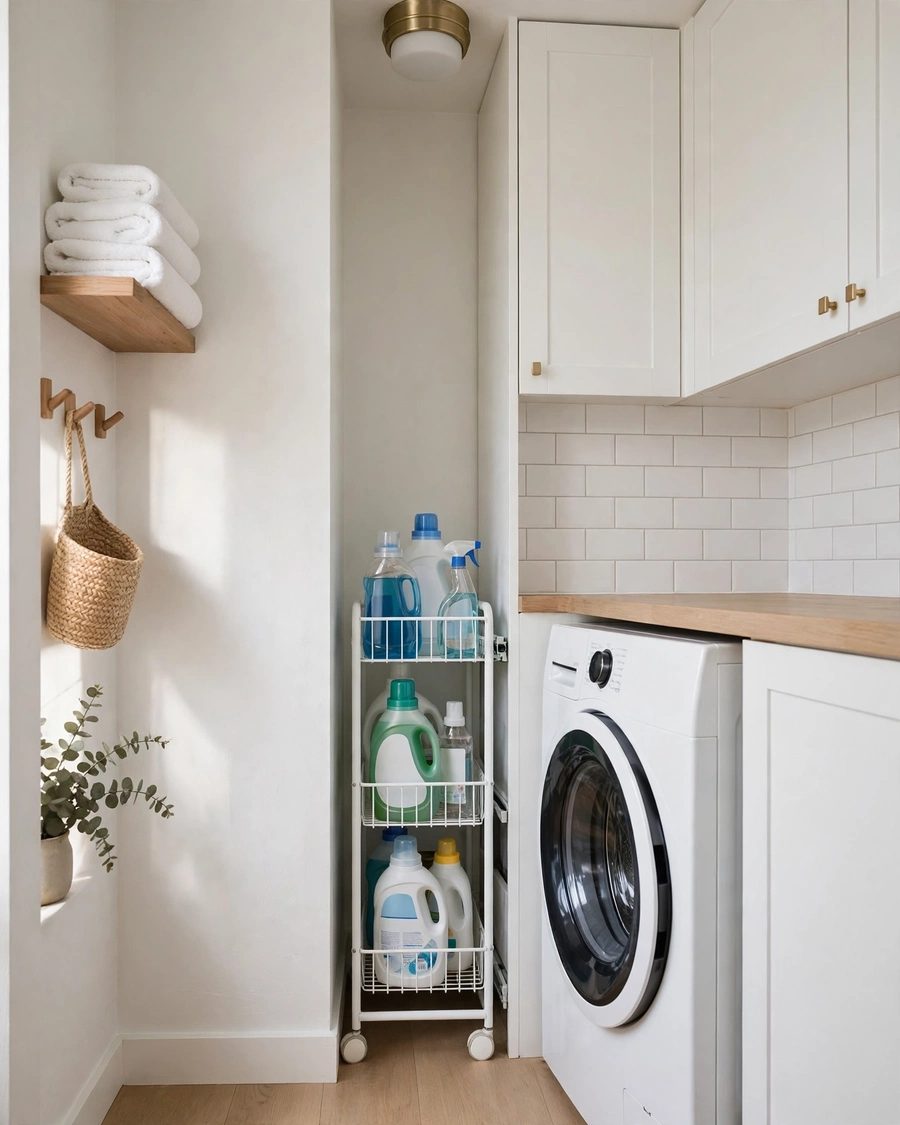
Most small laundries have a 6 to 8 inch gap beside the machines that holds nothing — a slim rolling cart turns it into three tiers of storage. Best for: apartments and tight side-by-side setups. Styling tip: choose a white or metal cart so it reads as part of the machines. Pro tip: measure the gap in three places; walls are rarely straight and a cart that is a half-inch too wide will not slide.
Closet, Nook, and Hidden Laundry Spots
8. Hallway Closet Turned Laundry Nook
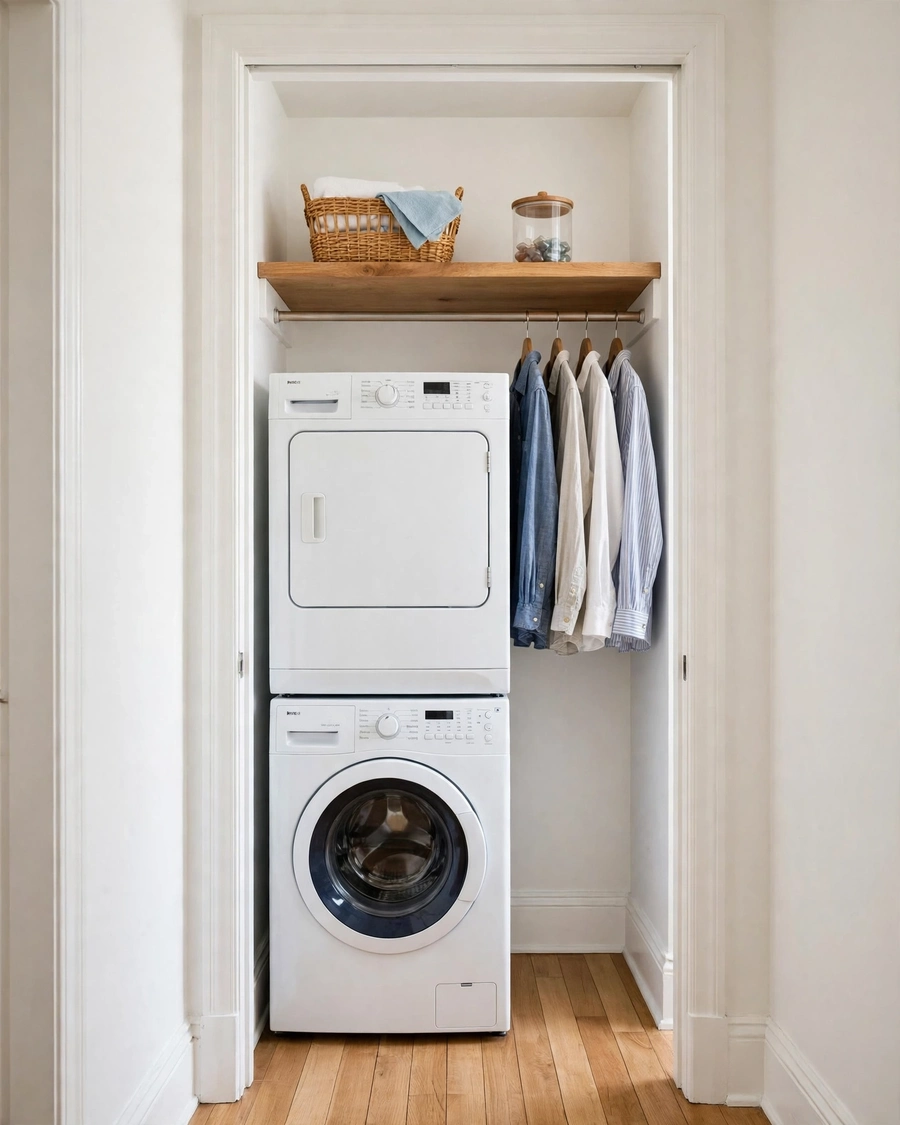
A standard hall closet, about 5 to 6 feet wide, holds a stacked pair, one shelf, and a short hanging rod. Best for: apartments with no dedicated laundry room. Styling tip: paint the closet interior a bright white to bounce light around. Pro tip: confirm the closet is at least 27 inches wide and 75 inches tall before buying a stackable set.
9. Under-Stair Laundry Nook
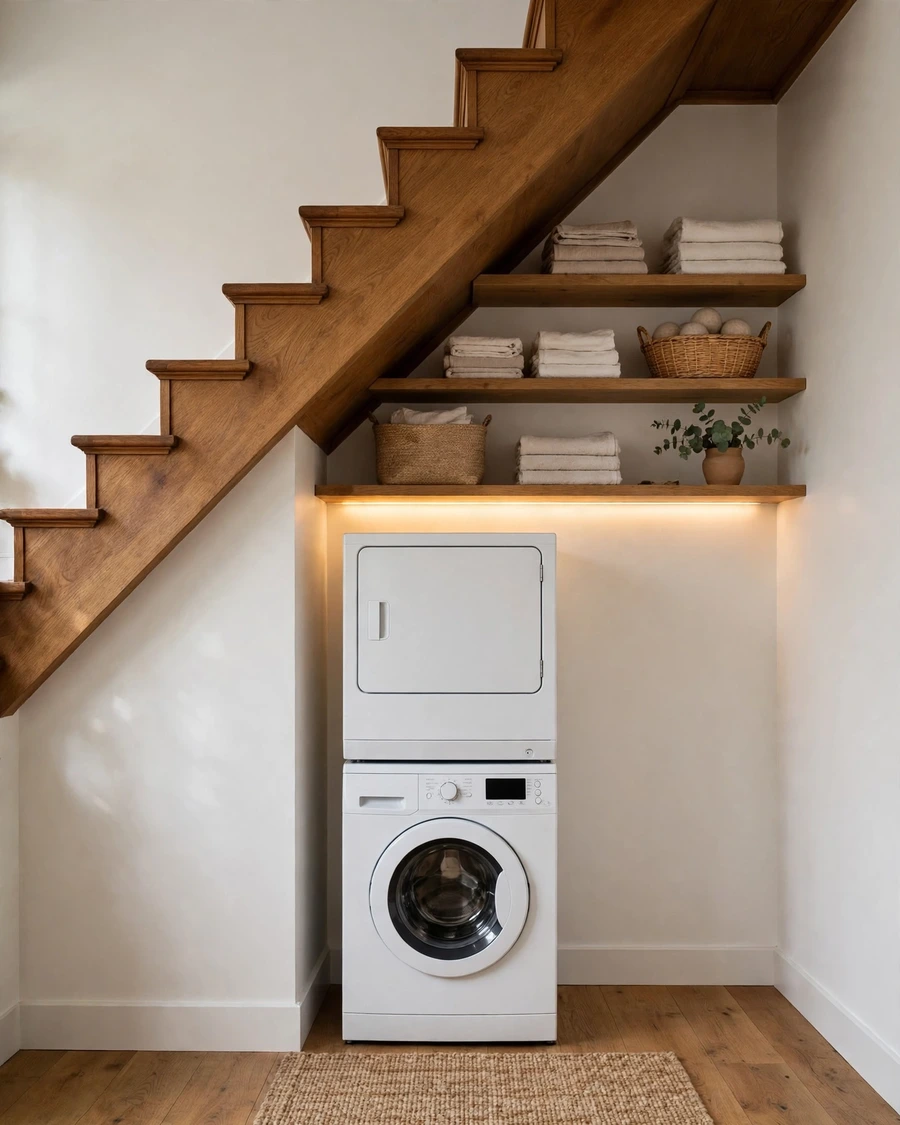
The dead space under the stairs fits a stacked pair and a shelf if the ceiling height allows. Best for: small houses where every square foot counts. Styling tip: add a slim LED strip under the lowest stair tread for task light. Pro tip: check the lowest headroom point — you need about 80 inches where you stand to load the dryer comfortably.
10. Galley Laundry Hall Along One Wall

Line the machines along one wall of a narrow hall and the whole passage becomes a laundry zone. Best for: long, narrow spaces between rooms. Styling tip: run one continuous shelf above the machines to tie the wall together. Pro tip: keep at least 30 inches of clear walking space so you can pass with a full basket.
11. Kitchen-Corner Laundry Behind Cabinet Doors
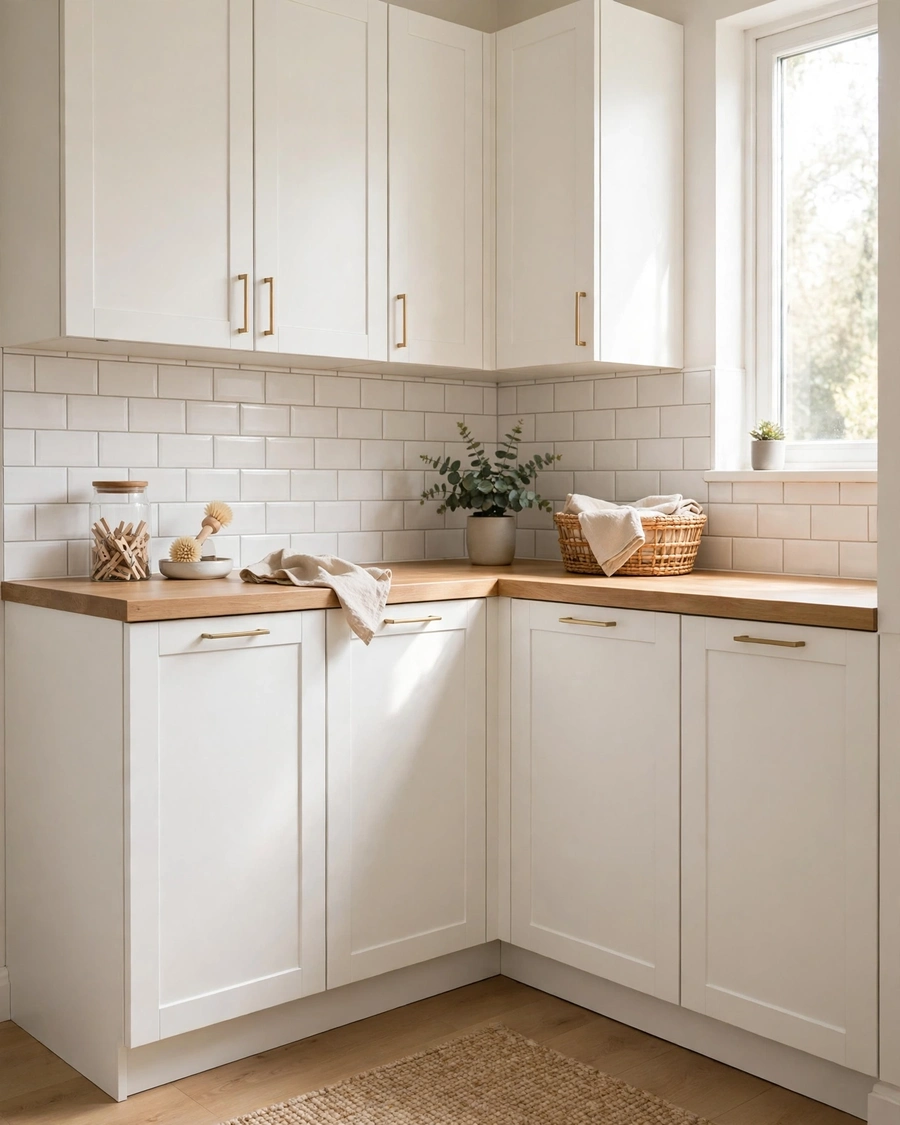
A compact washer behind matching kitchen cabinet doors disappears into the kitchen entirely. Best for: small flats with no separate laundry space. Styling tip: use the same cabinet fronts and handles as the kitchen. Pro tip: a ventless compact washer avoids new ductwork, but drying takes longer — plan loads accordingly.
12. Bathroom-Adjacent Laundry Closet
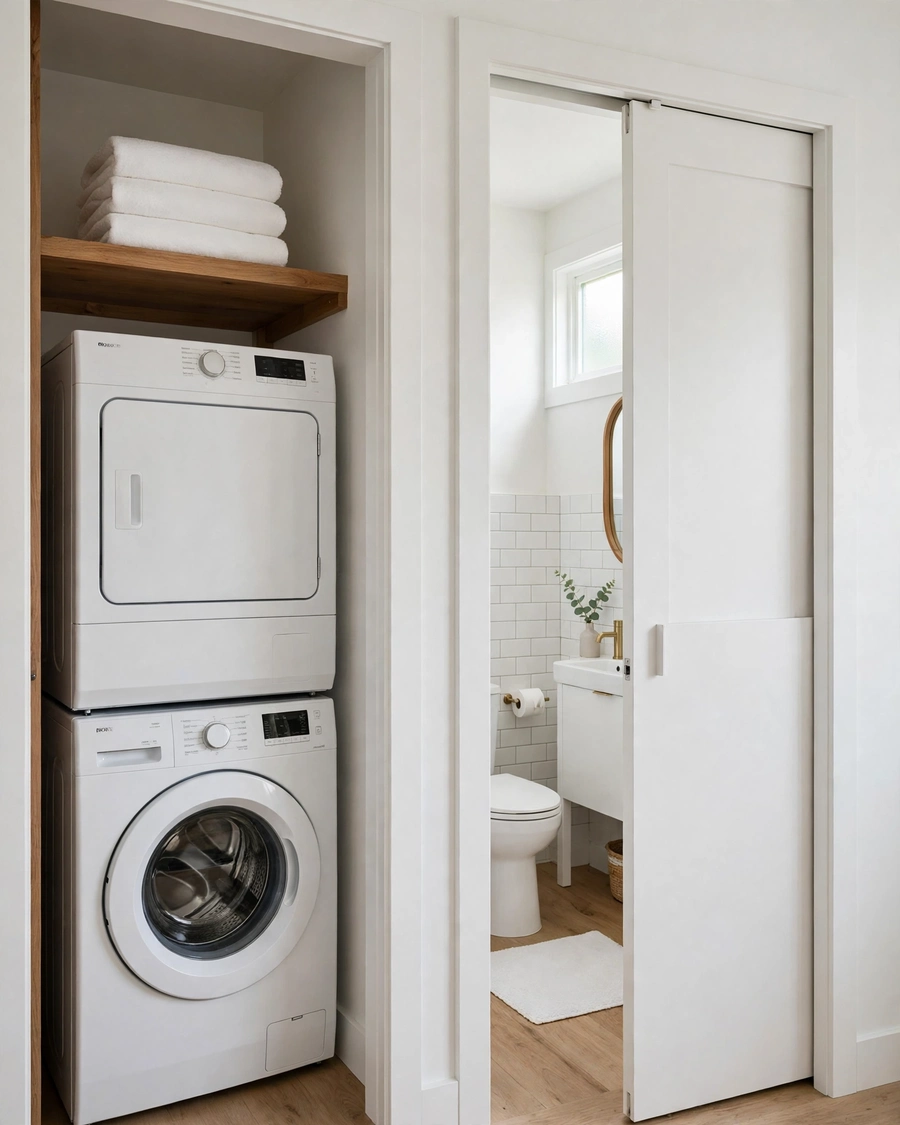
Placing the laundry closet beside the bathroom shortens every trip with dirty towels and clothes. Best for: homes where the bathroom is the laundry’s main source. Styling tip: repeat the bathroom’s tile or paint colour inside the closet for a connected look. Pro tip: a pocket door saves the swing space a regular door would eat.
13. Curtain-Hidden Laundry Corner
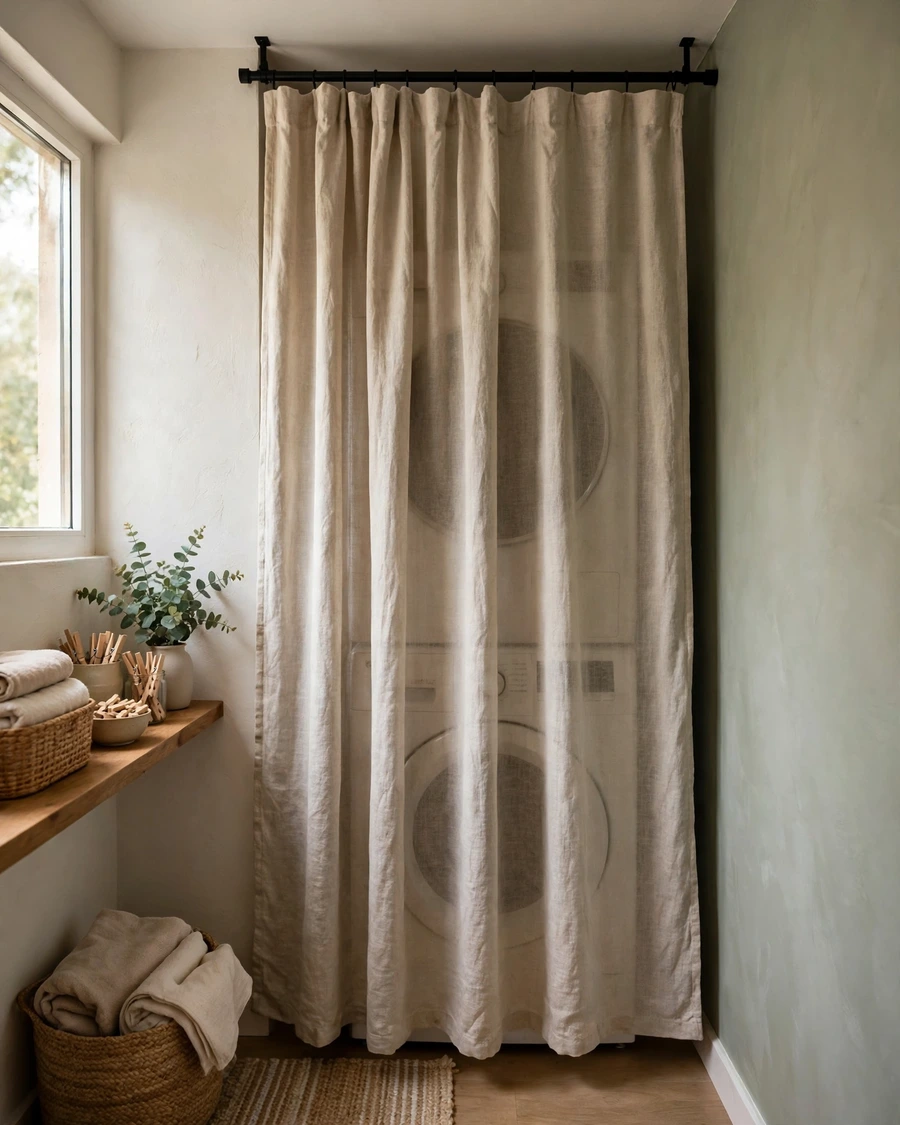
A ceiling-mounted curtain rod and a washable linen curtain hide the machines for the price of a rod and fabric. Best for: renters who cannot fit doors. Styling tip: pick a curtain in the room’s wall colour so it reads as a soft wall, not a cover-up. Pro tip: hang the curtain 2 inches off the floor so it never drags or catches on the machines.
14. Sliding Barn Door Laundry Hideaway

A sliding barn door covers a laundry nook without needing any swing clearance at all. Best for: tight hallways where a hinged door would block the path. Styling tip: a painted door in a soft sage or navy adds character to a plain hallway. Pro tip: mount the rail at least 4 inches above the opening so the door clears the machines’ vents.
Smart Storage in Every Inch
15. Pegboard Wall for Tools and Supplies
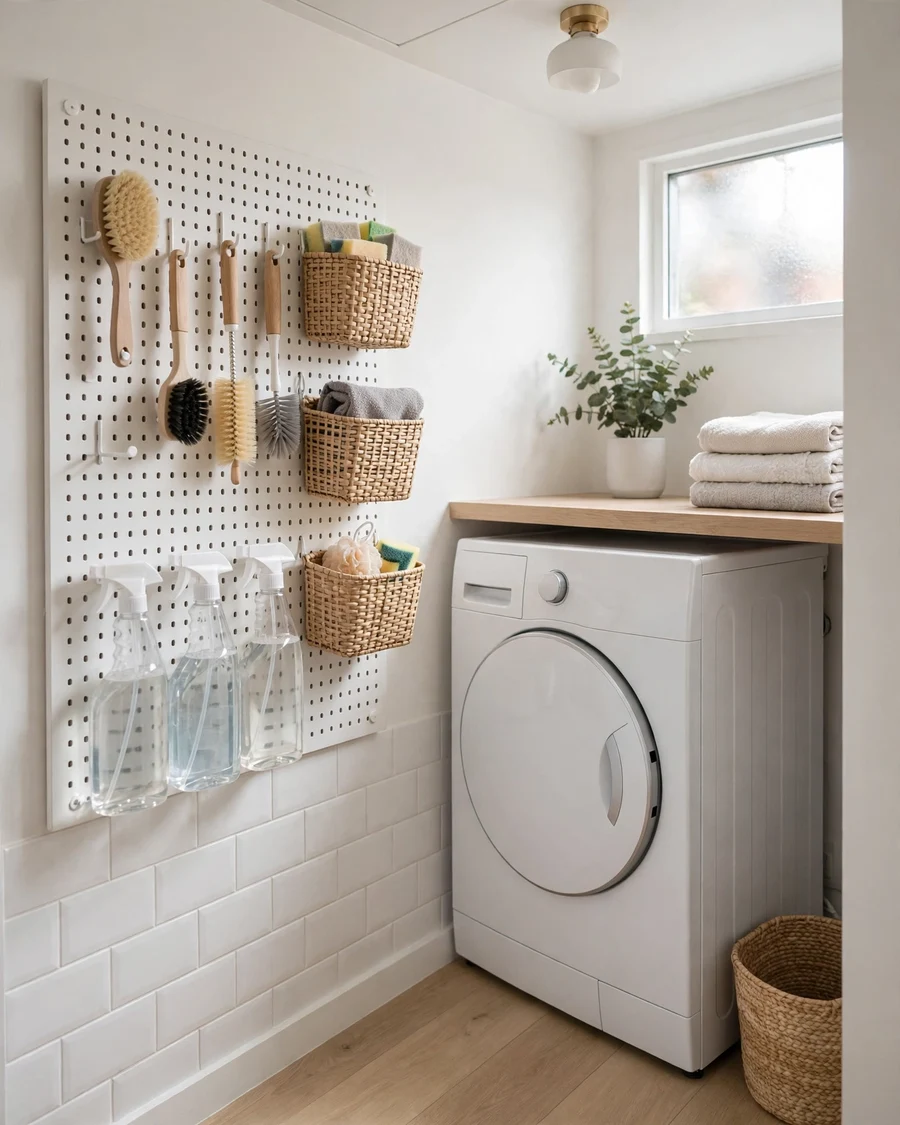
A pegboard turns a blank wall into flexible storage for brushes, spray bottles, and small baskets. Best for: renters and anyone who rearranges often. Styling tip: paint the pegboard the wall colour for a built-in look. Pro tip: use hooks rated for the weight — a full spray bottle will pull a light hook straight off the board.
16. Glass Jars and Labeled Bins on Open Shelves

Open shelves with matching jars and labeled bins make supplies easy to find and pleasant to look at. Best for: visual organizers who like everything visible. Styling tip: keep the jar and bin colours to two at most for a calm shelf. Pro tip: wide-mouth, airtight jars about one gallon in size work best for powder detergent.
17. Tilt-Out Hamper Cabinet
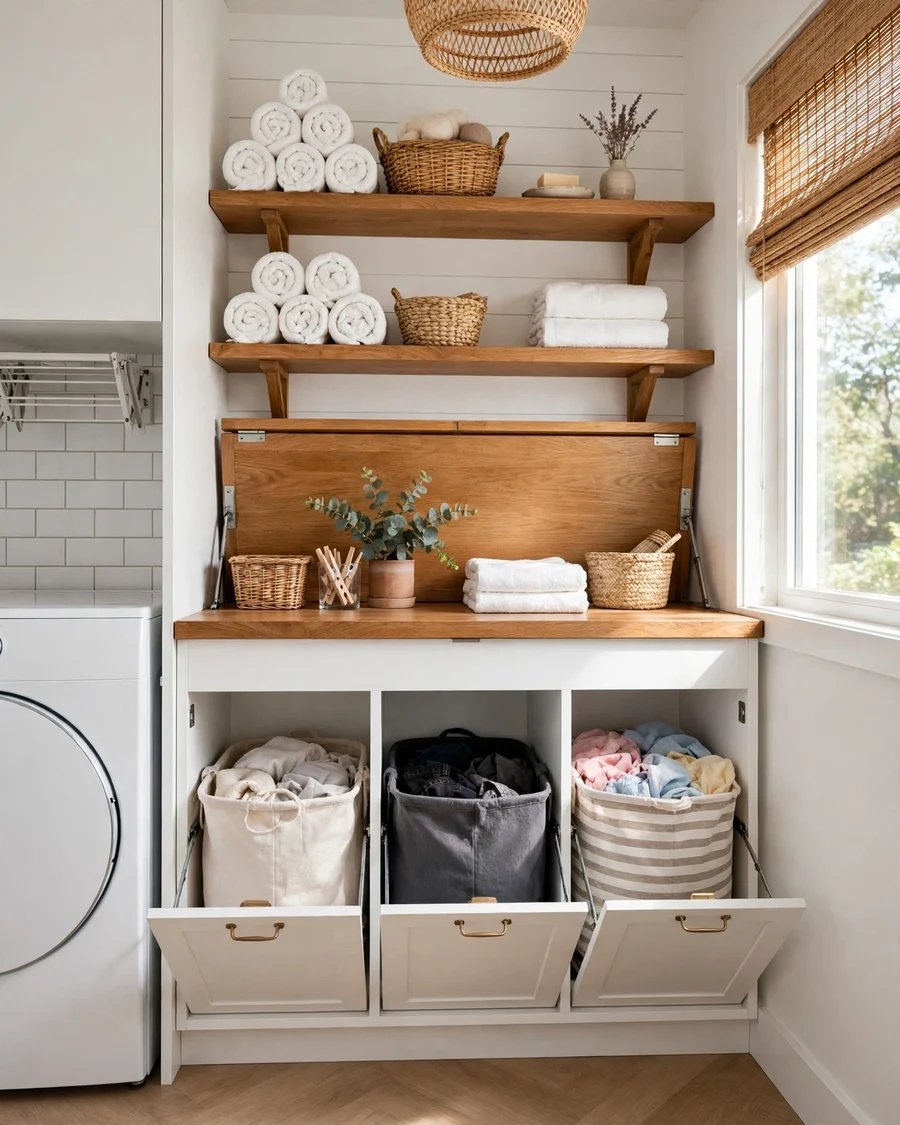
A tilt-out hamper hides dirty laundry inside a cabinet front and sorts it into two or three bags. Best for: families who sort lights and darks at the source. Styling tip: match the cabinet front to the room’s other cabinets. Pro tip: choose washable hamper bags — a fixed basket inside a tilt-out is hard to empty and harder to clean.
18. Fold-Down Folding Table

A wall-mounted table folds down for folding and flat against the wall when you are done. Best for: rooms with zero spare counter space. Styling tip: use a warm wood top to add texture to a white room. Pro tip: plan for a top about 24 to 30 inches wide and 18 to 20 inches deep — big enough for a shirt, small enough to fold away.
19. Over-Door Storage Rack

An over-door rack adds three or four shelves to a door you already have. Best for: renters — it hooks on and comes off without a single screw. Styling tip: keep the heaviest bottles on the lowest tier so the door still swings smoothly. Pro tip: check the door’s top clearance first; thick racks can stop a door from closing fully.
20. Magnetic Organizers on the Machines

Magnetic caddies stick to the side of the washer and hold clothespins, dryer sheets, and stain pens. Best for: renters and anyone with zero wall space left. Styling tip: use slim black or white caddies that blend with the machine. Pro tip: test the magnet on your machine first — some stainless finishes hold magnets weakly.
21. Woven Baskets on a High Shelf Run

A single high shelf with matching woven baskets hides spare linens, rags, and seasonal supplies. Best for: rooms with tall ceilings and little floor storage. Styling tip: matching baskets make the shelf look planned, not piled. Pro tip: keep a small folding stool nearby — a shelf you cannot reach becomes a shelf you never use.
Style That Makes a Tiny Room Feel Bigger
22. Light, Unified Palette with White Cabinets

White walls, white cabinets, and one light wood accent make a tiny room feel larger than it is. Best for: windowless or north-facing laundries. Styling tip: repeat the wood tone once more, in a basket or shelf, so it looks intentional. Pro tip: use a satin or semi-gloss paint finish — it bounces more light than flat paint and wipes clean when detergent splashes. These same light-and-airy tricks work in other tight rooms; see our small bedroom storage ideas for more small-space storage thinking.
23. Bold Patterned Floor Tile in a Tiny Footprint

A patterned floor adds character without using a single inch of storage space. Best for: plain white rooms that feel unfinished. Styling tip: keep the walls calm so the floor is the one star. Pro tip: a small floor means few tiles, so a bold pattern you could not afford in a kitchen becomes a weekend-priced upgrade here.
24. Wallpaper Accent on One Small Wall

One wallpapered wall — usually the one behind the shelves — gives a tiny laundry real personality. Best for: renters using peel-and-stick paper, and owners who want drama on a budget. Styling tip: pick a small-scale pattern so it does not overwhelm the room. Pro tip: one roll is often enough for a laundry accent wall, so buy a single roll before committing to a full room.
25. Mirror and Bright Task Lighting
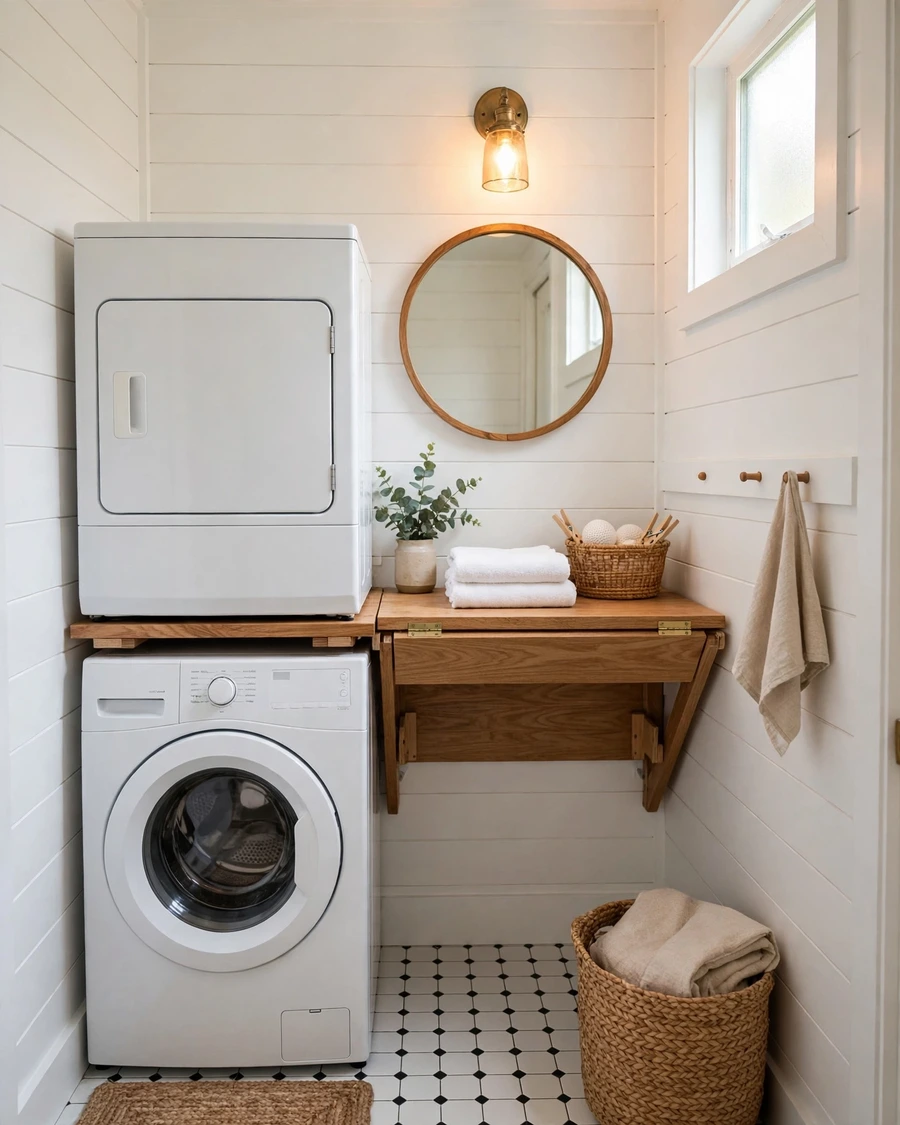
A mirror opposite the light source and a bright task light over the folding area make a small room feel twice as open. Best for: windowless closets and under-stair nooks. Styling tip: a round mirror softens all the straight lines of machines and shelves. Pro tip: choose warm-white bulbs around 3000K — cool white makes a tiny utility room feel like a clinic.
26. Warm Wood Counter Over Front Loaders
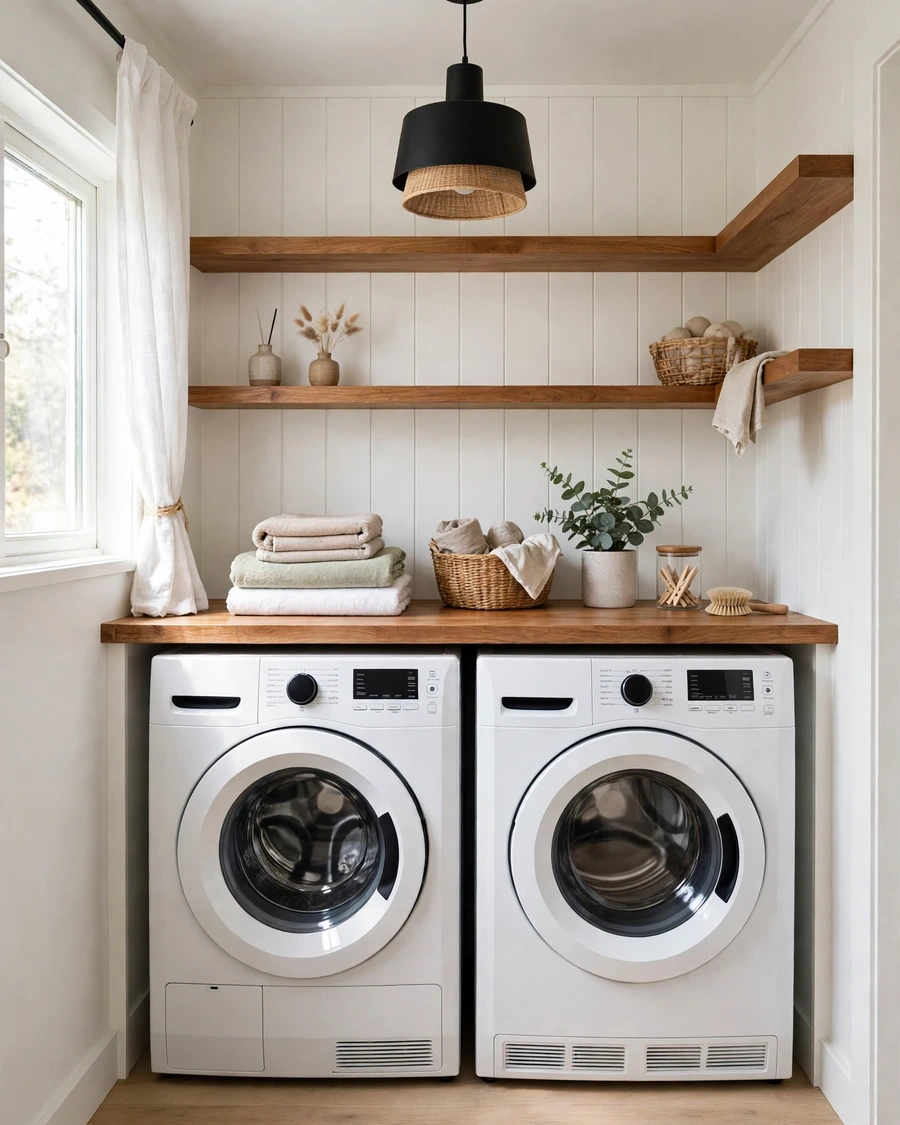
A continuous wood counter over side-by-side front loaders creates an instant folding station. Best for: front-loader homes with no spare table. Styling tip: seal the wood well — a laundry counter sees water, detergent, and heat daily. Pro tip: this only works with front loaders; a top loader needs about 20 inches of clear lid space above it, so never put a counter over one.
27. Moody Deep Green with Brass Details

Deep green cabinets with brass pulls prove a tiny room can handle drama and still feel intentional. Best for: owners who want the laundry to feel designed, not leftover. Styling tip: balance the dark cabinets with a light counter and pale walls above. Pro tip: dark paint shows dust and lint fast, so plan on a quick weekly wipe of the cabinet fronts.
Renter-Friendly and Budget-Smart Fixes
28. Tension Rod Hanging Rail
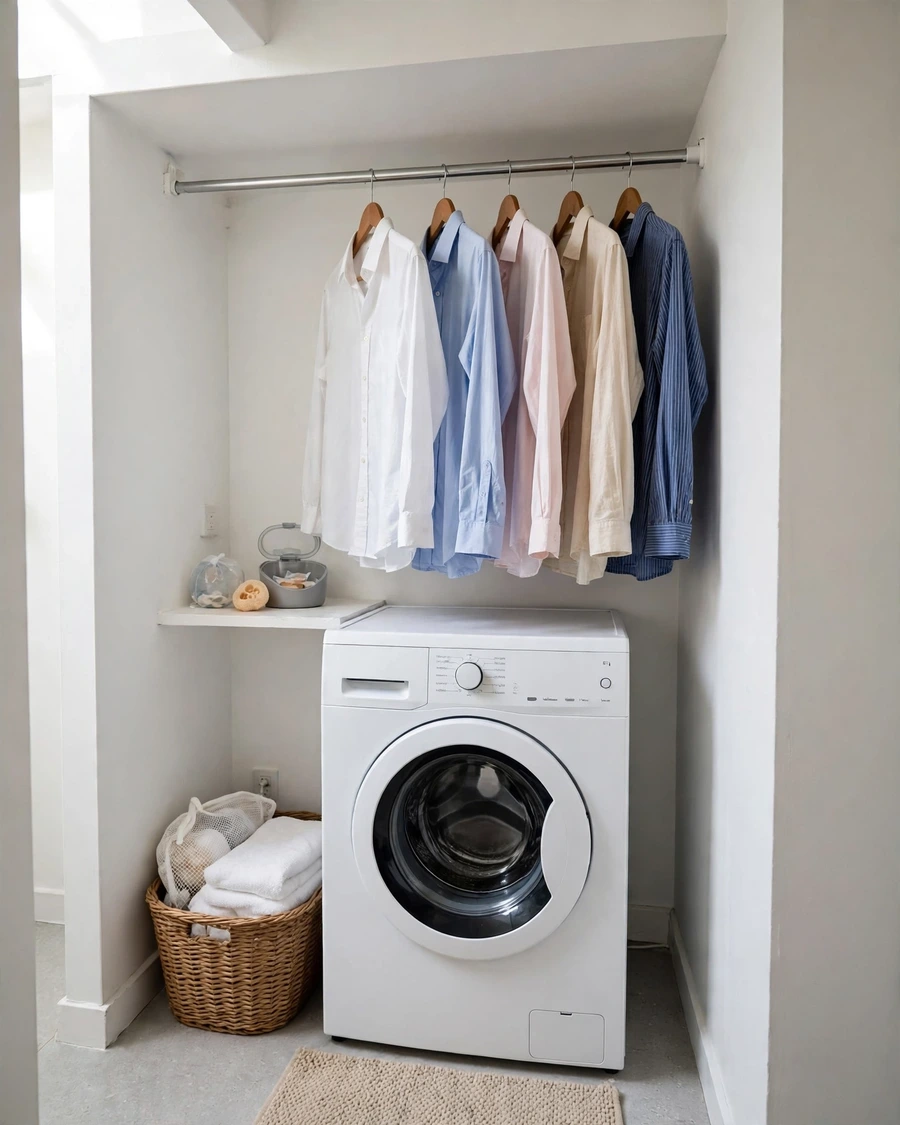
A tension rod wedged between two walls gives freshly washed shirts a hanging spot with zero drilling. Best for: renters and anyone avoiding holes in the wall. Styling tip: fit it about 15 inches above the machines so hangers swing freely. Pro tip: twist the rod until it is genuinely tight — a loose rod drops a full load of wet shirts at once.
29. Freestanding Slim Shelf Unit
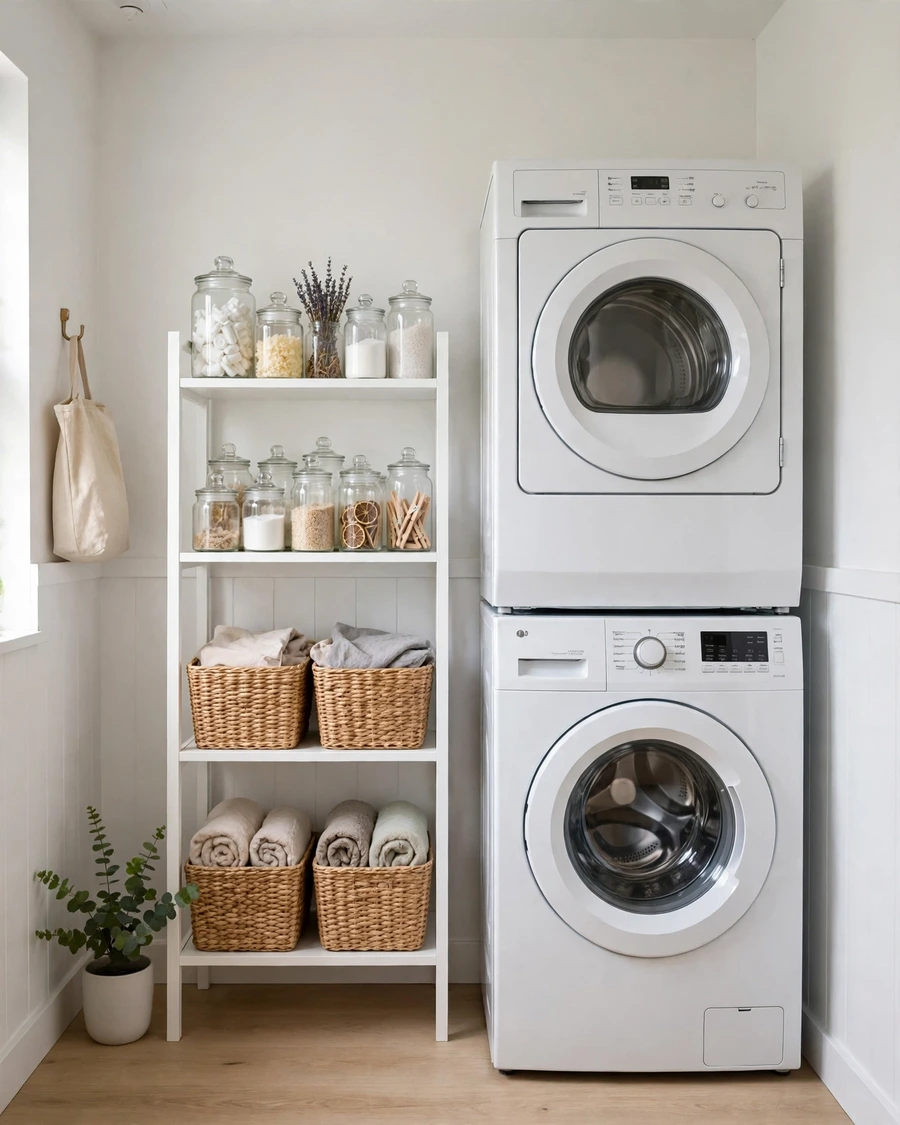
A freestanding shelf unit beside the machines adds storage that moves with you when you move out. Best for: renters and anyone who cannot mount shelves. Styling tip: use baskets on the lower tiers and pretty jars up top. Pro tip: anchor tall freestanding units to the wall with a furniture strap — a loaded shelf beside vibrating machines can creep and tip.
30. Peel-and-Stick Backsplash Behind Machines

Peel-and-stick tile behind the machines adds a finished look in an afternoon and peels off when you leave. Best for: renters and budget refreshes. Styling tip: classic white subway tile suits almost every laundry palette. Pro tip: clean the wall with a degreaser first and let it dry fully — stick-on tile fails on dusty or damp paint.
31. Combo Washer-Dryer for the Tightest Nook
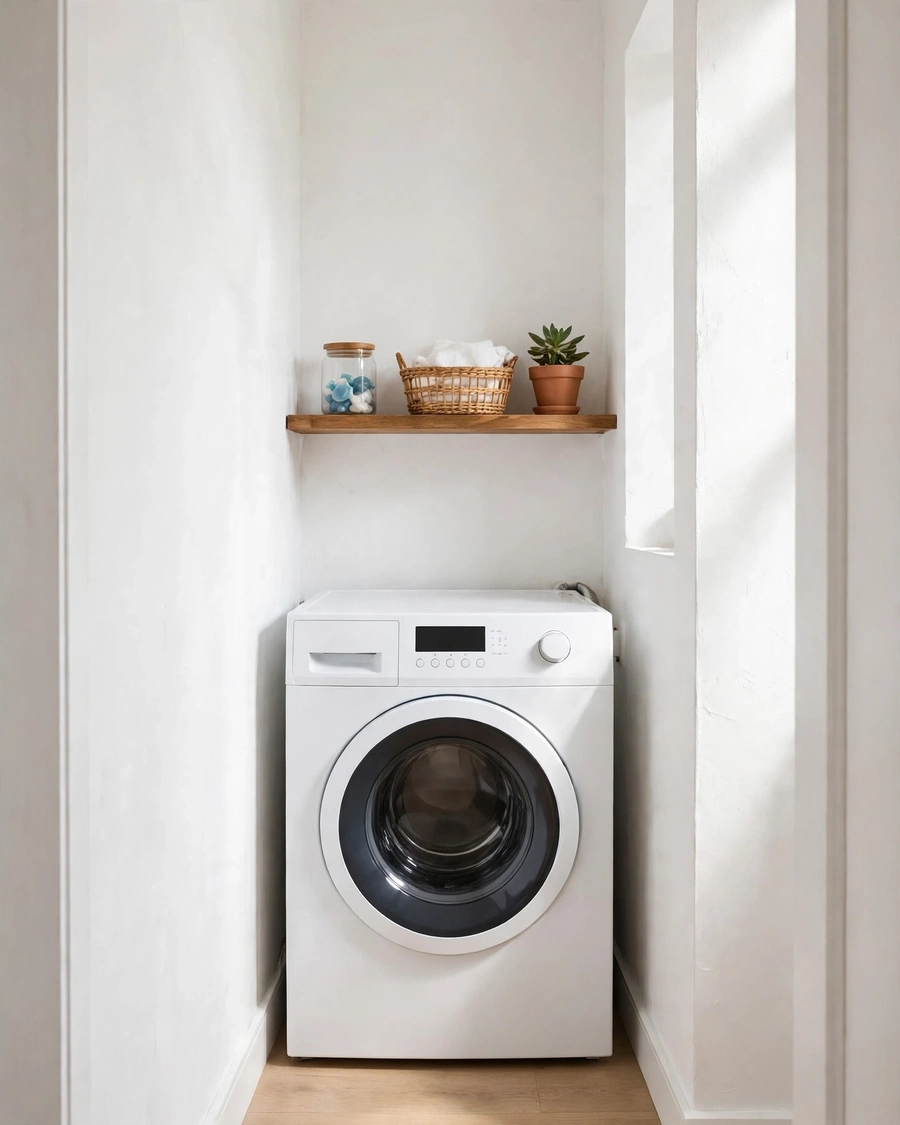
A single combo unit washes and dries in one drum and fits openings under 24 inches wide. Best for: single-person homes and the tightest nooks where two machines cannot fit. Styling tip: keep the area around it clear so the door swings fully open. Pro tip: a full load takes longer to dry in a combo, so wash smaller loads more often rather than one giant load. For energy-efficient machine choices, check the ENERGY STAR clothes washer guide.
32. One-Wall Mini Laundry with a Compact Sink

One wall can hold it all: stacked machines, a compact sink, a shelf, and a folding ledge. Best for: small homes that need a real work zone, not just machines. Styling tip: a deep, narrow sink doubles as a soaking spot for delicates. Pro tip: a compact utility sink about 20 to 24 inches wide fits most one-wall layouts without crowding the machines.
Small Laundry Room Care and Maintenance
Tiny laundries work hard in a small volume, so they need a little routine care. Wipe the machines and counters weekly — lint and detergent dust show fast on dark finishes. Clean the dryer lint trap after every load and check the vent hose every few months; a clogged vent is the most common cause of slow drying. Run a hot empty wash with a cup of white vinegar once a month to keep the washer fresh, and leave the washer door ajar between loads so the seal dries out. Check hoses behind the machines twice a year for bulges or damp spots, and keep the floor clear so you can spot a leak early.
FAQs About Small Laundry Room Ideas
What is the best layout for a very small laundry room?
A stacked washer and dryer is the best starting layout for a very small laundry room, because it needs only about 27 inches of width and frees a full machine-width of floor. Add one shelf above the stack for daily supplies, a slim rolling cart for the side gap, and a fold-down drying rack on the wall. This four-part setup covers washing, drying, folding, and storage in a footprint barely wider than one machine.
Can you put a washer and dryer in a closet?
Yes, a standard closet about 5 to 6 feet wide and at least 27 inches deep can hold a stacked washer and dryer, one shelf, and a short hanging rod. You need proper water supply, drainage, and ventilation, plus louvered or vented doors so the dryer can breathe. Always check the machine manuals for clearance and venting rules, and confirm your building allows laundry in a closet before you start.
How do I add storage to a small laundry room without a remodel?
Start with the walls and the gaps: one shelf above the machines, a slim rolling cart in the side gap, an over-door rack, and magnetic caddies on the machine sides. A pegboard or a freestanding shelf unit adds more storage with no drilling or carpentry. Keep only daily supplies at arm’s reach and move bulk refills to a higher shelf, so the small room stays calm instead of crowded.
What size washer and dryer fit a small laundry room?
A standard stacked pair needs about 27 inches of width, 30 inches of clear space in front, and 75 to 80 inches of height. Compact and apartment-size machines are narrower, around 24 inches wide, and a combo washer-dryer fits openings under 24 inches. Measure your width, depth, and ceiling height in three places before buying, and leave 4 to 6 inches behind the machines for hoses and vents.
How can I make a small laundry room look bigger?
Use a light, unified palette with white or pale walls and cabinets, add a mirror opposite the light source, and keep the floor as clear as possible. Bright task lighting over the folding area and a satin paint finish help bounce light around the room. Avoid dark, heavy cabinets on every wall; one bold accent, such as patterned floor tile or a wallpapered wall, adds character without shrinking the space.
Are stacked washers and dryers good for renters?
Stacked machines work well for renters when the pair is already installed or the landlord approves a stacking kit, since the setup needs no structural change. If you cannot stack, use renter-friendly fixes instead: a tension rod for hanging, an over-door rack, a freestanding shelf unit, and peel-and-stick tile. All of these come down cleanly when you move out, and none of them needs drilling or permanent changes.
Final Thoughts
A small laundry room is not a problem to solve — it is a small space that rewards smart choices. Stack the machines, use the walls, hide what you can, and let one or two pretty touches do the rest. Start with the layout that fits your room, add the storage your routine actually needs, and save the ideas you love for your next laundry-day upgrade.
