
A spare closet might be the best home office you already own. These home office closet ideas turn reach-in closets, walk-ins, and forgotten nooks into real workspaces — with a proper desk, storage that actually works, and a look you will want to show off. No spare room needed, no big renovation, just a smart plan and a few clever moves. Below are 28 cloffice ideas for every closet size, style, and budget, plus lighting, storage, and door tricks that make a tiny space feel like a real office.
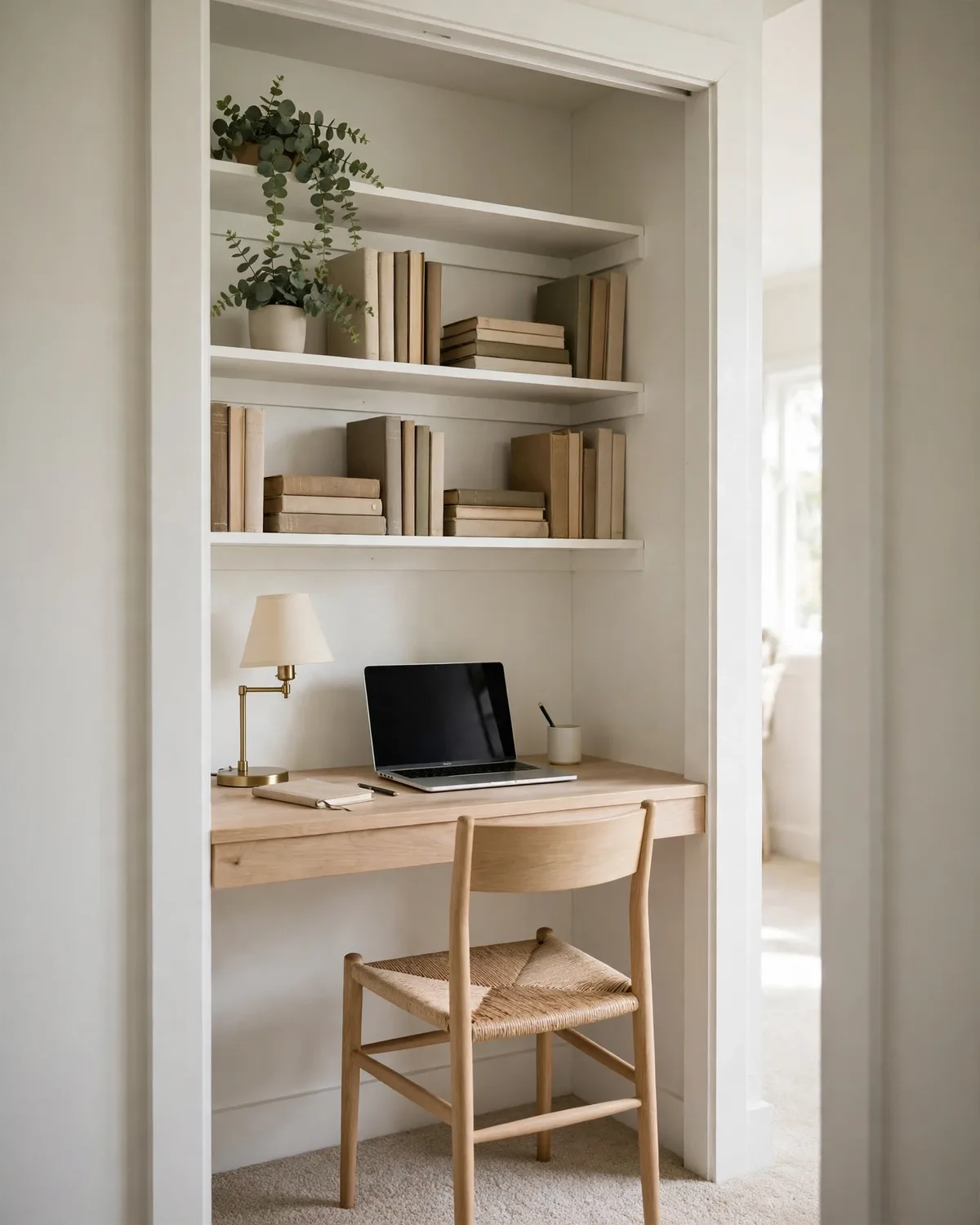
Why You’ll Love These Home Office Closet Ideas
A cloffice gives you a door you can close on work at the end of the day — literally. It borrows dead storage space instead of stealing a bedroom, it costs far less than a full room makeover, and it forces good habits: everything has a place because there is nowhere to hide clutter. The best closet office ideas from Homes & Gardens show the same pattern — a compact desk, layered light, and storage that reaches the ceiling. Pick one idea below, start with the desk, and build outward.
How to Choose the Right Cloffice for Your Home
Measure first, shop second. A reach-in closet is usually 24 inches deep, so a desktop around 20 inches deep leaves room for your knees and a chair that tucks in. Check for a power outlet nearby, note where the light falls, and decide what stays: clothes, supplies, or both. If the closet must still hold clothes, plan the desk around them, not instead of them. For more small-space layouts, see these small home office ideas that work in tight corners too.
Small-Space Cloffice Layouts That Work Hard
1. The Reach-In Floating Desk
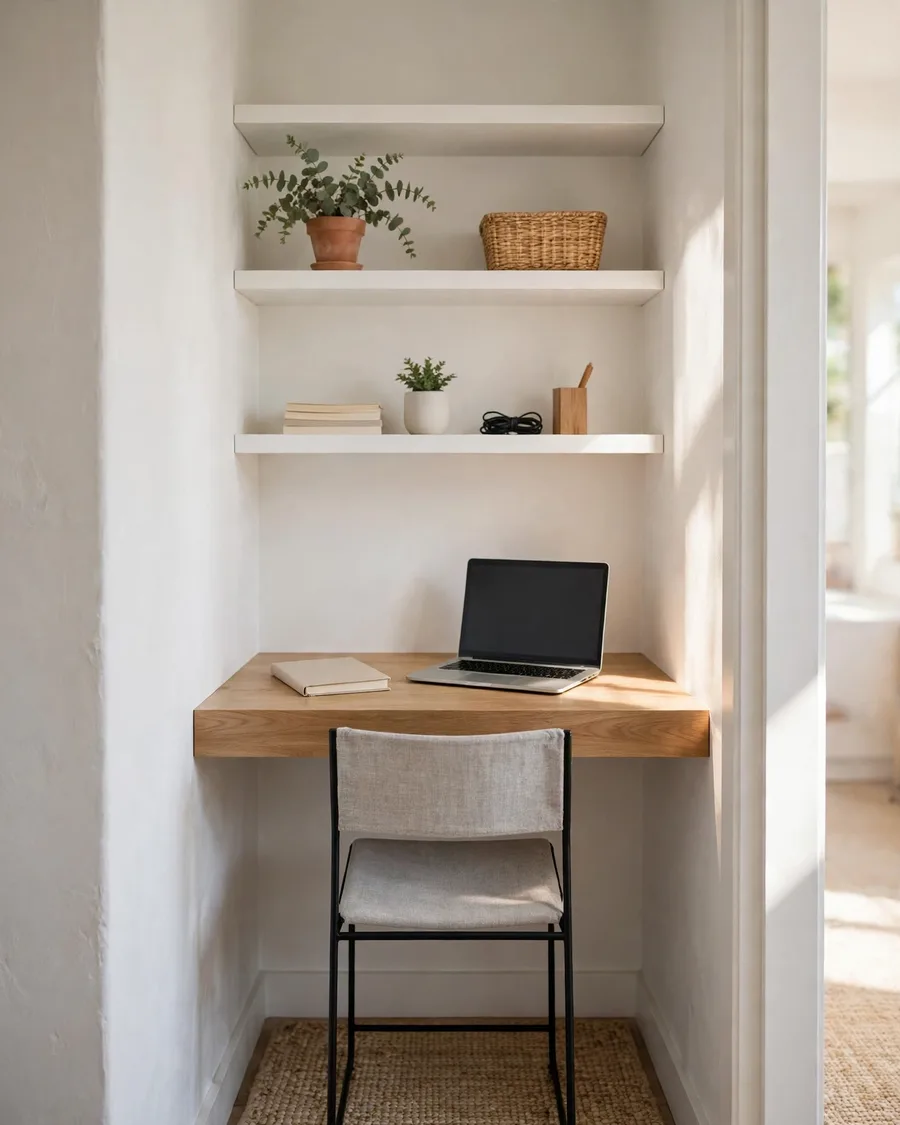
A wall-mounted desk slab across a standard reach-in closet is the simplest cloffice of all. No legs means your chair slides fully underneath and the floor stays clear. Best for: renters and first-timers. Styling tip: paint the back wall a soft white so the nook reads bigger. Pro tip: mount the desk at 29 inches high and leave 24 inches of knee space.
2. The Wall-to-Wall Desktop
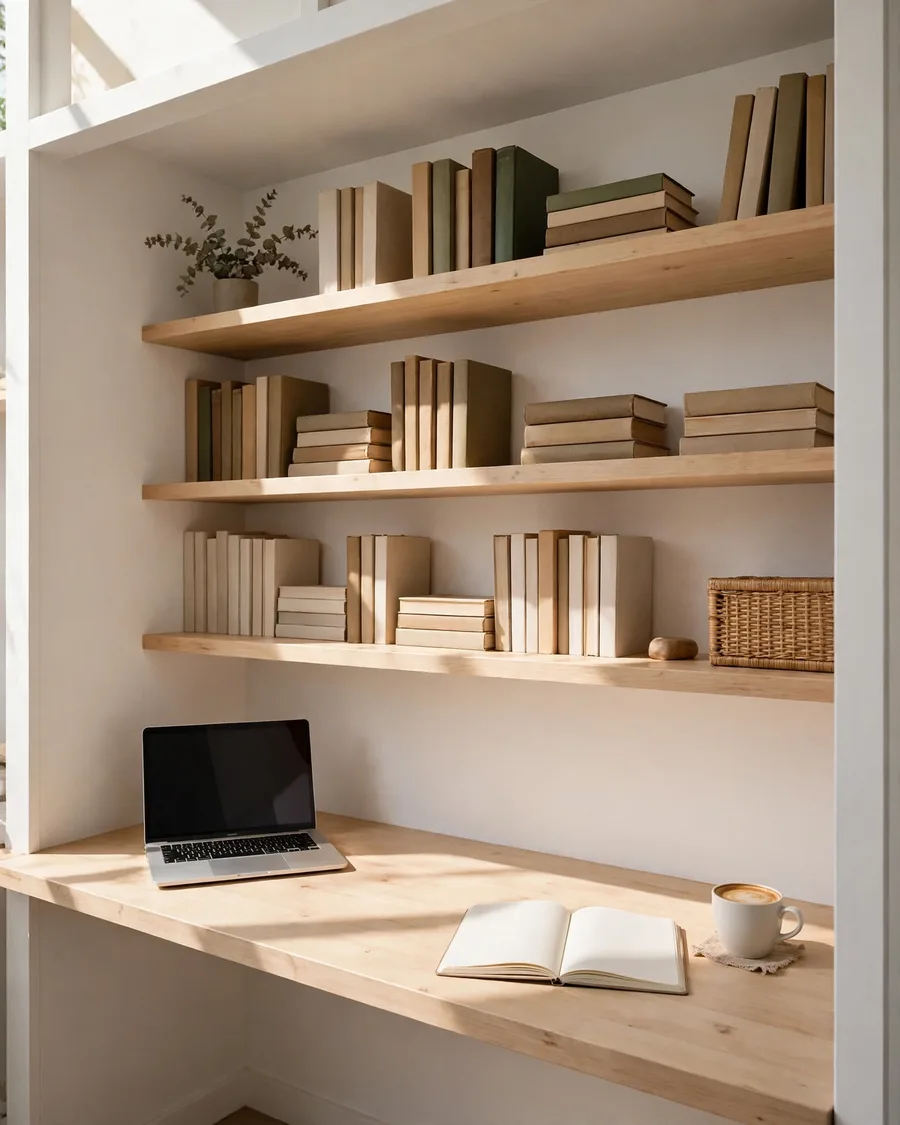
Run one solid desktop from wall to wall and every inch becomes usable — laptop on one side, notebook and coffee on the other. Best for: closets 4 feet wide or more. Styling tip: a light wood top with white walls keeps it airy. Pro tip: support a span over 48 inches with a center bracket so it never sags.
3. The Fold-Down Desk
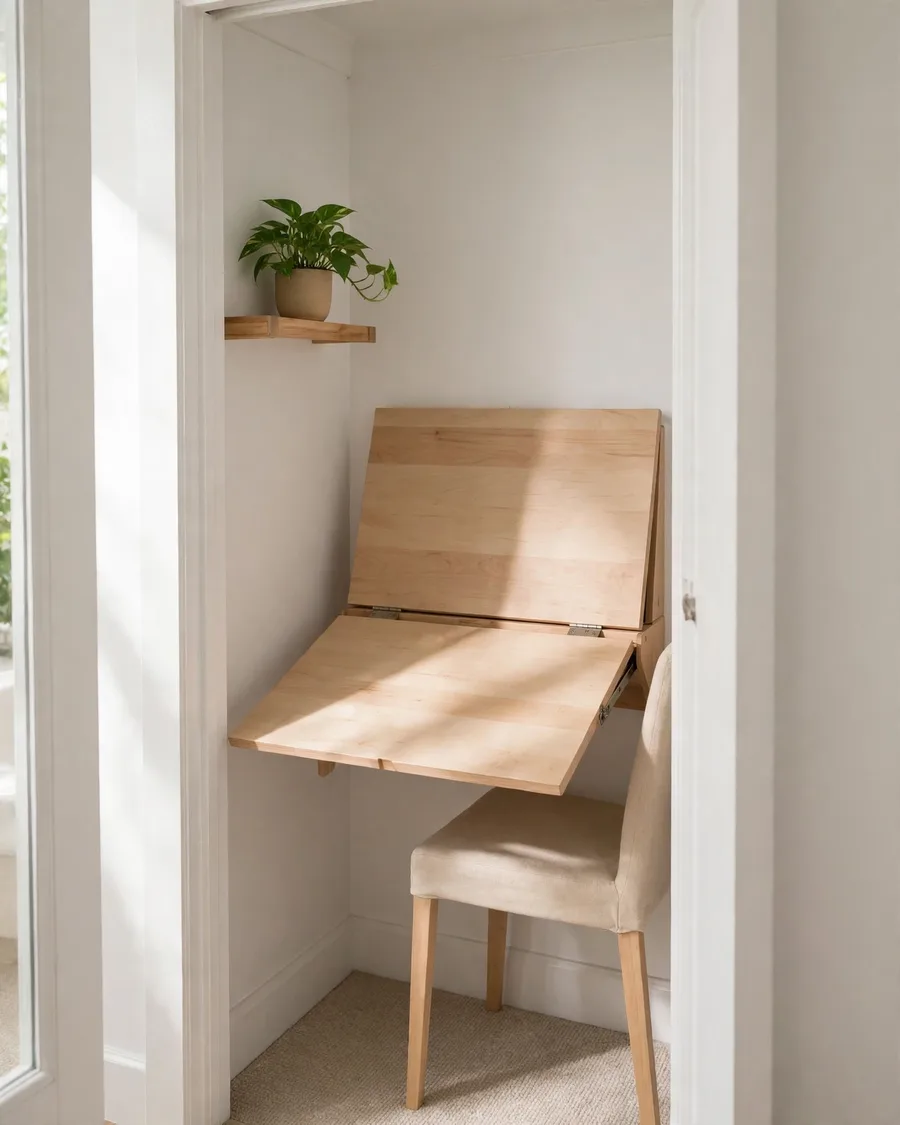
A hinged desk folds flat against the wall when the workday ends, and the closet goes back to being a closet. Best for: shared bedrooms and part-time workers. Styling tip: match the desk front to the wall color so it disappears when folded. Pro tip: use heavy-duty folding brackets rated well above your laptop and books.
4. The Corner L-Shaped Nook
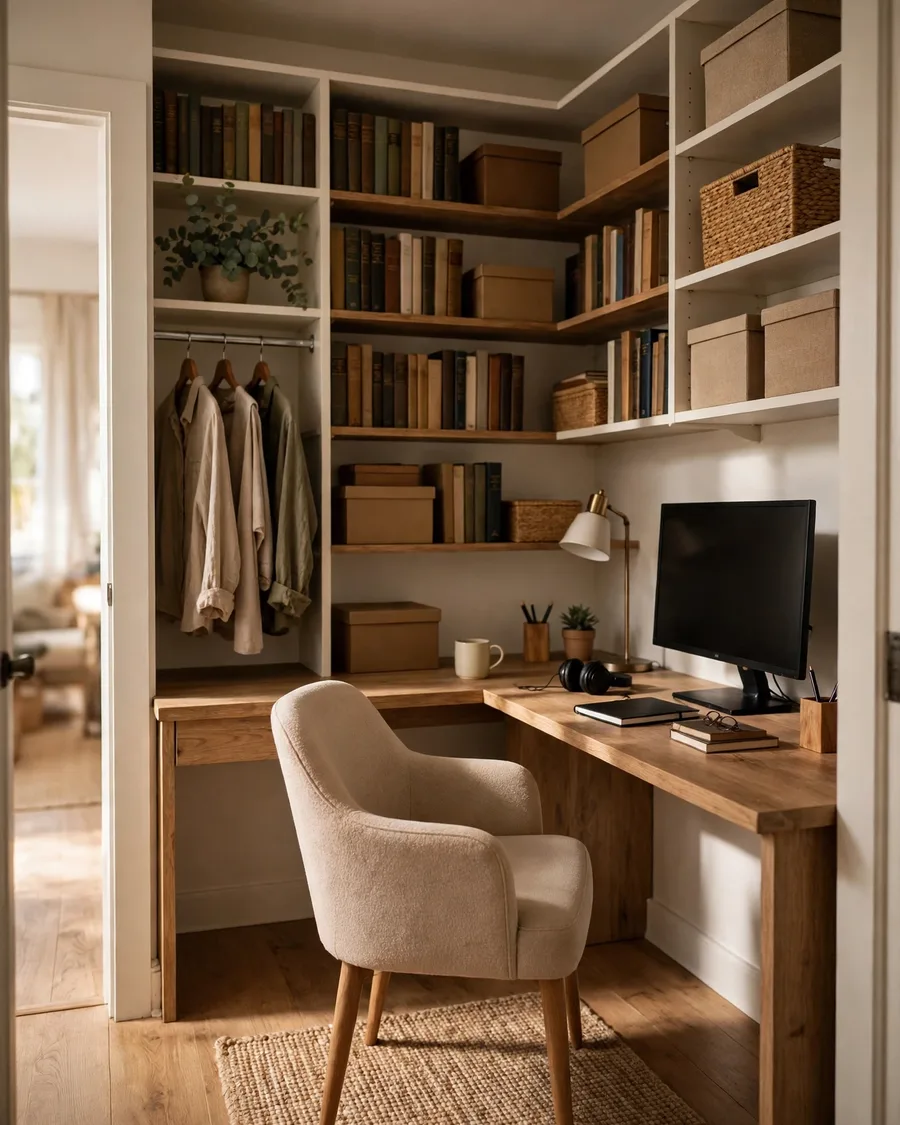
In a walk-in closet, wrap the desk around the corner for two work zones: computer on one arm, writing and planning on the other. Best for: walk-ins and anyone who spreads out. Styling tip: keep the corner itself clear for a lamp or plant. Pro tip: put the monitor arm on the longer side so your chair faces into the room, not the wall.
5. The Half-and-Half Walk-In
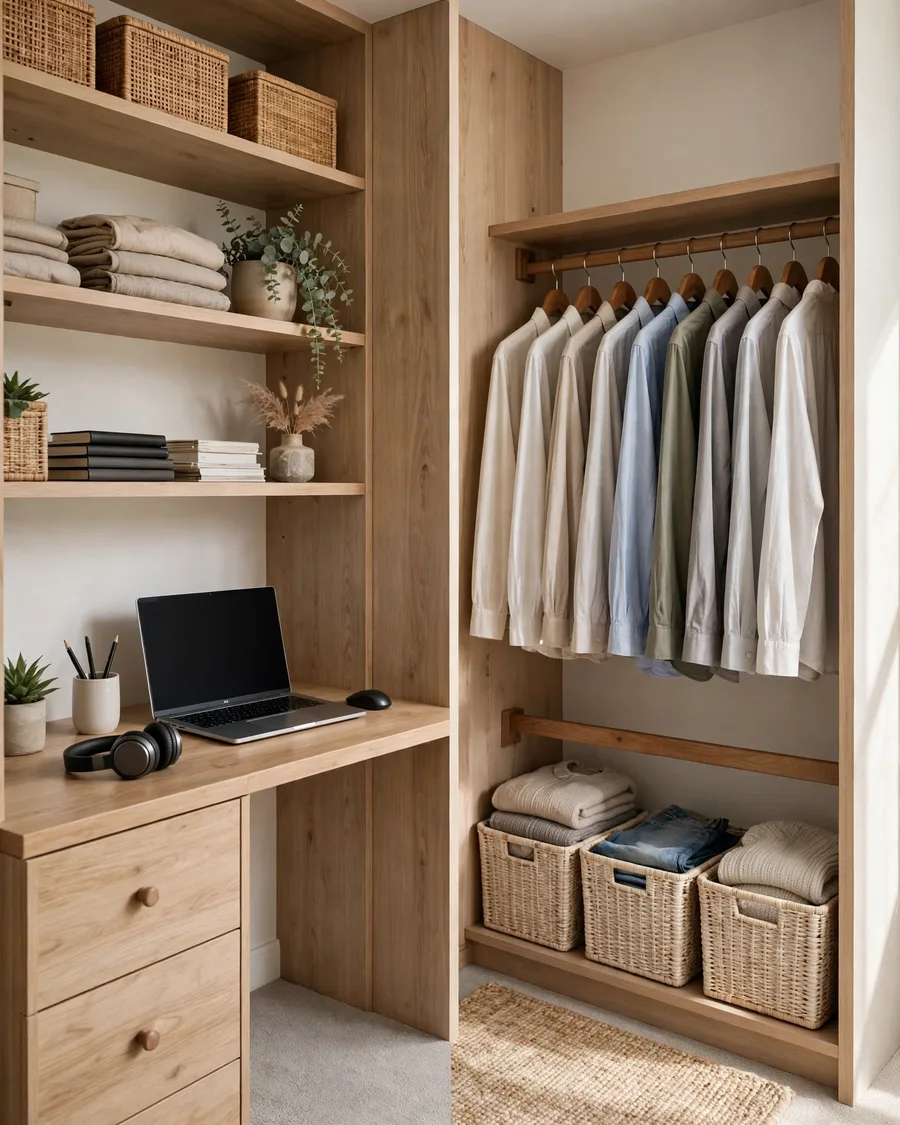
Keep half the walk-in for clothes and give the other half to work. A desk on one wall and the hanging rail on the other means nothing gets sacrificed. Best for: walk-in closets in primary bedrooms. Styling tip: matching hangers and baskets keep the clothing side calm. Pro tip: draw a line at the midpoint before you buy anything, then furnish each side separately.
6. The Shared Two-Person Cloffice
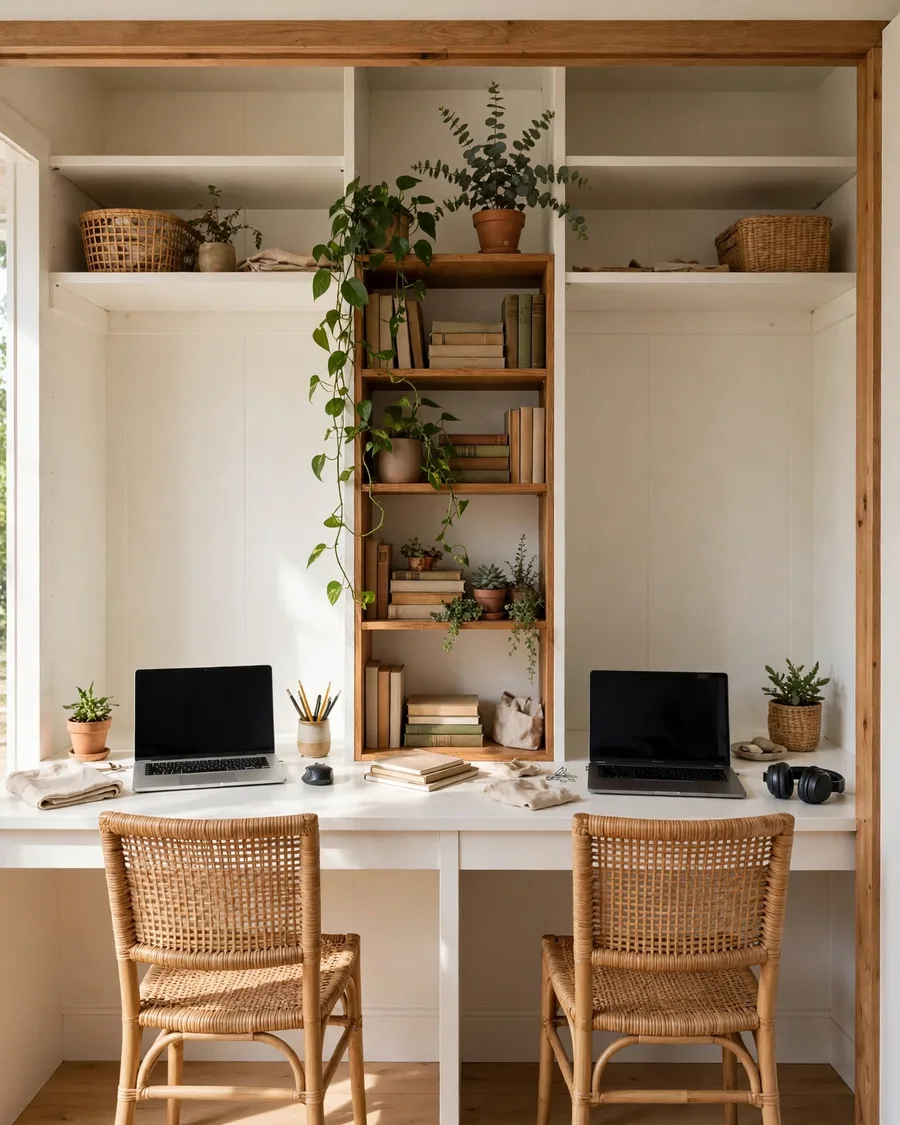
One long desktop, two chairs, and a divider of shelves down the middle turns a wide closet into a workspace for two. Best for: couples who both work from home. Styling tip: give each person one shelf color or one desk lamp so zones feel personal. Pro tip: allow at least 30 inches of desk width per person or elbows will argue all day.
7. The Standing-Desk Closet
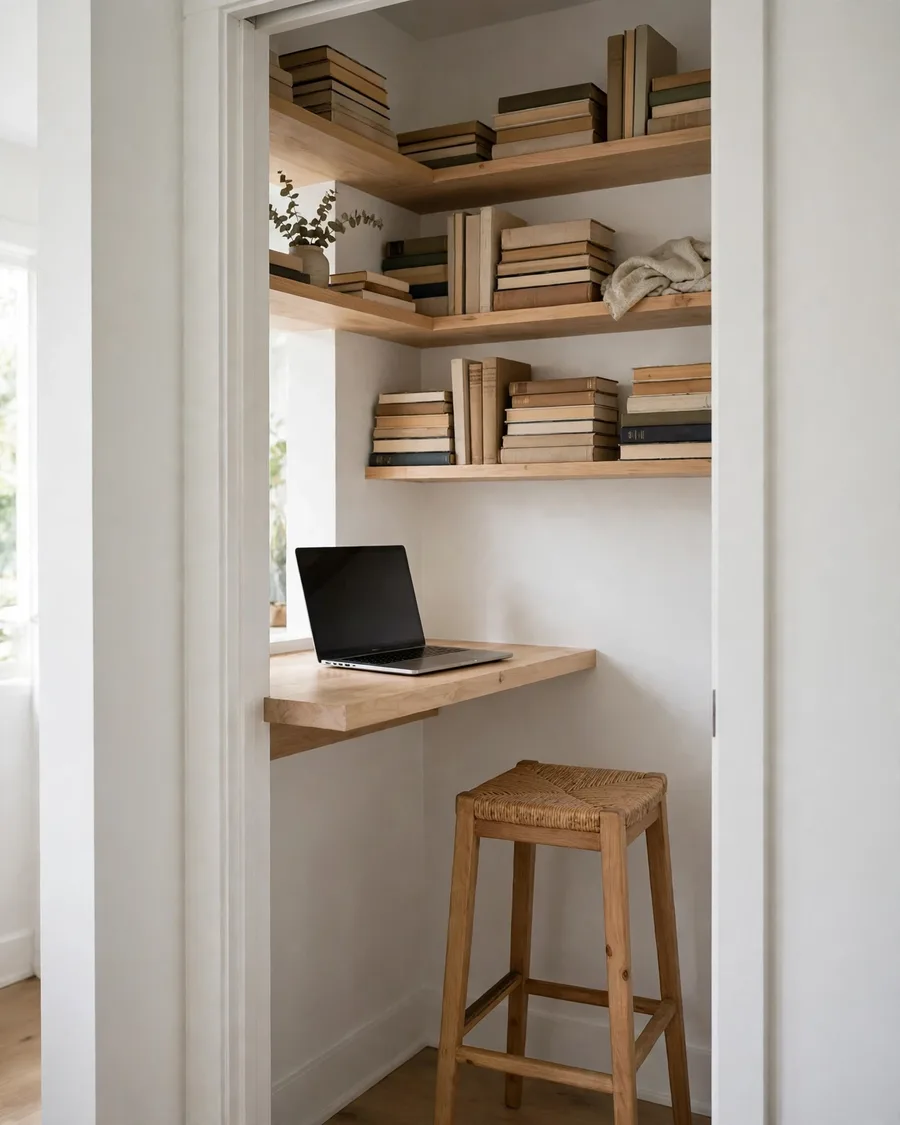
Mount the desktop at elbow height and stand to work, with a tall stool nearby for breaks. No chair footprint means even a shallow closet works. Best for: narrow closets and people who hate sitting all day. Styling tip: a foot rail under the desk makes standing far more comfortable. Pro tip: set the surface around 42 inches high, then adjust to your own elbow height.
Bold Color and Pattern Cloffices
8. The Cobalt Blue Statement
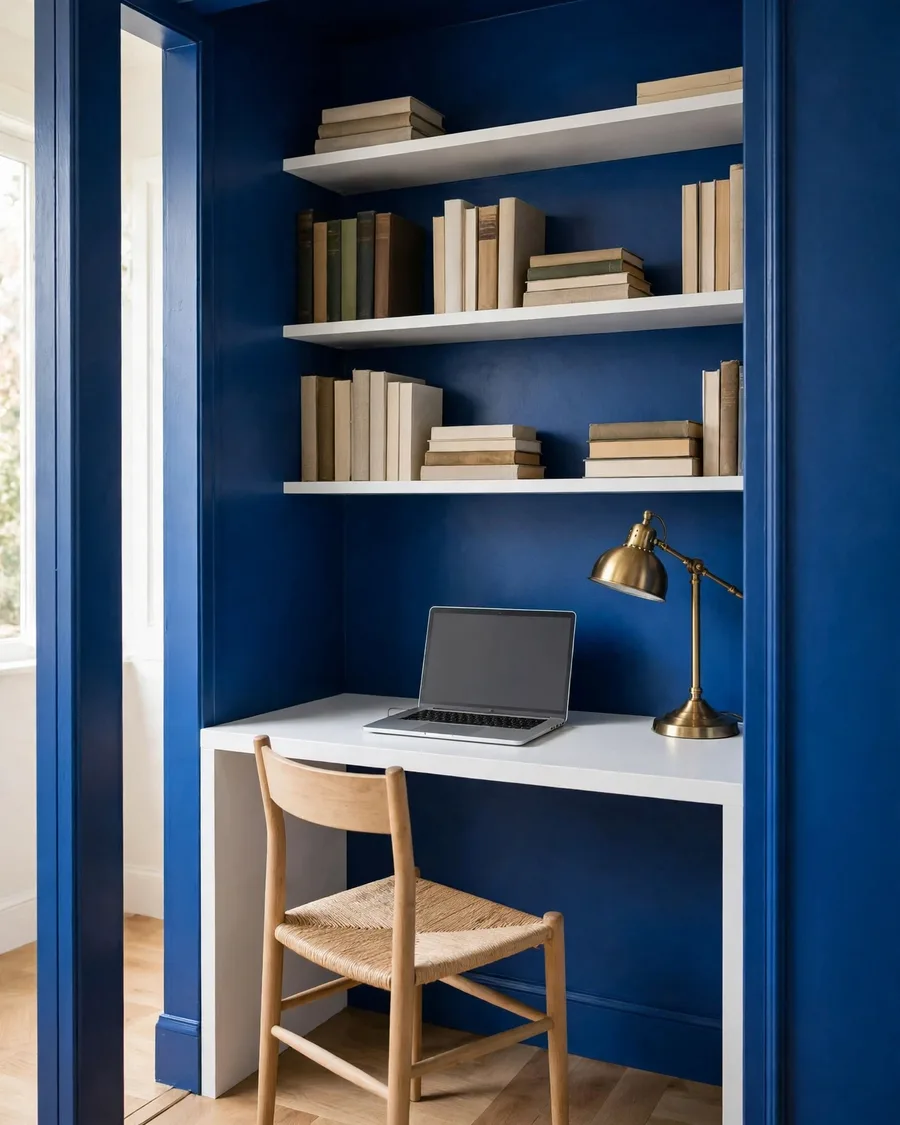
Paint the inside of the closet a deep cobalt blue and an ordinary nook suddenly looks designed. White desk and shelves pop against it, and the color hides scuffs well. Best for: anyone who wants a bold look on a small budget. Styling tip: add one brass lamp for warmth. Pro tip: paint the ceiling the same blue so the box feels intentional, not unfinished.
9. The Calm Sage Green Nook
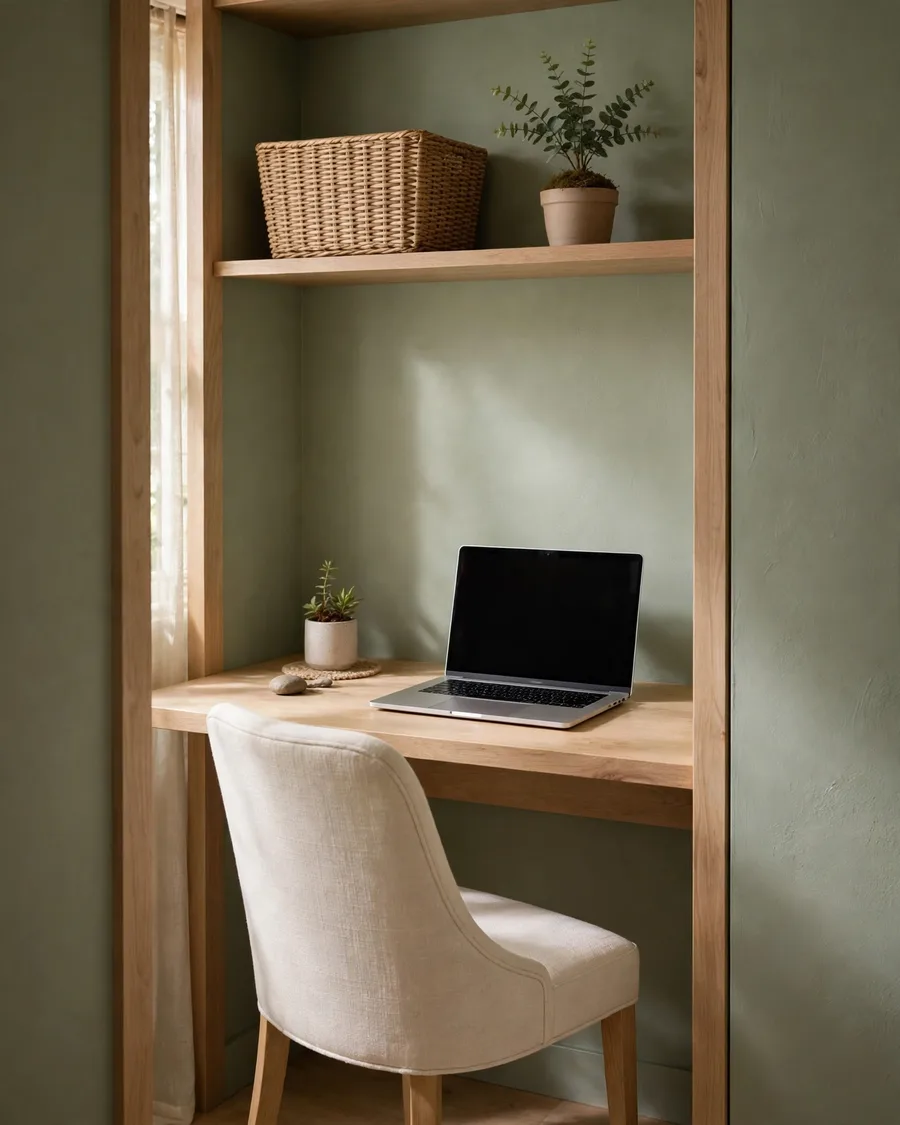
Sage green walls with light wood make a closet office feel calm and focused, not boxed in. It suits almost any home style, from modern to cottage. Best for: long workdays and video calls. Styling tip: cream and natural textures soften the green. Pro tip: test the paint in the closet’s actual light first — greens shift a lot in dim spaces.
10. The Soft Blush Pink Cloffice
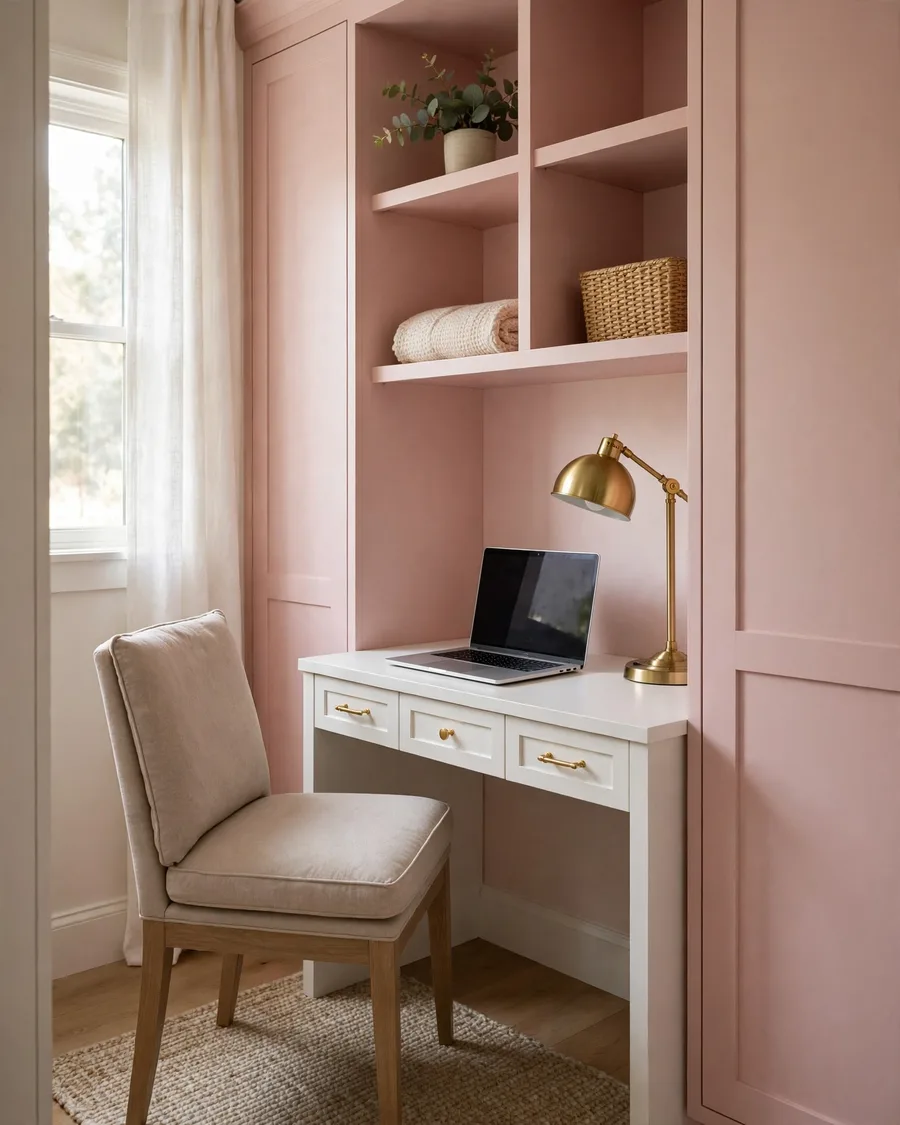
Blush pink walls, a white desk, and gold hardware give a closet office a soft, polished feel without going over the top. Best for: bedrooms and creative work. Styling tip: keep the chair neutral so the pink stays the star. Pro tip: pick a pink with warm undertones — cool pinks can look grey in a windowless closet.
11. The Wallpapered Accent Wall
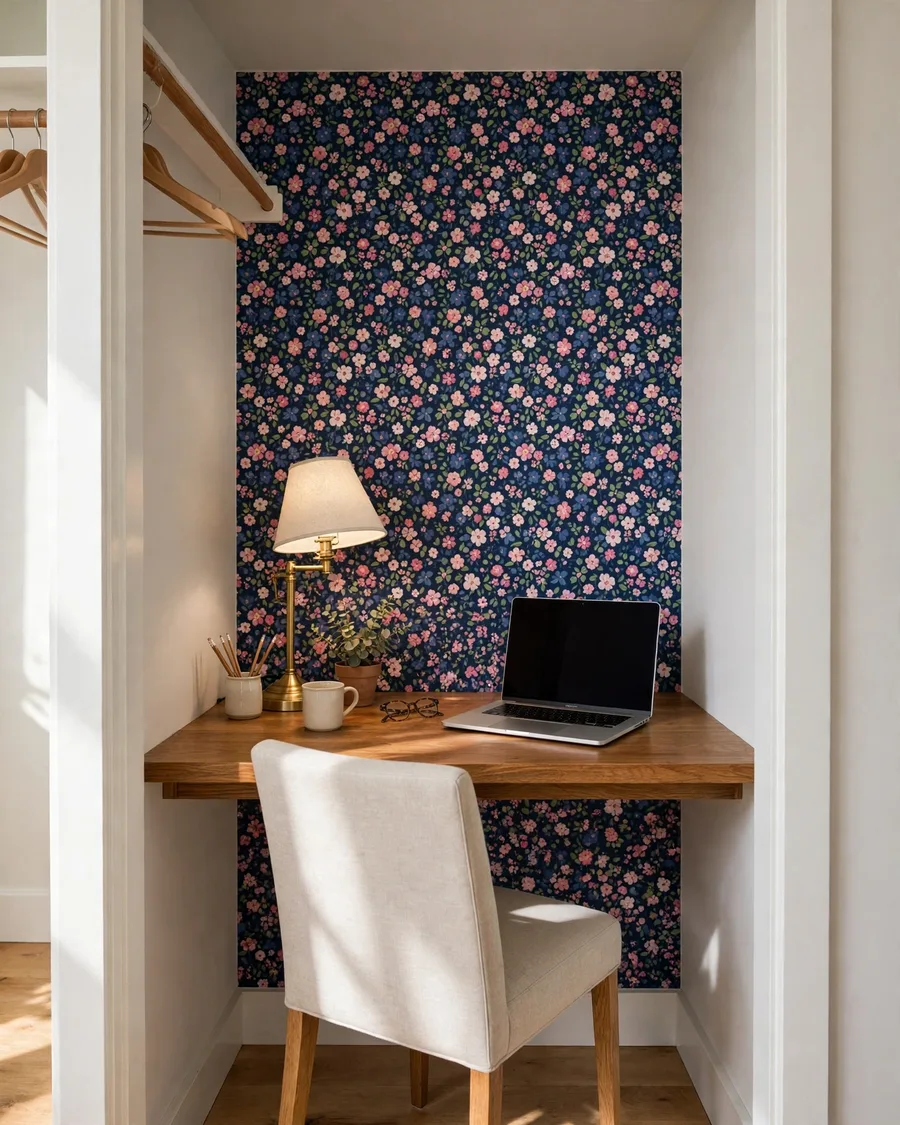
One wallpapered wall behind the desk does the decorating for the whole closet. A small space needs only a roll or two, so even a bold print stays affordable. Best for: renters using peel-and-stick paper. Styling tip: a small-scale print suits a small closet better than a giant one. Pro tip: paper just the back wall and paint the sides to match the lightest color in the print.
12. The Moody Charcoal Cloffice
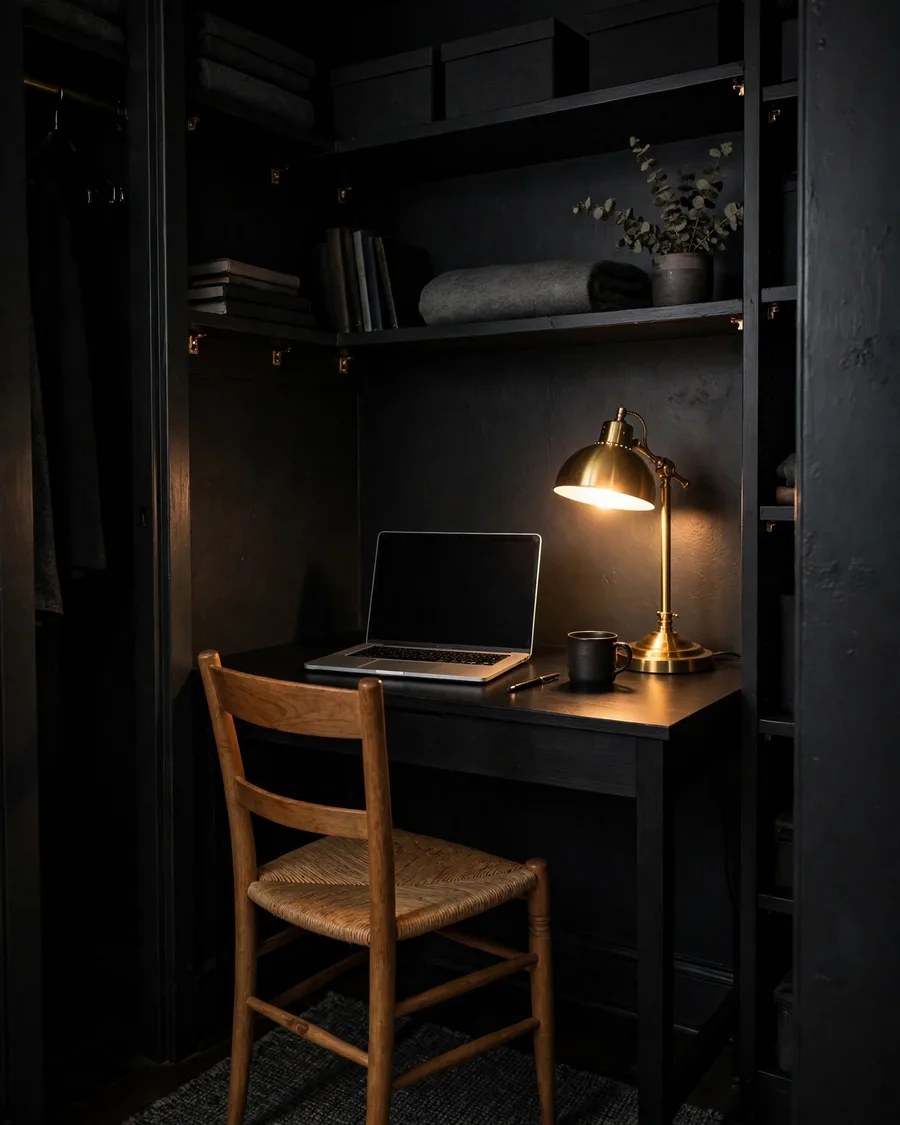
Charcoal walls with warm lamp light make a closet office feel like a private study. Dark paint also makes a monitor blend in instead of glaring. Best for: writers, late-night workers, and small dark closets. Styling tip: add warm wood and brass so it reads cozy, not gloomy. Pro tip: dark walls need strong lighting — plan two light sources before you paint.
13. The Two-Tone Paint Trick
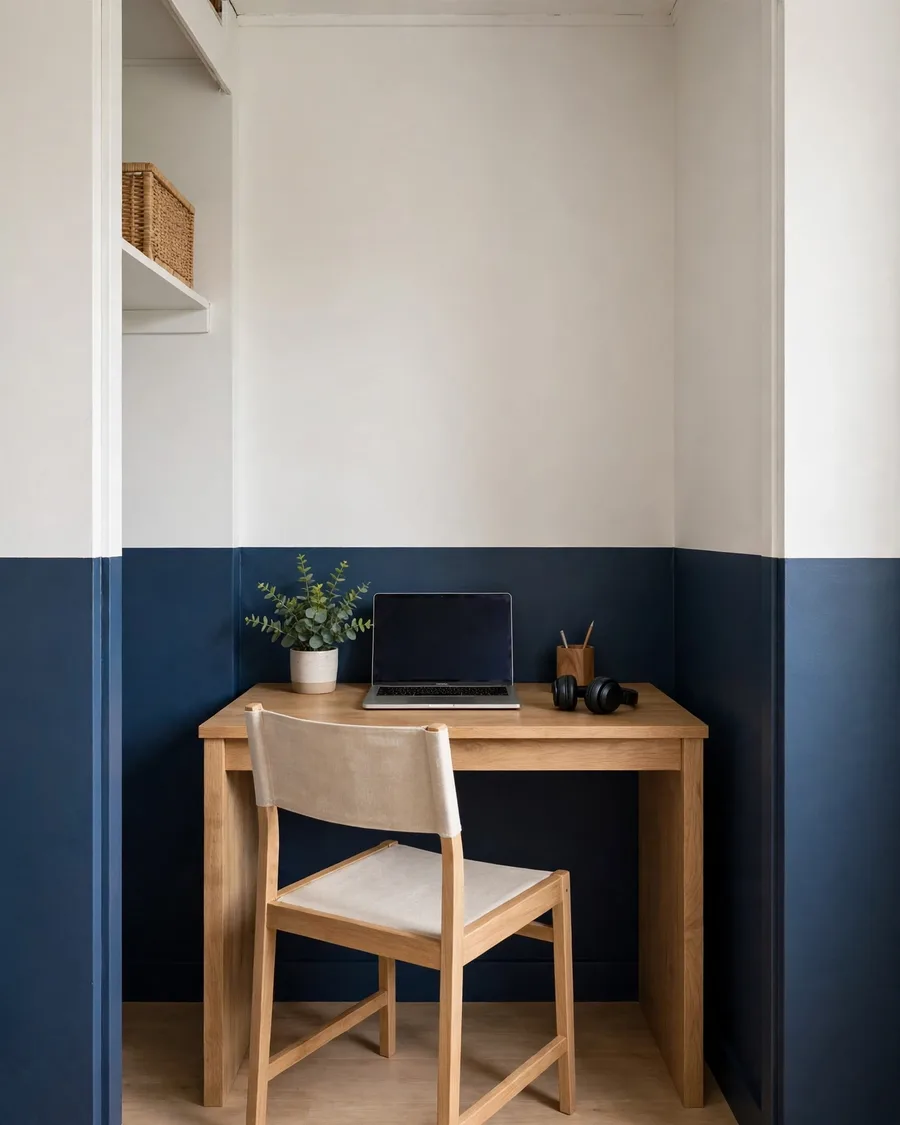
Paint the lower half of the closet a deep color and the upper half white. The split adds structure, hides chair scuffs, and makes low ceilings feel taller. Best for: closets with low ceilings or plain drywall. Styling tip: run the split at desk height for a built-in look. Pro tip: use a level and painter’s tape — a wobbly line ruins the whole effect.
14. The Warm Terracotta Glow
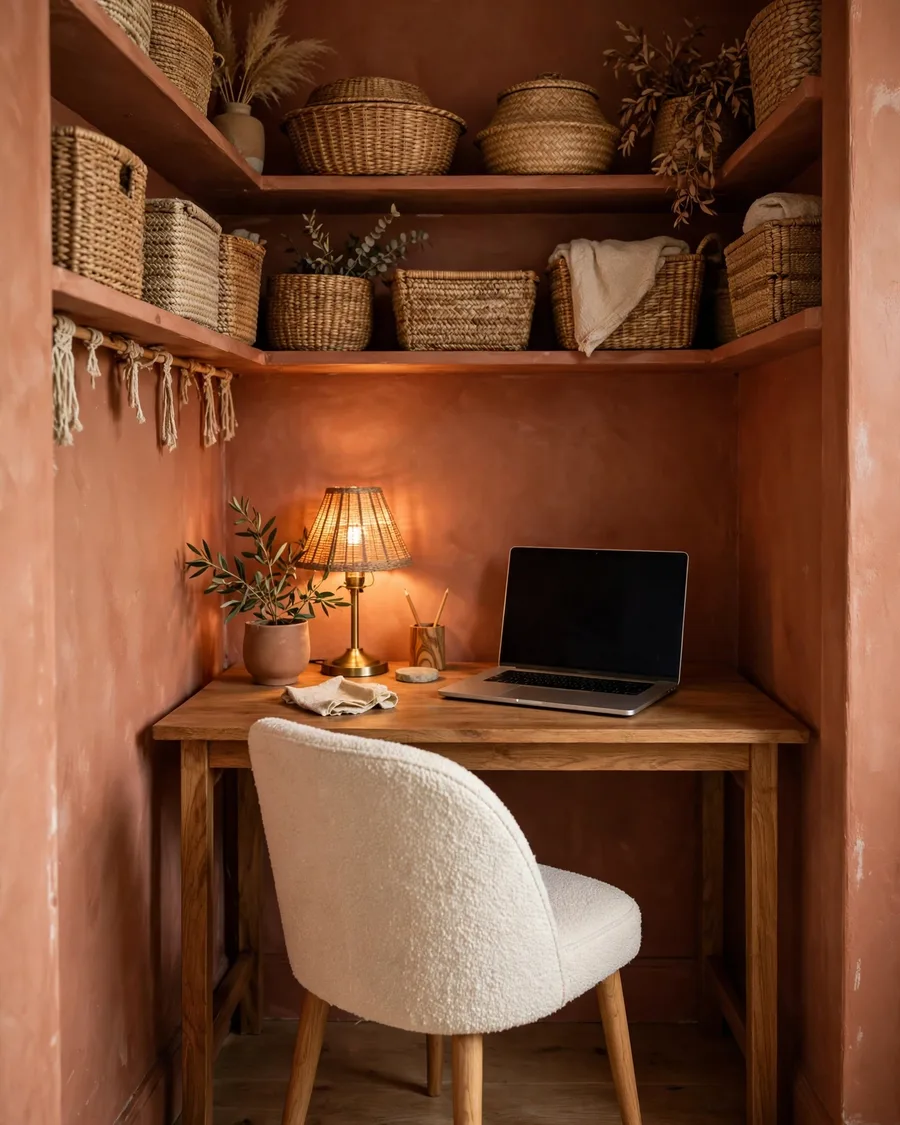
Terracotta walls warm up a closet that never sees sunlight, and they pair beautifully with wood and cream. It is a budget-friendly update — often just a can of paint. Best for: north-facing rooms and boho or earthy homes. Styling tip: woven baskets echo the warm tones. Pro tip: if paint feels like a big step, try a terracotta curtain or rug first; for more low-cost ideas, see these home office ideas on a budget.
Storage-Smart Cloffice Organization
15. The Open-Shelf Wall
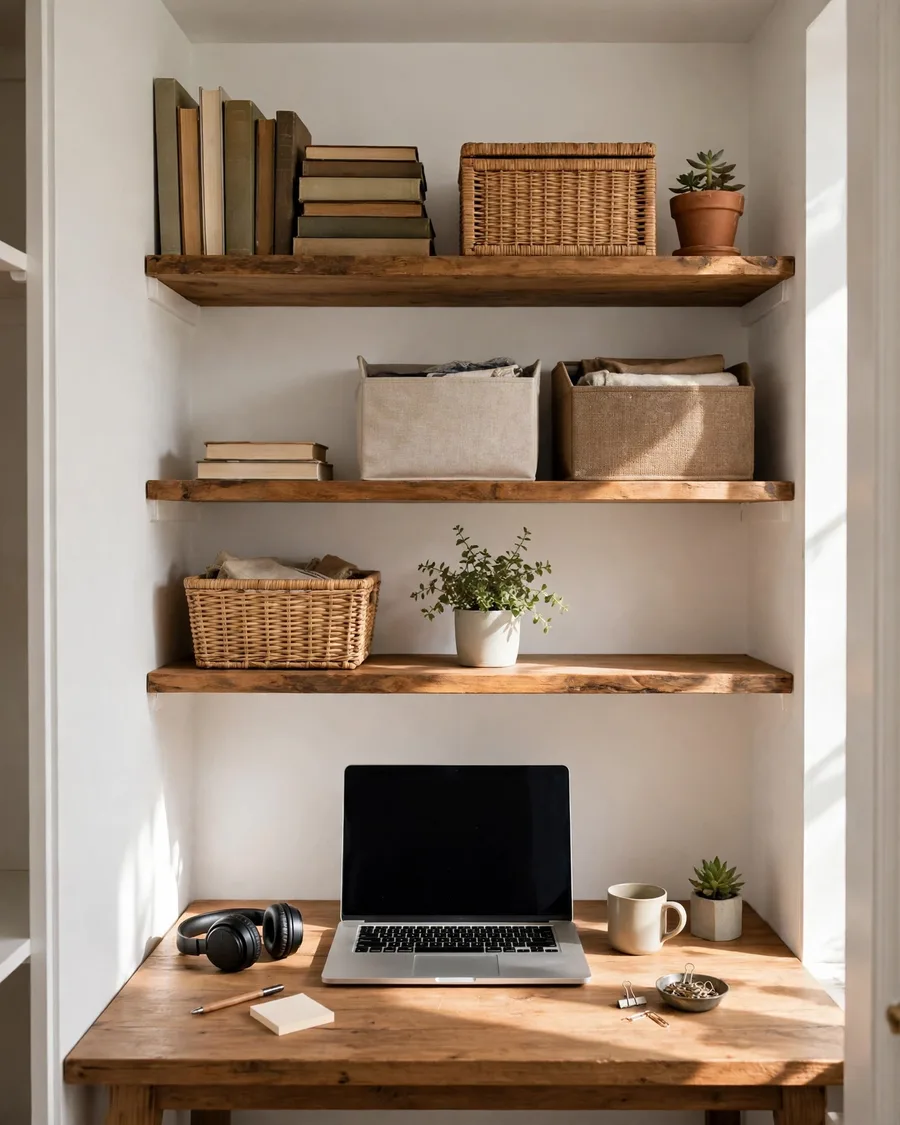
Two or three open shelves above the desk hold everything within arm’s reach — books, boxes, and a plant or two. Keep the prettiest things on top and the messy ones in boxes. Best for: people who like everything visible. Styling tip: leave one shelf half-empty so it breathes. Pro tip: space shelves 14 to 16 inches apart so books and binders fit upright.
16. The Pegboard Command Wall

A pegboard turns the wall beside or above your desk into flexible storage — hooks, tiny shelves, and cups that move whenever your needs change. Best for: crafters, students, and small-supply hoarders. Styling tip: paint the pegboard the wall color for a built-in feel. Pro tip: leave the bottom row free for the items you grab daily.
17. The Built-In Drawer Base
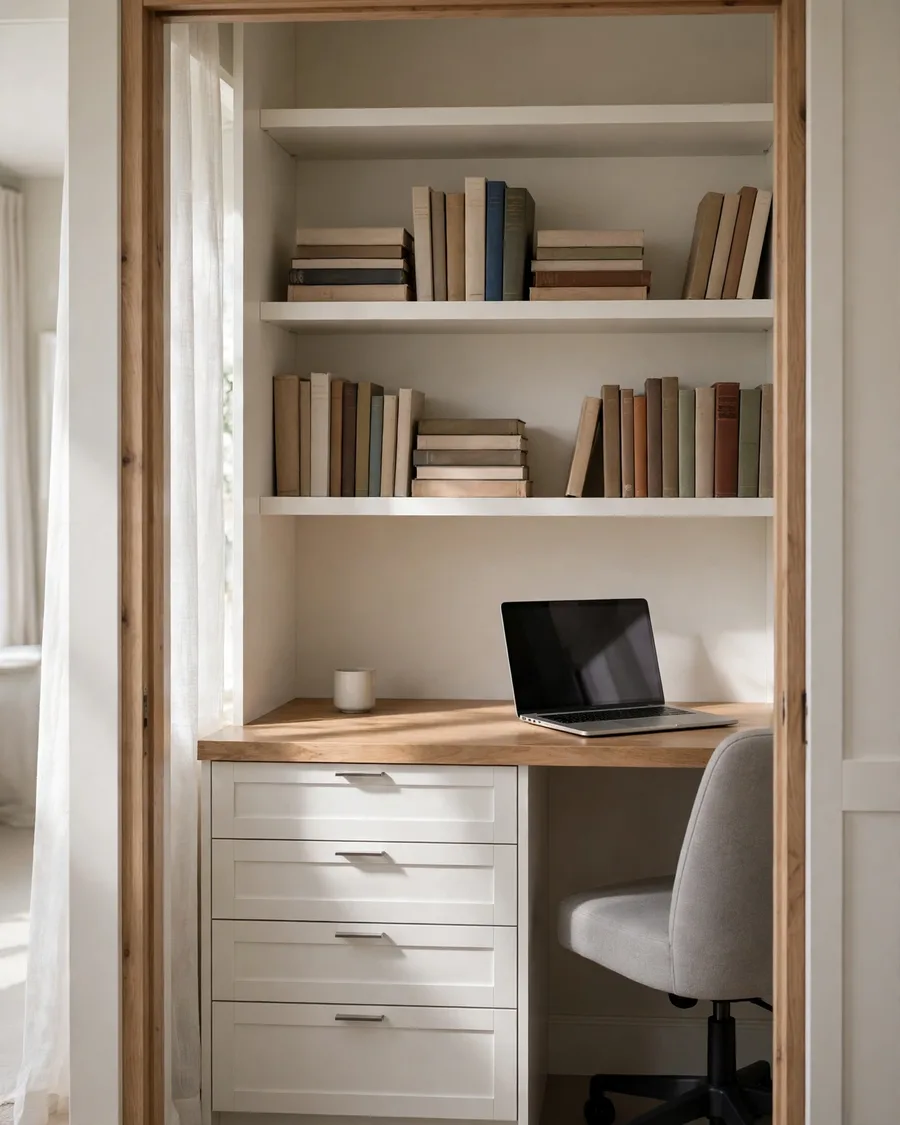
Set the desktop on a low drawer unit instead of legs and you gain hidden storage for paper, chargers, and supplies without losing floor space. Best for: walk-ins and permanent setups. Styling tip: match drawer fronts to the desk for a fitted furniture look. Pro tip: keep one drawer shallow for pens and cables, and the rest deep for files.
18. The Rolling Cart Sidekick

A slim three-tier cart parks beside the desk as extra storage, then rolls away when you need legroom. It holds notebooks, snacks, and the printer you never use. Best for: tiny closets with no room for built-ins. Styling tip: pick a cart in the same finish as your desk. Pro tip: measure the gap first — carts look slim online and wide in real life.
19. The Hidden Cable Setup

In a space this small, cables take over fast. A tray under the desk, one power strip, and a few clips keep every cord off the floor and out of sight. Best for: anyone with a monitor, lamp, and charger all at once. Styling tip: a cord cover painted to match the wall disappears completely. Pro tip: label both ends of each cable before you tuck them away.
20. The Vertical File Wall
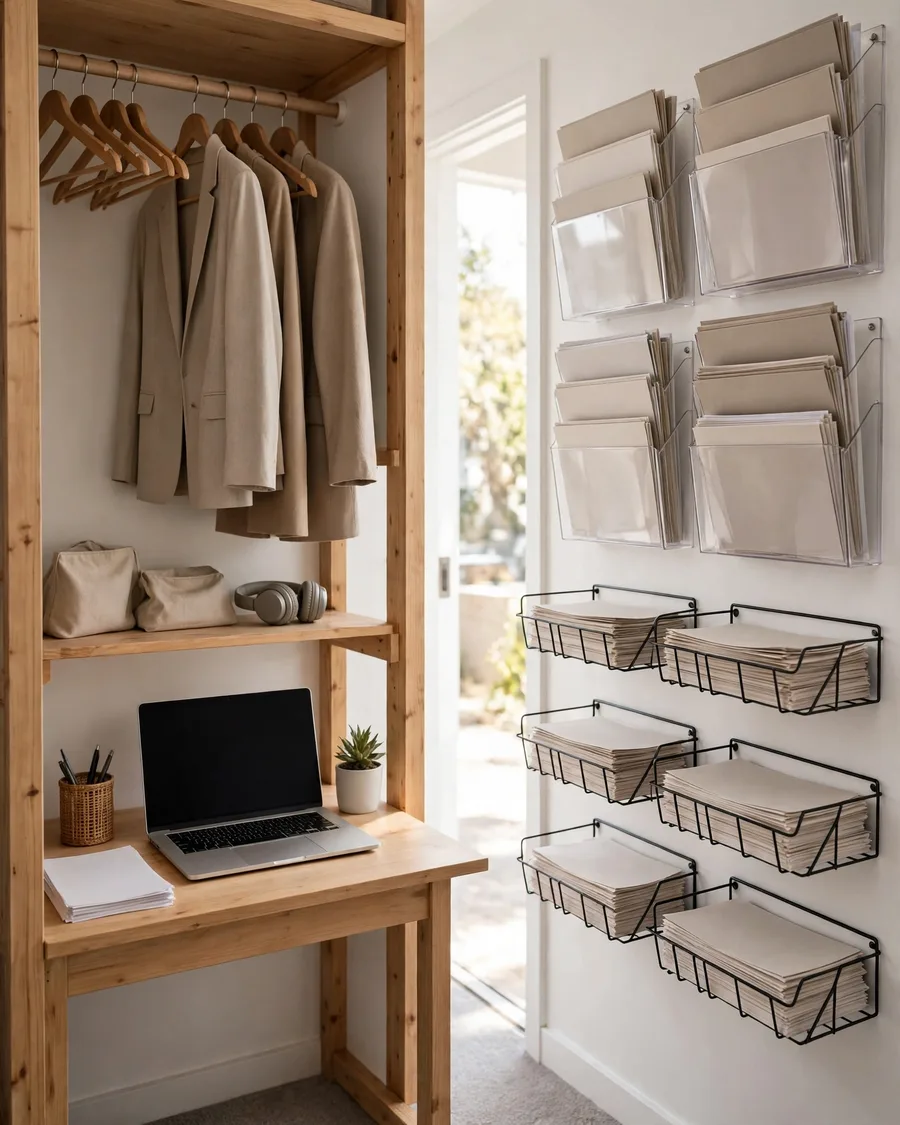
Wall-mounted file holders and magazine racks use the side wall that a desk cannot reach. Papers stay sorted and visible instead of piling on the desktop. Best for: paper-heavy work and teachers. Styling tip: label each slot — inbox, this week, file away. Pro tip: mount holders at eye level when seated so you can file without standing.
21. The Keep-the-Rod Combo
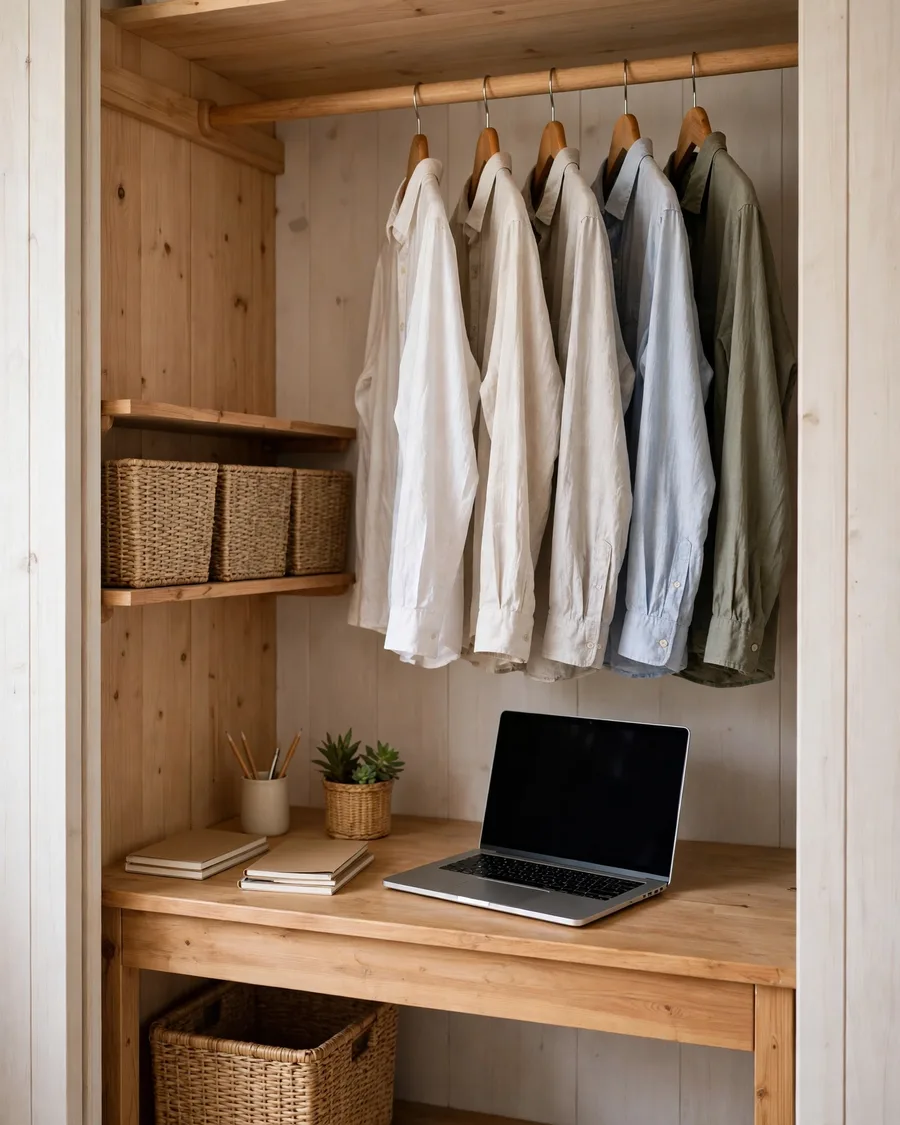
Leave the clothing rod in place and put the desk underneath it. Shirts hang above your work zone, and a short curtain can hide them on video calls. Best for: renters who cannot remove the rod. Styling tip: matching hangers make the hanging clothes look tidy on camera. Pro tip: hang only your most-worn items here and move the rest to another closet.
Doors, Light, and Finishing Touches
22. The Sliding Barn Door
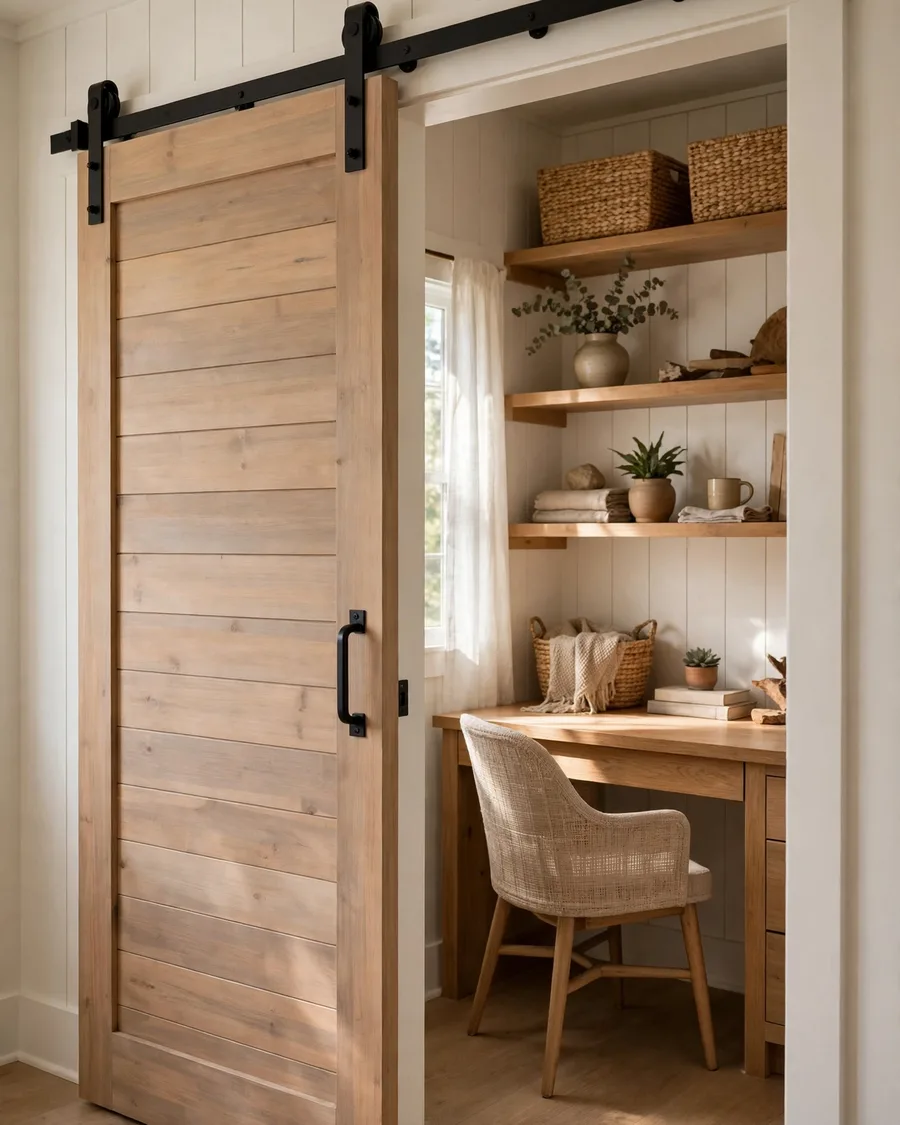
A barn door slides instead of swinging, so it never eats floor space, and it turns the closet entrance into a design feature. Best for: farmhouse and modern-rustic homes. Styling tip: black hardware looks sharp against a light door. Pro tip: check the wall beside the opening is clear — the door needs somewhere to slide to.
23. The Curtain Hideaway
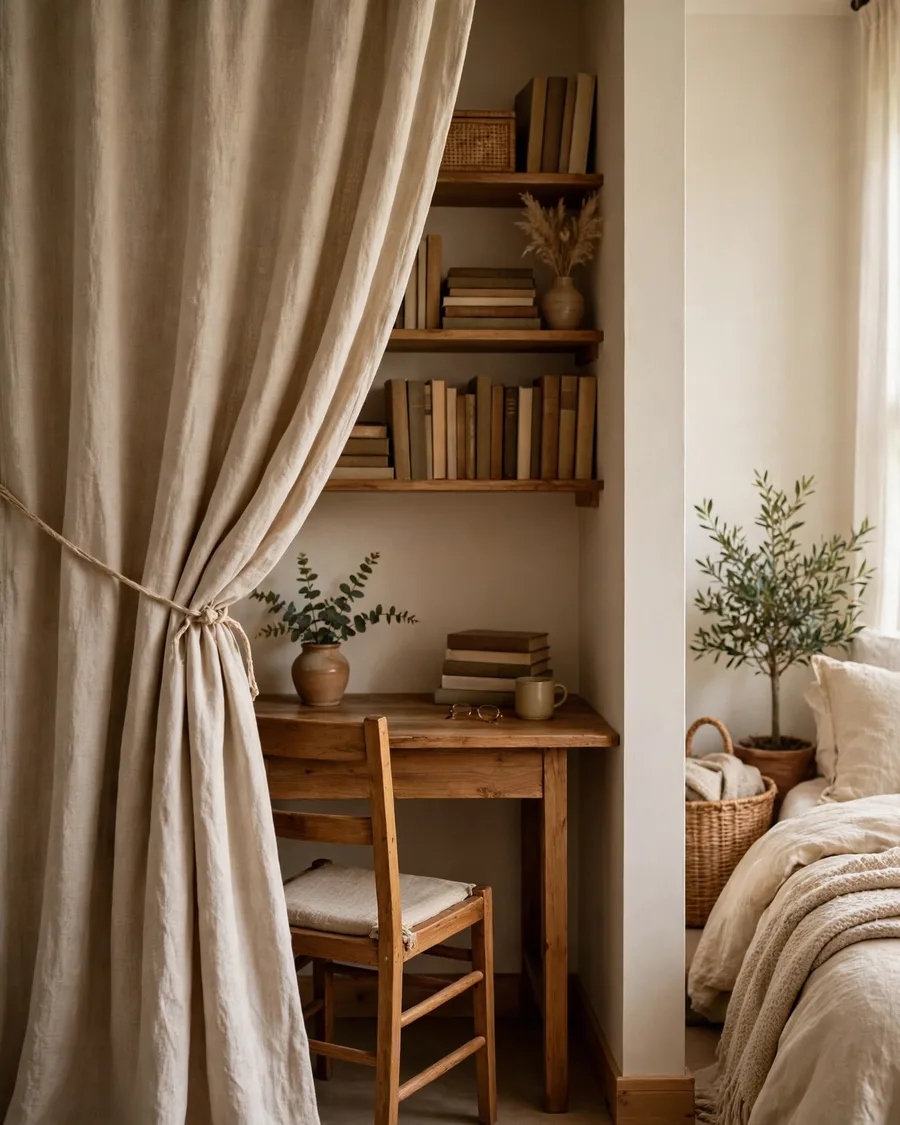
Remove the closet doors and hang a curtain instead. It hides the mess in seconds, softens the opening, and costs very little. Best for: renters and budget builds. Styling tip: a linen-look curtain in a warm neutral suits most rooms. Pro tip: mount the rod a few inches above the opening so the curtain hangs long and full.
24. The French Door Glow
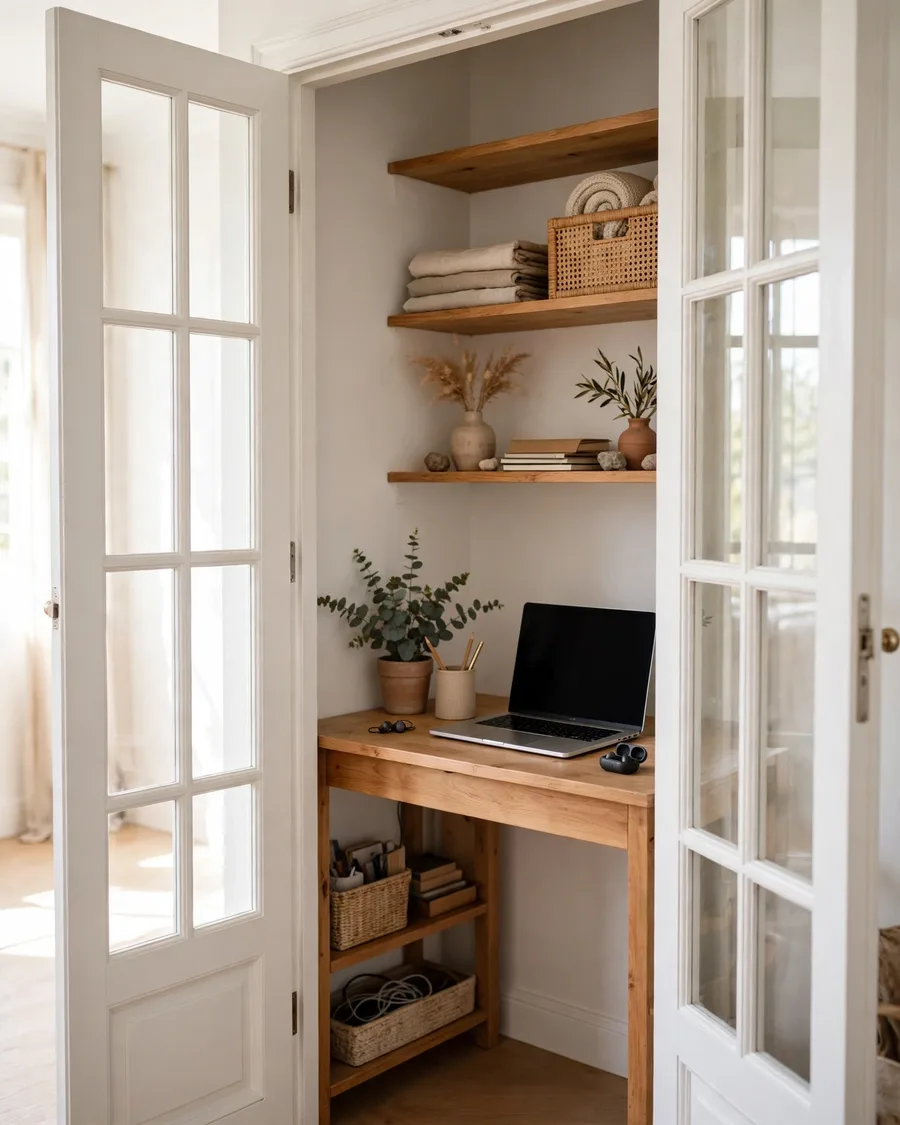
Glass-pane French doors let daylight and room light flow into a windowless closet while still giving you a door to close. Best for: dark closets in bright rooms. Styling tip: frosted glass adds privacy without losing light. Pro tip: if full French doors are too much, swap just one solid door panel for a glazed one.
25. The Layered LED Lighting
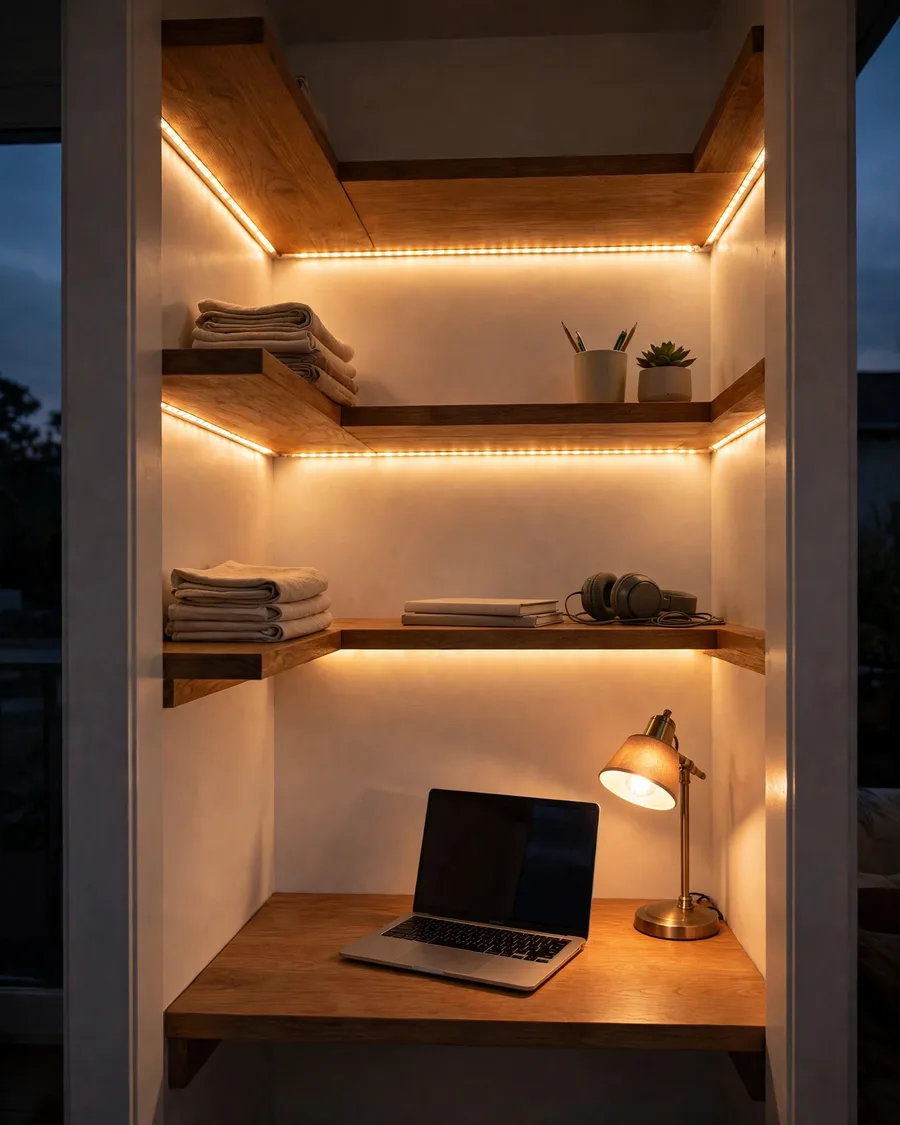
Most closets have one dim bulb, which is never enough. Add LED strips under the shelves, a small desk lamp, and the room light for three layers that kill shadows. Best for: every windowless cloffice. Styling tip: warm white light (around 3000K) feels cozy, not clinical. Pro tip: put the strips on a plug-in dimmer so you can soften them for video calls.
26. The Mirror-and-Glass Expander

A large mirror on the back or side wall bounces light around and makes a closet office feel twice as wide. A glass desk top helps too. Best for: the smallest reach-in closets. Styling tip: angle the mirror to reflect the room, not your screen. Pro tip: keep the mirror above desk height so it never competes with your monitor for attention.
27. The Gallery Pinboard Wall
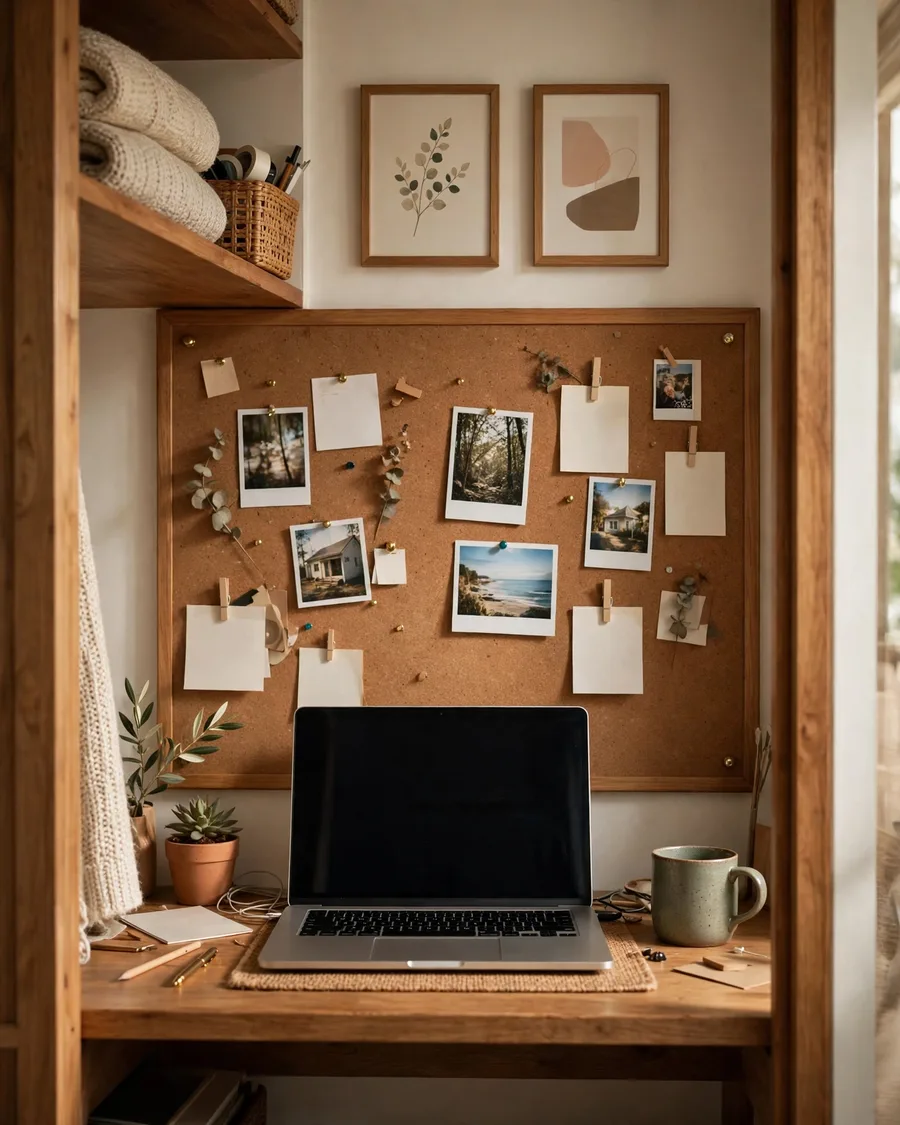
A pinboard or a small gallery wall above the desk gives a plain closet personality — and a place for notes, photos, and reminders that would otherwise pile up. Best for: creative workers and students. Styling tip: mix one framed print with pinned notes so it looks styled, not messy. Pro tip: use removable strips on a pinboard so you can refresh it without new holes.
28. The Rug, Chair, and Plant Finish
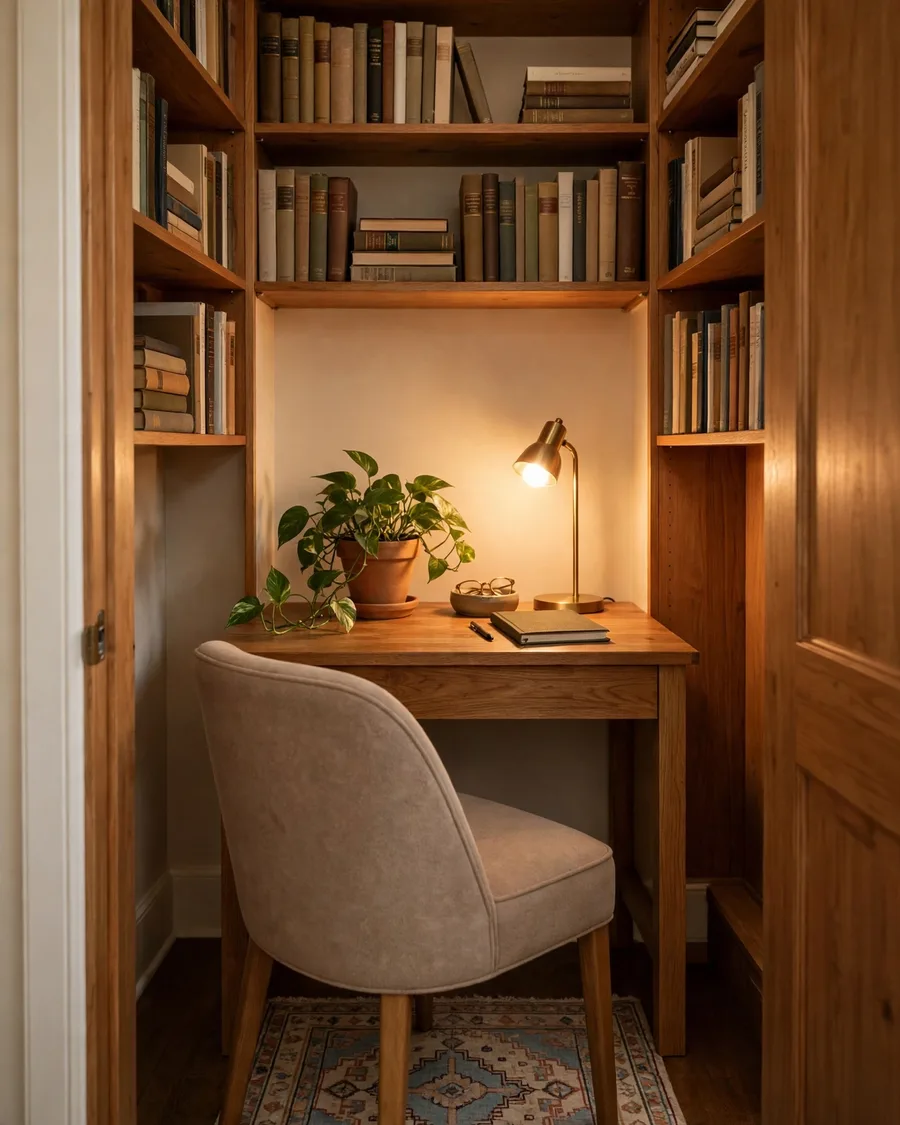
The last step is the one people skip: a small rug under the chair, a chair you actually like sitting in, and one plant. These three things make a closet feel like an office, not a cupboard. Best for: every cloffice, as the finishing touch. Styling tip: pick a low-pile rug so the chair rolls easily. Pro tip: choose a plant that tolerates low light, like a pothos, since closets rarely get much sun.
Home Office Closet Care and Maintenance
A closet office stays useful only if it stays tidy. Wipe the desktop weekly, dust the shelves monthly, and do a quick Friday reset: clear the desk, file loose papers, and charge everything for Monday. Check the paint and wallpaper edges every few months, since a small warm space can show wear faster than a big room. If the closet has no vent, leave the door open when you are not working so air can move through.
FAQs About Home Office Closet Ideas
Can you really put a desk in a closet?
Yes, you can put a desk in almost any closet. A standard reach-in closet is about 24 inches deep, which fits a floating or wall-to-wall desktop and a chair that tucks underneath. Remove the doors or swap them for a curtain if the opening feels tight, add a light source, and keep the desktop around 28 to 30 inches high. Walk-in closets work even better, since you can fit a larger desk and keep some hanging space too.
How much space do you need for a closet office?
A basic closet office needs a closet at least 36 inches wide and 24 inches deep for a laptop setup with a small chair. That gives you room for a desktop, a screen, and your knees. If you want a monitor, keyboard, and notebooks, aim for 48 inches of width or more. Measure the closet before buying anything, and check that the chair can slide fully under the desk when you are done working.
How do you light a closet office with no window?
Layer three light sources: the closet’s ceiling light, LED strips under the shelves, and a small desk lamp. Warm white light feels more comfortable than cool white in a small space, and a dimmer lets you soften the light for video calls. Light-colored walls and a mirror help bounce the light around, so paint the inside of the closet white or a pale color if it feels dark.
Do you need to remove the closet doors?
No, you do not have to remove the doors, and keeping them has a real benefit: you can close your office away at the end of the day. Sliding or bi-fold doors work best because they do not swing into the room. If the doors make the space feel cramped while you work, take them off the hinges and hang a curtain instead, or store the doors and refit them later.
How much does a closet office conversion cost?
The cost varies widely with how far you go. A simple DIY build — a shelf board as a desk, a coat of paint, and a plug-in light — can cost very little beyond basic materials. Adding built-in drawers, new doors, wallpaper, or an electrician for extra outlets raises the cost. Start with the desk, lighting, and paint, live with it for a few weeks, and only then spend on built-ins.
How do you keep a closet office from feeling cramped?
Keep the palette light, use open shelving instead of closed cabinets, and leave some empty space on every shelf. A mirror on one wall and good lighting make the nook feel wider, while a chair that tucks fully under the desk frees floor space. Most of all, keep clutter out: a small space only works when everything in it earns its place, so file papers weekly and remove anything you do not use.
Final Thoughts
A closet office proves you do not need a spare room to work well from home — you need a plan, a desk that fits, good light, and storage that earns its space. Start with the layout that matches your closet, add the color or door trick that makes it feel like yours, and finish with the chair and plant. Pick one idea from this list today, measure your closet tonight, and by the weekend your smallest nook could be your favorite workspace. Save this list for later so you can come back to it when you are ready to build.
