
A dining room should do more than hold a table. It should pull people in and make them stay a little longer, and these dining room decor ideas cover the whole room — light, walls, seating, colour and texture — so every dinner feels like a small gathering.
This guide goes beyond the table itself. If you want the big picture first, start with our broad dining room ideas guide, then come back here for the finishing layers that make the room feel warm, finished and truly yours.
Light the Table
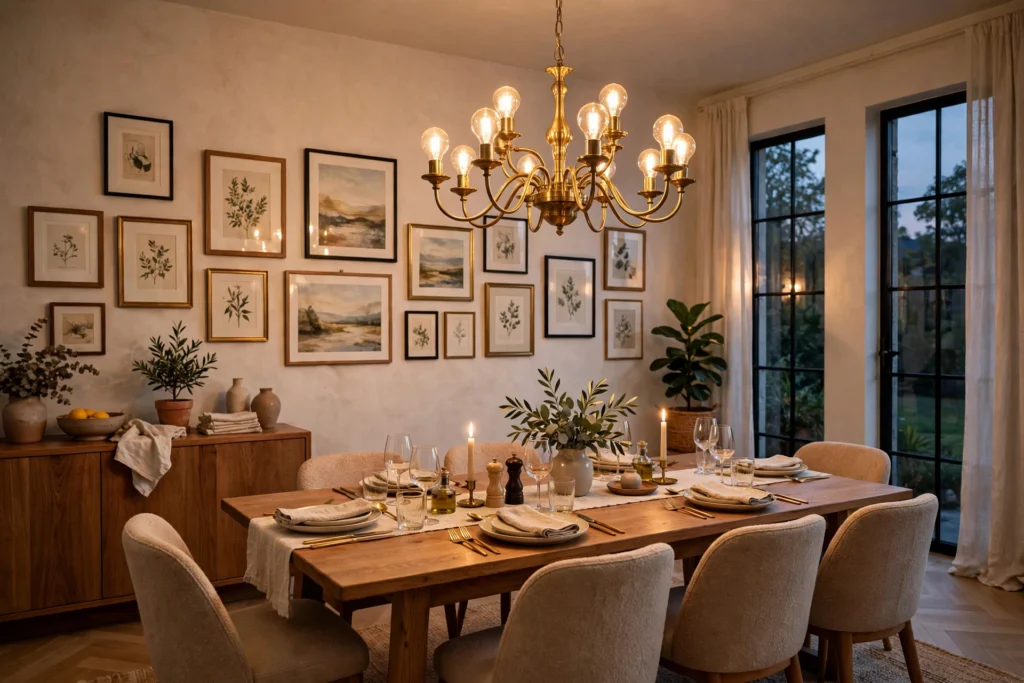
1. Statement Chandelier as the Centrepiece

A bold chandelier does more than light the table — it sets the whole mood of the room. Pick one with presence, in brass, black metal or glass, and let it be the first thing guests notice.
Best for: formal dining rooms and open-plan spaces that need a clear focal point.
Styling tip: Keep the rest of the ceiling plain so the chandelier owns the view.
Pro tip: Hang it 30–36 inches above the tabletop, and choose a fixture about half to two-thirds the table’s width.
2. Cluster of Pendant Lights
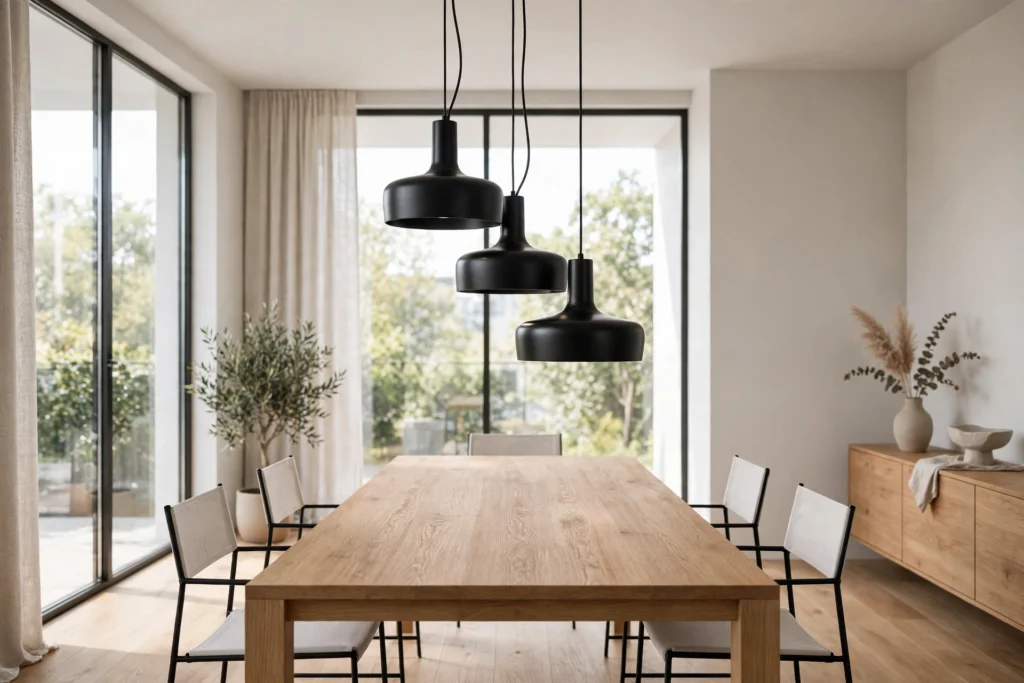
Three small pendants in a row feel fresh and modern where one big fixture feels heavy. They spread light evenly along a long table and suit clean, simple rooms best.
Best for: long rectangular tables and modern dining room decor.
Styling tip: Match the pendant finish to your chair legs or tapware for a pulled-together look.
Pro tip: Space pendants 24–30 inches apart and hang them at the same 30–36 inch height as a chandelier.
3. Candlelight Layers for Evening Meals

Candles are the cheapest way to make a weeknight dinner feel special. Mix tall tapers with short pillars and tea lights so the glow comes from several heights at once.
Best for: evening meals, date nights and anyone on a small budget.
Styling tip: Group candles in odd numbers — threes and fives look natural, not staged.
Pro tip: Use unscented candles at the table so the scent never fights with the food.
4. Dimmable Lighting for Every Mood
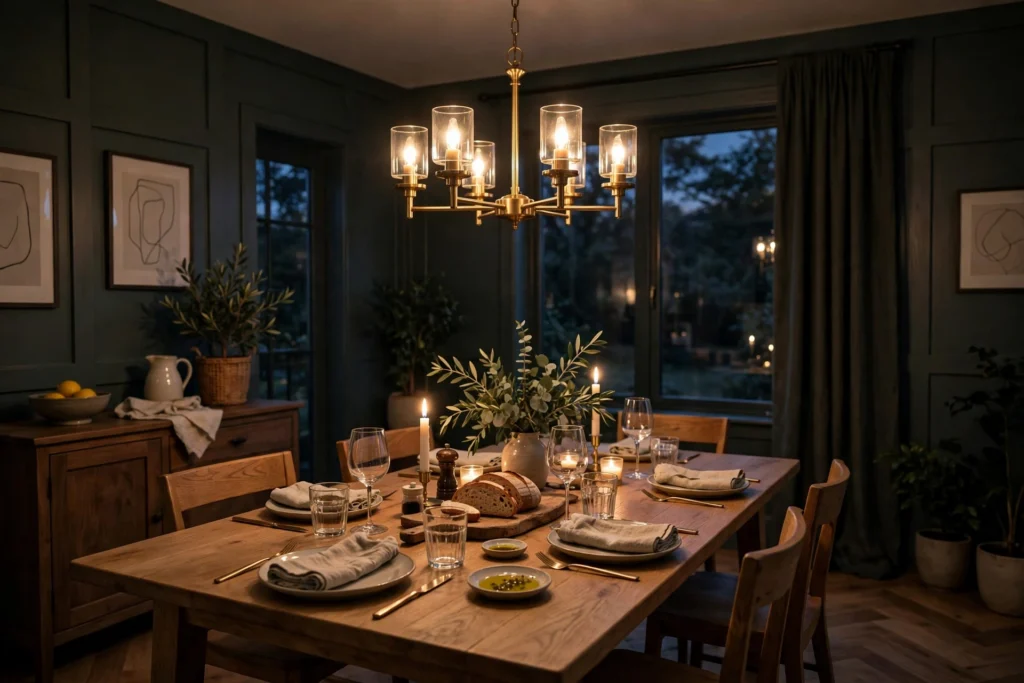
One room has to work for homework, family dinners and late-night guests. A dimmer switch lets the same light go bright for eating and low for lingering.
Best for: multi-use dining rooms and open-plan living spaces.
Styling tip: Pair the dimmer with warm-white bulbs around 2700K for a soft, flattering glow.
Pro tip: A basic dimmer switch costs little to fit and changes the room more than a new light fitting does.
5. Wall Sconces to Frame the Room

Sconces fill the gap between ceiling light and candles, washing the walls with soft light. A matching pair on either side of art or a sideboard makes the room feel balanced.
Best for: traditional rooms and dining rooms with no overhead fixture.
Styling tip: Choose sconces in the same metal as your chandelier to tie the room together.
Pro tip: Mount sconces 60–66 inches from the floor so the light sits at eye level when seated.
Walls That Talk
6. Oversized Mirror to Double the Light

A large mirror bounces light around the room and makes a small dining space feel twice as big. Hang it opposite a window or beside the table for the best effect.
Best for: small or dark dining rooms that need more light and space.
Styling tip: Pick a frame that matches your table — warm wood with wood, black metal with black chairs.
Pro tip: Hang the mirror so its centre sits about 57 inches from the floor, the same height as gallery art.
7. Gallery Wall of Art and Prints

A gallery wall turns a blank wall into the room’s personality. Mix food prints, landscapes and family photos in frames that share one colour or finish.
Best for: bare walls in rental-friendly and family dining rooms.
Styling tip: Lay the arrangement on the floor first and photograph it before you hang a single nail.
Pro tip: Keep 2–3 inches between frames so the wall reads as one display, not a clutter of pictures.
8. Wainscoting for Instant Character
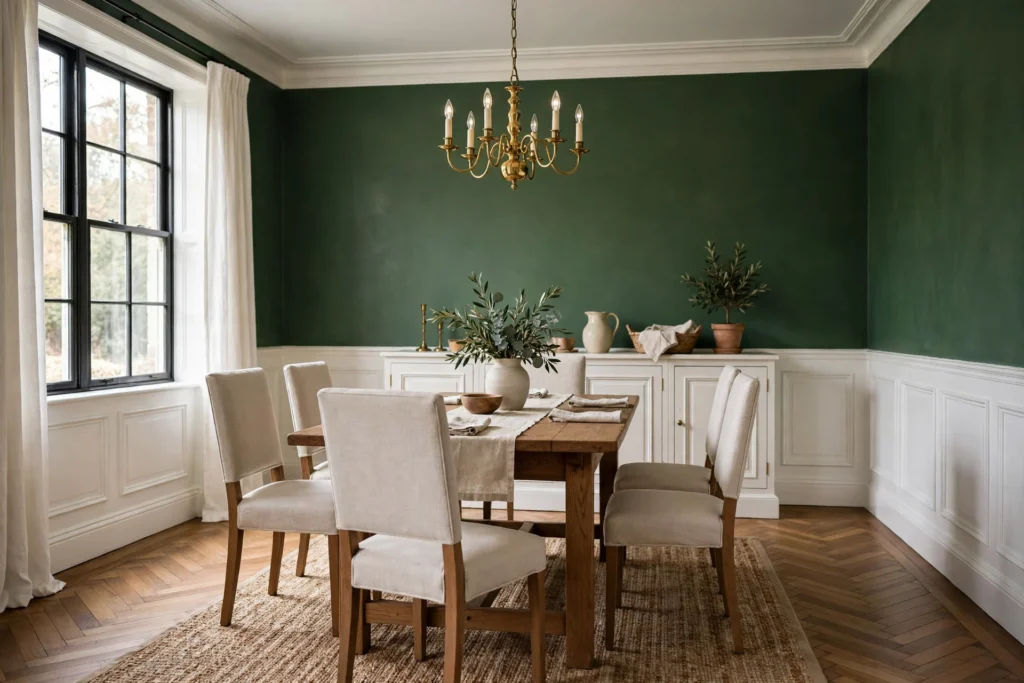
Wainscoting adds old-house charm to even the plainest box of a room. Paint it the same colour as the wall for a quiet look, or white against a deep colour for contrast.
Best for: traditional and farmhouse dining rooms that feel too plain.
Styling tip: Run the panelling to chair-rail height, about 36 inches, so chair backs never scuff the paint.
Pro tip: Use wipeable satin paint on wainscoting — dining rooms get splashes, and it cleans in seconds.
9. Bold Wallpaper on One Accent Wall
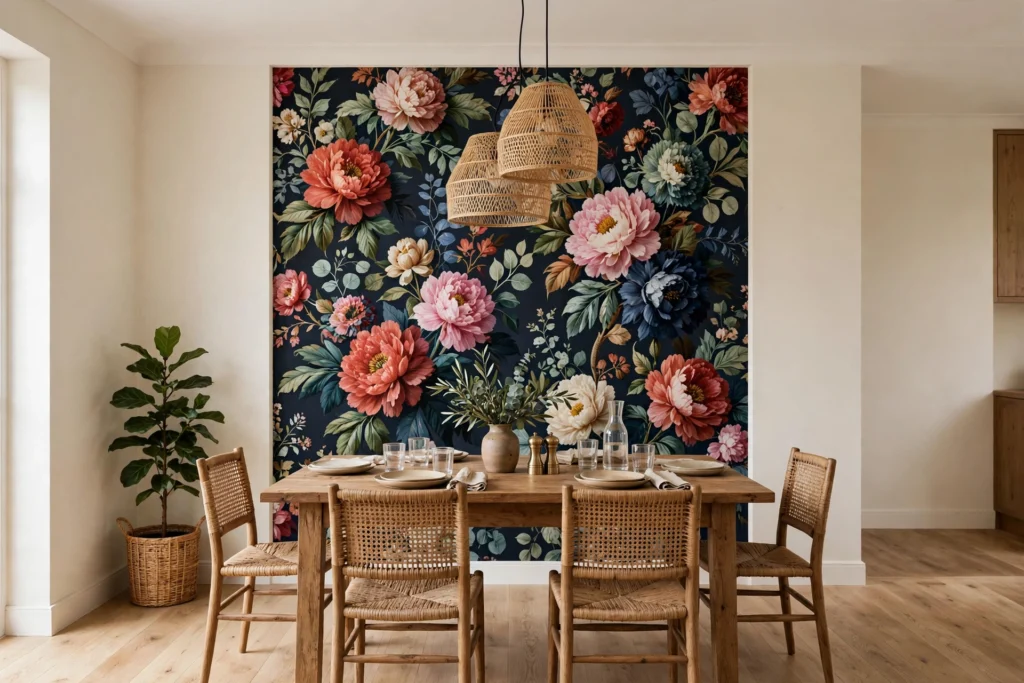
One wallpapered wall gives the room a whole new mood without the cost of papering all four. Floral, botanical or soft geometric prints all work behind a table.
Best for: renters using peel-and-stick, and anyone who wants big impact on a small budget.
Styling tip: Pull one colour from the paper into your napkins or chair cushions.
Pro tip: Paper the wall guests face when they sit down — that is the view they will actually enjoy.
10. Decorative Plate Wall
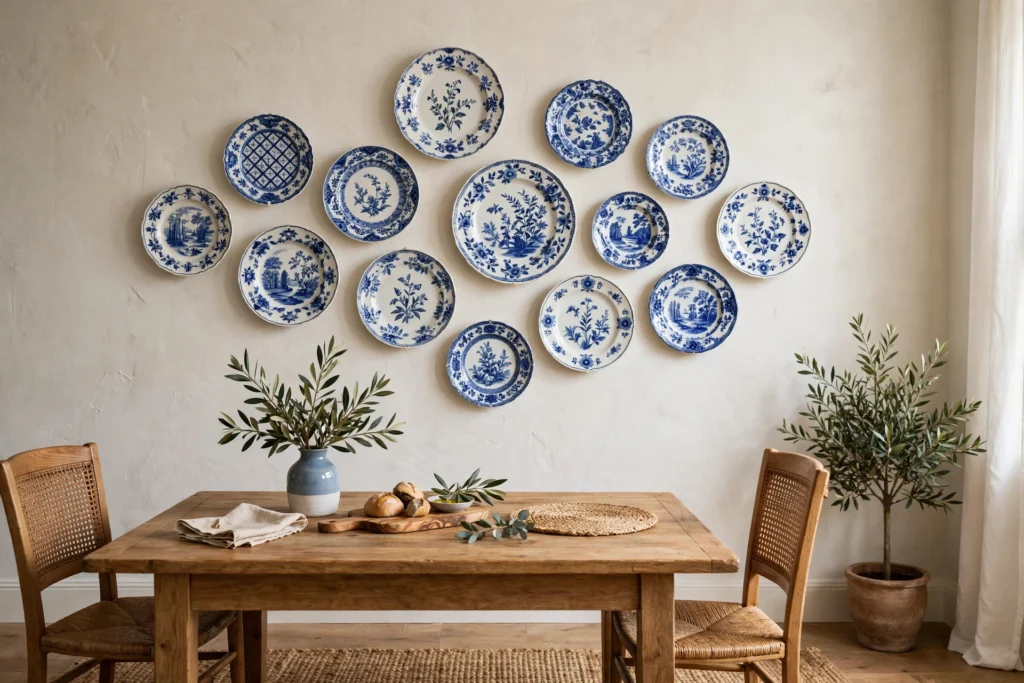
A plate wall is dining-room decor in its purest form — pretty, personal and cheap to start. Mix sizes, patterns and a few plain plates so the eye has somewhere to rest.
Best for: collectors, vintage lovers and small walls that cannot take big art.
Styling tip: Stick to two or three colours across all the plates for a calm, collected look.
Pro tip: Use adhesive plate hangers rated for each plate’s weight, and hang the largest plate first as your anchor.
Furniture & Seating
11. Mixed Dining Chairs

Matching chair sets can feel stiff and showroom-like. Mixing styles — two armchairs at the ends, simple side chairs along the sides — makes the room feel collected over time.
Best for: eclectic and modern rooms that feel too formal.
Styling tip: Keep one thing consistent — the same wood tone, the same colour family or the same seat height.
Pro tip: Keep all seat heights within 1 inch of each other, around 18 inches, so no guest sits noticeably higher or lower.
12. Bench Seating Along One Side
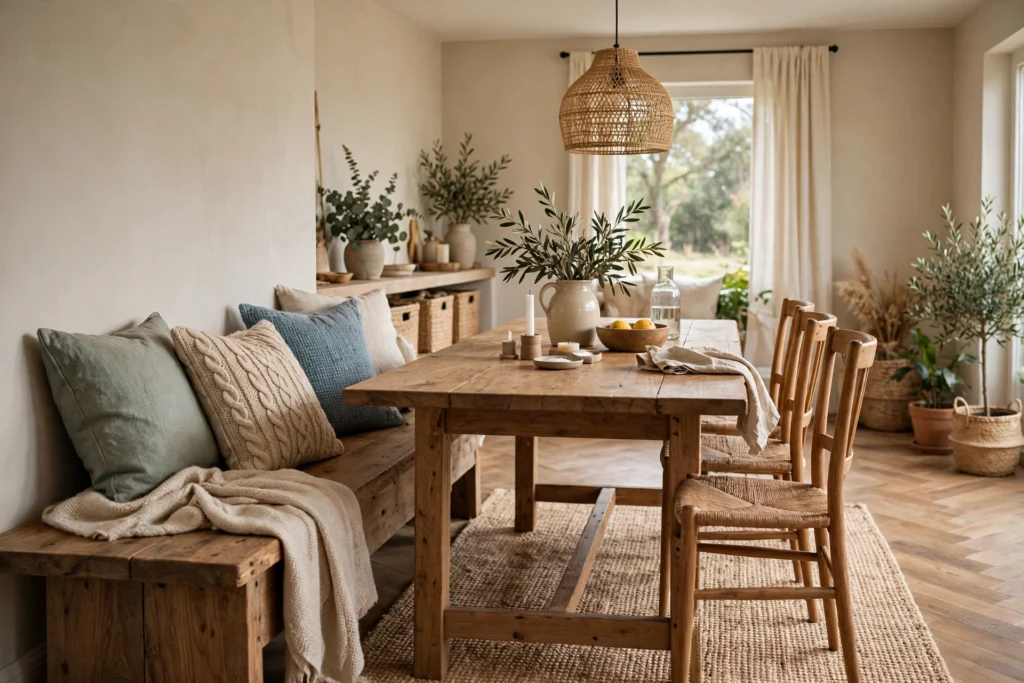
A bench squeezes in extra guests, slides under the table when not needed and makes the room feel relaxed. Add a thin cushion and the family will fight over that side.
Best for: big families, small rooms and casual everyday dining.
Styling tip: A cushion in a wipeable fabric keeps the bench practical with kids.
Pro tip: Make the bench 6–12 inches shorter than the table so chairs at the ends can still tuck in.
13. Upholstered Chairs for Long Dinners
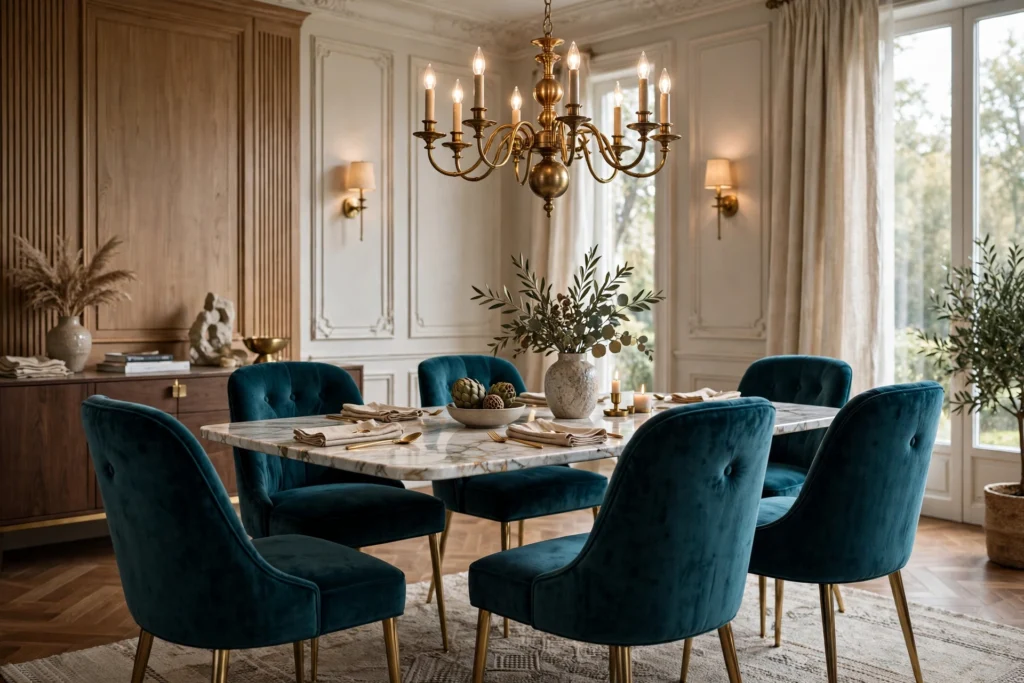
Hard chairs end conversations early. Padded, upholstered chairs invite people to stay for dessert and a second coffee, and they soften a room full of hard wood and glass.
Best for: hosts who love long dinners and formal dining rooms.
Styling tip: Velvet in a deep tone reads rich; light linen reads fresh and airy.
Pro tip: Choose performance fabric or a stain-resistant treatment — red wine finds dining chairs fast.
14. Sideboard as Style and Storage

A sideboard hides the clutter — placemats, candles, board games — and gives you a surface to style. A lamp, a vase and a stack of plates is all it needs.
Best for: rooms with no built-in storage and keen entertainers.
Styling tip: Leave one-third of the top empty so the display breathes.
Pro tip: Keep at least 36 inches between the sideboard and the table edge so chairs can pull out freely.
15. Round Table for Small Gatherings
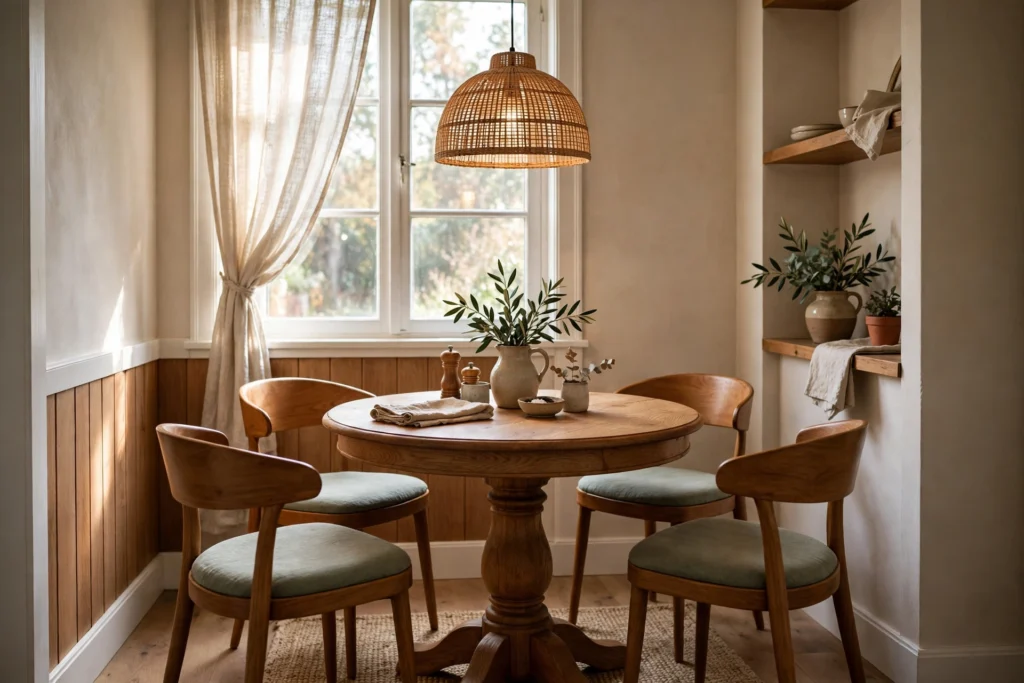
A round table suits small rooms and small groups because nobody sits at the far end. Everyone can see each other, and the room feels warmer for it.
Best for: small dining rooms, breakfast nooks and couples.
Styling tip: A pedestal base beats four legs — it frees up legroom and chair space.
Pro tip: Allow 24 inches of table edge per person; a 48-inch round table seats four comfortably.
Texture, Colour & Layers
16. Rug That Anchors the Table
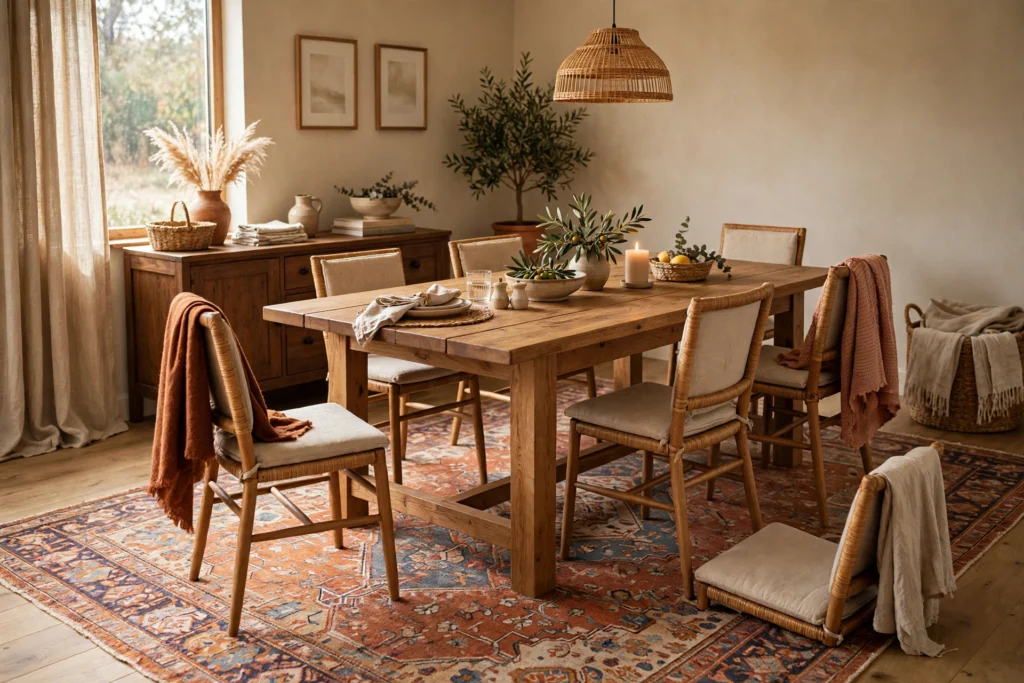
A rug defines the dining zone, softens hard floors and adds pattern in one move. Without it, even a lovely table can look like it is floating in the middle of the room.
Best for: open-plan rooms and hard floors that echo.
Styling tip: A low-pile, flatweave rug survives chair legs and dropped food far better than a shaggy one.
Pro tip: Size the rug so it extends at least 24 inches beyond the table on every side, keeping chair legs on the rug when pulled out.
17. Layered Table Runner and Linens
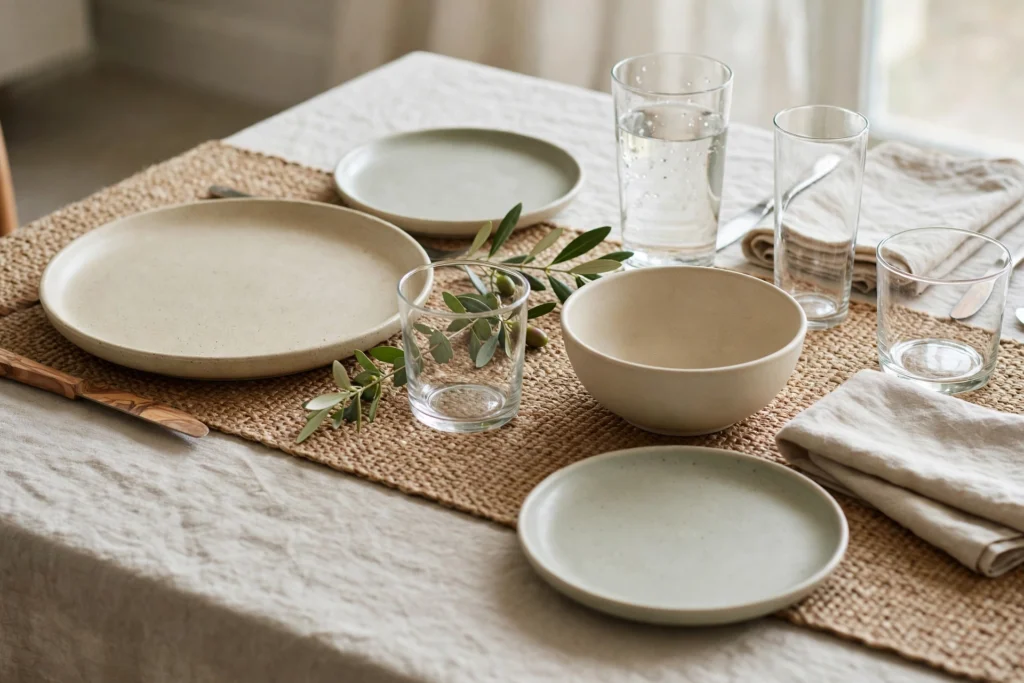
Linens are the fastest seasonal update a dining room has. A tablecloth, a runner and cloth napkins together add colour and softness for very little money.
Best for: plain tables and anyone who likes changing the look often.
Styling tip: Layer a textured runner over a plain cloth, never two busy patterns at once.
Pro tip: Let the runner hang 6–12 inches over each end of the table for a finished, intentional look.
18. Floor-Length Curtains
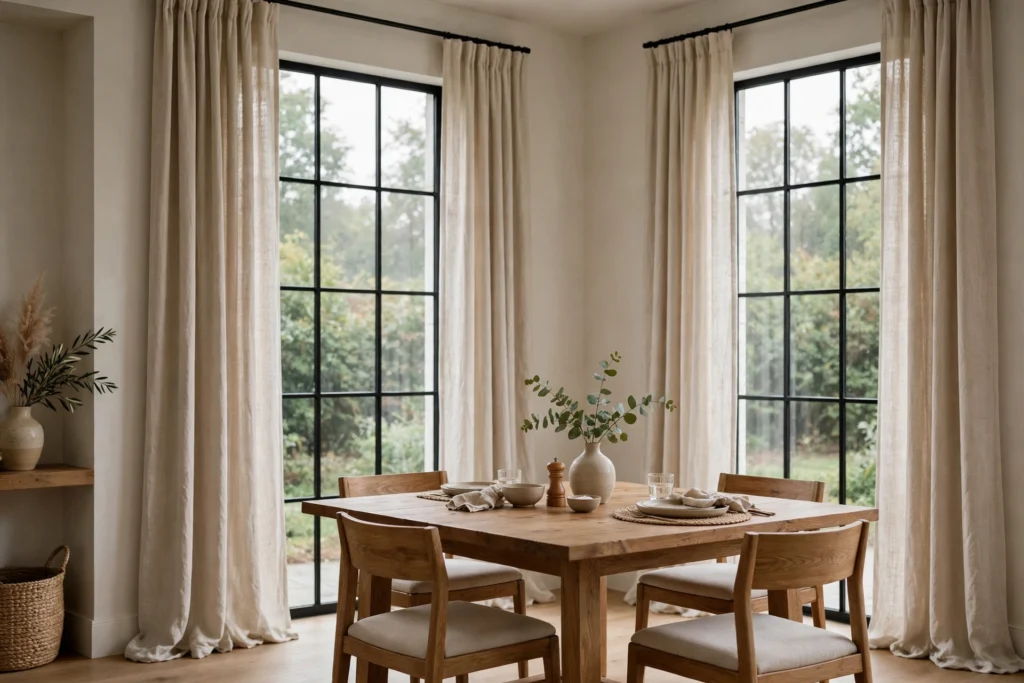
Curtains soften hard window edges, add height and make the room feel finished. Linen in a warm neutral works in almost every dining room style.
Best for: rooms with big windows or bare, echoey walls.
Styling tip: Hang the rod 4–6 inches above the window frame to make the ceiling feel taller.
Pro tip: Curtains should just kiss the floor — about half an inch above it — so they never drag or collect dust.
19. Moody Paint Colour on the Walls
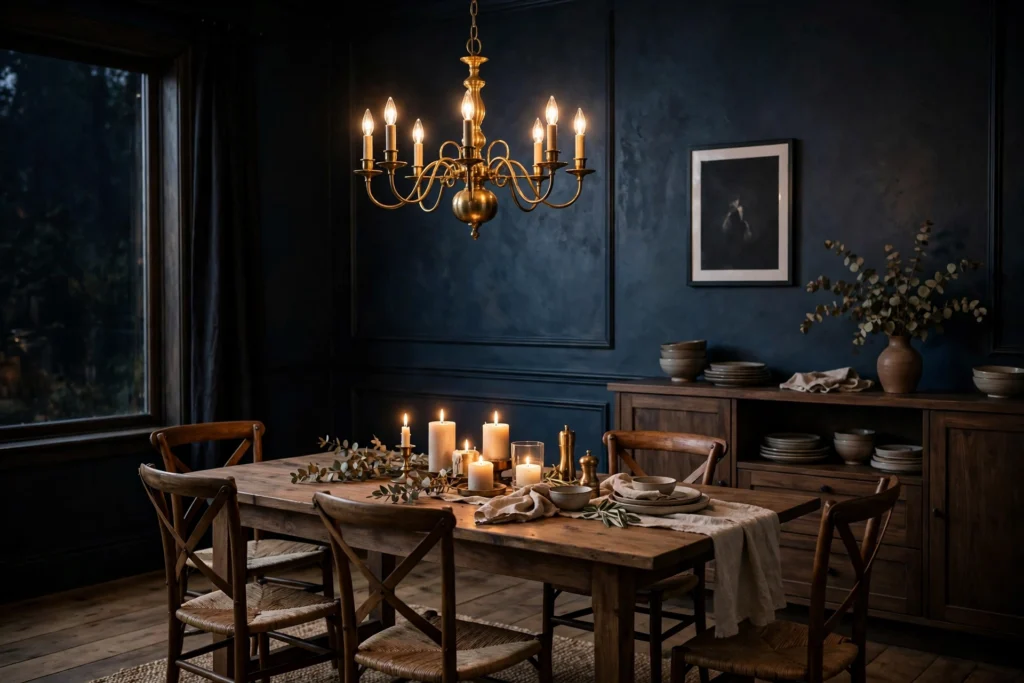
Deep green, navy or charcoal walls make a dining room feel intimate and evening-ready. Light wood, brass and candles glow against dark paint in a way they never do on white walls, and the look sits among the most popular trending dining room styles right now.
Best for: evening dining and rooms with good natural light to balance the dark walls.
Styling tip: Test a large swatch and check it at night — dark paint changes completely under lamplight.
Pro tip: Paint the ceiling the same colour in a small room; it removes the hard line and makes the space feel taller, not smaller.
20. Natural Wood and Rattan Textures
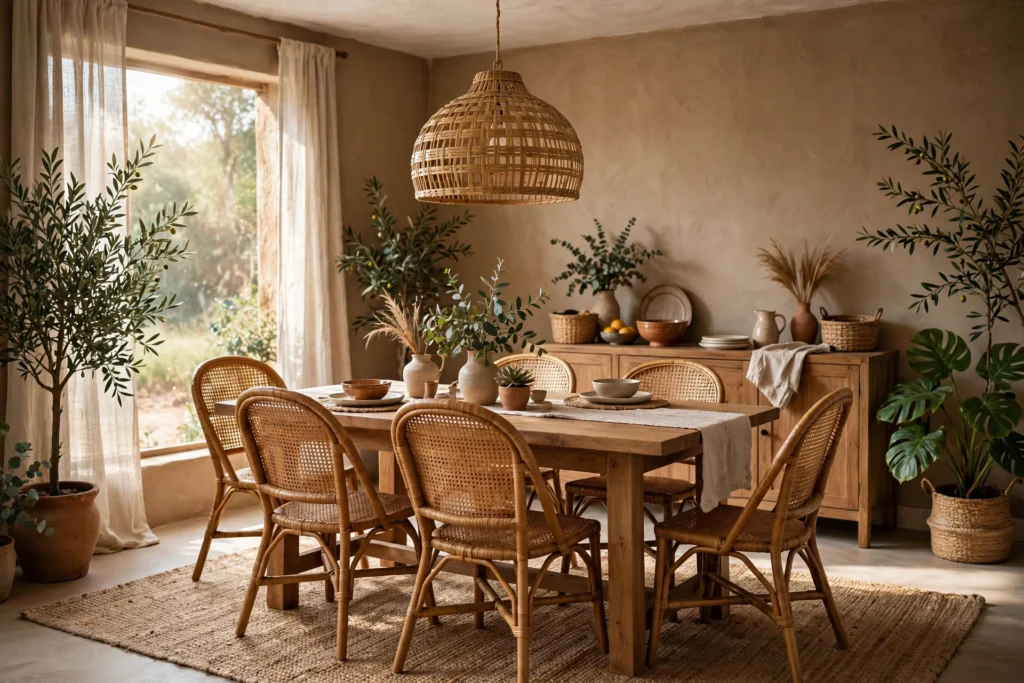
Wood, rattan, jute and linen bring warmth that paint and metal cannot. A rattan pendant or woven chairs stop a modern room from feeling cold.
Best for: modern, earthy and coastal dining rooms.
Styling tip: Mix two wood tones at most, and repeat each one at least twice in the room.
Pro tip: Seal rattan chairs yearly if the room gets strong sun — dry rattan cracks and fades fast.
21. Layered Centrepiece
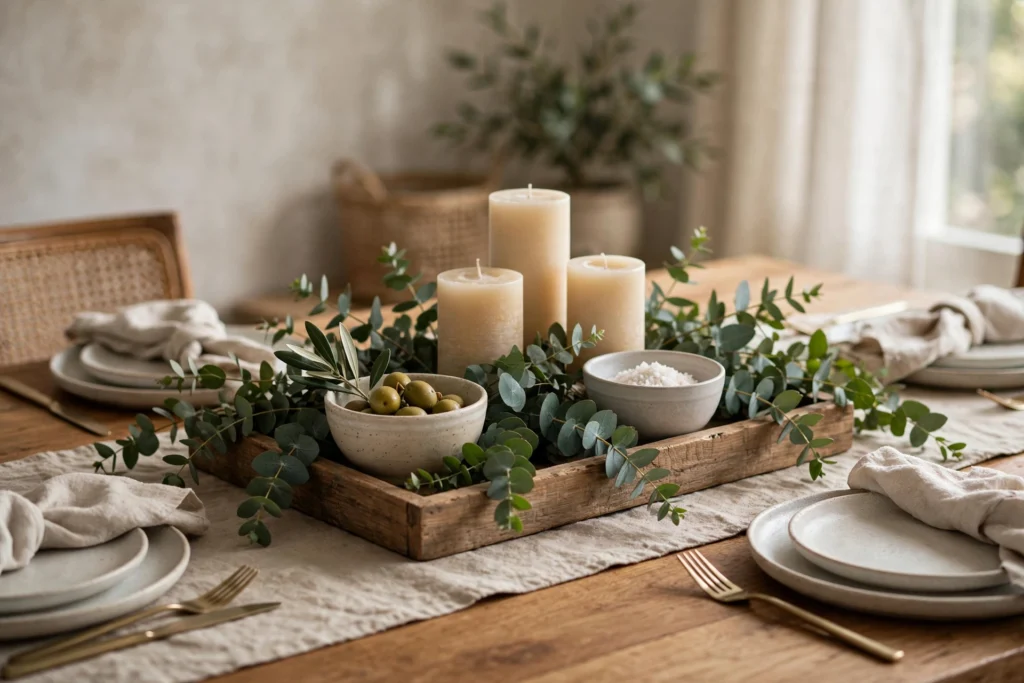
A good centrepiece layers height, greenery and light: a low tray, some stems and a couple of candles. For full table-styling ideas, our dining table decor ideas guide goes deeper — here the centrepiece is just one layer of the whole room.
Best for: everyday tables that need to look dressed without a full reset.
Styling tip: Build the centrepiece on a tray so you can lift the whole thing off in seconds.
Pro tip: Keep centrepieces under 12 inches tall so guests can see each other across the table.
Seasonal & Everyday Styling
22. Fresh Greenery and Seasonal Stems
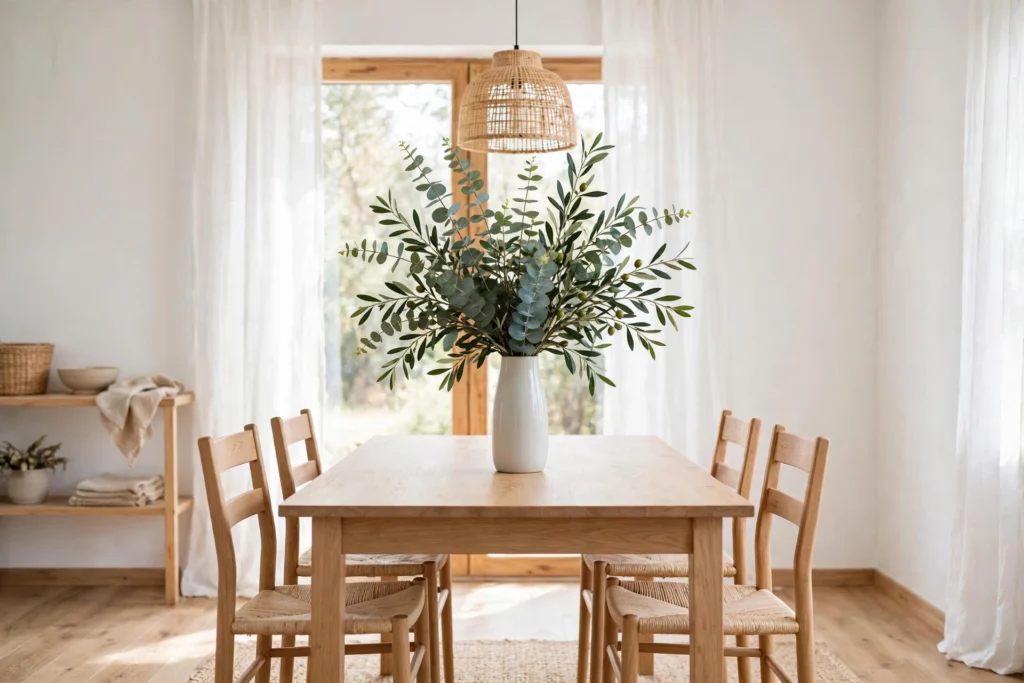
Nothing freshens a dining room faster than a tall vase of stems. Eucalyptus, olive branches or whatever is in season add life and scent for the price of a bunch of flowers.
Best for: minimal rooms that need one living touch.
Styling tip: One tall arrangement beats three small vases — it reads calmer and more deliberate.
Pro tip: Cut stems at an angle and change the water every two days; eucalyptus can last three weeks this way.
23. Open Shelving with Everyday Display
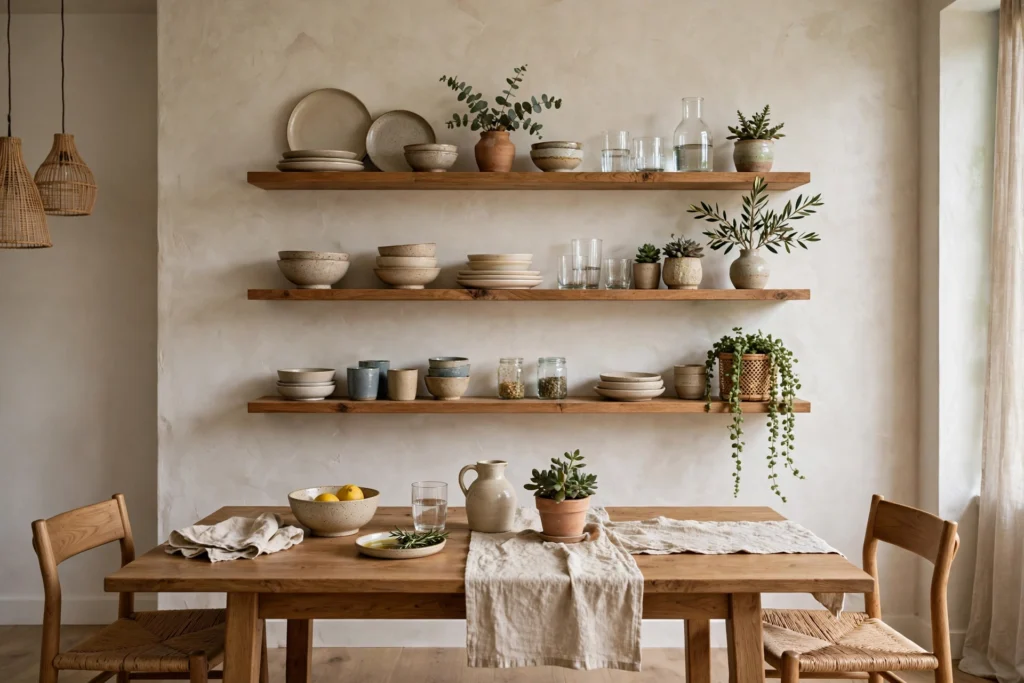
Open shelves turn your everyday dishes into decor. Stack plates, line up glasses and add one small plant per shelf, and the wall works hard without feeling decorated.
Best for: small dining rooms and lovers of pretty tableware.
Styling tip: Leave breathing room — a shelf packed edge to edge reads as storage, not display.
Pro tip: Put the pieces you actually use on open shelves; they stay dust-free because you handle them weekly.
24. Bar Cart in the Corner
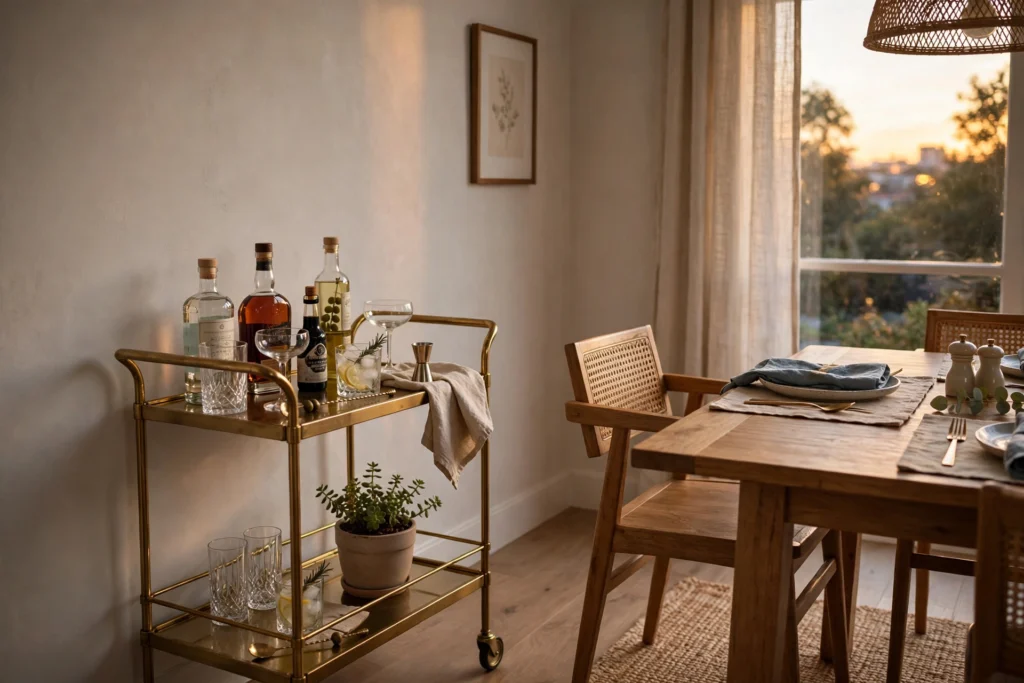
A bar cart fills an awkward empty corner and makes hosting easier — drinks, glasses and garnishes all in one rolling spot. It works just as well as a coffee or dessert cart.
Best for: empty corners and anyone who hosts often.
Styling tip: Style the top shelf for use and the lower shelf for pretty bottles and books.
Pro tip: Keep the cart within 6 feet of the table so guests can help themselves without crossing the room.
25. Seasonal Table Swap
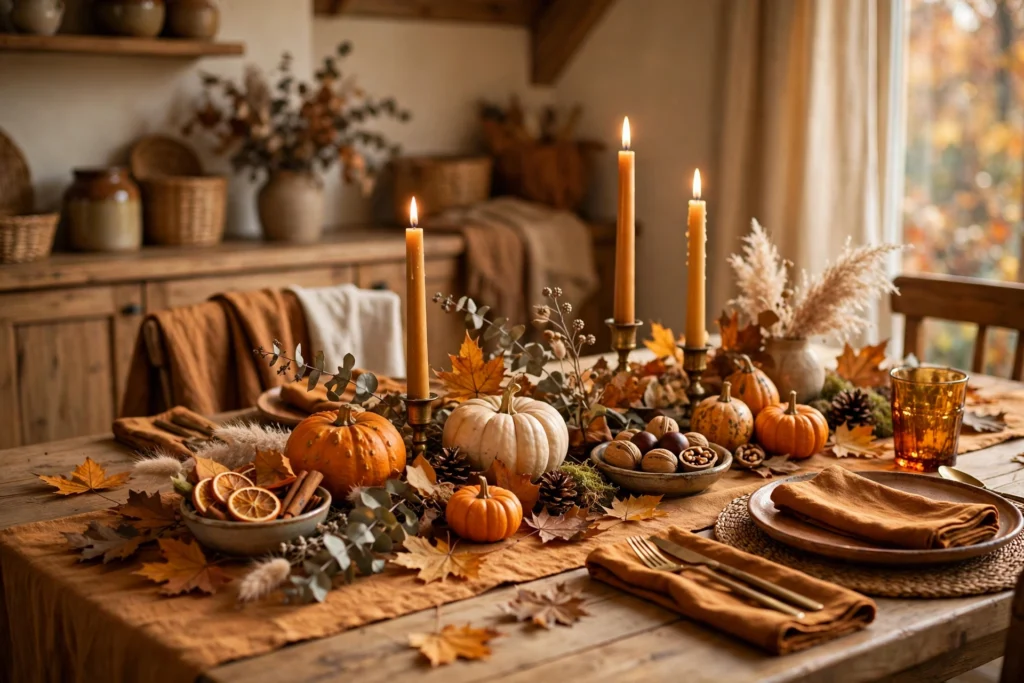
A seasonal swap keeps the room feeling fresh without redecorating. Change the runner, the stems and two or three small pieces each season, and the room feels new four times a year.
Best for: anyone who loves the holidays and changing things up.
Styling tip: Store each season’s pieces in one labelled box so the swap takes twenty minutes.
Pro tip: Change only the tabletop layer each season and keep the walls and furniture the same — it stays cheap and calm.
26. Personal Touches That Tell Your Story
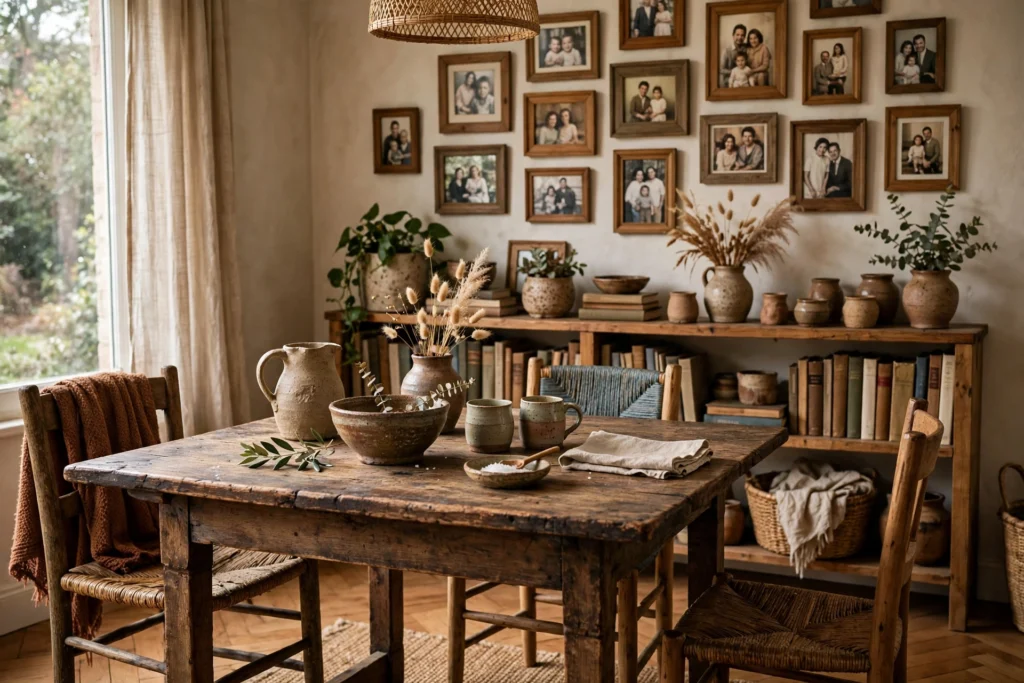
The best dining rooms are not the most expensive — they are the most personal. A family photo, a handmade bowl, a chair from a grandparent: these are what make guests feel at home.
Best for: every dining room, because no two homes should look the same.
Styling tip: Pick three personal pieces and give each one a clear spot — scattered keepsakes read as clutter.
Pro tip: Mix one heirloom with modern pieces; the contrast makes both look better than either would alone.
Frequently Asked Questions
How do I decorate my dining room on a budget?
Start with the pieces that cost the least and change the mood the most: candles, a table runner, fresh greenery and a new centrepiece. Rearrange what you already own before buying anything — moving art, swapping cushions or changing the table layout costs nothing. Then add one bigger piece at a time, like a rug or a mirror, and shop second-hand for chairs and sideboards. A room built slowly over months usually looks better than one bought in a single weekend, and it costs far less.
What is the best lighting for a dining room?
Layered lighting works best: one main fixture over the table, such as a chandelier or pendant cluster, plus softer light from sconces or candles for the evening. A dimmer switch is the single most useful addition, because it lets the same fixture suit homework, family dinners and late-night guests. Hang the main light 30 to 36 inches above the tabletop and use warm-white bulbs around 2700K so faces look flattering and food looks appetising.
How big should a dining room rug be?
A dining rug must be large enough that chairs stay on it even when pulled out. As a rule, the rug should extend at least 24 inches beyond the table on every side — so a 72 by 36 inch table needs a rug of at least 120 by 84 inches. Measure your table, add 48 inches to each dimension, and round up to the nearest standard size. Choose a low-pile, flatweave rug in a pattern that hides crumbs, because dining rugs take more wear than any other rug in the house.
What colour should I paint my dining room?
Warm neutrals are the safest choice and suit almost every style, but deep colours make dining rooms feel special. Moody green, navy or charcoal create an intimate, evening-ready mood and make brass, wood and candlelight glow. If your room is small or dark, keep the walls light and add colour through chairs, art and linens instead. Always test a large swatch on the wall and check it at night, because paint looks very different under lamplight than it does in daylight.
Can I mix dining chairs, or should they match?
Yes, mixing dining chairs is one of the easiest ways to make a dining room feel collected rather than showroom-bought. The trick is to keep one element consistent: the same wood tone, the same colour family, or the same seat height. Try armchairs at the ends of the table with simpler side chairs along the sides. Keep all seat heights within an inch of each other, around 18 inches, so nobody sits noticeably higher or lower than the rest of the table.
How do I make a small dining room look bigger?
Use a large mirror opposite a window to bounce light, choose a round or glass-topped table to keep sightlines open, and pick a rug that is big enough to anchor the zone without crowding it. Keep furniture slim, hang curtains high and wide, and avoid heavy dark pieces that chop the room up. A bench on one side saves space and seats extra guests. Light walls, one clear focal point and very little clutter will make even a tiny dining corner feel open and welcoming.
Final Thoughts
A dining room does not need a full makeover to feel new. One better light, one honest colour, one rug that fits — small changes like these add up to a room where people actually want to linger.
Pick the idea that feels easiest, try it this week, and let the room grow from there. Save this guide, share it with a friend who loves to host, and enjoy the dinners that follow.
