
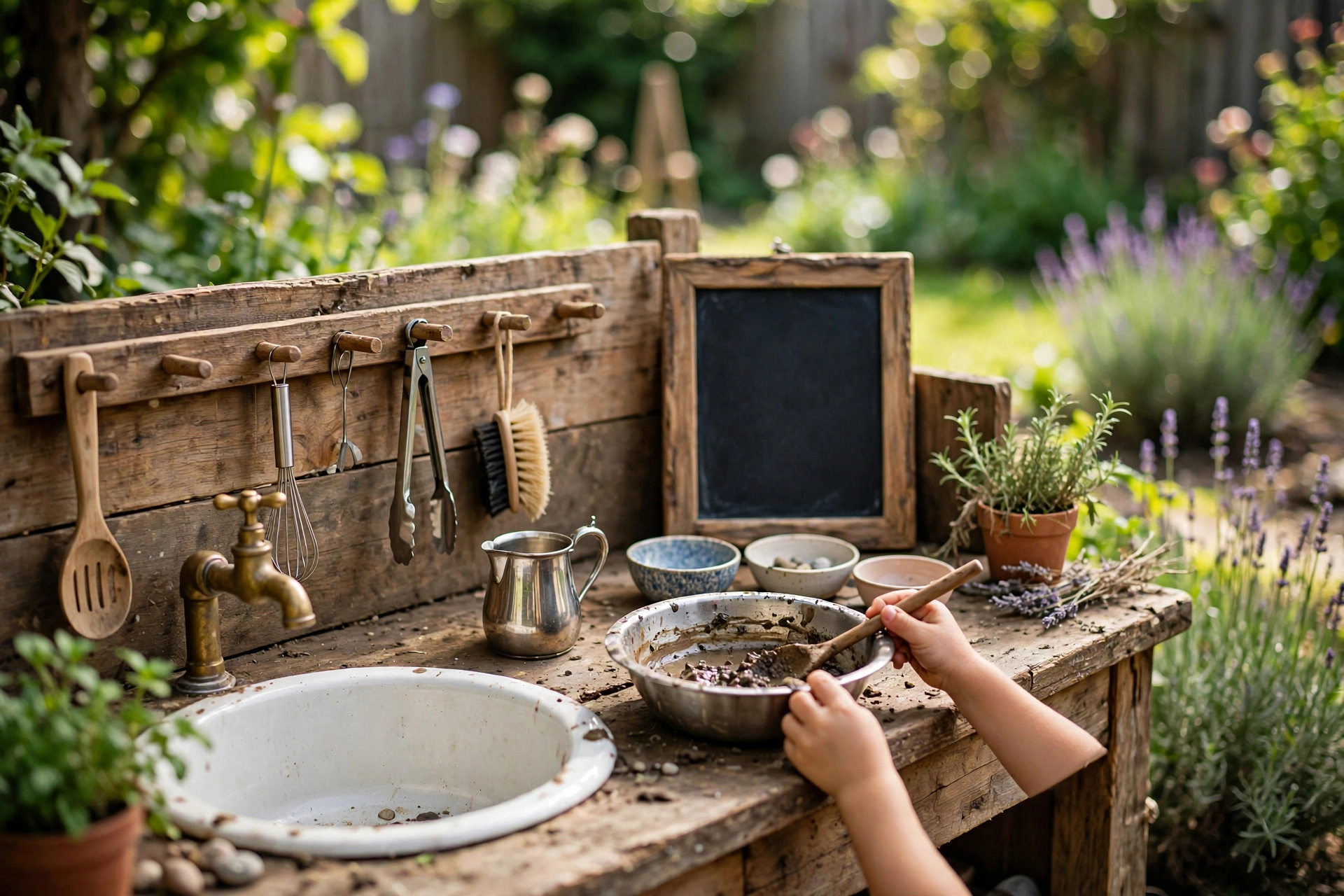
There’s something magical about watching a child “cook” their first mud pie. A simple wooden frame with a worktop becomes a bakery, a café, a five-star restaurant — all before lunch. But here’s the secret seasoned parents learn quickly: the build itself is only half the story. The mud kitchen build ideas might get you started, yet it’s the accessories you stock it with that keep little chefs coming back day after day.
The right accessories turn basic dirt-and-water play into rich sensory learning. Pouring develops hand-eye coordination, mixing strengthens little muscles, and “serving” a mud cupcake to a teddy bear builds language and social skills. You don’t need to spend a fortune either — many of the best mud kitchen accessories are sturdy, inexpensive and practically indestructible. Here are the nine worth adding first.
1. Stainless Steel Bowls and Mixing Pots
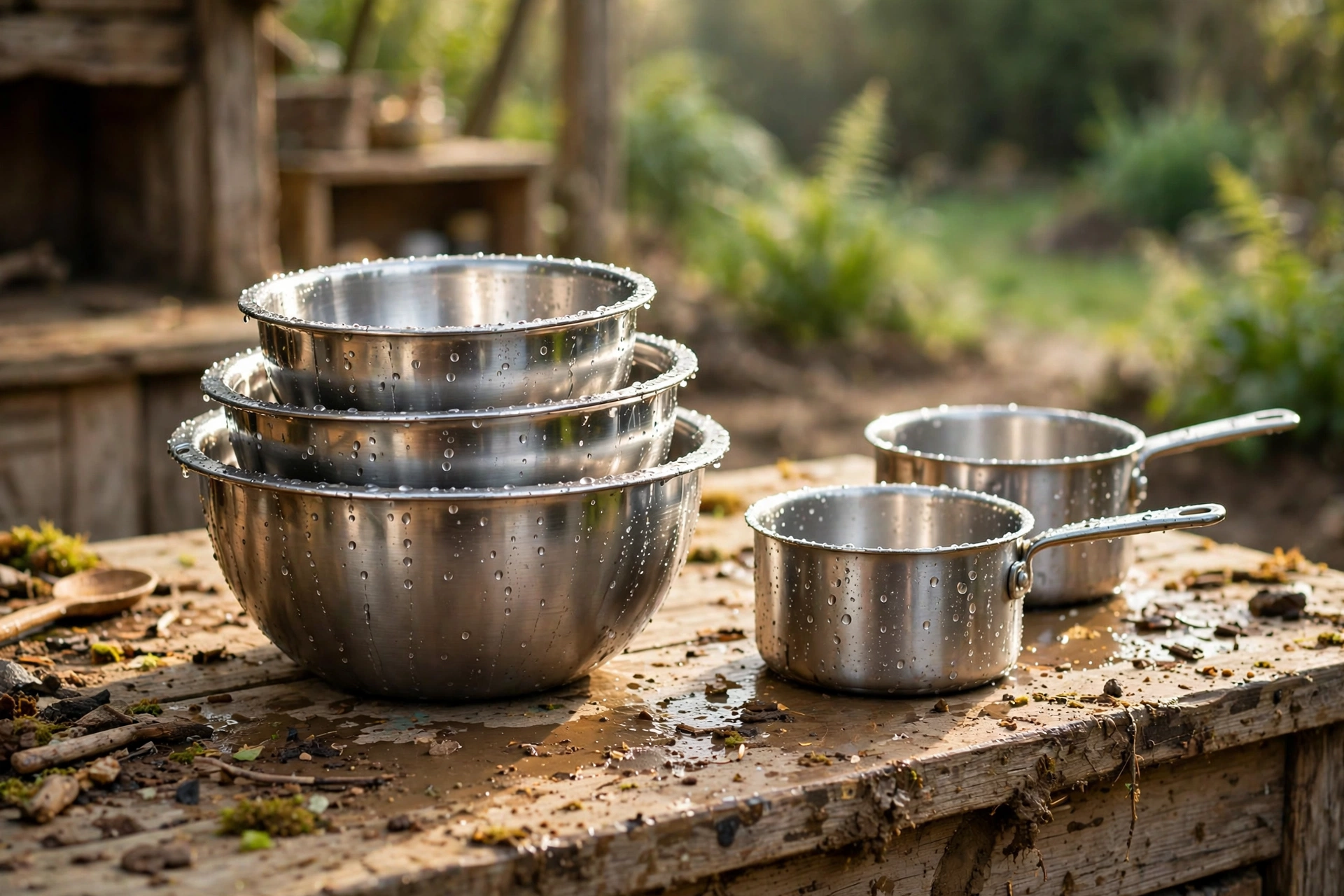
If you buy nothing else, buy a set of stainless steel mixing bowls. Lightweight enough for small hands, tough enough to survive being dropped on paving, and completely unbothered by mud, water and weather — they are the undisputed workhorse of every great mud kitchen. A nesting set in three sizes covers everything from tiny “seasoning” bowls to the big pot for the day’s main batch of mud soup.
Add a small stainless saucepan with a lid and you’ve instantly upgraded the menu. Children adore the clatter of a metal lid and the satisfying slosh of a proper pot. Look for sets with rolled edges rather than sharp rims, and skip anything non-stick — the coating will scratch off within a week of enthusiastic stirring with sticks.
2. A Child-Controlled Water Source
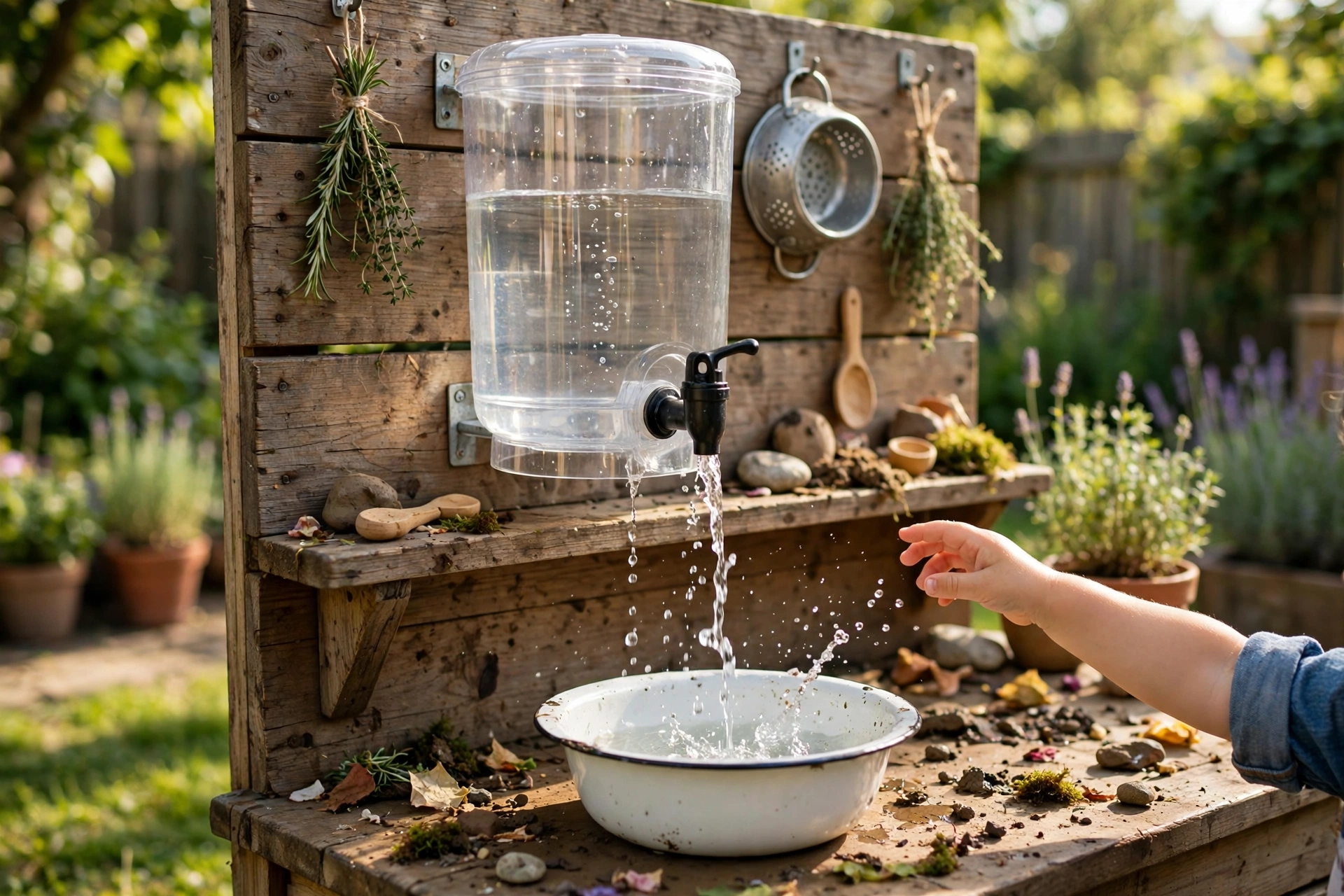
Nothing kills mud kitchen momentum faster than a child having to trail indoors to refill a jug. A simple plastic drink dispenser with a tap, mounted on the backboard or a nearby shelf, gives children independent control over their water supply — and independence is the whole point. Filling it each morning takes you thirty seconds and buys hours of self-directed play.
Choose a dispenser with a sturdy push-tap rather than a twist one, as little fingers manage pushes far more easily. A 5 to 8 litre size is the sweet spot: big enough to last a play session, small enough that a spilled full tank isn’t a disaster. In winter, bring it in overnight so the tap doesn’t crack in a frost.
3. Child-Sized Cooking Utensils
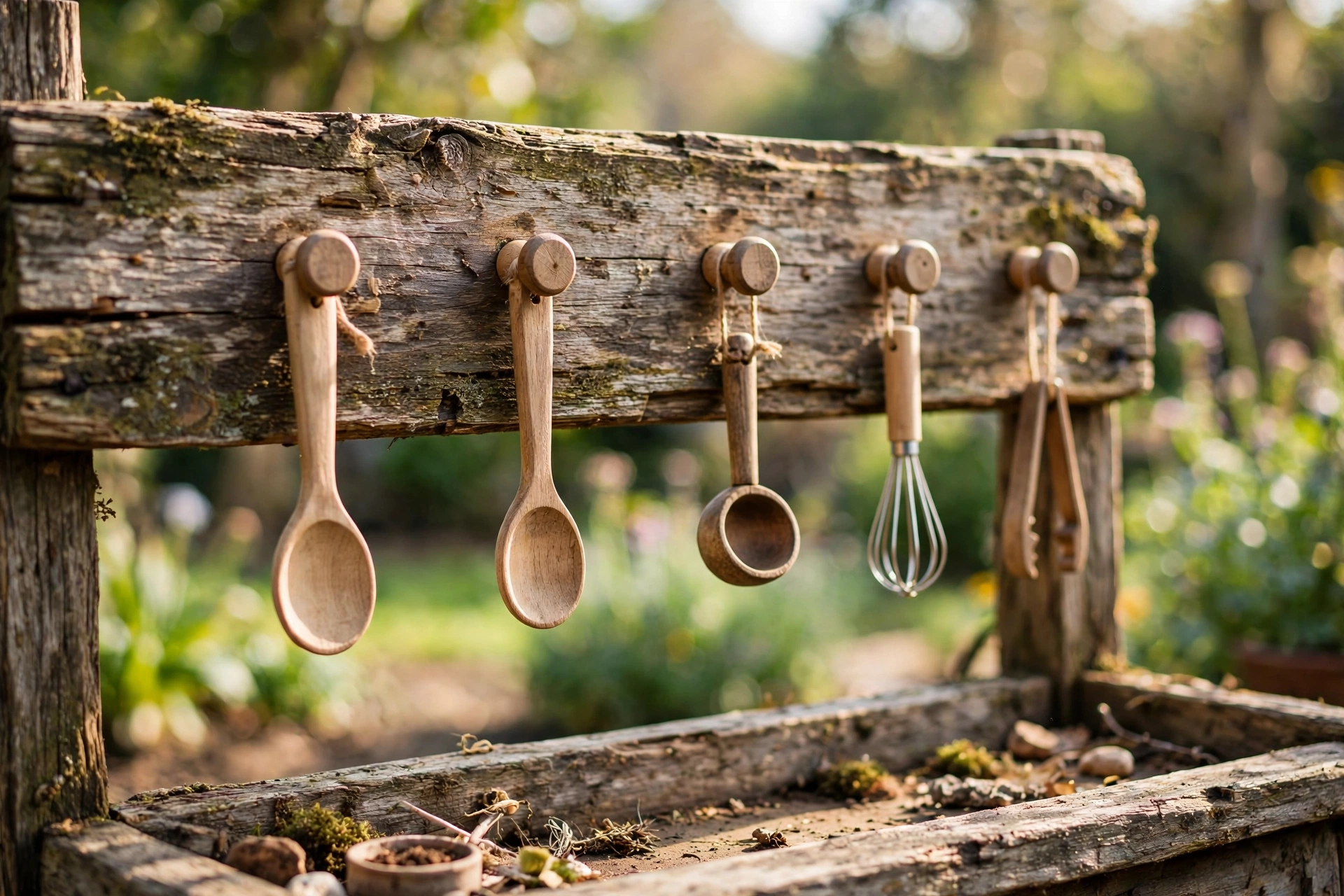
Adult-sized utensils are clumsy in small hands, so a set of child-sized wooden spoons, a ladle and a small whisk transforms the cooking experience. Wooden utensils are ideal for mud play: they’re cheap, they don’t rust, they feel satisfying to grip, and they develop a lovely weathered patina that only adds to the charm.
Hang them from cup hooks screwed into the backboard so they’re always visible and within reach — out of sight really does mean out of mind for under-fives. A slotted spoon is a particular favourite for fishing leaves out of “soup”, while a small whisk turns plain muddy water into gloriously frothy “hot chocolate”.
4. Mini Muffin Tins and Baking Pans
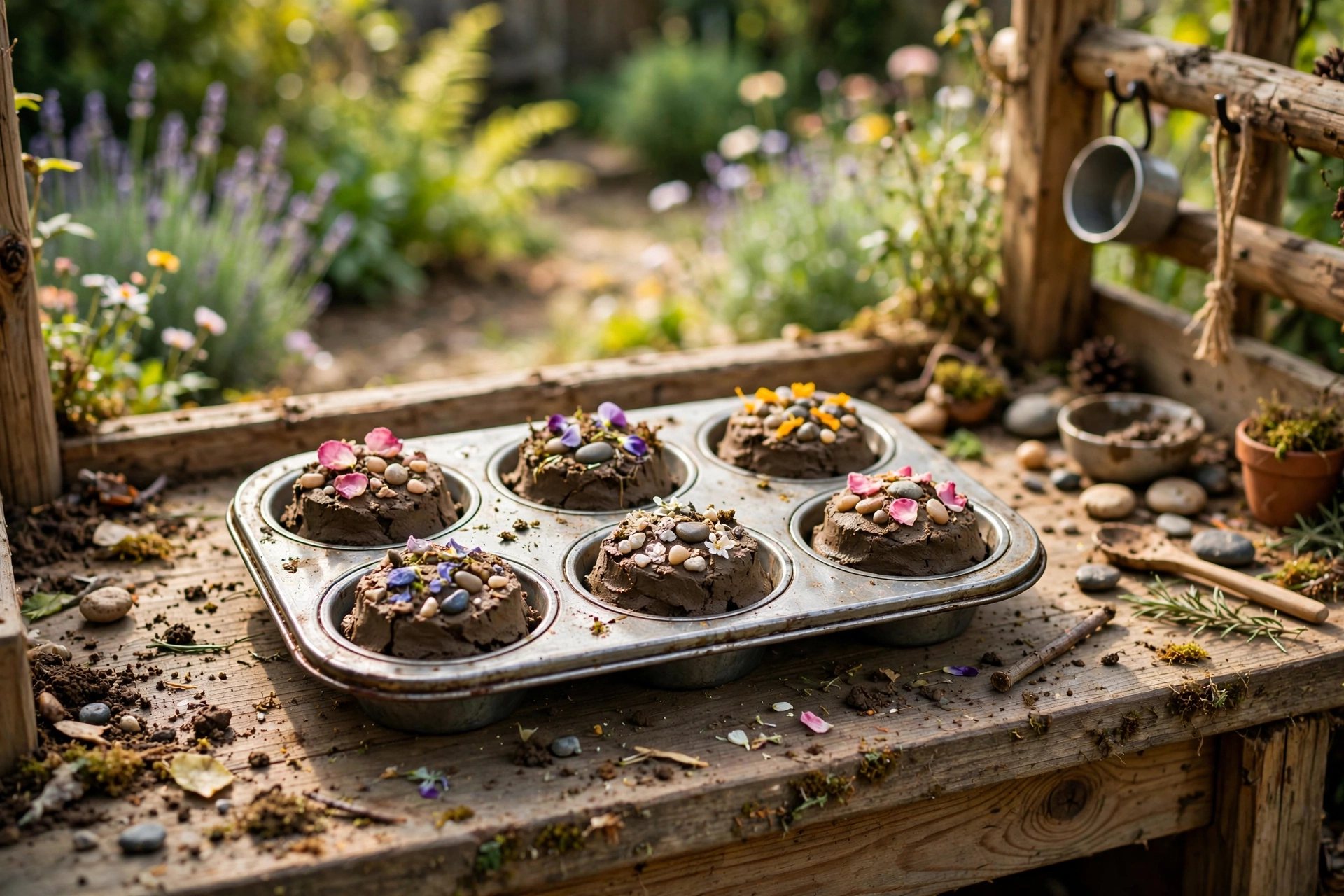
The moment you add a mini muffin tin, your mud kitchen becomes a patisserie. The individual cups are perfectly scaled for small hands and naturally invite counting, sorting and careful decorating — mud cupcakes topped with petals, pebbles for “chocolate chips”, and a dusting of sand for sugar. It’s maths, art and sensory play in one gloriously messy package.
Metal tins outlast silicone ones outdoors and hold their shape when packed with dense mud. Add a small loaf tin or a couple of tartlet cases and watch the menu expand. Pro tip from veteran mud-kitchen parents: leave finished “bakes” on a cooling rack in the sun and they harden into keepsakes children are absurdly proud of.
5. Watering Can and Spray Bottles
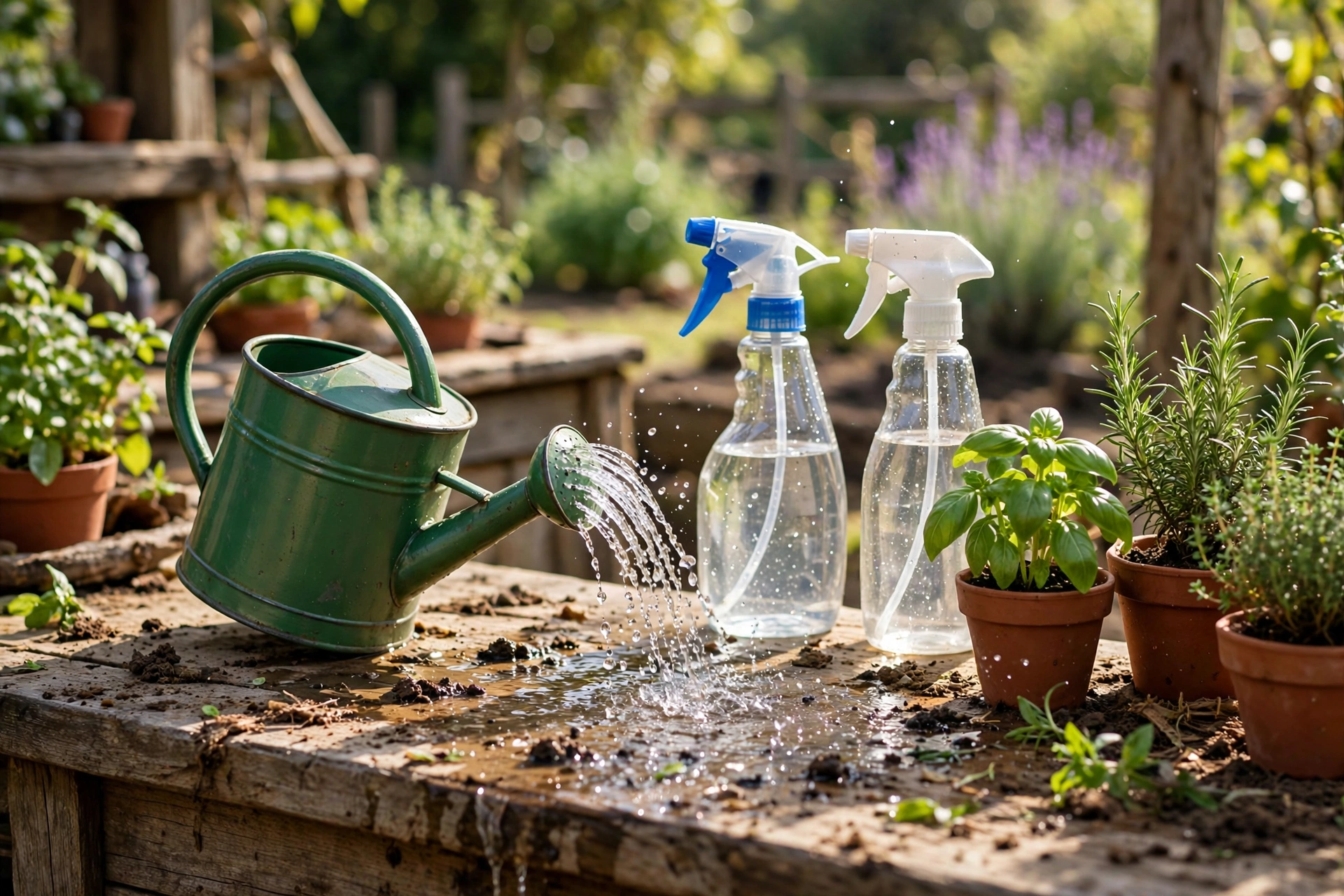
A small metal watering can is the bridge between the mud kitchen and the wider garden. Children use it to fetch water, dampen dry soil for better mud, rinse their pots, and — inevitably — water every plant, sibling and passing pet in the vicinity. It’s one of those accessories that quietly teaches cause and effect: more water, runnier mud; less water, better building mud.
Pair it with a couple of empty spray bottles (the trigger kind from the cleaning aisle, thoroughly rinsed) for misting “herb gardens” and adding the finishing touch to mud pies. Spray bottles are also brilliant for mark-making: fill one with watery mud and let children “paint” the fence or patio, knowing the next rain will wash the canvas clean.
6. Funnels, Sieves and Scoops
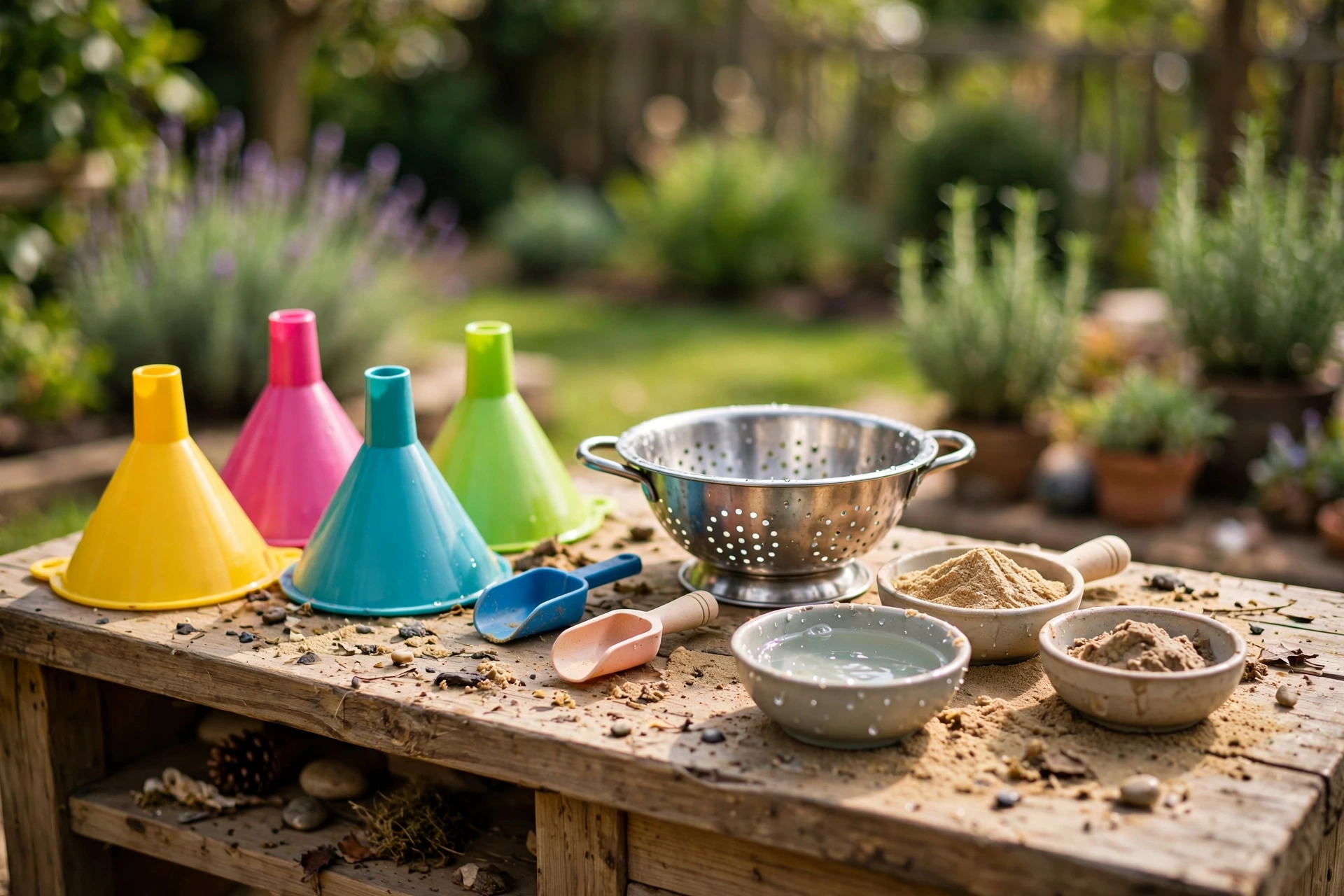
Pouring is the beating heart of mud kitchen play, and nothing extends a pouring session like a good funnel. A set of plastic funnels in different sizes lets children decant water between bottles, fill narrow-necked “sauce bottles”, and experiment with flow rates — early physics, disguised as fun. A colander or sieve adds the thrill of separation: pour muddy water through and watch the “pasta” stay behind.
Scoops deserve a special mention. Whether it’s old formula scoops, garden trowels or proper play scoops, they teach portion control (“two scoops of mud, one of water, please”) and keep the mess marginally more contained than bare hands. Keep a few sizes on hooks by the dry ingredients corner.
7. A Tiny Pitcher and Tea Set
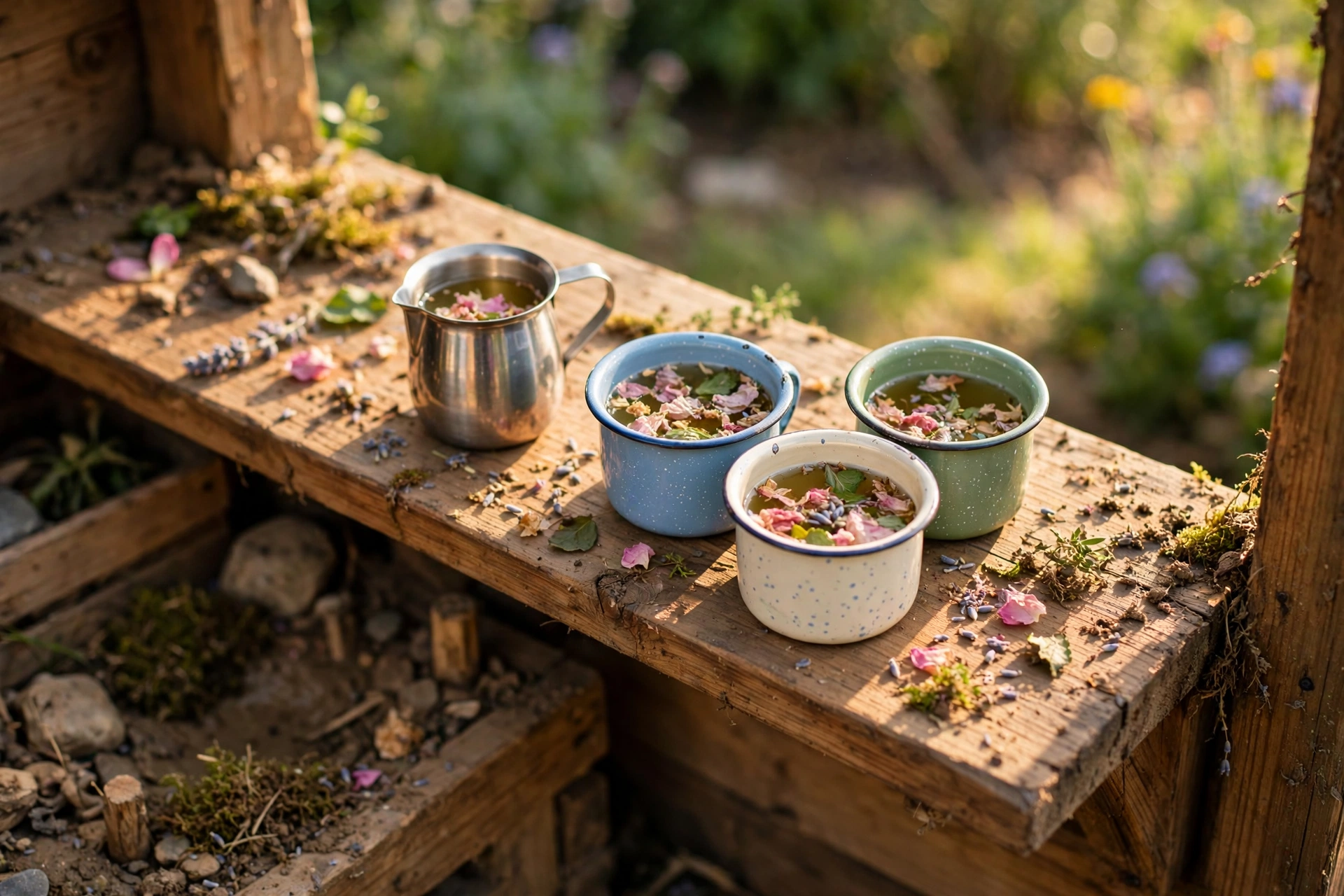
Every mud kitchen needs a vessel for serving, and a tiny metal pitcher with a set of small cups unlocks a whole new genre of play: the tea party. Pouring “tea” (muddy water, dandelion brew, petal infusion) for stuffed guests is where language skills flourish — orders are taken, menus debated, and manners practised with great solemnity.
Enamel cups are the classic choice: cheerful, chip-resistant and satisfyingly clinky. Avoid anything ceramic or glass outdoors for obvious reasons. A full tea set also photographs beautifully, if you’re the sort of parent who documents these things — and the shelf they live on quickly becomes the prettiest corner of all your outdoor play space ideas.
8. A Chalkboard Menu and Chalk
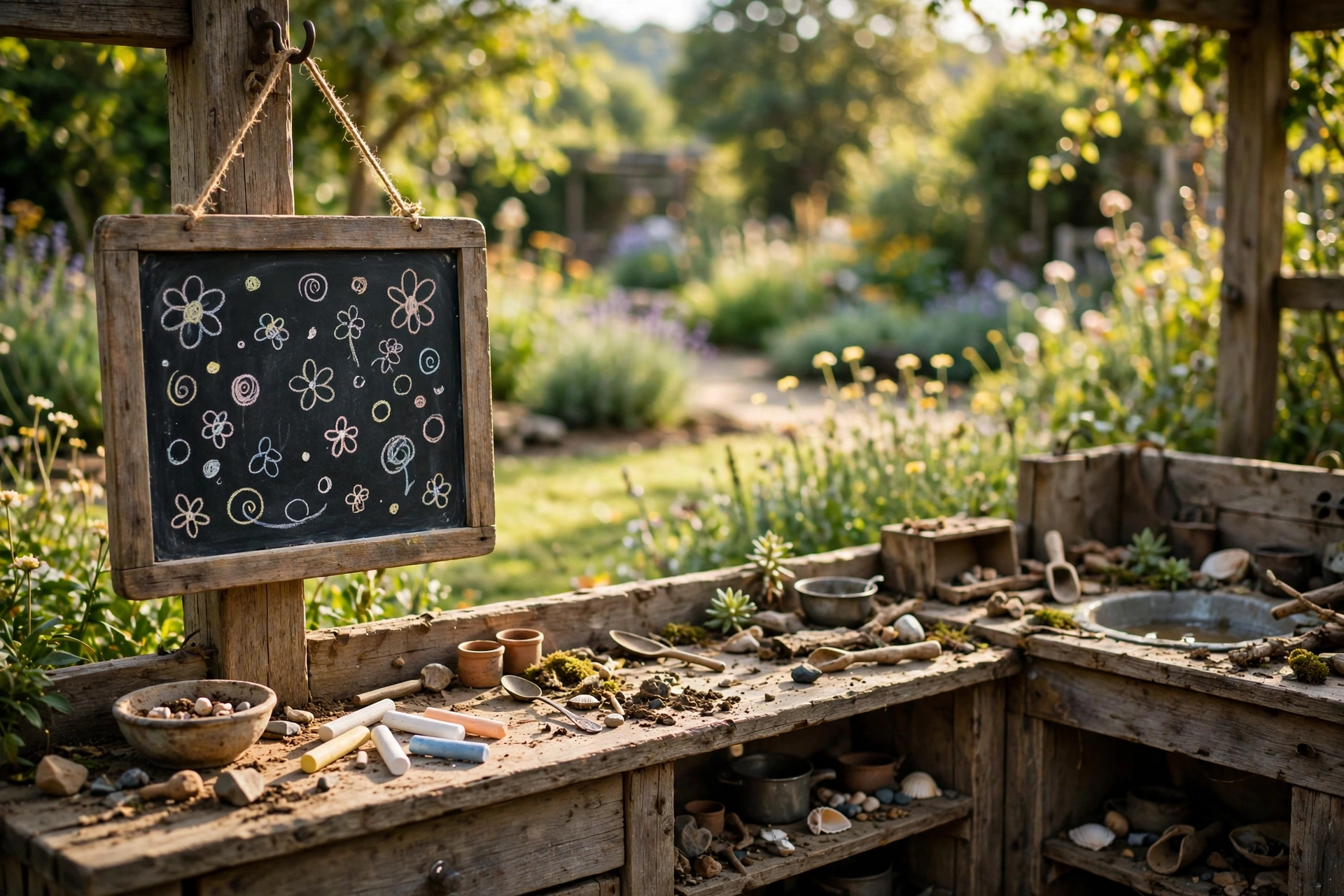
A small chalkboard hung beside the “kitchen” turns customers into the main event. Children love writing (or dictating) the day’s menu — “mud pie 2 leaves, worm soup, stone salad” — and updating prices in pebbles. It’s early literacy hiding in plain sight, and it gives the play a lovely narrative structure: take the order, cook it, serve it, take payment.
Mount the board under a slight overhang or bring the chalk inside when rain threatens, as standard chalk washes off in seconds. Chunky pavement chalks are easier for small hands to grip than thin classroom sticks. For a weatherproof alternative, a piece of exterior plywood painted with blackboard paint works brilliantly and costs pennies.
9. Storage Shelves, Hooks and a Weatherproof Box
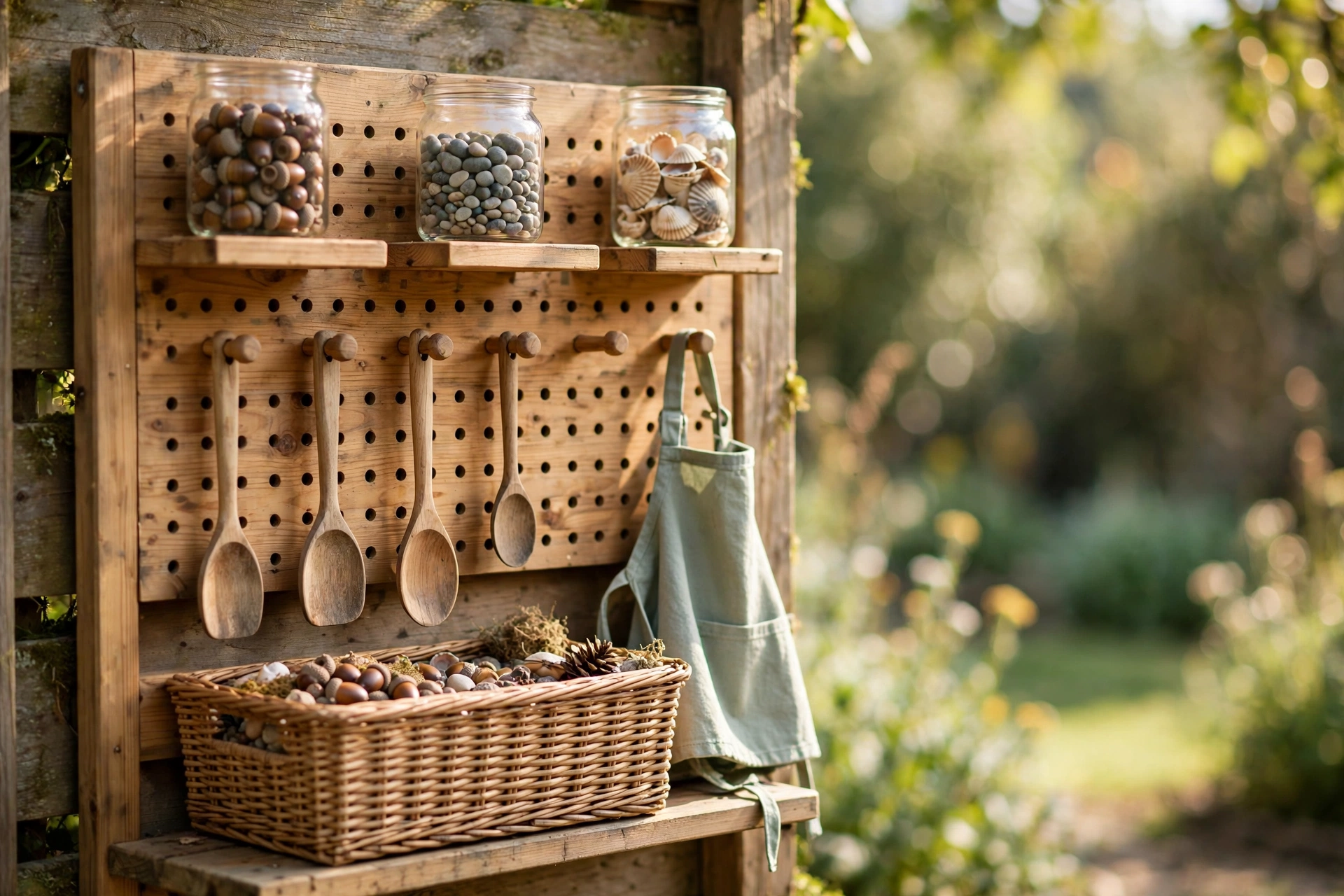
The least glamorous accessory is the one you’ll appreciate most: proper storage. A backboard fitted with peg hooks and a couple of shelves keeps every bowl, spoon and tin visible and reachable, which means children can set up and — miracle of miracles — tidy away independently. A mud kitchen with everything jumbled in a heap gets played with half as much; children simply can’t see the possibilities.
Finish the setup with a weatherproof storage box for the bits that shouldn’t live out in all weathers: chalk, paper order pads, fabric aprons and anything wooden you want to last. If you’re watching the budget, this collection of budget-friendly mud kitchen accessories proves you can stock a brilliant mud kitchen without spending a fortune — car boot sales and charity shops are goldmines too.
Frequently Asked Questions
What age are mud kitchen accessories best for?
Most children get the most from a mud kitchen between 18 months and 7 years, though older children often return to it for “potions” and science-style experiments. For under-threes, choose larger accessories with no small detachable parts and always supervise water play. By four or five, children can manage the full set — funnels, tea sets and chalkboard menus included.
Should I use old kitchen items or buy special accessories?
A mix of both works beautifully. Old saucepans, wooden spoons and plastic jugs from your own kitchen are free and perfectly functional. It’s worth buying a few purpose-made pieces — stainless steel bowls, child-sized utensils and a proper water dispenser — because they’re sized for small hands and built to survive the weather. Charity shops are the happy middle ground.
What pots and bowls work best for mud play?
Stainless steel wins on every count: it’s light, tough, rust-proof and easy to rinse clean. Enamelware is a charming second choice. Avoid non-stick coatings (they scratch), glass and ceramic (they break), and thin single-use plastics (they crack in the sun). Whatever you choose, make sure edges are rolled or smooth rather than sharp.
How do I keep mud kitchen accessories clean?
Embrace a baseline level of muddiness — it’s a mud kitchen, after all. A quick rinse with the watering can at the end of a session stops mud baking rock-hard onto everything. Once a month, haul the washable bits to the patio for a proper scrub with hot soapy water. Wooden utensils benefit from an occasional rub with food-safe oil to stop them drying out and splitting.
Can mud kitchen accessories stay outside all year?
Stainless steel, sturdy plastics and enamelware can live outside year-round without complaint. Bring in wooden items, chalk, fabric aprons and anything with a tap mechanism before the first hard frost, and store them in your weatherproof box. A quick autumn clear-out also gives you the chance to replace anything that’s had a hard summer.
Which single accessory gets the most play?
Ask a hundred mud-kitchen families and the answer comes back remarkably consistent: the water dispenser. Independent access to water removes the bottleneck from every recipe, potion and tea party, and children will refill, pour and “cook” with it far longer than with any other single item. If your budget stretches to one purchase, make it that one.
Conclusion
You don’t need a Pinterest-perfect build or a trolley-load of gadgets to create mud kitchen magic — a handful of well-chosen accessories will do it. Start with the workhorses (bowls, water, utensils), add the joy-bringers (muffin tins, tea set, chalkboard), and finish with storage that keeps it all inviting. Then step back, put the kettle on, and enjoy watching your little chef run the busiest restaurant in the neighbourhood.
