
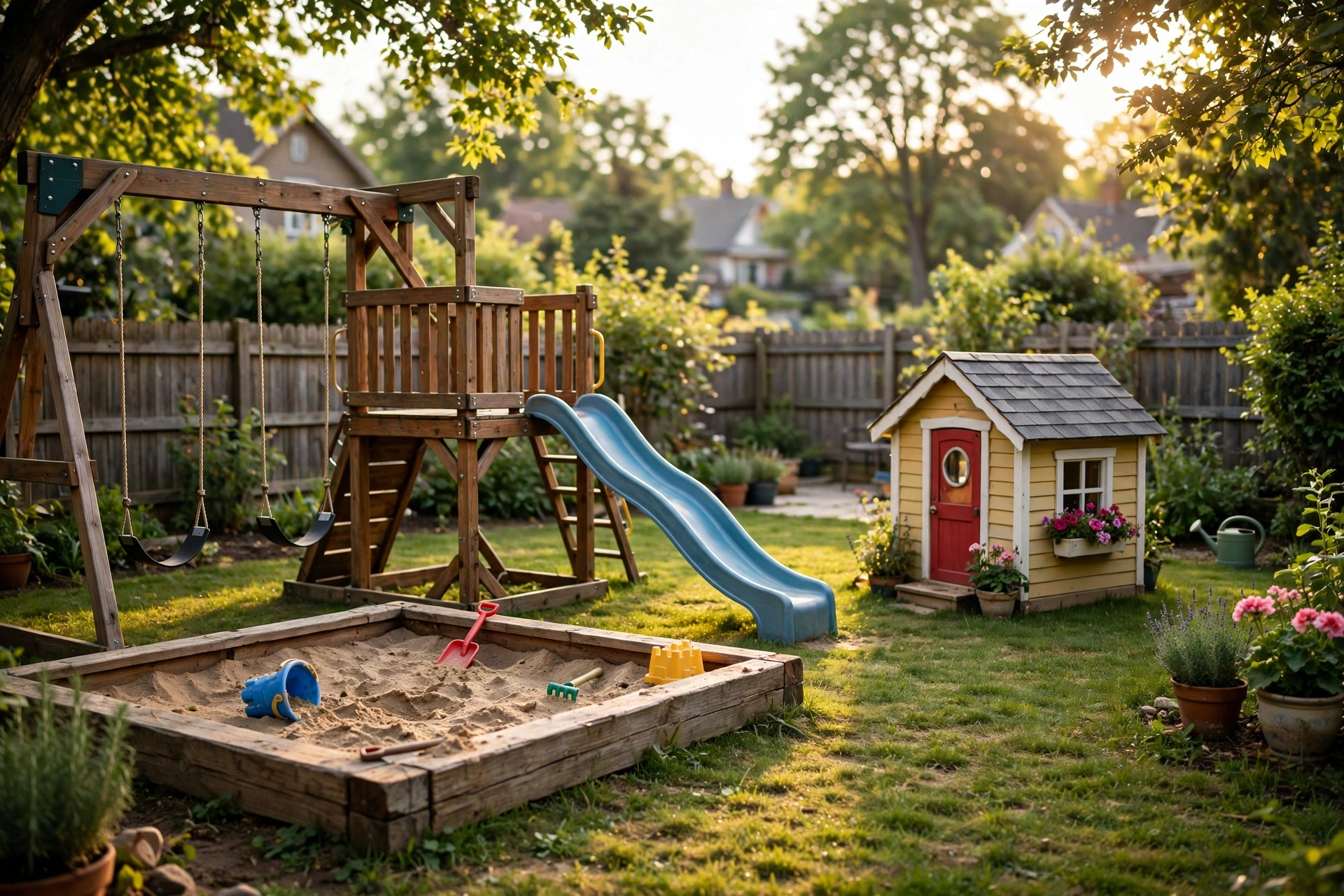
When the mud kitchen is already a backyard favourite, what comes next? These outdoor play area ideas go beyond pots and mud pies — from climbing walls and obstacle courses to quiet reading nooks and sensory zones, each one gives kids a fresh reason to head outside. Mix and match a few, and your garden becomes the neighbourhood’s favourite playground.
1. Climbing Wall With a Slide
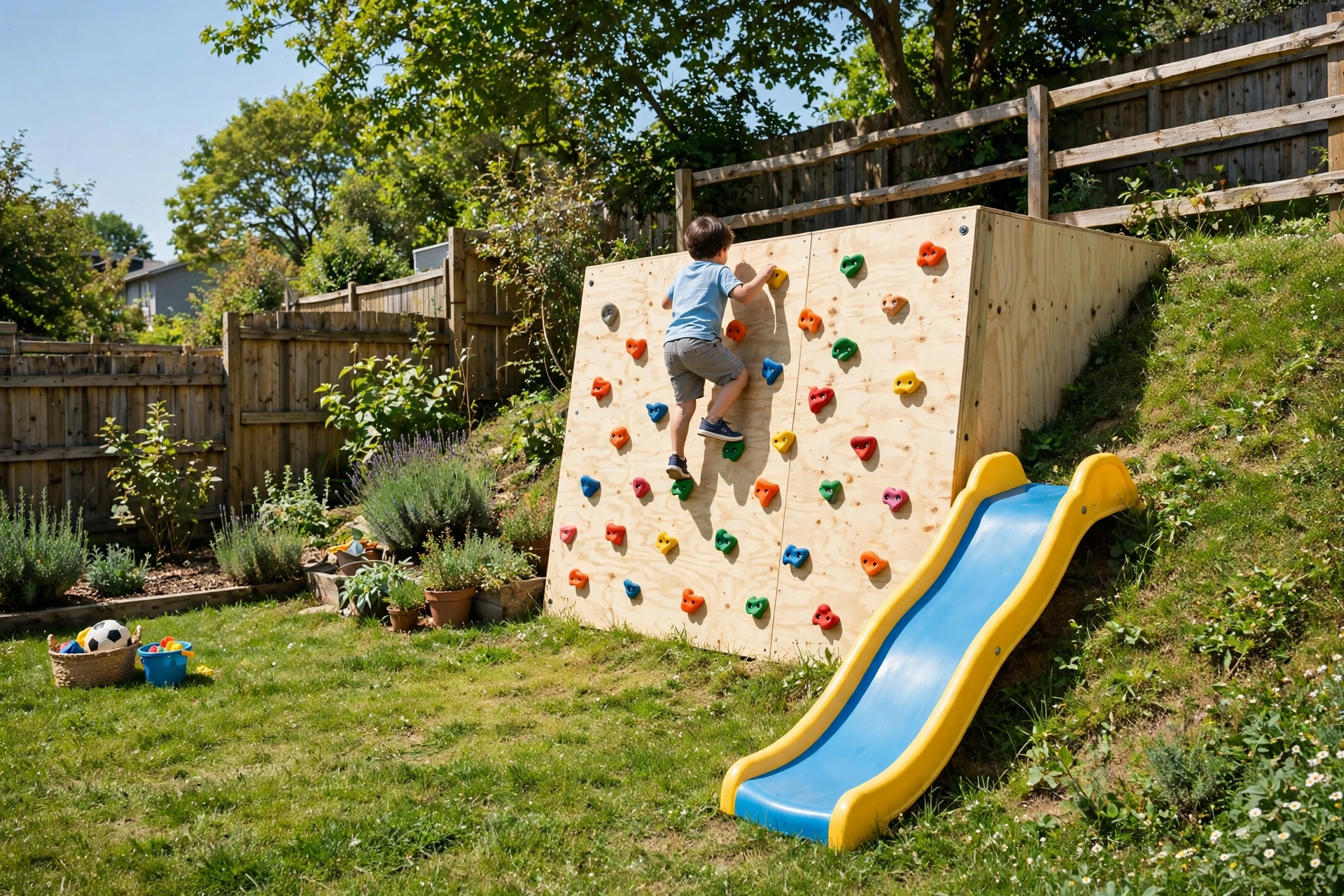
Build a low climbing wall up a gentle slope and finish it with a slide on the other side. Colourful climbing holds on pressure-treated timber are inexpensive, and the hill absorbs most of the height. Add a thick bark-mulch landing zone and you have a safe, endlessly reusable adventure feature.
2. Classic Wooden Playset
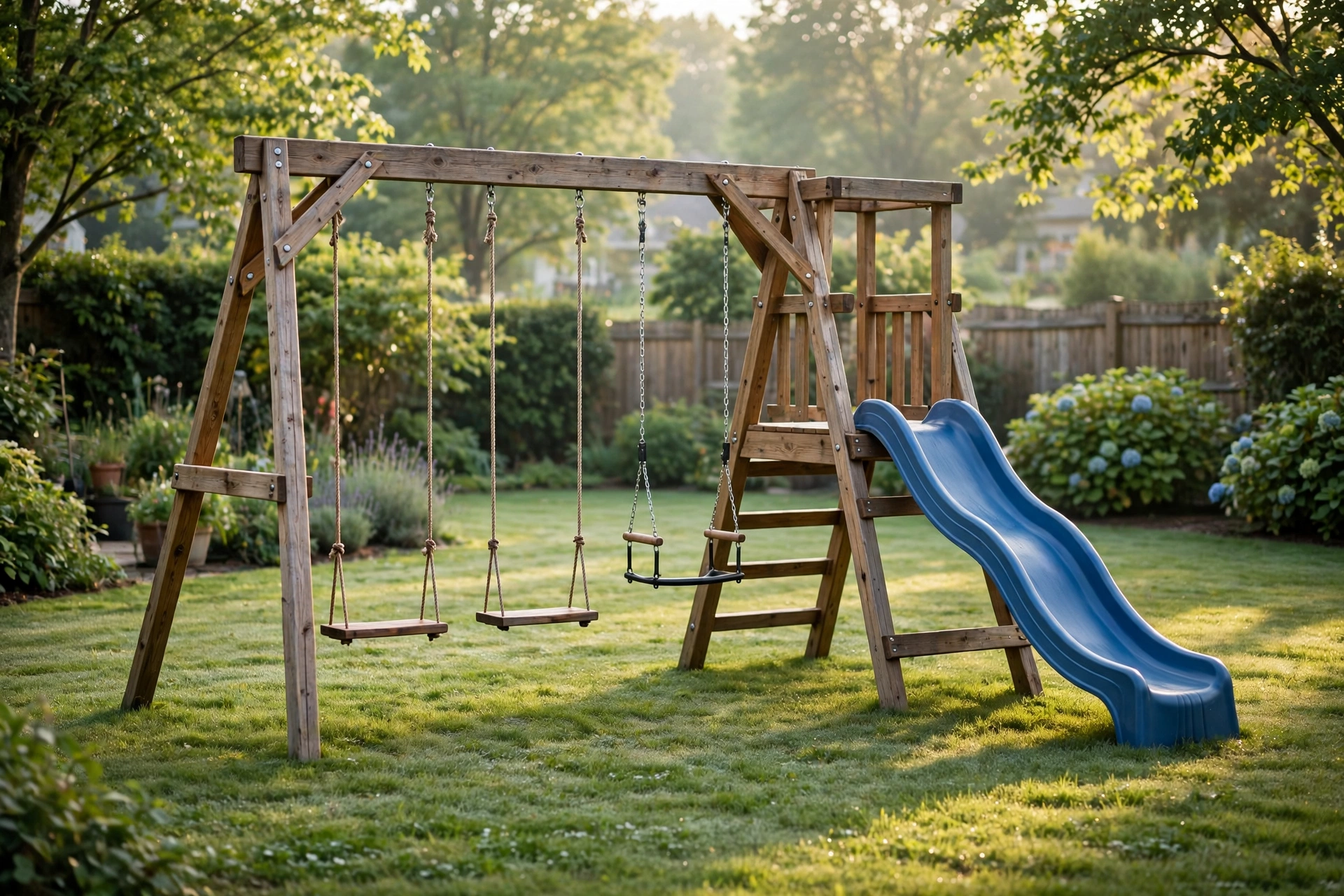
A cedar or redwood swing set with a tower, two swings and a wave slide remains the backbone of most family backyards. Choose a modular frame so you can add a rock wall or trapeze bar as the kids grow. Position it within sight of the patio so supervision stays easy. This backyard playground guide has useful sizing and safety pointers before you buy.
3. Sandbox With Built-In Seating
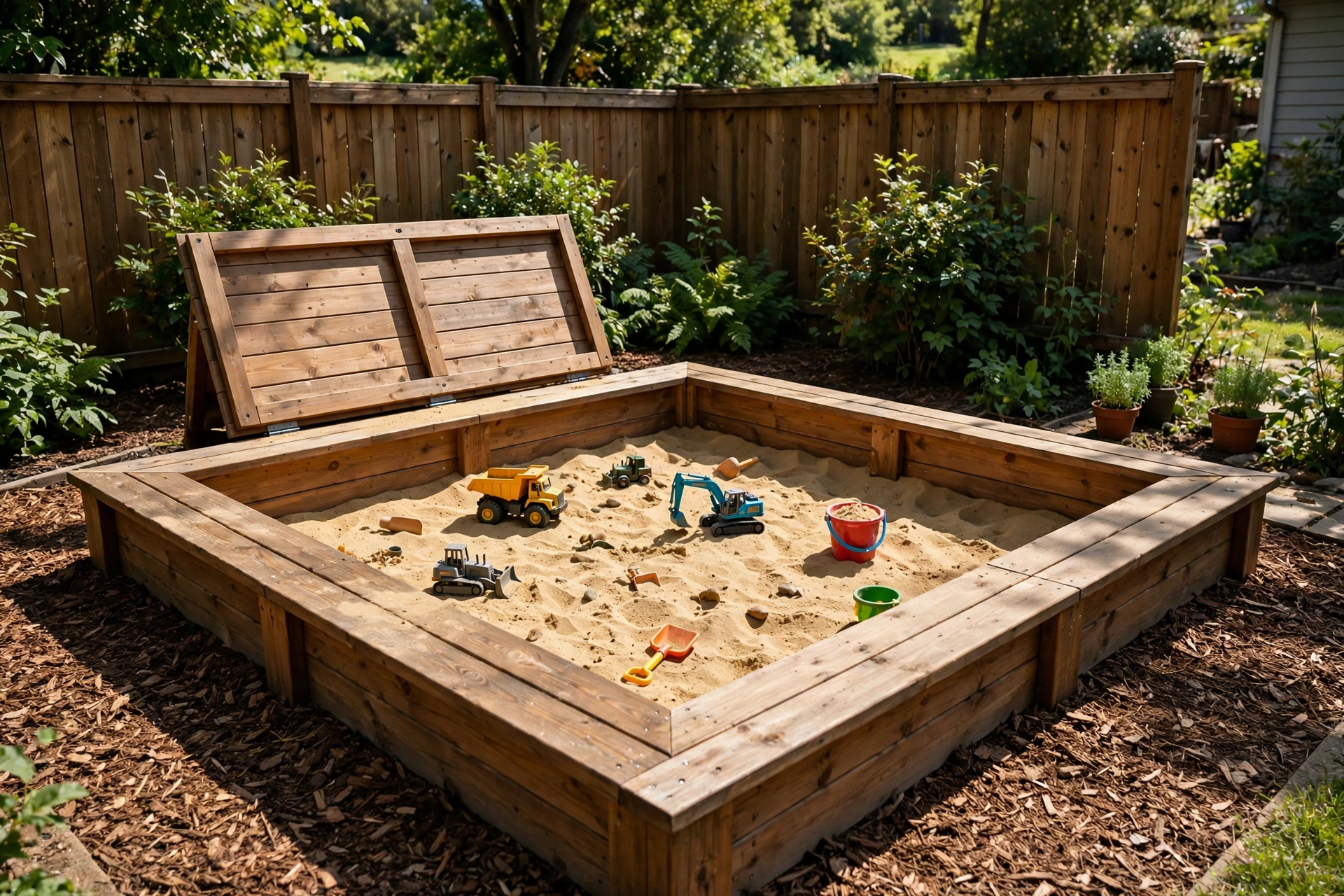
Upgrade the basic sandbox with bench lids that fold open into seats — they keep sand clean, animals out and give kids somewhere to perch. Fill with washed play sand and add trucks, moulds and a sieve. If your little ones have already mastered your mud kitchen ideas for kids, a sandbox adds a dry-play zone that pairs perfectly.
4. Water Play Station
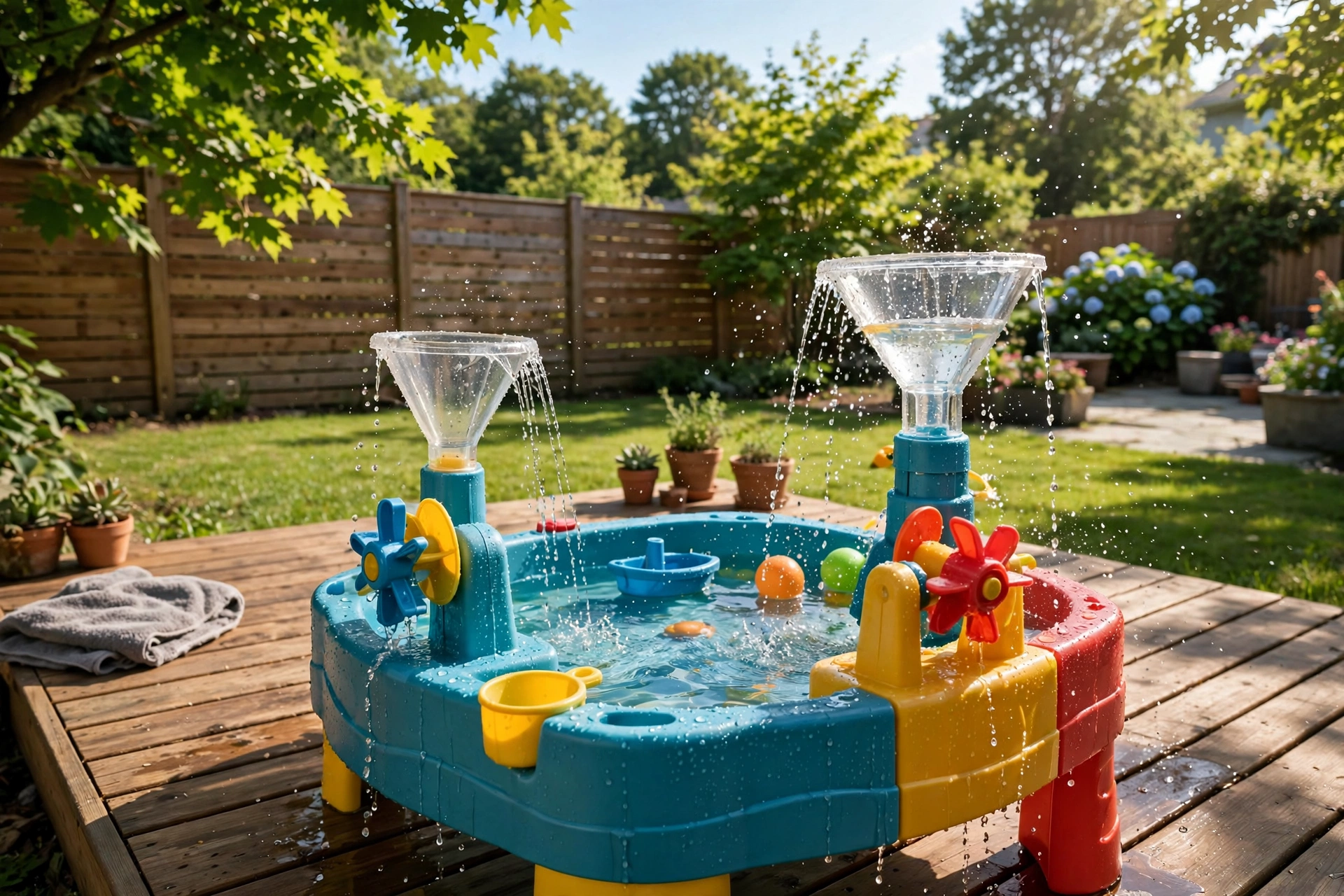
A splash table with funnels, pipes and spinning wheels keeps toddlers busy for an astonishingly long time. For bigger kids, a simple splash pad that connects to the garden hose turns hot afternoons into water-park days. Put the station on decking or pavers rather than lawn to avoid a muddy aftermath.
5. Playhouse or Treehouse
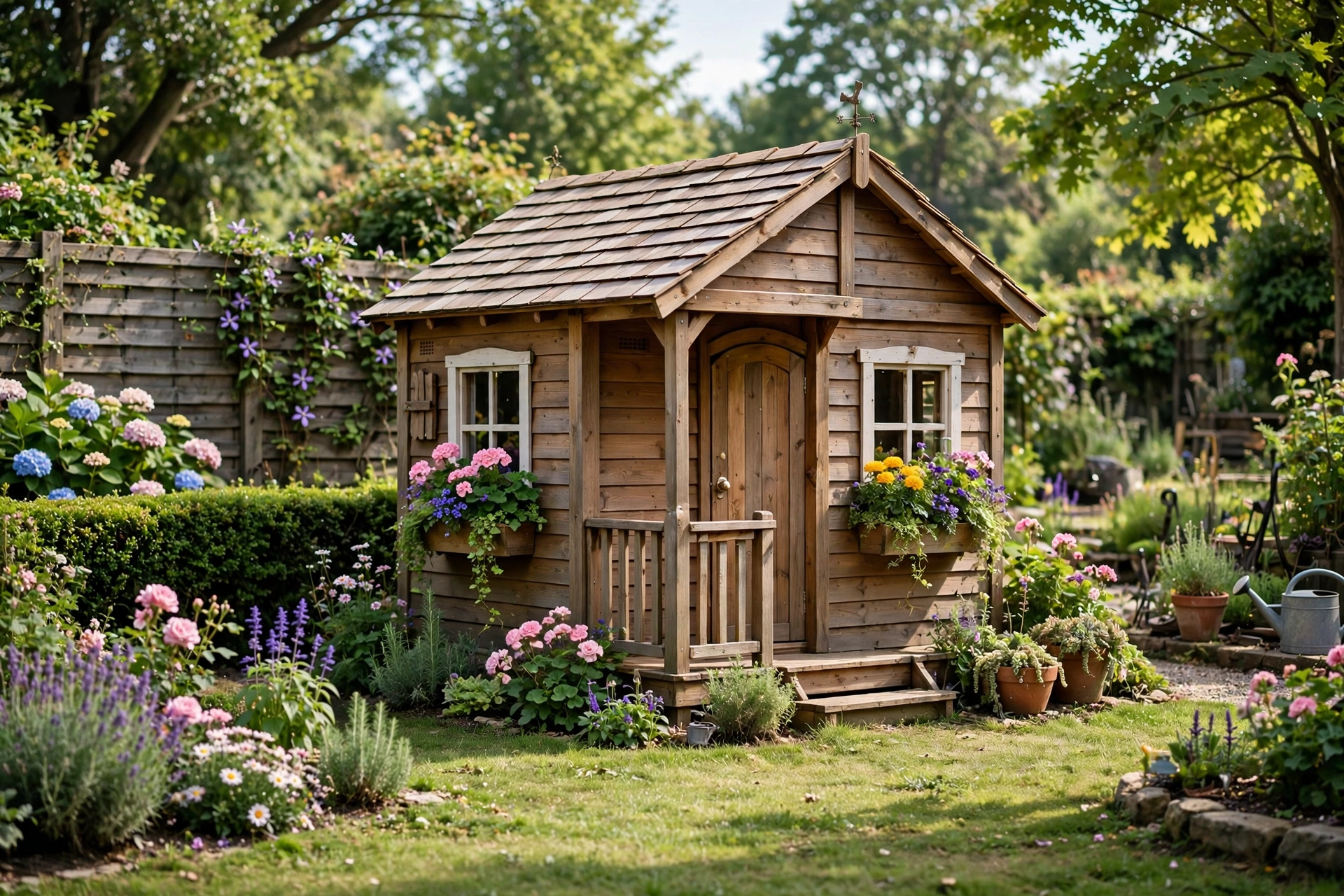
A small wooden playhouse with a real door, windows and flower boxes becomes headquarters for every game from shopkeeper to secret club. A sturdy tree is optional — platform playhouses on posts work on any flat lawn. Furnish it with a tiny table, cushions and a play kitchen set for instant imagination.
6. DIY Obstacle Course
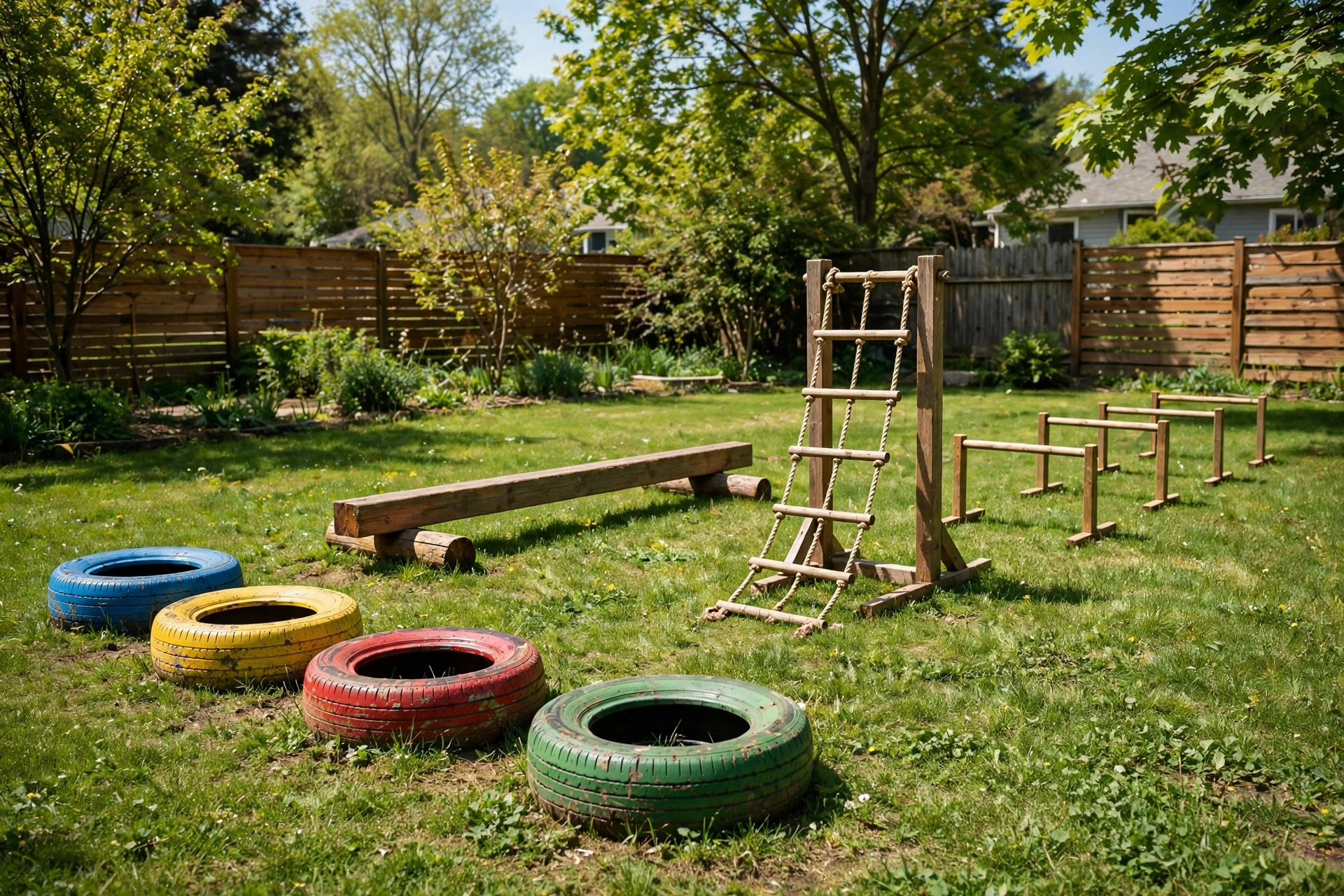
Turn the lawn into a mini adventure race with painted tires, a low balance beam, a rope ladder and small hurdles. Let the kids redesign the course each weekend — the planning is half the fun. Time each other with a phone stopwatch to add friendly competition.
7. Teepee Reading Nook
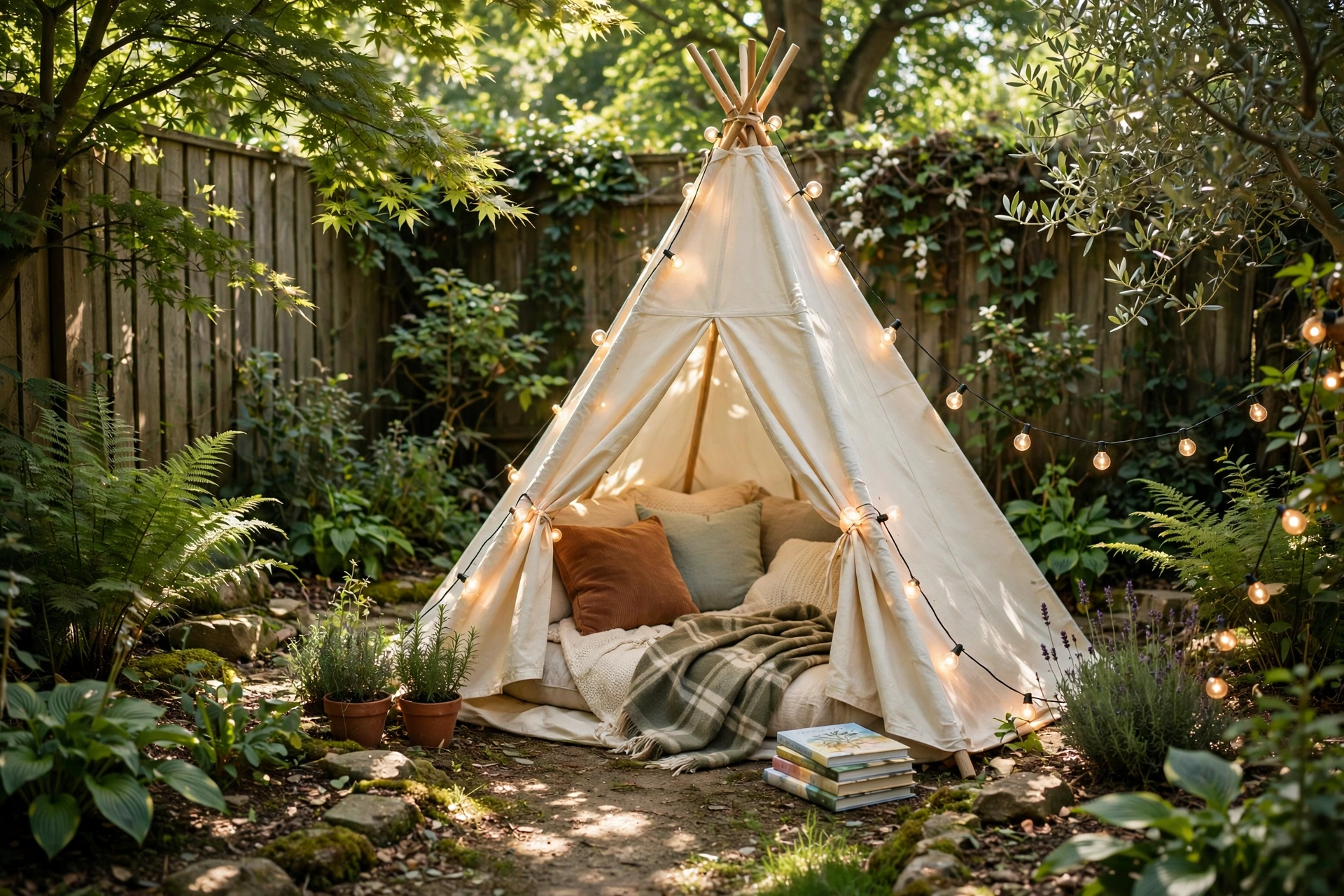
Every play area needs a calm corner. A canvas teepee filled with cushions and picture books, draped in warm string lights, gives kids a shady retreat for reading, quiet games or afternoon naps. Tuck it into a garden corner where it feels like a hidden den.
8. Chalkboard Fence Wall
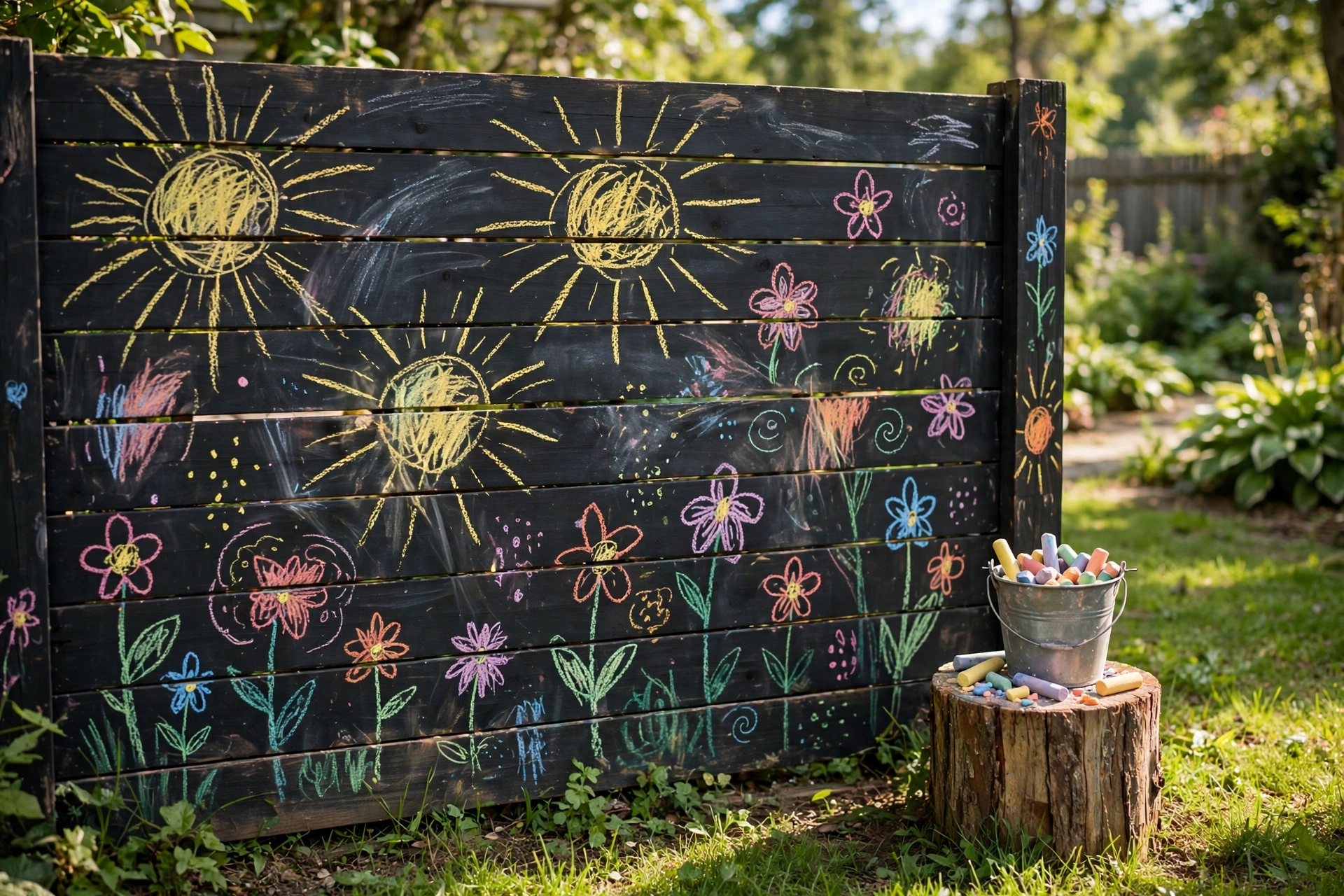
Paint one fence section with exterior chalkboard paint and keep a bucket of chunky chalk nearby. It becomes a rotating art gallery, scoreboard for games and a practice spot for letters — all washable with the hose. A rounded gravel strip at the base keeps chalk dust off the lawn.
9. Kid-Sized Garden Beds
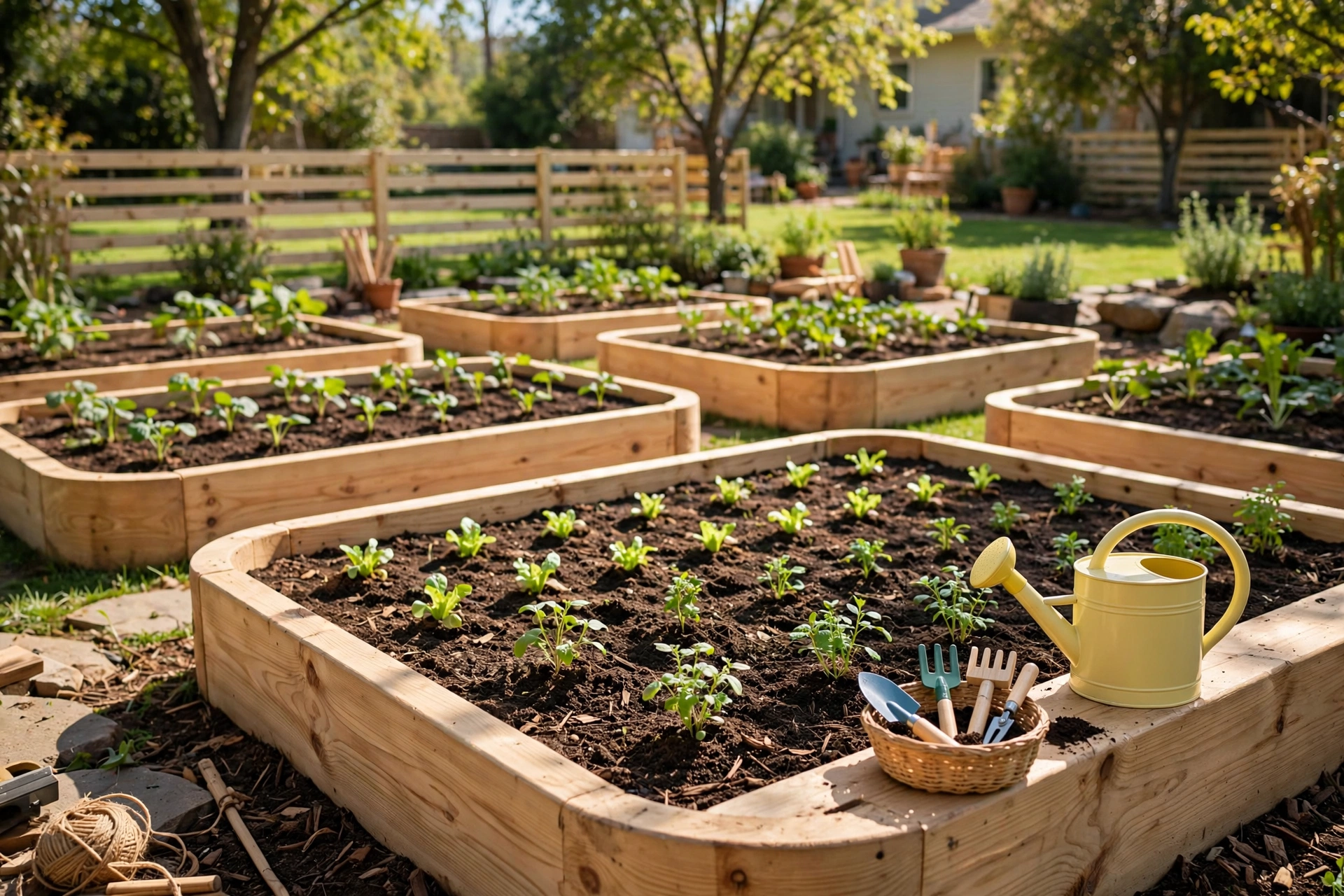
Low raised beds give children their own patch to plant quick-win crops like radishes, lettuce and sunflowers. A child-sized watering can and hand tools make it real gardening rather than decoration. Watching seeds become lunch is a powerful lesson in patience — and it sneaks in science too.
10. Stepping-Stump Balance Path
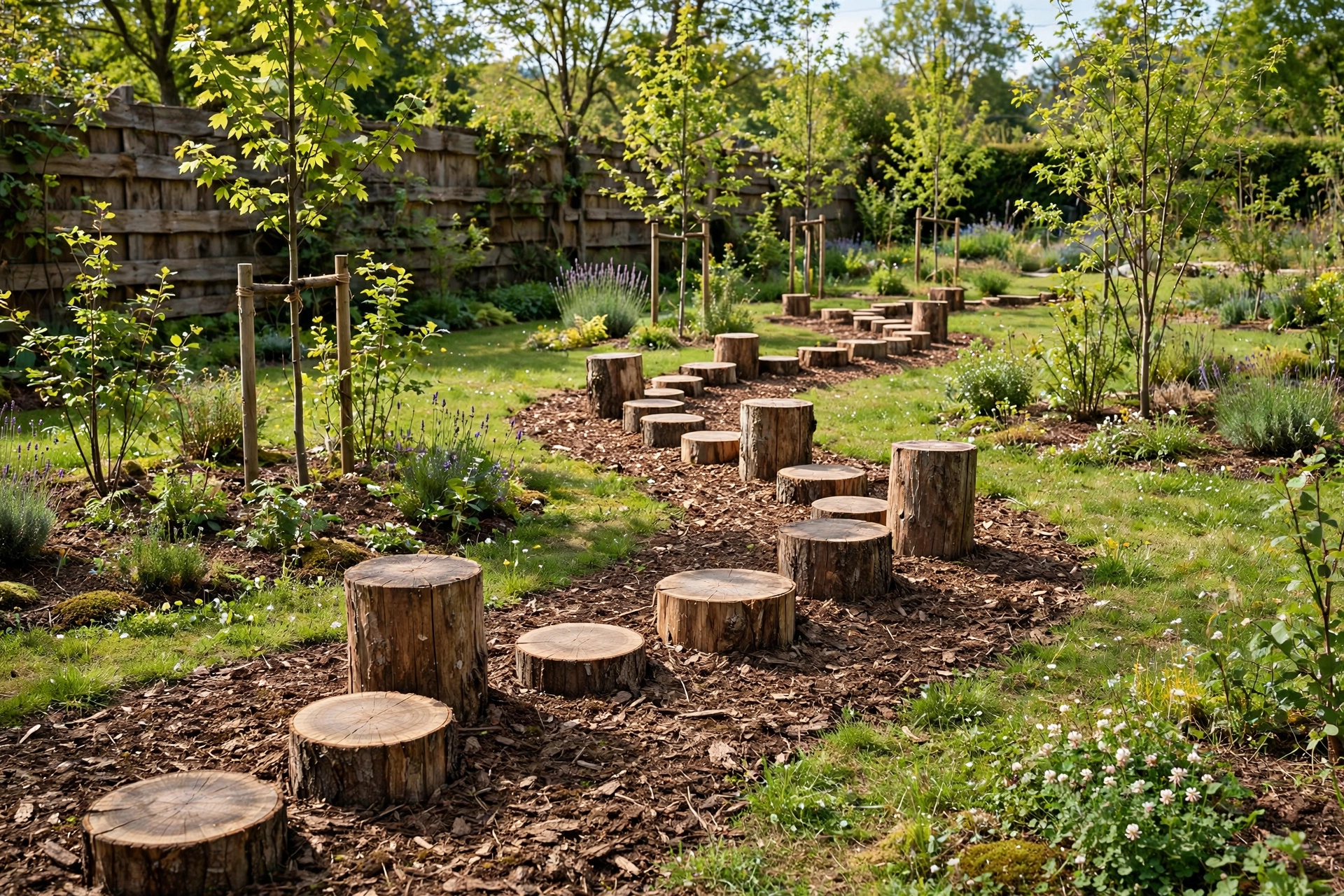
Set tree-stump rounds at varied heights through a mulched bed to create a natural balance trail. Kids can hop stump to stump playing “don’t touch the lava”, and the rough bark texture doubles as sensory play. Arrange them in a loop so the path has a clear start and finish.
11. Fence-Mounted Ball Run
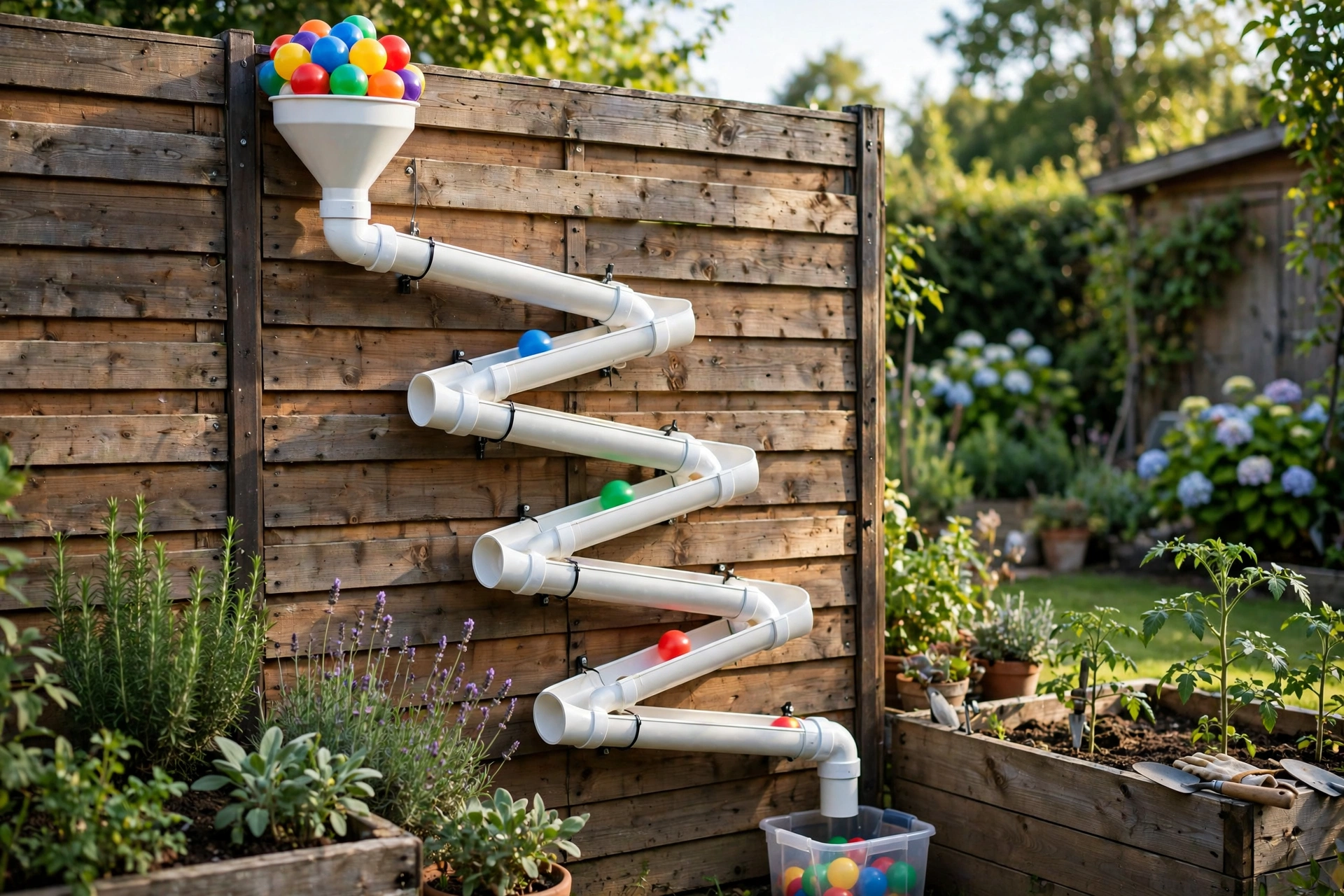
Screw white gutter pipes and funnels to the fence in zigzag runs so balls tumble from top to bottom. Kids will spend hours redesigning the route and testing which balls roll fastest — it is secretly an engineering lesson. Keep a tub of balls at the base for instant replay.
12. Outdoor Music Wall
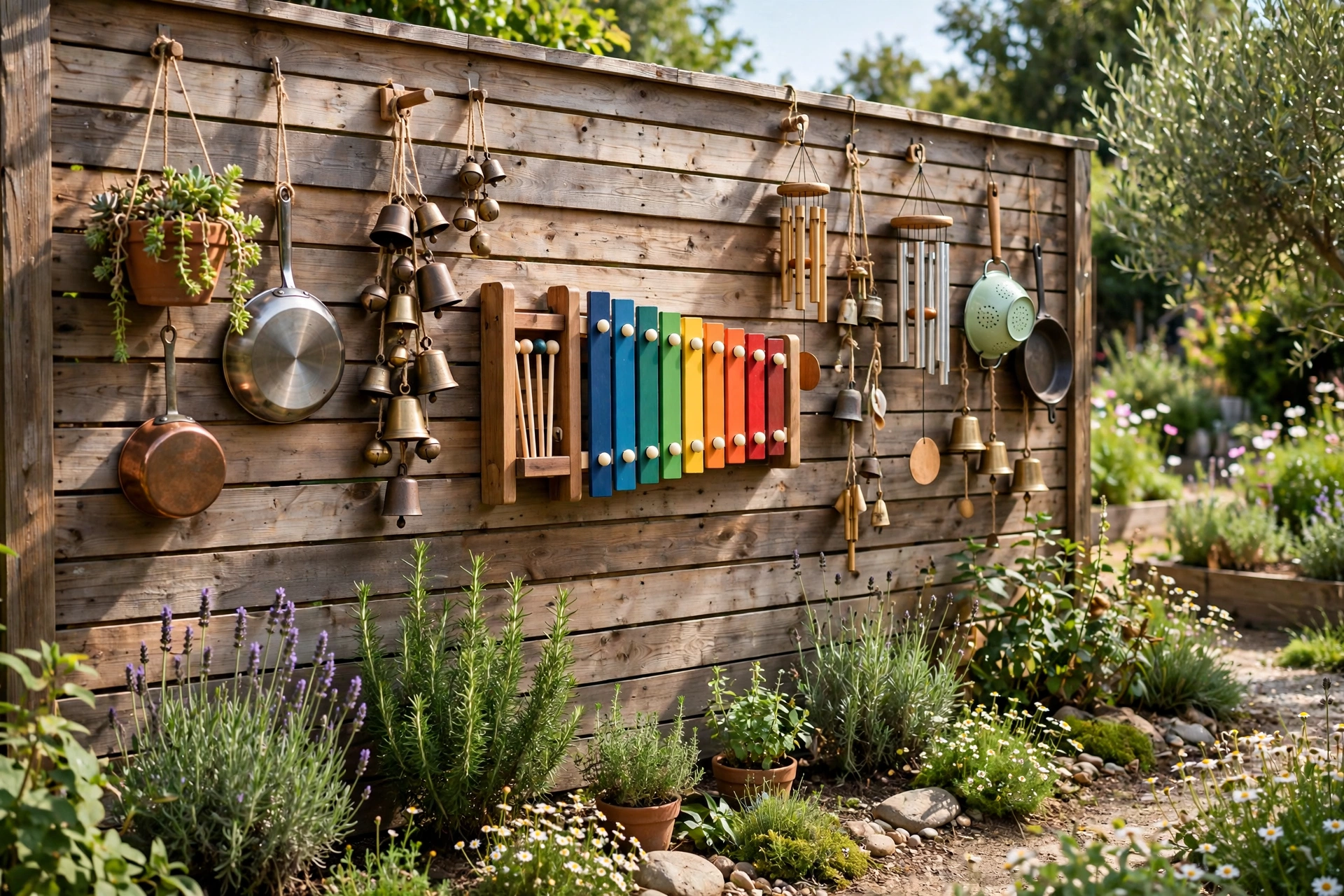
Mount pots, pans, bells, a xylophone and wind chimes on a fence panel to build an open-air bandstand. A wooden spoon is the only drumstick needed. It is loud, joyful and wonderfully creative — position it away from the neighbours’ fence to keep the peace.
13. Tire Swing and Hammock Hangout
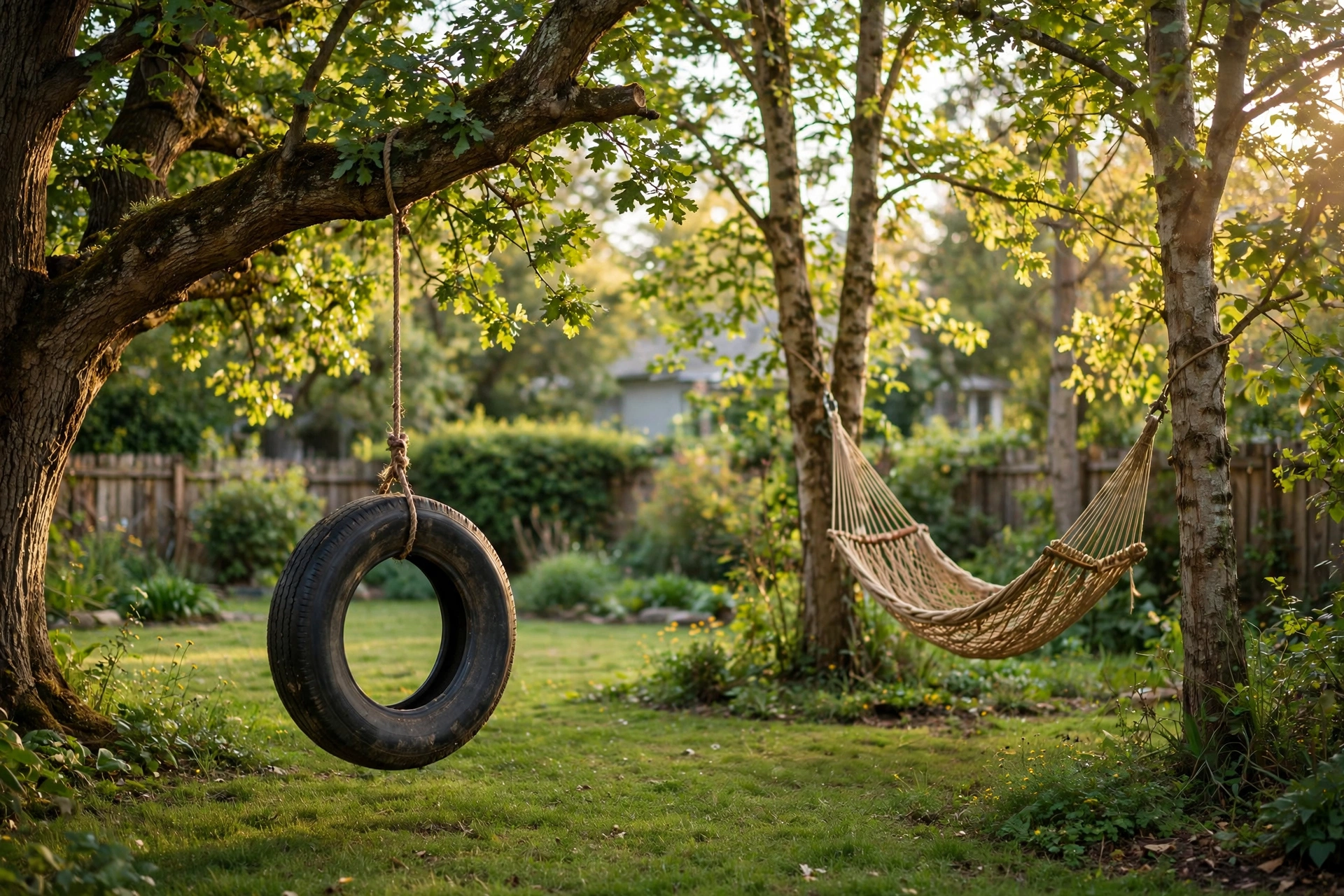
A tire swing on a strong branch is the classic every childhood should include, and a rope hammock strung between two trees adds a grown-up-feeling lounge spot for bigger kids. Both cost very little yet get daily use for years. Check ropes and knots every spring before the season starts.
14. Ride-On Track
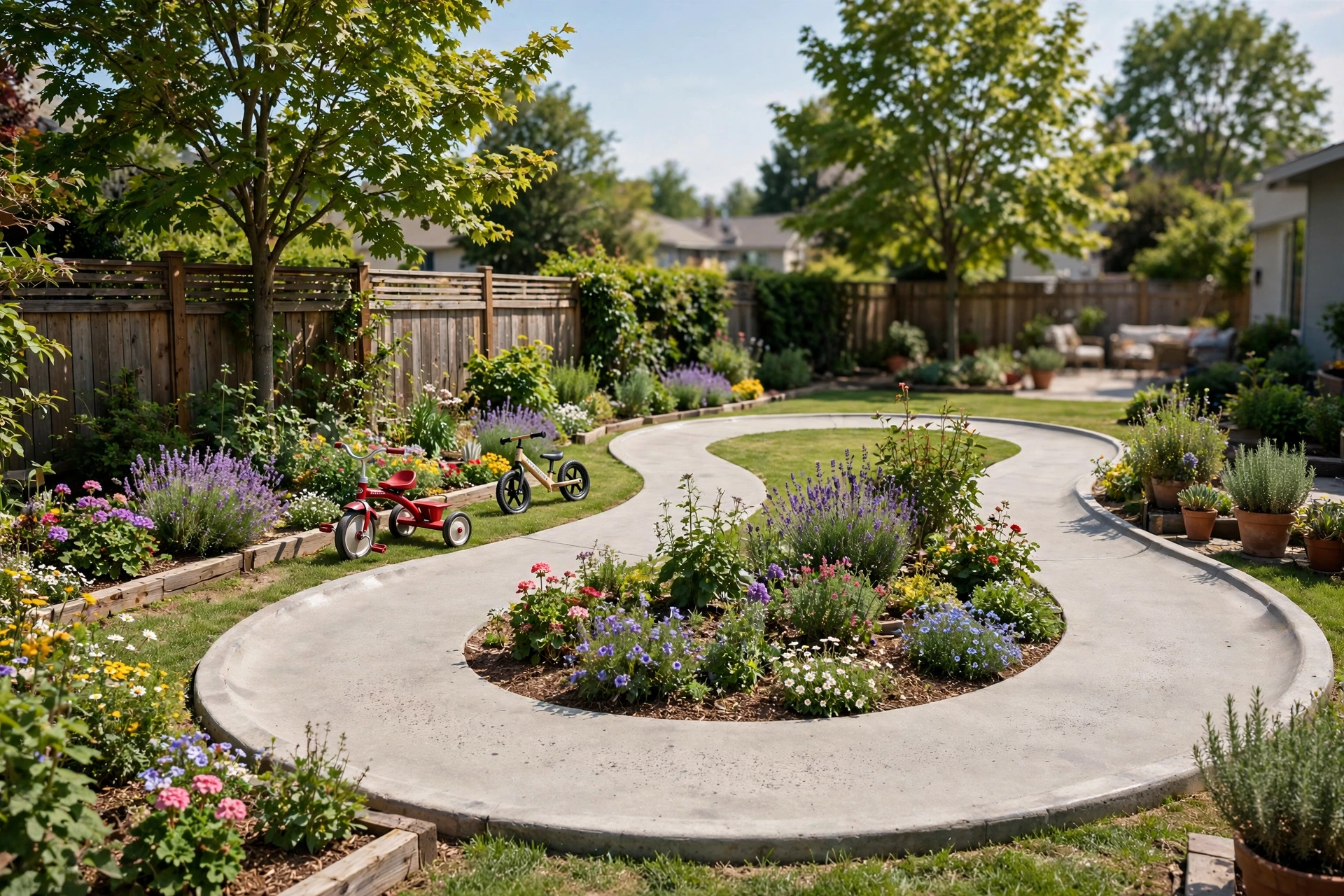
Leave part of the patio or driveway loop free of furniture and it becomes a scooter and tricycle circuit. Add painted road markings, a few cones and a “petrol station” box, and kids can race circuits for hours. Smooth concrete is kinder to little knees than gravel — and easier to sweep.
15. Art and Picnic Corner
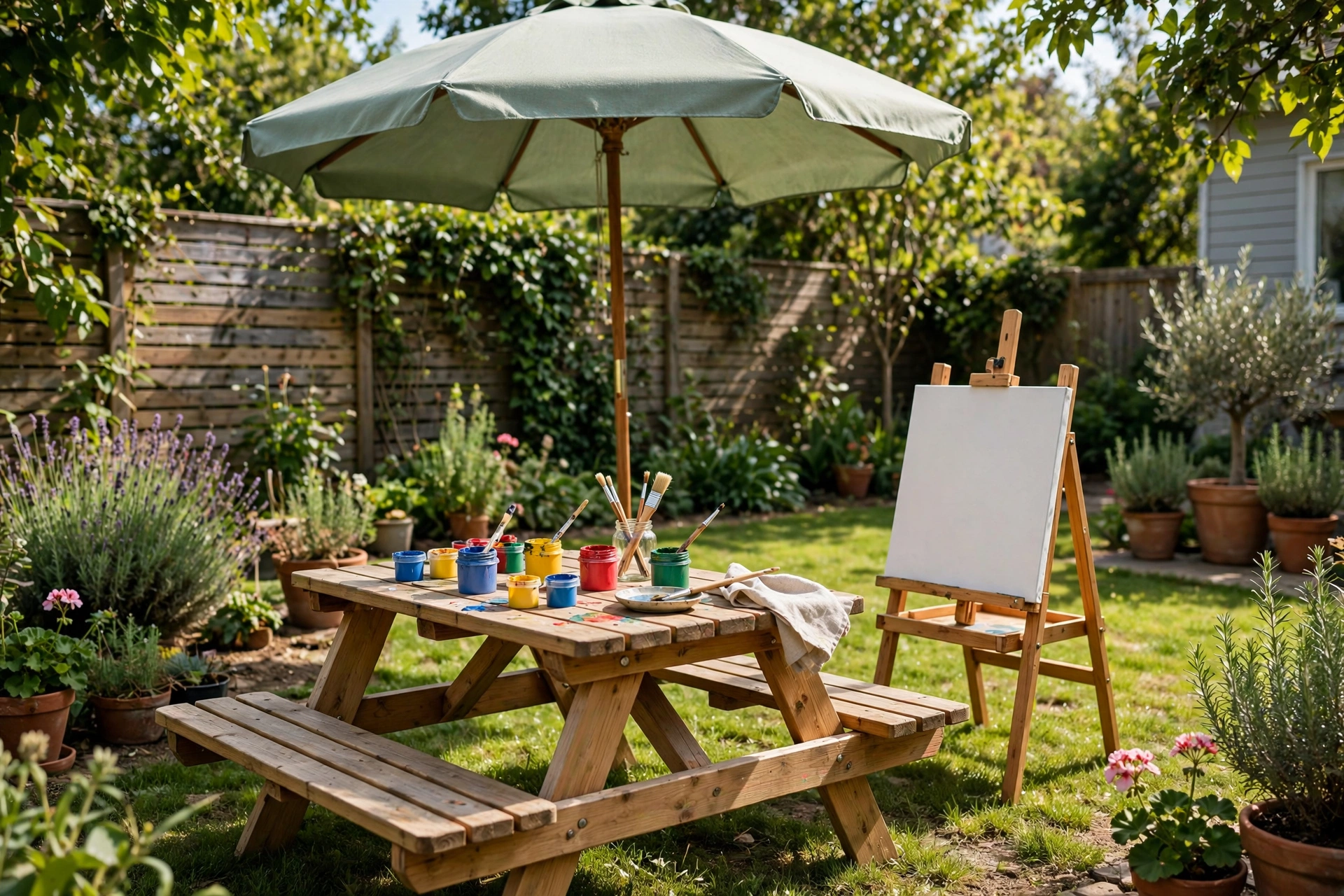
Finish your play zone with a child-sized picnic table for snacks and a standing easel for outdoor painting. Shade it with a patio umbrella and keep a weatherproof box of supplies nearby. From DIY mud kitchen builds to watercolour afternoons, this corner ties the whole play area together.
FAQs
How much space do I need for a backyard play area?
A dedicated zone of roughly 6 by 6 metres fits a playset, sandbox and a small reading nook comfortably. Many ideas here — the chalk wall, music wall, ball run and garden beds — work on a single fence line, so even narrow side yards can host a great play area.
What is the safest surface under a playset or climbing wall?
Bark mulch, rubber mulch or play sand at least 15–20 cm deep are the most forgiving options for falls. Avoid grass alone and never place equipment over concrete. Refresh loose surfaces yearly as they compact.
How do I keep a backyard play area low-maintenance?
Choose weatherproof materials (cedar, treated timber, HDPE plastic), cover the sandbox when not in use, and store loose toys in a deck box. Zone the layout so messy play — sand, water, art — sits on pavers that hose down quickly.
Can I combine these ideas with a mud kitchen?
Absolutely — mud kitchens pair brilliantly with sandboxes, water stations and art corners to form one big sensory zone. Keep the messy activities clustered together and the quieter nooks, like the reading teepee, in a separate calmer corner.
What age range do these play area ideas suit?
Most suit ages 3–10, with the climbing wall, obstacle course and tire swing scaling up for older kids. Toddlers thrive on the water table, sandbox and music wall under supervision — just match equipment heights and choking-hazard sizes to the youngest user.
Conclusion
You do not need a huge budget or a huge garden to build an outdoor play area kids will love — a chalk fence, some stump stepping stones and a well-placed sandbox can rival any expensive playset. Pick the three ideas your children would use every day, start with those, and let the play area grow with them.
