
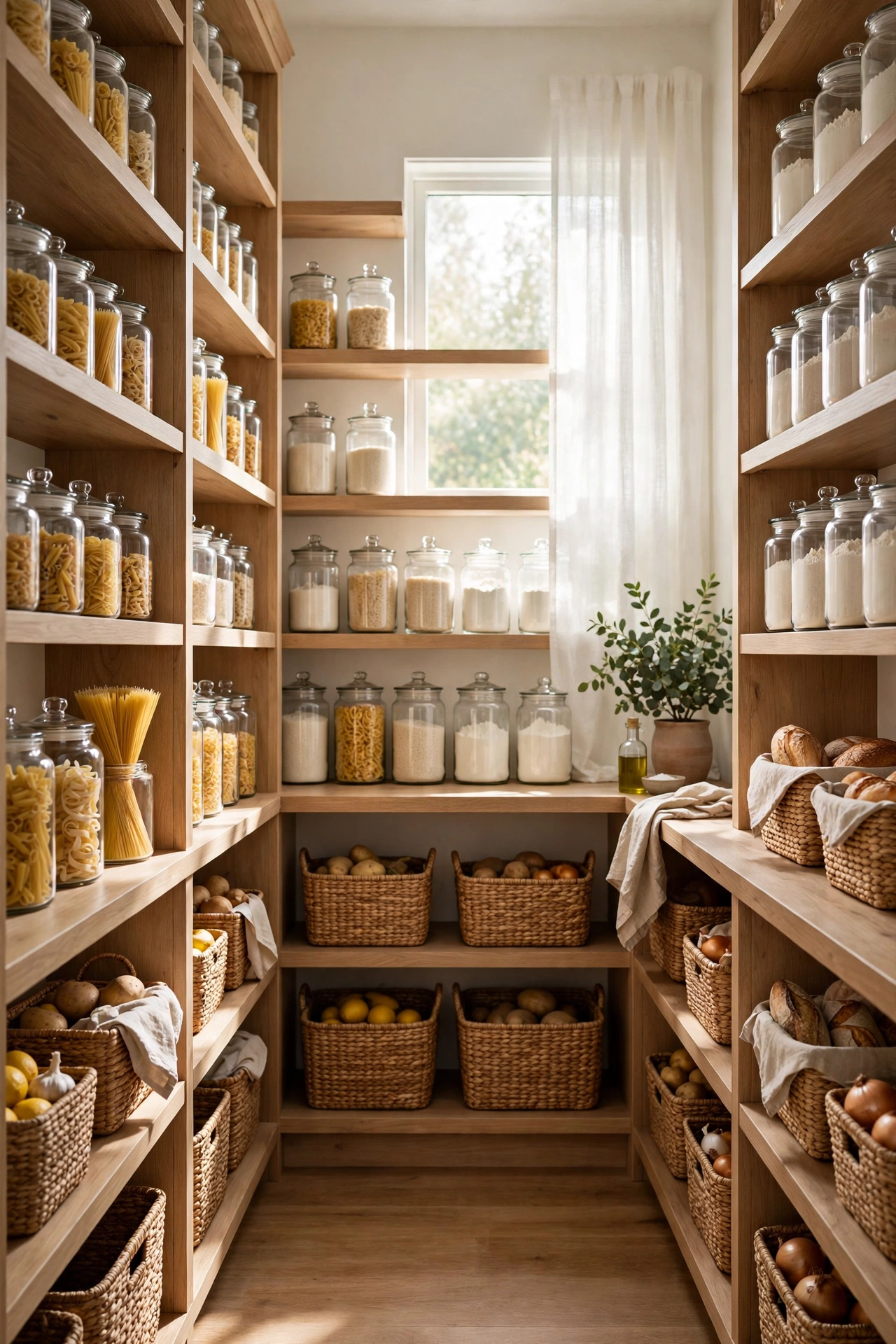
The pantry is the engine room of the kitchen. When it works, cooking feels effortless — everything visible, everything in its place, nothing lurking at the back going stale. When it doesn’t, every meal starts with a rummage and ends with buying duplicates of things you already own. The good news? A beautifully organised pantry is less about square footage and more about smart systems.
These 12 kitchen pantry ideas cover every layout, from generous walk-ins to a single cupboard doing heroic work. Mix and match the ones that suit your space, and pair them with a storage-focused kitchen island if your kitchen needs more room to work. Let’s make every shelf earn its keep.
1. Design a walk-in around U-shaped shelving
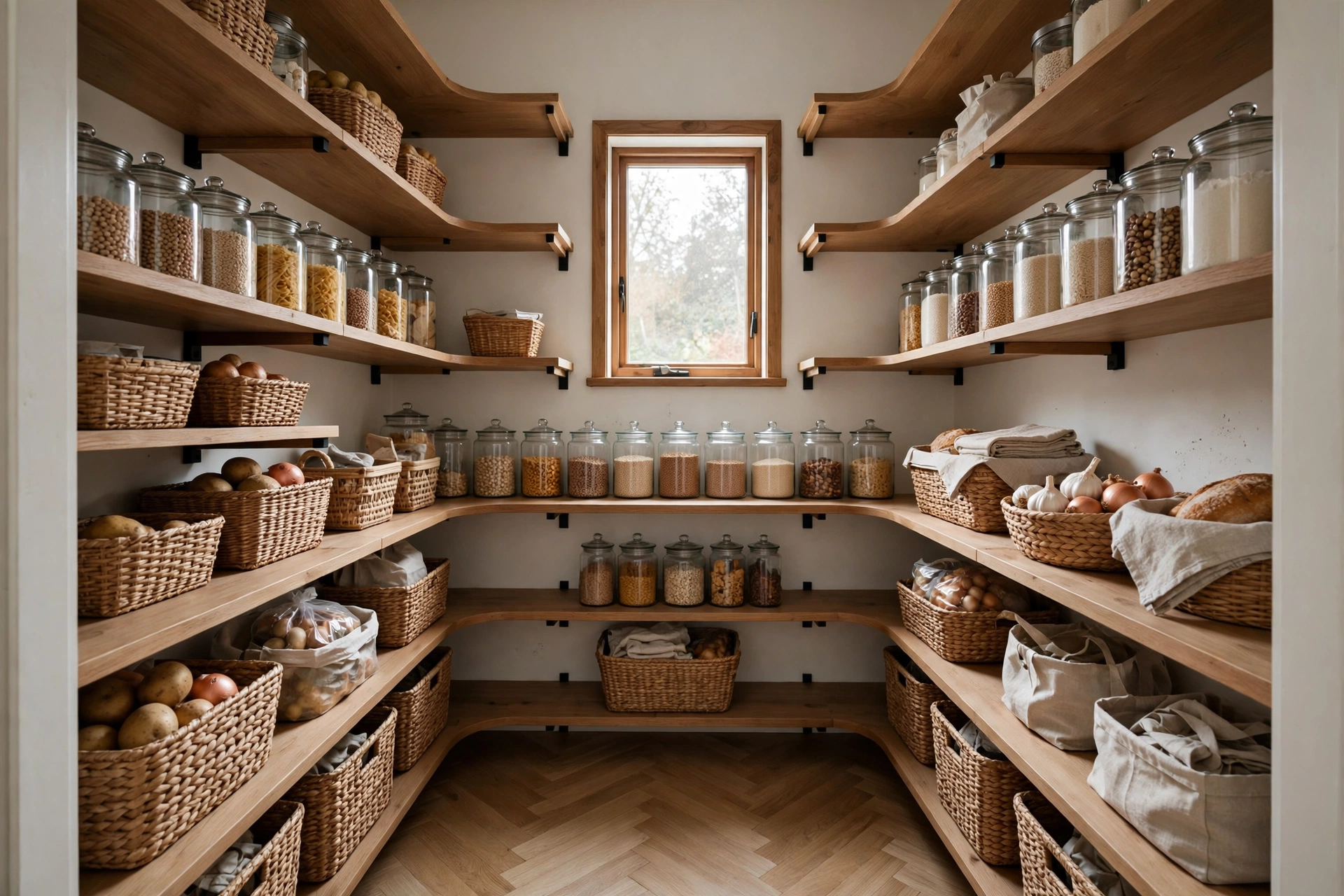
If you’re lucky enough to have a walk-in pantry, U-shaped shelving is the layout that makes the most of it. Shelves running around three walls maximise linear storage while leaving a clear working aisle in the middle — no more squeezing sideways past deep shelves. Keep the back wall for bulk items and appliances you don’t use daily.
Plan shelf heights around what you actually store: tall gaps for cereal boxes and small appliances, shallow ones for tins and jars. Adjustable shelving is worth its weight in gold, because your storage needs will change. Leave the lowest 15cm clear of the floor so you can sweep easily and spot spills.
2. Decant dry goods into matching clear jars
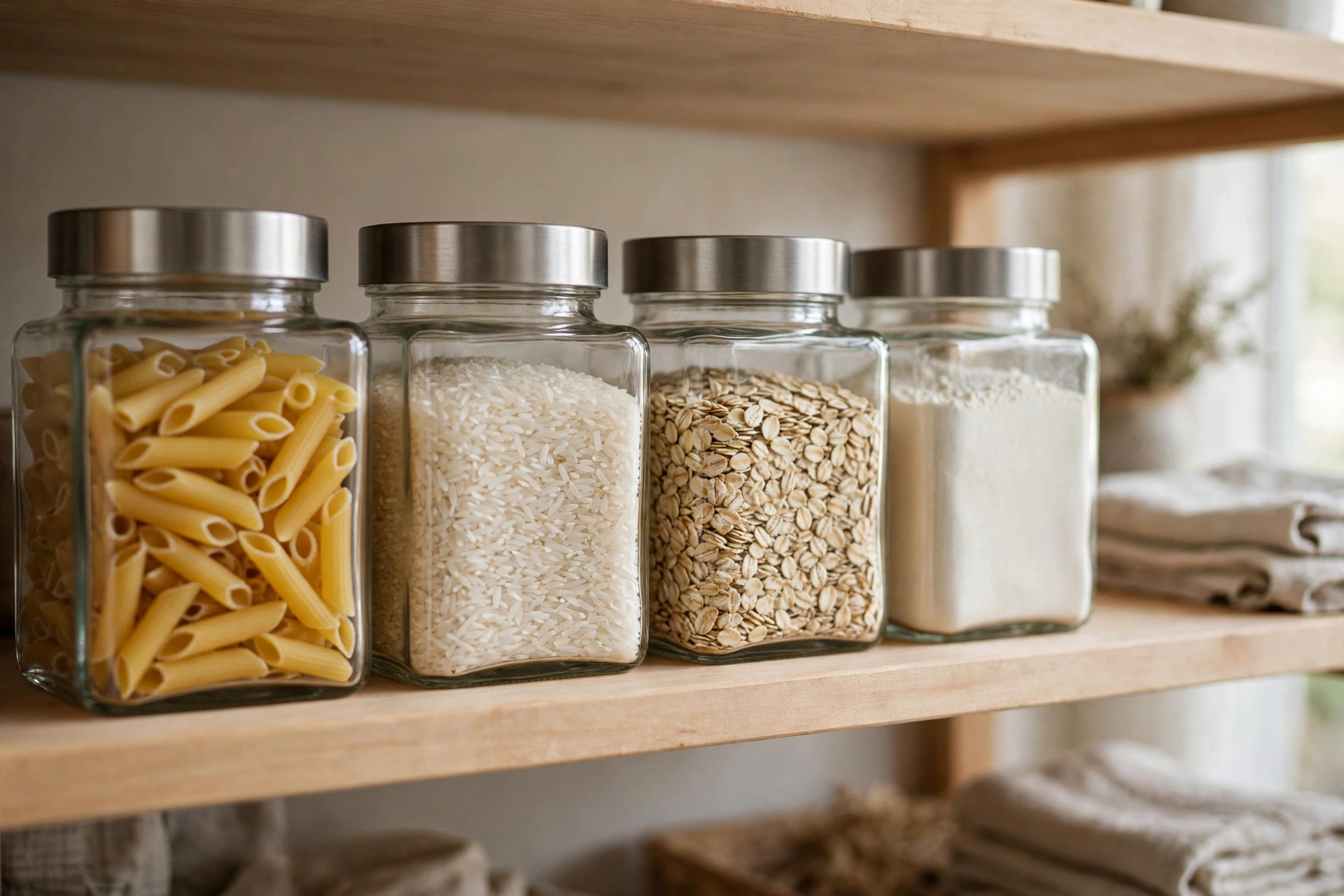
Decanting pasta, rice, flour and cereals into matching clear jars is the fastest visual upgrade a pantry can get. Suddenly a jumble of half-open packets becomes a calm, uniform row — and because you can see exactly what’s inside, nothing gets forgotten at the back. Airtight lids keep everything fresher for longer, too.
You don’t need to decant literally everything (a worthy FAQ question, answered below). Start with the items you buy most often and the ones that arrive in flimsy packaging. Square or rectangular jars use shelf space more efficiently than round ones, and a simple label on each jar saves the “is this sugar or salt?” guessing game.
3. Zone the shelves like a small shop
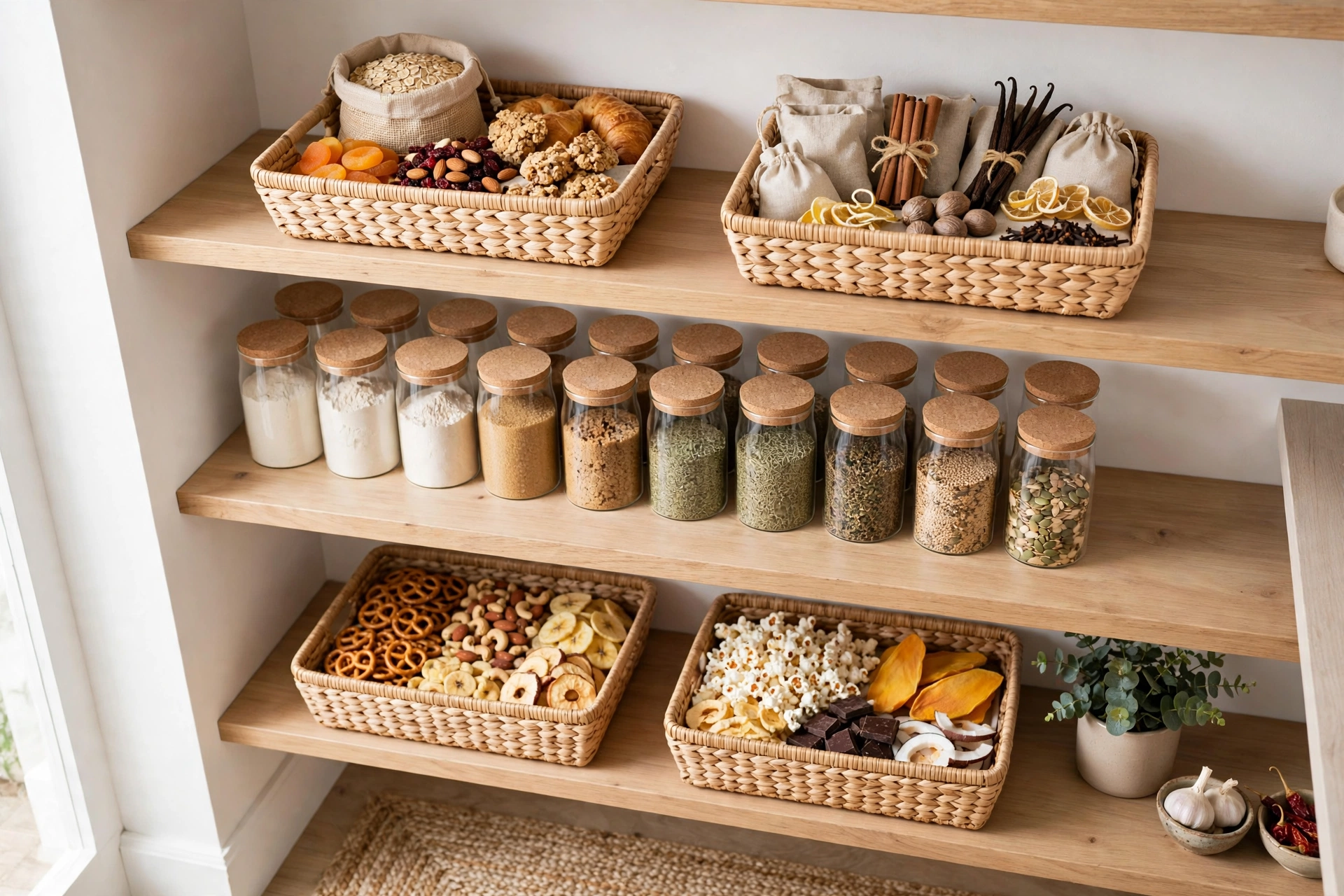
Shops don’t scatter products randomly, and neither should your pantry. Group items by category — breakfast, baking, snacks, tinned goods, oils and condiments — and give each zone a defined stretch of shelf. When everything has a home, putting shopping away takes minutes and finding ingredients takes seconds.
Put the zones you use most at eye and hand height, and relegate the once-a-month items to the top and bottom shelves. If multiple people use the kitchen, zones also stop the well-meaning rearrangement that happens when everyone has their own system. One system, clearly zoned, keeps the peace.
4. Put the inside of the door to work
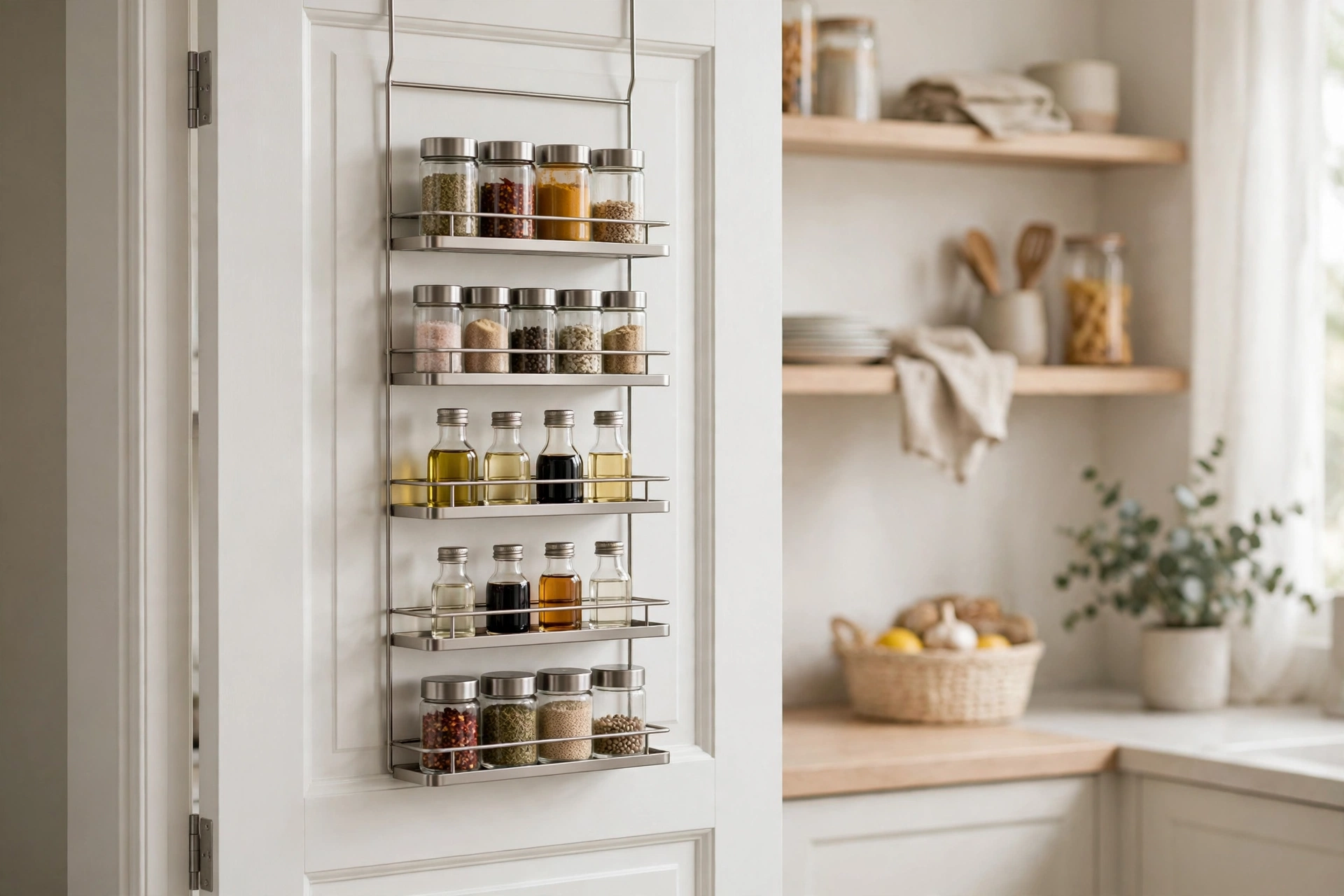
The inside of the pantry door is prime real estate going to waste in most kitchens. A slim over-the-door rack or a set of mounted spice rails turns it into storage for herbs, spices, small packets and wraps — the fiddly items that otherwise clutter shelves. It’s some of the cheapest storage per centimetre you can buy.
Measure your door’s clearance before you buy: the rack needs to sit clear of the shelves when the door closes. For a built-in look, screw shallow wooden rails directly to the door. Either way, keep heavier items low so the door’s hinges aren’t strained over time.
5. Swap deep fixed shelves for pull-out drawers
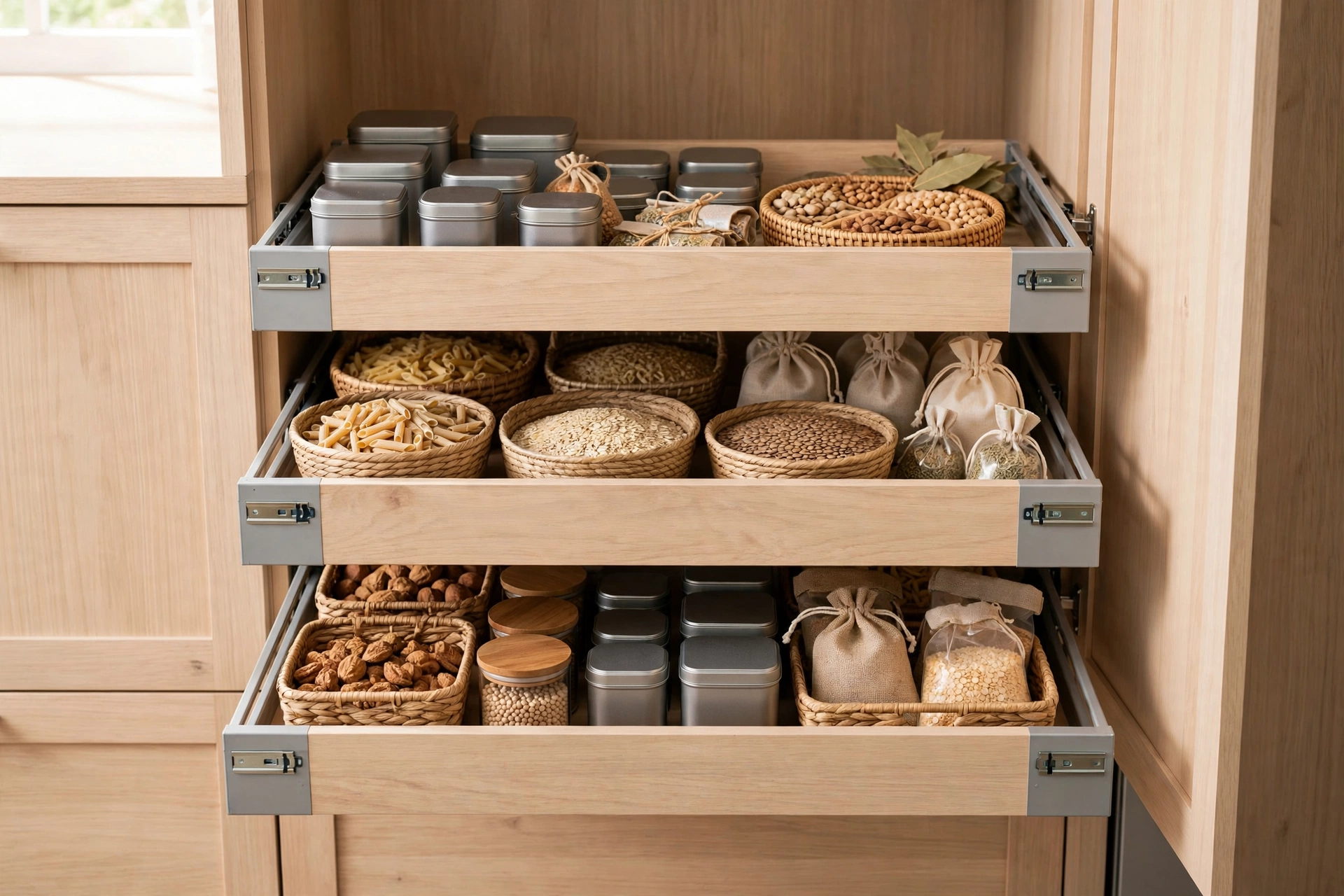
Deep fixed shelves are where food goes to expire unseen. Pull-out drawers and sliding baskets solve the problem completely: pull the drawer towards you and every item is visible and reachable, from the front tin to the one hiding at the very back. It’s the single best upgrade for a deep pantry cupboard.
Retrofit wire or wooden pull-outs into existing cupboards, or specify them in a new pantry build. Full-extension runners are worth the small premium — half-extension drawers leave the back third as mysterious as ever. If you’re unsure where to start, Family Handyman’s step-by-step pantry organisation walkthrough covers drawer retrofits and more.
6. Give corners and deep shelves a lazy susan
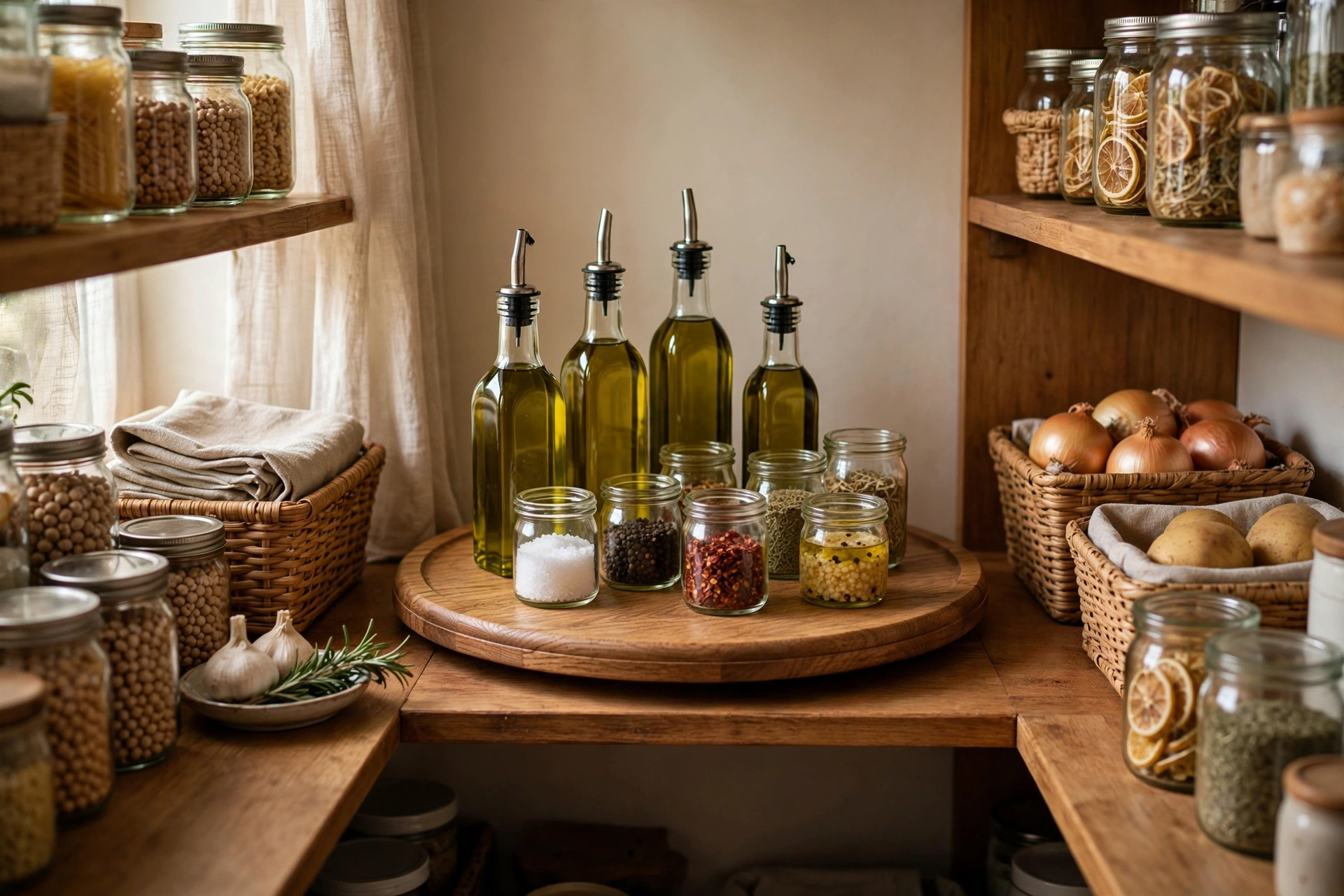
Corners are the Bermuda Triangle of pantries — things enter and are never seen again. A lazy susan turntable reclaims them: one spin brings every oil, vinegar and condiment bottle to the front. Use them on deep shelves too, wherever items would otherwise stack two-deep and hide.
Choose turntables with a raised lip so bottles don’t slide off mid-spin, and non-slip surfaces to keep glass jars steady. Two-tier versions double the storage in tall spaces. They’re inexpensive, need no fitting, and you can reposition them whenever your zones change.
7. Corral snacks and small items in labelled baskets
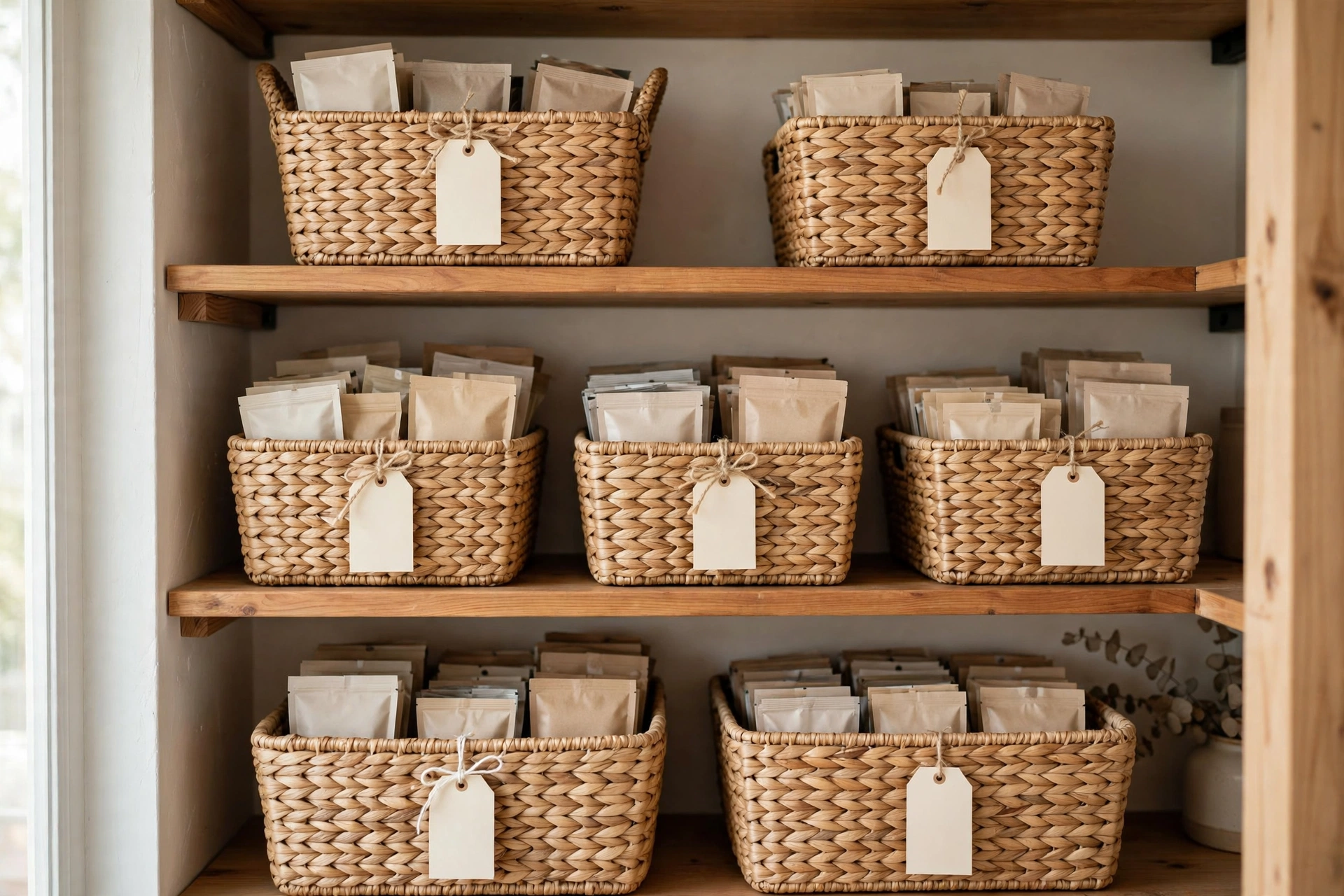
Small packets are the chaos agents of any pantry — individually they’re fine, collectively they’re a landslide. Labelled baskets and bins contain them: one basket for crisps, one for baking decorations, one for the sachets that multiply in drawers. The label matters as much as the basket, because it tells everyone where things belong.
Woven baskets look beautiful on open shelving; clear plastic bins work better inside cupboards where you want to see contents. Either way, the rule is one category per container and no “miscellaneous” basket — that’s just a junk drawer with better PR.
8. Store tins on tiered racks, front to back by date
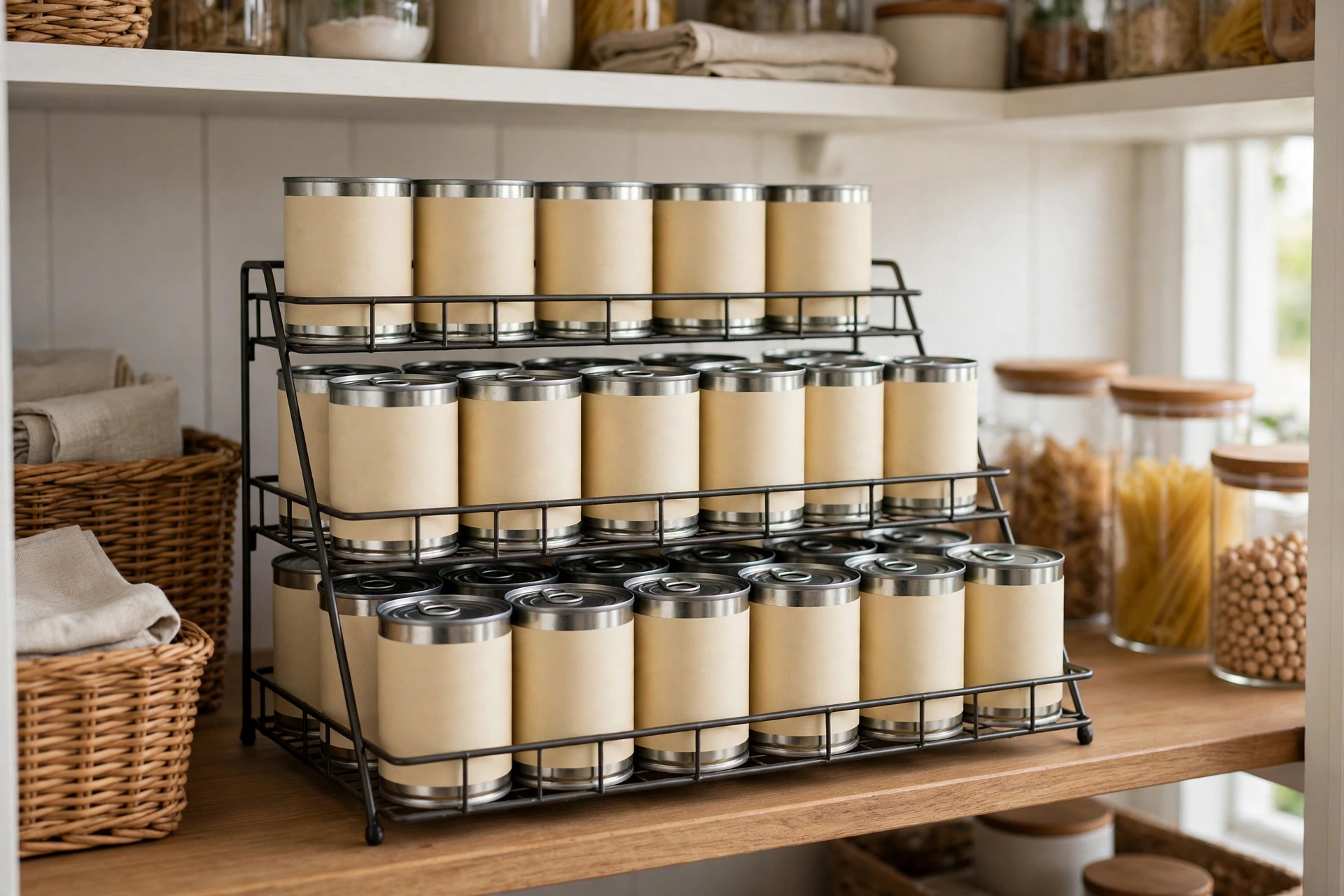
Tiered can racks are a small investment with an outsized payoff. The stepped design means you can read every label without moving a thing, and arranging tins front-to-back by date creates a natural first-in-first-out system: new tins go at the back, you always grab from the front, and nothing expires unnoticed.
They work for tins, jars and even spice pots, and they double your usable shelf depth. When you do the weekly shop, take thirty seconds to rotate new stock to the back — it’s the habit that makes the system self-maintaining.
9. Think vertical in a small pantry
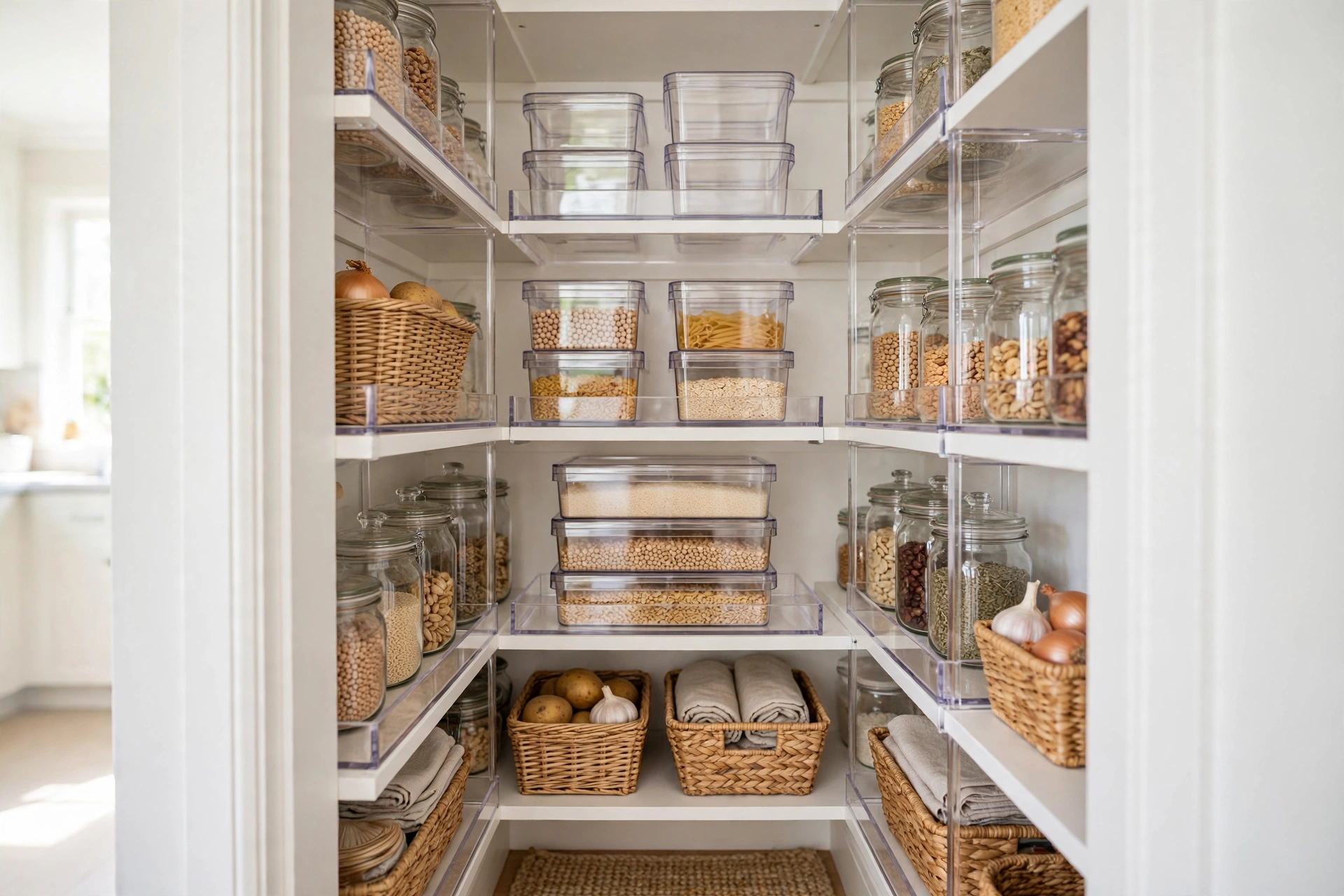
In a small pantry, the enemy isn’t floor space — it’s the wasted air between shelves. Shelf risers instantly double the storage of a tall shelf by creating a second level for mugs, tins and small jars. Stackable bins do the same for packets and produce, and they pull out like drawers for easy access.
Look up, too: the top 30cm of most pantries is dead space that a high shelf or a row of hooks can reclaim for rarely used items. Measure your shelf heights before buying risers — the goal is to eliminate air gaps, not to create new ones above your tallest jar.
10. Build a kid-height snack station
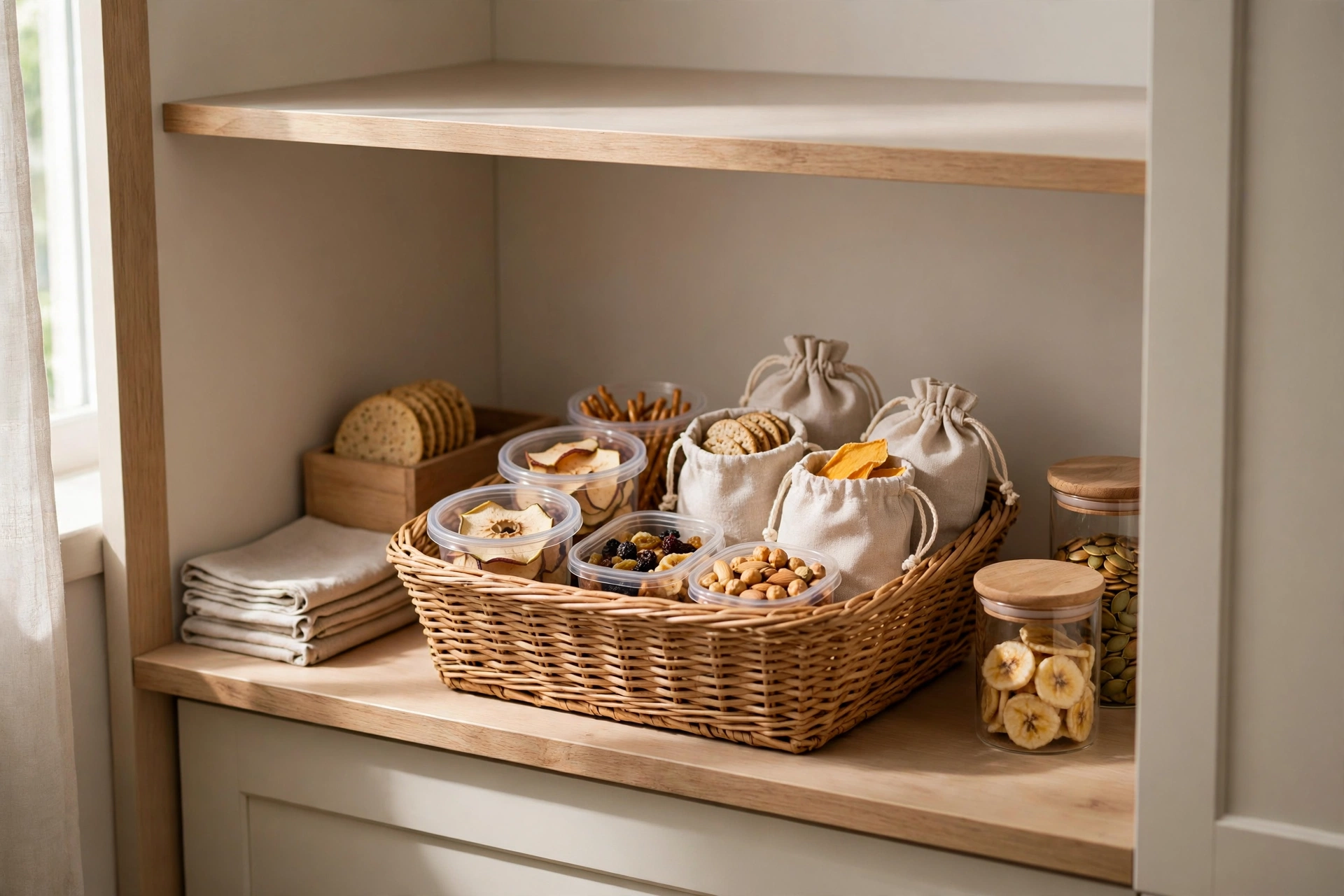
A low shelf with a labelled snack basket is a small change that transforms family life. Children can help themselves to approved snacks without climbing, asking or — the real prize — raiding the biscuit tin. It builds independence and it keeps little hands out of the zones you’ve carefully organised.
Keep the station to one basket or bin so it can’t sprawl, and restock it weekly with things you’re happy for them to choose freely. A picture label works for pre-readers. The rest of the pantry stays yours; this one corner belongs to them.
11. Add lighting and finish the surfaces properly
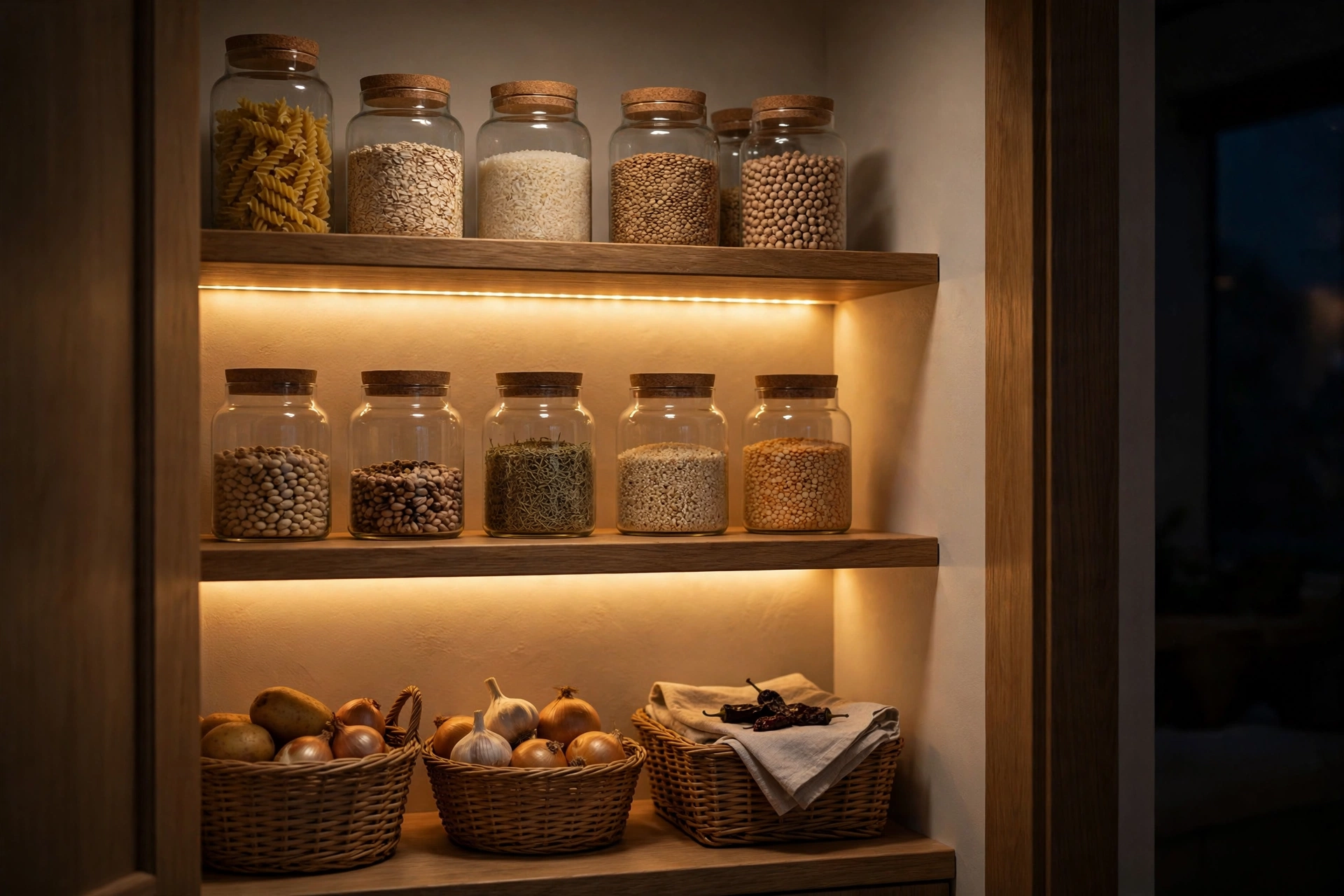
You can’t organise what you can’t see. Warm under-shelf lighting — ideally motion-sensor strips that switch on when the door opens — transforms a gloomy pantry into a space where every label is readable. It’s inexpensive, usually battery or USB powered, and takes an afternoon to fit.
While you’re at it, finish the surfaces properly: wipeable painted shelves or shelf liners make spills a non-event, and a fresh coat of light paint bounces the new lighting around. If the pantry is visible from the kitchen, consider budget-friendly backsplash ideas for the wall behind open pantry shelving — it ties the whole scheme together.
12. Store produce in ventilated bins
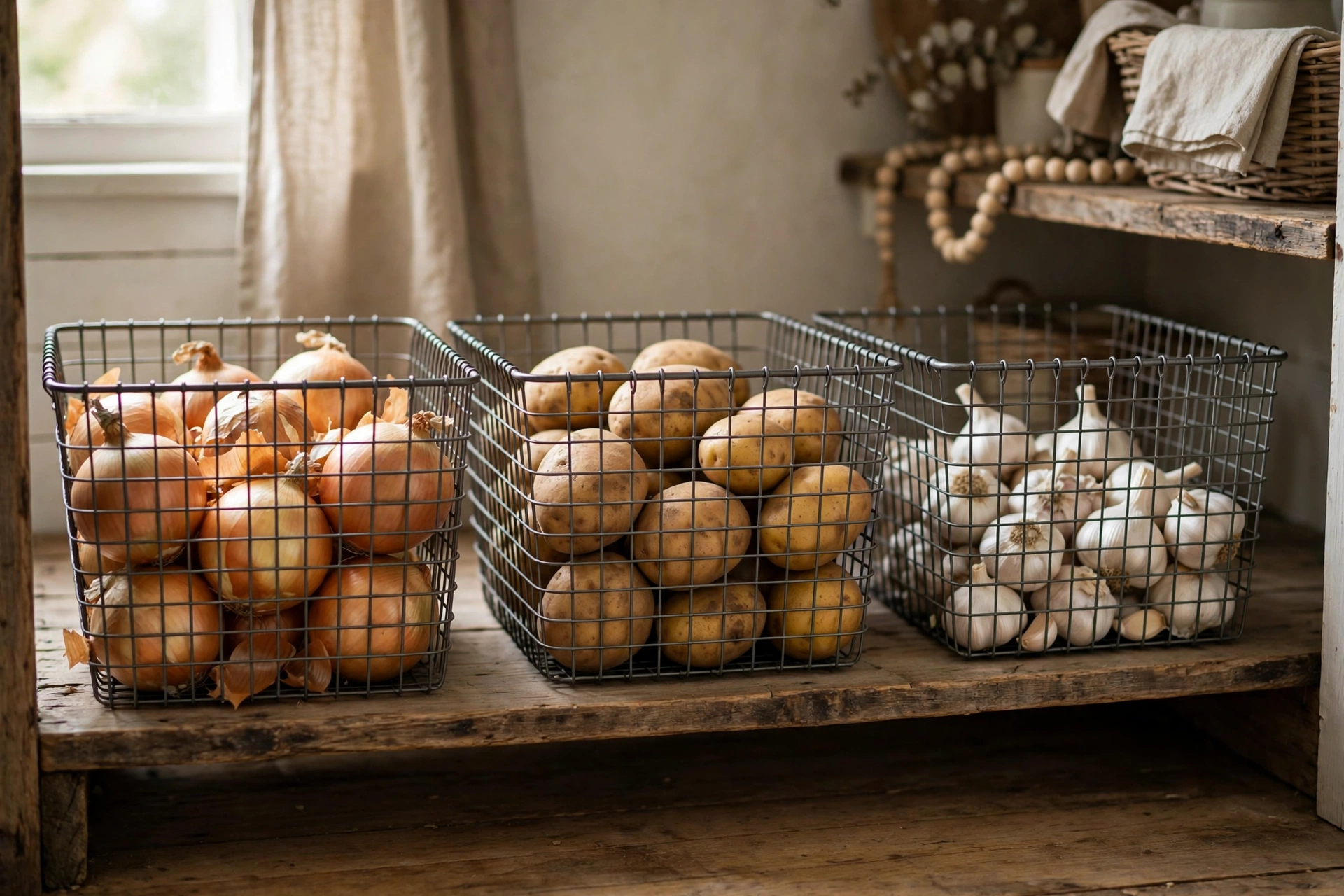
Onions, potatoes and garlic last far longer in ventilated bins than in plastic bags or sealed containers. Airflow prevents the moisture build-up that causes sprouting and rot, and dedicated bins stop earthy potatoes from sharing their aroma with everything else on the shelf.
Keep potatoes and onions in separate bins — onions release gases that make potatoes sprout faster. A darkish corner of the pantry suits both, as light encourages greening in potatoes. Stackable wire or slatted wooden bins look smart and let you see at a glance what needs using up.
Frequently Asked Questions
What’s the best way to organise a kitchen pantry?
Start by emptying it completely and discarding anything expired. Then group what remains into categories, give each category a zone, and contain small items in labelled baskets or bins. Decant the dry goods you use most into clear jars, add lighting so you can see what you have, and set up a simple first-in-first-out habit for tins and packets. Maintain it with a five-minute tidy when you unpack each shop.
How do I organise a small pantry with no space?
Think vertical: shelf risers, stackable bins and door-mounted racks add storage without adding footprint. Decant into uniform containers to eliminate wasted packaging air, use the inside of the door for spices and small items, and be ruthless about duplicates — a small pantry can’t afford to store three half-open bags of the same rice. Pull-out drawers help enormously in deep cupboards.
Should I decant everything into matching jars?
Not everything — decanting is worth it for dry goods you buy regularly and use steadily: flours, rice, pasta, cereals, sugar and pulses. Skip it for items you use rarely, things with a short shelf life once opened, and anything where the original packaging carries cooking instructions you’ll need. Start with your top ten staples and expand only if you enjoy the system.
How do I stop my walk-in pantry getting messy?
Mess in a walk-in is almost always a zoning failure, not a tidiness failure. Give every category a labelled home, keep the most-used zones at eye level, and contain small items in baskets so they can’t drift. The weekly shop is your maintenance moment: put things back in their zones as you unpack, and pull anything expired to the front for using up. A pantry with a system stays tidy almost by itself.
What depth should pantry shelves be?
For most items, 30–40cm is ideal — deep enough for cereal boxes and small appliances, shallow enough that nothing hides two rows deep. Reserve one deeper section (45–60cm) for bulk buys and large appliances if you have them. Adjustable shelving lets you tune each shelf to its contents, which matters more than any single “correct” depth.
Conclusion
A beautifully organised pantry isn’t about buying every container on the market — it’s about giving everything a visible, reachable, labelled home. Start with zones and baskets, add decanting and lighting where they’ll help most, and build the habits that keep the system alive. Your future self, mid-recipe with both hands free, will thank you.
