
Your garage floor takes more punishment than any other surface in your home: oil drips, tyre marks, dropped tools, road salt and the occasional mystery stain. Yet it is usually the last thing anyone thinks to upgrade. These 14 garage flooring ideas, from budget-friendly paint to showroom-grade epoxy and interlocking tiles, will help you choose a finish that looks sharp, shrugs off spills and stands up to daily use for years.
Coating ideas
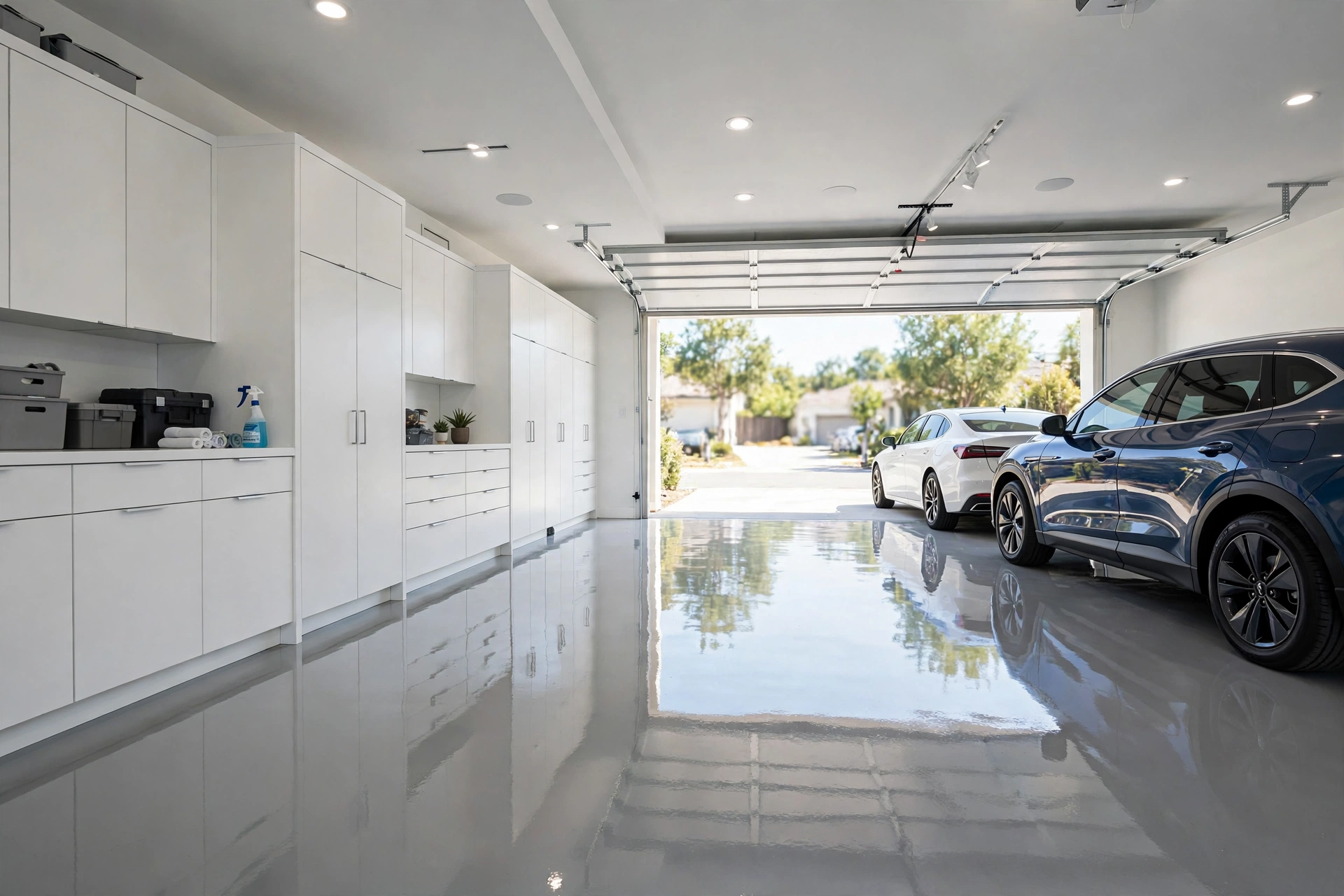
1. Solid-colour two-part epoxy
The classic garage floor upgrade. A two-part epoxy (resin plus hardener) bonds to prepared concrete and cures into a hard, glossy shell that resists oil, petrol and hot tyre marks. Pick a light grey or warm putty tone to bounce light around a dark garage. DIY kits cover a double garage over a weekend, but the secret is in the prep: degrease, etch or grind the concrete, and let it cure fully before driving on it.
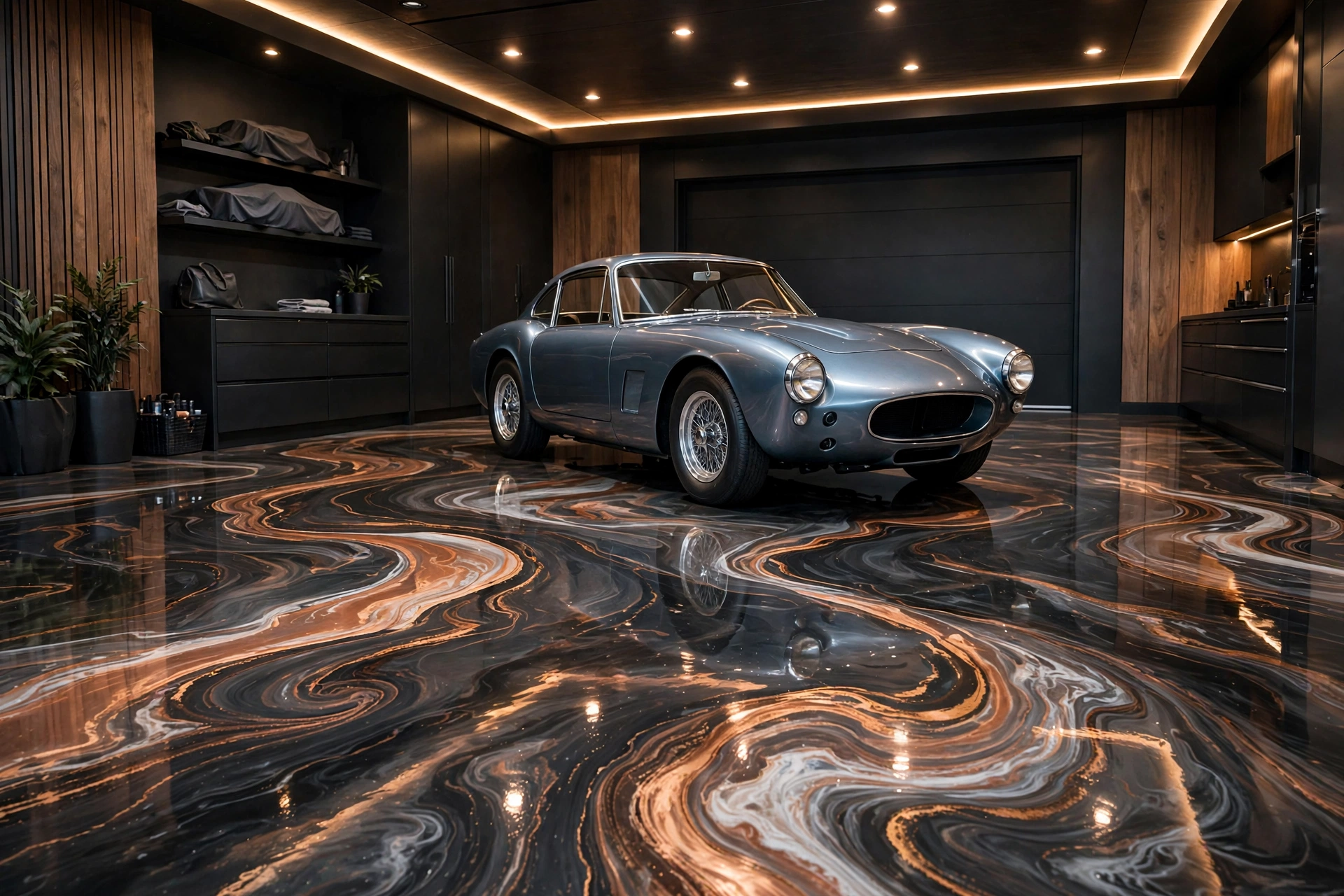
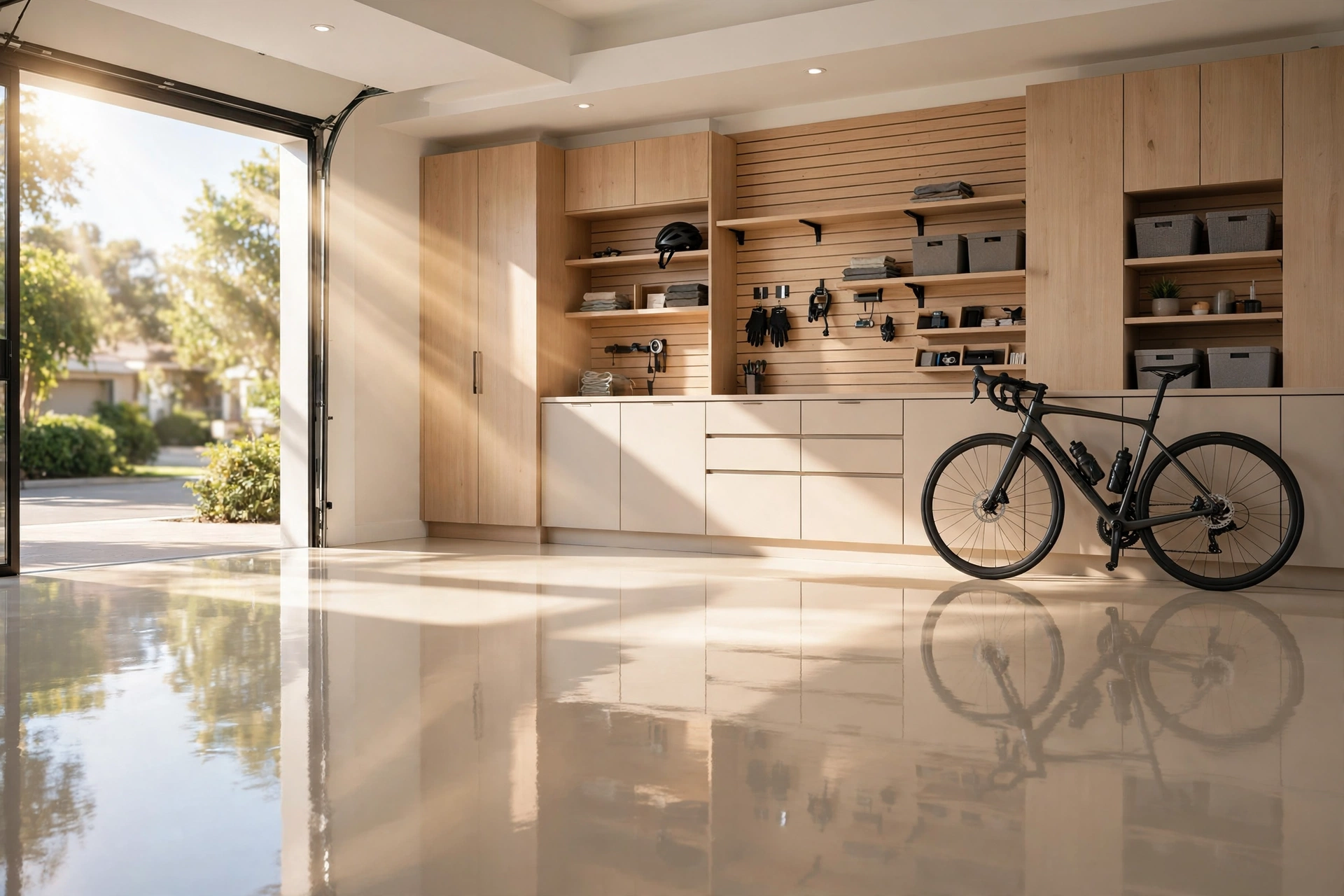
2. Metallic epoxy swirls
For a floor that looks like liquid marble, metallic epoxy is the showstopper. Pigmented powders are swirled through the wet resin to create smoky charcoal, copper or pearl effects that no two installers will reproduce exactly. It needs a UV-stable topcoat in sun-exposed garages and a professional hand for the best result, but the payoff is a floor guests will ask about.
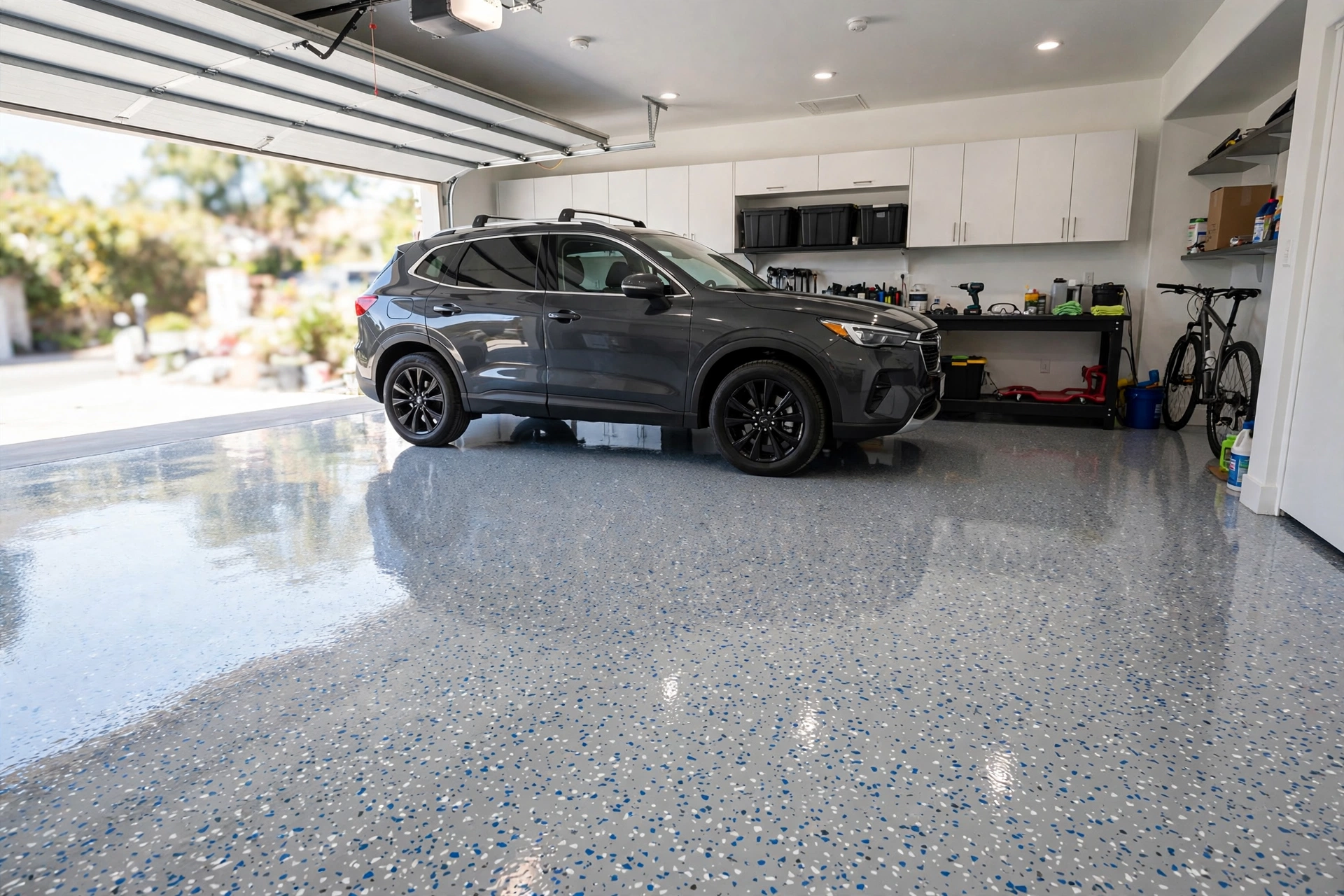
3. Epoxy with decorative flakes
A solid epoxy base broadcast with decorative colour chips gives a terrazzo-like finish that hides dust, dirt and the odd scuff far better than a plain coating. The flakes also add a subtle texture underfoot. This is the most forgiving epoxy finish for DIYers, because minor application marks disappear into the pattern. Choose a flake blend that echoes your cabinetry or wall colour for a pulled-together look.
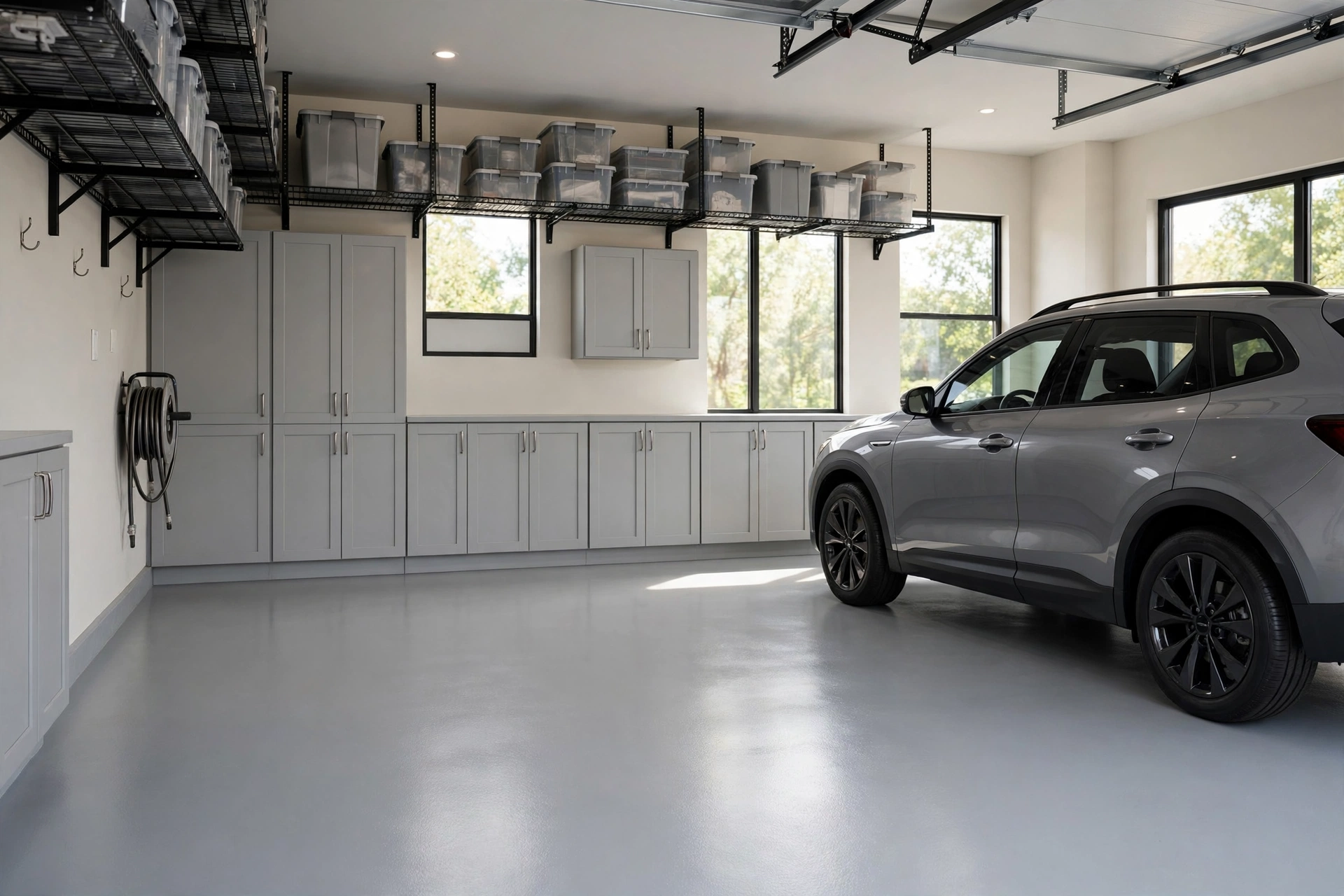
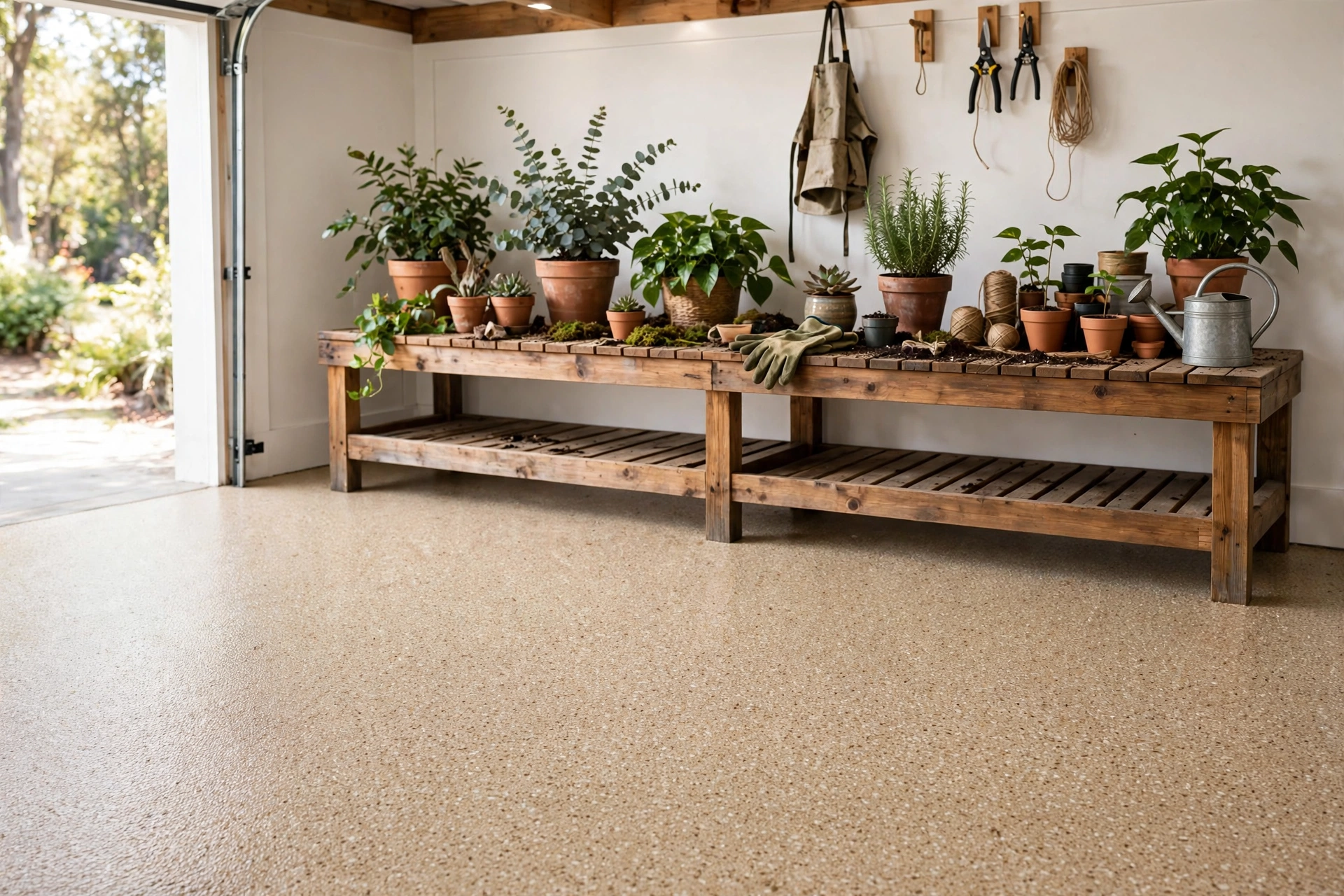
4. Quartz broadcast epoxy
Quartz broadcast systems scatter coloured quartz granules into wet epoxy, producing a speckled, stone-like surface with serious grip. It is a smart pick near potting benches, dog-wash stations or anywhere water pools, because the texture fights slips even when wet. The finish reads warm and natural rather than plasticky, and it wears extremely well in high-traffic parking lanes.
5. Polyaspartic topcoat
Polyaspartic is the fast-curing cousin of epoxy: it can be walked on within hours and driven on the next day, it stays colour-stable in sunlight, and it shrugs off chemicals. Many professionals now lay it as a topcoat over an epoxy base for the best of both worlds. If your floor colour needs to tie into the rest of the scheme, our garage design ideas show how to coordinate flooring with walls, lighting and storage.
6. Concrete stain
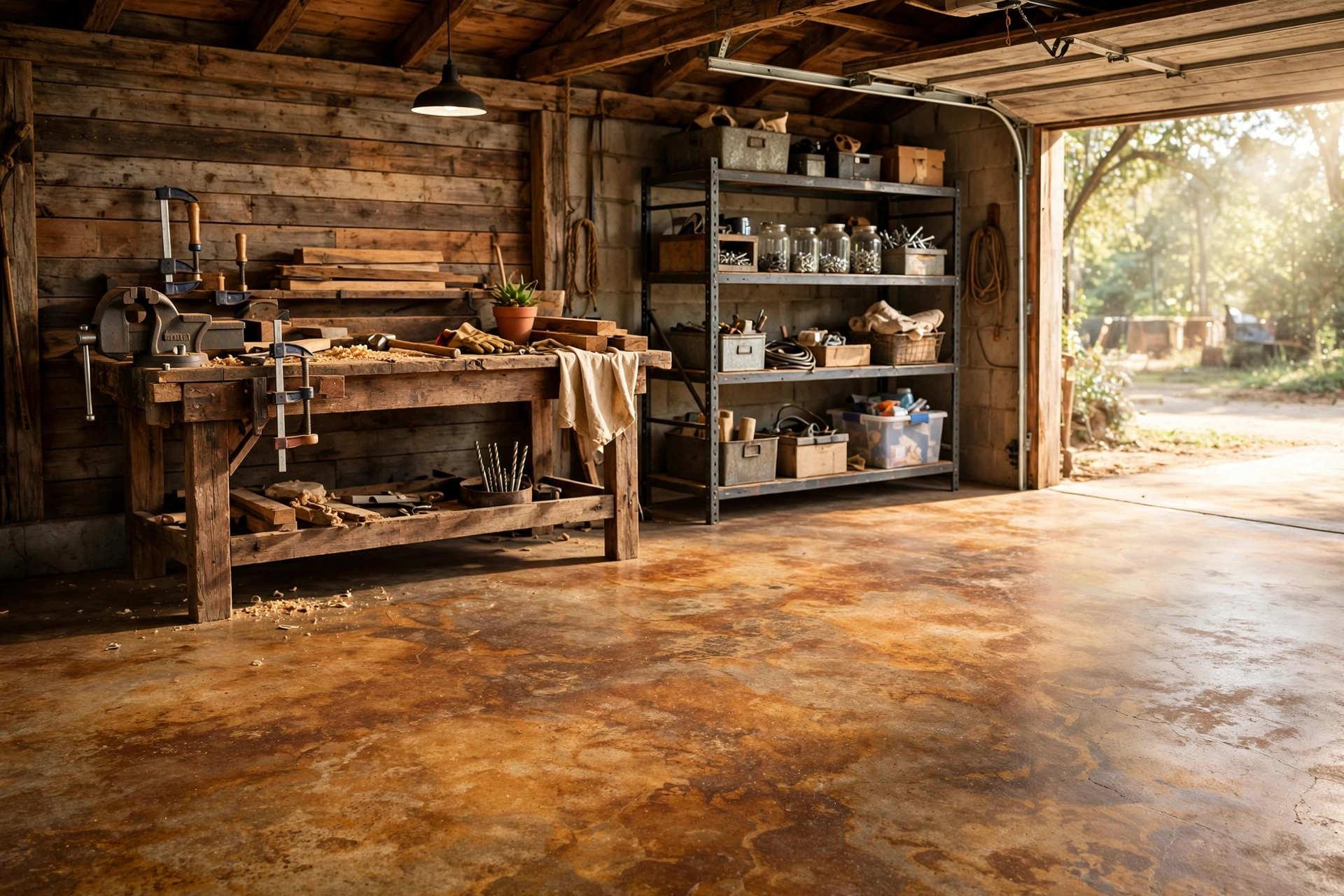
Acid or water-based stains soak into the concrete itself, producing variegated, mottled colour in warm browns, greys and taupes that looks like aged stone. Staining is cheaper than coating and will never peel, because there is no film to lift. Seal it with a good concrete sealer for stain resistance. It suits rustic, industrial and farmhouse-style garages where character matters more than gloss.
7. Concrete densifier and sealer
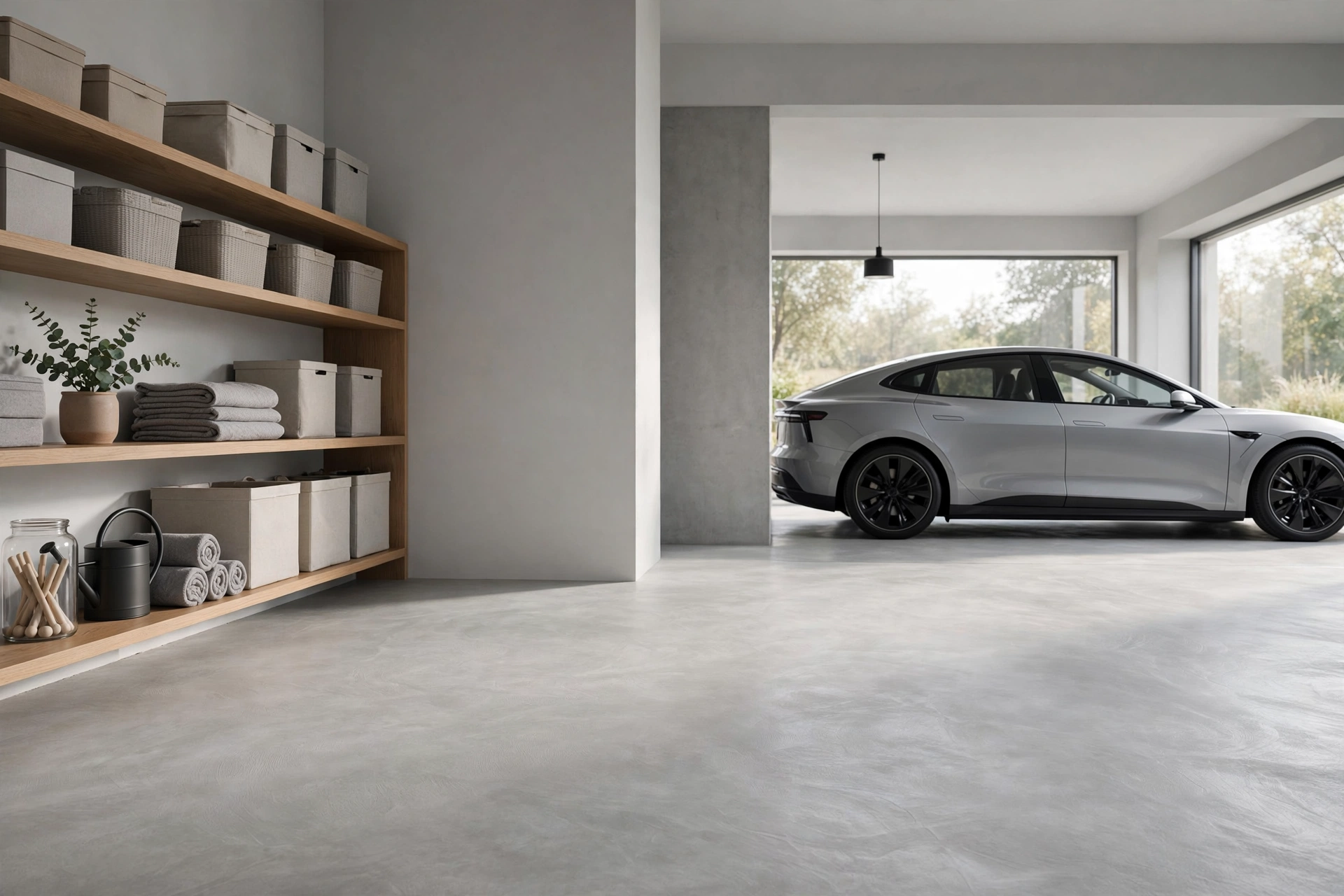
If you like the honest look of bare concrete but hate the dust, a densifier plus penetrating sealer is the answer. The densifier hardens the surface and the sealer stops oil and water soaking in, all without changing the colour or adding shine. It is one of the cheapest permanent treatments available and a solid choice for garages used mostly for parking and storage.
Tile and modular ideas
8. Interlocking PVC tiles
Interlocking PVC tiles snap together with no adhesive, so a double garage can be floored in an afternoon with nothing more than a rubber mallet and a utility knife. Mix colours to create checkerboard patterns, racing stripes or parking bays, and replace individual tiles if one gets damaged. They are comfortable underfoot and warm up a garage instantly.
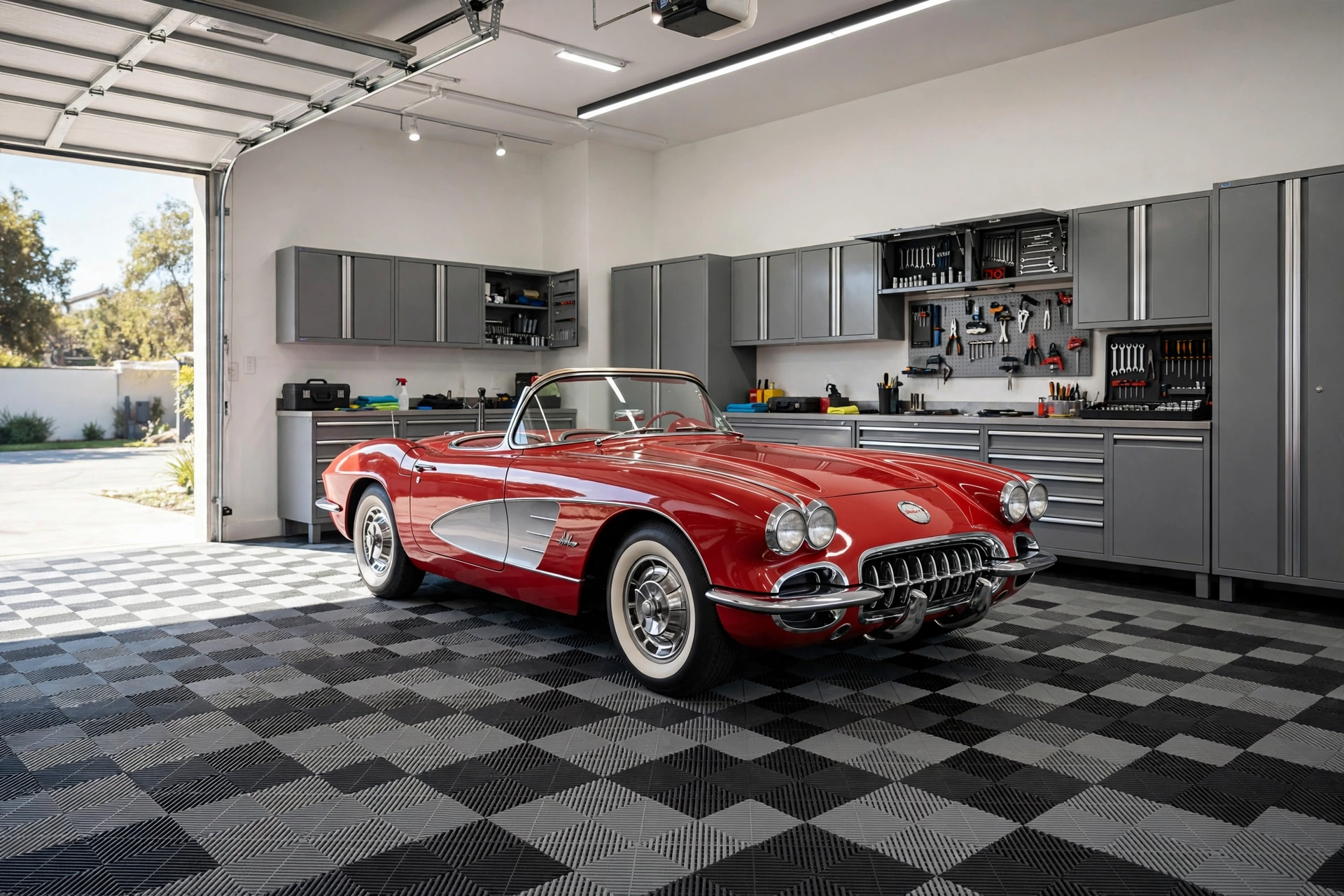
9. Rigid polypropylene tiles
Rigid polypropylene tiles are the heavy-duty sibling of PVC: harder, more chemical-resistant and rated for heavier vehicles and jack stands. The raised coin or diamond-tread patterns channel water away and give excellent traction. They cost more than flexible tiles, but for a working garage that sees jacks, dollies and engine work, the durability is worth it.
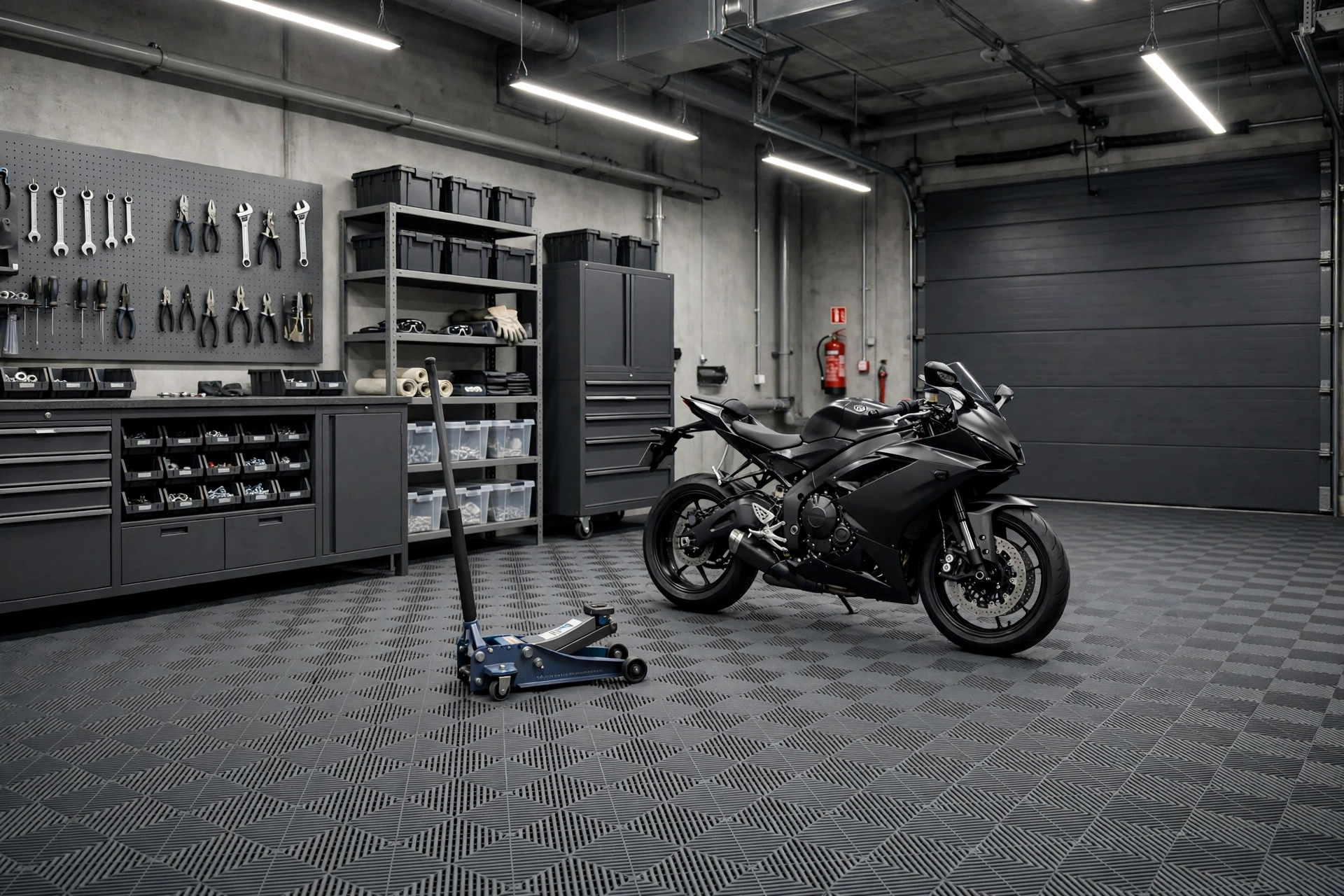
10. Porcelain tiles
For the ultimate showroom finish, porcelain tiles rated for garage use deliver a flawless, easy-to-clean surface in any style from polished concrete-look to wood-look planks. Professional installation is essential: the slab must be flat and the right flexible adhesive and grout used to cope with vehicle weight. The result feels more like a gallery than a garage.

11. Peel-and-stick vinyl tiles
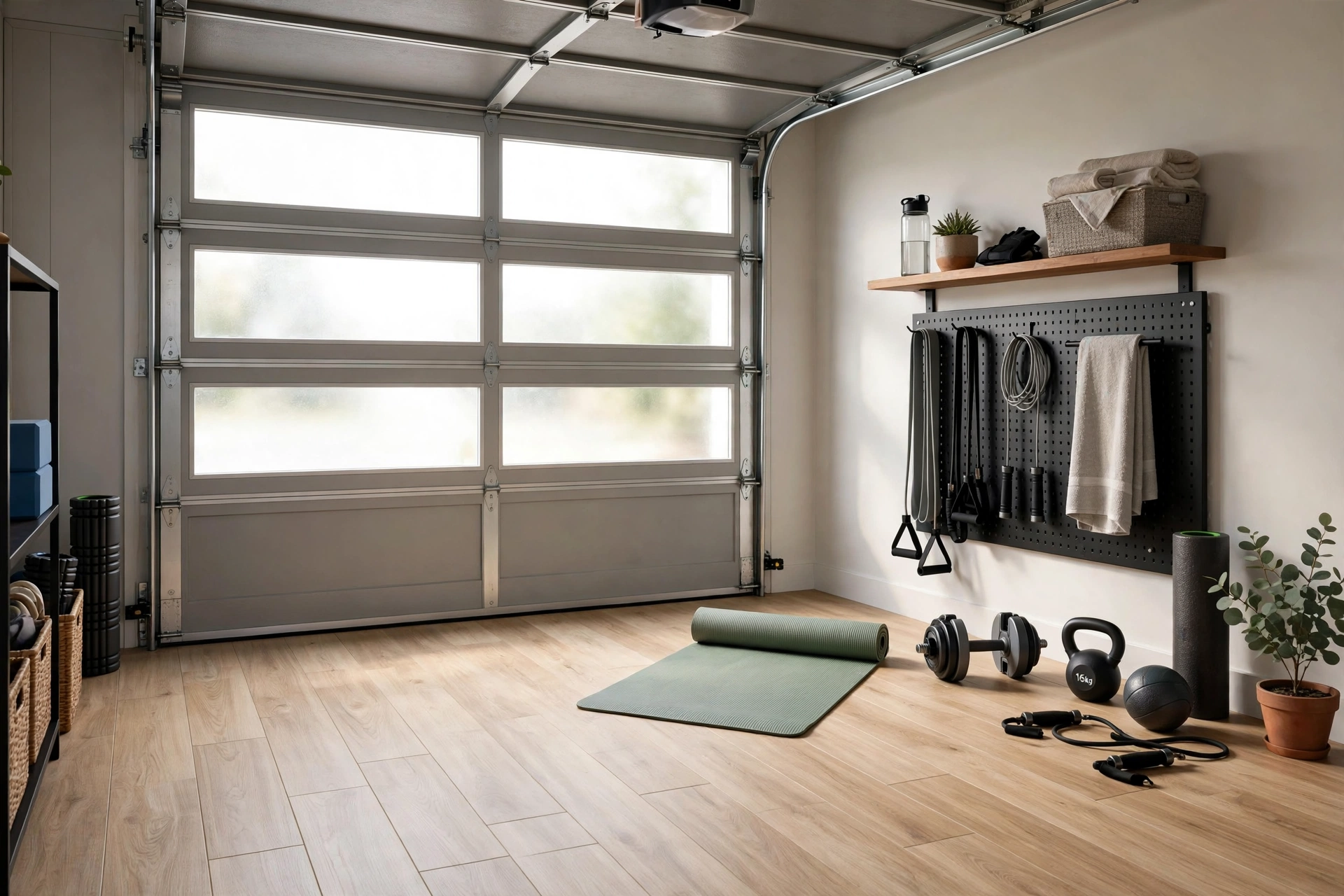
Peel-and-stick vinyl tiles are the quickest way to warm up a garage that doubles as a gym, playroom or laundry overflow. They come in wood, stone and geometric patterns, install over a clean level slab, and cost a fraction of porcelain. They are less tough than epoxy or rigid tiles, so keep them to light-duty zones rather than under heavy vehicles.
Budget and quick-fix ideas
12. Garage floor paint
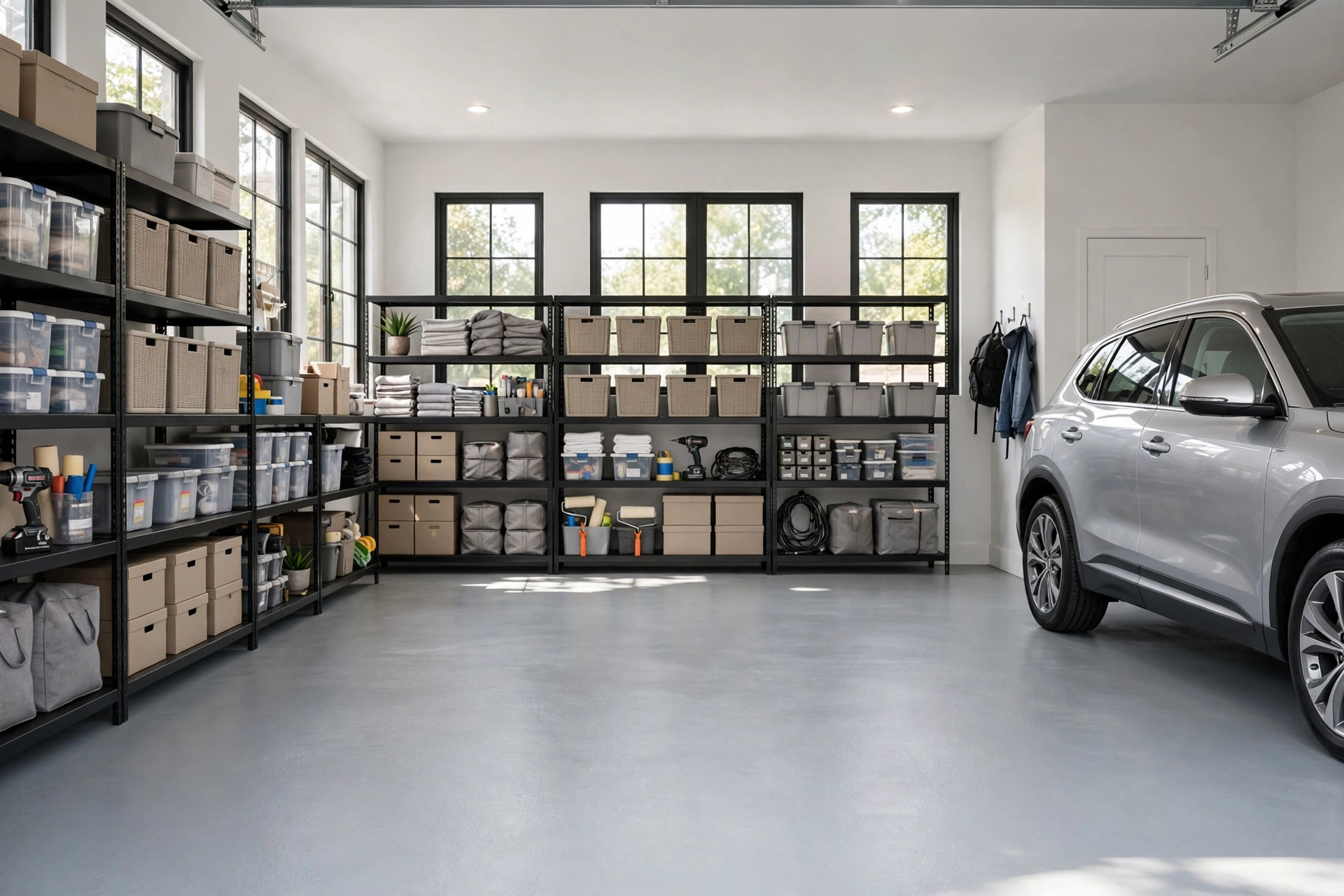
A dedicated concrete floor paint is the cheapest route to a cleaner-looking garage. One or two coats of hard-wearing acrylic or 1-part epoxy paint in light grey will hide old stains and brighten the space for very little money. Expect to touch it up every few years in high-wear areas, but for a quick cosmetic refresh it is hard to beat.
13. Roll-out vinyl flooring
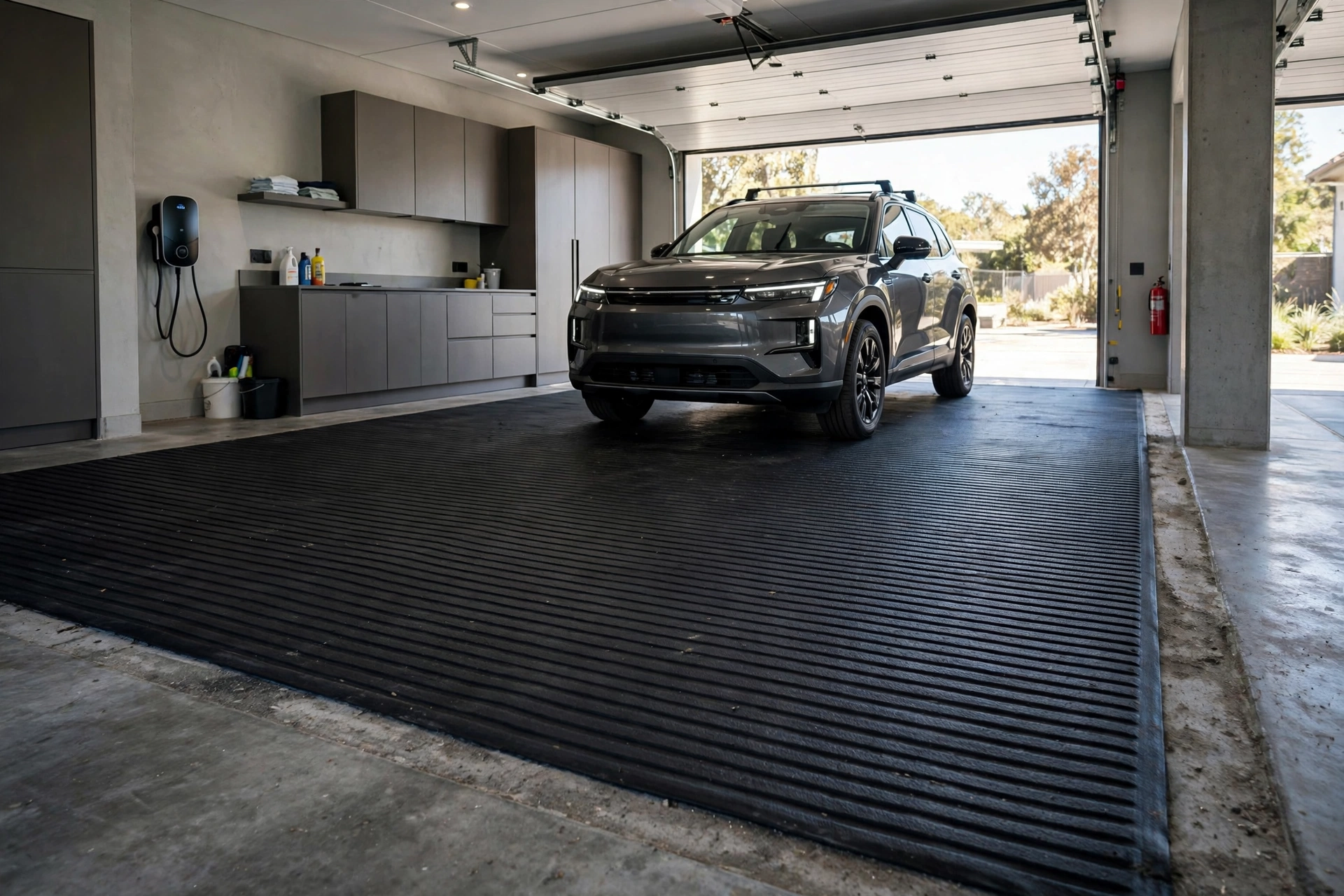
Heavy-duty roll-out vinyl mats cover a parking bay in minutes with no tools: unroll, trim to fit, done. They hide cracked or stained concrete completely, cushion dropped tools and wipe clean with a mop. Choose a ribbed or diamond-plate texture for grip, and look for mats with bevelled edges so they do not curl or trip you at the threshold.
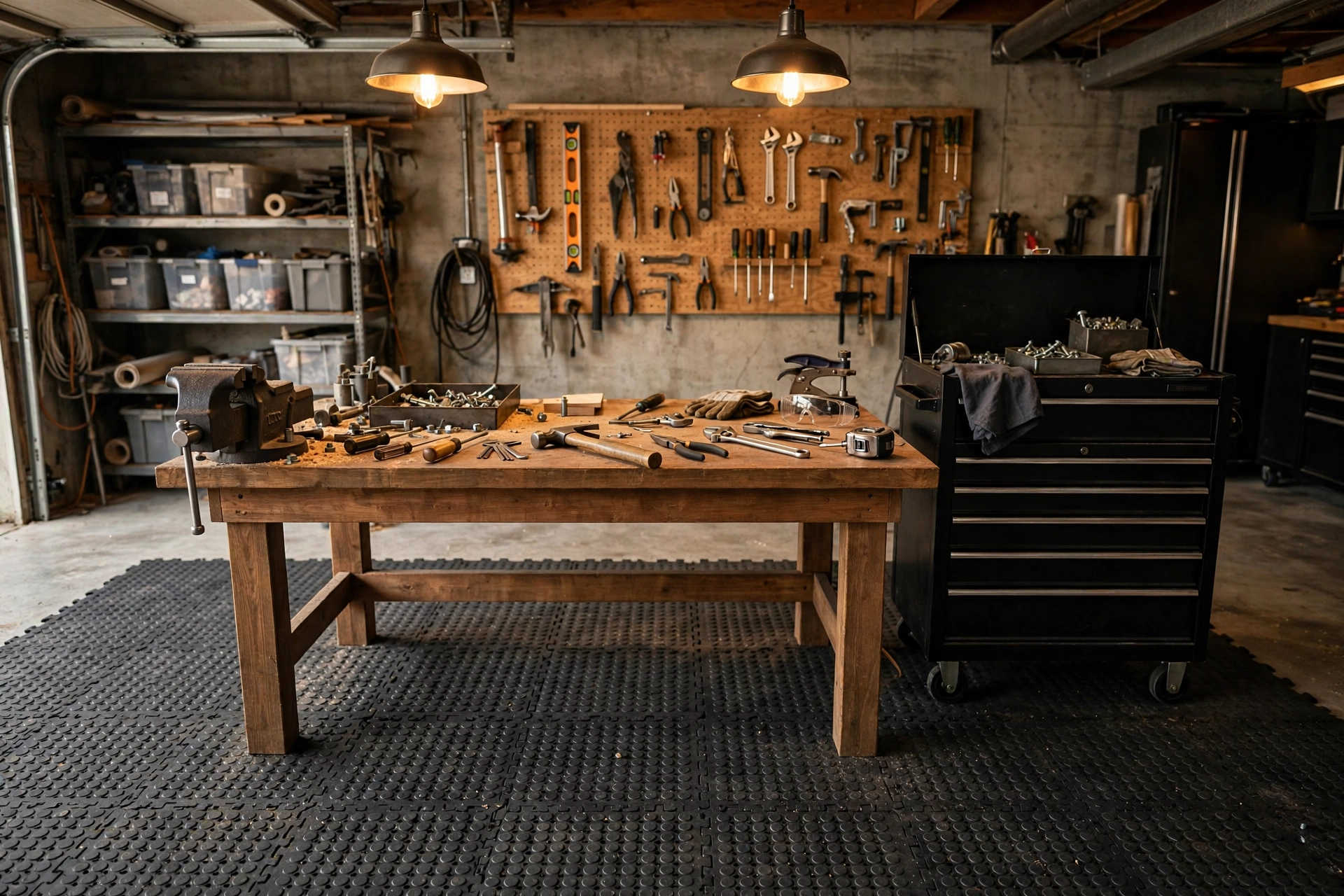
14. Rubber coin mats for the workshop zone
You do not have to treat the whole floor the same. Lay interlocking rubber coin mats just where you stand: at the workbench, the vice and the tool chest. The cushioned surface is kinder to feet, back and dropped parts, and the coin texture grips even with sawdust around. If your garage doubles as a workshop, our garage workshop ideas show how to zone the rest of the space around them.
Frequently asked questions
What is the best flooring for a garage?
For most homeowners, two-part epoxy or interlocking tiles offer the best balance of durability, looks and cost. Epoxy wins on seamless stain resistance; tiles win on easy DIY installation and replaceability. Choose based on how you use the space: parking-heavy garages suit epoxy or rigid tiles, while multi-use spaces may prefer modular options.
How much does epoxy garage flooring cost?
A DIY two-part epoxy kit for a double garage typically costs a few hundred pounds or dollars, while a professionally installed flake or metallic epoxy system runs several thousand. The spread comes down to surface prep, the resin system used and whether you add a polyaspartic topcoat. Get the prep right and even a mid-range kit will last many years.
Can you tile a garage floor?
Yes, with the right tiles. Interlocking PVC or polypropylene tiles are purpose-made for garages and handle vehicle weight without adhesive. Porcelain tiles also work but must be rated for the load, laid on a flat slab by a professional with flexible adhesive and grout, and given an anti-slip finish for safety.
Is epoxy or tile better for a garage?
Epoxy gives a seamless, chemical-resistant surface that is easy to sweep and mop, but it needs careful prep and cure time. Interlocking tiles install in hours with no fumes or drying time and can be lifted or rearranged, though dirt can collect in the seams. For a flawless showroom look pick epoxy; for flexibility and DIY ease pick tiles.
How long does garage floor epoxy last?
A properly prepared two-part epoxy floor typically lasts 5 to 10 years in a home garage, and longer with a polyaspartic topcoat. Lifespan depends almost entirely on preparation: degreased, etched or diamond-ground concrete with cracks repaired will hold a coating far longer than a surface that was just swept and rolled.
Should I DIY my garage floor or hire a professional?
Confident DIYers can handle interlocking tiles, roll-out mats, paint and basic two-part epoxy kits over a weekend. Metallic epoxy, quartz broadcast systems and porcelain tiles reward professional installation. For a detailed walkthrough of the prep and curing process on both routes, see this garage floor coating guide comparing DIY and professional installation.
The bottom line
The right garage floor is the one that matches how you actually use the space. A parking-only garage thrives on epoxy or a densifier, a working garage earns its keep with rigid tiles or rubber mats at the bench, and a multi-use garage loves modular tiles you can reconfigure. Pick your finish, prep the slab properly, and you will wonder why you waited so long.
