
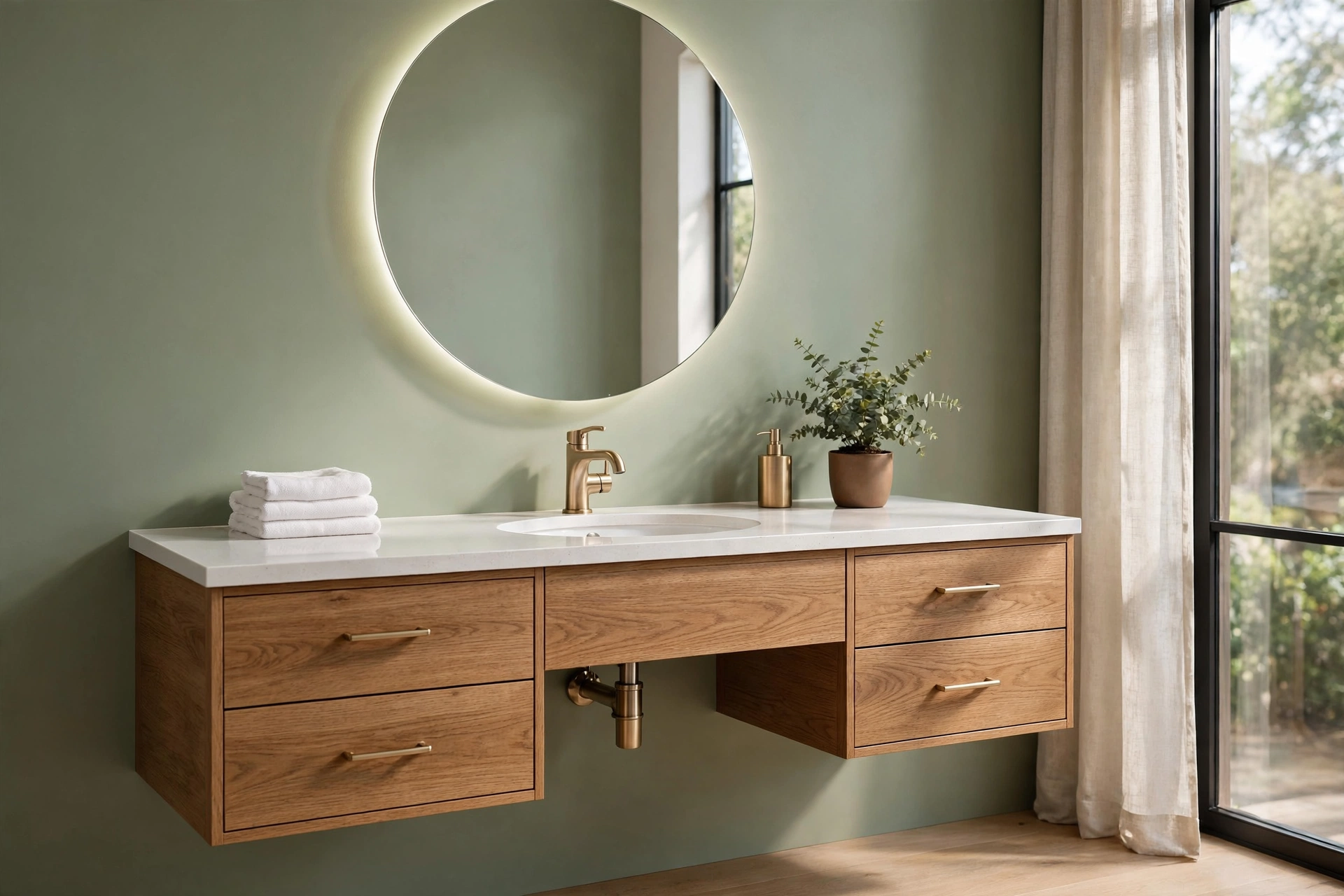
The bathroom vanity works harder than almost any other piece of furniture in the house. It stores the clutter, anchors the design and sets the tone for the whole room — and it gets used bleary-eyed at 6am and last thing at night. Get it right and the entire bathroom feels calmer, bigger and more luxurious; get it wrong and you’re staring at a cramped cabinet with a wobbly door for the next decade.
Whether you’re planning a full renovation or simply swapping out a tired unit, these 13 bathroom vanity ideas balance storage and style in equal measure. From space-stretching floating designs to characterful vintage conversions, there’s an idea here for every bathroom size and budget — and if you’re going further, these are the remodel ideas worth the money in 2026.
1. Go for a Floating Vanity
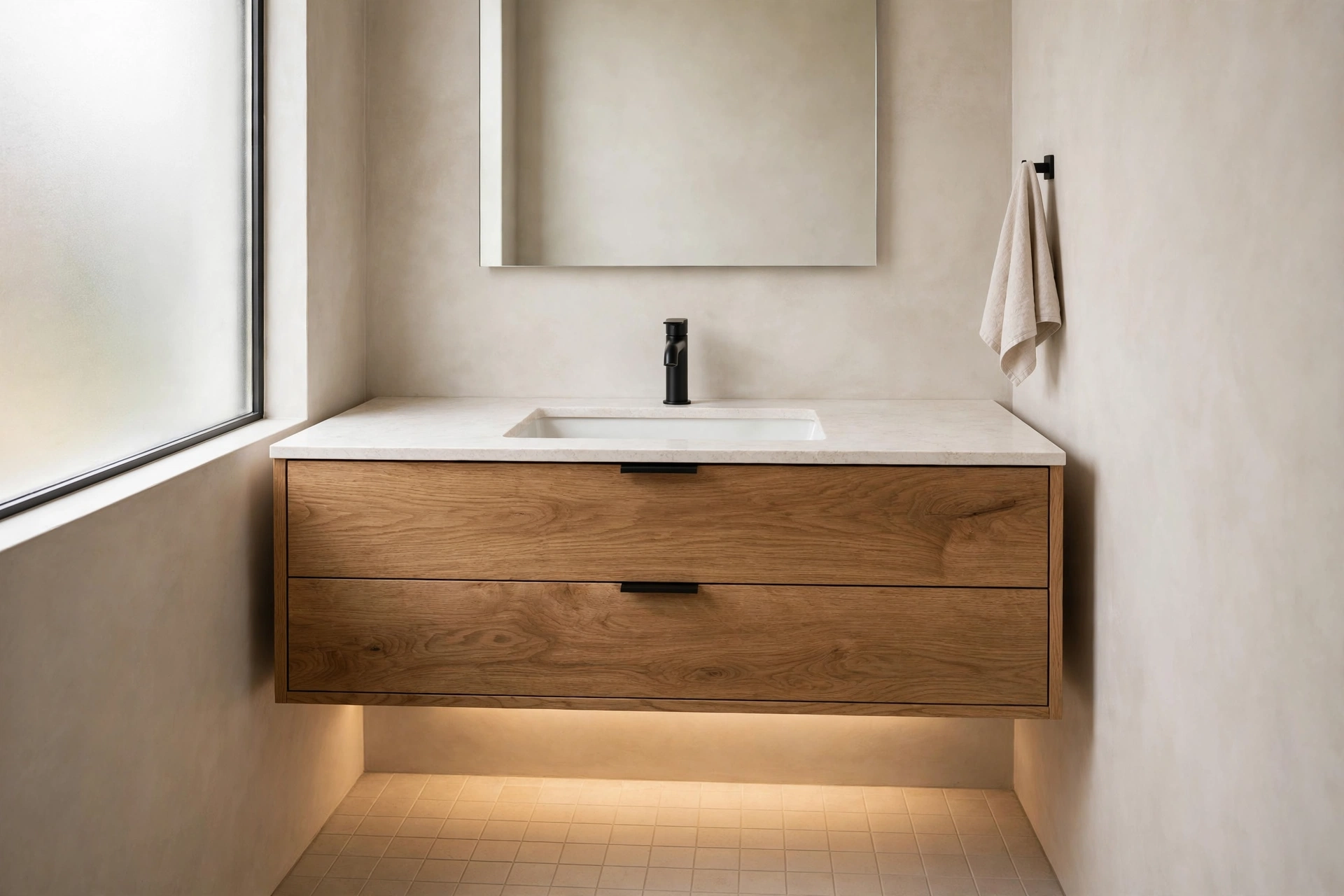
A wall-mounted floating vanity is the single best trick for making a bathroom feel bigger. With the floor running uninterrupted beneath it, even a compact ensuite reads as airy and open — and cleaning becomes a two-minute job with no cabinet base to mop around. The look is effortlessly modern, especially in warm oak with a clean quartz top.
Don’t assume floating means flimsy. Properly fixed to studs or solid blocking, a floating vanity comfortably holds a stone worktop and a basin full of water. Choose deep drawers to make the most of the storage, and add a soft LED strip underneath for a gentle night-time glow that doubles as a nightlight.
2. Try a Double-Sink Vanity
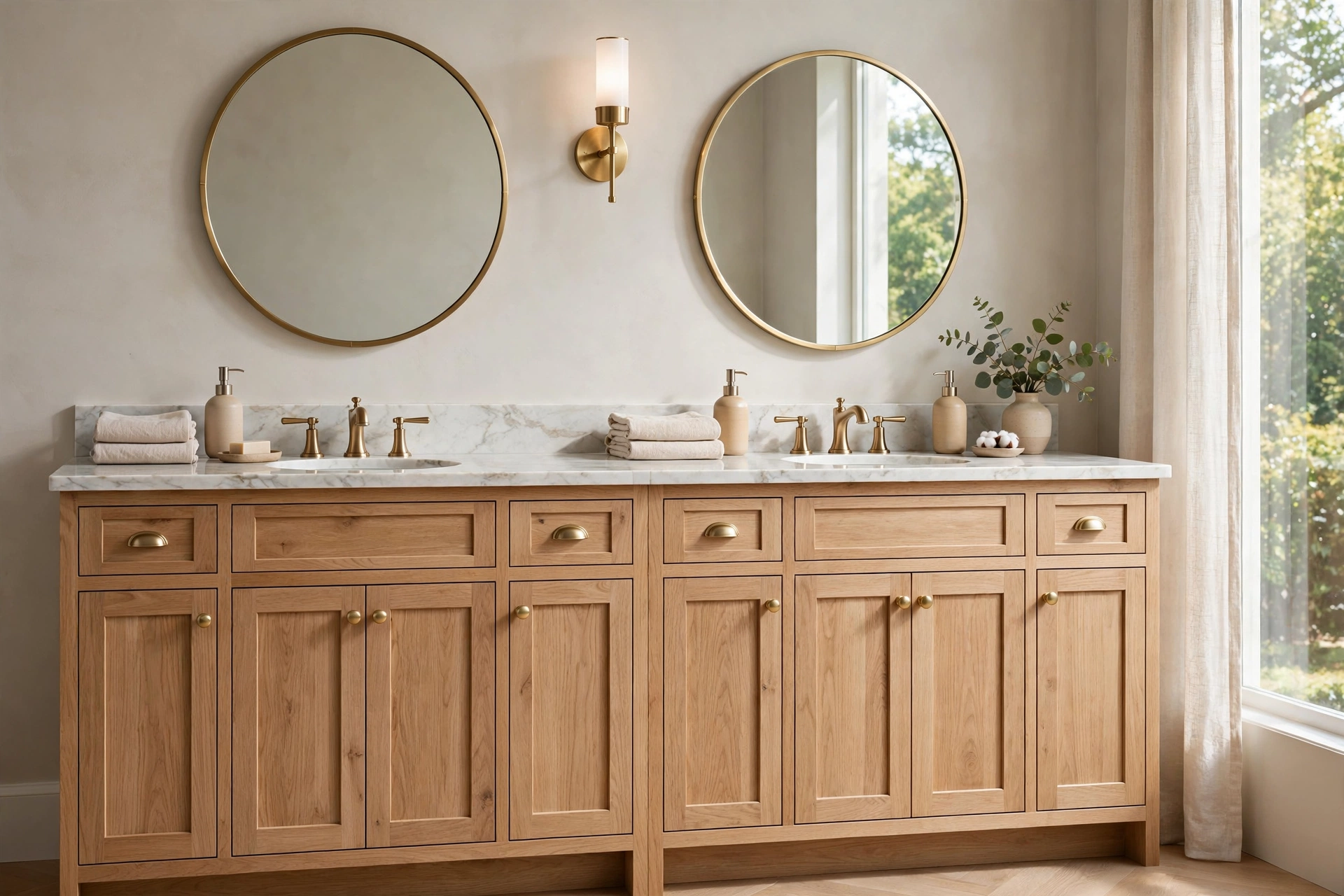
If two people share a bathroom, a double-sink vanity isn’t a luxury — it’s a relationship saver. No more hovering with a toothbrush while someone else washes their face. Twin basins with their own mirrors and a sconce each give the room a pleasing symmetry that instantly feels high-end.
You’ll need at least 150cm of wall width to make it work comfortably — roughly 60cm per basin plus breathing room. Plumbing for two wastes costs more, so factor that into the budget early. The payoff is a bathroom that handles busy mornings with ease, and a design that future buyers will love.
3. Convert a Vintage Dresser
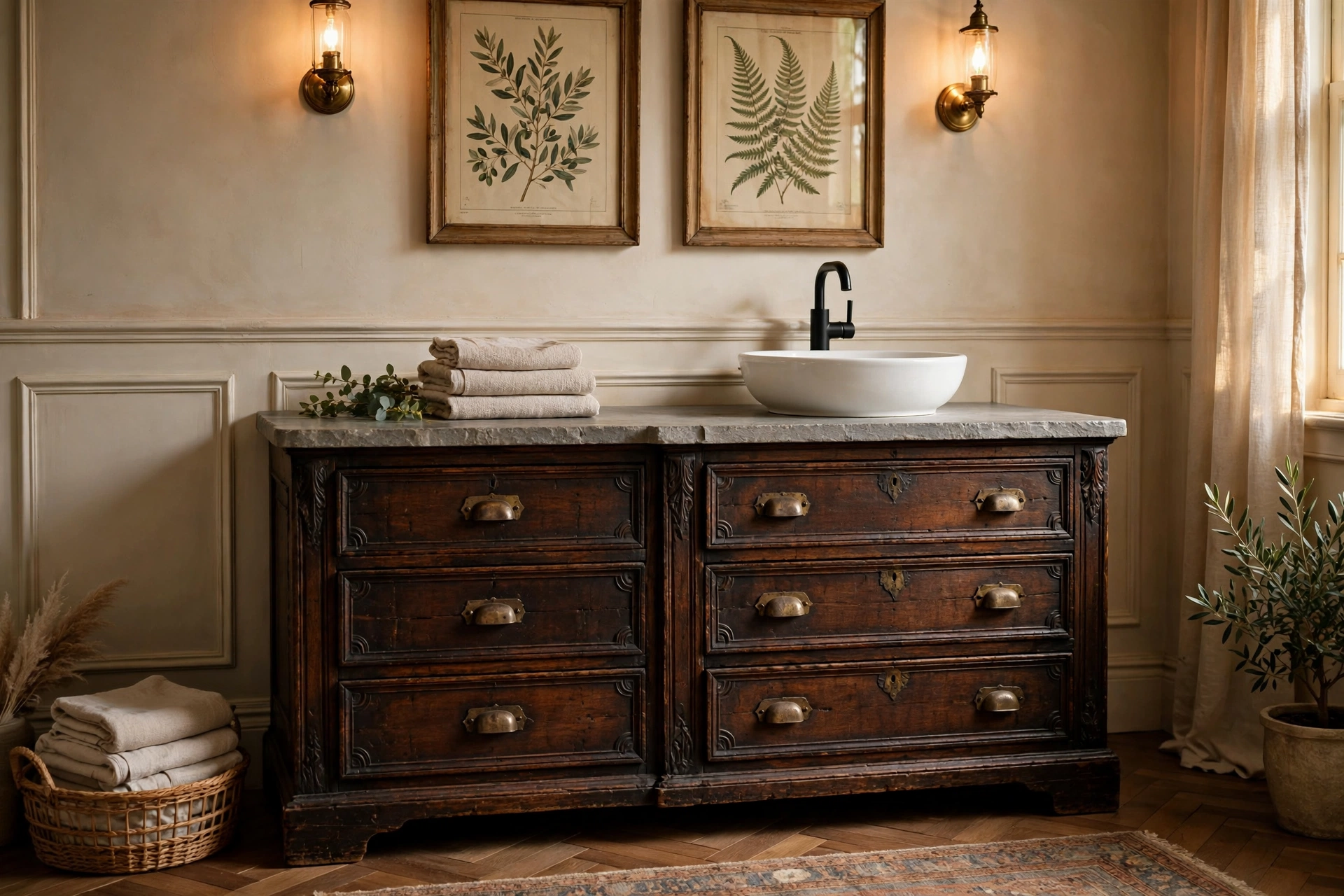
An old dresser or sideboard makes a vanity with more character than anything flat-pack. Cut out the drawer backs to make room for plumbing, seal every surface against humidity, and top it with a stone remnant or several coats of marine varnish. Drop a vessel sink on top and you have a one-of-a-kind piece with proper furniture proportions.
The drawers — carefully cut around the pipes — swallow clutter beautifully, and the patina of aged wood brings warmth that new furniture can’t fake. Seal thoroughly and re-oil once a year; bathrooms are steamy and unsealed wood won’t forgive you. For step-by-step guidance, Family Handyman’s DIY vanity projects are an excellent starting point.
4. Choose Deep Drawers Over Doors
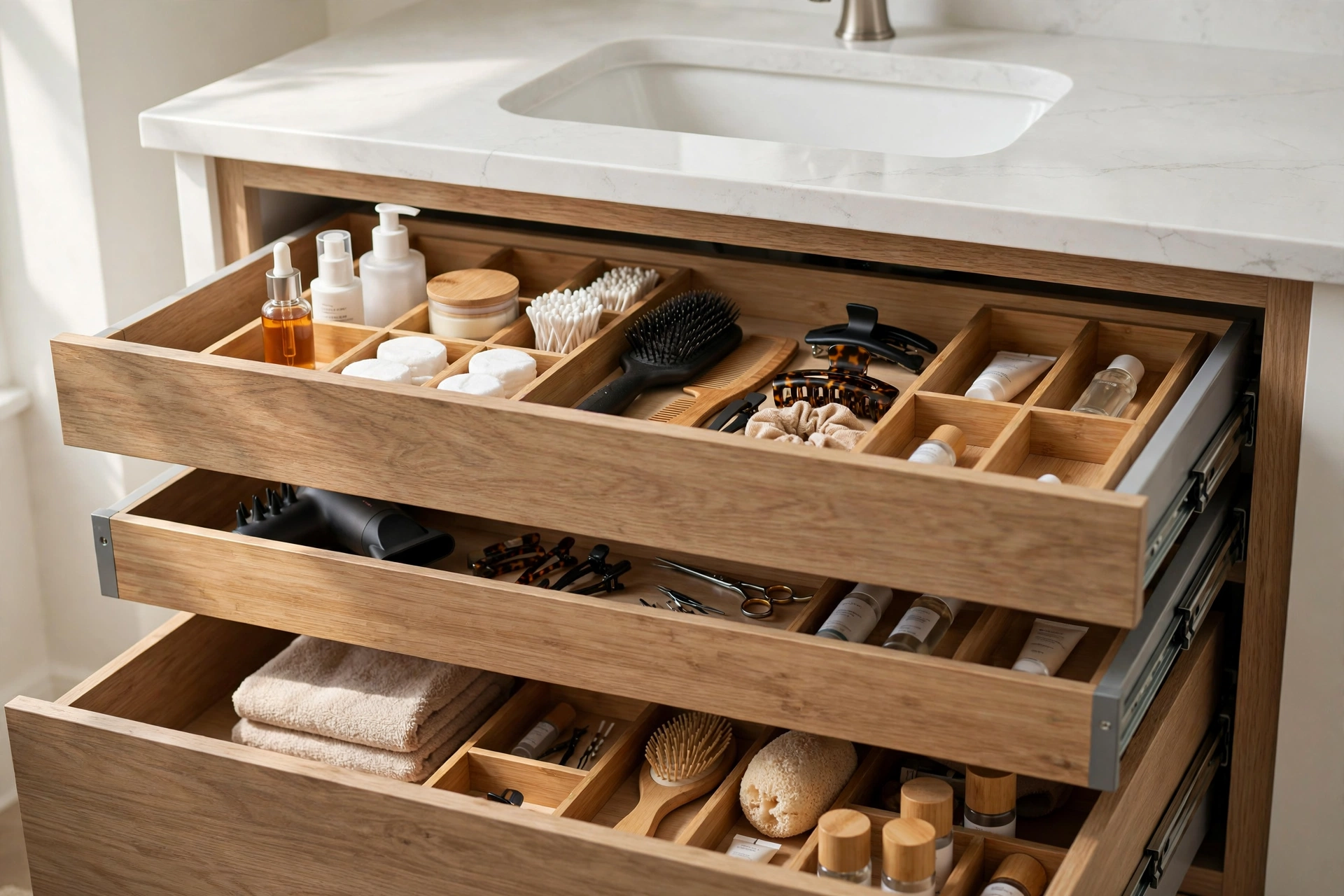
Open a standard vanity cupboard and you’ll find a dark cave where things go to be forgotten. Deep drawers with bamboo organisers change everything: every bottle is visible at a glance, nothing hides at the back, and U-shaped cut-out drawers work neatly around the plumbing. It’s the difference between storage you use and storage you own.
If you’re buying new, prioritise drawer storage over doors every single time. Full-extension runners matter too — cheap runners that only open halfway defeat the purpose. This one change will do more for your daily routine than any amount of styling.
5. Add a Fluted Wood Front
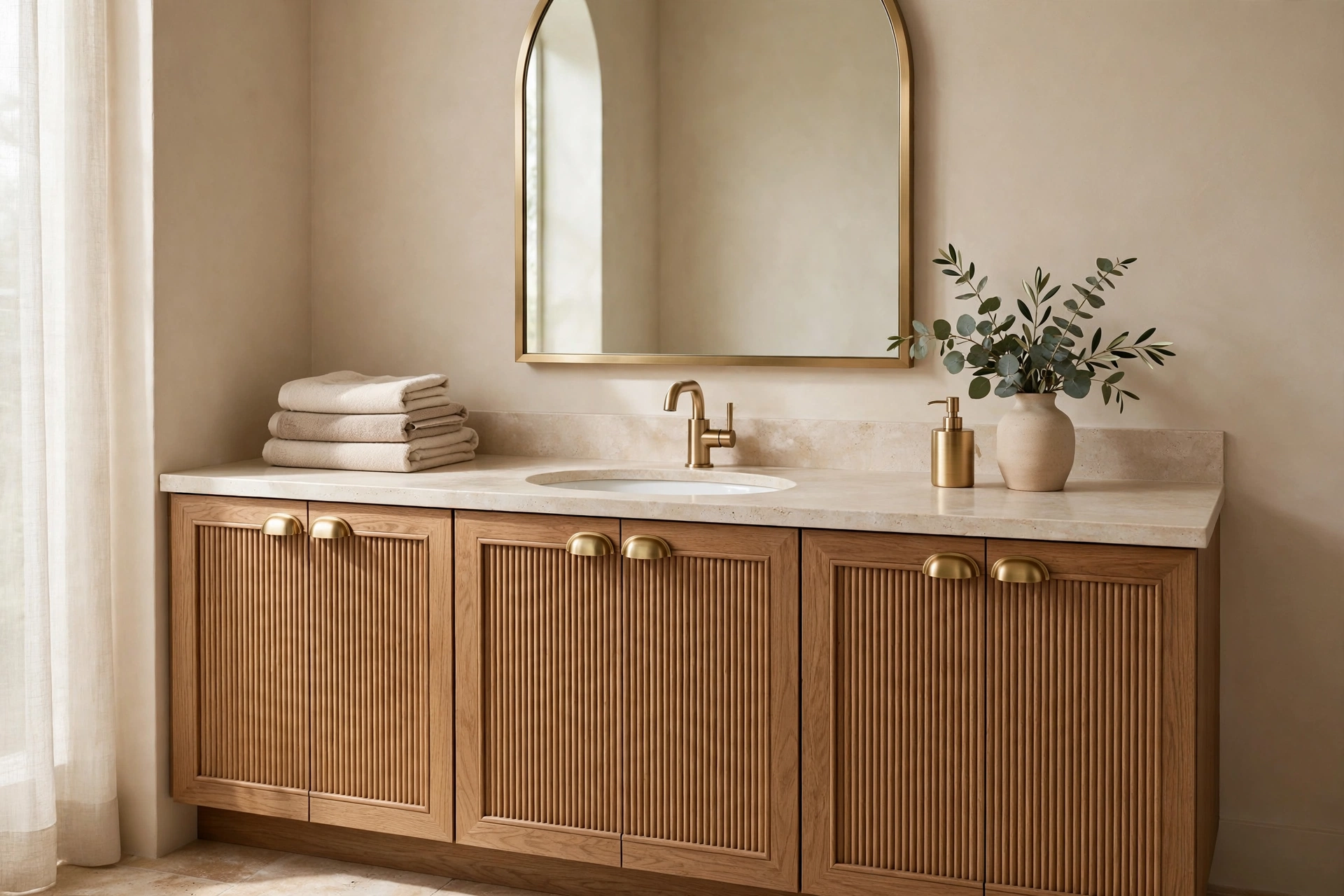
Fluted and reeded fronts bring wonderful texture to a bathroom. The vertical grooves catch the light beautifully, give the cabinet a bespoke joinery feel, and hide the odd splash mark far better than a flat gloss door ever could. It’s detail that reads as expensive without the custom price tag.
Pair a fluted front with an arched mirror and brushed brass handles for a look that’s warm, current and quietly luxurious. Keep the palette restrained elsewhere — the texture is the star, so let it breathe against calm walls and a simple stone top.
6. Paint It a Bold Colour
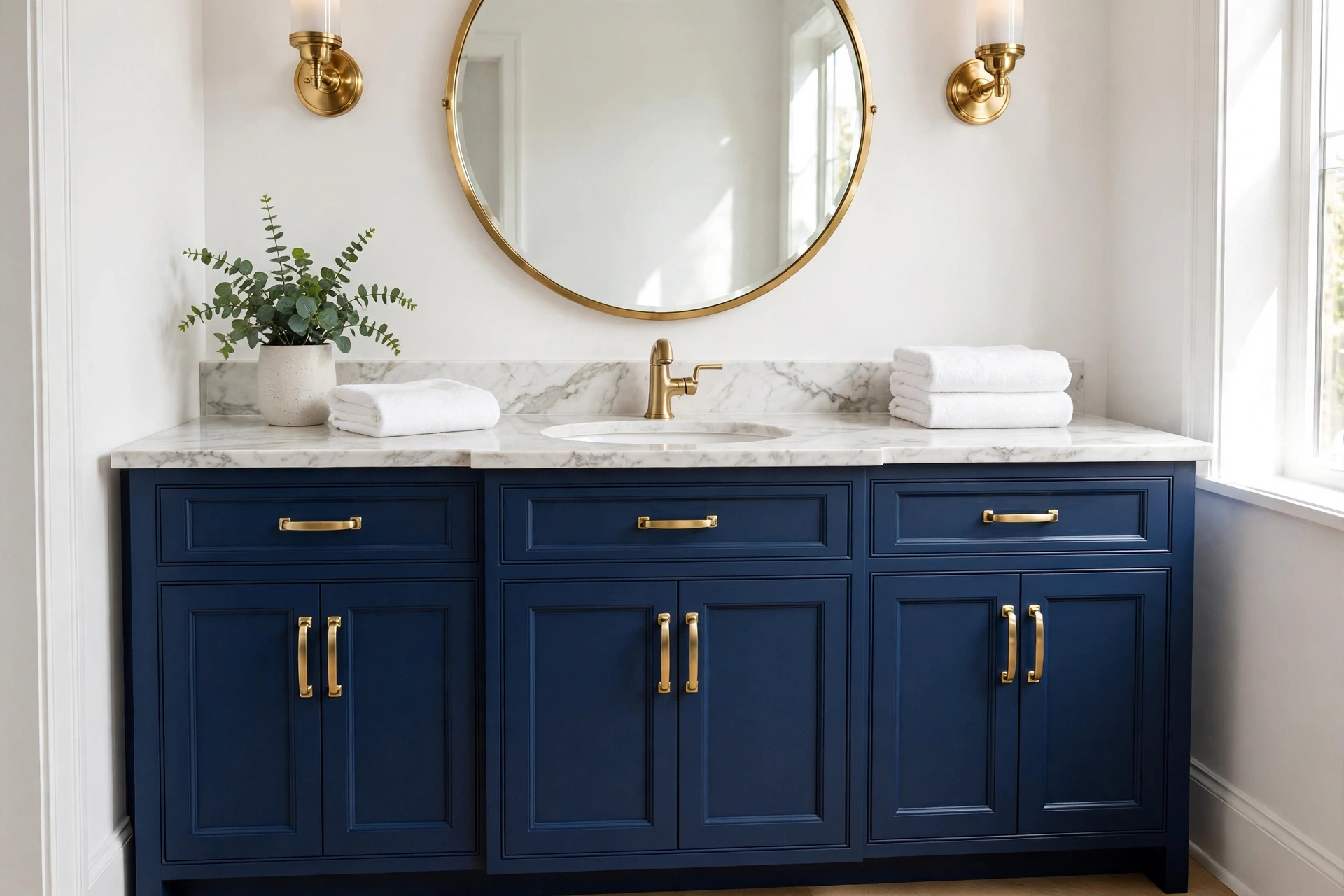
A vanity is the perfect place to be brave with colour. It’s one contained piece, so even deep navy, forest green or inky black won’t overwhelm the room — instead it becomes a confident focal point. Bold painted vanities look spectacular against white sanitaryware and a marble-look top.
Use a proper moisture-resistant cabinet paint and prep thoroughly: clean, sand, prime, then two topcoats. The finish will last for years if you let each coat cure properly. Gold or brass hardware against a dark painted base is a combination that never fails.
7. Style Open Shelves Below
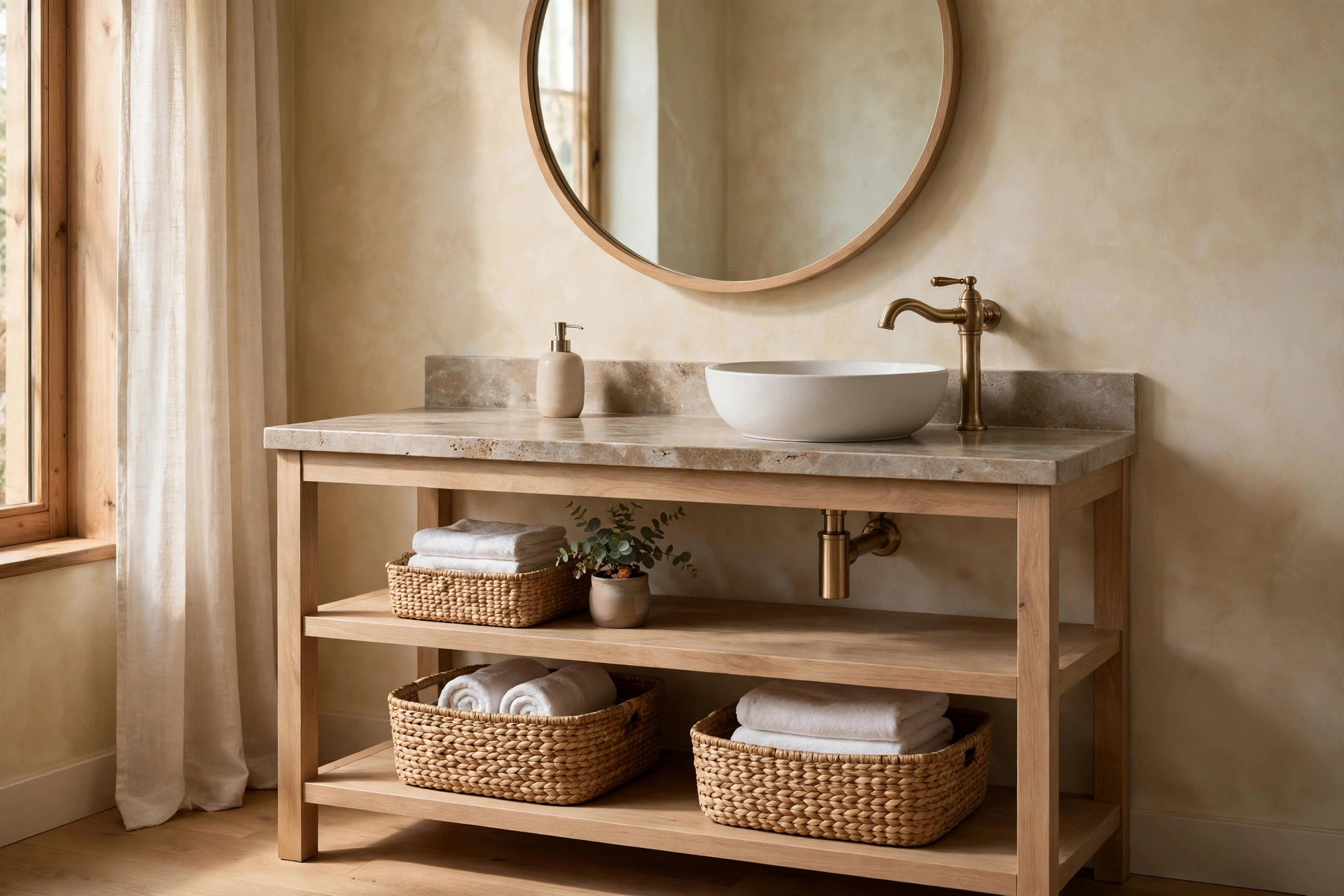
If closed storage feels heavy in your bathroom, try open shelving beneath the basin. Woven baskets corral the clutter, neatly folded towels add spa-like softness, and a small plant brings the whole arrangement to life. Done well, it looks like a boutique hotel rather than a storage compromise.
The trick is editing: open shelves demand a degree of tidiness, so they suit bathrooms where the everyday mess can live in a drawer elsewhere. Decant cotton wool and bath salts into matching jars and the styling practically takes care of itself.
8. Tuck a Vanity Into the Corner
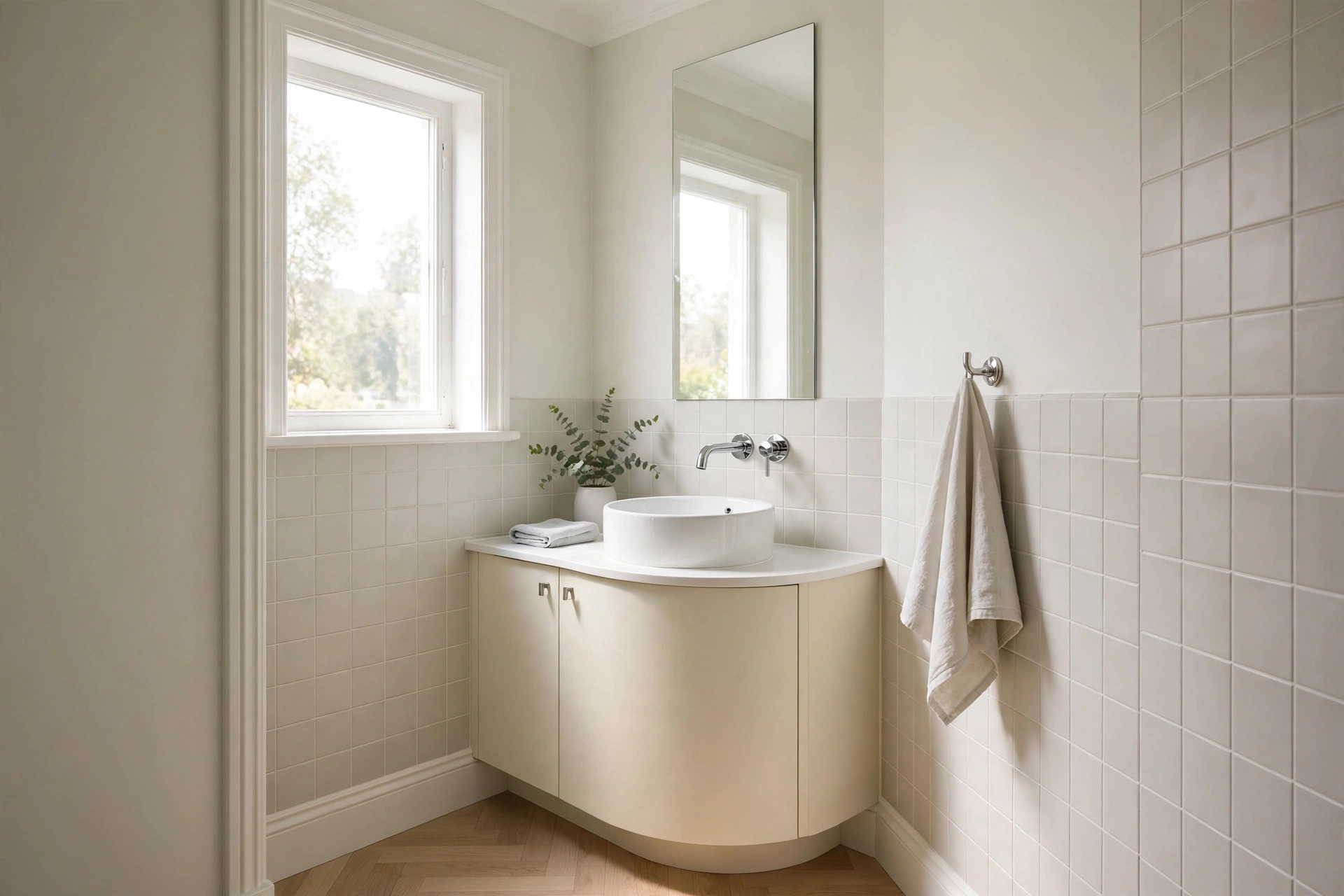
An awkward corner is a vanity opportunity in disguise. A curved-front corner unit turns dead space into genuinely useful storage in cloakrooms and small ensuites, and the curved front keeps walkways clear where a square unit would jut out and bruise hips.
Pair it with a corner mirror and wall-mounted taps to maximise the worktop, and the whole arrangement feels intentional rather than squeezed in. In the smallest cloakrooms, this layout can be the difference between a usable room and an obstacle course.
9. Pair It With a Tall Storage Tower
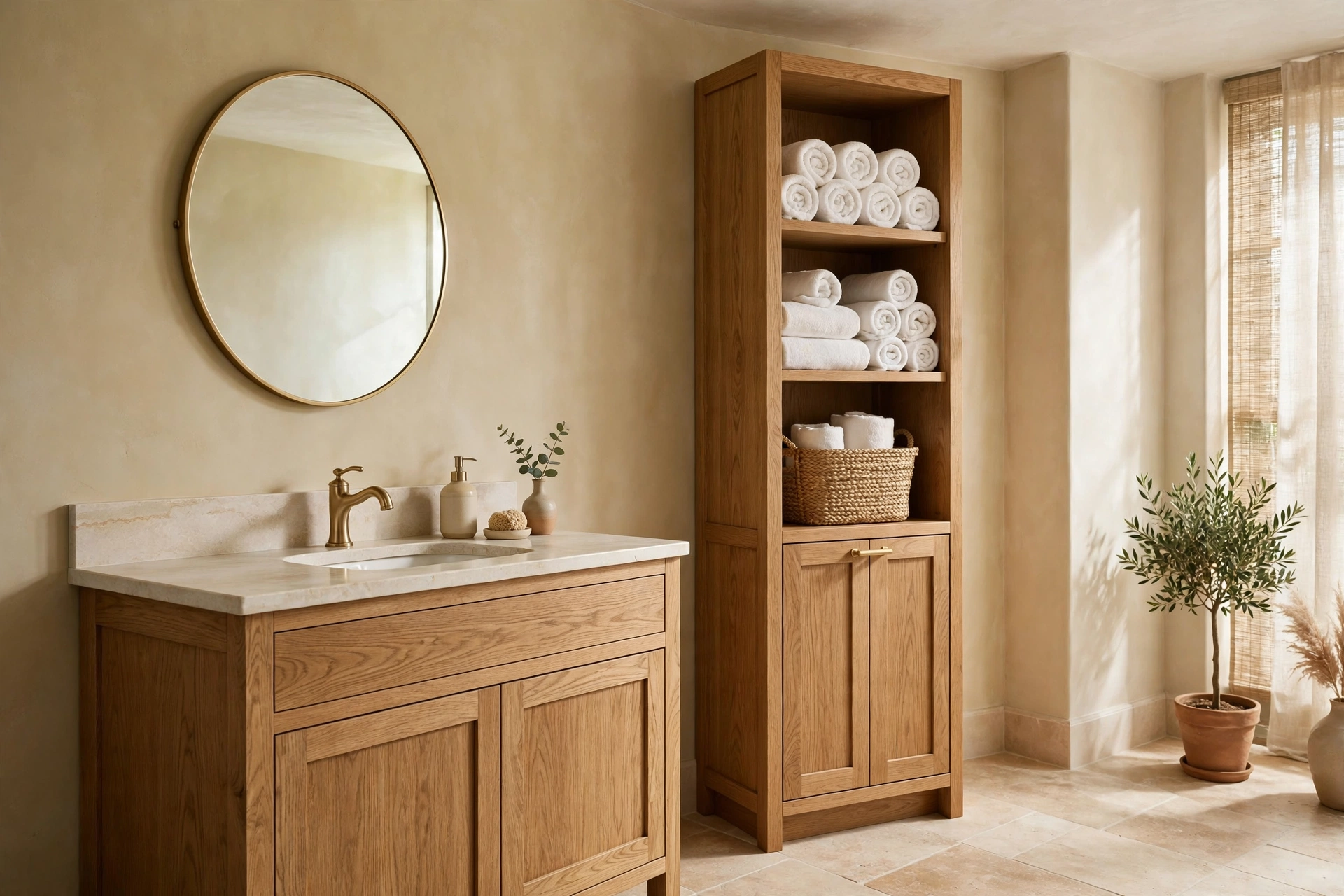
A vanity plus a matching tallboy is the storage dream team. The vanity handles daily essentials; the tower takes towels, spare loo rolls, cleaning products and the hairdryer. Buying them in the same finish gives a fitted, considered look for a fraction of fitted-furniture prices.
Position the tower beside the vanity to create one continuous run of storage, or use it to fill an awkward gap between the vanity and the wall. Rolled towels on open tower shelves double as decor — the boutique-hotel look, achieved with laundry.
10. Choose a Console Vanity With a Vessel Sink
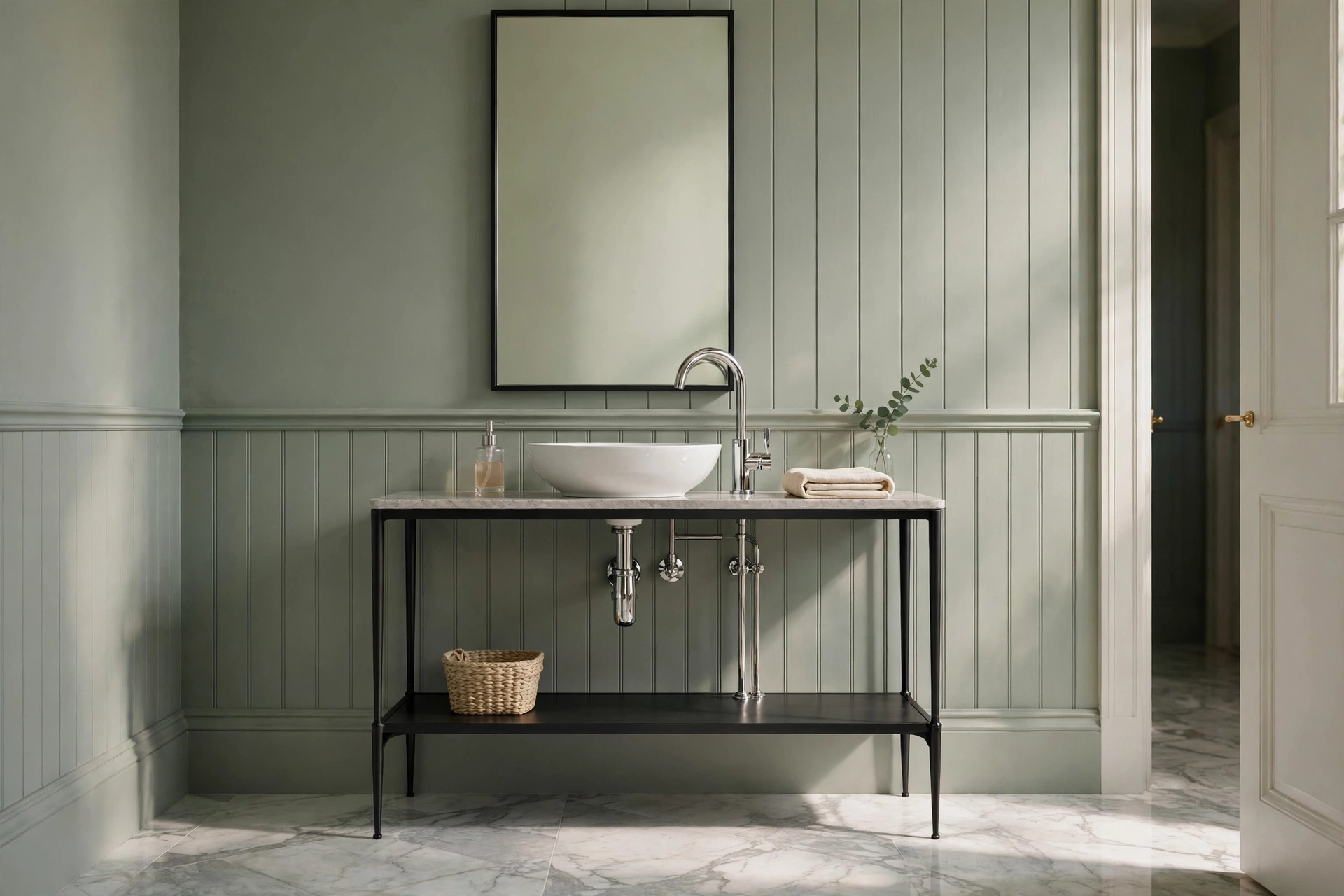
For powder rooms and cloakrooms where storage matters less, a console vanity is pure elegance. Slim metal legs, a stone or timber top and a sculptural vessel bowl — it’s more furniture than fitting, and the open base keeps small rooms feeling spacious rather than stuffed.
The vessel sink becomes the room’s jewellery, so choose it carefully: fluted ceramic, hammered metal or coloured glass all work beautifully. Keep the styling minimal — a single soap dispenser and a small tray — and let the silhouette do the talking.
11. Pick a Shallow Vanity for Tight Bathrooms
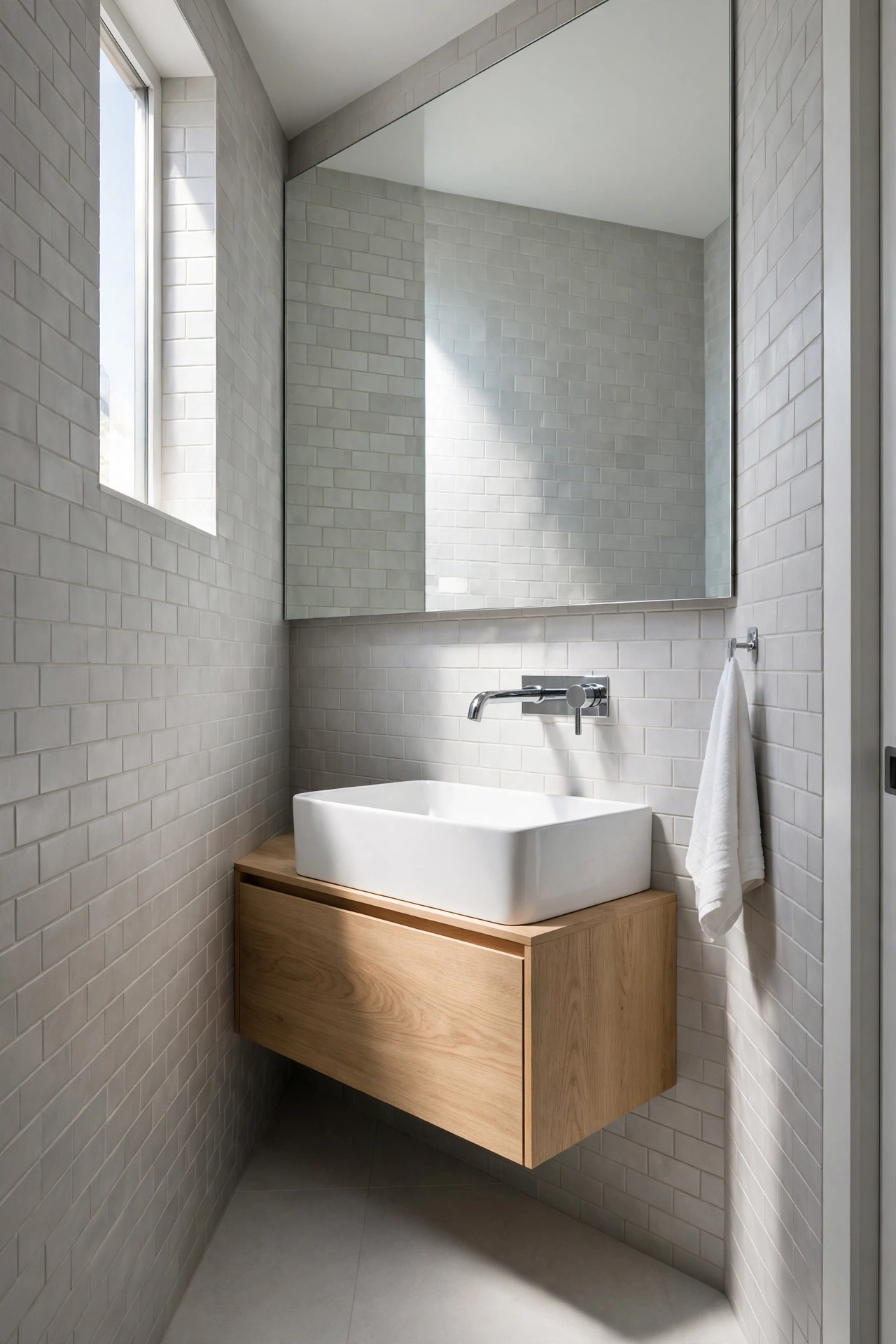
Standard vanities are 55–60cm deep, but in a narrow bathroom every centimetre counts. Shallow-depth units of 35–45cm with a compact rectangular basin free up precious floor space while still giving you a proper worktop and drawer storage. Wall-mount it and the room will feel bigger still.
Choose a basin designed for shallow units — a wide, gently sloped rectangular bowl — so you’re not trading depth for constant splashing. It’s a small compromise that makes a narrow bathroom genuinely comfortable to use.
12. Add Backlit Mirrors and Under-Cabinet Lighting
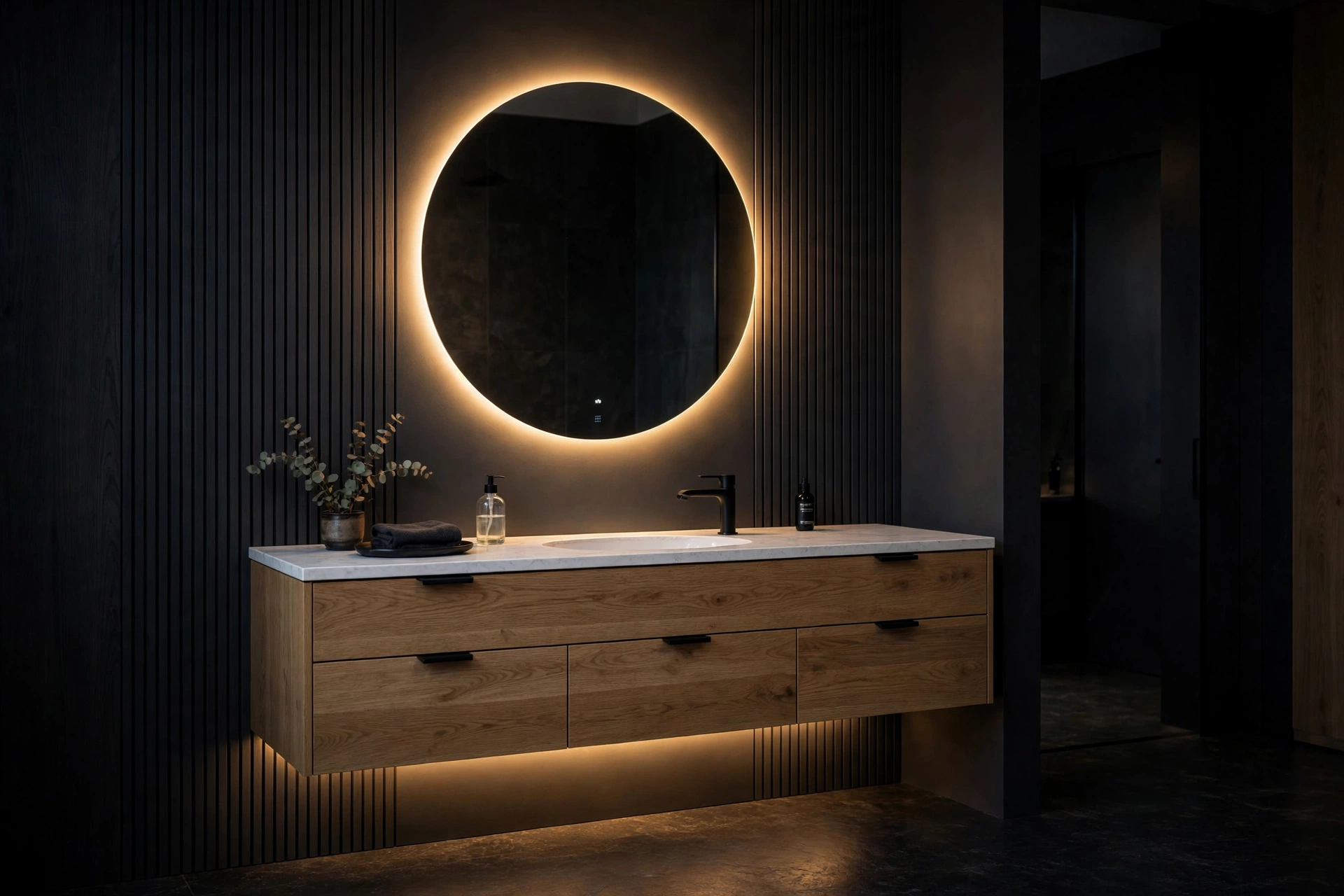
Lighting transforms a vanity from functional to fabulous. A backlit round mirror gives flattering, shadow-free light for getting ready — far kinder than a single harsh ceiling spot — while a warm LED strip under a floating unit adds ambience and a practical night-time glow.
Put the lighting on a dimmer if you can: bright and cool for morning routines, low and warm for evening soaks. And don’t forget the wall behind the vanity — tile ideas that upgrade a vanity wall can make even a simple unit look like a designer piece.
13. Mix Warm Wood With Stone
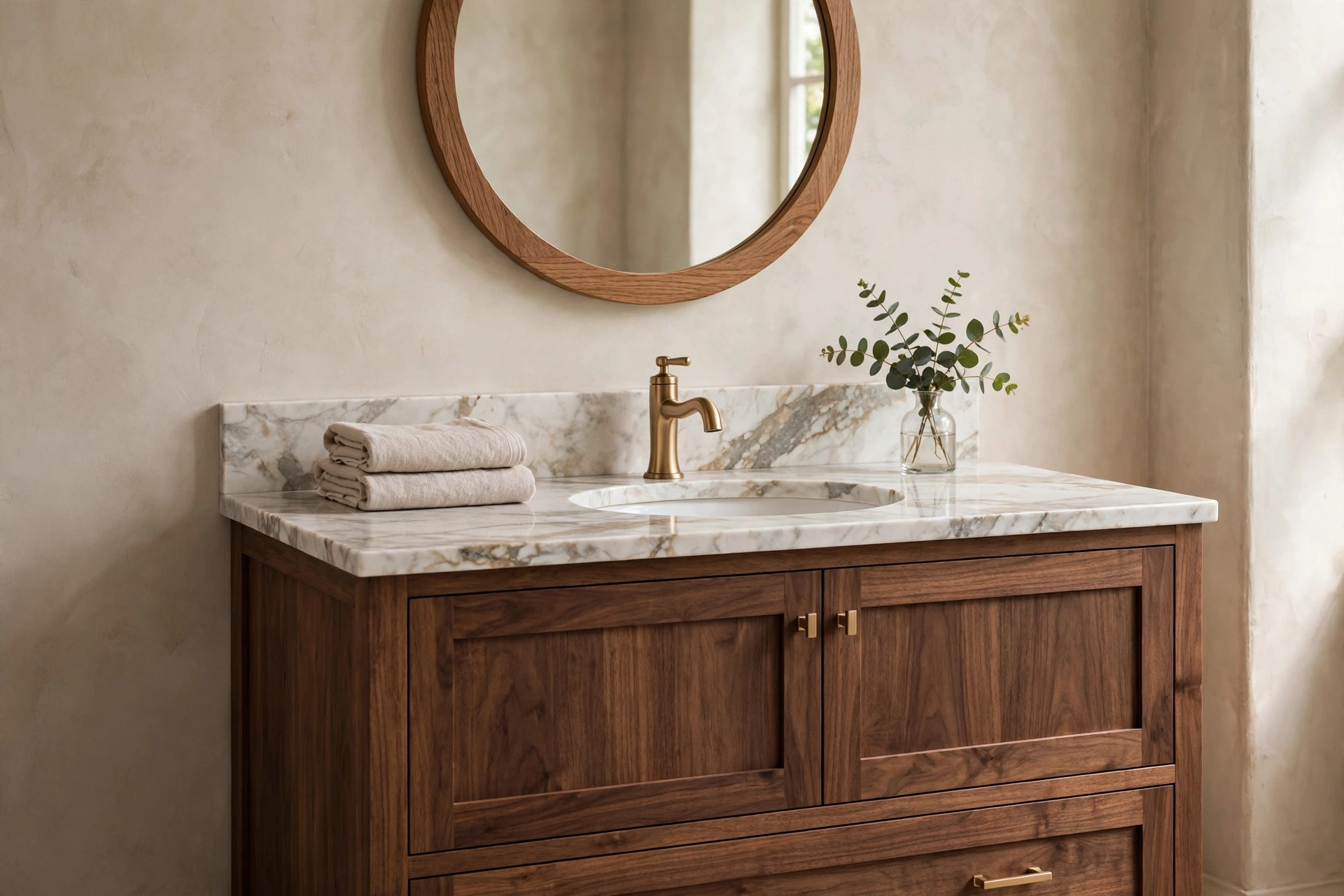
The most enduring vanity combination is also the simplest: warm timber cabinetry with a natural stone top. Walnut or oak brings a warmth that stops a bathroom feeling clinical; veined marble or quartzite adds pattern and quiet luxury. It works in traditional and contemporary schemes alike — and it ages gracefully.
Echo the pairing elsewhere for a cohesive look: an oak mirror frame, a wooden bath bridge, or timber-look floor tiles. When the materials repeat around the room, even a modest bathroom feels designed rather than assembled.
Frequently Asked Questions
What size vanity is best for a small bathroom?
A single unit 60–75cm wide with a shallow 35–45cm depth is the sweet spot for most small bathrooms. Wall-mount it to keep the floor visible, and choose a curved or rounded front if the unit sits near a doorway or walkway. Always leave at least 75cm of clear space in front for comfortable use.
How wide does a bathroom need to be for a double-sink vanity?
Allow a minimum of 150cm of wall width — roughly 60cm per basin plus elbow room — though 180cm or more is far more comfortable. Also check door swings, walkway clearances and that both users can stand side by side without shuffling. In a narrow galley bathroom, two smaller cloakroom basins can sometimes work where one wide unit won’t.
Are floating vanities difficult to maintain?
Quite the opposite — they’re easier to clean around since the floor beneath is fully accessible. The keys are proper fixing into studs or solid blocking, and sealing the underside of the cabinet against steam. Check the fixings every year or so, and wipe down the wall junction occasionally to prevent moisture build-up.
Can I convert a dresser into a vanity myself?
Yes, if you’re reasonably handy: choose a sturdy piece, cut the drawer backs to clear the plumbing, seal every surface against moisture and top it with stone or marine varnish. The plumbing cut-outs are the fiddliest part, so measure twice. If you’d rather follow a proven plan, Family Handyman’s DIY vanity projects walk through several builds step by step.
What’s the best material for a vanity cabinet?
Moisture-resistant MDF or marine plywood with a quality painted or veneered finish is the reliable workhorse. Properly sealed solid wood is beautiful and durable. Avoid standard chipboard in steamy bathrooms — it swells at the first sign of moisture. Whatever you choose, silicone-seal all junctions with the wall and floor.
Conclusion
The best vanity is the one that fits your room, your routine and your storage needs — in that order. Measure carefully, prioritise drawers over doors, and don’t be afraid of a bold finish or an unexpected material. Get those fundamentals right and your bathroom gains the hardest-working, best-looking piece of furniture in the house.
