
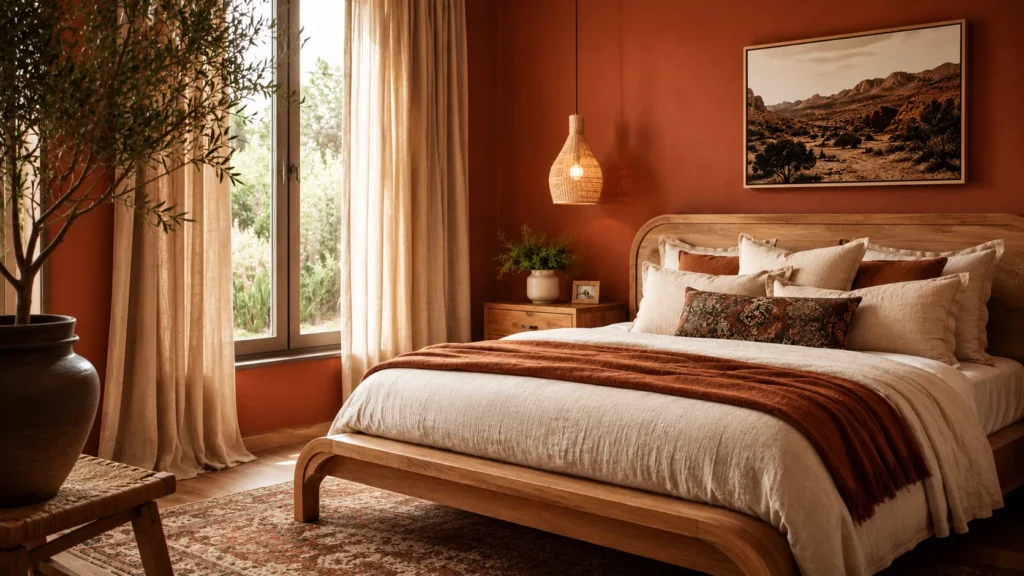
Your bedroom is probably still stuck in 2022, and you don’t even know it. Design trends move fast, but the good ones always show up in a handful of homes before they hit every big-box store shelf. I’ve spent the last few years walking clients through exactly these upgrades, watching the ones who moved early get compliments for months while the copycats scramble later. Here are the nine changes worth making now, before your neighbor’s Pinterest board catches up to you.
My Design Notes
I still think about a primary bedroom I worked on in a 1920s colonial just outside Montclair, New Jersey. My client wanted that moody, color drenched look she kept seeing everywhere, but her ceilings sat at barely seven feet, and her budget wasn’t unlimited either. I talked her out of painting the whole room navy because with those low ceilings, it would have felt like sleeping in a cave. Instead, we ran the color two thirds up the wall and kept the ceiling a soft, warm white to let the room breathe. She spent under 900 dollars on paint and labor, which felt like a steal for the transformation it created. The one regret she mentioned to me later was choosing a raw linen headboard with a golden retriever who loved climbing onto the bed. My takeaway from that project is simple. Chase the trend, but always design around the room you actually have, not the one on your inspiration board.
9 Mastering Elevated Bedroom Upgrades Before They Go Mainstream
1. Color Drenched Walls, Trim, and Ceiling
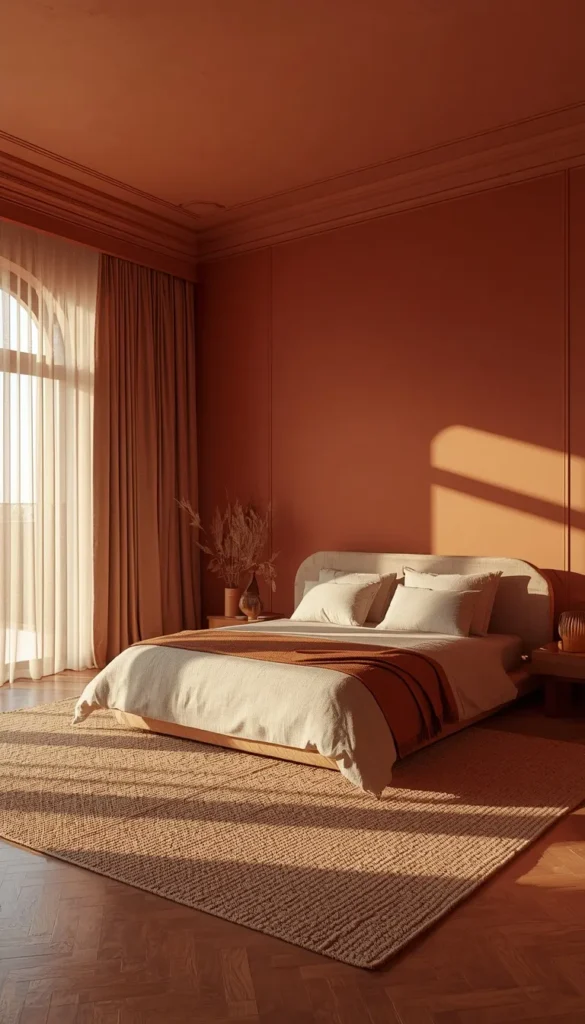
The single accent wall is officially old news. What’s replacing it is full color drench, where one shade covers the walls, trim, and sometimes even the ceiling, so the whole room feels wrapped rather than decorated. It’s a bigger commitment than a feature wall, and yes, it costs more in paint and labor, usually somewhere between 600 and 1,500 dollars depending on room size and whether you’re hiring it out. But the payoff is a room that photographs beautifully and feels intentional the second you walk in. A quick trick I’ve learned is to keep your trim in a slightly softer version of the wall color rather than stark white, since that harsh contrast is what makes color drench feel unfinished instead of elegant.
One thing worth knowing before you commit:
- Deep, saturated colors show every roller mark, so plan on at least two coats
- Rooms under 100 square feet can feel closed in if you go too dark without adjusting your lighting
2. Limewash or Plaster Finish Paint
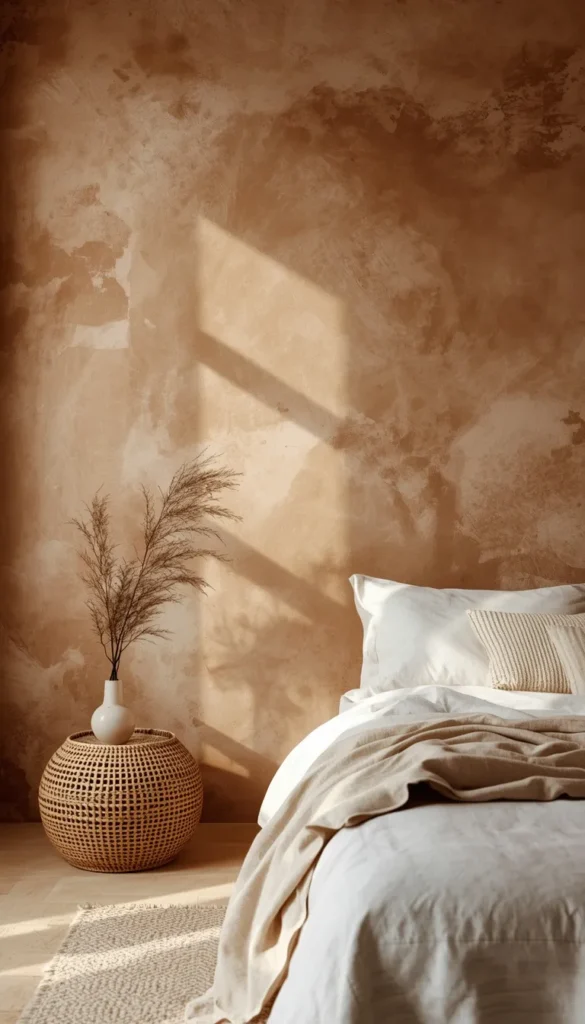
Flat paint is starting to feel a little flat, literally. Limewash and plaster finishes are having a moment because they bring depth and movement to a wall without adding a single extra object to the room. It’s subtle, it’s textured, and it photographs like something out of an Italian farmhouse.
3. The Wallpapered Fifth Wall
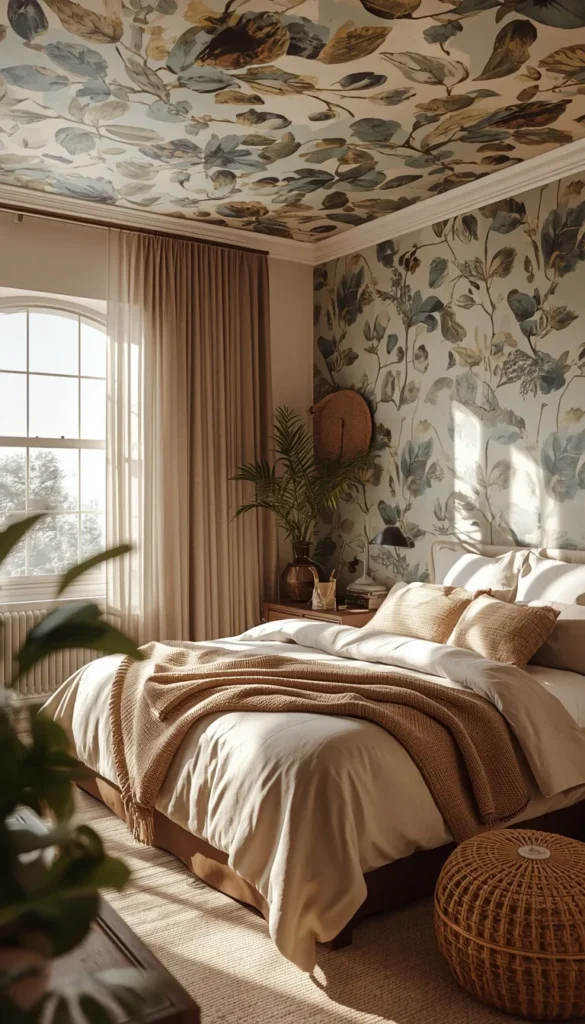
Most people forget the ceiling exists until it’s the only wall left to decorate, and that’s exactly why it works so well right now. Wallpapering the ceiling, sometimes called the fifth wall, adds drama and a sense of coziness that a flat white ceiling never will, especially in bedrooms with lower ceiling heights where it can trick the eye into feeling less boxy. Removable wallpaper runs anywhere from 30 to 80 dollars a roll, which makes this one of the more affordable upgrades on this list if you’re comfortable doing it yourself. My honest advice is to have a second set of hands for this project, because hanging wallpaper overhead solo is a genuinely awkward, arm-aching afternoon.
4. Sculptural Freestanding Bed Frames
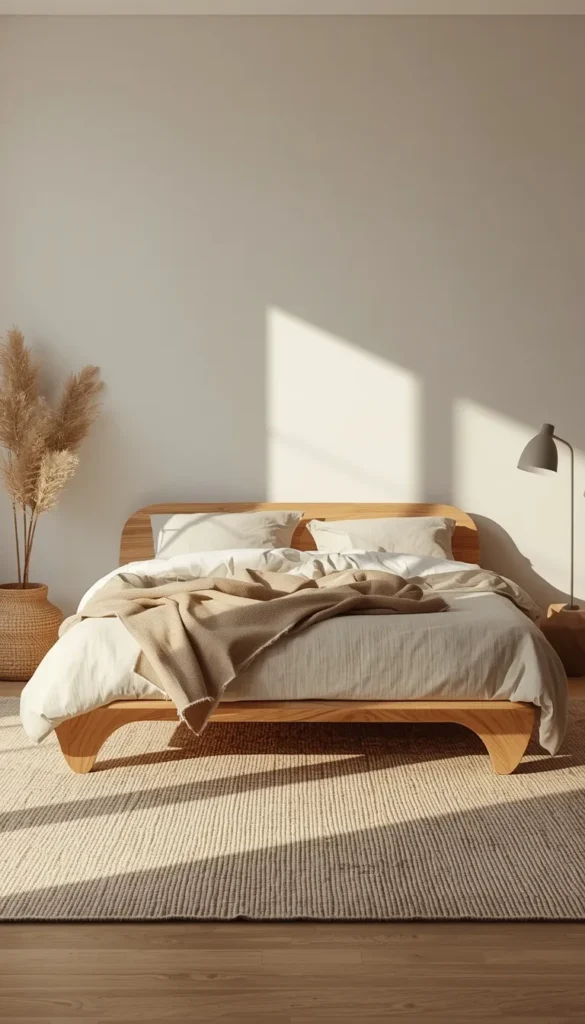
The boxy upholstered platform bed had a long run, but sculptural and freestanding frames, think curved wood, exposed metal, or organic silhouettes, are quietly taking over as the new focal point. These beds don’t hide against the wall the way older designs did. They’re meant to be seen from every angle, which means your whole room layout might need to shift to give the frame breathing room. If you’re working with a smaller space, look for frames with a lower profile and legs rather than a solid base, since that visual gap underneath keeps the room from feeling cramped.
If you could only redo one wall in your bedroom this year, which one would it be?
5. Layered Pendant Lighting Over Nightstands
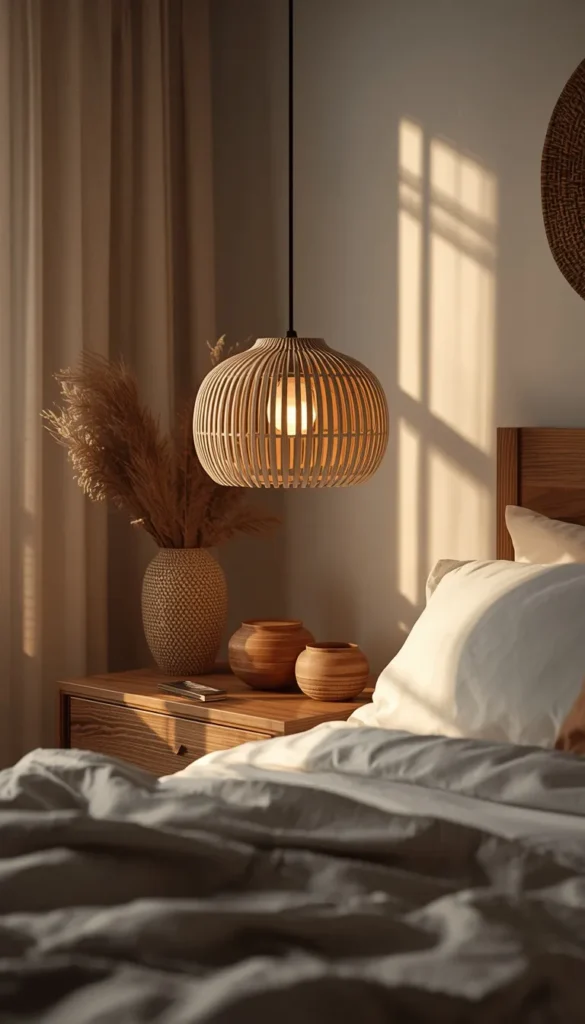
Matching lamps on matching nightstands used to be the safe, foolproof choice, but pendant lighting is quickly becoming the upgrade designers reach for first. Hanging fixtures free up your nightstand surface for books, a candle, or your phone, and they add a sculptural element to a wall that would otherwise just be functional. The one detail that trips people up is height. Hang the pendant too low, and you’ll knock your head reaching for a glass of water; hang it too high and it loses that cozy, intimate glow. My rule of thumb is to mount the bottom of the fixture about 26 to 30 inches above the nightstand, which keeps it out of the way but still close enough to feel warm and purposeful. Electrician costs for adding a hardwired junction box usually run between 150 and 300 dollars per side, though plug-in pendant versions skip that cost entirely if your outlet placement cooperates.
6. Furniture Grade Wardrobe and Closet Systems
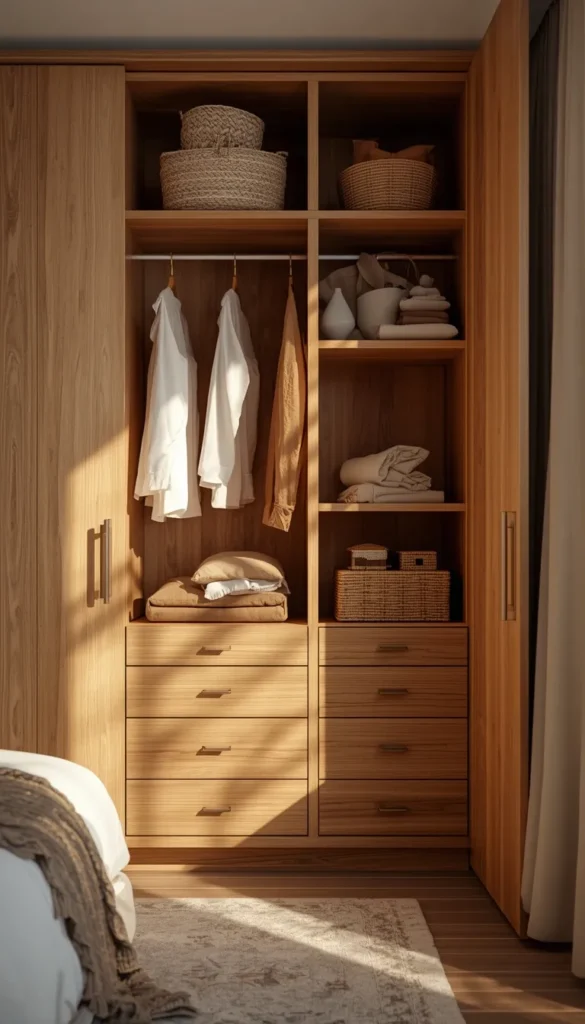
Flimsy flat pack wardrobes are on their way out, and homeowners are finally investing in wardrobe systems that look and function like real furniture. We’re talking solid wood fronts, proper hardware, and interiors that are actually organized instead of just a rod and a shelf.
A few things that make the difference:
- Adjustable interior shelving instead of one fixed configuration
- Soft-close drawers, which sound minor until you live with slamming ones for a year
- Mixed storage, meaning hanging space, drawers, and open shelving all in one unit rather than picking just one
Custom or semi-custom systems can run anywhere from 2,000 to 8,000 dollars depending on size and materials, so this is usually a phase two upgrade once the bones of the room are already working.
Top 6 Bedroom Ideas
| Idea | Estimated Price | Maintenance |
|---|---|---|
| Color Drenched Walls | $600 – $1,500 | Medium |
| Limewash Plaster Paint | $8 – $12/sq. ft. | Medium |
| Wallpapered Fifth Wall | $30 – $80/roll | Low |
| Sculptural Bed Frame | $800 – $3,000 | Low |
| Layered Pendant Lighting | $150 – $300/side | Low |
| Furniture Grade Wardrobe | $2,000 – $8,000 | Low |
7. Floor to Ceiling Drapery, Properly Mounted
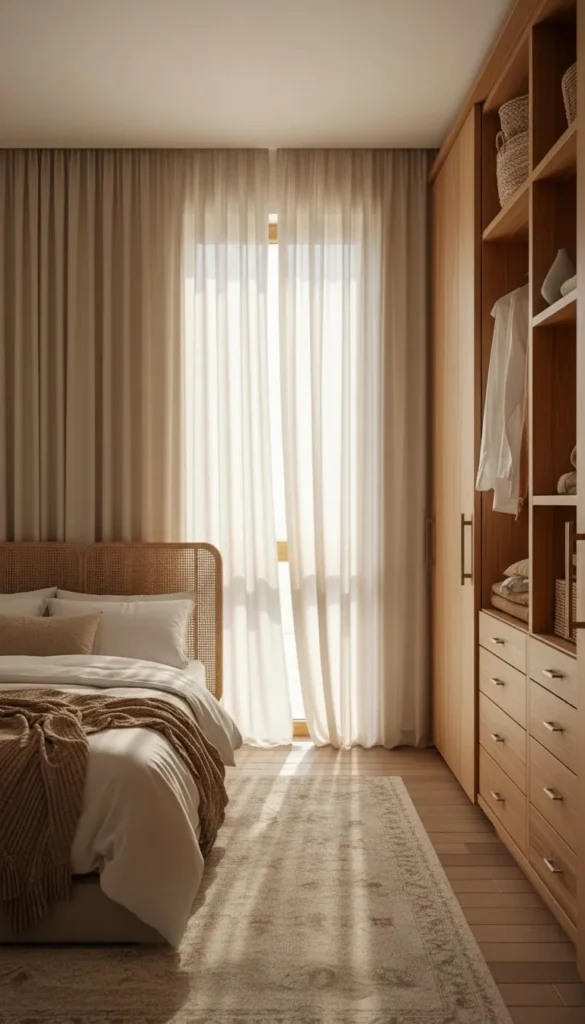
Curtains that stop a few inches above the windowsill are one of the fastest ways to make a bedroom look unfinished, even if everything else in the room is perfect. The fix everyone’s catching onto now is mounting drapery rods as close to the ceiling as possible and letting the fabric skim the floor, which instantly makes ceilings feel taller and the whole room feel more considered. I’ve walked into so many beautifully designed bedrooms where the curtains were the one thing dragging the whole look down, simply because they were hung at the wrong height. A good starting point is mounting the rod four to six inches below the ceiling line and choosing a panel length that just barely brushes the floor, not pools, unless you’re specifically going for that more romantic, formal feel.
8. Natural Fiber, Texture First Bedding

Synthetic blend bedding is comfortable enough, but it doesn’t have the same lived-in, elevated look that linen, cotton percale, and boucle textiles bring to a bed. This shift is less about thread count and more about texture doing the visual work that color used to do. A rumpled linen duvet just looks more expensive and more relaxed at the same time, which is a hard combination to fake with anything synthetic. One thing to watch out for is that natural fibers wrinkle easily and linen especially needs either an iron or a genuine acceptance of the relaxed, slightly undone look, because it is not going back to crisp and smooth no matter how you fold it.
Which one of these nine has you eyeing your own bedroom right now and mentally rearranging furniture?
9. A Zoned Layout With a Micro Seating Nook
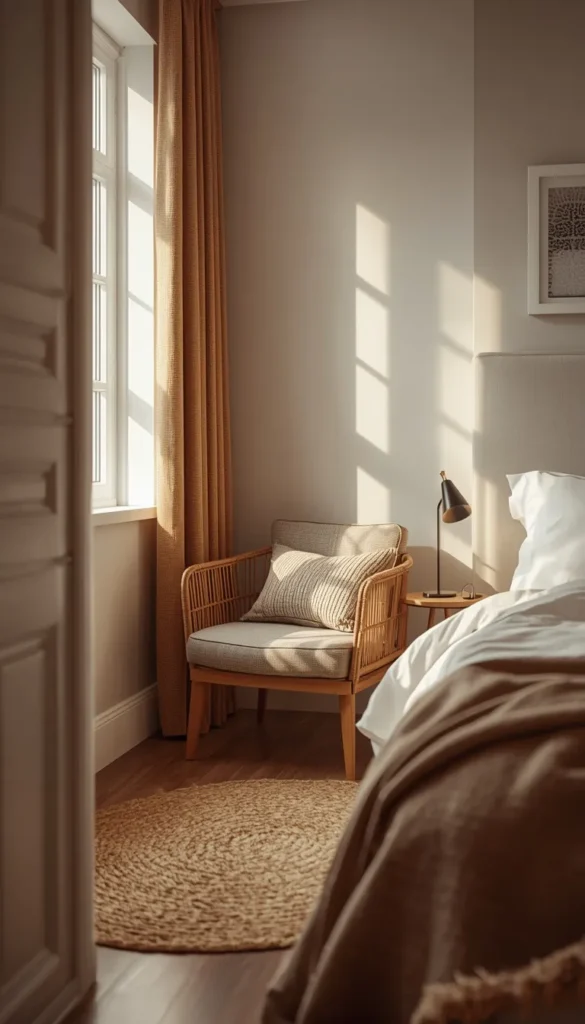
For years, small bedrooms had one rule: fit the bed and get out. That’s changing fast, and now even modest-sized rooms are being zoned into a sleeping area and a tiny seating corner, even if that corner only fits one chair and a side table. It sounds like a stretch in a 120-square-foot room, but a slim armchair, a small round table, and a floor lamp tucked into an unused corner can take up less than 15 square feet total. The psychological effect is bigger than the square footage suggests. A room that has a spot to sit and read, separate from the bed itself, feels less like a place you only pass through and more like a retreat. When I’m working with a genuinely tight layout, I always measure the walking path first, at least 24 inches of clearance around the bed, and then see what’s realistically left before picking furniture, rather than falling in love with a chair and trying to force the room to accommodate it.
Which Upgrade Path Fits You?
If you’re working with a starter budget:
- Wallpapered fifth wall for instant drama without a big spend
- Natural fiber bedding for an easy texture upgrade this weekend
- Layered pendant lighting if your outlet placement already cooperates
If you’re ready to invest in a full transformation:
- Furniture-grade wardrobe system built to last a decade or more
- Sculptural freestanding bed frame as your new focal point
- Full color drenched walls with a proper limewash finish
If you’re decorating a small bedroom:
- Micro seating nook tucked into an unused corner
- Floor-to-ceiling drapery mounted high to fake extra height
- Wallpapered ceiling to add depth without eating floor space
If you’ve got a spacious primary suite to work with:
- Color-drenched walls with contrast trim for a designer look
- A dedicated furniture-grade wardrobe wall
- Layered lighting across multiple zones, not just the bed
Frequently Asked Questions
How much does it cost to update a bedroom on a budget?
A realistic budget refresh runs between 500 and 1,500 dollars if you focus on paint, lighting, and bedding instead of furniture. Swapping nightstand lamps for pendants and adding removable wallpaper gets you most of the visual impact for a fraction of a full renovation cost.
What color makes a small bedroom look bigger?
Soft, warm whites and light greiges still work best for stretching a small room visually. If you want depth without shrinking the space, drench the walls in one soft tone and keep the ceiling a shade lighter.
Is it worth hiring an interior designer for just a bedroom?
Yes, if you’re making more than two or three structural or furniture decisions at once. A single consultation, often 150 to 400 dollars, can save you from expensive layout mistakes before you buy anything.
How often should you update bedroom decor?
Every 5 to 7 years for bigger pieces like furniture and bedding, but smaller refreshes like paint or lighting can happen every 2 to 3 years. Your bedroom should evolve with your life, not sit frozen in whatever style you picked a decade ago.
What’s the biggest mistake people make when decorating a primary bedroom?
The most common one is buying furniture before measuring the walking clearance around the bed. Aim for at least 24 inches of open path on each side, otherwise, even beautiful pieces will make the room feel cramped.
Conclusion
Your bedroom sees you at your most honest, first thing in the morning and last thing at night, so it deserves more than an afterthought. You don’t need to tackle all nine of these at once. Pick the one that’s been nagging at you the longest, grab a paint sample or clear off that one cluttered shelf this weekend, and let the momentum build from there. Small rooms transform through deliberate, small decisions, not by waiting for the perfect budget or the perfect Pinterest board.
