
Your front garden is the first thing anyone notices about your home — yet most front yards are an afterthought: patchy lawn, crowded shrubs, and a path that wanders nowhere. Minimalist front yard landscaping ideas fix that with clean lines, a restrained plant palette, and hard surfaces that do the heavy lifting. The result looks considered and calm, stays tidy with very little upkeep, and gives your home the kind of curb appeal buyers and neighbours notice instantly.
The rules are simple: fewer plants, stronger shapes, and one clear route from the pavement to your front door. Below are eleven ideas you can apply to a tiny terrace front or a generous suburban plot. For more inspiration across the whole plot, browse our round-up of front and back yard ideas after this.
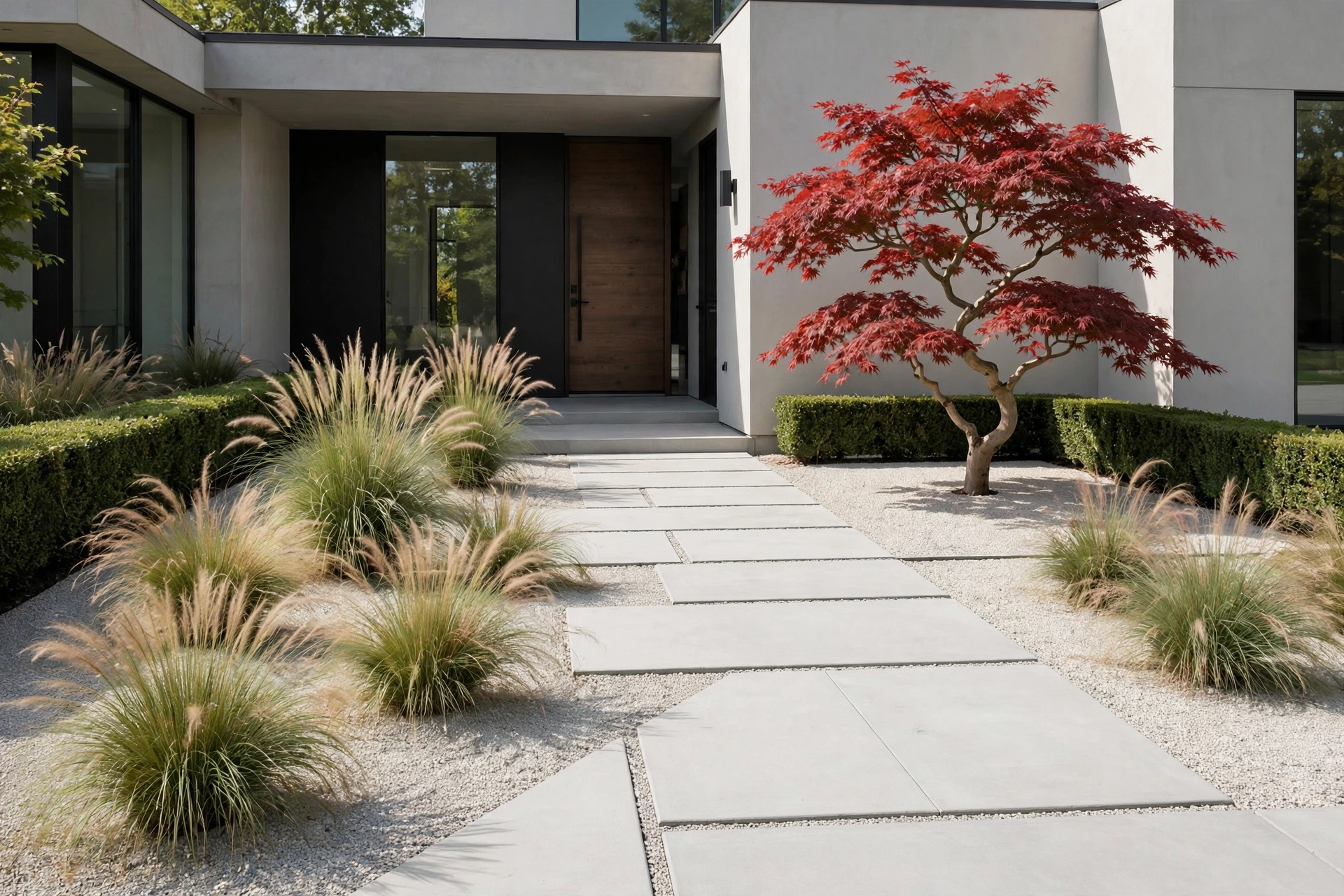
11 Minimalist Landscaping Ideas for a Clean Front Yard
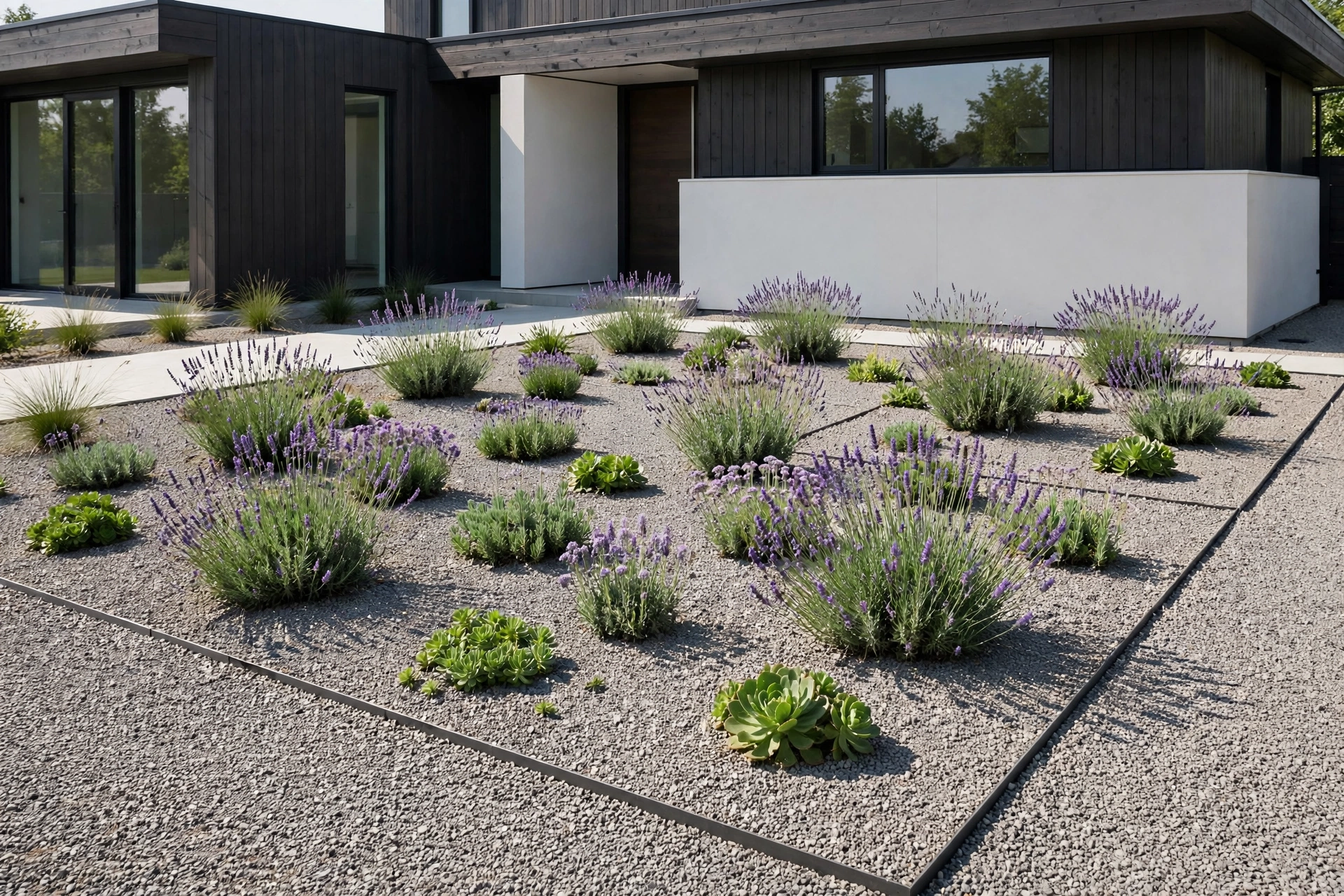
1. Swap a Tired Lawn for a Clean Gravel Bed
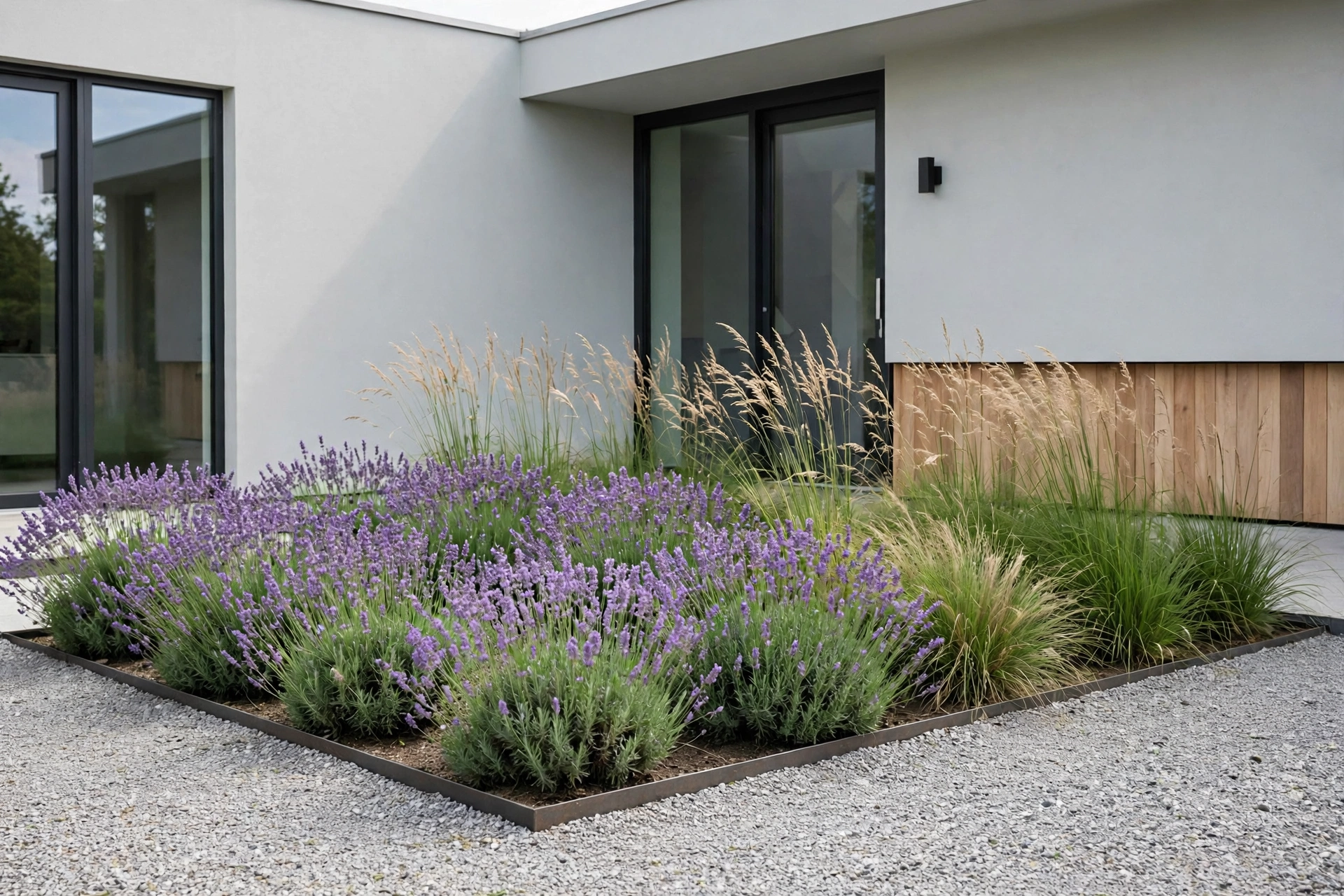
A patchy lawn is the biggest giveaway of a neglected front yard — and it demands weekly mowing in season. Replacing it with a gravel bed in a warm, neutral tone instantly reads as intentional. Lay a weed membrane, spread 5–8 cm of compacted gravel, and plant in generous drifts of lavender, ornamental grasses, or sedums. Gravel lets rain soak through, costs far less to maintain, and frames the house beautifully rather than competing with it.
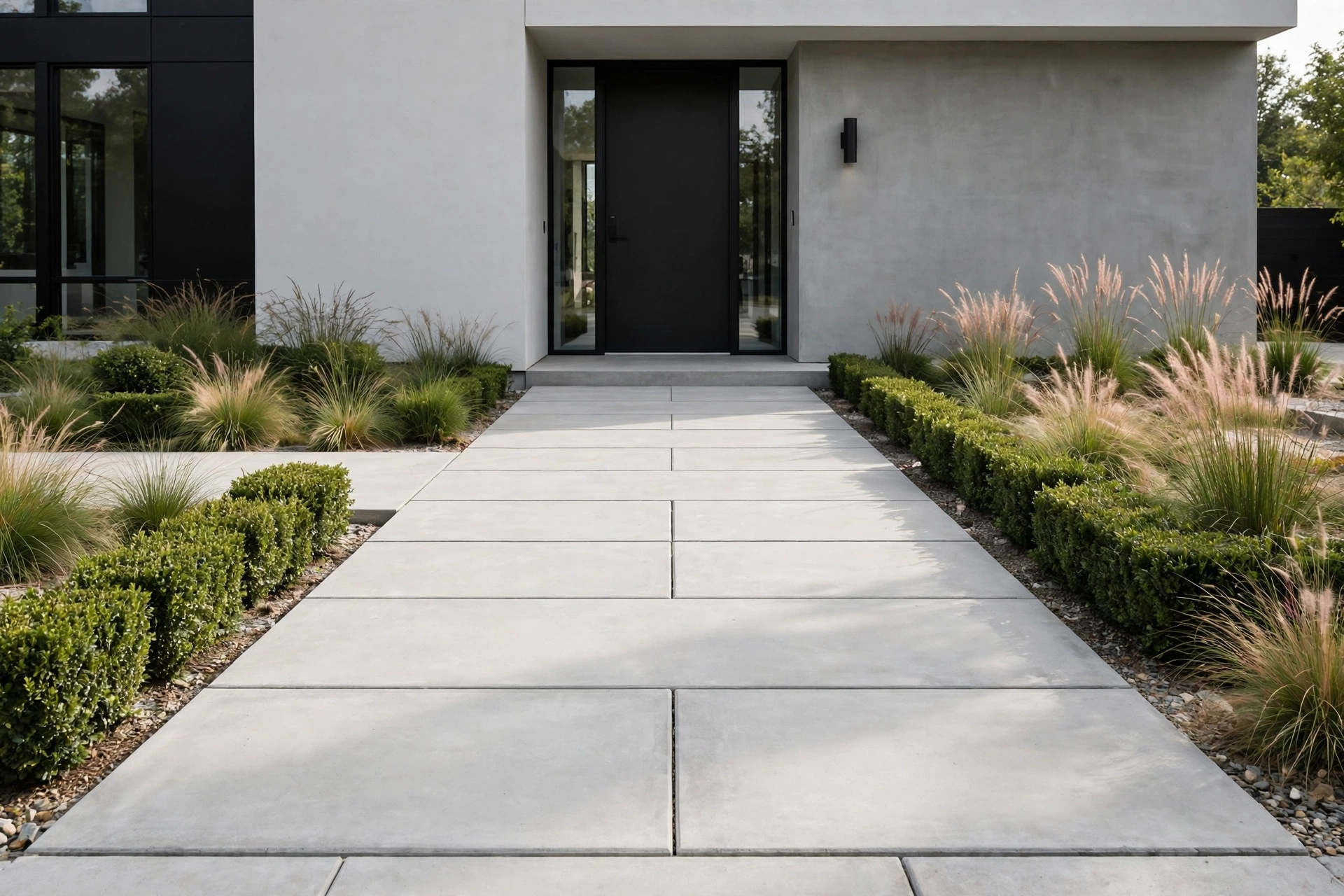
2. Build a Crisp Geometric Walkway
Nothing says minimalist like geometry you can see from the kerb. Replace a meandering concrete path with oversized pavers laid in a strict grid or a single straight run with narrow, even joints. Keep the width generous — at least 1.2 metres — so two people can walk side by side. Fill joints with fine gravel or low groundcover for a soft edge that still looks disciplined. Pair the walkway with well-placed outdoor lighting ideas so the lines read beautifully after dark.
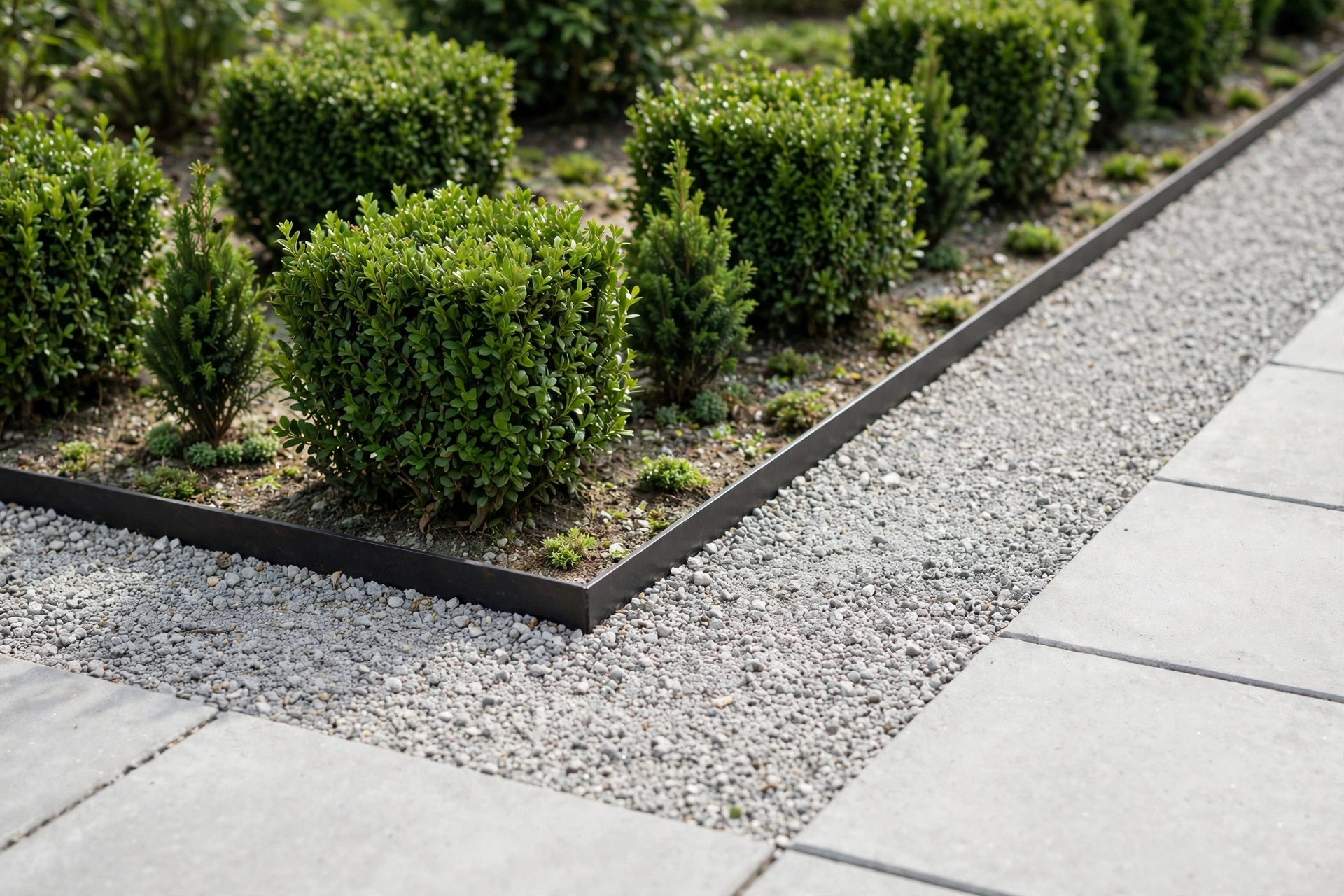
3. Edge Everything With Slim Steel
Crisp edges are the backbone of a minimalist front yard, and nothing delivers them like slim steel landscape edging. A 10 cm strip of dark powder-coated steel creates a razor-sharp line between gravel and planting, lawn and path, or bed and driveway. It is nearly invisible at a glance — which is the point — yet it stops mulch migrating and keeps every boundary ruler-straight. Install it once and it holds its line for years with zero maintenance.
4. Plant a Low Boxwood Hedge
A single low hedge does more for structure than a dozen mixed shrubs. Clip boxwood (or a blight-resistant alternative like Japanese holly) into a clean 40–50 cm band along your boundary or flanking the walkway. One species, one height, one unbroken line — that repetition is what reads as calm and considered. Trim twice a year and it stays sharp; the payoff is a front yard that looks designed rather than planted.
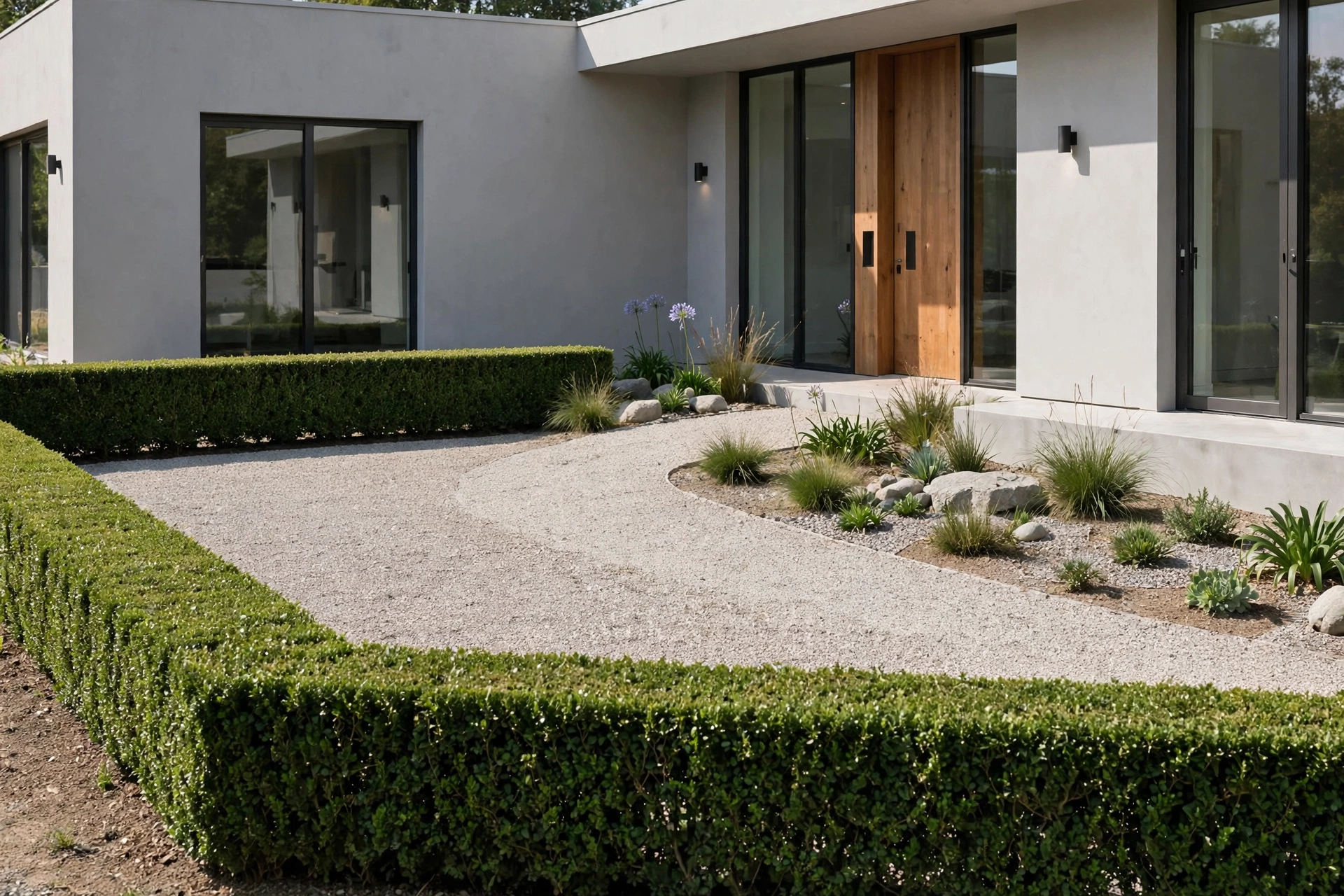
5. Choose One Sculptural Focal Tree
Minimalist planting needs a single moment of drama, and one sculptural tree delivers it. A multi-stemmed birch, an olive, or a cloud-pruned pine becomes the exclamation point in an otherwise quiet scheme. Position it where it is visible from the street and from your front windows, give it a generous gravel mulch ring, and resist the urge to add companions. One tree, well placed, beats five trees competing for attention.
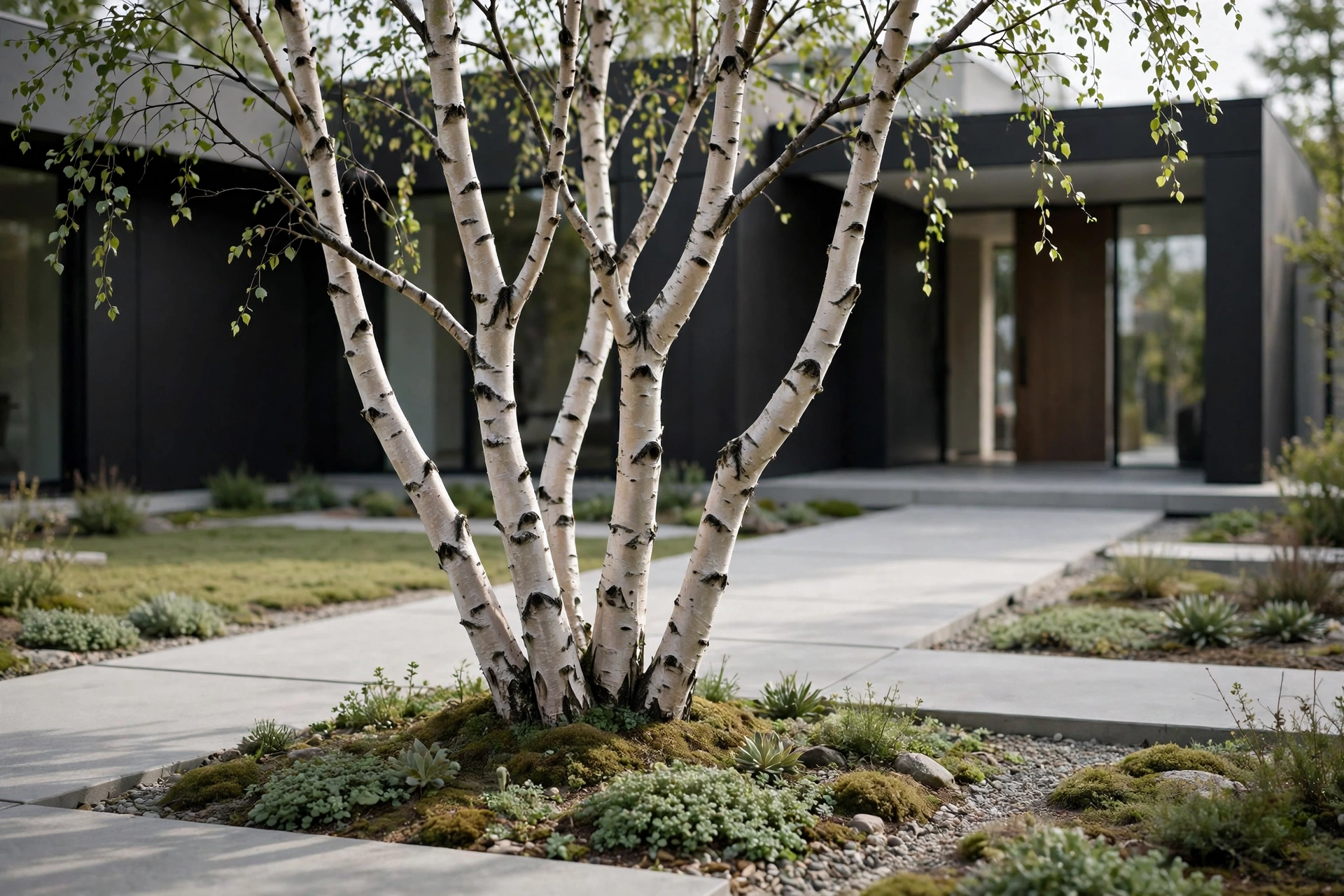
6. Repeat Ornamental Grasses in Drifts
Repetition is the minimalist’s secret weapon, and ornamental grasses are made for it. Plant fountain grass or miscanthus in large groups of seven or more rather than dotting singles about. The feathery plumes catch light beautifully, move in the wind, and look good for months with one annual cut-back. Set them in gravel mulch and let the negative space between drifts do the talking. For more seasonal planting inspiration, see these front yard curb appeal tips from Better Homes & Gardens.
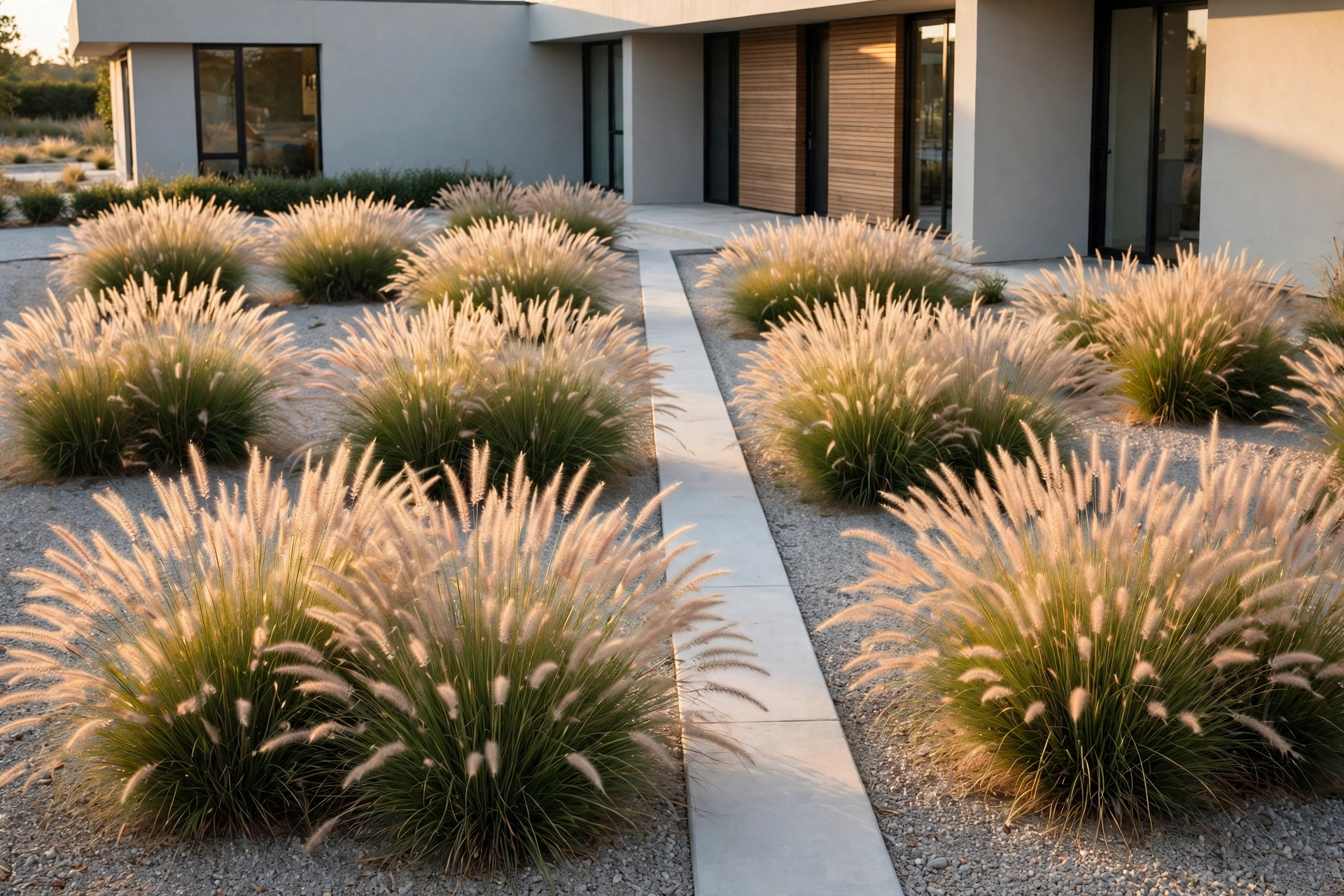
7. Light the Path, Not the Whole Yard
Minimalist lighting is about restraint: slim bollards or recessed path lights spaced evenly along the walkway, nothing more. Warm-toned light (2700K) flatters stone and planting; cool white makes everything look like a car park. Keep fixtures identical and low — the goal is a gentle rhythm of light guiding visitors to the door, not a floodlit display. Solar options have improved enormously and need no wiring.
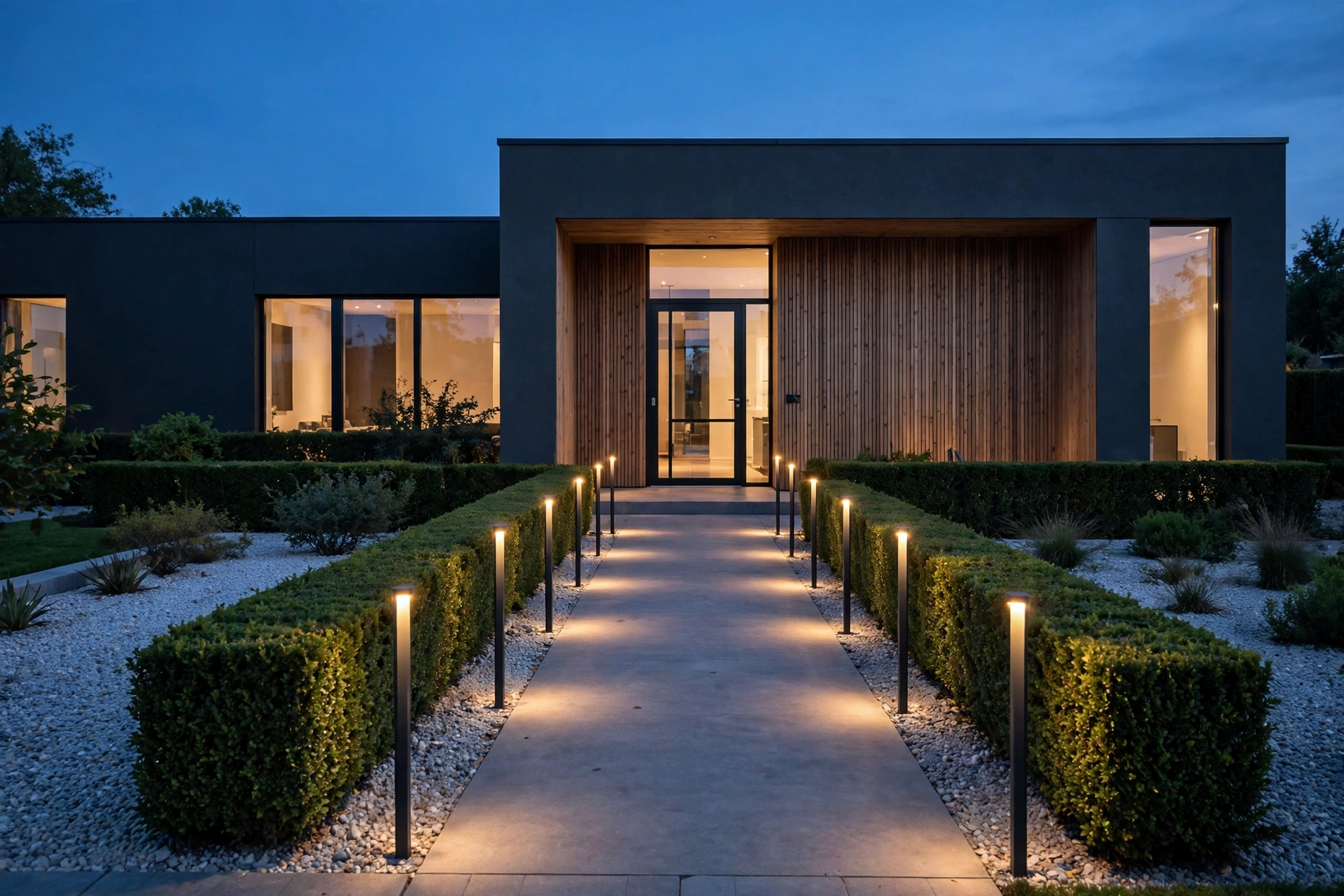
8. Limit the Planting Palette Ruthlessly
Pick three plants and commit. Lavender, ornamental grass, and one evergreen shrub can carry an entire front yard when repeated in generous groups. A restricted palette looks intentional from the street, simplifies watering and pruning to a short routine, and lets the architecture of your home take centre stage. Write your shortlist down before you shop — nurseries are designed to tempt you off-plan.
9. Frame the Door With Matching Planters
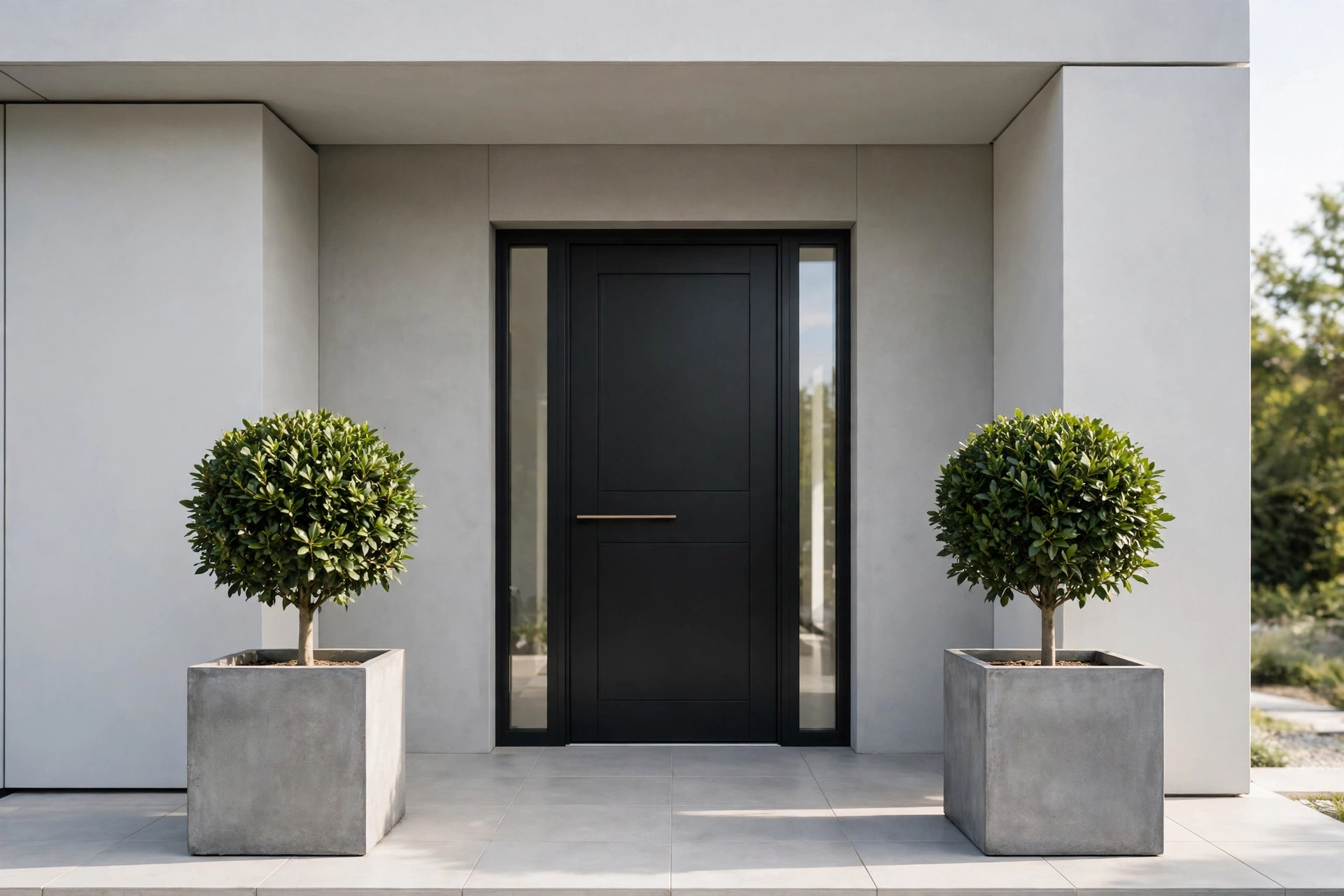
Two identical planters flanking the front door create instant symmetry and polish. Choose simple geometric forms — square concrete or matte ceramic — and plant each with the same thing: clipped bay, a grass, or even a single agave. Matching pairs signal intention the way nothing else does, and they are easy to refresh seasonally without redesigning anything.
10. Add a Still Water Basin
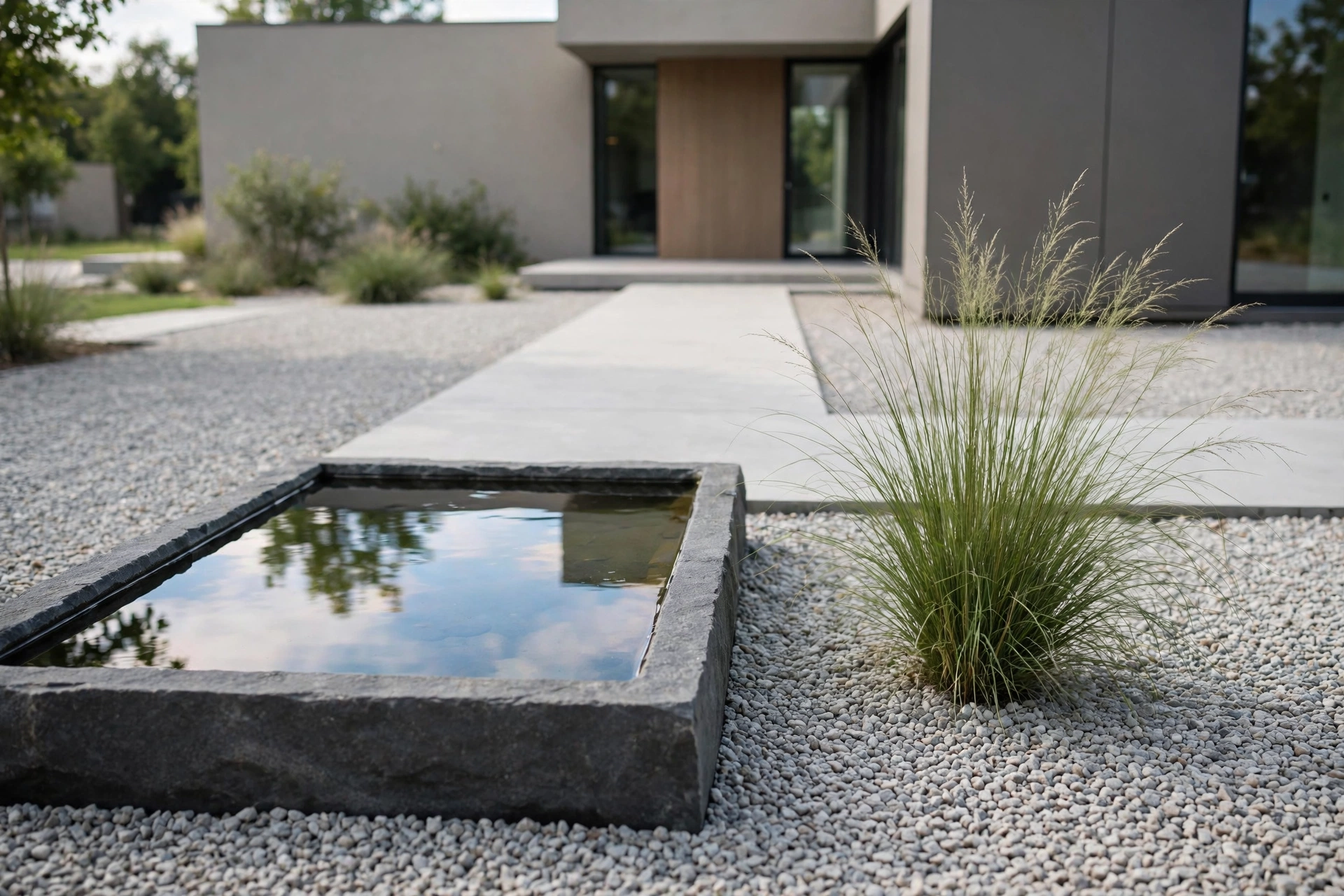
A small stone basin with still water adds calm without the clutter of a fountain. No pumps, no noise — just a reflective surface that mirrors the sky and doubles the sense of space. Set it into a gravel bed where it catches morning light, and keep the surroundings empty so the reflection reads clearly. It is the minimalist water feature: maximum serenity, minimum maintenance.
11. Upgrade the House Numbers
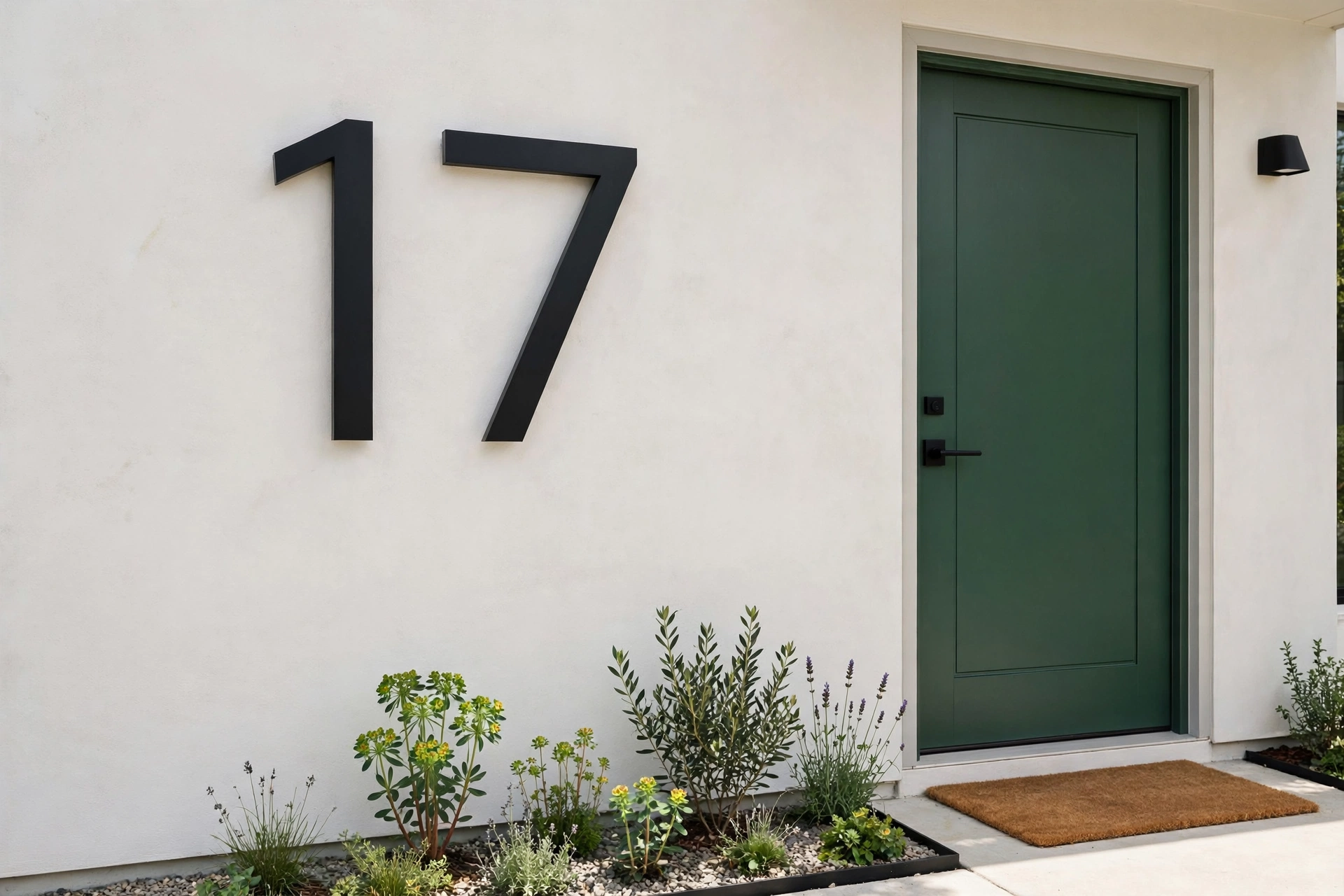
The smallest detail with the biggest payoff: oversized, matte-black house numbers in a clean sans-serif font. Mounted on a light wall or beside a freshly painted door, they read as jewellery for the facade. It costs very little, takes an afternoon, and instantly modernises the whole frontage — the finishing touch every minimalist front yard deserves.
Minimalist Front Yard Landscaping FAQs
What is the cheapest minimalist front yard idea?
Swapping lawn for gravel is the cheapest high-impact change: membrane plus gravel costs a fraction of re-turfing and needs almost no upkeep. Steel edging and oversized house numbers are the next best value upgrades.
How do I make a small front yard look bigger?
Use one strong diagonal or straight line (a geometric walkway), repeat a single plant in drifts, and keep boundaries crisp with steel edging. Fewer elements and clear sightlines make small plots feel larger.
What plants suit a minimalist front yard?
Stick to a shortlist: ornamental grasses, lavender, boxwood or Japanese holly, and one sculptural tree. Repeat them in groups rather than mixing many species — restraint is the whole aesthetic.
Is minimalist landscaping low maintenance?
Yes — that is the point. Gravel beds, steel edging, limited planting and no lawn cut weekly chores to occasional weeding and twice-yearly hedge trims. Choose drought-tolerant plants and maintenance drops further.
Can I do minimalist landscaping on a budget?
Absolutely. Gravel, steel edging, paint for the front door, and new house numbers are all budget-friendly. Phase the work: start with the walkway and edges, then add planting in drifts as budget allows.
Final Thoughts
A minimalist front yard is not about having less — it is about making every element earn its place. Clean gravel beds, crisp steel edges, a geometric walkway and a restrained plant palette turn even a modest front plot into a calm, modern welcome. Start with one idea this weekend and let the simplicity compound.
