
Spring is the easiest season to refresh an entryway, because a few fresh flowers and lighter textures change the whole mood of the hall. These spring entryway decor ideas focus only on the entryway, foyer, and mudroom, so every idea fits the space guests see first. You do not need a full makeover or a big budget; most of these ideas use one strong detail, a vase, a rug, or a basket, and leave the rest of the room calm.
Work through the list in order, or pick the three ideas that fix your biggest problem first: light, storage, or colour. Each idea includes a specific detail, such as a size or a material, so you can copy it without guessing. Start with the door and the console, then move to the walls and the floor, and finish with the small seasonal touches that make the space feel finished.
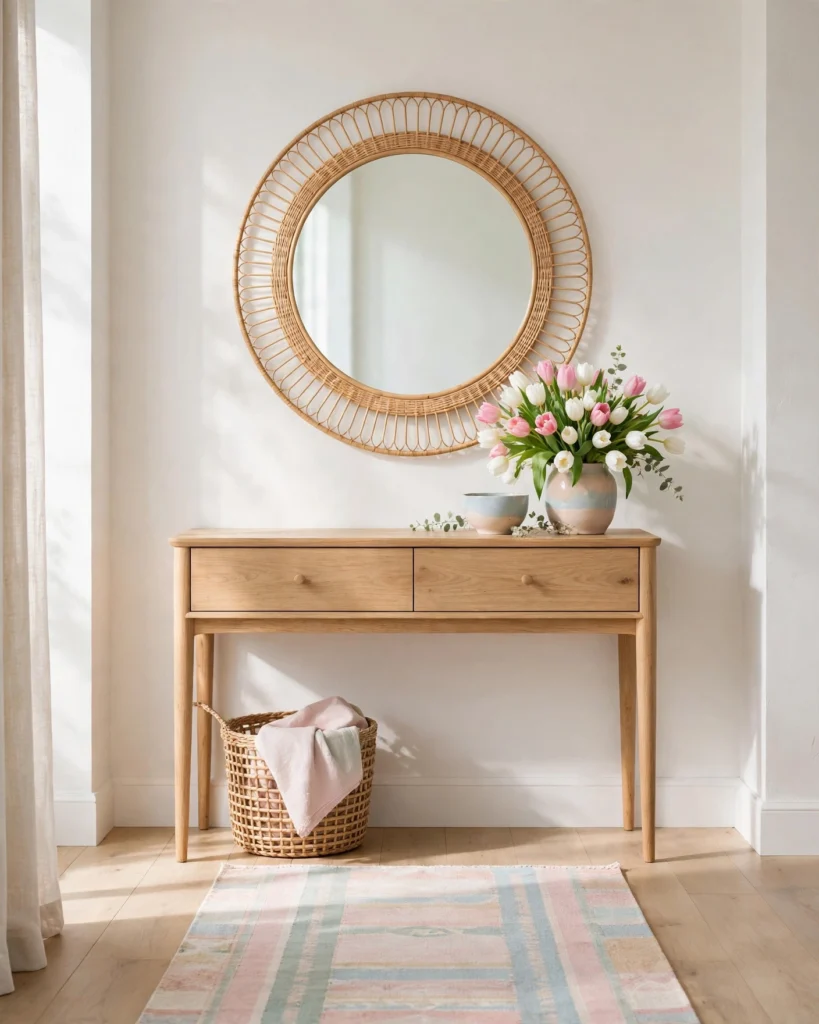
Fresh First Impressions at the Door
Start at the door itself. These five ideas set the tone before guests step inside, and each one takes under an hour to put in place.
1. A Tall Vase of Fresh Tulips on the Console

A single tall vase of tulips does more for a spring entryway than a shelf full of small objects. Choose one colour, pink or white, and cut the stems to different heights so the bunch looks full from the door. A clear glass vase shows the stems and keeps the look light, while a ceramic vase suits a cottage-style hall. Change the water every two days and trim 1 cm off the stems so the flowers last a full week.
Best for: Small and large entryways.
Styling tip: Keep the vase on the side away from the door swing so it never gets knocked.
Pro tip: Use 15 to 20 stems in a vase at least 25 cm tall; fewer stems look thin in a tall vase.
2. A Fresh Spring Wreath on the Front Door

A wreath is the first spring detail guests see, so keep it light and green rather than heavy and dark. Eucalyptus, olive branches, or white blossom work well, and a simple linen bow finishes the look without competing with the flowers. Hang it at eye level, about 150 cm from the floor, on a small adhesive hook if you do not want a nail in the door. For more fresh door ideas, see this Homes & Gardens guide to spring door decor.
Best for: Front doors and covered porches.
Styling tip: Match the wreath width to about two-thirds of the door width so it looks balanced.
Pro tip: Choose a wreath no deeper than 10 cm so the door still opens fully against the wall.
3. Layered Doormats in Soft Pastel
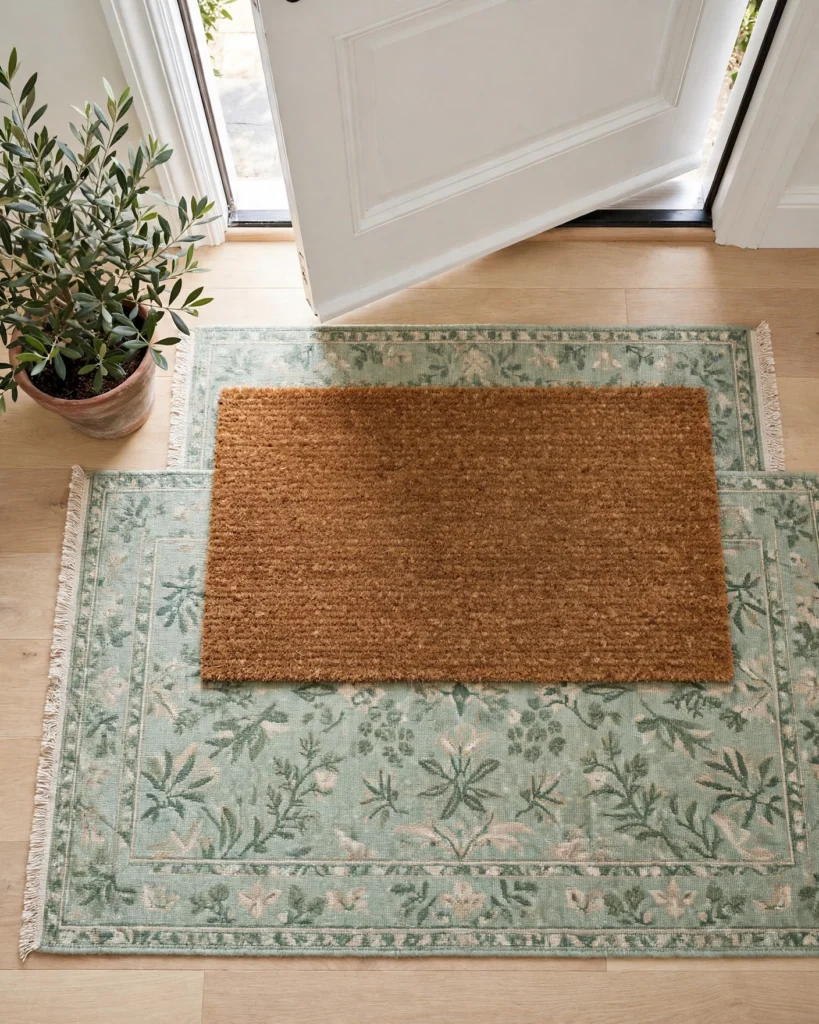
Layering two mats adds colour and catches more dirt than one mat alone. Start with a larger flat-weave rug in sage or blush, about 90 x 150 cm, then place a smaller coir mat on top, centred on the door. The top mat takes the mud, and the bottom mat frames the doorway like a rug. Shake the coir mat outside twice a week in spring, when wet shoes are common.
Best for: Busy family entrances.
Styling tip: Leave a 5 cm border of the bottom rug showing on all sides for a neat, planned look.
Pro tip: Pick a low-pile bottom rug under 6 mm thick so the door clears it easily.
4. A Light Wood Bench with Shoe Cubbies

A bench turns a plain entryway into a place to sit and put shoes on, which matters most in muddy spring weather. Choose a light oak bench about 100 cm wide with two or three open cubbies underneath, one pair of shoes per cubby. Add a thin washable cushion in cream or pale grey, and keep only the shoes you wear this week in the cubbies. The rest belong in a closet, or the bench will look crowded within days. For more storage systems that fit a busy hall, see these mudroom organization ideas.
Best for: Mudrooms and family entryways.
Styling tip: Keep the bench depth to 35 to 40 cm so it does not block the walkway.
Pro tip: Add felt pads under the bench legs to protect wood floors from spring grit.
5. Woven Baskets for Everyday Mudroom Storage

Woven baskets hide clutter while adding the natural texture spring rooms need. Use seagrass or rattan baskets about 30 cm wide on open shelves, one basket per person or per job: scarves, dog leads, sunscreen, and reusable bags. Label the front with a small wooden tag if several people share the space. Baskets also breathe better than plastic boxes, so damp spring items dry faster inside them.
Best for: Open shelves and mudroom walls.
Styling tip: Use baskets in the same material but different sizes for a calm, collected look.
Pro tip: Line a basket with a washable cotton bag if it will hold wet rain gear.
Console, Bench and Storage That Works
A pretty entryway still needs to work hard in spring, when mud, rain, and school bags arrive daily. These six ideas balance looks with storage.
6. A Sage and Blush Console Vignette

Sage green and blush pink are the easiest spring colours to live with because both sit close to neutrals. Style a console with three items only: a vase of blossom branches, a stack of two books, and a small brass tray for keys. Keep the tallest item at one end and the lowest at the other so the eye moves across the table. This three-item rule stops the console from looking like a shop display.
Best for: Console tables in foyers.
Styling tip: Use odd numbers of objects and vary their heights by at least 10 cm.
Pro tip: Cut blossom branches to 1.5 times the vase height for a full, balanced shape.
7. A Round Mirror with a Spring Garland

A round mirror makes a narrow entryway feel wider and bounces daylight from the door across the room. Hang a mirror 60 to 75 cm wide above the console, with its centre at about 150 cm from the floor. Drape a thin faux greenery garland along the top edge only, and pin it with two small clear hooks so it does not slip. Keep the garland light; a thick garland hides the mirror and defeats its purpose.
Best for: Narrow foyers and dark hallways.
Styling tip: Hang the mirror so it reflects a window or a plant, not a blank wall.
Pro tip: Use a garland no thicker than 5 cm so the mirror edge stays visible.
8. Botanical Prints in Light Wood Frames

Botanical prints bring spring indoors without any upkeep, which suits a hallway you pass through rather than sit in. Hang three prints in a row, each about 20 x 25 cm, with 5 cm gaps between them, at eye level above a slim console. Choose prints with white backgrounds and green or blush flowers so they stay bright on a white wall. Use the same frame on all three prints; mixed frames make a small wall look messy.
Best for: Hallway walls and stair entries.
Styling tip: Hang the centre of the group at 145 to 150 cm from the floor.
Pro tip: Use museum glass or a matte finish to cut glare from the front door.
9. An Easter Branch Tree on the Console
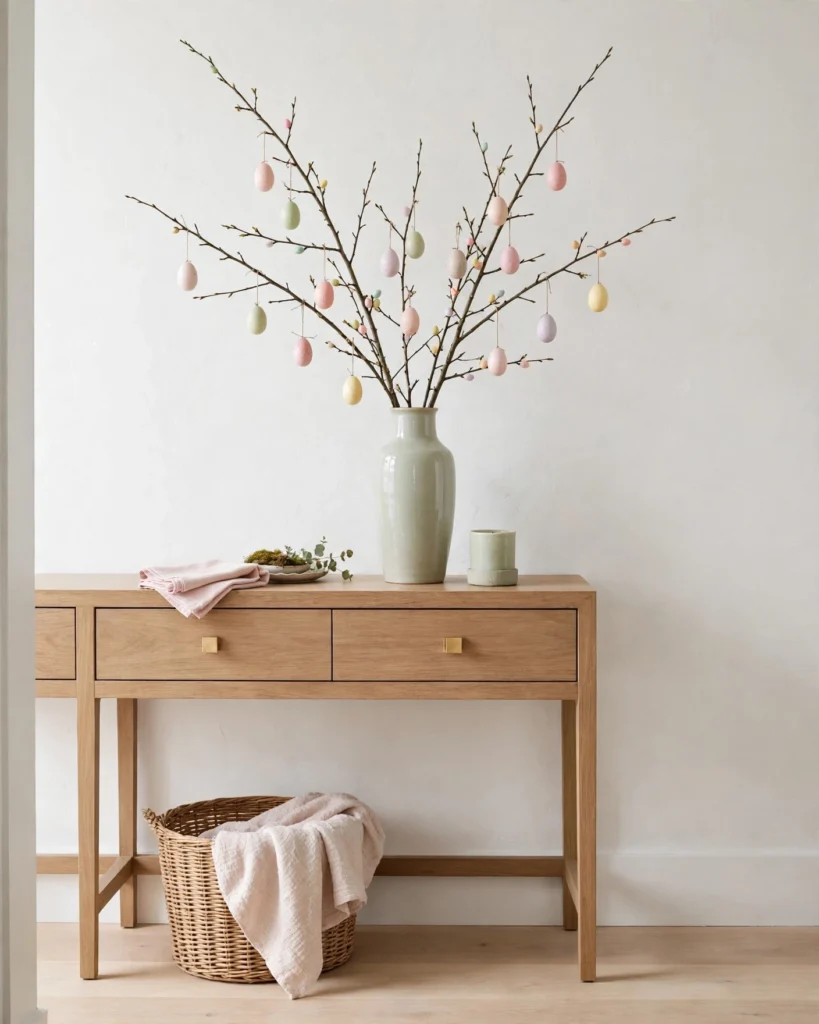
A branch tree is a short, sweet Easter detail that works for two or three weeks and then comes down. Place bare branches in a tall, heavy vase so they cannot tip, then hang six to eight small pastel eggs with thin ribbon at different heights. Keep the branches under 60 cm tall so they do not crowd a mirror or art above the console. Store the eggs in tissue paper after Easter so the paint does not chip.
Best for: Easter season entryways.
Styling tip: Use branches with a few buds already on them for a softer, more natural look.
Pro tip: Weigh the vase base with a few clean pebbles if the branches lean to one side.
10. A Small Chalkboard Welcome Sign

A chalkboard sign adds a personal, cottage note without a permanent change to the wall. Lean a framed board about 25 x 35 cm on the console, next to a small vase of daffodils, and write a short greeting in chalk. Change the message for Easter or a spring visit, then wipe it clean with a damp cloth. Keep the writing large and simple; tiny lettering is hard to read from the door.
Best for: Cottage and farmhouse entryways.
Styling tip: Place the board at a slight angle against the wall so it does not slide forward.
Pro tip: Use a chalk marker for crisp lines, and seal it with hairspray if you want it to last a week.
11. Blue-and-White Porcelain with Spring Florals

Blue-and-white porcelain is a classic pairing with white spring flowers, and it works in both modern and traditional homes. Place one ginger jar or vase, 25 to 30 cm tall, on the console and fill it with white tulips or daffodils. Add a second, smaller piece only if the console is over 120 cm long; otherwise one strong piece looks better. The blue pattern reads clearly from the door, while the white flowers keep it fresh, not formal.
Best for: Traditional and coastal entryways.
Styling tip: Keep the porcelain on the side opposite the door handle to avoid knocks.
Pro tip: Fill the vase only two-thirds full so tall stems stay upright.
Walls, Mirrors and Light
Walls and mirrors decide how big and bright an entryway feels. These six ideas add spring colour at eye level without crowding the floor.
12. Rattan and Cane Accents for a Boho Feel

Rattan and cane warm up a pale spring entryway and add texture without colour. Try a cane-front bench, a rattan pendant light, or a woven wall basket, but pick only two rattan pieces in one space. More than that starts to look like a set. Pair the rattan with white walls, light wood, and one green plant so the natural tones stay fresh rather than dark.
Best for: Boho and coastal entryways.
Styling tip: Mix rattan with linen and light wood, not with dark leather or heavy metal.
Pro tip: Dust cane weekly with a soft brush, as spring pollen settles into the weave.
13. Sheer Linen Curtains on the Sidelights
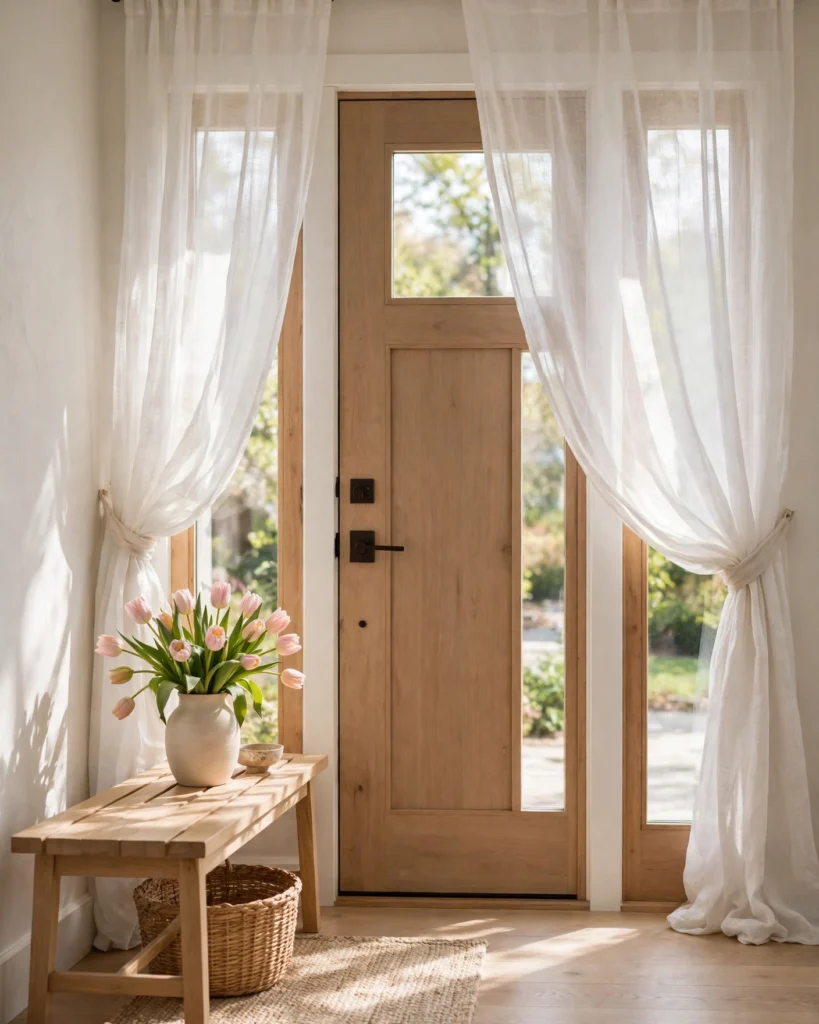
Sheer linen on the sidelights softens bright spring sun while still letting daylight into the hall. Hang a pair of panels on slim tension rods inside the sidelight frame, and choose a length that just covers the glass, about 150 cm for a standard sidelight. White or natural linen suits most doors, and the fabric moves gently when the door opens, which adds life to the space. Wash the panels monthly in spring, when pollen builds up fast.
Best for: Entryways with glass sidelights.
Styling tip: Use a rod no wider than the glass so the curtain sits flat, not bunched.
Pro tip: Choose a linen blend, not pure linen, so the panels hold their shape after washing.
14. Fresh Herb Pots on the Console
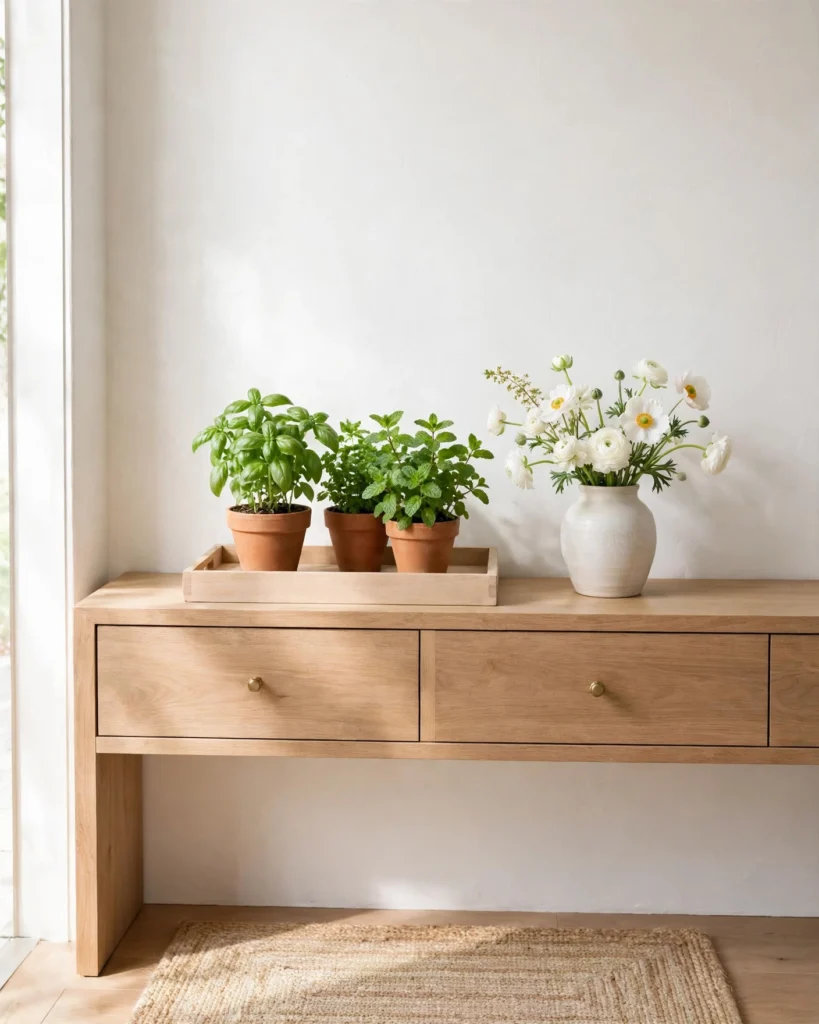
Small herb pots make an entryway smell like spring and give guests something living to notice. Group three terracotta pots, each 10 to 12 cm wide, on a light wood tray: basil, mint, and rosemary work well together. Water them lightly every two or three days and turn the tray weekly so the plants grow evenly. Snip a few leaves for cooking, and the entryway earns its place instead of just looking pretty.
Best for: Kitchens near the entryway.
Styling tip: Keep herbs in the brightest spot on the console, within 1 metre of the door glass.
Pro tip: Use pots with drainage holes and a tray underneath to protect the wood.
15. A Pastel Runner Rug Down the Foyer

A runner rug defines a long foyer and adds spring colour at floor level, where the eye first lands. Choose a washable flat-weave runner in a blush or sage floral pattern, about 60 cm wide and 180 to 240 cm long, leaving at least 10 cm of bare floor on each side. A low pile under 8 mm thick lets the front door swing over it and makes vacuuming easy. Shake the rug outside weekly, as spring mud dries into the fibres fast.
Best for: Long foyers and hallways.
Styling tip: Centre the runner on the door, not on the wall, so the path feels straight.
Pro tip: Add a thin non-slip pad underneath, cut 2 cm smaller than the rug on all sides.
16. An Umbrella Stand and a Boot Tray by the Door
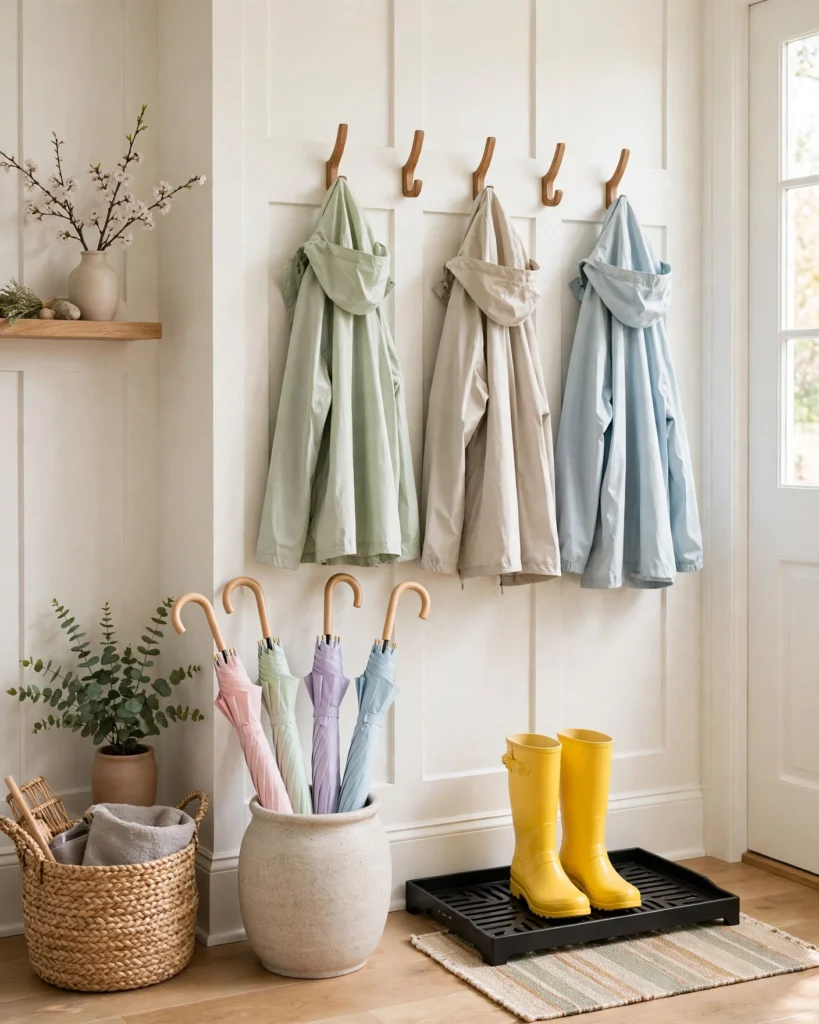
Spring rain needs a plan, or wet umbrellas end up on the floor. Place a ceramic umbrella stand, about 45 cm tall, within arm’s reach of the door, and a boot tray 60 x 40 cm beside it for rain boots. Keep only two umbrellas in the stand and two pairs of boots on the tray; extras go in a closet. Empty the tray every few days so standing water does not mark the floor.
Best for: Rainy spring climates.
Styling tip: Put the stand on the hinge side of the door so it never blocks the swing.
Pro tip: Choose a tray with a raised edge at least 2 cm high to hold a full day of rain.
17. Coat Hooks with Straw Hats and Light Jackets

Wall hooks keep spring layers off the floor and turn useful items into decoration. Fix a row of hooks at 165 cm from the floor for adults, with a lower row at 120 cm for children, spacing hooks 20 cm apart so jackets do not overlap. Hang one straw hat and one light jacket per hook, and leave one hook empty for guests. Straw hats add shape and texture, and they are light enough to hang without stretching the hook.
Best for: Family entryways and mudrooms.
Styling tip: Use hooks rated for at least 5 kg each so a wet jacket does not pull them out.
Pro tip: Hang hats by their inner band, not the brim, so the brim keeps its shape.
Floors, Textiles and Colour
The floor is where spring mud lands first, so it deserves as much thought as the console. These five ideas add colour and practical protection.
18. A Bowl of Lemons for a Pop of Yellow

A bowl of lemons is the cheapest spring colour you can buy, and it lasts two weeks on a console. Fill a white ceramic bowl about 25 cm wide with eight to ten lemons, and add a few green leaves from the garden for contrast. Place the bowl near the front of the console so the yellow catches the light from the door. Replace any lemon that softens, and wash the fruit before display so it shines.
Best for: Small consoles and tight budgets.
Styling tip: Use real lemons, not plastic ones, as the scent and shine are part of the effect.
Pro tip: Keep the bowl out of direct sun, or the lemons will dry out in a few days.
19. A Spring Scent Diffuser by the Door
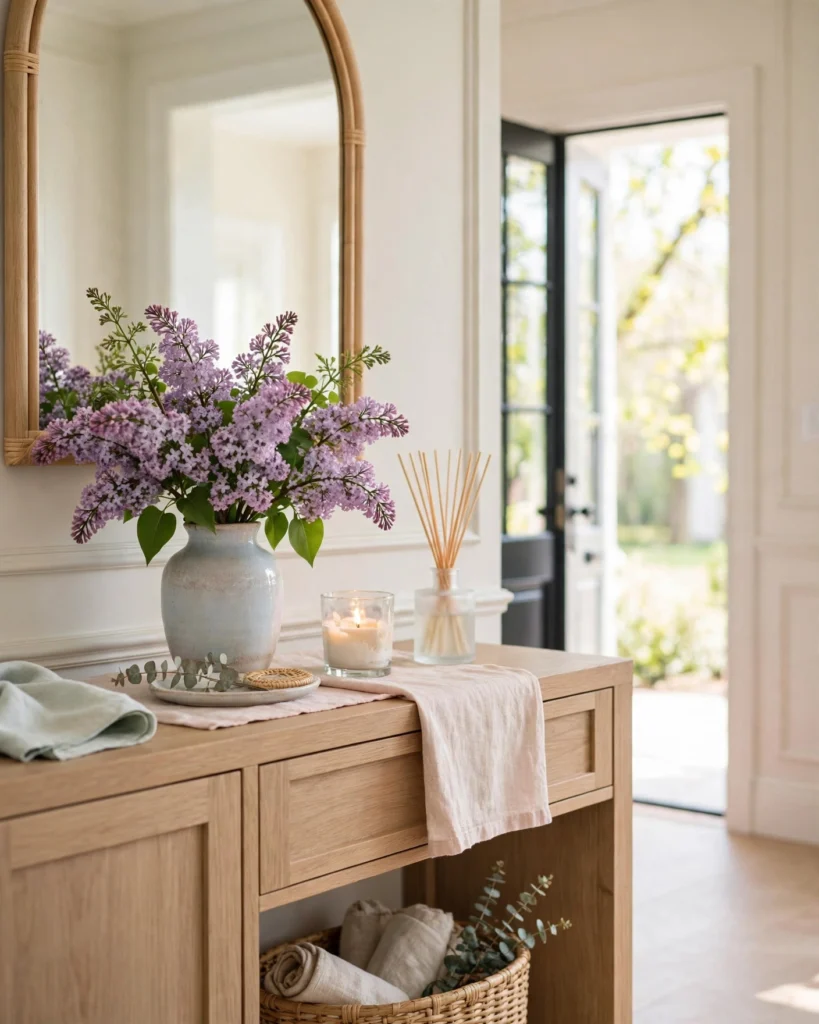
Scent is the first thing guests notice, even before they see the room. Place a reed diffuser with a light floral or citrus scent on the console, away from the door swing, and use five reeds for a small hall or seven for a large one. Turn the reeds weekly to refresh the scent, and keep the bottle on a small tray so oil never marks the wood. A diffuser beats a candle here, as it works all day without a flame near the door.
Best for: Homes that welcome guests often.
Styling tip: Choose a scent you enjoy at half strength; the hall concentrates fragrance.
Pro tip: Place the diffuser at least 30 cm from flowers so oil does not touch the petals.
20. A Lightweight Throw Draped on the Bench

A lightweight throw softens a hard bench and adds a layer you can change with the season. Fold a cotton or linen throw in blush, sage, or cream into thirds and drape it over one end of the bench, not across the whole seat. Add one small cushion in a matching tone at the other end. The throw should look ready to use, not folded like a shop display, so leave one corner slightly loose.
Best for: Benches in foyers and mudrooms.
Styling tip: Use a throw no larger than 130 x 180 cm so it does not pool on the floor.
Pro tip: Wash the throw every two weeks in spring, when pollen settles on fabric.
21. Potted Topiaries Flanking the Front Door

A pair of matching topiaries frames the doorway and gives the entryway structure that flowers alone cannot. Choose two potted topiaries about 60 to 75 cm tall in identical white planters, and place them 30 cm inside the door, one on each side. Water them weekly and rotate the pots a quarter turn each time so they grow evenly. Real boxwood needs light, so keep them near the door glass, or use good faux topiaries in a dark hall.
Best for: Wide entryways and double doors.
Styling tip: Keep the planters the same height and colour, or the pair will look mismatched.
Pro tip: Use a saucer under each pot to protect the floor from watering spills.
22. Glass Hurricane Lanterns with White Candles

Hurricane lanterns add a soft glow to an entryway in the evening without looking like winter decor. Place two glass lanterns, 25 and 30 cm tall, on the console with white pillar candles inside, and keep them at least 15 cm from flowers and fabric. Use battery candles if children or pets pass through the hall, as they give the same glow with no risk. Light them at dusk for an hour, and the hall feels warm as guests arrive.
Best for: Evening entertaining.
Styling tip: Use candles of different heights for a natural, layered look.
Pro tip: Keep the glass clean with a vinegar wipe weekly, as spring dust shows fast.
Seasonal Details and Mudroom Practicality
The last four ideas are the finishing touches: scent, light, family systems, and a calm neutral option for homes that prefer less colour.
23. Labelled Cubbies for Kids in the Mudroom

Labelled cubbies end the daily search for shoes and bags, and spring is the best time to set the system up. Give each child one cubby about 35 cm wide with a hook above at their shoulder height and a basket below for shoes. Add a simple wooden name tag on the front, and keep only the current season’s gear inside. Check the cubbies each Sunday, and move outgrown boots before they pile up. If you still have heavy winter layers by the door, our winter entryway decor ideas show what to swap out first.
Best for: Families with young children.
Styling tip: Set hooks at each child’s shoulder height so they can hang their own coat.
Pro tip: Use one basket per child, not one shared basket, or the system breaks down in a week.
24. A Seasonal Swap Tray on the Console

A swap tray makes changing the entryway for spring a ten-minute job instead of a full restyle. Use a light wood tray about 40 x 30 cm on the console, and fill it with three small items: a tiny vase of tulips, a small potted succulent, and a candle. When summer arrives, swap only the tray contents and leave the rest of the console alone. Keep the tray near the centre of the console so it reads as a deliberate display, not a storage spot.
Best for: Renters and busy households.
Styling tip: Limit the tray to three items so it stays neat and easy to lift away.
Pro tip: Choose a tray with handles so you can move it in one hand when cleaning.
25. A Small Rechargeable Lamp on the Console

A rechargeable lamp solves the problem of a console with no socket nearby, and it adds a warm pool of light in the evening. Choose a lamp 25 to 30 cm tall with a warm-white setting around 2700K, and place it at the end of the console opposite the flowers. Charge it overnight once a week; most models run eight to ten hours on a charge. The lamp also makes the entryway feel lived-in after dark, when daylight no longer helps.
Best for: Dark hallways and socket-free consoles.
Styling tip: Pick a lamp with a dimmer so you can lower it to a soft glow at night.
Pro tip: Keep the lamp base on a felt pad so it does not scratch the console.
26. A Minimal Neutral Spring Entryway
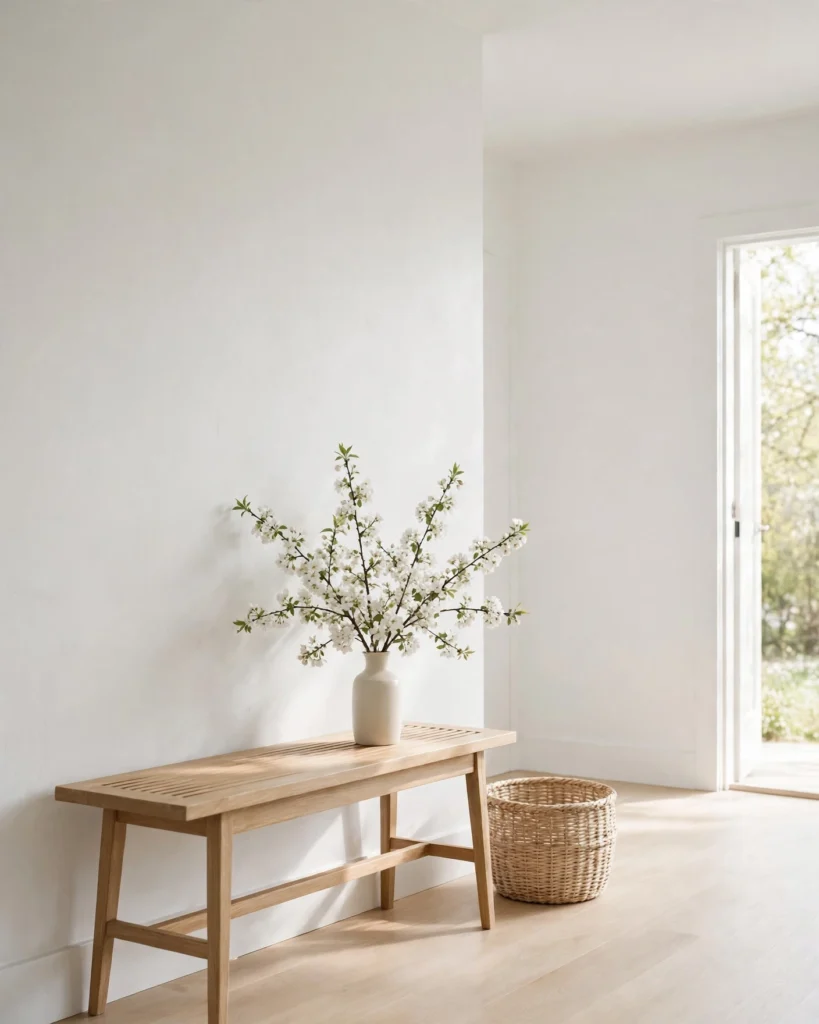
Not every spring entryway needs colour, and a neutral version suits homes where the rest of the house is calm. Keep the walls white, the bench light oak, and the only spring detail a single vase of white blossom or green branches. Leave at least half the console surface empty, and use one woven basket for texture. The empty space is the point: it lets the one fresh detail stand out, and the room stays easy to clean.
Best for: Minimal and modern homes.
Styling tip: Limit the palette to white, light wood, and one green, with no other colours.
Pro tip: Remove one item before adding another, so the room never drifts back to clutter.
Frequently Asked Questions
What is the easiest spring entryway decor idea for a small space?
Start with one tall vase of fresh tulips on a console or a small stool, and add a light-coloured doormat. These two changes take less than thirty minutes and cost very little, yet they change the colour and scent of the whole hall. Avoid adding wall art and baskets in the same week, as a small entryway fills up fast. Once the vase and mat are in place, live with them for a few days before deciding what else the space needs.
How do I decorate my entryway for spring without spending a lot?
Use what you already own and add only fresh, low-cost items such as flowers, lemons, or a bunch of branches from the garden. A bowl of lemons, a vase of daffodils, and a folded throw you already have can refresh a console for under twenty dollars. Swap heavy winter textiles for lighter ones, and move a basket or mirror from another room instead of buying new pieces. Spend money only on items you will reuse next spring.
What colours work best for spring entryway decor?
Soft pastels such as sage green, blush pink, pale yellow, and sky blue work best, as they read as spring without overwhelming a small hall. Pair one pastel with white and light wood, and keep a second pastel to small accents only. Blue and white is a safe classic, while sage and blush suit cottage and modern homes. Avoid using three strong pastels at once, as the room can start to look like a nursery.
How can I make a mudroom look good in spring and stay practical?
Give every item a fixed home: one hook and one basket per person, a boot tray by the door, and an umbrella stand within reach. Use washable materials such as seagrass baskets, a flat-weave rug, and a wipe-clean bench cushion, so spring mud is easy to deal with. Keep only the current season’s coats and shoes in the mudroom, and store the rest elsewhere. A tidy system looks better than extra decoration in a working mudroom.
Should I use real or faux flowers in my entryway?
Real flowers look and smell better, and tulips, daffodils, and blossom branches are cheap in spring, so use them on a console you see daily. Faux flowers work better in a dark hallway, on a high shelf, or in a wreath that must last for weeks without water. If you choose faux stems, pick ones with varied heights and a matte finish, as shiny plastic stems look fake from the door. Mix the two: real flowers low down, faux greenery up high.
When should I put up spring entryway decor?
Most homes can switch to spring decor in early to mid-March, once the heaviest winter weather has passed and spring flowers are easy to buy. Start with the door wreath and the doormat, then change the console flowers and textiles over the following week. In warmer regions, early March works well, while colder regions may wait until late March. Take the Easter details down within a week after Easter so the entryway does not feel out of season.
Final Thoughts
A spring entryway does not need many new things; it needs the right few things in the right places. Pick one idea from the door, one from storage, and one small seasonal detail, and your hall will feel fresh without feeling crowded. Keep the palette light, the surfaces partly clear, and the storage honest about what your family actually uses.
Revisit the space in a month and remove anything that has not earned its place. Spring decor works best when it stays simple, so let the flowers, the daylight, and one calm colour do most of the work. Your entryway will welcome guests, and you, every time the door opens.
