
A good entryway starts with one habit: everything has a place the moment you walk in. These mudroom locker ideas give coats, shoes, bags and keys a home of their own, so the pile by the door never forms in the first place. The 34 ideas below cover built-ins, freestanding units, budget hacks and family-proof storage — pick the one that fits your wall, your household and your budget.
The difference between a tidy mudroom and a crowded one comes down to three choices: one bay per person, hooks at the right height, and a bench with shoe storage underneath. Get those right and the room practically keeps itself tidy — even with kids, dogs and winter coats in the mix.

Why You’ll Love These Mudroom Locker Ideas
Lockers turn the busiest corner of the house into a system instead of a dumping ground. Each person gets a bay, each bay holds a coat, a bag and a pair of shoes, and the bench gives everyone a place to sit while they lace up. The ideas below work in big entryways and narrow hallways alike, and most of them mix open storage for daily gear with closed storage for the things you would rather not see.
How to Choose the Right Mudroom Lockers for Your Home
Measure first: a locker bay for one adult needs about 18 to 24 inches of width, hooks at 60 to 66 inches high, and a bench 17 to 18 inches deep so coats do not brush the floor. Count the people who use the door daily, then add one spare bay if you can — guests and seasonal coats fill it fast. Choose built-ins if you own and want a fitted look, or a freestanding unit if you rent or want to move it later. If the bench needs planning too, our mudroom bench ideas will help you get the seat height and shoe storage right.
Built-In Locker Walls
1. A Classic Built-In Locker Wall
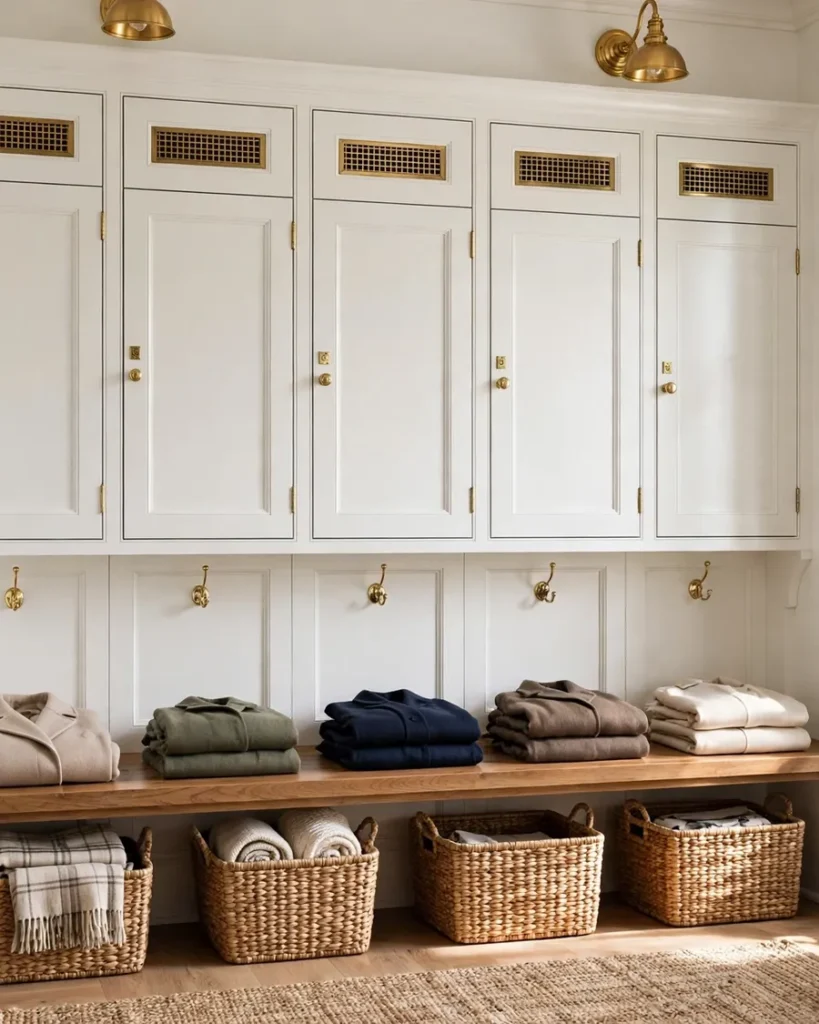
A full wall of built-in lockers with a bench running underneath is the benchmark mudroom — every bay has hooks, a shelf and a basket, and the whole wall reads as one piece of furniture. Best for: families who want a permanent, fitted entryway. Styling tip: keep the bench clear and put one basket per bay for gloves and hats. Pro tip: allow 18 inches of width per person; narrower bays make winter coats bunch and doors stick.
2. One Locker Per Person
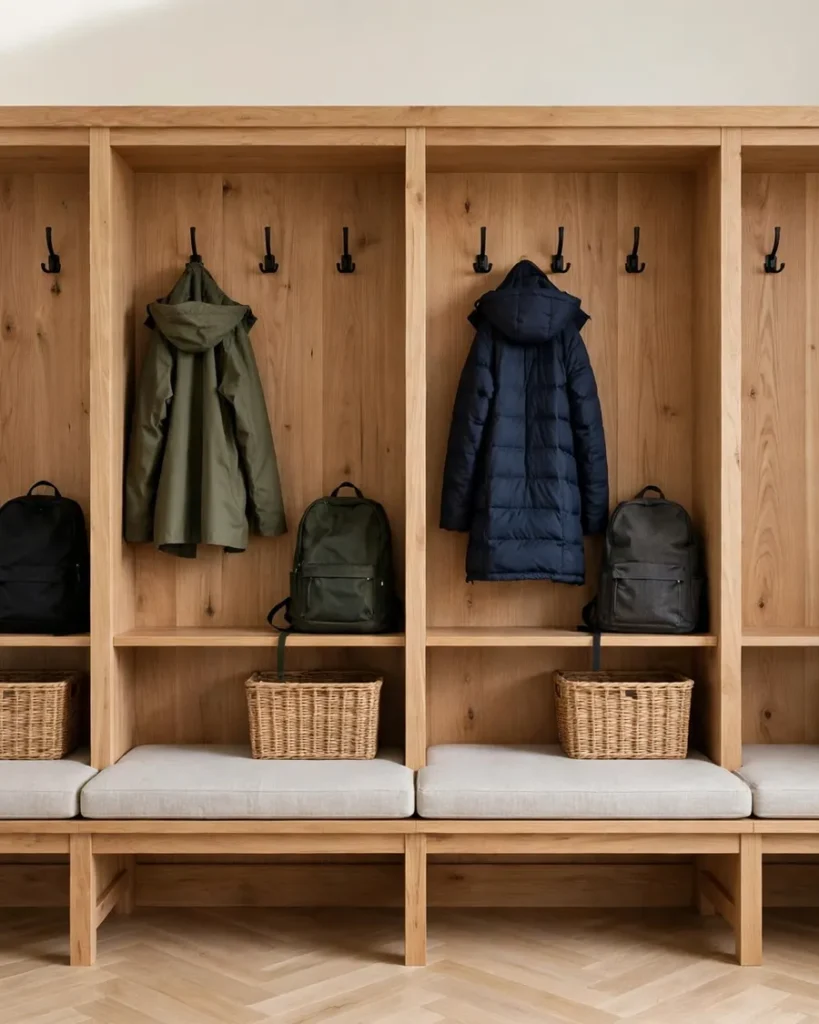
Give every family member a labelled bay and the “whose coat is this?” argument disappears. Each locker holds one coat, one bag and one pair of shoes, and kids learn the routine fast because their spot never changes. Best for: households with three or more people sharing one door. Styling tip: use matching baskets so the wall stays calm even when the contents differ. Pro tip: add a small name plate or tag at 48 inches high — low enough for kids to read, high enough to stay clean.
3. Floor-to-Ceiling Lockers
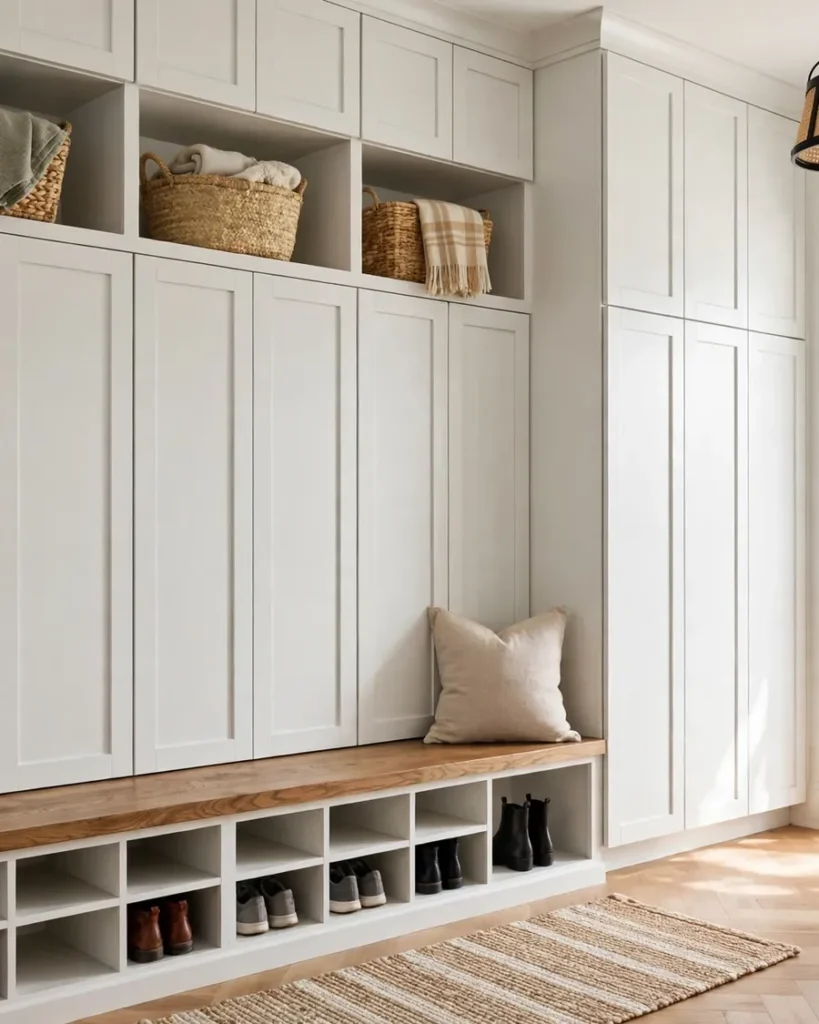
Take the lockers all the way to the ceiling and you gain a full row of top cabinets for out-of-season gear, spare bedding and holiday coats. The daily hooks and bench stay at working height, while the rarely used things live safely overhead. Best for: homes with no spare closet near the door. Styling tip: paint the top cabinets the same colour as the wall so the height does not feel heavy. Pro tip: keep a small folding step stool in the lowest cubby — top cabinets are useless if nobody can reach them.
4. Open Cubbies Above the Bench

Open cubbies above the bench keep hats, scarves and folded blankets visible and easy to grab, which is exactly what you want on a cold morning. The bench below stays free for sitting, and the cubbies stop small things from drifting onto the floor. Best for: families who grab and go every morning. Styling tip: fold soft things in thirds so the stacks read neat from across the room. Pro tip: make cubbies 12 inches deep — deeper ones swallow small items and become junk shelves.
5. Double-Decker Lockers for Kids
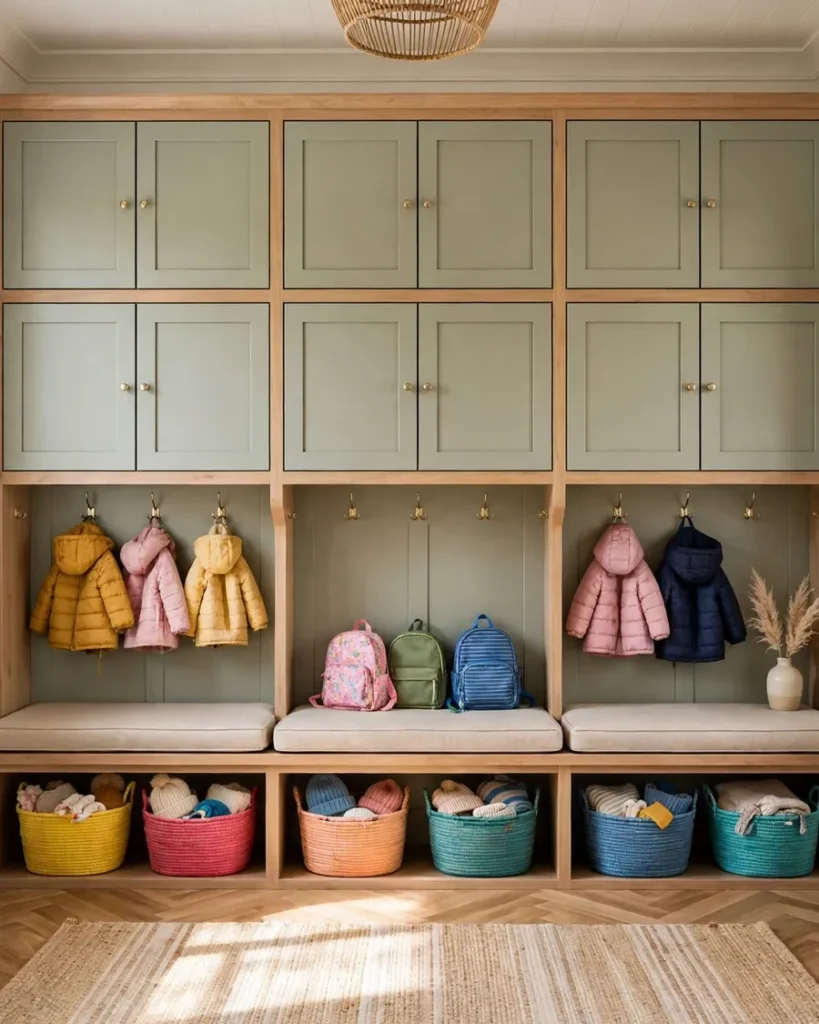
Stack two short lockers in one bay and two children share a column without sharing a hook. The lower locker sits at kid height for coats and school bags, while the upper one holds spare shoes and seasonal gear. Best for: families with two or more young children and a short wall. Styling tip: give each child a different basket colour so they always know which locker is theirs. Pro tip: put the lower hook at 36 inches — a coat hung higher than a child’s shoulder will end up on the floor.
6. Closed-Door Lockers That Hide Everything
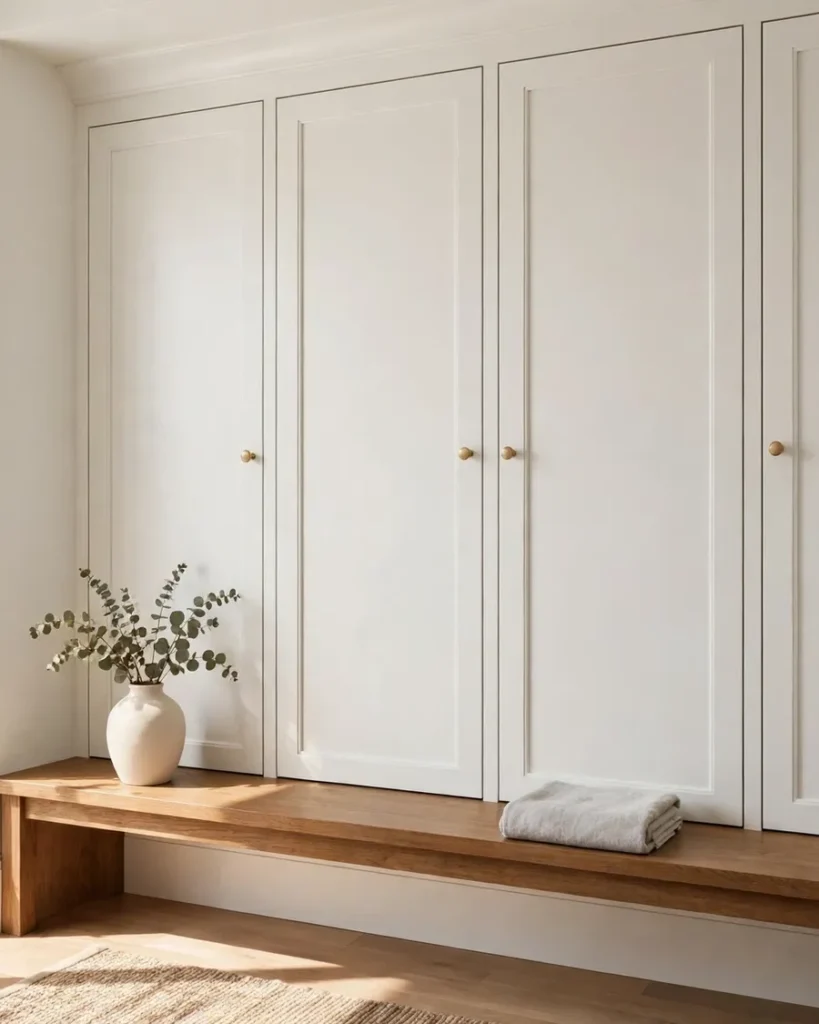
Doors change everything: coats, bags and clutter disappear behind flat panels, and the entryway looks calm even on the messiest day. Inside, the same hooks and shelves do the work — you just do not have to look at them. Best for: front doors that open straight into the living room. Styling tip: leave the bench almost bare, with one vase or folded towel, so the clean look holds. Pro tip: fit soft-close hinges; locker doors get slammed dozens of times a day and cheap hinges loosen within months.
7. An L-Shaped Corner Locker Wall

Wrap the lockers around a corner and a dead entryway angle becomes the most useful wall in the house. The bench turns the corner too, so two people can sit and put shoes on at once without blocking the door. Best for: square entryways and garage doors that open into a corner. Styling tip: keep the corner bay for the least-used coats, since it is the hardest to reach. Pro tip: leave at least 36 inches of clear floor in front of the bench, or the corner becomes a traffic jam.
Freestanding and Budget-Friendly Lockers
8. A Freestanding Locker Unit
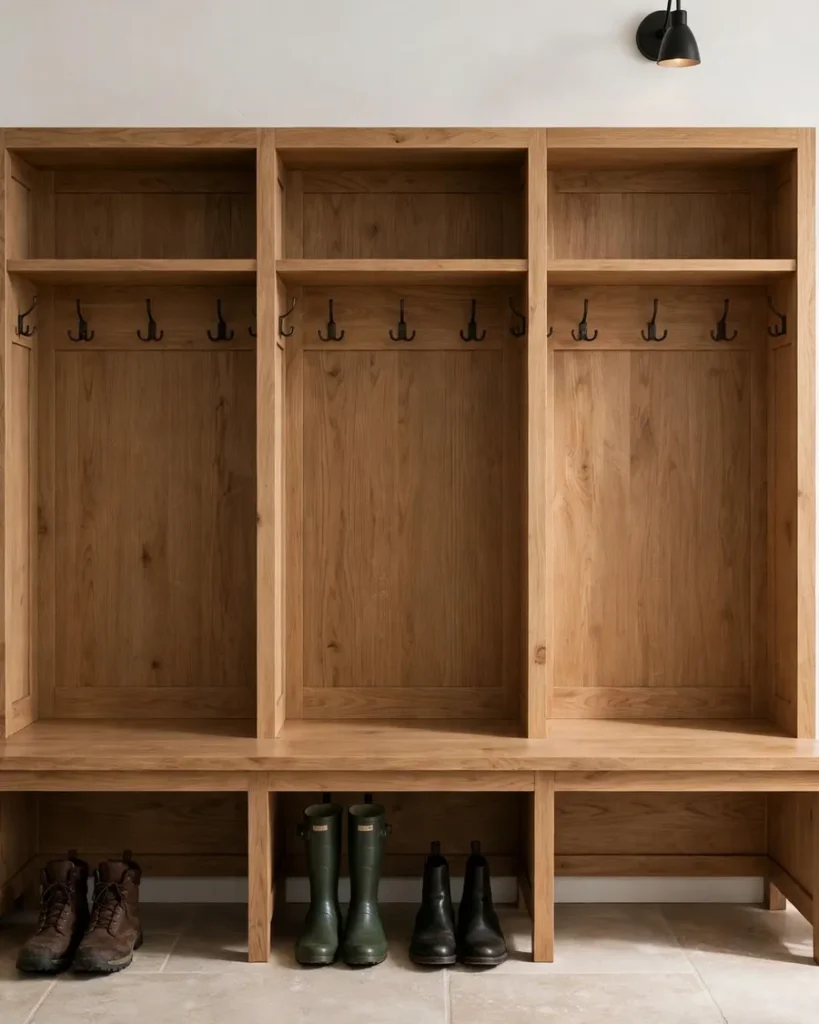
A freestanding locker unit gives you the built-in look in one purchase — three bays, a bench and hooks, standing against the wall with no carpenter needed. It suits homes where a full built-in is too much commitment or too much money. Best for: first homes and anyone who may move the unit later. Styling tip: anchor it to the wall with the anti-tip kit, then style the top with one basket. Pro tip: measure your door swing first; a unit 16 inches deep plus an open door can block a hallway fast.
9. A Modular Cubby Locker Hack
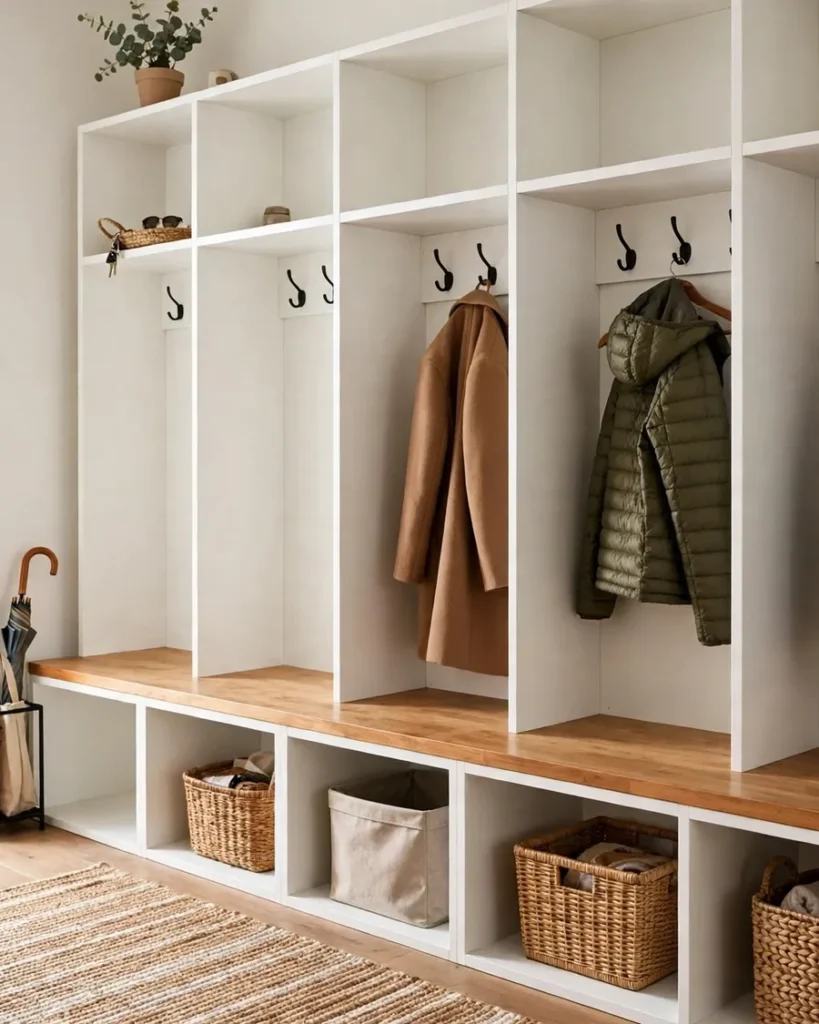
Stack modular cube shelves, add a wooden board on top as a bench, and screw in a row of hooks — you have lockers for a fraction of the built-in price. The cubes hold baskets and shoes, and the whole unit can grow one column at a time. Best for: tight budgets and weekend DIY projects. Styling tip: paint the cubes and the bench top to match, so the hack reads as one piece. Pro tip: bolt the cubes together and to the wall — a tall stack of cubes tips easily when kids climb it.
10. Repurposed Vintage School Lockers
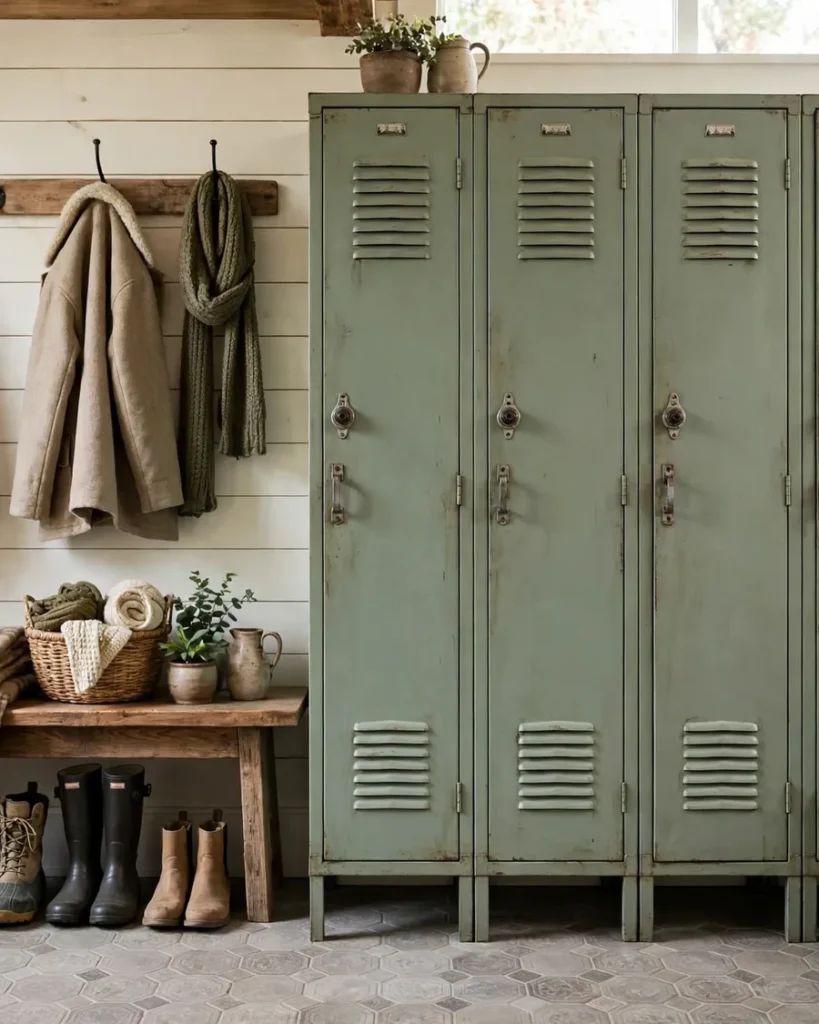
Old metal school lockers bring instant character — vents, latches and a colour you would never pick from a catalogue. A fresh coat of paint and a wooden bench in front turn a salvage find into the talking point of the entryway. Best for: vintage lovers and one-of-a-kind homes. Styling tip: keep the bench wood warm and plain so the lockers stay the star. Pro tip: check the depth before buying — school lockers are often only 12 to 15 inches deep, so bulky winter coats may not fit inside.
11. Open Cubbies With Hooks, No Doors

Skip the doors entirely and you get the cheapest, airiest locker wall of all: wooden dividers, a row of hooks and baskets on the shelves. Everything is visible, so the family actually uses it — and you can see at a glance what is missing. Best for: busy households who hate opening doors for a coat. Styling tip: limit each bay to one coat and one bag, or the open look turns messy. Pro tip: use double hooks — one high for coats, one low for bags — so a full bay still holds everything.
12. A Locker Bench With Shoe Cubbies Below

Put open shoe cubbies under the bench and shoes stop migrating across the floor. Each person pairs their shoes in their own cubby, boots stand upright at the ends, and the bench above stays free for sitting. Best for: homes where shoes are the main source of clutter. Styling tip: keep one cubby empty for guests, or the system breaks the moment someone visits. Pro tip: make cubbies 12 inches wide and 14 inches deep — most adult shoes need that much room, and boots need the height of two cubbies.
13. Slim Lockers for a Narrow Entryway
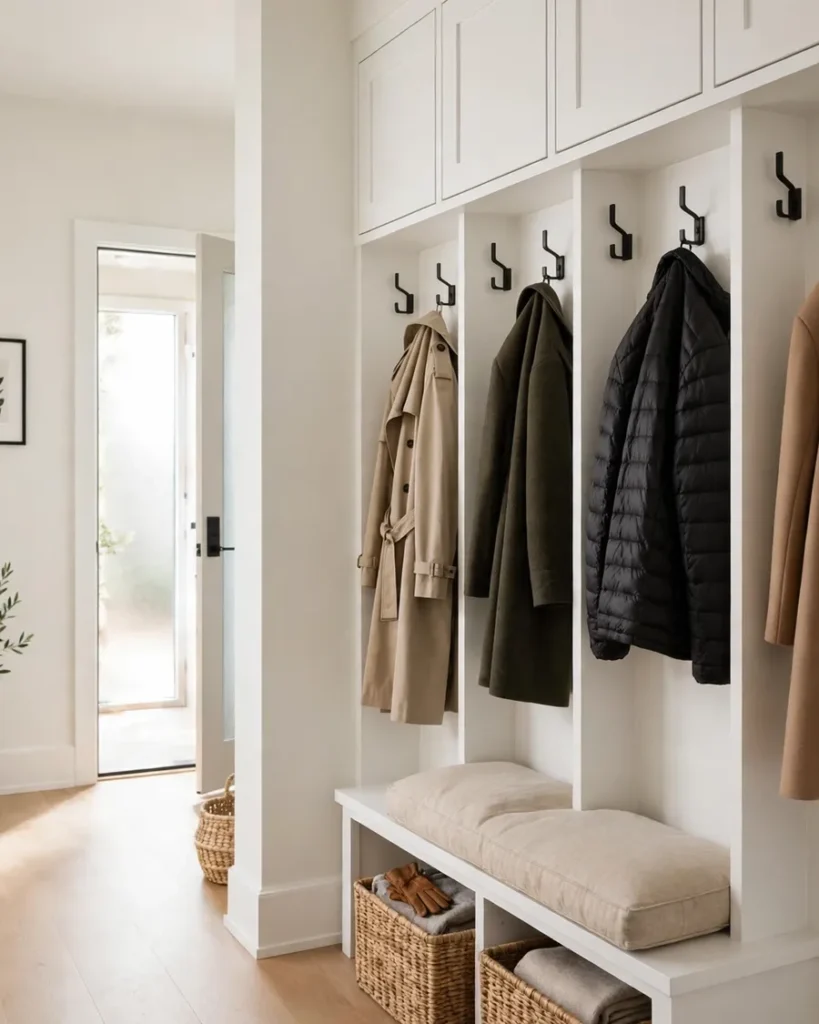
A hallway only needs 12 inches of locker depth to work — hooks on the back panel, a shallow shelf on top and a slim bench that doubles as a shoe ledge. Coats hang flat against the wall instead of jutting into the walkway. Best for: apartments and narrow hallways with no real mudroom. Styling tip: paint the lockers the same colour as the walls so the hallway feels wider. Pro tip: skip doors on slim lockers; a door swinging into a 36-inch hallway leaves nobody room to pass.
14. Renter-Friendly Freestanding Lockers
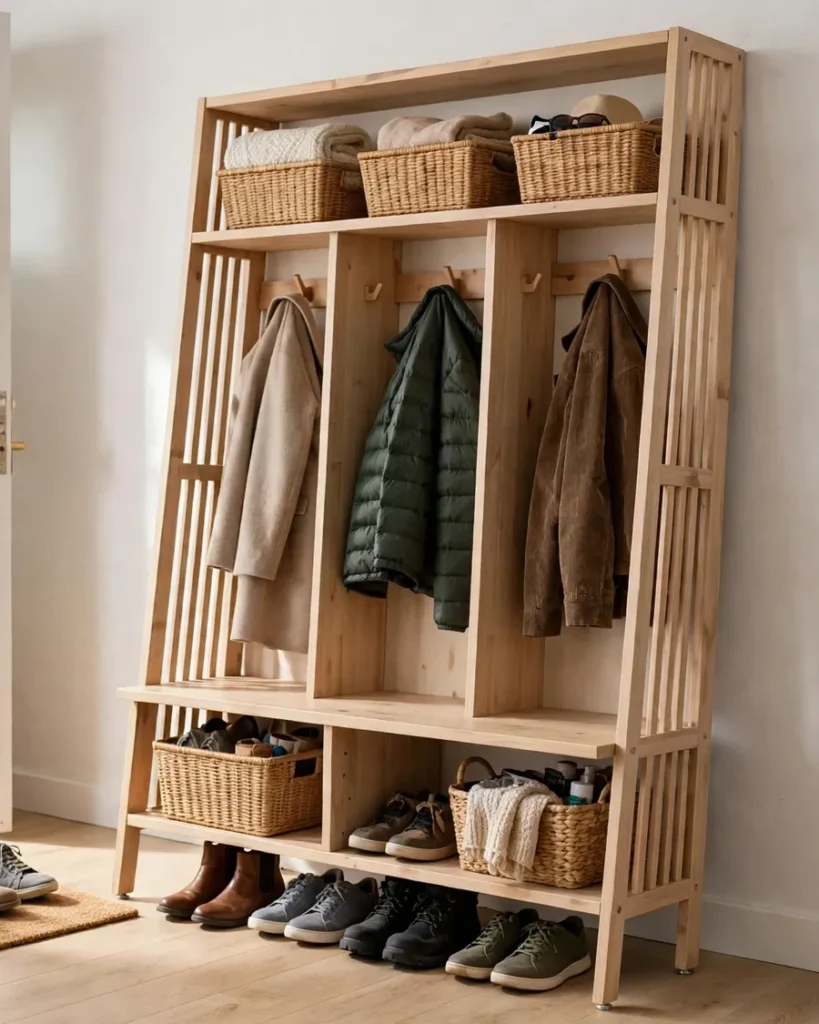
Renters can have lockers too: a freestanding shelf unit with hooks and baskets leans or stands against the wall with no drilling and no damage. When you move, it moves with you — and it costs far less than a built-in. Best for: rentals, apartments and anyone who cannot drill into the walls. Styling tip: use matching baskets across the shelves to hide the everyday mess. Pro tip: choose a unit with adjustable feet; rental floors are rarely level, and a wobbling locker unit is a daily annoyance.
Style-Led Lockers
15. Crisp White Shaker Lockers
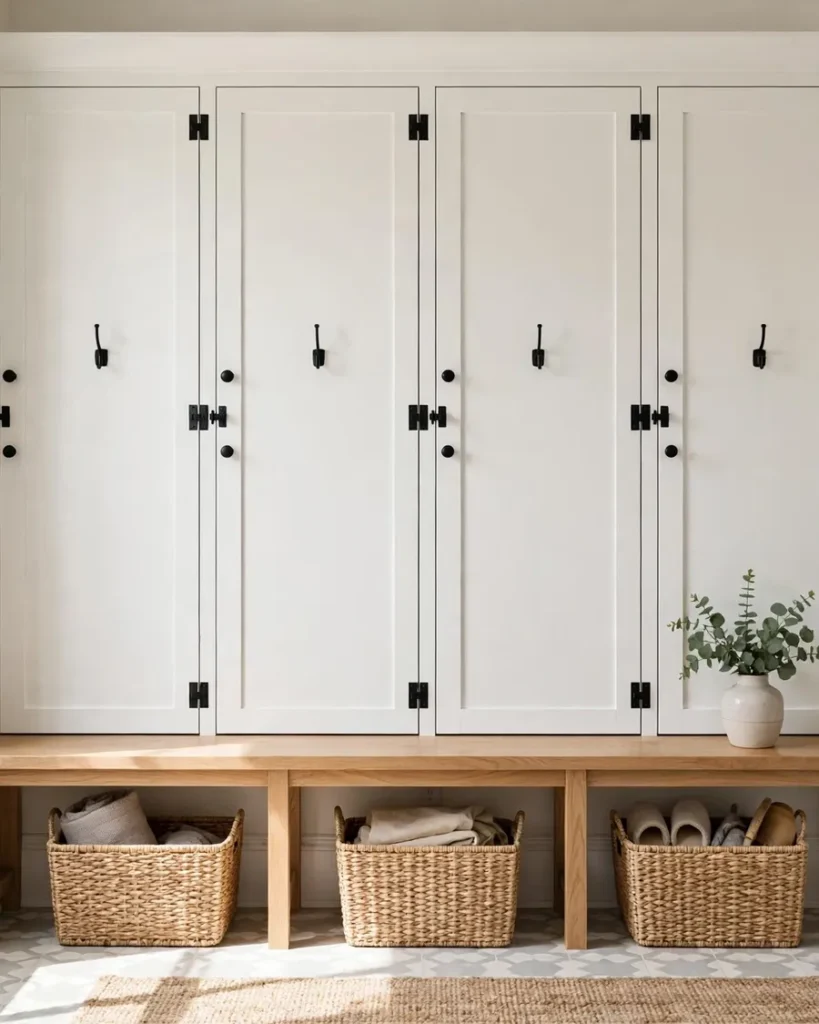
White shaker lockers are the safe classic for a reason: the panelled doors suit almost any house, the white paint bounces light around a dark entryway, and black hardware keeps the look fresh rather than plain. Best for: traditional and transitional homes, and for resale. Styling tip: warm the white with a light oak bench and natural baskets. Pro tip: use a satin or semi-gloss paint — flat white shows every scuff from bags and boots within weeks.
16. Sage Green Painted Lockers
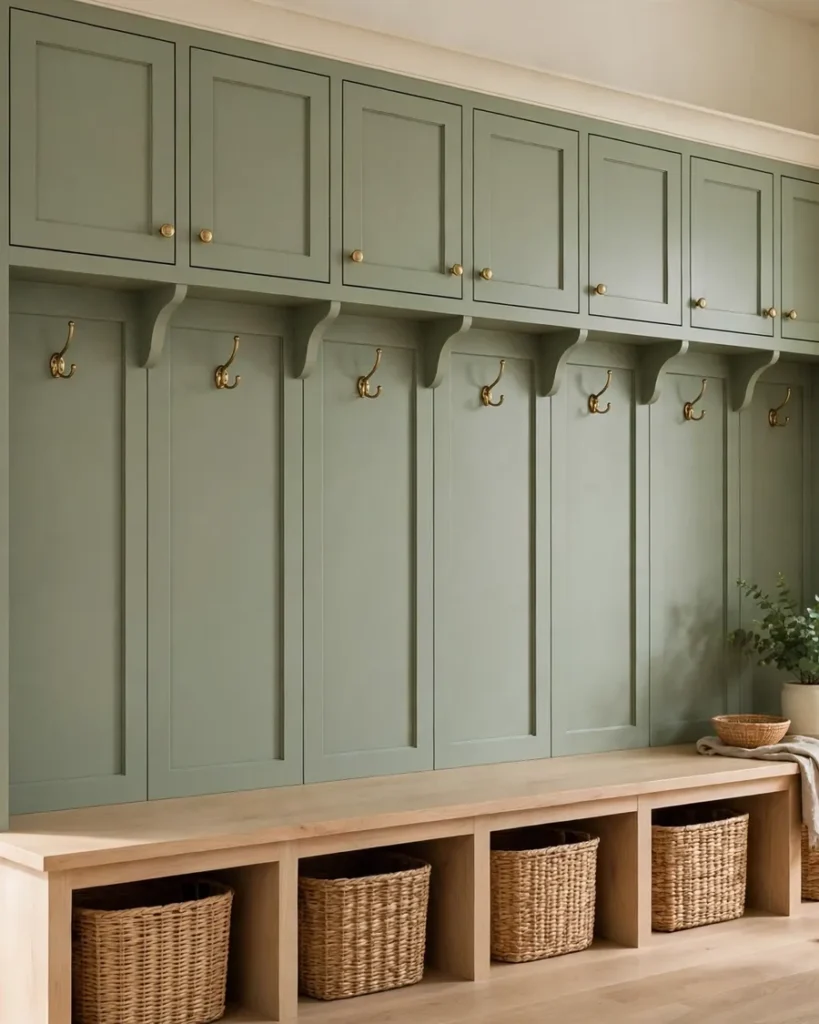
Sage green lockers feel calm and a little bit country without trying hard. The soft green works with cream walls, wood floors and brass hooks, and it hides dust far better than white. Best for: cottage, farmhouse and nature-inspired homes. Styling tip: add one small plant on the bench and keep the baskets natural. Pro tip: test the paint in the actual entryway light — sage can read grey or mint depending on whether the door faces north or south.
17. Navy Blue Lockers With Brass Hardware
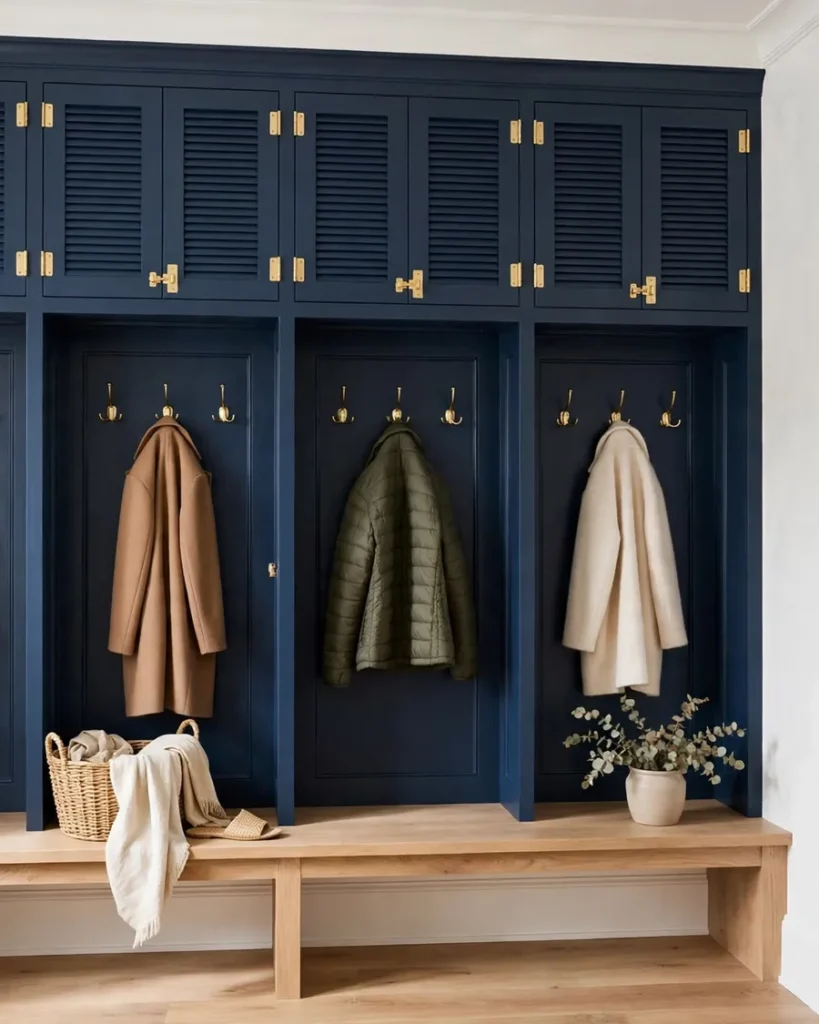
Navy lockers with brass hooks turn a plain entryway into a proper statement. The dark colour grounds the room, the brass warms it up, and scuffs from daily use barely show. Best for: bold homes and entryways with plenty of natural light. Styling tip: keep the walls white and the bench light so the navy does not darken the room. Pro tip: brass hooks in a busy mudroom should be solid brass or brass-plated steel — thin plating wears through where coats rub every day.
18. Natural White Oak Lockers
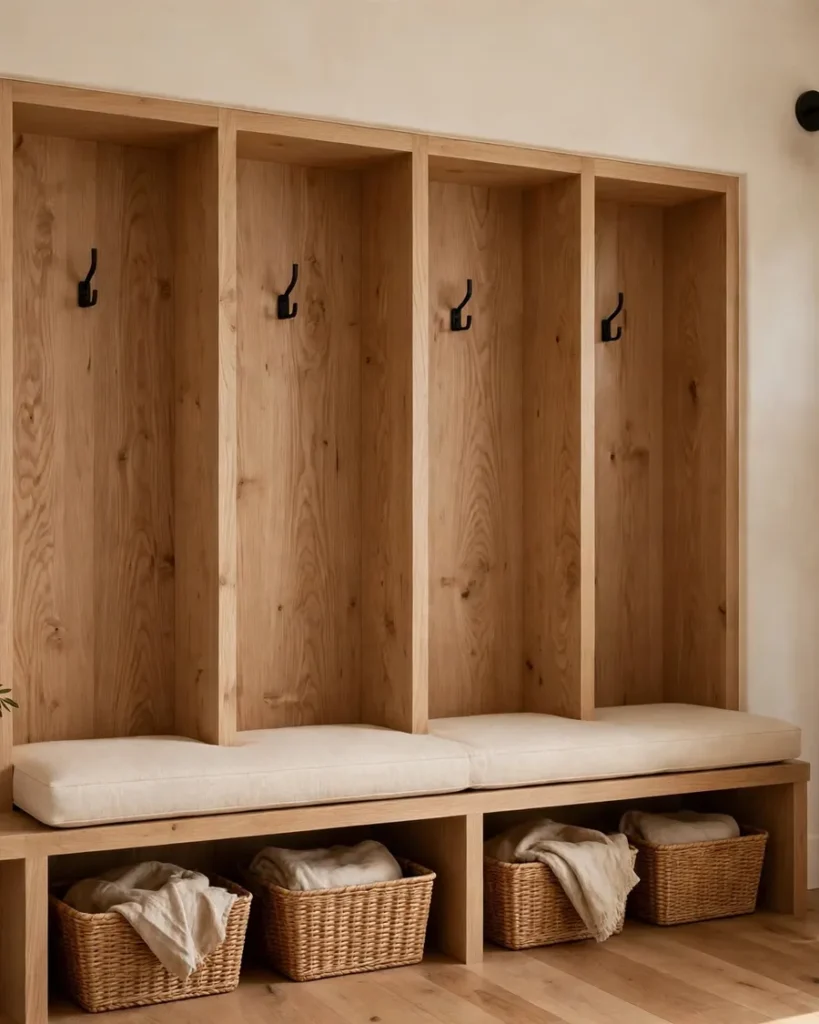
White oak lockers bring warmth without colour — the pale grain, black hooks and cream cushion read modern, calm and expensive. The wood also ages gracefully, picking up a soft patina instead of chipped paint. Best for: modern, Scandinavian and Japandi-style homes. Styling tip: keep the styling minimal: one cushion, one basket per bay, nothing else. Pro tip: seal oak in a mudroom with a hardwax oil or polyurethane topcoat — raw oak stains from wet coats and muddy hands.
19. Matte Black Lockers
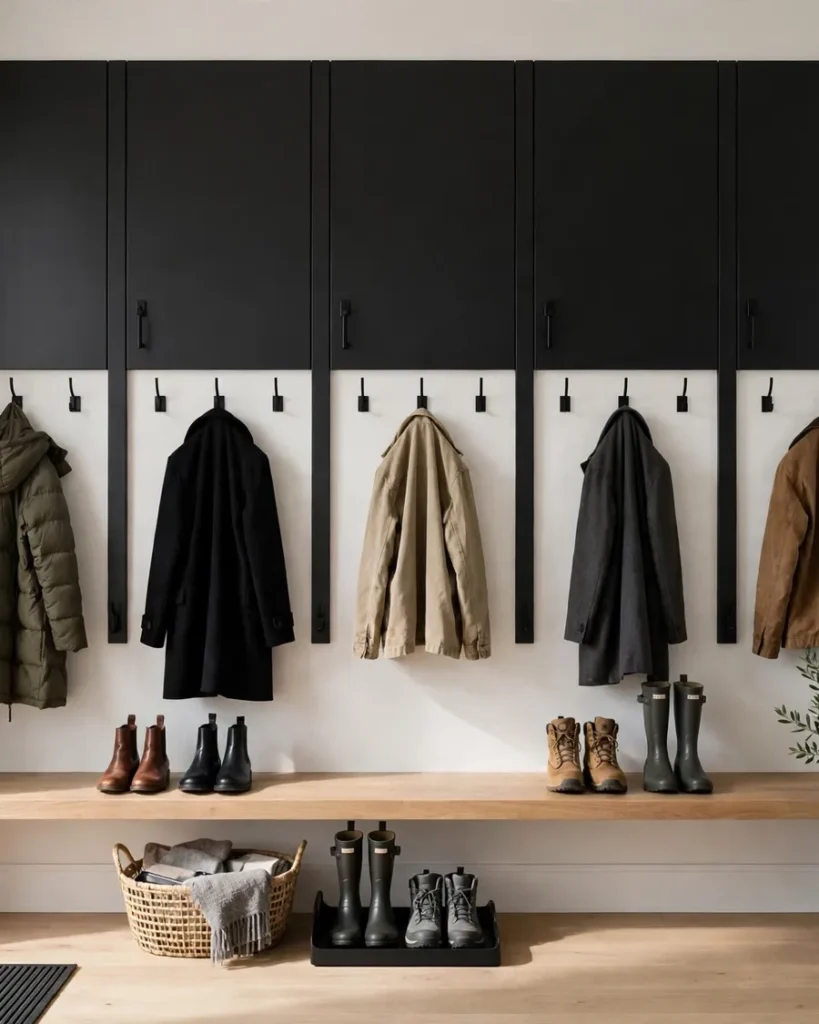
Matte black lockers look sharp against white walls and light wood, and they hide fingerprints and dirt better than glossy black. The contrast makes even a small mudroom feel designed rather than improvised. Best for: modern and industrial homes with good light. Styling tip: balance the black with a pale bench and light baskets, or the corner will feel heavy. Pro tip: matte paint shows dust on horizontal surfaces, so wipe the bench and shelf tops weekly — a 30-second job that keeps the look crisp.
20. Farmhouse Shiplap Lockers
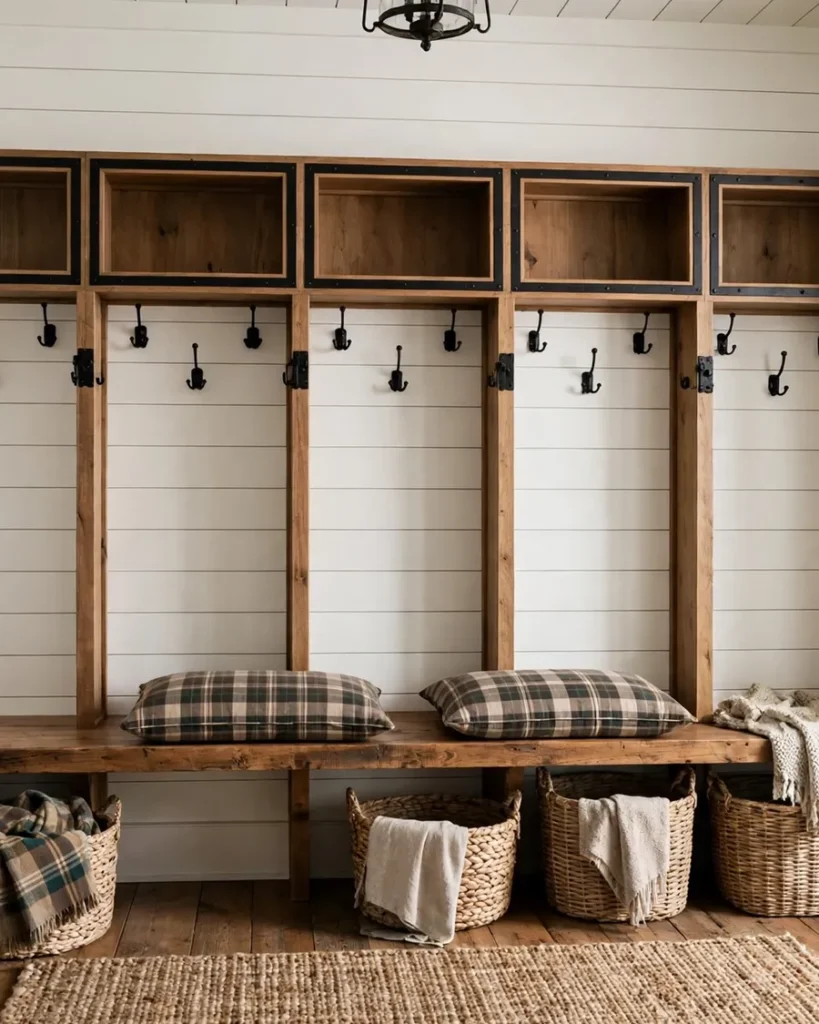
Shiplap backing, black iron hooks and a chunky wood bench give lockers that classic farmhouse feel. The horizontal boards add texture to a plain wall, and the plaid cushions soften the wood and metal. Best for: farmhouse, cottage and country-style homes. Styling tip: keep the cushions washable — farmhouse mudrooms see mud, and the bench takes the worst of it. Pro tip: run the shiplap behind the bench too, not just above it, or the join line collects dirt and looks unfinished.
21. Modern Flat-Panel Lockers

Flat-panel, handle-free lockers are the quiet modern option — no frames, no knobs, just clean lines and a push-to-open door. They suit homes where the entryway should blend in, not shout. Best for: minimalist and contemporary homes. Styling tip: style with almost nothing: one vase on the bench is enough. Pro tip: push-to-open doors need a 2 to 3 mm gap to work, so ask the cabinet maker to allow for it — tight doors stick and frustrate everyone.
Smart Storage Inside the Lockers
22. A Charging Station Inside the Locker

Add a small shelf with a power outlet inside one locker and phones, keys and earbuds land in the same spot every evening — charged and ready by morning. It ends the daily hunt for a charger and keeps cables off the bench. Best for: families whose phones always die at the door. Styling tip: keep the charging shelf at waist height so cables never dangle. Pro tip: use a short 2-outlet strip with USB ports, and keep it 12 inches from any wet coats — water and charging do not mix.
23. Two Hooks and a Shelf Per Locker

One hook is never enough — a coat takes it, and the bag ends up on the floor. Two hooks plus a small shelf per bay holds the coat, the bag, the hat and the keys, all in about 18 inches of wall. Best for: anyone whose locker always overflows by one item. Styling tip: stagger the hooks by 6 inches in height so coats and bags do not pile on each other. Pro tip: fix hooks into studs or solid backing, not just drywall — a loaded winter coat pulls a weak anchor out within a season.
24. A Boot Tray and Shoe Cubbies
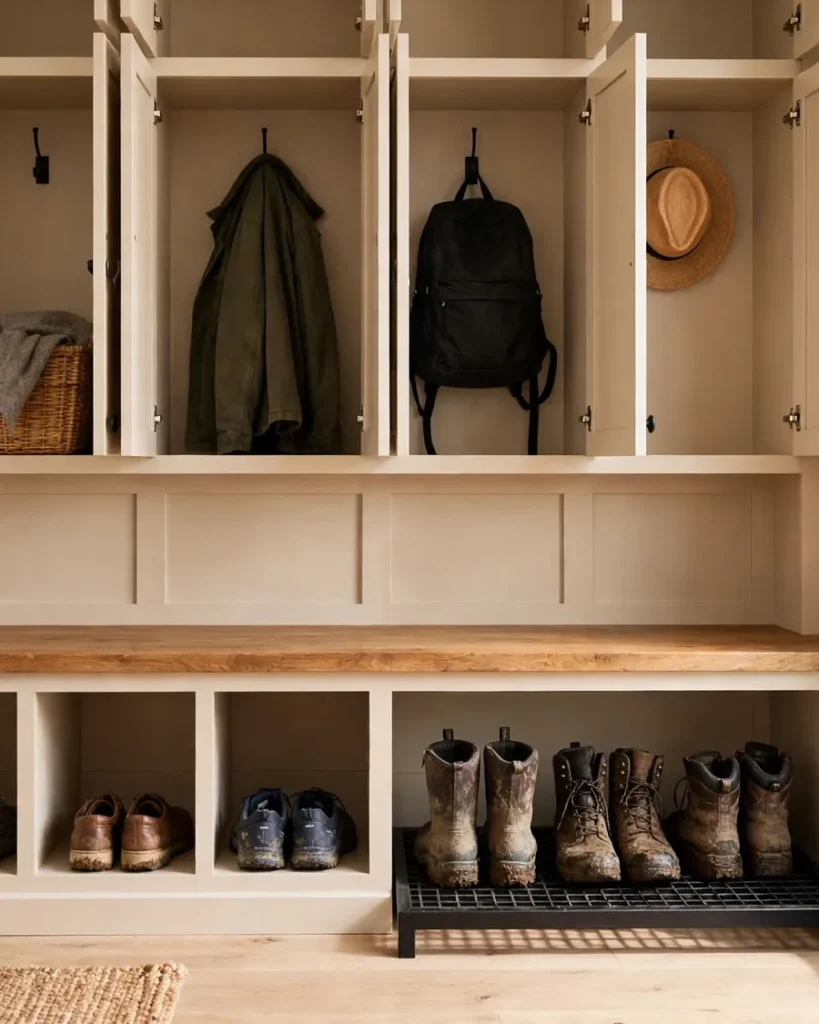
A metal boot tray under the lockers catches mud, snow and rain before it reaches the floor, and the shoe cubbies beside it keep dry shoes paired and off the tray. Wet boots dry on the tray; clean shoes stay clean in the cubbies. Best for: rainy climates and homes with a garden or school run. Styling tip: choose a tray with a raised edge at least 1 inch high, or water simply runs off it. Pro tip: empty and wipe the tray weekly in winter — standing water warps wood floors and smells within days.
25. One Labelled Basket Per Locker
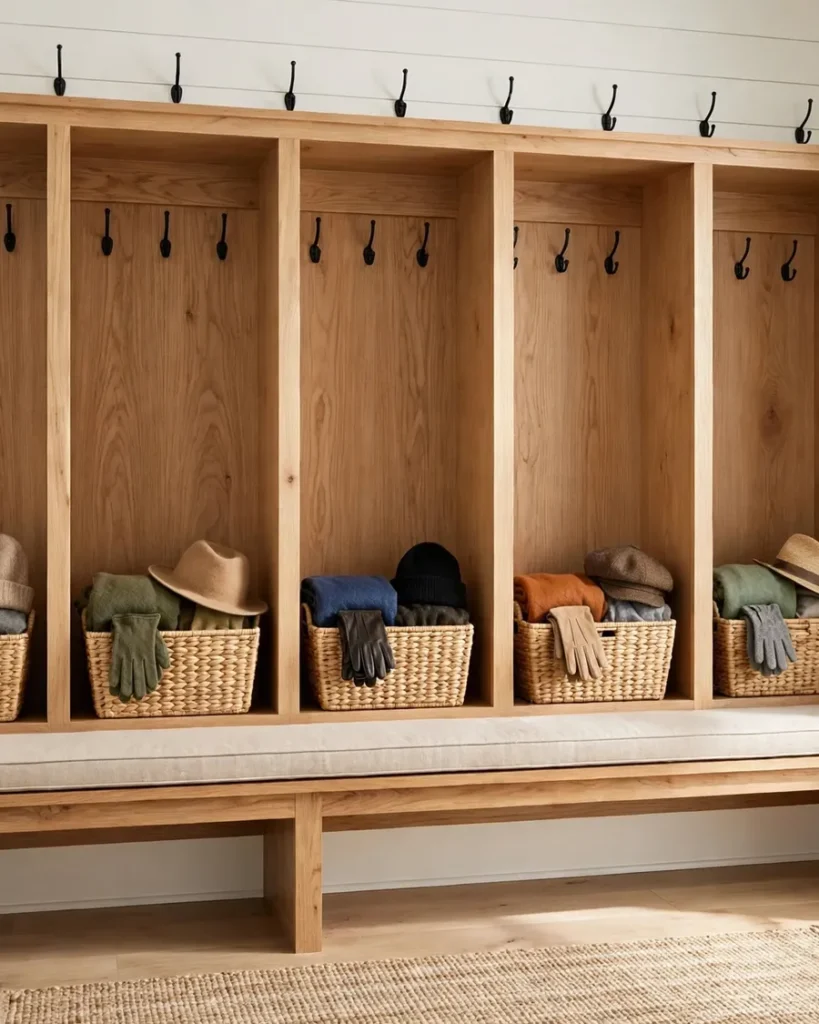
One basket per locker, one category per basket — hats in one, gloves in another, scarves in a third — turns a jumble of small things into a system a child can follow. Label the basket and the system survives even the busiest week. Best for: families with lots of small winter gear. Styling tip: use baskets that fill the cubby width, so nothing slips down the sides. Pro tip: measure the cubby before buying baskets; a basket 1 inch too wide will not fit, and 2 inches too narrow wastes the space.
26. A Mirror and Chalkboard on the Locker Door
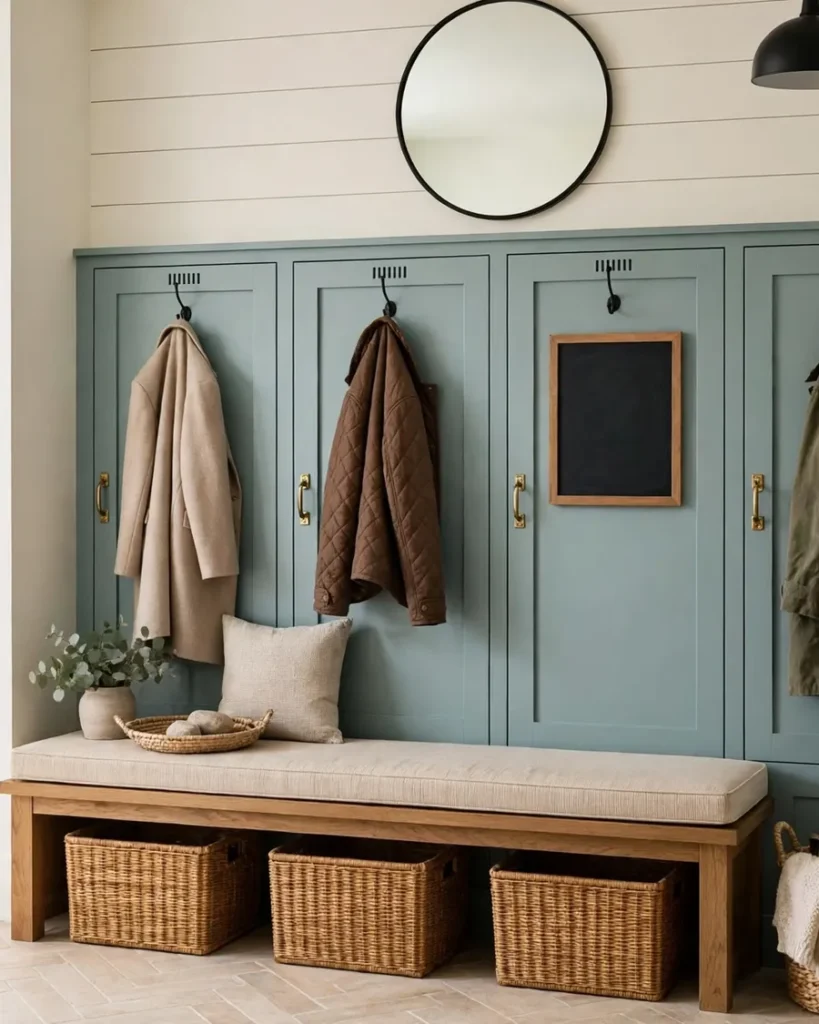
A round mirror above the bench gives everyone a last check before leaving, and a small chalkboard panel on a locker door holds the day’s reminder — “practice at 4” or “don’t forget the library book.” Both earn their place in a small space. Best for: school-run families and dark entryways that need light. Styling tip: hang the mirror at eye level for the tallest user, not the average one. Pro tip: use a chalkboard panel rather than chalkboard paint on the door — paint chips where bags rub, and a panel can be replaced in minutes.
27. Kid-Height Hooks for Backpacks

Hooks at adult height are decoration to a six-year-old — the bag lands on the floor instead. A second row of hooks at 36 to 42 inches lets kids hang their own backpacks and coats, which is the whole point of giving them a locker. Best for: families with children under ten. Styling tip: put the kids’ row on the end bays nearest the door, so they never have to cross the room. Pro tip: use rounded, double-prong hooks for kids — single thin hooks let a heavy backpack slide straight off.
28. Top Cabinets for Seasonal Storage
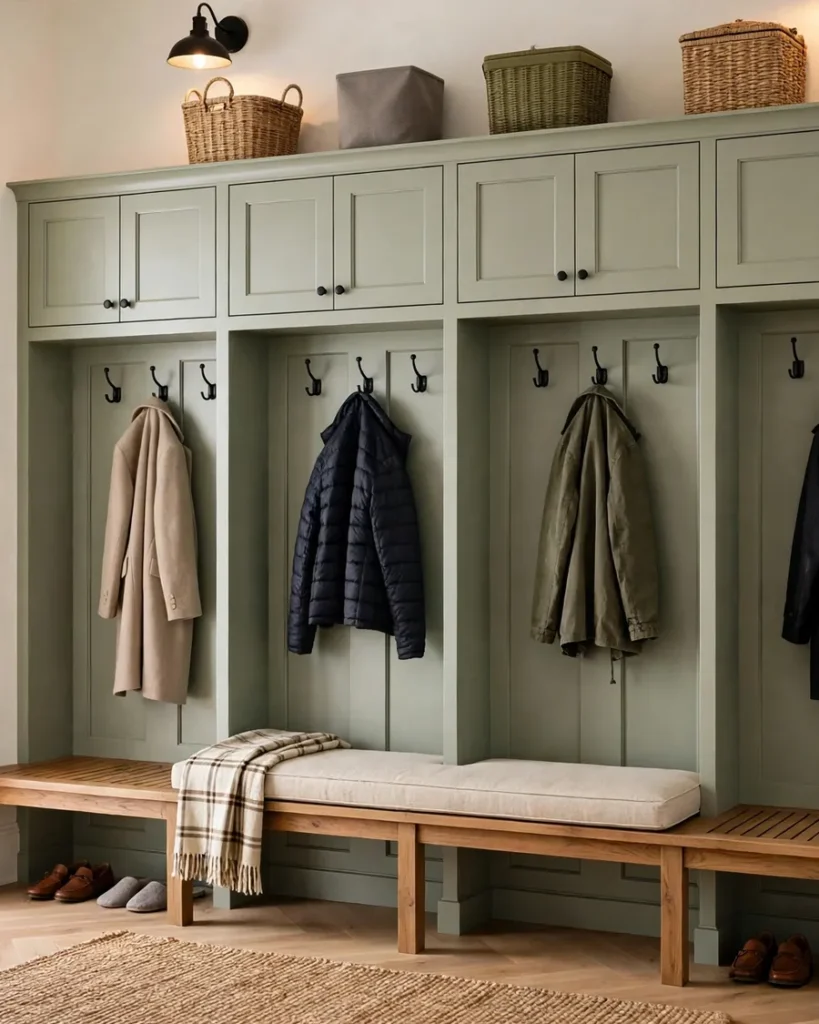
Top cabinets above the lockers are the seasonal swap station: winter coats and boots go up in spring, summer hats and sandals go up in autumn. The daily bays stay light because the out-of-season gear is out of the way but still in the house. Best for: homes with four real seasons and no spare closet. Styling tip: use matching bins inside the cabinets so a quick look tells you what is where. Pro tip: do the swap twice a year on a fixed date — the first weekend of April and October — or the cabinets fill with things nobody remembers.
Family and Small-Space Lockers
29. Low Lockers Built for Little Kids
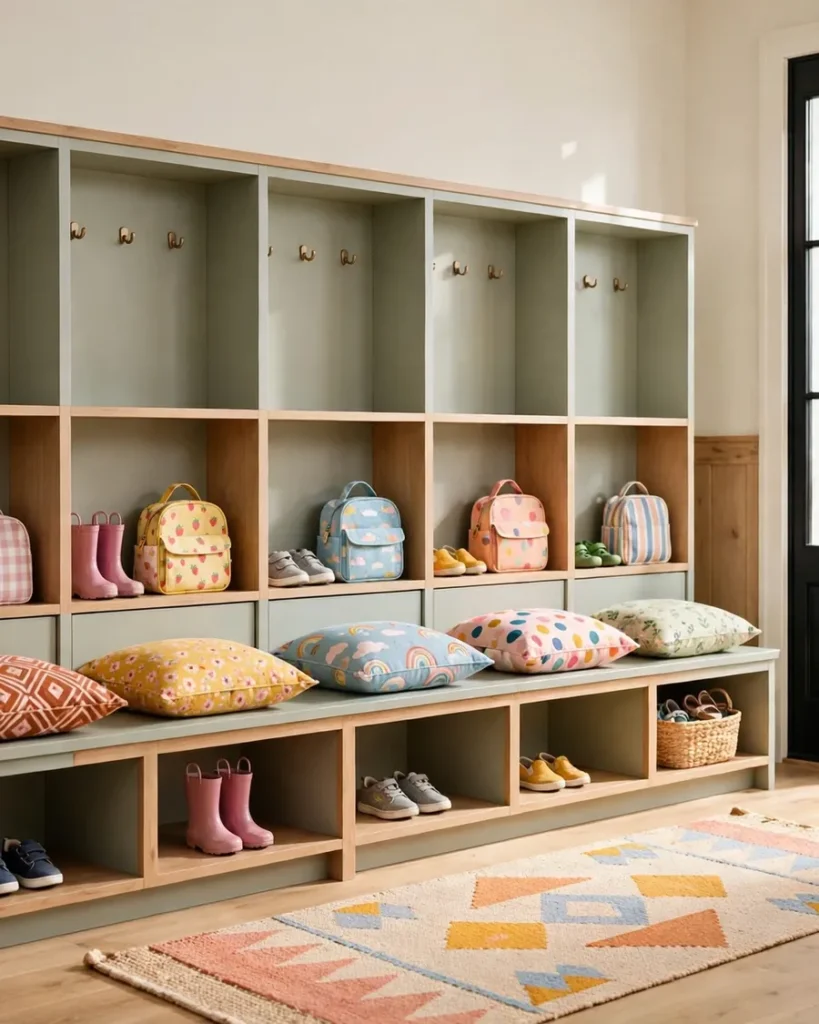
Build the whole locker at child scale — low bench, low hooks, low cubbies — and toddlers can hang their own coats and put away their own shoes. Independence starts with furniture that fits, and a mudroom is the easiest place to prove it. Best for: families with children under six. Styling tip: add a colourful cushion on the bench so the low lockers feel fun, not small. Pro tip: set the bench at 12 inches high for toddlers, not the adult 18 — little legs dangle and slip off a bench that is too tall.
30. A Pet Station Locker
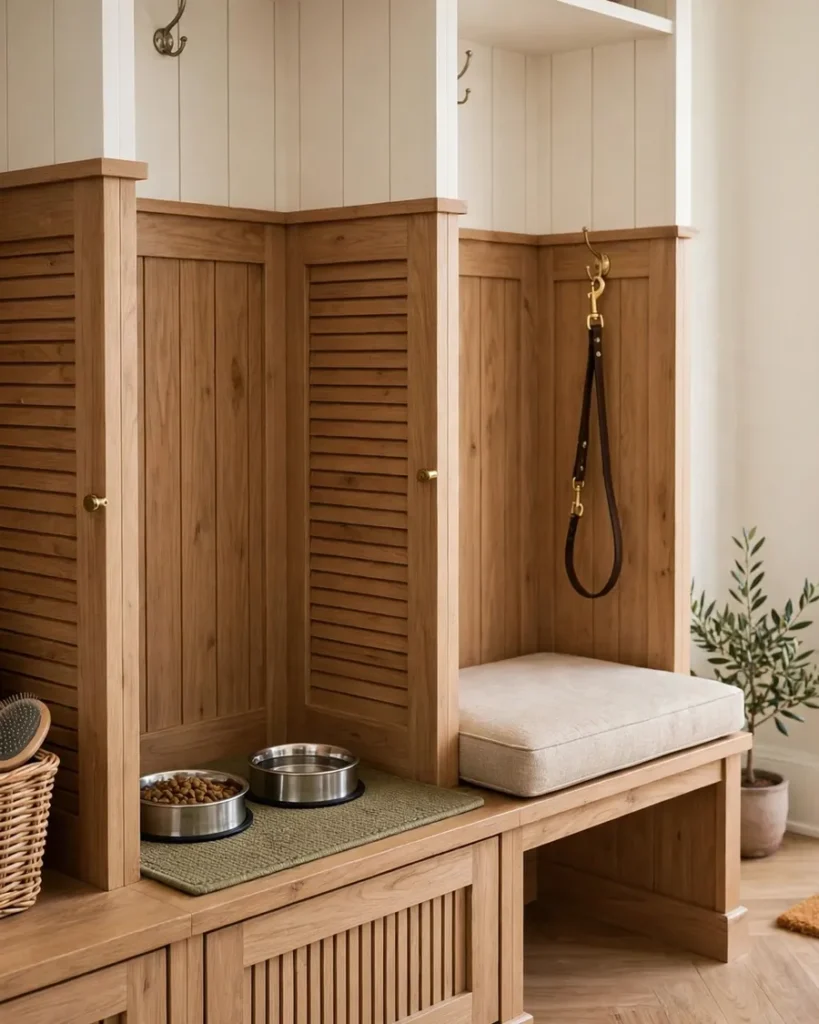
Give the dog a locker bay too: a leash hook at the door, food bowls on a mat underneath, and a basket for towels and treats. Walks start and end in the same spot, and muddy paws never reach the living room. Best for: dog owners whose entryway doubles as the walk station. Styling tip: use a washable mat under the bowls — it saves the floor and the bench. Pro tip: keep the pet basket on the lowest shelf, not the bench, so a wet towel never soaks the seat cushion.
31. A Sports Gear Locker
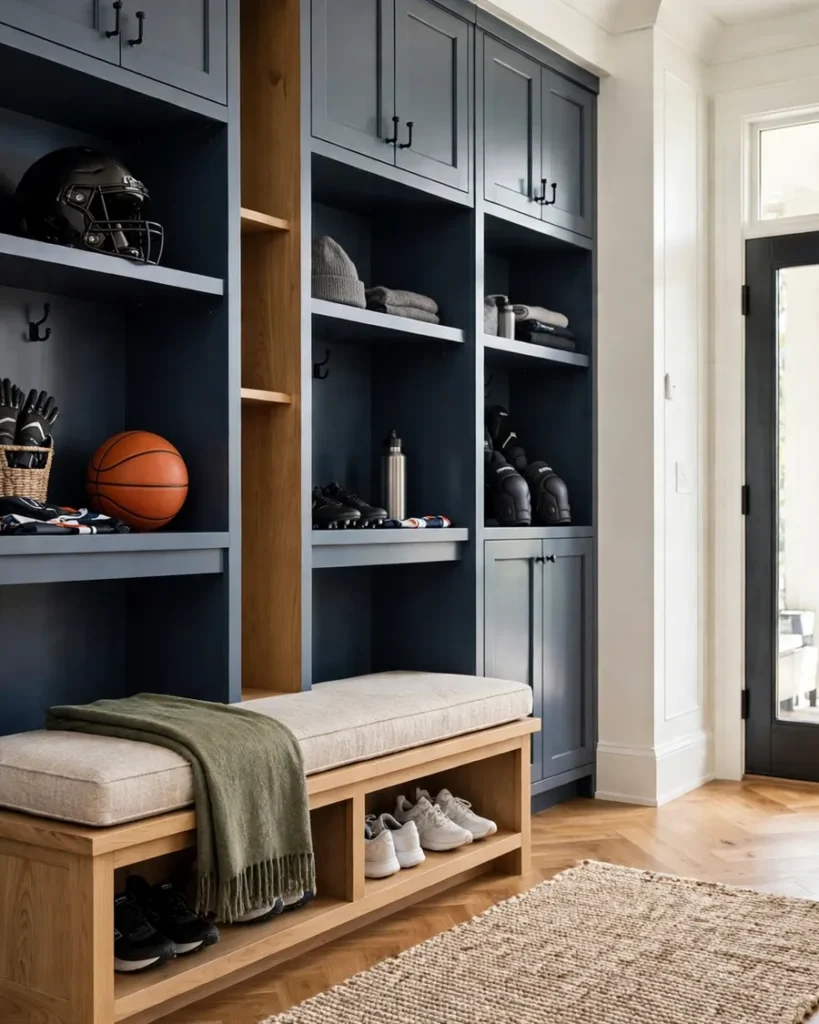
Deep lockers swallow the gear that never fits anywhere else — gym bags, helmets, balls and boots — and keep the smell contained behind a door. One deep bay per sporty family member beats a pile of kit bags by the door every time. Best for: sporty families and teenagers with kit for every season. Styling tip: add a vent or a slatted door to the sports bay so damp kit dries instead of smelling. Pro tip: make sports bays at least 18 inches deep and 24 inches wide — a standard gym bag is about 20 inches long and will not fit a shallow locker.
32. A Lift-Up Storage Bench
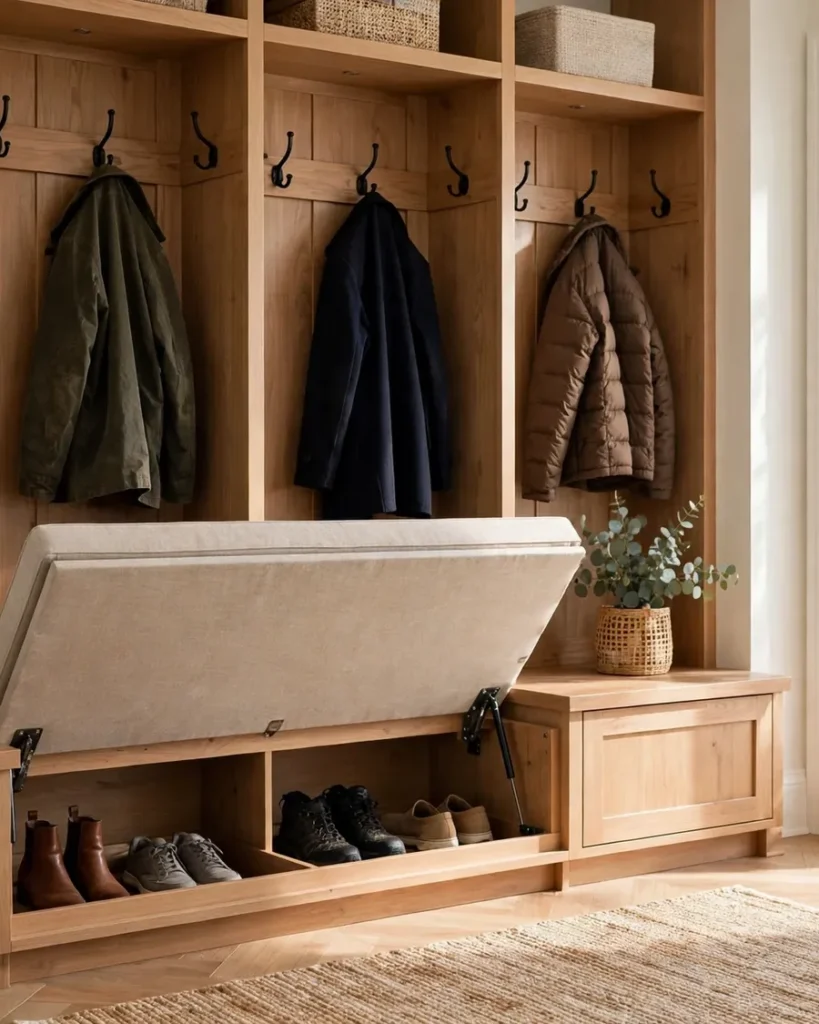
A bench seat that lifts up hides a whole extra layer of storage — out-of-season shoes, spare bags, the dog’s towels — in space that would otherwise be wasted. It looks like an ordinary bench until you need it. Best for: small mudrooms where every inch has to work twice. Styling tip: keep a thin cushion on the lid, not a thick one, so the seat still lifts easily. Pro tip: fit gas struts or a stay hinge on the lid — a heavy wooden lid without one will slam on small fingers.
33. A Mudroom-Laundry Combo

Put the lockers beside the washer and dryer and muddy clothes go straight from the hook into the wash — no trail through the house. A folding counter above the machines doubles as a locker shelf, and the laundry baskets live under the bench. Best for: homes where the laundry room sits by the back door. Styling tip: keep the locker colour and the laundry cabinets the same so the two zones read as one room. Pro tip: leave 42 inches of clear floor in front of the washer doors, or loading the machine means blocking the lockers.
34. Lockers With a Mirror and Warm Lighting
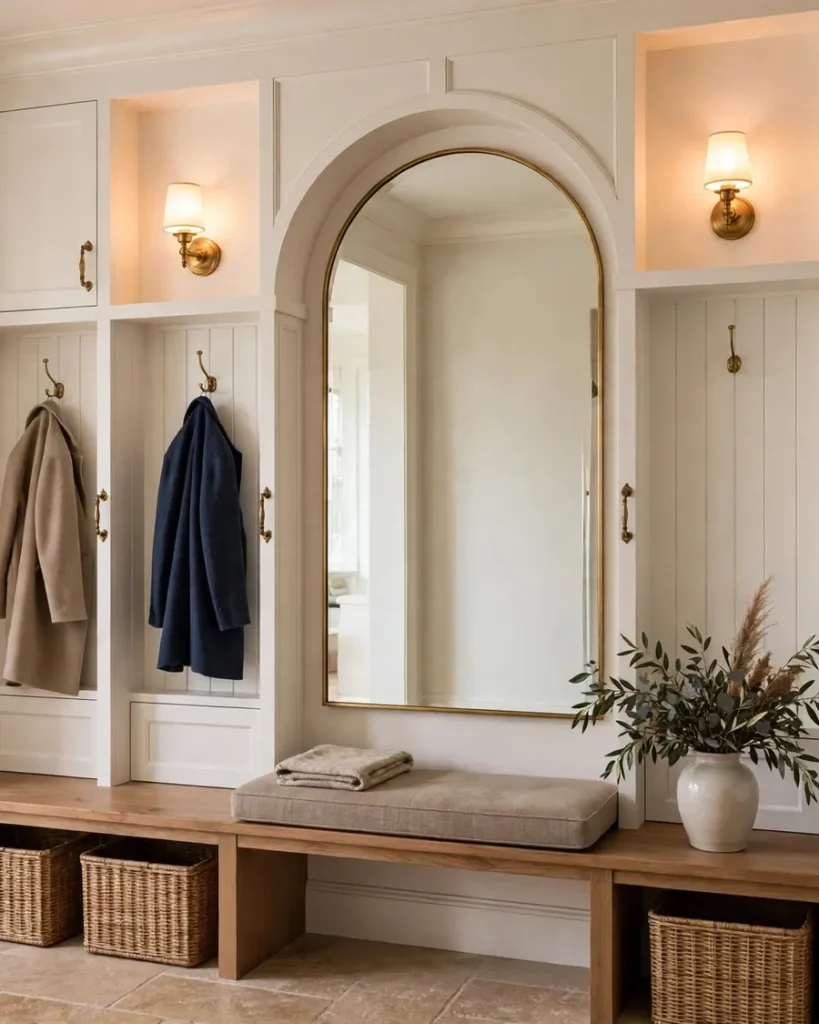
Finish the locker wall with a large arched mirror and warm sconce lighting, and the mudroom stops looking like a utility corner and starts looking like part of the home. The mirror doubles the light, and the sconces make early-morning departures feel less rushed. Best for: front entryways guests actually see. Styling tip: use warm-white bulbs around 2700K — cool white makes wood and skin look flat. Pro tip: mount sconces at 60 inches from the floor, clear of coat hooks, so a swinging coat never knocks a shade.
Mudroom Locker Care and Upkeep
Lockers take daily wear, so a little upkeep keeps them looking new. Wipe hooks and bench tops weekly, empty the boot tray after wet days, and tighten hook screws every few months — a loose hook is the first thing to fail. Painted lockers need a touch-up pen in the same colour for scuffs, and wood benches need resealing once a year if wet coats sit on them. Swap the seasonal bins in spring and autumn, and do a five-minute clear-out each Sunday: anything that has not been used in a month leaves the locker. For the wider routine, our mudroom organization ideas cover the daily habits that keep the whole entryway tidy, and This Old House mudroom ideas show how the pros plan mudroom storage for real family homes.
Frequently Asked Questions
How wide should a mudroom locker be?
Plan on 18 to 24 inches of width per person for a comfortable mudroom locker. Eighteen inches fits a coat, a bag and a basket without crowding, while 24 inches gives room for bulky winter coats and a second hook. Kids can manage with 15 to 18 inches, but adults need the full width or coats bunch and doors stick. Measure your wall first, divide by the number of users, and add one spare bay if the wall allows it — guests and seasonal coats fill spare space fast.
How high should hooks be in a mudroom locker?
Hang adult hooks at 60 to 66 inches from the floor, which keeps coats off the bench and within easy reach. Add a second lower hook at 48 inches for bags, so a coat and a bag never compete for the same hook. For children, put hooks at 36 to 42 inches depending on their height — a hook above a child’s shoulder is useless, and the coat ends up on the floor. Always fix hooks into studs or solid backing, since a loaded winter coat pulls a drywall anchor out fast.
Can you add lockers to a small entryway?
Yes — a small entryway only needs about 12 inches of depth for lockers to work. Use a slim freestanding unit or a row of hooks with a shallow shelf, and skip doors so nothing swings into the walkway. A narrow bench 12 to 14 inches deep still gives a place to sit and a ledge for shoes. Paint the lockers the same colour as the walls so the hallway feels wider, and keep one bay per person so the small space never has to hold more than it can.
What is the best material for mudroom lockers?
Painted MDF or plywood is the most common choice because it paints cleanly, costs less than solid wood and resists warping in a damp entryway. Solid wood, especially white oak, looks warmer and ages well but costs more and needs sealing against wet coats. Metal lockers suit vintage or industrial looks and wipe clean easily. Whatever you choose, use a satin or semi-gloss finish and moisture-resistant board for the bench and lower sections, where wet shoes and boots do the most damage.
How much do mudroom lockers cost?
A freestanding locker unit typically costs 150 to 400 dollars, while a modular cubby hack with a bench top can come in under 200 dollars if you build it yourself. Custom built-in lockers usually run 1,500 to 4,000 dollars for a three-bay wall, depending on materials, paint and whether a bench and shoe storage are included. Repurposed vintage lockers vary widely, often 100 to 300 dollars plus paint and a bench. Get two quotes for built-ins, and measure twice before ordering anything.
How do I keep mudroom lockers from getting messy?
Give every person one bay and one rule: one coat, one bag and one pair of shoes per bay, with everything else in a basket. Empty the boot tray weekly, do a five-minute clear-out every Sunday, and move out-of-season gear to the top cabinets twice a year. Label baskets so kids know where things go, and keep one bay empty for guests. The system only works if it is easy — if a locker takes more than ten seconds to use, the pile by the door comes back.
Final Thoughts
A mudroom locker is a small change with a daily payoff: coats hung, shoes paired, bags in their bay, and a clear floor when you walk in. Start with one bay per person, hooks at the right height and a bench with shoe storage underneath — that is the core of all 34 ideas. Pick the style that suits your home, measure the wall twice, and build or buy just one bay first if you are unsure. Try it for a week, adjust the hooks and baskets, then finish the wall. Save this guide for your next entryway refresh.
