
Good staircase lighting ideas do two jobs at once: they keep every step safe after dark, and they turn a plain stairwell into the prettiest part of the house. A dark staircase is easy to ignore by day, but at night it is the route everyone uses. The 28 ideas below cover every budget and style, from peel-and-stick strips to a chandelier worth planning a room around.
The trick is layering. One light source leaves harsh shadows on the treads; two or three — a strip under the treads, a sconce on the wall, a pendant above — make the stairs feel safe and warm. Pick one idea as your main layer, add a second for glow, and keep the colour warm, around 2700 to 3000K.
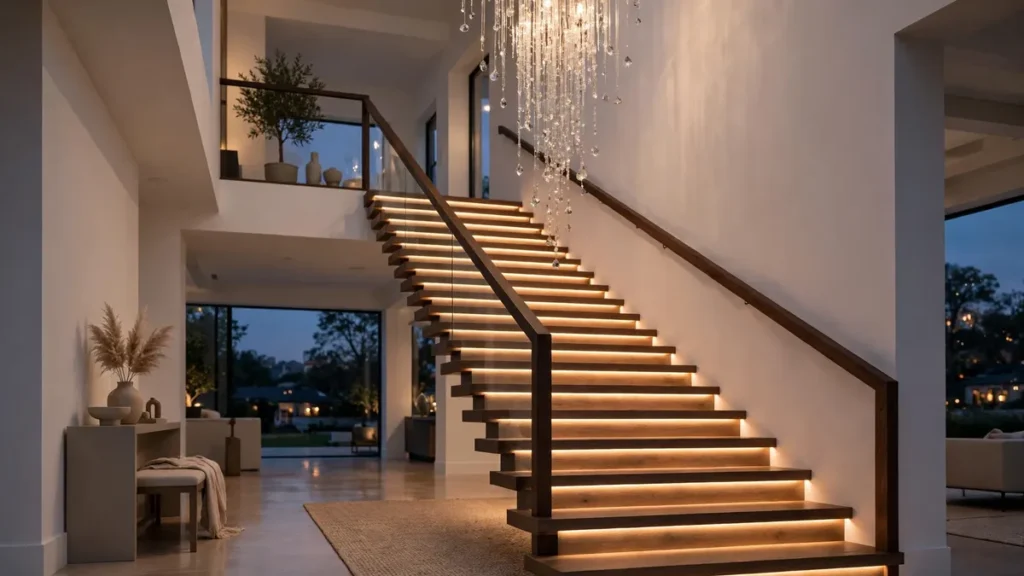
Why You’ll Love These Staircase Lighting Ideas
A staircase is the one part of the house every room connects to, yet most stairwells get a single ceiling bulb and nothing else. These ideas fix that without a full renovation: many need no wiring at all, most cost less than a new rug, and several take under an hour to fit — while making the stairs safer and warmer. For more ways to light stairs in style, see the Homes & Gardens staircase lighting ideas for extra inspiration from the designers.
How to Choose the Right Staircase Lighting for Your Home
Start with the shape of your stairs. Straight runs suit strips and step lights; a landing or turn needs a wall light or pendant at the bend; a tall open stairwell is made for a chandelier. Then check the wiring — if there is no outlet or switch nearby, battery and plug-in options come first. Match the finish to your handrail and hardware, and keep the whole run at one warm colour temperature so the glow feels consistent. If the stairs themselves need a style refresh too, our staircase decor ideas pair well with every light on this list.
Glow From Below: LED Strips & Step Lights
1. LED Strips Under Each Tread

A thin LED strip tucked under the nose of each tread throws a clean line of warm light onto the step below, so every tread edge is easy to see. Best for: families with kids or older relatives, and any stairs used at night. Styling tip: choose a warm white strip, 2700 to 3000K, and hide the driver in a cupboard or under the first step. Pro tip: fit the strip 1 inch back from the tread edge so the diodes never show as dots from below.
2. Recessed Step Lights in the Risers
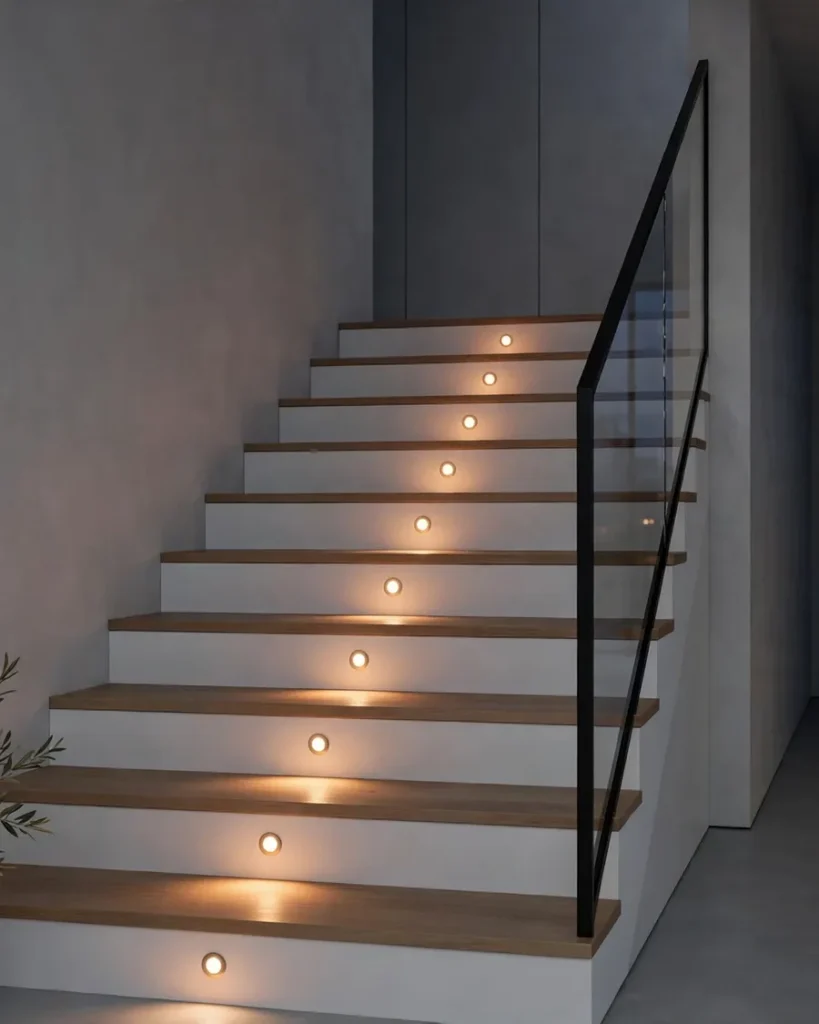
Small round lights set flush into the riser wash each tread with a soft pool of light, with no visible fitting and nothing to catch a toe on. Best for: minimalist and contemporary staircases. Styling tip: space them evenly, one per tread or every other tread on a long flight. Pro tip: fit them about 4 inches above the tread below so the beam lands on the walking surface, not in your eyes.
3. Motion-Sensor Step Lights
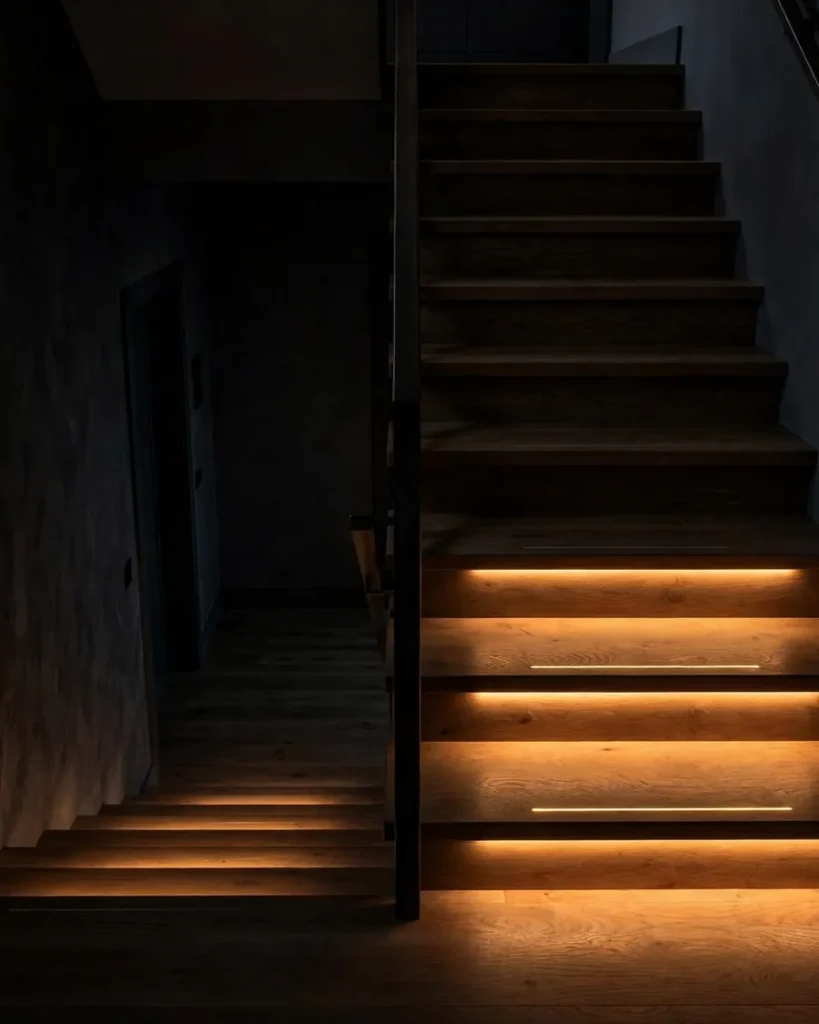
Motion-sensor lights switch on as you approach and fade out after you pass, so nobody fumbles for a switch in the dark and nobody leaves the lights on all night. Best for: night-time trips to the kitchen, kids’ bedrooms, and guest stairs. Styling tip: set the sensor to the lowest sensitivity that still catches a footstep, so pets do not trigger it all night. Pro tip: mount the sensor at the top and bottom of the flight, not the middle, so the whole run lights before you step on it.
4. LED Strips Under the Handrail

A strip hidden under the handrail throws a soft wash of light down the wall and onto the treads, giving you a glowing guide rail that looks like it belongs in a boutique hotel. Best for: modern staircases with a solid wall on one side. Styling tip: match the strip colour to the rail — warm white with wood, neutral white with black metal. Pro tip: use a slim aluminium channel under the rail to spread the light evenly and protect the strip from hands and cleaning cloths.
5. A Soft Toe-Kick Glow
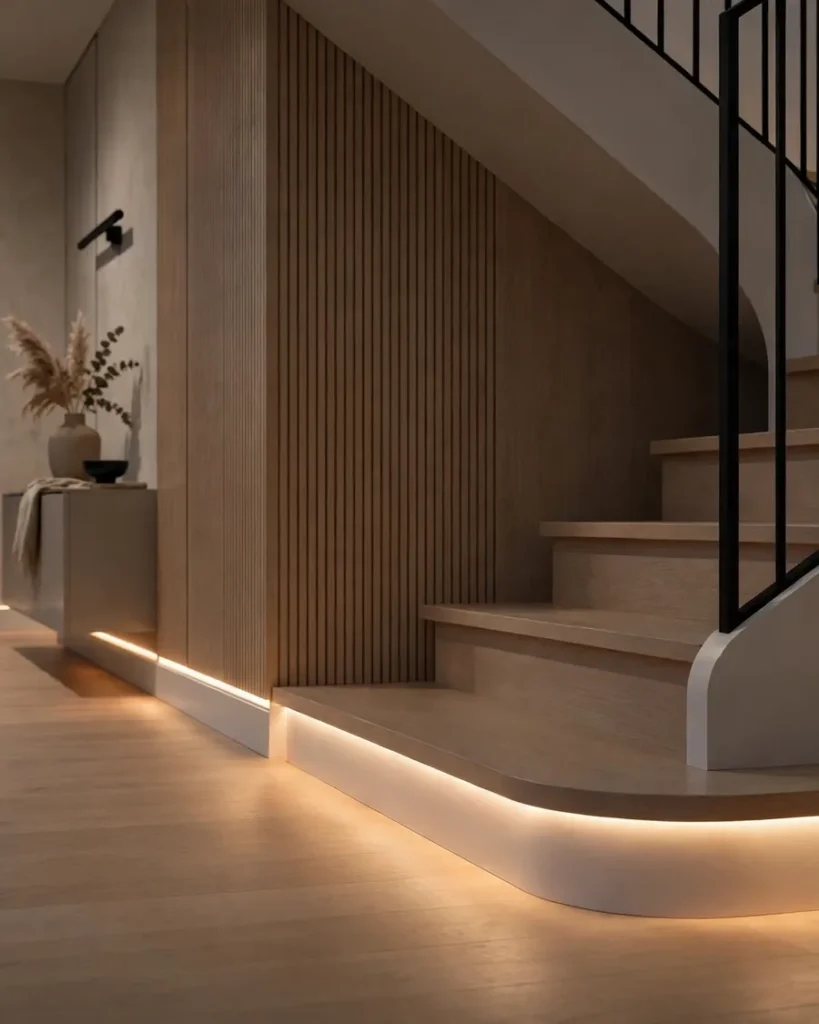
A low strip along the base of the first step and the skirting board makes the staircase look like it floats, and it doubles as a gentle night light for the hallway. Best for: hallways where the stairs are the first thing you see from the front door. Styling tip: keep it dim — a toe-kick glow should read as a whisper, not a spotlight. Pro tip: wire it to the same dimmer as the step lights so one switch controls the whole glow.
6. Cove Lighting in a Stair Niche
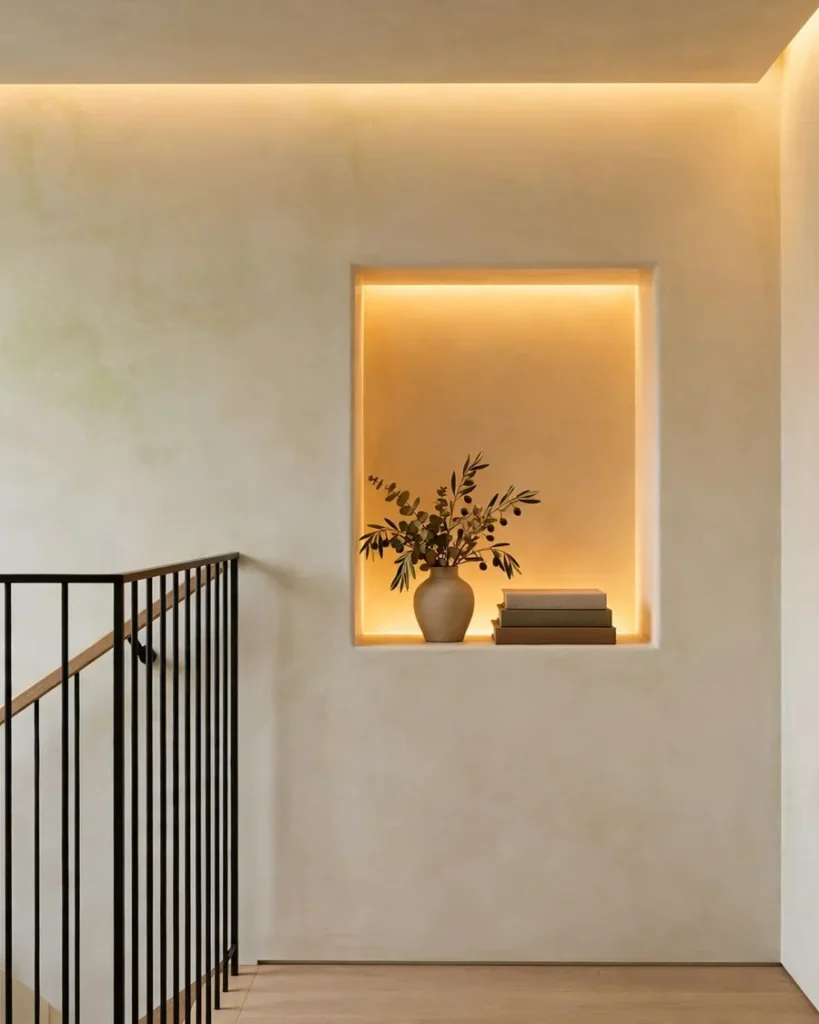
If your stairwell has a recessed niche, a shelf, or a ledge, hide a strip behind its lip and let the light spill out. The niche becomes a small glowing display for a vase or a stack of books, and warms the landing. Best for: landings that feel bare or dark. Styling tip: keep the niche styling simple — one vase, one stack of books — so the light, not the clutter, is the feature. Pro tip: a strip 12 inches long is enough for most niches; longer runs just waste light behind the lip.
7. Solar Step Lights for Outdoor Stairs

Solar step lights fix dark garden and porch steps with zero wiring — they charge by day and switch on at dusk. Best for: front steps, deck stairs, and garden paths. Styling tip: pick warm white, not cool blue-white, so the garden keeps its evening warmth. Pro tip: place the lights where they get at least 6 hours of direct sun, and wipe the panels every few months so they keep charging well.
Statement Lights That Steal the Show
8. A Cascading Crystal Chandelier

A crystal chandelier falling through a double-height stairwell is the classic showpiece: it fills the empty vertical space and makes the whole entry feel grand. Best for: tall stairwells and formal entryways. Styling tip: hang it so the lowest crystal sits just above head height on the landing, never where someone can brush it. Pro tip: choose a chandelier with a winch or a lowering kit if the ceiling is over 14 feet — cleaning crystals on a tall ladder is nobody’s idea of fun.
9. A Cluster of Pendant Lights
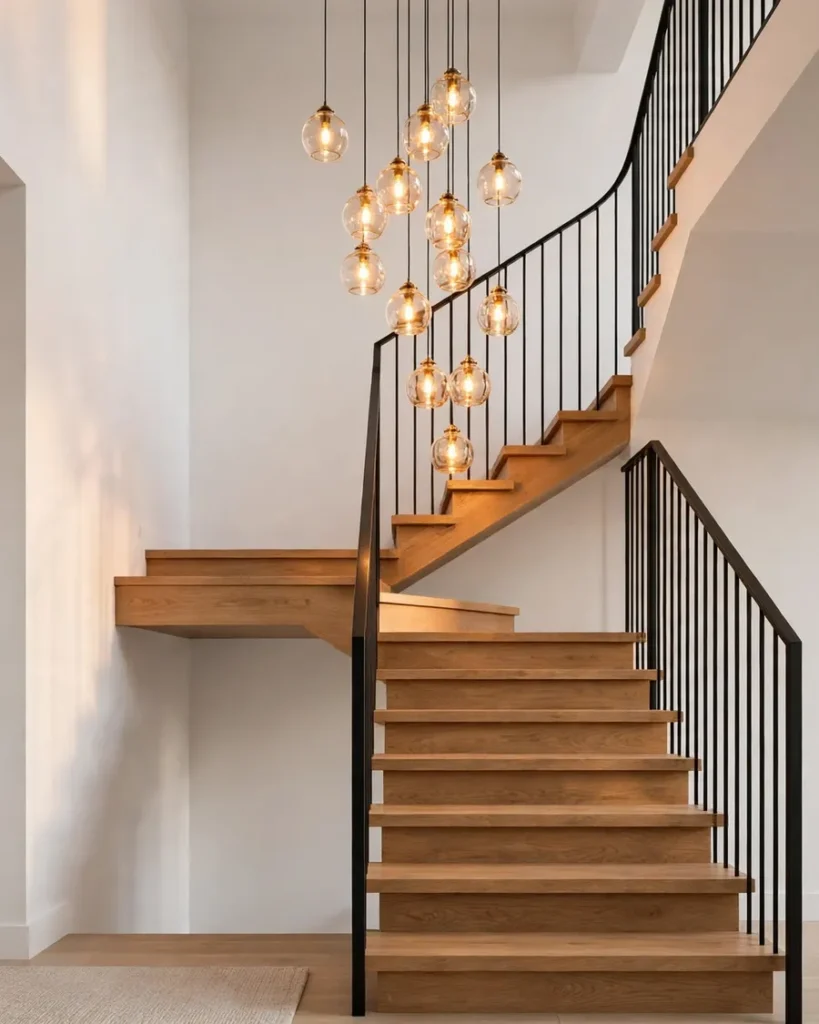
Three or five small pendants hung at staggered heights follow the slope of the stairs and give you the drama of a chandelier at a fraction of the cost. Glass globes glow softly and suit almost any style. Best for: open stairwells and modern homes. Styling tip: vary the drop heights by 8 to 12 inches between pendants so the cluster echoes the stair slope. Pro tip: hang the lowest pendant at least 7 feet above the tread below it, so tall guests never duck.
10. A Sculptural Modern Chandelier

A sculptural chandelier — curved brass arms, a tangle of globes, an asymmetrical frame — works as art even when it is switched off, and it suits a minimalist staircase that needs one bold moment. Best for: modern and contemporary homes with plain white walls. Styling tip: keep everything else in the stairwell plain so the chandelier owns the space. Pro tip: check the fixture weight before you buy; sculptural pieces are often heavier than they look, and older ceiling joists may need a brace.
11. An Oversized Paper Lantern
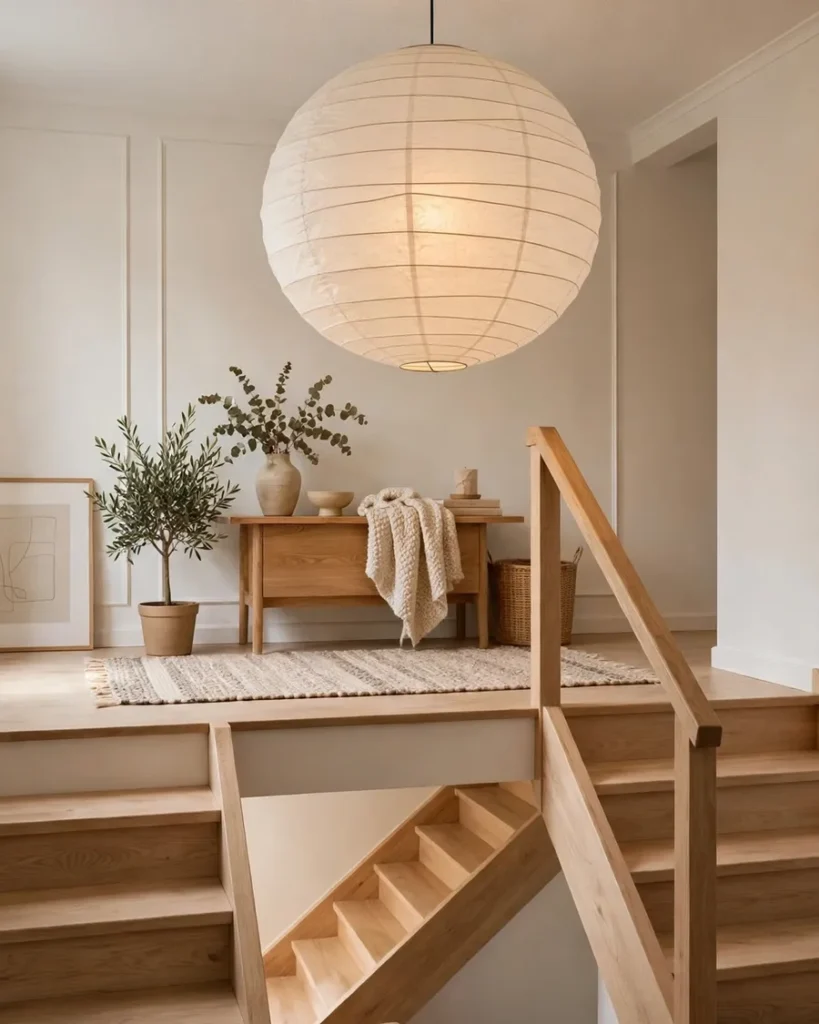
A big round paper lantern gives off a soft, even glow with no glare, and it costs very little — the easiest way to make a plain landing feel calm and finished. Best for: low-budget refreshes and rental-friendly style. Styling tip: go big — a lantern 20 to 24 inches wide reads intentional, while a small one looks like an afterthought. Pro tip: use an LED bulb inside, since paper and hot bulbs do not mix; LED runs cool and keeps the lantern safe.
12. A Vintage Brass Lantern
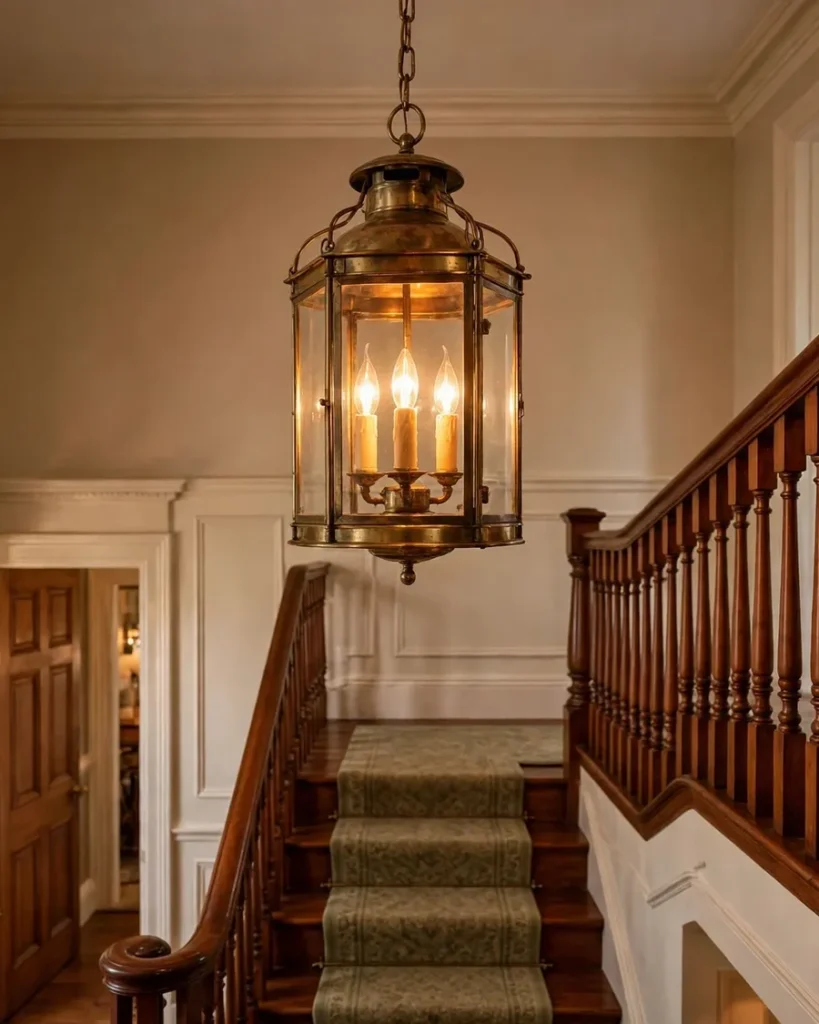
A brass lantern with candle-style bulbs brings old-house charm to a traditional staircase — warm metal and soft light that suit wood banisters and panelled walls. Best for: traditional, colonial, and cottage-style homes. Styling tip: pair it with a warm wood handrail and a runner in a muted pattern for a collected, lived-in look. Pro tip: unlacquered brass will patina over time; if you want it to stay bright, wipe it with a brass cleaner twice a year.
13. A Drum Pendant Over the Landing
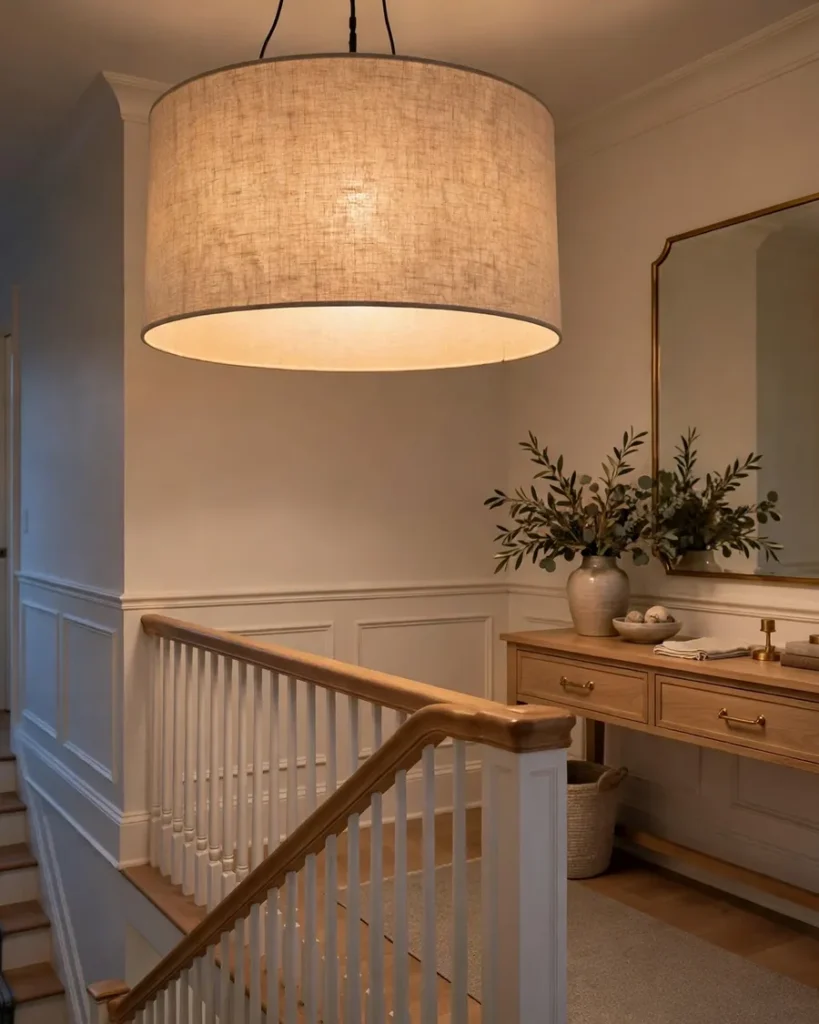
A fabric drum pendant over the landing softens the light and anchors the space, especially above a console table or a bench. Best for: landings with furniture below them. Styling tip: match the drum diameter to the console table below it — roughly the same width, or a few inches narrower. Pro tip: hang it 30 to 36 inches above the console surface so it lights the table without blocking the mirror behind it.
14. A Multi-Tier Chandelier for Tall Stairwells

In a two-storey stairwell, one small light gets lost — a multi-tier chandelier with stacked rings or rows of globes fills the height and lights both floors. Best for: double-height entries and split-level homes. Styling tip: centre the fixture on the stairwell opening, not on the room below, so it reads from every angle. Pro tip: put it on a dimmer; full brightness is wonderful for parties, but a low glow is what you will actually live with every evening.
Wall Lights & Sconces for Every Step
15. Modern Wall Sconces Up the Stair Wall
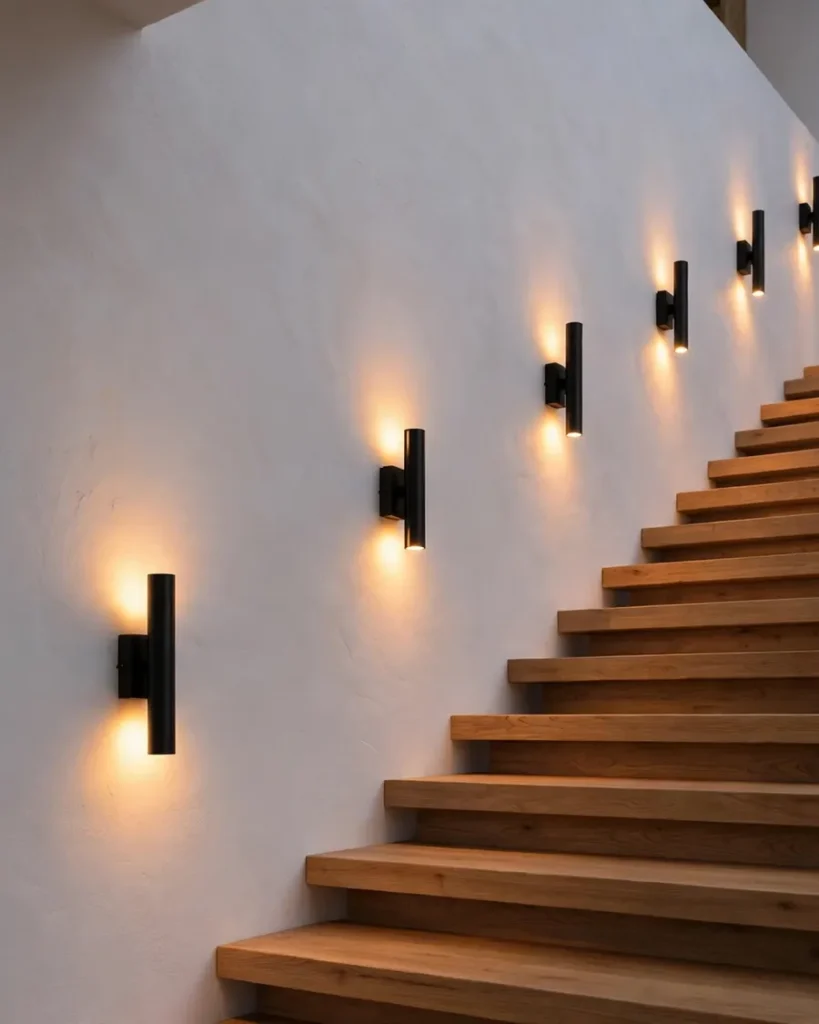
A row of slim sconces marching up the stair wall gives even, glare-free light at every step, and they are far easier to fit than recessed step lights. Best for: straight staircases with a solid wall on one side. Styling tip: space them one per three or four treads, following the slope, so the rhythm feels natural. Pro tip: mount them 60 to 66 inches above the tread they serve — high enough to clear shoulders, low enough to light the steps.
16. Picture Lights Over Stairway Art

Slim brass picture lights over the framed art on your stair wall do double duty: they show off the artwork and they spill enough warm light onto the stairs to walk safely. Best for: homes with a stairway gallery wall or a collection to show off. Styling tip: keep frames in one finish and one colour family so the wall reads calm, not busy. Pro tip: a picture light should be about half the width of the frame it lights — wider and it glares, narrower and it leaves dark edges.
17. Up-and-Down Wall Washers
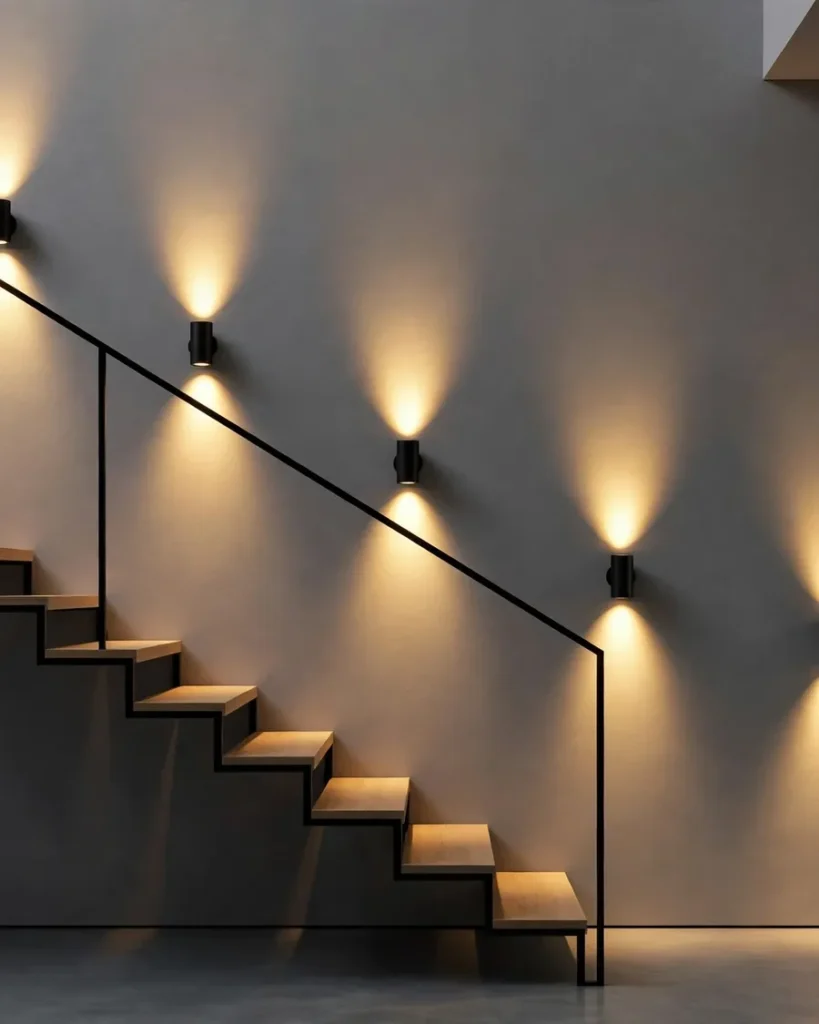
A small cylinder that throws light both up and down the wall turns a plain plaster wall into a feature, with dramatic cones of light and soft shadows between them. Best for: modern homes and textured or limewashed walls. Styling tip: use them on the wall opposite the handrail so the beams do not compete with the rail. Pro tip: pick a narrow beam angle, around 30 degrees, for crisp cones; a wide beam just floods the wall and loses the effect.
18. Swing-Arm Sconces on the Landing

A swing-arm sconce beside a landing chair turns a dead corner into a reading nook — pull it out for a book, push it back when you pass. Best for: landings with a chair, a bench, or a small desk. Styling tip: choose brass or black metal to match the hardware elsewhere in the stairwell. Pro tip: mount the arm so the shade sits 18 to 24 inches above the chair arm — close enough to read by, high enough to clear your head.
19. Candle-Style Sconces for Traditional Stairs
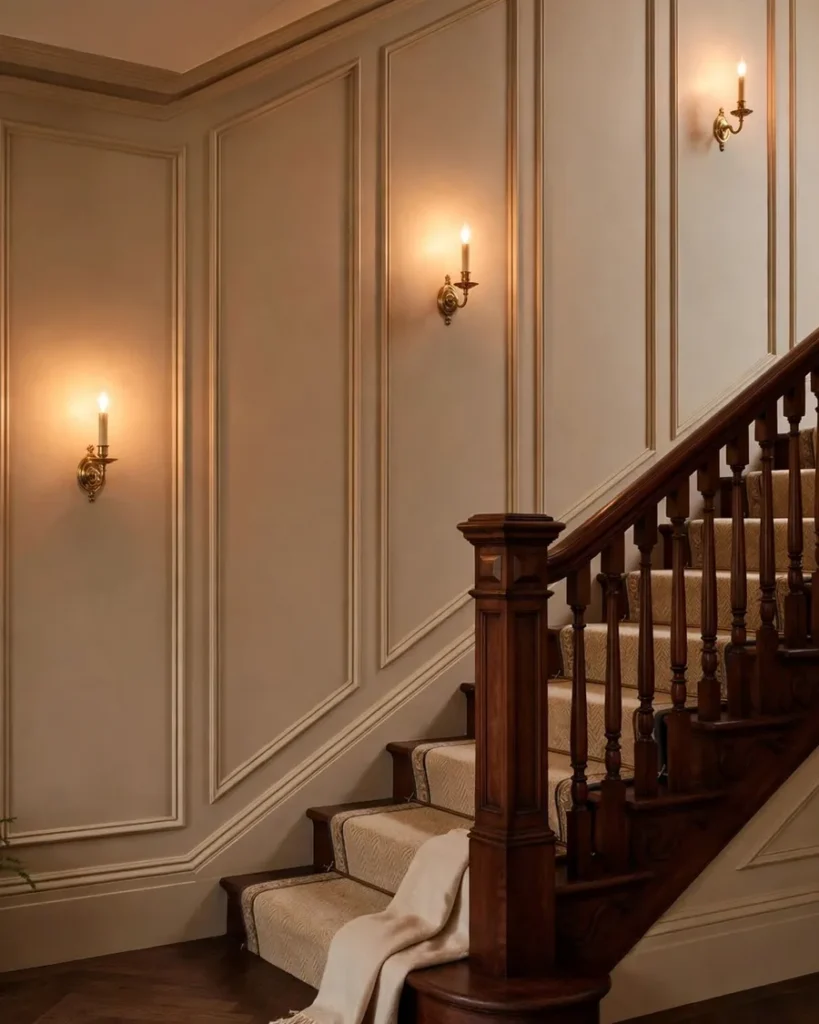
Candle-style sconces with slim stems and warm flame-shaped bulbs suit panelled walls, dark wood, and period homes — they feel like they have always been there. Best for: traditional and period staircases. Styling tip: keep the shades simple — plain linen or none at all — so the candle shape stays the feature. Pro tip: use LED filament bulbs shaped like candle flames; they give the same look as old incandescent candles while using far less power and staying cool.
20. Slim LED Bar Sconces

A slim vertical LED bar is the quietest sconce on this list — a thin line of warm light that suits floating stairs and glass balustrades. Best for: ultra-modern staircases and open-plan homes. Styling tip: mount two or three bars at the same height, evenly spaced up the flight, for a clean repeated rhythm. Pro tip: look for bars with a built-in dimmer or a 2700K fixed temperature; cool-white bars make a modern staircase feel like a corridor.
21. Recessed Wall Lights at Step Height

Tiny square lights set low into the stair wall, just above each tread, light the walking surface directly without a single visible fixture. Best for: stone, concrete, and plastered staircases where surface fittings would look wrong. Styling tip: fit them on the wall side only, never both sides, so the light stays soft and the cost stays down. Pro tip: these need planning before the wall is finished, so add them to the list early if you are renovating — retrofitting means cutting into plaster.
Clever, Cozy & Budget-Friendly Finishes
22. Battery Puck Lights for Renters
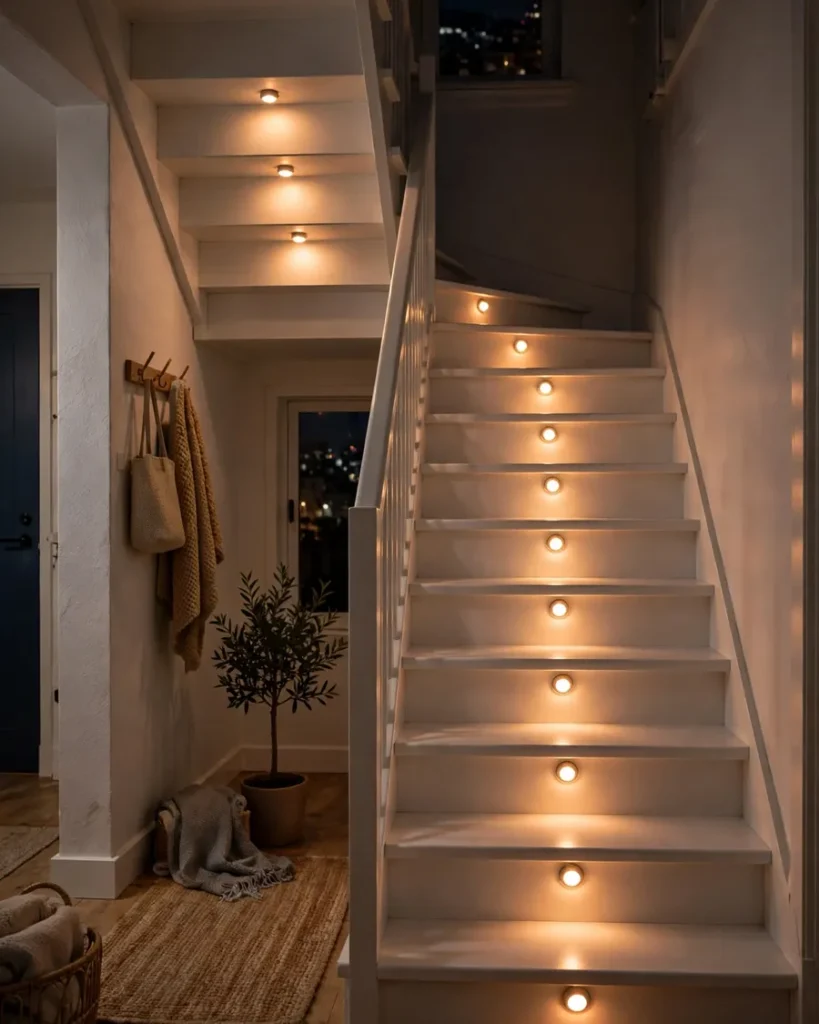
Small round puck lights stick under each tread with adhesive tape, run on batteries — no wiring, no drilling, no landlord permission needed. Best for: renters and anyone who wants light tonight, not after an electrician visit. Styling tip: use the same puck on every tread so the glow reads even, not random. Pro tip: rechargeable pucks cost more upfront but save money fast — a set of disposables can eat through batteries in a few weeks of nightly use.
23. Fairy Lights Along the Balustrade
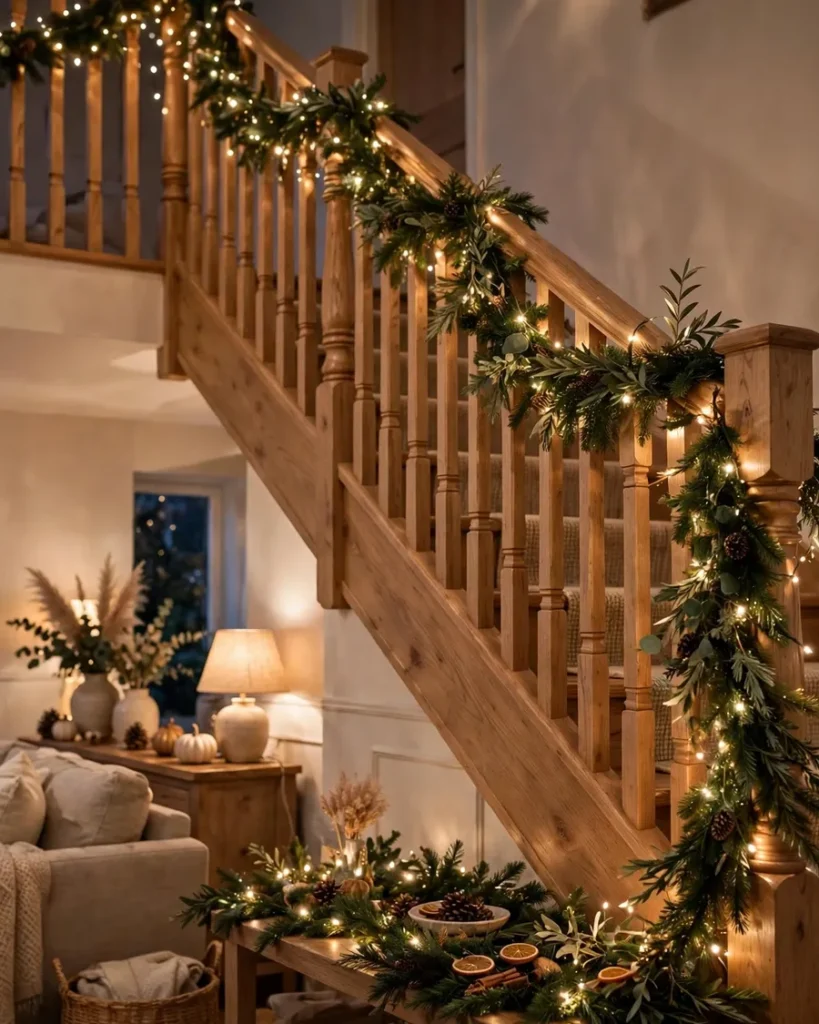
Warm white fairy lights woven along the banister turn the staircase into the cosiest corner of the house, especially in the darker months. Best for: festive seasons, cosy winter evenings, and kids’ birthdays. Styling tip: weave the lights with a simple greenery garland for a finished look, and keep the wire hidden behind the rail. Pro tip: battery fairy lights with a timer are the easiest option — set them to switch on at dusk and off at bedtime, and you will never think about them again.
24. Glow Tape on the Stair Nosings

Glow-in-the-dark tape on the front edge of each tread charges in daylight and glows softly all night, marking every step edge without a single wire or battery. Best for: basement stairs, garage steps, and homes with small children. Styling tip: choose a warm or neutral glow tape, not bright green, so it blends with the house during the day. Pro tip: clean the nosing with rubbing alcohol before sticking the tape down, and replace it once a year — dust and foot traffic wear the glow down over time.
25. Backlit Open Risers

On an open-riser staircase, a strip behind each floating tread makes every step glow from underneath — a dramatic look that also shows exactly where each tread ends. Best for: modern open-riser and floating staircases. Styling tip: keep the wall behind the stairs plain white or pale grey so the glow has a clean backdrop. Pro tip: fit the strips on the underside of the tread, set back by an inch, so the light washes the wall behind rather than shining into the room.
26. A Statement Floor Lamp on the Landing
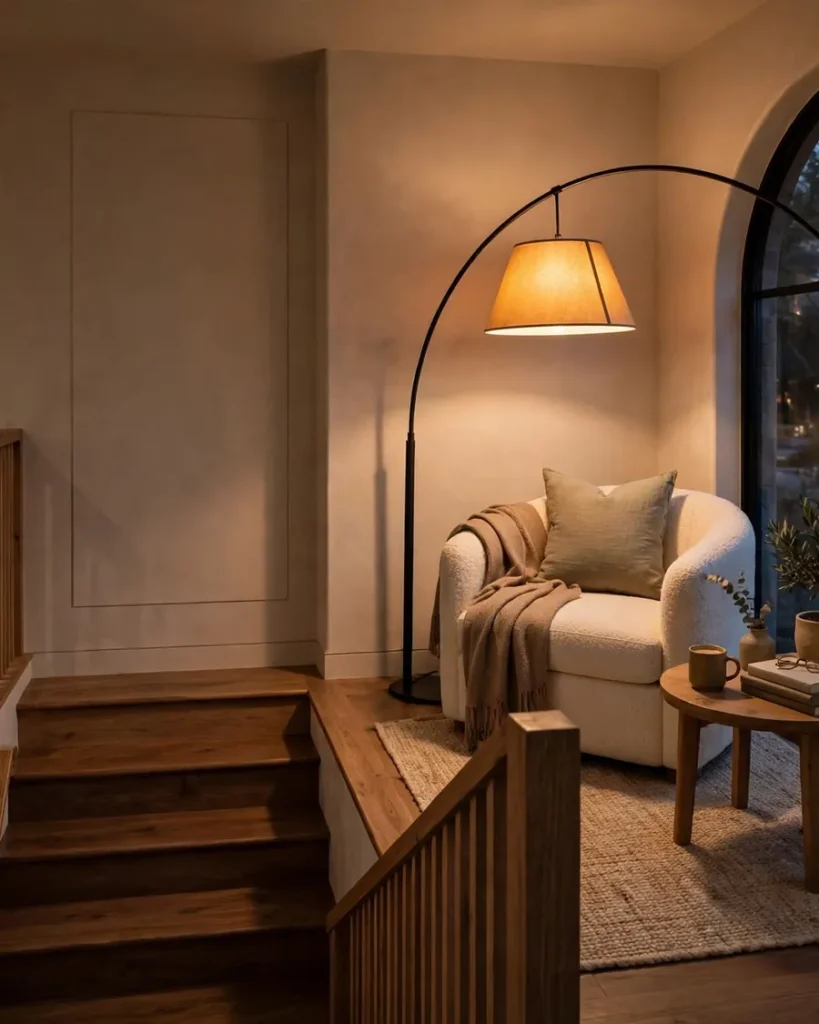
A tall arched floor lamp on the landing needs no wiring at all — just an outlet — and it turns a bare corner into a warm pool of light and a place to pause. Best for: landings with a spare outlet and a chair or bench. Styling tip: pick a lamp shade in a warm fabric, not white plastic, so the light feels soft at night. Pro tip: plug it into a smart plug so it switches on with the rest of the stair lights at dusk, instead of needing its own switch.
27. A Mirror That Bounces the Light

A large mirror on the landing wall doubles whatever light you already have — it catches the pendant or sconce glow and throws it back across the stairs, brightening a dark stairwell. Best for: narrow or windowless stairwells. Styling tip: hang the mirror opposite the main light source, not beside it, so it reflects the glow across the space. Pro tip: an arched mirror 36 to 48 inches tall suits most landings; anything smaller disappears on a tall stair wall.
28. Smart Dimmable Stair Lighting

Smart dimmable strips and bulbs let the stairs glow bright for the school run and fade to a soft 10 percent at midnight — all from a phone, a voice command, or a schedule. Best for: tech-friendly homes and households with very different day and night needs. Styling tip: set a warm dim evening scene and a brighter morning scene, so the stairs always match the moment. Pro tip: keep one plain wall switch in the circuit as a backup — if the Wi-Fi drops, you still need to light the stairs.
Staircase Lighting Care & Maintenance
Stair lighting is low maintenance, but a little care keeps it glowing. Dust LED strips and sconce shades every month or two — a thin layer of dust can cut the light noticeably. Check battery lights monthly and recharge them before they fade. Wipe outdoor solar panels clean each season, and check glow tape once a year for peeling edges. If a strip starts flickering, check the driver and connections first; a loose connection is the usual cause, not a dead strip. And if your banister or rail is part of the look, our staircase railing ideas will help you keep the whole staircase looking sharp together.
Frequently Asked Questions
What is the best lighting for a staircase?
The best staircase lighting layers two or three sources: LED strips or recessed step lights to light the treads themselves, plus a wall sconce or pendant for overall glow. Step-level light matters most for safety, because it shows every tread edge clearly. If you can only pick one, choose LED strips under the treads — they are affordable, easy to fit, and make the biggest difference to both safety and looks.
What colour temperature is best for stair lighting?
Warm white at 2700 to 3000K is the best colour temperature for most staircases, because it feels cosy and matches the warm light used in living rooms and bedrooms. Cool white above 4000K can make a stairwell feel like an office corridor, so save it for garages or outdoor steps. Keep every light on the same staircase at one temperature so the glow feels consistent from the bottom step to the top.
Are LED strip lights safe on stairs?
Yes, LED strips are safe on stairs when they are fitted properly. LEDs run cool, so they will not scorch wood or overheat in a closed channel. Keep the strip set back from the tread edge so it cannot be kicked or peeled, use an aluminium channel to protect it, and keep the driver in a ventilated spot away from damp. If you are unsure about mains wiring for a hardwired kit, ask a qualified electrician rather than guessing.
How do I light a staircase without wiring?
You can light a staircase with no wiring at all. Battery puck lights stick under each tread, motion-sensor step lights switch on as you approach, and a plug-in floor lamp or fairy lights need only an outlet. Solar step lights work for outdoor stairs with no cables. For a permanent look without new wiring, plug-in LED strips with a remote give a near-hardwired result that lifts out when you move.
How bright should stair lighting be?
Stair lighting should be bright enough to see every tread edge clearly, but soft enough that it never glares in your eyes. As a guide, step lights of 100 to 200 lumens per tread and one sconce per three or four treads suit most homes. Avoid bare bulbs at eye level on the stair wall, and always point the light at the steps or the wall, never straight at the person climbing.
How much does staircase lighting cost?
Staircase lighting can cost very little. Battery puck lights typically cost 15 to 30 dollars for a set, LED strip kits for a full flight usually run 30 to 80 dollars, and a set of recessed step lights costs around 40 to 100 dollars plus fitting. Wall sconces typically cost 30 to 80 dollars each, while a statement chandelier can run from 150 dollars into the thousands depending on size and materials.
Final Thoughts
The best staircase lighting is the kind you barely notice — until you walk up the stairs at midnight and every step is lit. Start with one layer, usually strips under the treads, then add a sconce or a pendant for warmth. Keep the colour warm, keep the treads lit, and choose the fixture that suits your home, not someone else’s. Try one idea this weekend, live with it for a week, and add a second layer only if the stairs still feel dark. Save this guide for your next hallway refresh.
