
Kitchen cabinet organization ideas can make a small kitchen feel twice as big — no remodel needed. The secret is simple: give every item a home, use the full height of each shelf, and pull the back of every cabinet within easy reach. Once you learn how to organize kitchen cabinets by zone, cooking gets faster.
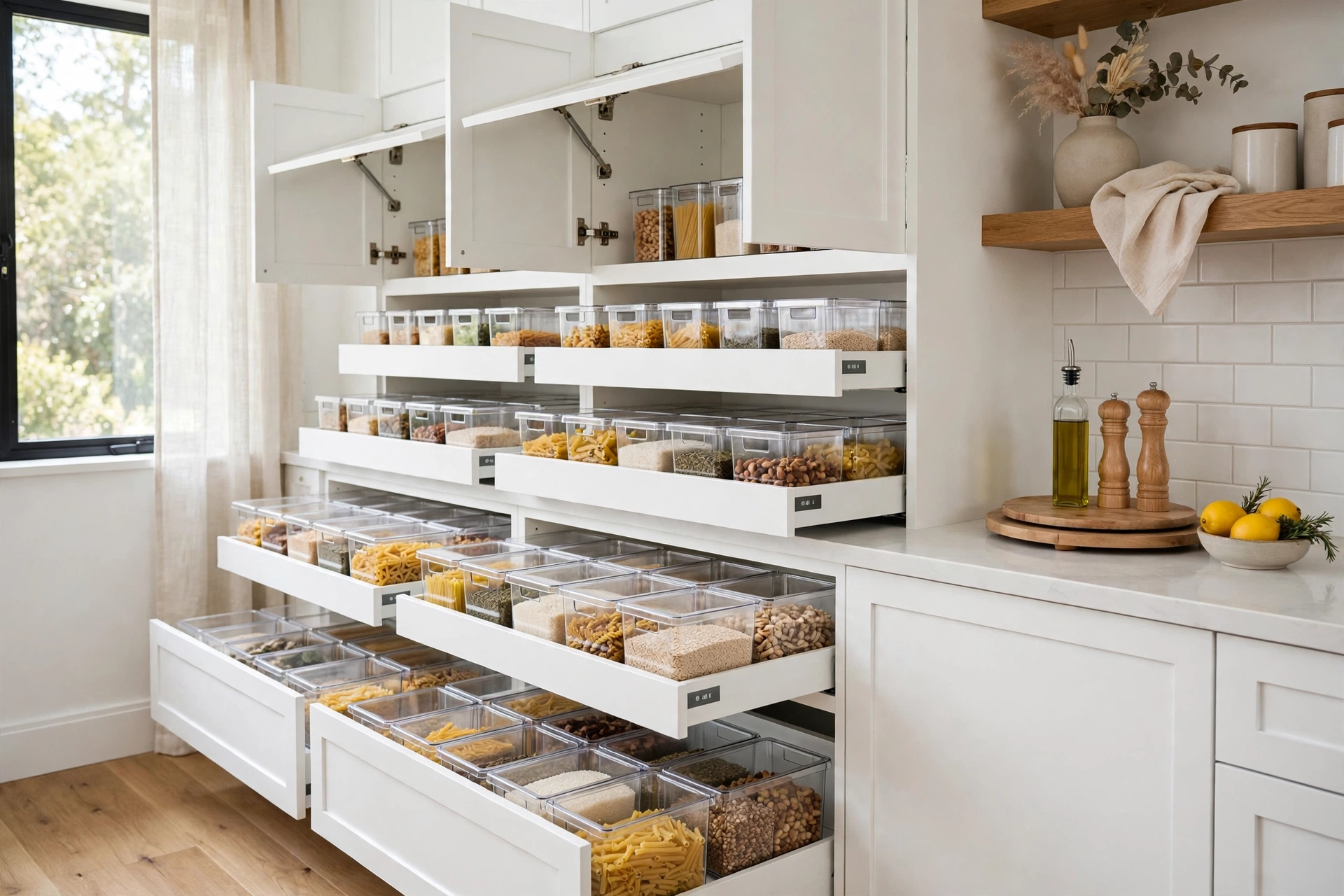
1. Put a Turntable in Every Deep Cabinet
A turntable spins the back of a deep cabinet to the front, so oils and sauces never get buried. Choose a non-slip Lazy Susan with a raised edge.
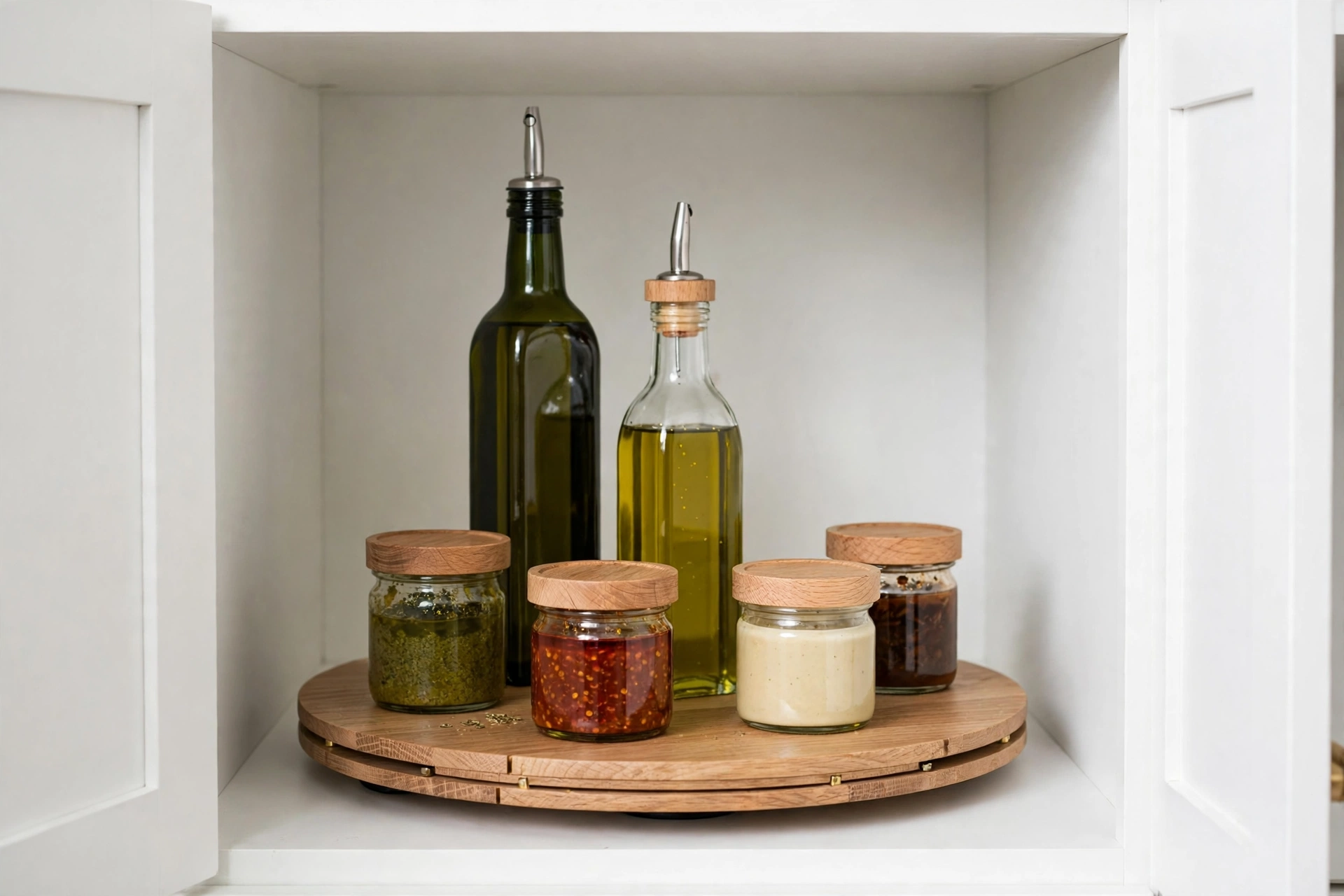
2. Add Pull-Out Shelves to Lower Cabinets
Pull-out shelves turn a dark lower cabinet into a drawer you can see into. Install full-extension slides so the shelf glides all the way out.
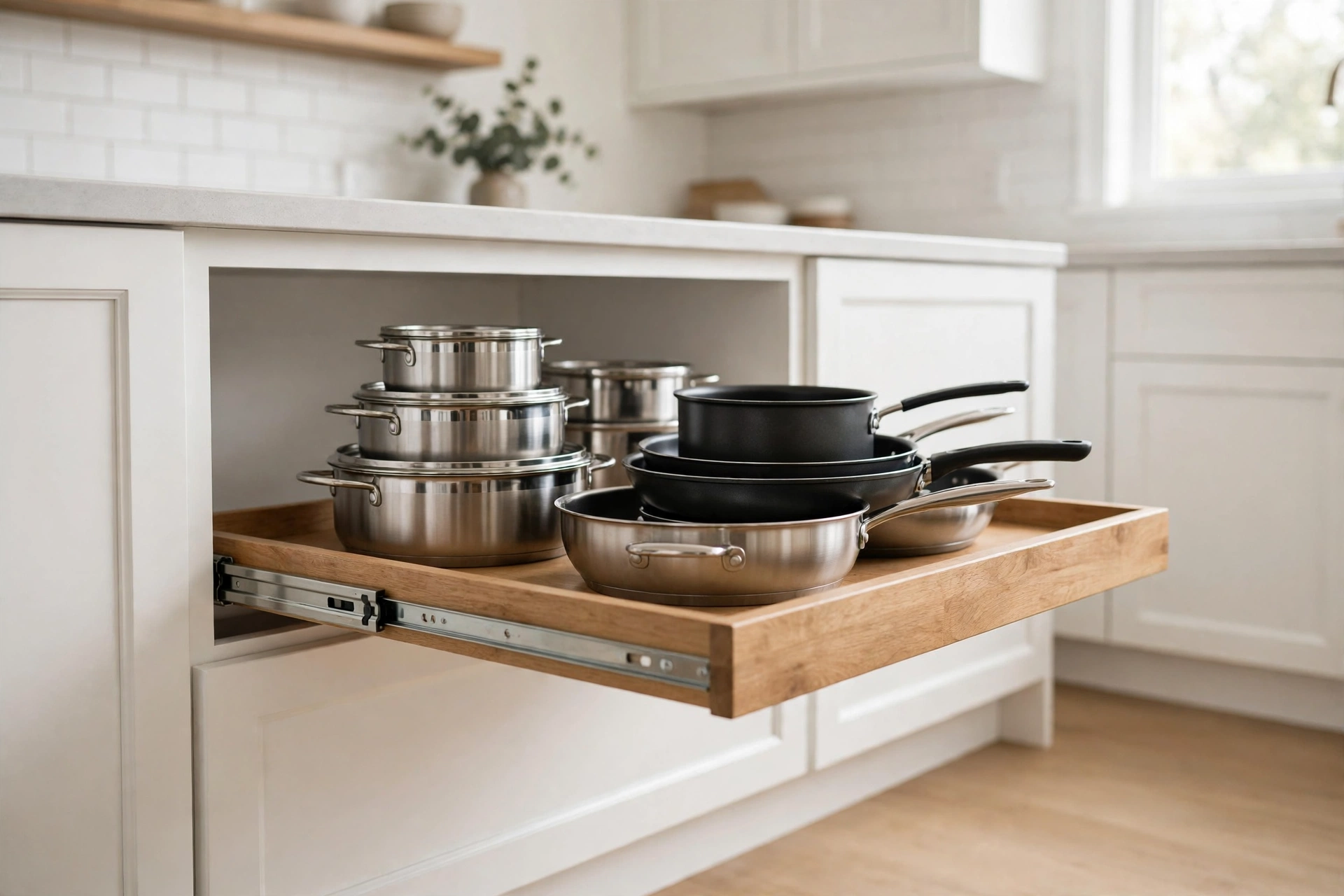
3. Install Shelf Risers to Double Stacking Space
A shelf riser adds a second level inside a tall cabinet, doubling space for mugs, bowls and plates. Pick sturdy metal risers with headroom below.
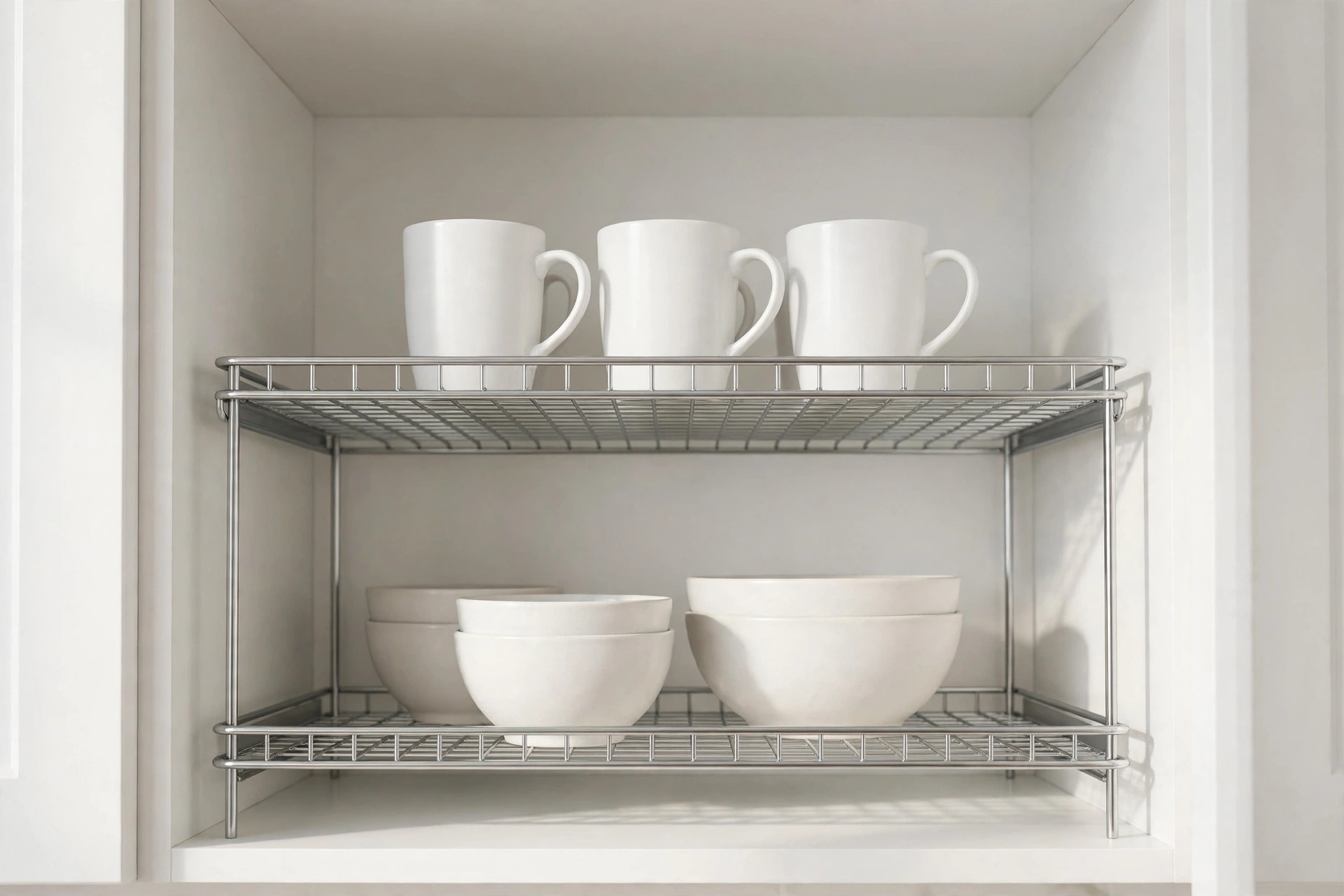
4. File Baking Sheets and Cutting Boards Vertically
File baking sheets, cutting boards and trays upright like books, using a vertical divider. You can grab one without toppling the stack.

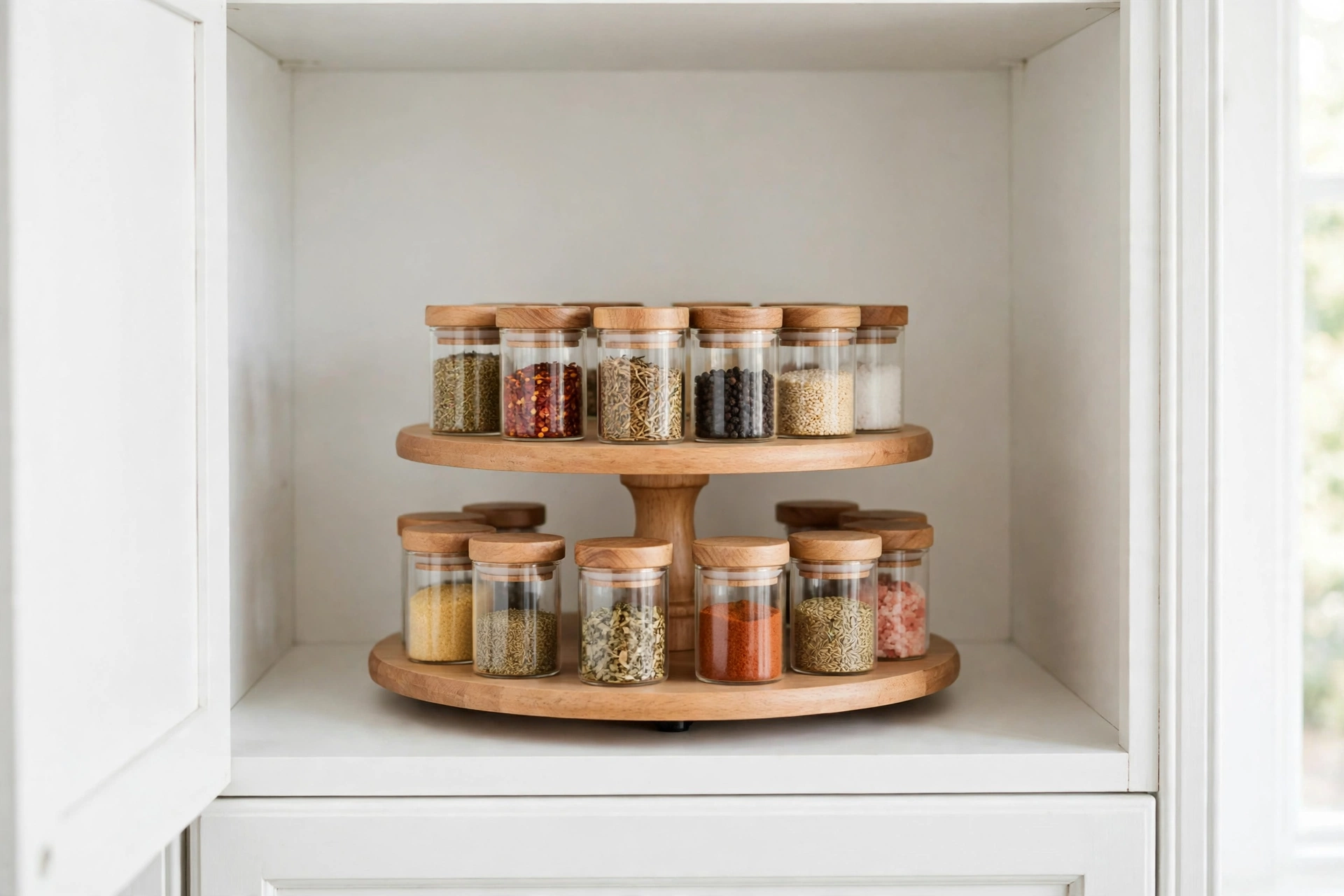
5. Use a Two-Tier Turntable for Spices
A two-tier turntable keeps every spice jar visible and within reach. Arrange jars alphabetically, with the most-used spices on top.
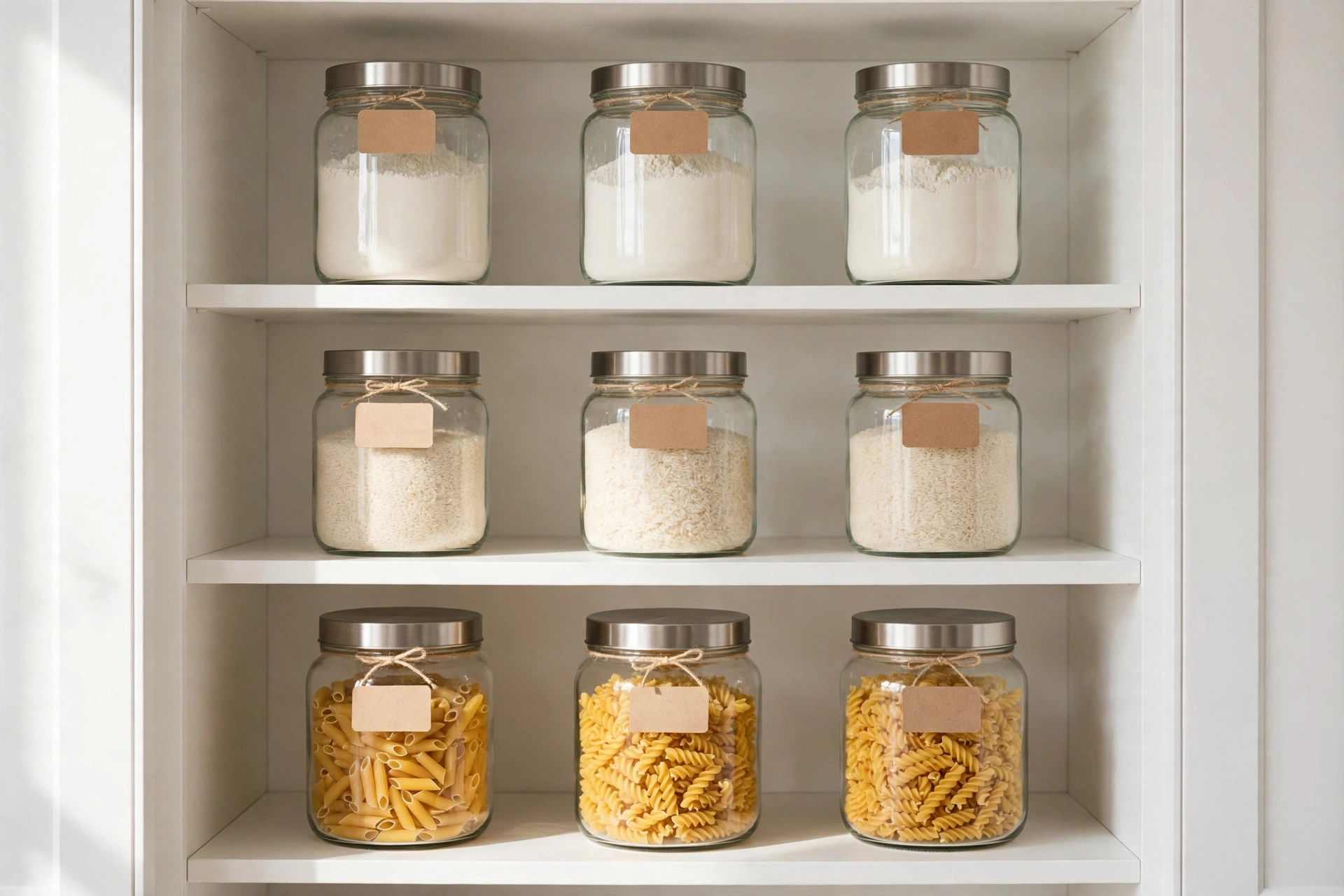
6. Decant Pantry Staples Into Matching Labeled Jars
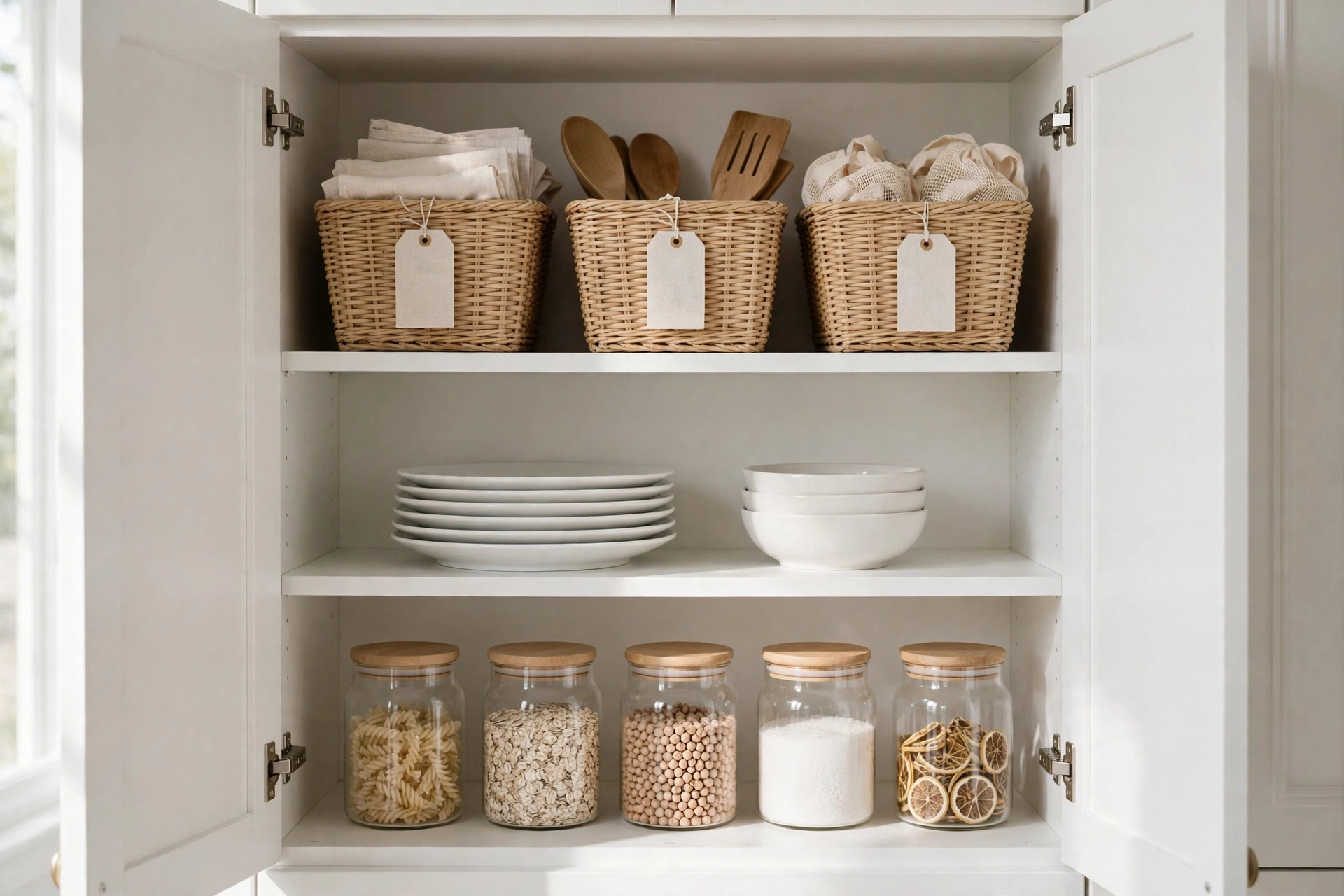
Decant flour, rice and pasta into matching clear jars with simple labels. Uniform containers look calm and show what needs refilling.
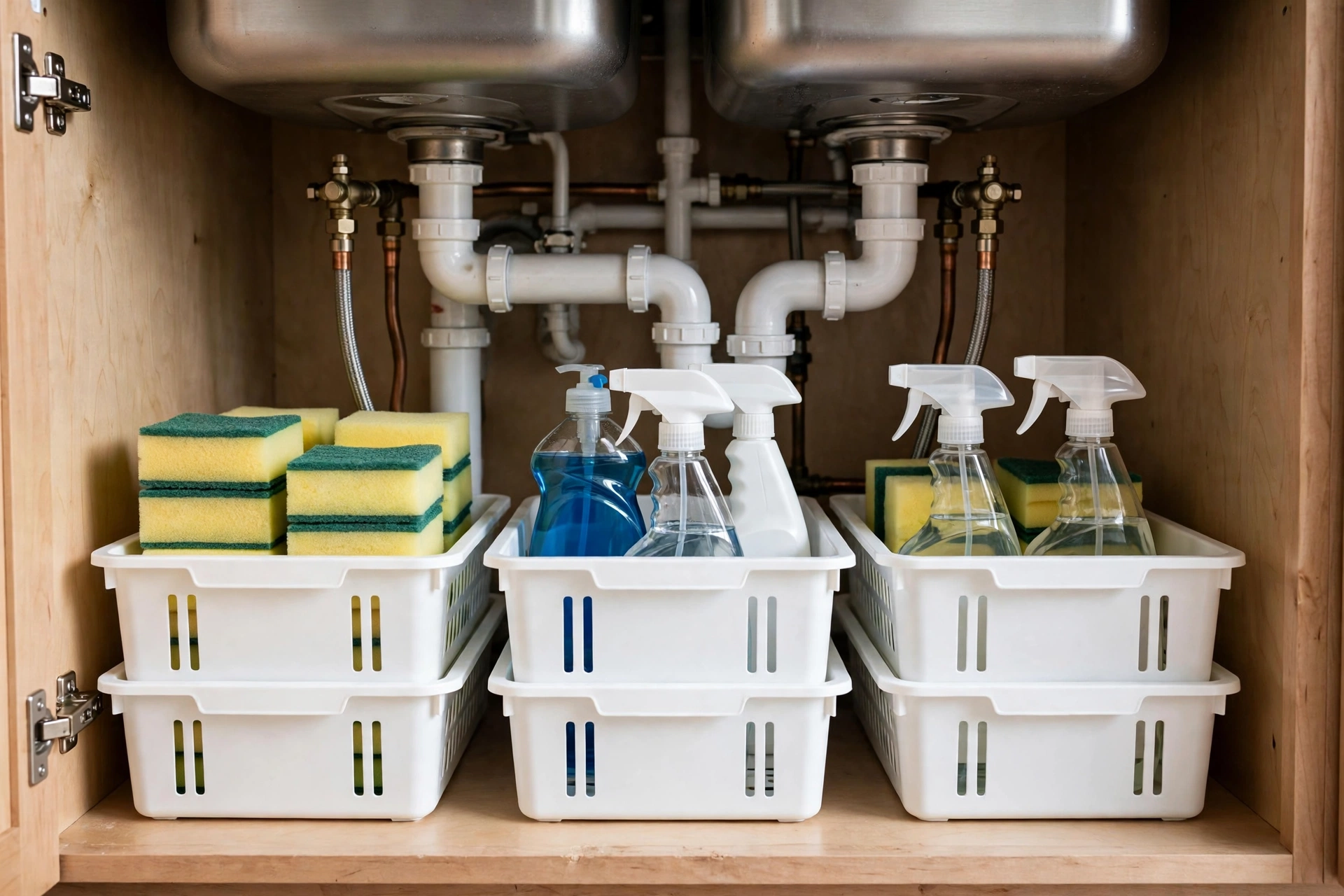
7. Tame the Under-Sink Cabinet With Stackable Bins
Stackable bins tame the awkward space around the sink pipes. Keep dish soap in one bin and cleaning sprays in another.
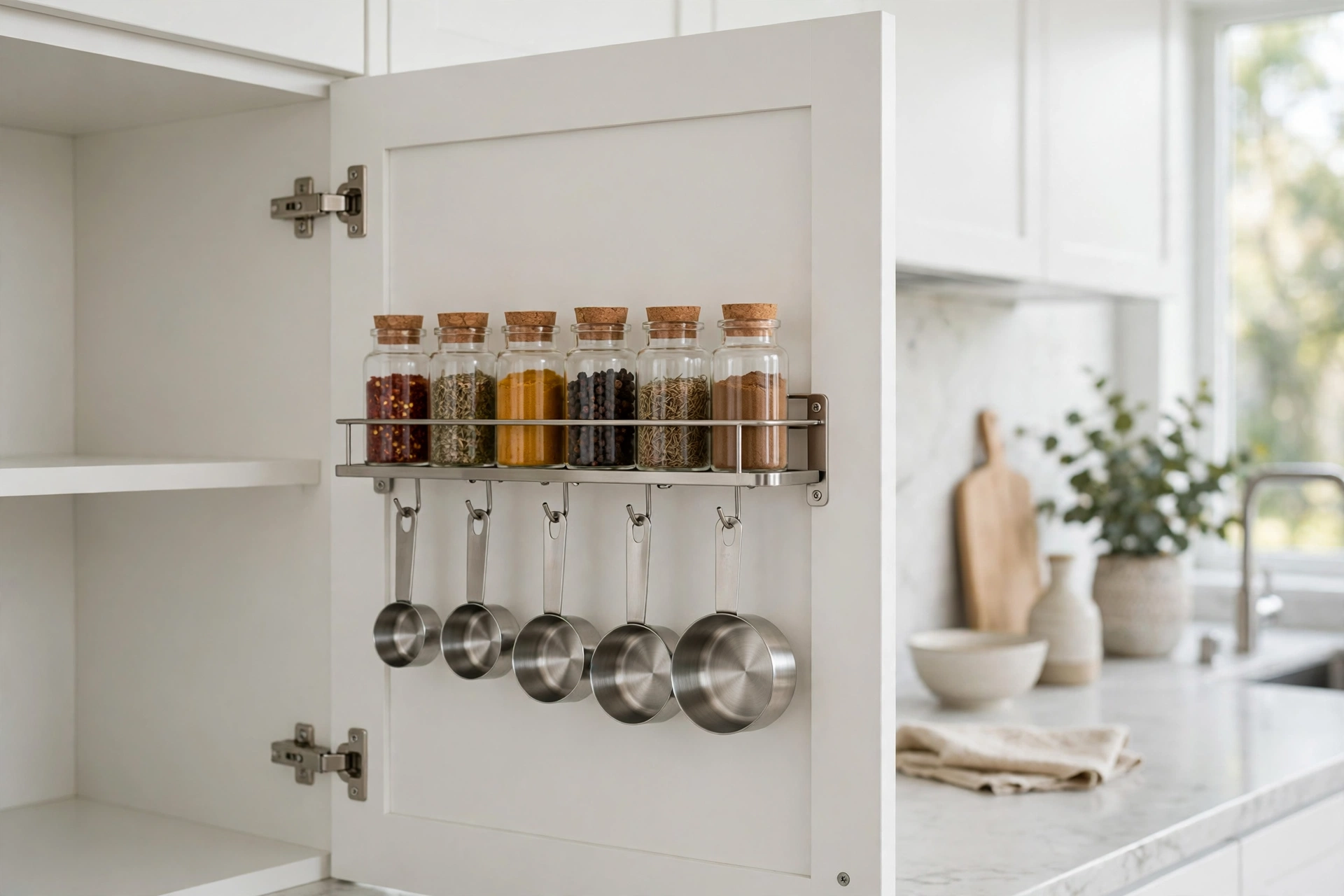
8. Mount Racks on the Inside of Cabinet Doors
The inside of a cabinet door is free real estate. Mount a slim rack there for measuring cups or spice jars, and keep the shelf clear.
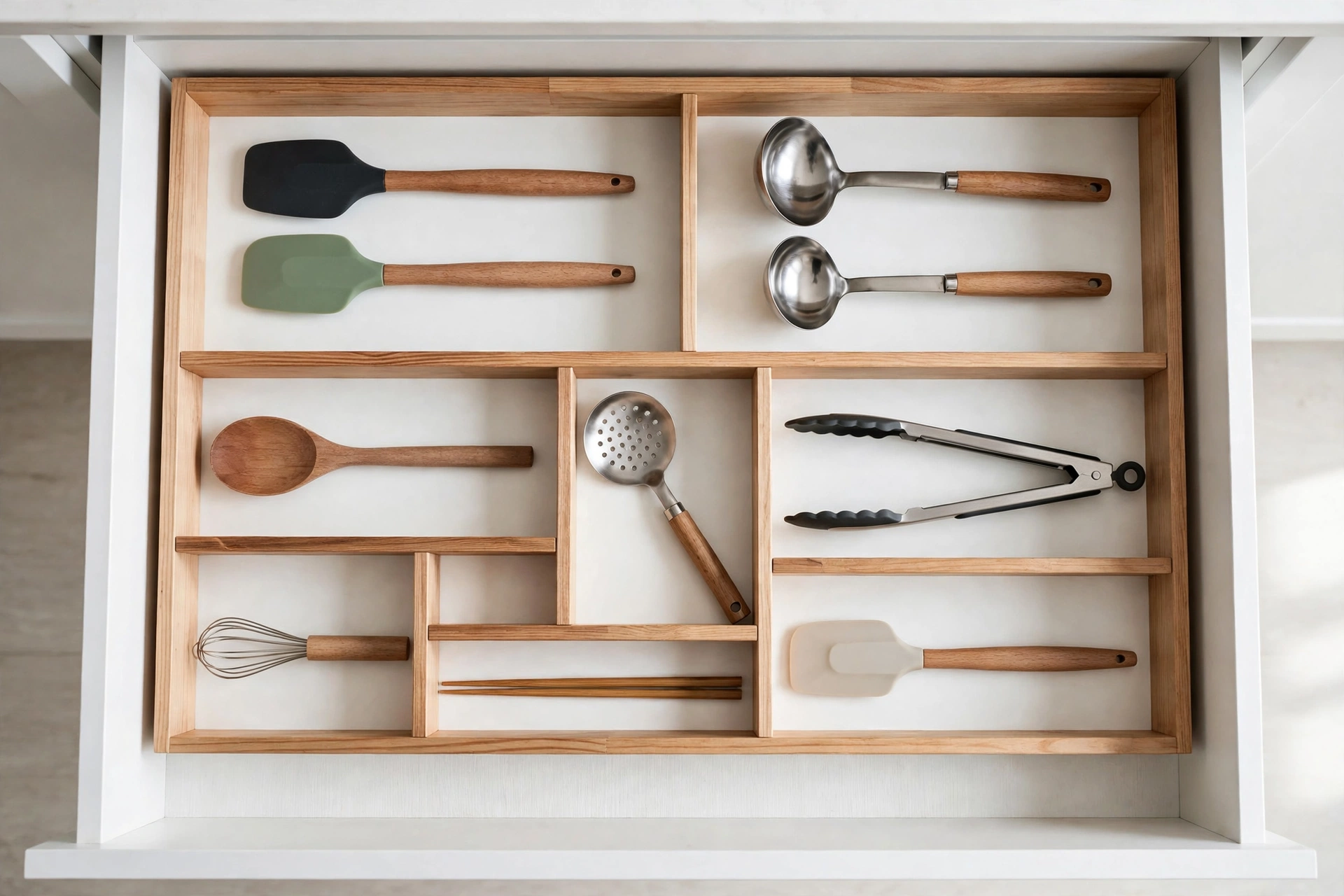
9. Divide Deep Drawers With Adjustable Dividers
Adjustable dividers stop utensils from sliding into a tangled mess. Give each tool its own slot, and leave one free for new gadgets.
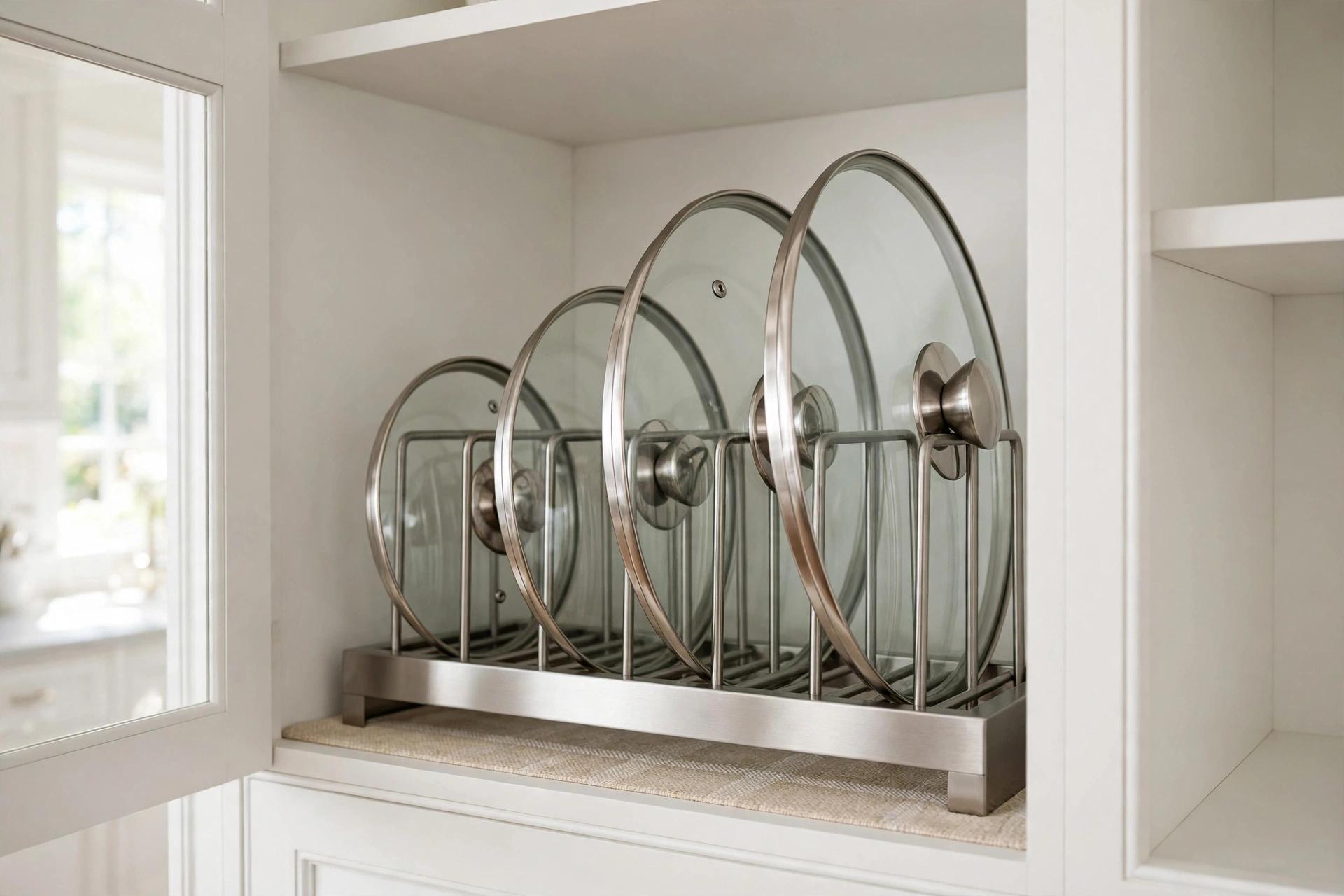
10. Store Pot Lids on a Door-Mounted Rack
Pot lids are the hardest thing to store neatly. A vertical lid rack keeps each lid upright and separate, so you can grab the right one fast.
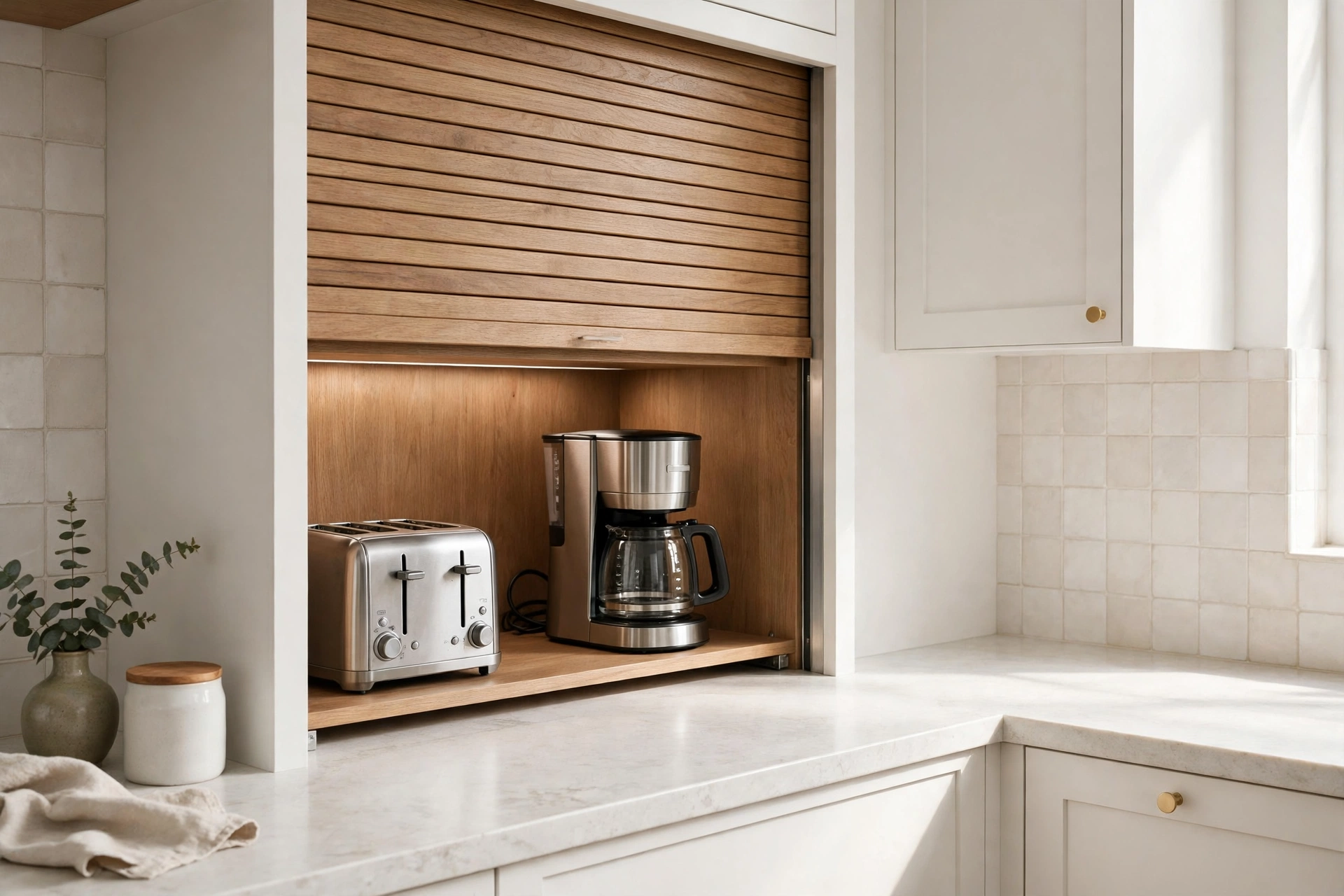
11. Build an Appliance Garage for Small Appliances
An appliance garage hides the toaster, blender and coffee maker behind a roll-up door. The counter stays clear, yet everything is one lift away.
12. Create Zones: Prep, Cook, Clean, Serve
Divide the kitchen into zones — prep, cook, clean — and store each tool where it is used. See our kitchen ideas to plan your zones.

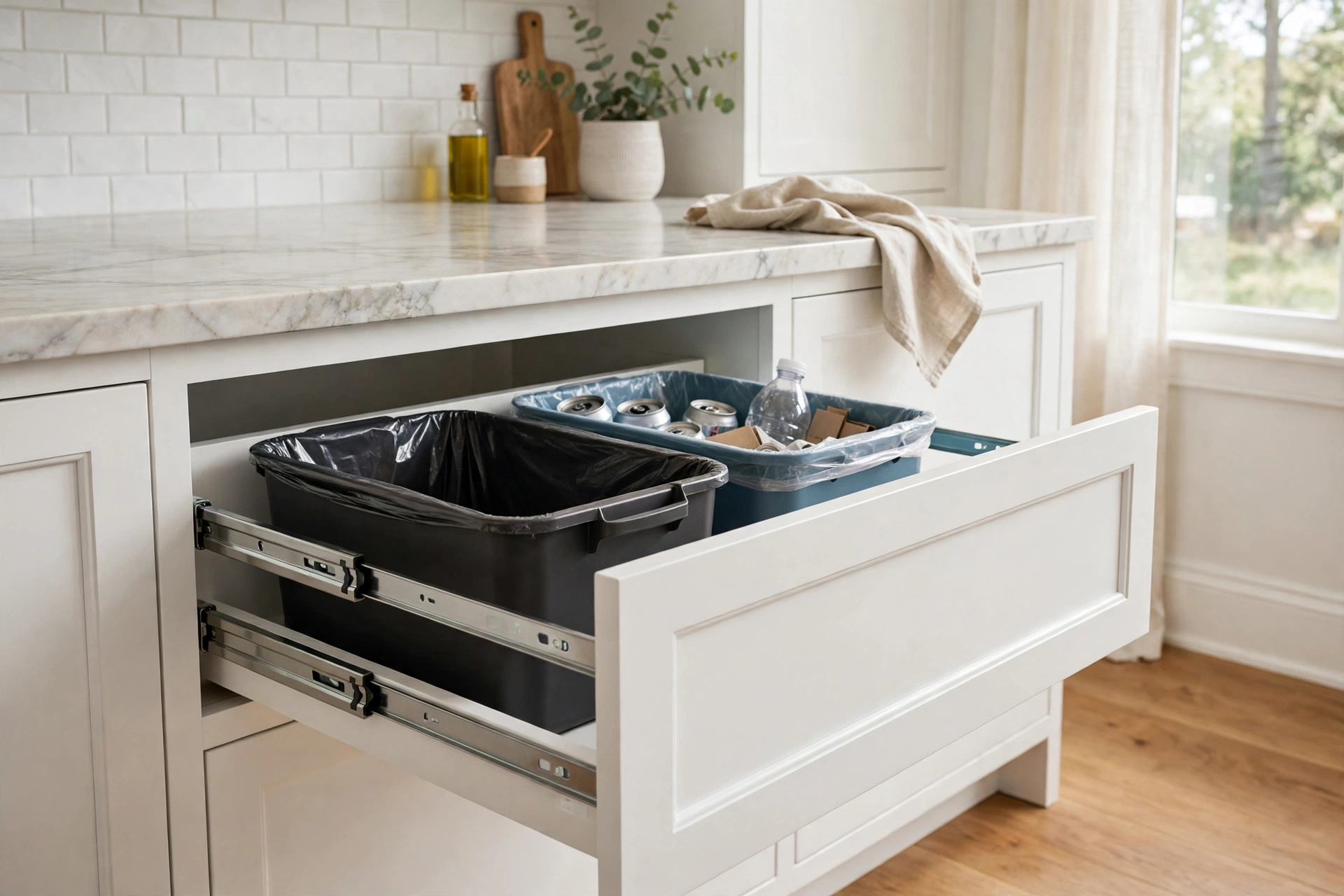
13. Add a Pull-Out Trash and Recycling Drawer
A pull-out trash and recycling drawer hides bins inside a base cabinet. Choose a two-bin unit so sorting becomes automatic, not a chore.
14. Use Clear Bins So You Can See Everything
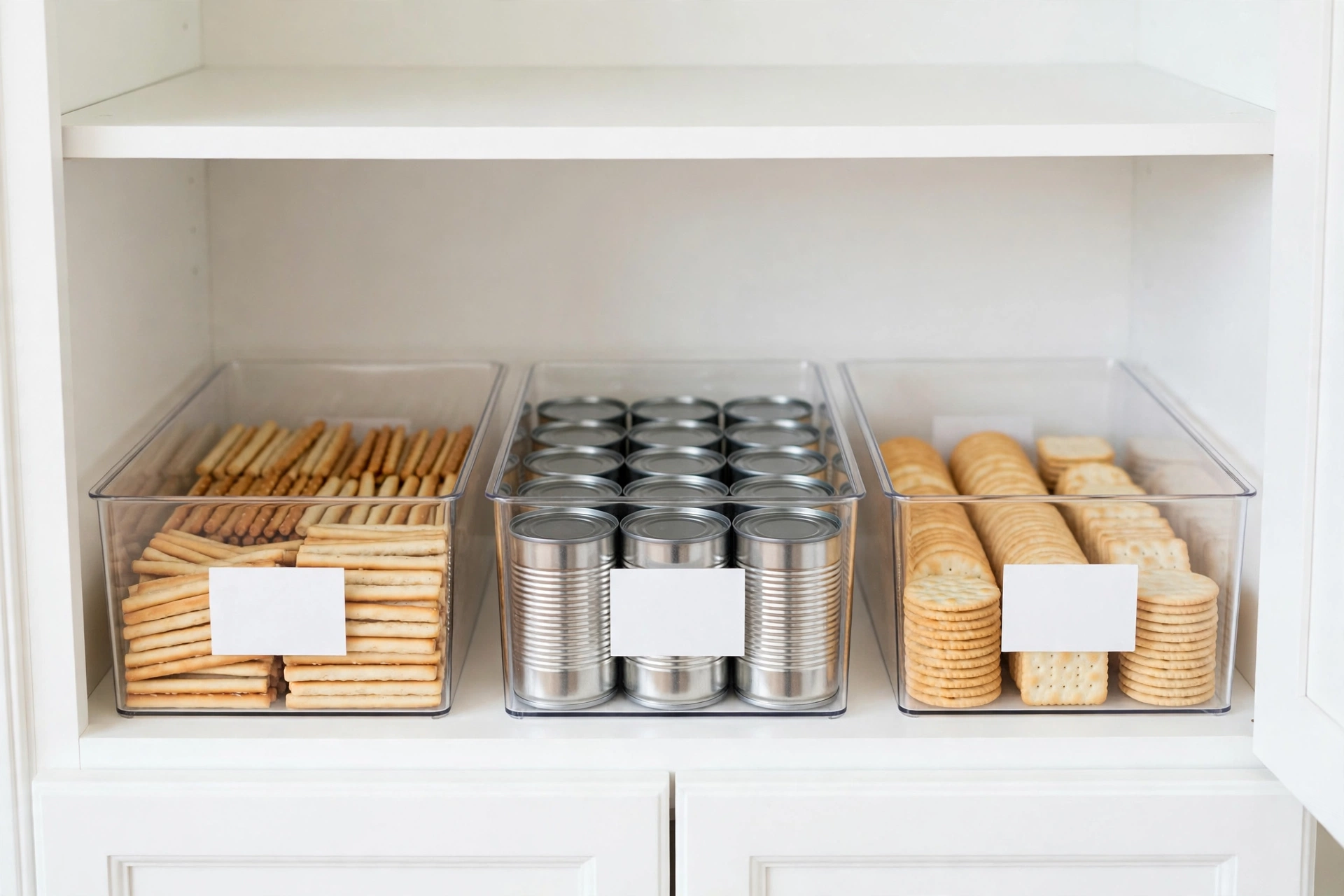
Clear bins let you see what is inside without pulling everything out. Group snacks and canned goods separately, and label the front of each bin.
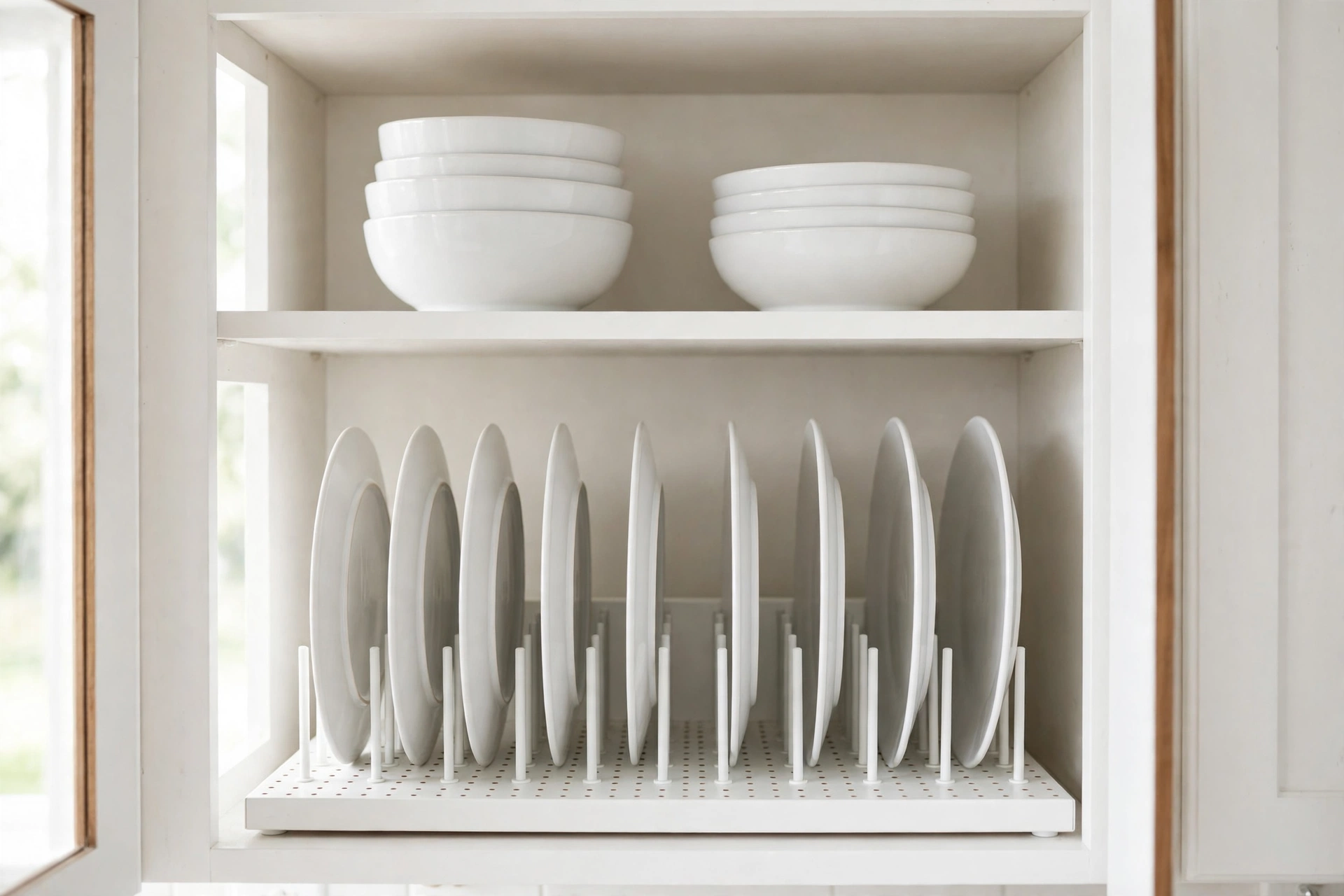
15. Keep Plates Upright With a Plate Stacker
A plate stacker keeps plates upright and separated, so the pile never chips or slides. It also frees space for bowls stacked above.
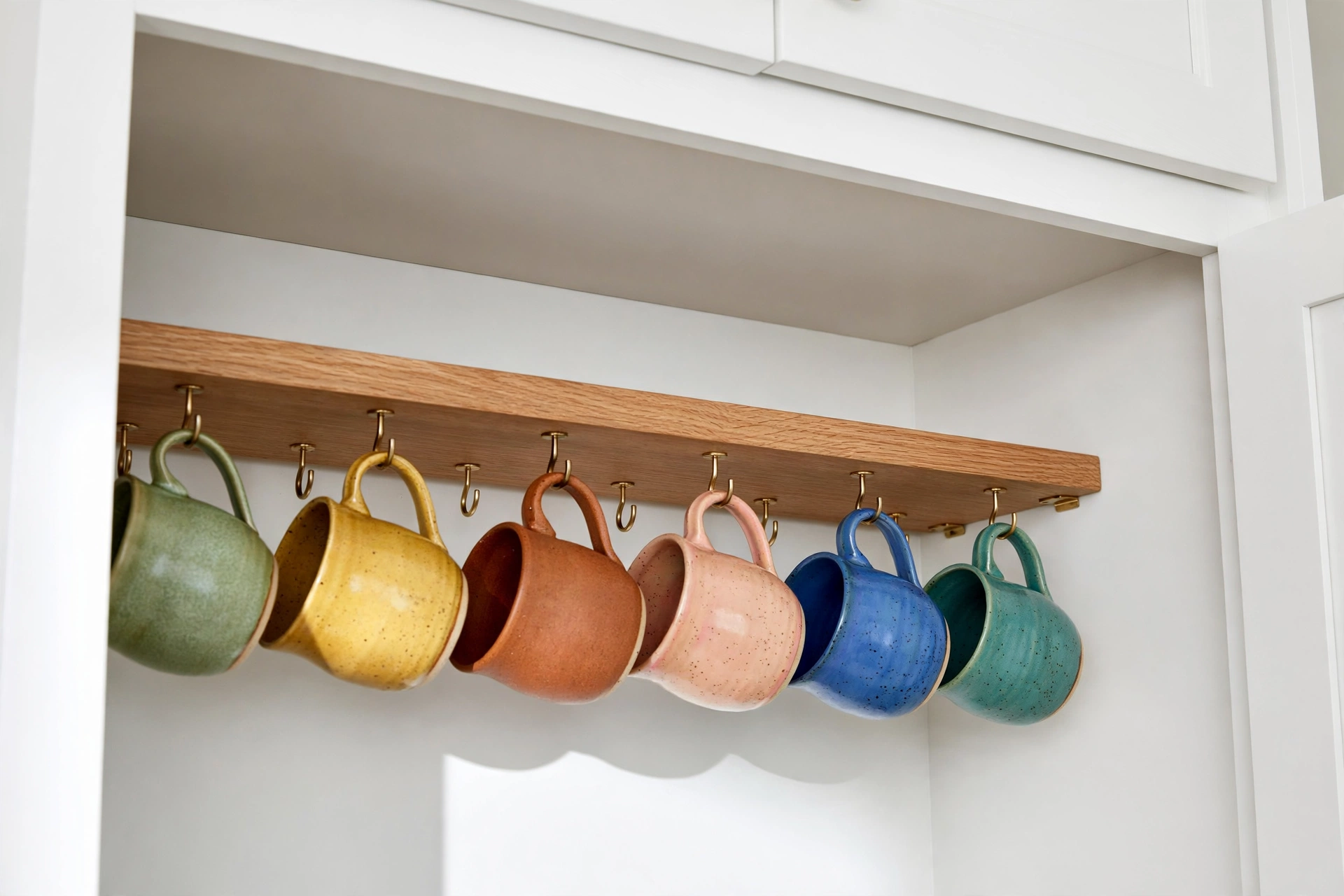
16. Hang Mugs on Hooks Under a Shelf
Screw small hooks under a shelf and hang mugs by their handles. You gain a whole extra row without giving up shelf space.
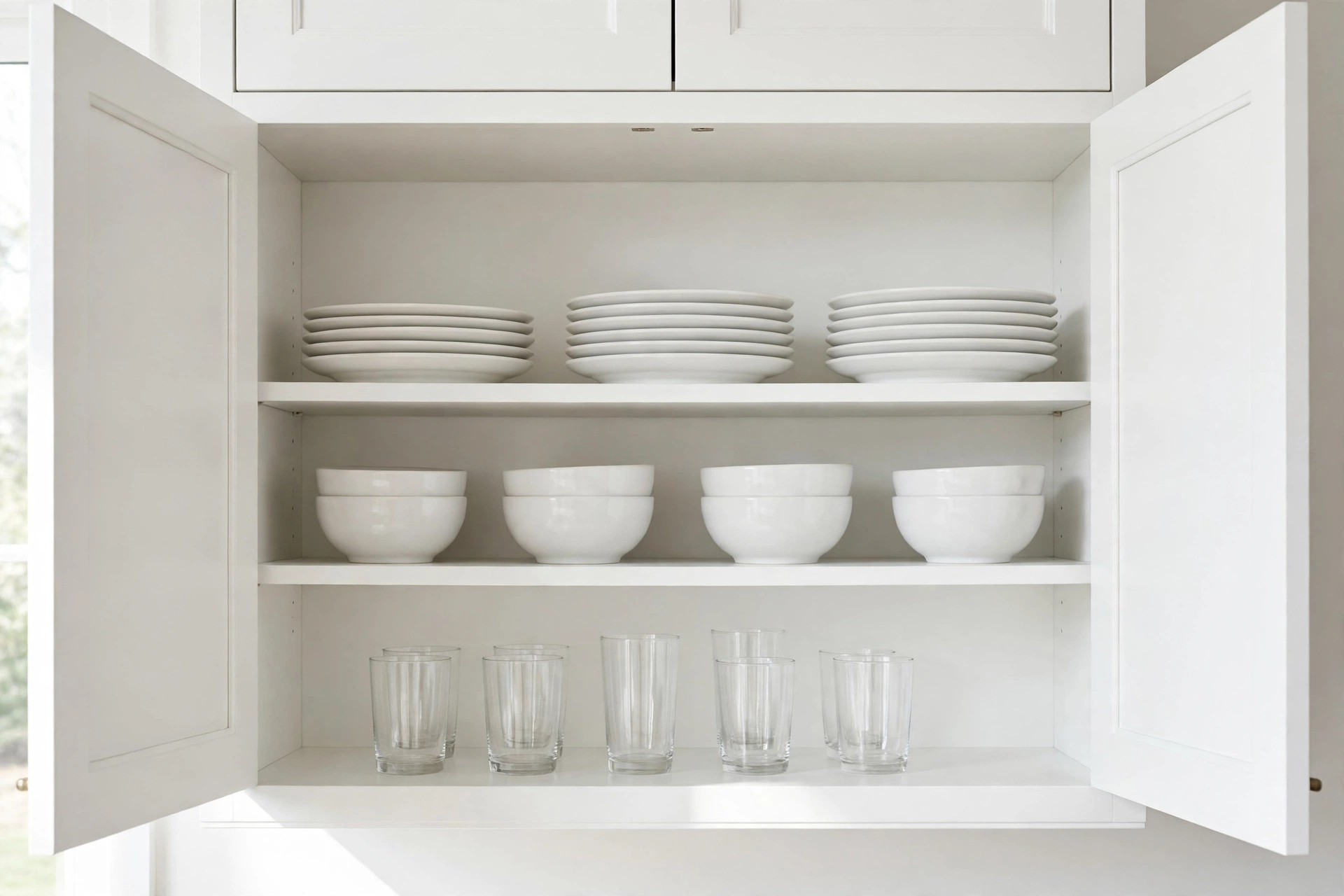
17. Keep Daily Dishes at Eye Level
Keep the plates and glasses you use every day at eye level, and move special-occasion pieces up high. Daily cooking gets faster this way.
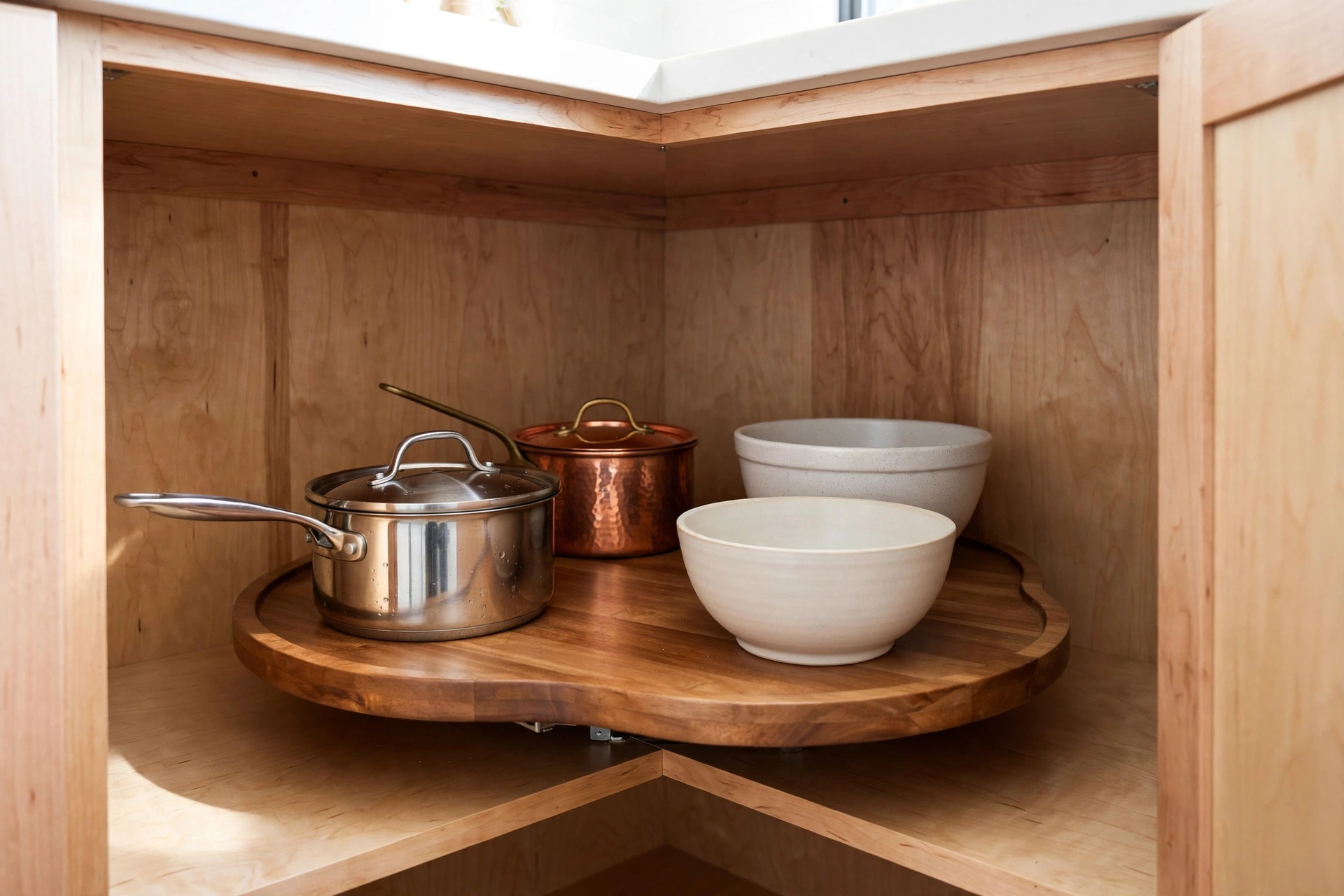
18. Fix the Corner With a Kidney-Shaped Lazy Susan
Corner cabinets waste the most space in any kitchen. A kidney-shaped Lazy Susan turns that dead corner into easy, spinning storage.
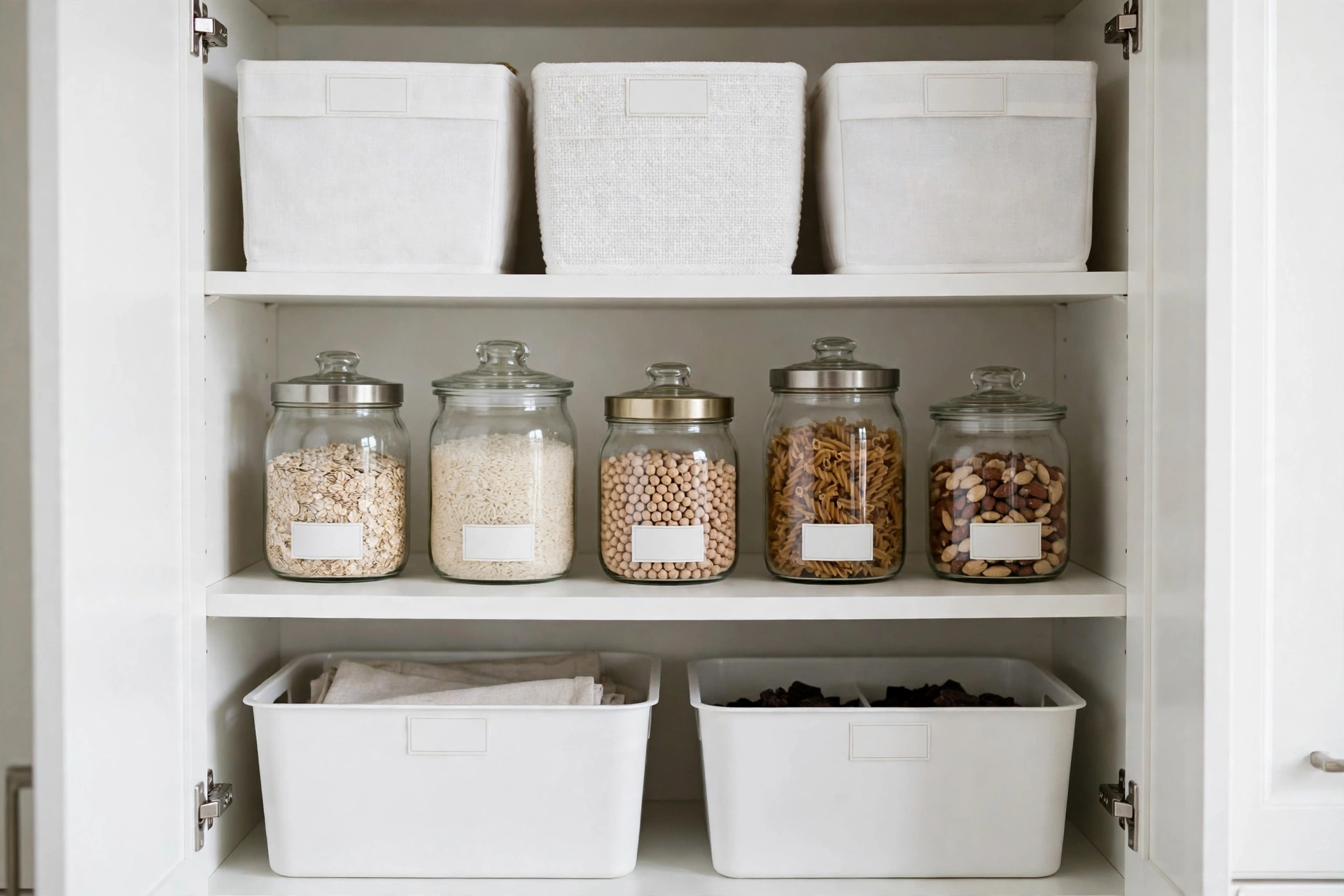
19. Label Every Bin and Shelf Edge
Labels turn a tidy cabinet into a system the whole family can follow. Label bins and jar lids, so everything returns to the same spot.
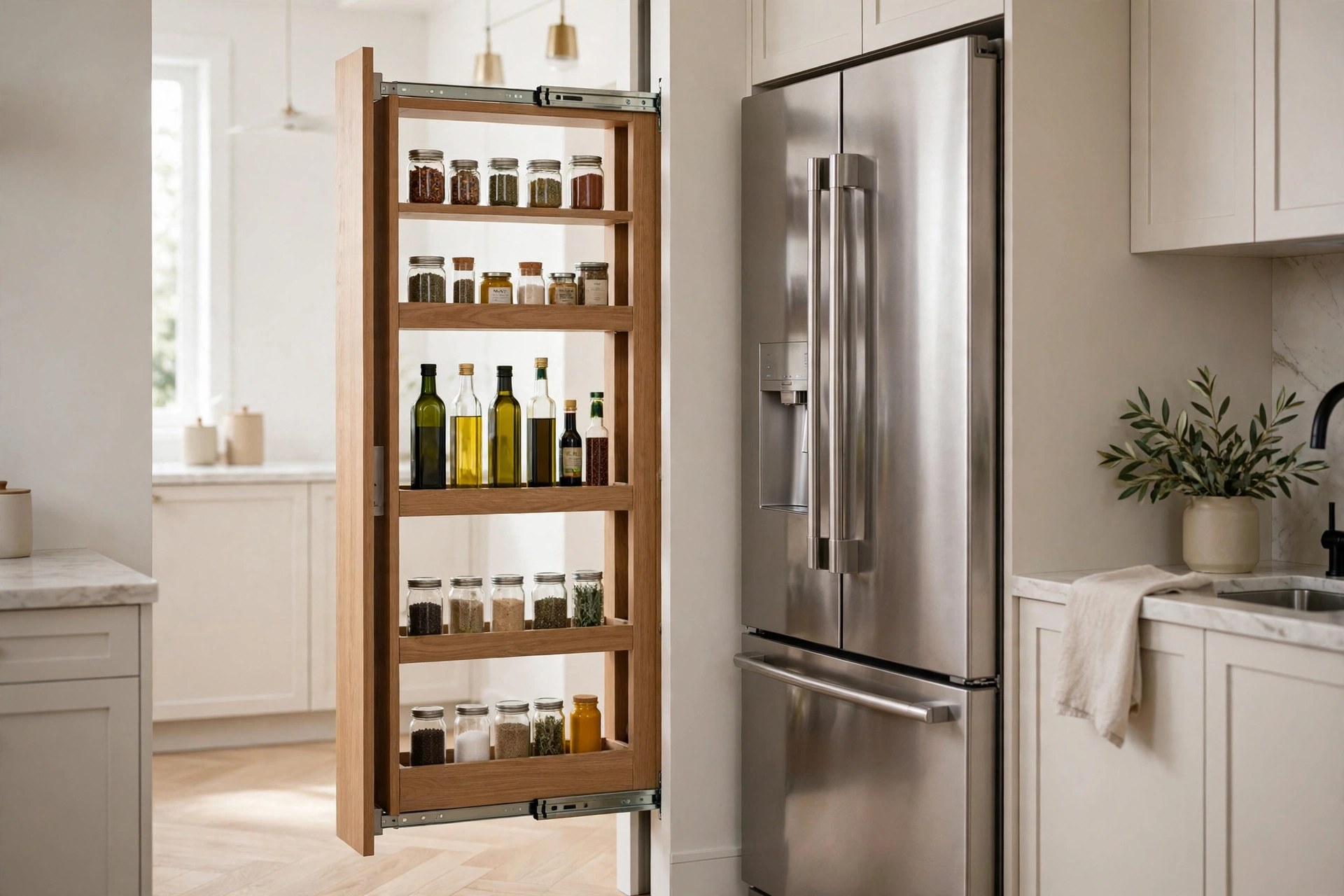
20. Squeeze a Pull-Out Pantry Into a Narrow Gap
Pro tip: a slim pull-out pantry fits the narrow gap beside the fridge and holds oils and spices in one tall column. Measure first — even six inches is enough.
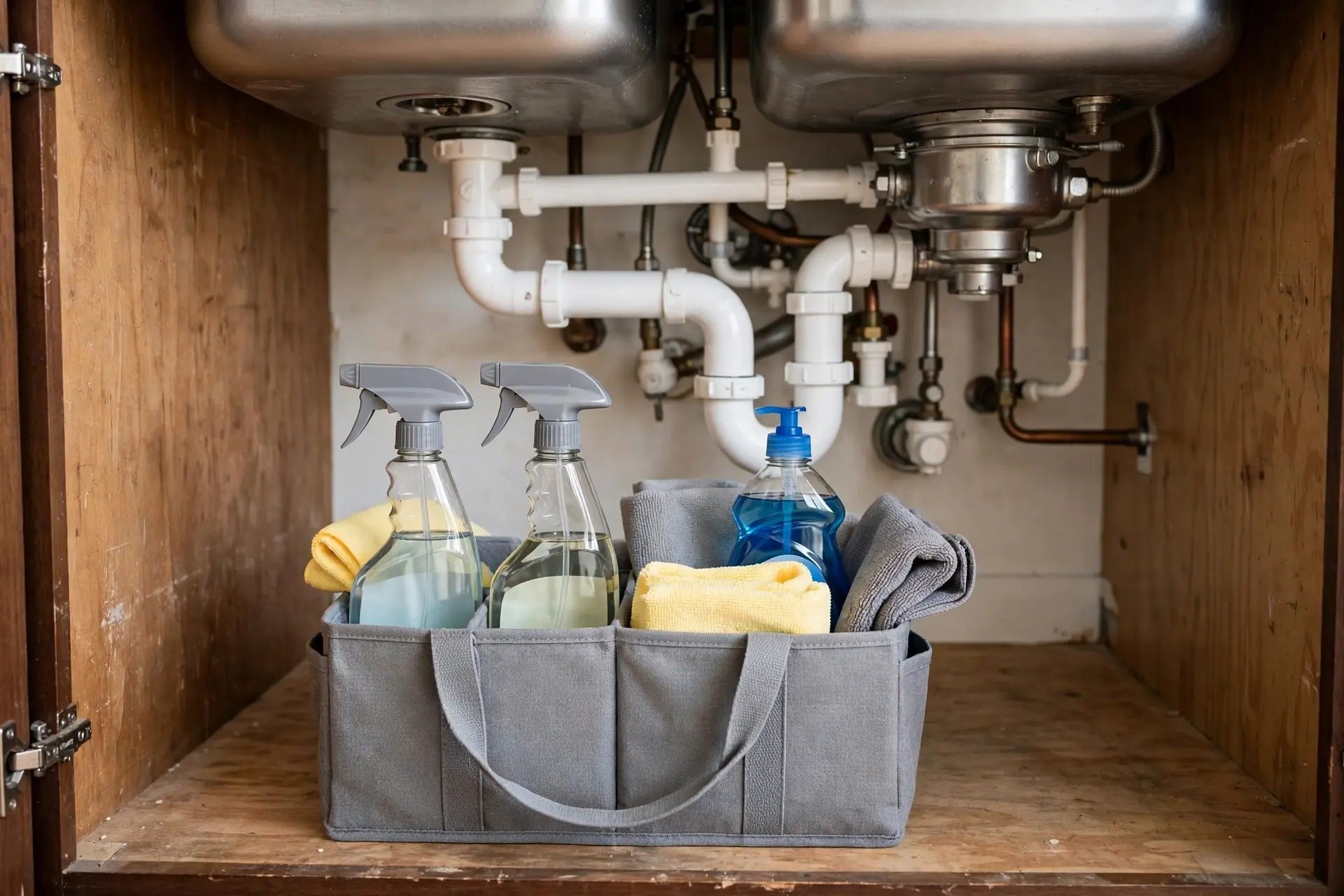
21. Keep Cleaning Supplies in One Portable Caddy
Keep all cleaning supplies in one portable caddy under the sink. When it is time to clean, lift the whole caddy out.
22. Use Tension Rods to Hold Lids and Trays
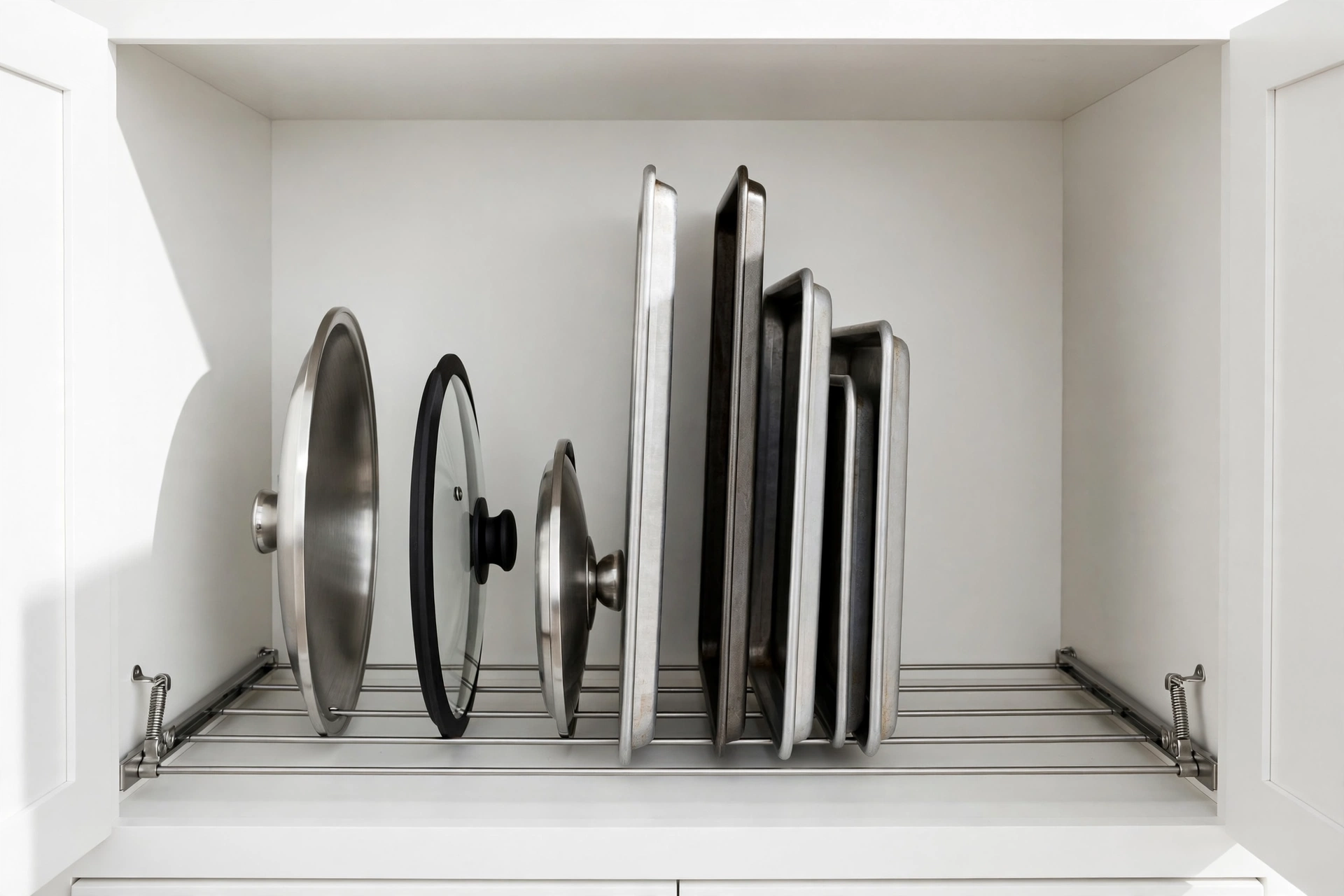
A cheap tension rod mounted low inside a cabinet creates a slot for lids and trays. It costs almost nothing and stops tall items sliding around.
23. Turn a Shallow Drawer Into a Spice Drawer
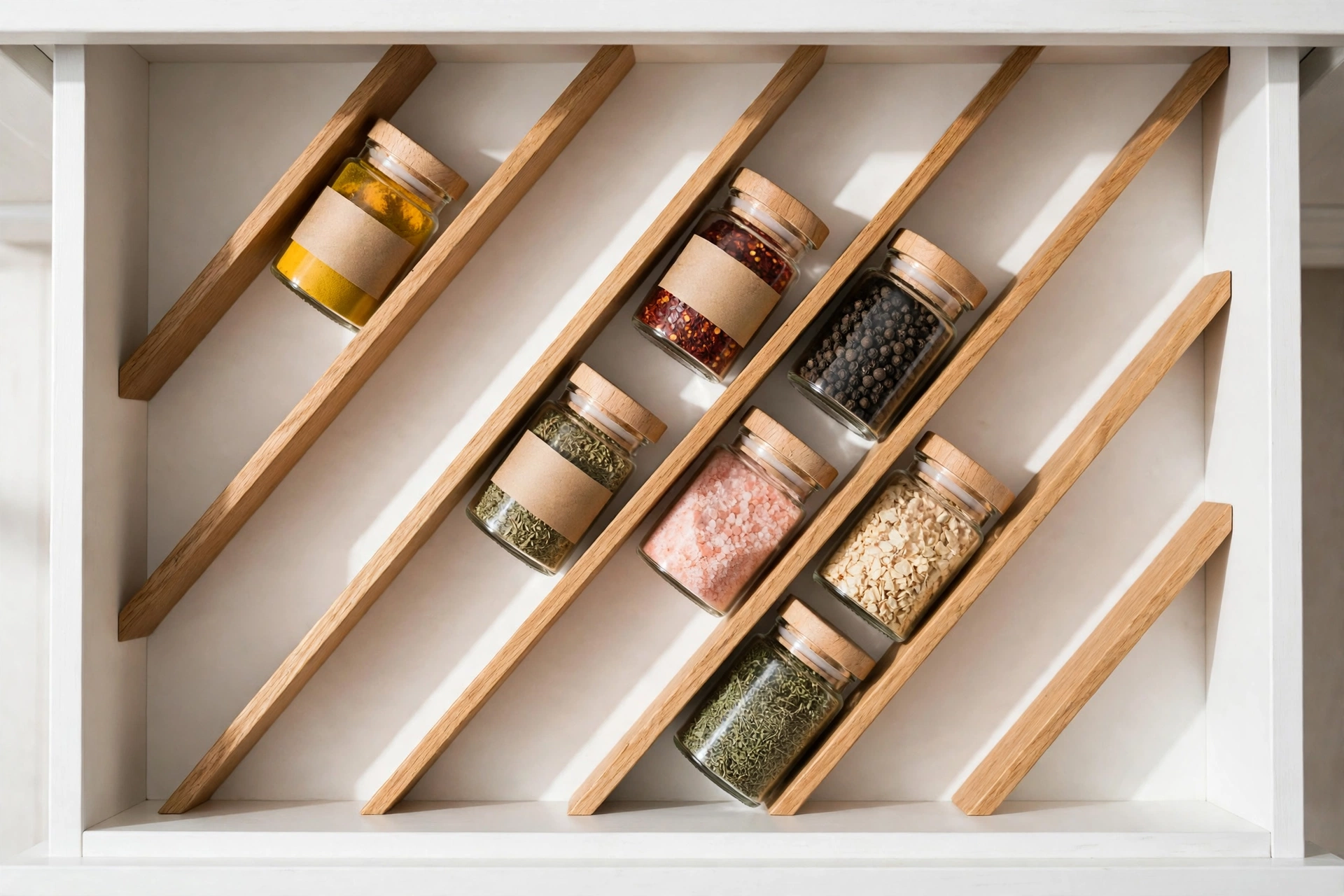
A shallow drawer with angled inserts becomes a spice drawer where every label faces up. Read all your spices at a glance without lifting a jar.
24. Group All Baking Supplies in One Labeled Bin
Group flour, sugar and vanilla in one labeled baking bin, so baking starts with one grab. See our kitchen backsplash ideas for finishes that wipe clean.

25. Add Stackable Organizers for Glasses
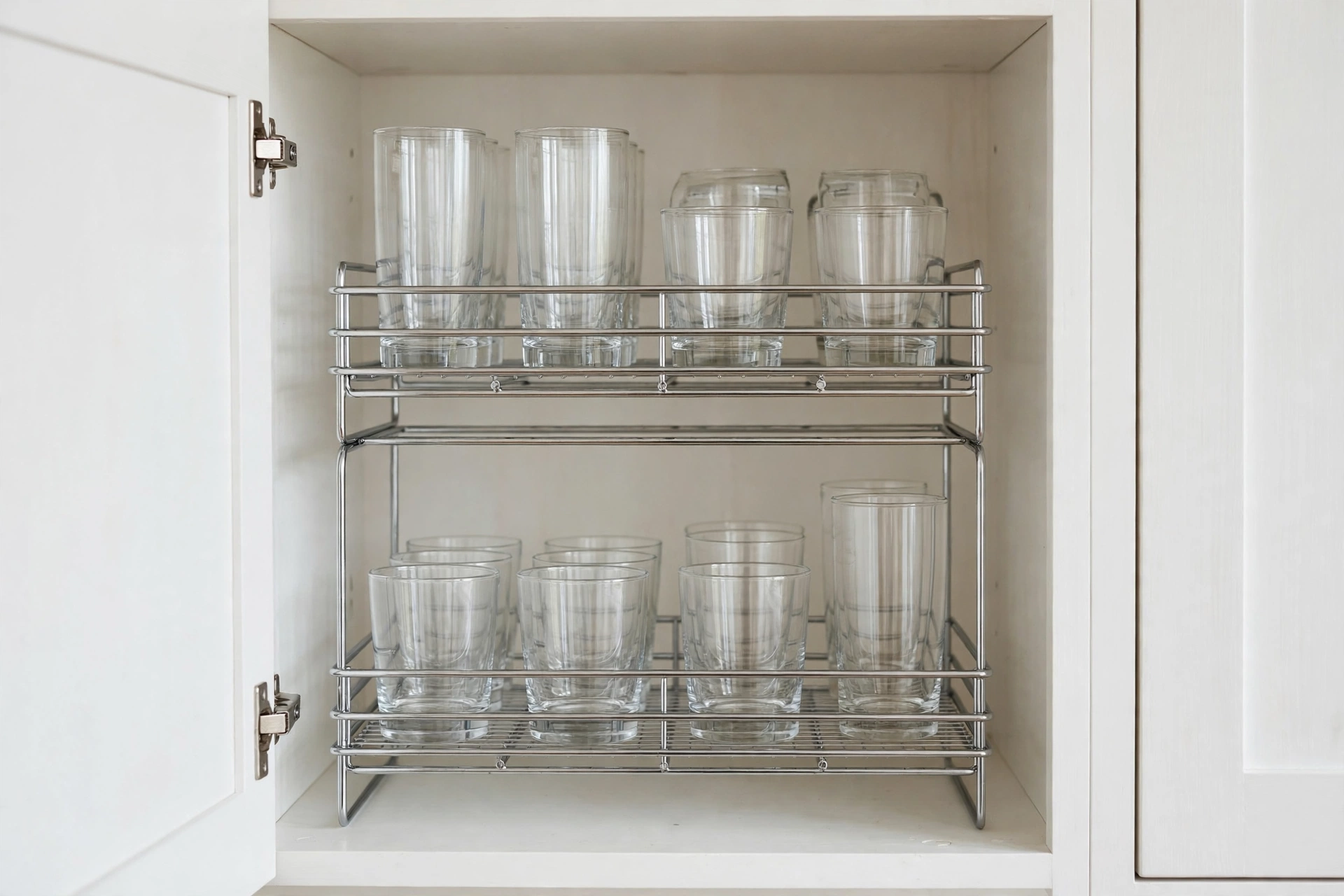
Stackable organizers give drinking glasses a second level and stop them crowding each other. Keep everyday glasses low and pitchers up top.
26. Hang Cutting Boards on a Door Rack
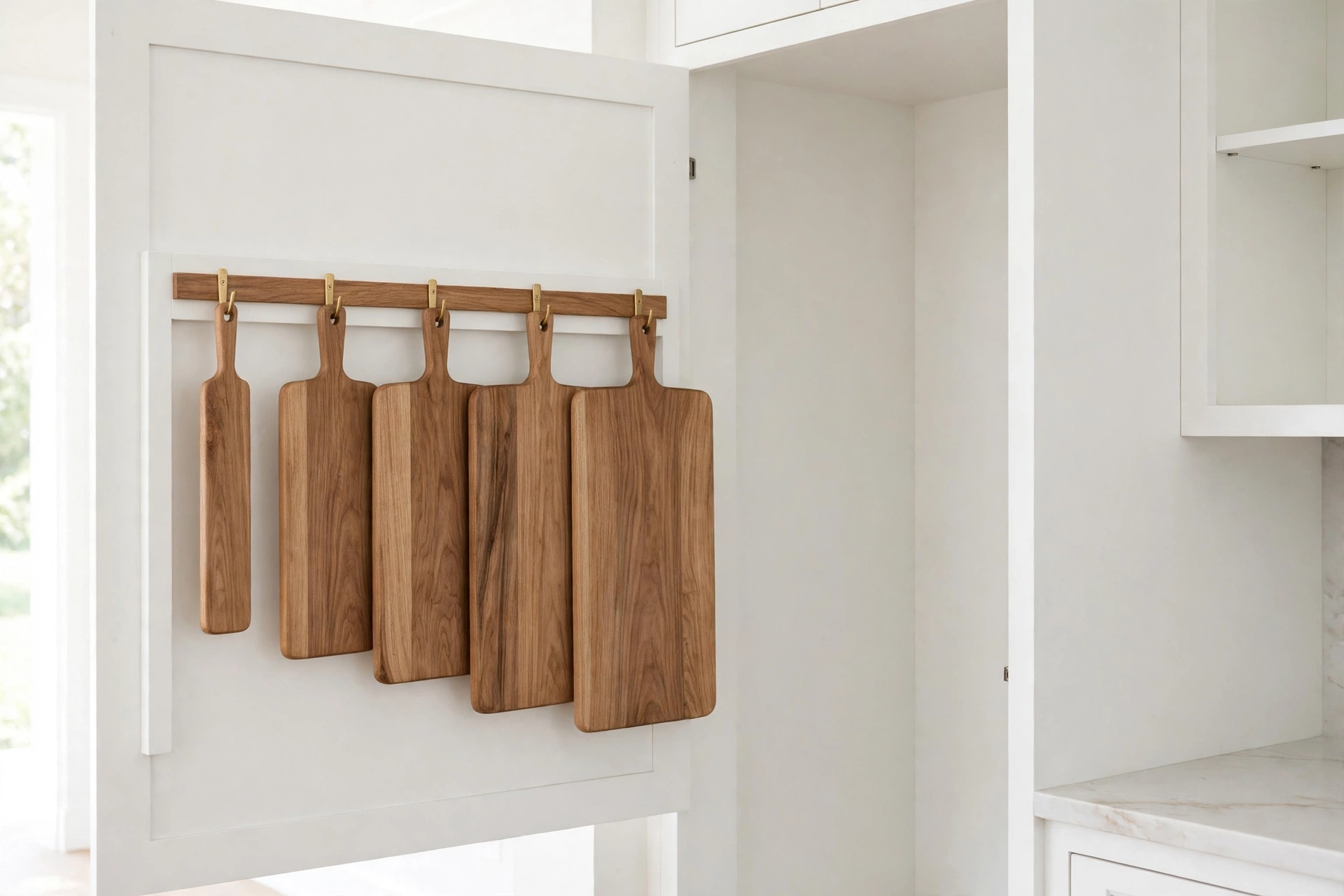
Hang cutting boards on a rack inside a tall cabinet door, sorted by size. They stay flat and easy to reach, and the shelf below stays free.
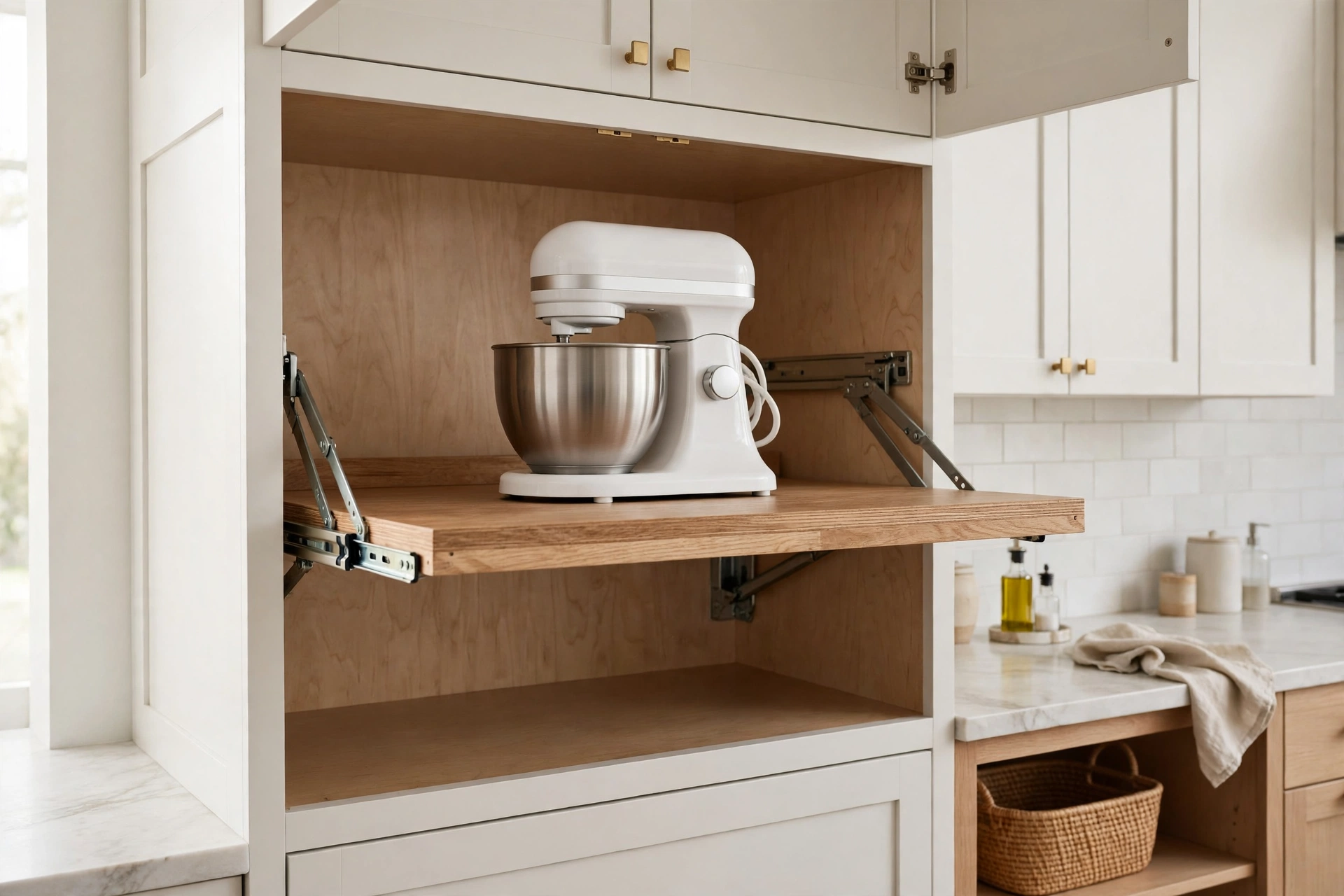
27. Give the Stand Mixer a Lift-Up Shelf
A heavy stand mixer deserves a lift-up shelf that rises to counter height. No more lifting it from a low cabinet — or leaving it out forever.
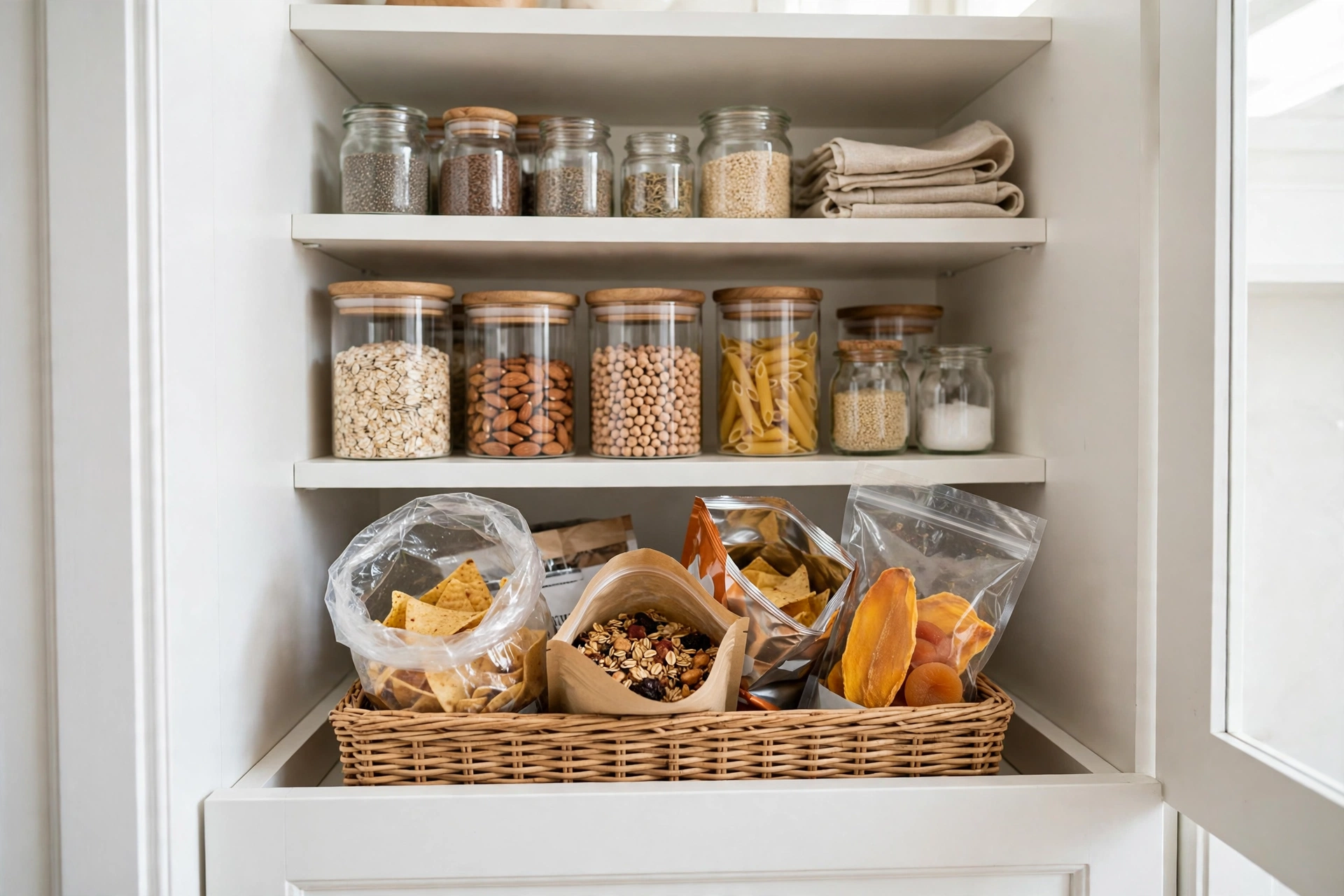
28. Keep a “Use First” Bin for Open Packets
Keep one small bin at the front for open packets and items near their date. Checking it before you cook cuts waste and stops food hiding at the back.
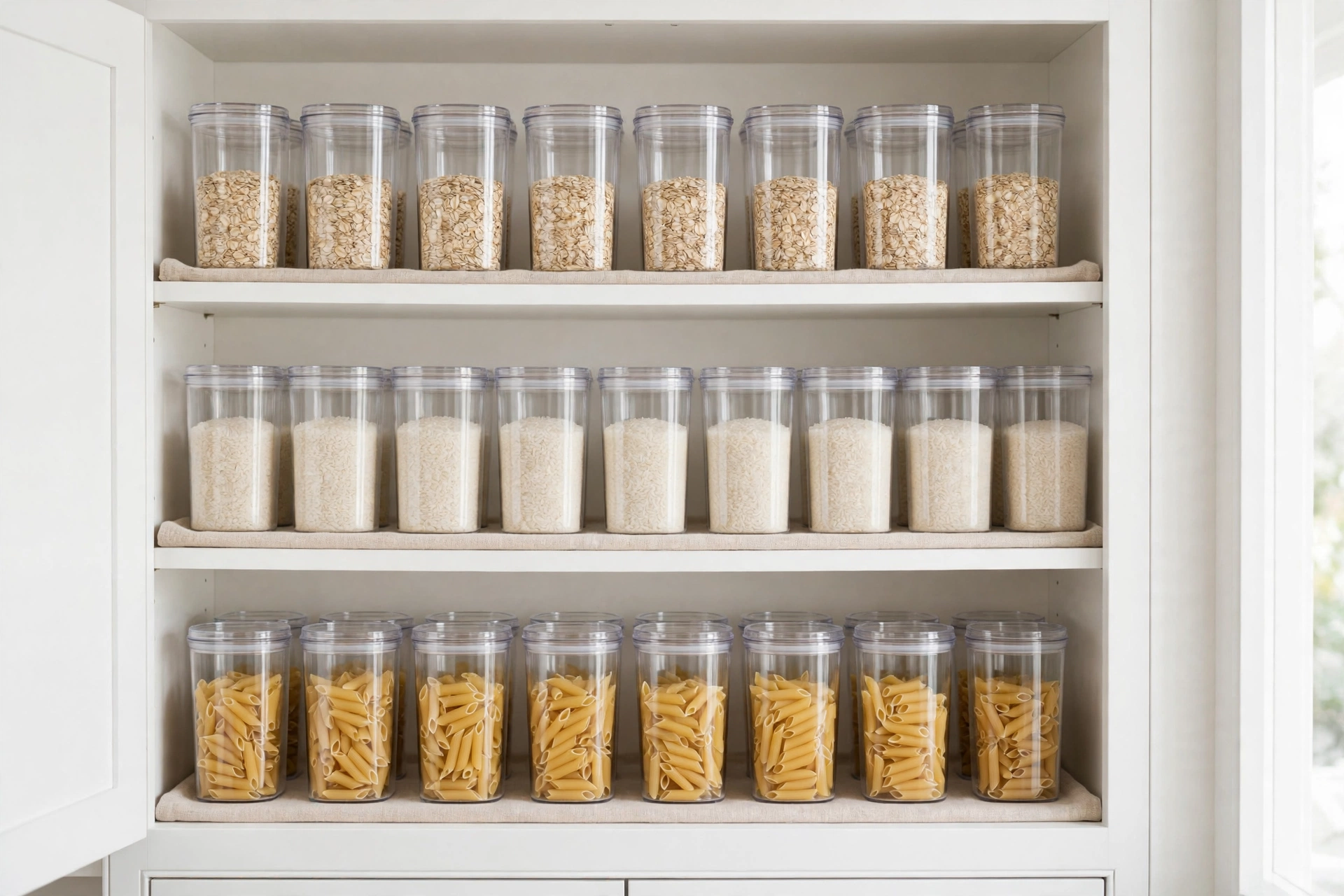
29. Switch to Uniform Containers for a Calm Look
Matching containers in one size family make a crowded cabinet look calm. Start with one shelf, then expand as old packaging runs out.
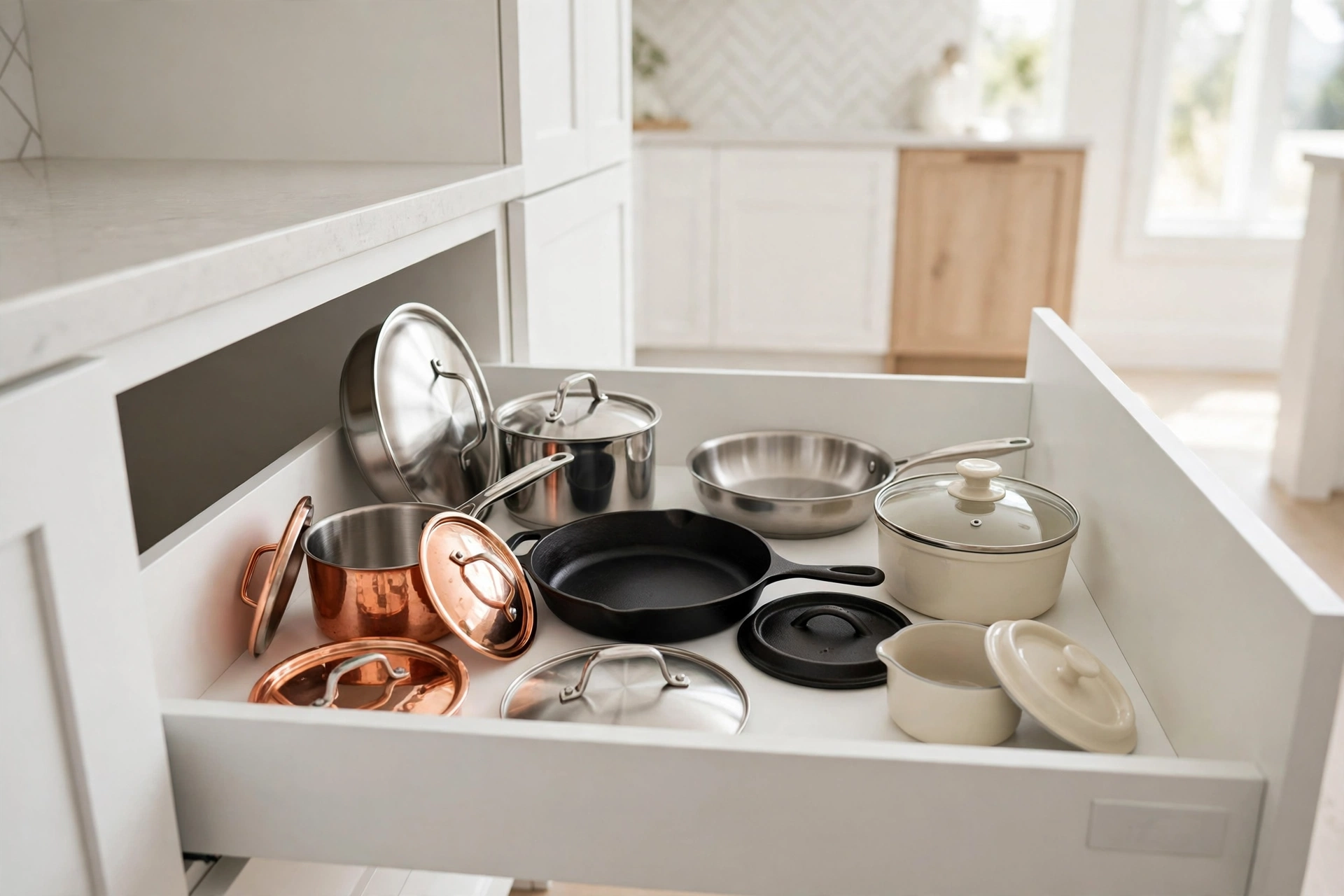
30. Swap a Deep Shelf for a Pull-Out Pot Drawer
Replace a deep base shelf with a pull-out drawer for pots and pans. Heavy cookware slides out smoothly, and nothing gets buried again.
31. Do a Five-Minute Weekly Cabinet Reset
Finish with a five-minute weekly reset: return strays to their zones, wipe one shelf, and toss anything expired. Small habits keep the system working.
How do I start organizing my kitchen cabinets?
Empty one cabinet at a time and sort everything into keep, move and donate piles. Clean the shelf, then put back only what you use in that zone, using bins or risers to fill the height. Start with the cabinet you open most — one finished cabinet keeps you motivated.
What is the best way to organize deep kitchen cabinets?
Use pull-out shelves or turntables so the back of a deep cabinet comes to you. A full-extension shelf works best for heavy pots, while a Lazy Susan suits cans, oils and spices. Add risers to use the vertical space, and keep rarely used items at the very back so daily essentials stay at the front.
How can I organize kitchen cabinets on a budget?
Start with the cheapest fixes: tension rods for lids, small hooks under shelves, and clear bins from the dollar store. Repurpose shoe boxes as drawer dividers and label everything with masking tape. Spend only on the one or two problem cabinets that bother you most, such as a pull-out shelf for heavy pots.
How do I organize spices in a kitchen cabinet?
Keep spices where you cook, either in a two-tier turntable, a shallow drawer with angled inserts, or a door-mounted rack. Decant them into matching small jars with clear labels, arranged alphabetically or by cuisine so you can find any spice in seconds. Store whole spices together and ground spices together to keep it simple.
What should I store in upper vs lower kitchen cabinets?
Store daily dishes, glasses and mugs in upper cabinets at eye level, where they are easy to reach. Keep heavy items — pots, pans and small appliances — in lower cabinets or pull-out drawers, close to the floor. Rarely used pieces, such as holiday dishes, belong on the highest shelves.
How do I keep kitchen cabinets organized long term?
Give every item a fixed home, label the bins and shelves, and do a five-minute reset each week to return strays and toss expired food. Only buy new containers when something is genuinely missing. The secret is not a perfect one-time cleanout, but small habits that keep the system working.
The best kitchen cabinet organization ideas are the simple ones you will keep using — a turntable that spins, a bin that is labeled, a zone that makes sense. Pick three ideas, start with your busiest cabinet, and enjoy a kitchen that feels twice as big.
