
Good desk organization ideas start with one fact: a tidy desk is a system, not a personality trait. The 37 ideas below give every pen, cable and paper a home — from desktop zones and drawer dividers to pegboards, cable trays and a five-minute daily reset — so your workspace stays clear long after the first tidy-up.
The difference between a desk that stays tidy and one that slides back into chaos comes down to three choices: a place for everything, storage that fits your space, and a routine that takes minutes. Most of these ideas cost little, several cost nothing, and many need no tools at all.
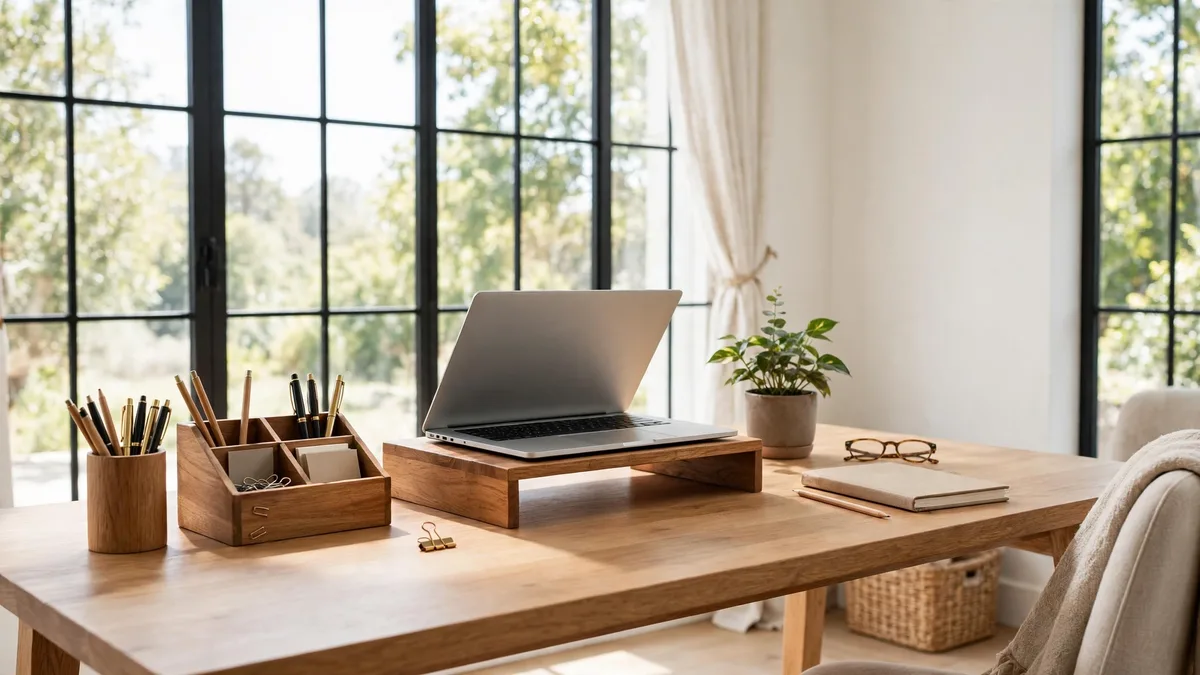
Why You’ll Love These Desk Organization Ideas
A clear desk does more than look good — it cuts the small frictions that eat a workday. No hunting for a pen or untangling a charger before you can start. These desk organization ideas build storage in layers — desktop first, then drawers, wall, cables and paper flow — so each fits a different budget, desk size and work style. Start with one zone and add the next only when the first holds.
How to Choose the Right Desk Organization for Your Home
Measure first: most desks are 48 to 60 inches wide, and organizers must fit the desk you actually have, not the one in the photo. Pick your zone — desktop, drawer or wall — and one material that matches the room. If your desk sits in a small room, our small home office ideas will help you plan storage across the whole space before you buy a single tray.
Desktop Zones and Trays
1. A Three-Zone Desktop Layout

Split the desktop into three zones and clutter loses its hiding places: a work zone in the center for your laptop or writing, a tools zone on your dominant-hand side for pens and phone, and a reference zone on the other side for papers. Best for: anyone whose desk collects random piles. Styling tip: keep the center third empty except for what you are using right now. Pro tip: mark the zone edges with washi tape for a week until the habit sticks.
2. A Leather Desk Mat That Defines Your Work Zone

A desk mat draws a visible border around your work area, and anything outside it reads as clutter at a glance. Best for: shared desks and dining-table workers. Styling tip: pick a mat in a contrasting tone so the boundary is obvious. Pro tip: a 30 by 16 inch mat fits a laptop, mouse and notebook with room to spare; smaller mats force things off the edge.
3. A Tiered Desktop Organizer
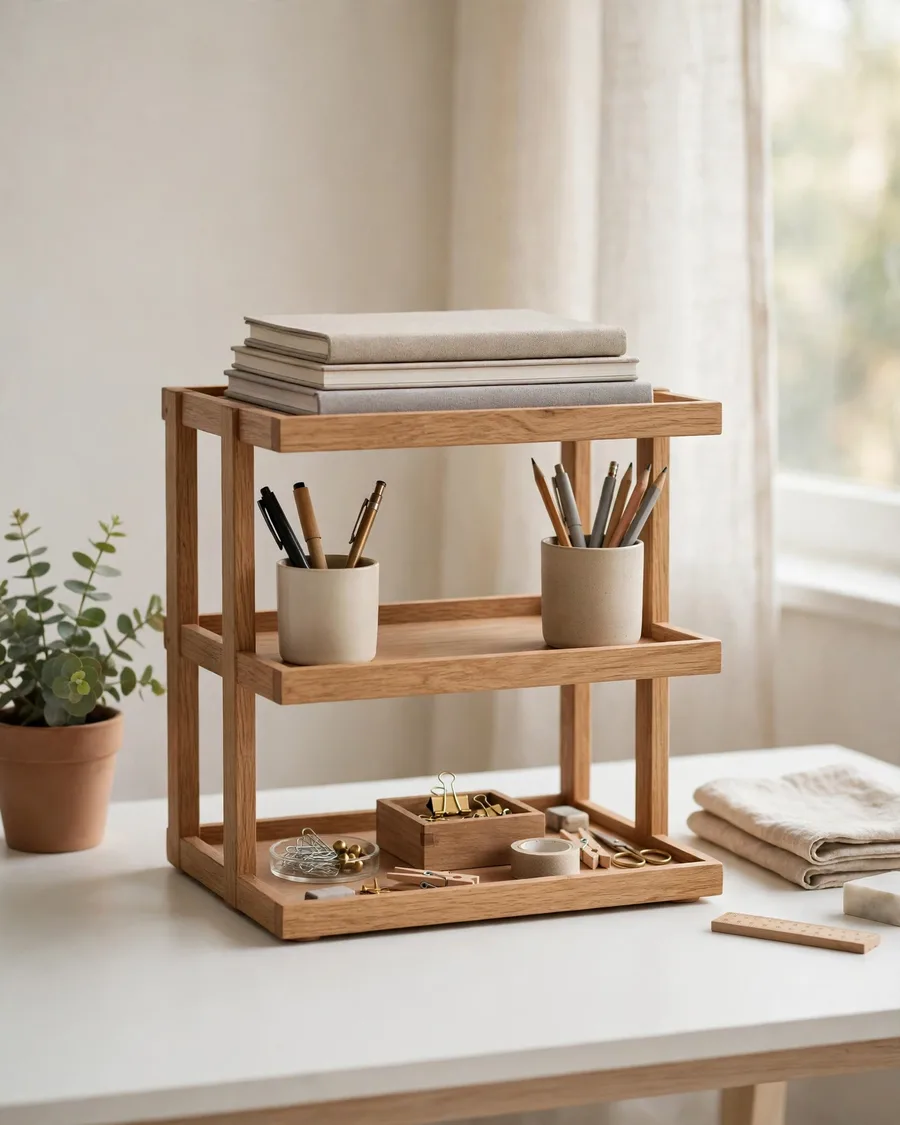
A tiered organizer stacks storage upward instead of spreading it across the desktop, which frees the surface you actually work on. Best for: desks under 48 inches wide. Styling tip: put daily items on the bottom tier and rarely used supplies up top. Pro tip: measure your monitor height first — a top tier taller than 14 inches can block a low screen.
4. A Wooden Desk Tray for Daily Essentials
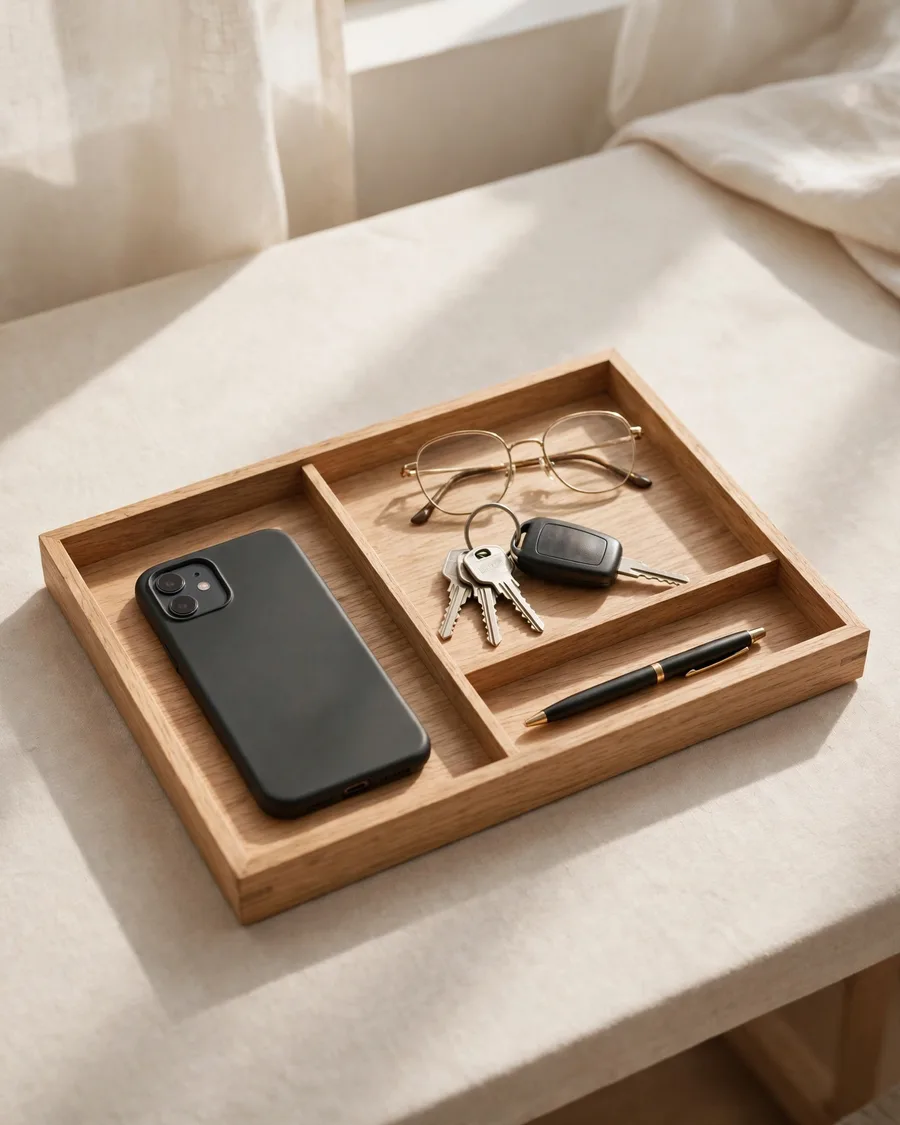
One shallow tray corrals the small things that otherwise drift across the desk — phone, keys, glasses, a pen. Best for: people who empty pockets onto the desk. Styling tip: choose a tray no deeper than 1 inch so it never becomes a junk pile. Pro tip: empty the tray every Friday; if something sat there all week untouched, it belongs somewhere else.
5. A Rotating Lazy Susan for Supplies
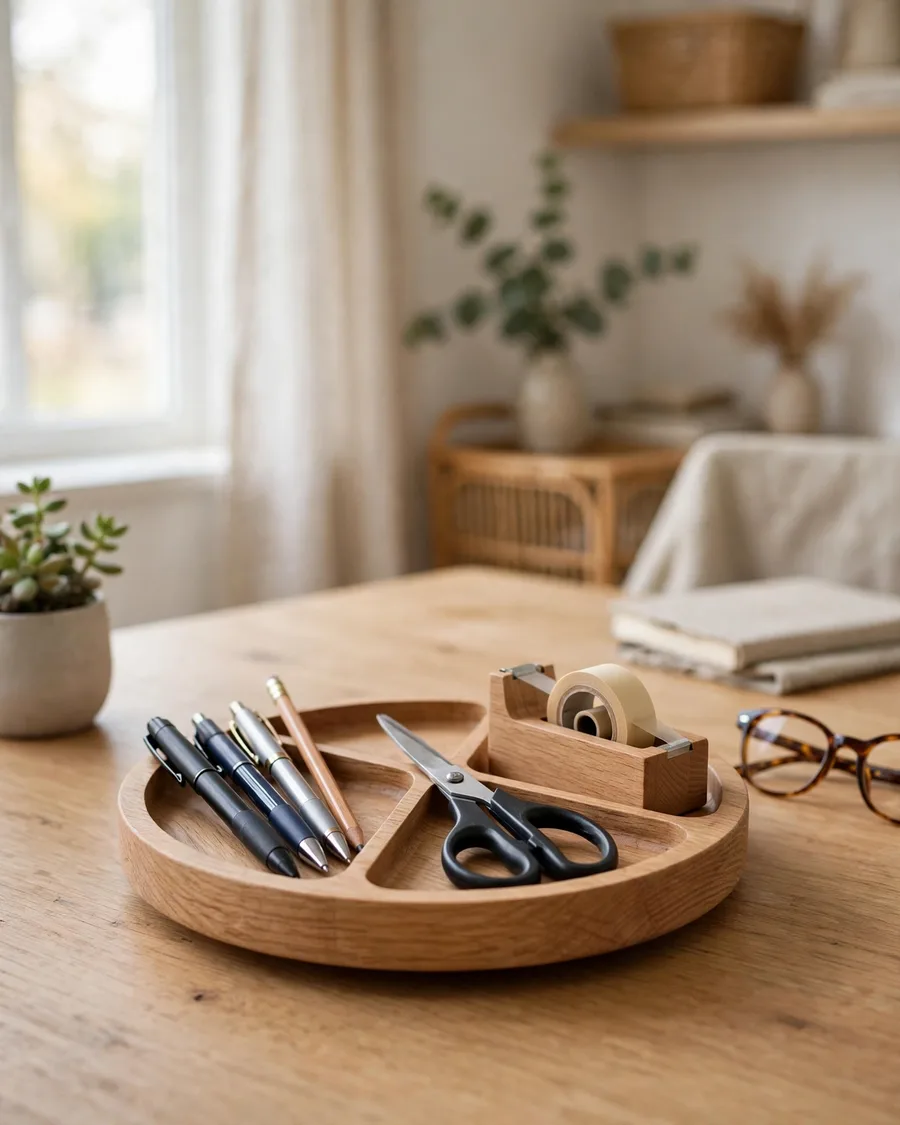
A lazy Susan turns the back of the desk into reachable storage — spin it, grab what you need, spin it back. Best for: craft supplies and shared desks. Styling tip: keep tall items in the center and short ones at the edge so nothing topples. Pro tip: a 10-inch turntable holds a full pen set without eating desk space; larger ones crowd a small desktop.
6. A Pen Cup Trio Sorted by Use
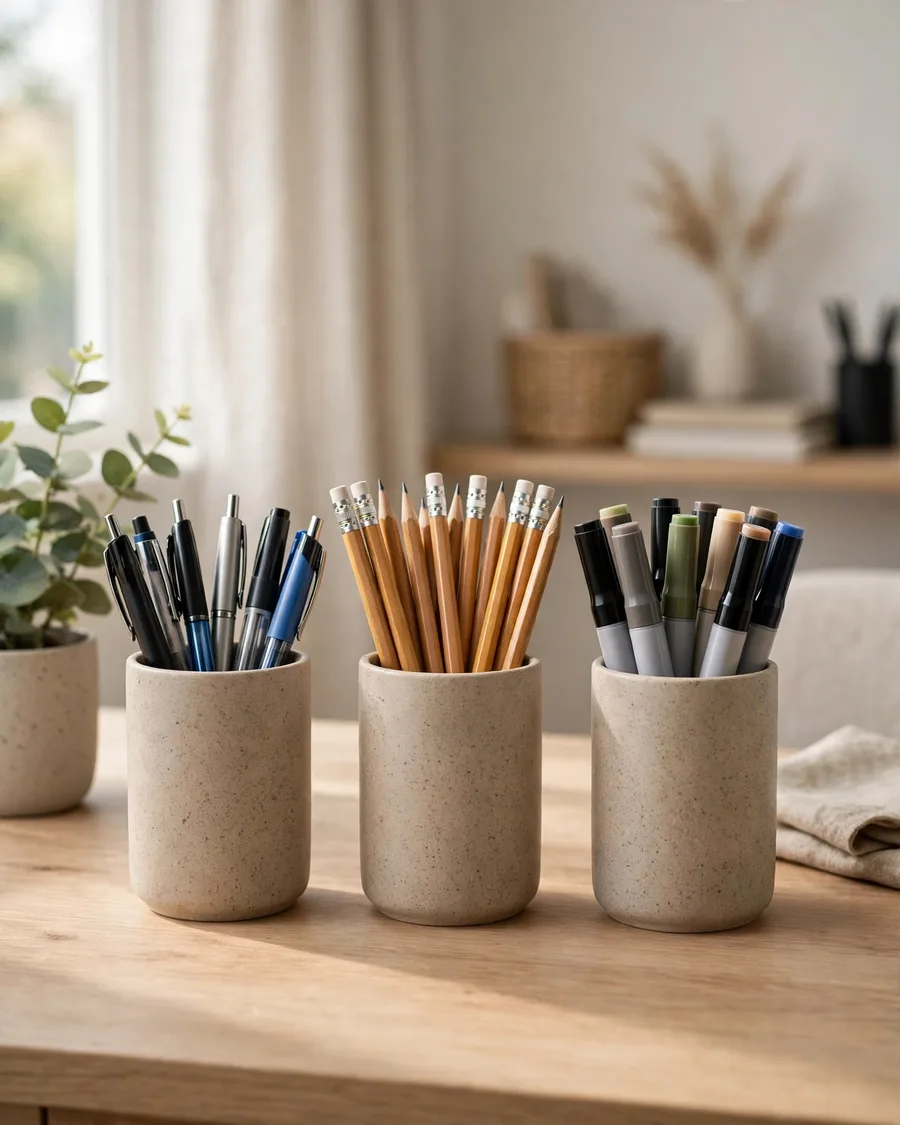
Three small cups beat one big one: sort pens, pencils and markers separately and you stop digging for the right tool. Best for: writers, students and sketchers. Styling tip: match the cups to your desk finish so they read as a set. Pro tip: cap the collection at what fits — when a cup overflows, it is time to toss dried-out pens.
7. A Small Catch-All Dish for Loose Bits
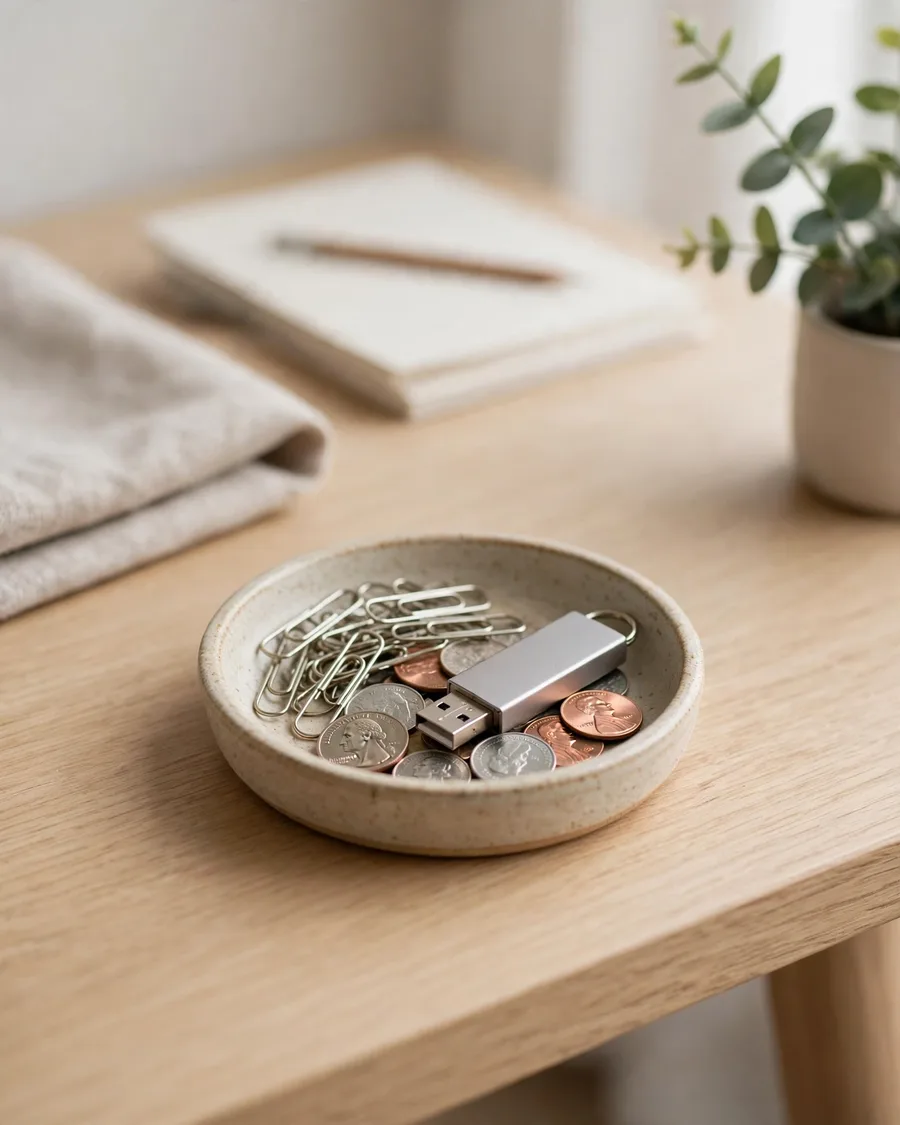
Paper clips, a USB drive, a hair tie — loose bits need one home, and a small dish is it. Best for: desks that collect tiny clutter. Styling tip: a dish under 5 inches wide stays a dish, not a dumping ground. Pro tip: sort the dish into the right drawer every Sunday; if it fills faster than weekly, you need a bigger system, not a bigger dish.
8. A Monitor Riser With Hidden Storage
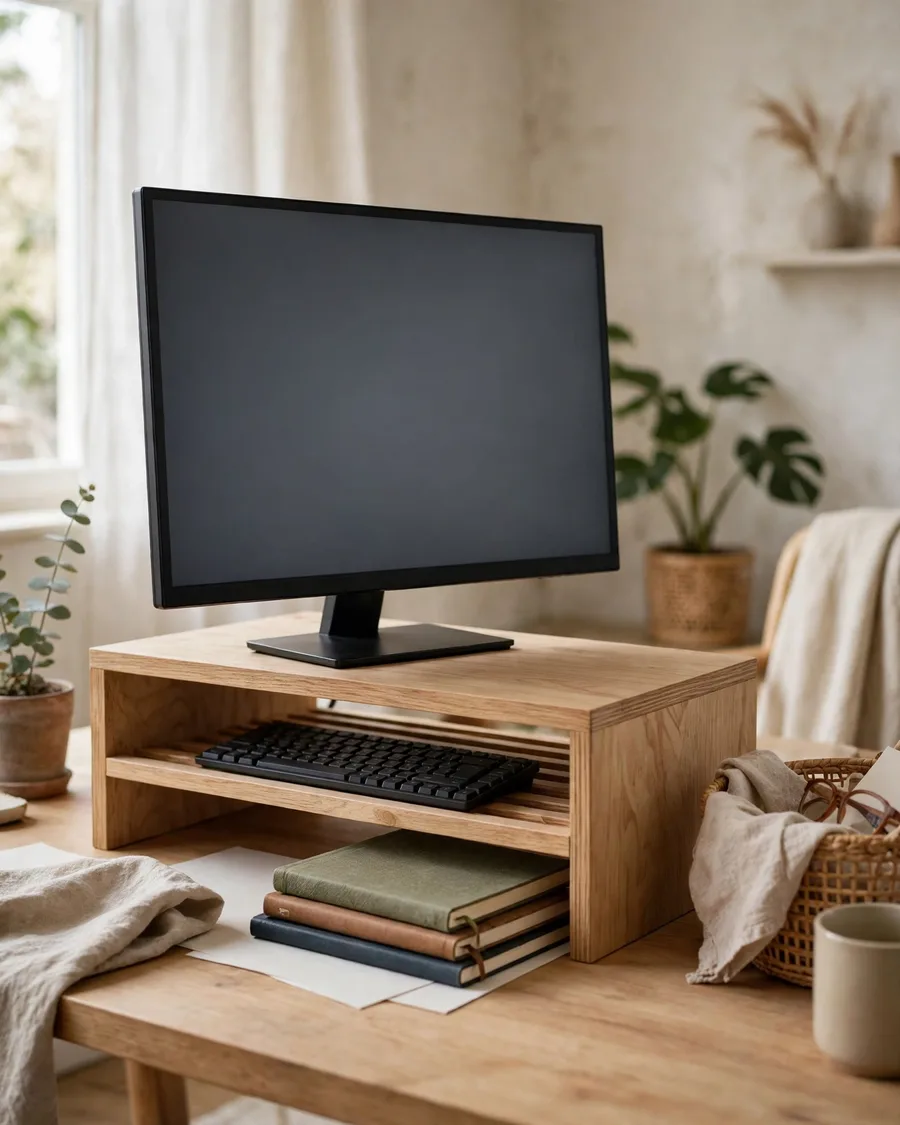
A monitor riser lifts the screen to eye level and turns the dead space underneath into a shelf for a keyboard or notebook. Best for: laptop and desktop users with neck strain. Styling tip: slide a slim notebook or sketchpad underneath when you are not using it. Pro tip: the screen top should sit at or just below eye level — a riser 3 to 5 inches high suits most adults.
Drawer and Cabinet Systems
9. Adjustable Drawer Dividers

Adjustable dividers turn one messy drawer into labeled lanes for pens, chargers and sticky notes. Best for: any desk with at least one deep drawer. Styling tip: leave one empty lane on purpose — a drawer packed edge to edge is a drawer that never stays tidy. Pro tip: spring-loaded dividers grip the drawer walls without screws and adjust from 12 to 17 inches wide.
10. A Shallow Top-Drawer Tray System
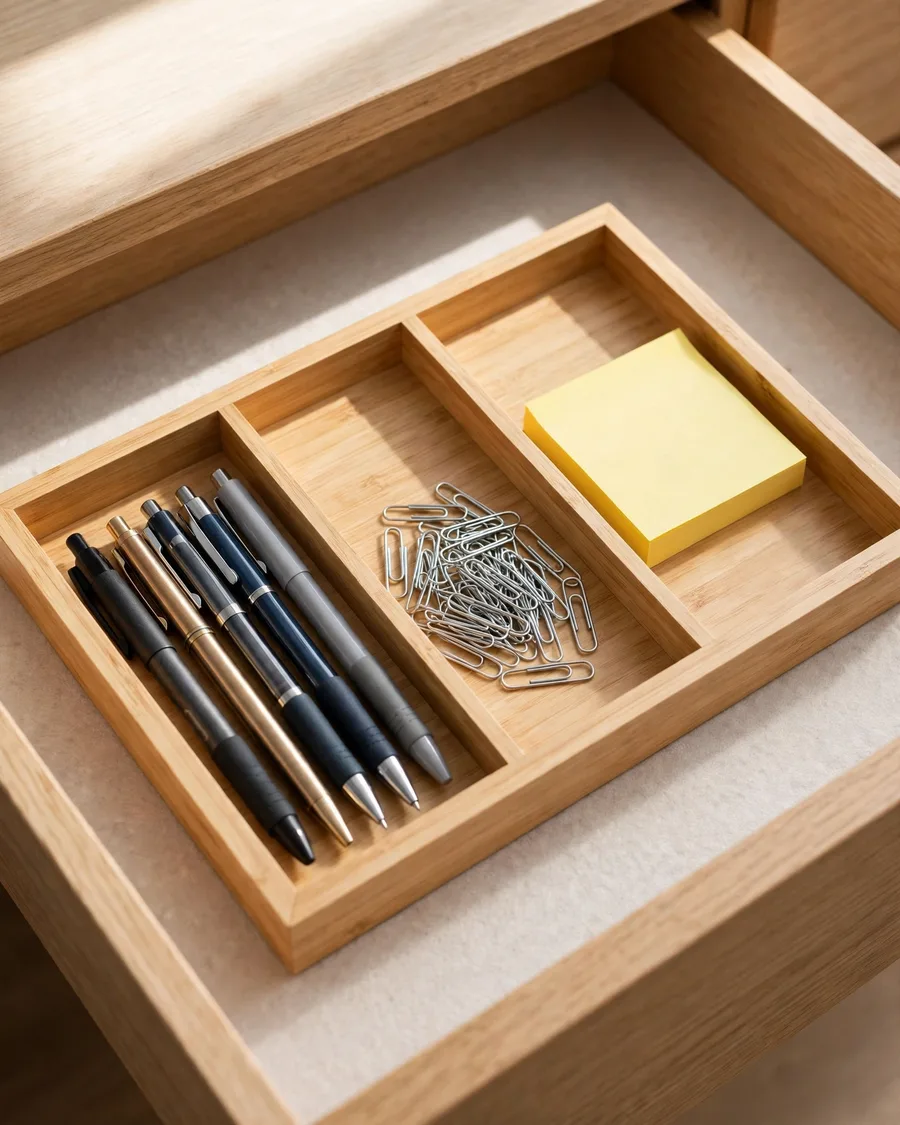
The top drawer is prime real estate, and a shallow tray keeps it from becoming a junk drawer. Best for: everyday supplies you reach for hourly. Styling tip: give each compartment one category and nothing else. Pro tip: trays 2 inches deep or less leave room below for a notebook; deeper trays waste the drawer.
11. A Labelled Drawer System
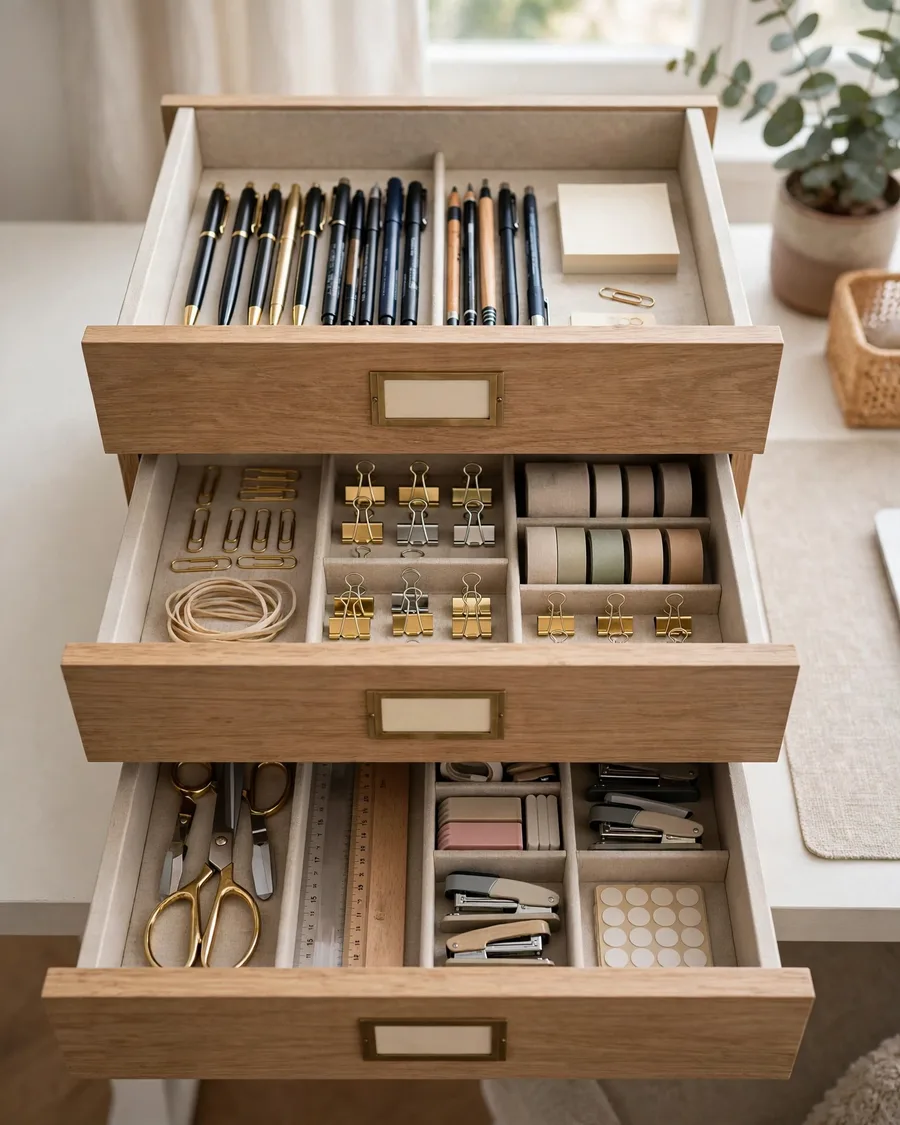
Labels turn drawers into a system anyone in the house can follow — no guessing, no rummaging. Best for: shared family desks and home offices. Styling tip: use one label style throughout so the drawers read as a set. Pro tip: label by verb, not noun — ‘File’, ‘Charge’, ‘Write’ — so each drawer has a job, not just a pile.
12. A Hanging File Sorter Inside a Drawer
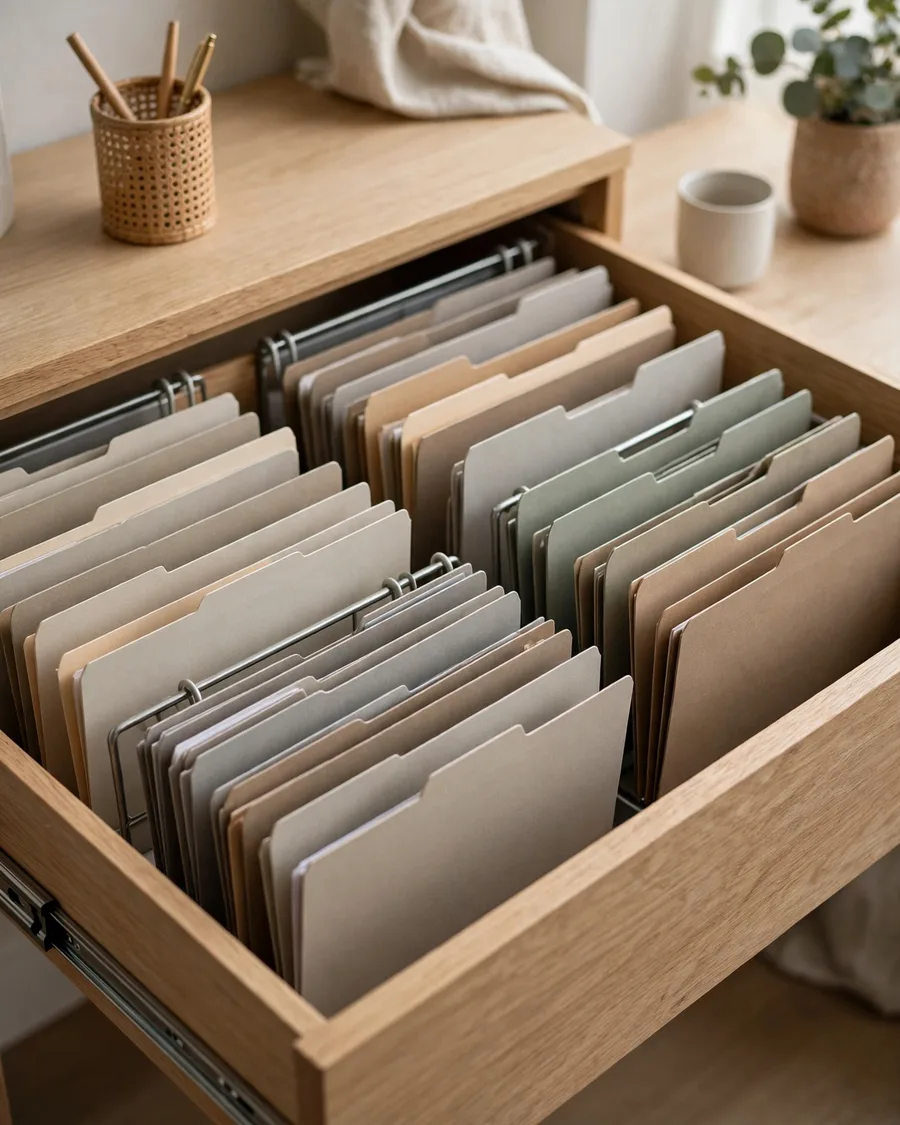
Hanging files inside a deep drawer keep active paperwork upright, visible and sorted without a separate cabinet. Best for: bills, school forms and freelance clients. Styling tip: color-code folders by category so you can spot the right one in seconds. Pro tip: standard hanging rails fit drawers 12 inches wide or more; measure the inside width before buying folders.
13. A Small Parts Box for Tiny Supplies
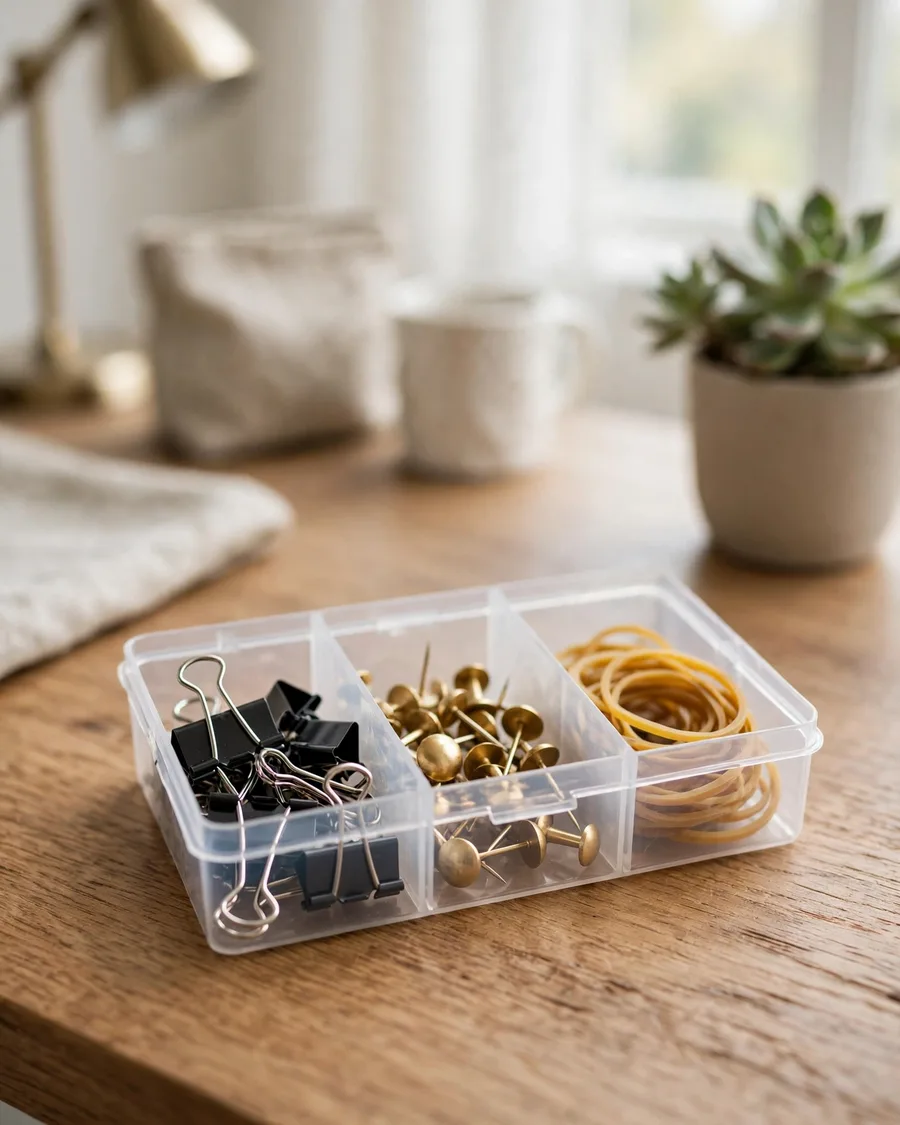
Binder clips, pins and rubber bands vanish into drawers unless they live in a compartmented box. Best for: crafters and heavy paper users. Styling tip: keep the box in the top drawer, not on the desktop, so tiny items stay out of sight. Pro tip: a box with a latched lid survives a knocked-over drawer; open trays spill everywhere.
14. A Drawer Liner That Stops Sliding
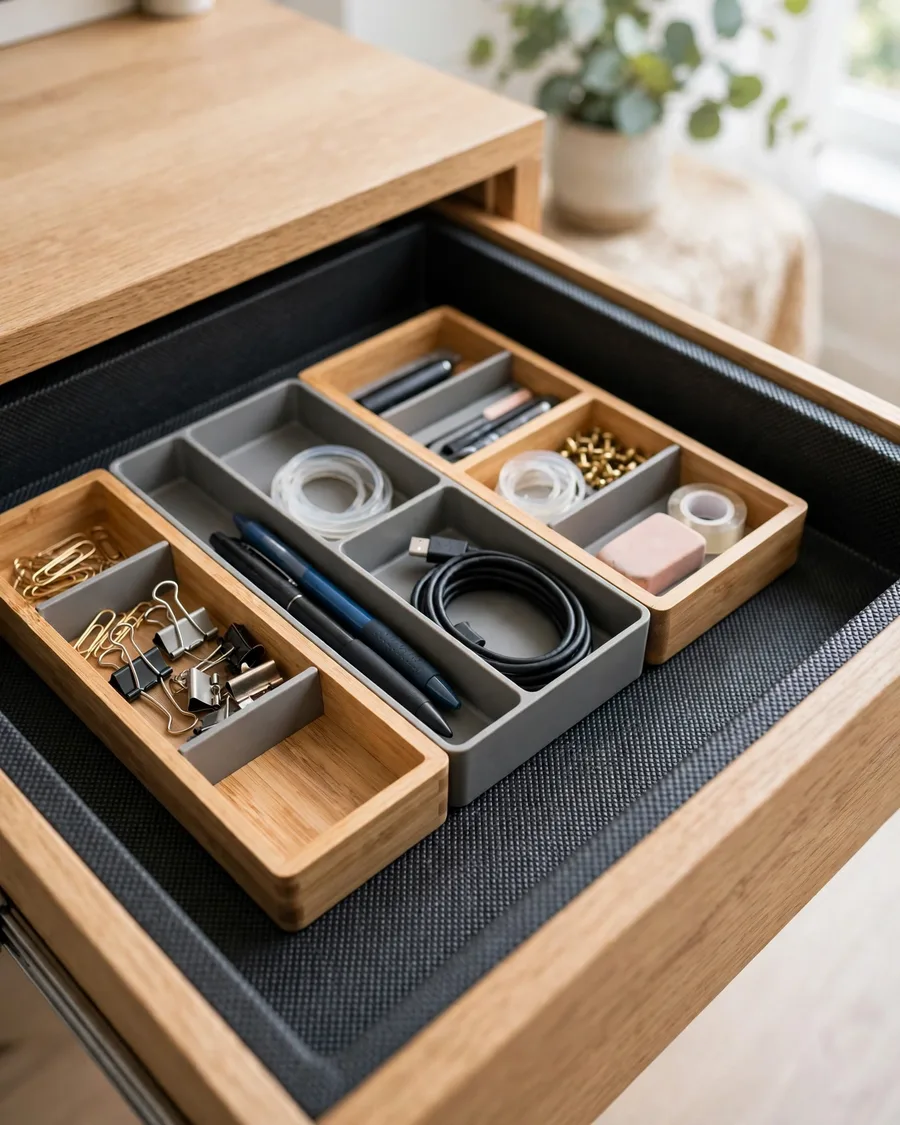
Drawer liners stop trays sliding every time you yank the drawer open, which is half of why drawers turn messy. Best for: smooth-sided drawers and metal desks. Styling tip: cut the liner a quarter inch short on each side so it lies flat without bunching. Pro tip: non-slip shelf liner costs a few dollars a roll and doubles as a grip mat under a laptop stand.
15. A Filing Cabinet on Casters Beside the Desk
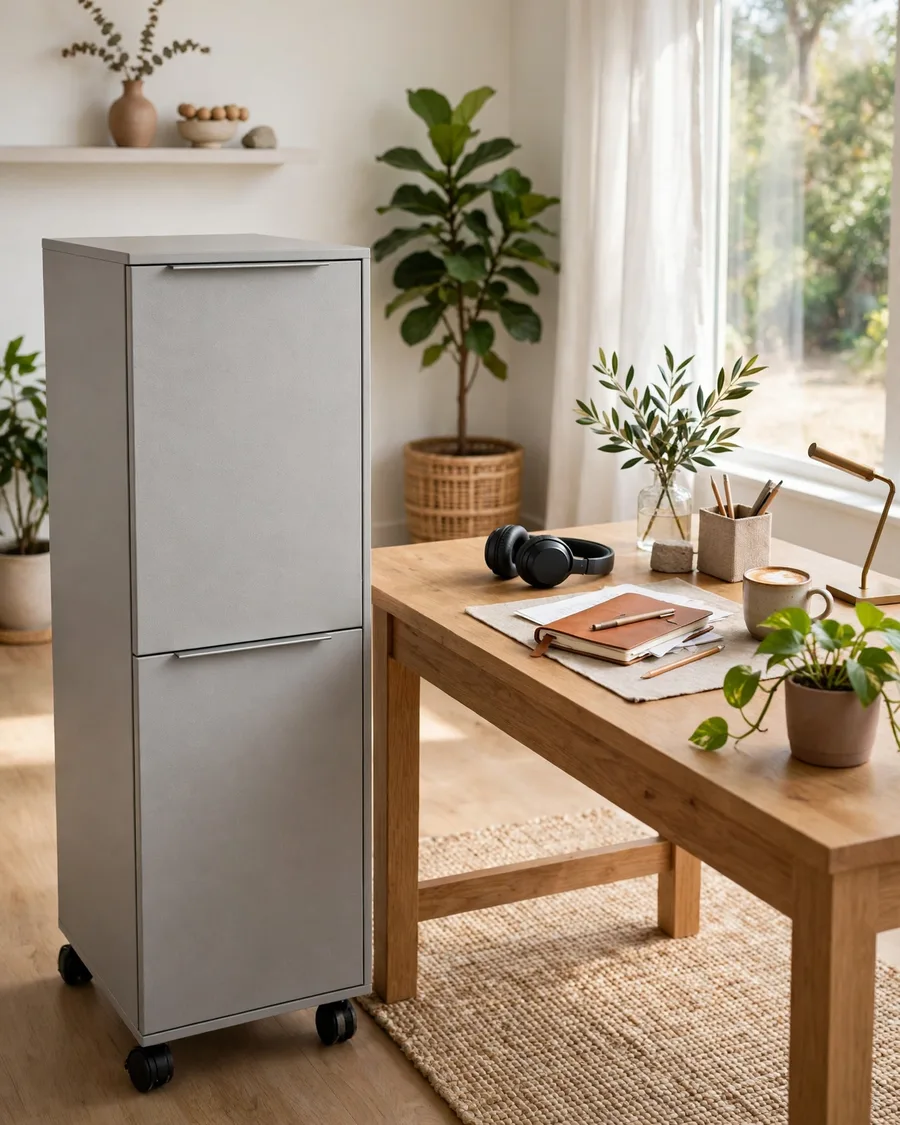
A slim cabinet on wheels parks beside the desk for files and rolls away when you need floor space. Best for: small offices with no closet storage. Styling tip: match the cabinet finish to the desk legs so it reads as furniture. Pro tip: a 15-inch-wide cabinet holds letter files and fits most desk gaps; lock the casters once it is parked.
Wall and Vertical Storage
16. A Pegboard Above the Desk
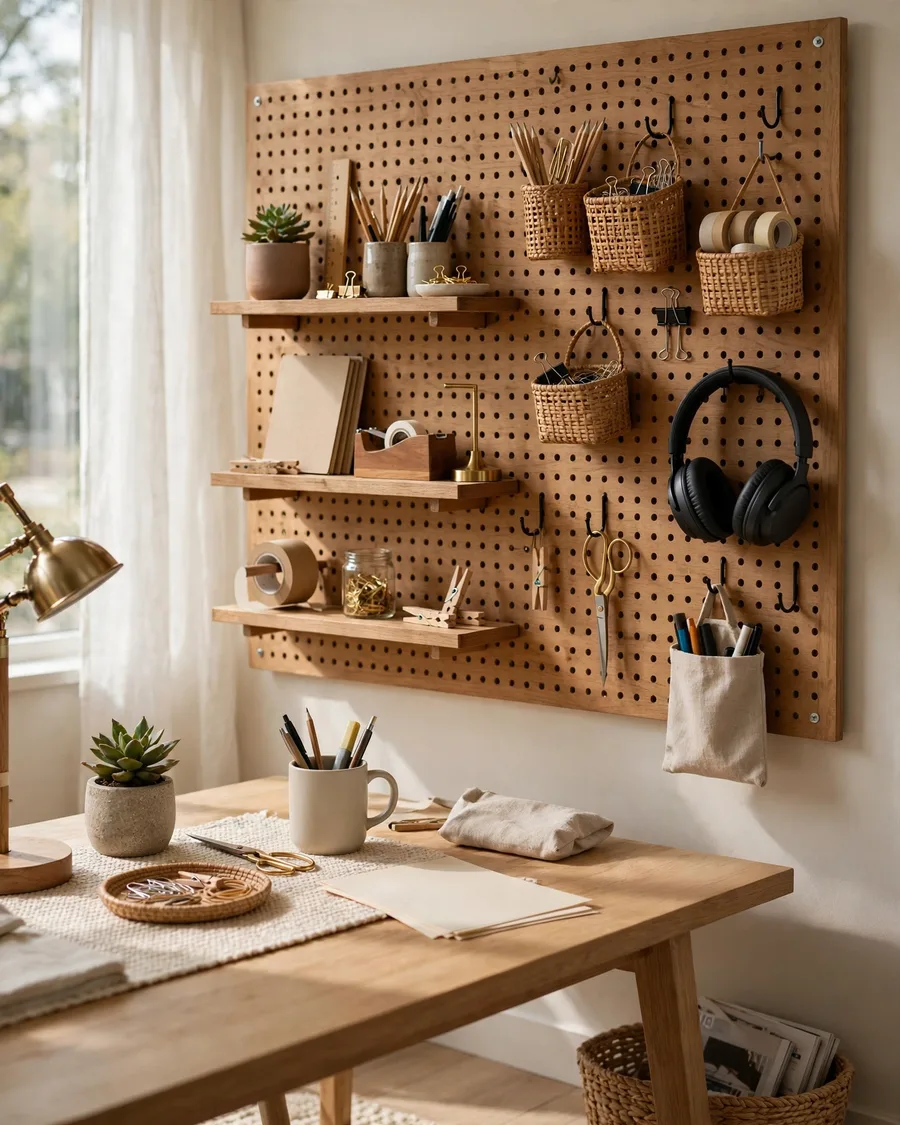
A pegboard turns the wall above your desk into flexible storage — hooks, baskets and shelves move wherever you need them. Best for: renters who can hang one board and crafters with lots of tools. Styling tip: leave a third of the board empty so it never looks crowded. Pro tip: mount the board 18 inches above the desktop so tall items on the desk never bump the lowest hooks.
17. Two Floating Shelves Above the Desk

Two floating shelves lift books and supplies off the desktop and put them at eye level where you can actually find them. Best for: small desks with no drawer space. Styling tip: keep the lower shelf for daily items and the upper one for reference books. Pro tip: shelves 8 inches deep hold books without jutting into your headspace; anchor them into studs, not just drywall.
18. A Wall-Mounted File Pocket Rail
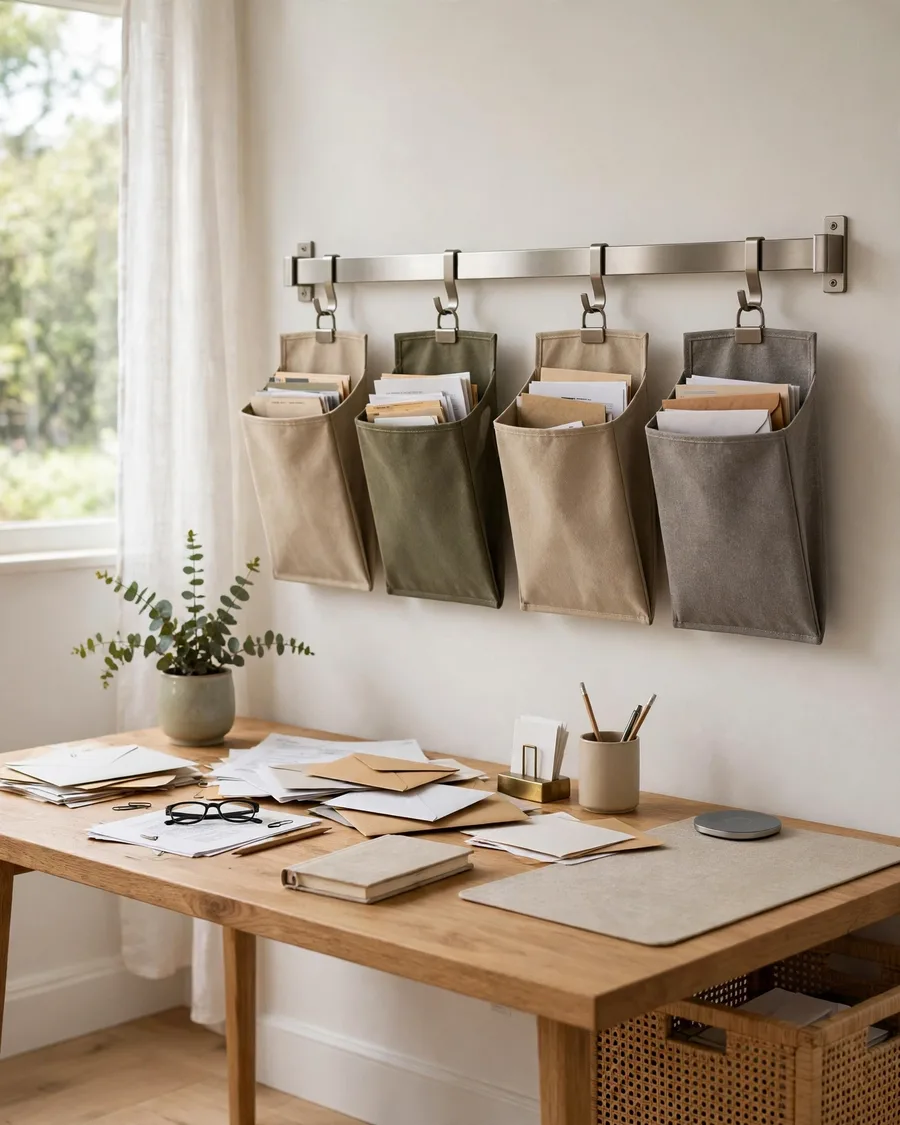
A rail of hanging file pockets keeps incoming mail and active papers off the desktop and in plain sight. Best for: households drowning in paper. Styling tip: limit it to three pockets — in, pending, out — so paper cannot pile up unnoticed. Pro tip: mount the rail at shoulder height when seated, about 48 inches from the floor.
19. A Corkboard Command Center
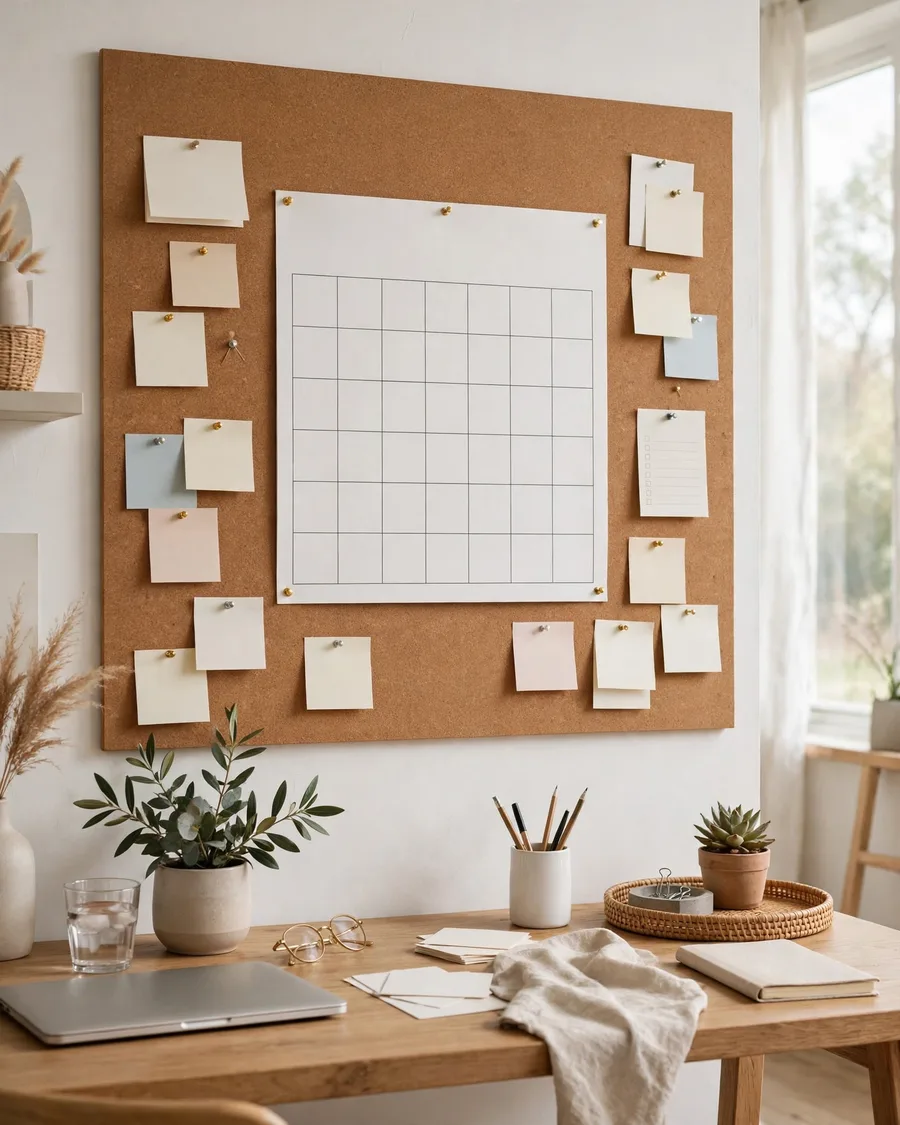
A corkboard command center holds the calendar, deadlines and reminders where you cannot ignore them. Best for: students and anyone juggling multiple projects. Styling tip: frame the board to match your desk and it reads as decor, not clutter. Pro tip: clear the board on the first of every month; anything still pinned after 30 days is either done or not a priority.
20. A Magnetic Strip for Metal Tools
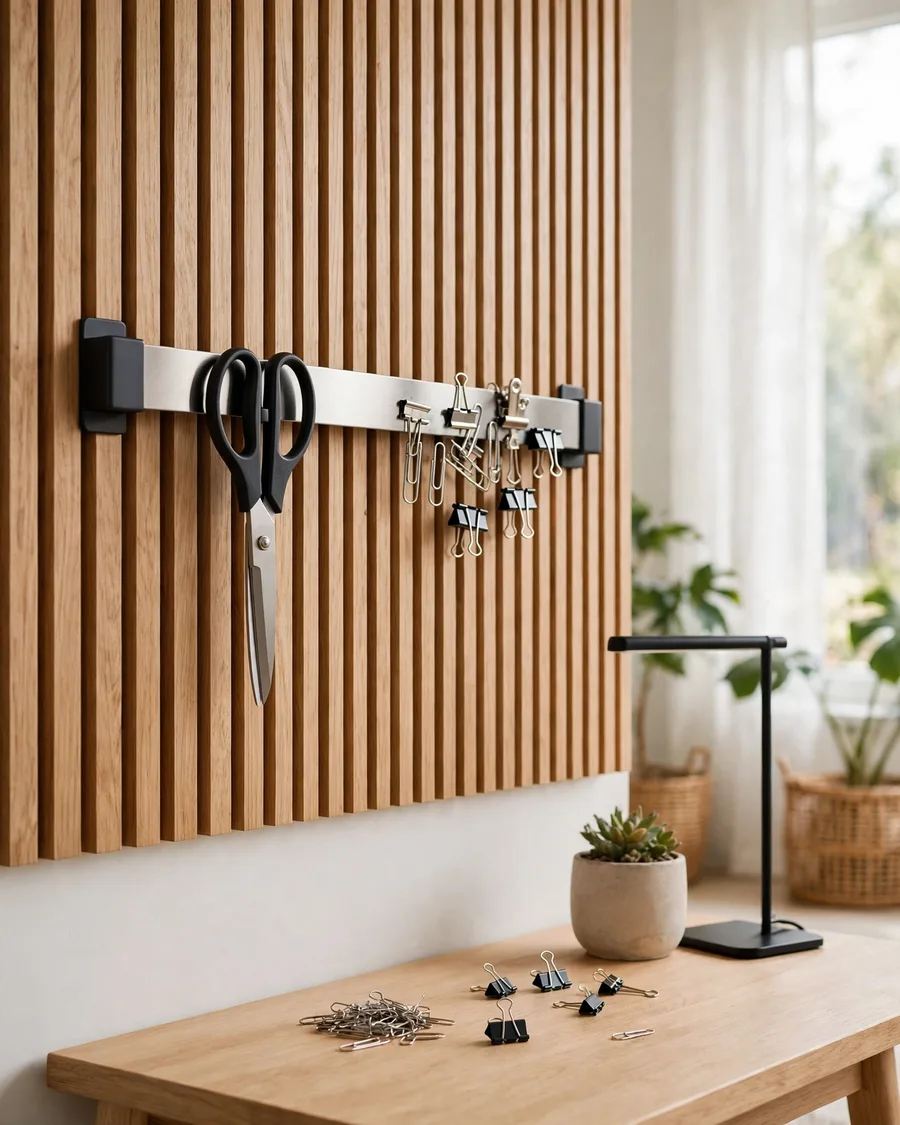
A magnetic strip on the wall grabs scissors, binder clips and metal rulers, freeing a whole drawer. Best for: craft desks and workshops. Styling tip: mount it at arm’s reach on the side wall, not behind the monitor. Pro tip: a 12-inch strip holds a surprising amount; test the magnet strength first, since cheap strips drop heavy scissors.
21. A Hanging Rail With Hooks and Cups
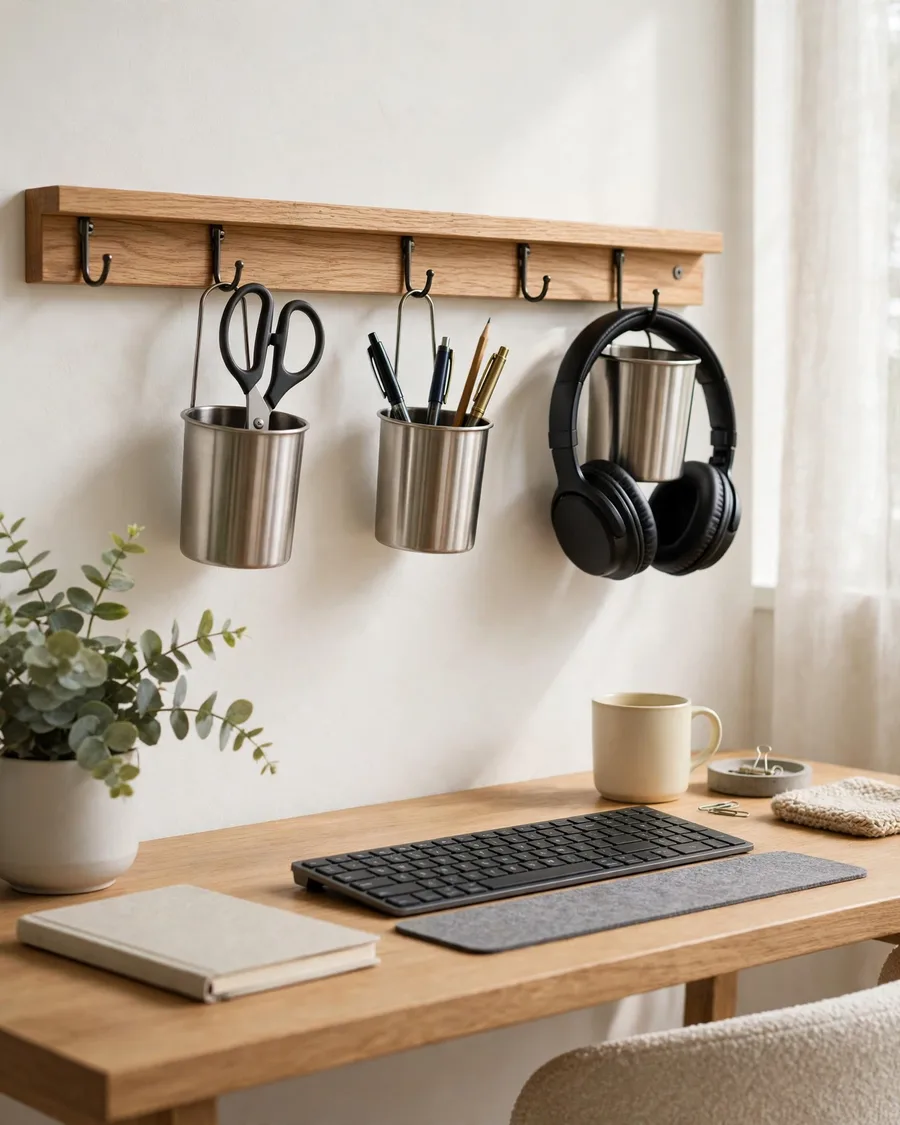
A kitchen-style rail with hooks and hanging cups stores headphones, scissors and cables on the wall instead of the desk. Best for: tiny desks with zero drawer space. Styling tip: keep the rail to one row and the cups small so the wall stays calm. Pro tip: S-hooks let you rearrange cups in seconds, and a rail 24 inches long fits most desk widths.
22. A Wall-Mounted Paper Sorter
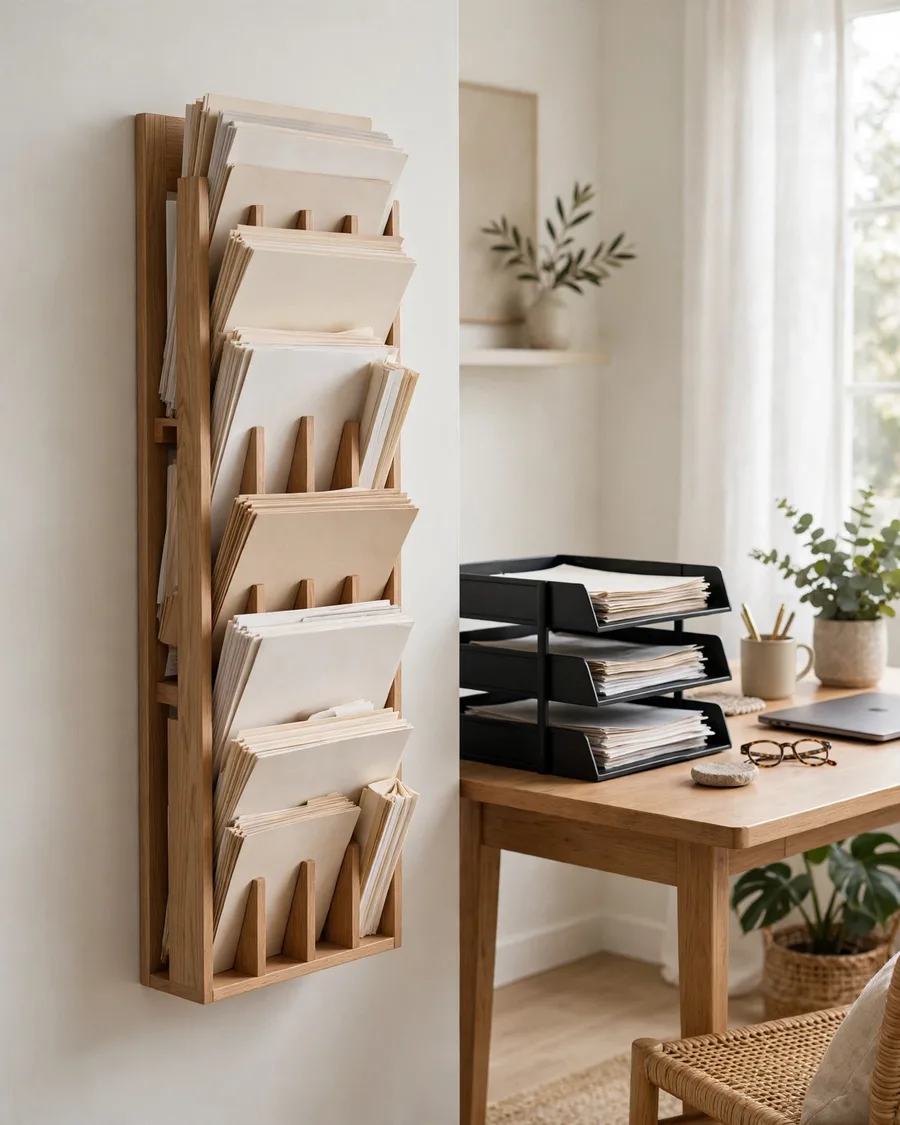
A wall-mounted sorter files paper vertically, so stacks never topple and each category has its own slot. Best for: teachers and anyone with weekly paperwork. Styling tip: put it on the wall beside the desk, not above it, so papers slide in without reaching. Pro tip: five slots is the sweet spot — more than that and paper sits forgotten in the bottom ones.
Cables, Tech and Paper Flow
23. A Cable Tray Under the Desk
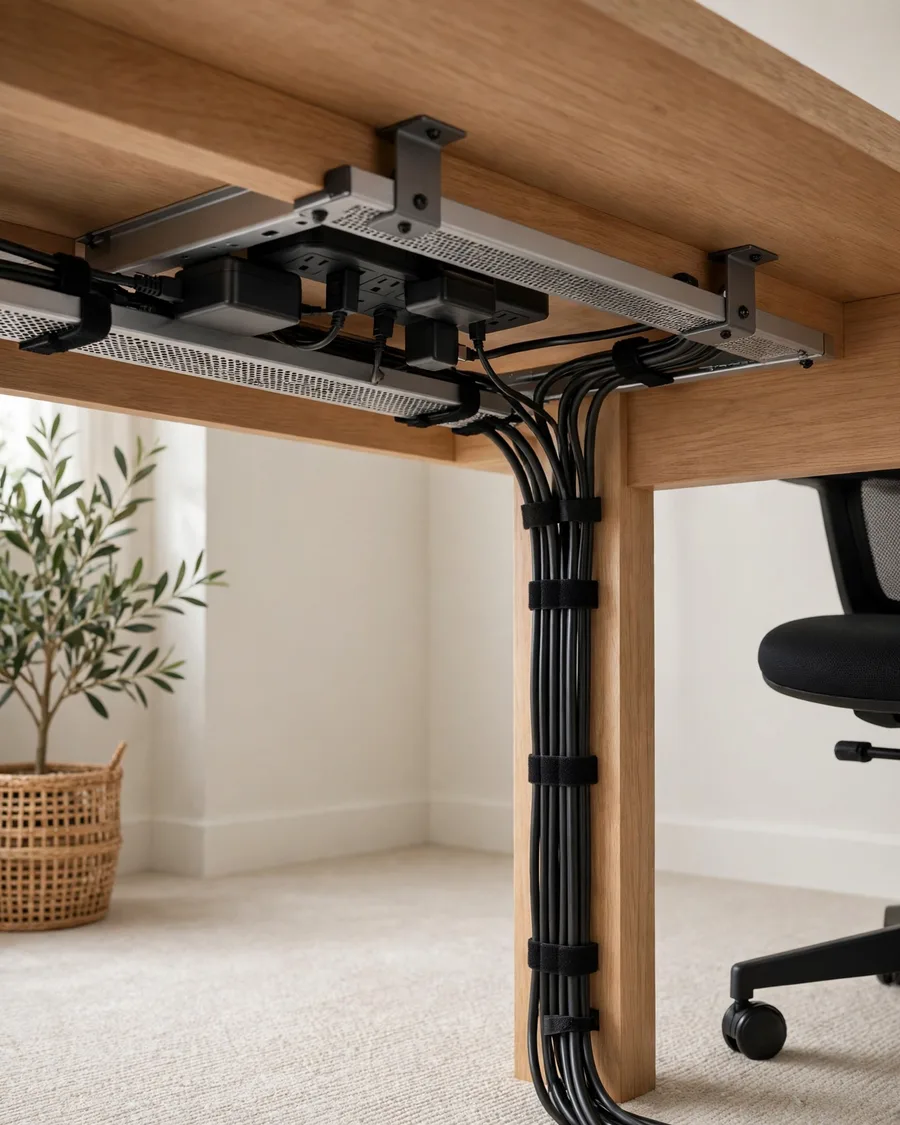
A cable tray screwed under the desktop hides the power strip and cords completely, so the floor stays clear and dust-free. Best for: desks with a monitor, laptop and lamp. Styling tip: route cables through the tray before plugging anything in — it is ten times easier. Pro tip: a tray 16 inches long holds a six-outlet strip; leave two inches of slack in each cable so plugs never strain.
24. A Labelled Cable Clip Row
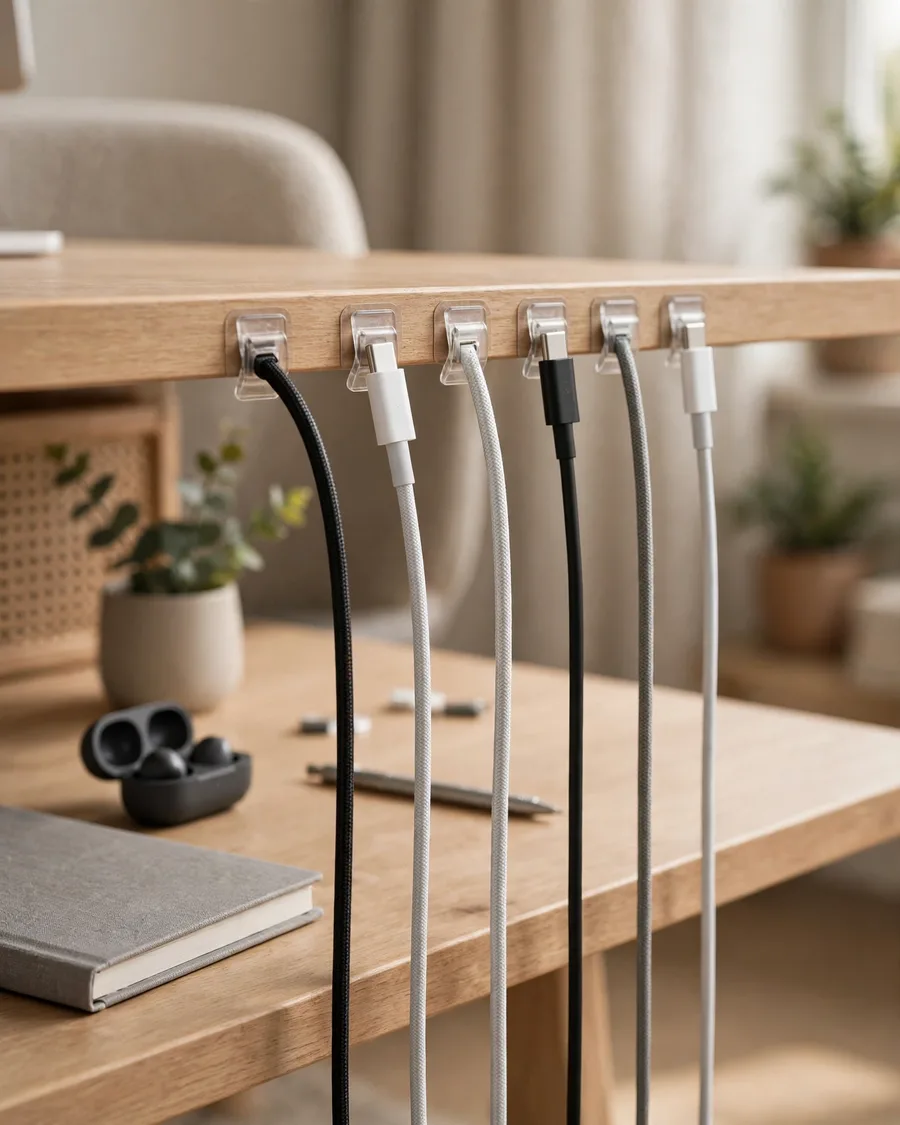
A row of adhesive clips along the back edge keeps every charging cable exactly where your hand expects it. Best for: phone, tablet and laptop chargers. Styling tip: space clips 4 inches apart so cables never tangle. Pro tip: label each clip with the device it serves — a strip of masking tape works — so guests never unplug the wrong charger.
25. A Power Strip Mounted Under the Desk
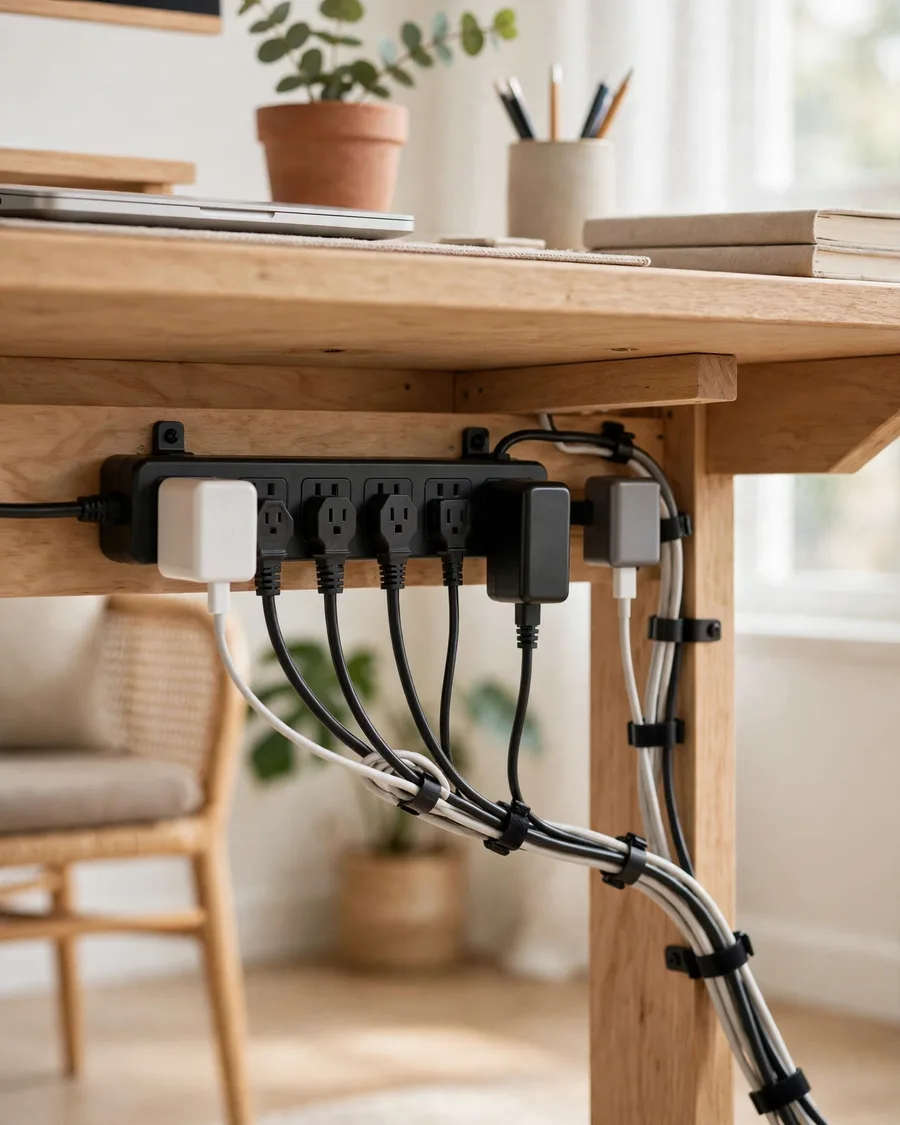
Mounting the power strip under the desktop frees the floor, hides the bulky plugs and makes one switch reach everything. Best for: standing desks and shared workstations. Styling tip: face the outlets downward so dust cannot settle in them. Pro tip: use a strip with a 6-foot cord and a flat plug, so the desk can still sit close to the wall.
26. A Charging Station in a Drawer
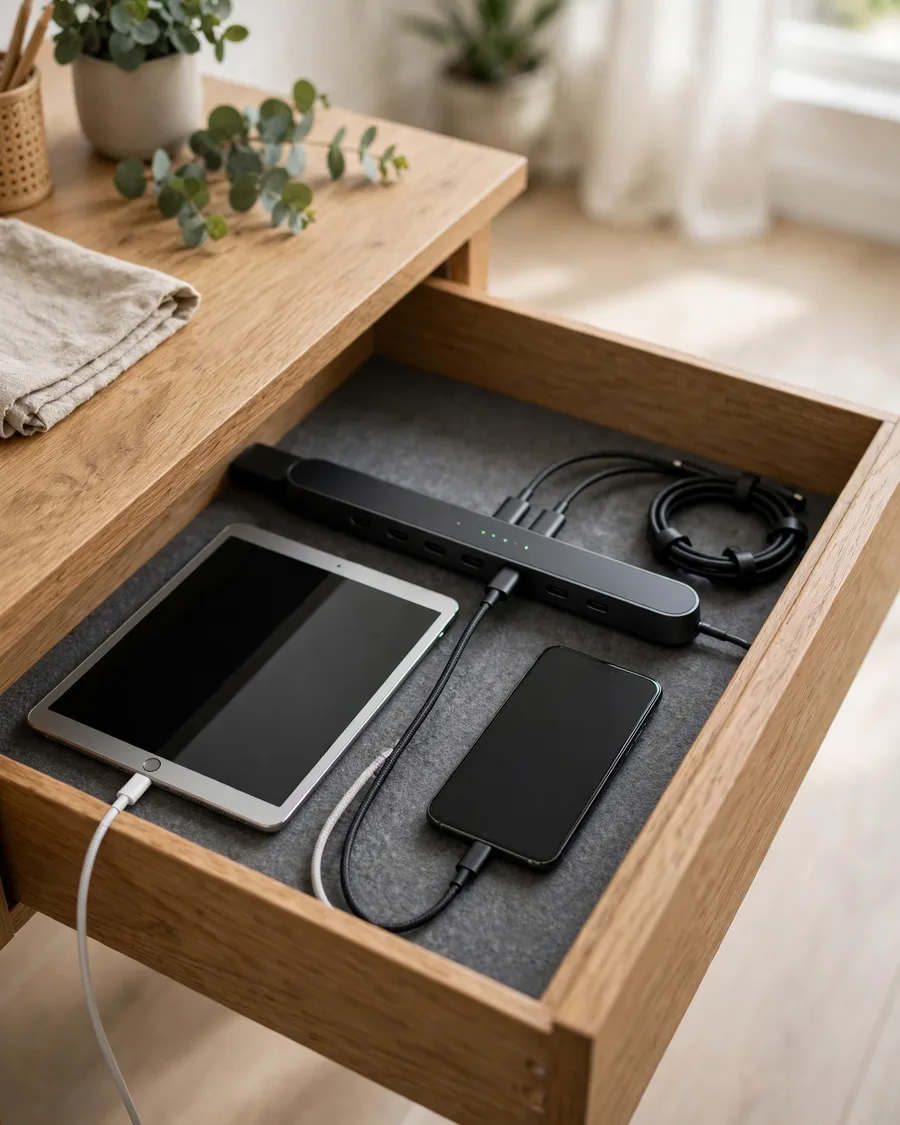
A charging drawer hides phones and tablets while they charge, so the desktop stays clear and cables stay out of sight. Best for: families sharing one desk. Styling tip: drill the cable hole at the back of the drawer so the front stays clean. Pro tip: use a short USB hub inside the drawer and never charge a swollen or damaged battery in a closed drawer.
27. A Docking Station Tray
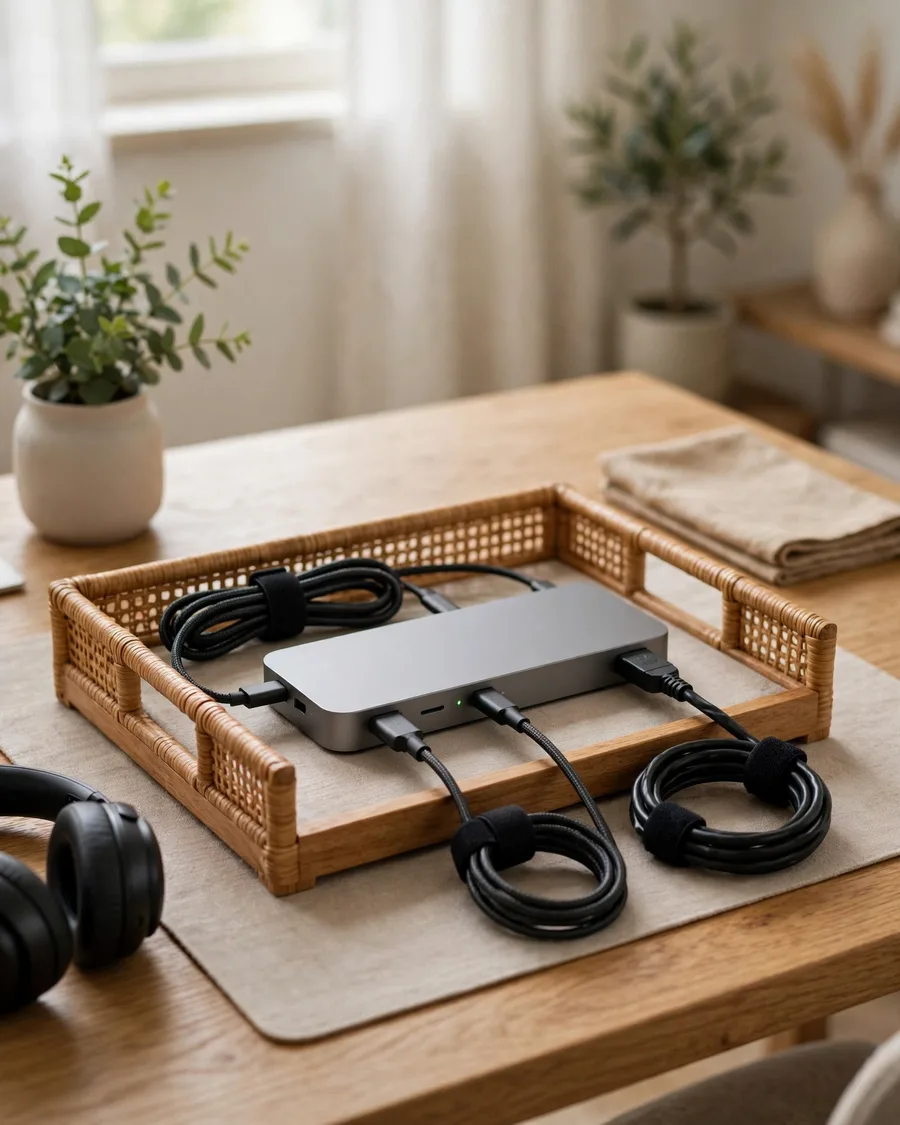
A docking tray gives your laptop one plug-in point, so a single cable connects monitor, keyboard and power. Best for: hybrid workers who carry the laptop away daily. Styling tip: keep the tray at the back of the desk so the dock never eats work space. Pro tip: label the dock’s ports once with a marker — after a month you will forget which cable goes where.
28. A Three-Tray Paper Flow System
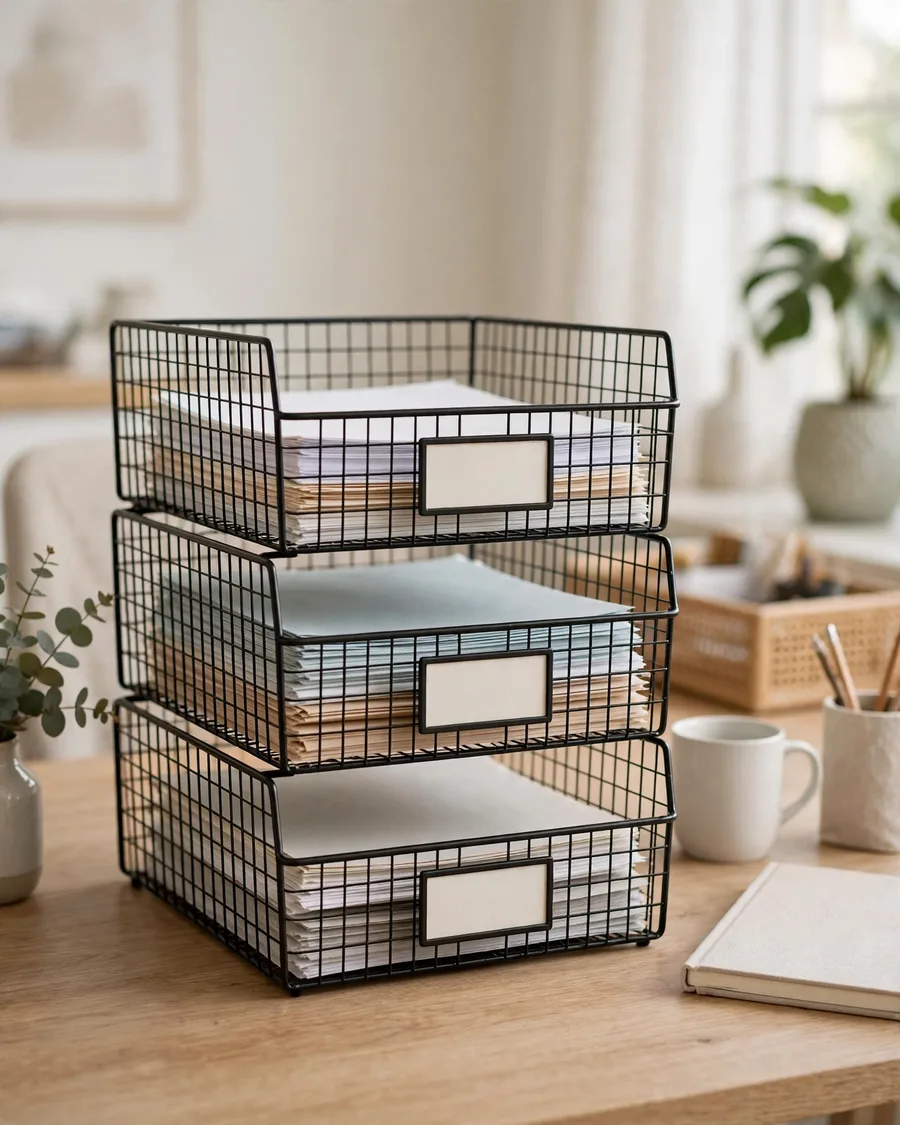
Three trays — in, doing, done — give every paper a next step, so piles stop forming on the desktop. Best for: mail, homework and freelance admin. Styling tip: keep the trays vertical if desk space is tight; stacked trays hide the bottom pile. Pro tip: empty the ‘done’ tray every Friday into files or recycling, or it quietly becomes a fourth pile.
29. A Desktop File Holder for Active Projects
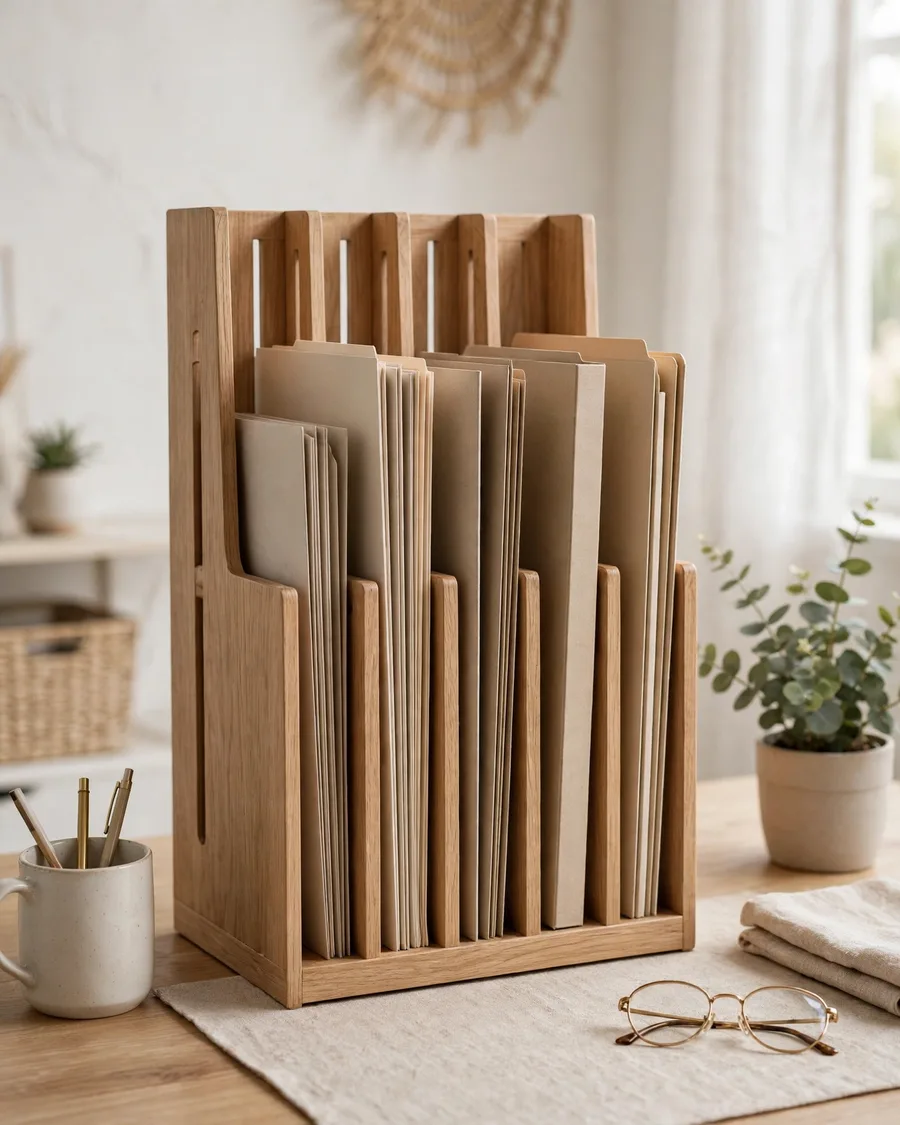
An upright file holder keeps active projects standing, visible and separate from reference material. Best for: anyone juggling two or three projects at once. Styling tip: one folder per project, and never more than five folders — the sixth means a project should be paused or filed. Pro tip: step the folders so the front tabs show; a flat row hides everything behind the first folder.
Budget, Small-Space and Daily Habits
Small desks and tight budgets need smarter systems, not more stuff. If money is tight, our home office ideas on a budget show how to stretch every dollar across the whole room — the ideas below do the same for the desktop itself.
30. A Rolling Cart That Parks Beside the Desk
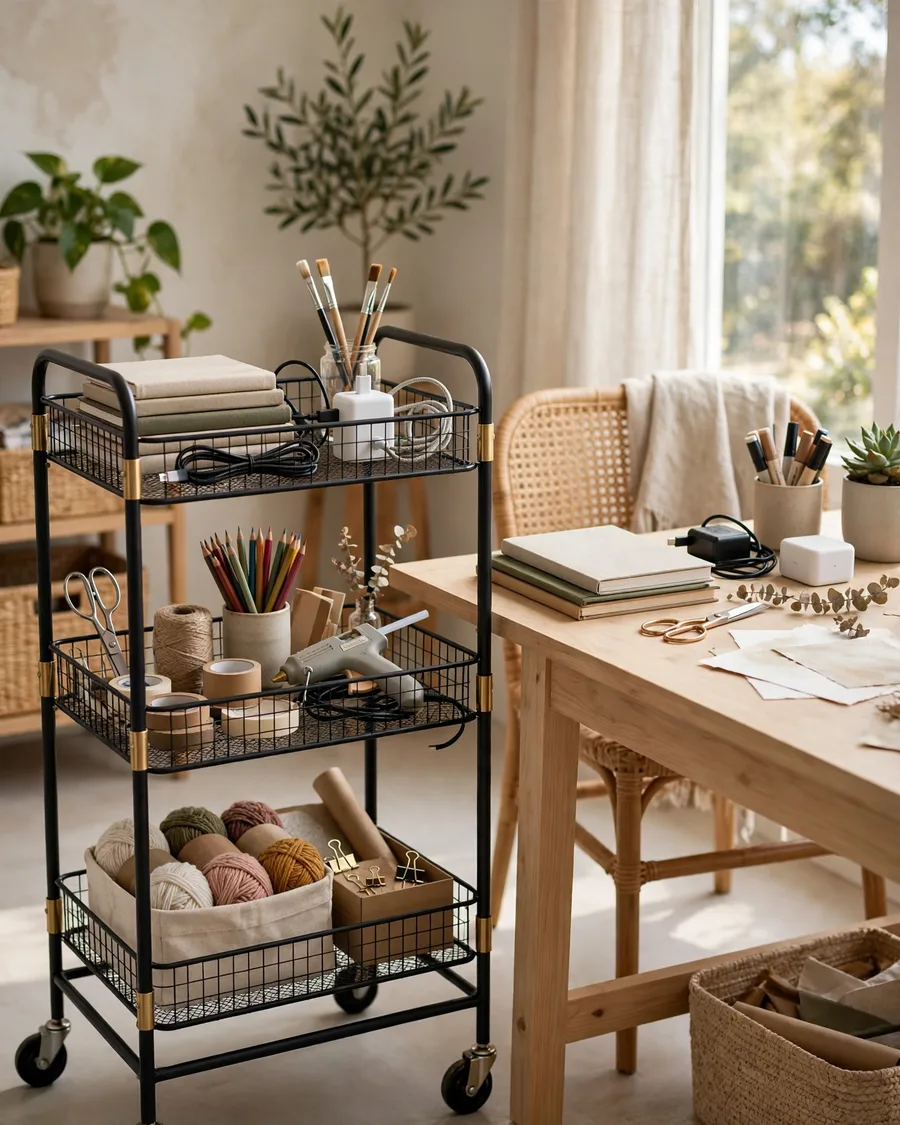
A three-tier rolling cart is a portable drawer unit — supplies roll to the desk when you work and park away when you do not. Best for: renters and multi-use rooms. Styling tip: assign one tier per category so the cart never turns into a junk shelf. Pro tip: a cart 17 inches wide slides beside most desks; check the gap first, since carts come in fixed widths.
31. A Dollar-Store Bin System
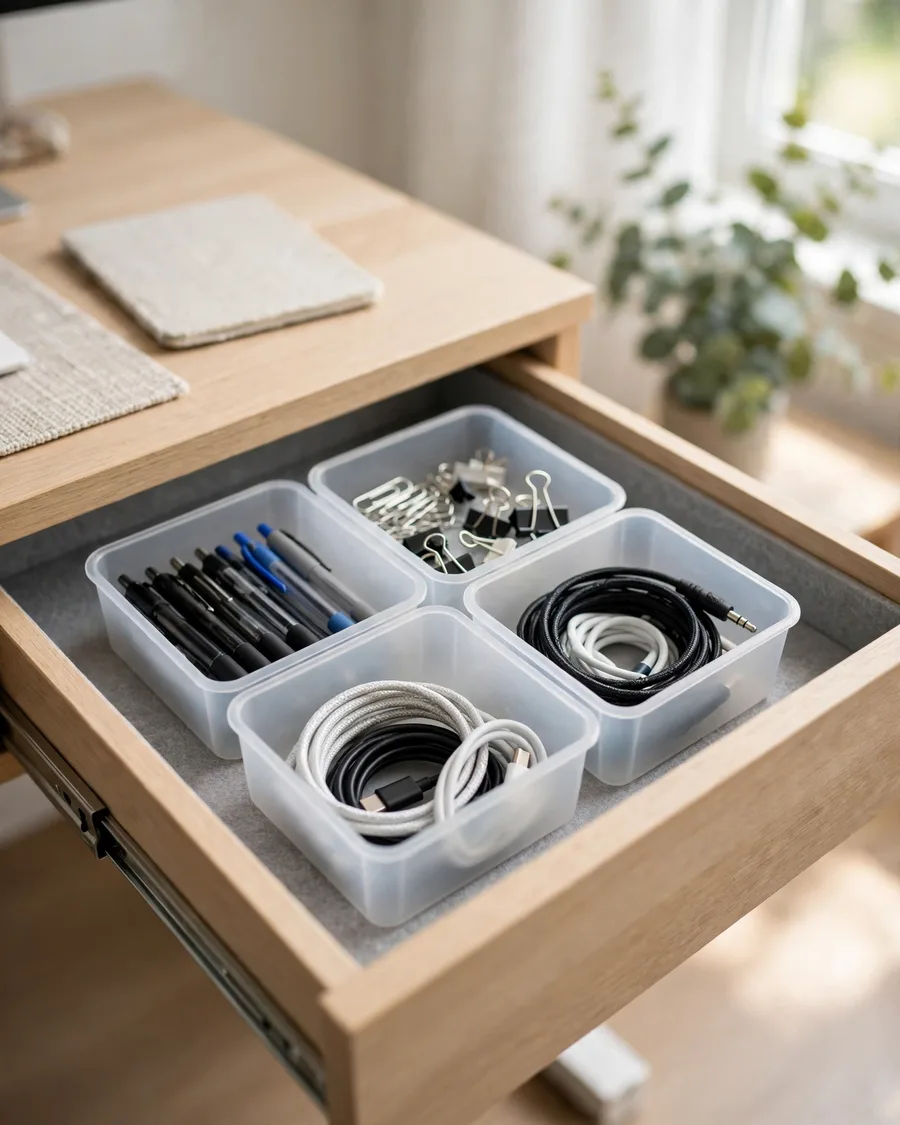
Small bins from the dollar store do the same job as fancy organizers for a fraction of the price. Best for: first apartments and tight budgets. Styling tip: buy one matching set so the drawer reads intentional, not improvised. Pro tip: measure the drawer first and take a tape measure to the store — bins that are a quarter inch too wide simply will not fit.
32. A Repurposed Kitchen Organizer in the Drawer
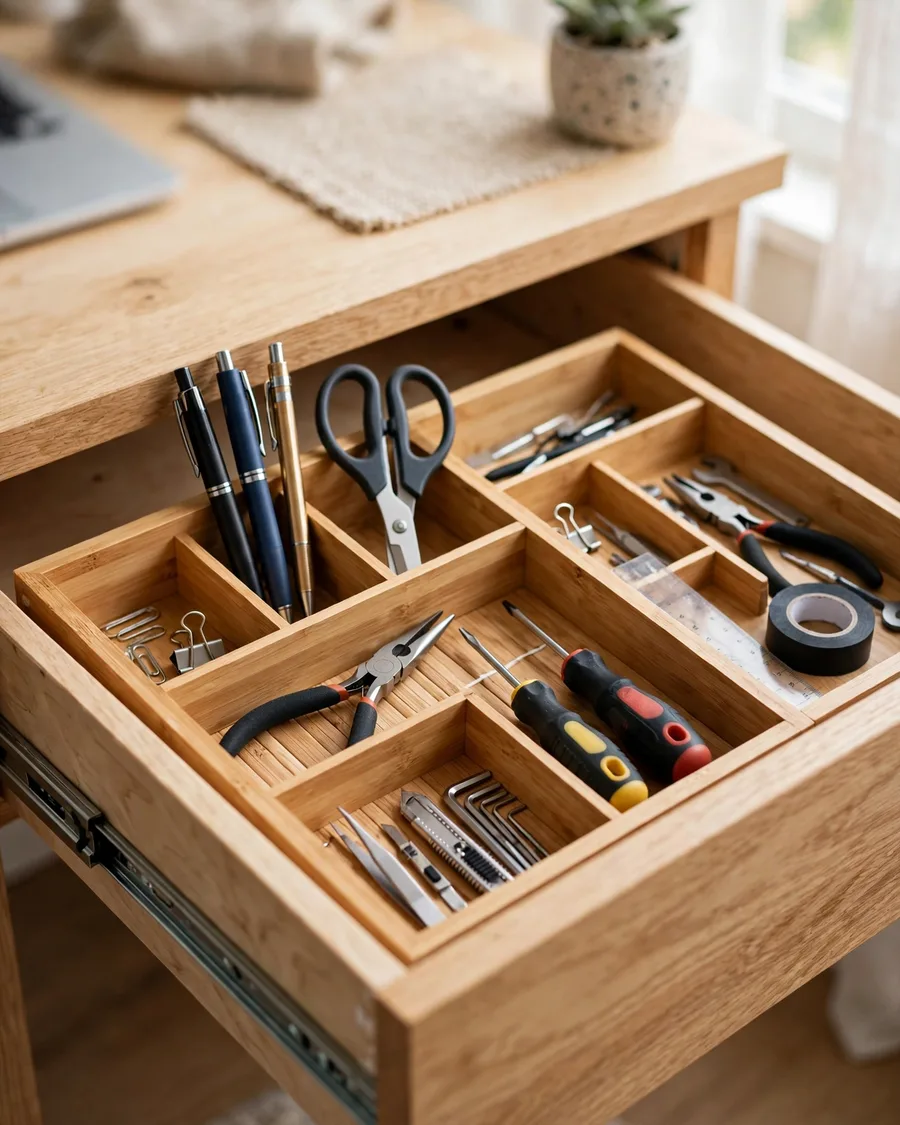
A bamboo cutlery tray costs less than a desk organizer and fits pens, scissors and rulers perfectly. Best for: budget setups and small drawers. Styling tip: use the long slots for rulers and the small squares for clips. Pro tip: kitchen trays come in expandable widths from 13 to 19 inches, so one tray can fit almost any drawer.
33. A Binder-Clip Cable Hack
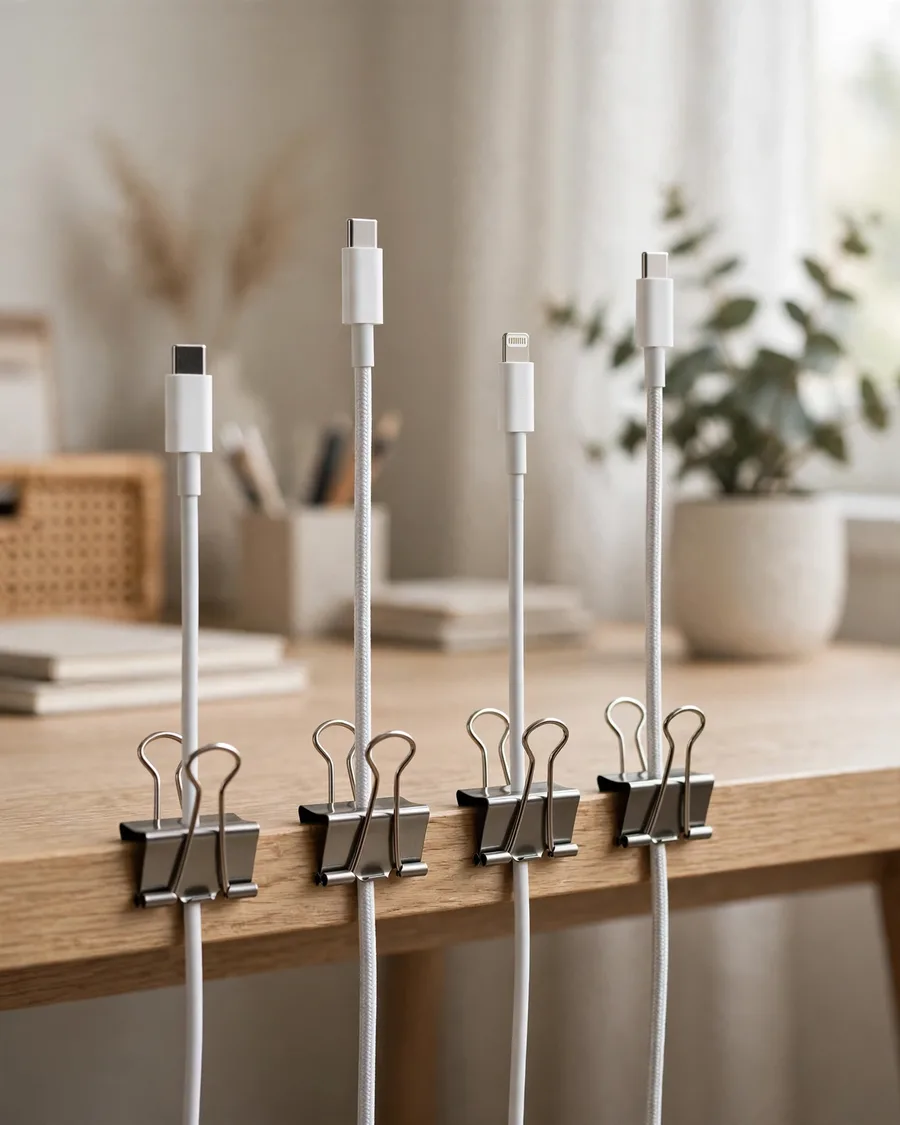
A large binder clip clamped to the desk edge holds a charging cable upright, so it never slides to the floor. Best for: renters and zero-budget fixes. Styling tip: use black clips on a dark desk so they disappear. Pro tip: thread the cable through the clip’s metal arms, not the body — the arms grip the cable without pinching it.
34. A Vertical File Holder for Small Desks
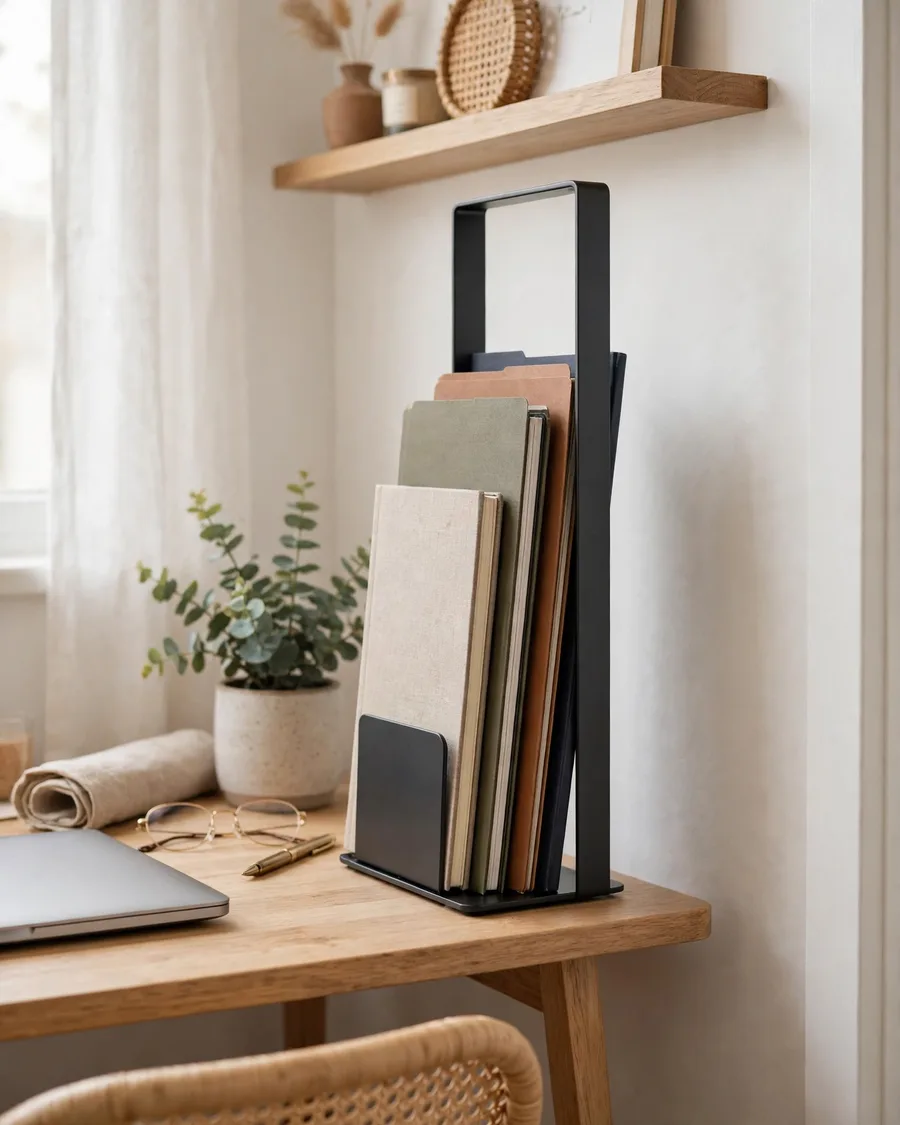
A vertical file holder stands notebooks and folders upright, which uses a fraction of the footprint of a flat stack. Best for: desks under 36 inches wide. Styling tip: put the holder at the back corner so it never blocks your elbows. Pro tip: a holder 10 inches tall supports full-size notebooks; shorter ones let papers flop forward.
35. A Desk-Side Hanging Pocket Organizer
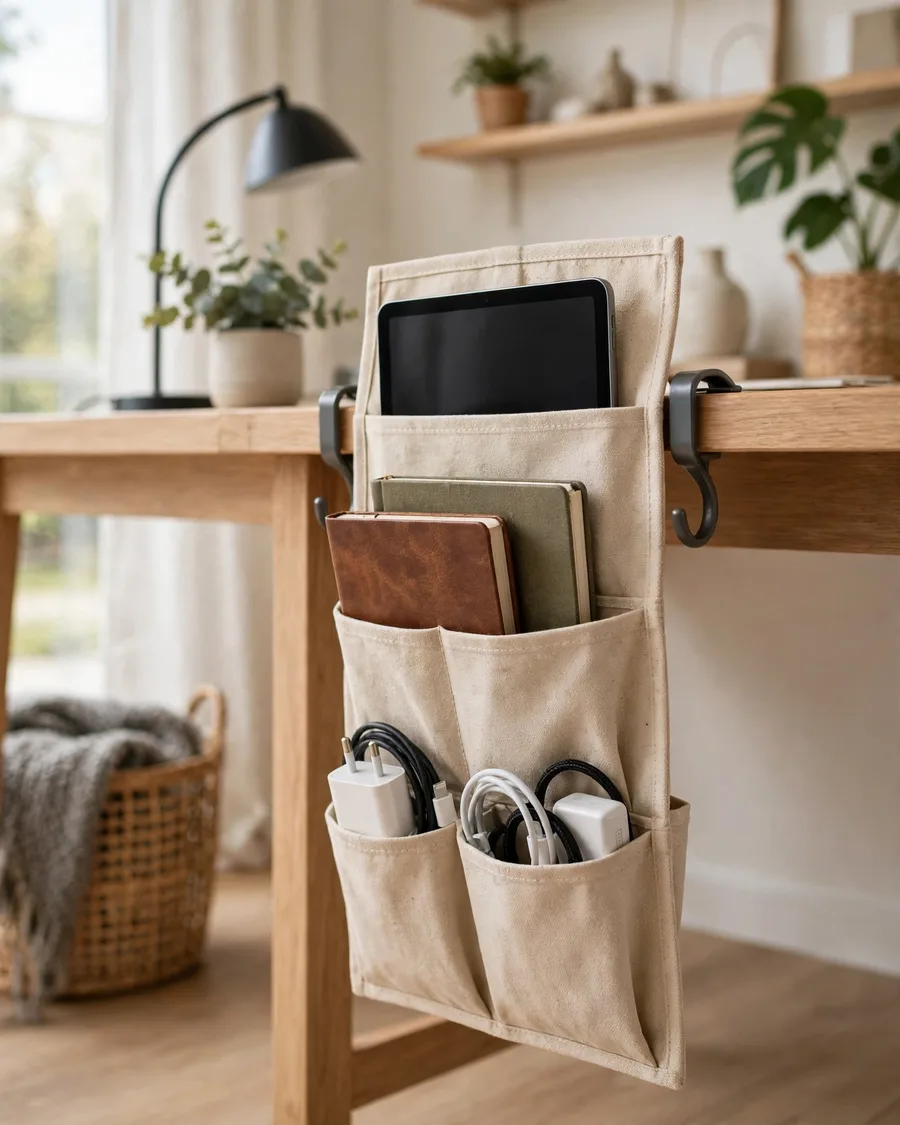
A pocket organizer hooked over the desk’s side adds storage where there was no drawer at all. Best for: trestle desks and tables used as desks. Styling tip: keep the heaviest items in the lowest pockets so the organizer never tips. Pro tip: choose one with rigid pockets — soft fabric pockets collapse and hide what is inside.
36. A Five-Minute End-of-Day Reset Routine

A five-minute reset — clear the surface, file today’s papers, plug in devices — keeps the desk organized without a weekend overhaul. Best for: everyone, especially busy households. Styling tip: pair the reset with a small ritual, like making tomorrow’s to-do list, so it sticks. Pro tip: set a phone alarm for the same time daily; after two weeks the reset runs on autopilot.
37. A Weekly Desk Audit Basket

A weekly audit basket catches everything that drifted onto the desk, then each item gets a decision: keep, file or remove. Best for: chronic clutter and shared desks. Styling tip: use a basket you actually like looking at, since it lives on the desk. Pro tip: if the same item lands in the basket three weeks running, it needs a permanent home — make one, or let it go.
Desk Organization Care and Upkeep
Desk organization stays tidy with small habits: wipe the desktop weekly, because dust settles fast on flat surfaces; check cable clips monthly, since adhesive loosens in summer heat; and re-edit one drawer every season — if a supply has not been used in a month, move it out. Keep heavy items low and anchor tall shelving into studs. For more expert guidance on keeping a workspace in order, see the Homes & Gardens desk organizing guide.
Frequently Asked Questions
How do I organize my desk if I have no drawers?
Start with the desktop and the wall, since there is no drawer to hide things in. A tiered desktop organizer and a monitor riser add storage without a drawer, while a pegboard or two floating shelves above the desk hold supplies at eye level. A rolling cart parked beside the desk works as a portable drawer, and a desk-side hanging pocket organizer adds pockets where no drawer exists. Keep only daily tools on the surface and store the rest on the wall or in the cart, so a drawerless desk never looks crowded.
What is the best desk organizer for a small desk?
A tiered desktop organizer is the best starting point for a small desk because it stacks storage upward instead of spreading it across the surface. Pair it with a monitor riser, which adds a shelf underneath the screen, and a vertical file holder in the back corner for notebooks. Wall storage helps even more: a pegboard or one floating shelf takes supplies off the desk entirely. Measure the desk first — on a desk under 36 inches wide, every organizer should be 10 inches wide or less.
How do I hide cables under my desk?
Mount a cable tray under the desktop and run the power strip inside it, so cords and plugs disappear from view and the floor stays clear. Add a row of adhesive cable clips along the back edge to hold each charging cable in place, and label each clip so you know which charger is which. For a zero-cost fix, clamp large binder clips to the desk edge and thread cables through their metal arms. Leave two inches of slack in every cable so plugs never strain.
How can I keep my desk organized every day?
Use a five-minute end-of-day reset: clear the surface, file today’s papers into their trays, plug devices in to charge, and put loose bits back in their homes. Give everything a fixed place first — zones on the desktop, dividers in the drawers, clips for cables — because a reset only works when each item has somewhere to go. A weekly audit basket catches anything that drifted during the week. After about two weeks of daily resets, the habit runs on autopilot.
What is the cheapest way to organize a desk?
Dollar-store bins inside a drawer do the same job as premium organizers for a few dollars, and a bamboo cutlery tray from the kitchen costs less than a desk organizer while fitting pens and rulers perfectly. Binder clips hold charging cables for pennies, and a three-zone desktop layout costs nothing at all. The cheapest system is the one you already own: repurpose jars, trays and boxes before buying anything new, and measure the drawer first so nothing you buy goes to waste.
How do I organize desk drawers that are always messy?
Empty the drawer completely and sort everything into keep, relocate and toss piles before buying a single divider. Then fit adjustable dividers or a shallow tray, give each compartment one category, and leave one lane empty on purpose so the drawer never packs edge to edge. Add a non-slip liner so trays stop sliding, and label the drawers so everyone in the house follows the same system. Re-edit the drawer once a season — if a supply has sat unused for a month, move it out.
Final Thoughts
A clear workspace is not one big purchase — it is a few small systems that fit your desk, budget and habits. Start with one zone, add a divider or cable tray next, and let the five-minute reset do the rest. Try one idea this weekend, live with it for a week, and change only what does not work. Save this guide for your next home office refresh.
