
A big black screen can take over a living room. The right tv wall decor ideas make that rectangle feel like part of the room instead of a blank hole in it — a gallery wall, a wood slat panel, or a frame that turns the screen into art. The 35 ideas below cover every budget, from renter-friendly fixes to full built-in media walls.
Start with the screen itself: mount it at seated eye level, hide the cables, and give it a console underneath for visual support. Then pick one treatment — paint, panels, shelves, or art — and repeat one material from the rest of the room so the wall feels planned.
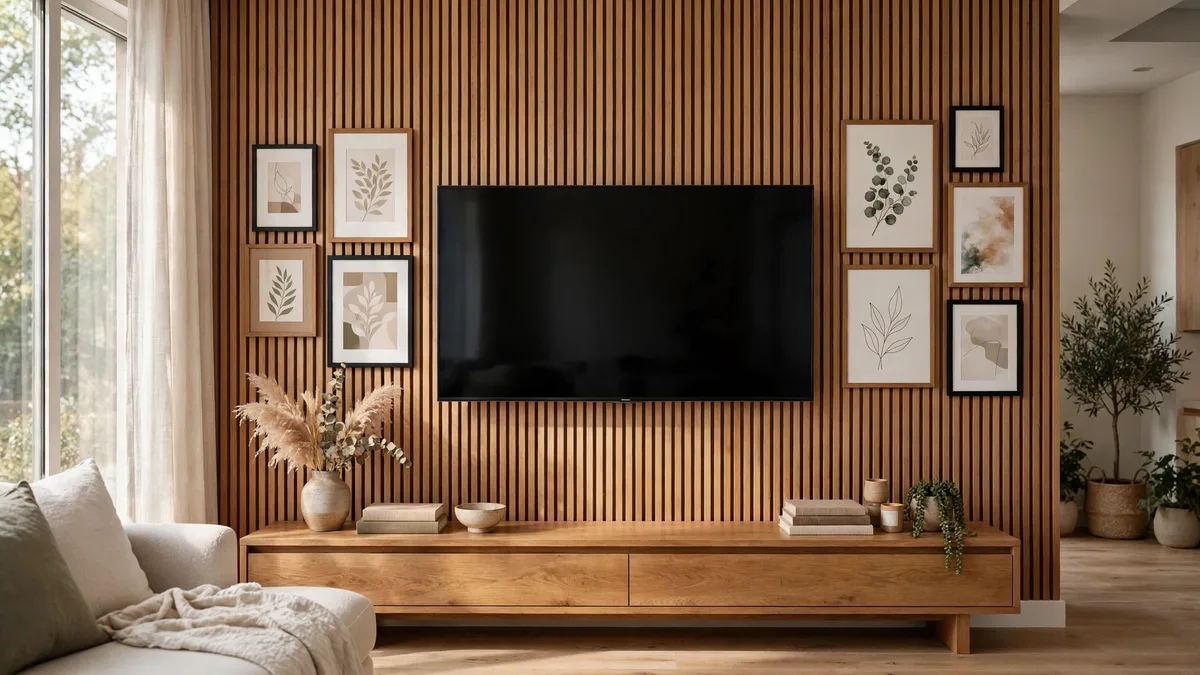
Why You’ll Love These TV Wall Decor Ideas
A TV wall is the wall your eyes land on most, so dressing it well changes the whole room. These ideas work in layers: first the mount height and cable plan, then the backdrop — paint, slats, shiplap or wallpaper — then the styling around it. Most cost little and need no builder. Pick one idea that fits your room and budget, and the screen stops shouting.
How to Choose the Right TV Wall Decor for Your Home
Measure first: the centre of the screen should sit about 42 inches from the floor for a standard sofa, and the console below should be at least 6 inches wider than the TV on each side. Pick your route — disguise it with art, warm it with wood, or hide it behind doors. If the whole room needs a refresh too, our living room decor ideas will help you tie the wall into the rest of the space.
Gallery Walls & Art Around the TV
1. A Gallery Wall That Treats the TV as One More Frame

Hang framed prints and photos around the screen so the black rectangle reads as one frame among many. Keep two frame finishes the same so the wall feels collected. Best for: eclectic and family living rooms. Styling tip: leave 2 to 3 inches between frames so each piece breathes. Pro tip: lay the whole arrangement on the floor first and photograph it — gaps that look fine on the floor often look wide on the wall.
2. A Frame TV That Shows Art When It’s Off
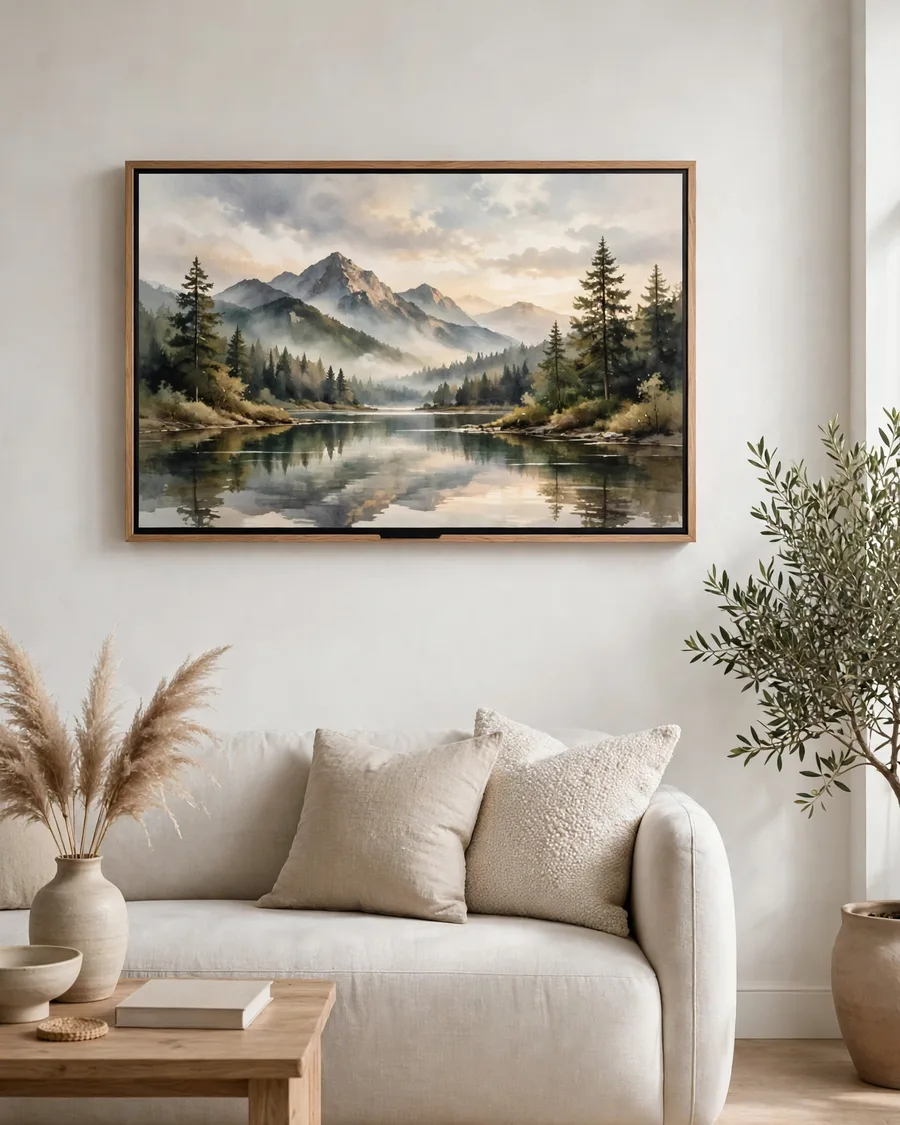
A Frame-style TV displays artwork when switched off, so the wall never shows a black slab. It mounts almost flush, and a slim bezel finishes the picture look. Best for: minimal rooms where the TV should disappear. Styling tip: pick art with the same tones as your sofa and rug. Pro tip: set the art-mode brightness to match the room — a screen brighter than the wall looks like a light box.
3. A DIY Wood Frame Around the Screen
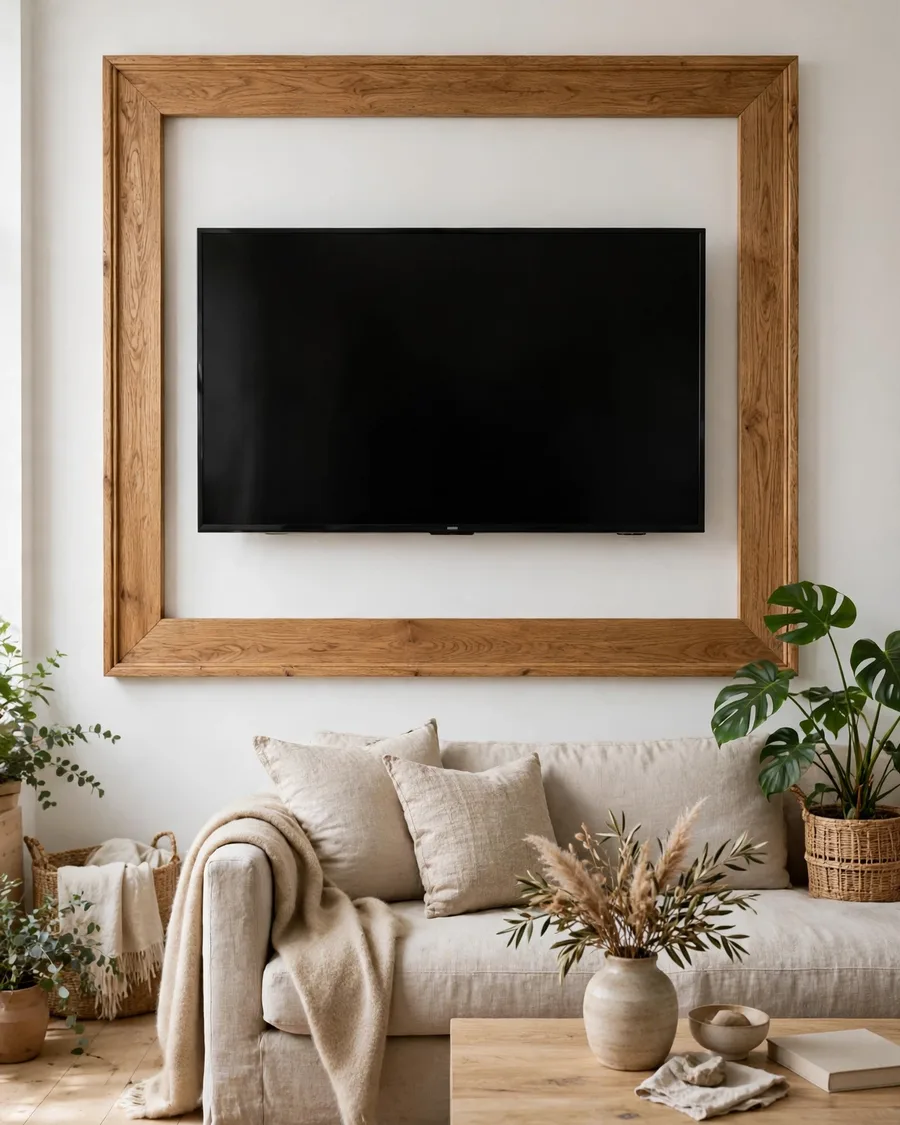
Four lengths of wood trim, mitred at the corners, turn any TV into framed art for the price of a few boards. Stain it to match your floor. Best for: budget makeovers and warm modern rooms. Styling tip: keep the frame 2 to 3 inches wide so it reads as a frame. Pro tip: leave a 5 mm gap between the trim and the screen edge — TVs vent heat at the edges.
4. Matching Prints Flanking the TV
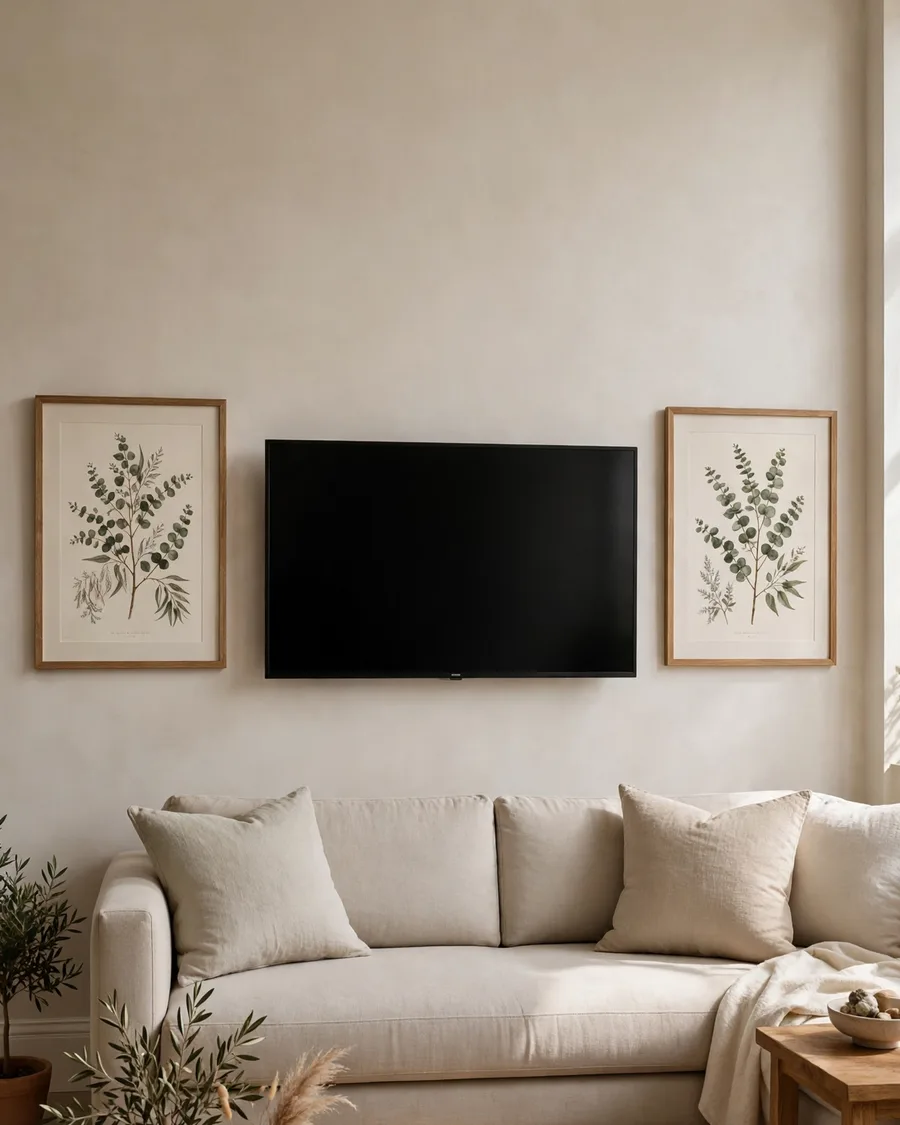
Two identical framed prints, one on each side, give the wall instant symmetry. It is the simplest gallery idea and the hardest to get wrong. Best for: formal and traditional living rooms. Styling tip: hang the prints so their centres line up with the centre of the screen. Pro tip: use frames the same height as the TV or slightly smaller — oversized prints make the screen look small.
5. A Black-and-White Photo Grid

A neat grid of black-and-white photos in matching frames turns the wall into a family archive, and the screen simply joins the grid. Best for: modern rooms and family walls. Styling tip: keep the grid spacing exact — 2 inches everywhere. Pro tip: print photos at the same size and use a paper template on the wall first; a grid that drifts by half an inch shows from across the room.
6. A Vintage Art Mix
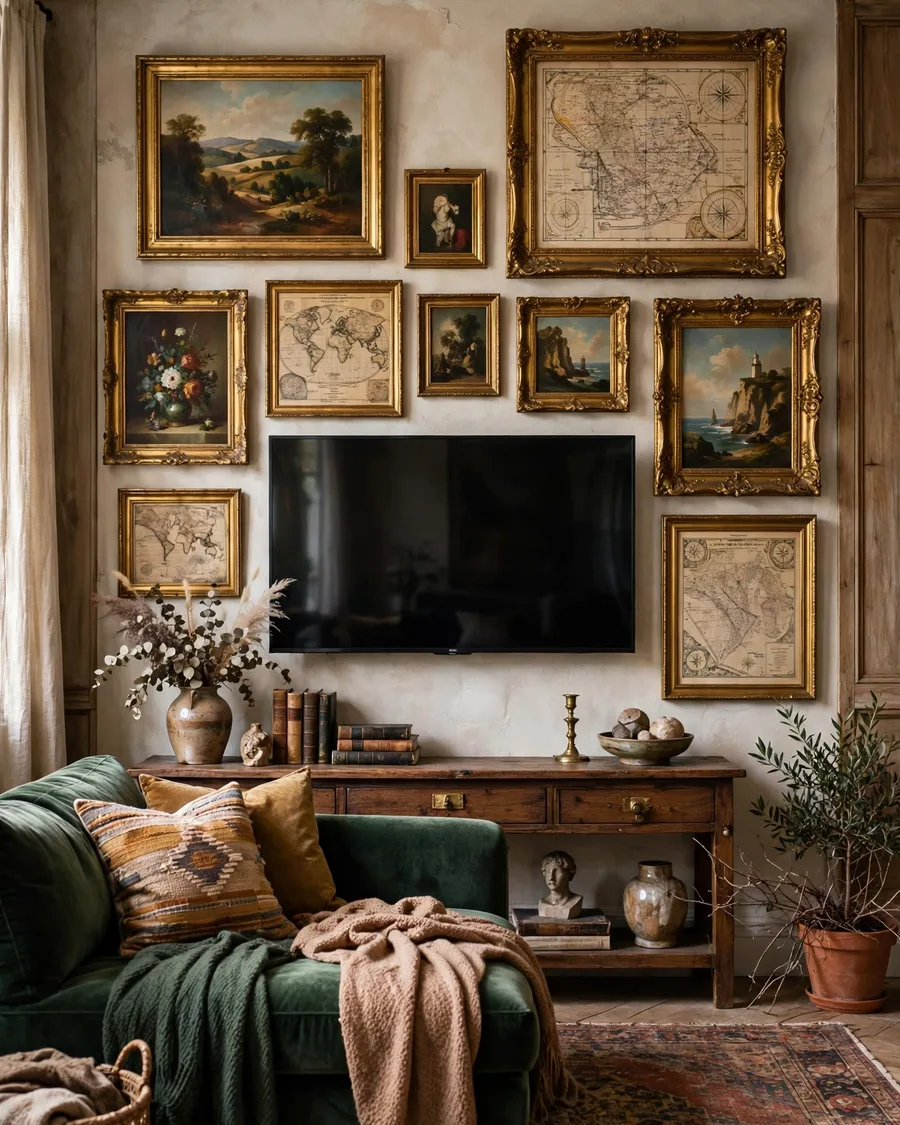
Ornate gold frames, old oil paintings and vintage maps make the screen look like one more antique. Thrift shops are the best source for frames. Best for: characterful, layered rooms. Styling tip: mix one large piece with several small ones. Pro tip: keep the frames within 6 inches of the screen edge — vintage pieces hung too far out leave the TV floating alone.
7. A Picture Ledge Under the TV
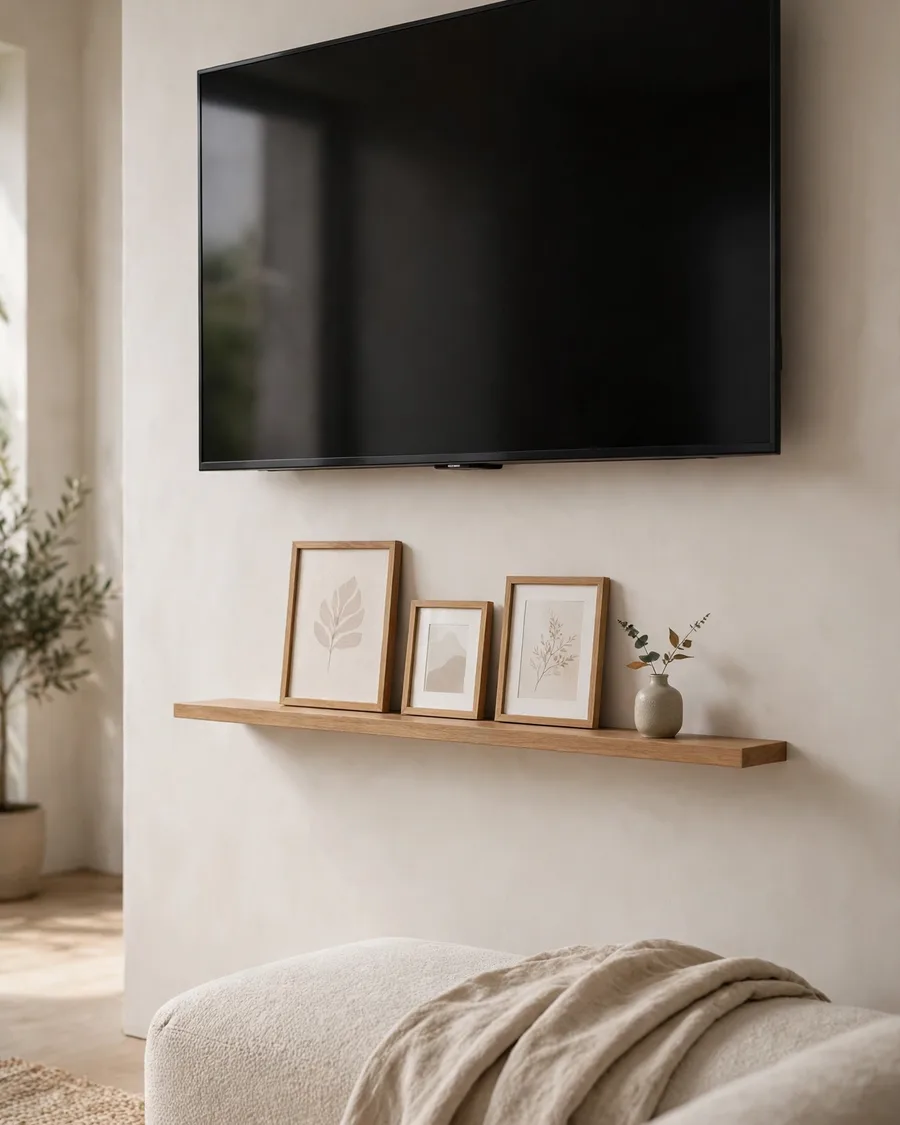
A slim picture ledge under the TV holds small framed prints and a vase — and you can swap the display in minutes without new holes. Best for: renters and seasonal decorators. Styling tip: lean frames at slightly different angles for a relaxed look. Pro tip: fix the ledge into two studs — a loaded ledge takes more weight than it looks.
Wood, Slats & Texture
8. A Full Wall of Vertical Wood Slats
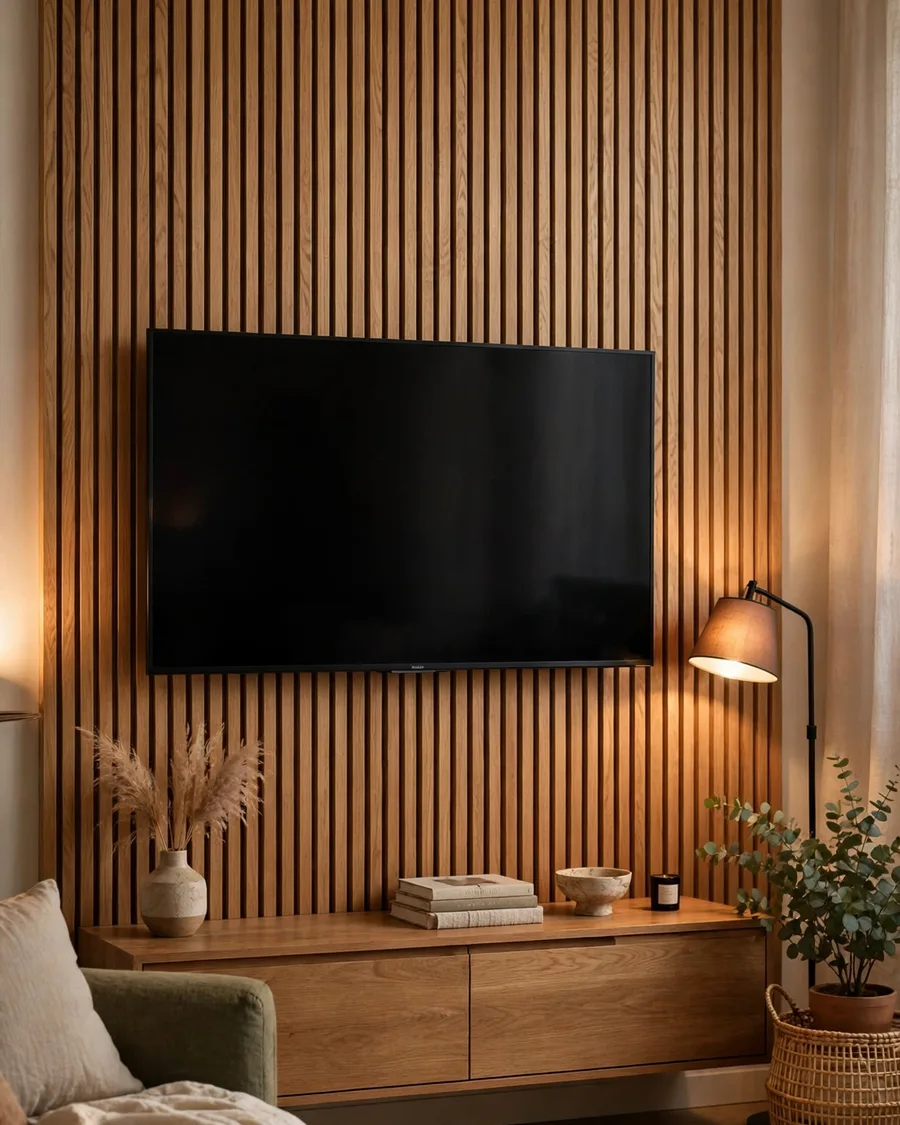
Vertical oak slats across the whole wall give the TV a warm backdrop and make the screen look built in. The lines draw the eye up, so low rooms feel taller. Best for: modern and Scandinavian living rooms. Styling tip: pair slats with a plain low console. Pro tip: mount the TV on a backing board fixed to the studs first — slats alone are too thin to hold a heavy screen safely.
9. White Shiplap for a Light Coastal Feel

White shiplap adds gentle texture without colour, so the TV wall feels finished but stays bright. It suits coastal, cottage and farmhouse rooms. Best for: light, airy living rooms. Styling tip: run the boards horizontally to widen a narrow wall. Pro tip: paint the wall behind it the same white first — gaps then read as shadow, not bare plaster.
10. Reclaimed Wood Planks
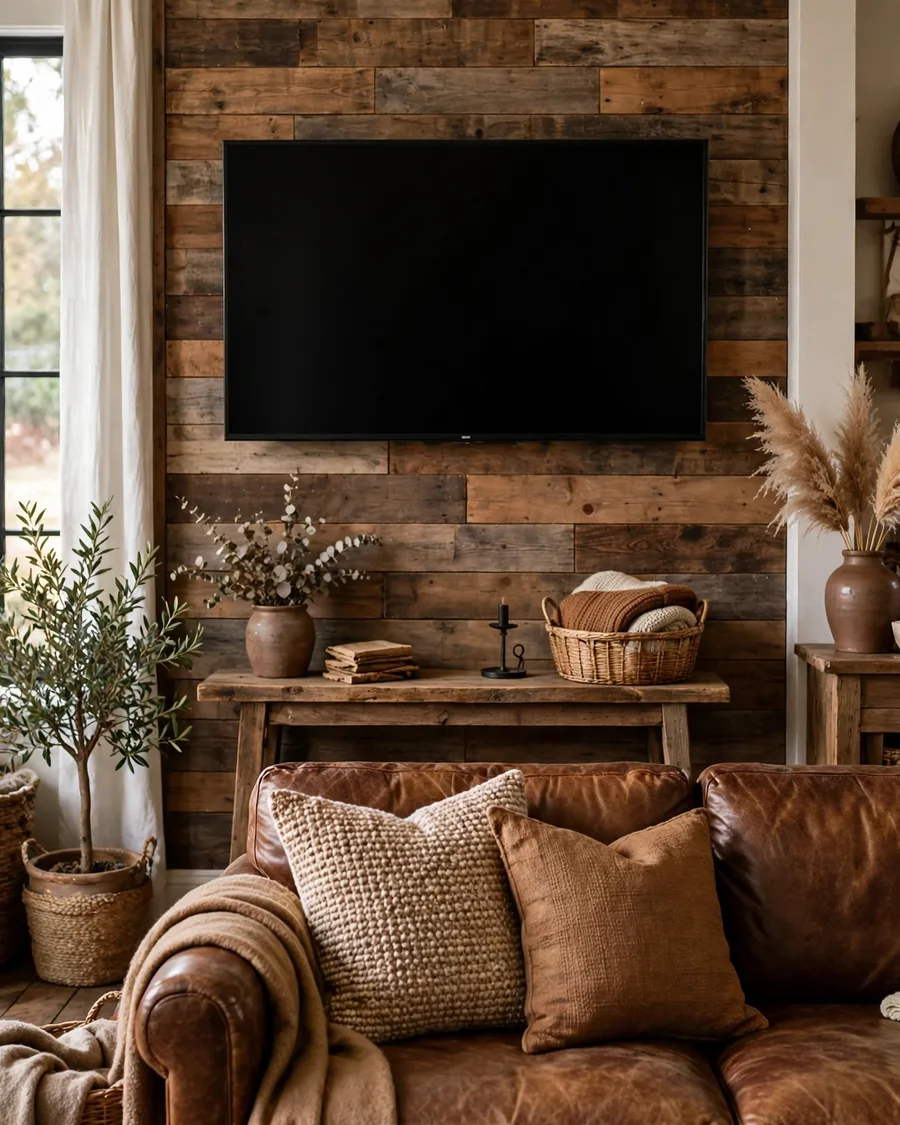
Reclaimed planks bring warmth and grain to a TV wall, and their varied tones hide the screen’s hard edges. Use real boards or a good wood-look panel. Best for: rustic and farmhouse rooms. Styling tip: mix plank tones, but keep the finish matte. Pro tip: seal reclaimed wood before mounting the TV — old boards shed dust and splinters.
11. Fluted Walnut Panels

Fluted walnut panels — narrow vertical grooves in rich brown wood — give the TV wall a tailored finish. The grooves soften the flat screen. Best for: luxe modern rooms. Styling tip: keep the panel one shade darker than the floor for depth. Pro tip: run the flutes floor to ceiling, not just behind the TV, or the panel reads as a small patch instead of a feature wall.
12. Board-and-Batten Moulding

Board-and-batten moulding — flat boards with raised battens in a grid — adds classic architecture to a plain TV wall for little money. Best for: traditional and transitional homes. Styling tip: align the grid so the TV sits inside one panel, not across a batten. Pro tip: use MDF battens, not solid wood, on a TV wall — MDF stays flat and will not warp near the heat of a screen.
13. Tongue-and-Groove in a Soft Colour
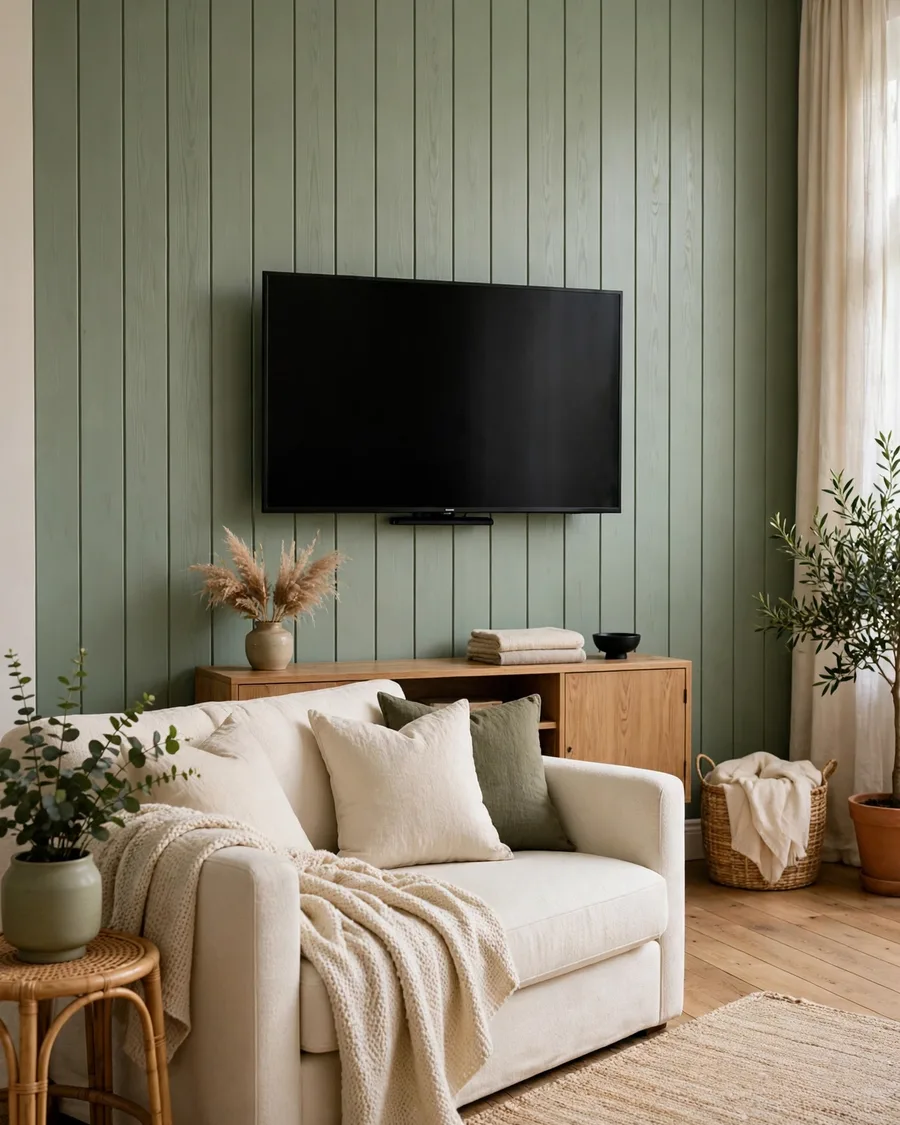
Tongue-and-groove boards painted sage, dusty blue or warm greige turn the TV wall into a gentle colour statement. The lines add height while the colour calms the screen. Best for: cottage and colour-loving rooms. Styling tip: echo the wall colour in one cushion or throw. Pro tip: use a satin paint finish — flat paint marks easily around a TV.
14. A Deep Charcoal Painted Wall
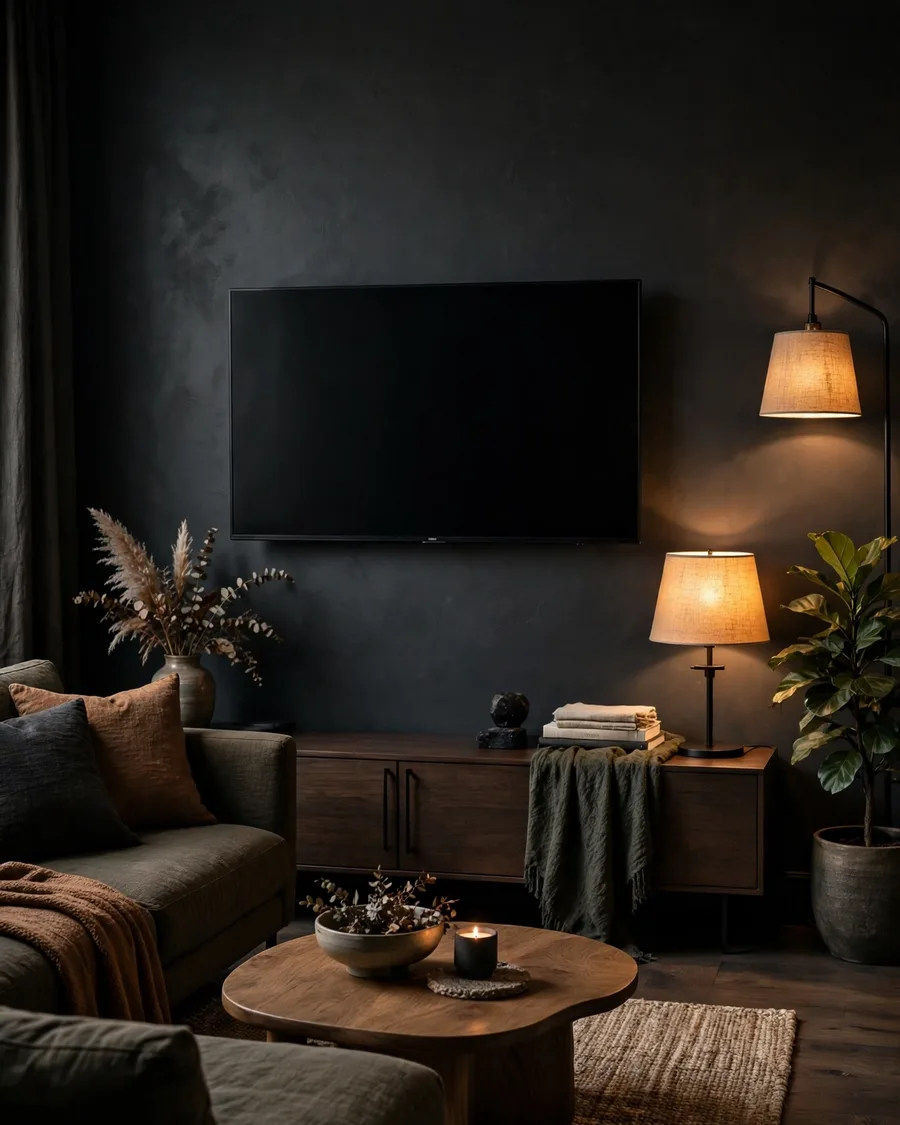
Painting the TV wall deep charcoal is the cheapest disguise there is: the black screen melts into the wall. One dark wall also makes the rest of the room feel brighter. Best for: movie lovers and moody rooms. Styling tip: add warm lamps and a light rug so it feels cosy, not cave-like. Pro tip: paint behind the TV mount too — a pale patch at the edges ruins the effect.
Built-Ins, Shelves & Storage
15. Floating Shelves Flanking the Screen
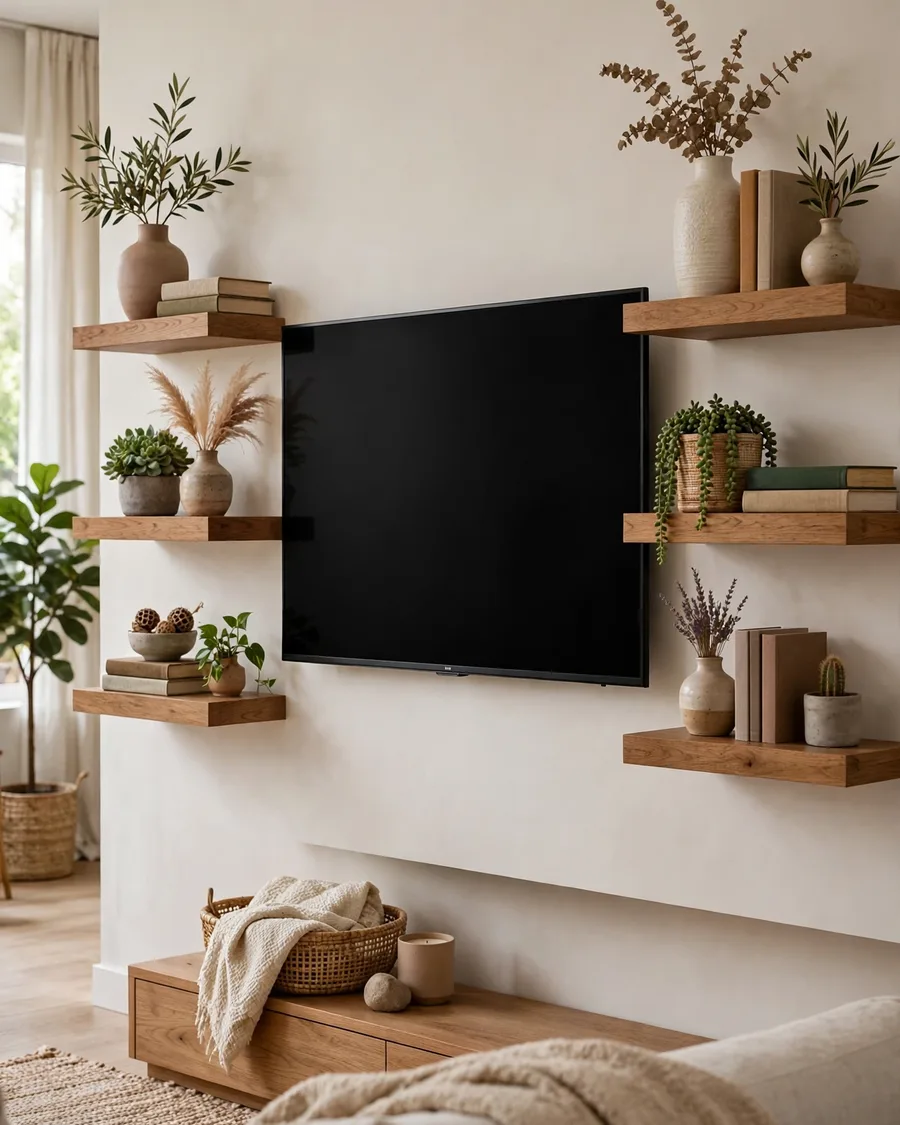
Floating shelves on both sides of the TV frame the screen and hold books, vases and plants. They are one of the most-pinned TV wall looks for good reason. Best for: small rooms that need storage without bulk. Styling tip: style in odd numbers — three objects per shelf, not four. Pro tip: keep shelves 12 inches from the screen edge so a tall vase never blocks the view.
16. A Long Low Media Console
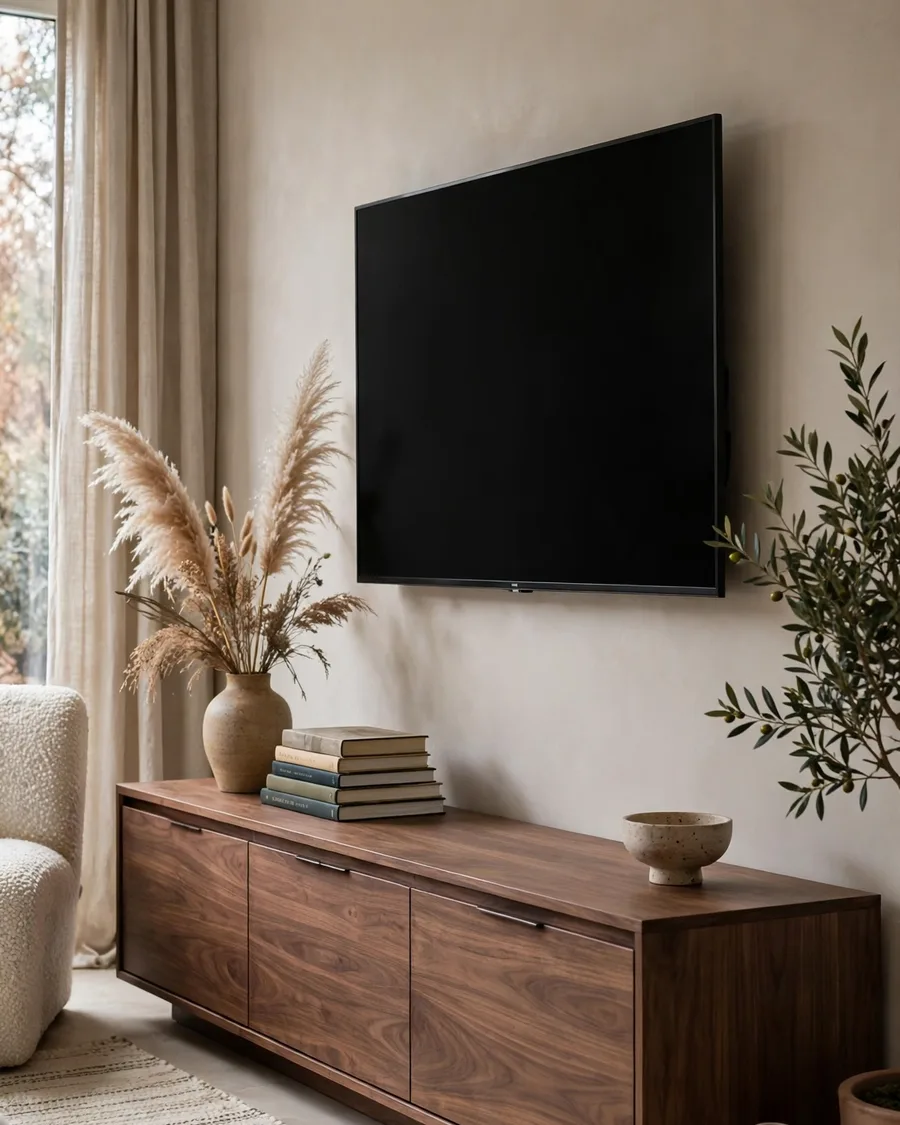
A long, low console under the TV grounds the screen and hides the router, consoles and cables behind closed doors. It is the piece that makes a TV wall look finished. Best for: every living room, especially wide walls. Styling tip: leave one third of the top clear. Pro tip: choose a console at least 12 inches wider than the TV in total, or the screen will look top-heavy.
17. A Built-In Media Wall
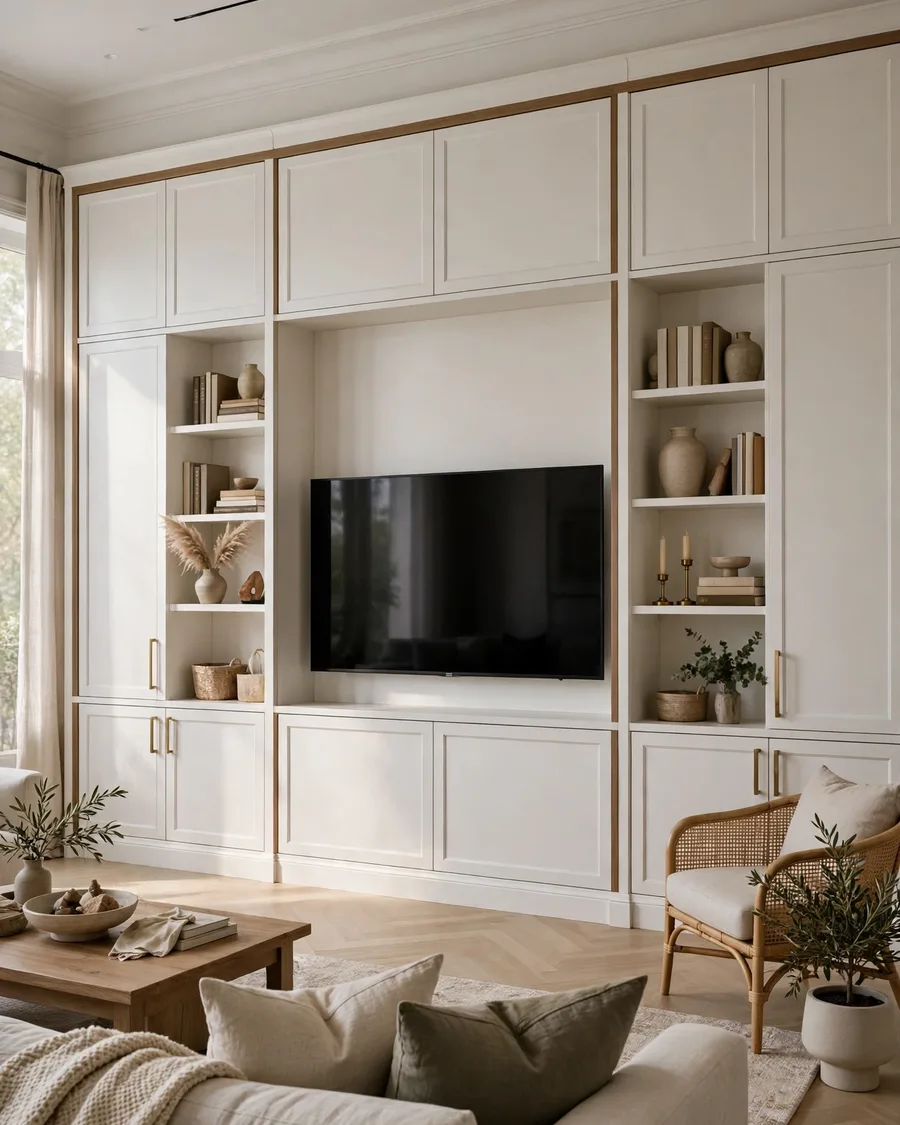
A floor-to-ceiling built-in media wall recesses the TV into cabinetry, with shelves and cupboards around it. The screen reads as part of the furniture. Best for: large living rooms and families with lots of kit. Styling tip: mix open shelves with closed doors. Pro tip: leave a 2-inch ventilation gap behind the TV — a recessed screen runs hotter than a wall-mounted one.
18. A Floating Media Cabinet
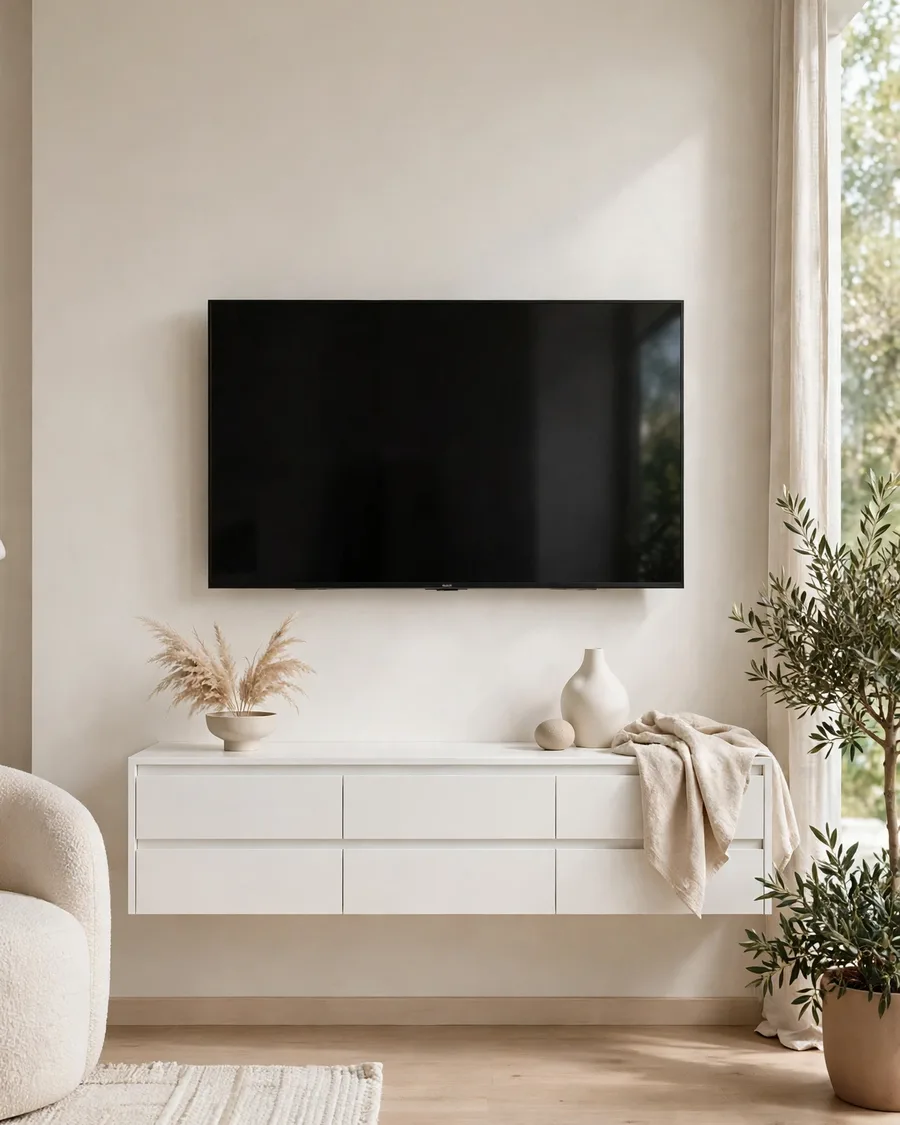
A wall-hung media cabinet floats below the TV, hiding devices in drawers while the floor stays clear. The gap makes the room feel lighter and easier to clean. Best for: modern rooms and small spaces. Styling tip: mount it 10 to 12 inches below the screen so the soundbar has room. Pro tip: fix it into studs with a French cleat — a loaded floating cabinet pulls hard on its fixings.
19. Bookshelves on Both Sides

Tall bookshelves on both sides turn the TV wall into a library wall, and the screen becomes a dark window between the books. It is warm and personal. Best for: readers and traditional rooms. Styling tip: leave a few shelves half-empty so the wall breathes. Pro tip: keep books 4 inches clear of the screen edge — books shelved tight against a TV trap heat.
20. Display Niches and Cubbies
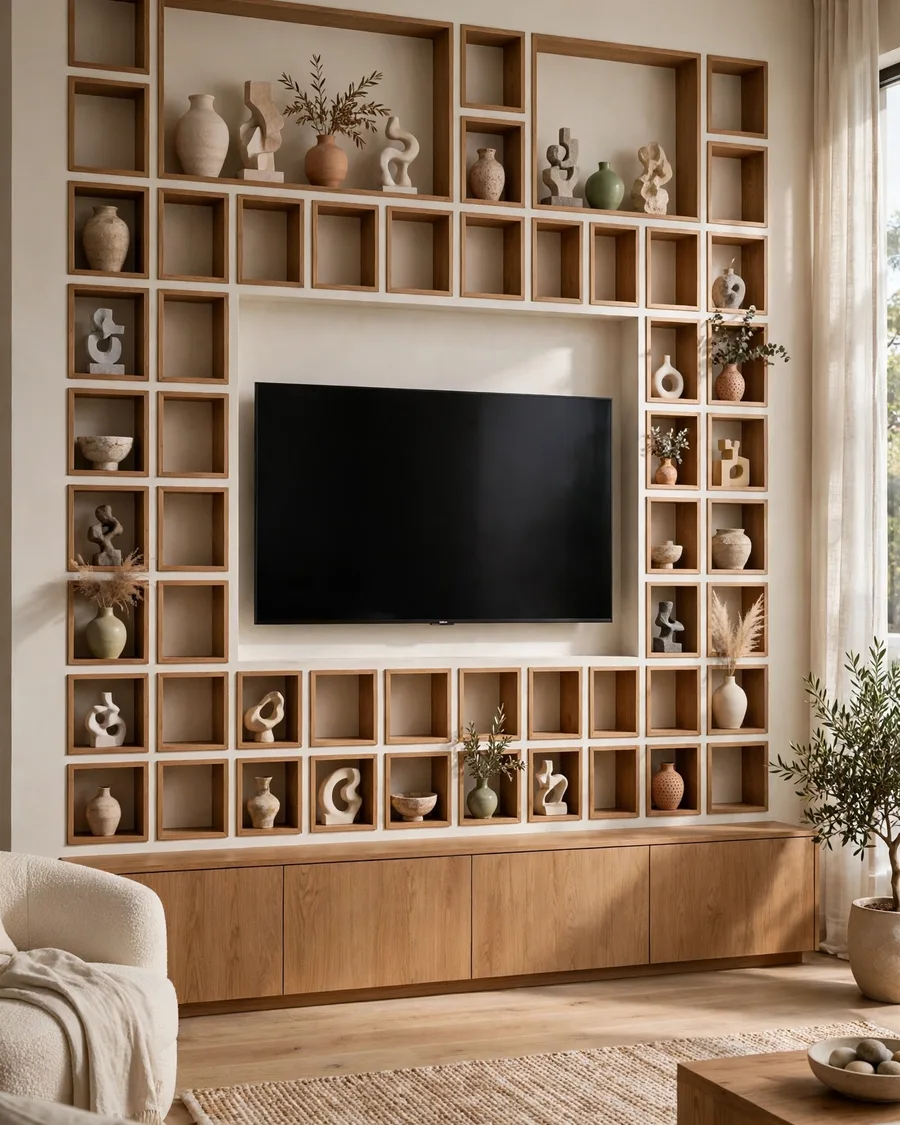
Square niches built into the wall around the TV hold one vase or sculpture each, like a small gallery of objects. The grid breaks up the flat screen. Best for: modern rooms with a collection to show. Styling tip: one object per niche, nothing more. Pro tip: light each niche with a small LED puck — unlit cubbies read as dark holes.
21. A Soundbar Shelf With Hidden Storage
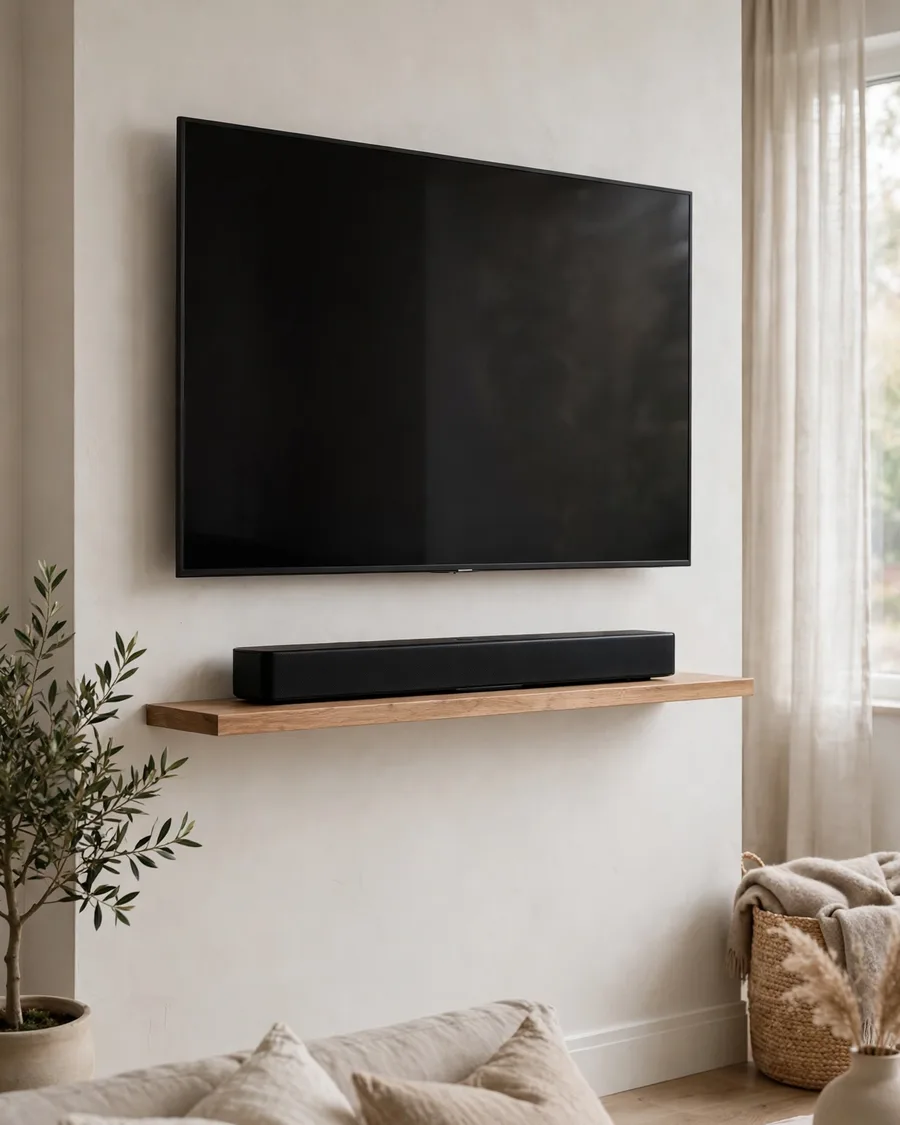
A slim shelf directly under the TV holds the soundbar at the right height and hides the streaming box and cables behind a small panel. Sound improves, clutter disappears. Best for: movie nights and tidy minimalists. Styling tip: match the shelf wood to the console or floor. Pro tip: keep the soundbar 2 inches proud of the shelf front — a soundbar pushed back against the wall loses its side-firing sound.
Hide It Completely
22. A Sliding Artwork Panel
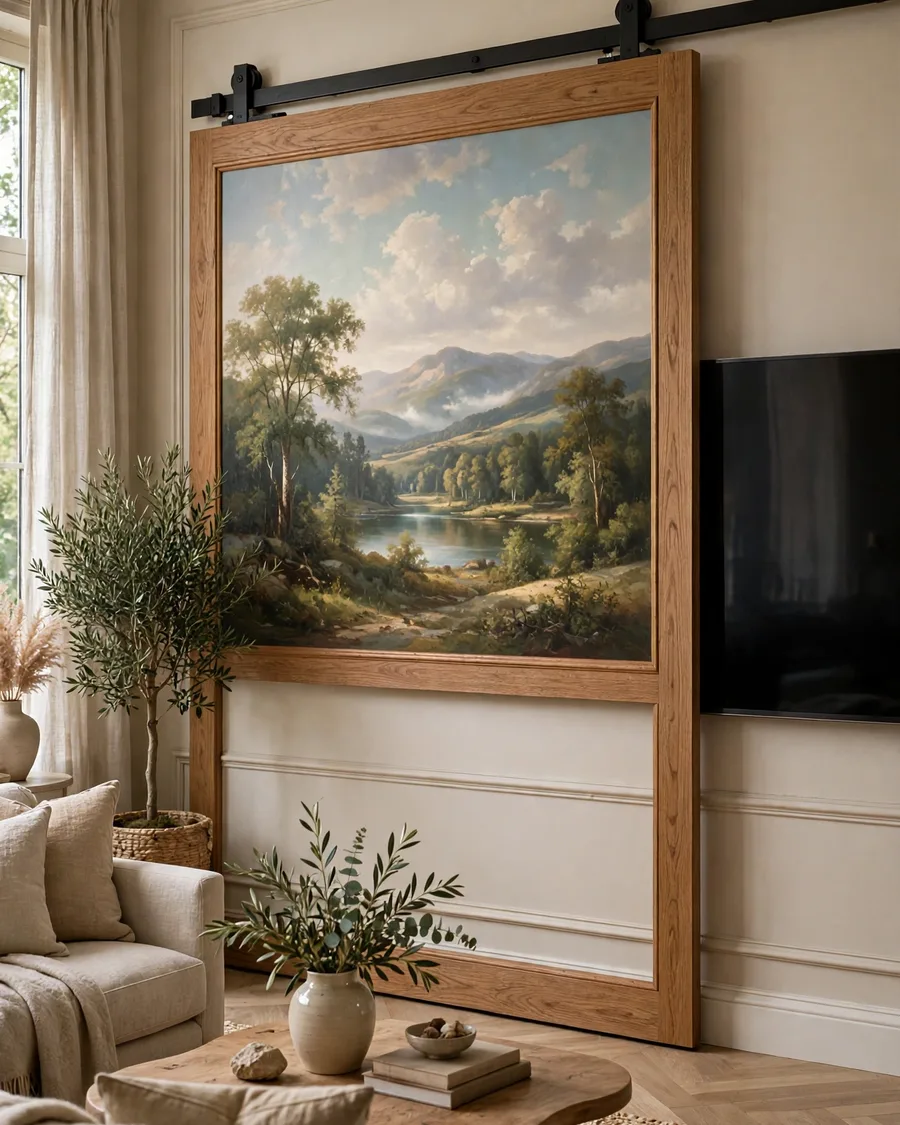
A large framed painting on a sliding track glides sideways to reveal the TV, then slides back to hide it. It is the cleverest disguise in this list. Best for: formal rooms where the TV should vanish. Styling tip: choose art the same size as the screen or larger. Pro tip: use a track rated for twice the panel’s weight; a sagging panel will jam.
23. Barn Doors That Close Over the Screen
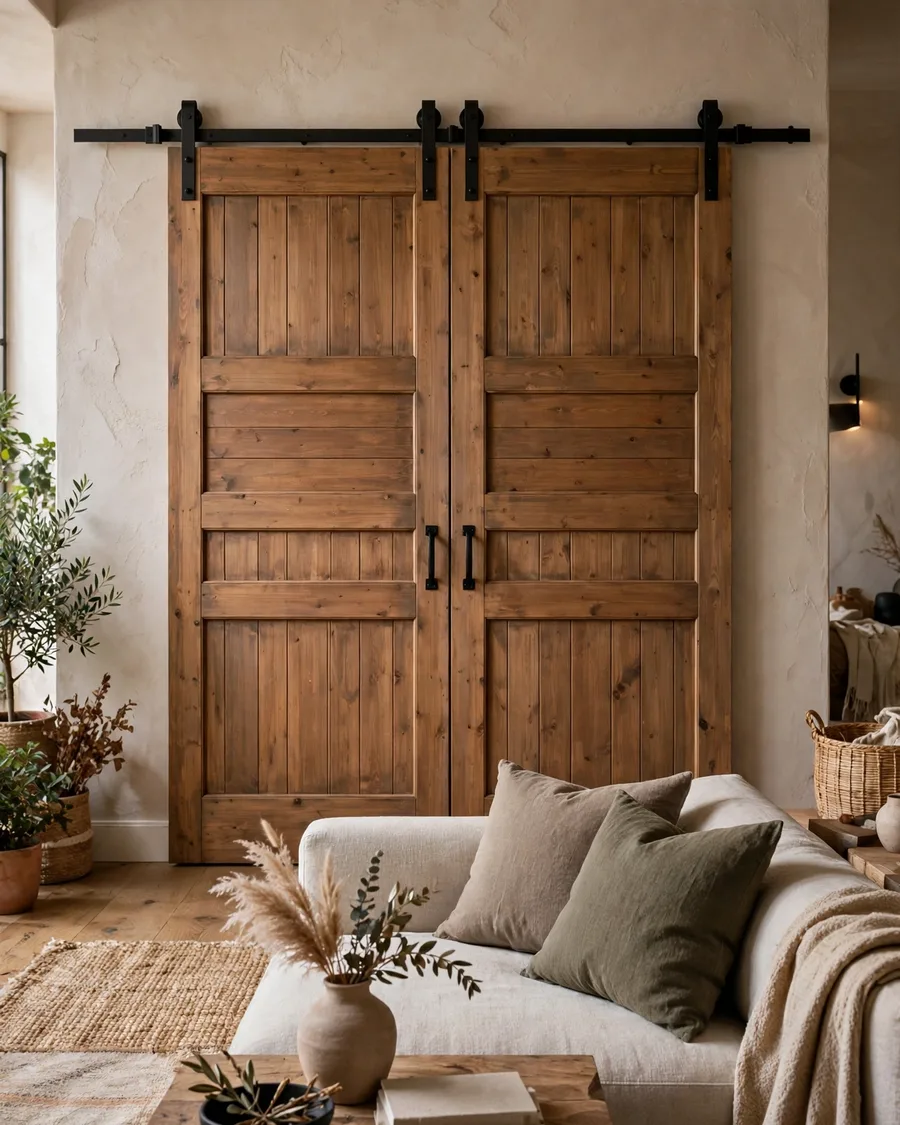
Two barn doors on a sliding rail close over the TV like shutters, turning the wall into a wood feature when the screen is off. Open, they frame the TV. Best for: farmhouse and rustic-modern rooms. Styling tip: paint the doors to match the wall, or stain them for contrast. Pro tip: leave 4 inches of clearance between the doors and the screen — doors on a rail swing slightly.
24. A Mirror TV Panel
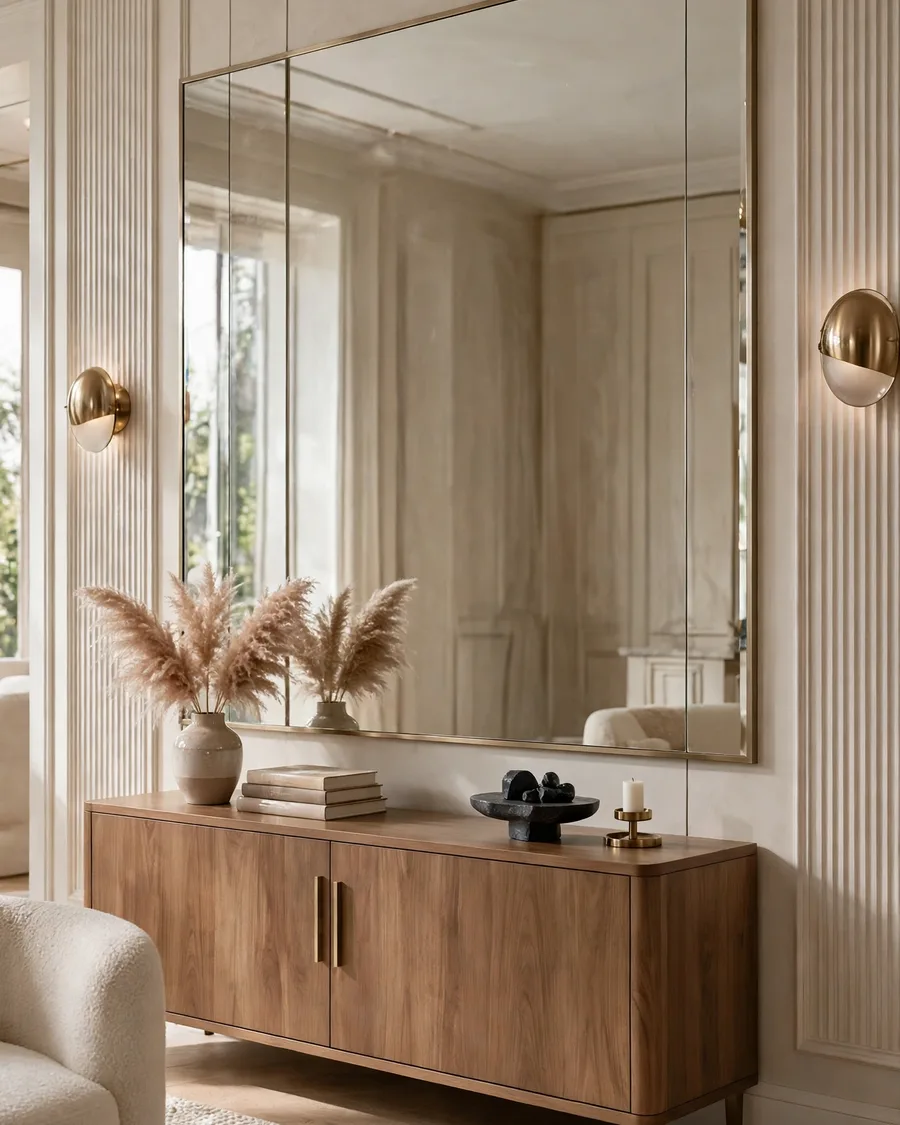
A mirror TV hides the screen behind reflective glass: switched off, the wall shows a mirror; switched on, the picture shines through. Best for: small or dark rooms that need light. Styling tip: hang it where it reflects a window, not the sofa. Pro tip: mirror TVs cost far more than a standard screen, so measure the wall twice — the glass panel is made to order and cannot be trimmed.
25. Curtains That Draw Across the Wall
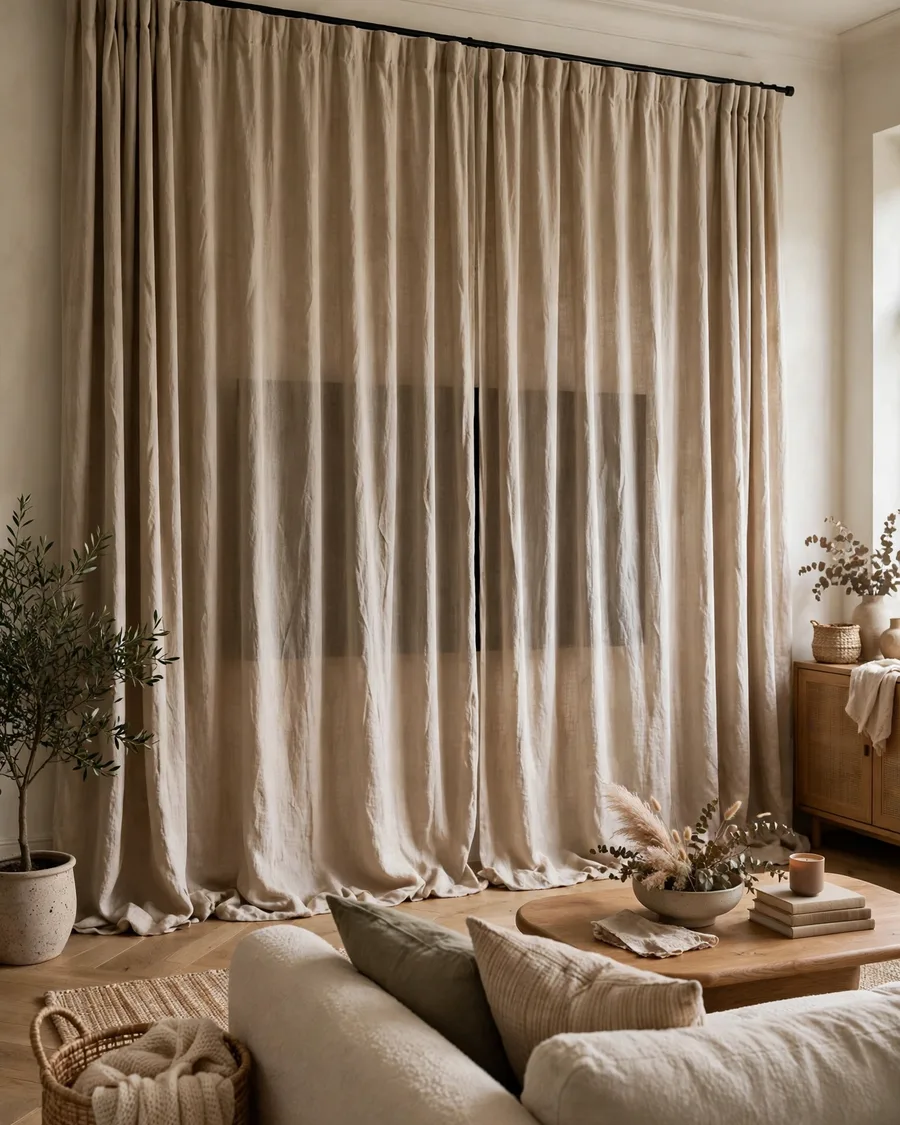
Floor-length linen curtains on a ceiling track draw across the TV wall like a stage curtain. Closed, the room reads as a calm space with no screen in sight. Best for: soft, layered rooms and bedrooms with a TV. Styling tip: use curtains 1.5 times the wall width so they gather properly. Pro tip: mount the track on the ceiling, not the wall, so the curtains clear the TV mount and glide without catching.
26. A TV Inside an Armoire
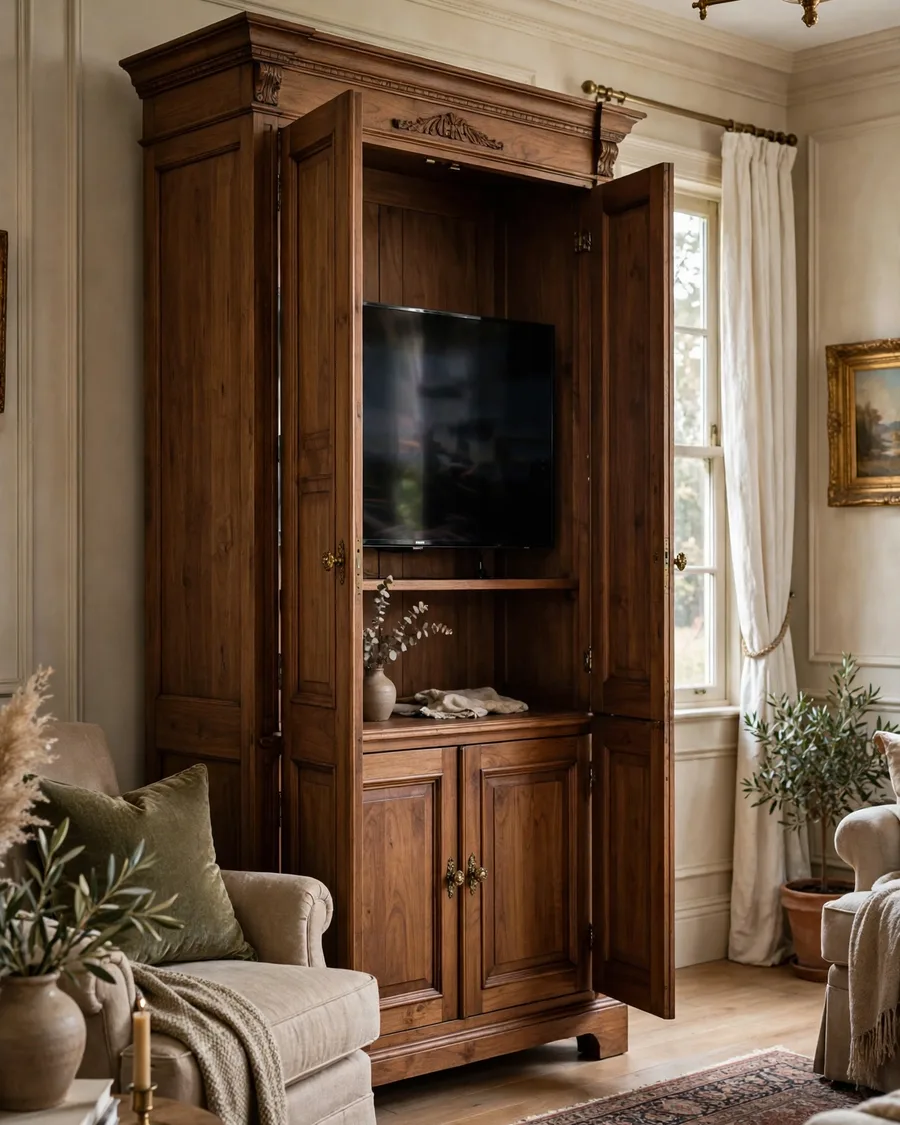
An old armoire holds the TV inside with its doors open, and closed it is just a handsome cabinet. It is the classic way to hide a screen in a traditional room. Best for: period homes and antique lovers. Styling tip: remove the armoire’s back panel for cables and air flow. Pro tip: check the armoire’s inside depth before buying a TV — many antique cabinets are only 14 inches deep, too shallow for a modern screen on a stand.
27. A Recessed Niche, Flush With the Wall
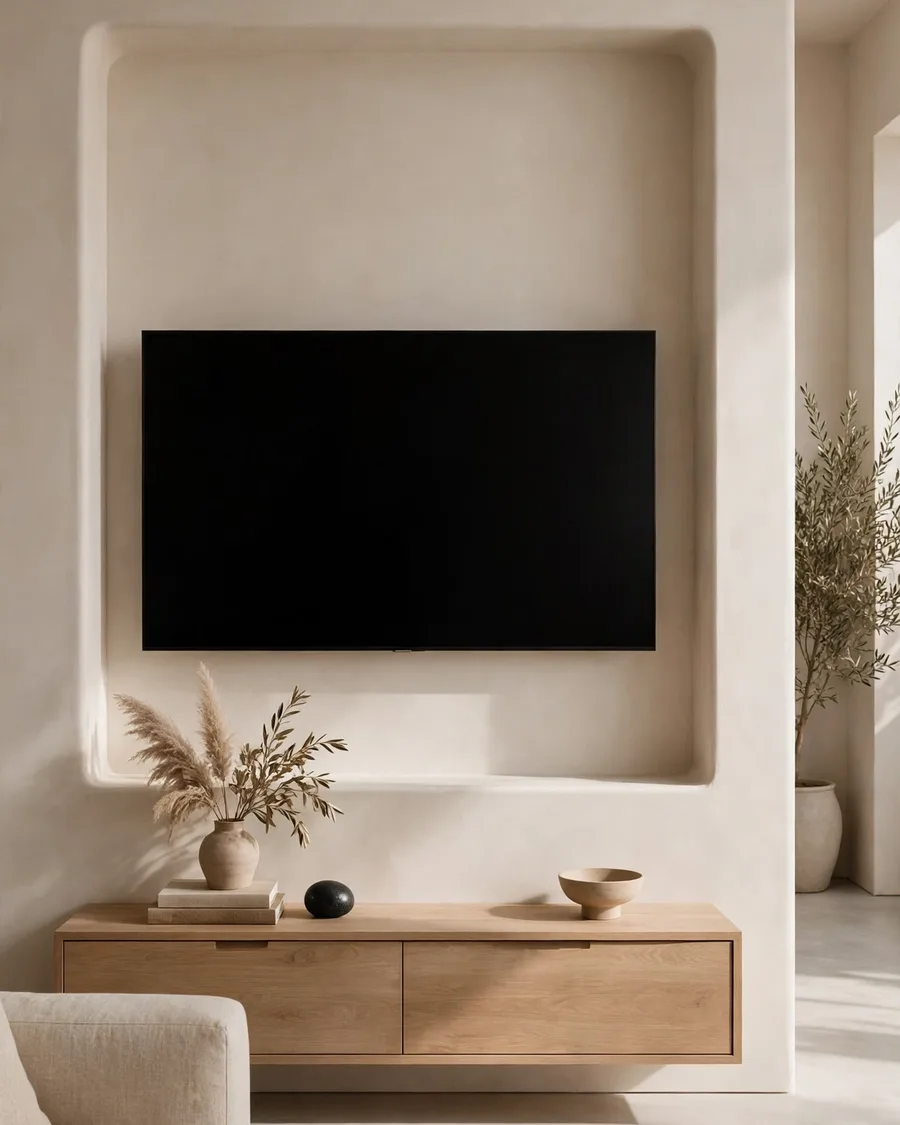
A shallow recess in the wall lets the TV sit perfectly flush, so the screen reads as part of the architecture instead of a box hung on it. Best for: new builds and full renovations. Styling tip: plaster the niche the same colour as the wall for a seamless finish. Pro tip: build the niche 2 inches wider than the TV on every side — a flush fit makes future TV swaps a demolition job.
28. Wallpaper That Camouflages the Screen

A bold botanical or geometric wallpaper wraps around the TV, and the busy pattern breaks up the screen’s outline so it stops reading as a rectangle. Best for: pattern lovers and statement walls. Styling tip: pick a pattern with dark tones that match the screen. Pro tip: run the wallpaper behind the TV mount too — a plain patch behind the screen is the first thing the eye catches.
Light, Fire & Finishing Touches
29. LED Backlighting Behind the Screen
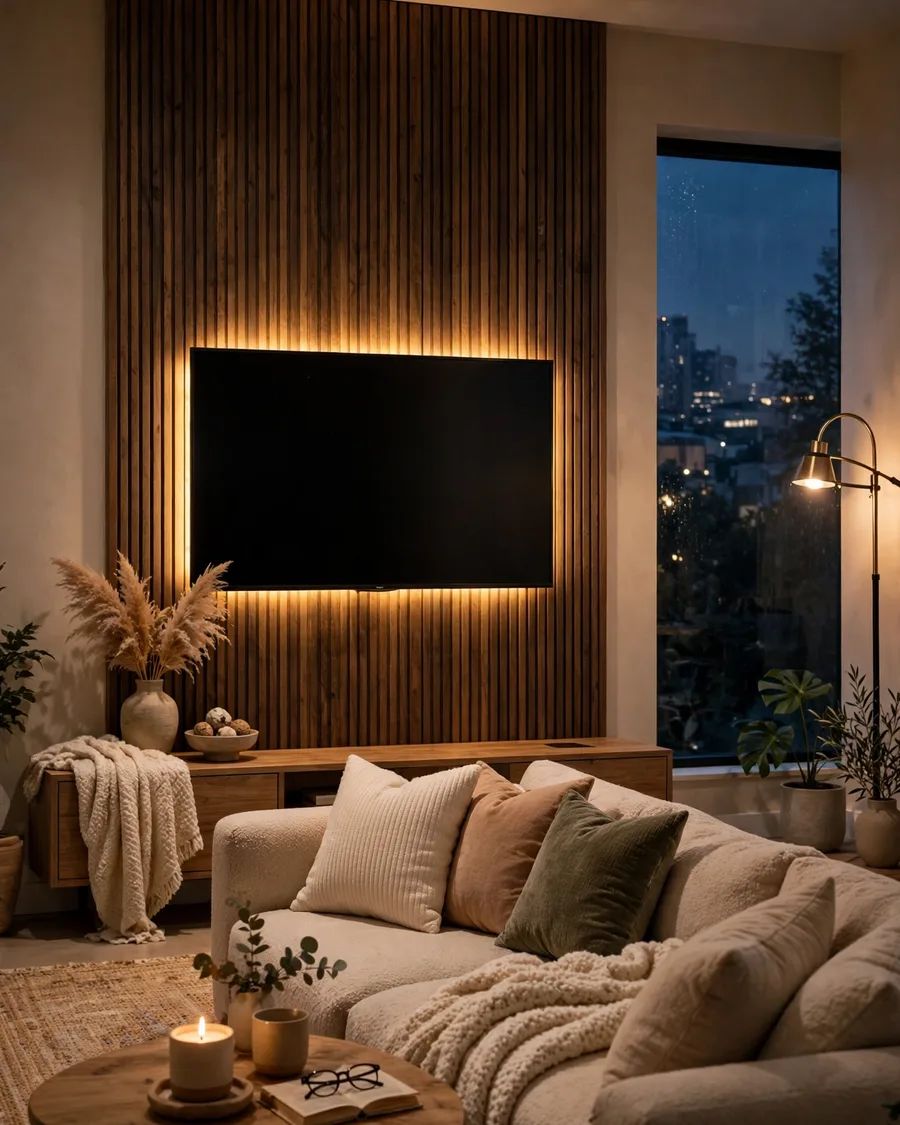
An LED strip on the back of the TV throws a soft halo onto the wall, so the screen floats in light instead of a hard black block. Warm white looks best. Best for: evening viewing and cosy rooms. Styling tip: set the strip to a low, warm glow, not a bright colour. Pro tip: stick the strip 2 inches in from the screen edge — a strip at the edge throws a harsh line.
30. Sconces Flanking the TV
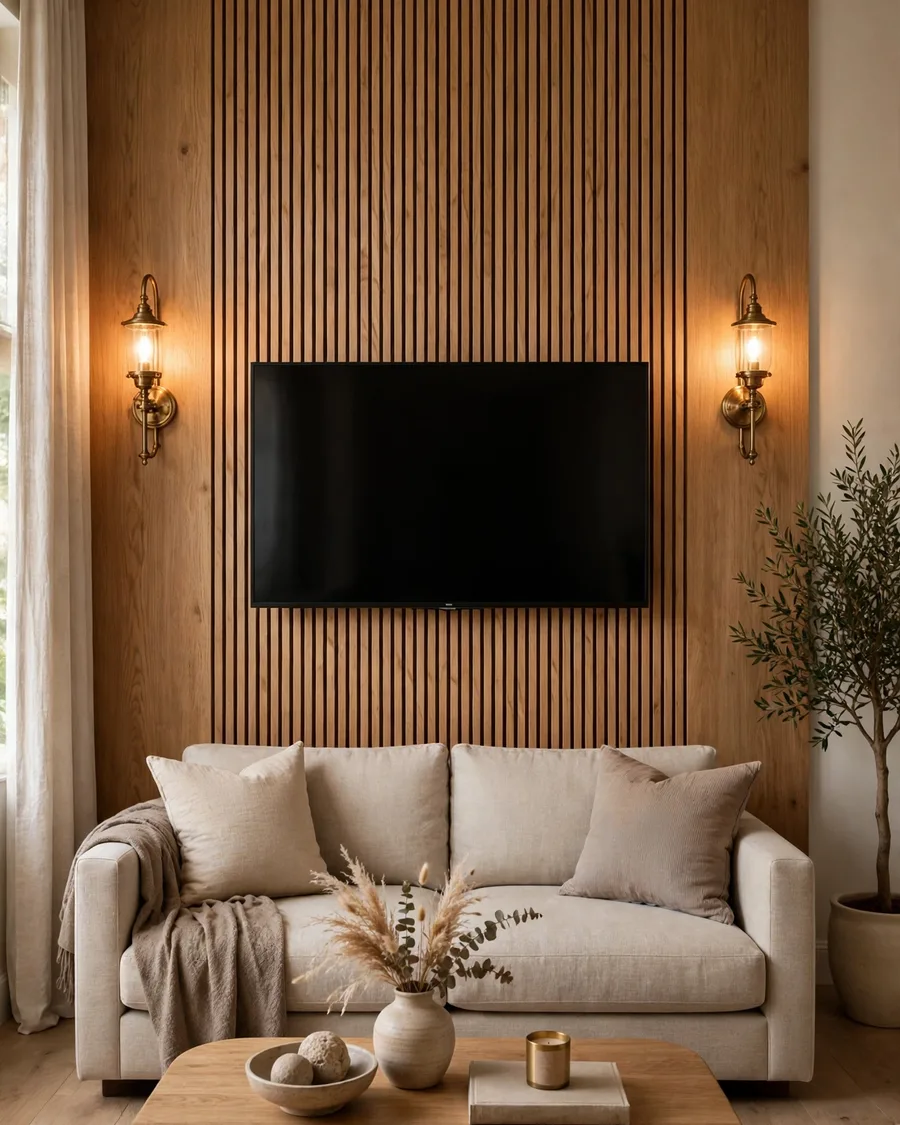
Two wall sconces, one on each side of the TV, add warm light and a finished feel. They frame the screen the way lamps frame a bed. Best for: evening rooms and elegant living rooms. Styling tip: choose sconces with shades that throw light up and down, not straight at the screen. Pro tip: wire sconces to a dimmer — full brightness next to a TV causes glare.
31. TV Above the Fireplace
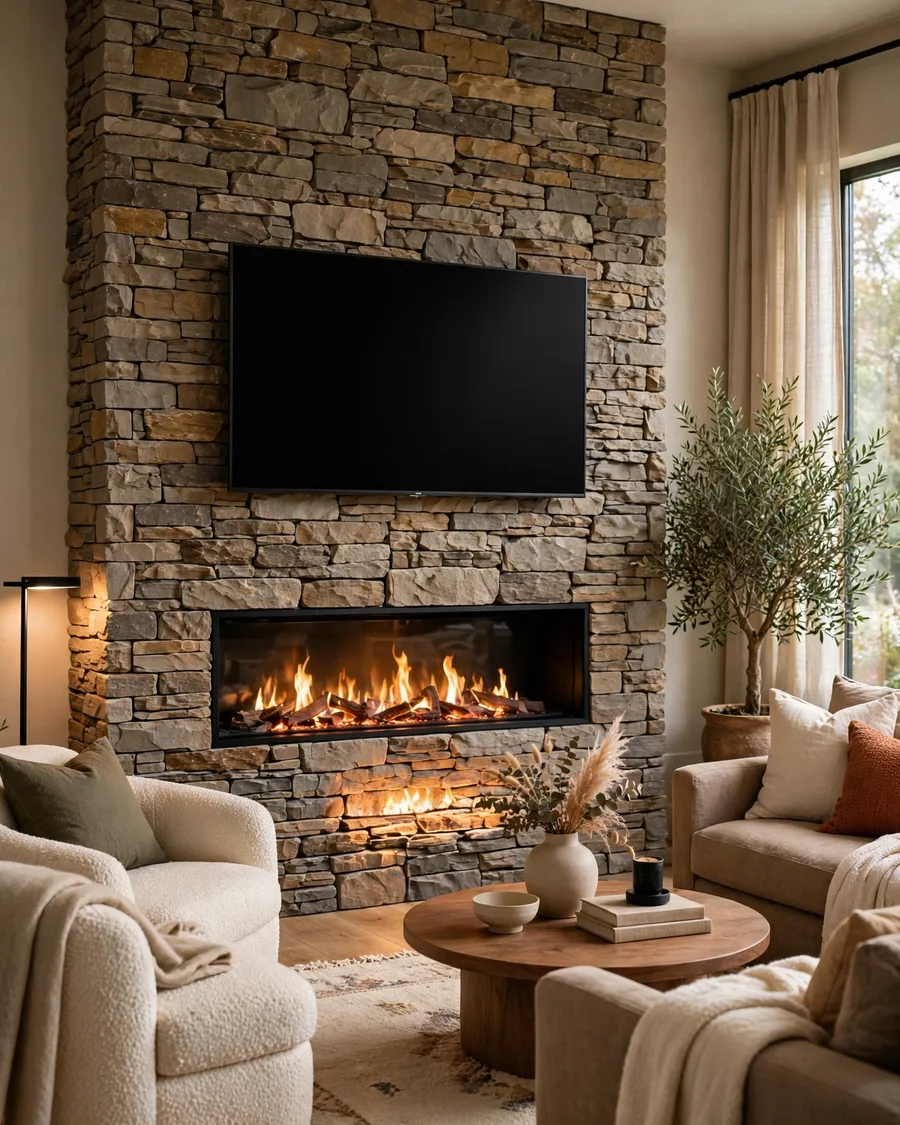
Mounting the TV above the fireplace puts the room’s two focal points on one wall, and a stone surround gives the screen a natural frame. Best for: rooms where the fireplace is the natural centre. Styling tip: style the mantel low so nothing blocks the screen. Pro tip: check your TV maker’s heat limits and your fireplace manual first — some fireplaces run too hot for a screen above them. For mantel styling with a screen above it, see our fireplace decor ideas.
32. A Marble-Look Panel
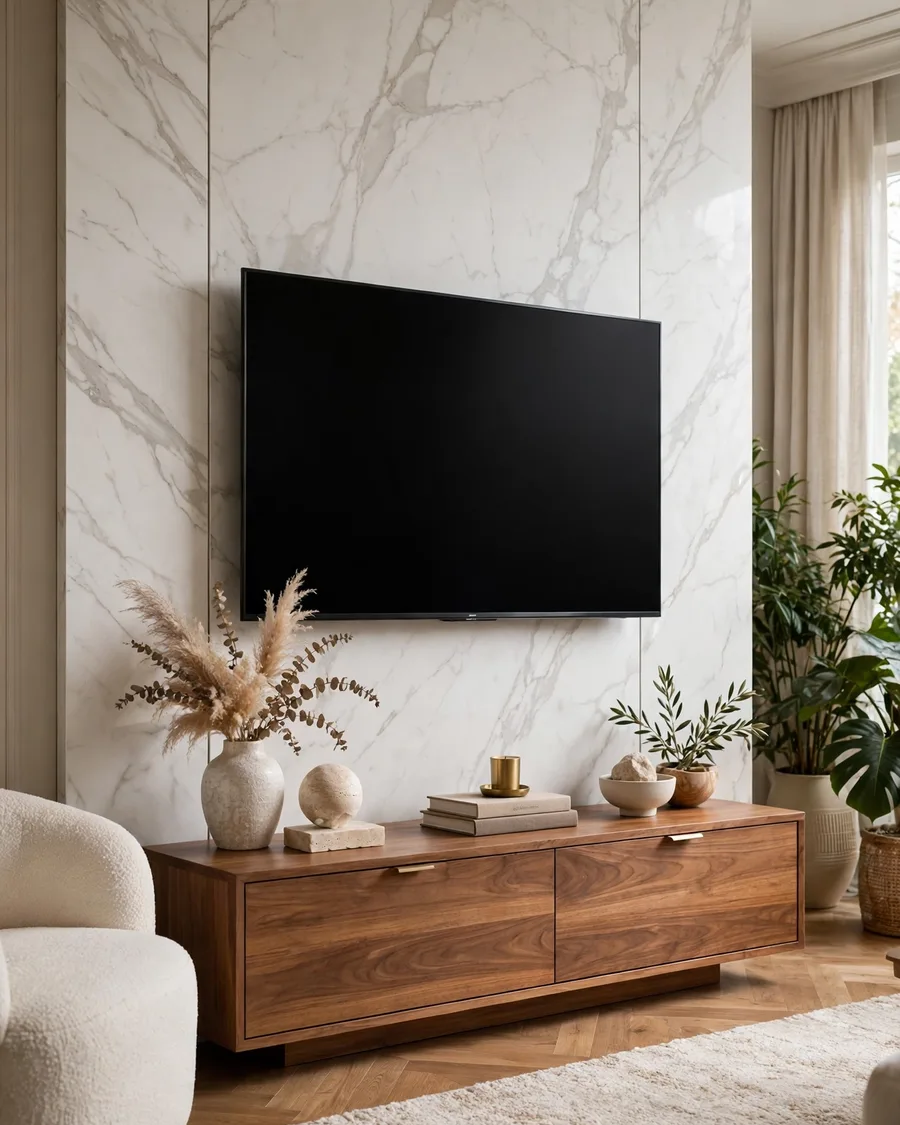
A marble-look panel behind the TV — real stone or a good porcelain slab — adds quiet luxury and a cool backdrop that suits the screen’s glass. Best for: luxe modern and contemporary rooms. Styling tip: pair it with warm wood below so the wall does not feel cold. Pro tip: book-match the veining across the panel joints, or the pattern break will sit right behind the screen where everyone looks.
33. Tall Plants Flanking the TV
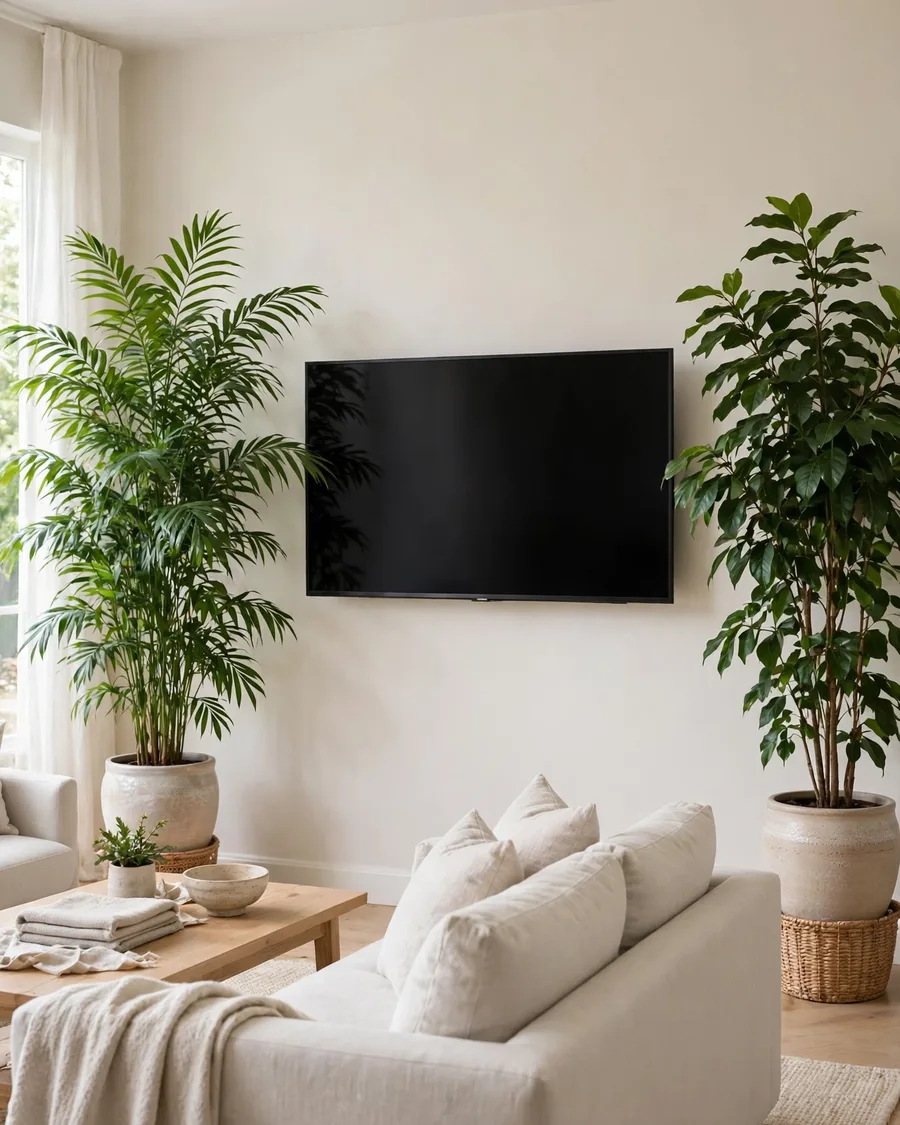
Two tall plants in ceramic pots, one on each side of the TV, soften the screen’s hard edges with green. A fiddle-leaf fig or olive tree works well. Best for: bright rooms and plant lovers. Styling tip: use matching pots so the pair frames the screen. Pro tip: keep leaves at least 6 inches from the screen — leaves pressed against a warm TV dry out and drop onto the console.
34. Renter-Friendly Peel-and-Stick Panels
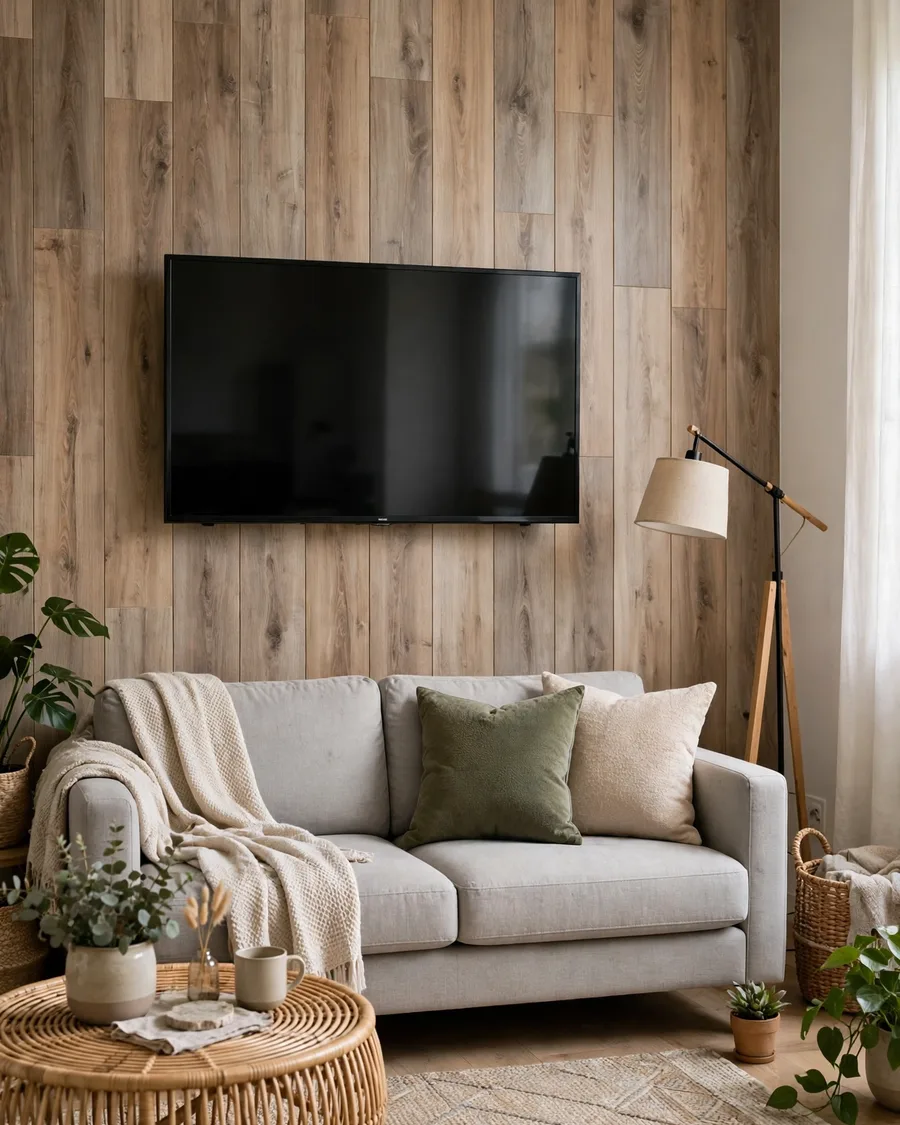
Peel-and-stick wood-look panels give renters a slat-wall look with no nails and no glue. They lift off cleanly when you move. Best for: renters and first apartments. Styling tip: cover the whole wall, not just a strip behind the TV. Pro tip: test one panel behind the TV for a week first — on some paints the adhesive grips too well and lifts paint when removed.
35. A Corner Mount on a Swivel Arm
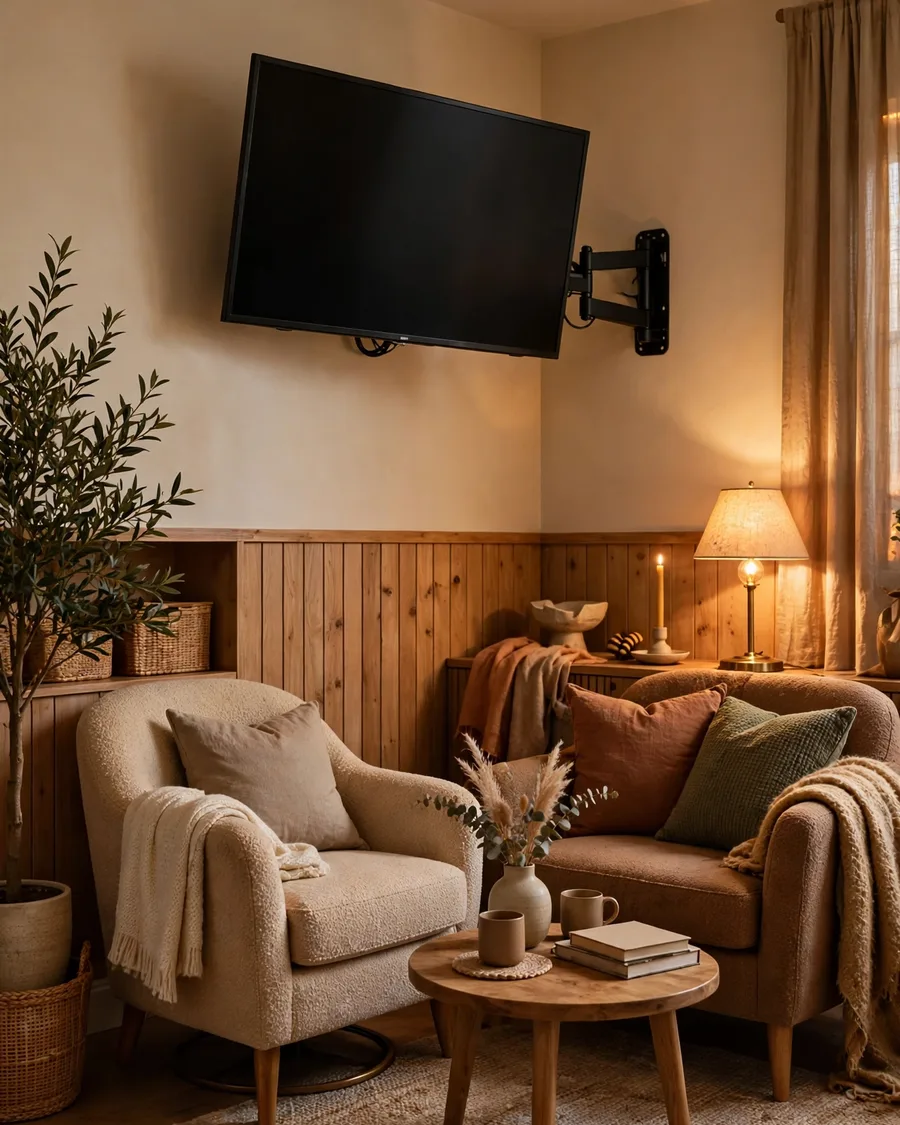
A corner mount on a swivel arm angles the TV into the room, freeing the main wall for art or shelves. Pull it out to watch, push it back when done. Best for: small or oddly shaped living rooms. Styling tip: style the freed-up main wall with one large piece of art. Pro tip: buy a mount rated for at least 1.5 times your TV’s weight — a swivel arm strains the wall far more than a flat mount.
TV Wall Decor Care & Maintenance
TV walls stay tidy with small habits: dust slats and shelves weekly, because a dark screen shows every speck; wipe the screen with a dry microfibre cloth, never a wet spray; and check mounts and shelves yearly — tighten any bolt that has loosened. Keep plants watered away from the wall. For more mounting and hiding ideas, see the Family Handyman TV wall ideas guide.
Frequently Asked Questions
How high should I mount my TV on the wall?
Mount the TV so the centre of the screen sits about 42 inches from the floor when you watch from a standard sofa — roughly seated eye level, which keeps your neck relaxed during long films. If your sofa is low, drop it a few inches; if you watch from bar stools, raise it. Never mount a TV over a tall fireplace without checking the viewing angle — a screen that sits too high causes neck strain within an hour.
How do I hide TV cables on the wall?
Run cables through the wall in a rated cable kit if you own your home — the cleanest finish, with wires fully out of sight. Renters can use a paintable cable raceway that sticks to the wall, or a hollow trunk down to the console. Keep power and HDMI cables separate where you can, and leave a little slack behind the TV so you can pull it forward to swap a cable.
What is the best colour to paint behind a TV?
A deep charcoal, dark navy or very dark olive works best, because the black screen melts into the wall. If a dark wall feels too bold, a warm greige or sage green softens the contrast. Avoid bright white behind a big screen — the contrast makes the black box look bigger. Whatever colour you choose, paint the whole wall.
Can I put a TV above a fireplace?
Yes, but only after checking the heat. Measure the mantel temperature while the fire runs — most TV makers warn against mounting where the wall regularly exceeds about 40 degrees Celsius. A wide mantel deflects heat, and an electric fireplace runs cooler than wood or gas. Also check the viewing height: a TV over a tall fireplace often sits too high, so a pull-down mount is worth the extra cost.
How do I decorate around a TV without it looking cluttered?
Give the screen one clear treatment — a gallery wall, slats, or shelves — and keep the rest quiet. Leave breathing room between objects, style shelves in odd numbers, and hide devices inside a console. One basket per shelf and one material repeated across the wall keeps the eye calm. If a shelf holds more than three objects, remove one — the wall around the TV needs calm, not more noise.
What is the cheapest way to make a TV wall look good?
Paint is the cheapest fix: one tin of deep charcoal paint makes the screen vanish into the wall. Next cheapest is a DIY wood frame around the screen, made from a few lengths of trim. Peel-and-stick panels and a thrift-shop console come next. Skip the expensive built-ins — most rooms look finished with paint, a frame and a tidy console alone.
Final Thoughts
A TV wall does not need a big budget — it needs one clear decision. Pick the treatment that fits your room: a gallery wall, wood slats, a dark painted wall, or doors that hide the screen completely. Mount at eye level, hide the cables, and give the screen a console underneath. Try one idea this weekend and save this guide for your next living room refresh.
