
Small mud kitchen ideas prove you do not need a big backyard for magical outdoor play. A patio corner, a strip beside the fence, or even a balcony can spark hours of messy, imaginative fun. Here are 31 small mud kitchen ideas for tiny gardens and corners.
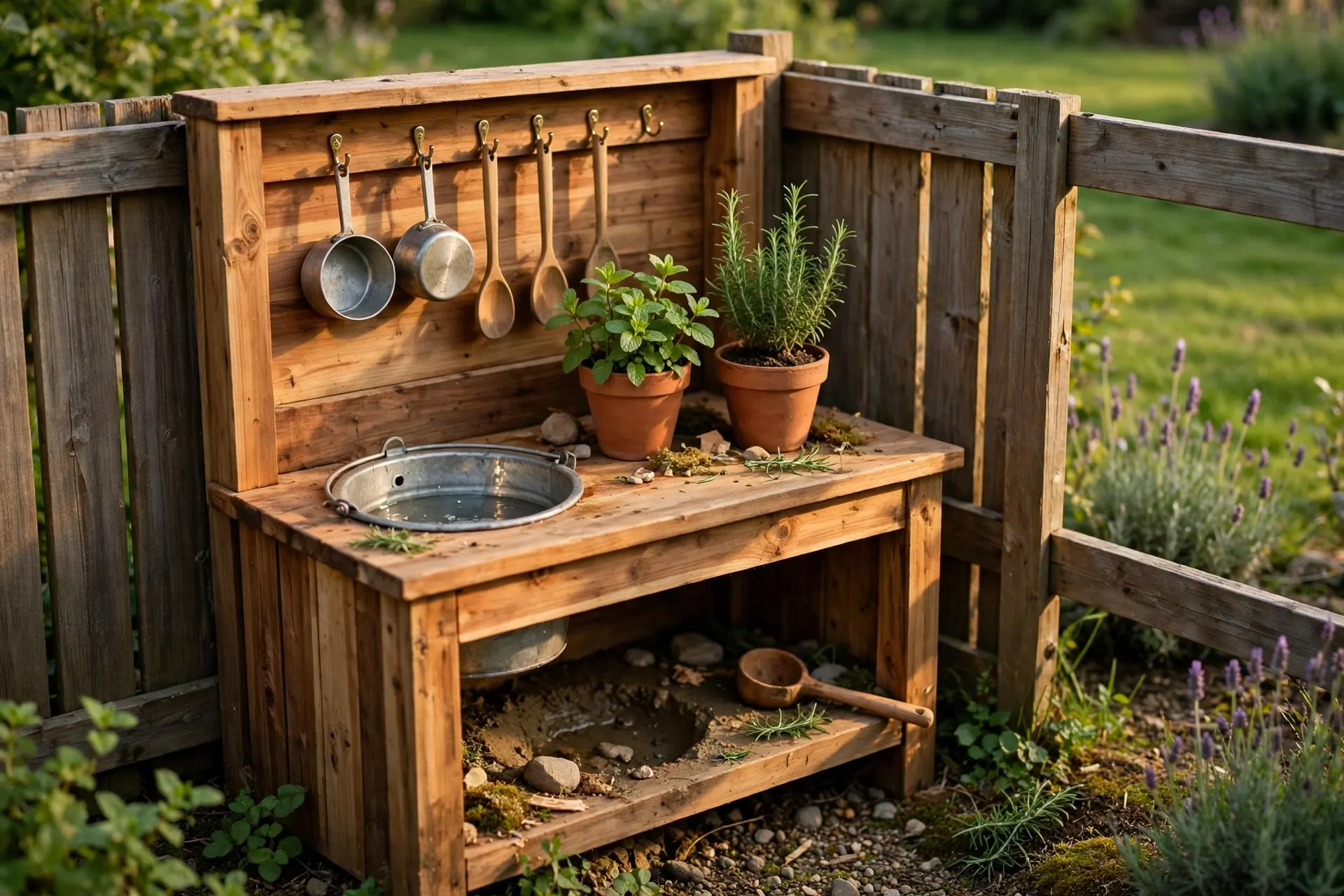
1. Tuck a Corner Nook Against the Fence
A corner nook uses the most wasted space in any garden. Push a slim counter where two fences meet, with a small shelf above.
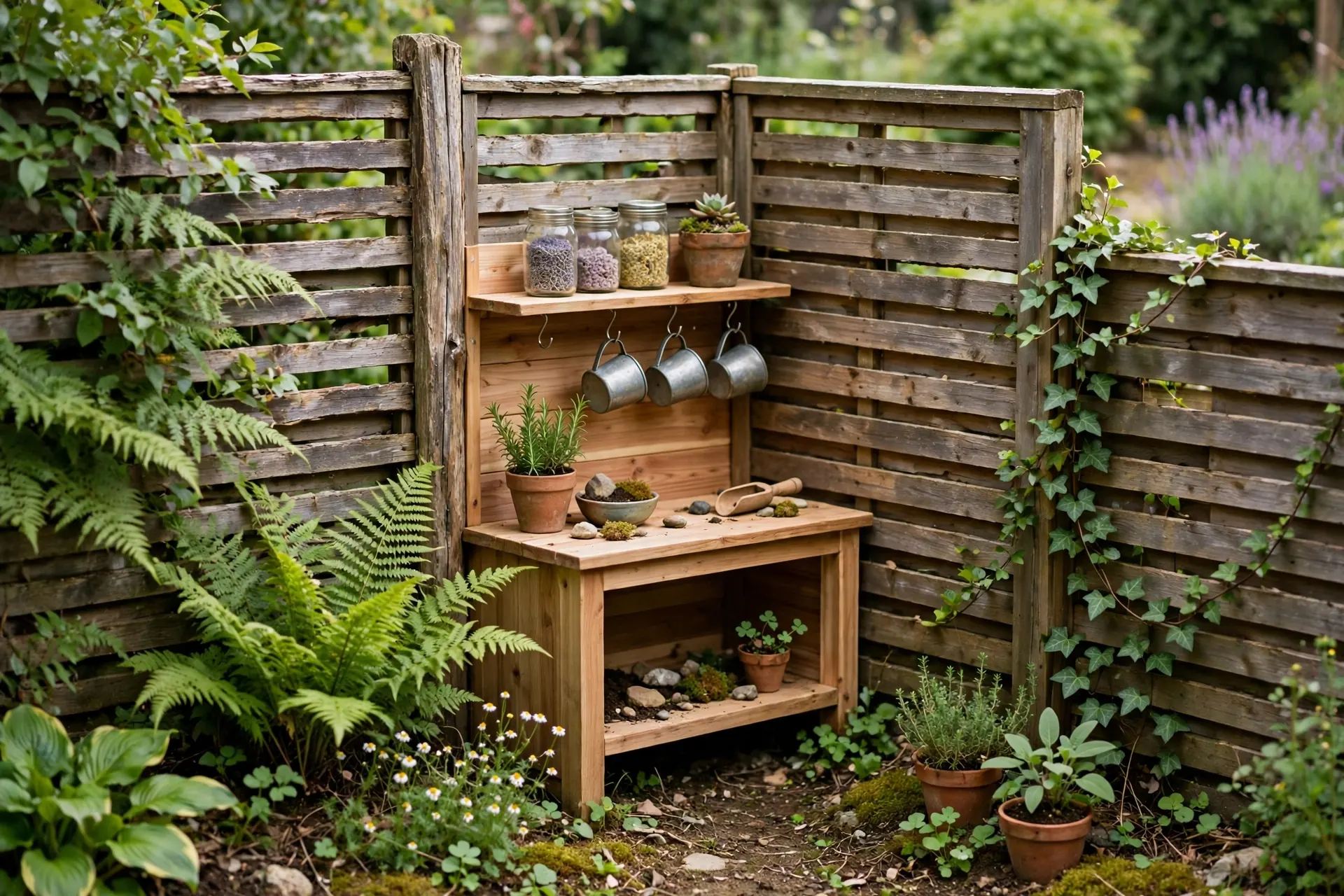
2. Build a Slim Pallet Counter
One pallet stood on end makes a narrow counter for any wall. Add a plank top and hooks. For more builds, see our DIY mud kitchen ideas.
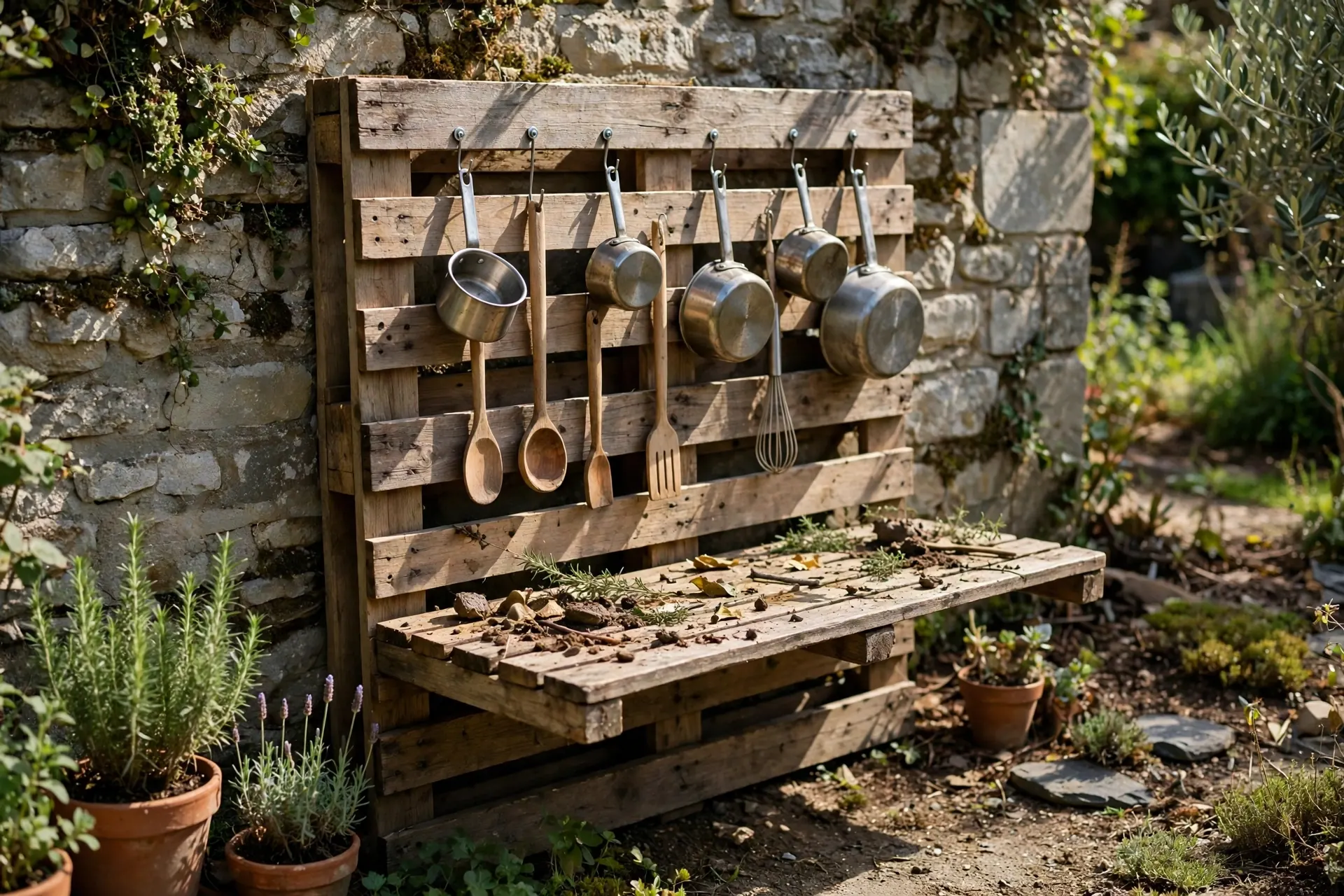
3. Stack Crates Into a Mini Counter
Two sturdy crates stacked side by side become an instant mini counter with storage below. Kids can reach everything.
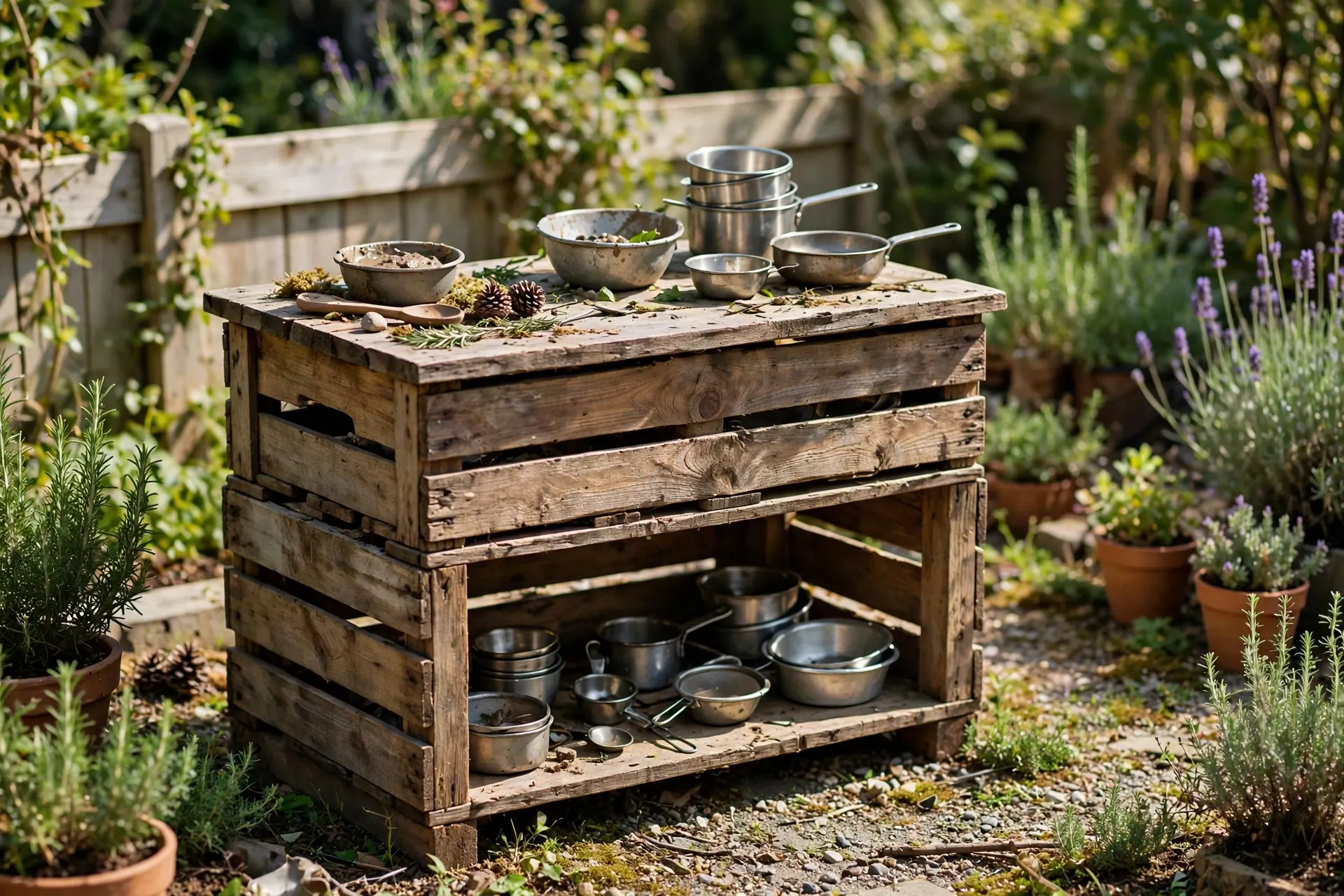
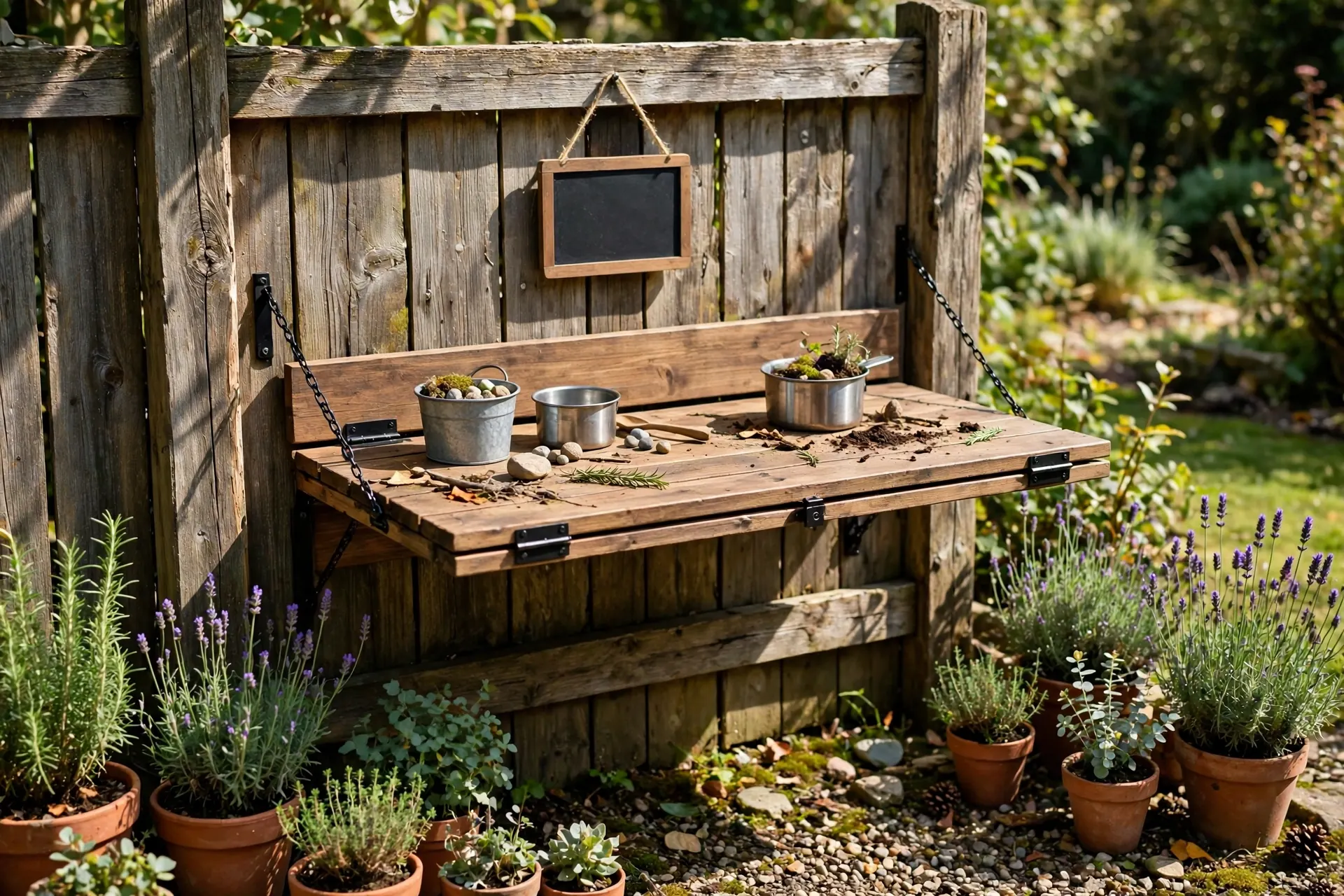
4. Add a Fold-Down Wall Counter
A fold-down counter screwed to the fence or house wall is the ultimate space saver. It folds flat when playtime ends and drops down in seconds.
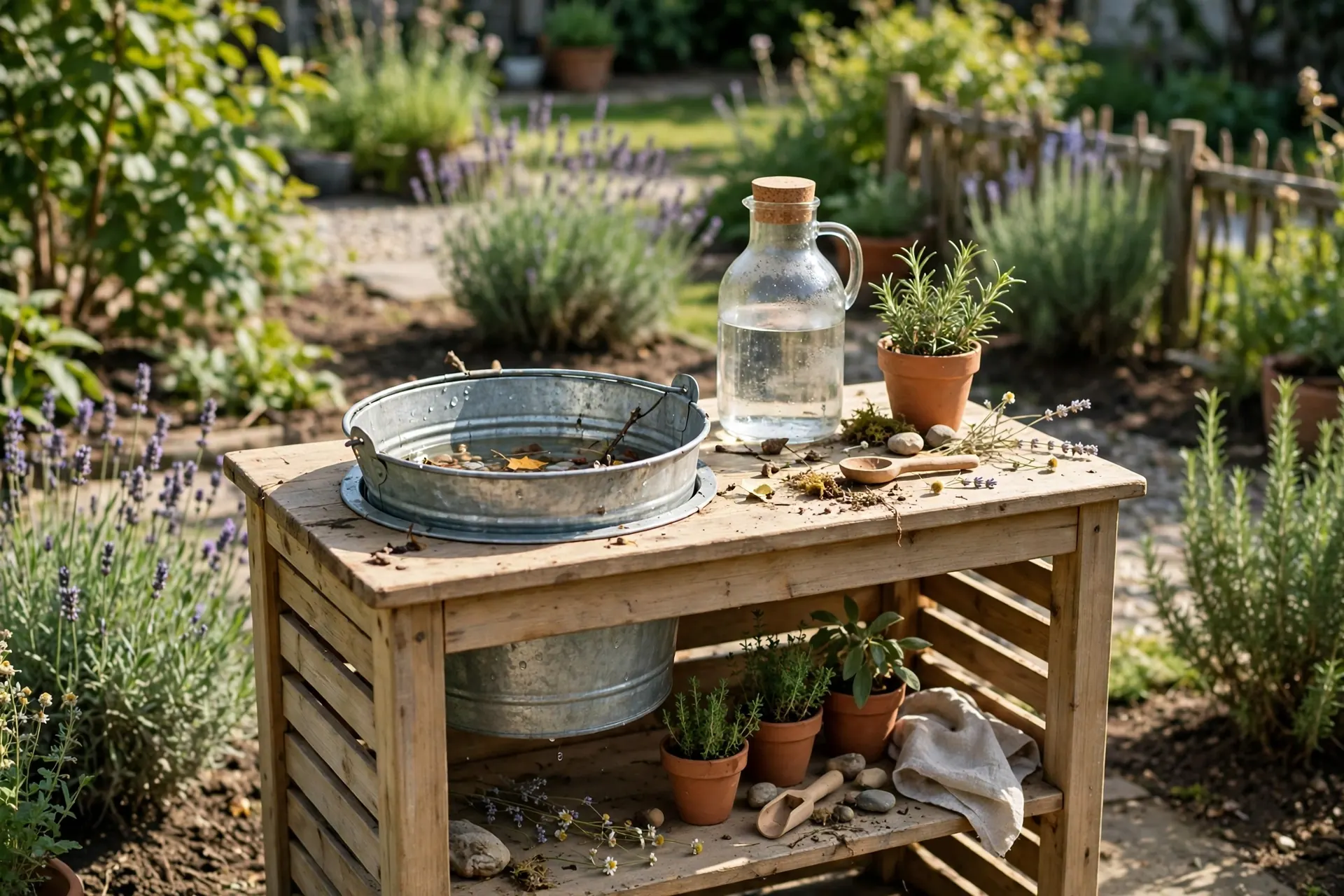
5. Drop a Bucket Into a Bowl Sink
Cut a hole in the counter and drop a metal bucket or bowl into it for an instant sink. It lifts out for emptying.
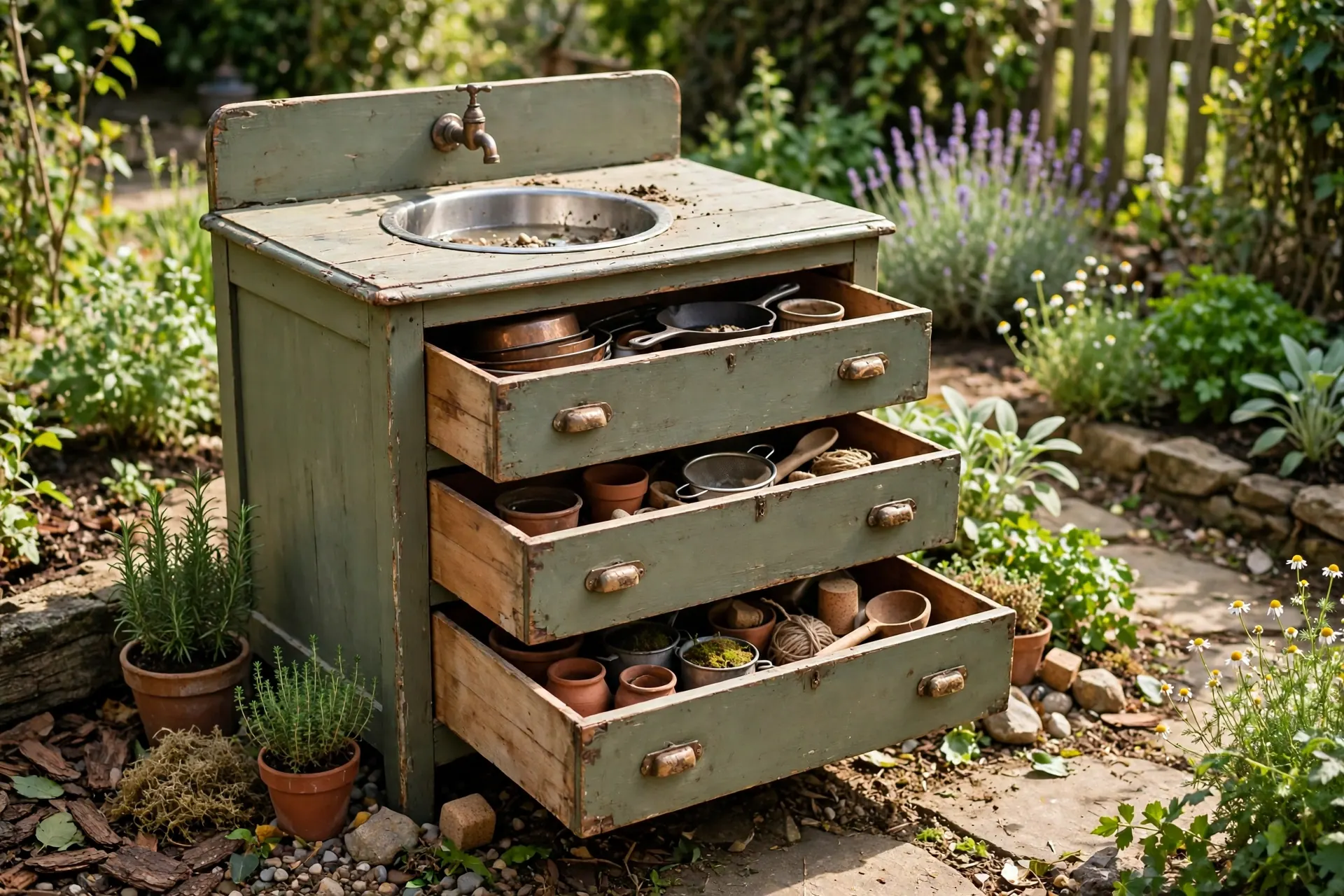
6. Upcycle an Old Dresser
An old dresser makes a ready-made mud kitchen with drawers. Remove the top drawer, set a bowl in as a sink, and paint it with outdoor paint.
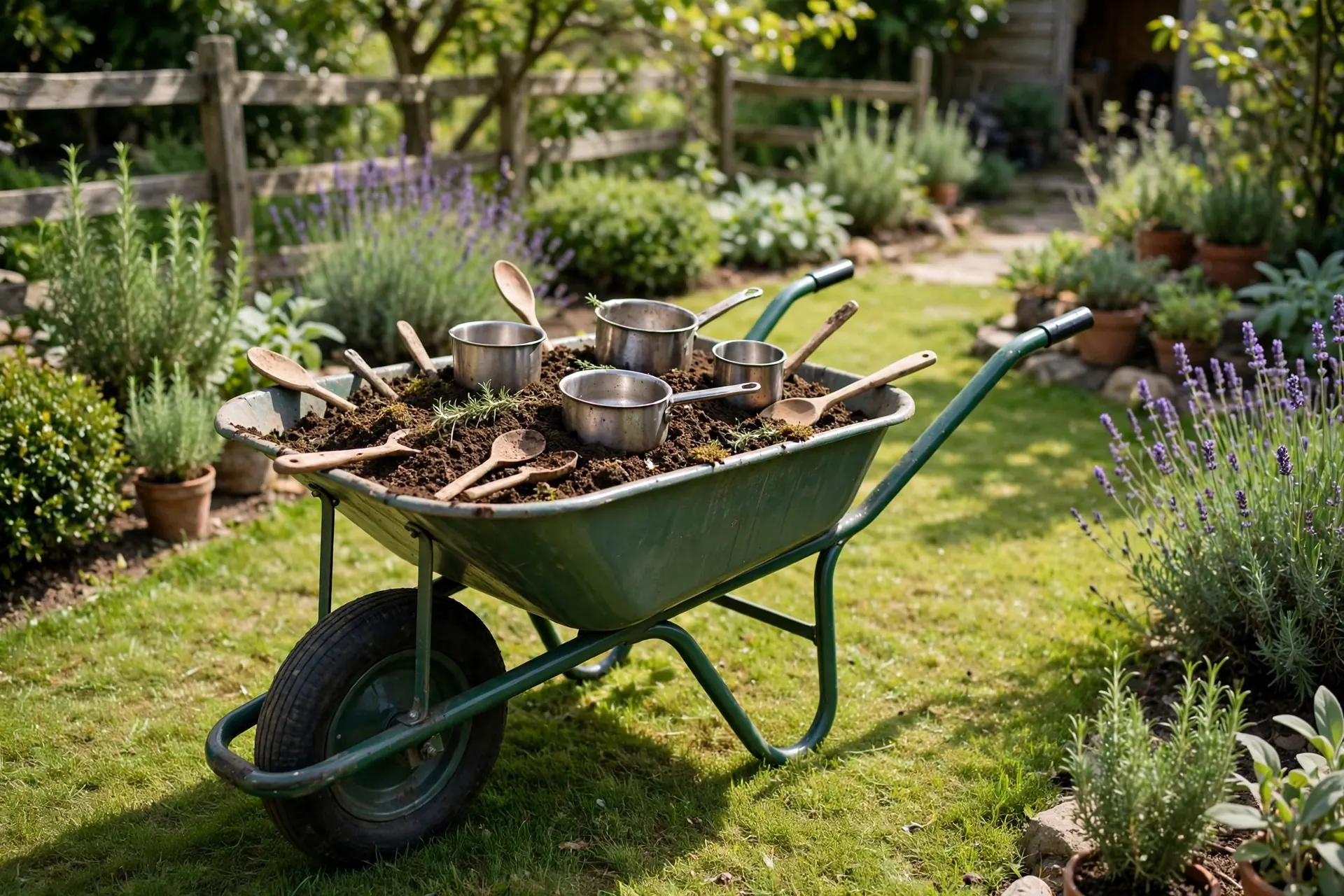
7. Roll Out a Wheelbarrow Kitchen
A wheelbarrow is a mud kitchen on wheels. Fill it with soil, pots, and water, let kids cook and stir, then wheel it away when the garden needs tidying.
8. Set Up a Balcony Tub Kitchen
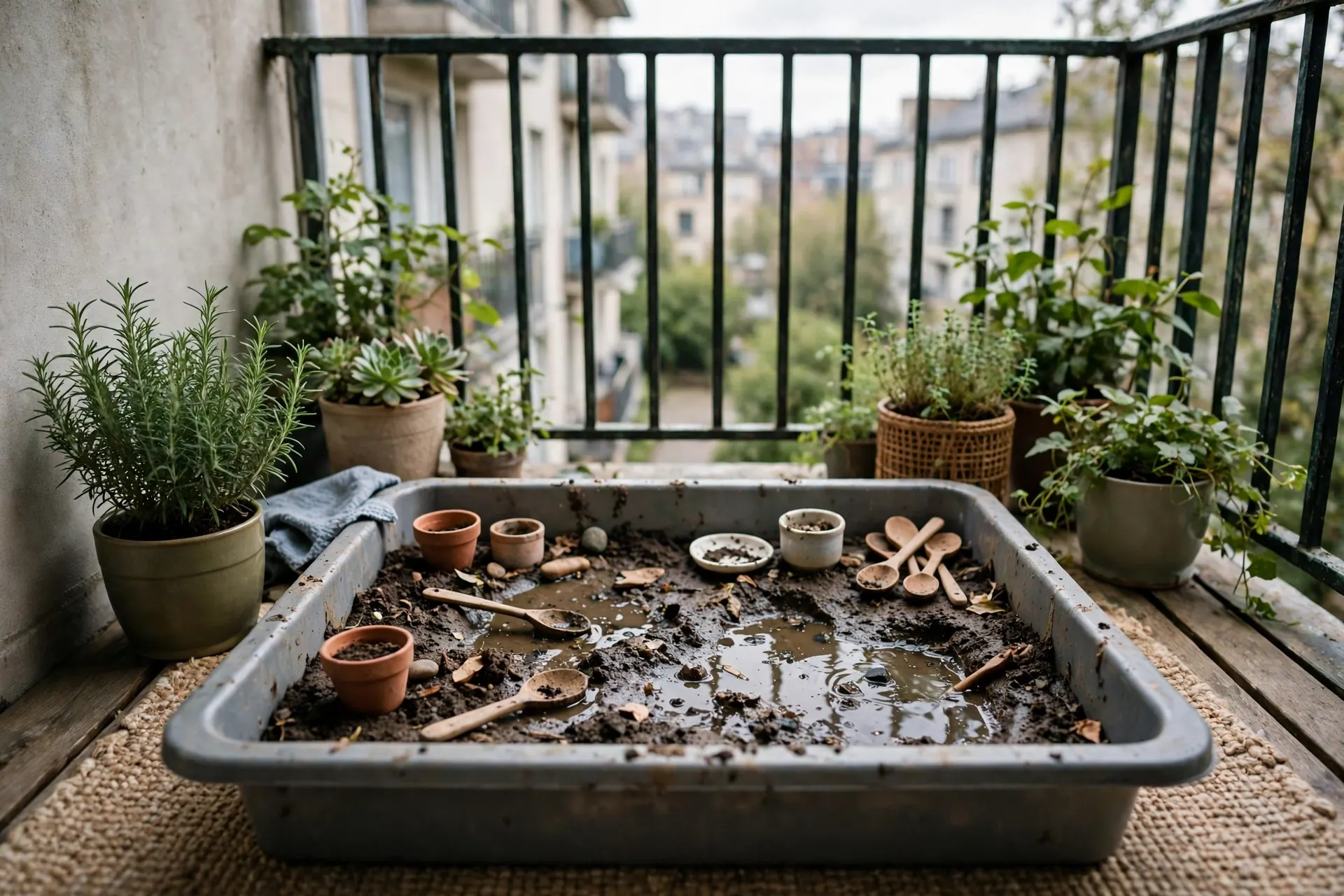
No garden at all? A shallow tub on a balcony works beautifully. Fill it with soil and water, add pots and spoons for the full mud kitchen experience.
9. Mount a Fence Shelf Station
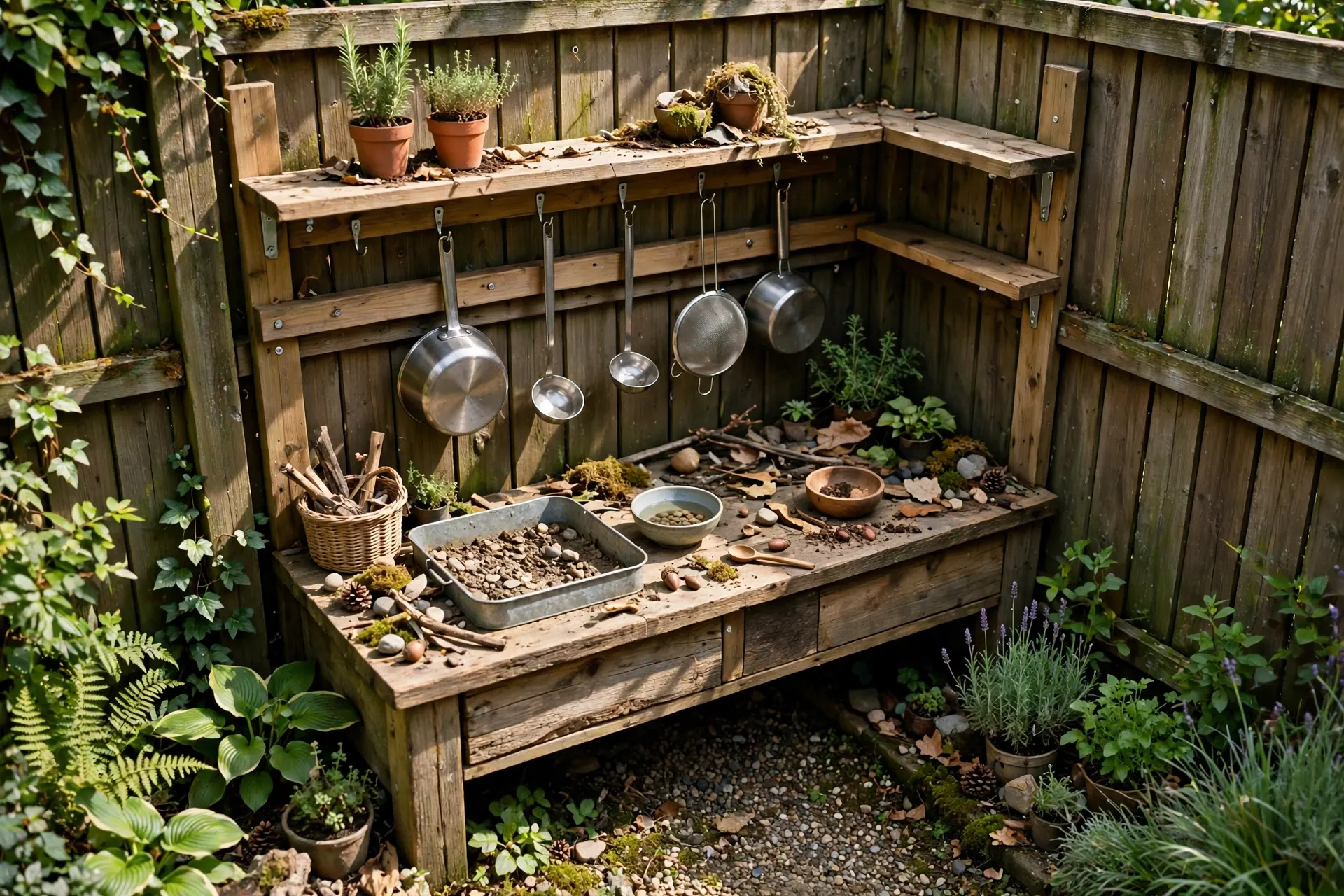
Screw shelves and a row of hooks onto the fence and the mud kitchen needs zero floor space. Pots hang from hooks and jars sit on shelves.
10. Use a Tree Stump Counter
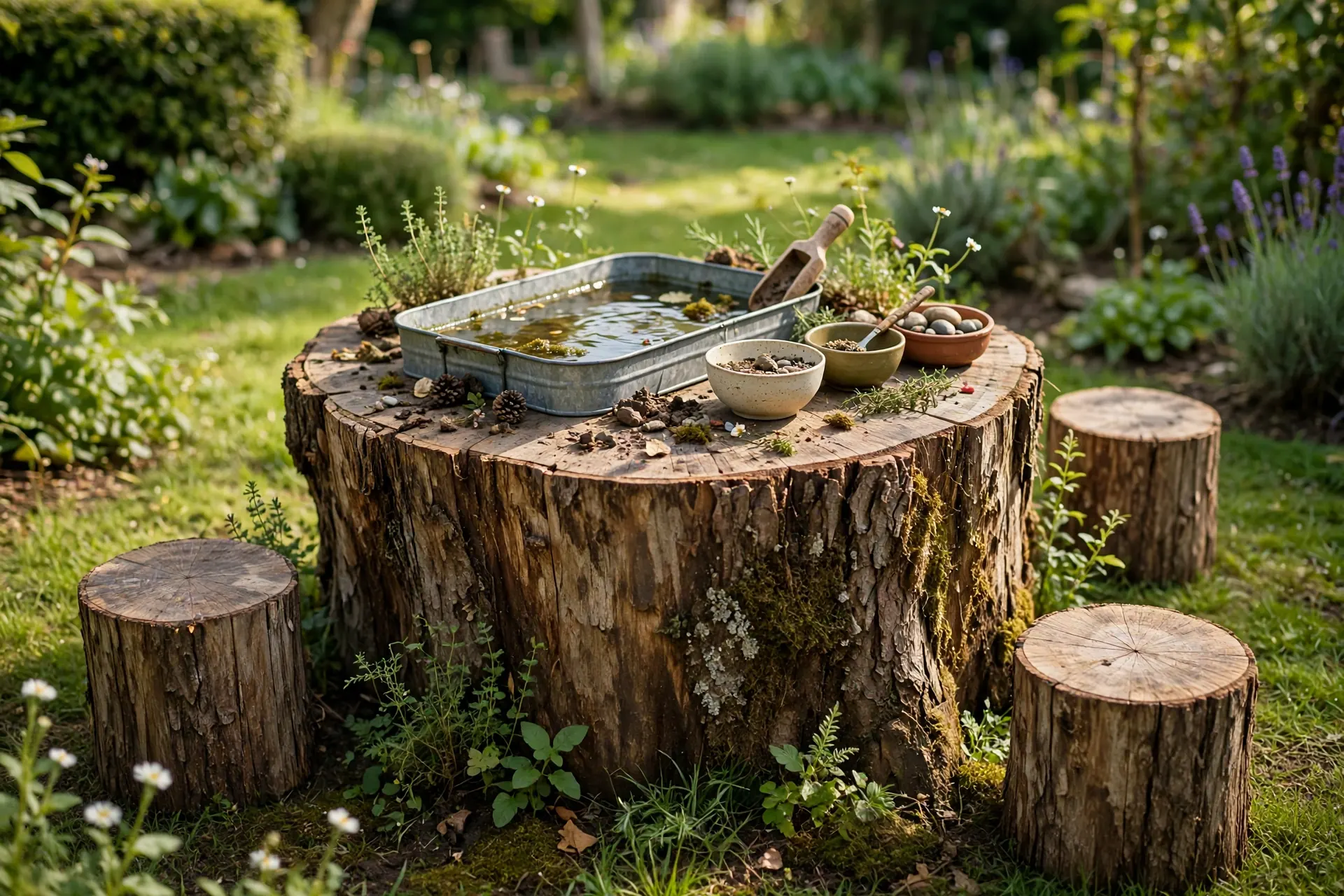
A flat-topped tree stump is a free, sturdy counter that needs no building. Set water and bowls on top, with smaller stumps as stools.
11. Hang a Chalkboard Menu
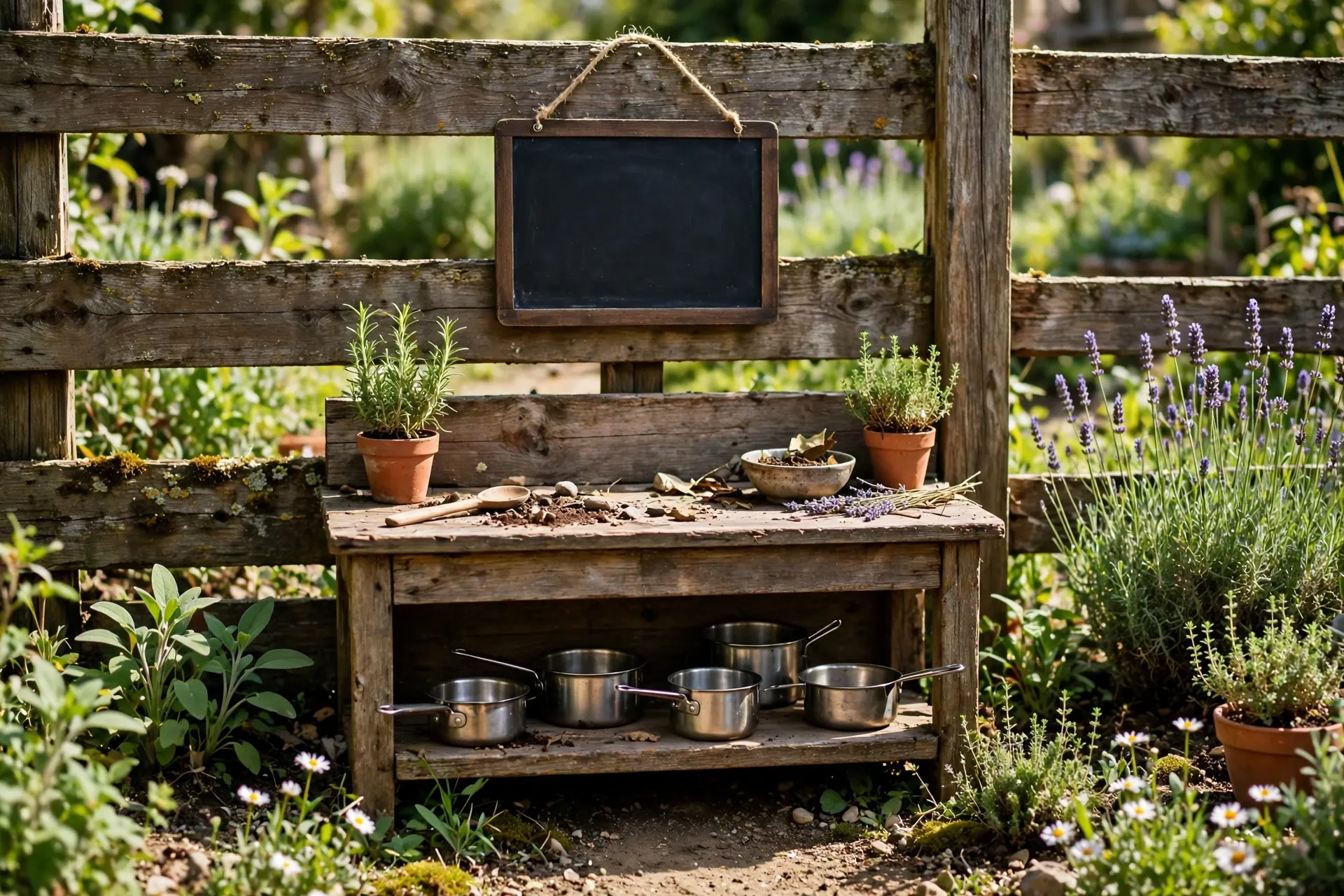
A small chalkboard on the fence turns a plain counter into a café. Kids write the menu, take orders, and price mud pies, adding reading practice.
12. Plant a Tiny Herb Garden Beside It
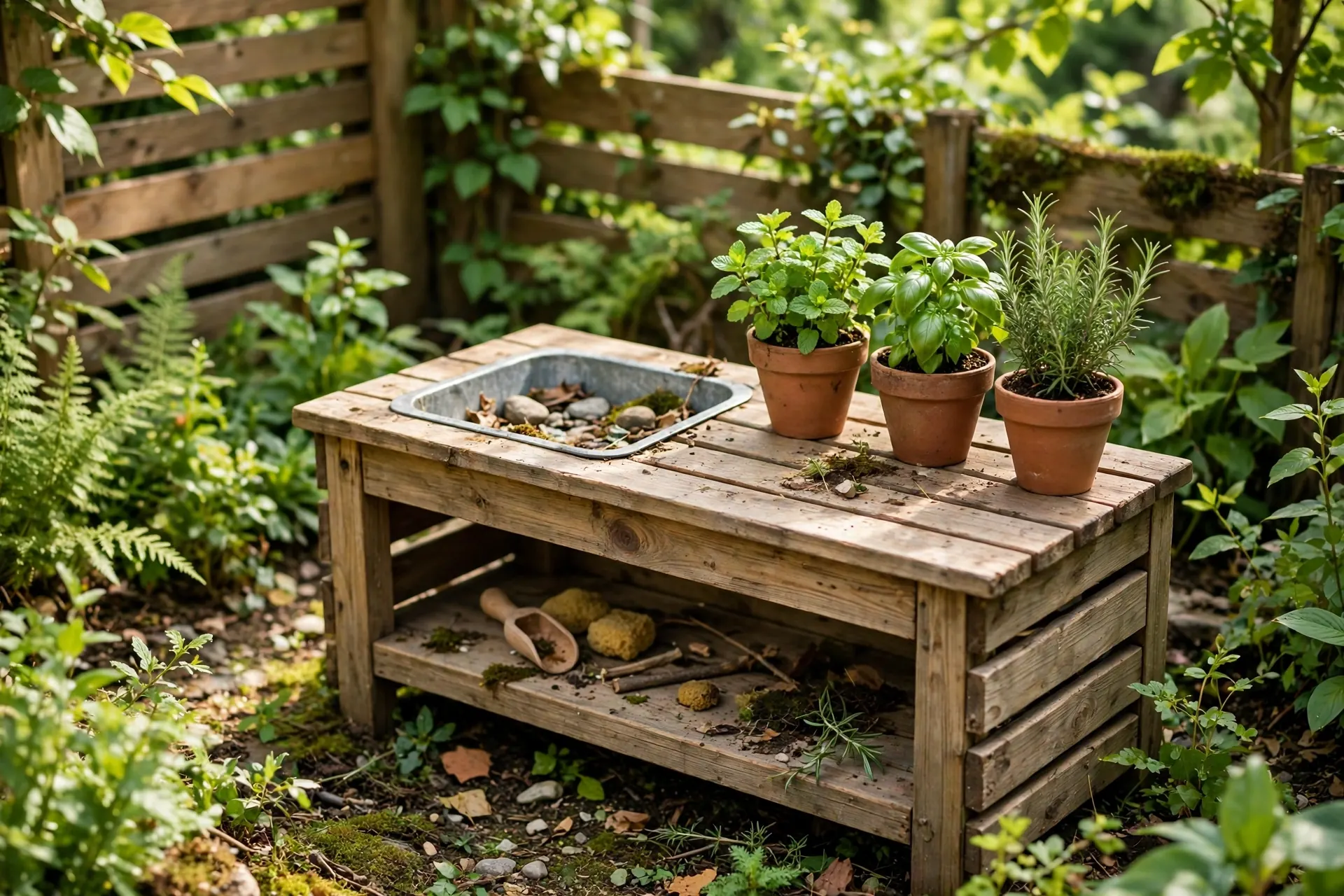
Potted mint, basil, and rosemary beside the counter double as decoration and ingredients. Kids snip leaves into mud stews.
13. Add a Hand Pump Water Station
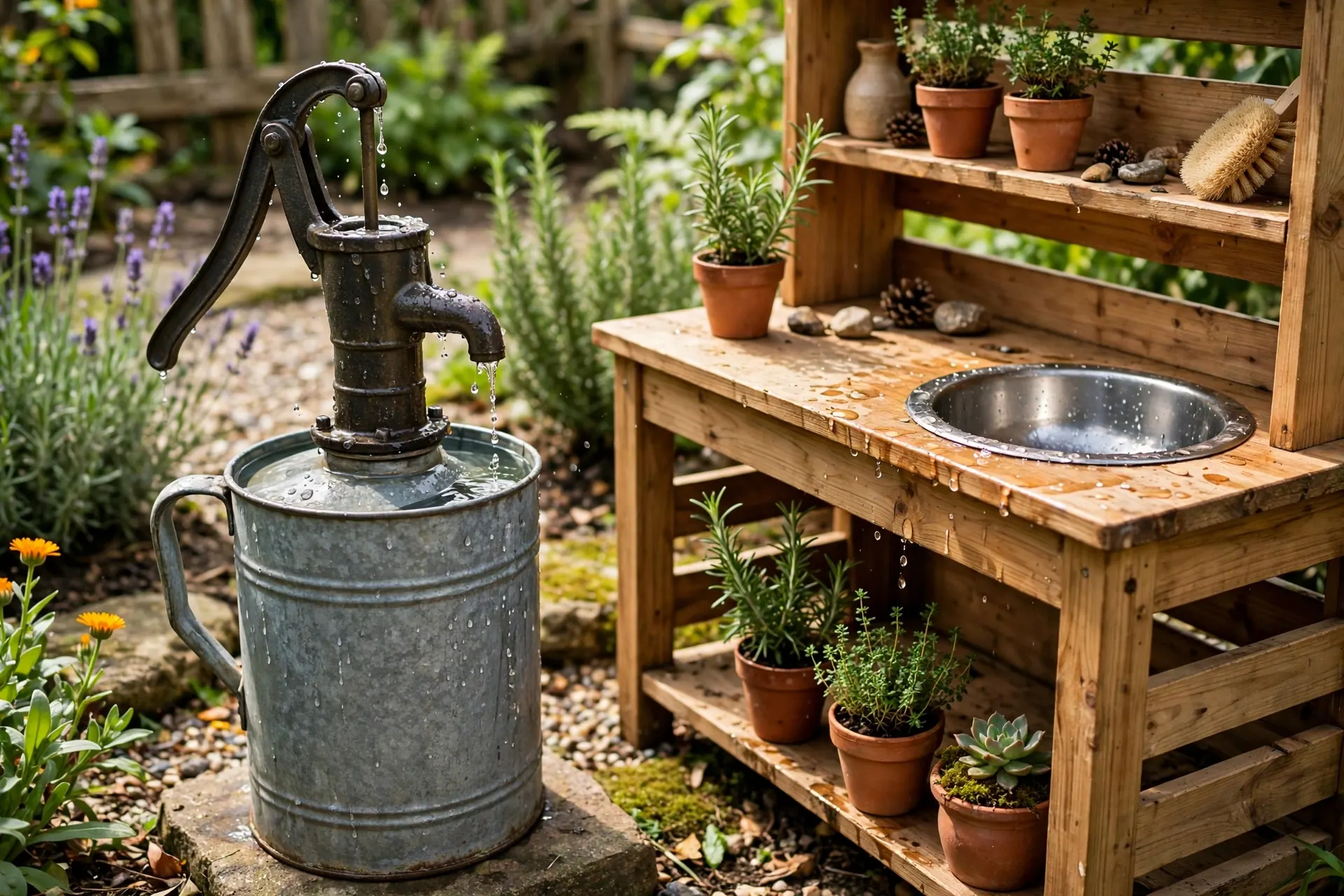
A hand pump on a water can gives kids running water without plumbing. They pump, pour, and splash, and you control the water.
14. Create a Mud Pie Bakery Shelf
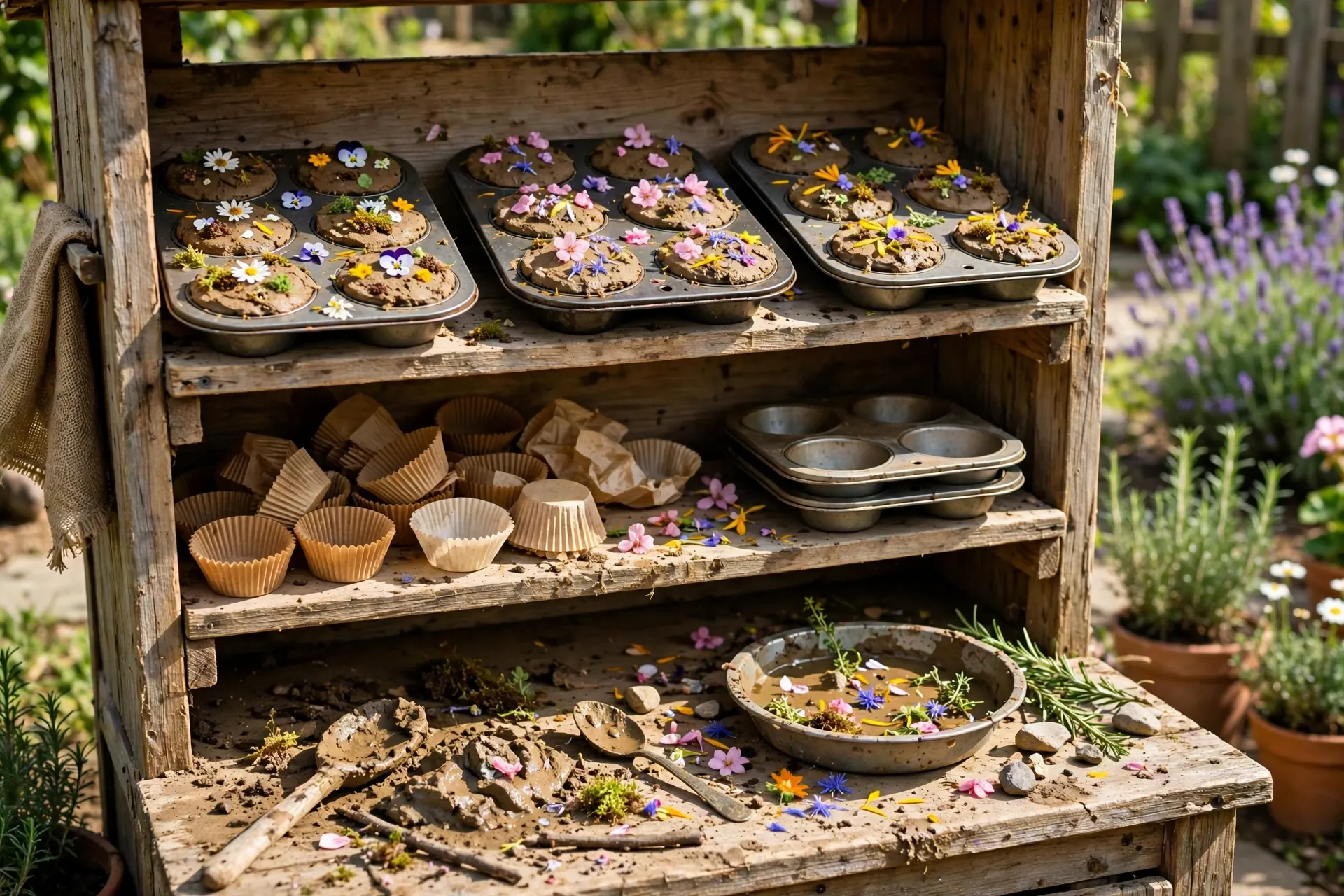
Dedicate one small shelf to baking: muffin tins, cupcake cases, and a rolling pin. Kids press mud into tins and decorate with petals.
15. Make a Potion Station With Jars
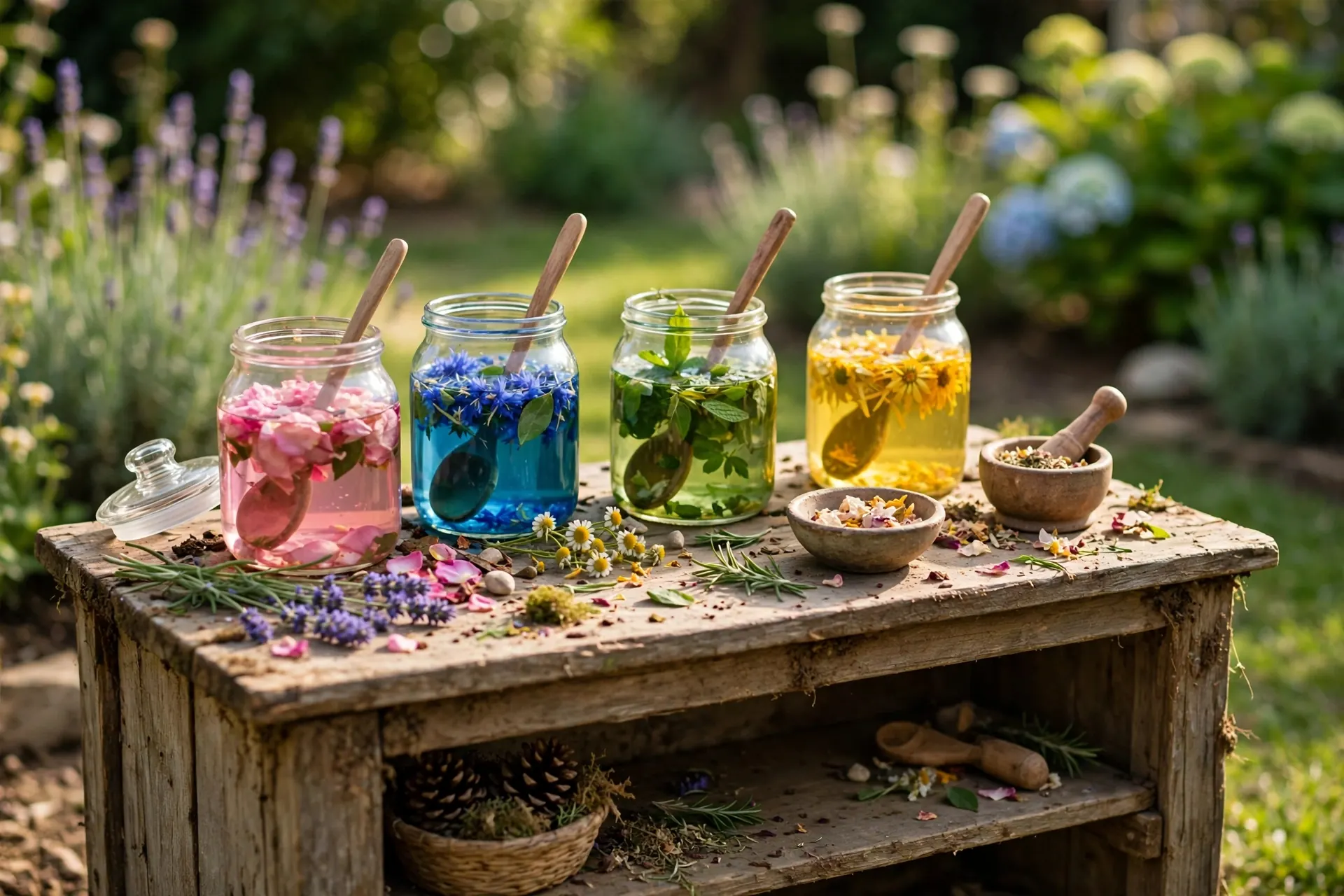
Glass jars filled with petals, leaves, stones, and colored water turn the counter into a potion lab. Kids mix, stir, and invent spells.
16. Set Up a Mini Market Stall
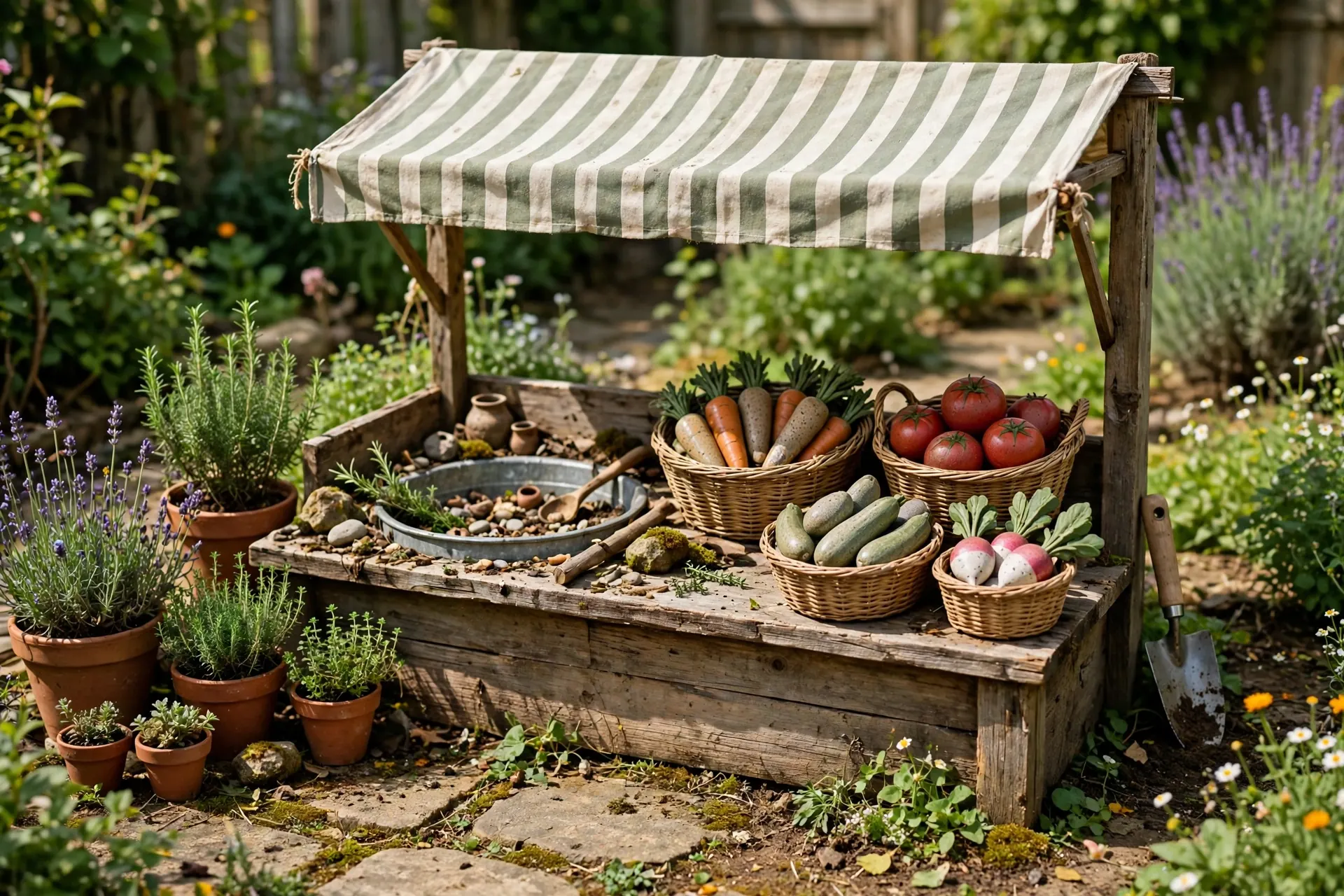
Add a tiny awning and a basket of painted stone vegetables, and the mud kitchen becomes a market stall. Kids sell mud produce and practice counting coins. For more themes, see our mud kitchen ideas for kids.
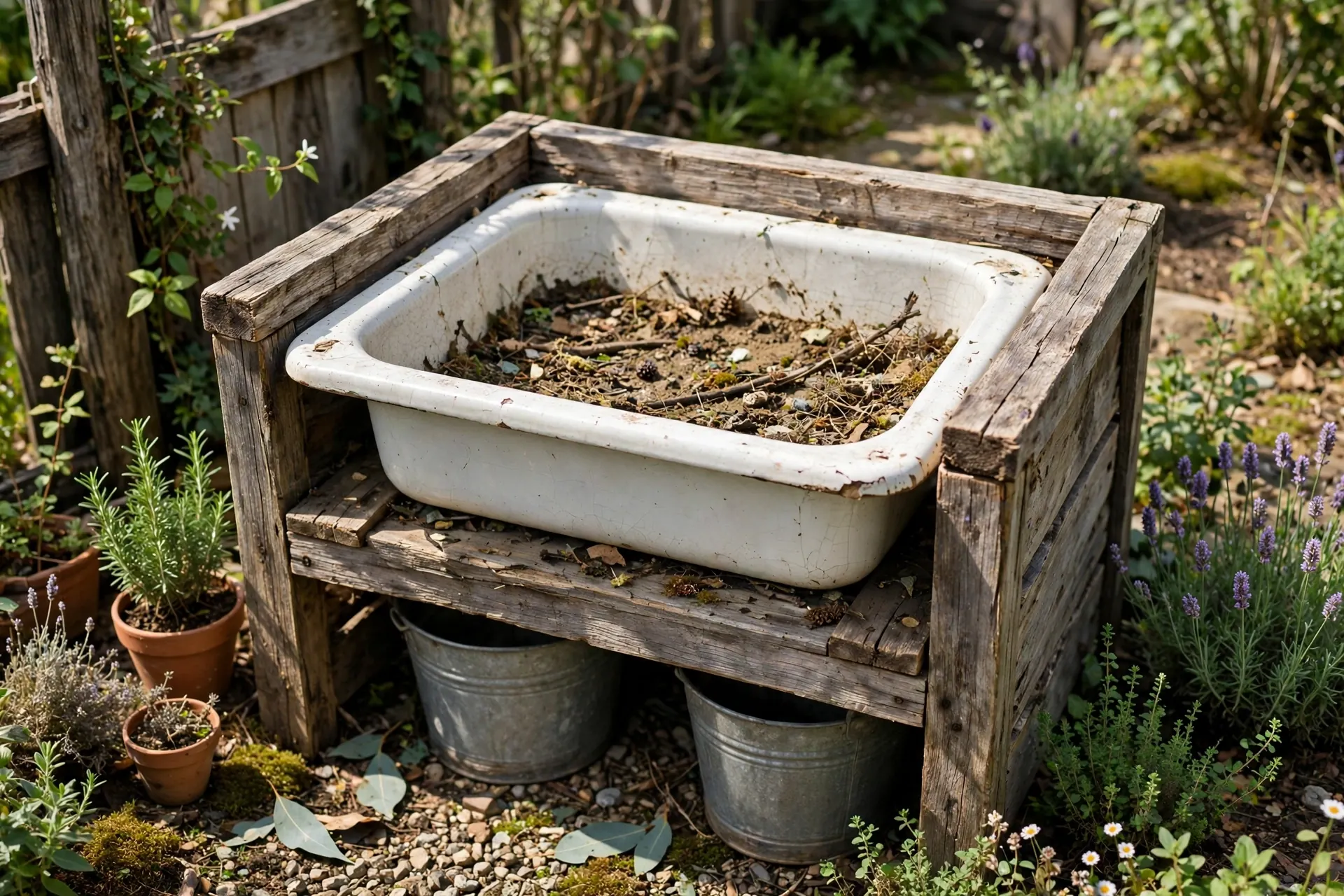
17. Reuse an Old Sink
A salvaged sink set into a simple wooden frame is the sturdiest small mud kitchen you can build. It has a real basin, drain, and room for buckets.
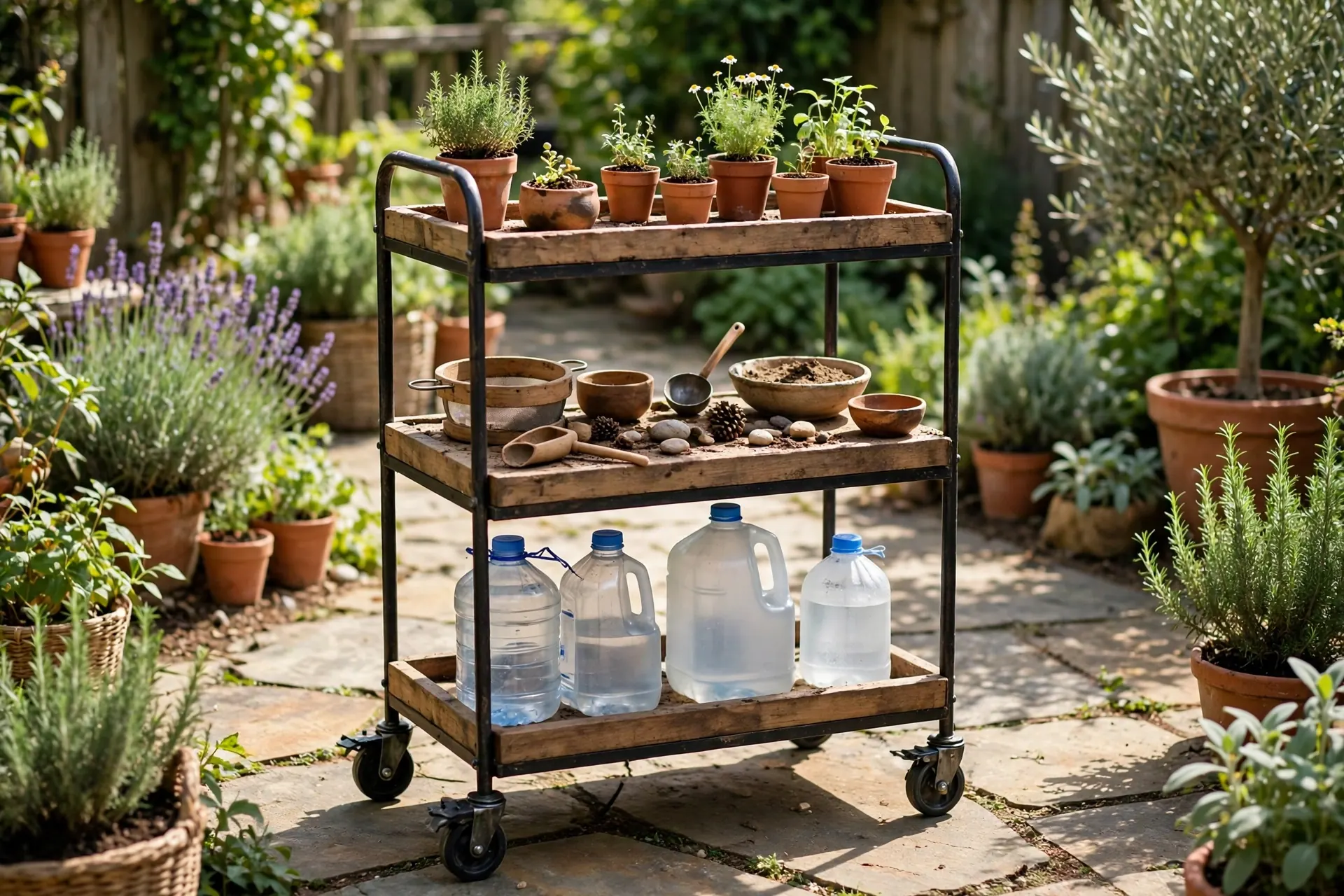
18. Use a Rolling Cart Kitchen
A three-tier rolling cart makes a mud kitchen you can park anywhere. Top tier is the counter, middle holds pots, bottom stores water jugs.
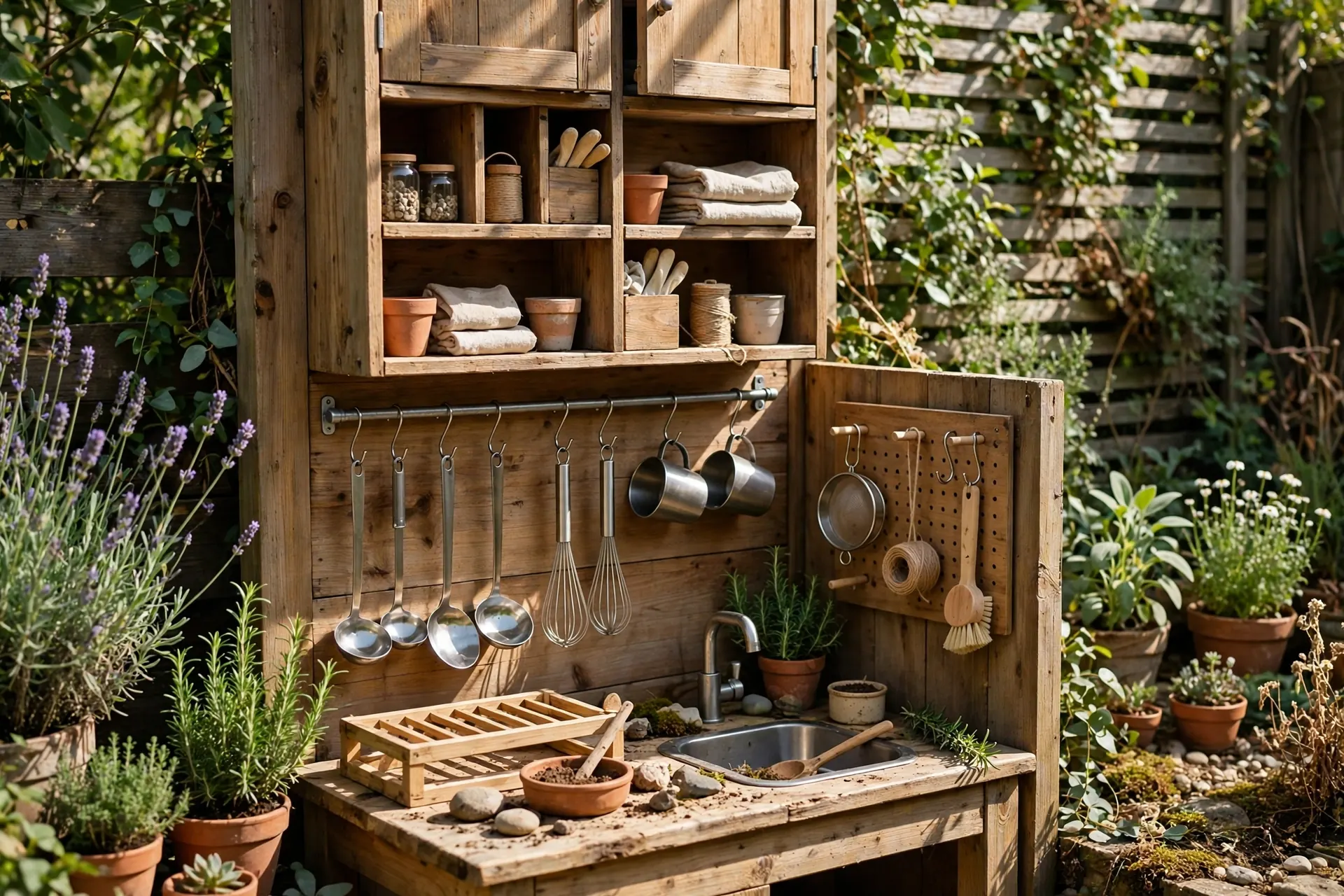
19. Go Vertical With Hooks and Rails
When floor space is gone, go up. A wall rail with S-hooks holds ladles, whisks, and cups, while a pegboard keeps tools visible and tidy. The counter stays clear for play.
20. Pair a Sand and Water Table
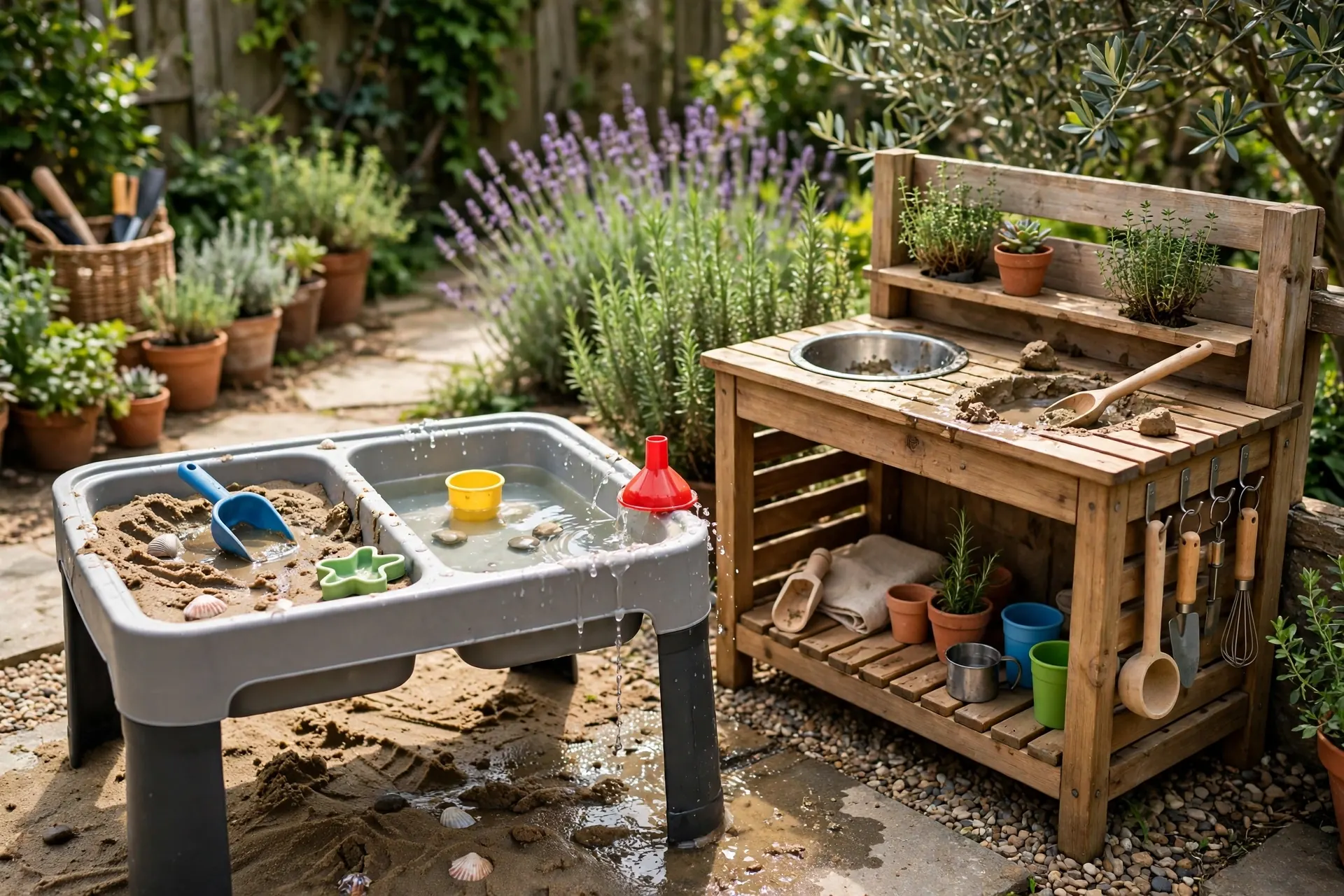
Set a small sand and water table beside the counter and the kitchen gains a second station. Kids scoop dry from one side, wet from the other.
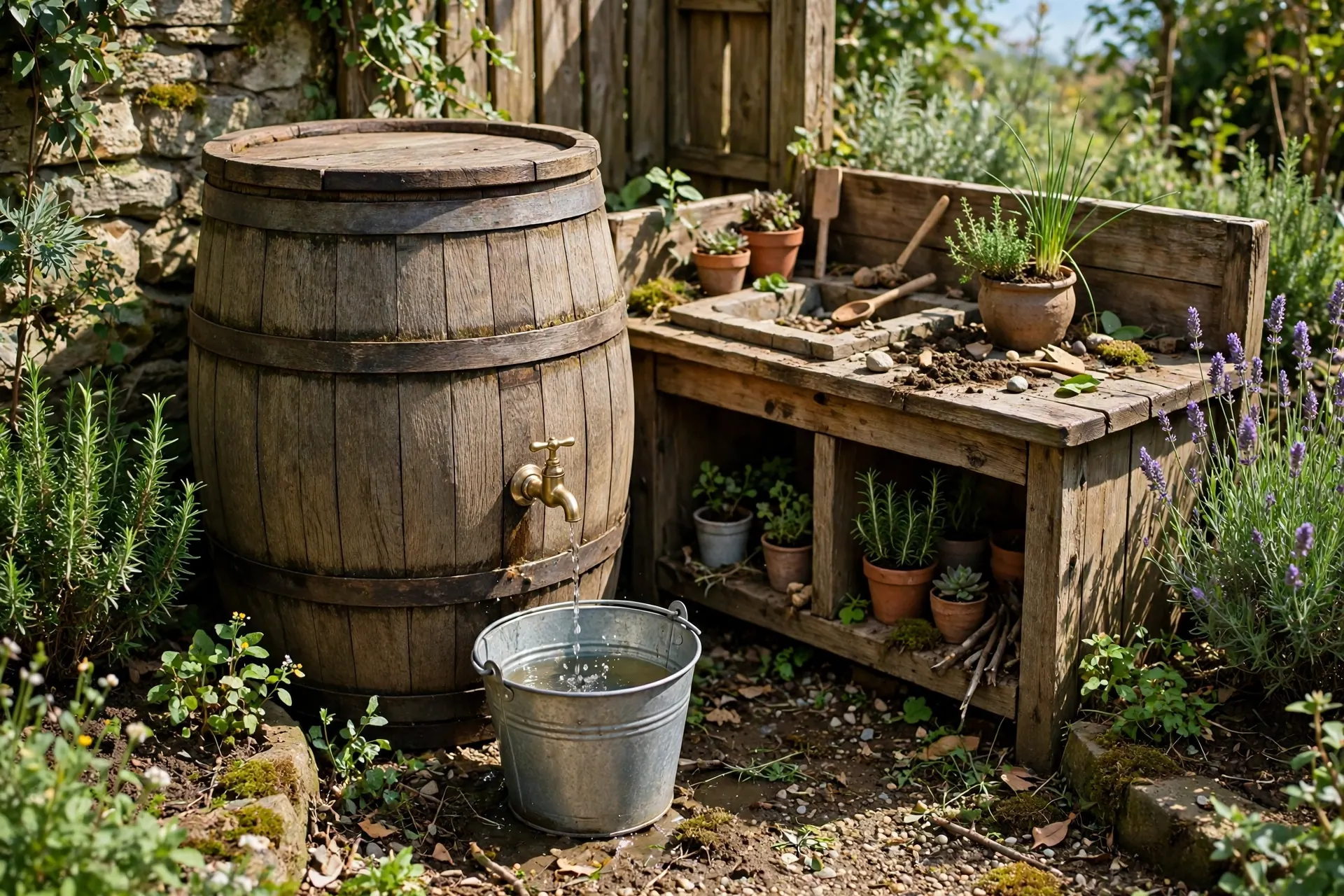
21. Add a Spout From a Rain Barrel
A rain barrel with a small tap beside the kitchen gives kids a real water supply and teaches them about collecting rain. Place a bucket under the tap.
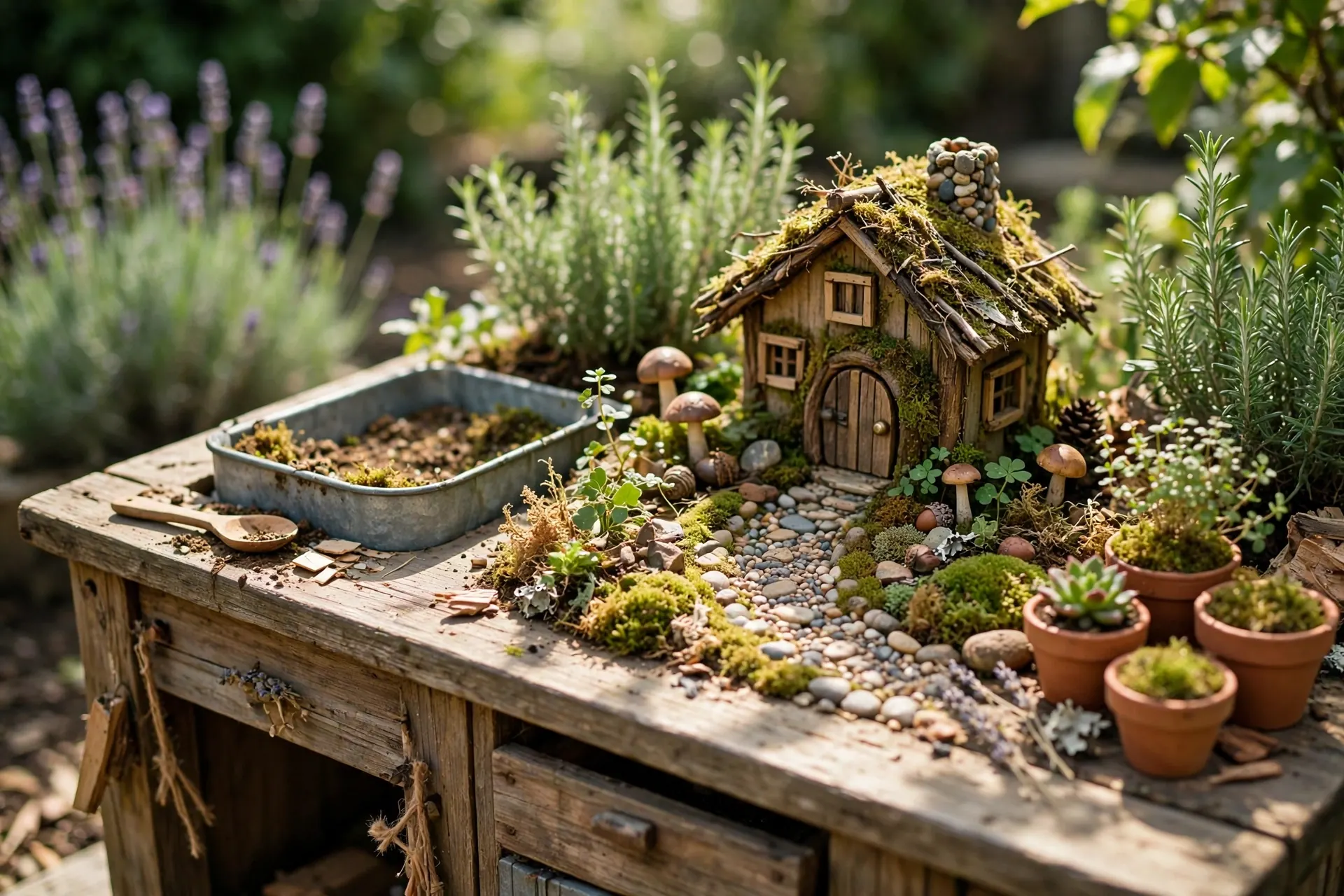
22. Add a Fairy Garden Corner
Tuck a tiny fairy garden into one corner of the counter: a small house, pebble path, and moss. Kids cook for the fairies.
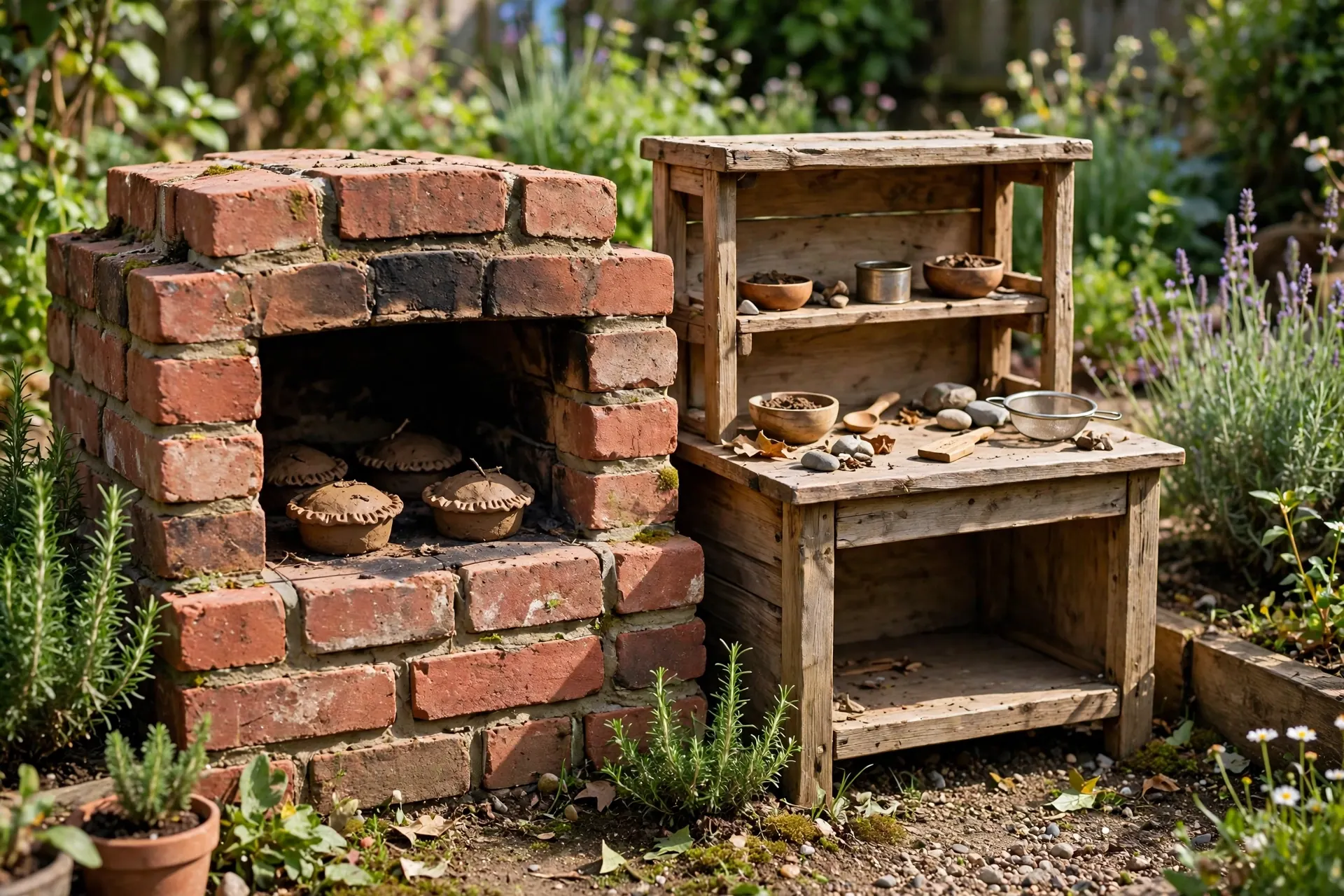
23. Build a Brick Mud Oven
Stack a few loose bricks into a small oven shape beside the counter. Kids slide mud pies in to bake and pull them out when done. It costs nothing.
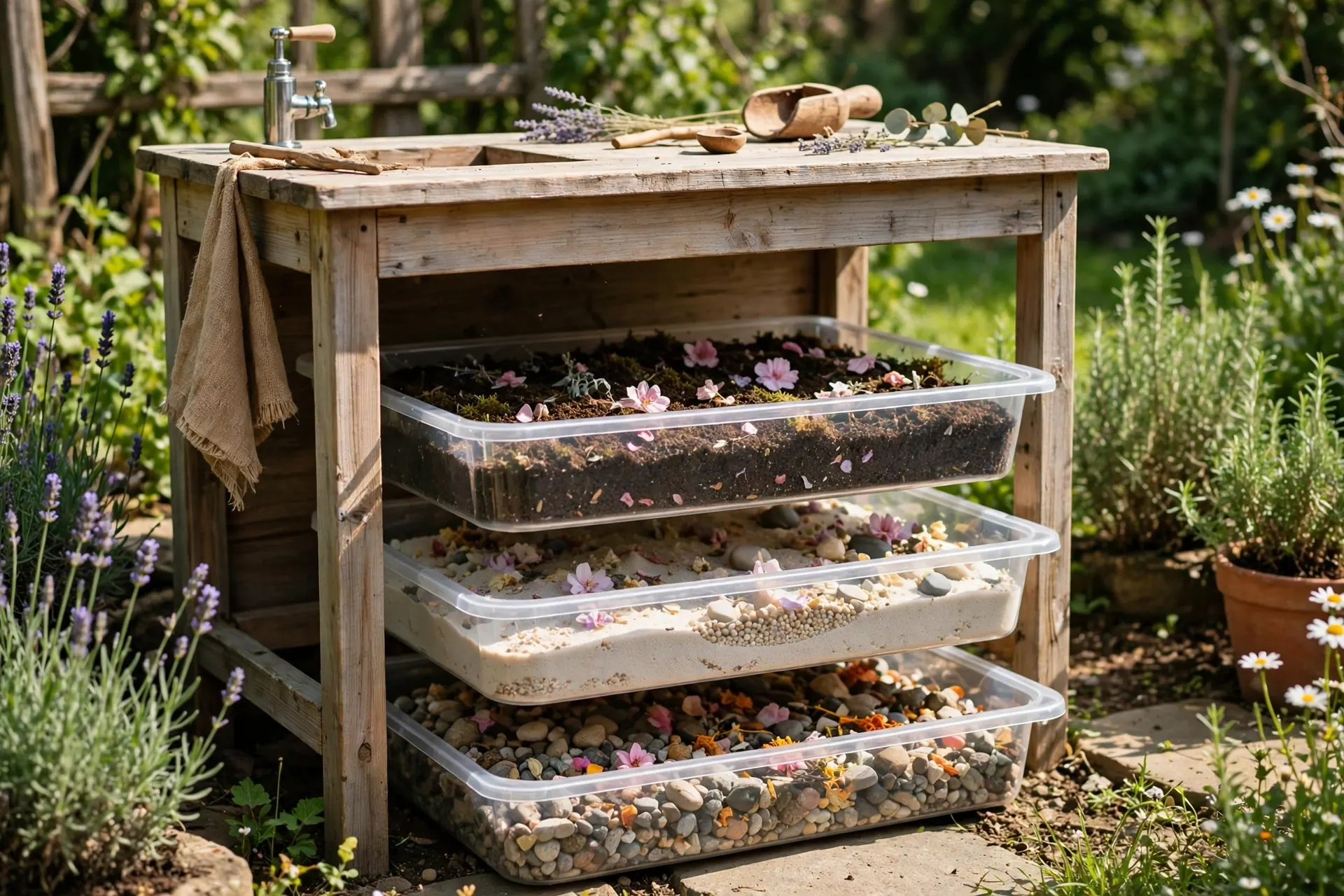
24. Stack Sensory Bins Under the Counter
Slide shallow bins under the counter, each with a different texture: soil, sand, pebbles, or petals. Kids pull out the bin they need.
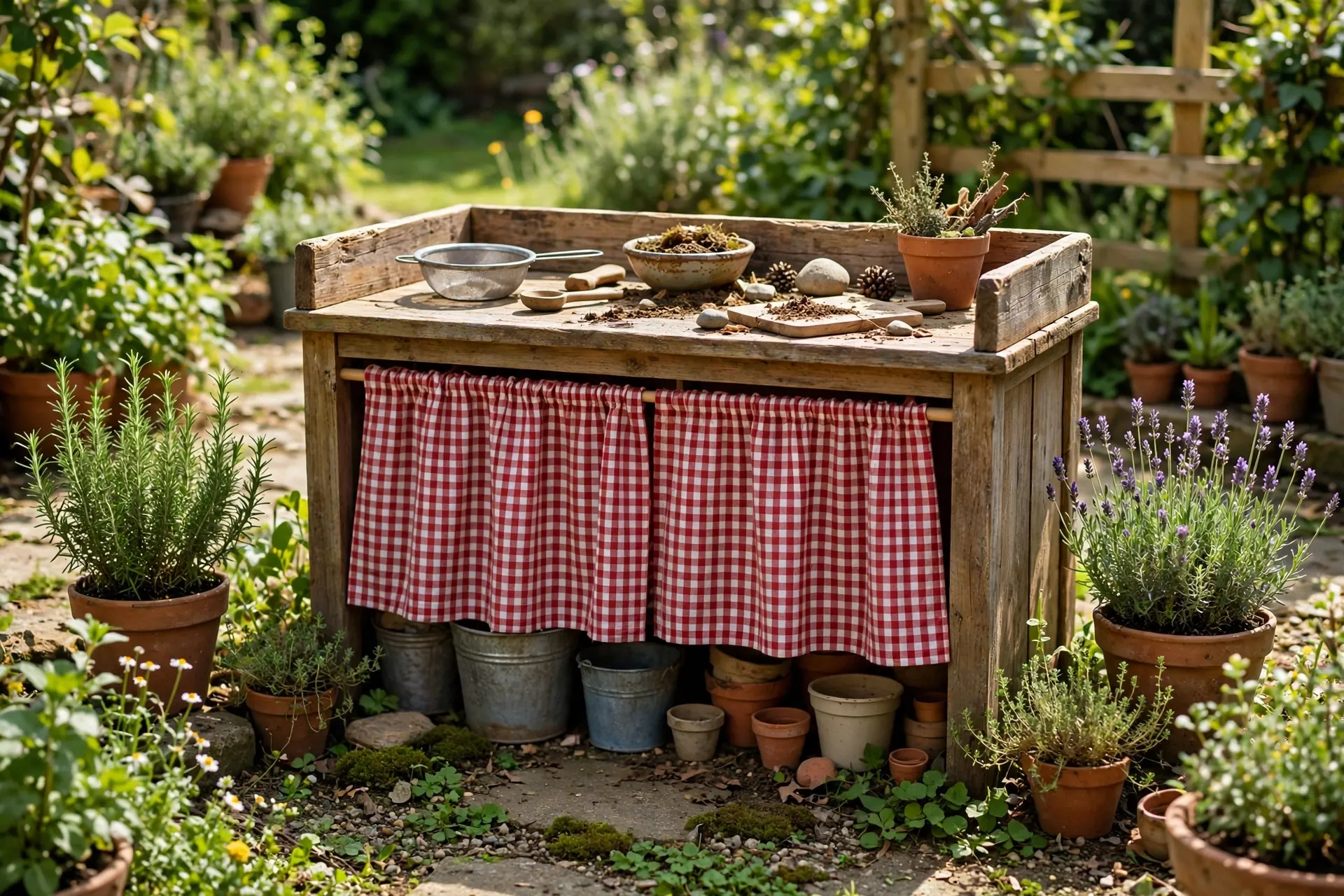
25. Hide Supplies Behind a Curtain
A strip of outdoor fabric hung under the counter hides buckets, spare pots, and mess from view. Choose a cheerful gingham or stripe to add charm.
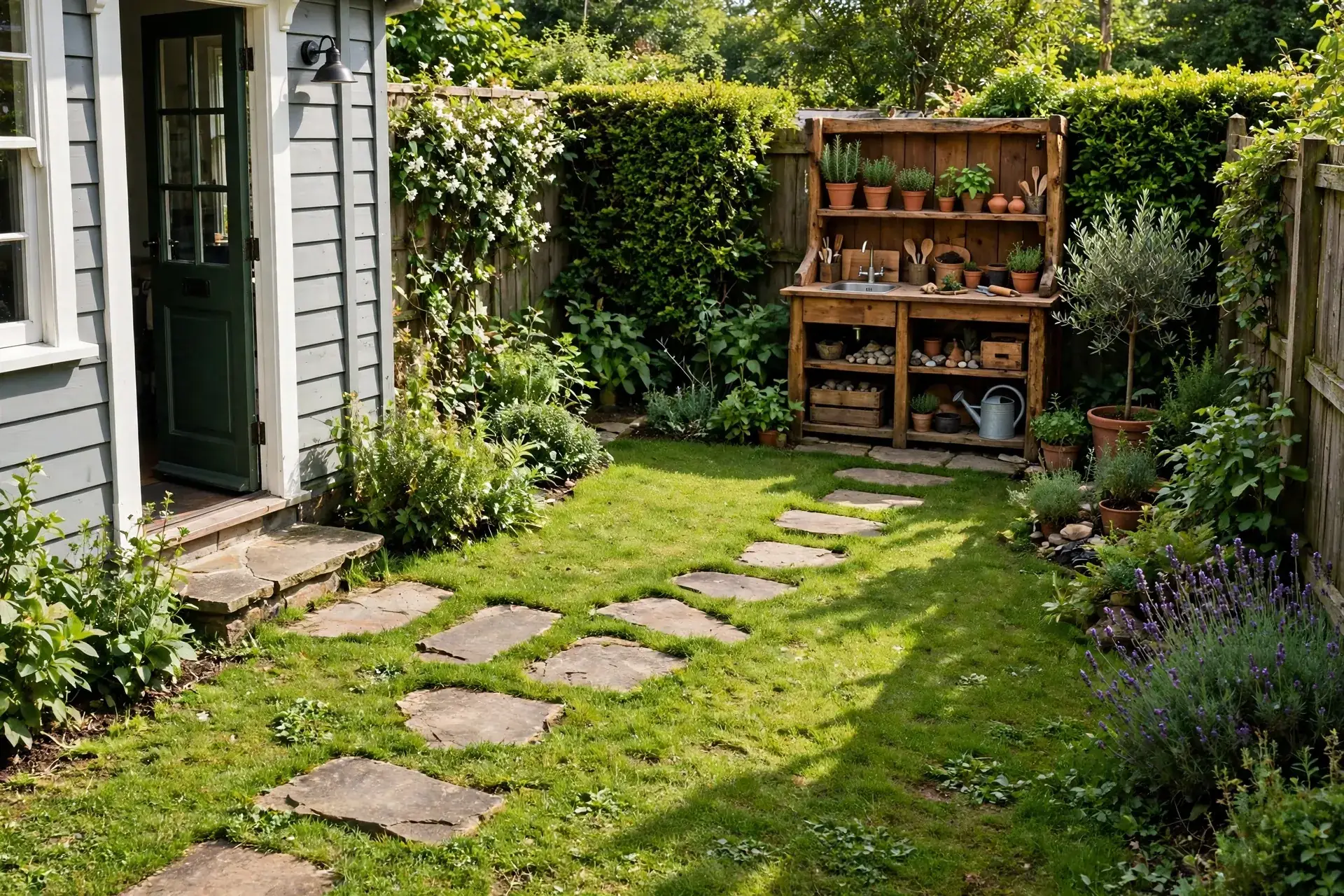
26. Lay a Stepping-Stone Path
A short path of flat stones from the back door to the kitchen keeps muddy feet off the lawn. Kids love hopping along the stones.
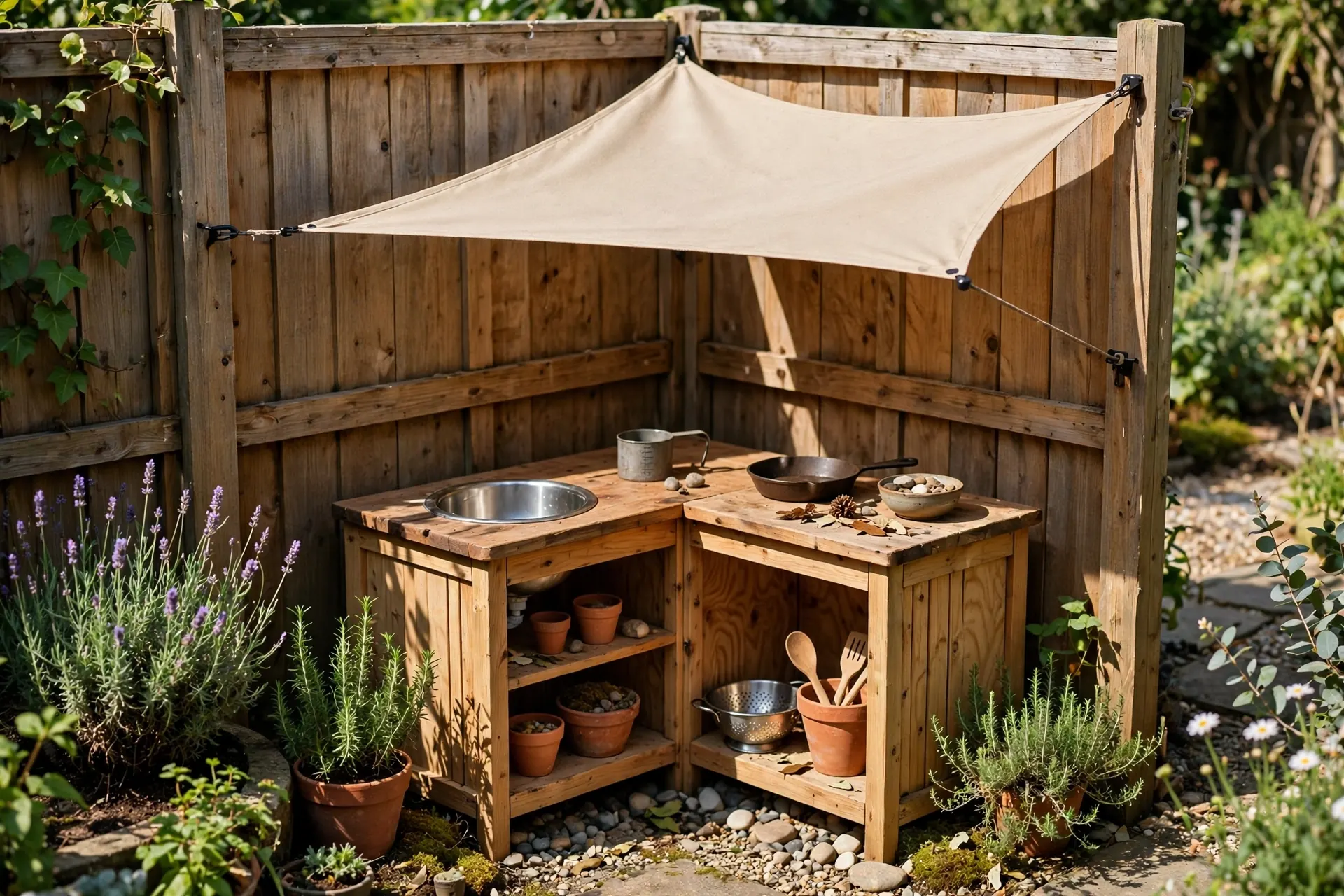
27. Add a Sun Shade Canopy
A small triangle shade sail or parasol over the counter keeps little chefs cool and protects the wood from rain.
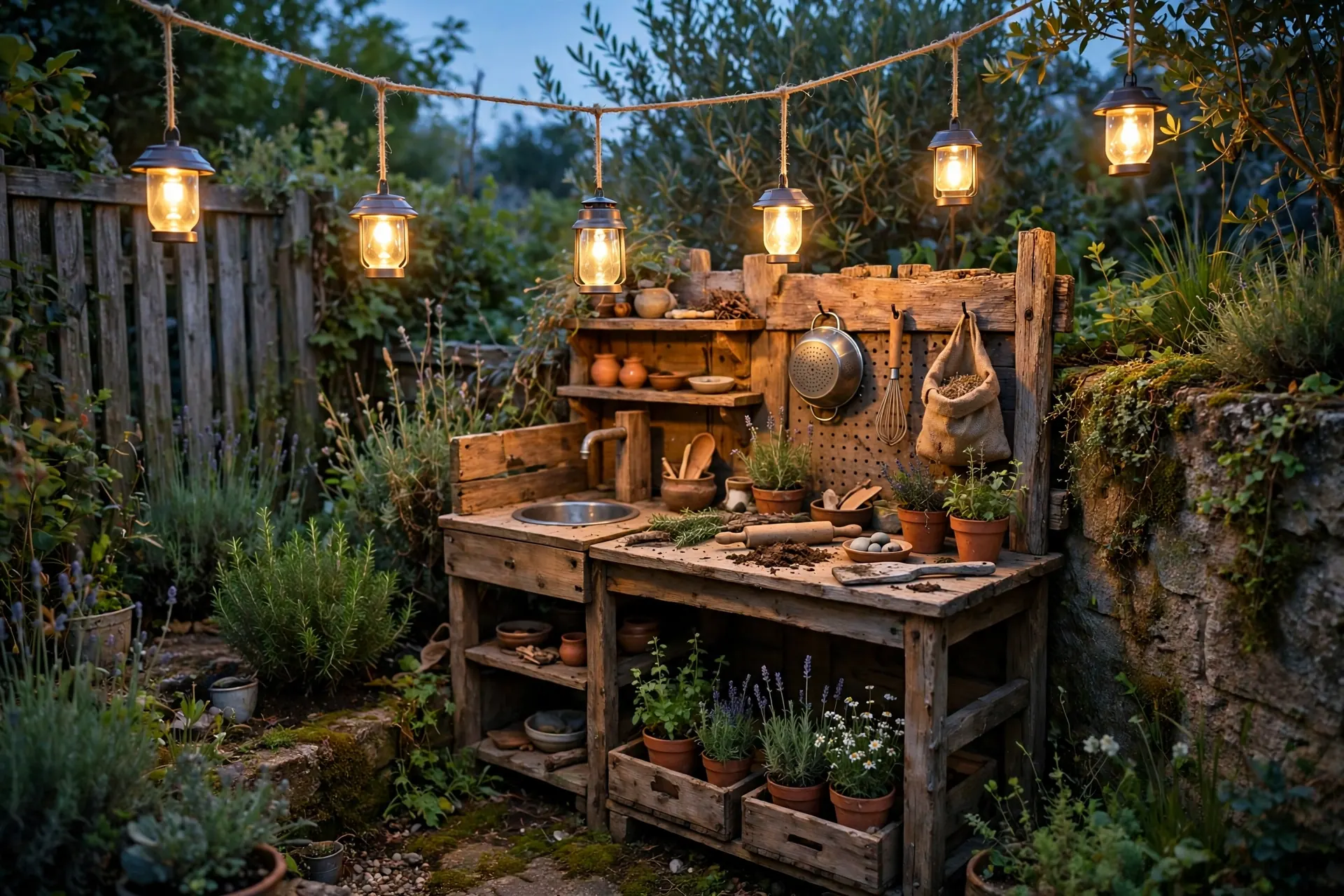
28. Hang Lanterns for Evening Play
Solar lanterns hung from the fence turn the mud kitchen into an evening café. They charge all day and glow at dusk, so summer play stretches past dinner.
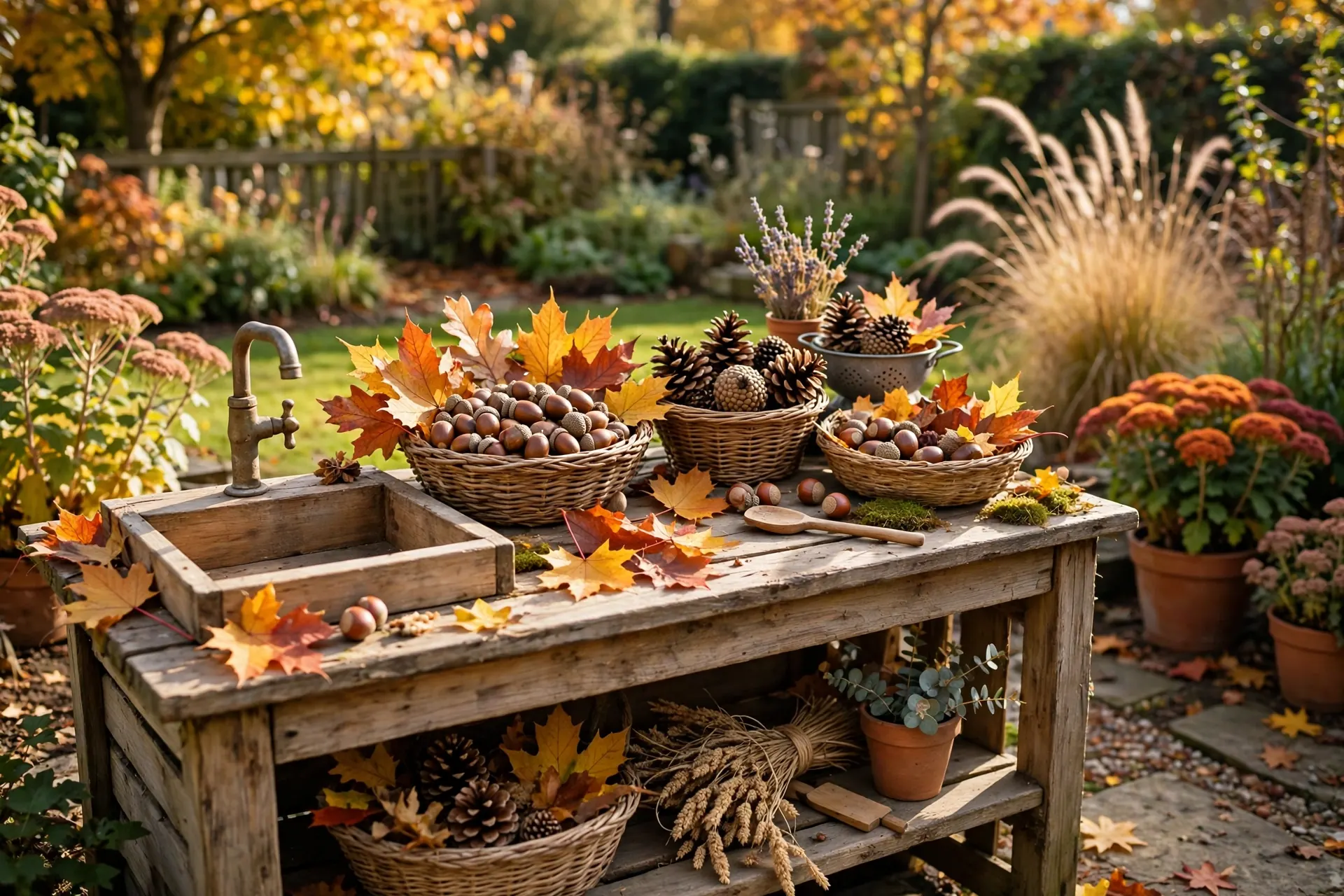
29. Swap Supplies by Season
Keep a small box of seasonal extras and rotate them: petals in spring, pinecones in autumn, ice in winter. The same kitchen feels new four times a year.
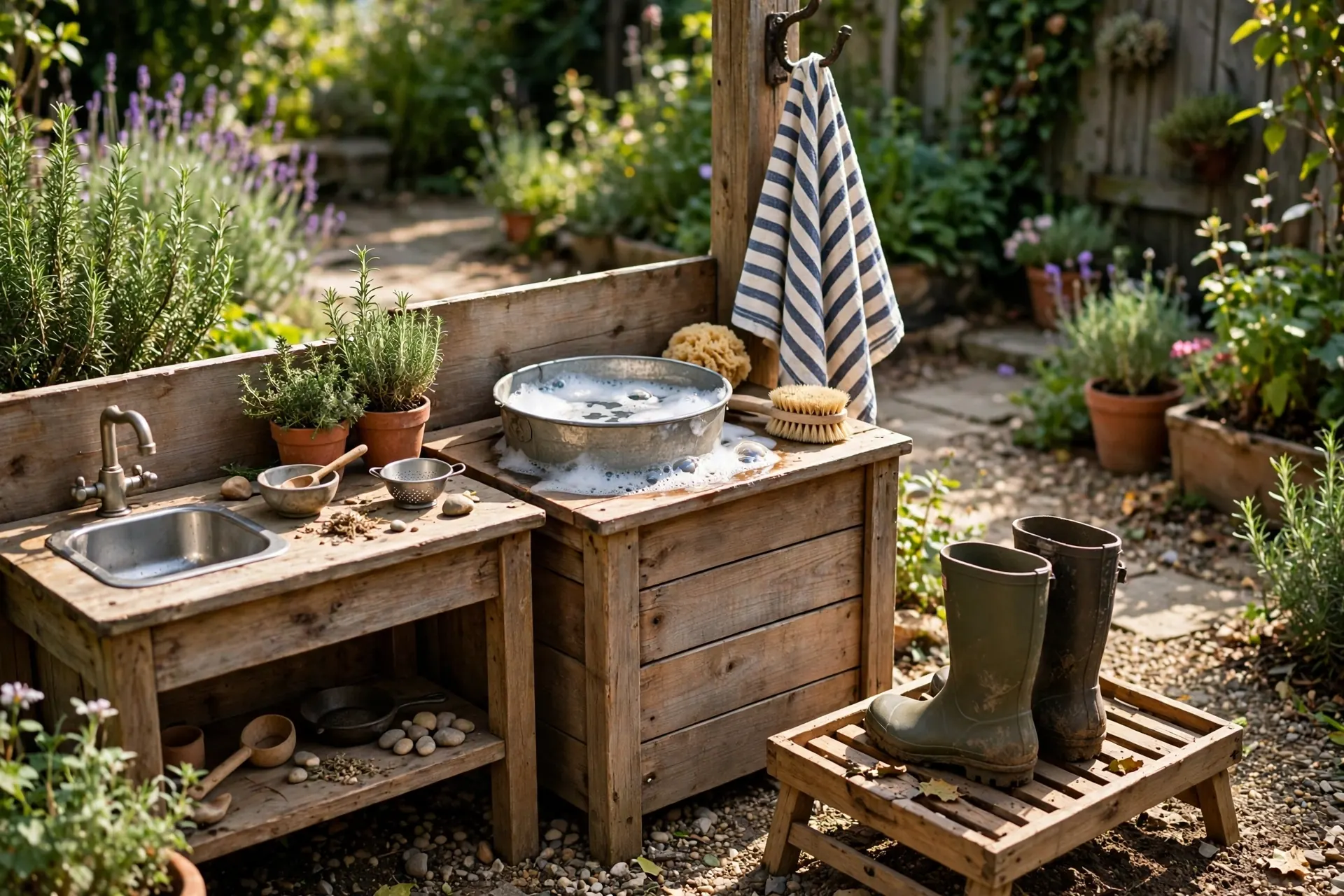
30. Add a Clean-Up Station
Soapy water, a towel on a hook, and a boot tray beside the kitchen make clean-up part of the game. Kids wash up before coming inside.
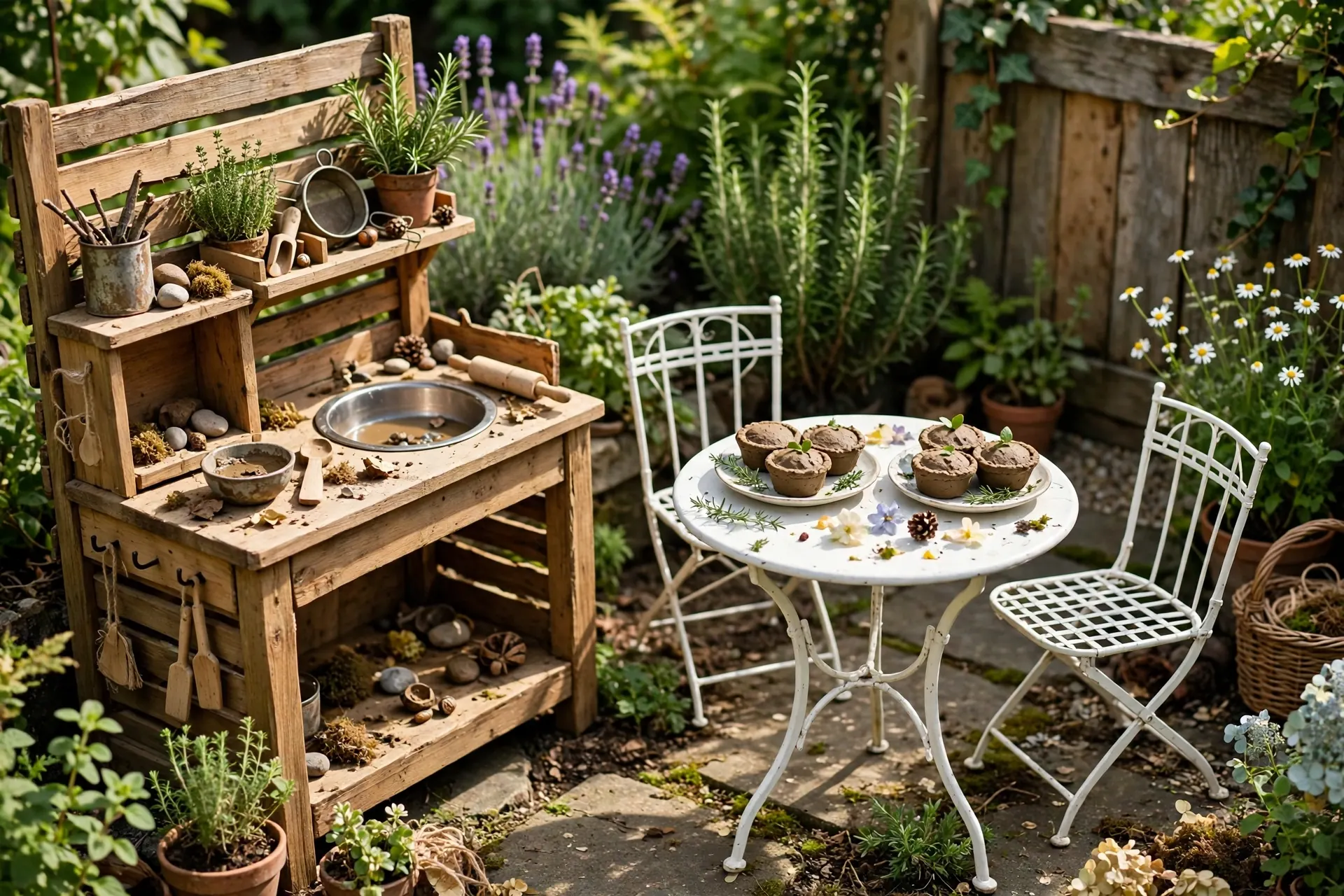
31. Finish With a Tiny Bistro Table
One small table and two tiny chairs complete the kitchen. Kids serve mud creations to teddy bears or parents, and the corner becomes a daily café.
What size should a small mud kitchen be?
A small mud kitchen only needs about 60 to 90 centimetres of counter width and 30 to 40 centimetres of depth, which fits a fence corner, a patio edge, or even a balcony. Keep the footprint tight and use the wall above for shelves and hooks, so storage goes up instead of out.
What age is a mud kitchen best for?
Mud kitchens work best for children aged about two to seven, though older kids enjoy them too when the themes get more elaborate. Toddlers love scooping, pouring, and splashing, while four to six year olds dive into role play. Supervise water play with young children and keep small pebbles away from toddlers.
How do I keep a small mud kitchen from getting too messy?
Contain the mess with a clear boundary: a stepping-stone path, a gravel patch, or a low border of bricks around the kitchen area. Use a bucket sink that lifts out for emptying, keep soil in lidded bins under the counter, and add a clean-up station with soapy water and a towel nearby.
Can I put a mud kitchen on a balcony or patio?
Yes, a mud kitchen works on a balcony or patio as long as you protect the surface underneath. Set the kitchen on a large tray or an outdoor rug to catch spills, and use a tub or bucket sink instead of loose soil piles. Choose lightweight materials like crates or a rolling cart.
What do kids learn from mud play?
Mud play builds fine motor skills through scooping, pouring, and stirring, and it sparks creativity because mud can become anything a child imagines. It also teaches early science and builds confidence as kids invent recipes and serve them. Pathways.org notes that mud play promotes sensory processing, motor skills, and a deeper connection with nature.
How do I weatherproof a small mud kitchen?
Choose outdoor-rated materials like cedar, pallet wood sealed with outdoor varnish, or plastic and metal parts that will not rot. Paint wooden counters with exterior paint, and cover the kitchen with a small tarp or shade sail in heavy rain. Bring fabric curtains and chalkboards indoors in winter, and the kitchen will last for years.
A tiny garden is no barrier to big imagination. Pick two or three of these 31 small mud kitchen ideas, set them up this weekend, and watch the corner become your child’s favorite place to play. The mess is worth it — Pathways.org notes mud play builds sensory processing and motor skills.
