
A bare sideboard is a missed chance. These sideboard decor ideas turn that long, low cabinet into the anchor of your dining room — a place for lamps, art, greenery and the objects you love, with storage still hiding inside. The 32 ideas below work for every style, most taking under an hour.
The trick is proportion. One tall anchor, a few mid-height pieces and some breathing room will make almost any sideboard look designer-styled. Start with the wall above it, build the surface in groups of three, and leave a clear patch.
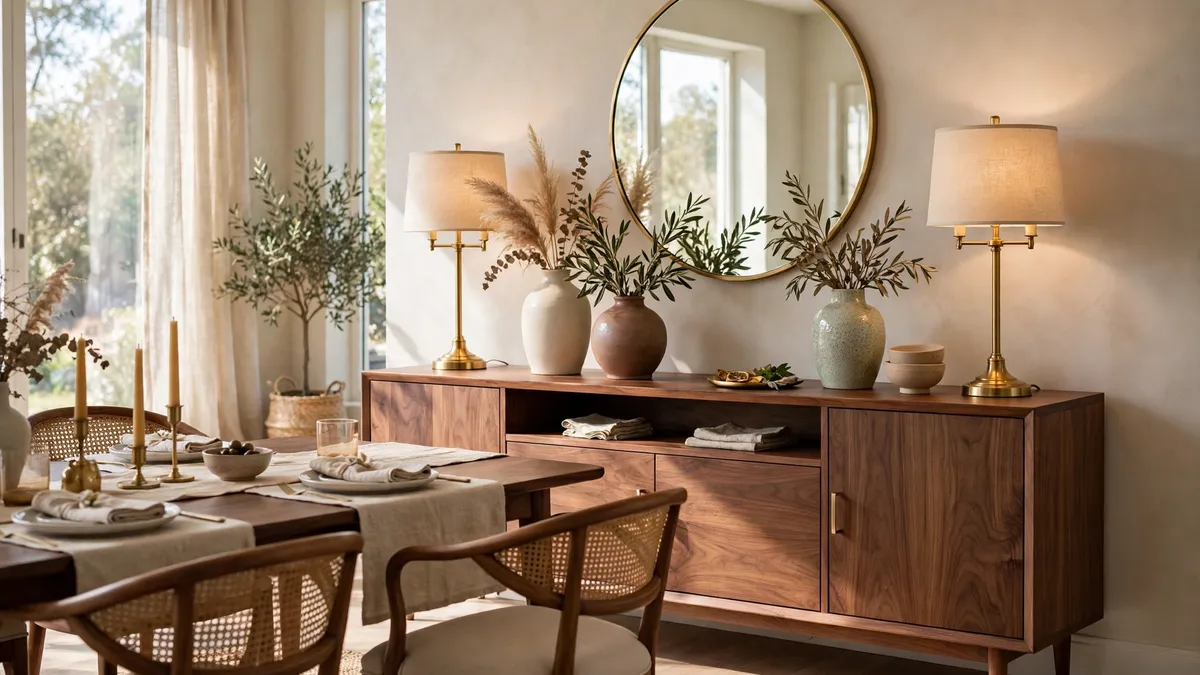
Why You’ll Love These Sideboard Decor Ideas
A sideboard is the hardest-working piece in the dining room: it stores linens, hides serving dishes and gives you a surface to style. Nothing here blocks the drawers or crowds the serving space, and every look can be changed in minutes. Vintage or new, you will find a look below that fits it.
How to Choose the Right Sideboard Decor for Your Home
Measure first: most sideboards are 60 to 72 inches long and 18 inches deep, so art above should span about two-thirds of that length and lamps should leave at least 12 inches of clear surface between them. Match one finish to the room — brass, black metal or pale wood — and repeat it twice. If you are planning the whole room, our dining room ideas will help you tie it all together.
Think about how you actually use the piece. A sideboard that serves dinner needs a clear middle and heat-proof trays; one that only displays objects can be styled more freely. Keep everyday items within reach, and choose materials that forgive a splash of wine or a hot plate.
Classic and Timeless Sideboard Styling
1. A Matching Pair of Table Lamps

A matching pair of lamps is the easiest way to make a sideboard look finished. Place one at each end, then keep the middle lower and simpler. Best for: long sideboards in formal dining rooms. Styling tip: match the lamp bases but vary the shade height slightly if one side holds taller objects. Pro tip: choose shades 12 to 14 inches tall so light falls across the tableware, not into guests’ eyes.
2. An Oversized Round Mirror

A round mirror softens the straight lines of a sideboard and bounces light around the dining room. Hang it centred above the piece, 6 to 8 inches above the surface. Best for: small or dark dining rooms that need more light. Styling tip: angle it slightly toward the window so it reflects greenery, not the ceiling. Pro tip: the mirror should be about half the sideboard’s width — a 60-inch sideboard takes a 30-inch mirror.
3. Large Framed Art, Two-Thirds the Width
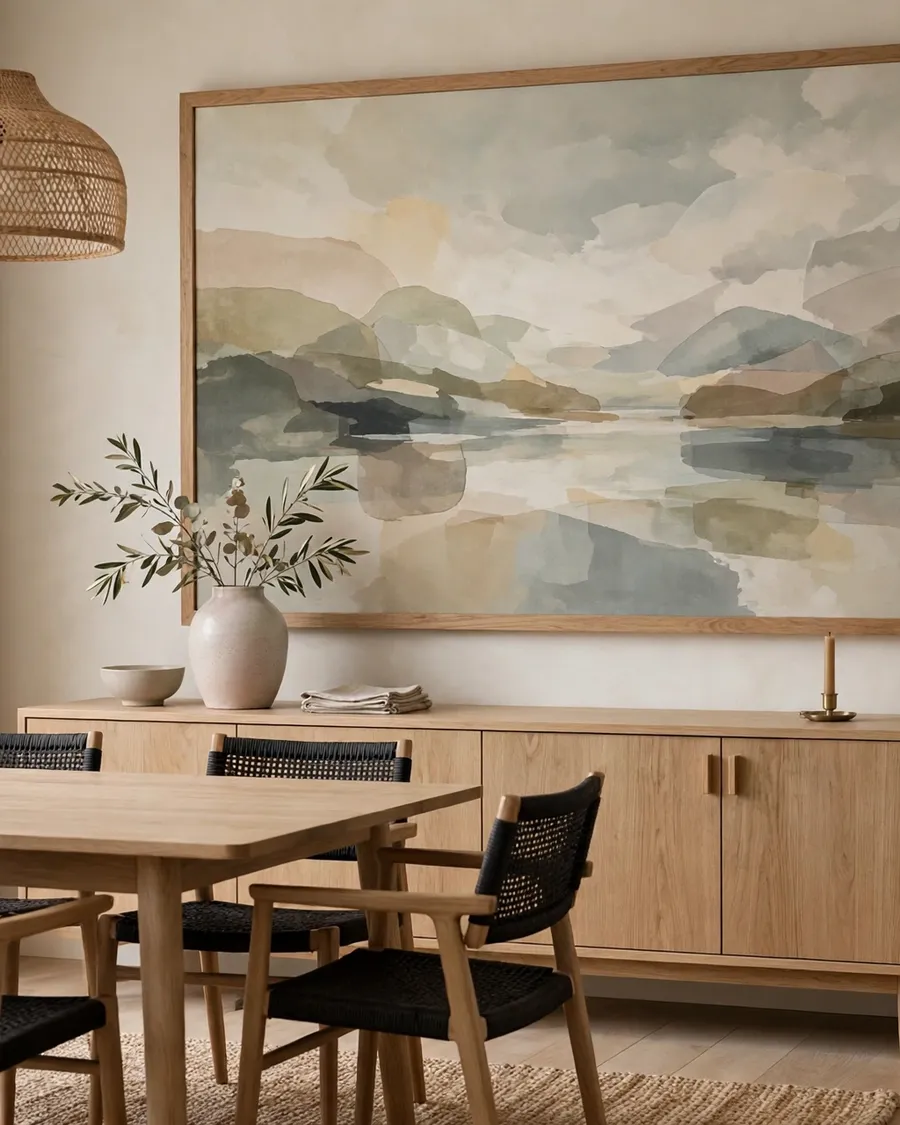
One large piece of art does more than a row of small frames. The rule: art should span about two-thirds of the sideboard’s width, hung with its centre at eye level. Best for: sideboards on a long blank wall. Styling tip: pick one colour from the art and repeat it in a vase or book below. Pro tip: leave a 4 to 6 inch gap between the sideboard top and the frame bottom so the two read as one composition.
4. The Triangle Method Trio
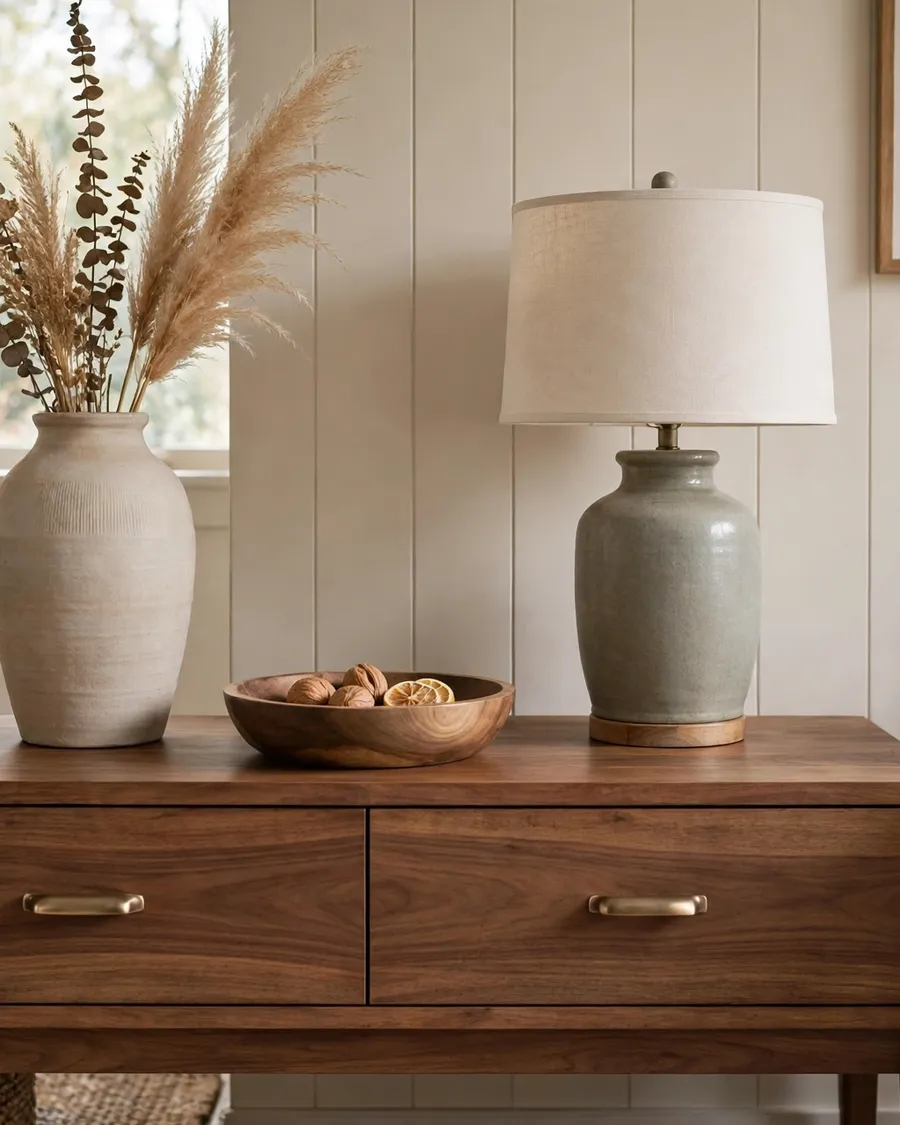
The triangle method groups three objects of different heights so the eye travels up, across and down. A tall vase, a mid-height lamp and a low bowl is the classic set. Best for: anyone who finds styling a bare sideboard intimidating. Styling tip: put the tallest piece at one end, not the centre, so the arrangement feels relaxed. Pro tip: keep the height steps uneven, roughly 24, 16 and 8 inches; equal steps look staged.
5. A Decorative Tray With Candles
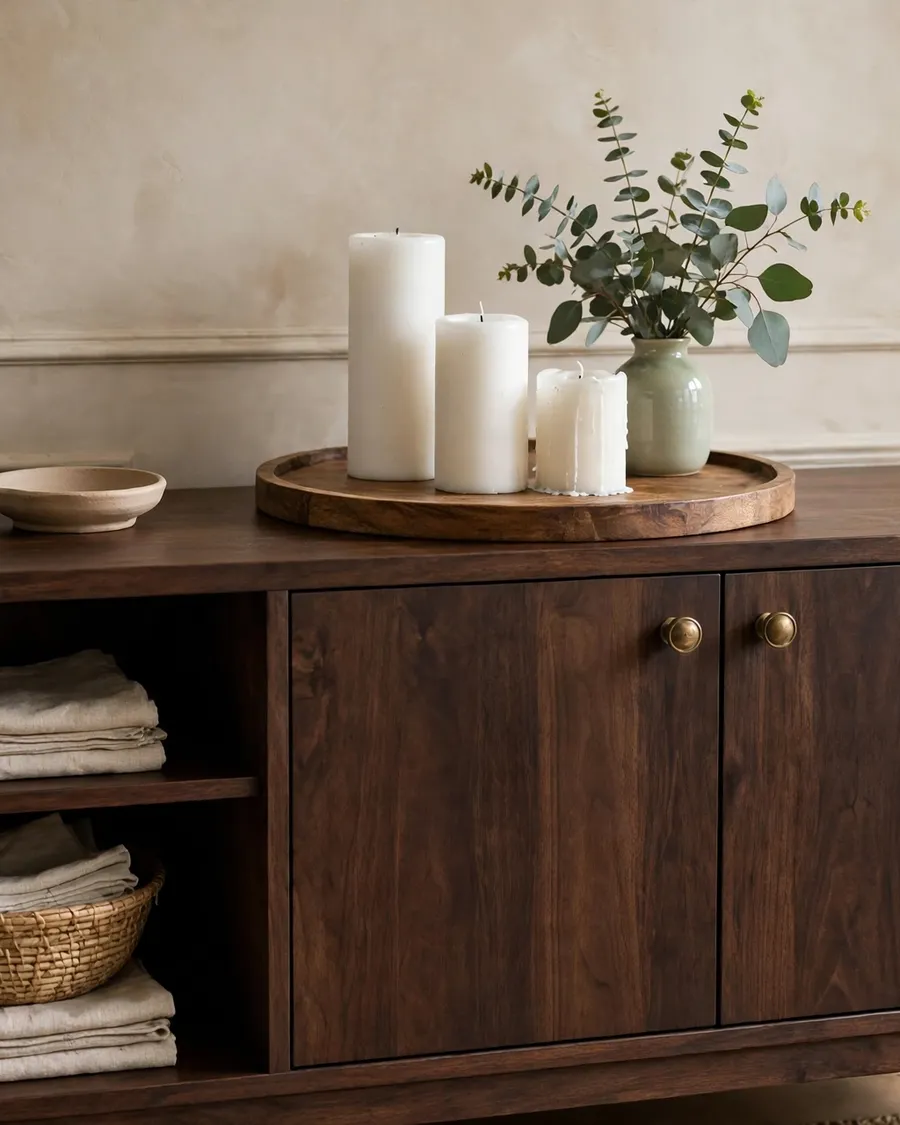
A tray turns loose objects into one intentional group and protects the wood from wax and water rings. Choose a tray about one-third the sideboard’s length, filled with candles and one small vase. Best for: sideboards that double as serving stations. Styling tip: mix candle heights by at least 2 inches so the group has a skyline. Pro tip: line the tray with a linen napkin under the candles to catch drips.
6. A Stack of Coffee-Table Books

A stack of two or three large books adds height, colour and a perch for a small object. Keep the biggest book at the bottom, with covers that echo the room’s palette. Best for: book lovers and cooks who want personality on display. Styling tip: turn one book spine-out and one cover-up for a layered look. Pro tip: use books 10 to 12 inches wide so the stack reads as a solid block.
7. Ceramic Vases in Odd Numbers

Three vases beat two every time. Odd numbers feel natural, and a trio in one glaze family but different heights gives instant rhythm. Best for: neutral dining rooms that need texture without colour. Styling tip: vary the heights by at least 4 inches between each vase. Pro tip: keep the mouths narrow, under 3 inches, so a few stems look full.
8. A Tall Vase With Olive Branches
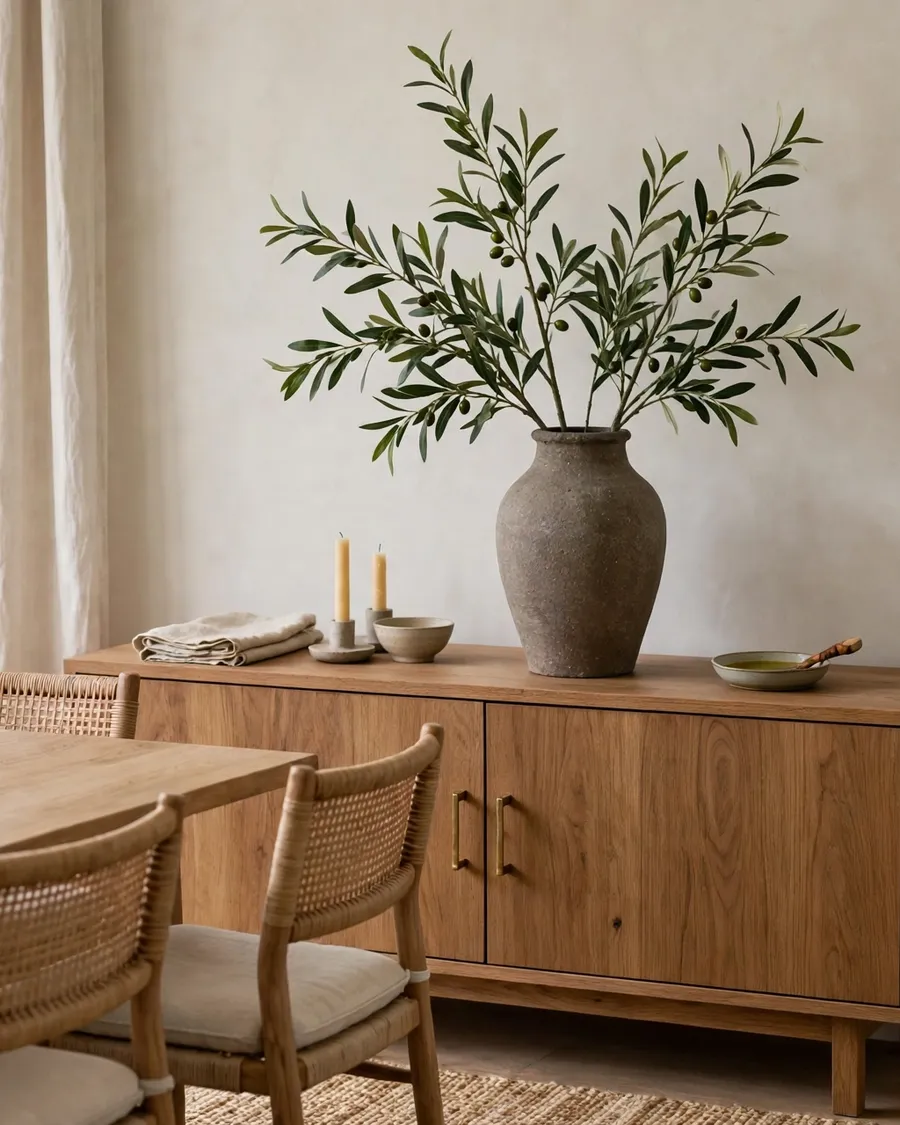
One tall vase with long olive branches adds height and movement for almost no effort, and the silvery-green leaves suit nearly every palette. Cut stems to about one and a half times the vase height. Best for: Mediterranean, modern farmhouse and relaxed dining rooms. Styling tip: let a few branches arc outward instead of standing straight. Pro tip: change the water every three days and trim half an inch off the stems weekly to keep branches fresh for a fortnight.
Modern and Minimal Sideboard Decor
9. A Sculptural Bowl as Centrepiece
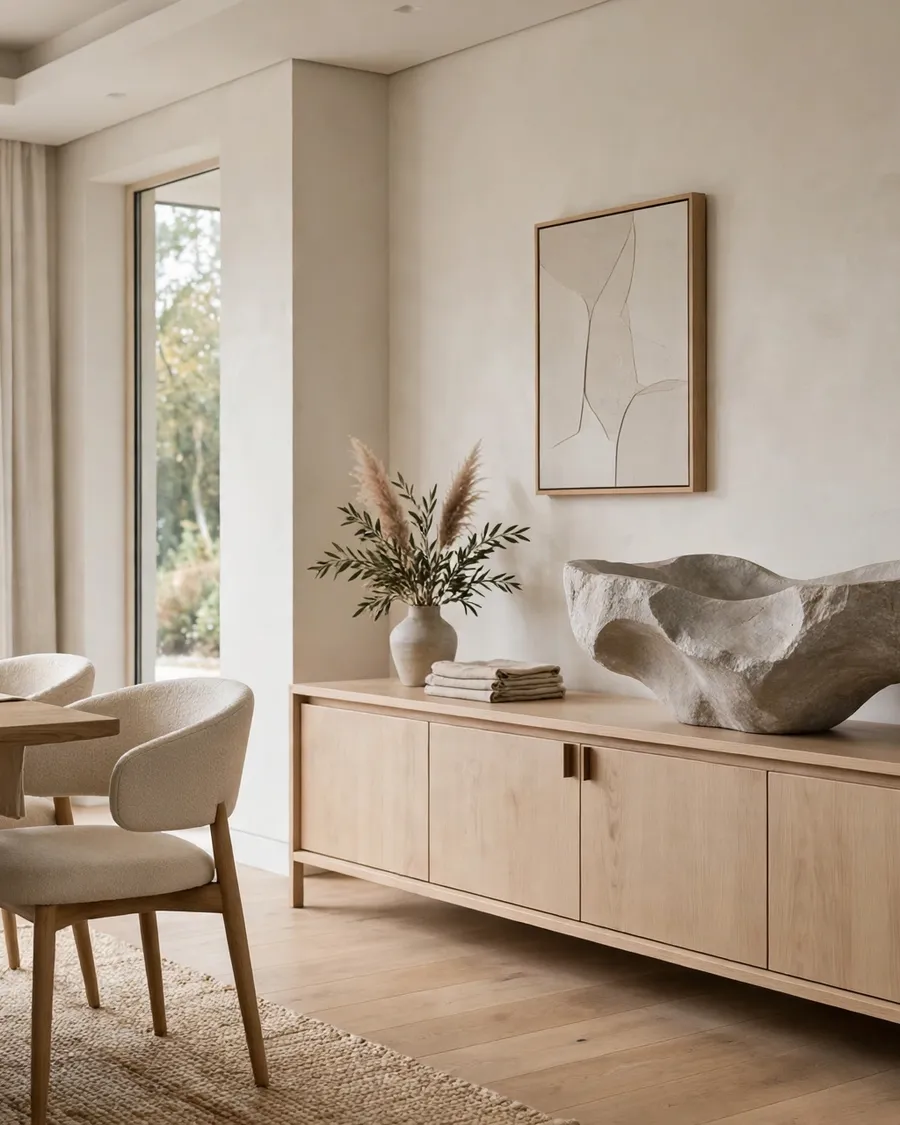
A single sculptural bowl can carry the whole sideboard. Choose a rough stone or carved wood finish, and let it sit empty or hold three large orbs. Best for: minimal rooms where one strong object beats many small ones. Styling tip: centre it under the art or mirror above for a calm, symmetrical anchor. Pro tip: a bowl 14 to 18 inches wide suits a standard 60-inch sideboard.
10. Leaning Art on a Picture Ledge
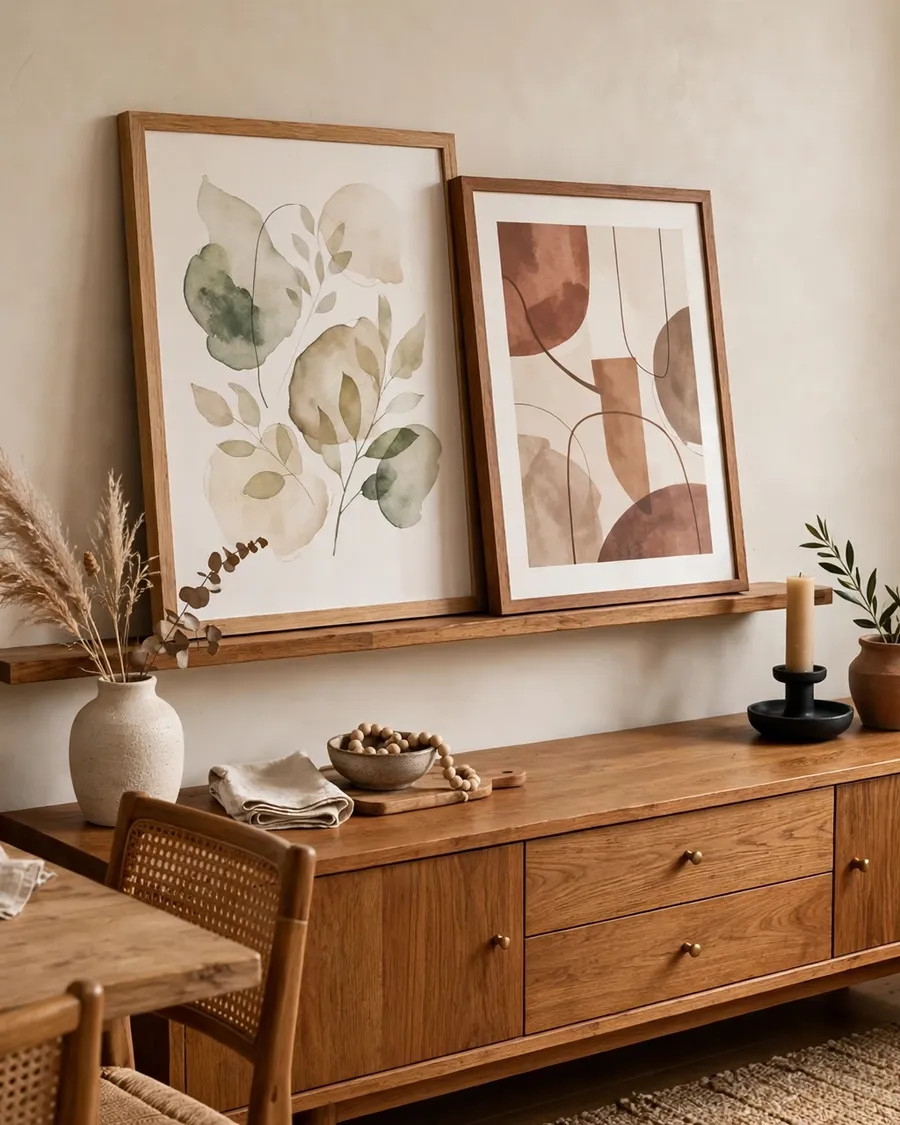
Leaning art on a ledge feels relaxed and lets you swap pieces without new holes. A slim ledge 8 to 10 inches above the sideboard holds two overlapping frames. Best for: renters and anyone who changes art with the seasons. Styling tip: overlap the smaller frame in front of the larger one by about a third. Pro tip: add museum putty behind the frames so they cannot slide forward when the sideboard doors close.
11. Black-and-White Framed Photos
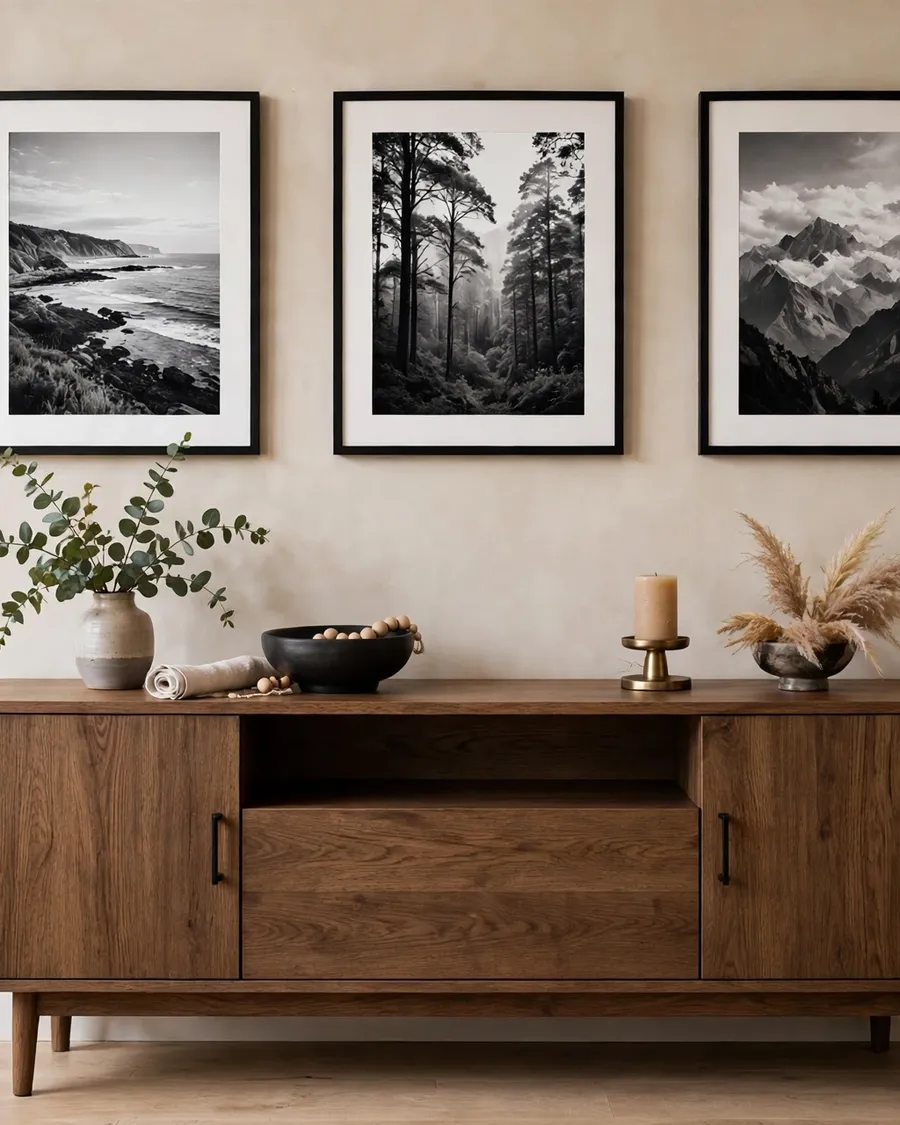
Black-and-white photos in matching frames add warmth without colour chaos. Print them all the same size and line them up with even gaps. Best for: family dining rooms and traditional homes. Styling tip: use a mix of one portrait and two landscape shots for variety. Pro tip: keep the frames 2 inches apart and the same distance from the sideboard edge, which reads far tidier than random spacing.
12. Woven Baskets Below the Sideboard
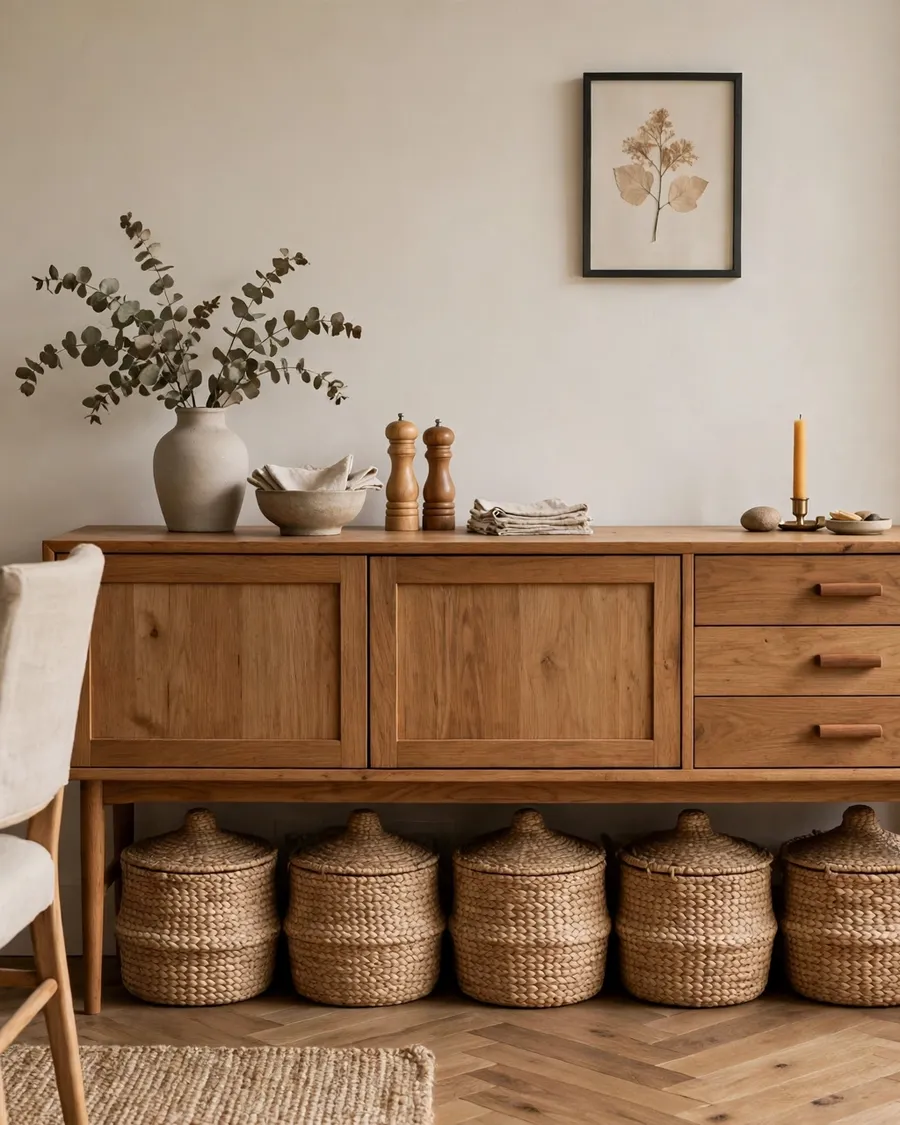
The space under an open-leg sideboard is free storage. Slide in two or three woven baskets for linens, placemats or board games, and the clutter disappears. Best for: open-leg and mid-century sideboards with clearance underneath. Styling tip: match the basket weave to the room’s other natural textures. Pro tip: measure the gap first; baskets need at least half an inch of clearance on top or they will scrape the frame every time you pull them out.
13. Brass Candlesticks in a Row
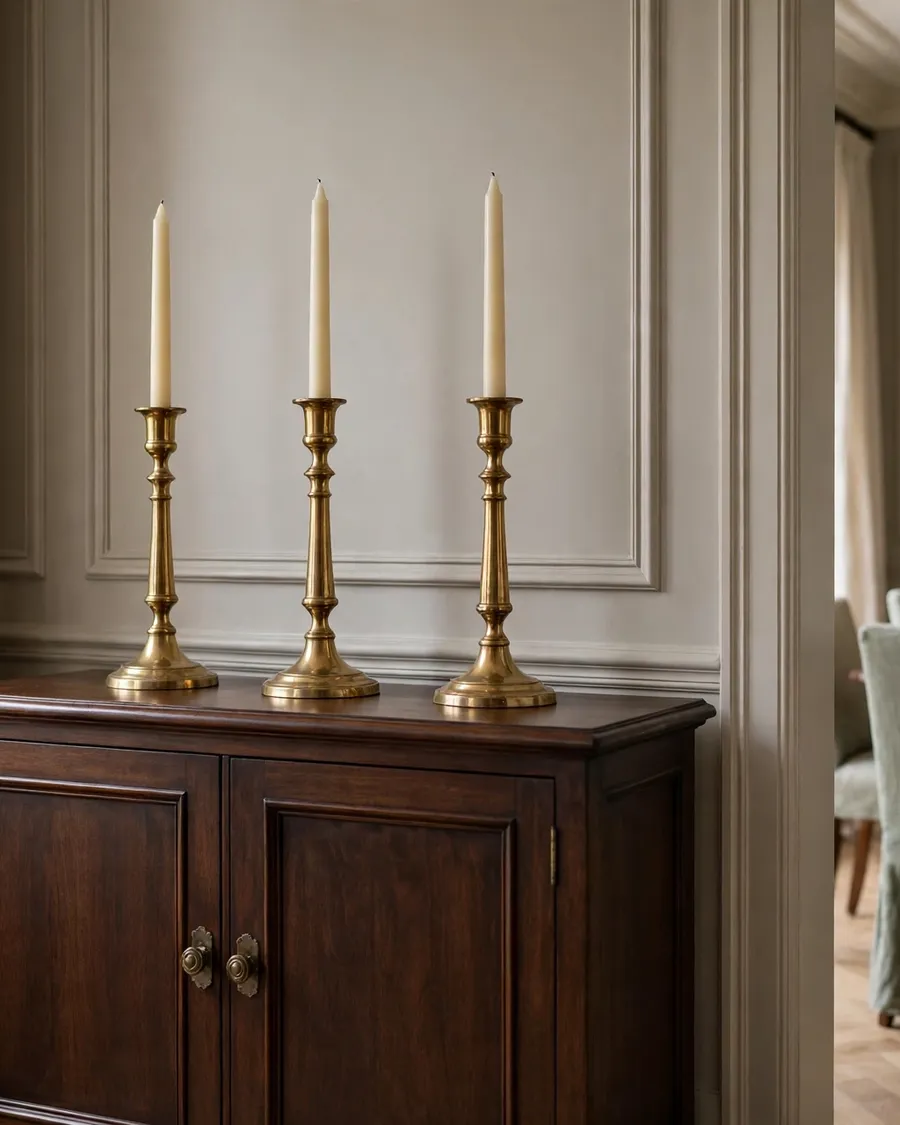
Brass candlesticks bring instant warmth and a hint of occasion, even on an ordinary Tuesday. A row of three in graduated heights catches the light. Best for: traditional and transitional dining rooms. Styling tip: use ivory tapers rather than coloured ones for a classic look. Pro tip: rub a little petroleum jelly on the candle bases before inserting them so spent tapers slide out instead of snapping.
14. A Marble Tray With Decanters
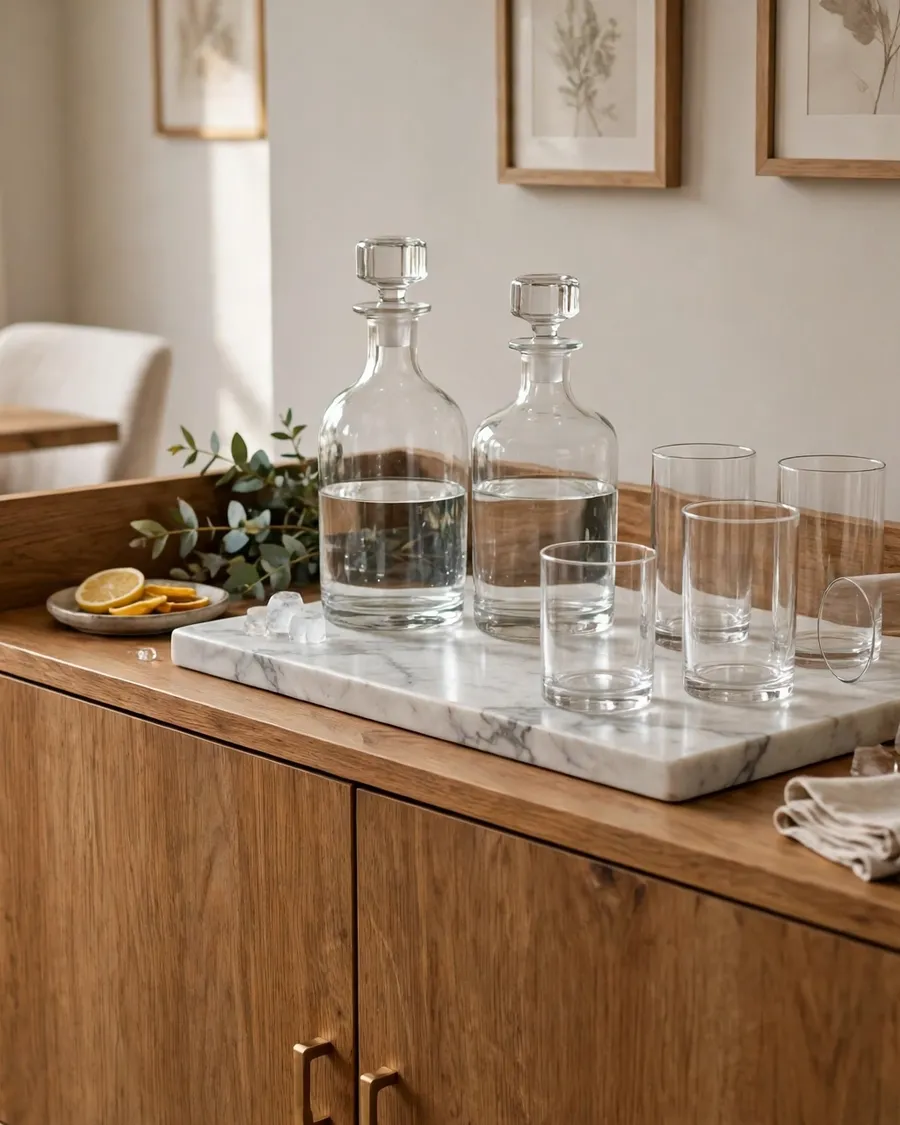
Turn one end of the sideboard into a drinks station with a marble tray, two decanters and four glasses. The tray contains spills and makes the setup look deliberate. Best for: hosts and sideboards near the dining table. Styling tip: add a small bowl of citrus or a sprig of rosemary for colour. Pro tip: keep decanters under 12 inches tall so they clear the art or mirror above, and refill them before guests arrive, never during dinner.
15. A Linen Table Runner
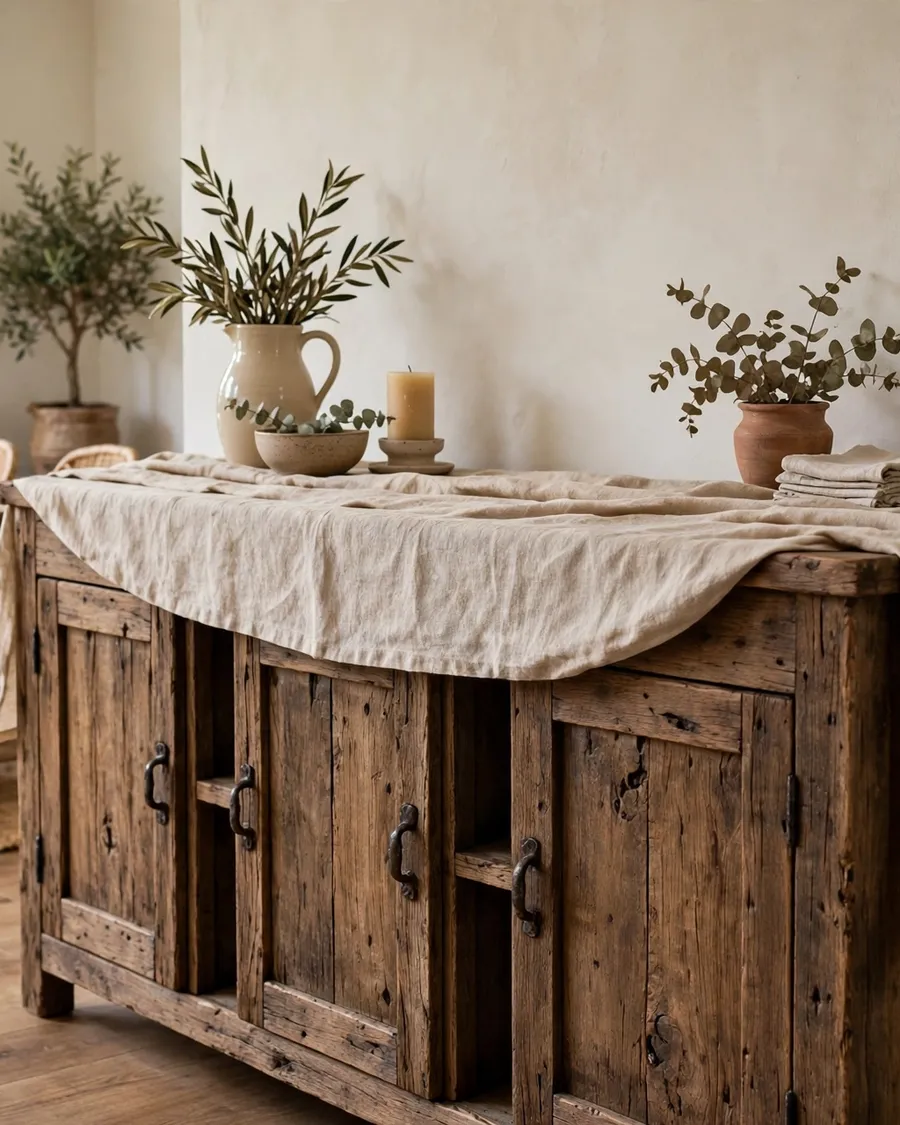
A linen runner softens a hard wood top, adds texture, and protects the finish from hot dishes and scratches. Let it hang 6 to 8 inches over each end. Best for: rustic, farmhouse and coastal dining rooms. Styling tip: choose a runner in a tone slightly darker than the sideboard for contrast. Pro tip: press the runner with a hot iron and fold it in thirds for storage, so it stays crisp and crease-free between uses.
16. One Single Statement Object
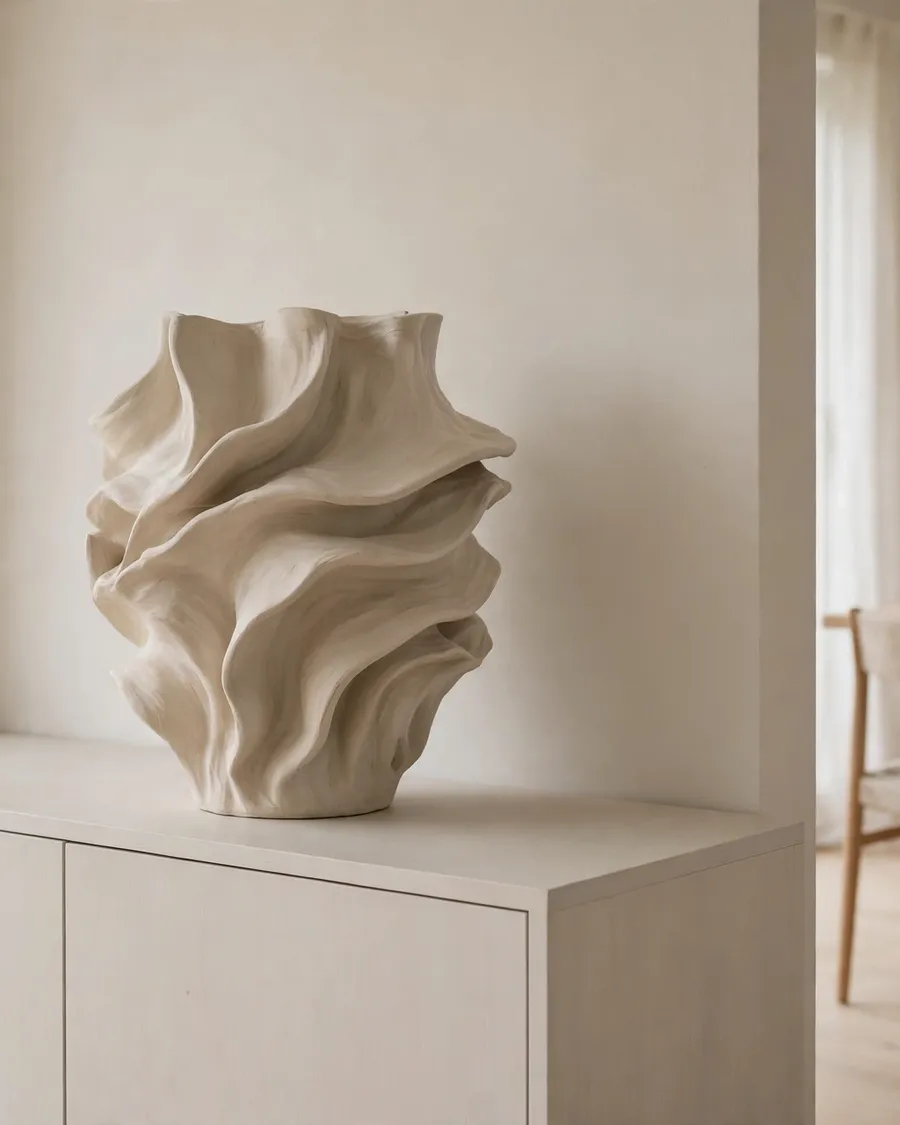
Sometimes the boldest move is restraint: one beautiful object on an otherwise bare sideboard. A large sculptural vessel becomes the room’s focal point. Best for: minimal and modern dining rooms, and small spaces that feel crowded easily. Styling tip: place the object slightly off-centre so the empty space feels intentional. Pro tip: the object should be at least 14 inches tall or wide, because anything smaller looks forgotten rather than chosen.
Statement Art and Mirrors Above the Sideboard
What hangs above the sideboard matters as much as what sits on it. Mirrors and art set the height, the colour and the mood, so choose the wall piece first and style the surface to match it — the same rule behind good dining table decor ideas, for the table.
17. A Gallery Wall Above the Sideboard
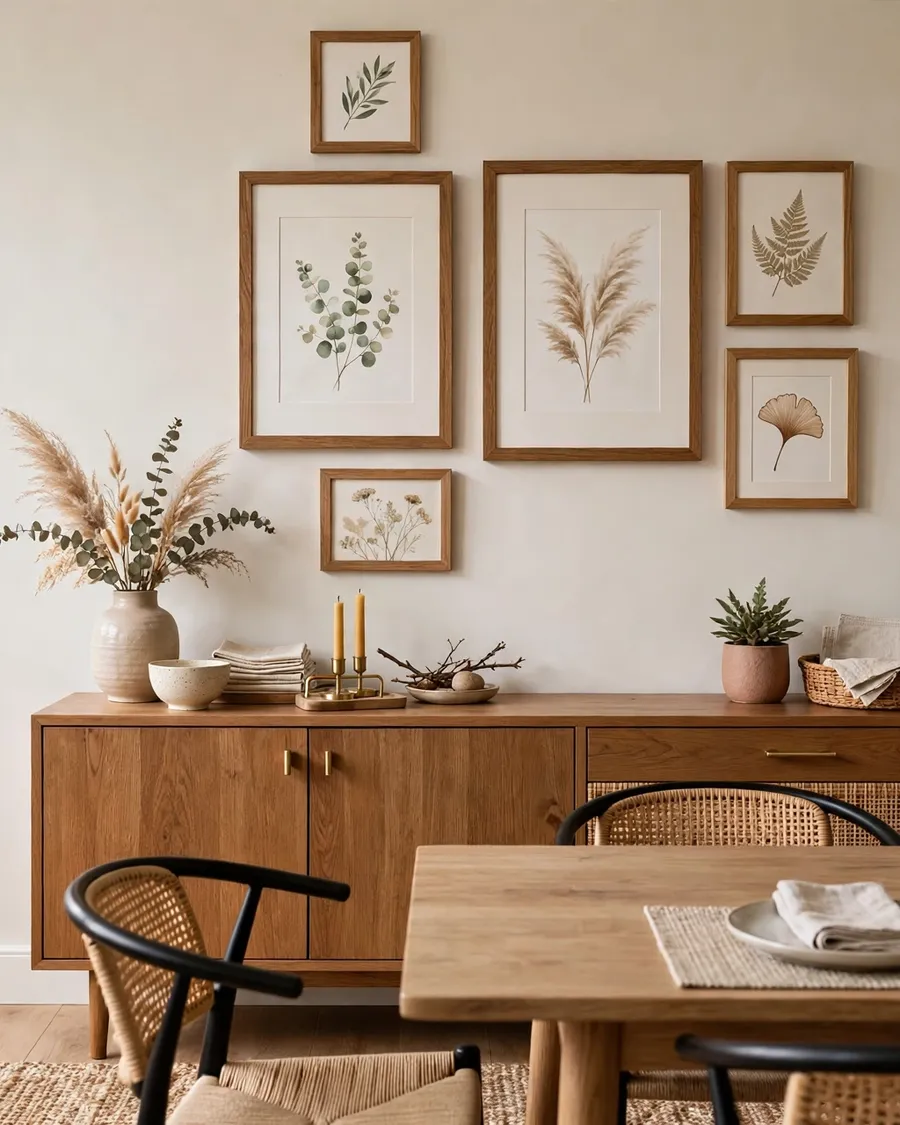
A gallery wall turns the space above the sideboard into art itself. Mix four to six frames in two sizes, aligned with the sideboard’s edges, with 2 to 3 inches between frames. Best for: eclectic homes and collectors. Styling tip: lay the arrangement on the floor first and photograph it before hanging. Pro tip: use paper templates taped to the wall to test spacing, which saves a dozen extra nail holes.
18. An Arched Mirror
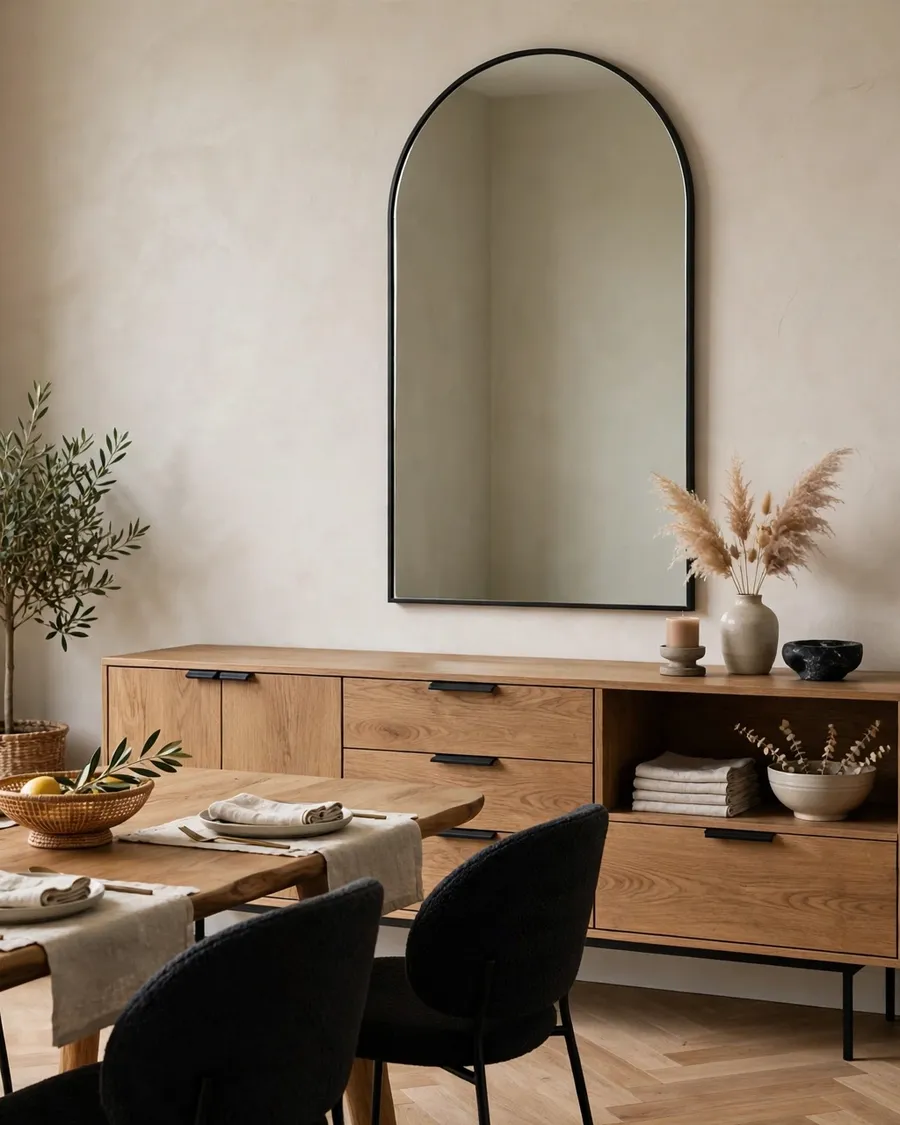
An arched mirror adds height and a soft curve that balances a boxy sideboard, and makes low ceilings feel taller. Best for: modern and transitional dining rooms with plain walls. Styling tip: centre it and keep the objects below low so the arch stays the star. Pro tip: hang the mirror so its bottom edge is 4 to 6 inches above the sideboard, and check the reflection shows the dining table, not a blank wall.
19. Dried Pampas in a Floor Vase
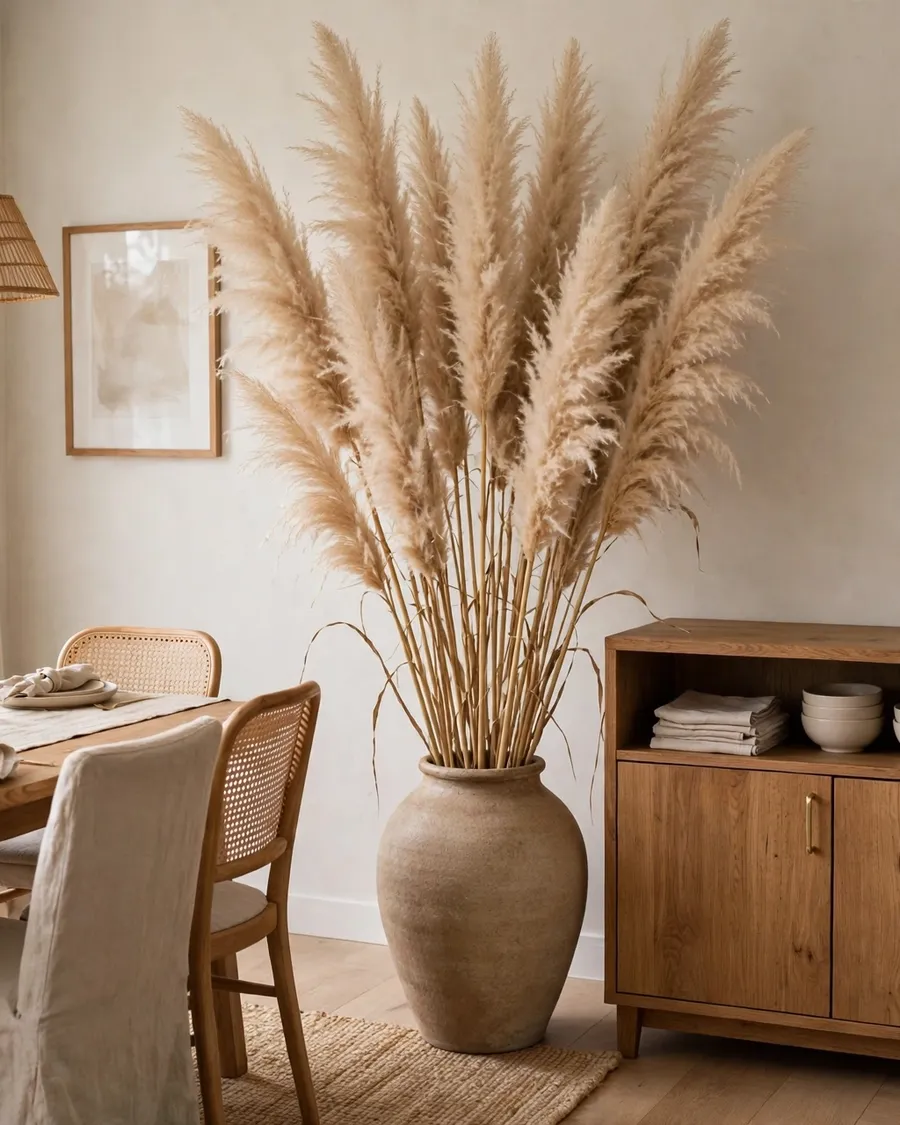
Dried pampas grass adds soft height beside a sideboard with zero watering and months of life. A tall floor vase at one end balances a lamp at the other. Best for: boho, modern farmhouse and low-maintenance homes. Styling tip: fluff the plumes outdoors so loose fibres stay outside. Pro tip: spray the plumes lightly with hairspray to stop shedding, and keep them away from candles and radiators because dried grass catches fire easily.
20. A Vintage Brass Clock
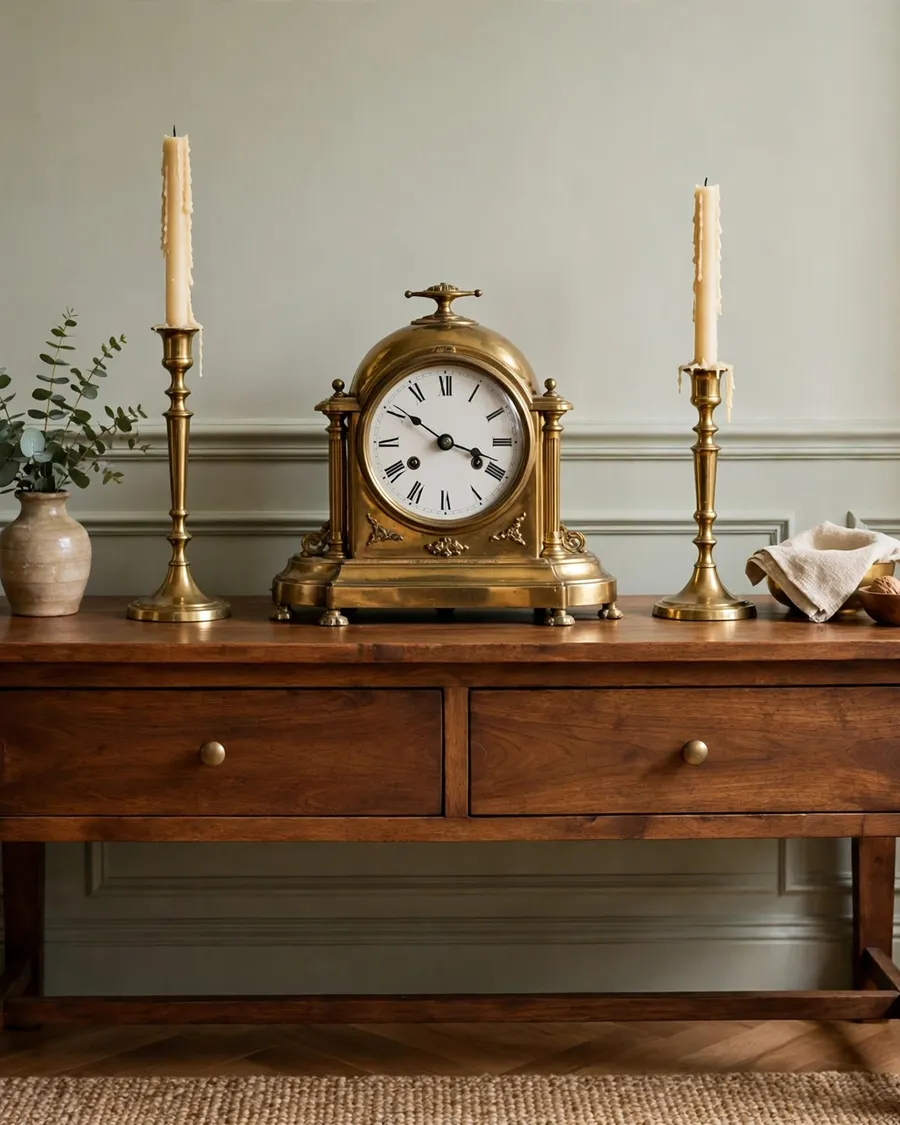
A vintage brass clock adds character, a warm metallic note and a practical touch at dinner. Centre it under the mirror and flank it with low objects. Best for: traditional, vintage and collected dining rooms. Styling tip: pair brass with wood tones rather than chrome for a warmer mix. Pro tip: wind a mechanical clock on the same day each week, and set it two minutes fast so dinner guests are never kept waiting.
21. Books Topped With a Small Object

A small object on a book stack is the oldest stylist trick there is, and it still works. The books lift the object to eye level and give it a plinth. Best for: sideboards that feel flat or one-note. Styling tip: use a hardback at least an inch thick so the stack looks solid. Pro tip: keep the object under 6 inches tall so the stack stays stable, and use museum putty underneath if you have children or pets.
22. A Candle Cluster at Varying Heights
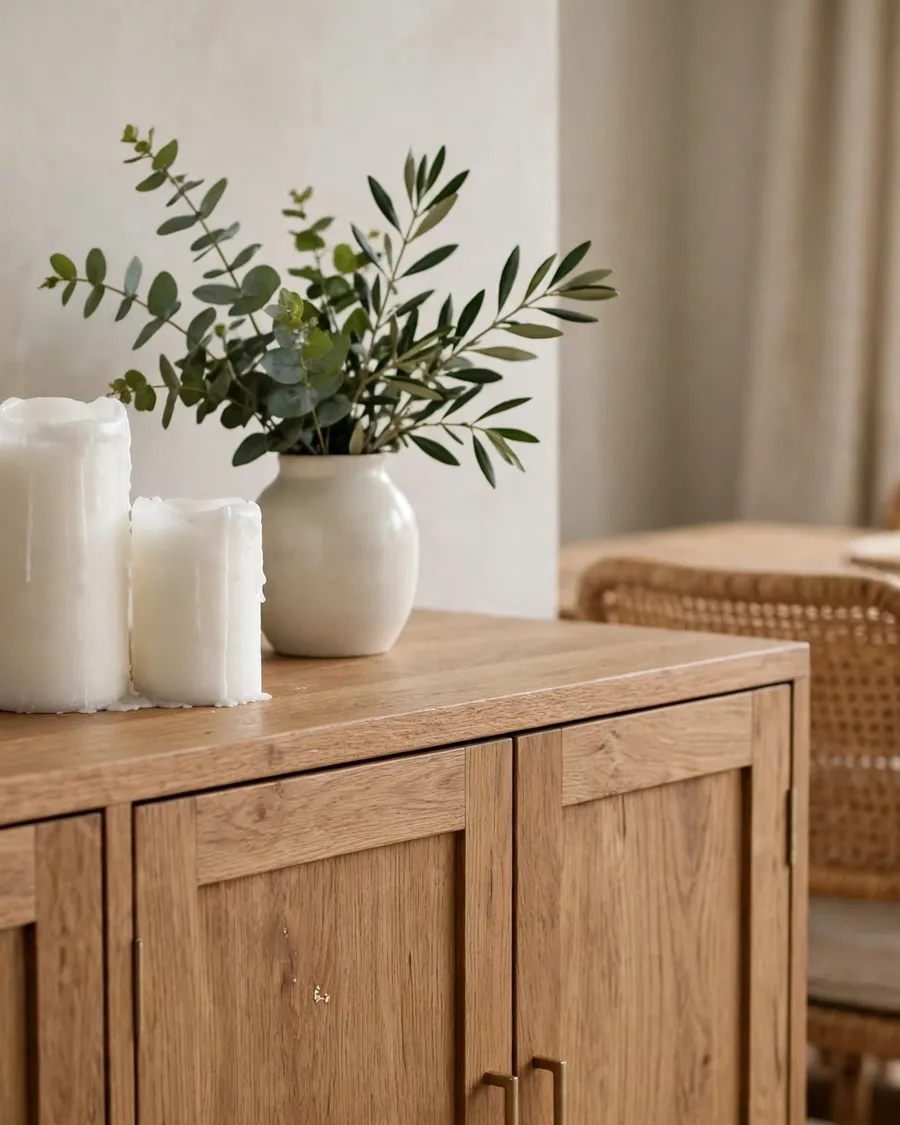
A cluster of pillar candles at three heights glows beautifully at dinner and costs very little. Group them tightly on one side so the other stays clear for serving. Best for: evening dining and cosy winter meals. Styling tip: use unscented candles at the table so the scent never fights the food. Pro tip: trim wicks to a quarter inch before lighting, which stops smoking and doubles the burn time of each candle.
23. One Sculptural Lamp, Off-Centre
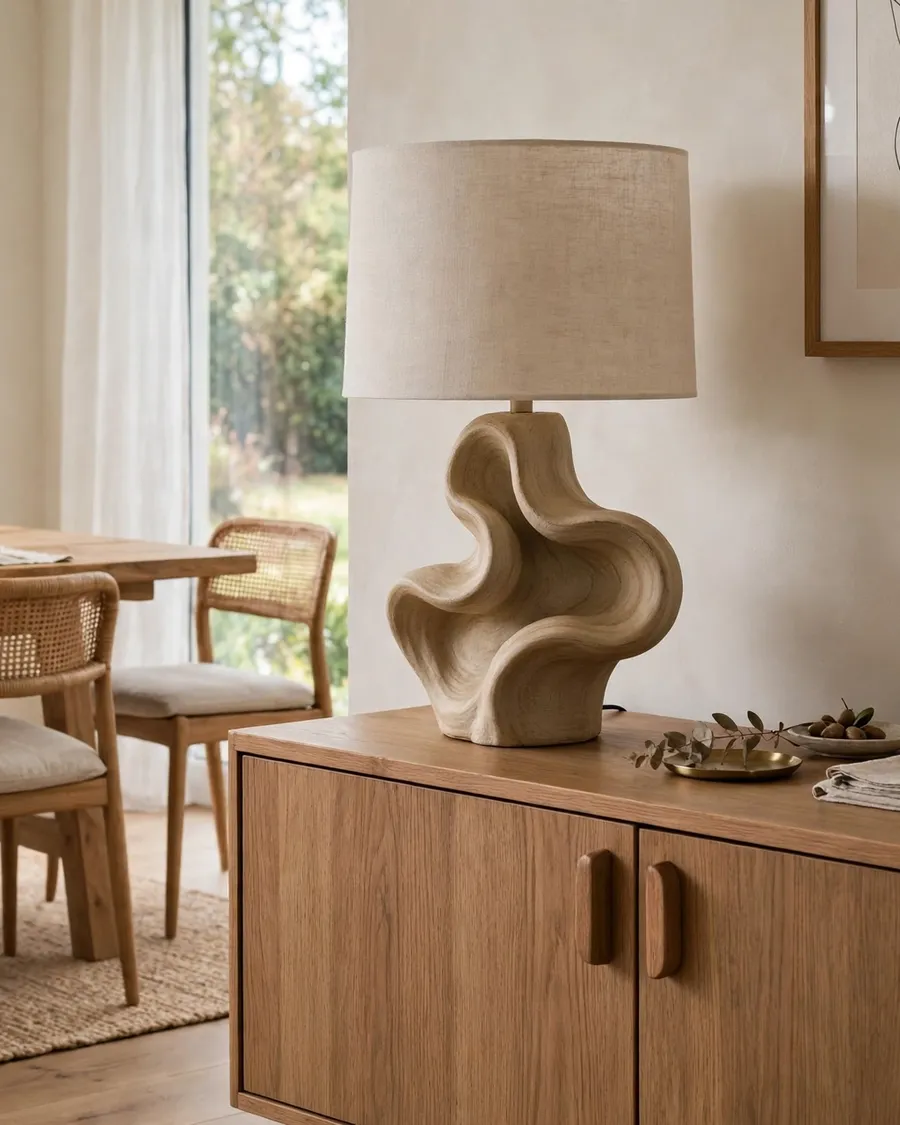
One sculptural lamp, placed off-centre, feels more designed than a matched pair. Choose a base with an interesting shape, a ceramic gourd or carved wood form, and let it anchor one end. Best for: asymmetric and modern dining rooms. Styling tip: balance the lamp with a low, wide object on the opposite end. Pro tip: use a warm 2700K bulb and a shade that is wider than the base by about 2 inches, so the light spreads evenly across the sideboard.
24. Colour-Blocked Ceramics
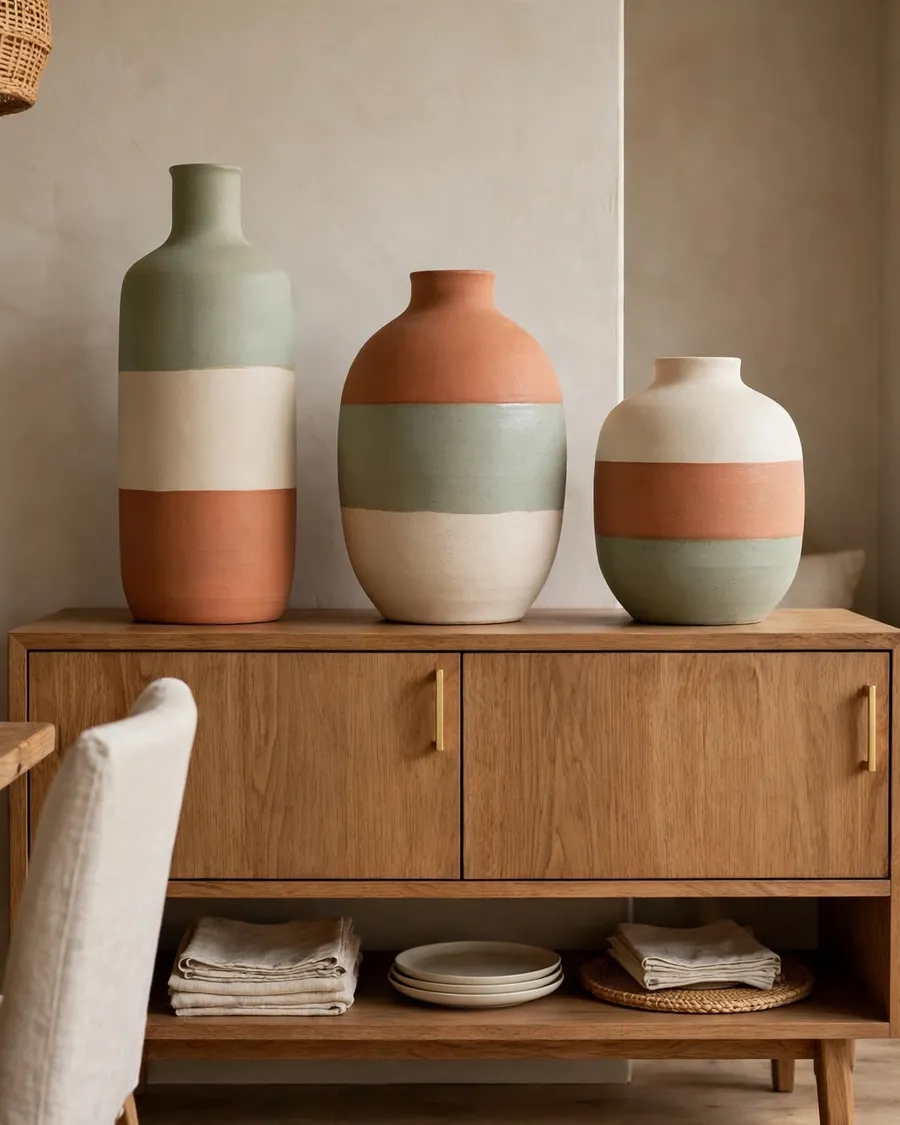
Colour-blocked ceramics, three vases in one bold hue and two neutrals, add personality without pattern. Repeating one strong colour ties the dining room together. Best for: colourful and modern homes that need a focal point. Styling tip: repeat the bold colour once more in the room, in a cushion or art. Pro tip: keep the vases in the same finish, all matte or all gloss, because mixed finishes make the colour blocking look accidental.
Seasonal, Personal and Practical Finishing Touches
25. A Seasonal Garland Above the Sideboard
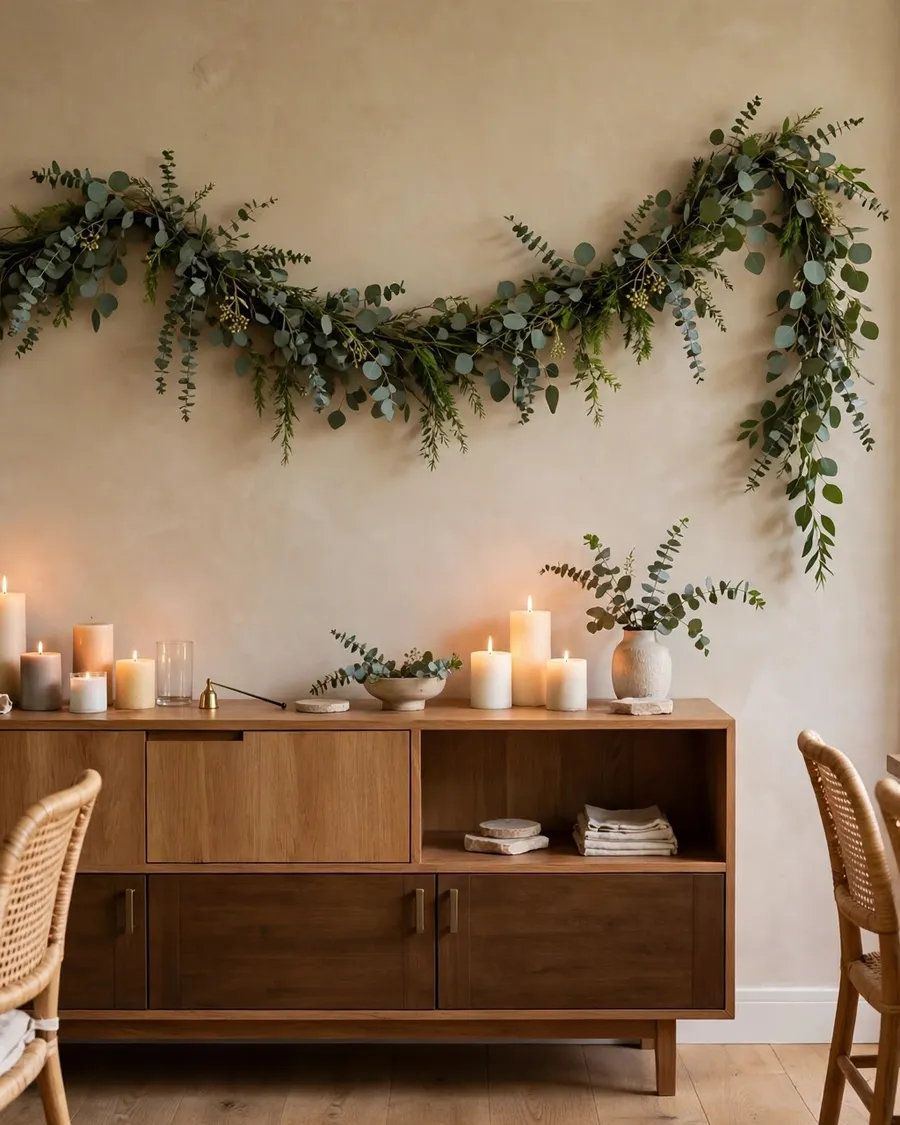
A fresh garland draped above the sideboard is the fastest seasonal switch you can make. Eucalyptus lasts two to three weeks and smells wonderful. Best for: anyone who likes to refresh the dining room often. Styling tip: let the garland dip in the middle and rise at the ends for a natural swag. Pro tip: hang it on two small clear hooks, not nails, so you can swap garlands in minutes without marking the wall.
26. Festive Christmas Styling
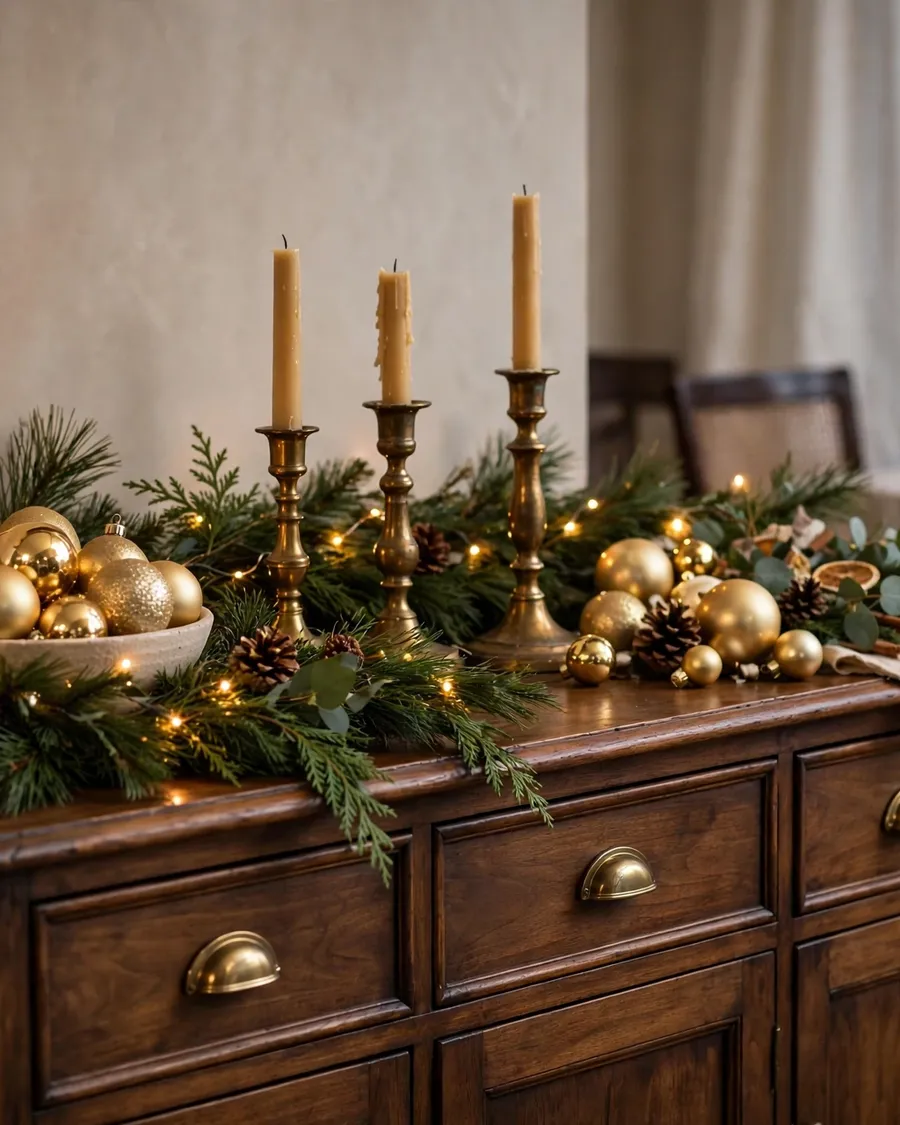
At Christmas, the sideboard becomes the room’s second tree. Layer pine garland along the top, add brass candlesticks and a few gold ornaments, and finish with fairy lights. Best for: holiday hosting and festive dining rooms. Styling tip: keep one end clear for serving dishes and drinks. Pro tip: use battery fairy lights with a timer set for 6 hours, so the display glows every evening without anyone remembering to switch it on.
27. Family Photos in Matching Frames
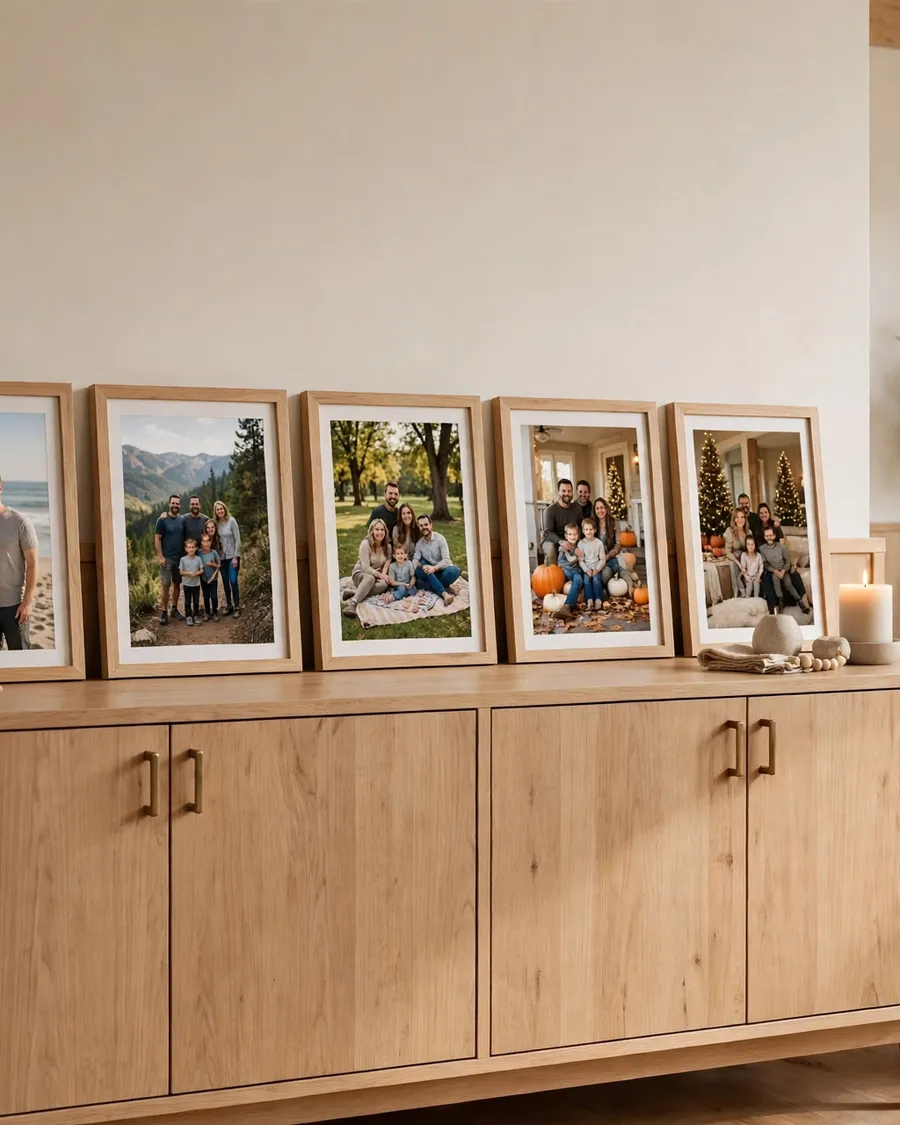
A row of family photos in matching frames makes the dining room feel personal. Five frames in one wood tone, evenly spaced, read as a collection, not clutter. Best for: family dining rooms and memory walls. Styling tip: mix old and new photos but print them all in the same tone. Pro tip: use UV-protective glass on frames near a sunny window, or the prints will fade noticeably within two summers.
28. Travel Souvenirs as a Collection
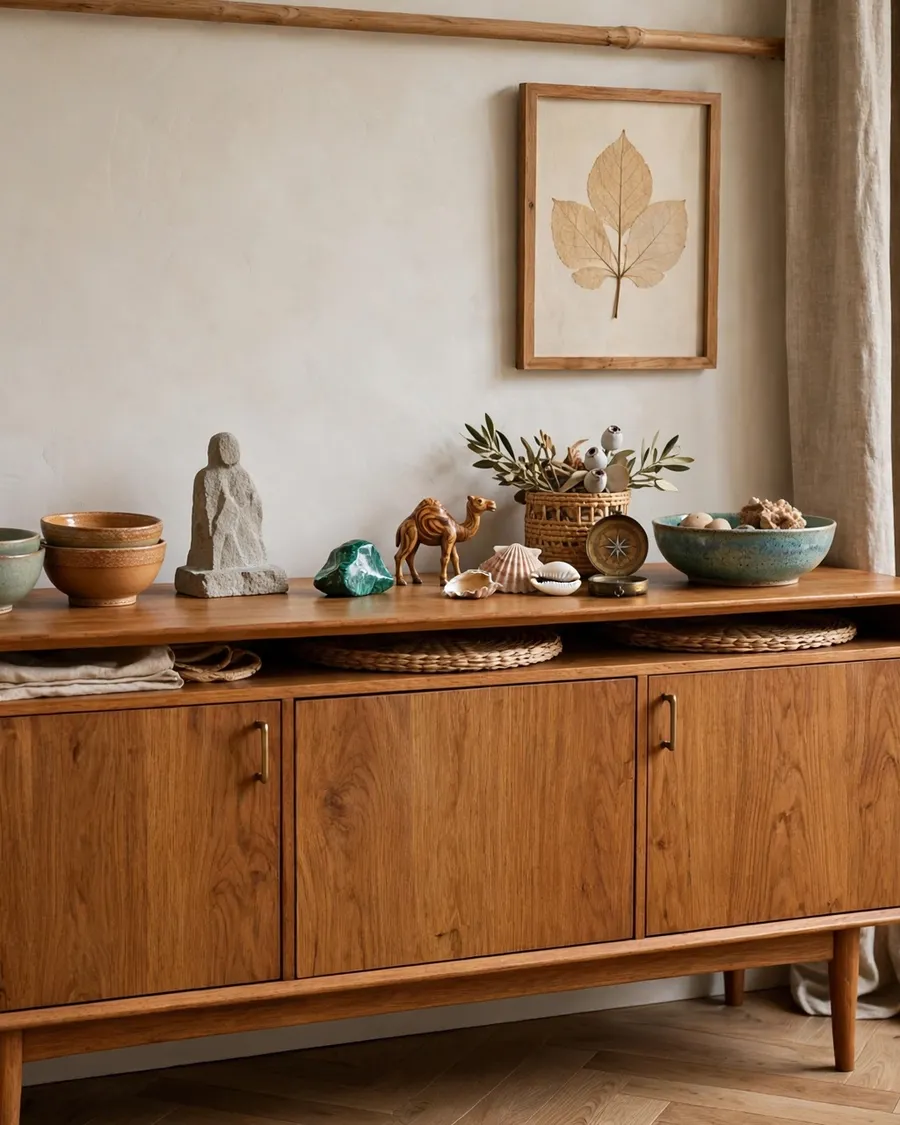
A few travel souvenirs, grouped tightly, tell a story no shop-bought object can. Choose three to five pieces in a similar scale and give them one shelf-length of space. Best for: well-travelled homes and eclectic dining rooms. Styling tip: group by material, all ceramics together, rather than by country. Pro tip: rotate the collection every few months, keeping the rest in a labelled box, so the display always feels fresh and never crowded.
29. Fresh Flowers, Rotated Weekly
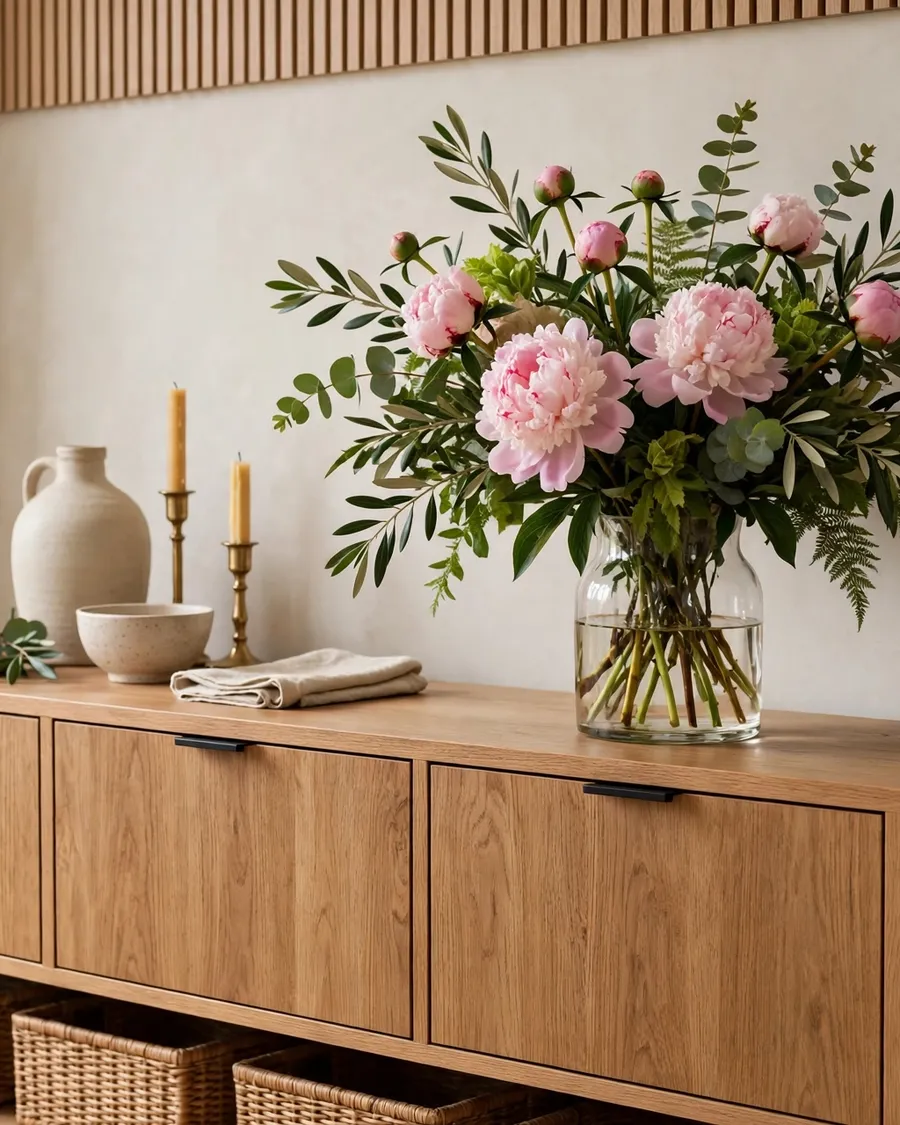
Fresh flowers are the simplest luxury a sideboard can offer. A weekly bunch from the market, cut short and arranged loosely, keeps the dining room alive. Best for: every dining room, in every season. Styling tip: choose flowers in one colour family for a calm, collected look. Pro tip: buy flowers with tight buds, not open blooms, and change the water daily; a tight bunch lasts twice as long as one bought fully open.
30. A Trailing Plant on One End
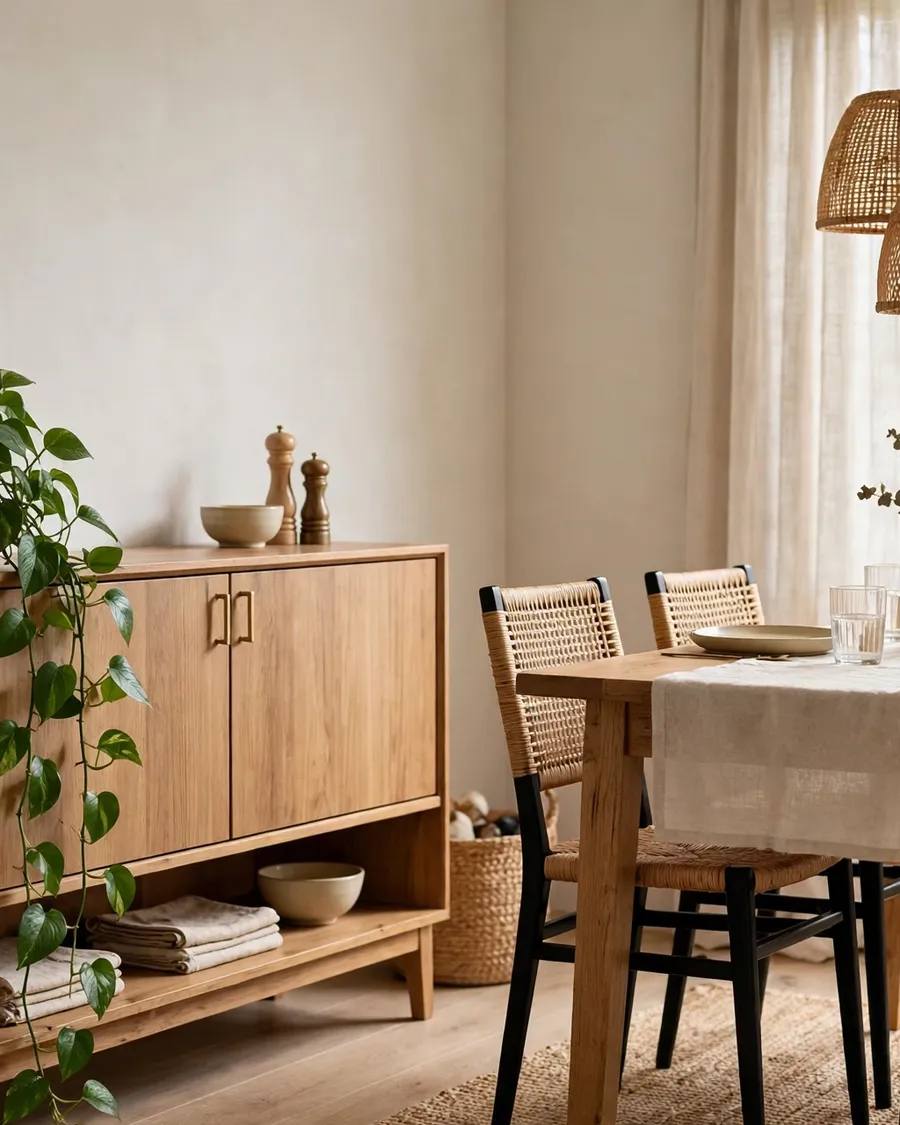
A trailing plant softens the hard edges of a sideboard and adds life that changes week by week. A pothos in a ceramic pot at one end drapes gently down the side. Best for: bright dining rooms and plant lovers. Styling tip: train the vines along the sideboard edge with small clear clips. Pro tip: water only when the top inch of soil is dry, and rotate the pot a quarter turn each week so the plant grows evenly.
31. Decorative Storage Boxes
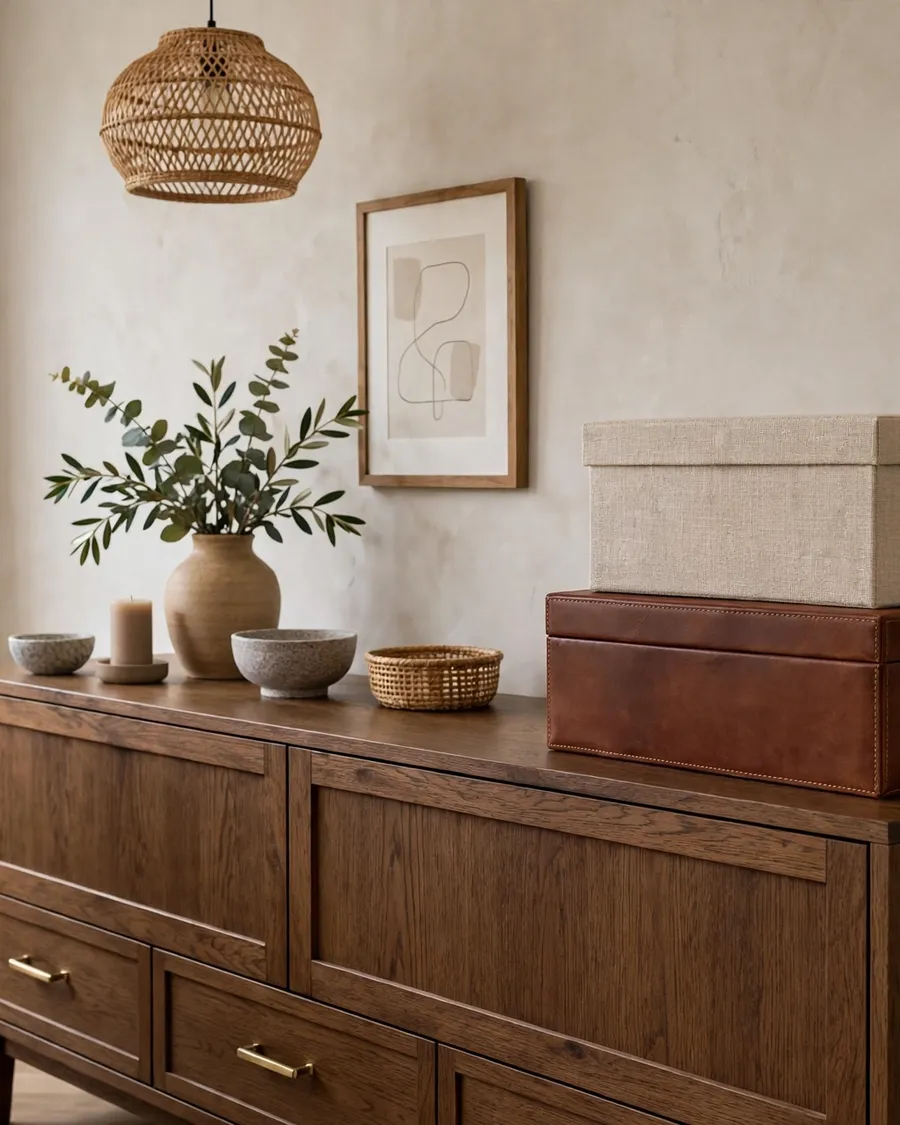
Decorative boxes hide the unpretty essentials, spare batteries, placemat rings and candle lighters, behind a beautiful lid. Two stacked boxes in linen or leather look like decor, not storage. Best for: sideboards that serve the dining table daily. Styling tip: label the inside of each lid so guests never open the wrong one. Pro tip: keep boxes under 12 inches long so they fit the sideboard depth with room to spare, and store the heaviest items in the bottom box.
32. Style the Space Beneath
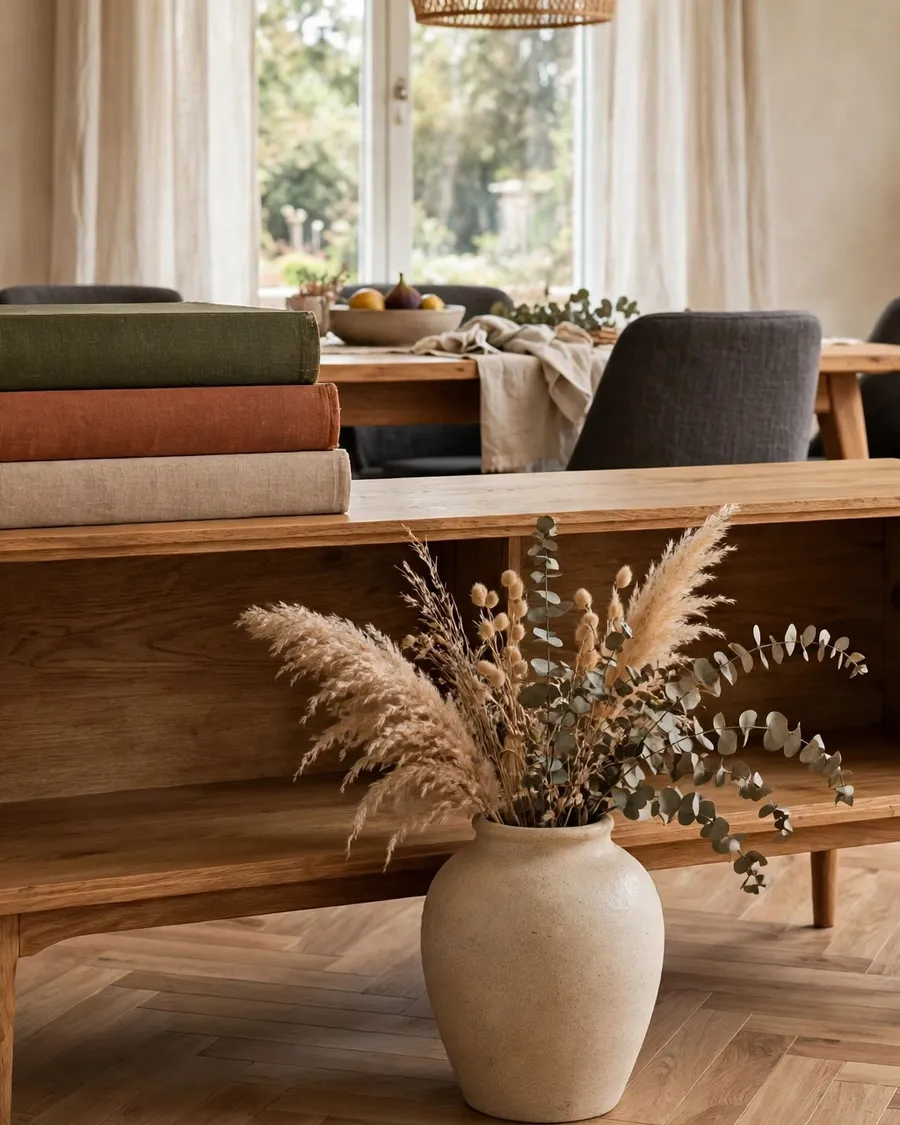
Do not forget the floor beneath an open-leg sideboard. A stack of large books, a floor vase or a low basket fills the gap and grounds the whole piece. Best for: mid-century and open-leg sideboards. Styling tip: keep the objects low, under half the leg height, so the sideboard still looks like it floats. Pro tip: leave at least 2 inches between the objects and the legs, so you can dust and mop underneath without moving everything.
How to Care for Your Sideboard and Its Decor
Dust weekly with a dry microfibre cloth, and wipe spills at once — water rings sink into wood in under an hour. Use felt pads under vases, lamps and candlesticks, and lift objects to clean beneath them. For more expert styling rules, see Homes & Gardens sideboard decor ideas guide, which covers the two-thirds art rule and layering.
Rotate fresh flowers weekly, and keep candles away from curtains and dried arrangements. In sunny rooms, move framed photos every few months so the wood beneath them does not fade in patches.
Frequently Asked Questions
What should I put on top of a sideboard?
Start with one tall anchor, a lamp, a mirror or a large vase, then add two or three mid-height pieces. A tray with candles, a stack of books and a ceramic vase cover most needs. Leave at least a third of the surface clear so the sideboard can still serve dinner. Breathing room is what makes a display look styled, not crowded.
How big should art or a mirror be above a sideboard?
Art or a mirror above a sideboard should span about two-thirds of the sideboard’s width. For a 60-inch sideboard, that means a piece about 40 inches wide. Hang it so the bottom edge sits 4 to 8 inches above the surface, with the centre at eye level, roughly 57 inches from the floor. A round mirror can be smaller, about half the width. Always measure before buying.
How do I style a sideboard without it looking cluttered?
Use the rule of three: group objects in threes, vary their heights, and leave gaps between groups. Keep to two or three materials and one accent colour, and hide small items inside a tray or a decorative box. Step back and look from the doorway, because clutter shows up at a distance. If you can remove one object and the display still looks complete, remove it.
What is the triangle method for styling a sideboard?
The triangle method groups three objects of different heights so the eye moves in a triangle: tall, medium and low. A tall vase, a mid-height lamp and a low bowl is the classic set, with heights roughly 24, 16 and 8 inches. Place the tallest piece at one end, not the centre. Uneven heights create movement, while equal heights look flat.
How do I style a sideboard for Christmas or the seasons?
Start by editing, not adding: remove two or three everyday objects, then layer in seasonal pieces. For Christmas, add pine garland, brass candlesticks and gold ornaments, keeping one end clear for serving. In spring, swap in fresh flowers and pale ceramics; in autumn, use dried grasses and amber glass. Change the garland or flowers, not the lamps and art.
How do I keep a sideboard practical for serving dinner?
Keep the middle third of the sideboard clear at all times, and use trays to corral decanters, candles and serving pieces so they lift away in one move. Store placemats, napkins and serving spoons inside the sideboard, within arm’s reach of the table. Use heat-proof mats under hot dishes and a linen runner to protect the wood. Style the two ends and leave the centre free.
Final Thoughts
A styled sideboard needs no designer budget, only a tall anchor, a few objects you love and some empty space. Pick one idea from each section, live with it for a week, and change what does not work. Save this guide before your next dinner party.
