
26 Smart Mudroom Laundry Room Combo Ideas That Handle Mess in One Space
A mudroom laundry room combo sounds like a compromise, but done well it is the hardest-working room in the house. Coats, shoes, and school bags land by the door while the washer hums a few steps away, so muddy kit goes straight into the machine instead of trailing through the hall. These 26 mudroom laundry room combo ideas show how to zone the space, hide the clutter, and keep both jobs running smoothly — even in a small room.
Every idea below works on its own, but the best rooms borrow three or four: a clear split between the door side and the laundry side, storage for every person, and surfaces that cope with mud and water. Pick the ones that fit your floor plan and your family’s daily routine.
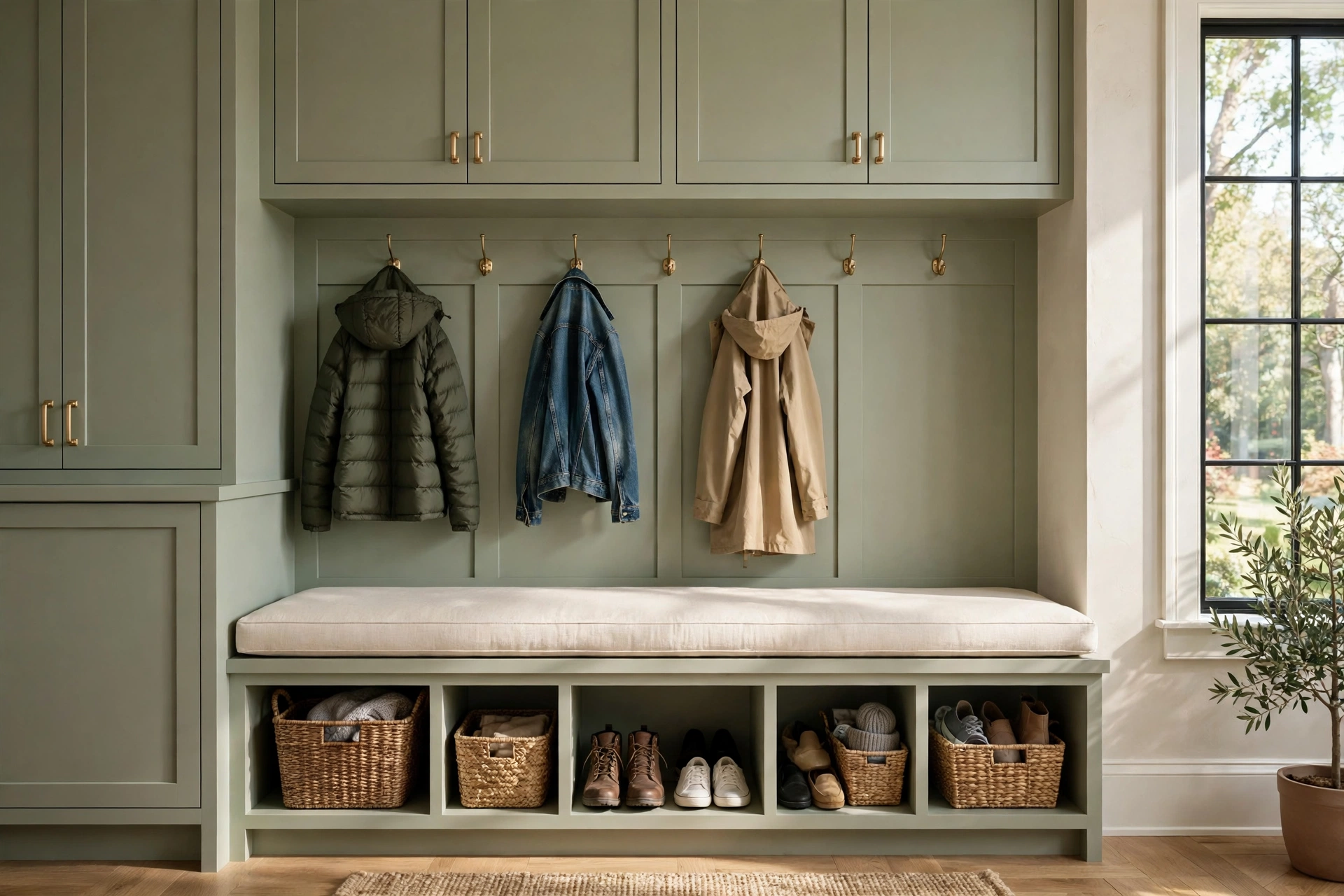
1. Split the Room Into Two Clear Zones
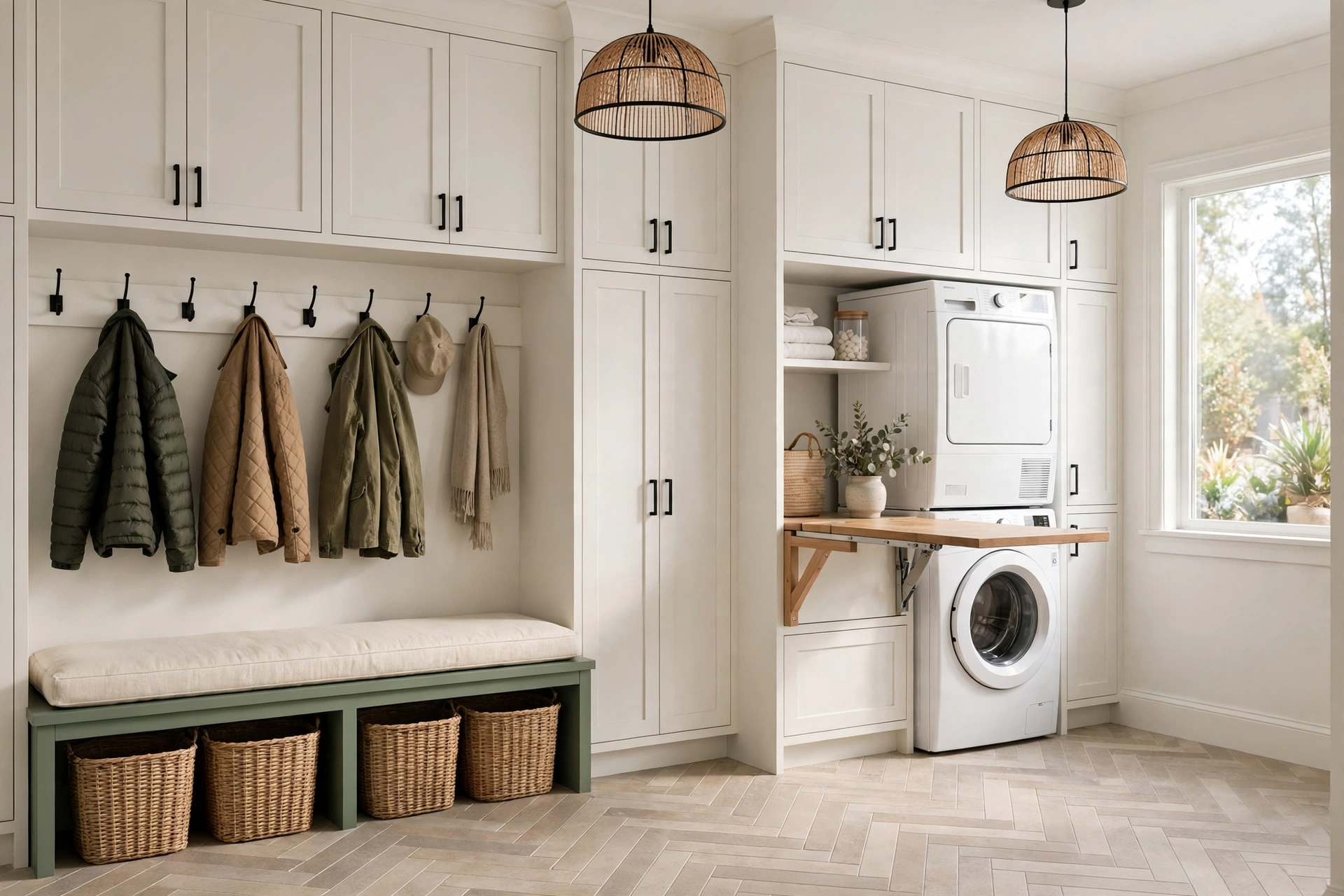
Give the door side to coats and shoes and the far side to washing, with a bench or a change in flooring marking the line. The split stops muddy boots drifting into clean laundry and gives every job its own patch of floor. Best for: busy family entries. Tip: keep the laundry zone nearest the plumbing wall to cut pipe runs.
2. Stack the Washer and Dryer
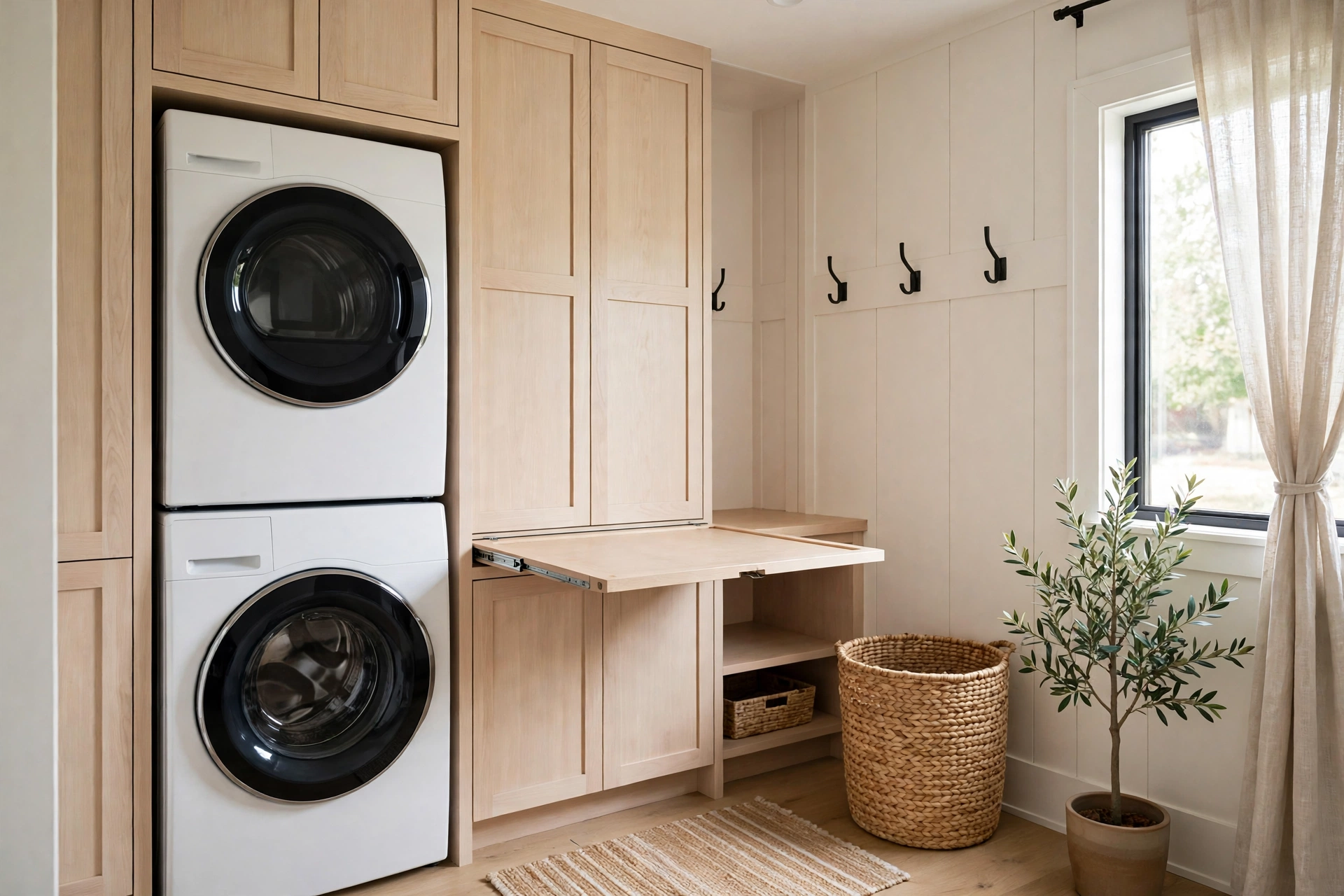
Stacking the machines frees a full cabinet-width of floor for a bench, a hamper, or a drying rail. Choose a stacking kit made for your exact models so the top unit sits steady, and leave a small step stool nearby for shorter users. Family Handyman’s guide to combining a mudroom and laundry room shows how well stacked machines work in tight rooms. Best for: small rooms under 60 square feet.
3. Build a Bench With Cubbies Underneath

A low bench gives everyone a seat for shoes, while open cubbies below swallow trainers, wellies, and sports kit. Add a cushion in a washable fabric and a row of hooks above, and the bench becomes the room’s anchor. Best for: households with school-age children. Pro tip: size each cubby to one pair of adult boots so nothing gets wedged.
4. Give Every Person One Hook and One Basket
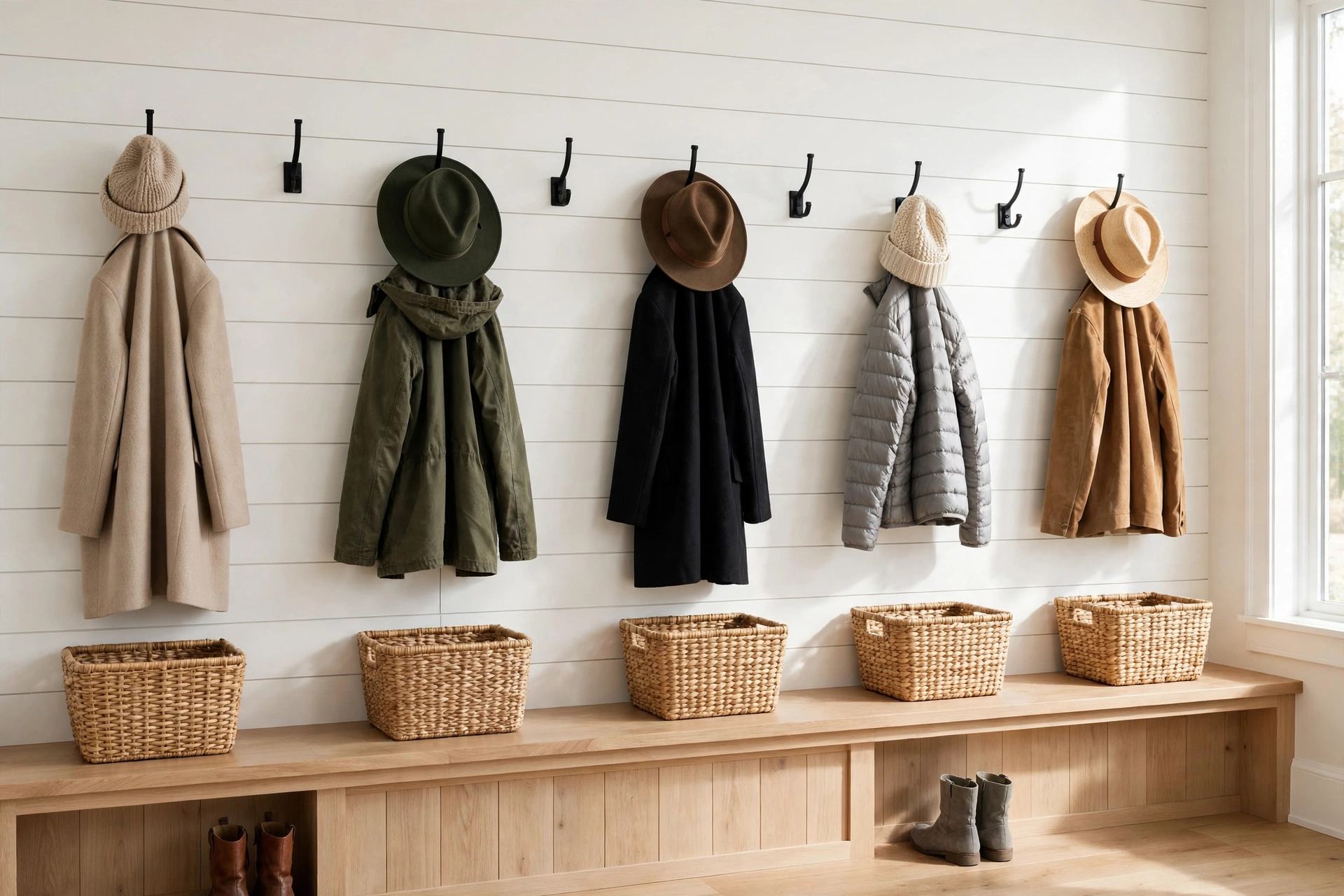
One labelled hook and one basket per person ends the daily hunt for coats and gloves. Children get the lower row, adults the upper, and the basket holds hats, scarves, and the bits that usually end up on the floor. For more ways to keep the entry tidy, see these mudroom organization ideas. Best for: large families.
5. Hide the Clutter Behind Closed Cabinets

Closed doors beat open shelves when the room holds detergent, cleaning sprays, and half-folded washing. Shaker-style doors in a soft sage or navy keep the room calm, and a single open shelf above the machines holds the few things you reach for daily. Best for: rooms that double as a guest route. Tip: use pull-out bins inside for sorting.
6. Add a Folding Counter Over Front-Loaders

A timber or laminate counter across the top of front-loading machines turns dead space into a folding station. Clothes come out of the dryer and get folded on the spot instead of piling on the bench. Best for: homes that fold laundry daily. Pro tip: leave a 5 cm gap at the back so hoses and plugs stay reachable.
7. Fit a Deep Utility Sink for Muddy Boots
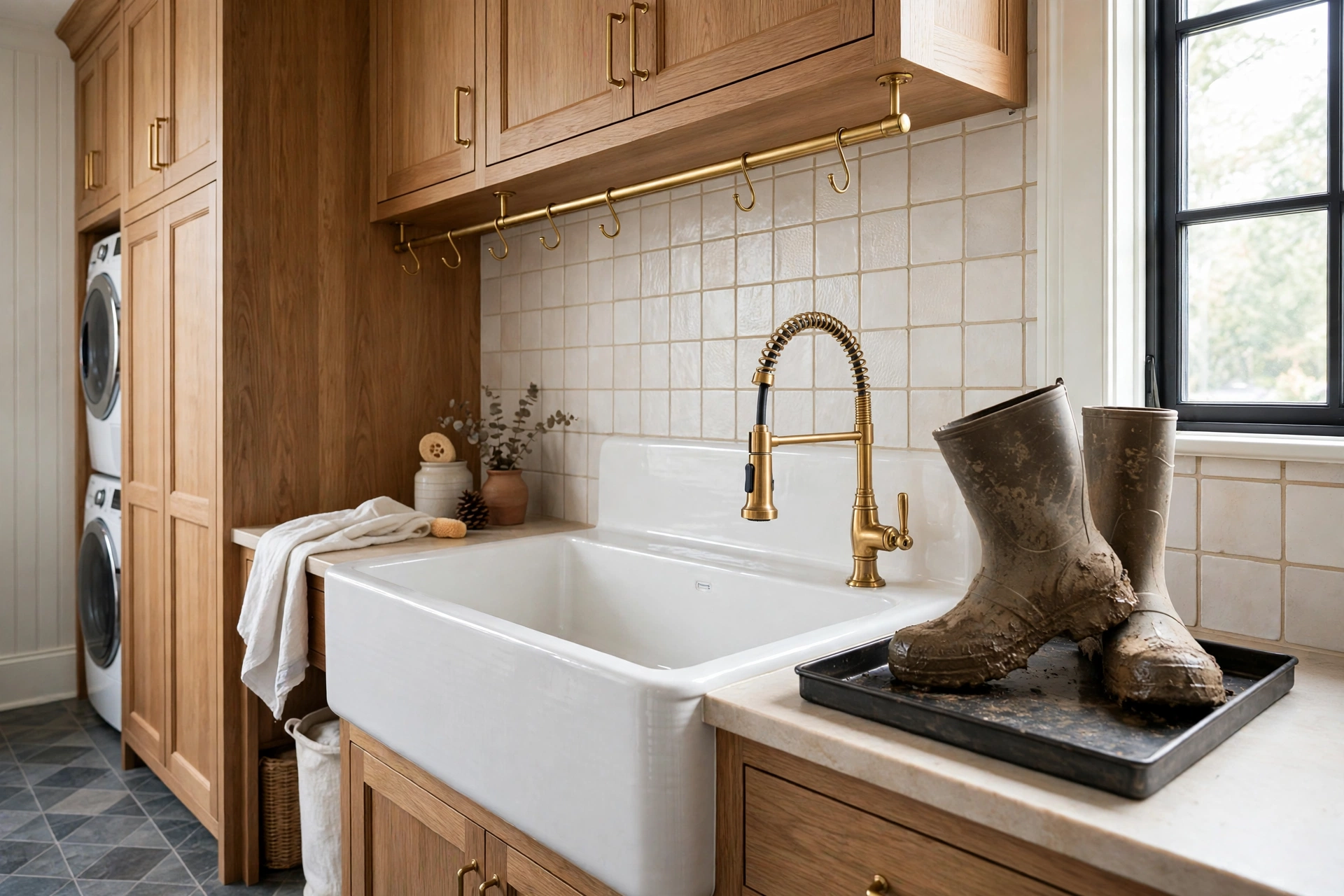
A deep Belfast or stainless sink handles muddy boots, grubby sports kit, and hand-washing delicates without splashing the floor. Mount a short hanging rail above it for drip-drying, and keep a stiff brush in a wall cup beside it. Best for: homes with dogs, gardens, or muddy sports. Tip: a pull-out spray tap makes rinsing boots far easier.
8. Choose a Floor You Can Hose Down
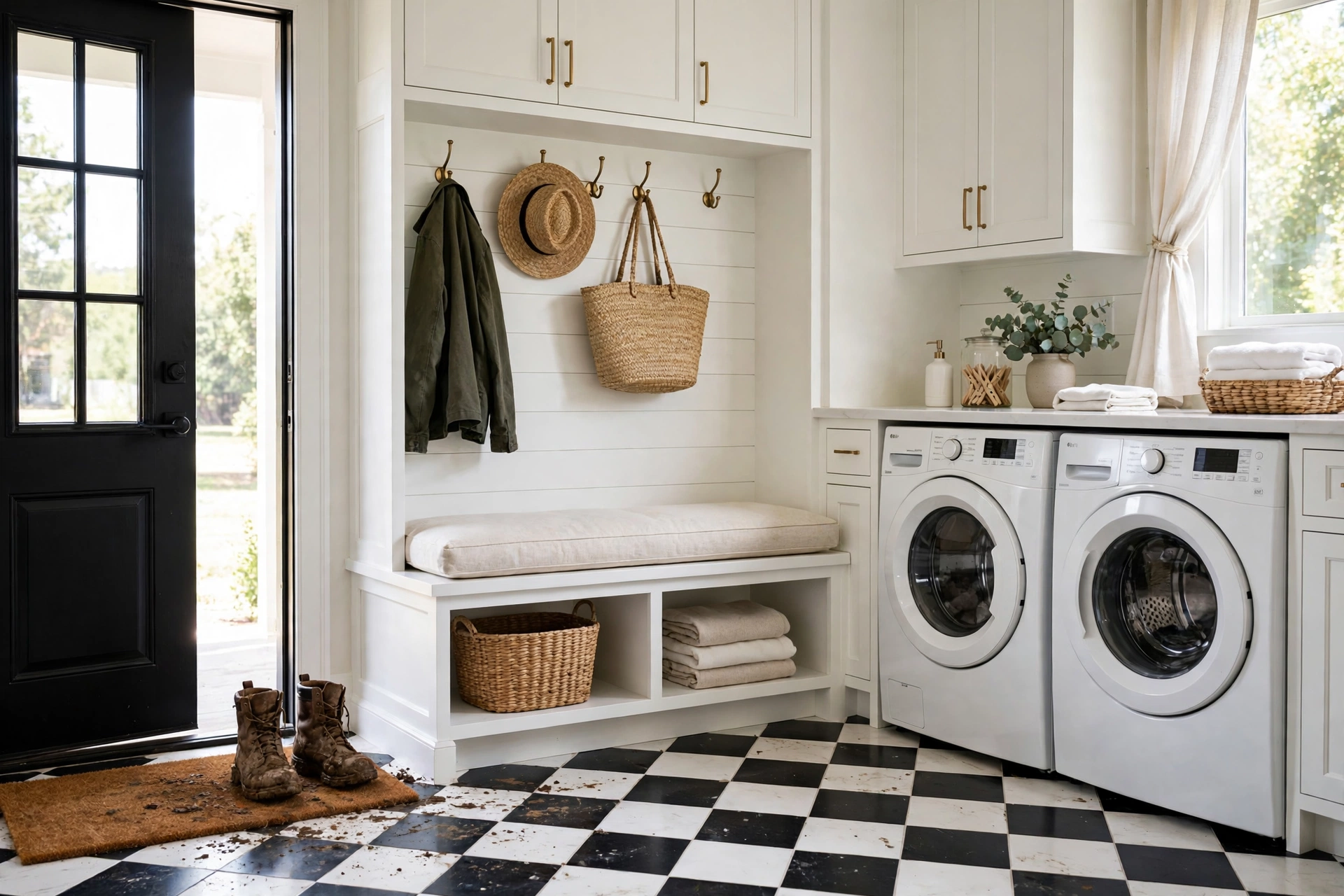
Porcelain tile, luxury vinyl, or sealed concrete shrug off wet boots and detergent spills. A herringbone or chequered tile adds pattern without extra upkeep, and a dark grout hides the marks between cleans. Best for: country homes and rainy climates. Pro tip: pick a slightly textured tile so wet feet do not slip.
9. Hang a Drying Rail Above the Machines
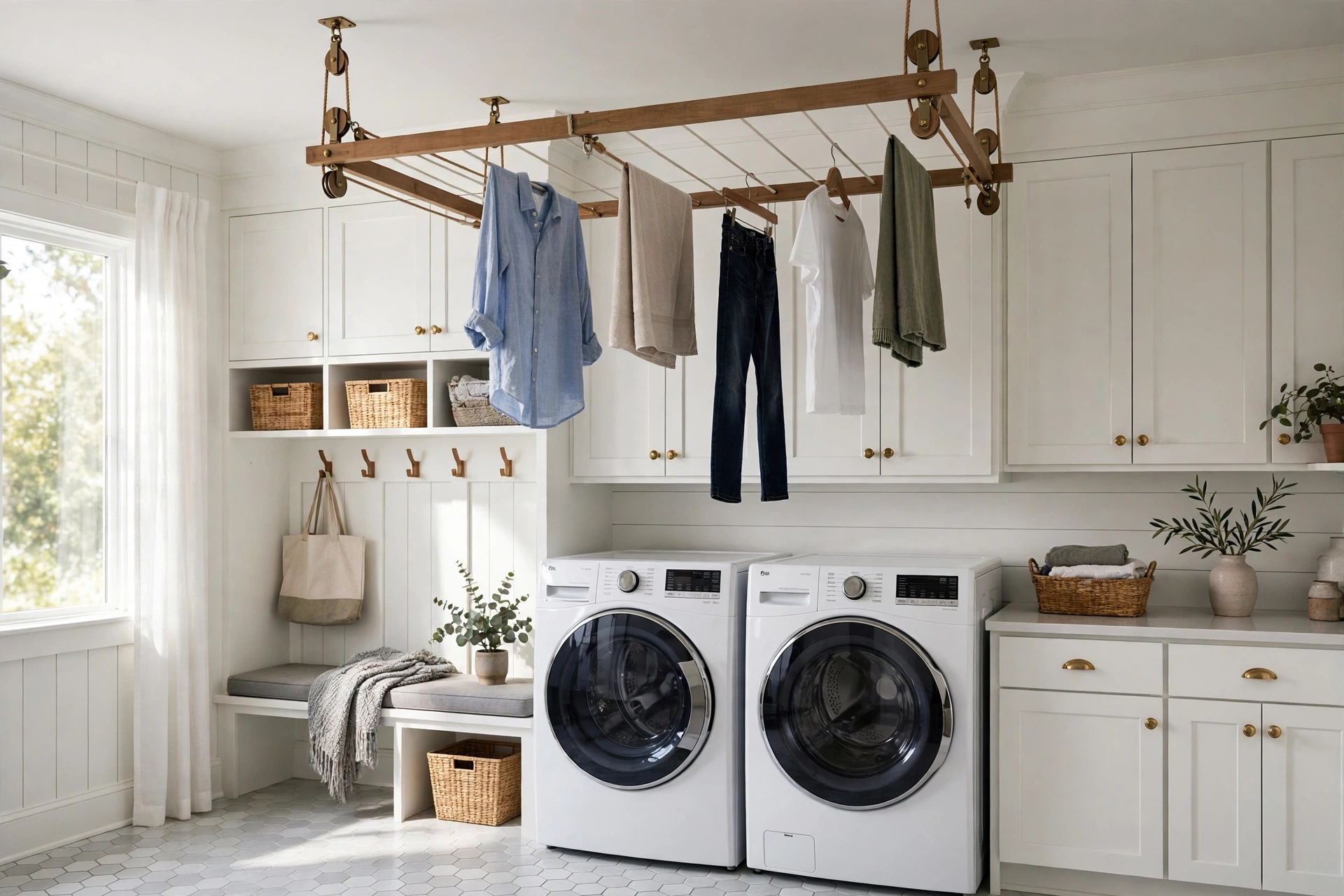
A ceiling-mounted or wall-mounted rail gives delicates and school uniforms a place to dry without a freestanding airer blocking the door. Pulley rails drop down for loading and rise out of the way, which suits low ceilings. Best for: homes without a tumble dryer. Tip: position it over the tile, not the bench, so drips land safely.
10. Roll Hampers Under the Counter
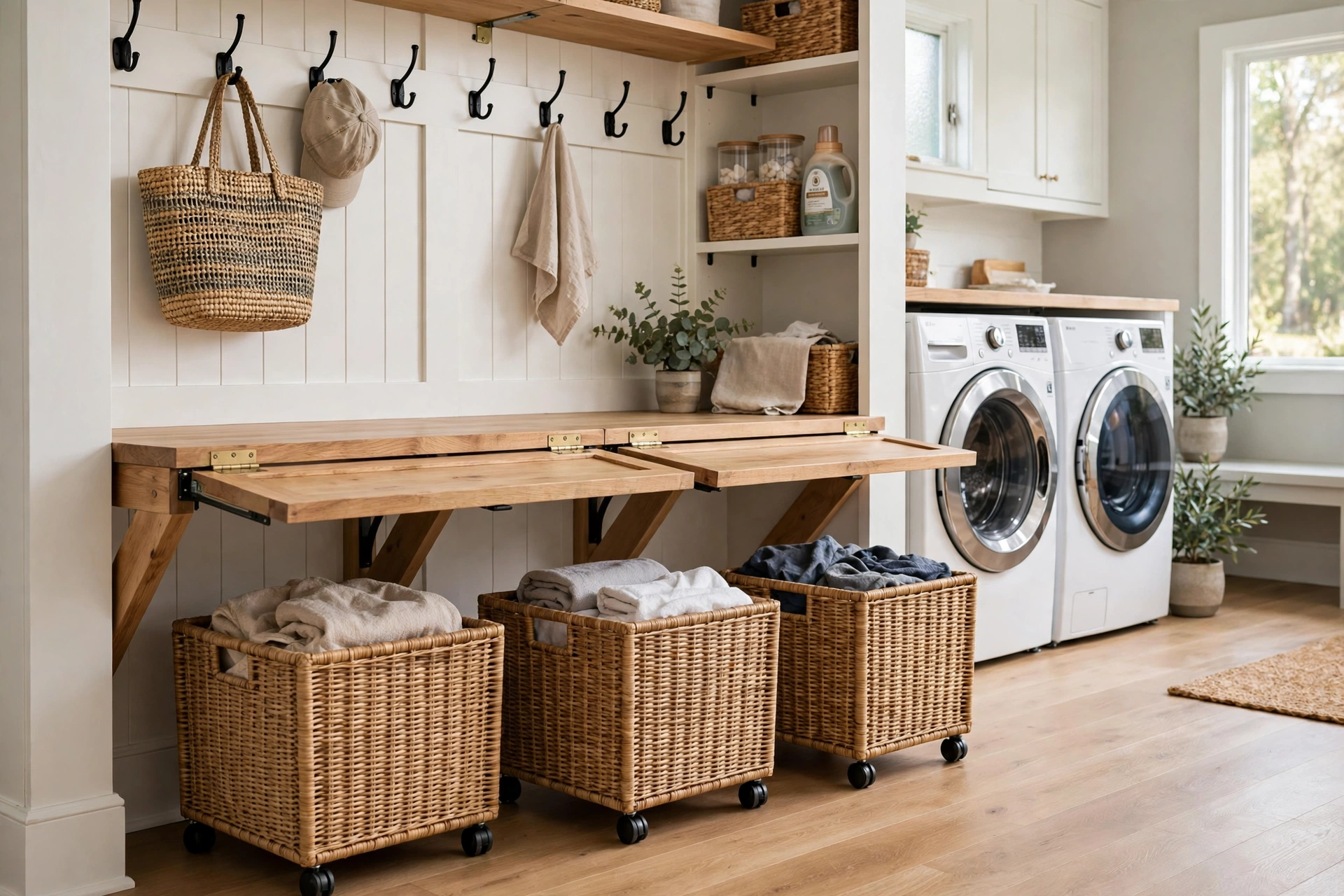
Wheeled hampers that slide under the folding counter make sorting painless: one for lights, one for darks, one for towels. Pull the right hamper out, load the machine, and push it back. Best for: shared laundry days. Pro tip: label the fronts with small brass tags so guests and children sort correctly too.
11. Put Up a Pegboard for Tools and Supplies
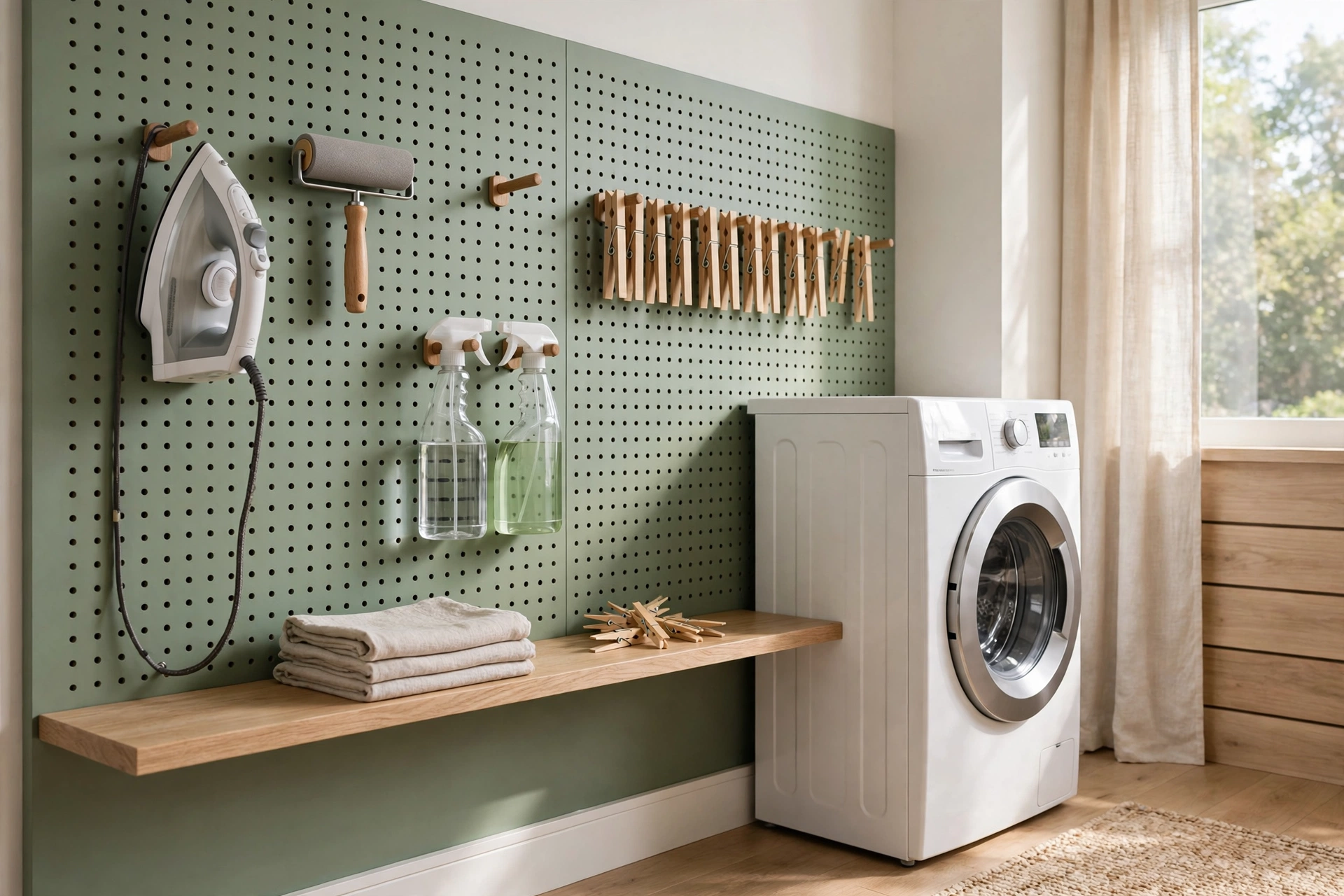
A pegboard on the laundry wall holds the iron, lint roller, stain spray, and clothespins on hooks you can move as needs change. Paint it the same colour as the wall so it reads as panelling rather than a workshop board. Best for: renters and small budgets, since it needs no joinery. Tip: add a small shelf at the base for spray bottles.
12. Squeeze Slim Shoe Storage Beside the Door
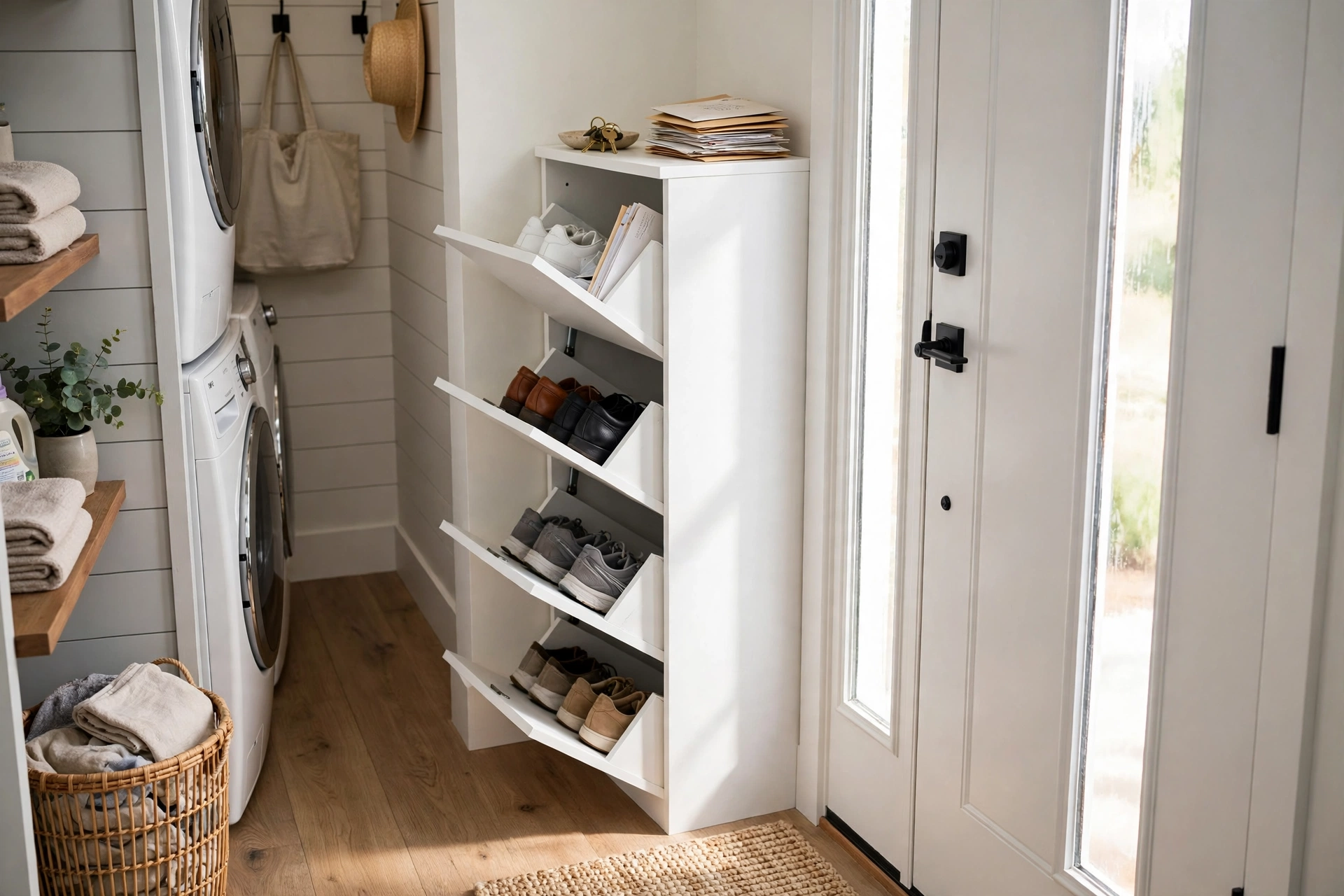
A 15 cm-deep shoe cabinet or a row of tilted shelves fits where a full cupboard cannot. Shoes stand upright, the floor stays clear, and the cabinet top doubles as a drop spot for keys and post. Best for: narrow entries and flats. Pro tip: drill discreet air holes in the back panel so damp shoes dry instead of smelling.
13. Add a Pet Wash Station in the Corner
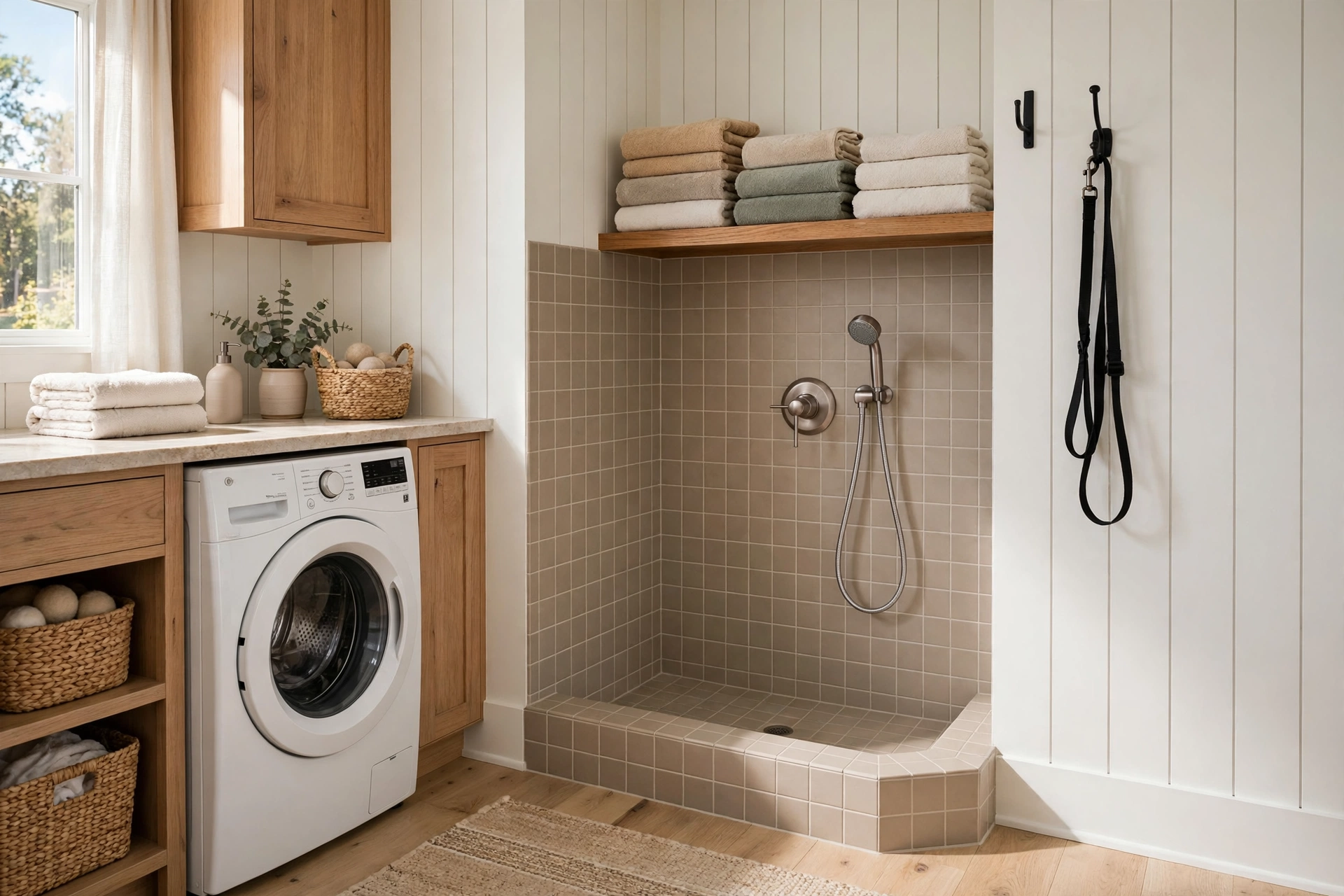
A low tiled shower tray with a handheld sprayer washes muddy paws before the dog reaches the carpet. A hook for the lead and a shelf for towels keep the routine in one corner. Best for: dog owners. Tip: fit a drain cover you can lift out and clean, since pet hair blocks drains fast.
14. Hang Coat Hooks at Two Heights
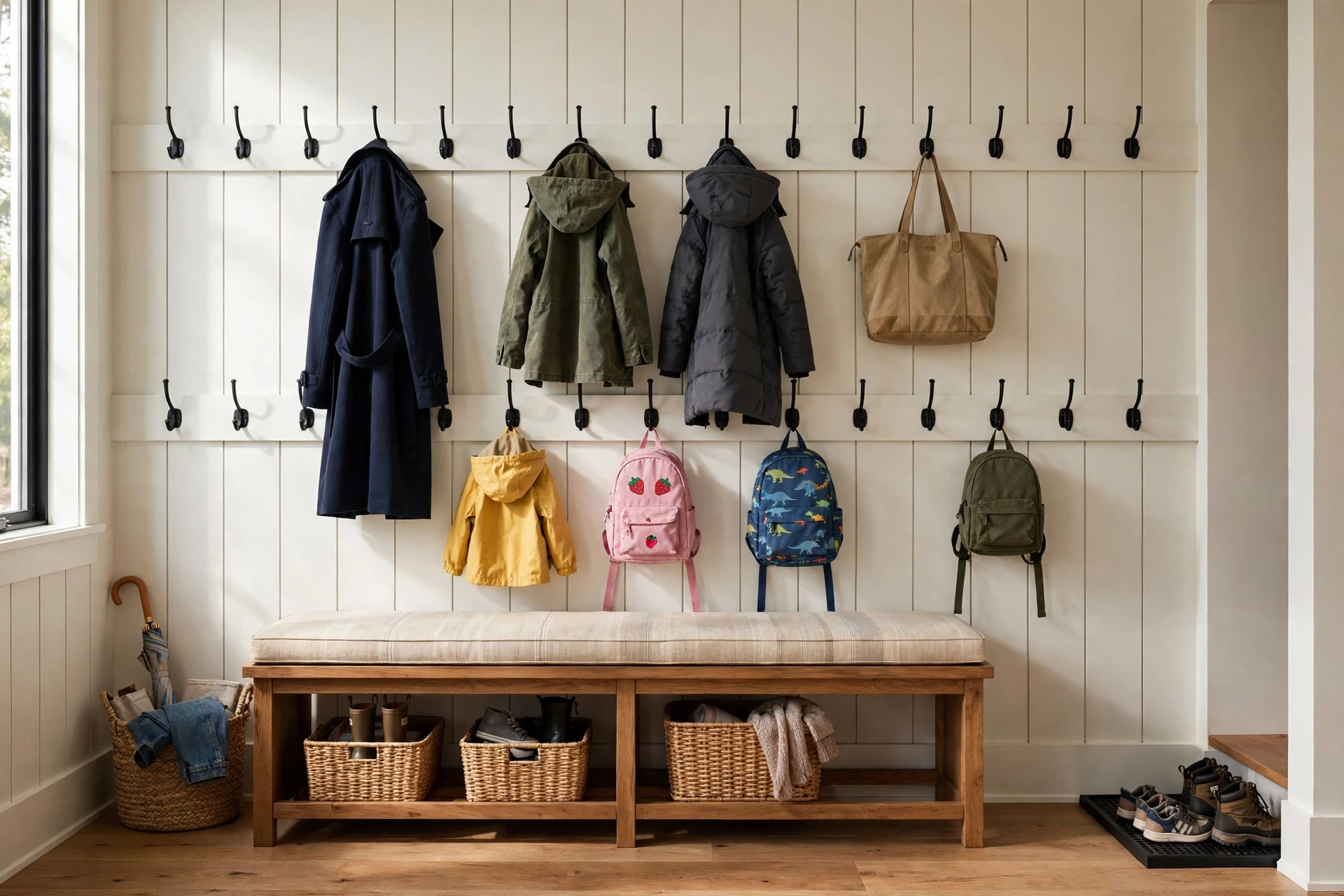
Two rows of hooks — low for children, high for adults — stop coats sliding onto the floor and let small children hang their own things. Stagger the hooks so bulky winter coats do not crowd each other. Best for: growing families. Pro tip: use double hooks so a coat and a school bag share one spot.
15. Use Open Shelves for Detergent and Baskets
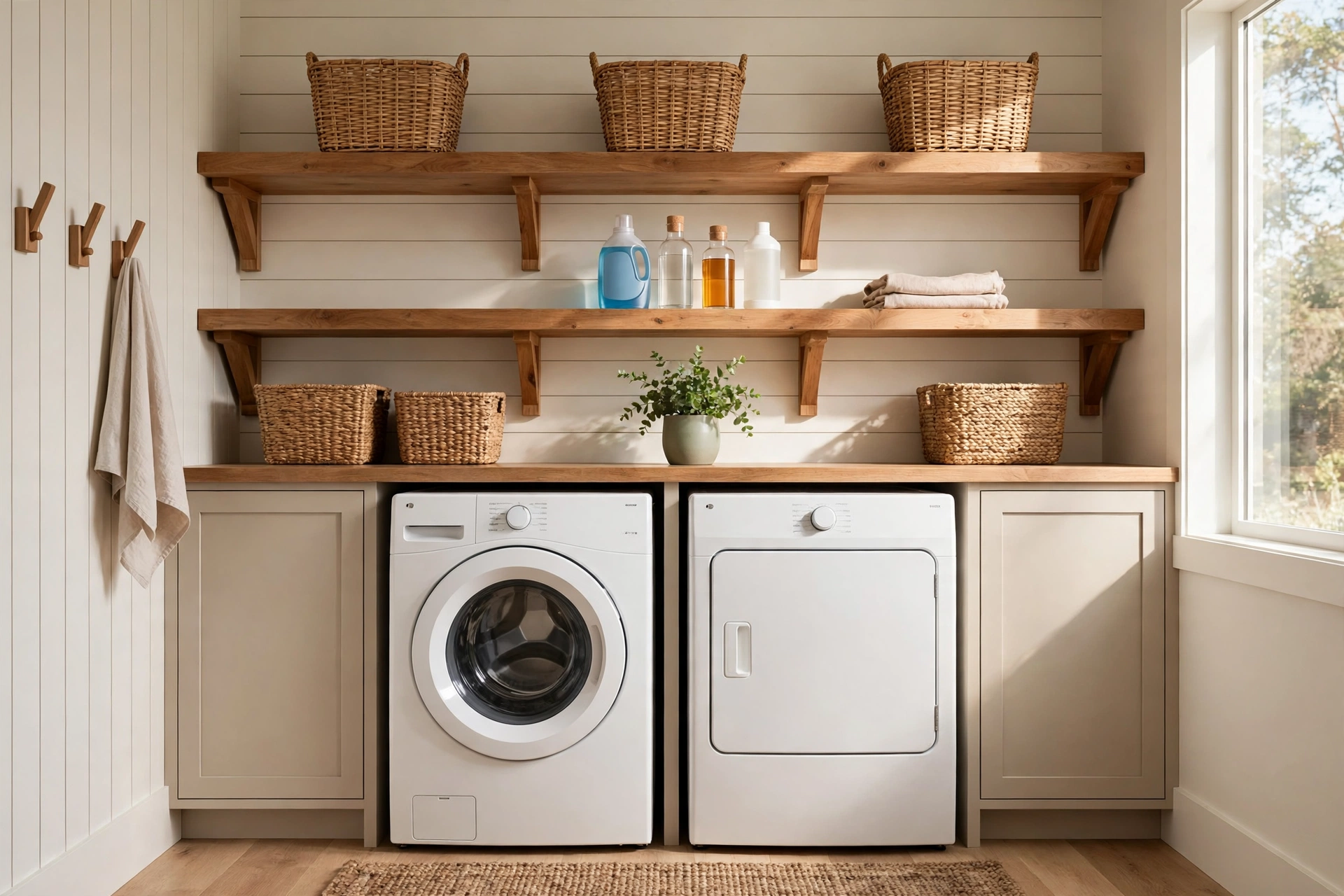
Two open shelves above the machines keep detergent, stain remover, and folded cloths in sight and within reach. Matching baskets corral the smaller items, and a single plant softens the hard lines. See more storage-led layouts in these laundry room ideas. Best for: people who like everything visible. Tip: keep heavy bottles on the lower shelf.
16. Hide the Laundry Side Behind a Curtain
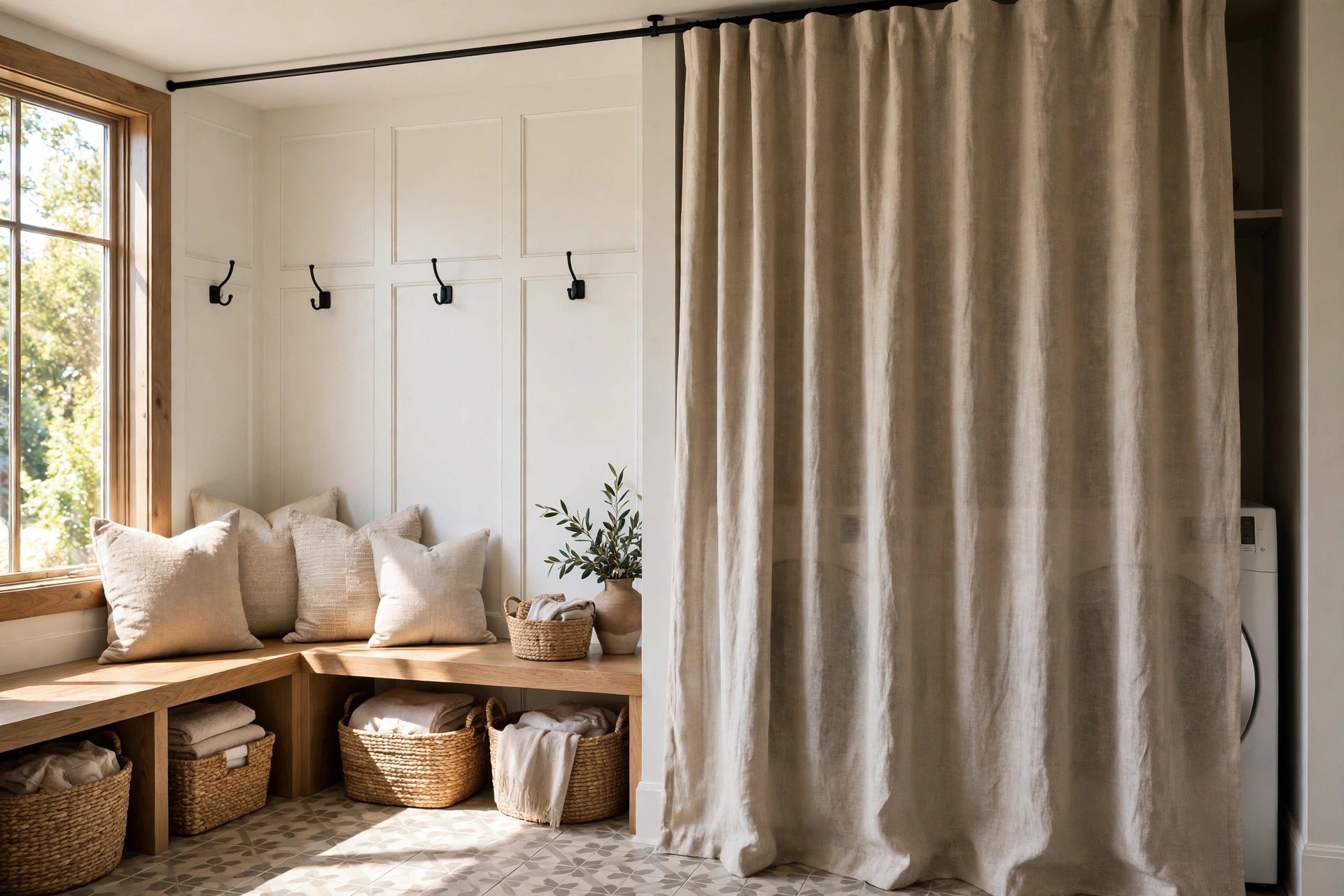
A simple linen curtain on a ceiling track hides the machines when guests arrive and softens the room the rest of the time. It costs far less than cabinet doors and swaps easily when tastes change. Best for: open-plan entries where the room is always on show. Pro tip: choose a washable fabric in a mid-tone that hides marks.
17. Plan a Narrow Layout for a Hallway Combo
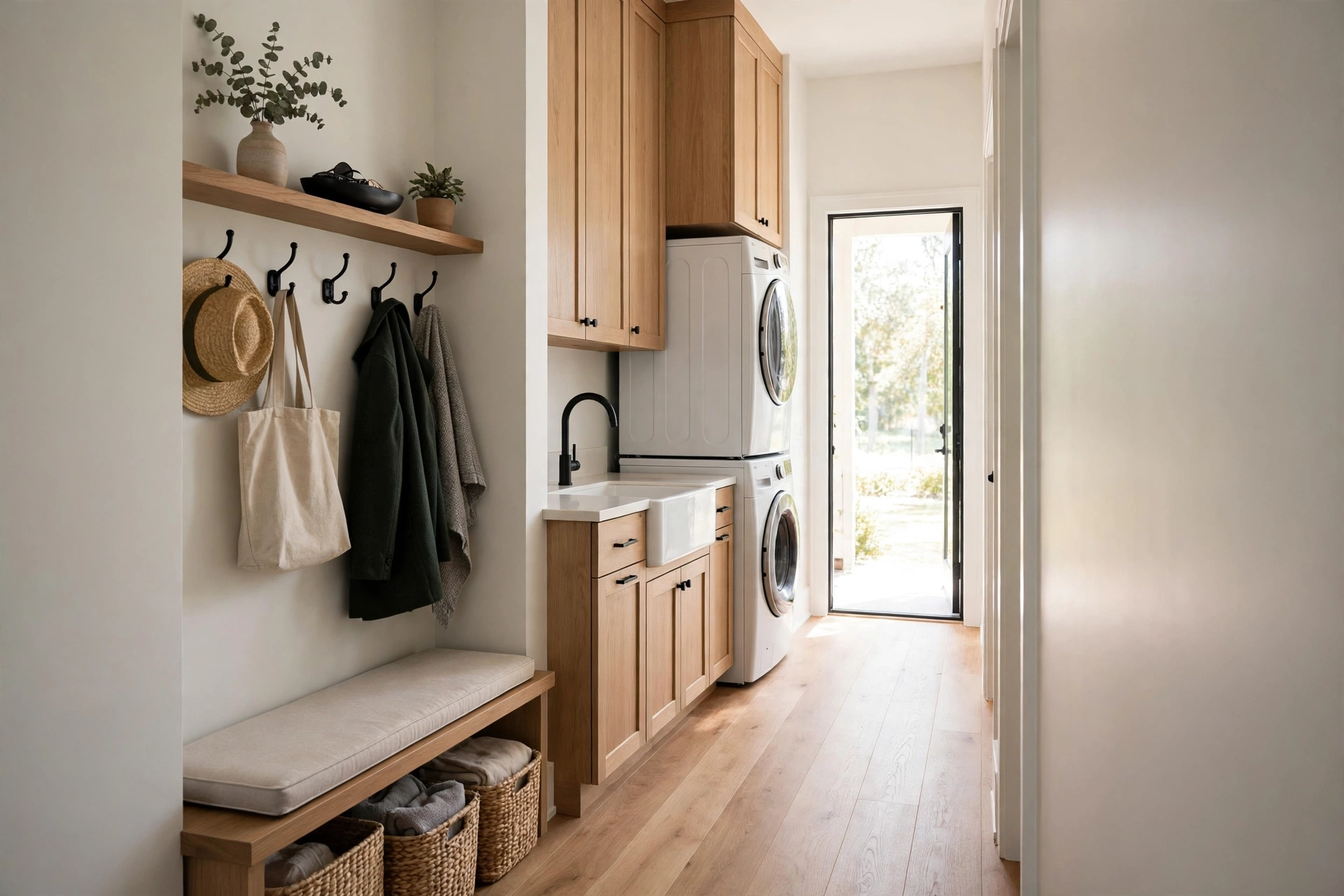
In a hallway-width room, run everything along one wall: hooks and bench on the left, stacked machines and sink on the right. Keep the walkway at least 90 cm wide so laundry baskets pass without a squeeze. Best for: terraces and small cottages. Tip: sliding or pocket doors save the swing space a standard door wastes.
18. Choose a Bench With Shoe Drawers Below
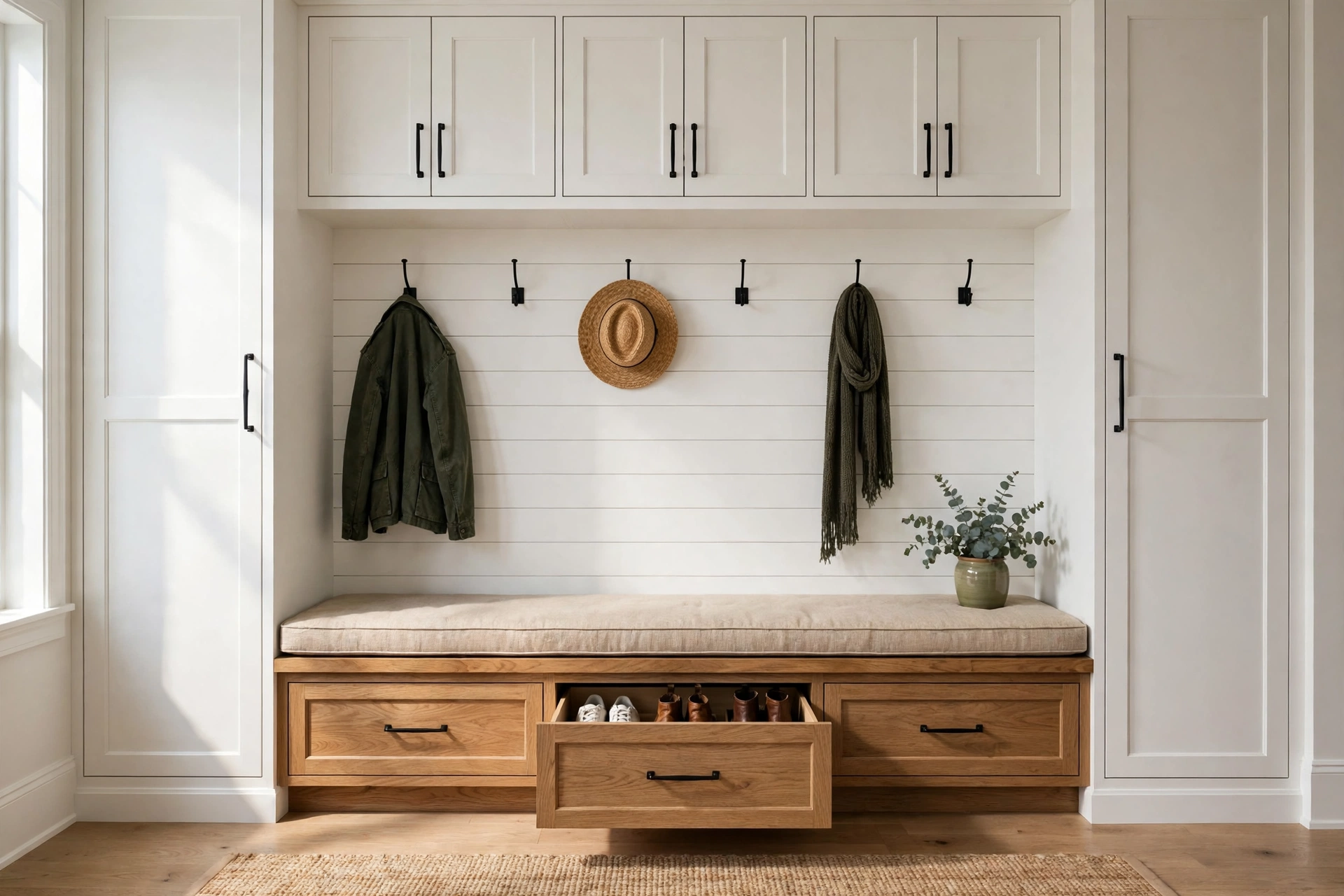
Deep drawers under the bench hide shoes completely, which suits rooms where open cubbies would look messy. Soft-close runners stop slamming, and a drawer per person keeps pairs together. Best for: minimal or modern homes. Pro tip: line the drawer bases with washable mats so mud stays contained.
19. Fit a Fold-Away Wall Drying Rack
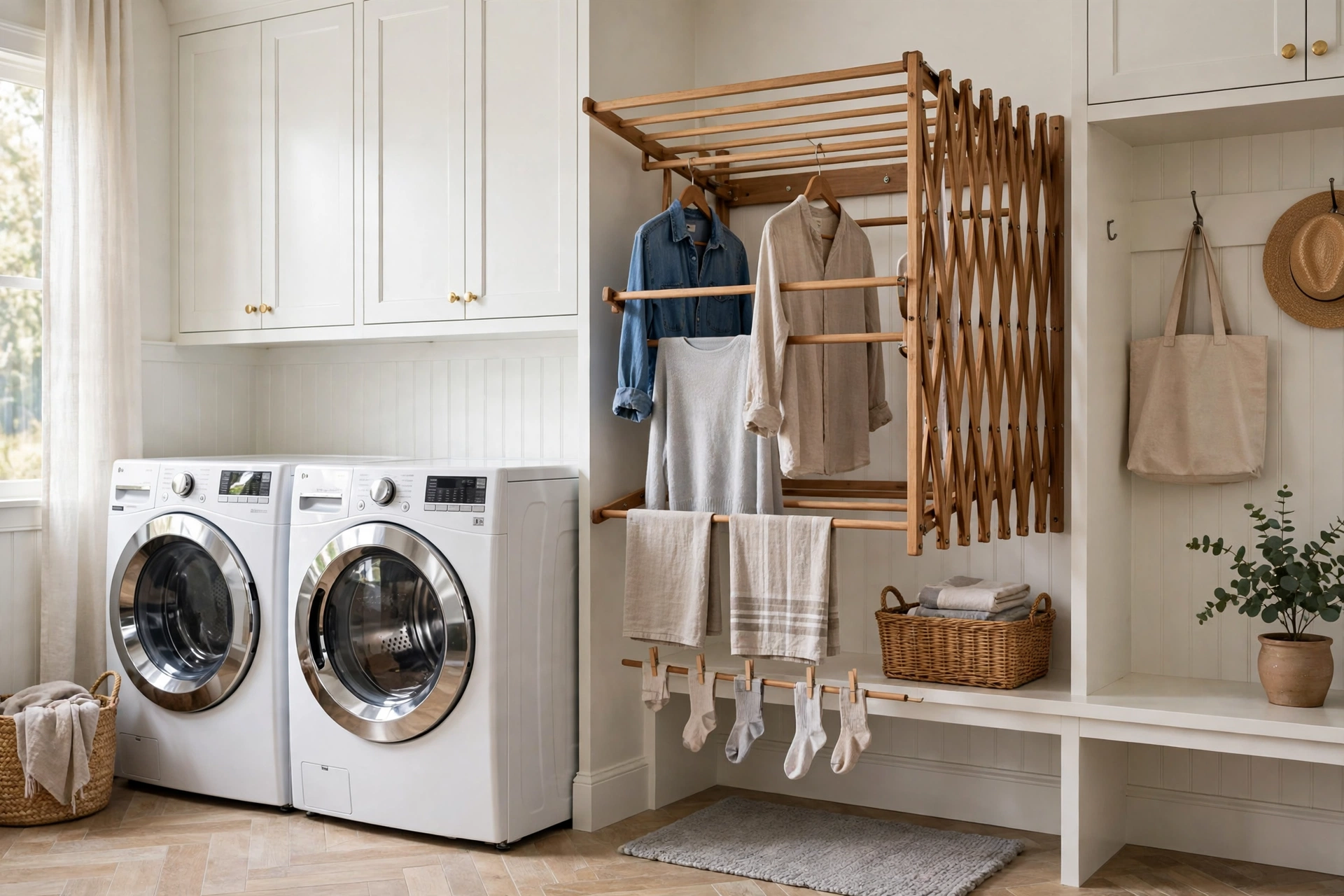
A concertina rack fixed to the wall folds flat when not in use and opens to hold a full load. It suits the wall beside the machines, where warm air from the dryer speeds drying. Best for: small rooms with no space for a freestanding airer. Tip: fix it into studs or solid plugs, not plasterboard alone, since wet laundry is heavy.
20. Colour-Code a Basket for Each Family Member
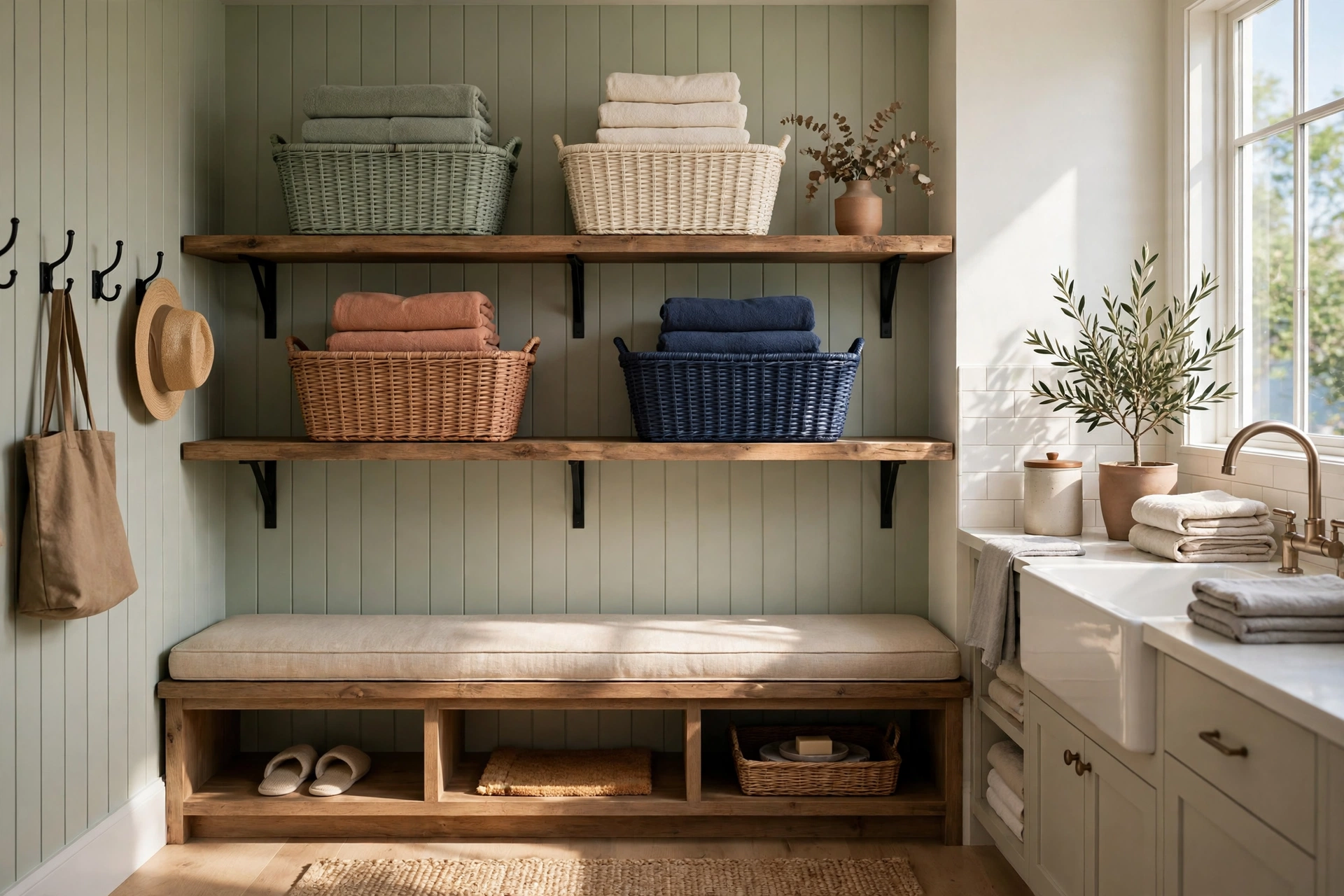
One colour per person turns sorting into a habit: clean clothes go in your colour, dirty clothes come back in it too. Woven baskets in different shades look smart on open shelves and stop the pile-up on the bench. Best for: households of four or more. Pro tip: keep one spare basket in a neutral shade for guests and spares.
21. Add a Message Board and Key Drop by the Door
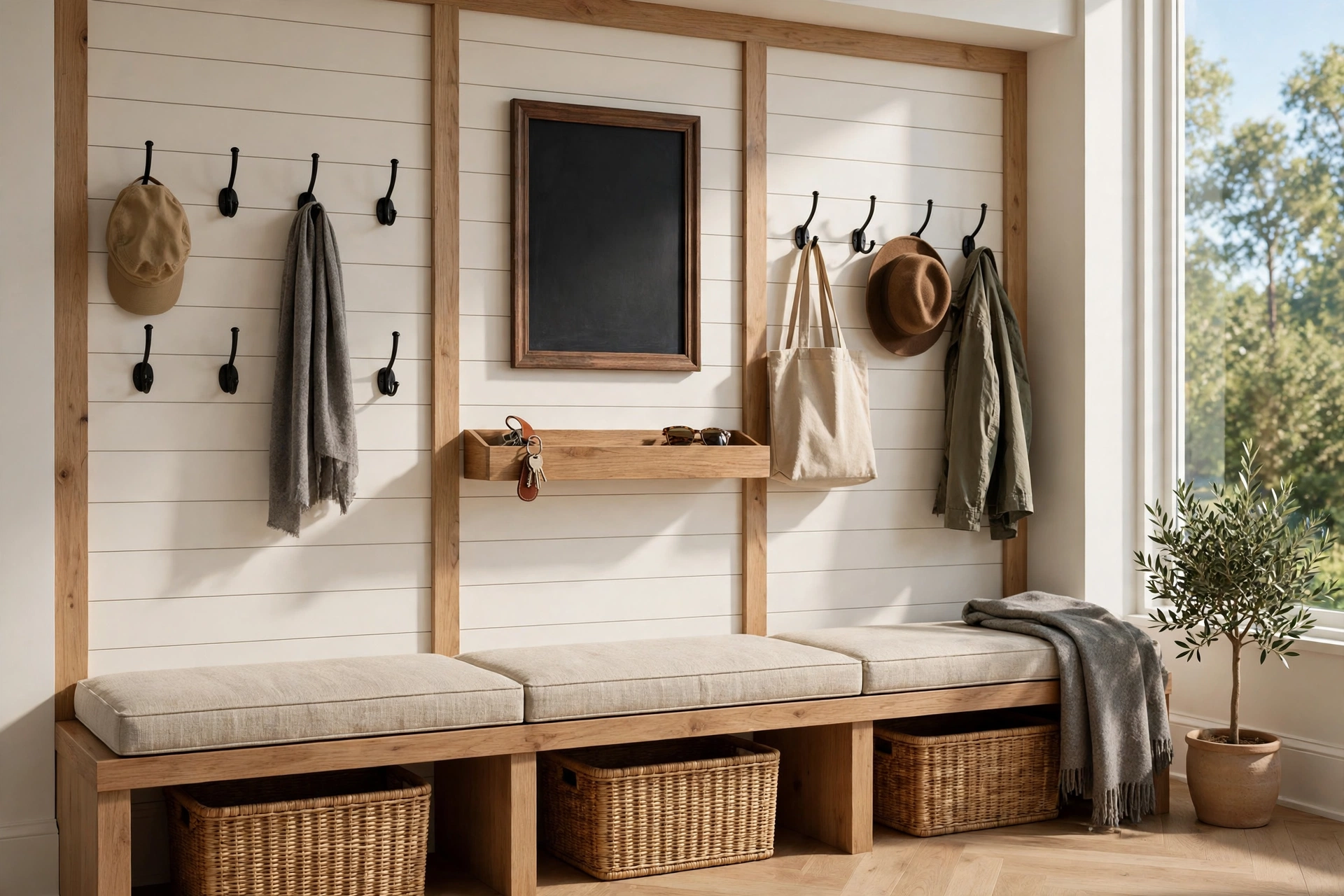
A small chalkboard or pinboard beside the hooks holds notes, permission slips, and the week’s fixtures, while a shallow tray catches keys and sunglasses. The door side then handles the morning rush, not the laundry side. Best for: school-run households. Tip: mount the board at adult eye level and the tray just below it.
22. Build In a Small Ironing and Steaming Spot
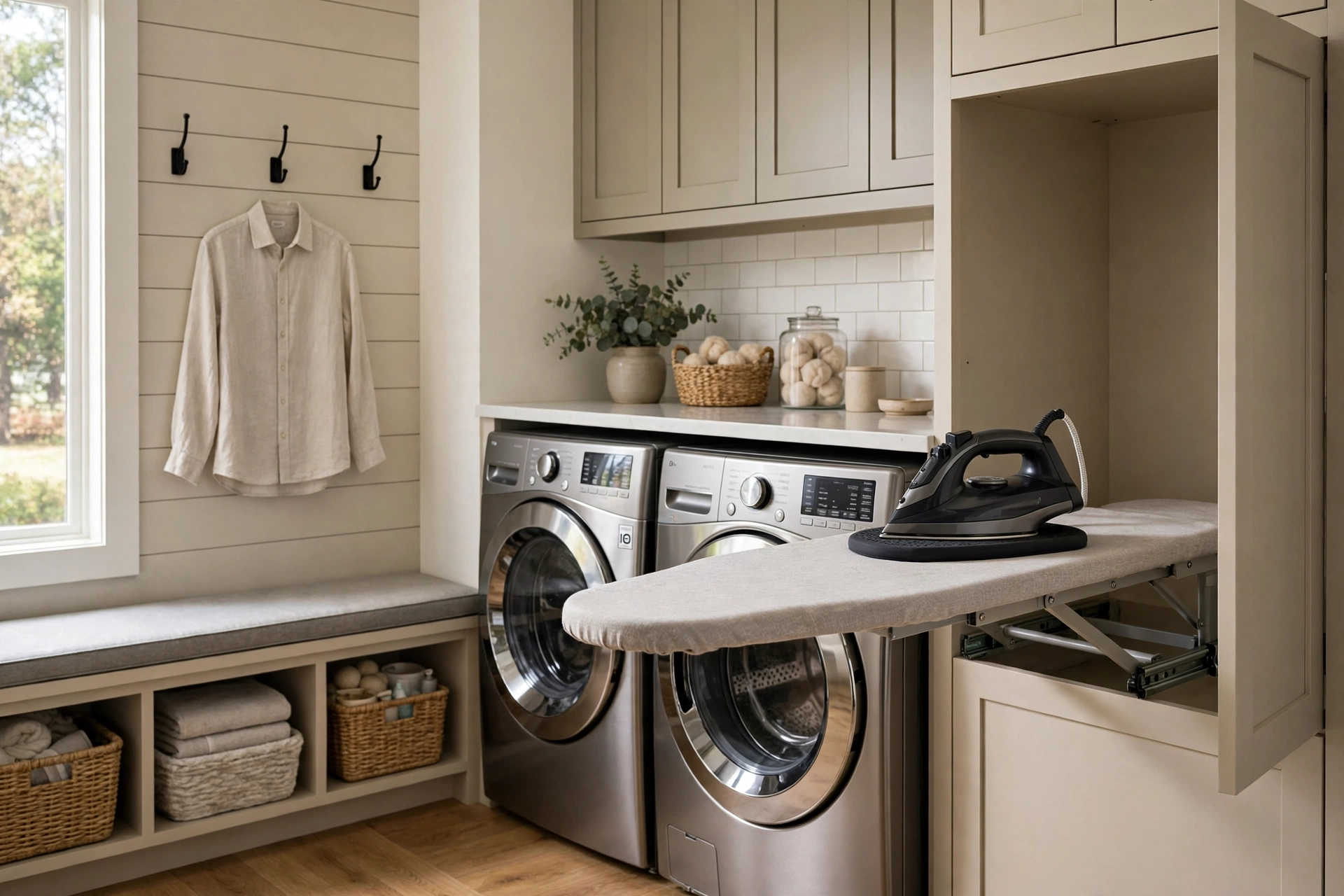
A pull-out ironing board or a wall-mounted steamer hook gives shirts a quick press without dragging the board out of a cupboard. Store the iron in the cabinet above so the whole job happens in one spot. Best for: homes where work shirts are a daily job. Pro tip: a heat-proof rest for the iron stops scorch marks on the counter.
23. Warm the Room With Timber Tones
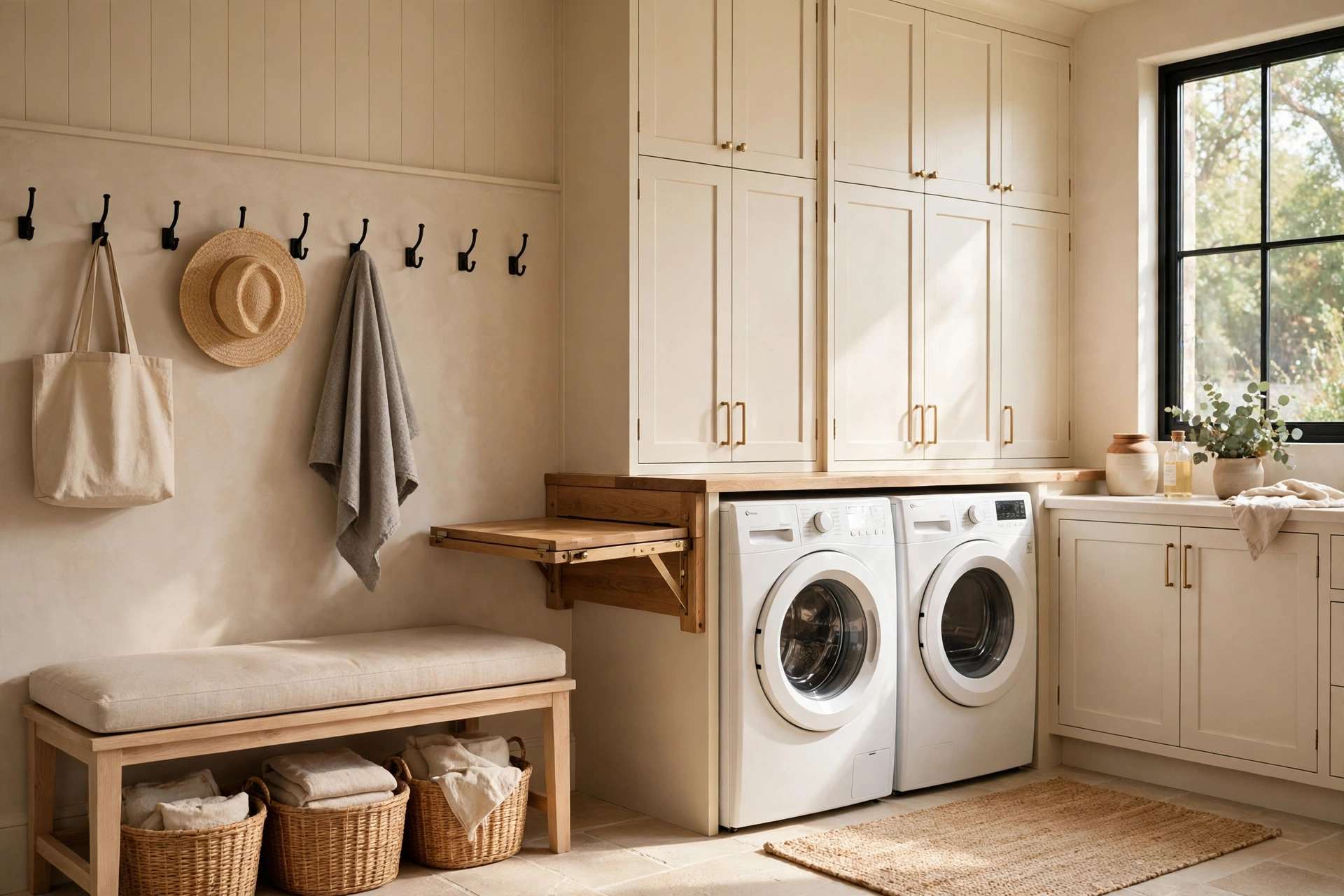
Pale oak benches, a timber counter, and woven baskets soften the hard surfaces of machines and tile. Timber brings the laundry side closer to the mudroom’s cosy feel, so the room reads as one space rather than two bolted together. Best for: modern rooms that feel cold or clinical. Tip: repeat the same timber in two or three places for balance.
24. Light Both Zones Properly
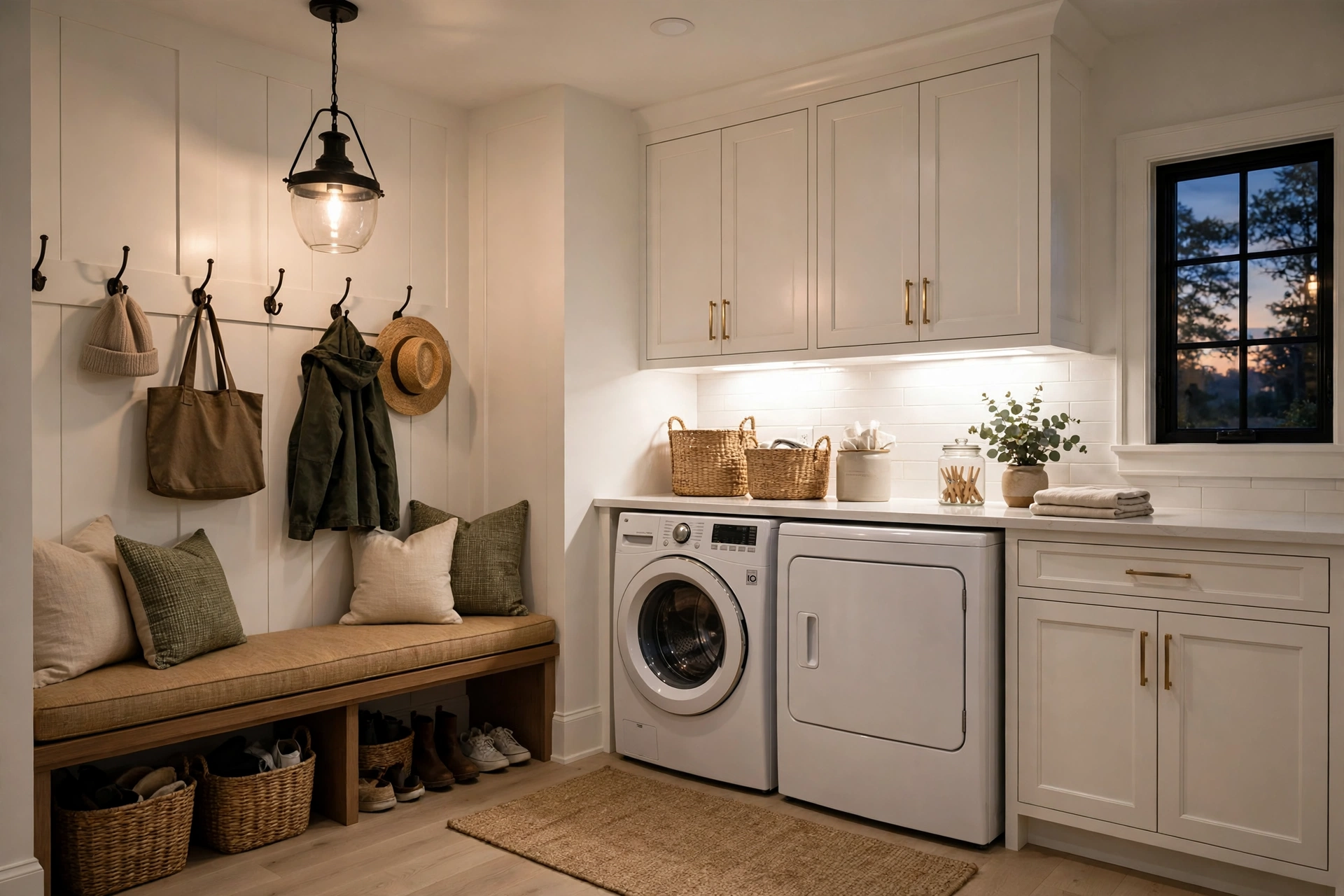
A pendant over the bench and a bright task light over the machines stop the room feeling like a cupboard. Daylight-style bulbs help with stain spotting, and a small wall light by the mirror makes the entry welcoming. Best for: rooms with no window. Pro tip: put the two zones on separate switches so you light only the side in use.
25. Set a Mud Tray and Boot Rack at the Entry
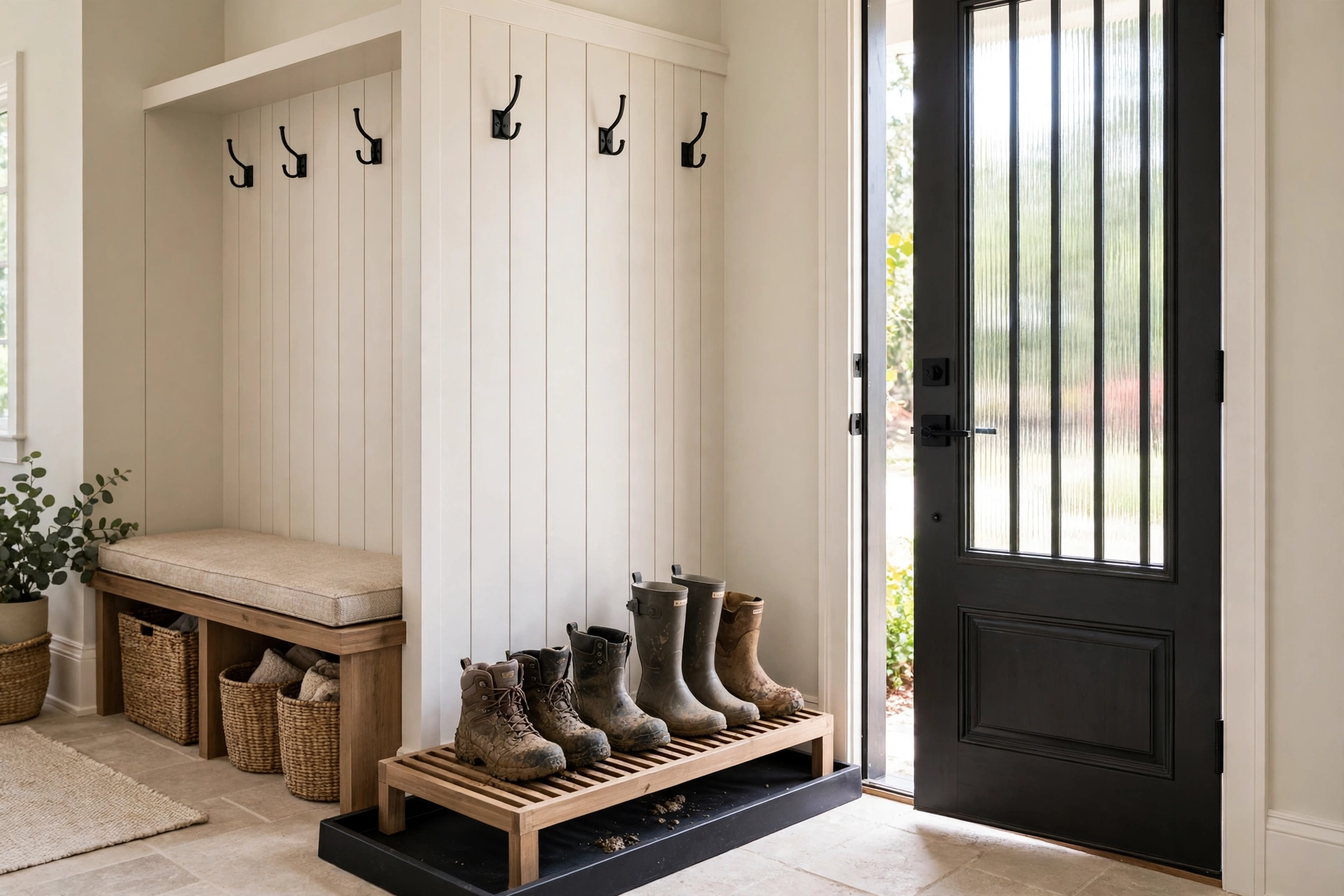
A shallow tray with raised edges catches mud and water from boots the moment people step inside, and a slatted rack above it lets air reach the soles. Empty the tray weekly and the floor underneath stays clean. Best for: wet winters and garden-heavy homes. Tip: choose a tray wider than the door so nobody steps around it.
26. Keep One Shelf for the Seasonal Swap
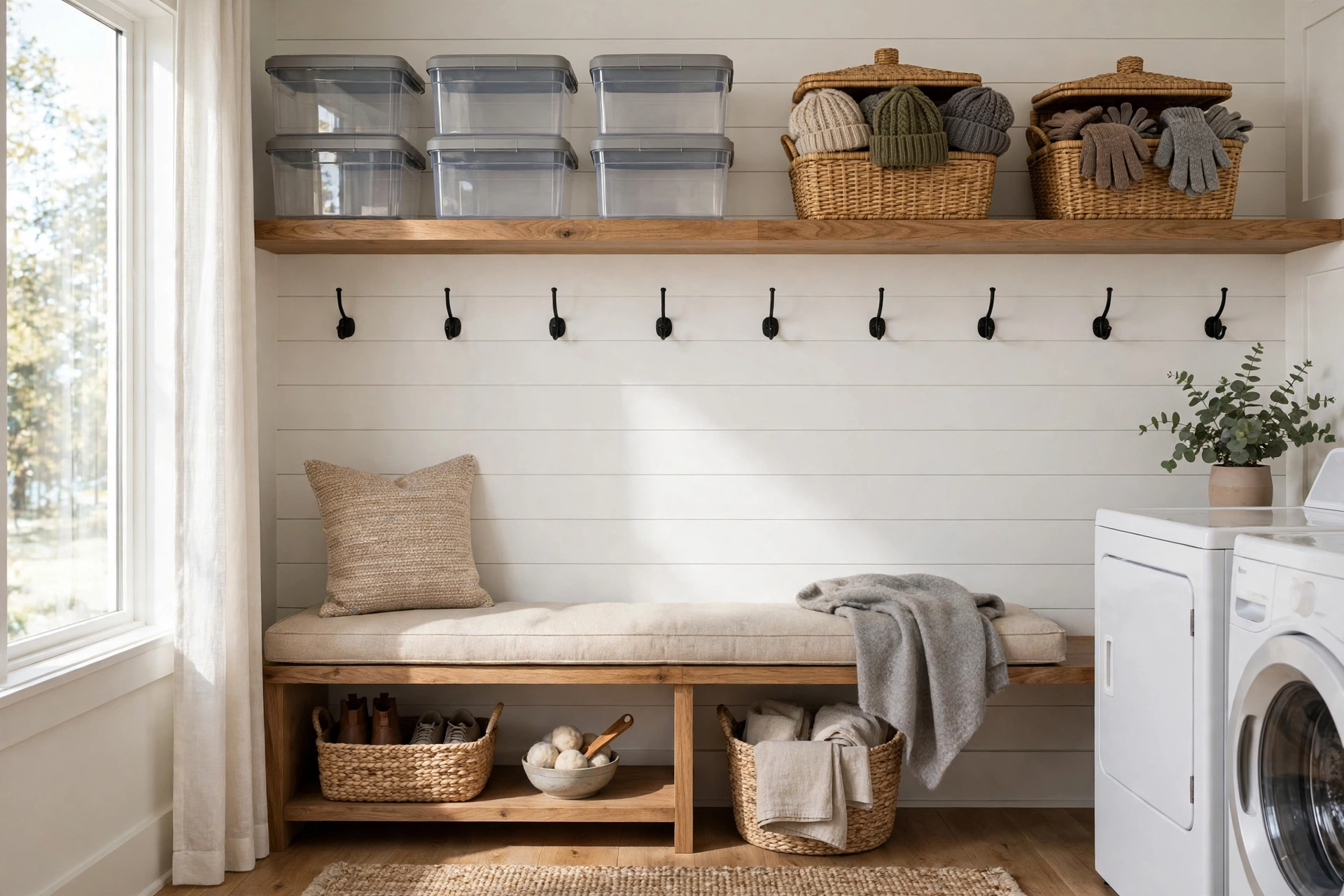
Reserve a single high shelf for the seasonal changeover: winter hats and gloves in summer, sun hats and beach towels in winter. Swapping one shelf twice a year keeps the hooks free for what the season actually needs. Best for: homes with four distinct seasons. Pro tip: use a labelled box per season so the swap takes ten minutes.
Frequently Asked Questions
Can a mudroom and laundry room really share one small space?
Yes, if the layout is planned around zones rather than appliances. Stacked machines, a bench with storage below, and hooks on the door wall can fit into a room as small as 5 by 8 feet. The trick is keeping the walkway clear and giving each job its own surface, so folding never competes with coats and shoes for the same bench.
Where should the washer and dryer go in a combo room?
Place them on the wall with existing plumbing, usually the far wall away from the door, so wet laundry never crosses the entry path. Front-loaders suit a folding counter above them, while stacked machines free floor space for a bench or hamper. Keep at least 90 cm of clear floor in front for loading.
How do I keep mud out of the laundry area?
A firm split helps most: a boot tray and shoe storage at the door, a washable floor throughout, and a bench or a change in flooring marking the boundary. Wipeable paint on the lower walls and a deep sink for rinsing muddy items stop dirt travelling further into the room.
What flooring works best in a mudroom laundry combo?
Porcelain tile and luxury vinyl cope best with water, mud, and detergent spills, and both clean with a quick mop. Choose a lightly textured finish for grip when wet, and a mid-tone colour or patterned tile that hides marks between cleans. Avoid carpet and untreated timber in this room. Choose a grout colour close to the tile so marks show less.
Do I need a sink in a combined mudroom laundry room?
Not strictly, but a deep utility sink earns its place in most homes. It handles muddy boots, hand-washing, stain soaking, and filling mop buckets without tying up the kitchen sink. If space is tight, a compact wall-hung sink or a laundry tub beside the machines covers the same jobs. A small shelf above it keeps soap and brushes close at hand.
How much does a mudroom laundry room combo cost to build?
Costs vary widely with the level of joinery, so plan around your own quotes rather than a fixed figure. A simple refresh with paint, hooks, baskets, and a curtain can be a modest weekend project, while fitted cabinets, new plumbing, and tiled floors cost considerably more. Start with layout and storage, then add built-ins in stages.
One Room, Two Jobs, No More Mess at the Door
A mudroom laundry room combo works when each side has its own job and its own storage. Start with the split — door side for coats and shoes, far side for washing — then add the bench, the baskets, and the surfaces that cope with mud. Build it in stages if you need to, and the room will quietly handle the messiest part of family life.
