
27 Stunning Living Room Accent Wall Ideas That Make a Statement
One wall can change the whole mood of a room, and these living room accent wall ideas prove it. The 27 looks below cover bold paint, warm wood, stone, wallpaper and renter-friendly tricks, so there is something here for every style and budget. Pick the wall your eye lands on first, then choose the idea that suits it best. If you are starting from scratch, our living room decor ideas will help you plan the rest of the room around your new feature wall.
Colour & Paint Living Room Accent Wall Ideas
Paint is the fastest and cheapest way to build a feature wall. One tin, one afternoon, and the room has a focal point. The nine ideas below use colour, shape and texture to do the heavy lifting.
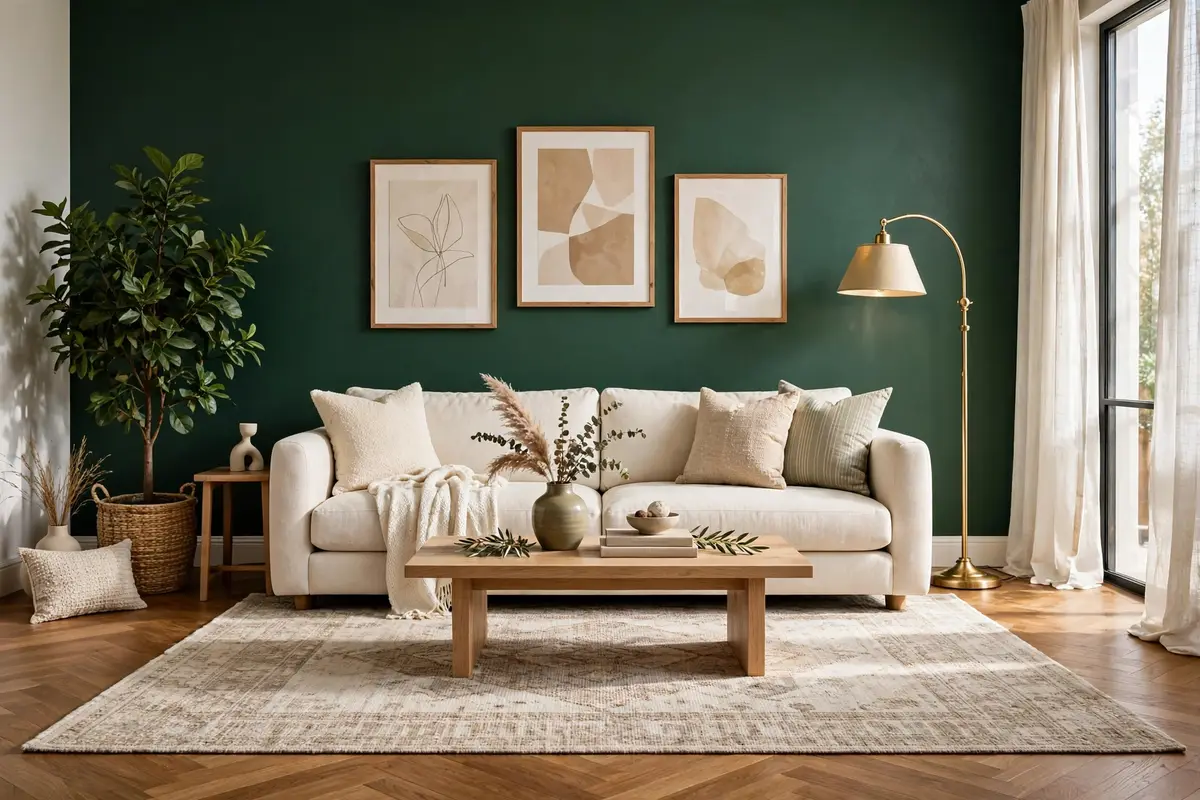
1. Deep Forest Green Painted Wall
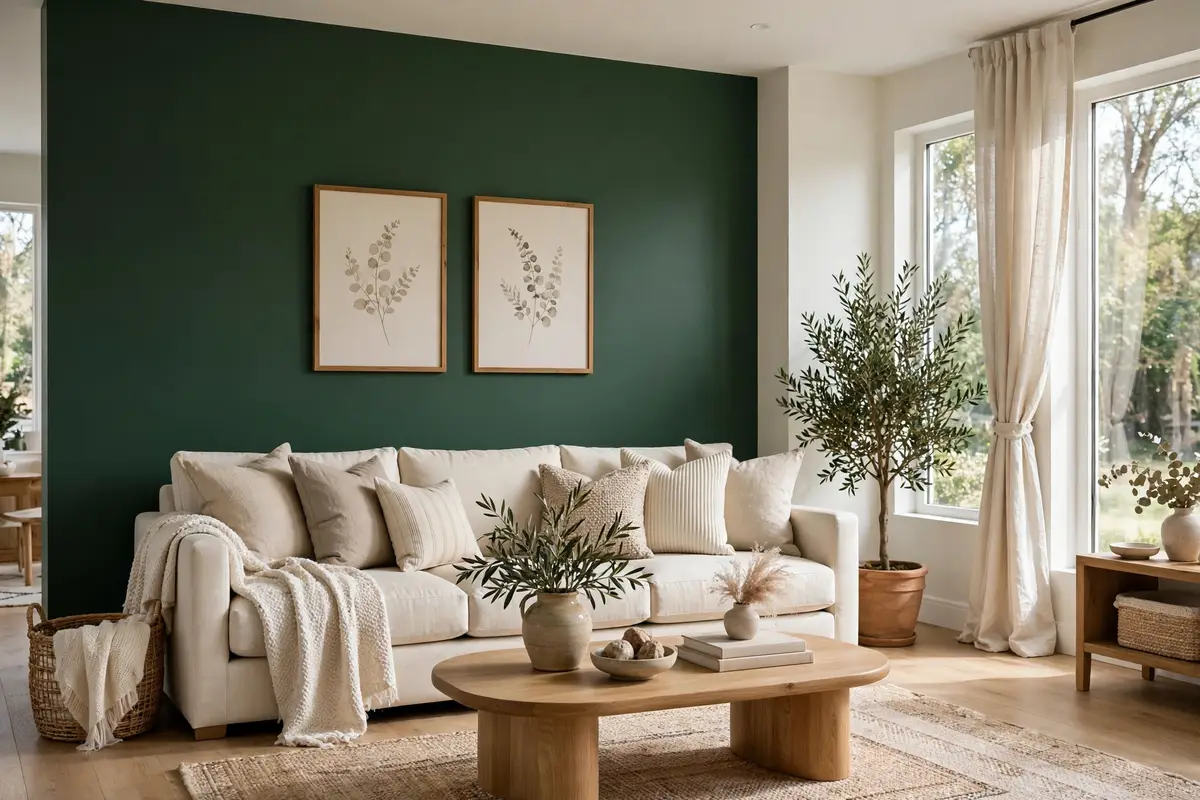
Forest green feels calm and grown-up, and it makes cream sofas and pale wood glow against it. Best for: rooms that feel flat or washed out. Styling tip: pair it with brass lamps and warm wood. Pro tip: paint the wall your eye lands on first when you walk in.
2. Moody Navy Blue Accent Wall
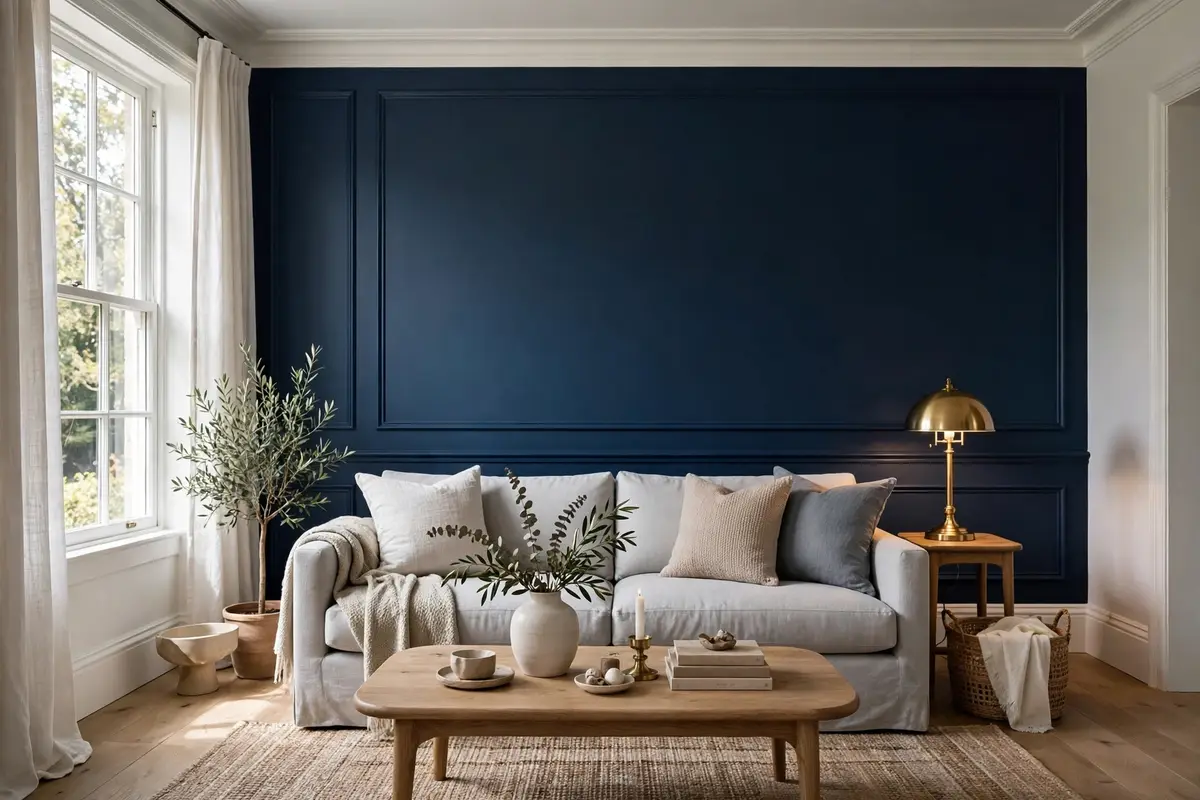
Navy adds depth without the drama of black, and it works with grey, white and most wood tones. Best for: living rooms that need a cosy evening feel. Styling tip: keep the other walls pale so the navy reads as one clear statement. Pro tip: use a matte finish to soften the colour in bright rooms.
3. Warm Terracotta Accent Wall
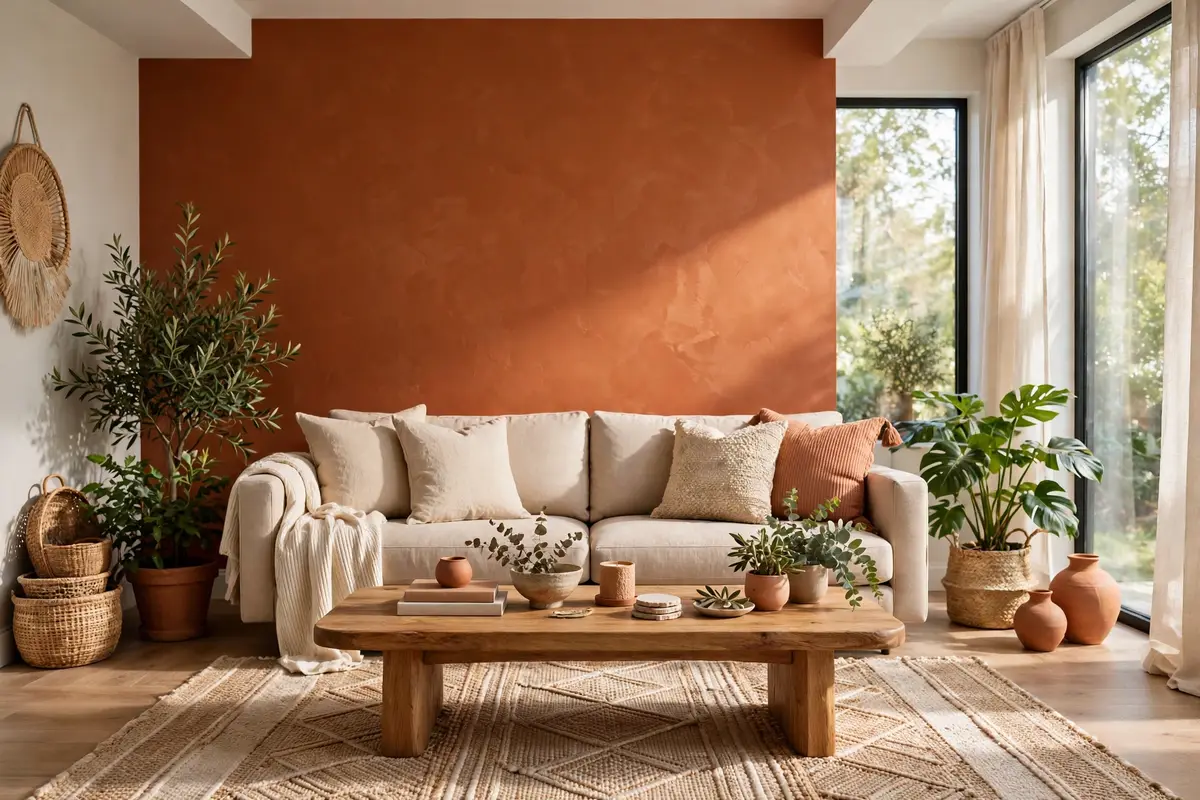
Terracotta warms a cool room in minutes and suits earthy, boho and Mediterranean styles alike. Best for: north-facing rooms that feel cold. Styling tip: add woven textures and green plants to balance the warmth. Pro tip: test a large swatch first, as terracotta looks stronger on a full wall.
4. Soft Sage Green Painted Wall
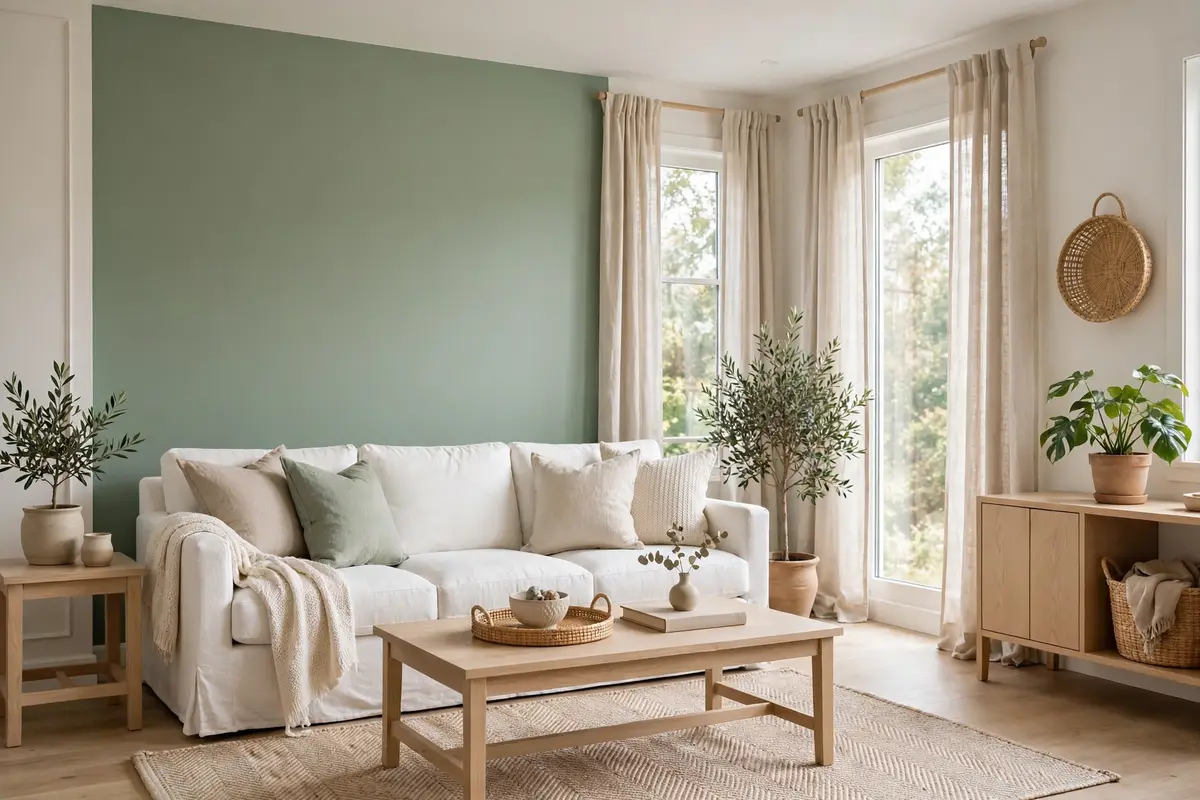
Sage is the gentle option: it adds colour without shouting, and it pairs well with linen, oak and rattan. Best for: calm, light-filled living rooms. Styling tip: use it behind the sofa and keep cushions in cream and stone. Pro tip: sage looks best in a soft matte finish rather than gloss.
5. Bold Matte Black Accent Wall
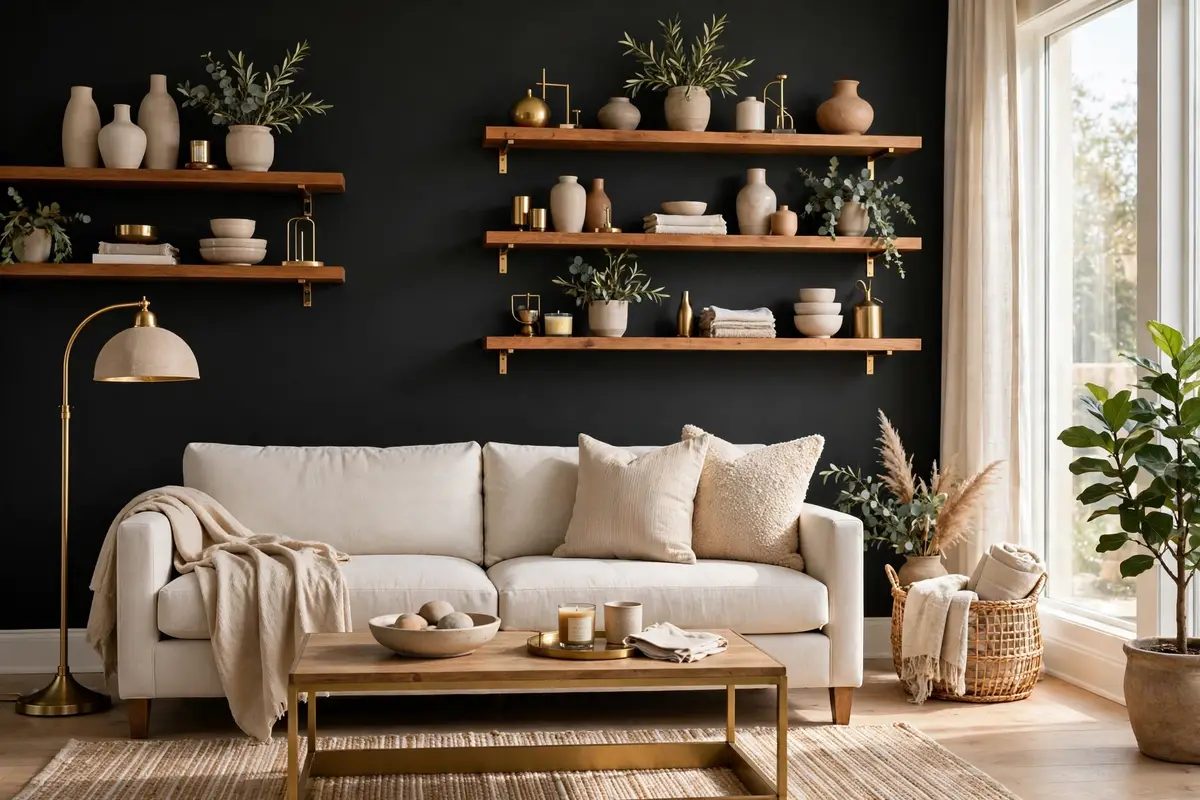
A black wall sounds risky, but it frames light furniture beautifully and makes art and shelves stand out. Best for: rooms with plenty of daylight and pale furniture. Styling tip: add wood shelves or a pale rug so the wall does not feel heavy. Pro tip: one black wall is enough; keep the rest of the room light.
6. Two-Tone Colour-Blocked Wall
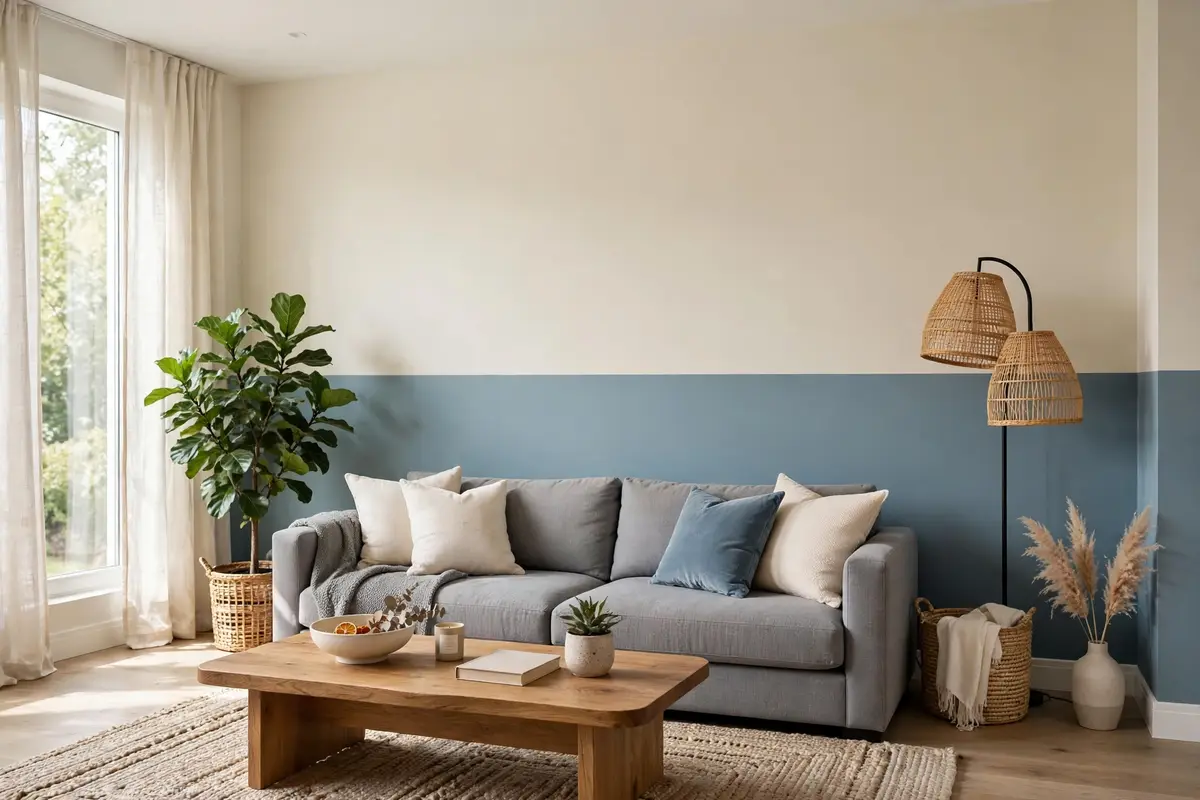
Paint the lower half of the wall in a soft colour and leave the top cream for a look that feels designed, not painted. Best for: rooms with low ceilings that need a visual lift. Styling tip: run the colour line at picture-rail height for a clean break. Pro tip: use painter’s tape and a level so the line stays sharp.
7. Painted Arch Behind the Sofa
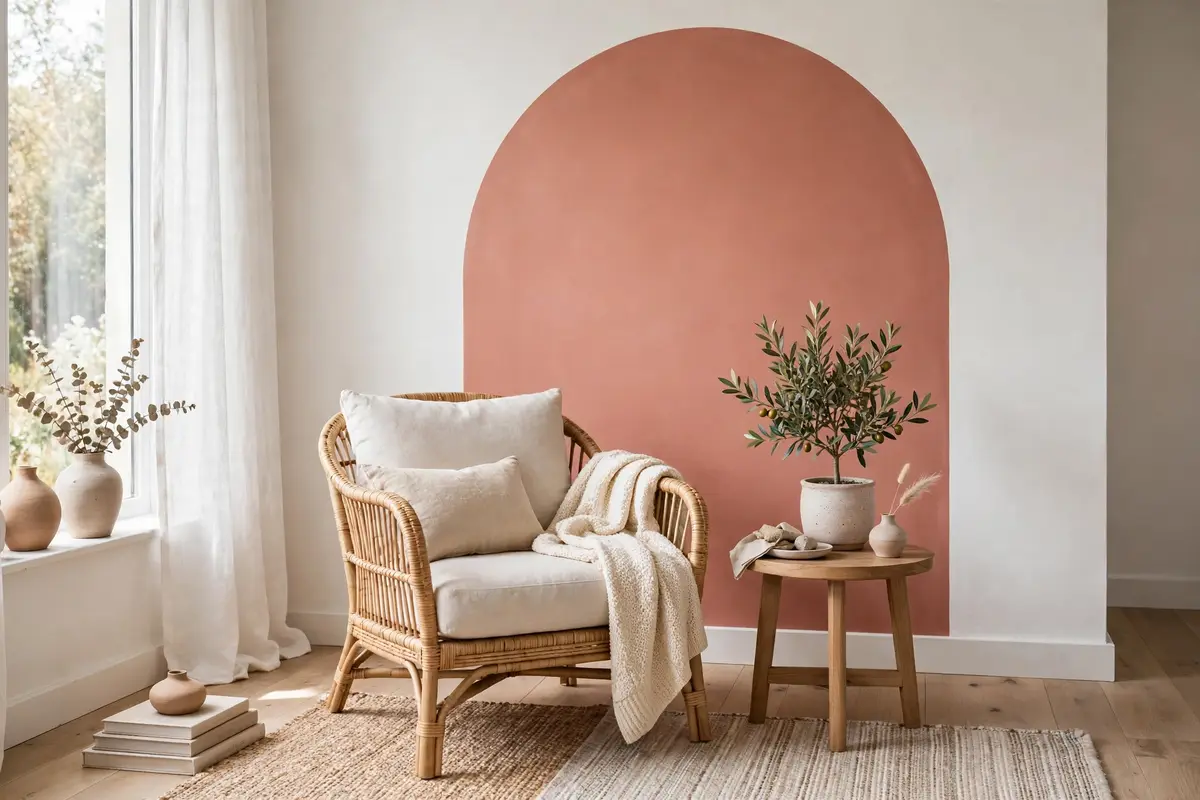
A painted arch frames the seating area like a piece of art and costs almost nothing to do. Best for: plain white walls that need one soft focal point. Styling tip: place a chair or a plant inside the arch so it feels intentional. Pro tip: trace the arch with a string and a pencil before you paint.
8. Geometric Painted Panels
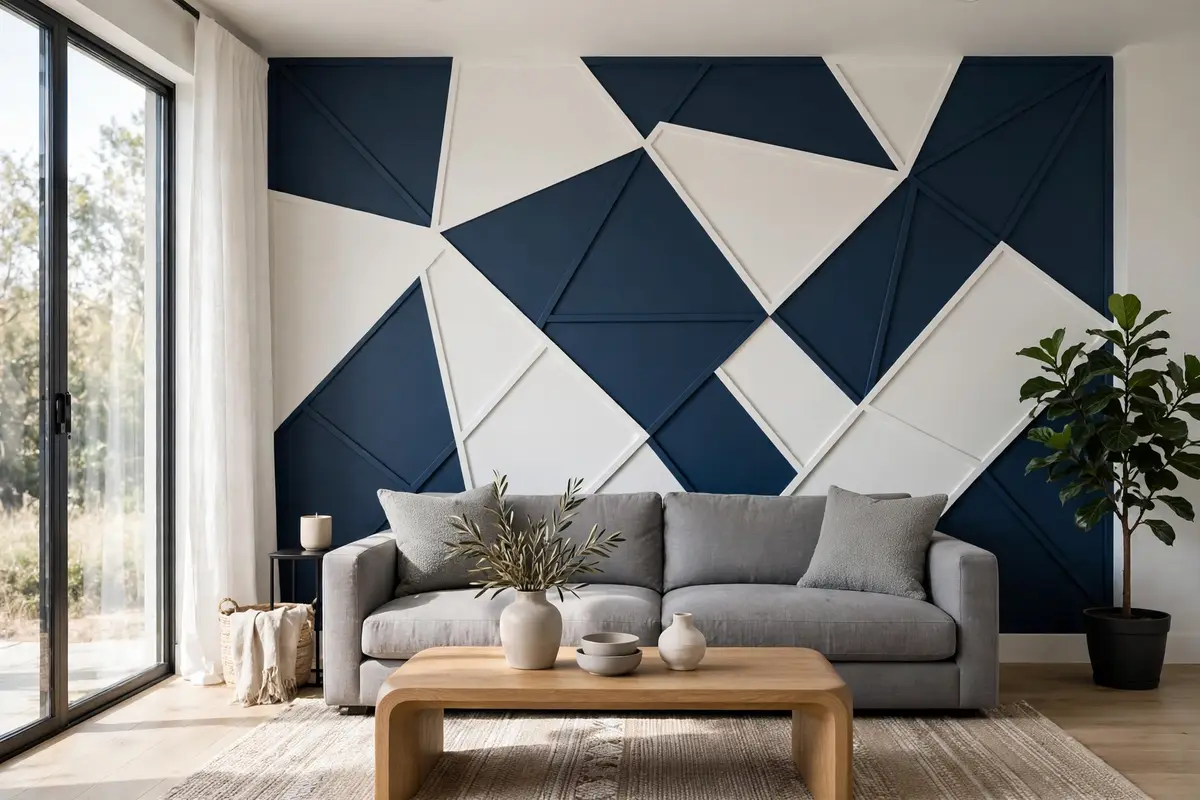
Bold triangles and blocks in two or three colours turn a flat wall into a graphic feature. Best for: modern rooms and anyone who likes a strong pattern. Styling tip: keep the furniture plain so the wall does the talking. Pro tip: sketch the layout on paper and mark it with tape before painting.
9. Limewash Textured Wall
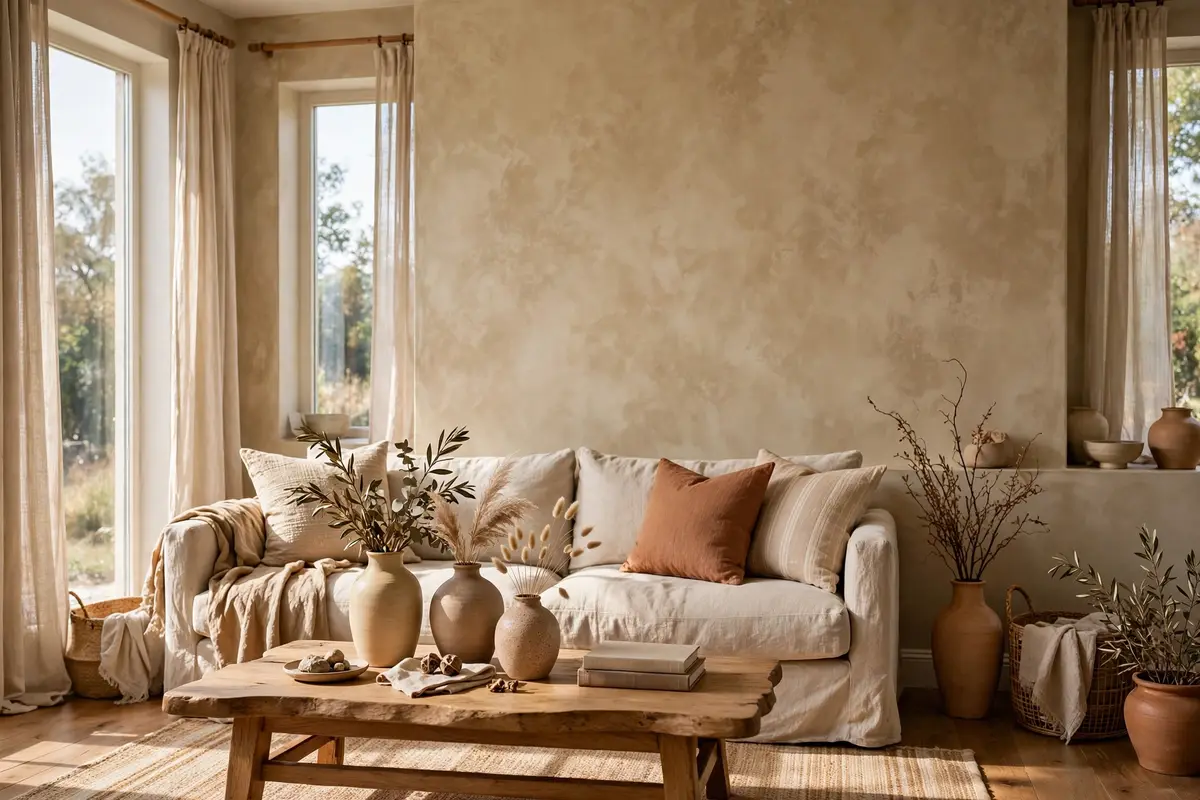
Limewash paint dries with soft, cloudy movement that flat paint cannot match, giving the wall a plastered, old-house feel. Best for: earthy, relaxed and Mediterranean rooms. Styling tip: pair it with linen, ceramic and pale wood. Pro tip: apply it in loose, crossing strokes and let each coat dry fully.
Texture & Materials Living Room Feature Wall Ideas
When paint is not enough, texture takes over. Wood, stone, brick and moulding add depth you can see and feel, and most of these looks last for years without a refresh.
10. Vertical Wood Slat Wall
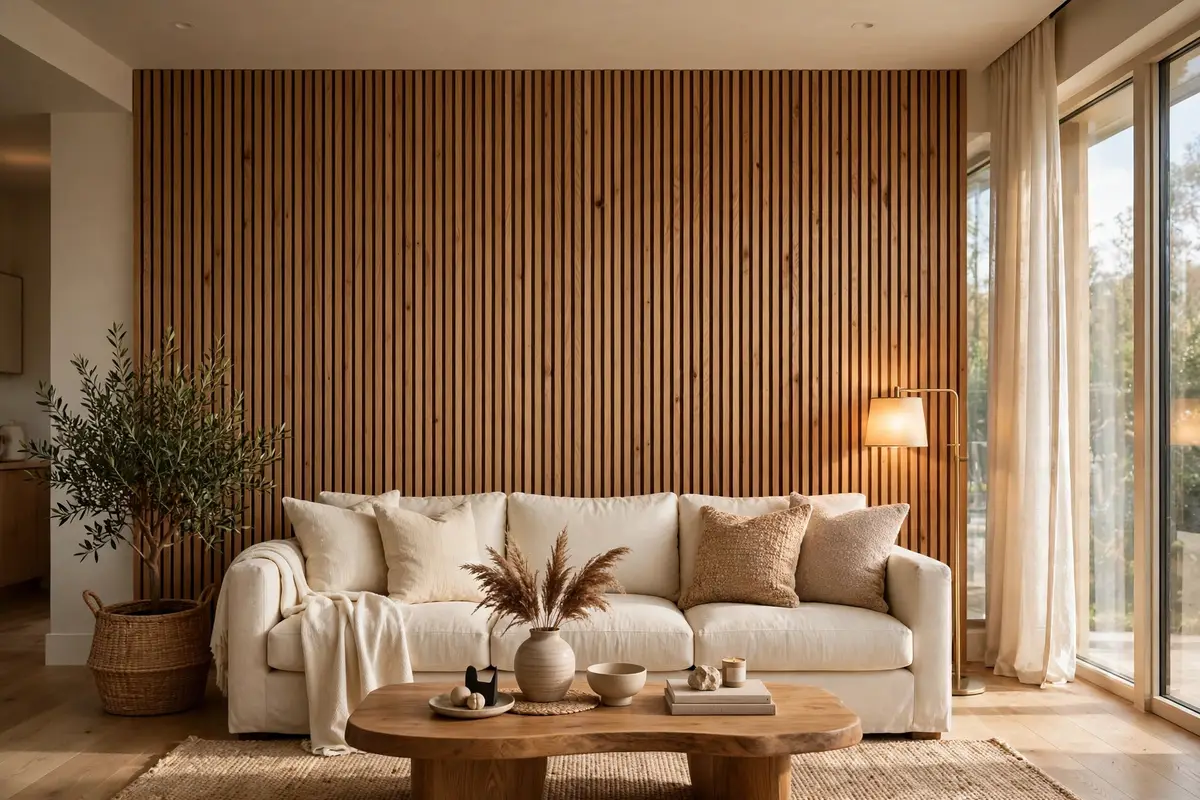
Thin vertical oak slats add warmth and rhythm, and they make a low ceiling feel taller. Best for: modern and Scandinavian living rooms. Styling tip: leave a small gap between slats so the shadow lines show. Pro tip: add warm LED strips behind the slats for a soft evening glow.
11. White Shiplap Accent Wall
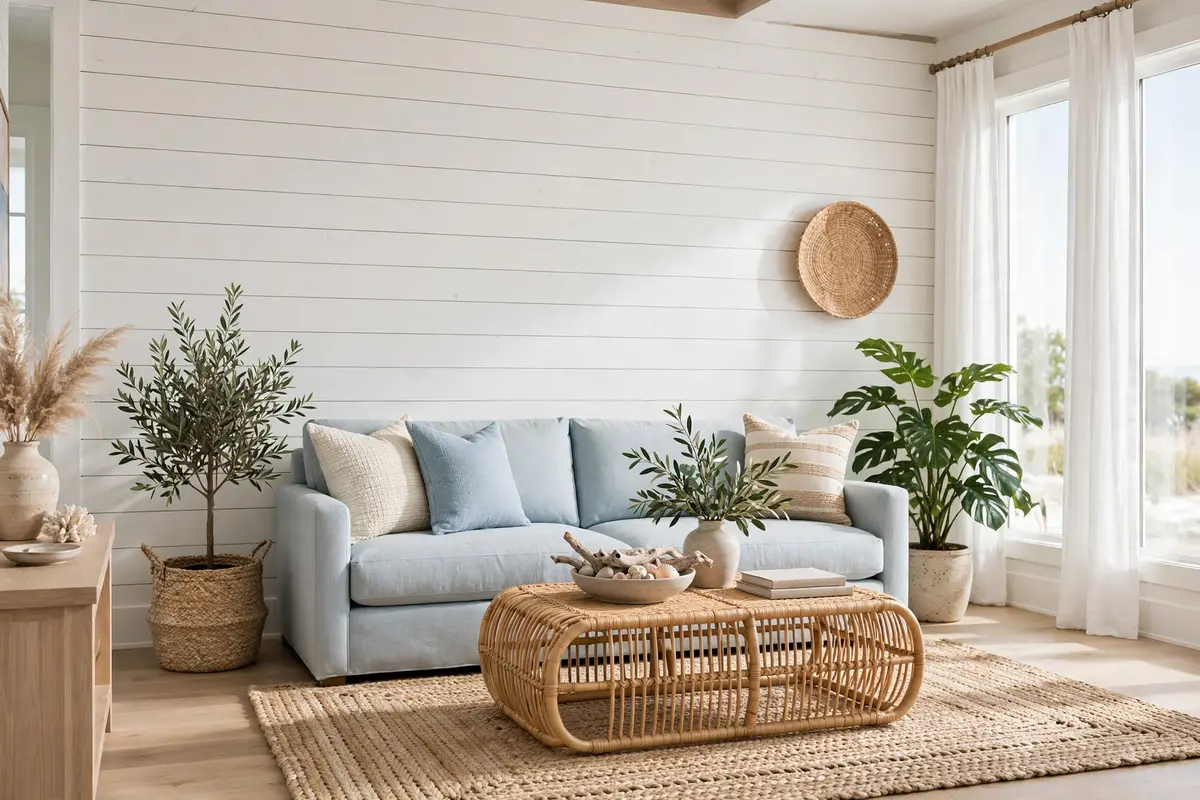
White shiplap brings a calm coastal feel and adds just enough texture to stop a white wall looking blank. Best for: coastal, farmhouse and relaxed family rooms. Styling tip: pair it with woven rugs and pale blue or sandy cushions. Pro tip: run the boards horizontally in small rooms and vertically in tall ones.
12. Reclaimed Wood Plank Wall
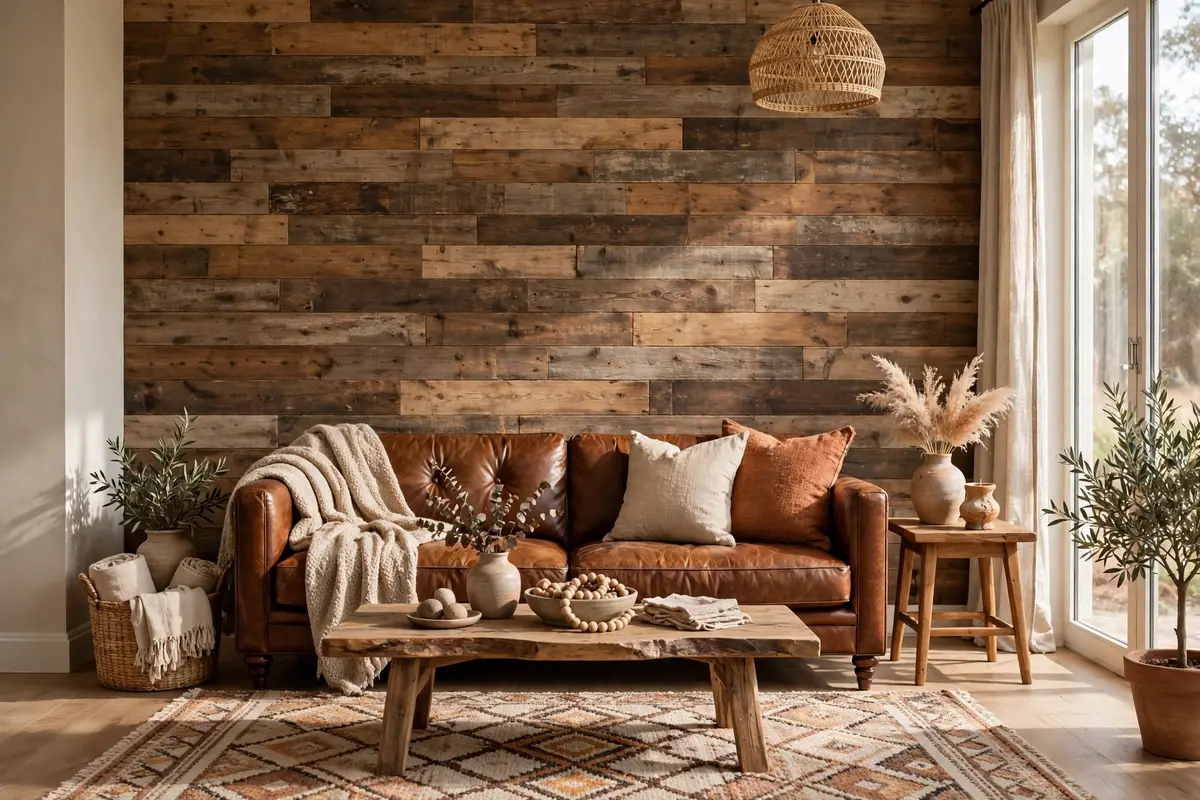
Mixed-tone reclaimed planks give the room instant character, and no two walls ever look the same. Best for: rustic, lodge and industrial living rooms. Styling tip: keep the rest of the room simple so the wood stays the star. Pro tip: seal the planks first so they stay clean and do not shed dust.
13. Stacked Stone Feature Wall
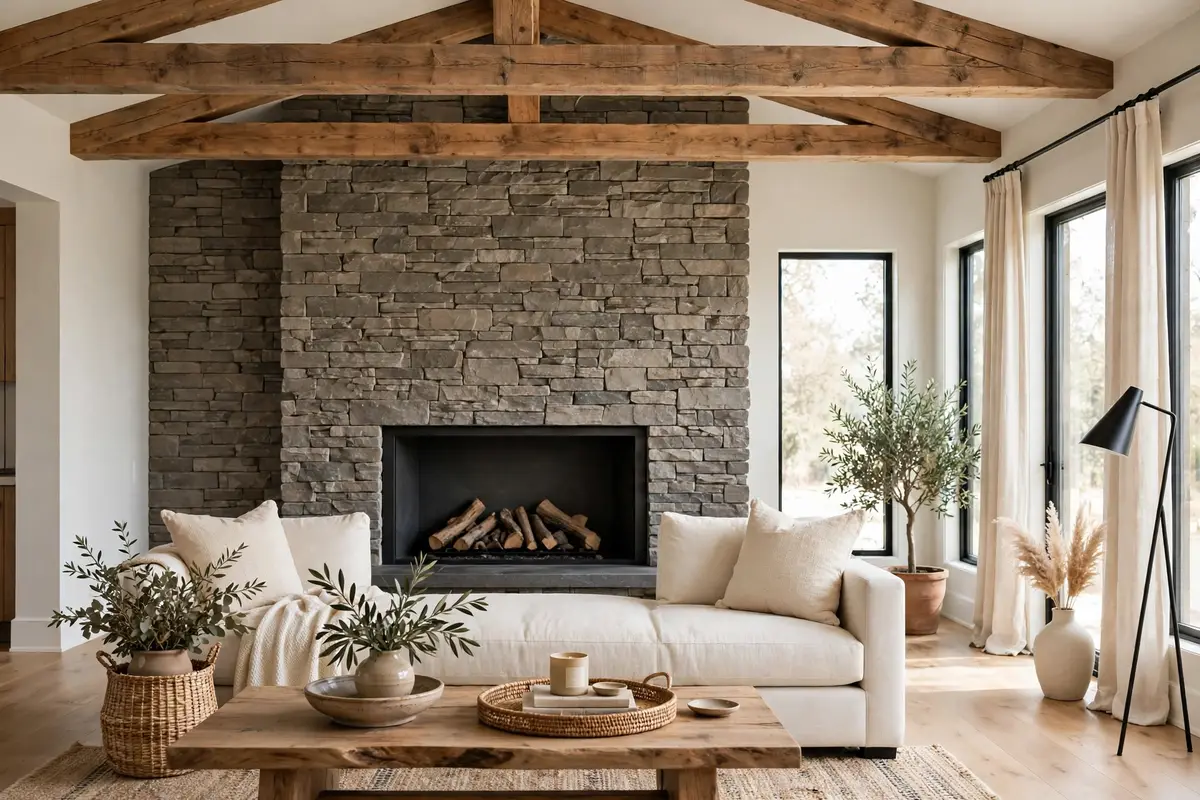
Stacked stone adds a solid, natural weight to the room and works beautifully around a fireplace. Best for: large rooms and fireplace walls. Styling tip: mix it with soft linen and warm wood to keep the room cosy. Pro tip: stone-look panels give the same effect with far less weight and mess.
14. Exposed Brick Accent Wall
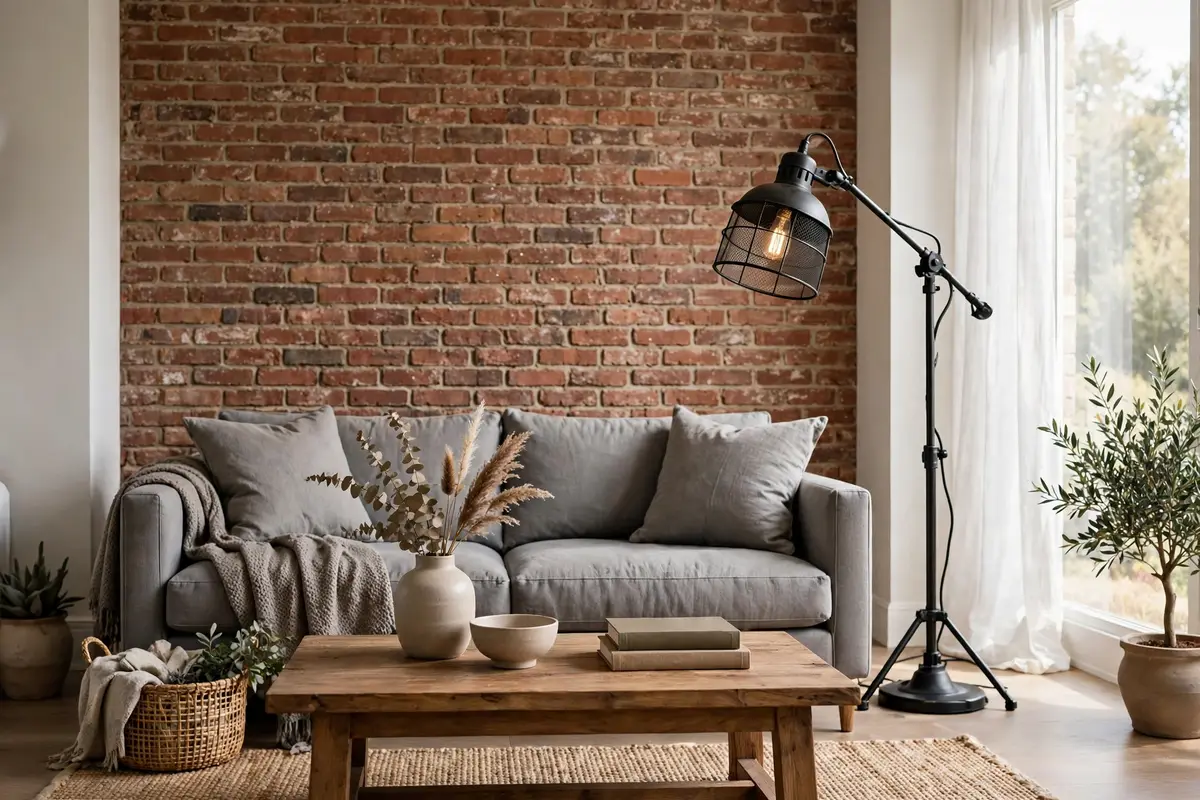
Real or faux brick brings warmth and a lived-in feel that suits industrial and loft-style rooms. Best for: lofts, apartments and industrial living rooms. Styling tip: soften it with a pale sofa, plants and warm lighting. Pro tip: whitewash the brick if the red tone feels too strong for the room.
15. Board and Batten Wall
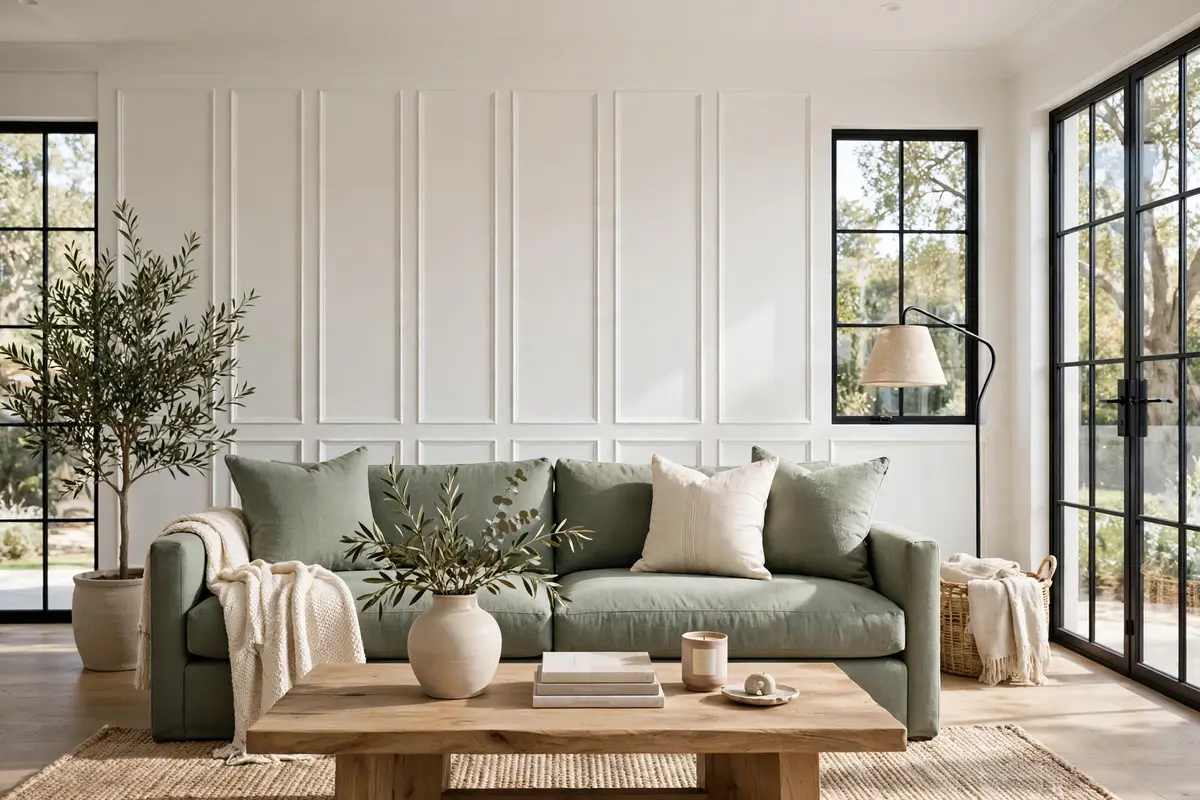
Board and batten is a classic, budget-friendly way to add structure to a plain wall with simple timber strips. Best for: traditional, farmhouse and cottage living rooms. Styling tip: paint the whole wall one colour so the panels read as one design. Pro tip: measure and mark every batten before fixing anything to the wall.
16. Picture Frame Moulding Wall
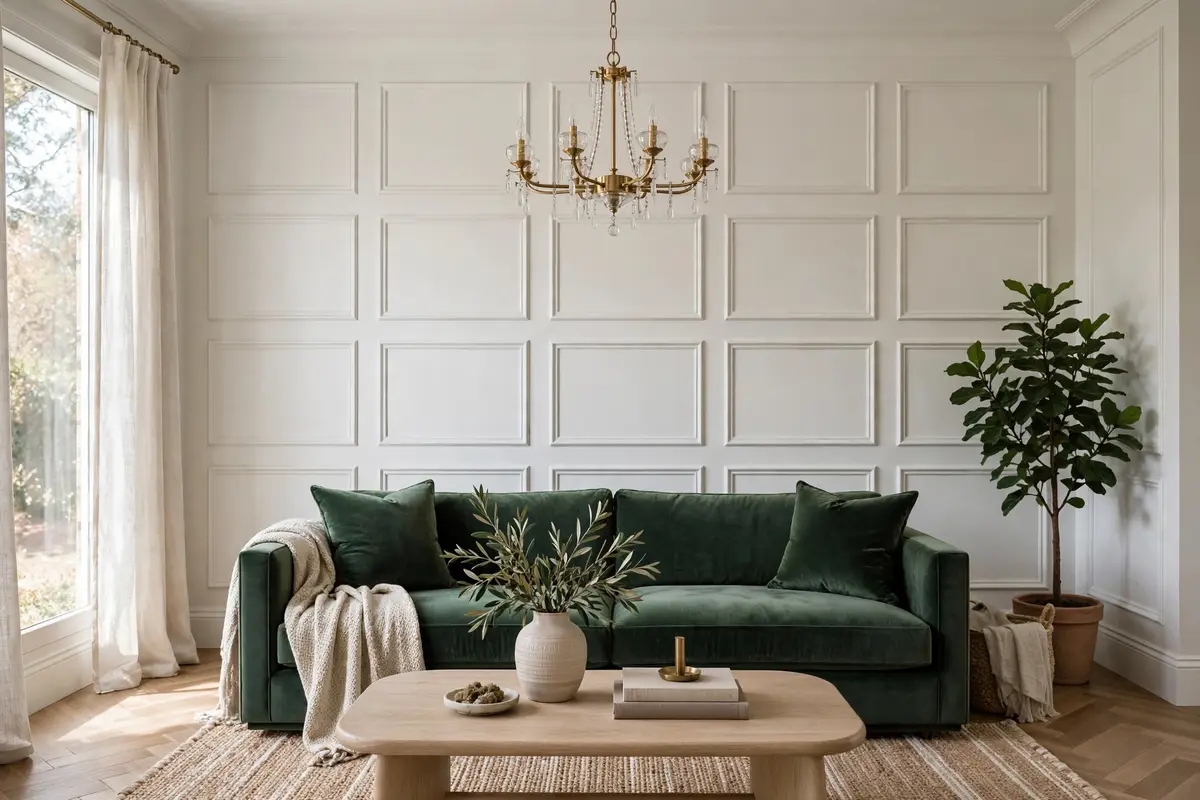
Thin trim rectangles turn a flat wall into a panelled, Paris-style feature without any building work. Best for: elegant and classic living rooms. Styling tip: keep the moulding the same colour as the wall for a quiet, tailored look. Pro tip: use a laser level so every rectangle lines up perfectly.
17. Fluted Wood Panel Wall
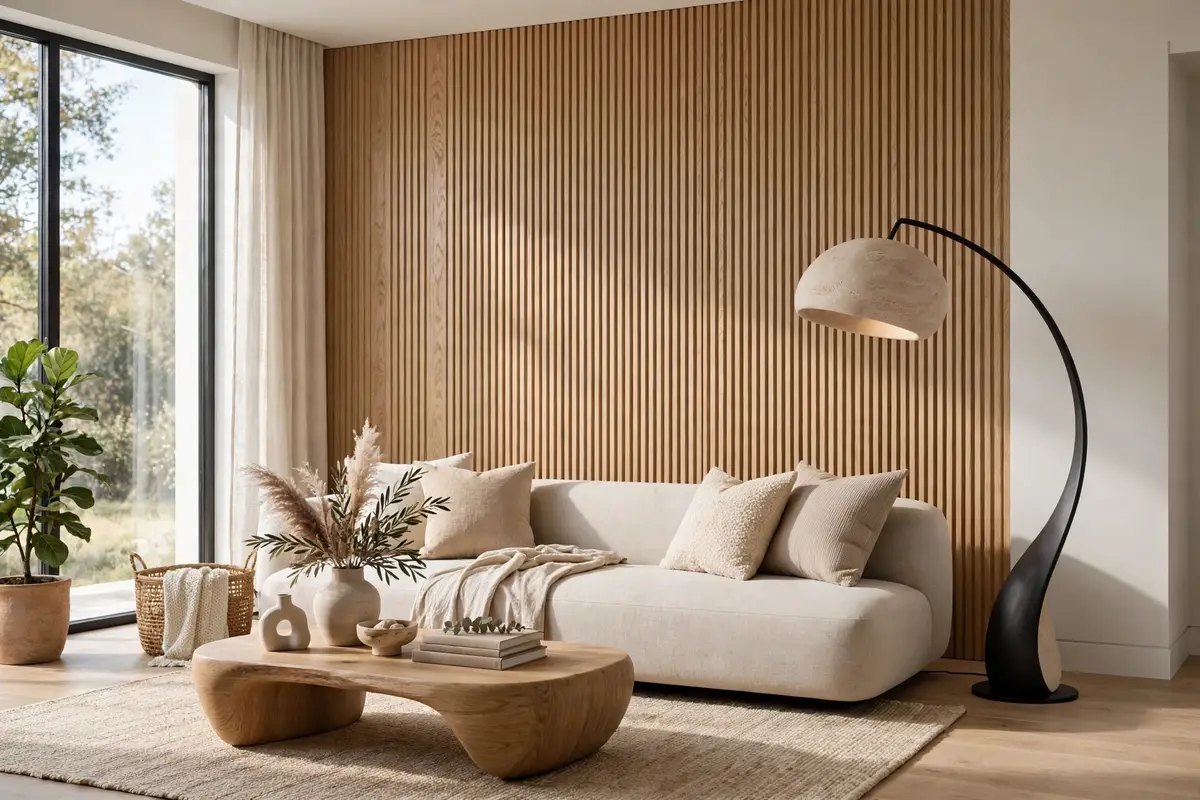
Fluted panels catch light and shadow along their ridges, giving a flat wall a soft, sculptural feel. Best for: modern and Japandi living rooms. Styling tip: use pale oak for a calm look or walnut for a richer one. Pro tip: fluted panels also hide small wall marks and uneven plaster.
18. Marble-Look Panel Wall
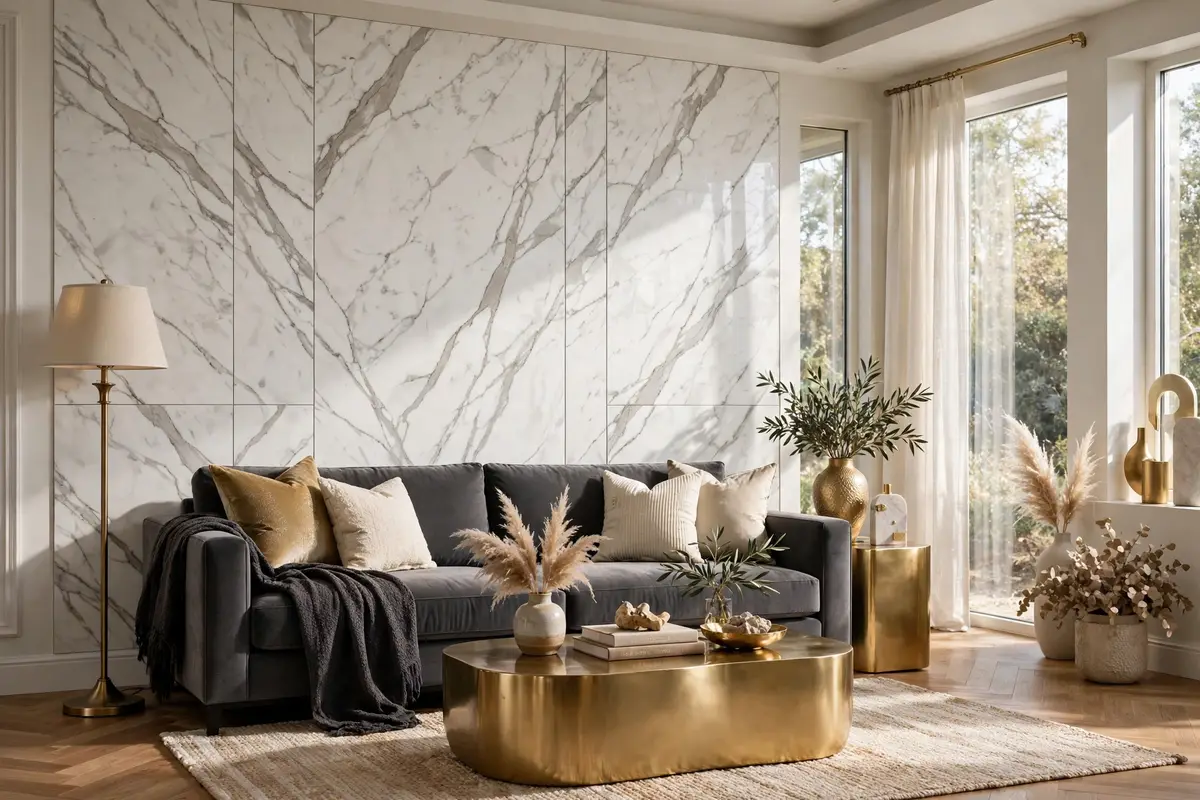
Marble-look panels give a high-end feel for far less effort than real stone, and the veining adds natural pattern. Best for: luxe and contemporary living rooms. Styling tip: repeat the stone tone once, in a coffee table or a vase. Pro tip: choose panels with soft, wide veining so the wall does not look busy.
Renter-Friendly & Budget Living Room Wall Design Ideas
You do not need to own the home or spend much to have a feature wall. These nine living room wall design ideas use removable, movable or low-cost materials, and most of them come down cleanly when you move out. For more low-effort warmth, see our cozy living room ideas.
19. Peel-and-Stick Wallpaper Wall

Peel-and-stick wallpaper gives you pattern and colour with no paste, and it peels off cleanly when you move. Best for: renters and anyone who changes their mind often. Styling tip: use it behind the sofa or inside open shelves. Pro tip: start at the top and smooth downward slowly to avoid air bubbles.
20. Bold Floral Wallpaper Wall
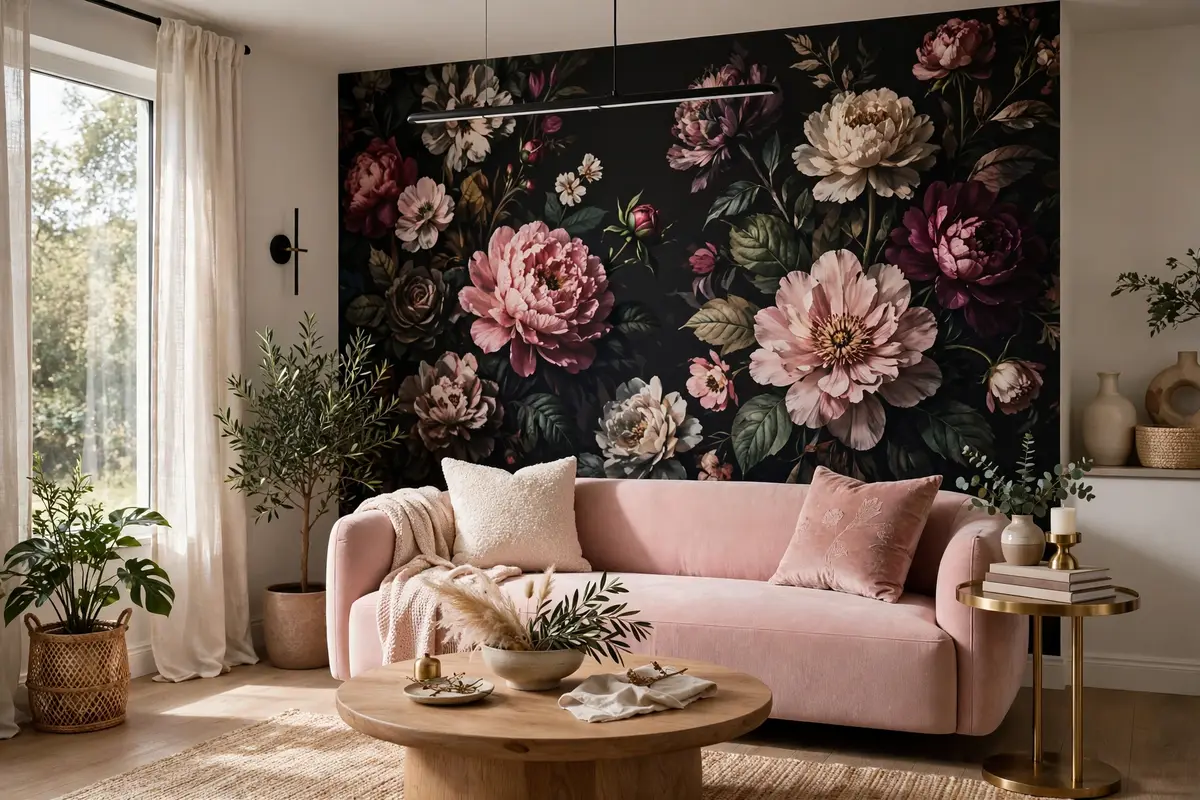
Oversized blooms on a dark ground make one wall feel like a painting, and the room needs little else. Best for: romantic, maximalist and cottage-style rooms. Styling tip: keep the sofa plain and pick one flower colour to repeat in cushions. Pro tip: one wall is enough; matching wallpaper on every wall will shrink the room.
21. Gallery Wall as an Accent Wall
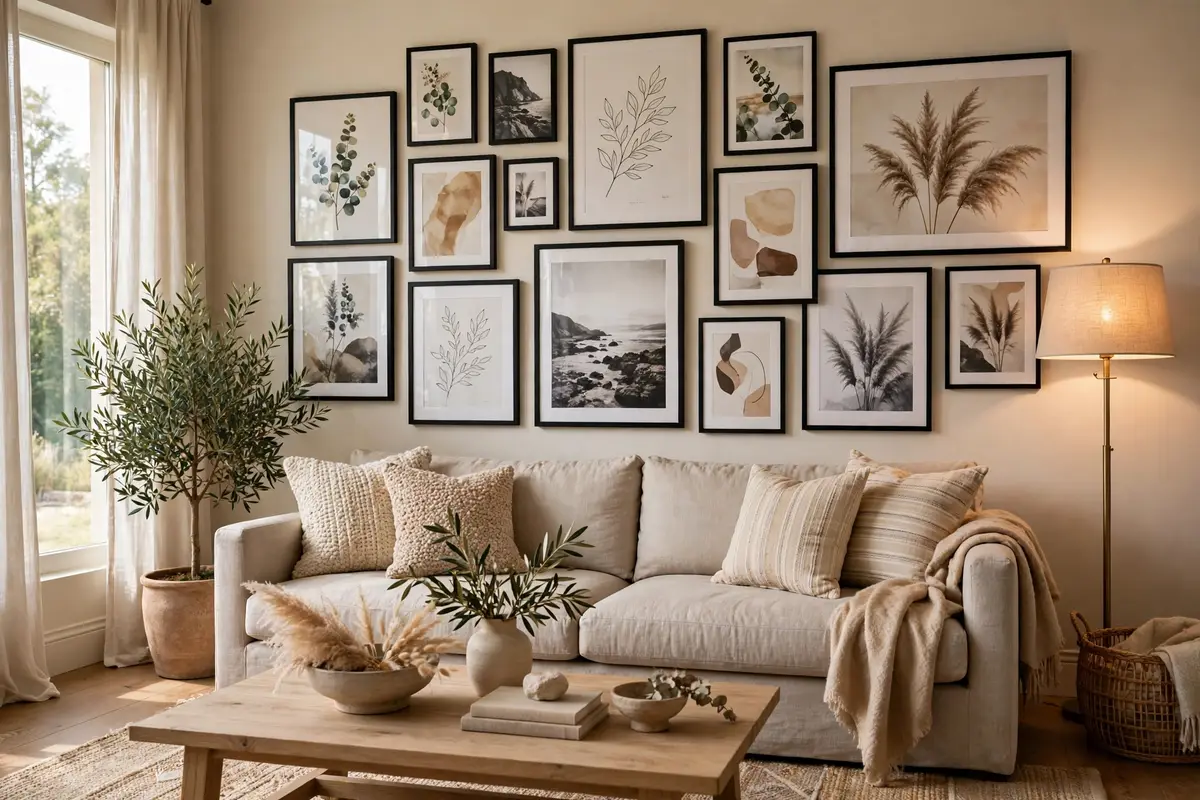
A gallery wall turns a blank wall into a personal display of art, photos and prints you already love. Best for: blank walls above the sofa. Styling tip: lay the arrangement on the floor first and keep gaps even. Pro tip: mix frame sizes but keep one colour, such as black, for a calm rhythm.
22. Oversized Artwork Feature Wall
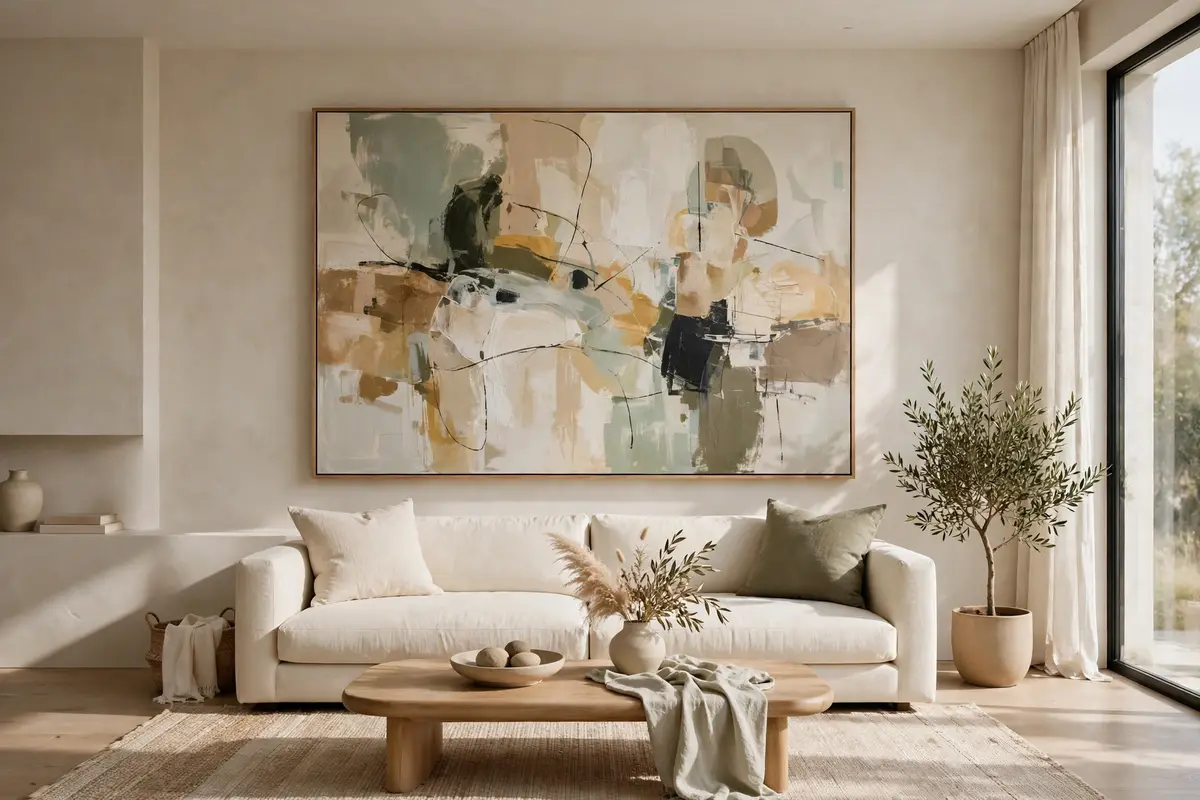
One very large piece of art does the job of a whole feature wall, with no paint or building work at all. Best for: minimal rooms and renters. Styling tip: the art should span about two-thirds of the sofa’s width. Pro tip: hang the centre at eye level, around 145 cm from the floor.
23. Floor-to-Ceiling Bookshelf Wall
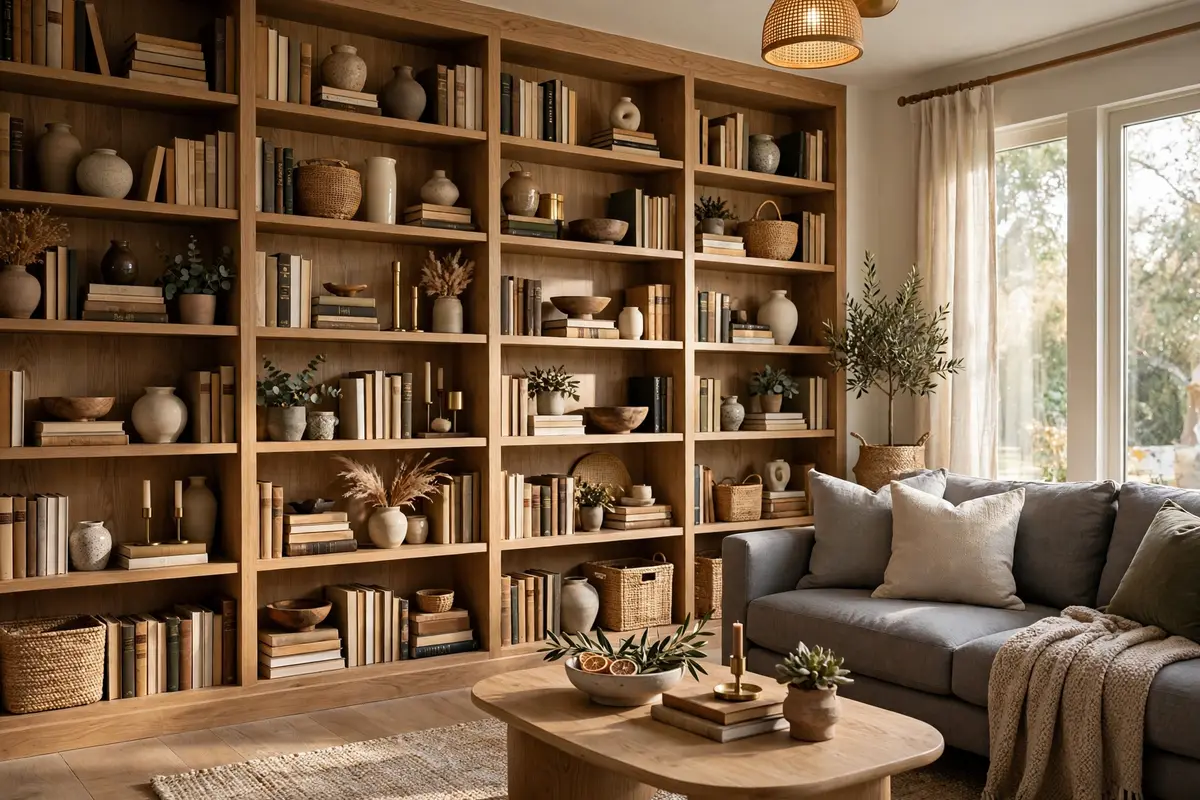
A wall of shelves filled with books and objects adds colour, texture and storage in one move. Best for: book lovers and rooms that need storage. Styling tip: leave some shelves partly empty so the wall breathes. Pro tip: mix books with a vase or a framed print on every third shelf.
24. Mirror Panel Accent Wall
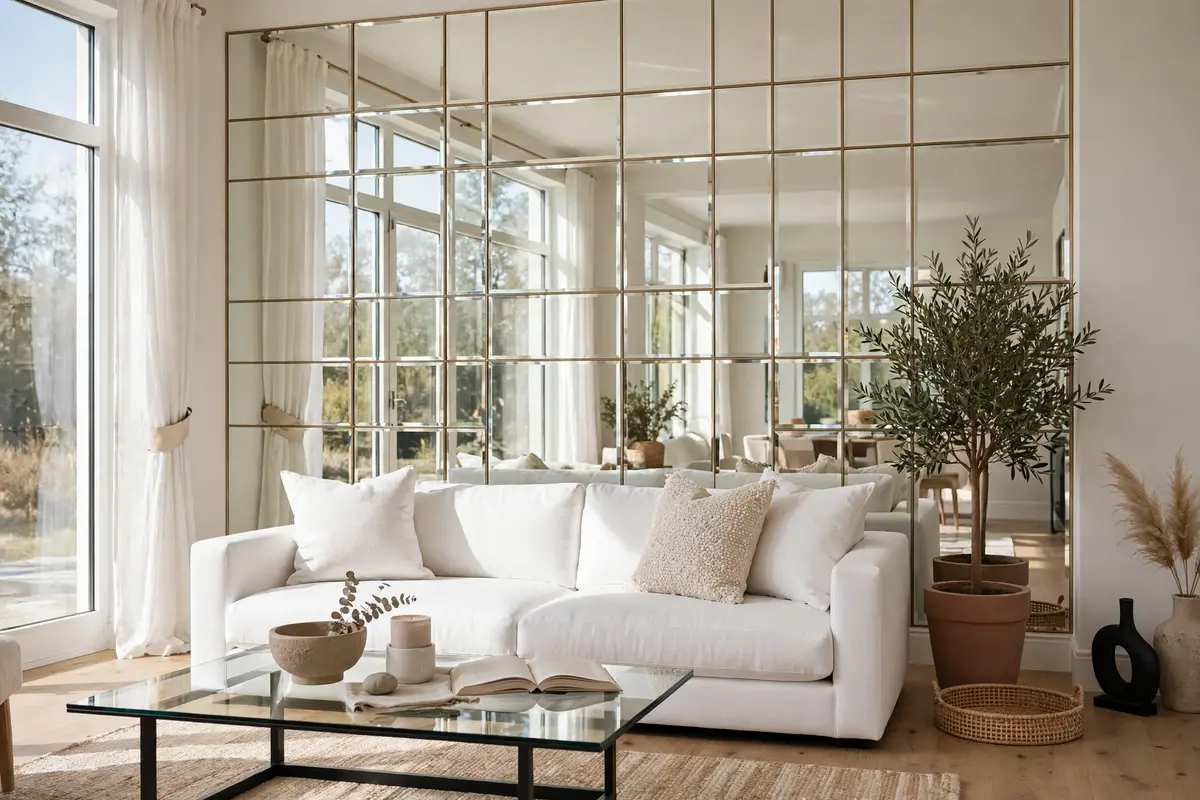
Mirror panels bounce light around the room and make a small living room feel twice as big. Best for: dark or small living rooms. Styling tip: place mirrors where they reflect a window, not a blank wall. Pro tip: use framed mirror panels rather than one huge sheet for a safer, tidier look.
25. Wood-Panelled TV Wall
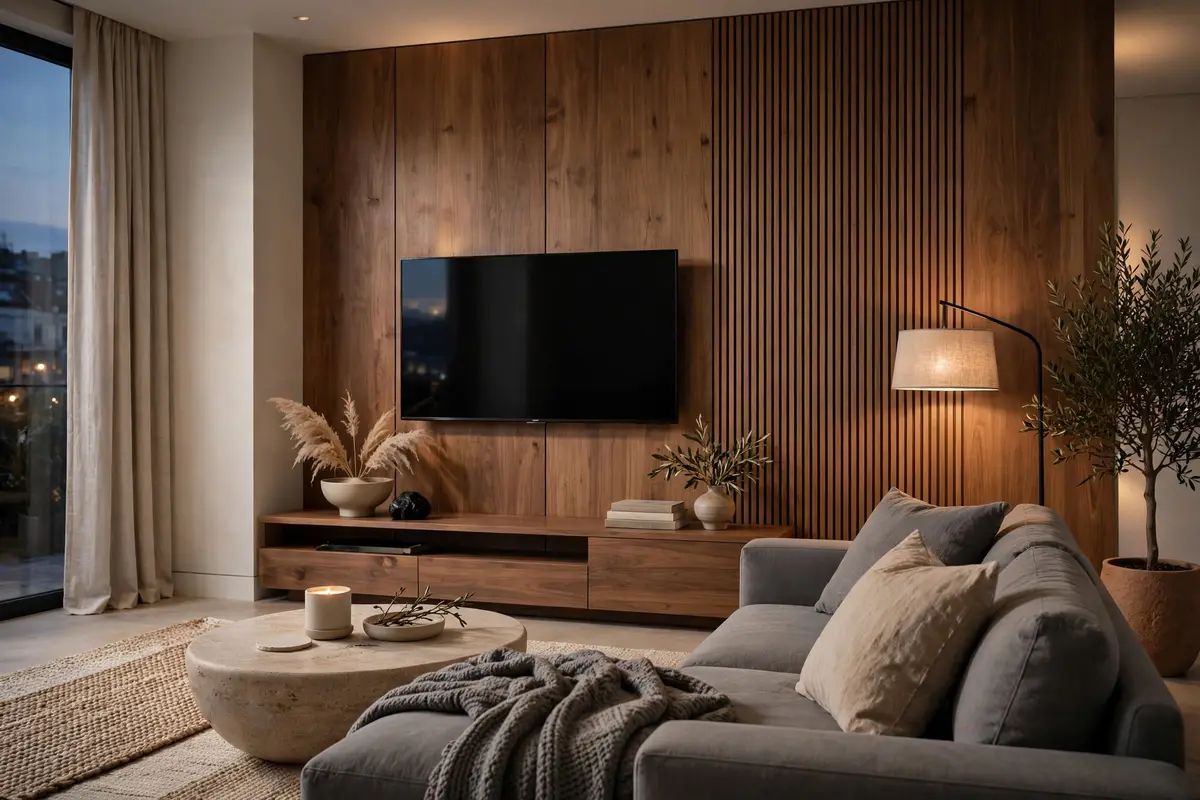
Panelling the TV wall hides cables and turns a black screen into part of the design instead of a dark hole. Best for: rooms where the TV is the main focal point. Styling tip: add a low console and one plant to soften the panelled wall. Pro tip: mount the TV at seated eye level, not above the fireplace.
26. Tiled Fireplace Accent Wall
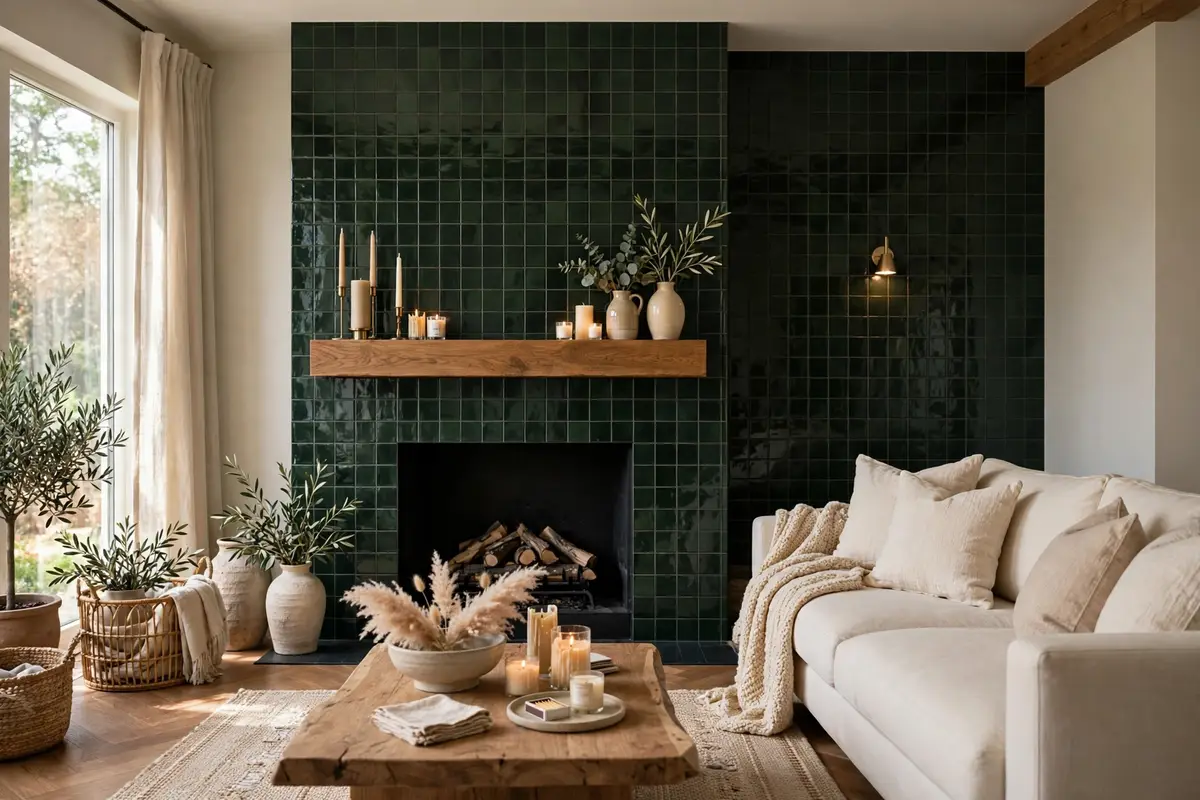
Dark green or patterned tiles around the fireplace make it the clear star of the room, even when it is not lit. Best for: rooms with a fireplace that feels plain. Styling tip: style the mantel in three heights: art, candlesticks, one low object. Pro tip: pick heat-safe tiles and grout made for fireplace surrounds.
27. Woven Basket Gallery Wall
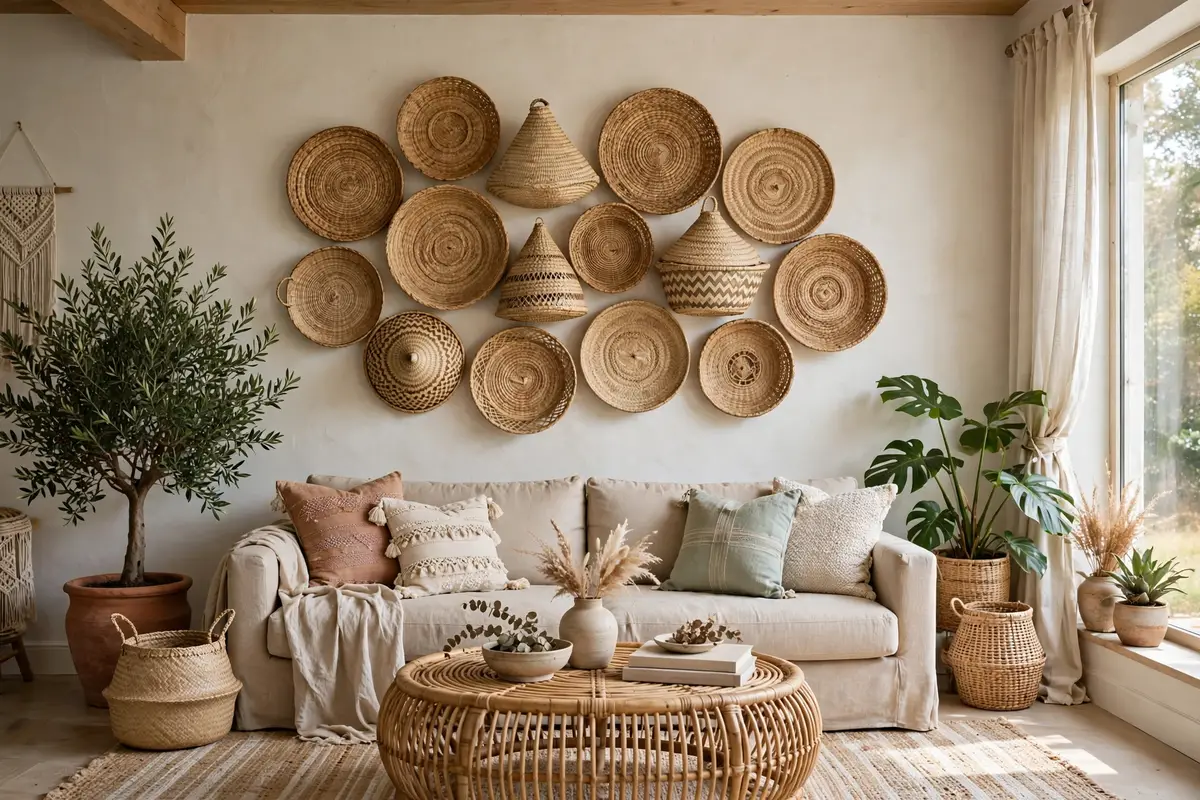
A cluster of woven baskets adds texture and a handmade feel for very little money, and it hangs with small nails. Best for: boho, coastal and eclectic living rooms. Styling tip: mix sizes and weave patterns, and keep the layout loose. Pro tip: mark the layout on paper first so the baskets sit evenly.
FAQs
Which wall should be the accent wall in a living room?
Choose the wall your eye lands on first when you walk into the room, which is usually the wall behind the sofa or the fireplace wall. Avoid walls broken up by lots of doors or windows, as the feature gets lost. If the room has a television, the TV wall is also a strong choice, since seating already faces it. Stand in the doorway and check which wall feels like the natural focal point.
What is the best colour for a living room accent wall?
The best colour depends on the light and the furniture you already own. Deep green and navy suit most rooms and feel calm, terracotta warms up cold, north-facing spaces, and sage works when you want colour without drama. Test a large swatch on the wall and look at it in morning and evening light before committing, as colours shift a lot through the day.
Are accent walls still in style?
Yes, accent walls are still popular, but the look has changed. Flat single-colour walls are now joined by wood slats, limewash, panelling, stone and wallpaper, which add texture as well as colour. The dated look is a bright, glossy feature wall with nothing else on it. A textured or well-styled accent wall still reads as current and intentional.
How do I do an accent wall in a rental?
Use removable options: peel-and-stick wallpaper, washi tape patterns, a gallery wall hung on small picture hooks, oversized art leaning on the wall, or a freestanding bookshelf against the wall. Paint is only an option if your landlord agrees in writing and you repaint before leaving. Always check your lease first, and test any adhesive on a hidden spot.
Should the accent wall be behind the sofa or the TV?
Either works, and the right choice is the wall your seating already faces or backs onto. Behind the sofa suits rooms where the sofa floats in the middle, as guests see the wall when they enter. The TV wall suits rooms built around watching, since panelling or colour there hides cables and frames the screen. Pick the wall with the fewest doors and windows.
How much does a living room accent wall cost?
Paint is the cheapest route: one wall needs little paint and a weekend afternoon, plus basic supplies. Peel-and-stick wallpaper and board and batten sit in the middle, while wood slats, stone panels and built-in shelving cost more because of materials and fitting. Start with paint or removable wallpaper if the budget is tight, and add panelling later when you can.
Final Thoughts
Start with the wall you notice first, pick one idea from this list, and try it before changing anything else. Paint and peel-and-stick options are cheap enough to test, while wood, stone and panelling are worth saving for once you know the colour direction. A single strong wall does more for a living room than a dozen small changes. For more ideas and inspiration, see HouseDigest’s accent wall ideas for your living room.
