
35 Stunning Garage Floor Tile Ideas That Transform Your Garage
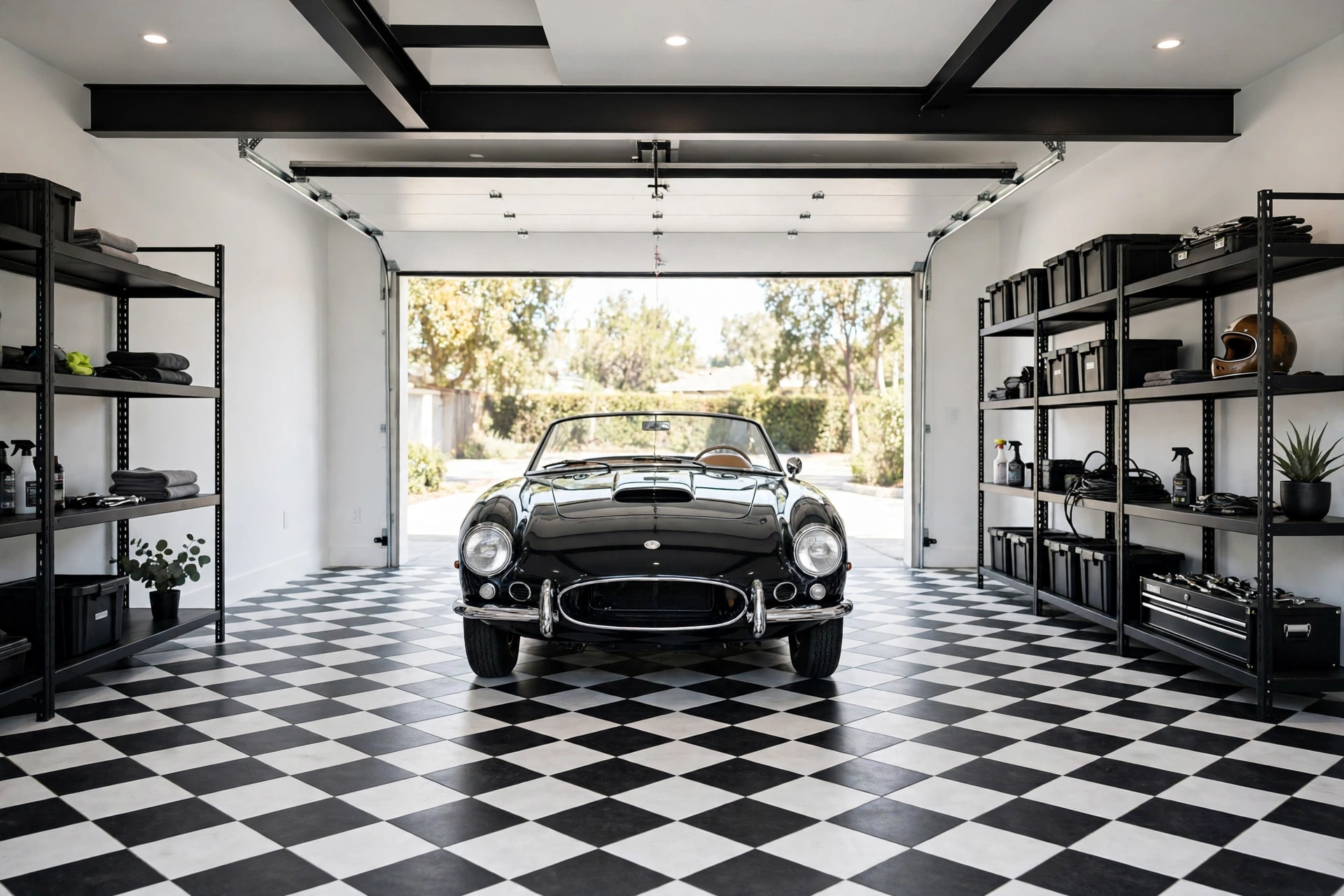
A stained concrete slab drags the whole garage down. Tiles fix it fast: they hide cracks, shrug off oil, and turn a dumping ground into a room worth showing off. Unlike a poured epoxy garage floor ideas coating, tiles are removable — swap one damaged piece instead of redoing the floor. These 35 garage floor tile ideas cover every material, pattern and budget, from weekend DIY tiles to porcelain that looks like marble.
1. Classic Black-and-White Checkerboard
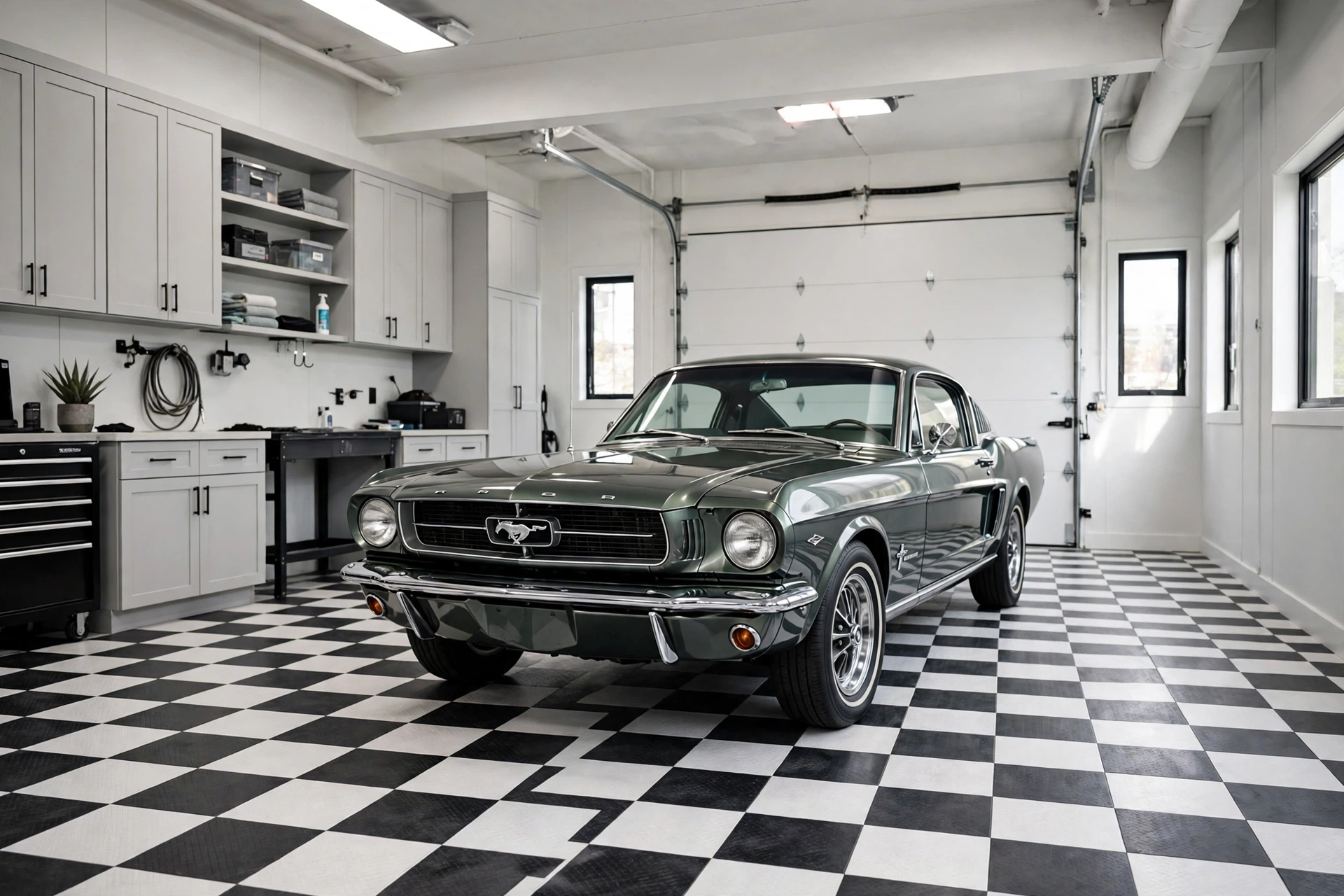
The timeless showroom look — alternate black and white tiles for retro energy. Best for: classic car lovers. Tip: order equal amounts.
2. Black and Grey Checkerboard
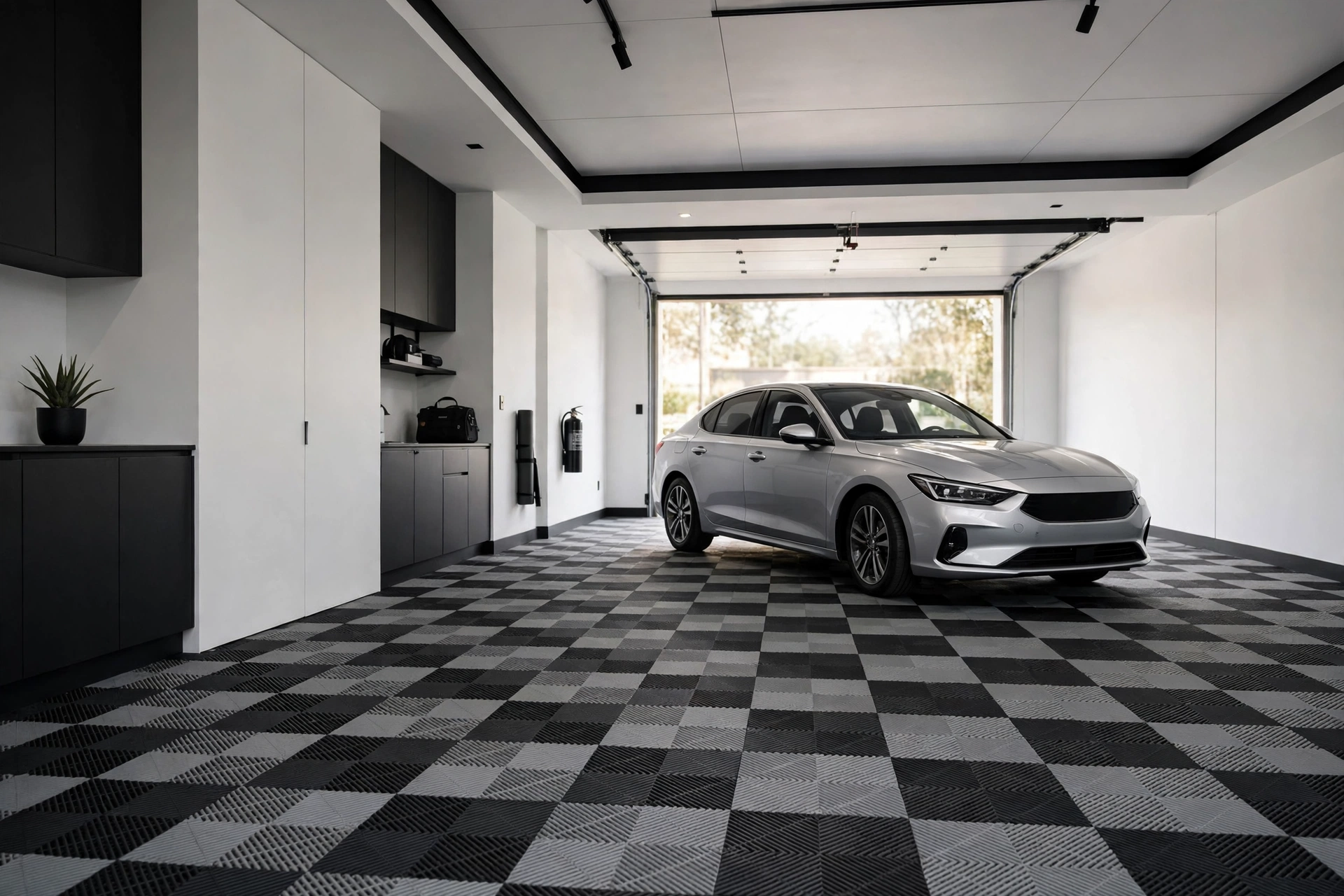
A softer classic. Charcoal and alloy grey read modern, not diner. Best for: daily drivers. Tip: grey hides tyre dust far better than white.
3. Red Accent Border

Frame a dark floor with two red tile rows around the edge. Best for: motorsport fans. Tip: keep the border under 30% so it frames, not floods.
4. Silver and Black Two-Tone

High-contrast silver and jet black give a clean, technical feel. Best for: workshops. Tip: silver edge tiles brighten the space.
5. Diamond-Plate Texture Tiles

Raised diamond tread looks like steel plate and grips wet boots. Best for: busy workshops. Tip: the busy pattern hides scuffs and drag marks well.
6. Coin-Top Grip Tiles

Raised coin discs add traction and a soft texture that photographs well. Best for: home gyms and showrooms. Tip: graphite coin tiles read as a finished floor.
7. Hexagon Tiles

Six-sided tiles break the square-grid monotony with modern geometry. Best for: design-led garages. Tip: mix two tones.
8. Herringbone Layout
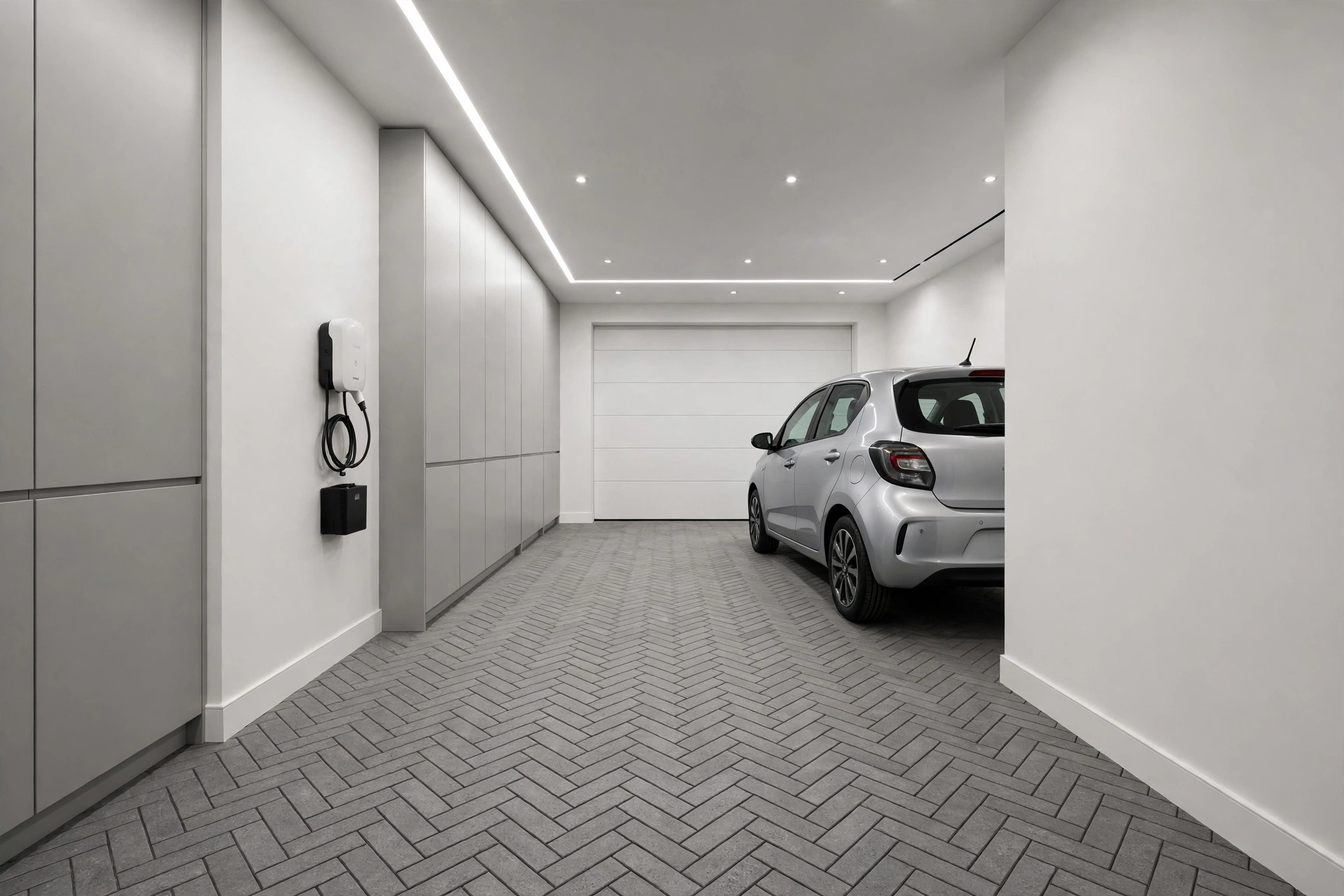
Angled rows add movement to a flat slab. Best for: narrow garages. Tip: run the pattern across the room, not along it, to widen the feel.
9. Basketweave Pattern

Woven-look rectangles add subtle texture without shouting. Best for: multipurpose garages. Tip: use it in walkways and keep parking bays plain.
10. Large-Format Porcelain Tiles
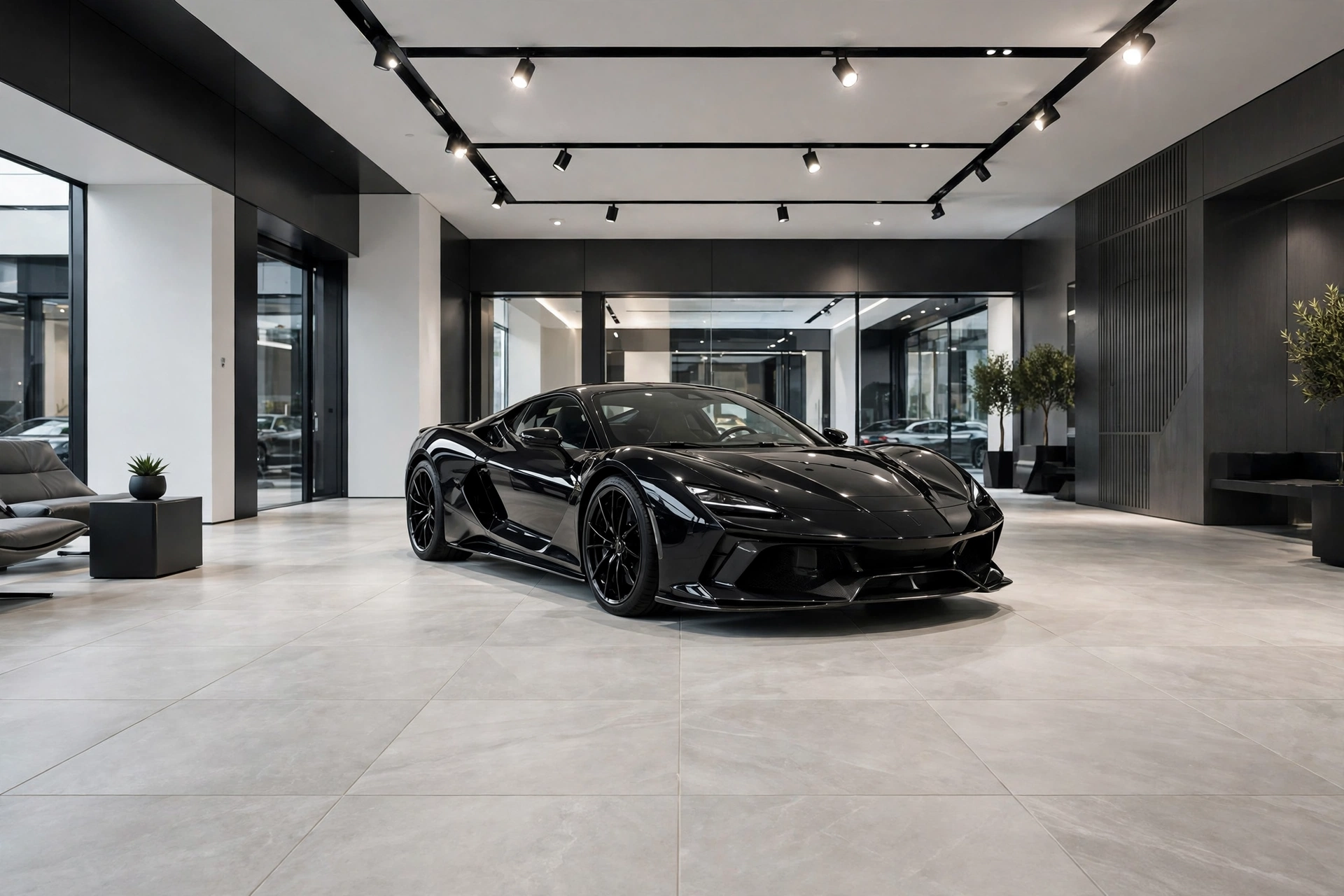
Big slabs, few grout lines, a finish that outlasts almost everything. Best for: showroom garages. Tip: pick heavy-traffic rated, slip-resistant porcelain.
11. Marble-Look Porcelain
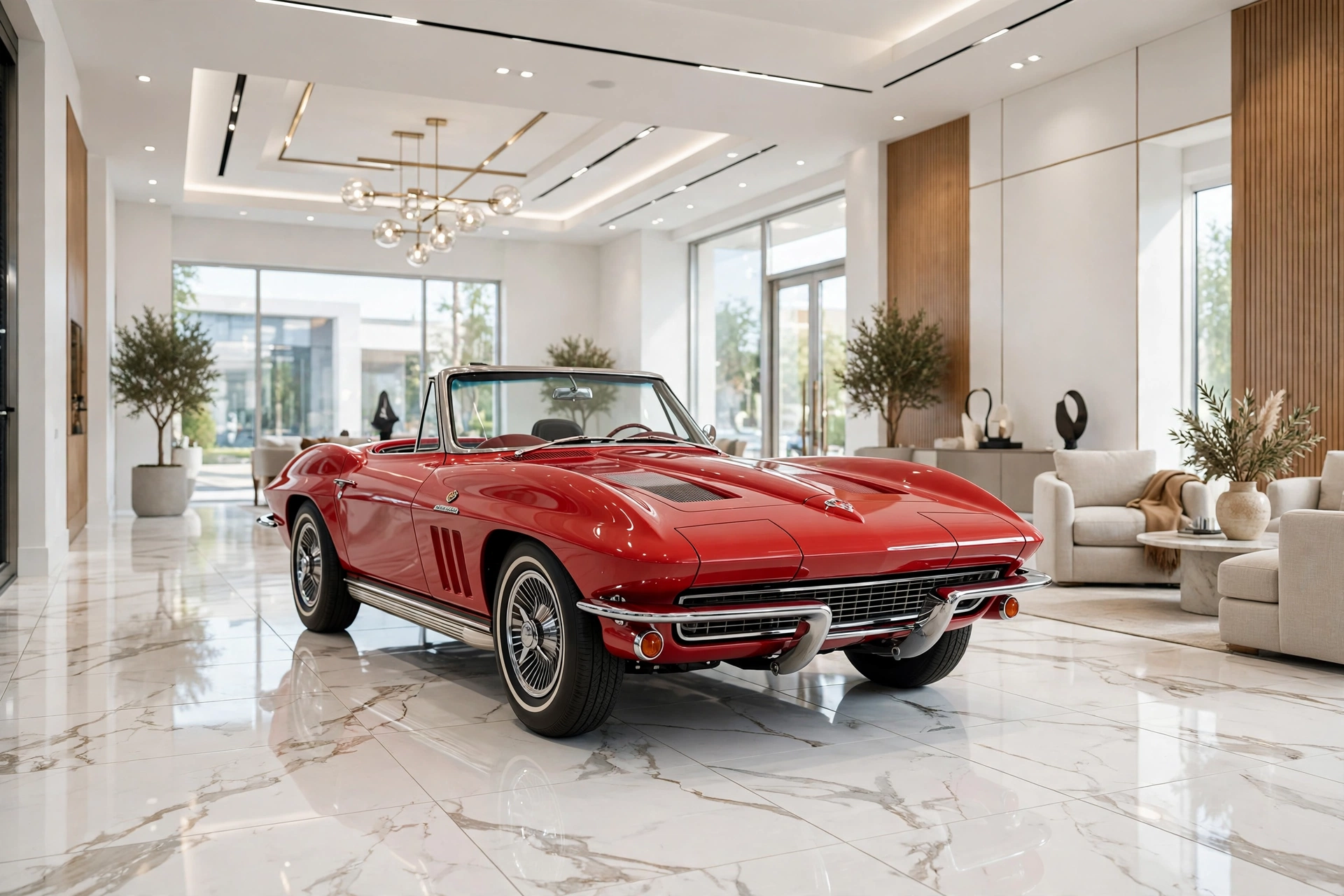
Veined porcelain gives the luxury showroom look without marble’s upkeep. Best for: displaying a prized car. Tip: veined large-format tiles need a flat, level slab.
12. Wood-Look Tile Planks
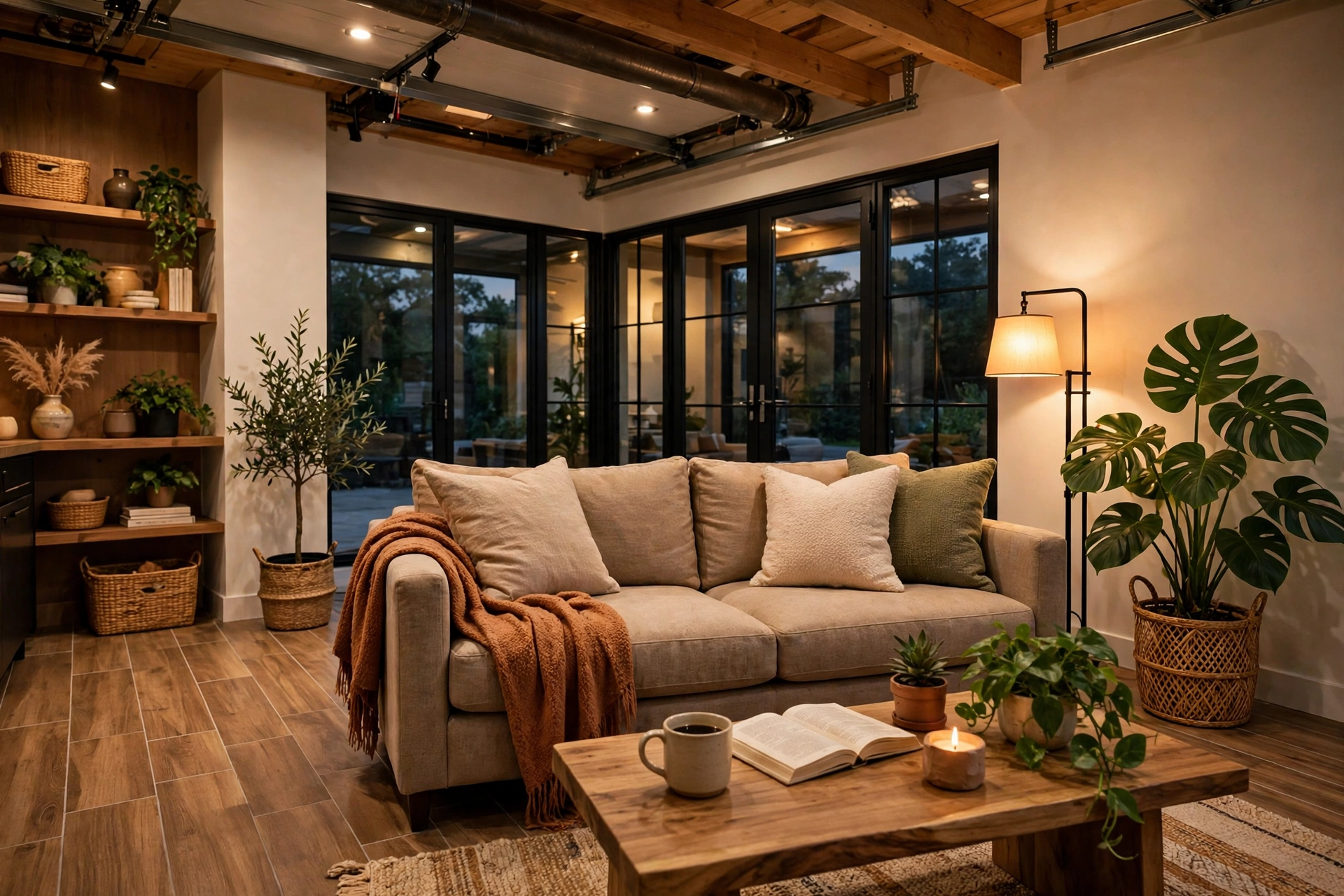
Warm timber tones soften a cold concrete room. Best for: garages doubling as living space. Tip: run planks lengthways to stretch a small garage.
13. Slate-Look Tiles
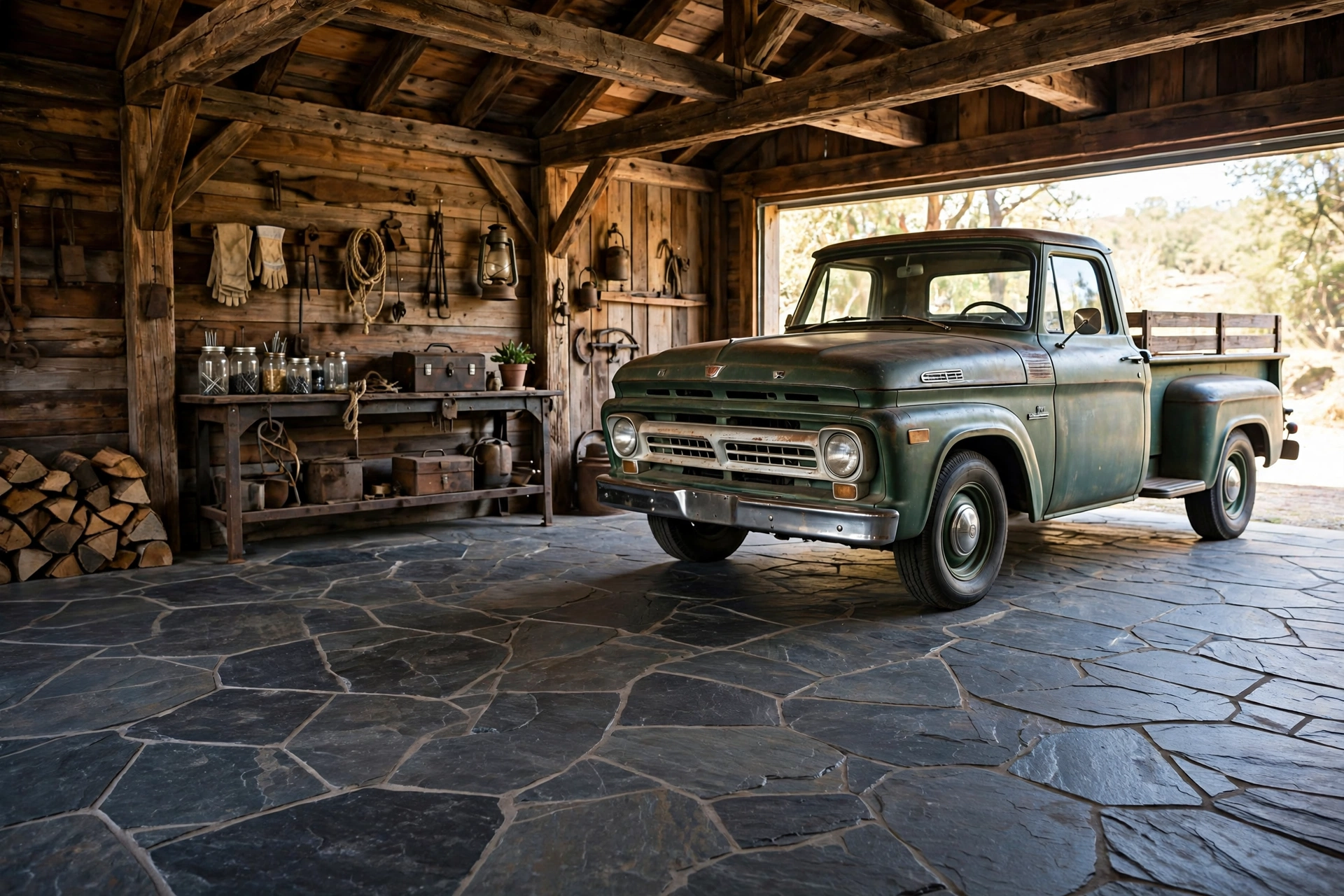
Natural stone character with a rugged, slip-resistant surface. Best for: rustic homes. Tip: seal slate-look porcelain yearly.
14. Terrazzo-Style Tiles

Speckled chips in a polished base feel playful yet premium. Best for: creative studios. Tip: choose terrazzo with dark flecks to hide dirt.
15. Concrete-Look Tiles

Industrial grey tiles keep the workshop vibe, minus dust and stains. Best for: modern industrial homes. Tip: pair with black steel shelving.
16. Vented Drainage Tiles

Open-profile tiles let water fall through instead of pooling. Best for: wash bays and wet climates. Tip: vented where you rinse the car, solid elsewhere.
17. Ribbed Showroom Tiles
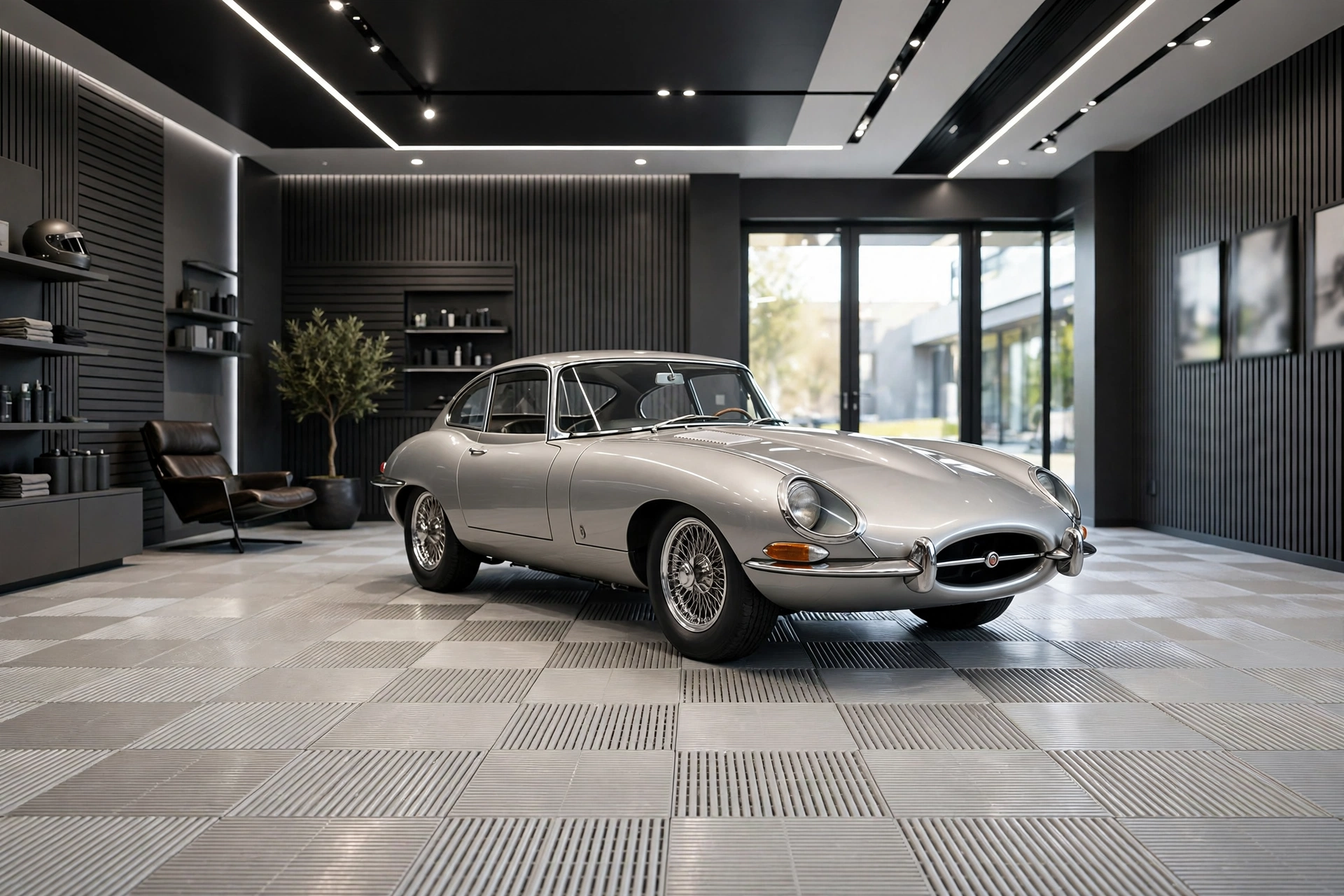
Raised ribs channel water underneath while looking sharp above. Best for: car collectors. Tip: pearl silver ribs brighten dark garages.
18. Smooth Gloss Tiles

A sleek, reflective surface that makes the garage feel polished. Best for: display garages. Tip: gloss shows dust — keep a quick mop routine.
19. Matte Charcoal Field

One flat charcoal colour, calm and forgiving. Best for: minimalist garages. Tip: charcoal hides oil and tyre marks best.
20. Racing Stripe Down the Centre

A bold red or yellow stripe runs between the parking bays. Best for: motorsport garages. Tip: align it with the car’s centre line.
21. Zoned Parking Bays

Different tile colours mark where each vehicle parks. Best for: two-car garages. Tip: outline bays with a contrasting border.
22. Contrasting Perimeter Border
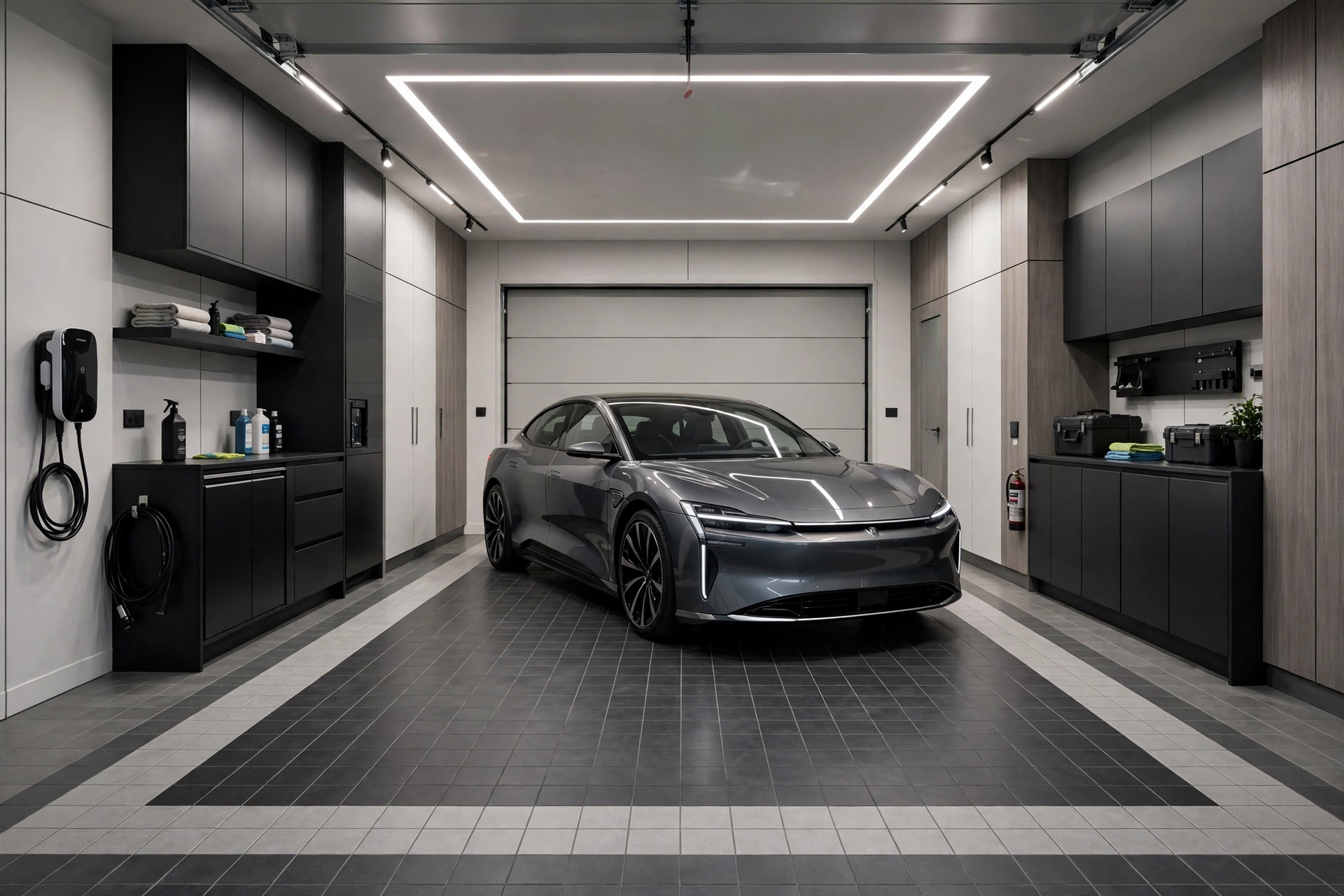
A light frame around a dark field finishes the room. Best for: any garage. Tip: two to three border rows is enough.
23. Diagonal Diamond Layout

Tiles turned 45 degrees add energy a straight grid cannot. Best for: square garages. Tip: order 10% extra.
24. Interlocking PVC Weekend DIY

Snap-together PVC tiles go down in a day with no glue or grout. Best for: first-time DIYers. Tip: compare garage floor tile types first — rigid PVC suits heavy cars, flexible PVC suits jacks.
25. Rubber Tiles for the Gym Zone
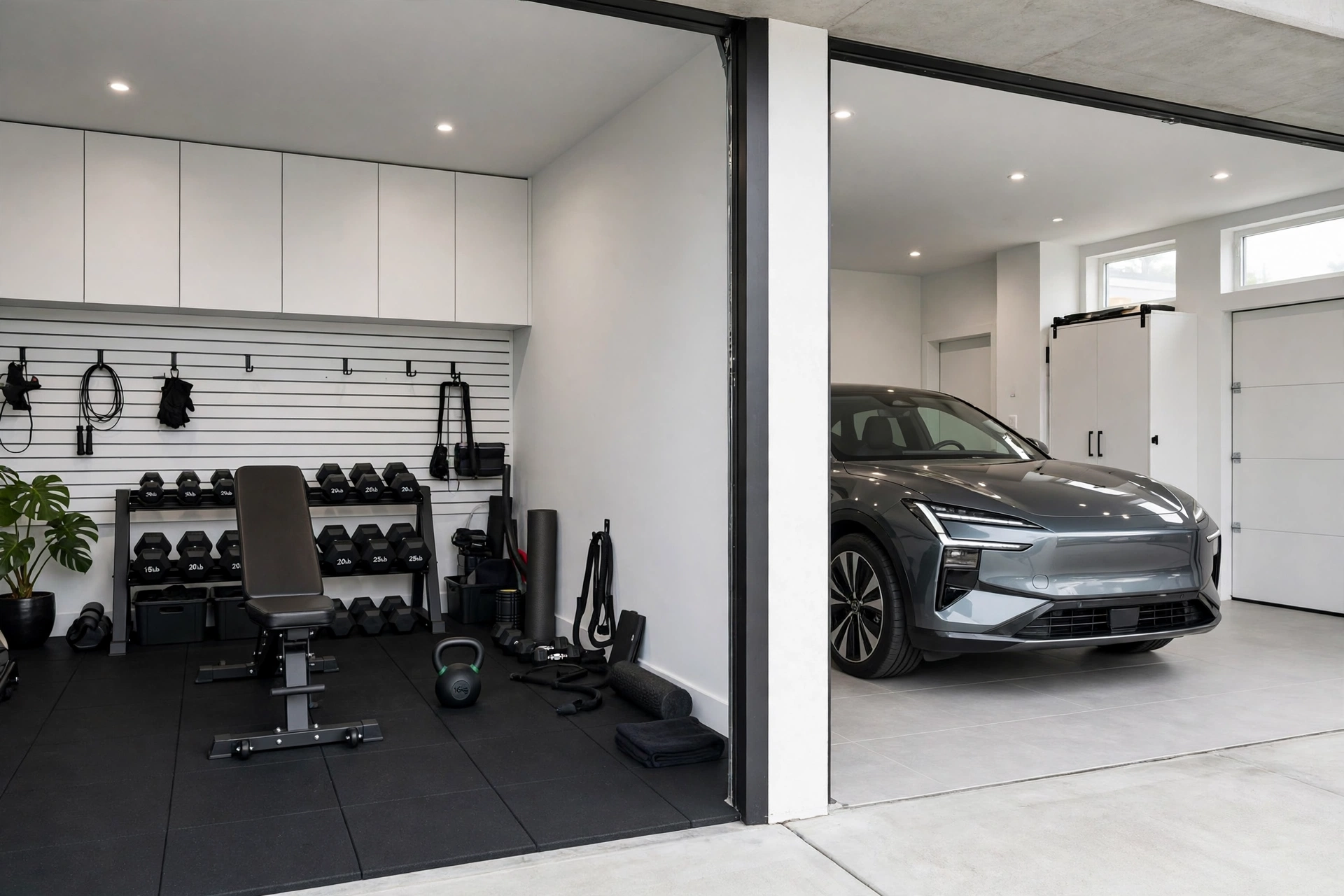
Shock-absorbing rubber protects joints and the slab under weights. Best for: garage gyms. Tip: tile only the workout zone.
26. Foam Tiles for the Workout Corner
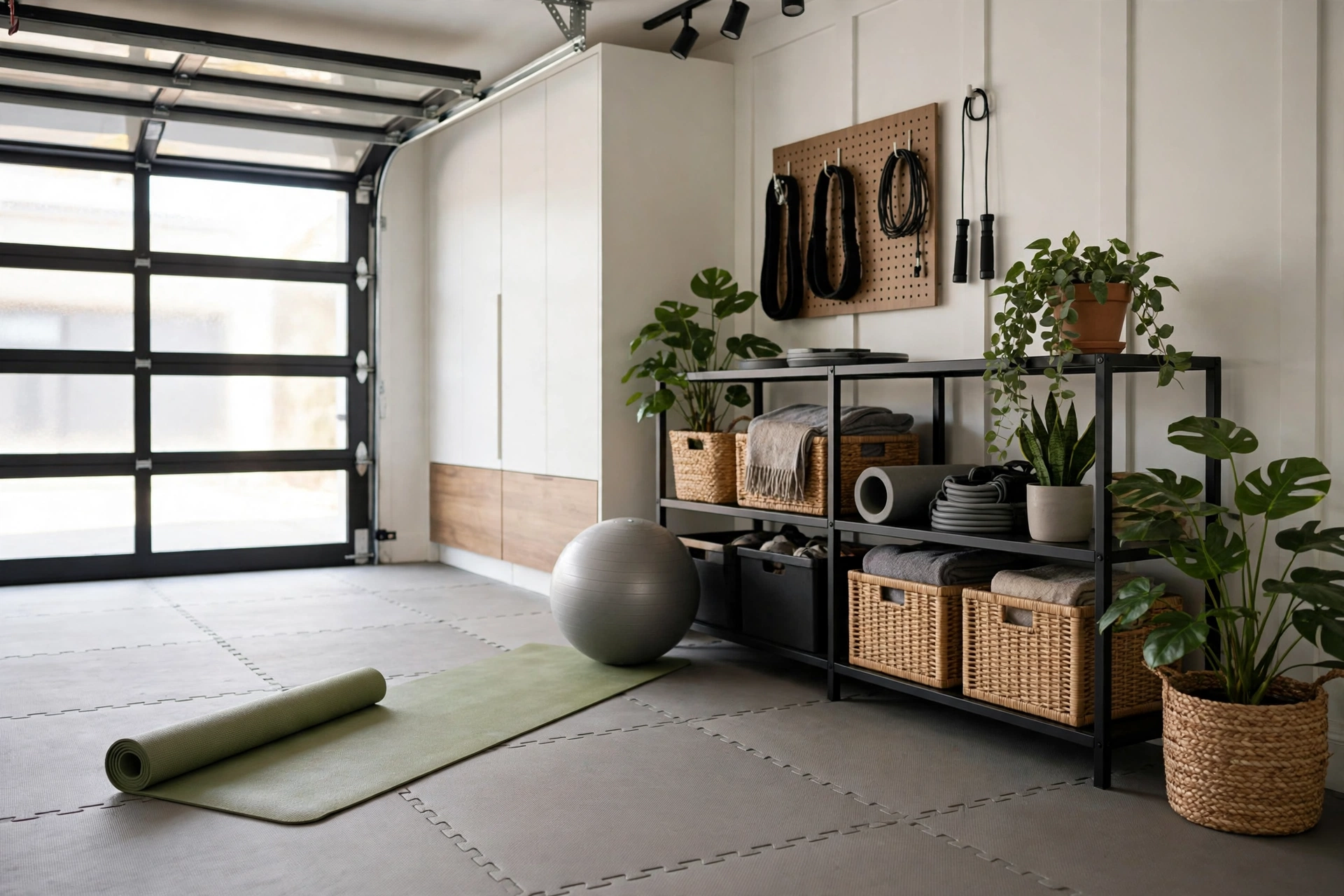
Soft, cheap and quick for floor exercises and stretching. Best for: yoga and light workouts. Tip: foam is not for parking on — keep cars off it.
27. Peel-and-Stick Vinyl Tiles
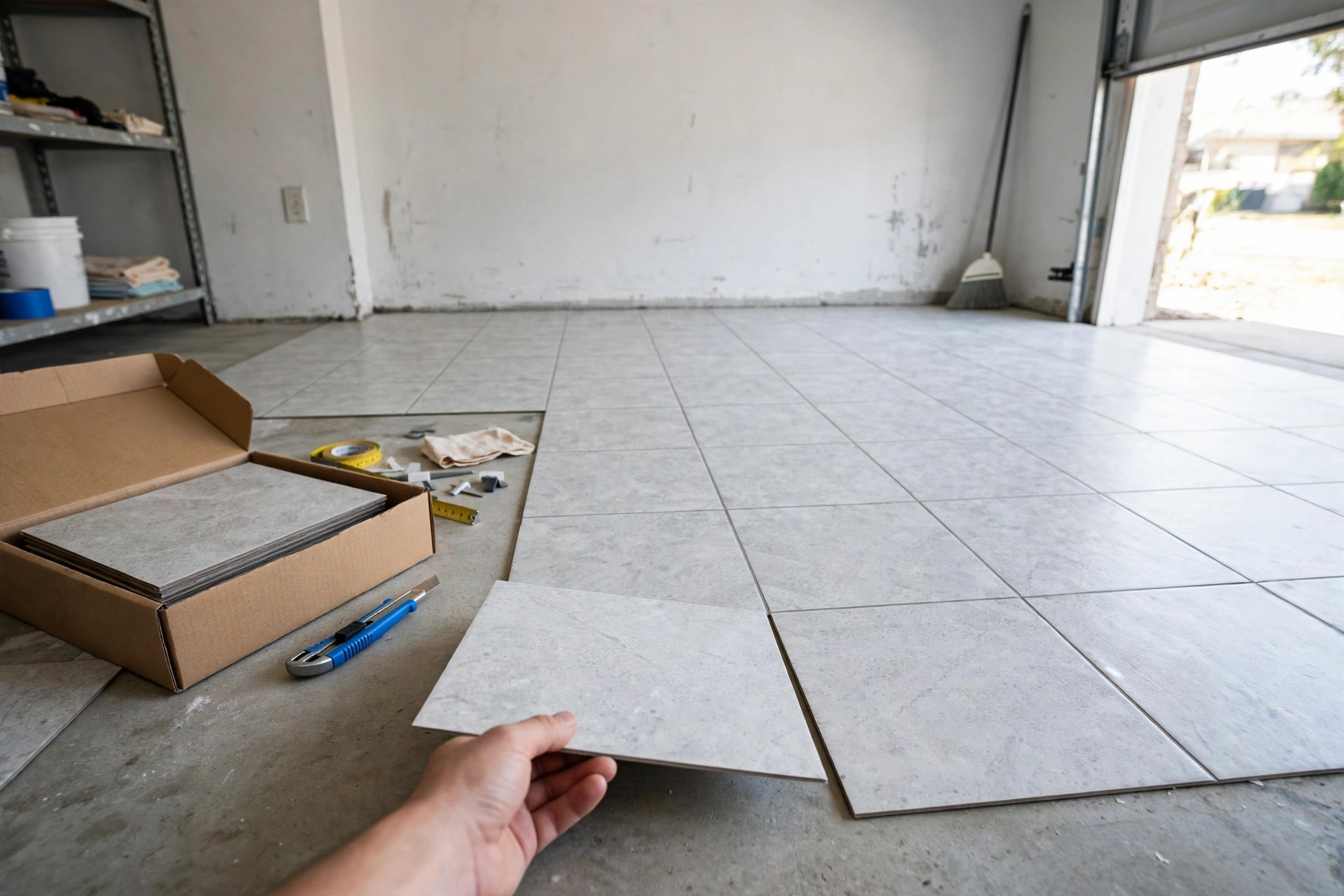
The fastest, cheapest refresh — peel, stick, done. Best for: renters and tight budgets. Tip: clean and dry the slab well or edges will lift.
28. Recycled Rubber Tiles
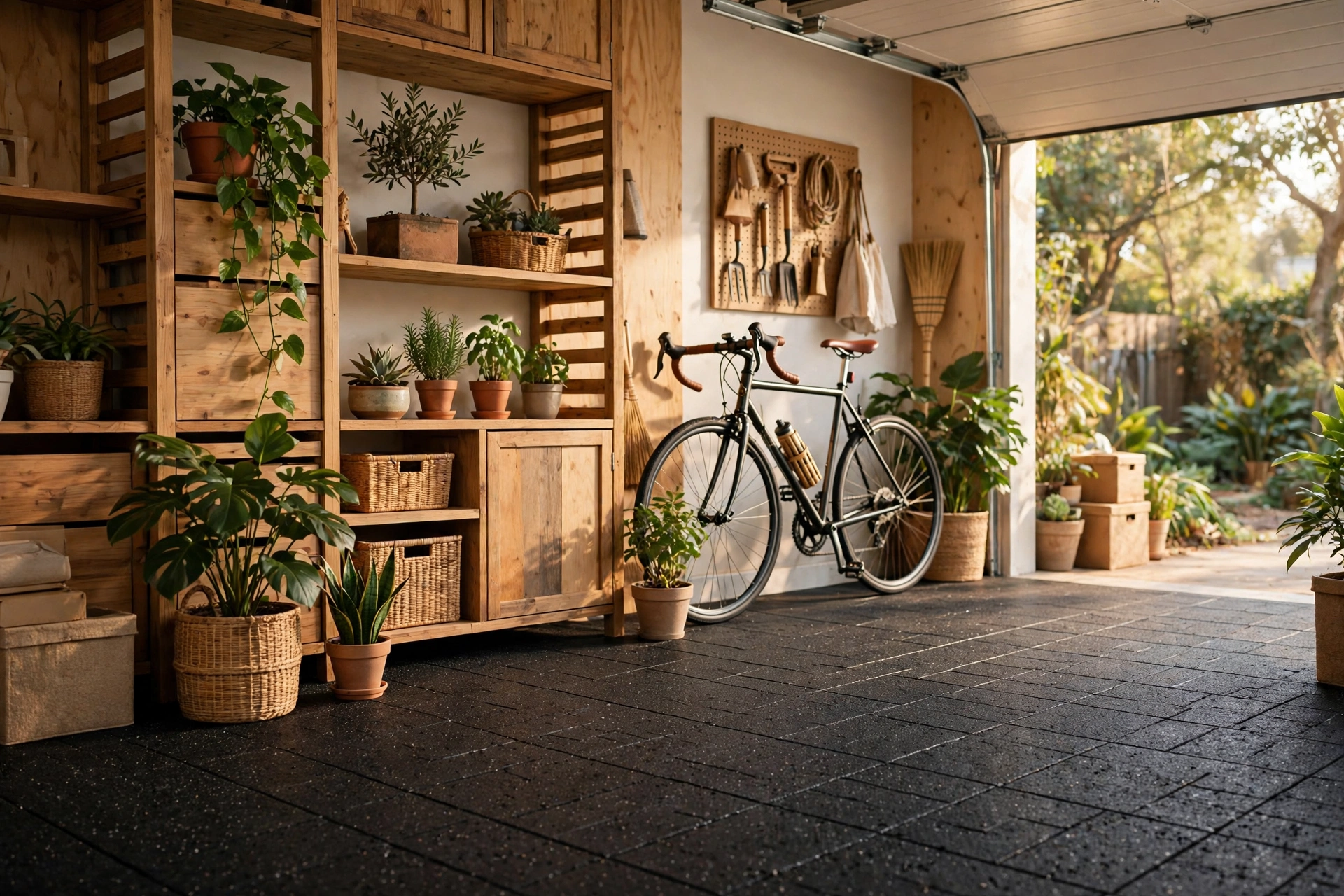
Made from recycled materials, tough and planet-friendly. Best for: eco-conscious homes. Tip: dark tones hide stains and wear well.
29. Metallic-Effect Tiles

Shimmering finishes catch light like polished metal. Best for: industrial-chic garages. Tip: use metallic tiles as an accent strip.
30. Stone-Look Tiles
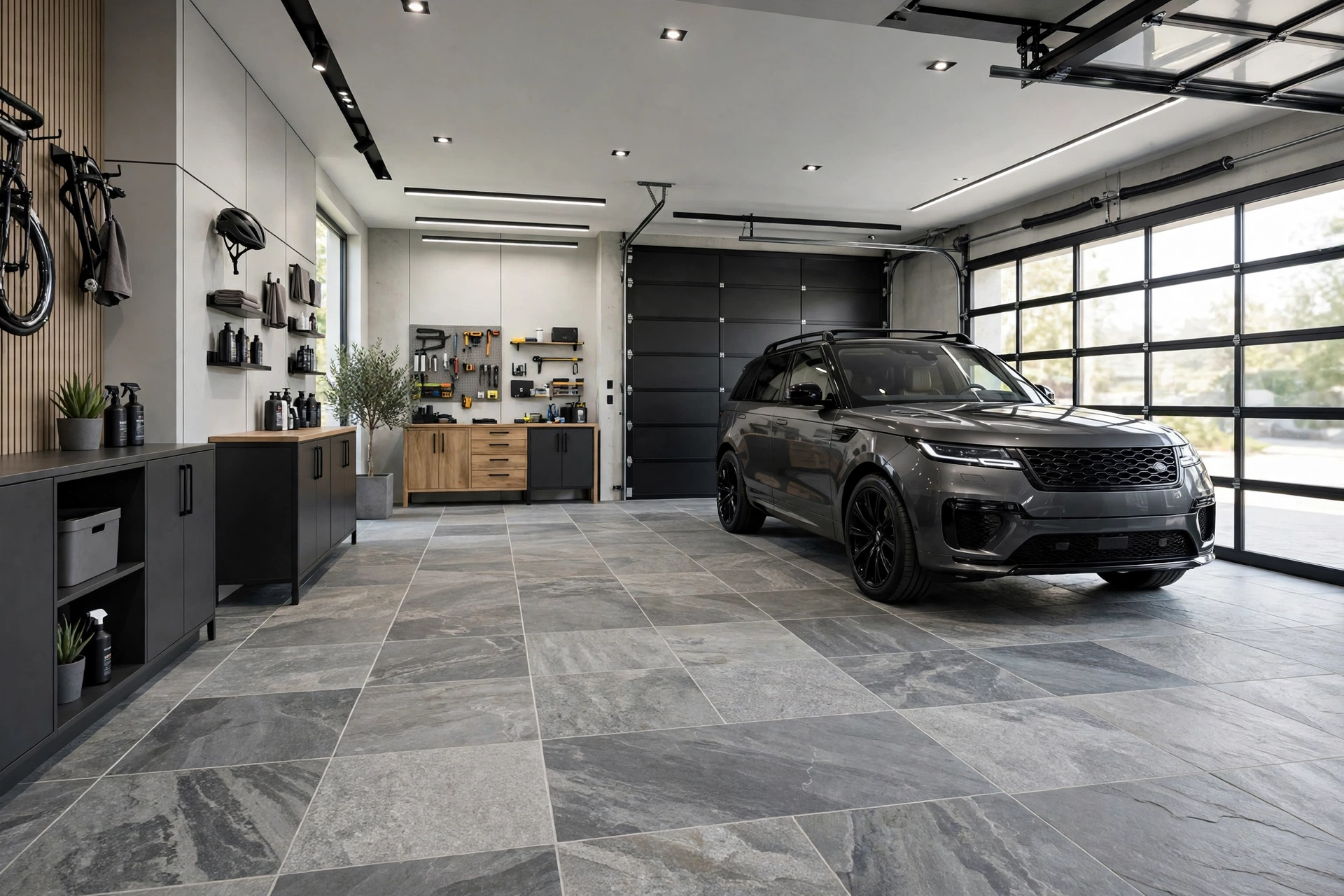
Granite and slate looks bring natural texture indoors. Best for: premium homes. Tip: stone-look porcelain cleans easier than real stone — no sealing drama.
31. Bold Colour Pop Tiles

A block of red, blue or racing green turns the floor into the feature. Best for: personality-packed garages. Tip: one bold zone beats a whole bold floor.
32. Monochrome Minimalist Tiles
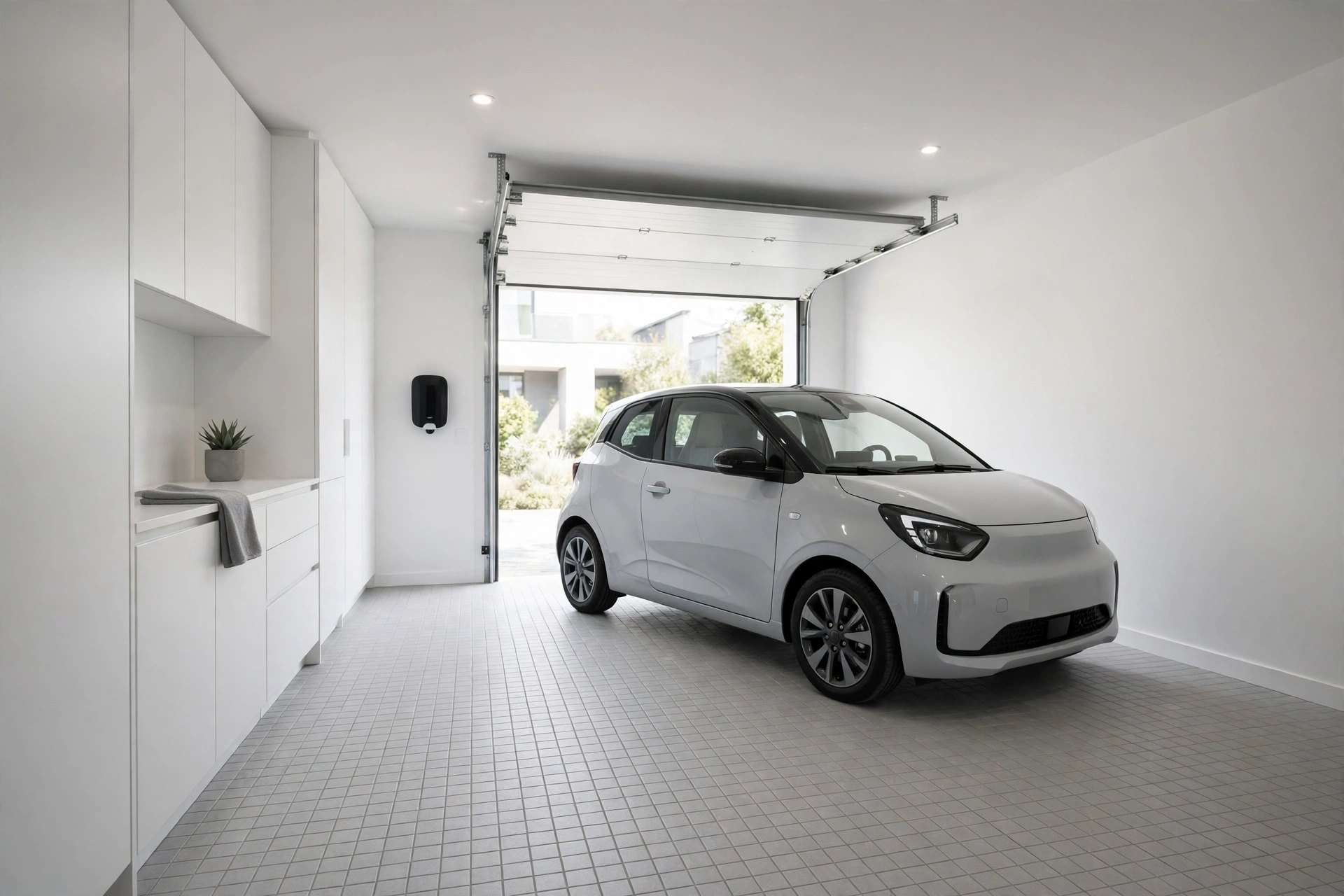
One colour, one finish, zero fuss. Best for: modern homes. Tip: a single light grey makes a small garage feel larger.
33. Custom Logo Inlay

Your initials, a car badge or a crest tiled into the floor. Best for: enthusiasts and businesses. Tip: plan it on paper first.
34. Light Grey Brightening Tiles
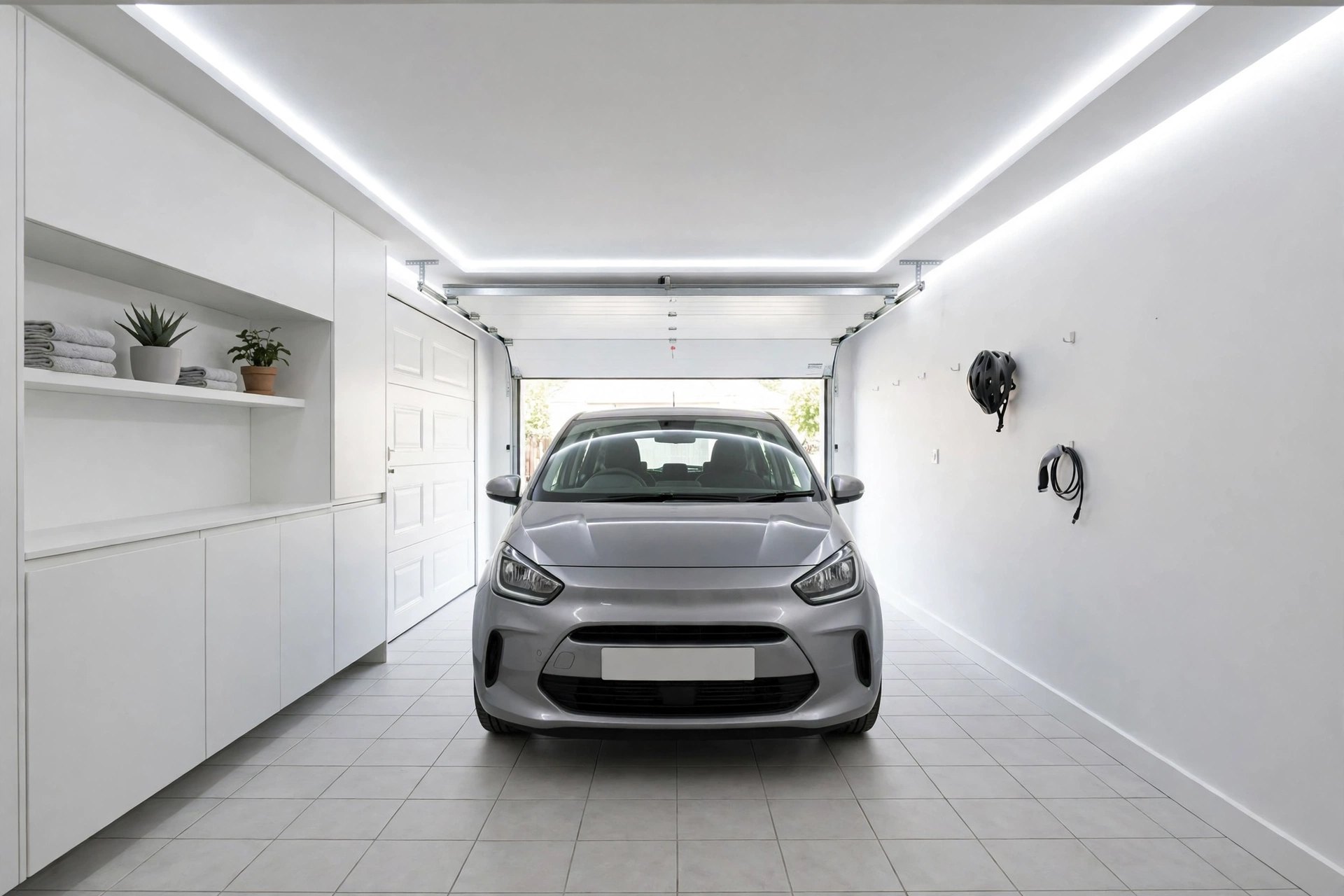
Pale tiles bounce light around a windowless garage. Best for: dark, single-car garages. Tip: pair pale floors with white walls.
35. Mixed-Pattern Zones
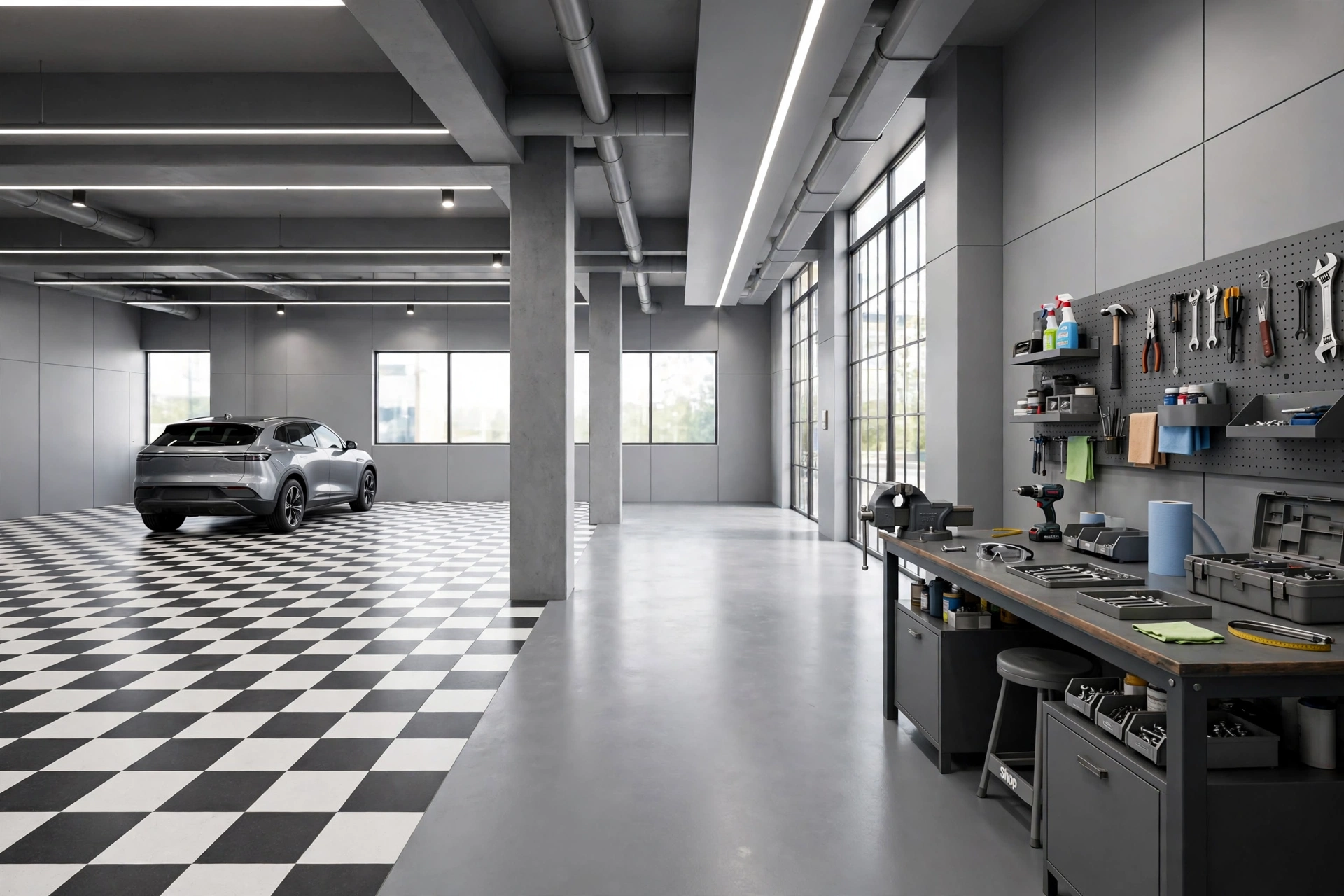
Checkerboard parking bays plus plain workshop flooring in one room. Best for: garages that do everything. Tip: keep one colour running through both zones.
The right tile turns a garage from a stained slab into the best-looking room in the house. Start with how you use the space — parking, working out, or showing off a car — then pick the material and let the pattern talk. Once the floor is set, finish the rest of the room with our garage design ideas. Your garage will never look neglected again.
Frequently Asked Questions
What is the best tile for a garage floor?
Interlocking PVC or polypropylene tiles suit most garages — they snap together without glue, handle car weight, resist oil, and a damaged tile swaps out alone. Porcelain wins for a showroom finish but needs a flat slab and a pro tiler. Rubber is best where you stand all day, like a gym.
Are garage floor tiles better than epoxy?
Tiles beat epoxy when you want a removable, DIY-friendly floor with patterns — one damaged tile replaces in minutes, with no curing time. Epoxy wins on seamless wipe-clean coverage and usually costs less. Choose tiles for flexibility and design; epoxy for a fast, sealed coating. Tiles suit DIYers; epoxy suits seamless-finish fans.
How much do garage floor tiles cost?
Budget interlocking PVC runs roughly $2–$4 per square foot, mid-range $4–$7, premium showroom tiles $7–$12+. Porcelain adds labour, often $10–$25 installed. A two-car garage usually lands between $800 and $3,000 in tiles alone, before edging. Edging strips and borders add a little more. Budget extra for edging, borders and waste.
Can I install garage floor tiles myself?
Yes — interlocking PVC, polypropylene and rubber tiles are genuine weekend DIY: sweep the slab, snap tiles together, cut edges with a utility knife. Most two-car garages take one day. Porcelain and ceramic need adhesive, grout and levelling, so budget for a pro tiler there. A rubber mallet seats tiles firmly.
Do garage floor tiles trap moisture underneath?
They can, especially solid tiles on a damp slab — trapped moisture can smell or lift edges. Test first: tape clear plastic to the slab for 24 hours and check for condensation. If damp, use vented tiles that allow airflow, or fix the damp first. A dehumidifier also helps in damp garages.
How do I clean garage floor tiles?
Sweep regularly and mop with warm water and mild detergent — most tiles need nothing stronger. Wipe oil spills quickly so they do not stain grout. Avoid harsh solvents on PVC, and reseal porcelain grout lines once a year to keep them looking new. Baking soda paste lifts stubborn tyre marks.
