
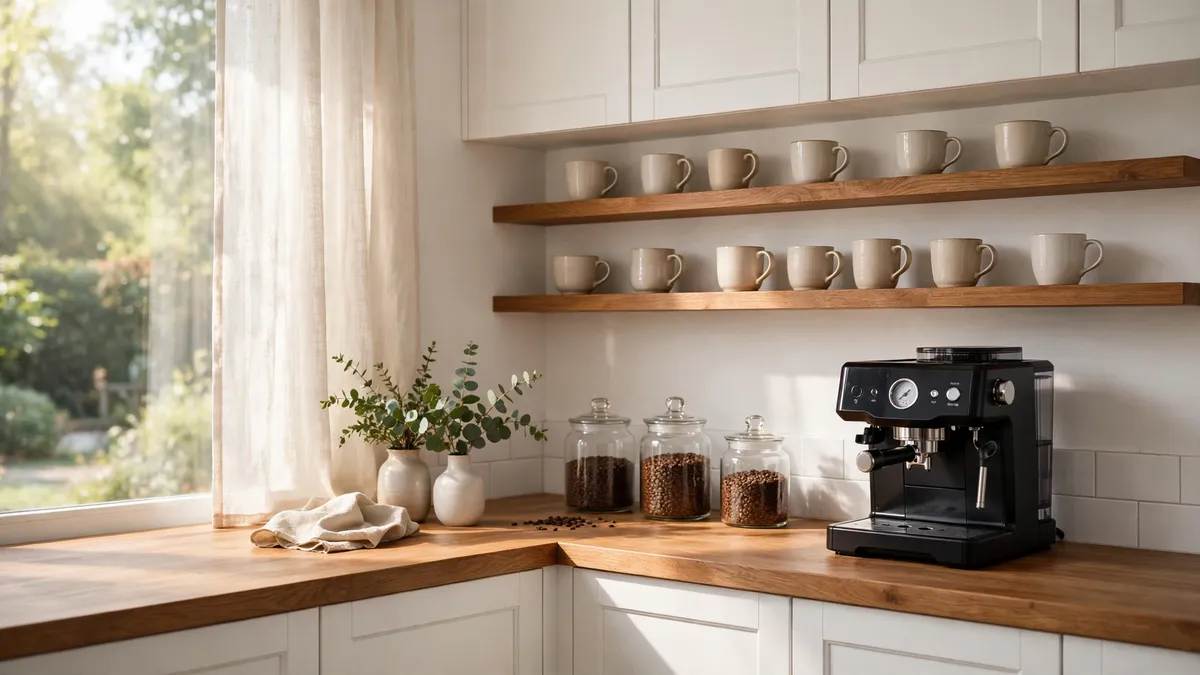
Good coffee bar ideas start with one small decision: give coffee a home of its own. A corner of counter, a cart, a hutch or a built-in cabinet — any of them can hold the machine, the mugs and the beans in one tidy spot. The 40 ideas below cover every kitchen size, budget and style, from a single tray to a full cafe corner.
The trick is matching the bar to how you actually drink coffee. A household that brews one pot a day needs something different from an espresso hobbyist, and a renter needs something different from a remodel. Pick the idea that fits your space, then style it with the tips beside each one.
Why You’ll Love These Coffee Bar Ideas
A coffee bar changes mornings more than any other small kitchen project. Everything you need sits in one place, so brewing takes minutes and the rest of the counter stays clear for cooking. Guests help themselves without opening every cupboard, and the bar itself becomes a pretty corner worth looking at. Most of these ideas cost little, need no builder, and can be set up in an afternoon.
How to Choose the Right Coffee Bar for Your Home
Measure first: most machines are 10 to 18 inches wide and need 15 to 17 inches of height, plus room to open the lid and fill the tank. Pick your spot — counter, cart, cabinet or pantry — then choose one material that matches your kitchen, like warm wood or matte black. Renters should favour carts, trays and ladder shelves that move out with them. If storage is the tight part, start with the shelves around the bar and plan the storage first, so the coffee corner never runs out of room.
Small-Space Coffee Bar Ideas
1. A Countertop Corner Station

A corner of countertop is all a coffee bar needs to begin. Park the machine in the corner, add two small shelves above for mugs, and keep beans in a jar beside it. Best for: small kitchens and first coffee bars. Styling tip: group everything inside one invisible square so the corner reads as a station, not clutter. Pro tip: leave at least 18 inches of clear counter in front of the machine for cups and pouring.
2. A Rolling Bar Cart
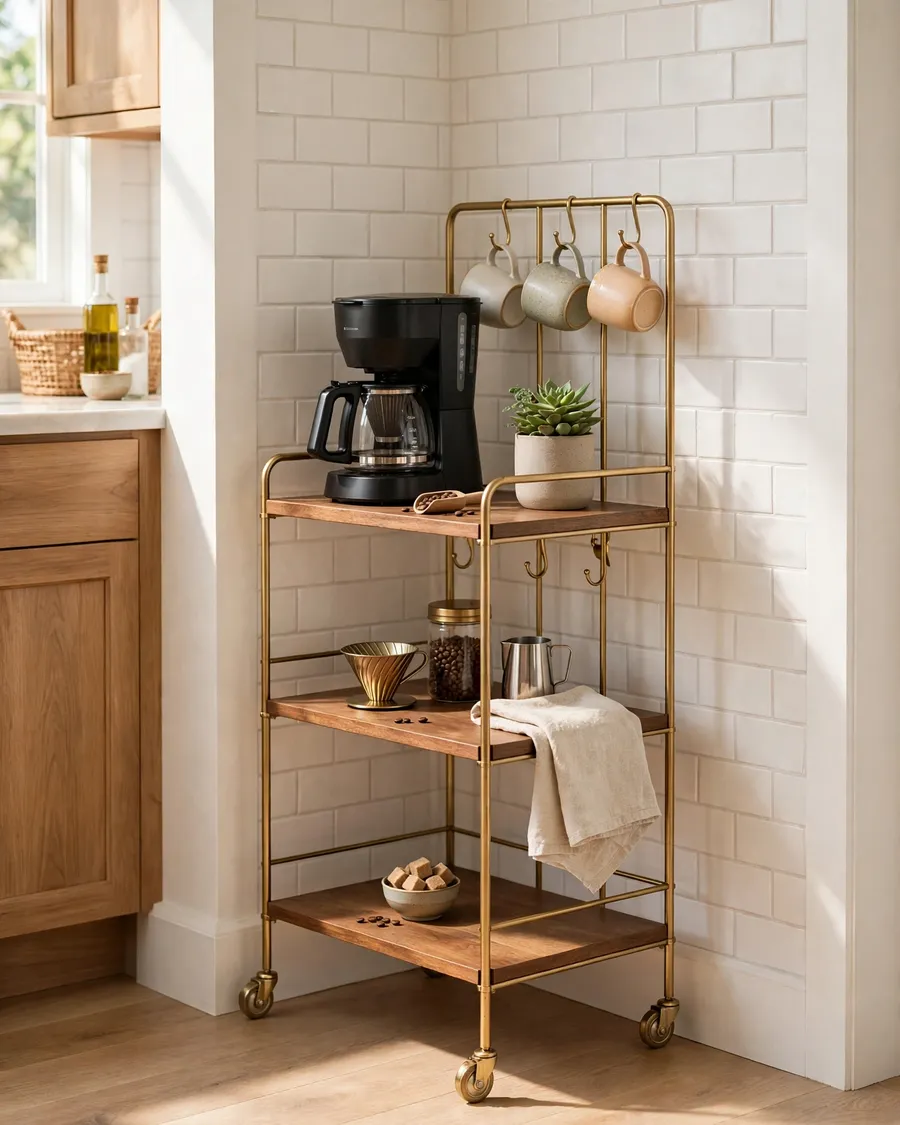
A bar cart turns a coffee station into furniture you can move. The top shelf holds the maker, the middle shelf holds mugs and beans, and the bottom shelf hides spares. Best for: renters and kitchens with no spare counter. Styling tip: hang two mugs from the cart frame to free shelf space. Pro tip: lock the casters once the cart is parked, and keep the cord short so nobody trips over it.
3. A Narrow Wall Nook

A wall nook between two cabinets is wasted space until a coffee bar claims it. A shelf 12 inches deep holds the maker, and a rail below takes the mugs. Best for: galley kitchens and awkward gaps. Styling tip: tile just the nook so it reads as a deliberate feature. Pro tip: measure the nook before buying — most compact makers are 10 to 12 inches wide, and the shelf must clear the lid.
4. One Floating Shelf, Styled Well

One shelf can carry a whole coffee bar when it is styled with intent. The maker sits below, mugs hang from hooks under the shelf, and a jar of beans finishes it. Best for: minimal kitchens and tight budgets. Styling tip: keep the shelf to five or six objects so it never looks crowded. Pro tip: mount the shelf 18 to 20 inches above the counter so tall mugs and the machine lid clear it easily.
5. A Coffee Tray That Corrals It All
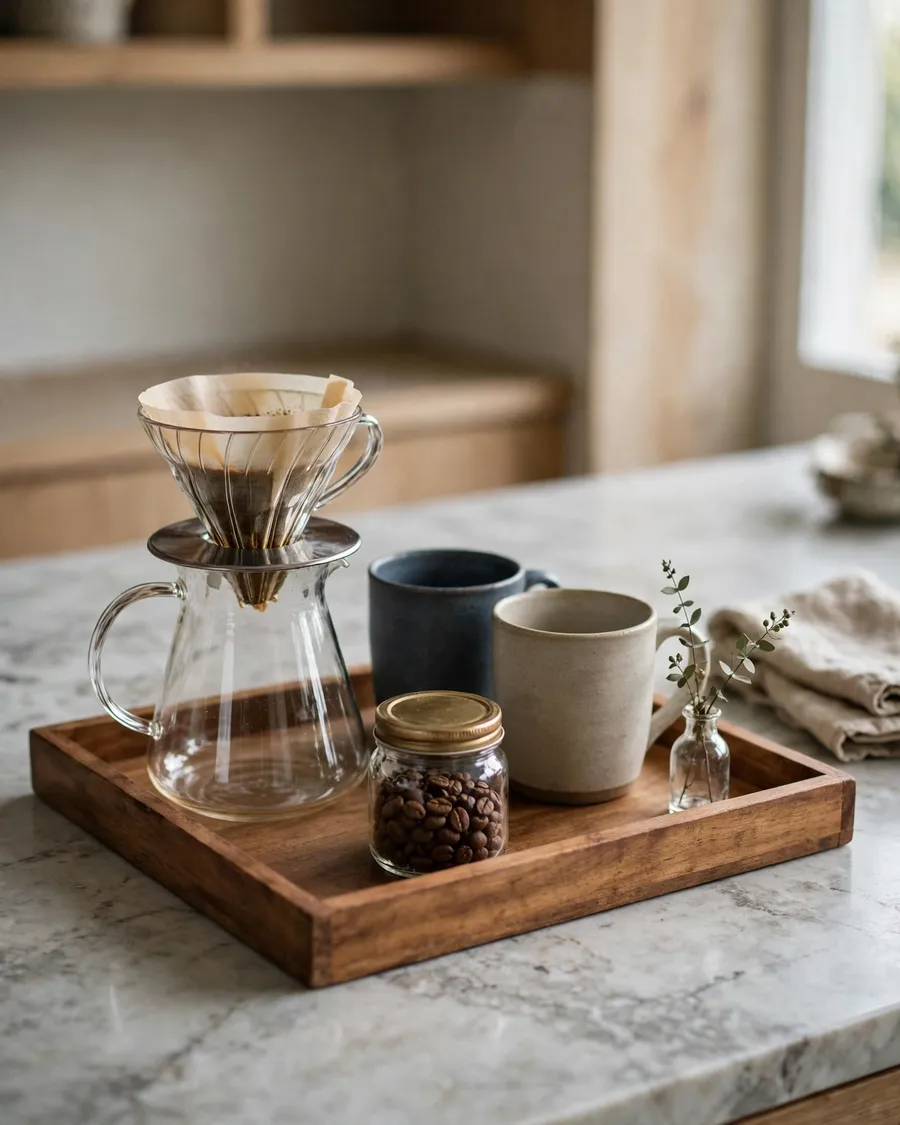
A tray is the cheapest coffee bar there is: everything sits inside it, and the counter stays clean around it. Pour-over gear, two mugs and a bean jar fit on one tray. Best for: shared counters and slow weekend mornings. Styling tip: pick a tray with handles so the whole bar moves in one trip. Pro tip: a tray 16 by 12 inches fits most makers and still leaves room for a cup beside it.
6. An Under-Cabinet Coffee Nook

An appliance garage hides the coffee maker behind a roll-up door and reveals it in seconds each morning. The machine lives on the counter, out of sight when closed. Best for: tidy kitchens where counters must stay clear. Styling tip: line the inside with the same backsplash tile for a finished look. Pro tip: leave 2 inches of air above the machine so steam escapes and the door never sticks.
7. A Slim Console Table Bar
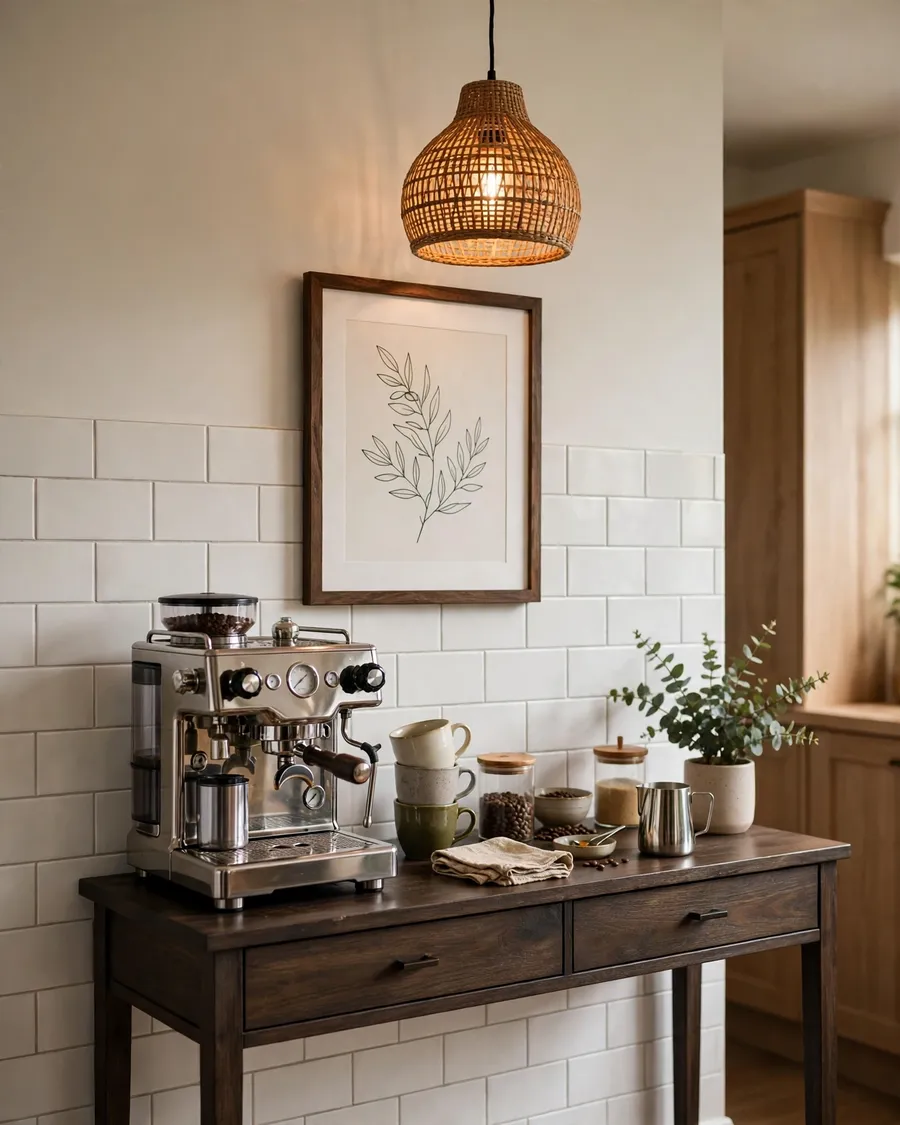
A console table 12 inches deep against a free wall makes a coffee bar without touching the kitchen counter at all. The machine sits on top, mugs stack below. Best for: open-plan kitchens and dining-room corners. Styling tip: hang one framed print above it to anchor the table to the wall. Pro tip: run a power strip behind the table legs so the cord stays hidden and the table can sit flush.
8. A Coffee Station Inside a Cabinet

Open a wall cabinet and the coffee bar is there; close it and the kitchen is calm again. Hooks under the shelf hold mugs, and a compact maker fits below. Best for: very small kitchens and households that dislike counter clutter. Styling tip: paint the cabinet interior a soft colour so it feels like a nook, not a cupboard. Pro tip: fit a small battery light inside the cabinet so early mornings do not need the big kitchen light.
Built-In and Cabinet Coffee Bars
9. A Built-In Cabinet With Pocket Doors
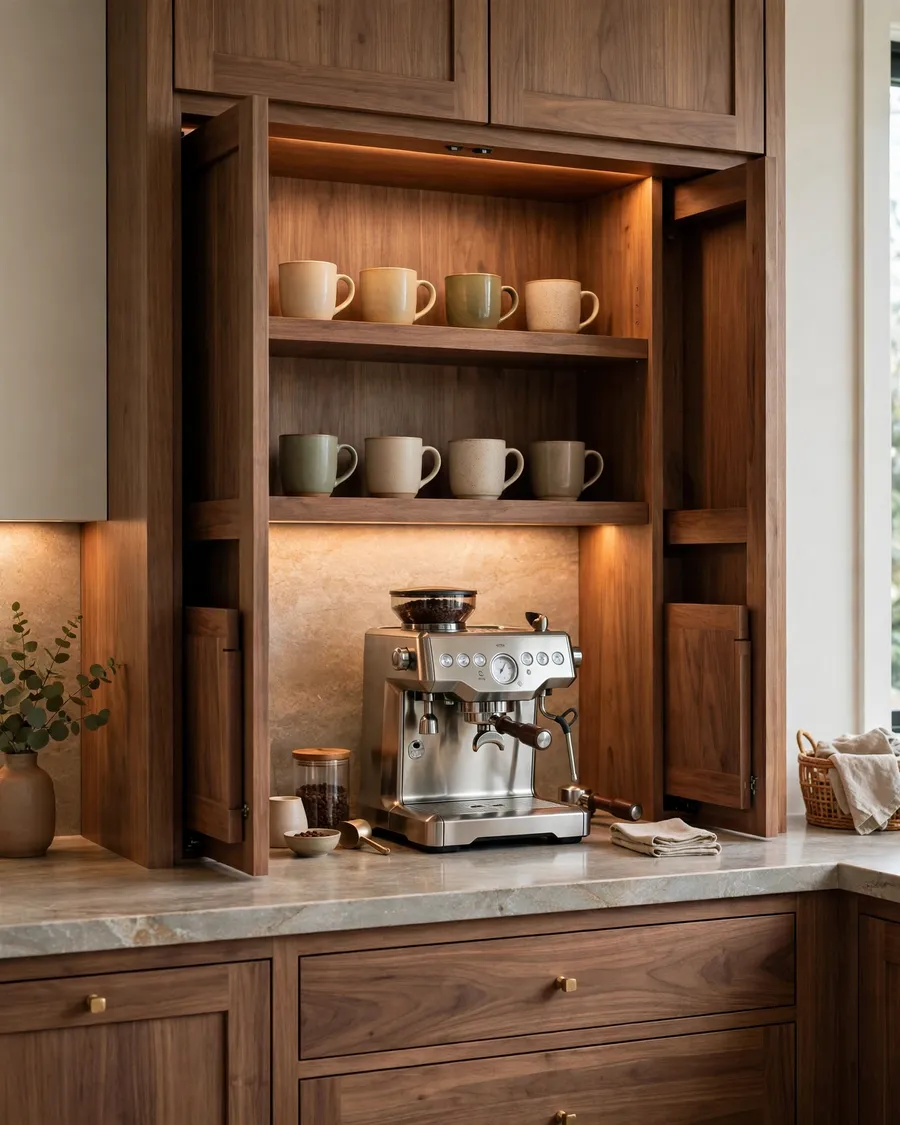
Pocket doors slide away and a full coffee bar appears; slide them back and it vanishes behind cabinet fronts. The machine, mugs and jars all live inside. Best for: new kitchens and remodels where a built-in is planned from the start. Styling tip: match the cabinet fronts to the rest of the kitchen so the bar disappears completely. Pro tip: ask for a power outlet inside the cabinet during the build — adding one later costs far more.
10. A Pantry Coffee Station

A pantry coffee station keeps beans, mugs and filters in one room, steps from the kitchen. The maker sits on a pantry counter, with shelves above for canisters. Best for: keen home baristas and big households. Styling tip: label the canisters so guests help themselves without asking. Pro tip: a pantry needs ventilation — a small gap under the door keeps steam from building up. If you are planning the storage, our kitchen pantry ideas show good shelf layouts.
11. A Hutch Turned Coffee Bar

An old hutch makes a coffee bar with real character: the top shelves display mugs, the counter holds the maker, and the cupboard below hides spares. Best for: vintage lovers and anyone hunting second-hand furniture. Styling tip: keep the hutch colour pale so the dark coffee gear stands out. Pro tip: seal the hutch top with a wipe-clean finish, because coffee rings appear within a week.
12. An Arched Cabinet Coffee Bar

An arched cabinet softens a kitchen and makes the coffee bar feel designed, not added. The curve frames the machine, and shelves inside hold the mugs. Best for: cottage and French-style kitchens. Styling tip: paint the arch the same colour as the cabinets so the shape, not the colour, does the work. Pro tip: arches need a taller opening — allow at least 30 inches of clear height above the machine.
13. A Kitchen Island Coffee Station

Claim one end of the island and the coffee bar faces the room, so brewing becomes part of the morning, not a chore hidden in a corner. Best for: large kitchens and families who gather at the island. Styling tip: keep the station to one end only, so the island still works for prep. Pro tip: a slim shelf 8 inches deep above the island end holds mugs without blocking the view across the room.
14. A Butler’s Pantry Coffee Bar

A butler’s pantry is the dream coffee bar: a whole small room for brewing, with cabinets, a sink and space to serve guests. Best for: keen entertainers and larger homes. Styling tip: add one open shelf for the prettiest mugs and keep the rest behind doors. Pro tip: a small sink in the pantry saves endless trips to the kitchen tap for rinsing and filling.
15. An Appliance Garage With a Lift

A lift shelf raises the coffee maker to counter height for brewing, then drops it back down and out of sight. It is the tidiest trick in this list. Best for: cooks who want clear counters but brew daily. Styling tip: keep the lift shelf free of jars so it moves smoothly. Pro tip: check the lift’s weight limit before buying a machine — most lifts carry 25 to 30 pounds, and a full espresso machine is close to that.
16. A Pull-Out Drawer Coffee Station
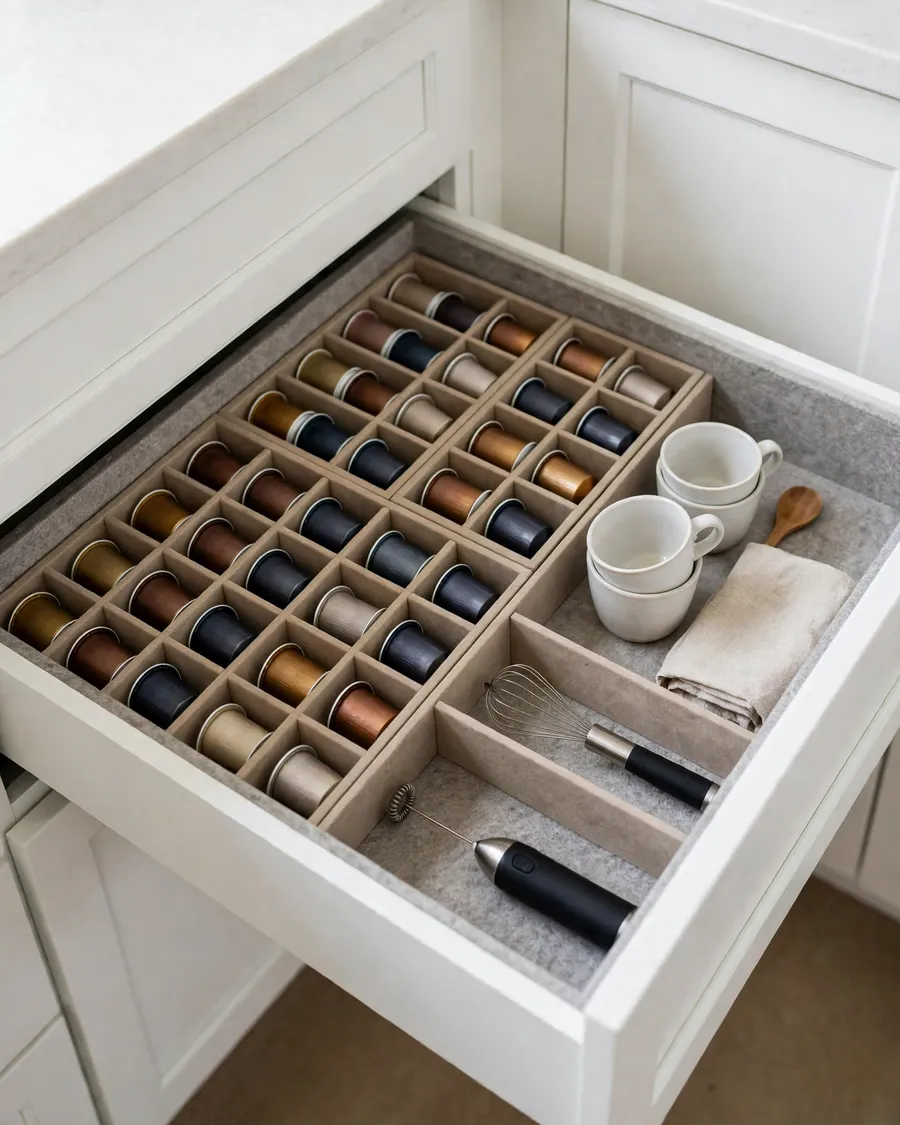
A deep drawer fitted with dividers becomes a coffee station that opens and closes like a secret. Pods sit in rows, mugs in a second section, and the frother beside them. Best for: pod-machine households and very tidy kitchens. Styling tip: use one divider per flavour so the drawer reads at a glance. Pro tip: the drawer must sit within arm’s reach of the machine, or the station slows every morning down.
Farmhouse and Rustic Coffee Bars
17. A Rustic Wood Hutch

A rustic hutch with a worn finish brings instant warmth to a coffee corner. The wood does the decorating, so the styling can stay simple: maker, mugs, jars. Best for: country kitchens and cabins. Styling tip: mix enamel mugs with one or two ceramic ones so the shelf feels collected, not matched. Pro tip: wax the hutch top twice a year — coffee spills stain raw wood fast.
18. A Farmhouse Shiplap Coffee Bar

White shiplap behind a wooden counter is the farmhouse coffee bar in one sentence. The wall adds texture, the wood adds warmth, and black hardware ties it together. Best for: farmhouse kitchens and white-on-wood schemes. Styling tip: hang the mugs from a black rail so they echo the hardware. Pro tip: shiplap boards run horizontally here — vertical boards make a narrow bar feel taller instead.
19. A Vintage Dresser Coffee Bar

A vintage dresser with its top drawer removed makes a coffee bar full of storage: mugs in the drawers, the maker on top, and a mirror above. Best for: thrifters and bedrooms that borrow a coffee corner. Styling tip: leave one drawer half open with folded napkins inside for a lived-in look. Pro tip: fit a heat-proof mat under the maker — old dresser tops mark easily under a hot machine.
20. Reclaimed Wood Shelves
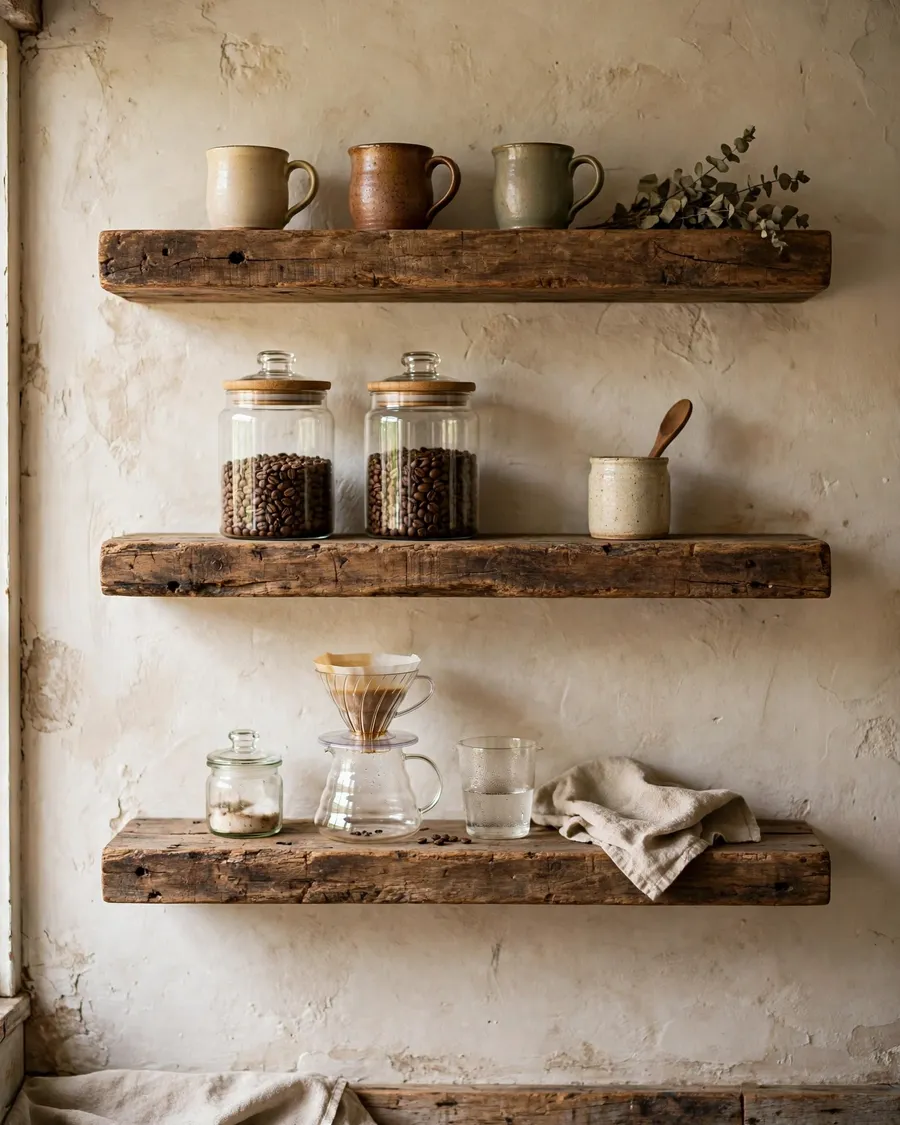
Reclaimed wood shelves carry the whole coffee bar: thick boards, visible grain, and brackets that look handmade. Mugs above, maker below. Best for: rustic and industrial kitchens. Styling tip: vary the shelf contents — jars on one, mugs on the next — so the wood stays the star. Pro tip: reclaimed boards must be sealed before they hold food and drink. For more shelf styling, see our open shelving kitchen ideas for layouts that work above a coffee bar.
21. A Black and Wood Farmhouse Bar
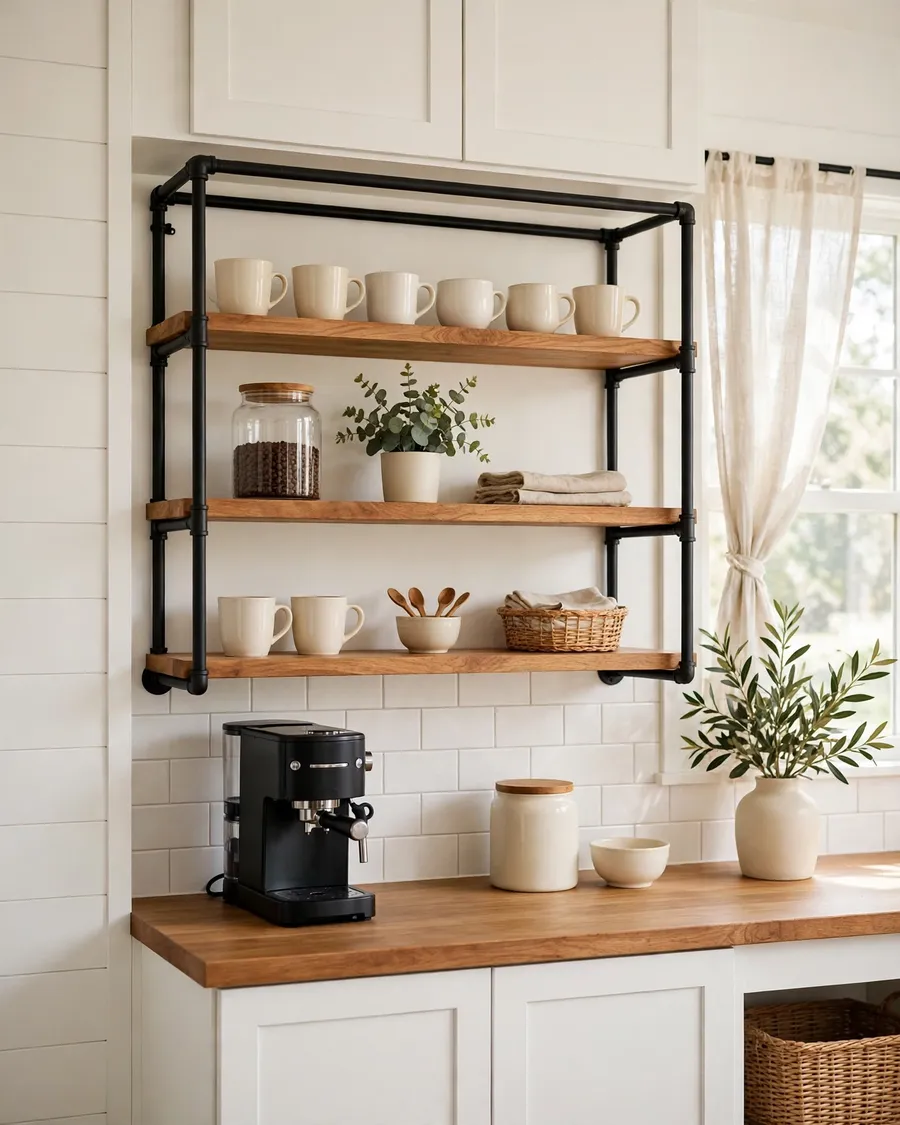
Black metal and warm wood is the farmhouse pairing that never dates. A metal frame with wood shelves holds the maker and mugs, and cream ceramics soften the black. Best for: modern farmhouse kitchens. Styling tip: keep the metal matte, not shiny, so fingerprints never show. Pro tip: a frame 24 inches wide fits most makers with room for a jar on each side.
22. A Whitewashed Brick Backdrop

Whitewashed brick gives a coffee bar a cafe wall without a single new purchase on the counter. The texture does the work while the styling stays calm. Best for: loft kitchens and brick-walled homes. Styling tip: keep the shelves wood-toned so the wall and the shelves do not compete. Pro tip: seal whitewashed brick with a matte sealer — coffee splashes wipe off sealed brick and stain raw brick.
23. Galvanized and Enamel Farmhouse Style

Galvanized trays, enamel mugs and a tin or two give a coffee bar honest farmhouse character on a small budget. The metal ages well and wipes clean. Best for: country kitchens and budget makeovers. Styling tip: limit the metal to two or three pieces so the bar reads farmhouse, not industrial. Pro tip: enamel mugs chip at the rim — keep one or two spares so a chip never ruins the set.
24. A Rustic Ladder Shelf Coffee Bar
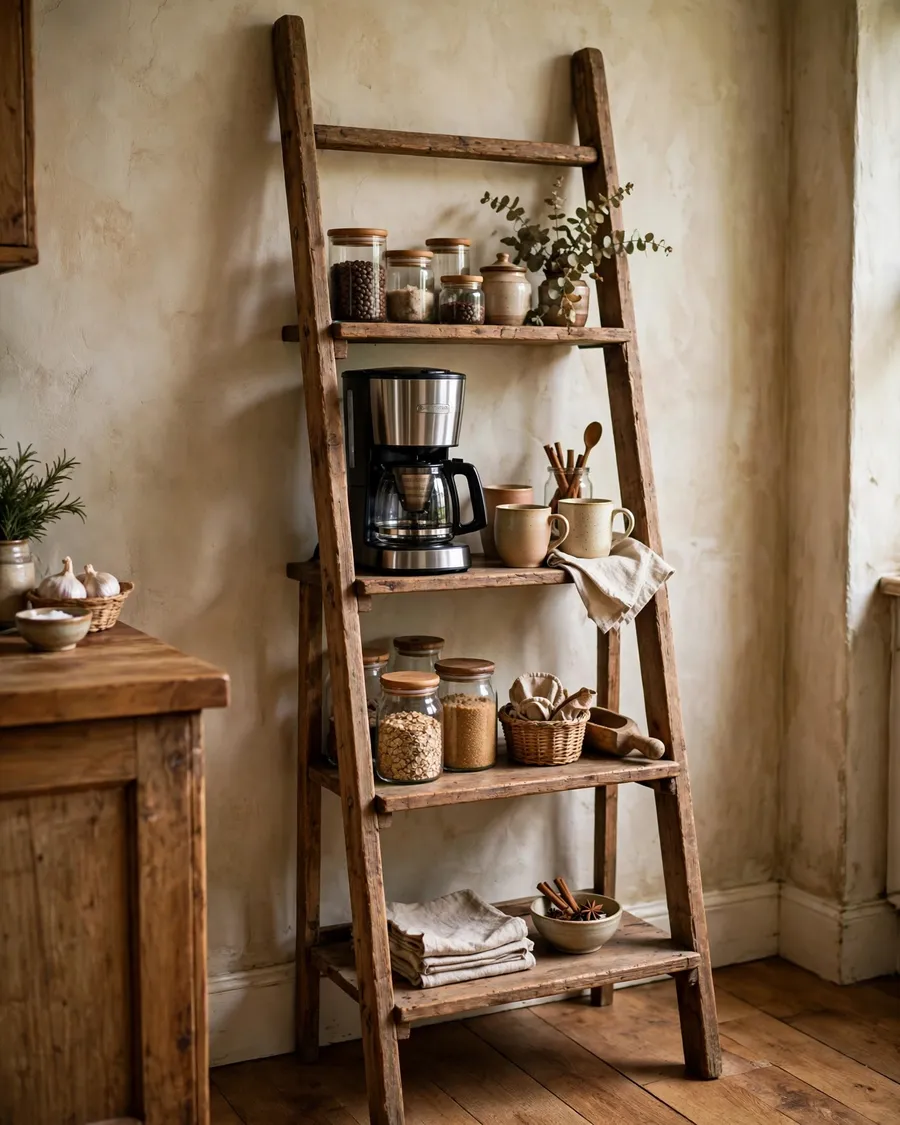
A leaning ladder shelf turns a blank wall into a coffee bar with no drilling at all. The maker sits on the deepest shelf, mugs and jars above. Best for: renters and farmhouse corners. Styling tip: put the heaviest items on the lowest shelf so the ladder never leans forward. Pro tip: rubber feet on the ladder base stop it sliding on tile or wood floors.
Modern and Minimal Coffee Bars
25. A Matte Black Modern Bar

Matte black cabinets and a black machine make a coffee bar that looks like a design choice, not an appliance zone. One plant is the only colour needed. Best for: modern kitchens with dark finishes. Styling tip: add one warm wood tray so the black does not feel cold. Pro tip: matte black shows dust and fingerprints — a quick wipe each morning keeps it looking new.
26. A White and Oak Minimalist Bar

White cabinets, pale oak and one machine: this is the coffee bar for people who want less, done well. Empty counter is part of the design. Best for: minimal homes and bright small kitchens. Styling tip: keep only the machine, two mugs and one jar on show — everything else lives in a cupboard. Pro tip: a white machine hides limescale marks far better than a black one in hard-water areas.
27. A Sage Green Cabinet Bar
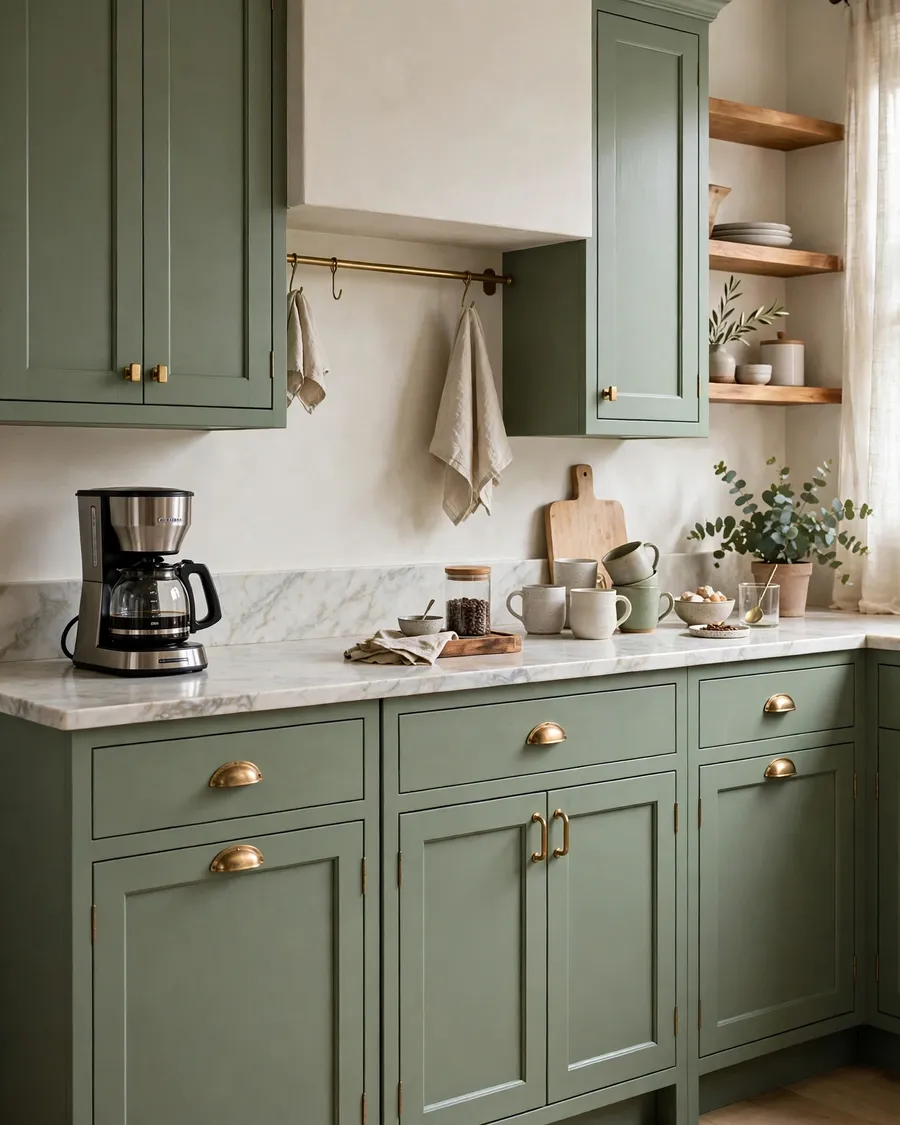
Sage green cabinets make a coffee bar feel calm and current at once. Brass handles warm the green, and cream mugs keep it soft. Best for: kitchens that want colour without drama. Styling tip: repeat the sage on one small item, like a canister lid, so the colour feels planned. Pro tip: sage reads differently in warm and cool light — test the paint on the actual wall before committing.
28. A Navy Cabinet Coffee Bar

Navy cabinets turn a coffee corner into a jewel box: dark, rich, and flattered by brass and white mugs. Best for: moody kitchens and classic homes. Styling tip: keep the counter pale marble so the navy does not swallow the light. Pro tip: navy shows dust on horizontal surfaces, so wipe the counter each night and the bar always looks fresh.
29. A Glass-Front Cabinet Bar

Glass-front cabinets display the mugs like a shop window, so the coffee bar looks styled even when you do nothing. The maker sits below, ready to go. Best for: collectors with pretty mugs. Styling tip: keep the display to one colour family so the glass reads calm, not busy. Pro tip: glass doors need a wipe every week or two, or steam marks build up and dull the display.
30. A Marble Countertop Bar
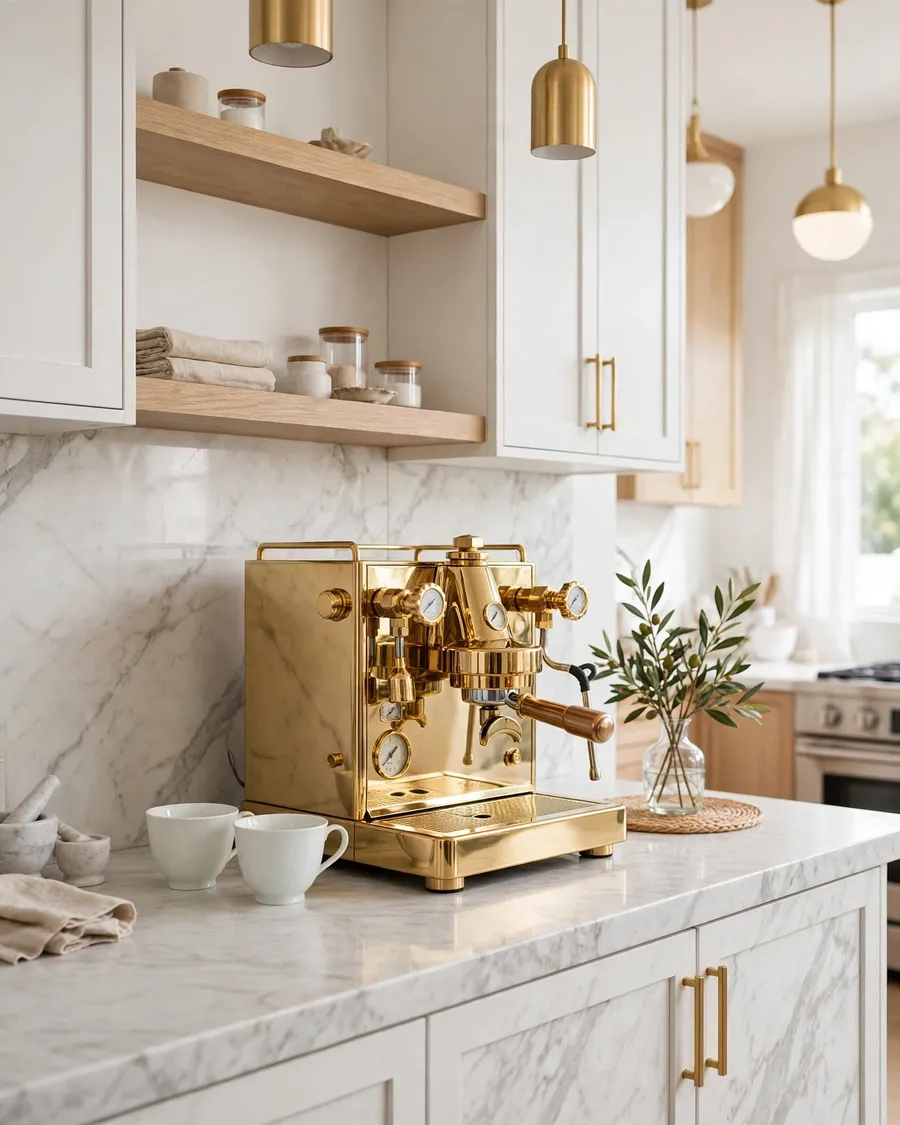
A marble counter and backsplash make even a simple machine feel luxurious. The stone is the decoration, so the styling stays quiet: two cups, one vase. Best for: kitchens with stone already in place. Styling tip: keep acids like lemon far from the marble — they etch it. Pro tip: seal marble every six to twelve months, and wipe coffee spills at once so they never stain.
31. Brass-Accent Modern Bar

Brushed brass rails, a brass tap and warm cabinetry make a coffee bar that glows without glitter. The metal is the jewellery of the room. Best for: modern kitchens that want warmth. Styling tip: match the brass finish across rail, tap and handles — mixed brasses look accidental. Pro tip: unlacquered brass darkens with age; lacquered brass stays bright, so pick the finish that suits how much patina you like.
32. A Monochrome Black-and-White Bar
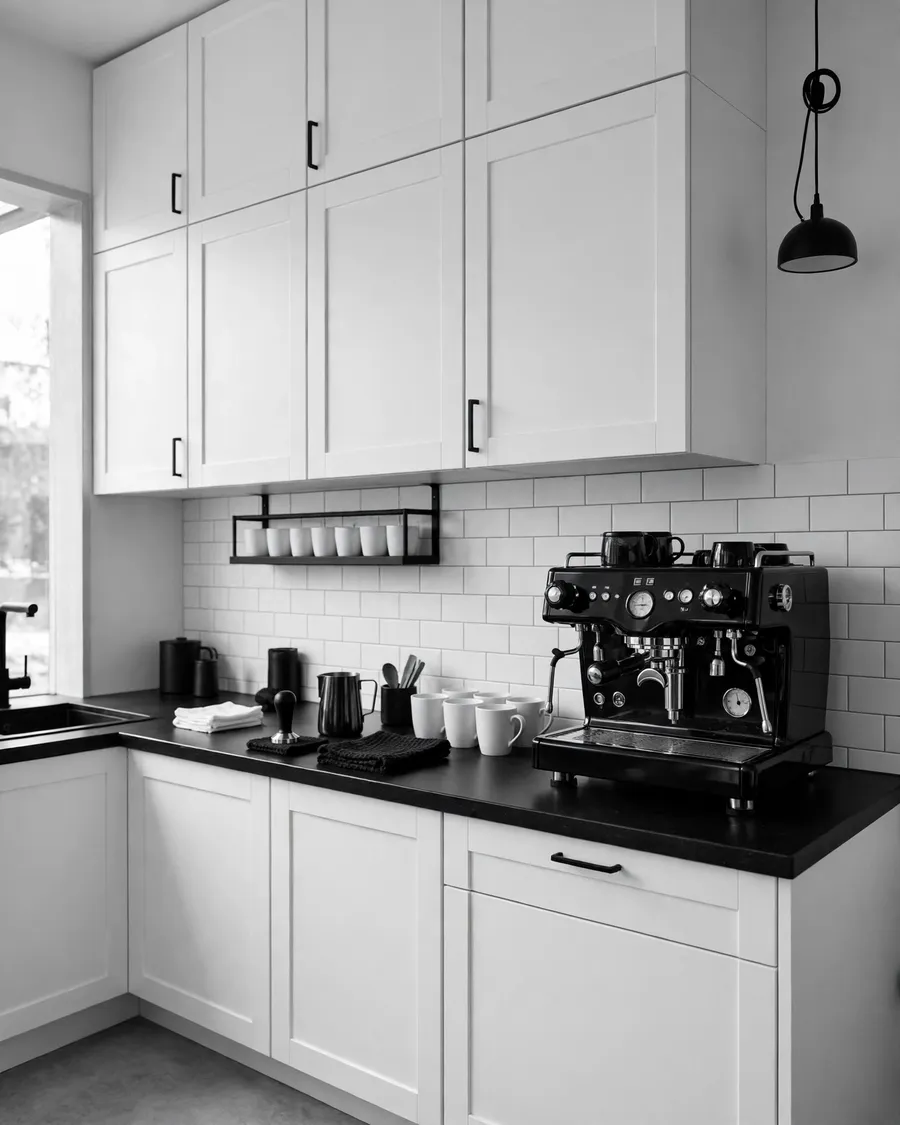
Black and white is the coffee bar that always matches the kitchen, because it matches everything. White cabinets, a black counter, and a black machine do it all. Best for: renters and anyone who redecorates often. Styling tip: add texture — a woven mat or a wooden tray — so the two colours do not feel flat. Pro tip: a black countertop shows every crumb, so a small brush beside the machine earns its place.
Cafe-Style and Fun Coffee Bars
33. A French Cafe Bistro Corner

A round marble table, two bistro chairs and an espresso machine turn a corner into a Paris cafe. Breakfast becomes an occasion, not a rush. Best for: romantics and slow weekend mornings. Styling tip: a striped awning or a cafe curtain over the window sells the theme in one move. Pro tip: a table 24 inches across seats two comfortably and still fits a tight corner.
34. An Espresso Bar With a Chalkboard Menu

A chalkboard menu above the espresso machine makes the bar feel like a real cafe — and lets you list the day’s drinks. Best for: espresso lovers and households with guests. Styling tip: write the menu in chalk and change it with the seasons. Pro tip: seal the chalkboard with a fixative spray after writing, or the first steam from the machine will smudge it.
35. A Hot Cocoa and Coffee Bar for the Family

One bar, two drinks: coffee for the adults, cocoa for the kids, with marshmallows and sprinkles in jars between them. Best for: families and winter weekends. Styling tip: give the cocoa its own shelf so the kids can reach it safely. Pro tip: keep the kettle and the cocoa jars on the same side of the bar, away from the hot machine.
36. A Seasonal Rotating Coffee Bar

A coffee bar that changes with the seasons never gets boring: autumn leaves and cinnamon now, pine and peppermint in winter, fresh herbs in spring. Best for: decorators who love a refresh. Styling tip: change only the top shelf and one jar — the machine and mugs stay put. Pro tip: store each season’s small props in one labelled box so the swap takes ten minutes.
37. A Coffee and Breakfast Bar Combo

Pair the coffee maker with croissants, fruit and plates, and the coffee bar becomes the breakfast bar. Mornings run from one spot. Best for: busy households and weekend hosts. Styling tip: keep breakfast foods on a tray so crumbs never reach the machine. Pro tip: place the toaster at least 12 inches from the coffee maker so heat and steam do not fight each other.
38. A Tea and Coffee Duo Bar
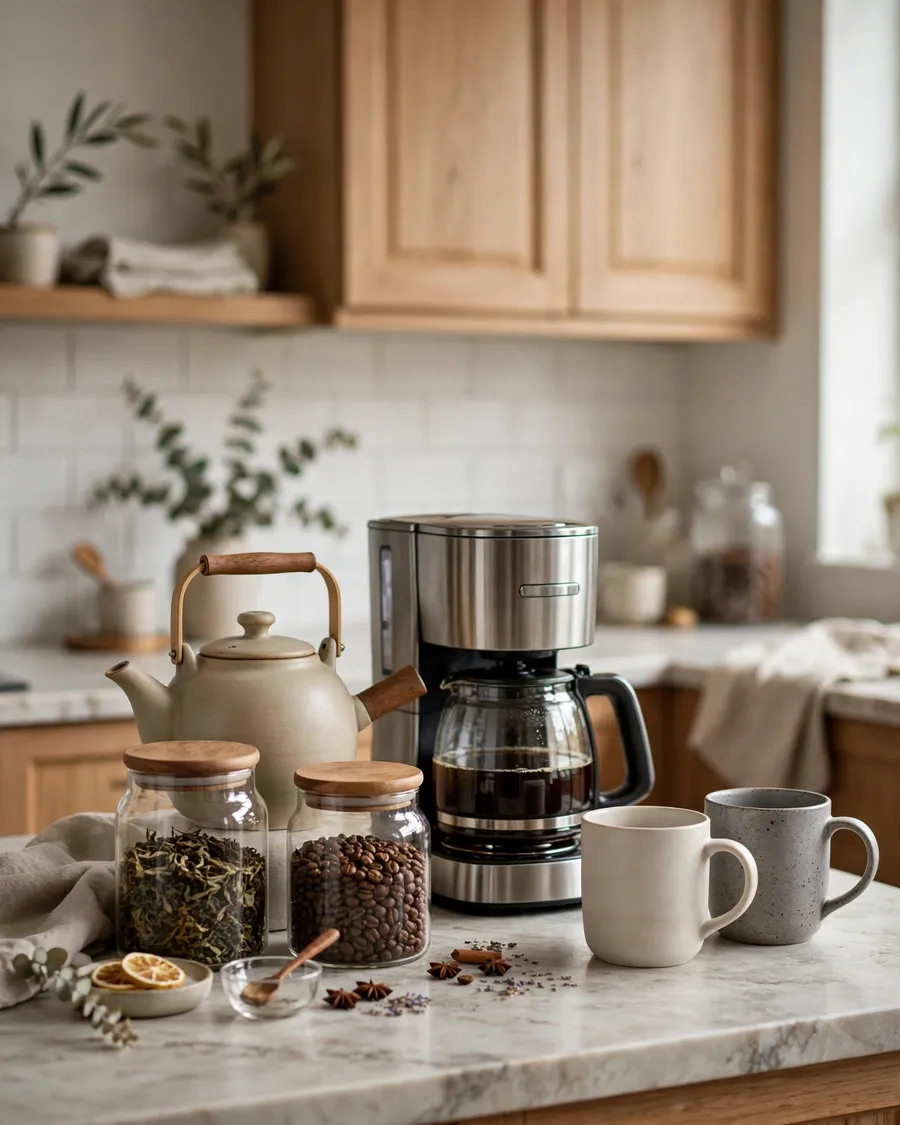
A teapot beside the coffee maker means every guest finds their drink. Two jar sets — tea and beans — keep the bar fair to both. Best for: mixed households and keen hosts. Styling tip: use two mug styles, one for tea and one for coffee, so guests choose by sight. Pro tip: a kettle with a temperature control serves green tea properly without a second gadget.
39. An Outdoor Patio Coffee Bar
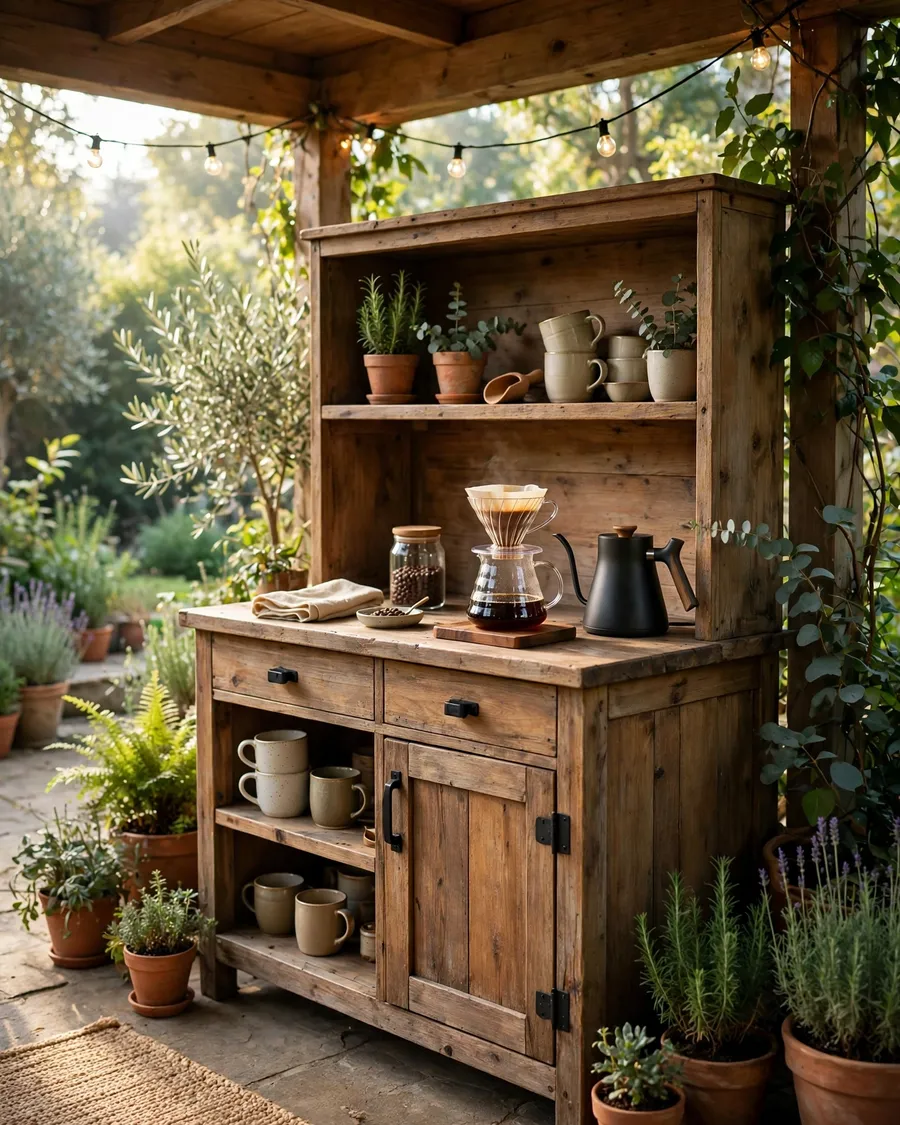
A covered patio cabinet with a pour-over set moves coffee outside for the warm months. Mornings on the porch taste better. Best for: homes with a covered porch or patio. Styling tip: string lights above the cabinet make evening coffee feel special too. Pro tip: bring the beans and the grinder indoors at night — damp air dulls beans faster than any other mistake.
40. Open Shelves and an Art Wall

Open shelves plus one big framed print turn a coffee bar into a gallery wall that happens to serve coffee. The art sets the mood. Best for: art lovers and plain kitchen walls. Styling tip: hang the print 6 to 8 inches above the top shelf so the two read as one arrangement. Pro tip: choose art with a warm tone that matches the wood, or the wall will feel split in two.
Coffee Bar Care and Upkeep
A coffee bar stays lovely with small habits: wipe the counter and machine daily, wash the drip tray each morning, and descale the machine every one to three months — monthly in hard-water areas. Keep beans in a sealed jar away from heat and light, and empty the jar before refilling so old beans never sit at the bottom. Check cords and outlets twice a year, and reseal wood or marble tops on schedule. For more inspiration on styling the shelves around your bar, see the Elle Decor coffee bar ideas gallery.
Frequently Asked Questions
How much counter space does a coffee bar need?
A small coffee bar needs about 24 inches of counter width — enough for a compact machine, a jar of beans and a mug. A comfortable setup takes 36 inches, which leaves room for a tray, a grinder and a second mug. Measure your machine first, then add 6 inches on each side for cups and pouring. If the counter is shorter than 24 inches, use a cart or a console table instead of squeezing the machine in.
What should I put on a coffee bar?
Start with the machine, your beans or pods, two or three mugs, and a jar for sugar or spoons. Add a small tray to hold it all together, a grinder if you brew fresh beans, and one decorative piece like a plant or a framed print. Keep the rest — spare filters, extra mugs, cleaning supplies — in a cupboard below. A coffee bar works best with five or six objects on show and everything else hidden.
Can I make a coffee bar in a small kitchen?
Yes — small kitchens suit coffee bars well because the bar only needs a corner, a cart or one shelf. A rolling cart works in a gap as narrow as 18 inches, a tray corral turns any counter corner into a station, and a cabinet or appliance garage hides the whole setup. Choose a compact machine, keep mugs to three or four, and store spares elsewhere. The bar should earn its space every morning.
How do I keep a coffee bar from looking cluttered?
Give every item a home and keep the count low: machine, beans, mugs, one tray, one decorative piece. Use closed storage below for spares, and group small things on the tray so the eye reads one shape instead of ten. Wipe the counter nightly, and remove anything you have not used in a week. If a new jar arrives, an old one leaves — that one rule keeps a coffee bar tidy for years.
What is the best coffee maker for a home coffee bar?
The best maker is the one that matches how you actually drink coffee. A drip machine suits households that brew a full pot each morning, a pod machine suits single cups and busy schedules, and an espresso machine suits milky drinks and keen hobbyists. Measure the machine before buying: most need 12 to 18 inches of width and 15 to 17 inches of height, plus clearance to open the lid and fill the tank.
How do I clean and maintain a coffee bar?
Wipe the counter and machine daily, wash mugs and the drip tray each morning, and descale the machine every one to three months depending on your water — hard water needs descaling monthly. Empty and rinse the bean jar when refilling, wash the tray weekly, and check the cord and outlet for wear twice a year. A clean machine brews better coffee, lasts longer, and keeps the whole bar looking cared for.
Final Thoughts
A coffee bar is one of the smallest projects with the biggest daily payoff. Start with one idea that fits your kitchen — a tray, a cart or a shelf — and live with it for a week before adding anything. Keep the count of objects low, the beans fresh and the counter wiped, and the corner will earn its place every morning. Save this guide for your next kitchen refresh, and try one idea this weekend.
