
Open shelving kitchen design swaps closed cabinets for shelves that show off your prettiest dishes — and instantly makes the room feel lighter. The trick is styling with intent: breathing room, a clear colour story, and only things you actually use.
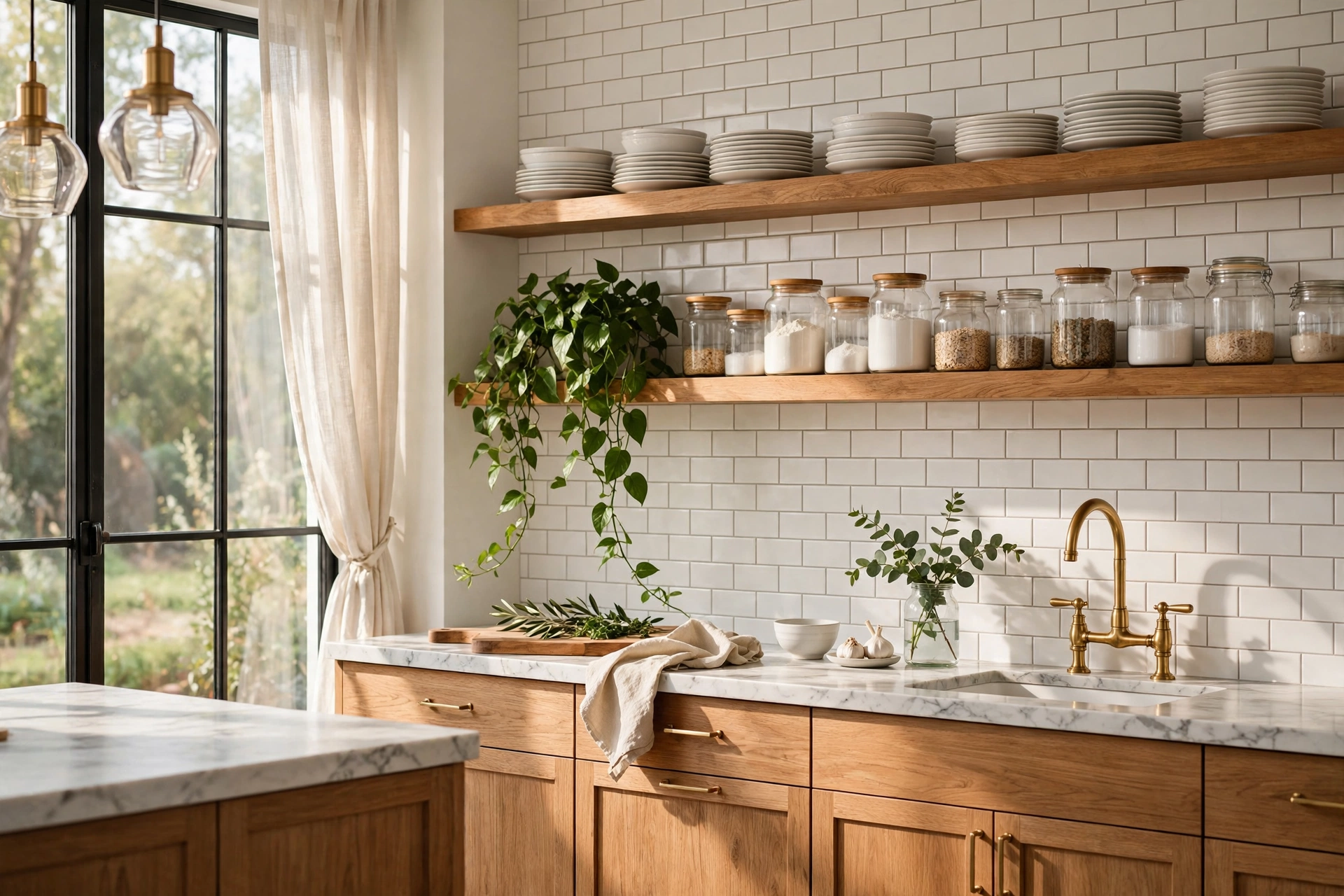
Why You'll Love These Open Shelving Kitchen Ideas
Open shelves put everyday dishes within arm's reach, so cooking flows faster. They cost far less than new upper cabinets and let a backsplash or paint colour shine. Best of all, they force a gentle edit: when everything is visible, you keep only the pieces you love.
How to Choose Your Shelving Style
Start with your kitchen's bones: warm wood suits farmhouse rooms, slim white or black metal fits modern ones. Keep shelves 10–12 inches deep and leave 15–18 inches between them. If a full wall feels like too much, replace one cabinet run first. When shelves join a bigger refresh, plan them with the rest of the room, as in these kitchen remodel ideas. Designers also note open shelving can make a compact kitchen feel larger, a point Homes & Gardens makes here.
Warm Wood and Rustic Ideas
1. Chunky Reclaimed Oak Shelves

Thick oak boards warm a plain kitchen. Best for: farmhouse rooms. Pro tip: seal with matte finish.
2. Live-Edge Walnut Shelves

A natural-edge walnut slab becomes a feature. Best for: modern rustic kitchens. Pro tip: spans under 36 inches.
3. White Farmhouse Shelves with Black Brackets

White boards on black brackets add cottage charm. Best for: farmhouse kitchens. Pro tip: match brackets to your tap.
4. Rustic Wood with Industrial Pipe Brackets
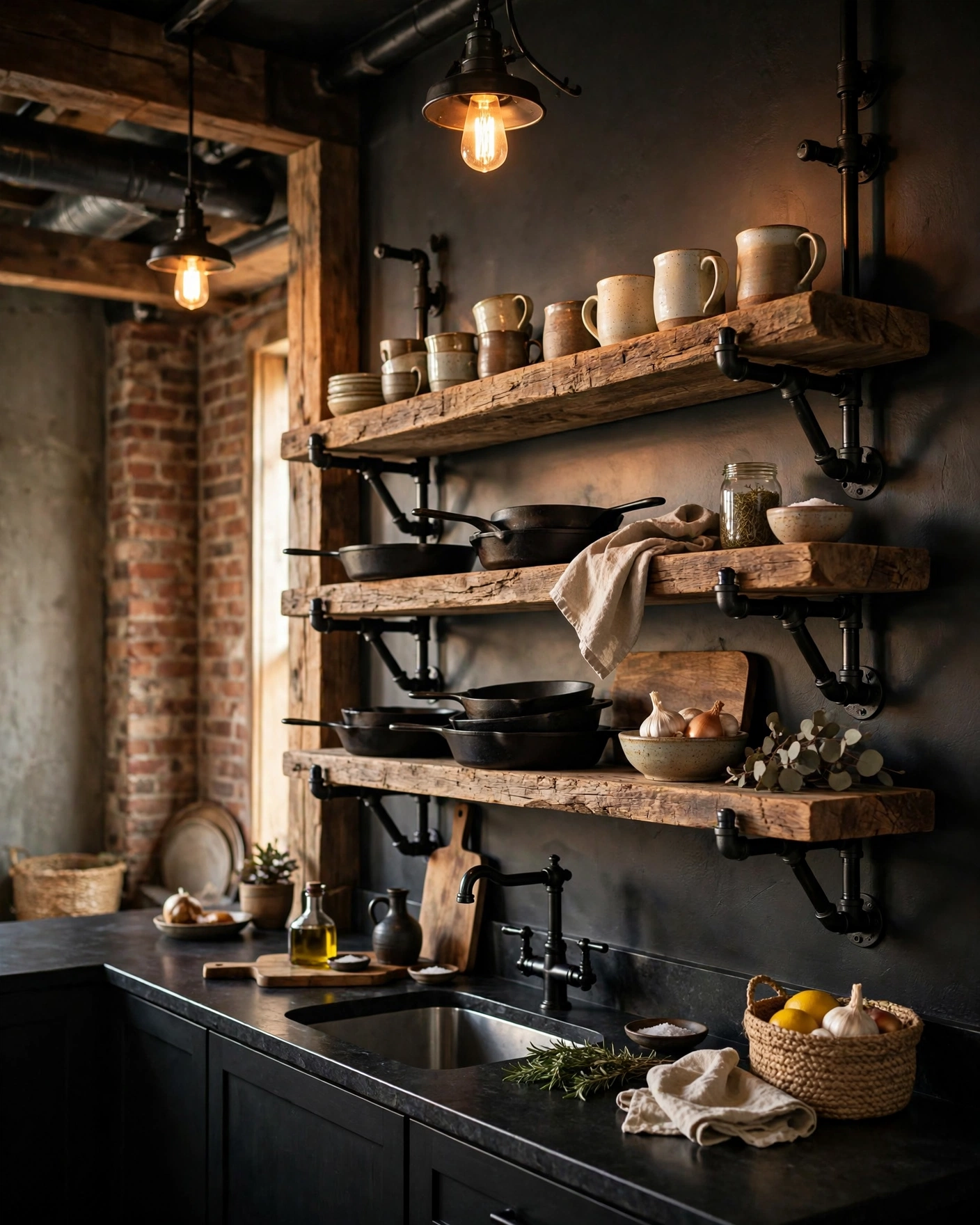
Rough timber on iron pipes adds factory character. Best for: loft kitchens. Pro tip: level pipes before loading.
5. Butcher-Block Shelves
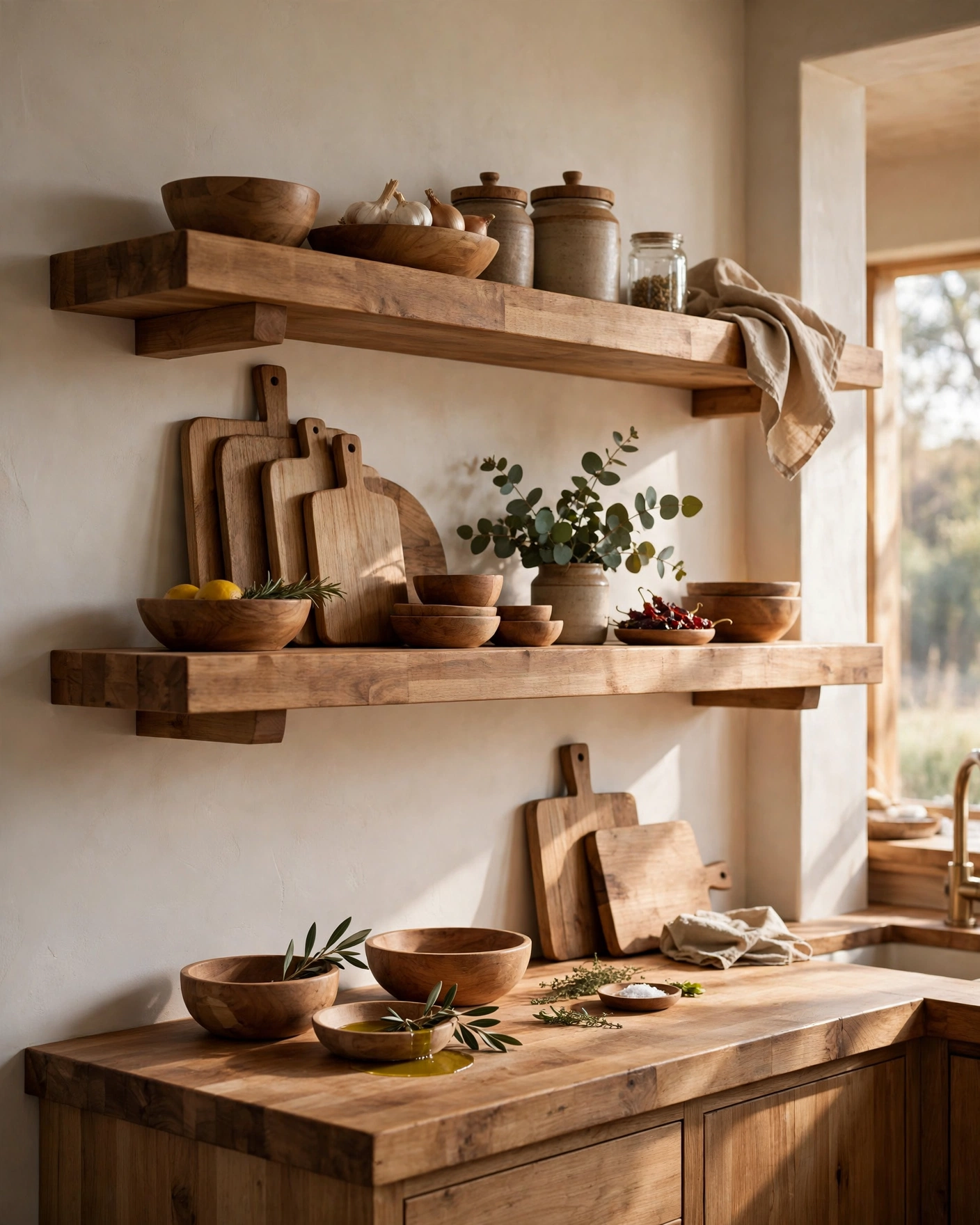
Butcher-block boards echo the worktop. Best for: wood-counter kitchens. Pro tip: oil twice a year.
6. Weathered Barn-Wood Shelves

Grey barn wood adds texture to new kitchens. Best for: cottage rooms. Pro tip: sand lightly to avoid splinters.
7. Warm Pine Shelves in a Cottage Kitchen

Honey pine softens white walls and base cabinets. Best for: small cottages. Pro tip: knotty pine hides marks.
8. Dark Walnut Shelves Against White Tile

Deep walnut pops against white subway tile. Best for: high-contrast kitchens. Pro tip: keep dishes pale.
Clean, Modern and Minimal Ideas
9. Slim White Floating Shelves
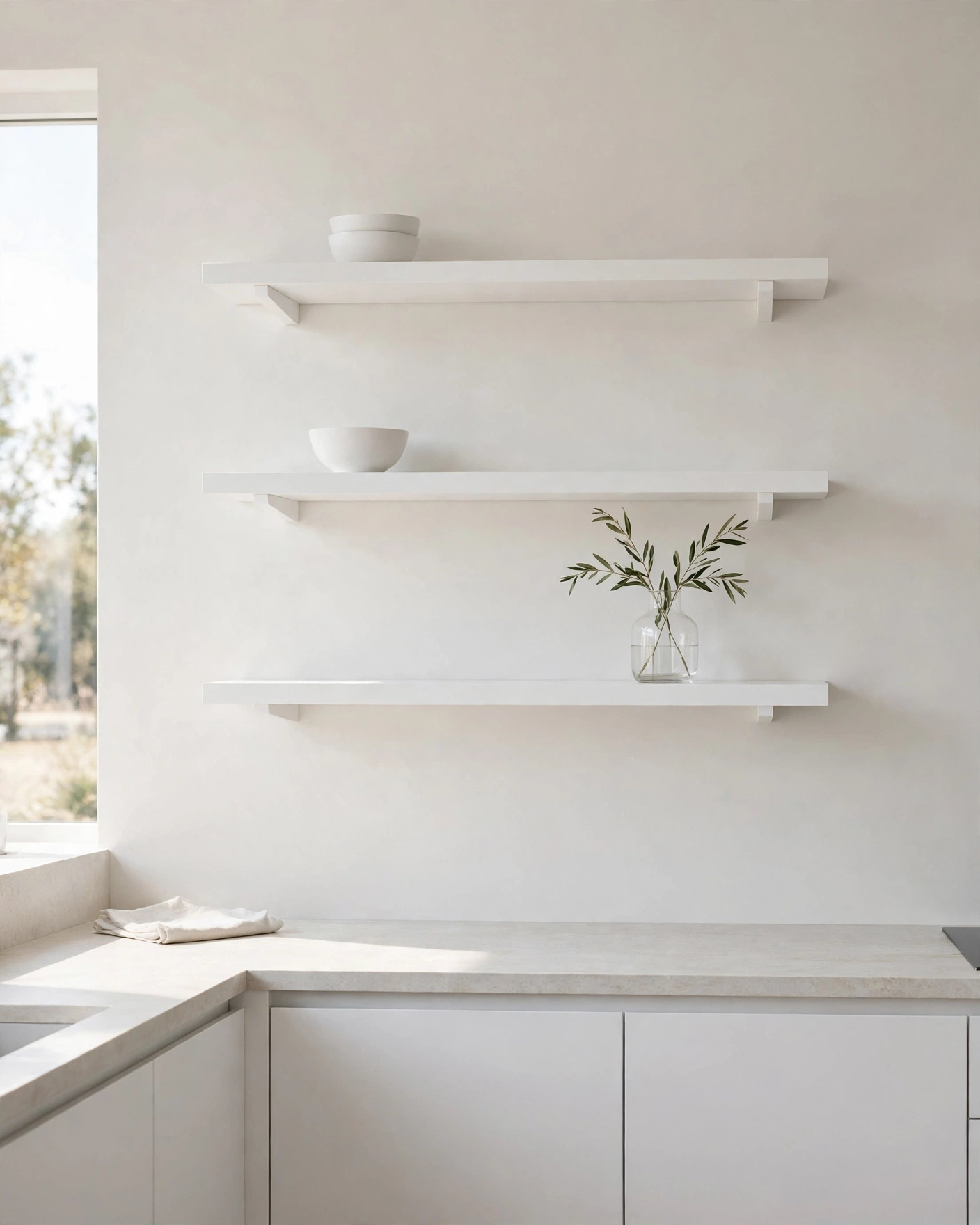
Hidden brackets make white shelves float. Best for: minimalist rooms. Pro tip: fix into wall studs.
10. Matte Black Metal Shelves
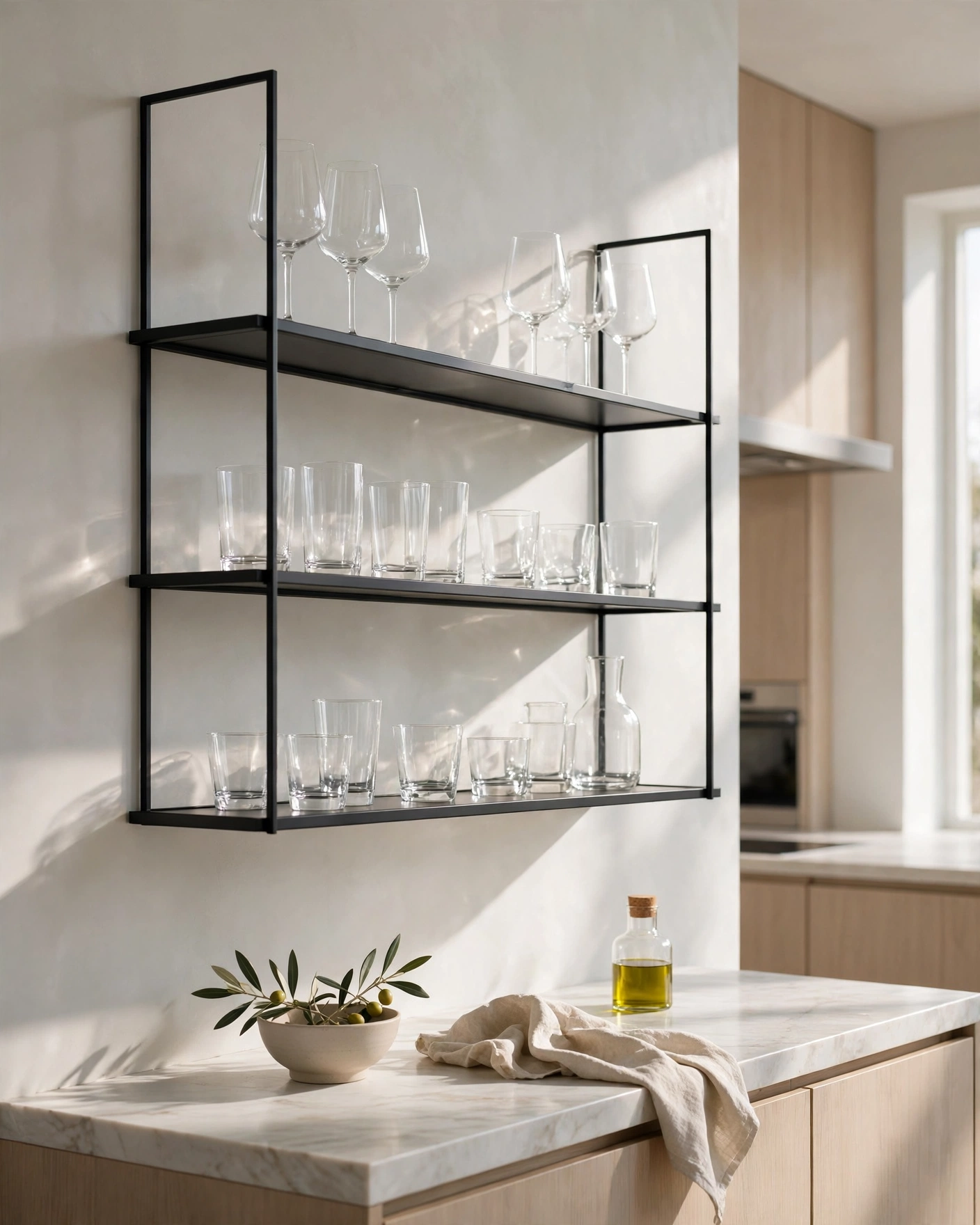
Black steel shelves add graphic lines to pale walls. Best for: contemporary kitchens. Pro tip: display light-catching glassware.
11. Glass Shelves That Disappear
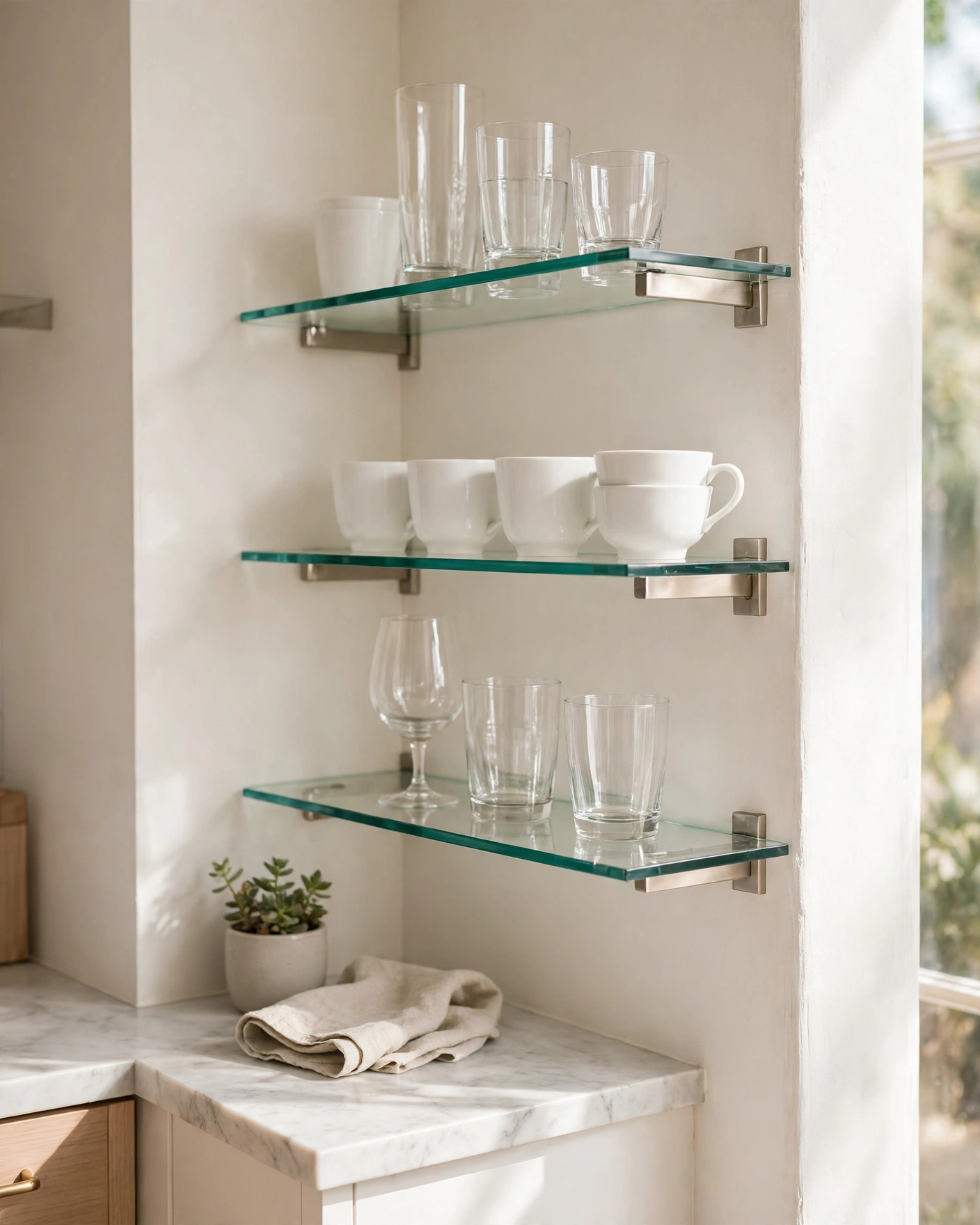
Clear glass holds essentials without blocking the wall. Best for: tiny kitchens. Pro tip: tempered glass, 10mm minimum.
12. Marble-Backed Open Shelves
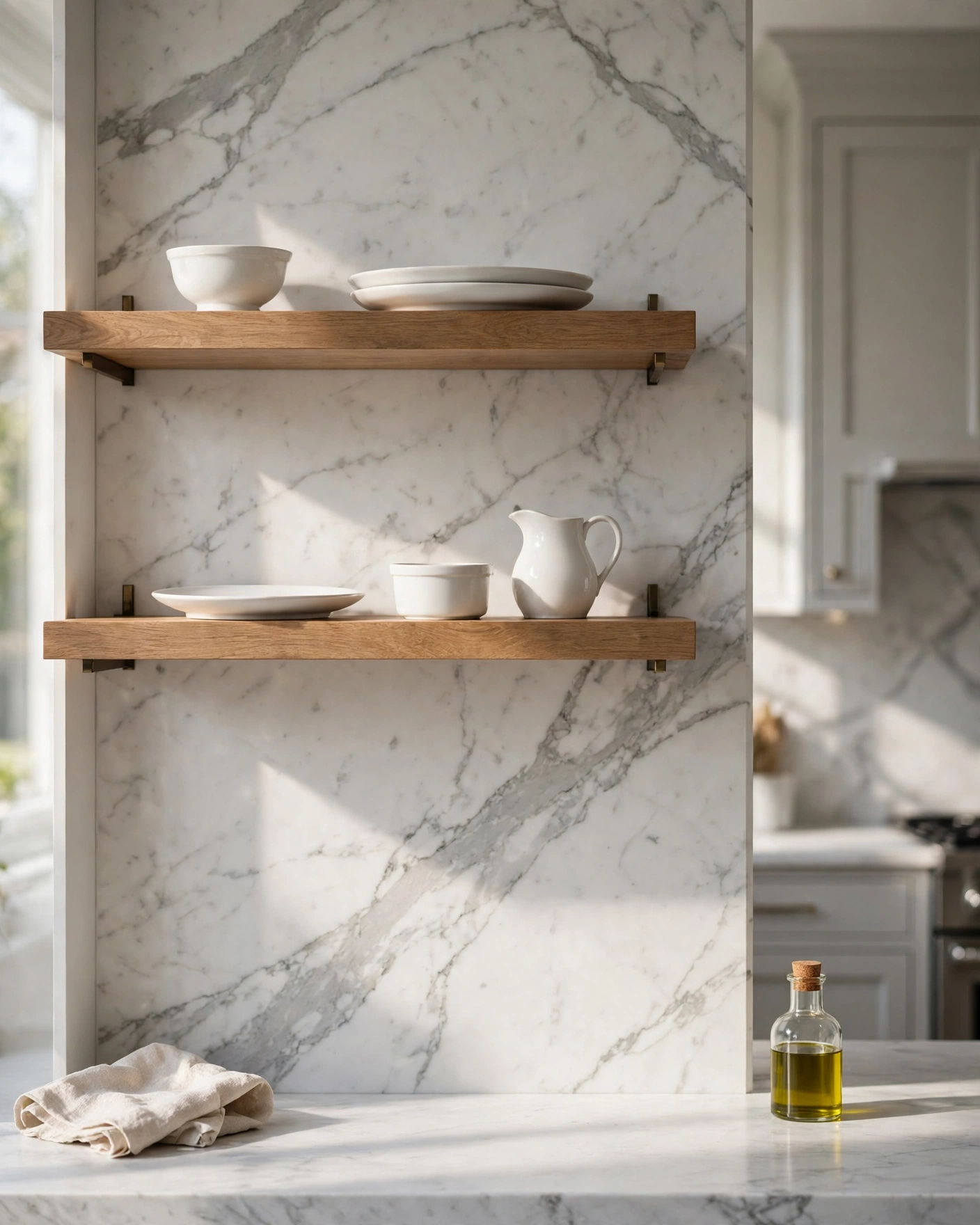
Shelves over marble turn the backsplash into decor. Best for: luxury kitchens. Pro tip: keep styling simple — see these kitchen backsplash ideas.
13. Two-Tone Shelves

Paint shelves the colour of lower cabinets. Best for: coloured kitchens. Pro tip: one accent colour only.
14. Brass-Bracket Shelves

Brass brackets lift pale wood into quiet glamour. Best for: transitional kitchens. Pro tip: unlacquered brass ages gracefully.
15. Floor-to-Ceiling Open Shelving Wall
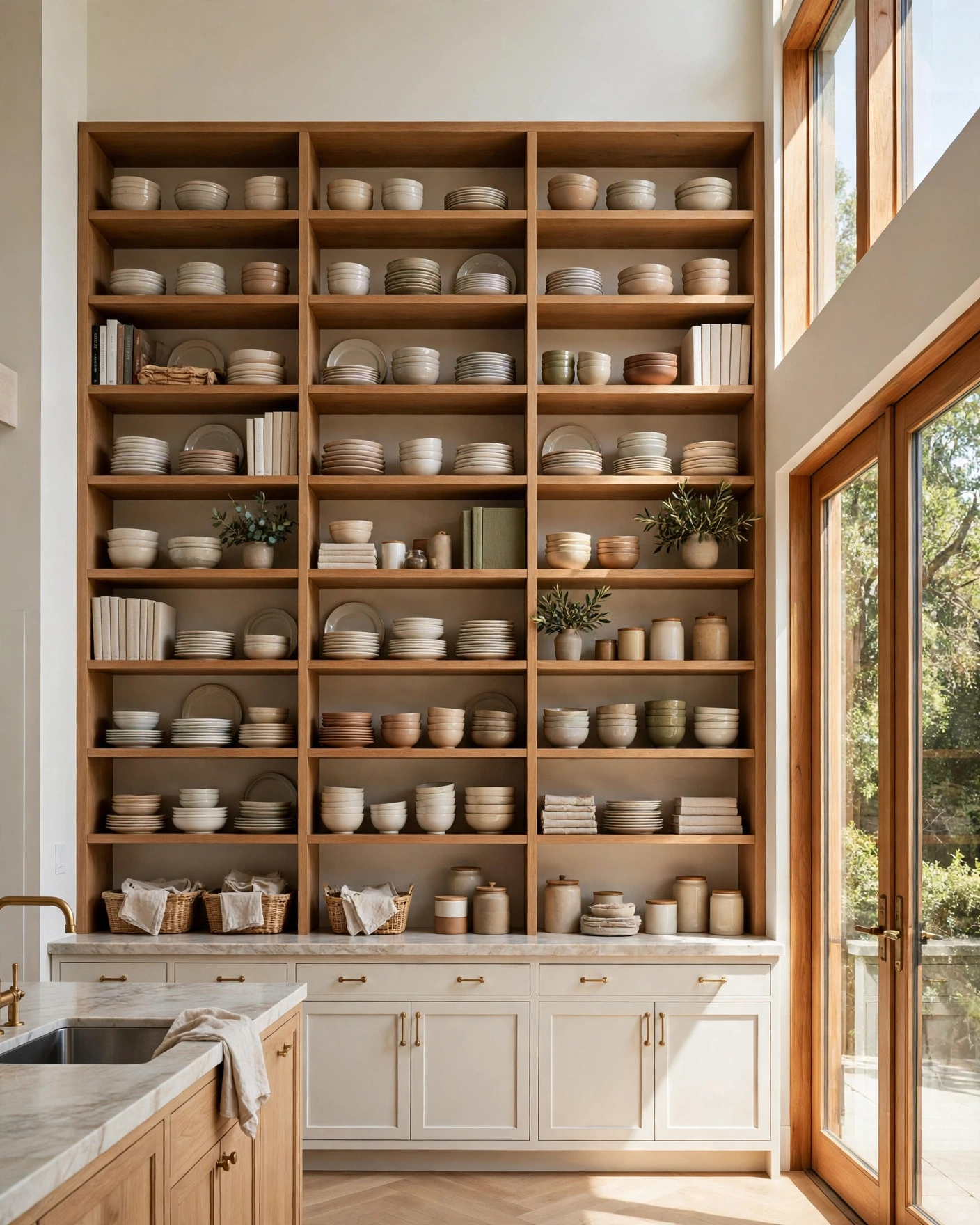
A full wall of shelves replaces uppers entirely. Best for: large kitchens. Pro tip: daily dishes at eye level.
16. One Single Statement Shelf

One long shelf above the worktop gives the open look. Best for: renters. Pro tip: hang 18–20 inches above the counter.
Small Kitchen and Smart Storage Ideas
17. One Wall of Open Shelves in a Small Kitchen

One open wall adds storage without boxing in. Best for: galley kitchens. Pro tip: keep the opposite wall closed.
18. Corner Shelves for Dead Space
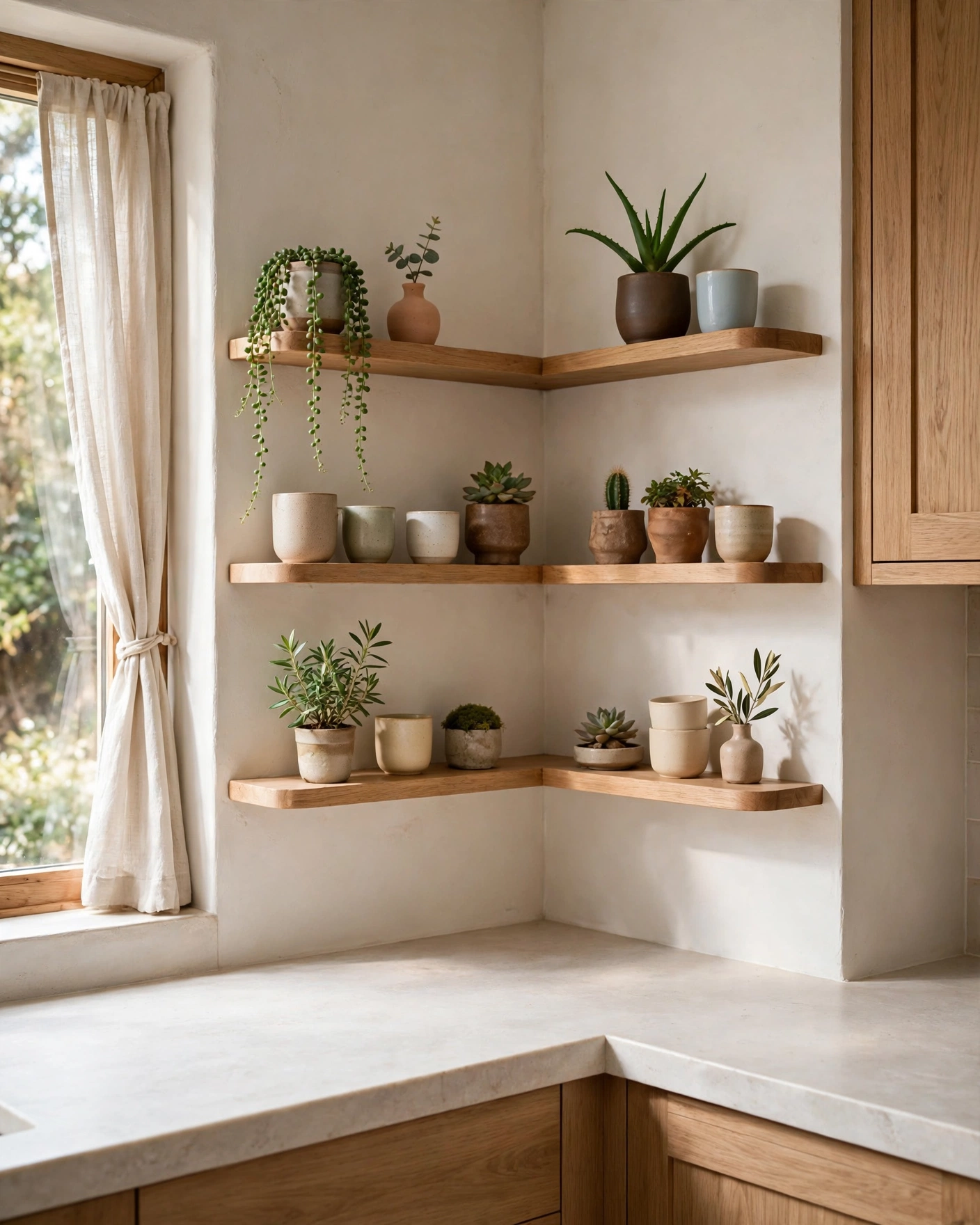
Corner shelves turn wasted space into display storage. Best for: awkward corners. Pro tip: light items here only.
19. Shelves Above the Sink
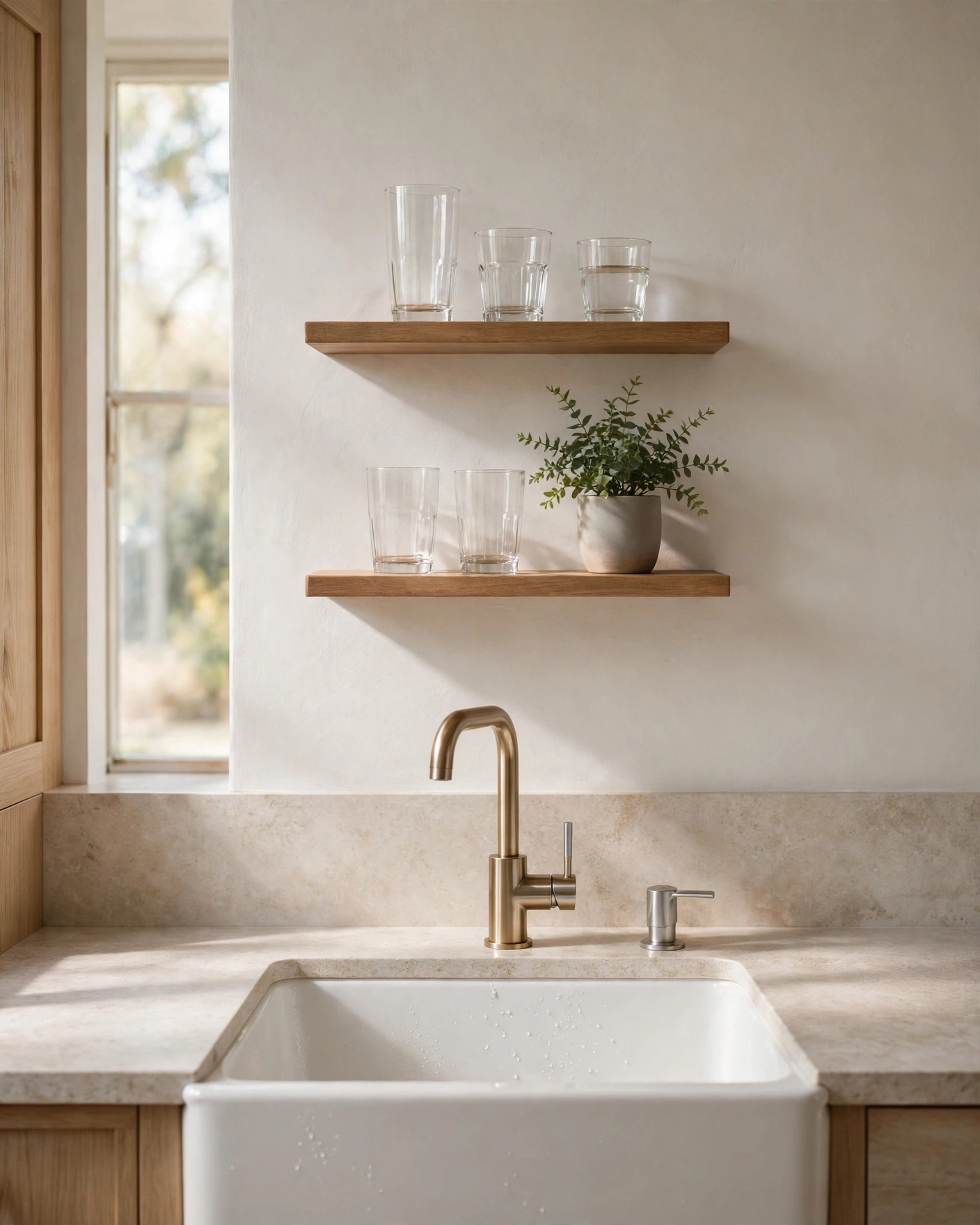
Two shelves over the sink hold rinsed glasses. Best for: compact kitchens. Pro tip: bottom shelf above splash height.
20. Open Shelves Around the Range Hood
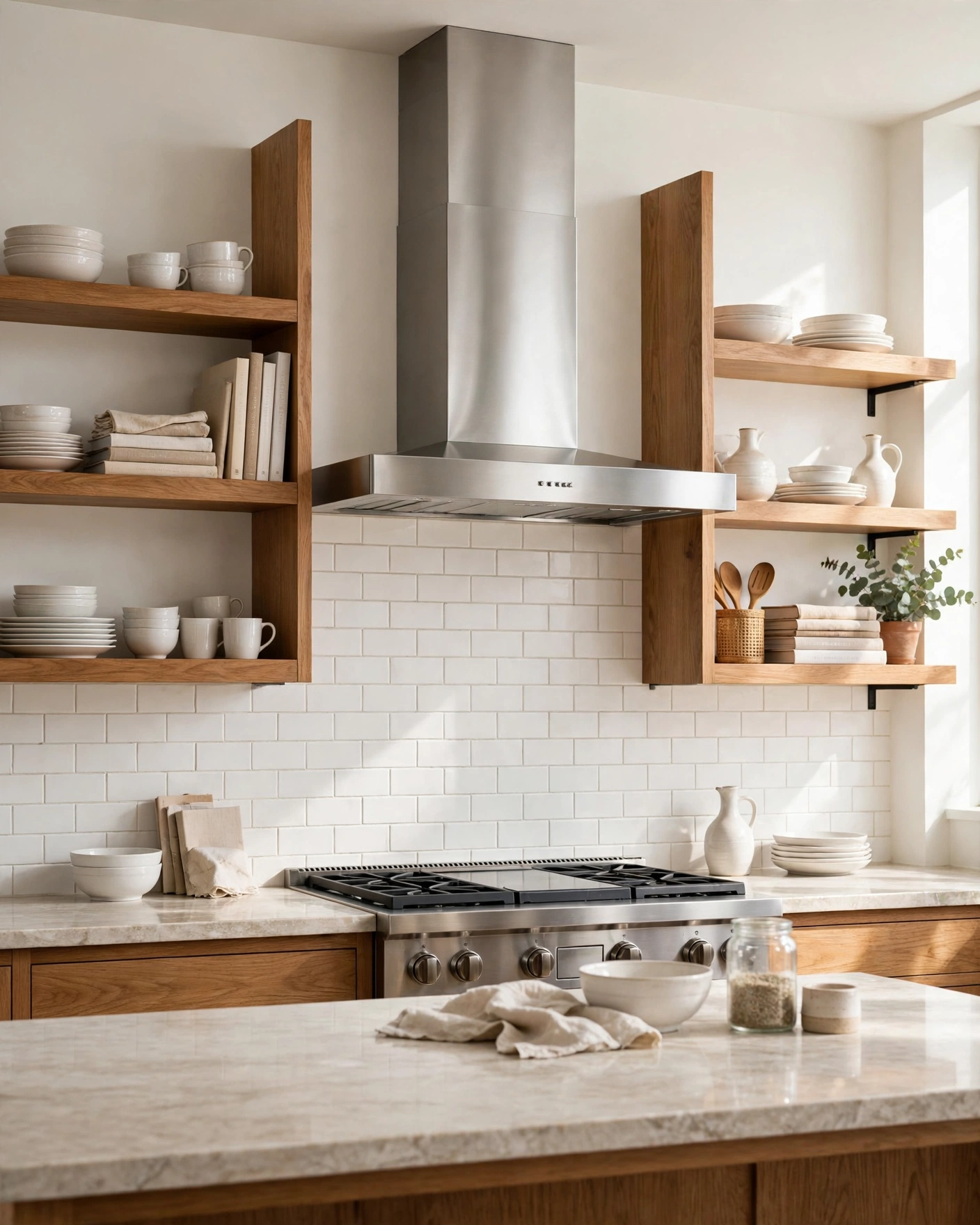
Shelves flanking the hood balance a big appliance. Best for: statement hoods. Pro tip: stay 12 inches from the hob.
21. Coffee-Station Shelf

One shelf for mugs and beans makes a ritual spot. Best for: coffee lovers. Pro tip: add hooks underneath for mugs.
22. Pantry Shelves with Matching Glass Jars

Matching jars of staples turn storage into decor. Best for: organised cooks. Pro tip: label jar lids, not fronts.
23. Shelves Beside the Fridge
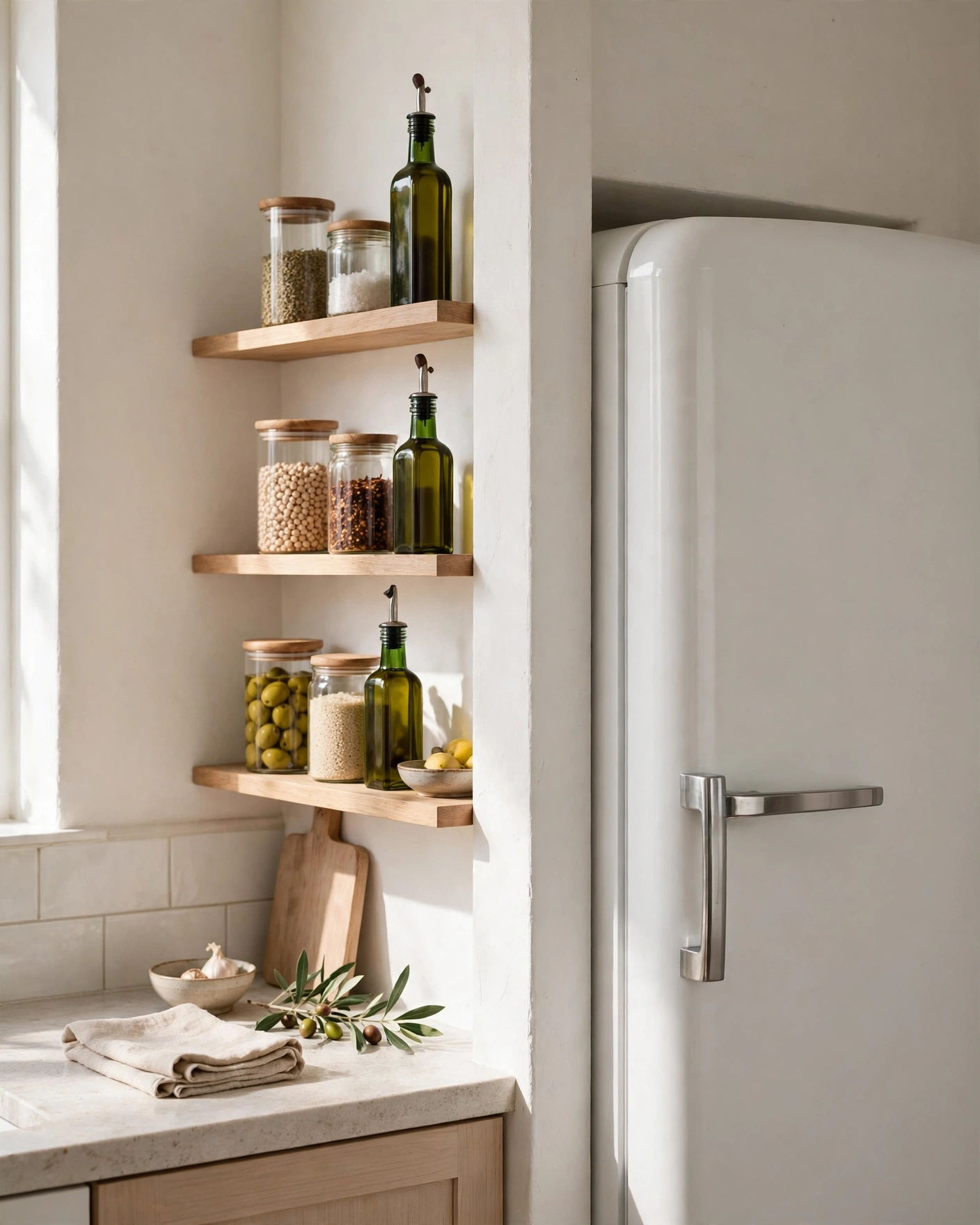
A narrow run beside the fridge uses a wasted strip. Best for: tight layouts. Pro tip: 8 inches deep is plenty.
24. Open Shelves with Closed Cabinets

One open run plus closed cabinets gives balance. Best for: family kitchens. Pro tip: open shelves furthest from hob.
Styling, Colour and Finishing Touches
25. Colour-Coordinated Dish Display
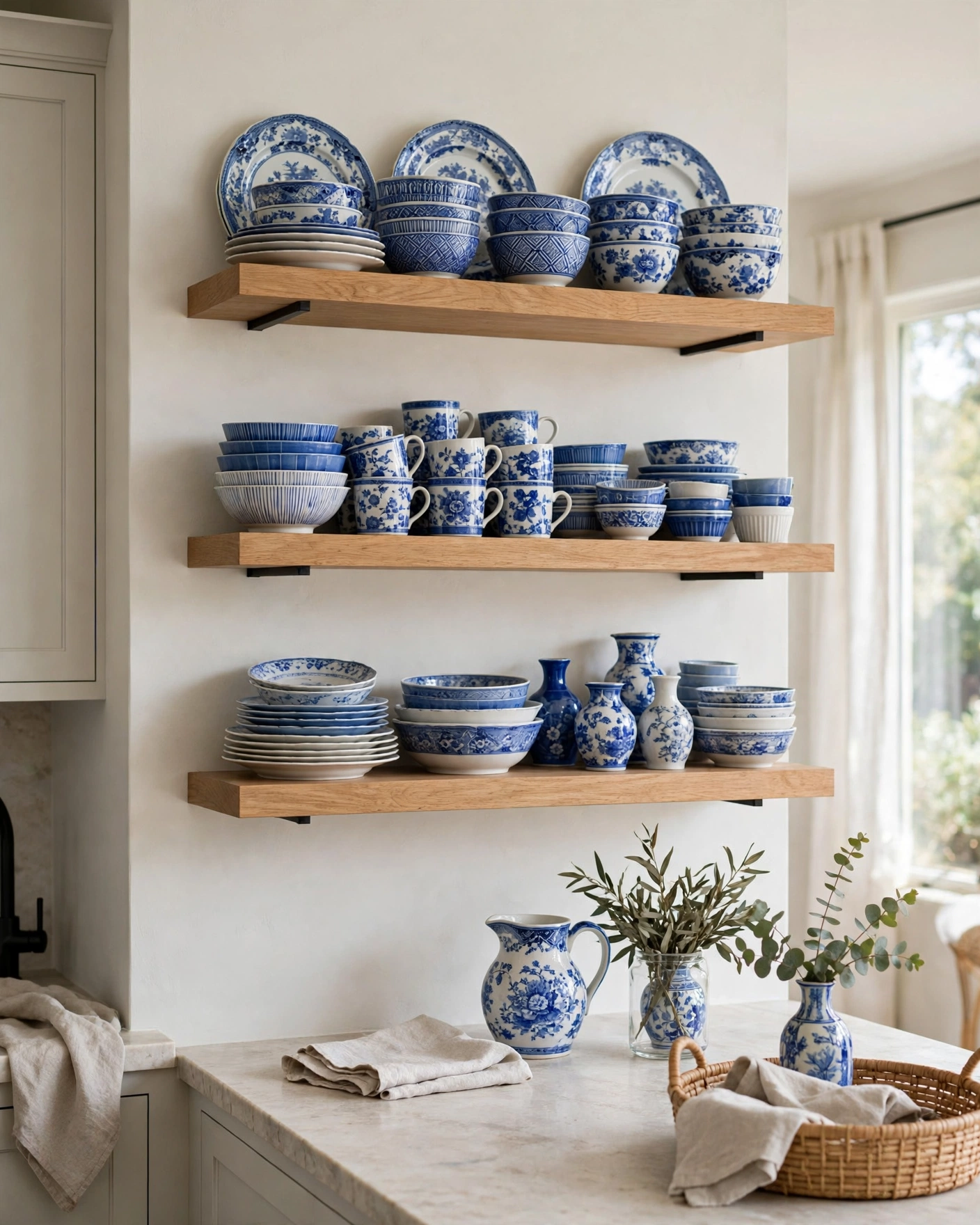
Grouping dishes by one or two colours looks deliberate. Best for: colourful kitchens. Pro tip: pull the colour from your backsplash.
26. All-White Ceramics Display
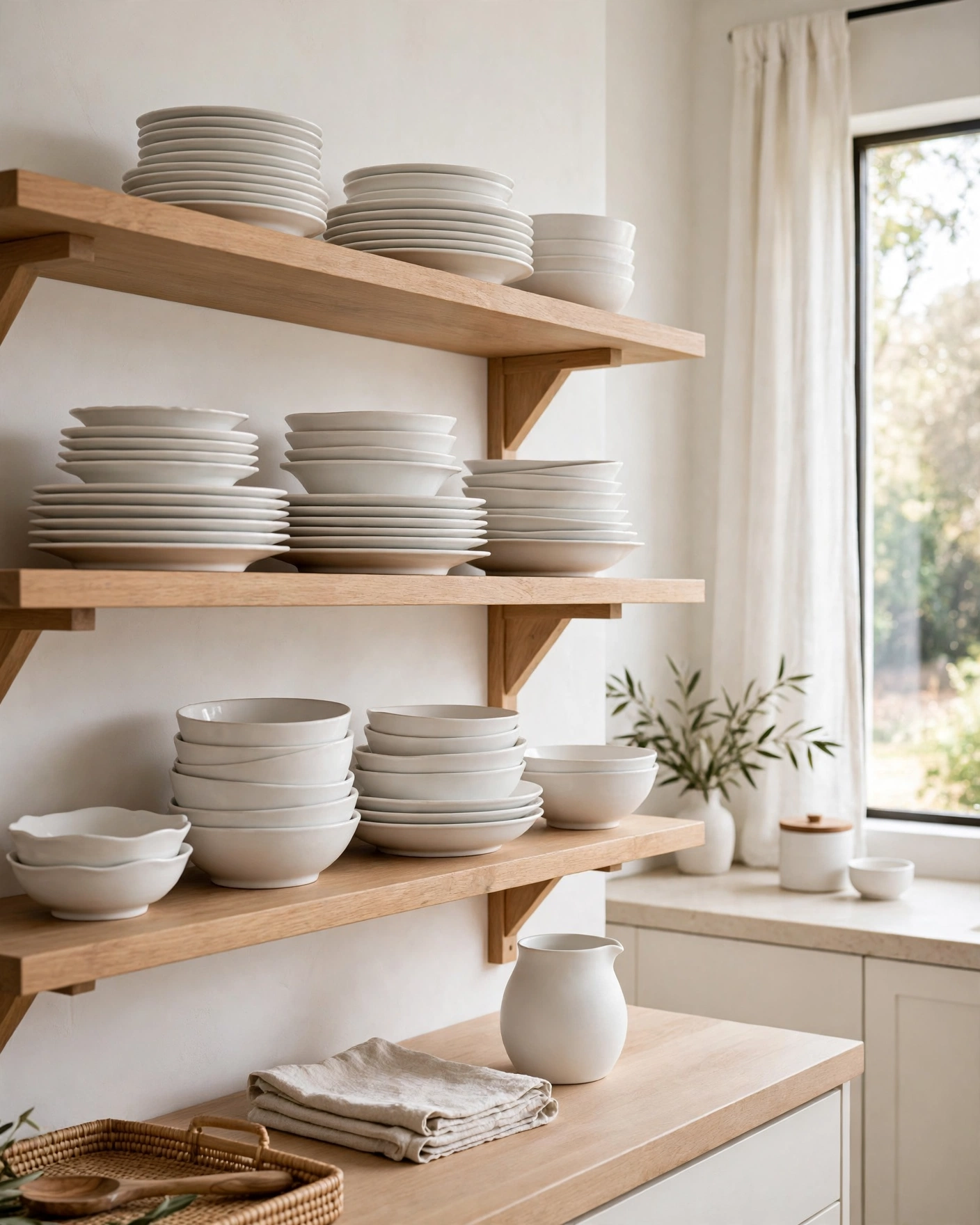
White plates read calm against any shelf material. Best for: any style. Pro tip: vary shapes so white stays lively.
27. Cookbook Stack Shelves
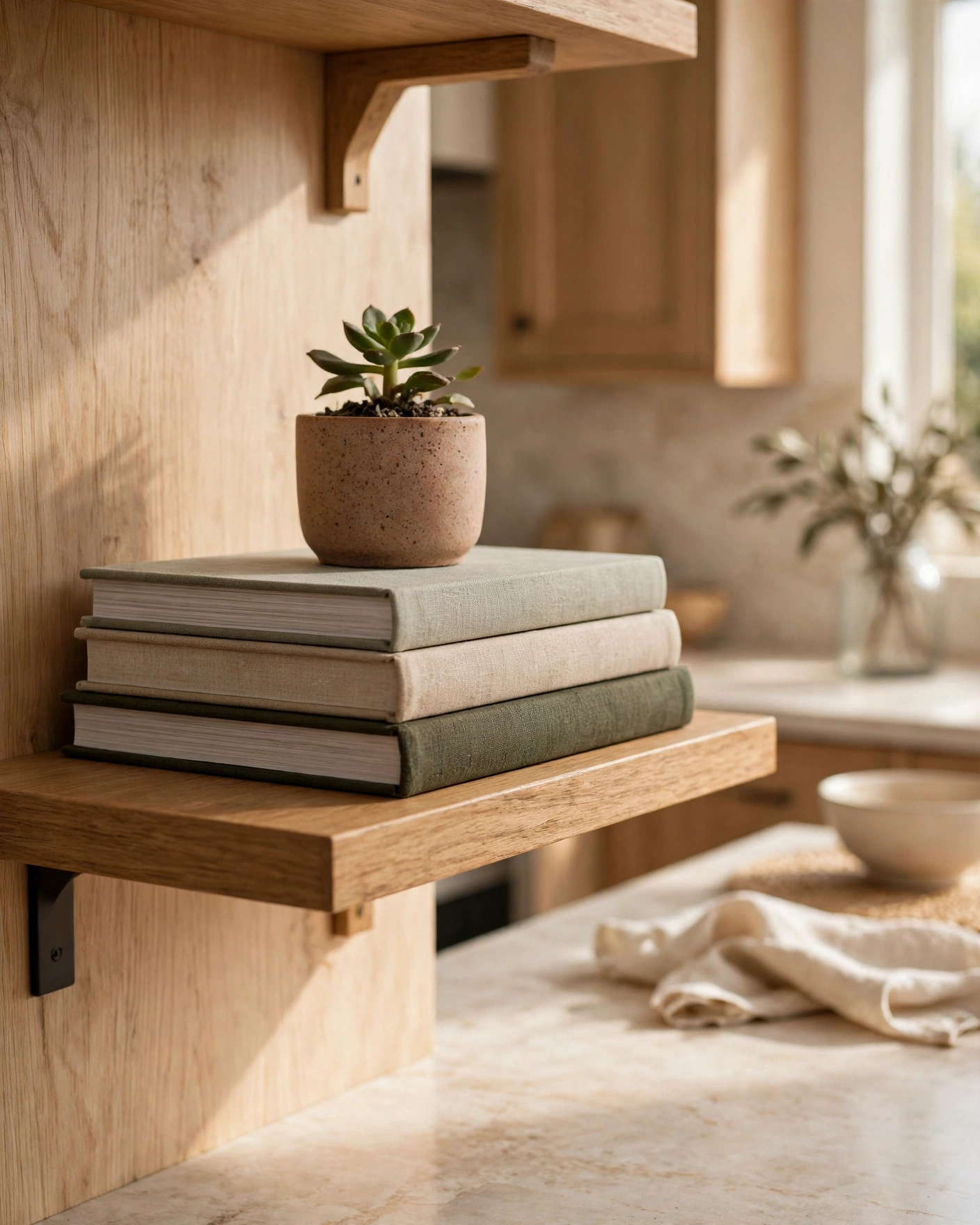
Cookbooks laid flat make a platform for a plant. Best for: keen cooks. Pro tip: most-used book on top.
28. Herb Garden Shelf

Small pots of basil and mint add life. Best for: sunny kitchens. Pro tip: one plant per shelf.
29. LED-Lit Shelves

An LED strip under each shelf glows at night. Best for: dark kitchens. Pro tip: choose 2700K warm white.
30. Hanging Rail Under the Shelf

A rail under the lowest shelf hangs mugs. Best for: cooks short on drawers. Pro tip: hang daily grabs only.
31. Seasonal Swap Shelf

One shelf for seasonal pieces — autumn mugs, festive glassware. Best for: decorators. Pro tip: off-season pieces in one box.
32. Art and Dishes Mixed Display
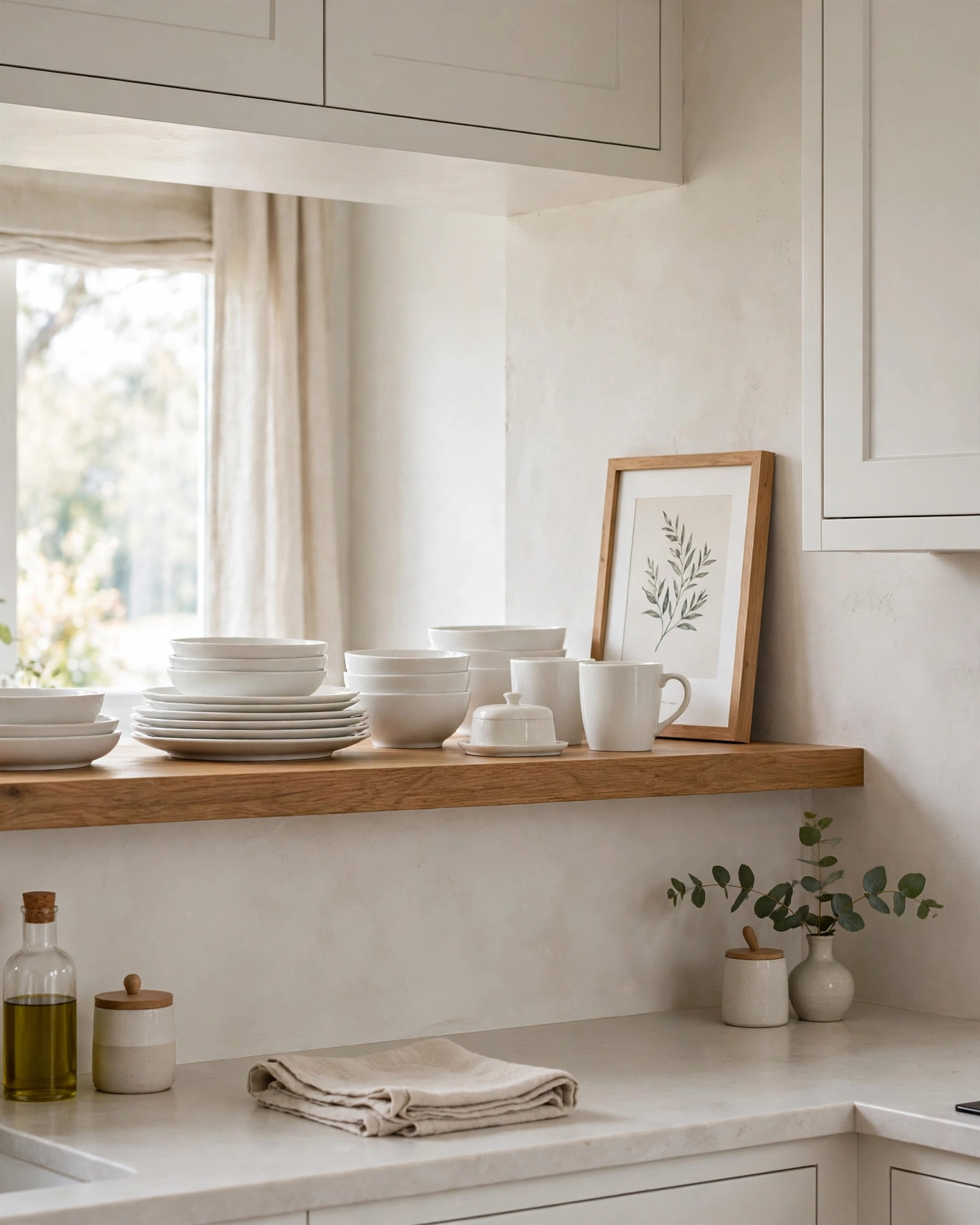
A framed print between dishes feels styled, not stored. Best for: personal kitchens. Pro tip: one art piece per shelf.
Care and Maintenance
Open shelves need a quick weekly wipe — a damp cloth on the boards, a rinse for anything unused for a month. Keep shelves away from the hob, since grease settles fast. Wood benefits from an annual oil or reseal; metal and glass just need a degreasing wipe.
FAQs
Final Thoughts
Open shelving kitchen design works when shelves are a curated display, not extra cupboard space. Start with one wall, pick a material that suits your kitchen, and style only what you use and love. Try one idea this weekend.
What should I put on open shelving in a kitchen?
Put the things you use every day within easy reach: daily plates and bowls, glasses, a few jars of staples, and one plant or cookbook stack per shelf. Group similar items, vary heights with a tall pitcher or leaning board, and leave breathing room so shelves read as styled rather than stuffed.
How far apart should open kitchen shelves be?
Leave 15 to 18 inches between shelves so plates, bowls and short jars fit with a little air above them, and 18 to 20 inches above the counter for the bottom shelf so tall bottles fit. Measure your tallest everyday item first, then set the spacing around it for a comfortable fit.
Are open shelves in a kitchen a good idea for small kitchens?
Yes, on one wall or in one zone. Open shelves make a small kitchen feel wider because sightlines stay open and no bulky cabinet box hangs overhead. The trade-off is discipline: fewer pieces and a weekly wipe. A hybrid layout — open shelves on one wall, closed cabinets elsewhere — suits most small kitchens best.
How do I keep open kitchen shelves from looking cluttered?
Limit each shelf to two or three colours, group like with like, and leave about a third of every shelf empty. Style in odd numbers — three plates, one plant, one stack of bowls — and repeat one material, such as wood or brass, across shelves for rhythm. Edit ruthlessly: unused in a month means no shelf space.
What is the best material for open kitchen shelves?
Solid wood is the most forgiving choice: oak, walnut and pine suit most kitchens, hide marks well and can be re-oiled for years. Painted timber matches cabinetry for a built-in look, while metal and glass suit modern rooms because they read lighter. Choose brackets rated for the load and fix into studs.
How do you clean and maintain open kitchen shelves?
Wipe shelves weekly with a damp cloth and mild soap, and rinse dishes that have sat unused for a month before using them. Keep shelves away from the hob to limit grease film, and run the extractor when you fry. Wood needs re-oiling once or twice a year; glass and metal only need a degreasing wipe.
