
Budget mud kitchen ideas prove you need no big spend — most cost under $30. Old pallets and thrifted pots turn a garden corner into a café. A mud pie is wet soil shaped and “baked” in play — here are 29 ideas.
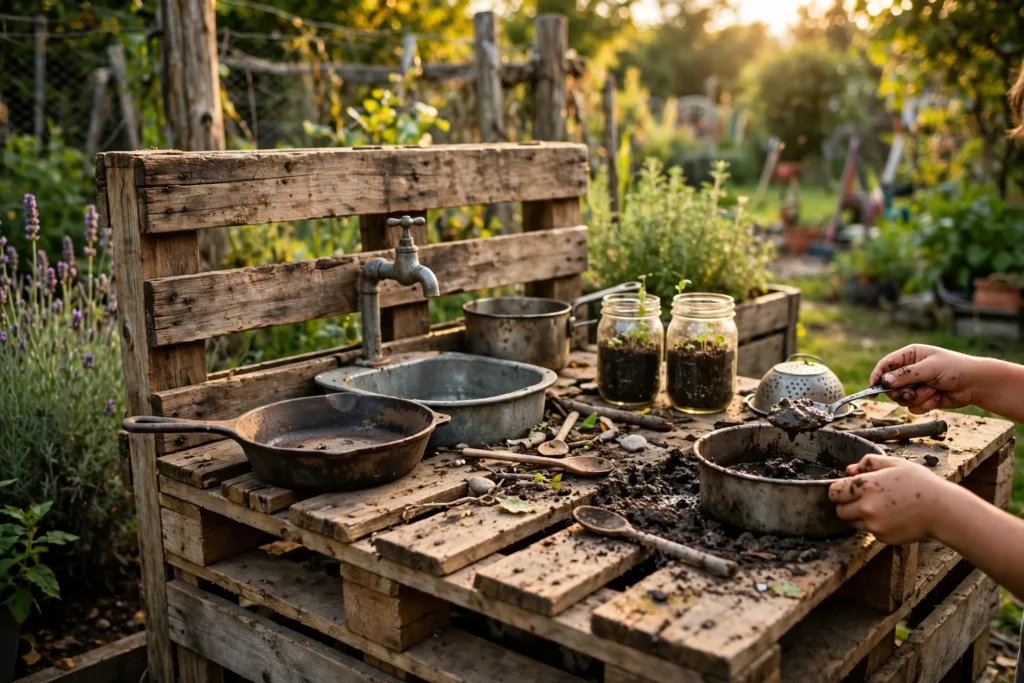
1. Free Pallet Mud Kitchen
Stack two pallets as a counter, a third as a splashback, add a basin. Best for: first builds. Styling tip: chalkboard paint. Pro tip: ask shops for free pallets.
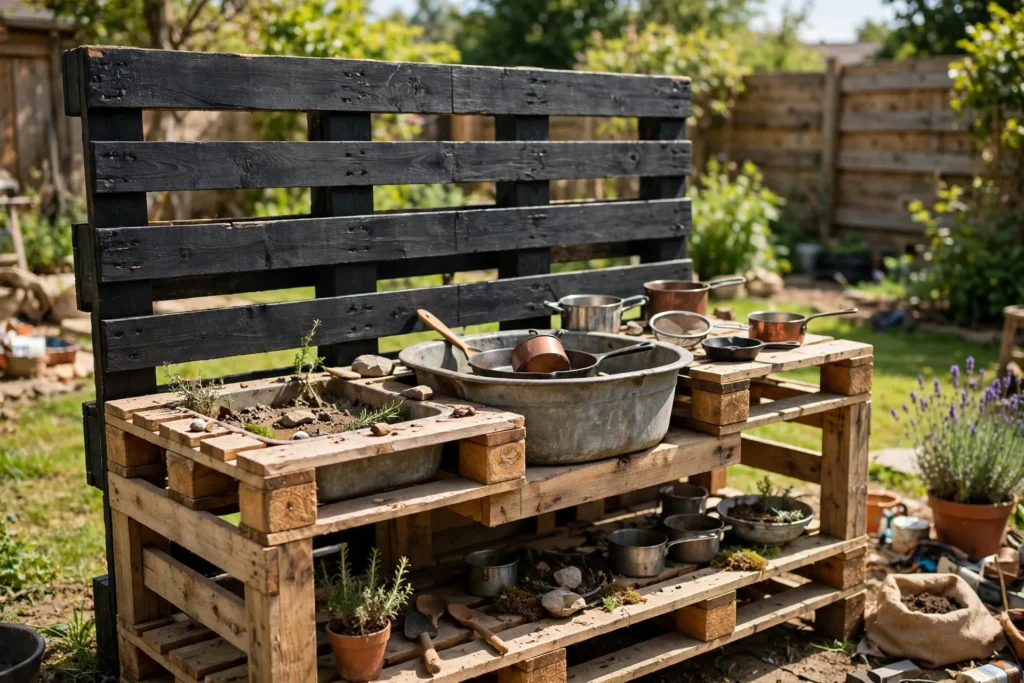
2. No-Build Cinder Block Kitchen
Stack cinder blocks in towers, lay a plank across, add bowls and a jug. Best for: renters. Styling tip: plants in block holes. Pro tip: check skips.
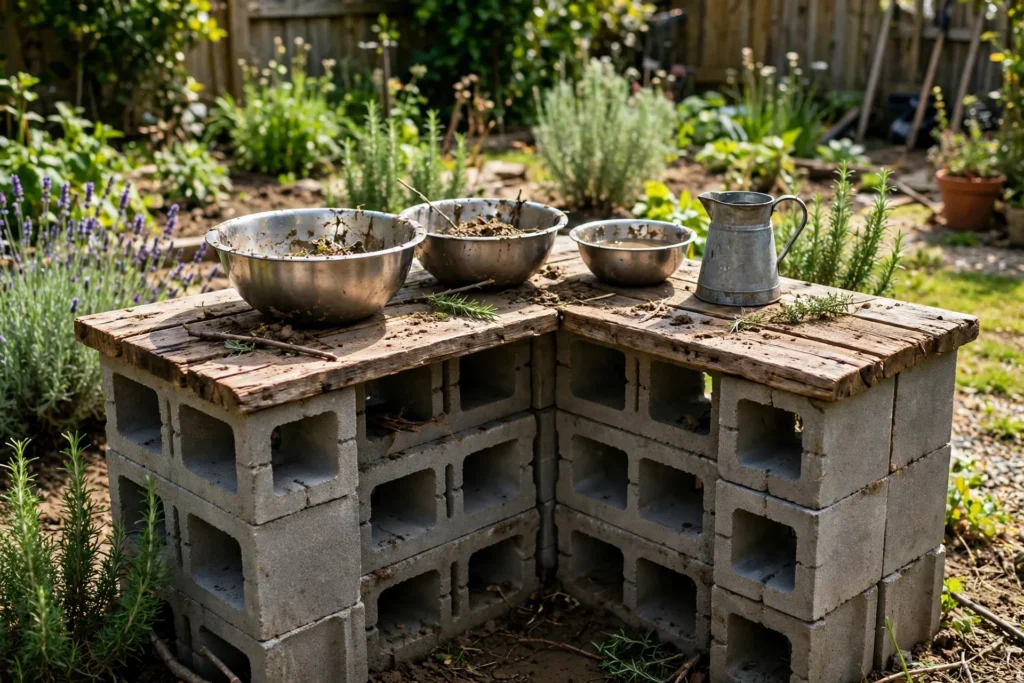
3. Thrifted Play Kitchen
A second-hand play kitchen costs a few pounds. Scrub, spray with outdoor paint, move it outside. Best for: toddlers. Styling tip: sage green. Pro tip: drill drainage holes.
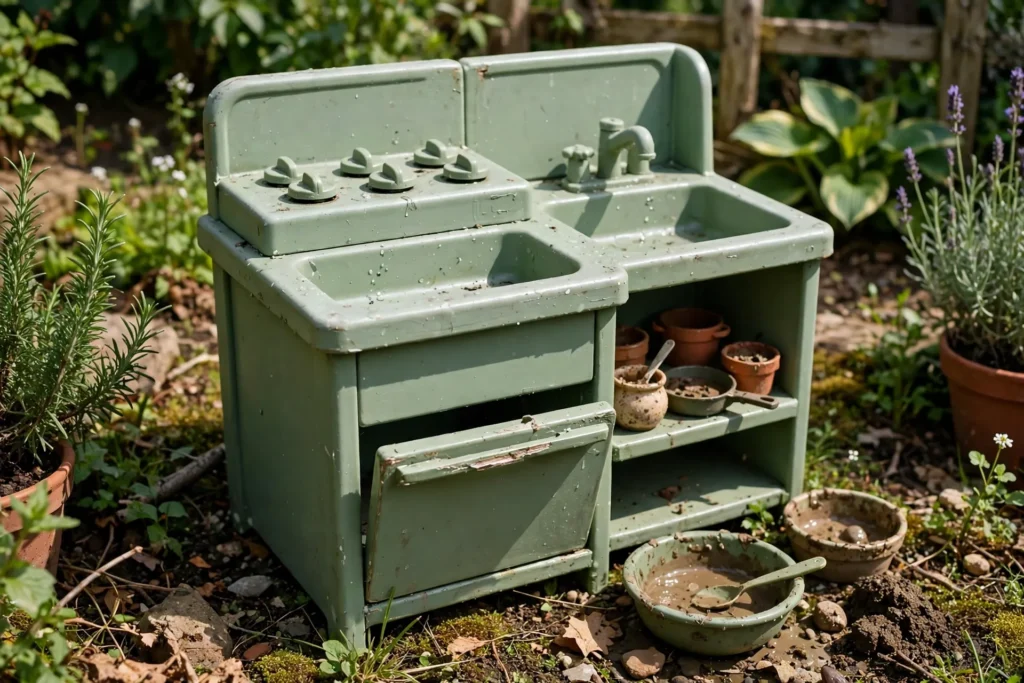
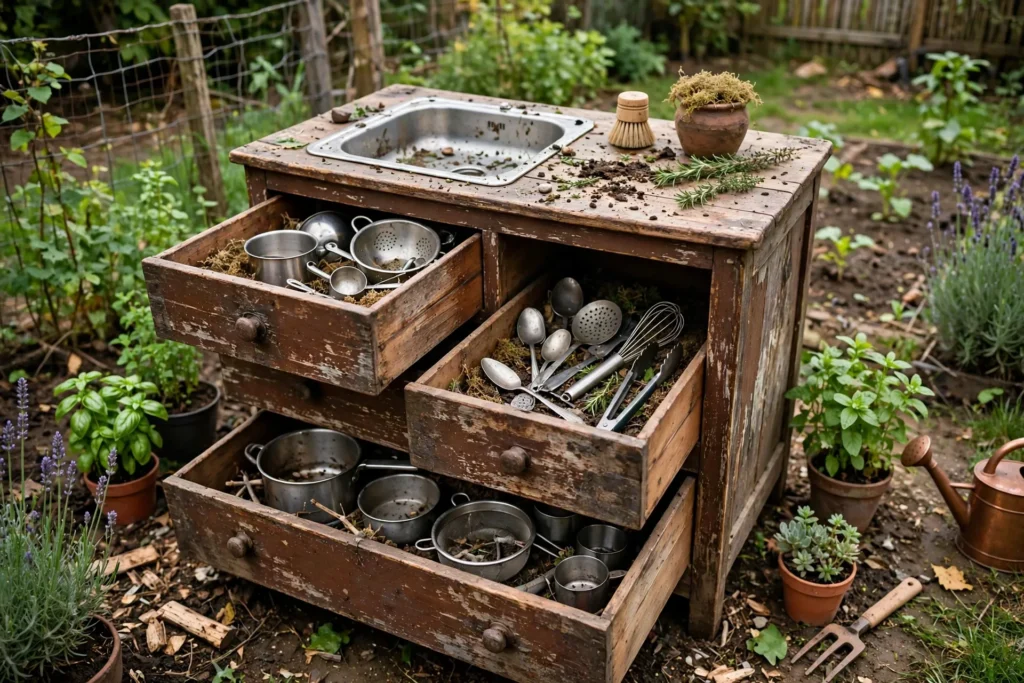
4. Old Dresser Conversion
An unwanted dresser becomes a mud kitchen in an afternoon — remove a drawer, add a basin. Best for: big storage. Styling tip: weathered wood. Pro tip: seal the top.
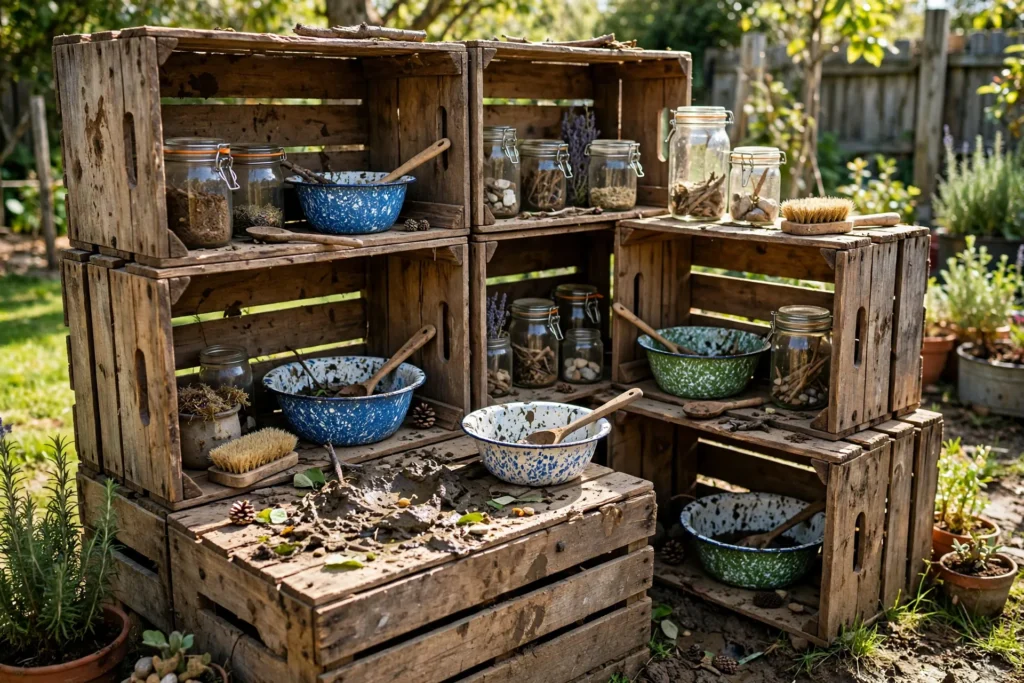
5. Wooden Crate Shelves
Old fruit crates stack into shelves for bowls and jars. Screw them together. Best for: small gardens. Styling tip: mix crate sizes. Pro tip: ask greengrocers for free crates.
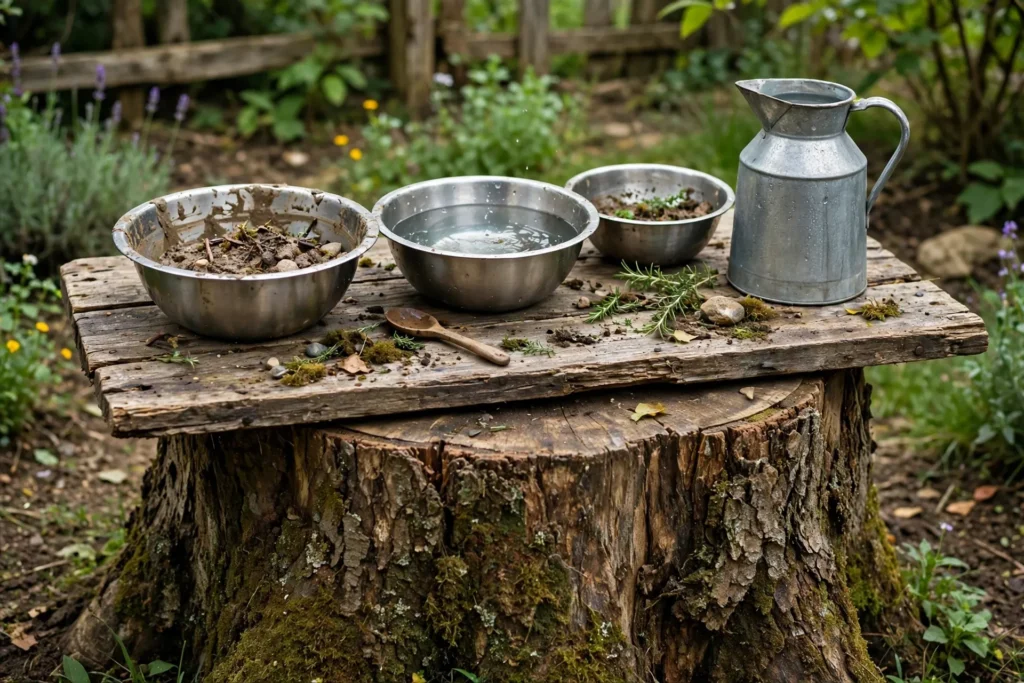
6. Tree Stump Counter
A flat-topped stump plus a plank makes a sturdy counter and chopping block. Best for: woodland gardens. Styling tip: log slices as stools. Pro tip: level the plank with wedges.
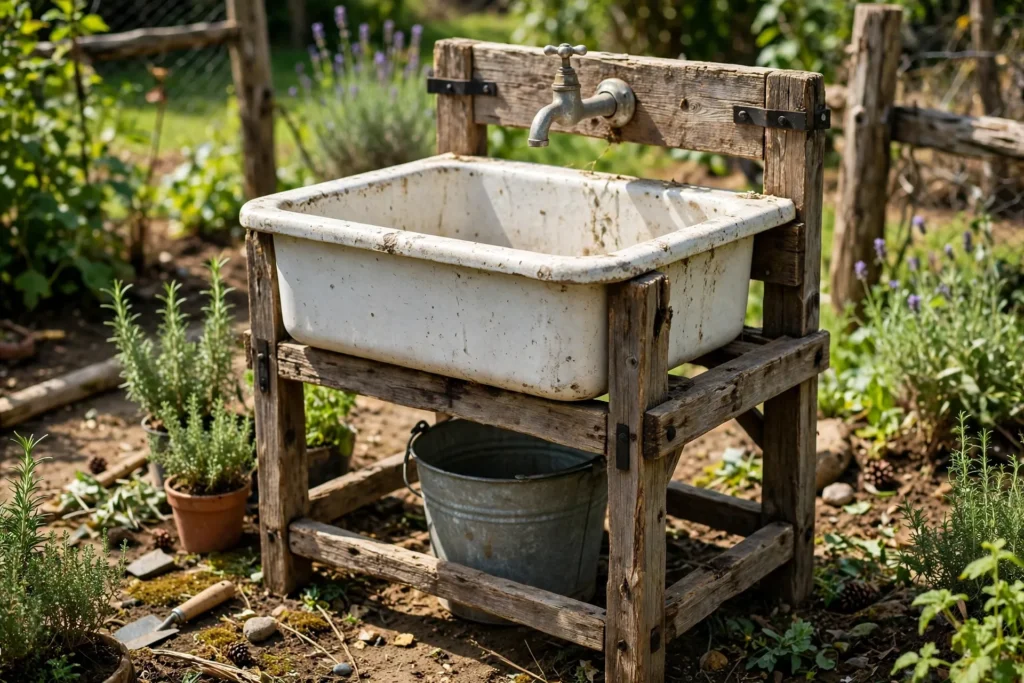
7. Fit a Salvaged Sink
A salvaged sink on a wooden frame gives a real working feel, with a bucket below for water. Best for: water play. Styling tip: a small brass tap. Pro tip: salvage yards sell sinks for pennies.
8. Baking Tray Station
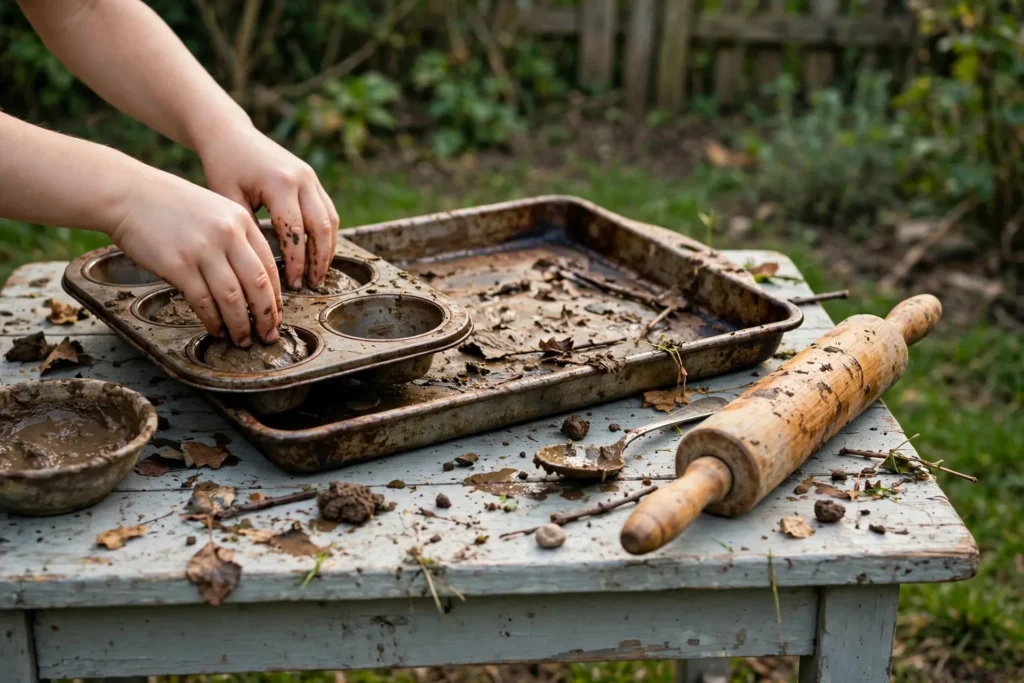
Old muffin tins and baking trays turn a small table into a mud pie bakery. Best for: rainy-day play. Styling tip: leaves as tin cases. Pro tip: charity shops sell trays cheap.
9. Tin Buckets of Cheap Utensils
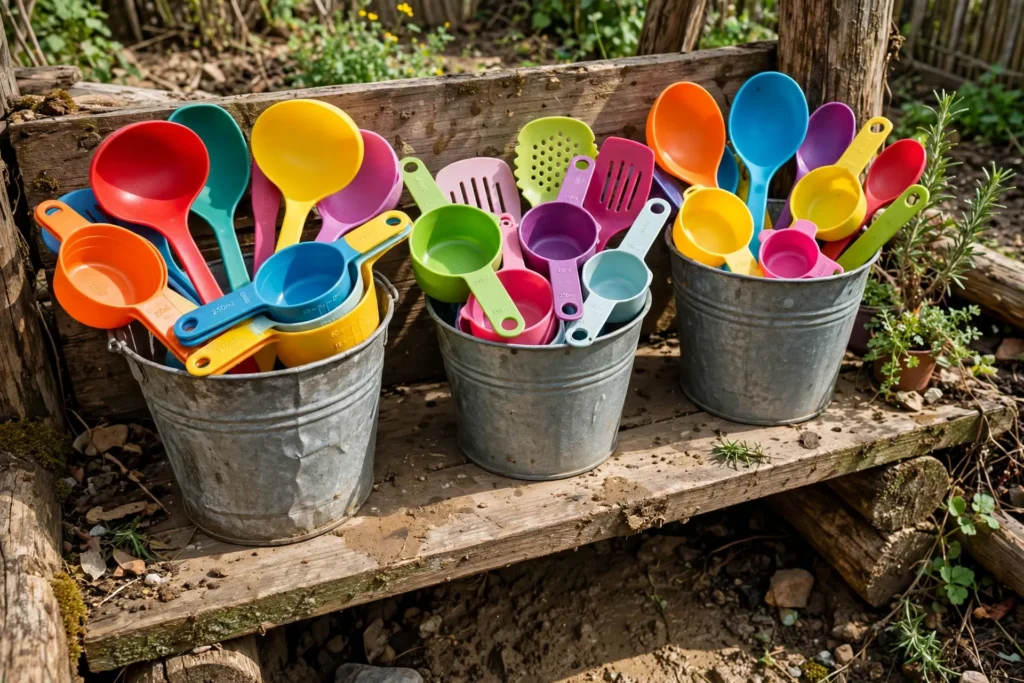
Dollar-store ladles and whisks in tin buckets give kids real tools for pennies. Best for: stocking up cheaply. Styling tip: chalk tags on buckets. Pro tip: add real mud kitchen accessories for durability.
10. Mason Jar Ingredient Bar
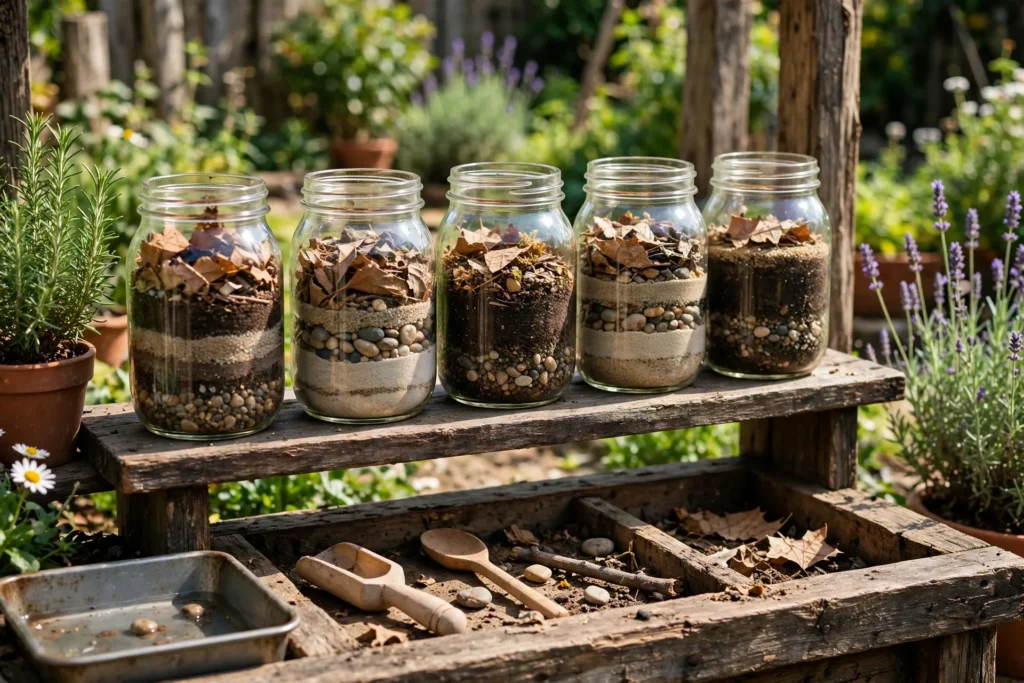
Fill old jam jars with soil, sand and leaves, then line them on a shelf like a spice rack. Best for: imaginative play. Styling tip: matching jars look tidy. Pro tip: screw lids under a shelf.
11. Rain Barrel Water Station
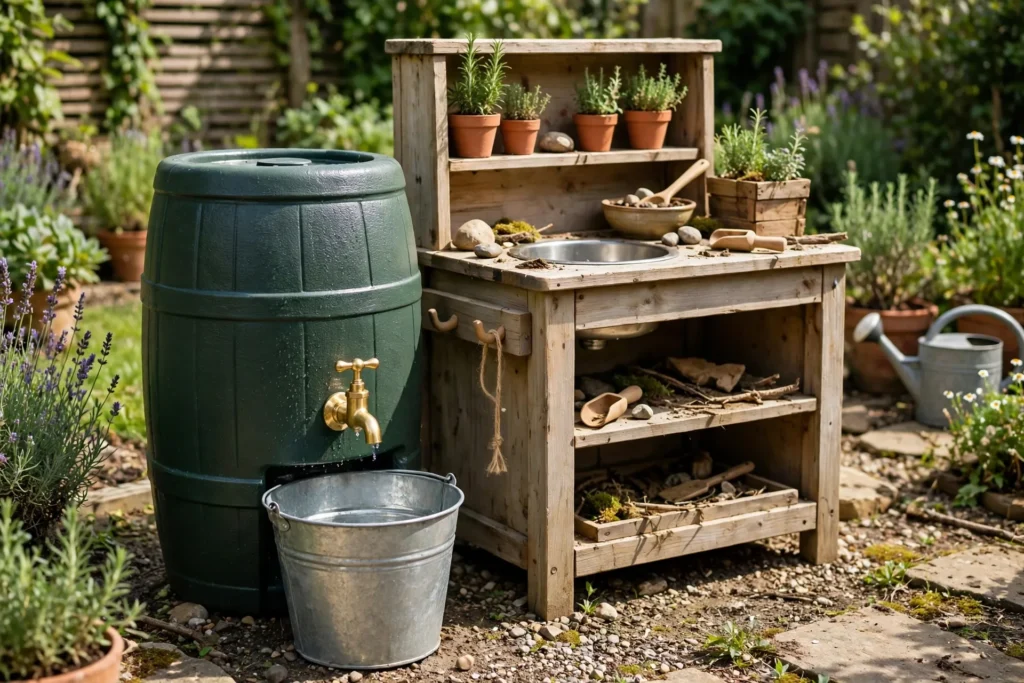
A small rain barrel with a tap gives kids their own water supply. Best for: dry summers. Styling tip: paint it to match. Pro tip: add a mesh lid.
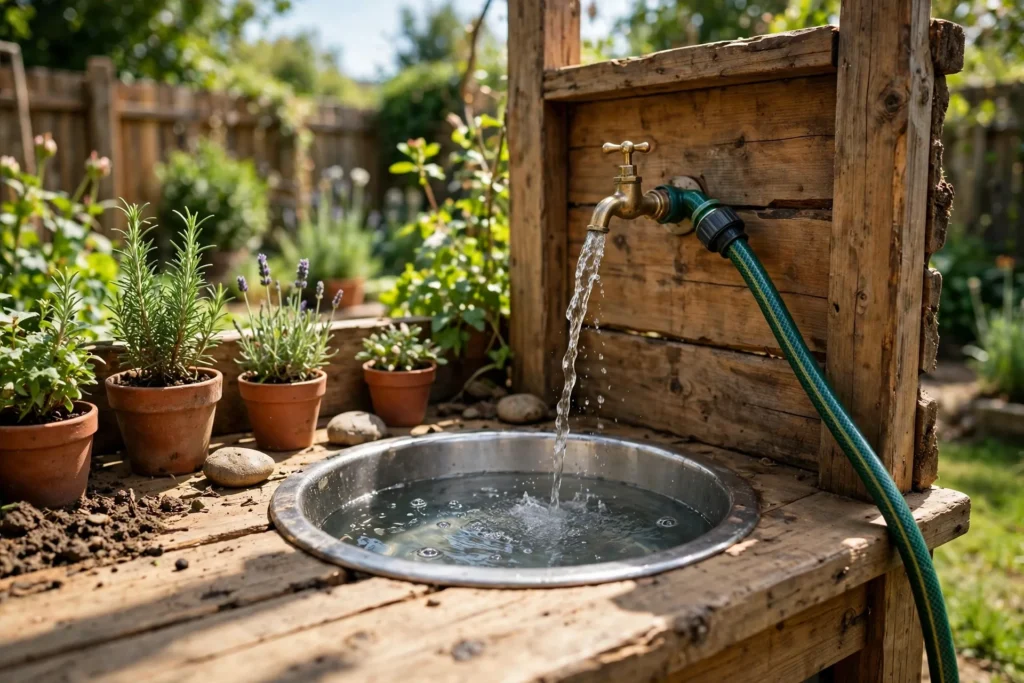
12. Hose to a Little Tap
Fix a short hose with a tap above the basin so kids run water themselves. Best for: busy kitchens. Styling tip: coil spare hose on a hook. Pro tip: fit a low-flow nozzle.
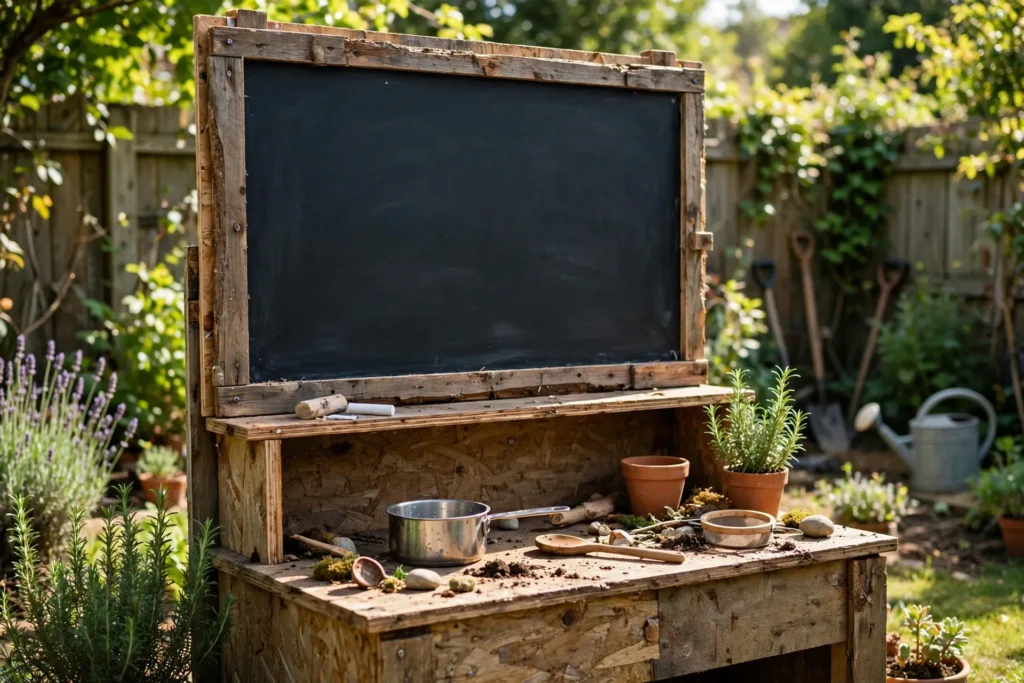
13. Scrap Plywood Chalkboard
Scrap plywood with chalkboard paint becomes a menu board. Hang it above the counter. Best for: role play. Styling tip: frame it with offcuts. Pro tip: keep chalk in a tin.
14. Pegboard Tool Wall
A scrap pegboard with hooks holds ladles and pans where kids can reach them. Best for: tidy kitchens. Styling tip: paint it a soft colour. Pro tip: outline tools in chalk.

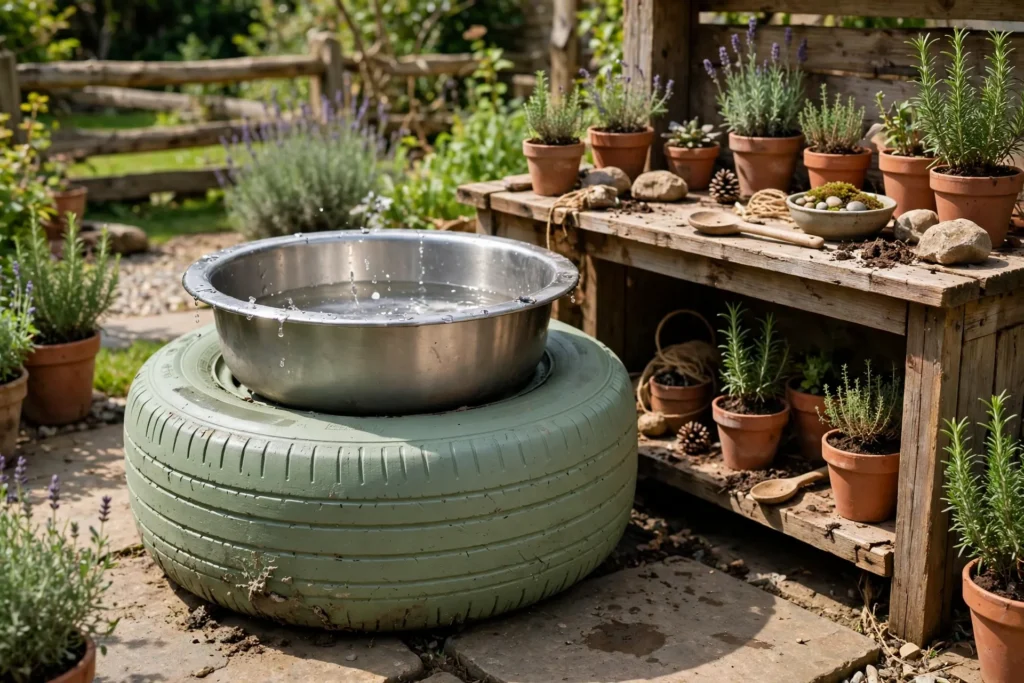
15. Old Tyre Sink Base
Stack two old tyres, paint them, set a basin on top for a free round sink. Best for: quirky gardens. Styling tip: sage or terracotta paint. Pro tip: tyre shops give old ones away.
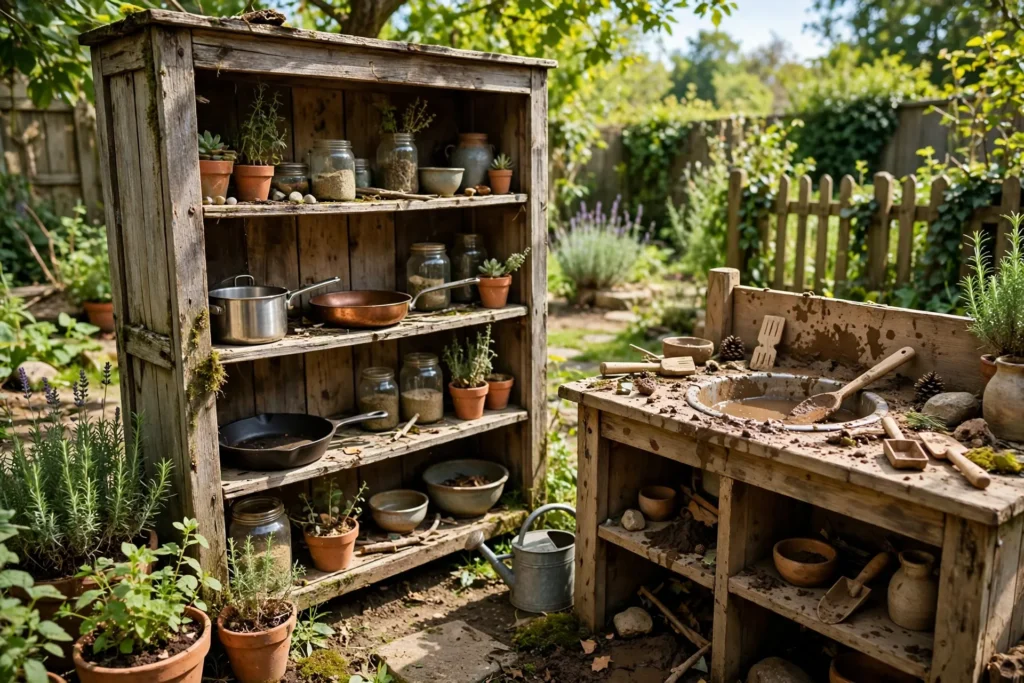
16. Repurposed Bookshelf Storage
An old bookshelf holds pots, jars and towels at child height. Tip it sideways for low cubbies. Best for: big collections. Styling tip: one cheerful colour. Pro tip: anchor it to the fence.
17. Plywood Mud Pie Oven
A scrap plywood box with a hinged door becomes the oven where mud pies “bake”. Best for: pretend cafés. Styling tip: paint a dial on the front. Pro tip: keep the door light.
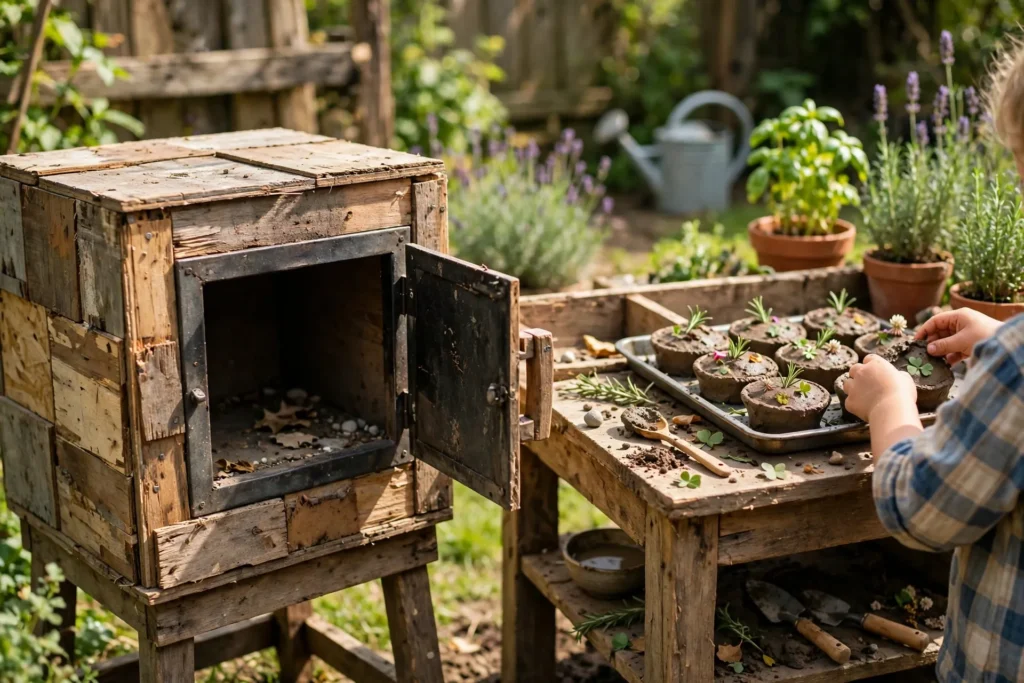
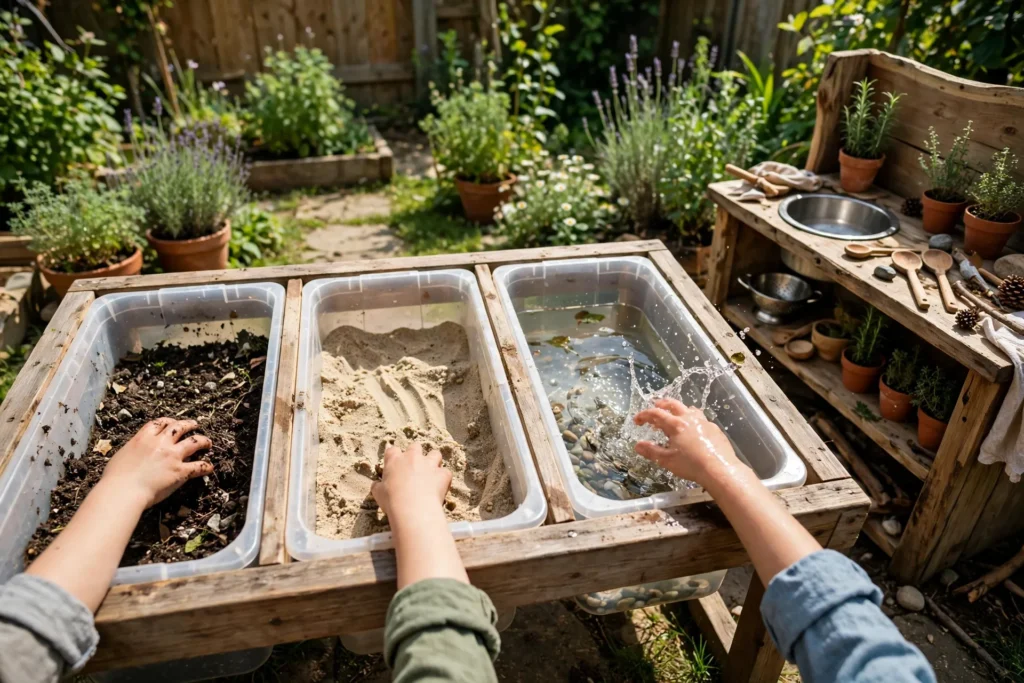
18. Sensory Bins in a Frame
Set cheap tubs into a wooden frame and fill them with soil, sand and water. Best for: messy play. Styling tip: clear tubs show contents. Pro tip: drill holes in lids.
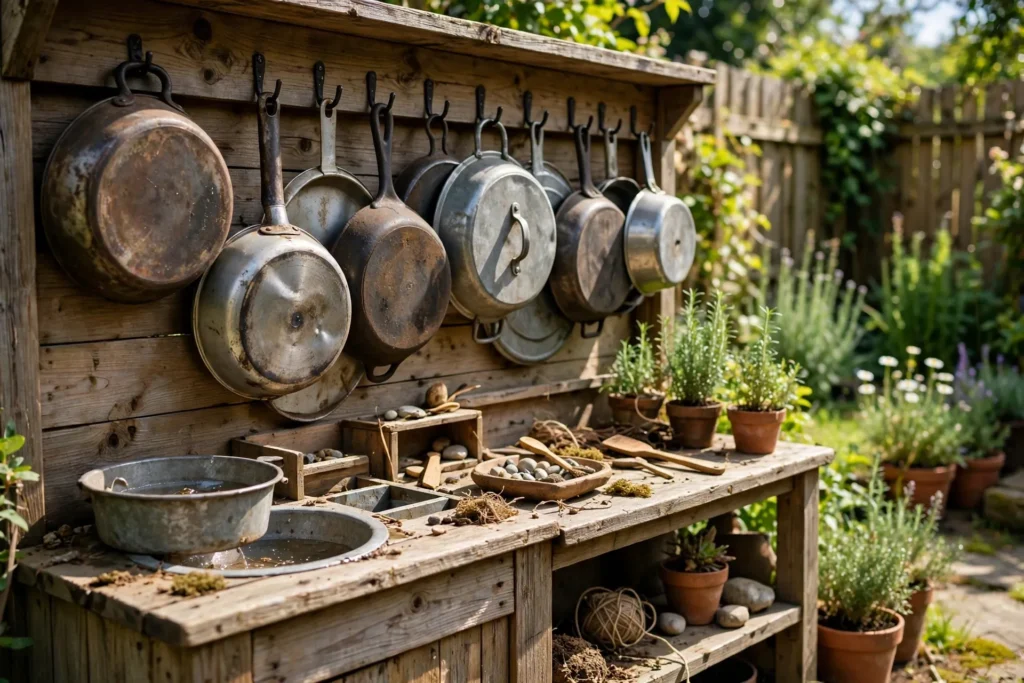
19. Thrifted Pots and Pans
Hooks under a shelf hold thrifted pots, pans and lids for pennies. Best for: real cooking play. Styling tip: hang by size, largest first. Pro tip: check charity shops.
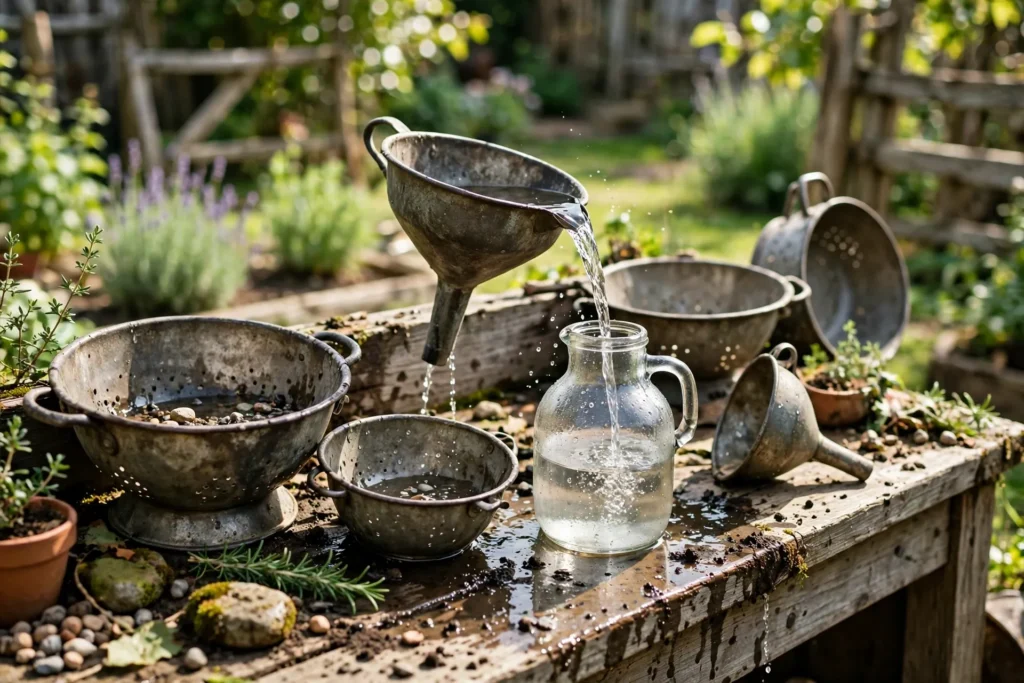
20. Colanders and Funnels
Old colanders and funnels turn pouring water into a science game. Best for: water play. Styling tip: stack funnels by size. Pro tip: metal funnels survive drops.
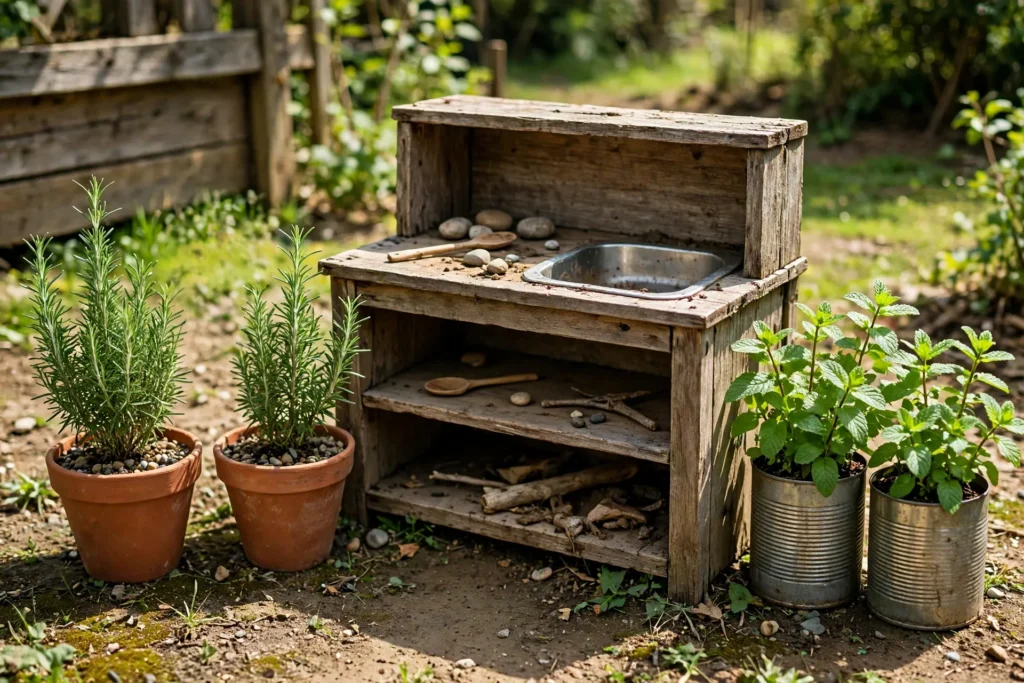
21. Herb Garden Beside It
Pots of mint, rosemary and chives give kids fresh “ingredients” to snip into mud pies. Best for: sensory play. Styling tip: grow herbs in tin cans. Pro tip: contain mint — it spreads fast.
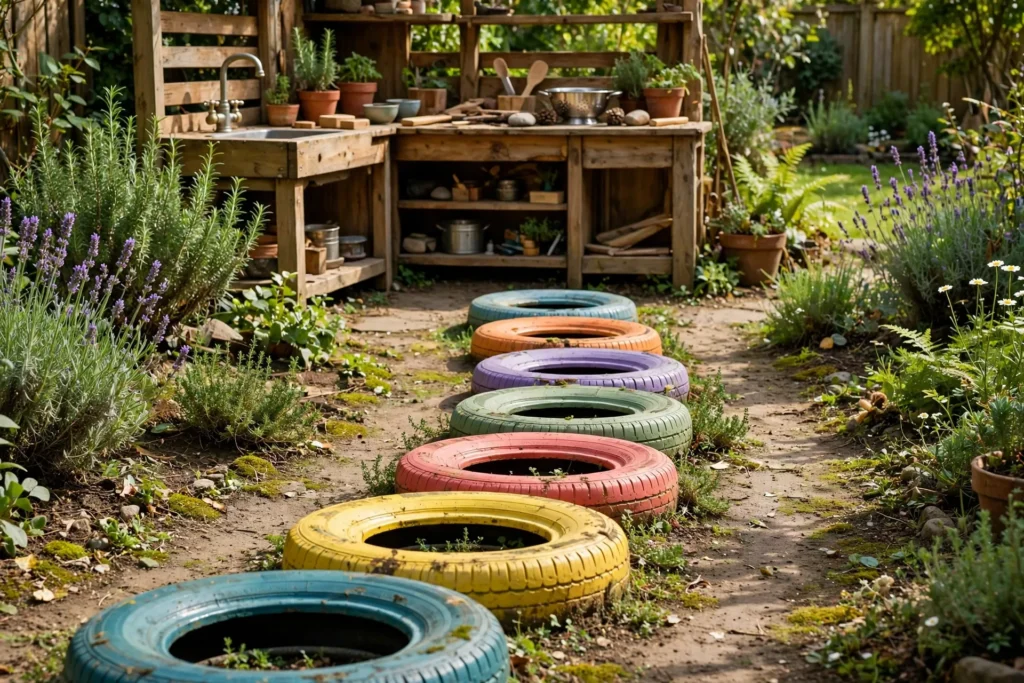
22. Painted Tyre Stepping Stones
Old tyres laid flat and painted make a colourful path and stop the ground turning to mud. Best for: muddy gardens. Styling tip: a different colour each. Pro tip: fill tyres with gravel.
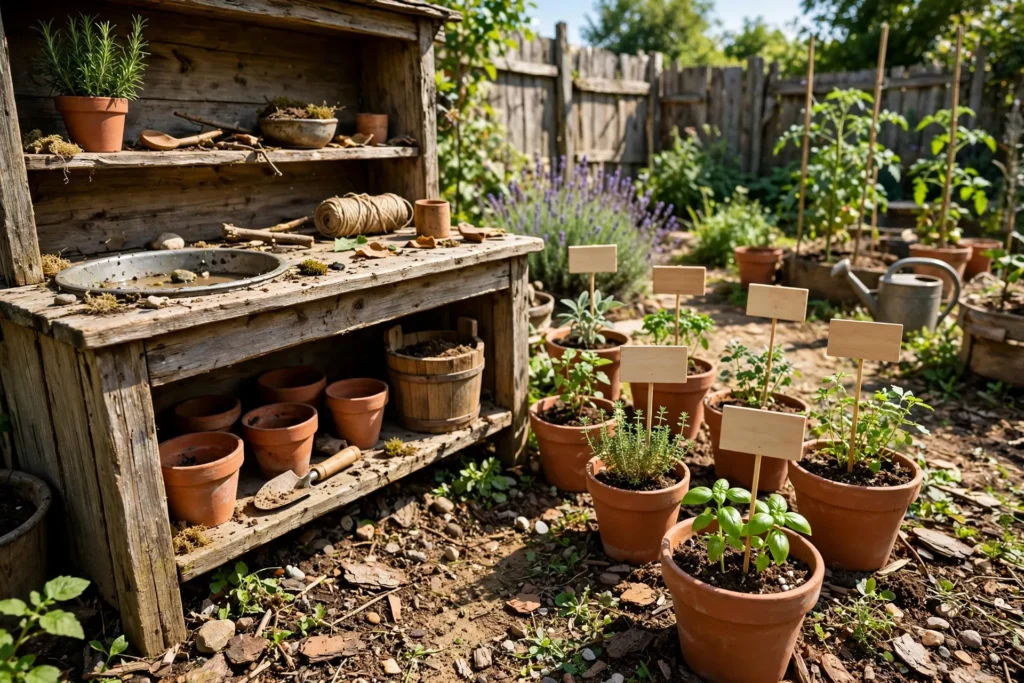
23. Little Wooden Menu Signs
Offcut sticks with blank boards become “today’s menu” signs — kids chalk specials each morning. Best for: writing practice. Styling tip: keep signs small and low. Pro tip: chalkboard paint on both sides.
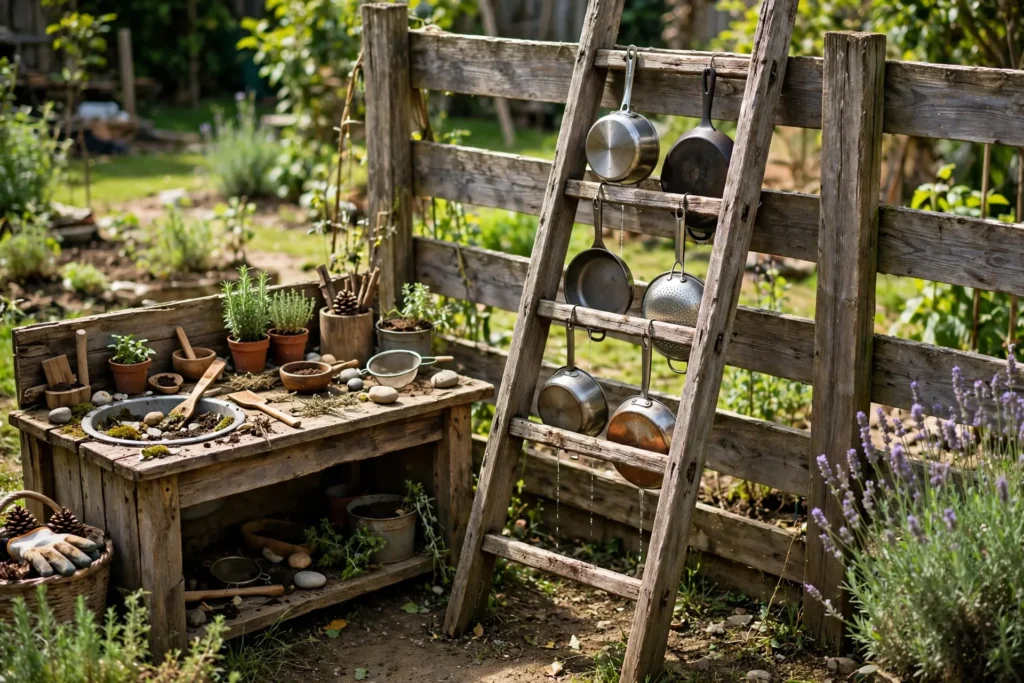
24. Ladder Drying Rack
An old ladder leaning on the fence dries pots and hangs towels after muddy play. Best for: small spaces. Styling tip: paint it to match. Pro tip: fix the top to the fence.
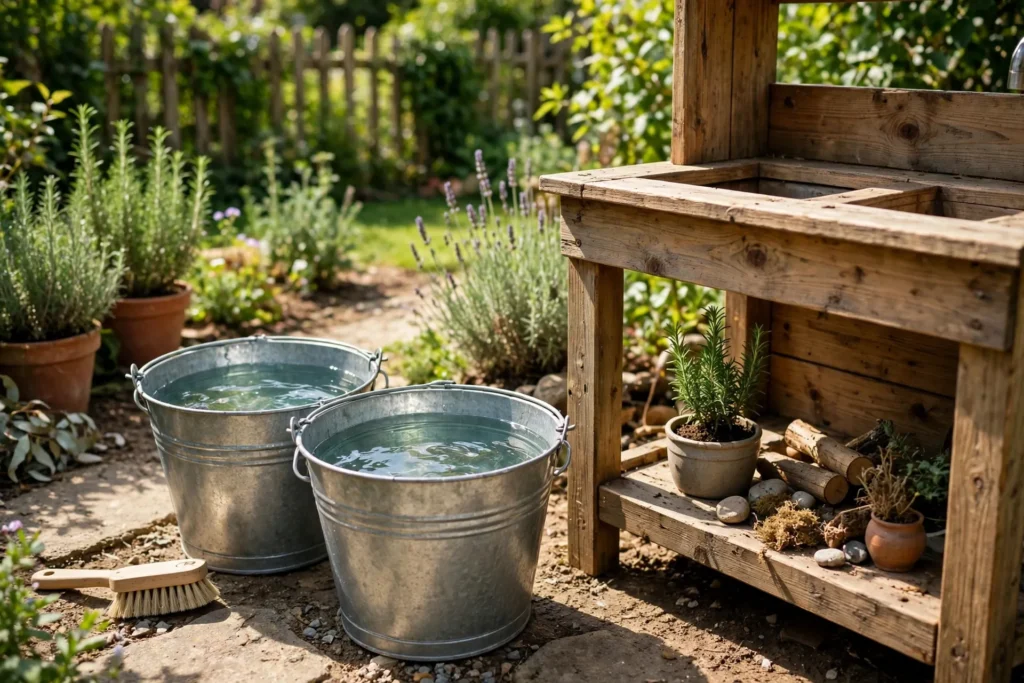
25. Bucket Wash Station
Two buckets — one soapy, one clean — plus a brush make a wash station. Best for: tidy endings. Styling tip: matching enamel buckets. Pro tip: tip dirty water on the lawn.
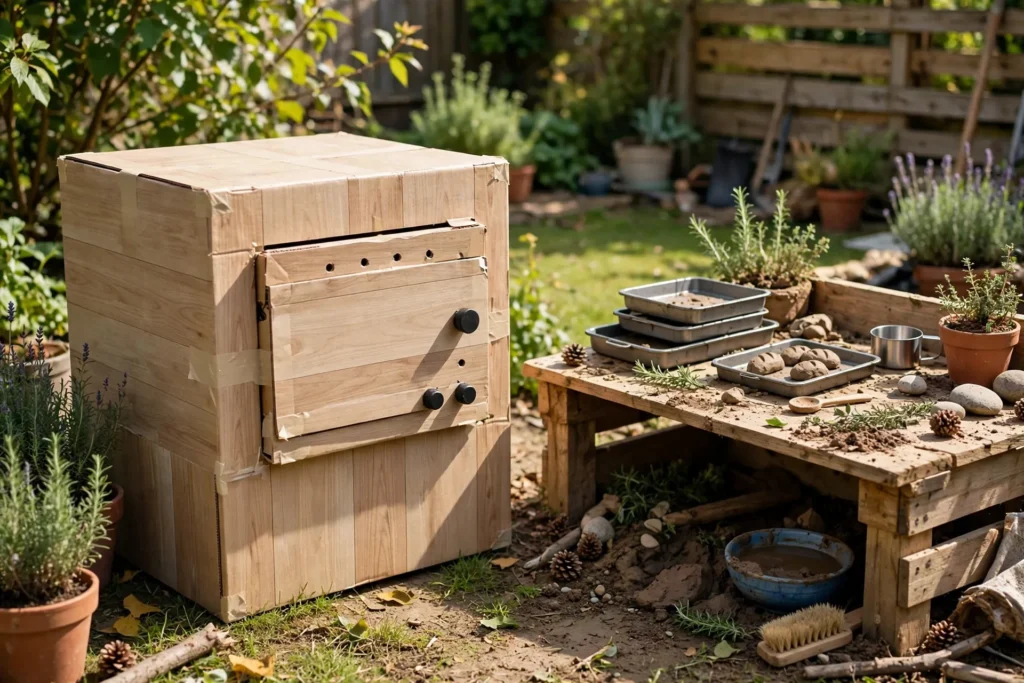
26. Cardboard Box Oven
A big cardboard box in wood-effect paper becomes a free oven — cut a door, add a shelf. Best for: zero-budget builds. Styling tip: paper dials. Pro tip: store it under cover in rain.
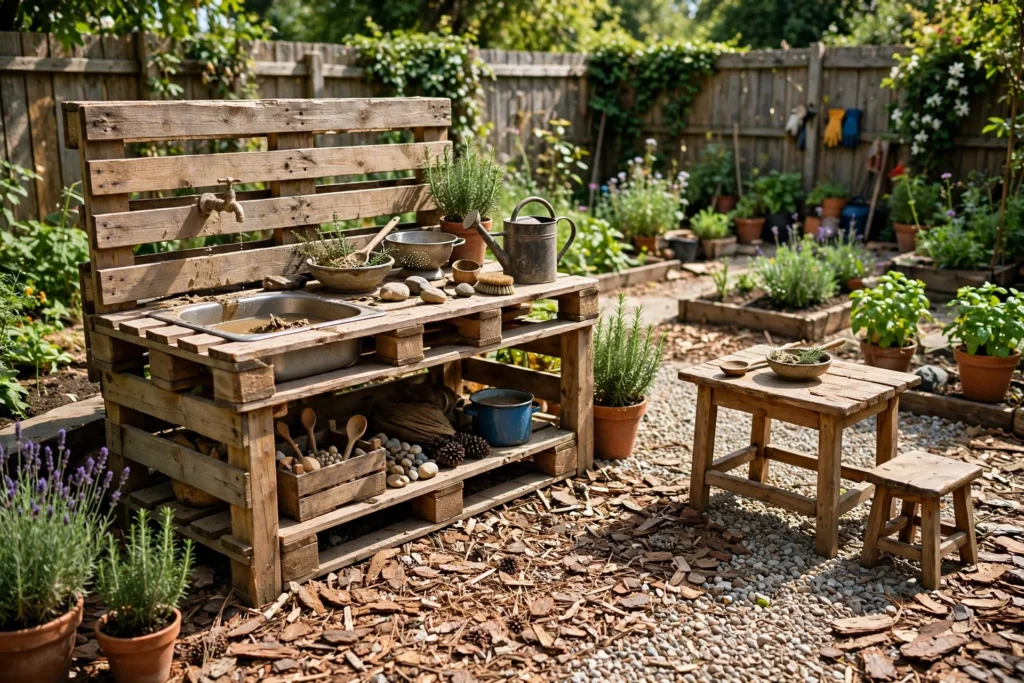
27. Wood Chip and Gravel Floor
Free wood chips or gravel under the kitchen keeps feet dry and stops the play area turning to swamp. Best for: wet gardens. Styling tip: edge it with log slices. Pro tip: ask tree surgeons.
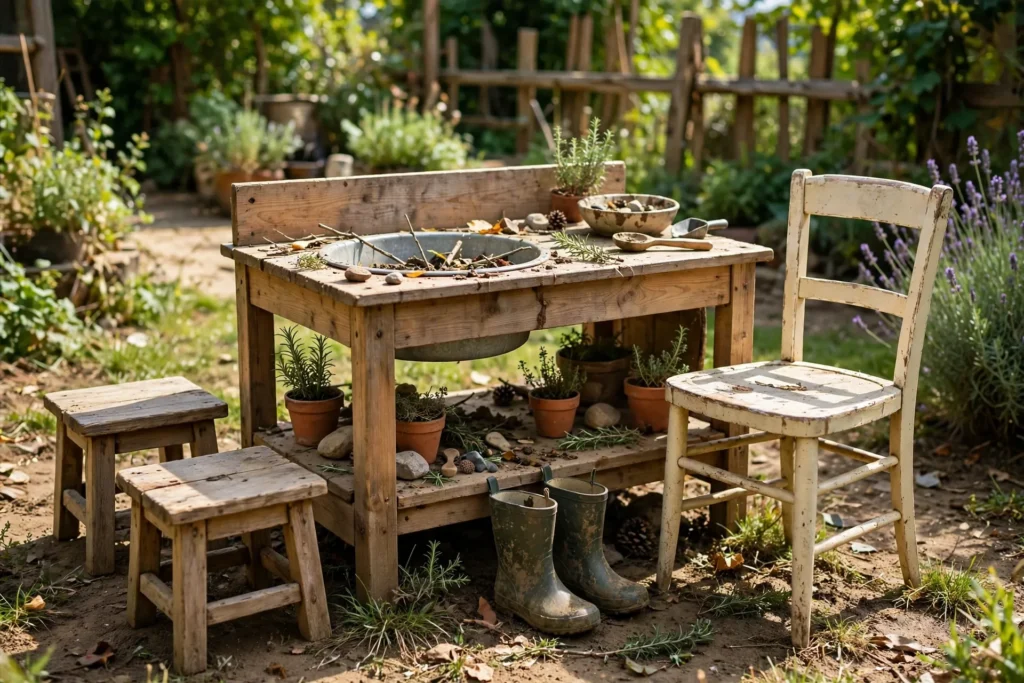
28. Old Chairs as Work Stools
Short old chairs from a charity shop give kids a place to sit and stir. Best for: longer play sessions. Styling tip: paint each a different colour. Pro tip: cut legs down to child height.
29. Seasonal Mud Pies
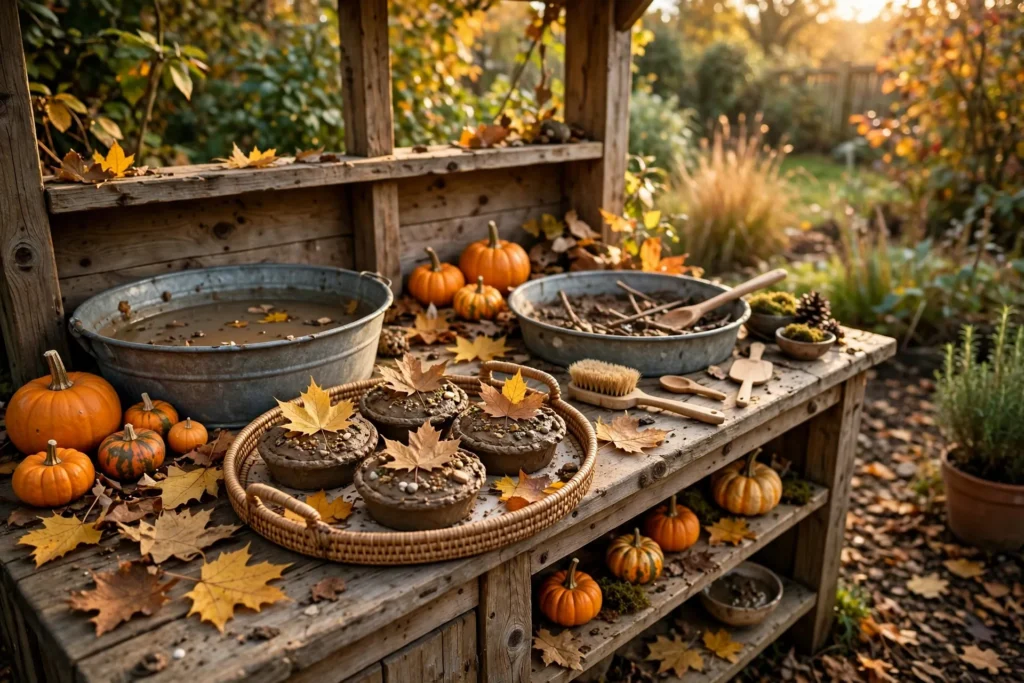
Keep the kitchen fresh all year: leaves and pumpkins in autumn, pine cones in winter. Best for: year-round play. Styling tip: swap a seasonal basket monthly. Pro tip: press leaves into mud pies.
Pick two or three of these ideas and start with the free pallet build — see our DIY mud kitchen ideas for the full guide — and your kids get a mud pie café for almost nothing.
How much does it cost to build a budget mud kitchen?
Most budget mud kitchens cost between nothing and about $50. A pallet or cinder block build is often free with reclaimed materials, while thrifted pots and utensils add only a few dollars. A small sink or rain barrel costs most, and even those stay cheap bought second-hand from salvage yards.
What is the cheapest way to build a mud kitchen?
The cheapest way is a no-build design: stack cinder blocks or crates, lay a plank across, and add bowls you already own. Ask shops for free pallets and crates, check charity shops for old pots and trays, and use soil and water from the garden — many families spend nothing.
Can I build a mud kitchen without tools?
Yes — several ideas here need no tools. A cinder block and plank kitchen stacks by hand, crates and buckets sit in place, and a thrifted play kitchen only needs cleaning. A drill helps for screws, but a basic mud kitchen works as a stack-and-place build kids can help assemble.
What materials are safe for a mud kitchen?
Use untreated or heat-treated pallets marked HT, never chemically treated wood marked MB. Choose plain garden soil without fertiliser pellets, and wash second-hand pots and trays before first use. Avoid flaking paint and sharp metal edges — sand them smooth. Food-grade containers and enamel bowls are safest for small hands.
How do I stop a budget mud kitchen from rotting?
Keep the kitchen off bare soil on bricks, gravel or wood chips so water drains away. Seal wood with outdoor oil or varnish, reapplying once a year. Cover the counter with a tarp in heavy rain, and empty buckets and basins after play so standing water cannot soak the wood.
What age is a mud kitchen best for?
Mud kitchens suit children from about 18 months to 8 years old. Toddlers love scooping, pouring and patting mud, while older children enjoy running a pretend café with menus and recipes. Keep the counter low, the water shallow, and always supervise young children around water, even in a small basin.
