
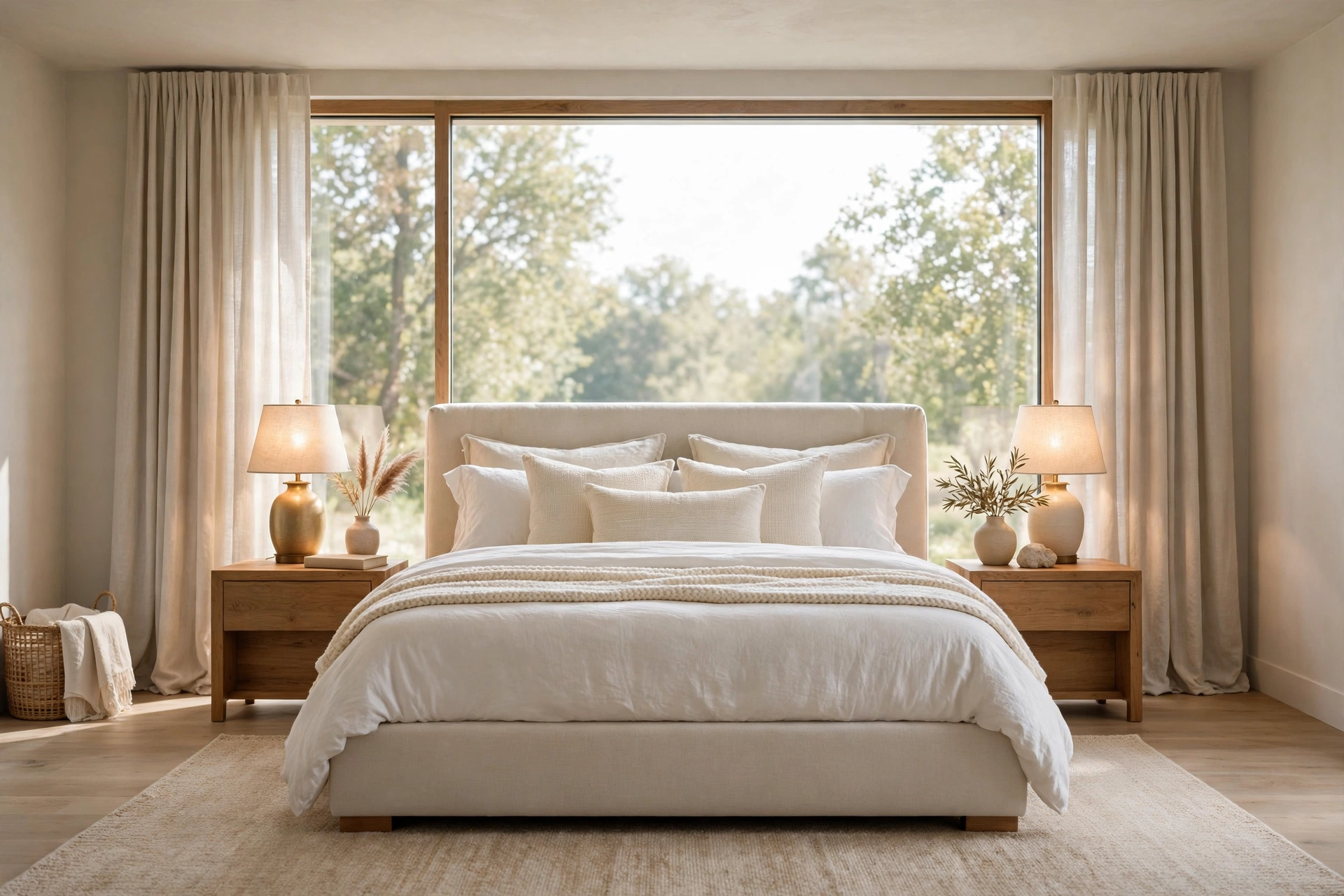
Small or sprawling, every bedroom works harder when the design basics are right. The good news is that the ideas with the biggest impact have almost nothing to do with square footage — they are about layout, light, colour and the few pieces of furniture you choose well. These 11 bedroom design ideas work just as well in a compact city room as in a generous master suite, so you can pick the ones that suit your space and your budget.
If you want more bedroom inspiration beyond layout basics, our 9 Bedroom Upgrades You Need Before Everyone Else Tries Them is full of clever finishing touches — and if your bedroom has an en-suite, our 17 Modern Bathroom Ideas That Look Expensive on a Budget will help you carry the same calm look next door.
1. Centre the Bed on the Longest Wall
The bed is the biggest piece of furniture in the room, so its position sets everything else. Placing it on the longest uninterrupted wall — ideally opposite or adjacent to the door — creates an instant sense of order and makes the room feel larger. In a small bedroom, this one move frees up the walls on either side for bedside tables and keeps the walking path clear.
2. Make a Statement with the Headboard
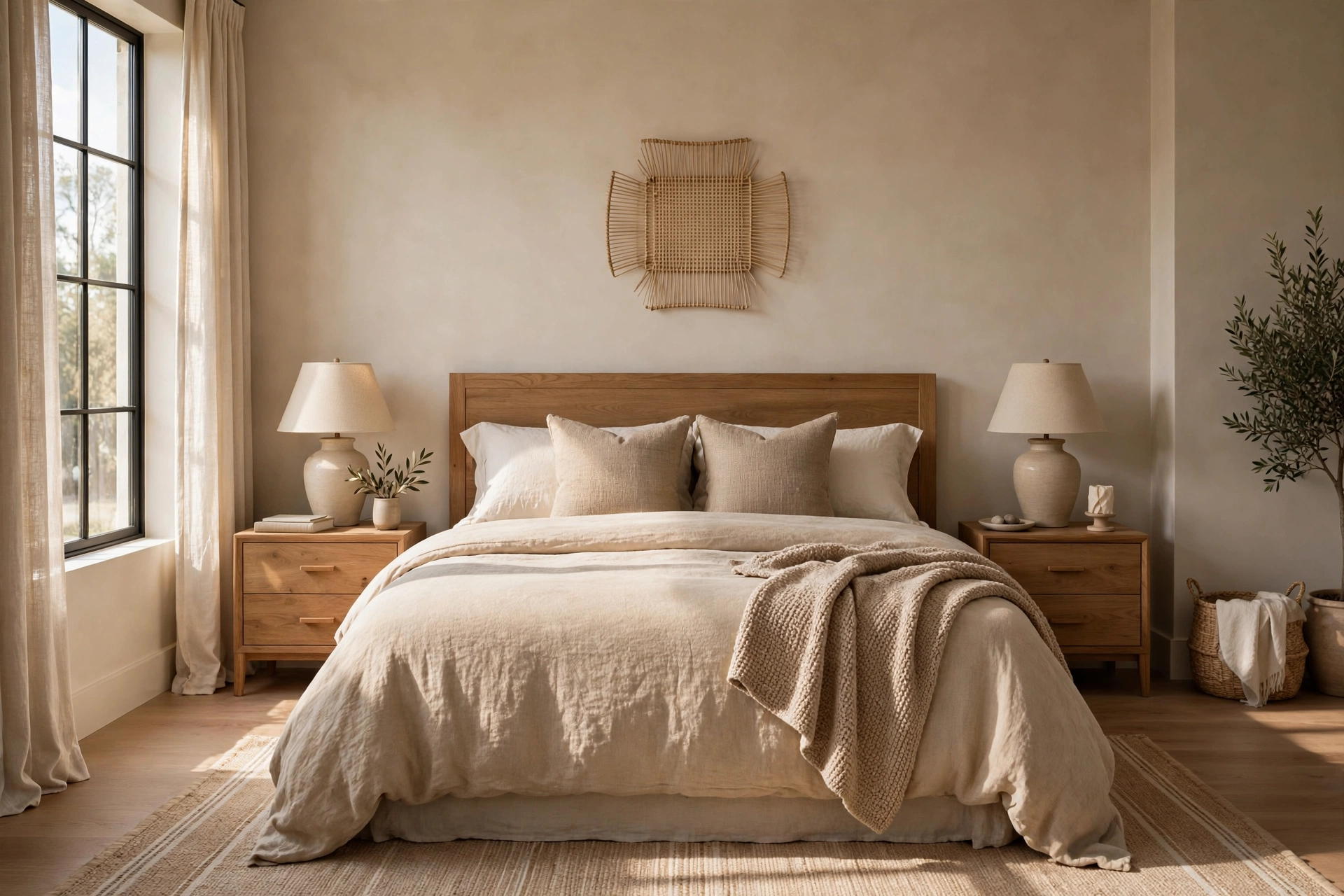
A great headboard gives the eye somewhere to land and makes even a simple bed look considered. A tall upholstered headboard adds softness and works beautifully in large rooms, while a slim panel or wall-mounted design saves precious depth in tight spaces. Pick one with a shape you love — arched, rectangular or wingback — and let it be the room’s anchor.
3. Go Big on Lighting Layers
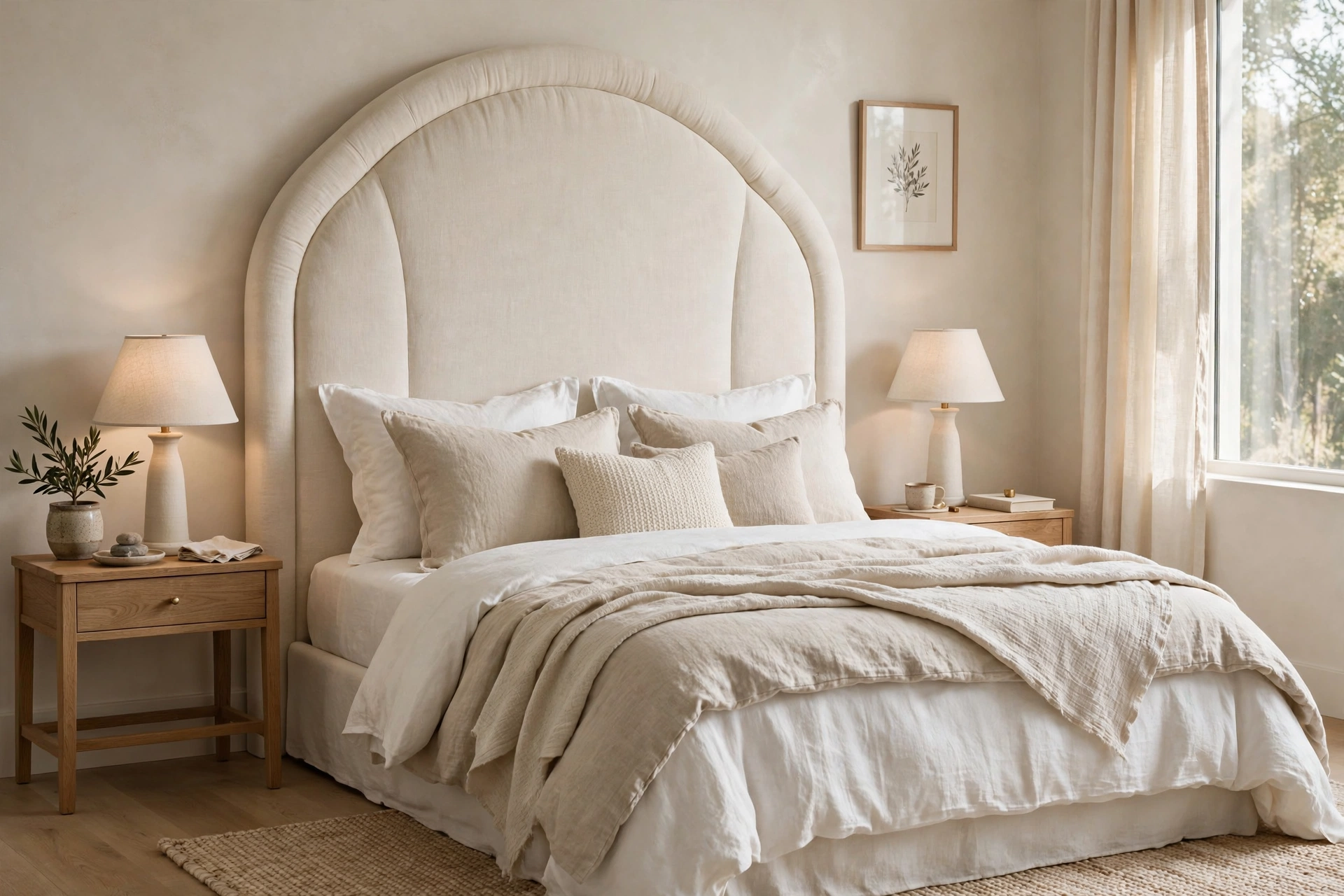
One overhead light flattens a room; three or more light sources give it depth. Combine a ceiling fixture with two bedside lights, then add one more — a floor lamp in a corner or a picture light over art. In smaller rooms, swap table lamps for wall sconces or hanging pendants to free up bedside surface space without losing the layered effect.
4. Pick One Calm Colour Palette
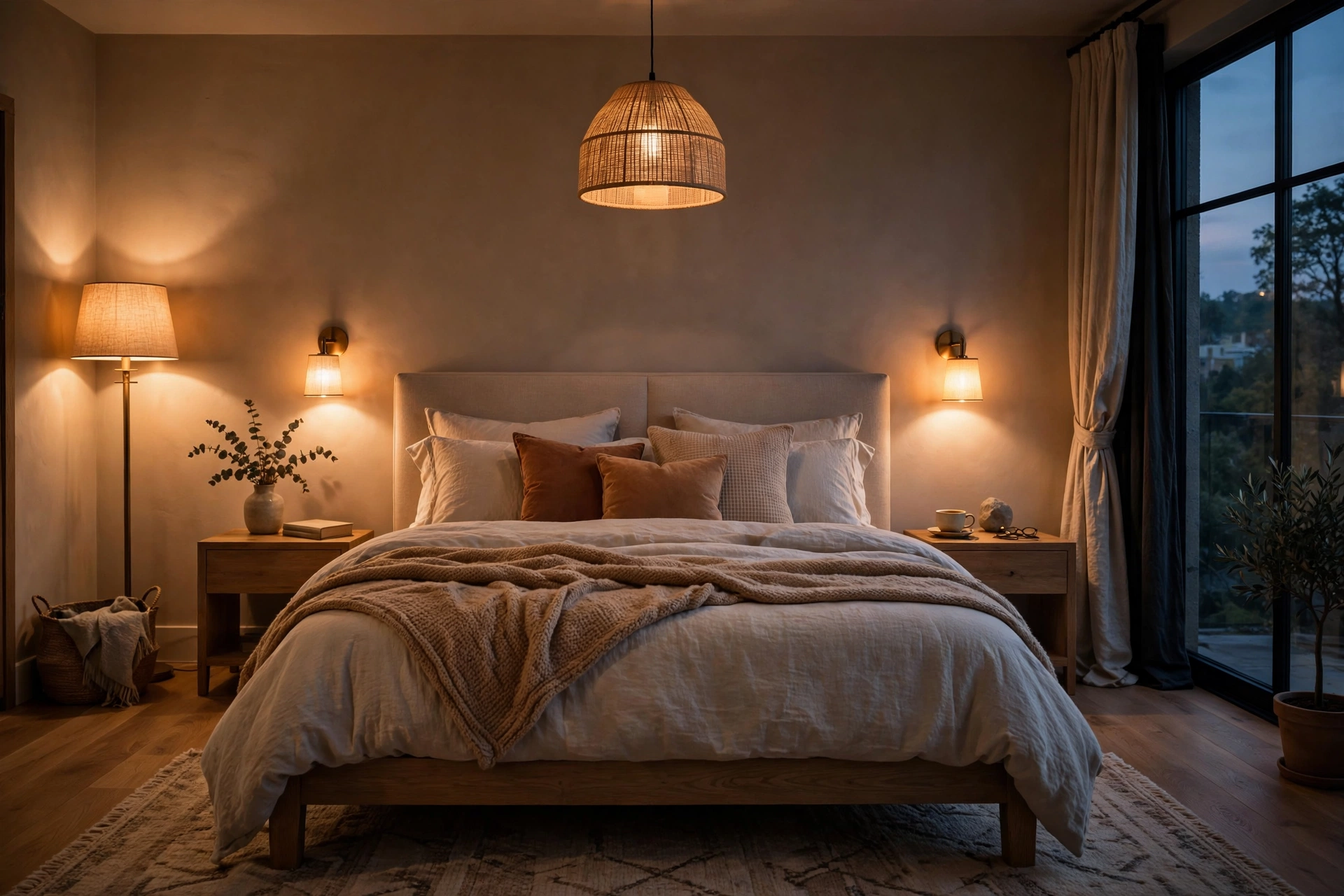
Rooms of any size feel bigger and more restful when the palette is consistent. Start with a neutral base — warm white, soft grey or gentle beige — then add one accent colour through bedding, cushions or art. Keep walls, curtains and larger furniture in the same family of tones so the room reads as one calm whole rather than a collection of competing pieces.
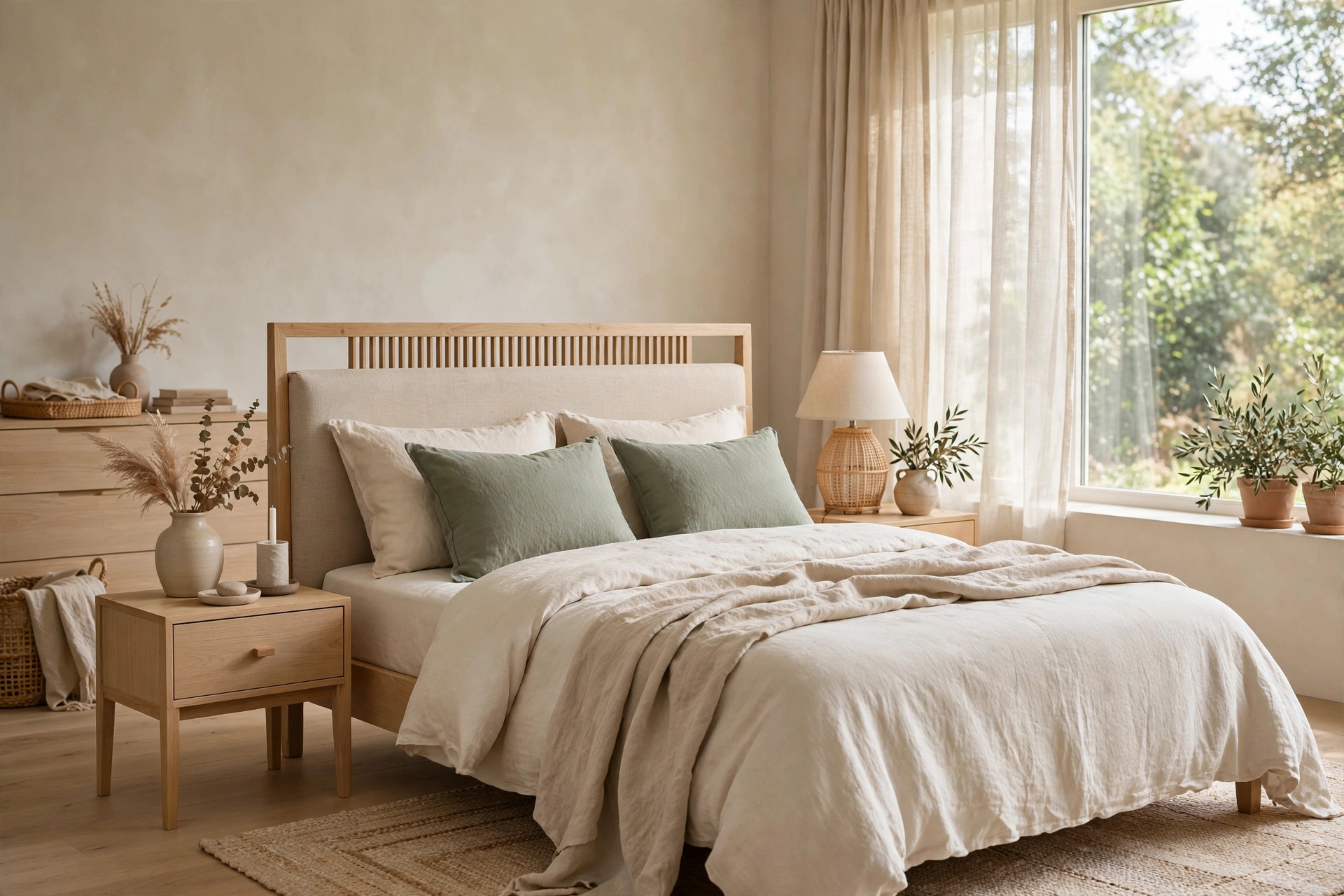
5. Hang Curtains High and Wide
Curtains hung just below the ceiling, extending well past the window frame, make ceilings look taller and windows look grander. It is one of the cheapest visual tricks in interior design and it works in every room size. Choose a fabric that grazes the floor, and mount the rod at least 15 centimetres wider than the frame on each side so the window feels generous.
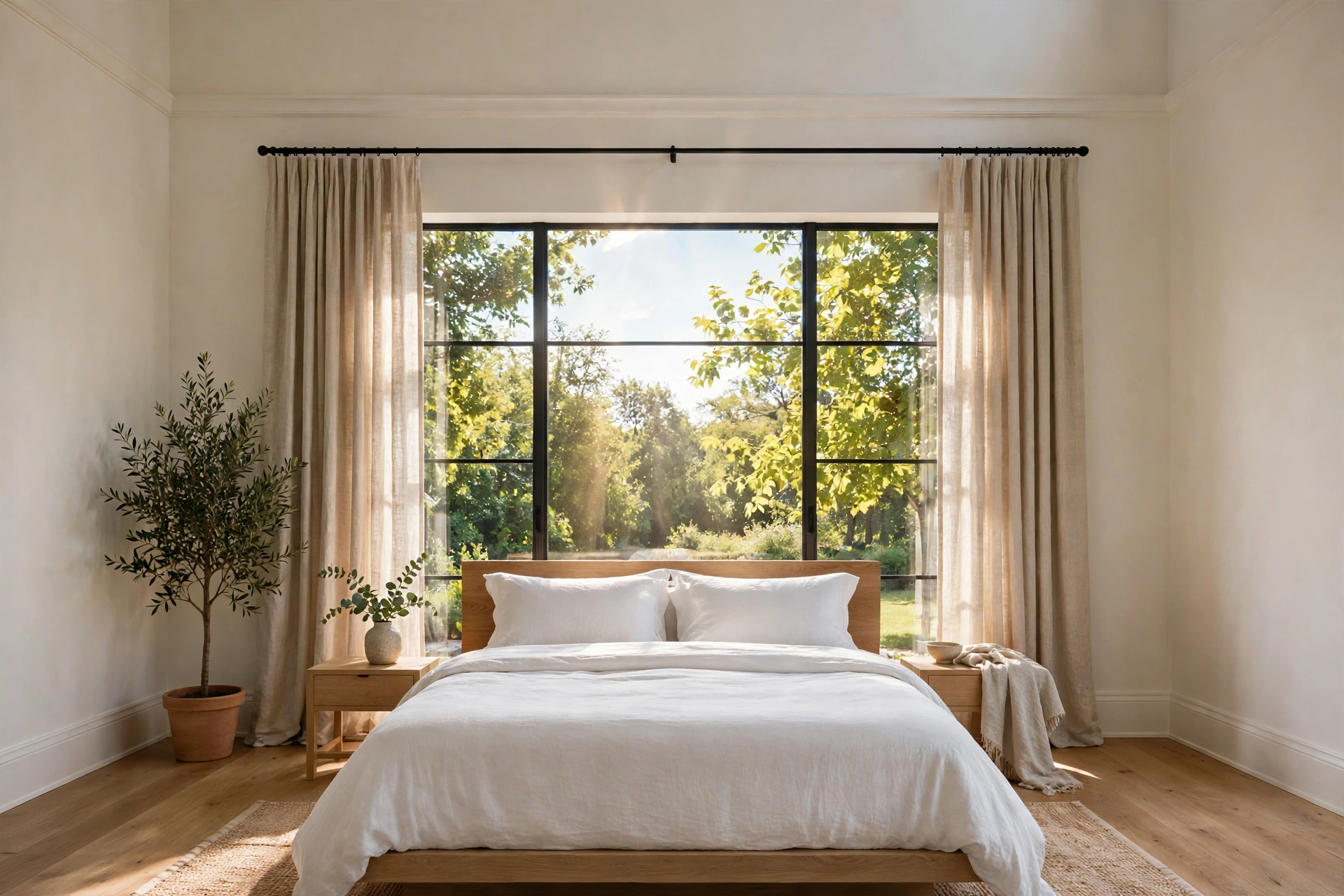
6. Use a Properly Sized Rug
A rug that is too small chops the room up and makes it feel smaller than it is. Aim for a rug large enough to extend past the sides and foot of the bed — you should be able to stand on it when you get out of bed. In very small rooms, place a smaller rug partially under the lower two-thirds of the bed instead of skipping one altogether.
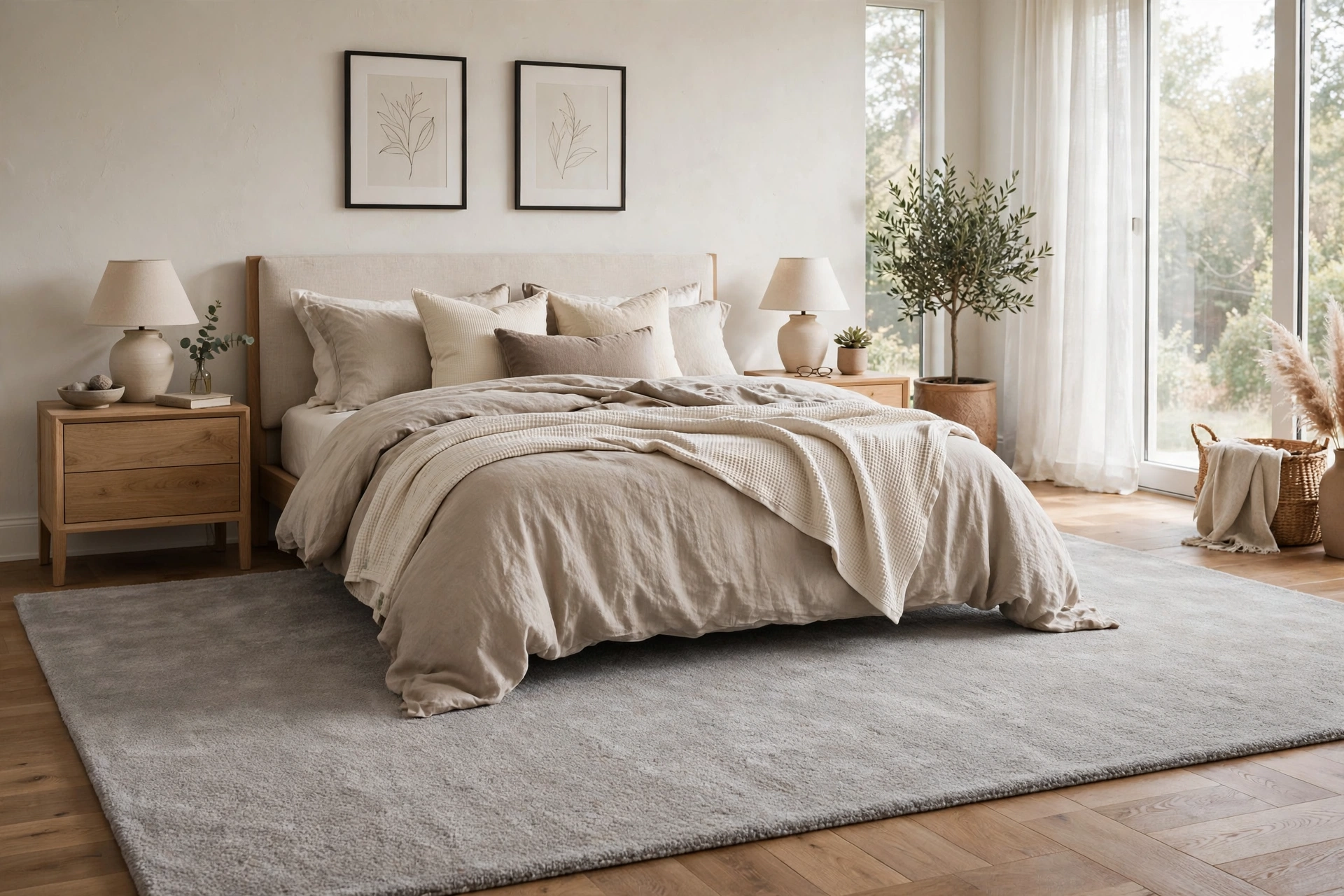
7. Borrow Space with a Mirror
Mirrors are the oldest trick in small-space design because they genuinely work: a large mirror opposite or beside a window bounces daylight around the room and doubles the visual depth. A full-length leaning mirror needs no installation and works in any size room, while mirrored wardrobe doors combine storage with the same space-expanding effect.
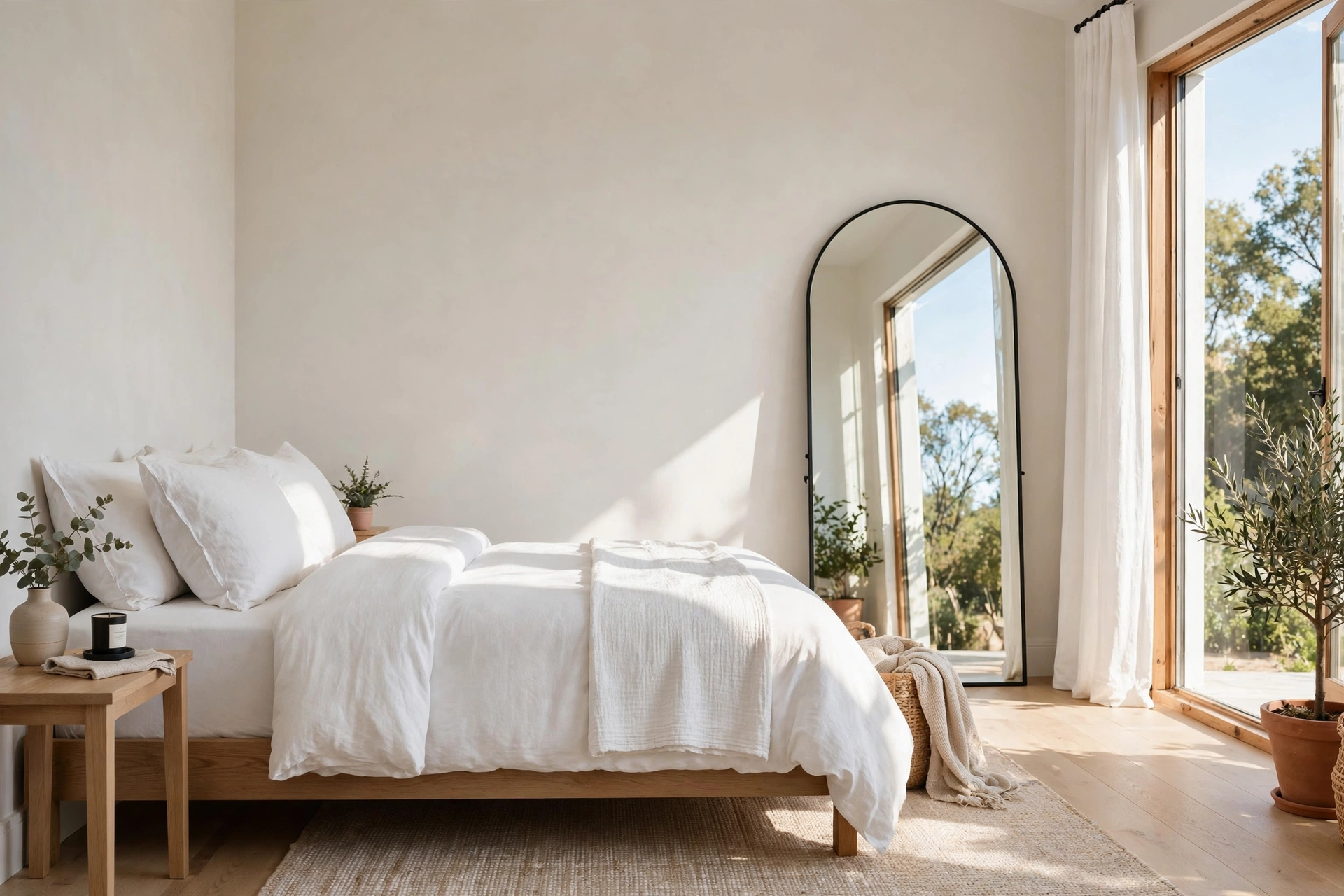
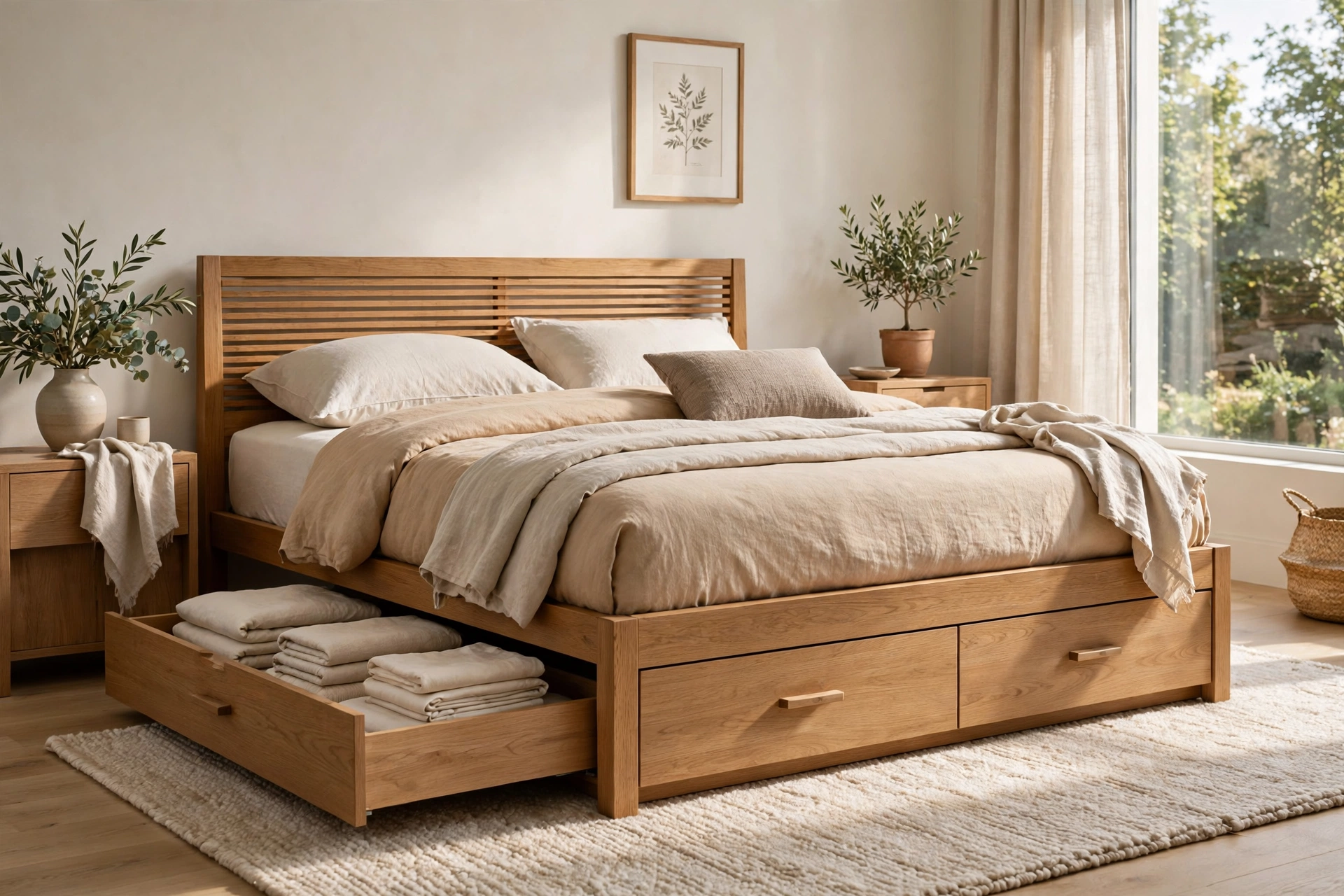
8. Put Dead Storage to Work Under the Bed
The space under the bed is the most underused square footage in most bedrooms. A bed with built-in drawers, or even simple lidded storage boxes, can swallow spare bedding, off-season clothes and shoes. In a large room it keeps the wardrobe tidy; in a small room it can replace an entire dresser, freeing up floor space for a chair or reading nook.
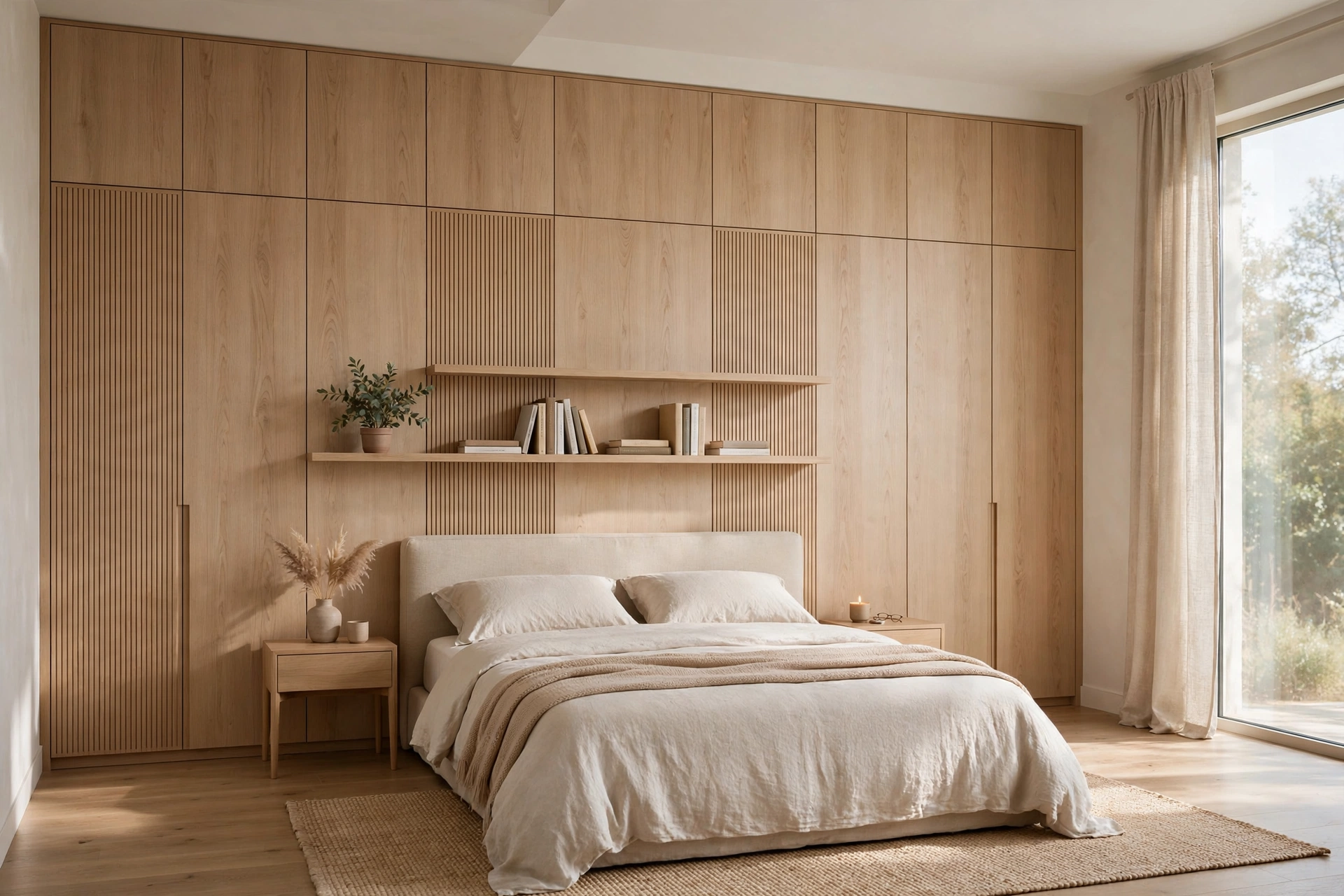
9. Think Vertically with Storage
When floor space is limited — or when you want a large room to stay uncluttered — use the walls. Tall wardrobes that reach the ceiling, floating shelves above the bed and a narrow bookshelf all add capacity without eating into walking space. Keep shelving to one or two edited displays; overfilled shelves make any room feel crowded.
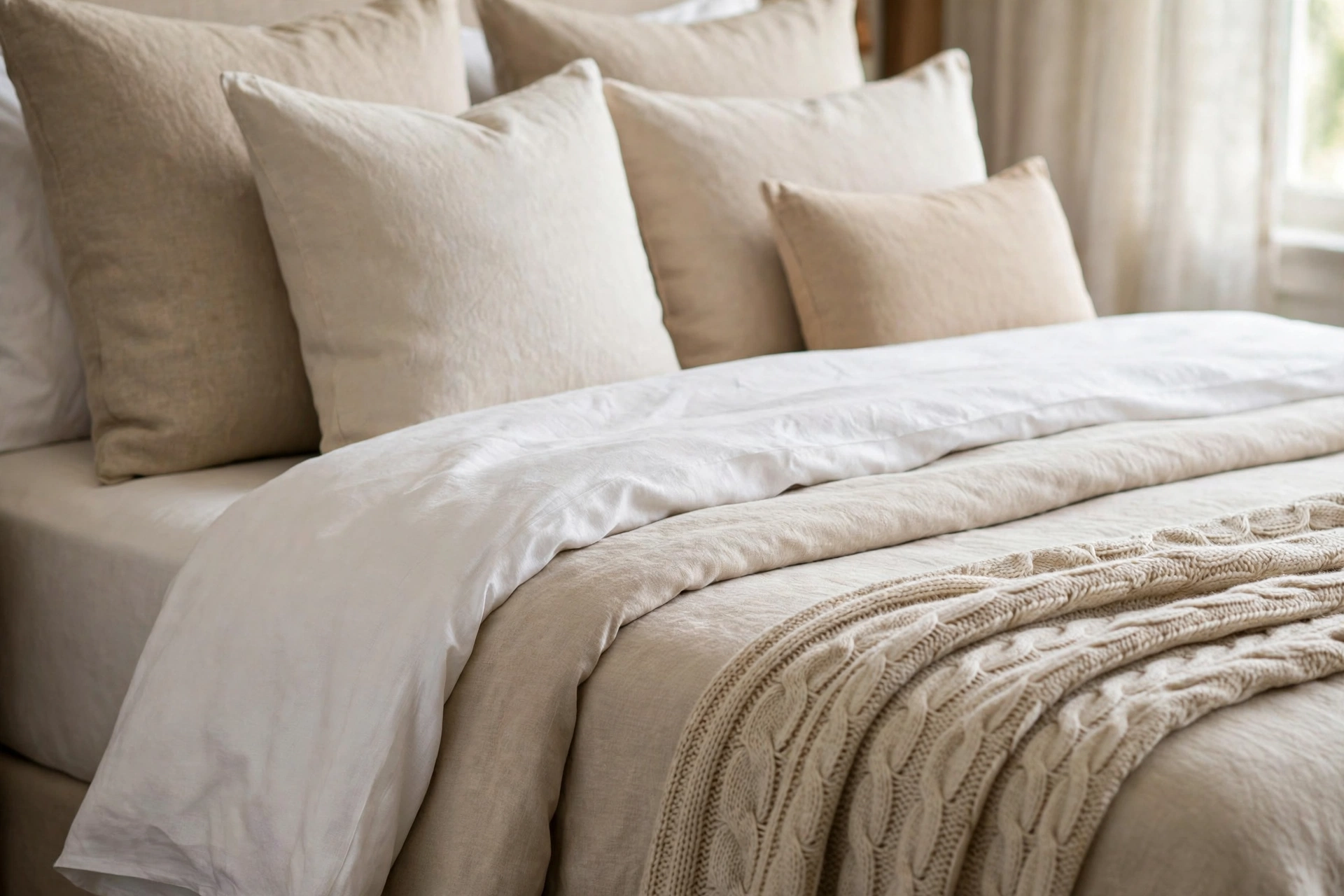
10. Layer the Bedding Like a Hotel
Hotels make beds look inviting with layers, not expensive linens: a fitted sheet, a duvet folded back a third of the way, a flat throw across the foot, and pillows arranged tall to short. Keep the colours low-contrast and add texture — linen, knit, velvet — rather than busy patterns. The result reads as luxurious in rooms of every size and costs far less than new furniture.
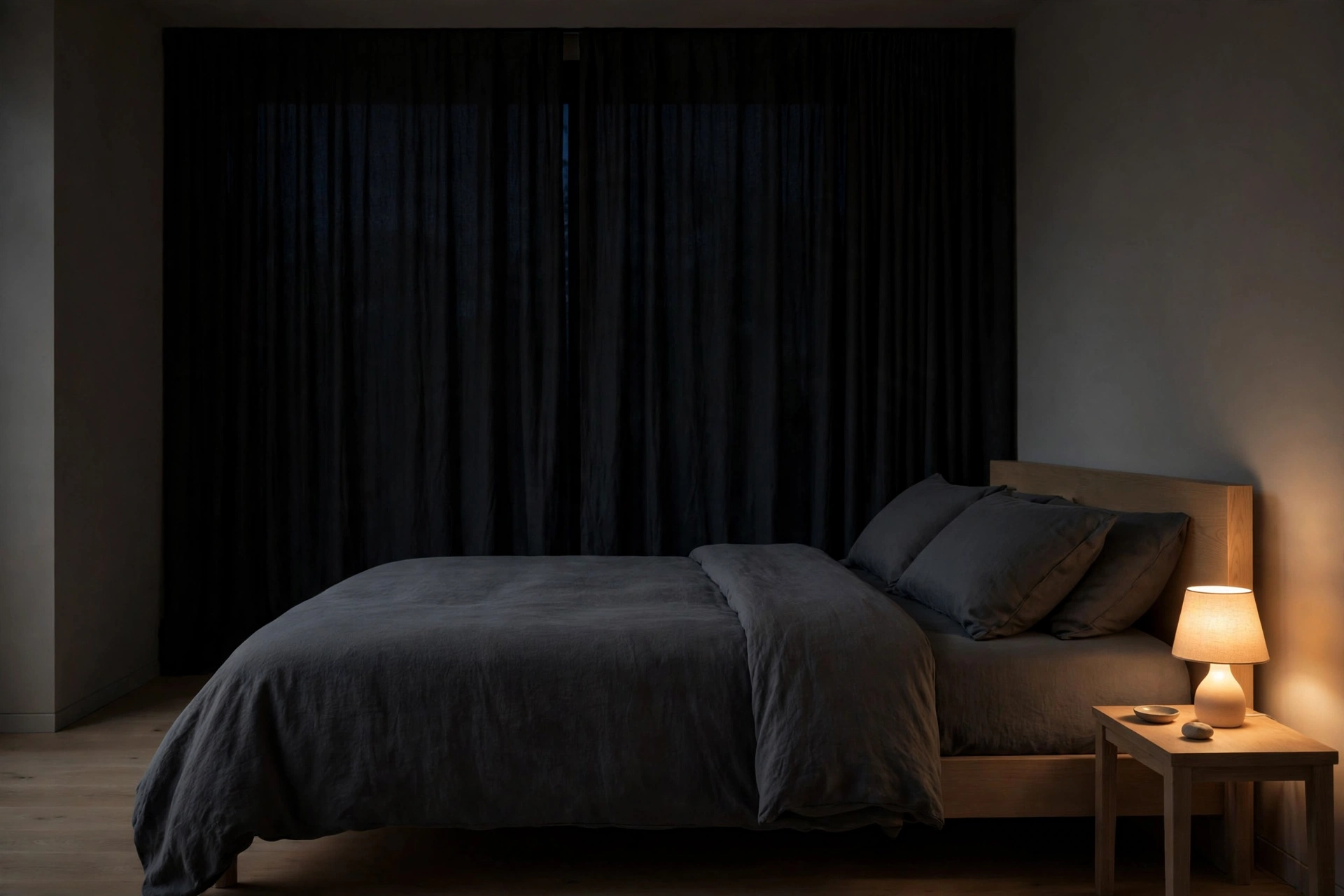
11. Design for Sleep, Not Just Looks
A beautiful bedroom should also help you sleep. Keep the room cool, dark and quiet — the Sleep Foundation recommends keeping the bedroom between about 65 and 68°F and using blackout curtains or a sleep mask to block early-morning light. Keep screens out of sight where you can, and finish with a calming scent like lavender to signal to your body that the day is done.
Frequently Asked Questions
What is the most important bedroom design rule for a small room?
Keep the layout simple and the palette light. One clear walking path, a bed against the longest wall, and light walls with layered lighting will make even the smallest room feel open and intentional.
Where should the bed go in a bedroom layout?
Centre the bed on the longest uninterrupted wall, ideally facing or beside the door. This gives the room a natural focal point, leaves room for bedside tables on both sides, and suits rooms of any size.
What colour makes a bedroom look bigger?
Light, warm neutrals — soft white, warm beige, pale grey — reflect the most light and make walls feel further away. Keep the ceiling in the same or a slightly lighter shade to add height, and bring in colour through smaller, changeable items like bedding and art.
How can I make my bedroom cosy without cluttering it?
Layer textures rather than adding objects: a knit throw, linen cushions, a soft rug and warm lighting create cosiness through touch, not stuff. Limit decor to a few meaningful pieces per surface.
How many light sources should a bedroom have?
Aim for at least three: one ambient (ceiling), one or two task lights (bedside), and one accent (floor lamp, picture light or LED strip). Layered lighting works in any size room and is the fastest way to make a bedroom feel designed.
Conclusion
Great bedroom design is not about square footage — it is about decisions. Centre the bed, layer the light, keep the palette calm and let one or two pieces do the talking. Try two or three of these ideas this weekend and you will feel the difference the same evening; add the rest over time and the room will keep getting better.
