
Wood brings warmth no other railing material can match. A baluster in oak, walnut or maple turns a plain staircase into the warm heart of the home. These 27 wood staircase railing ideas cover turned spindles, modern slats, reclaimed timber and clever two-tone mixes for every style.
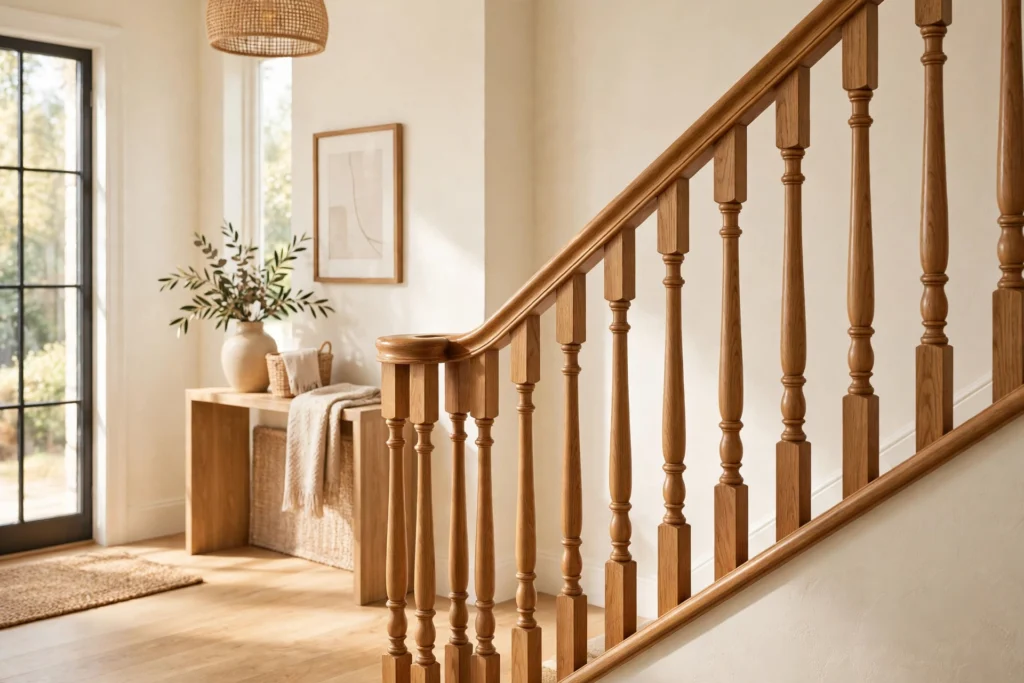
1. Classic Turned Oak Balusters
Turned oak balusters are the timeless choice, their gentle curves suiting traditional and transitional homes. Best for: classic entryways. Styling tip: honey oak stain, cream walls. Pro tip: match the newel post profile to the balusters.
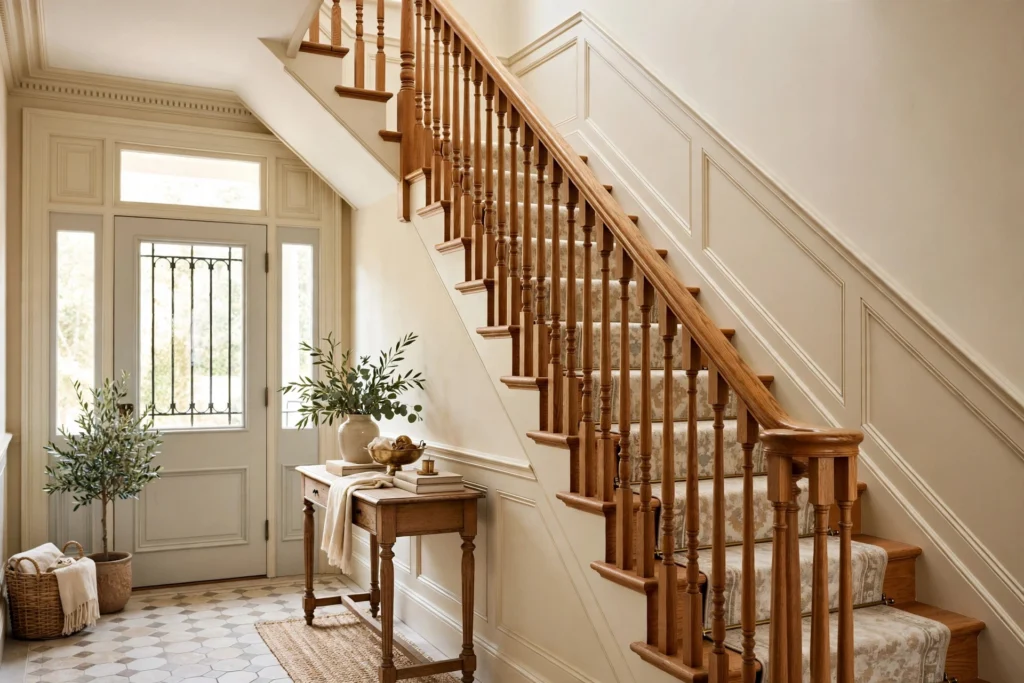
2. Natural White Oak Handrail
A natural white oak handrail shows pale, open grain that feels fresh and modern. Best for: Scandinavian and light interiors. Styling tip: white spindles. Pro tip: use a matte oil finish.
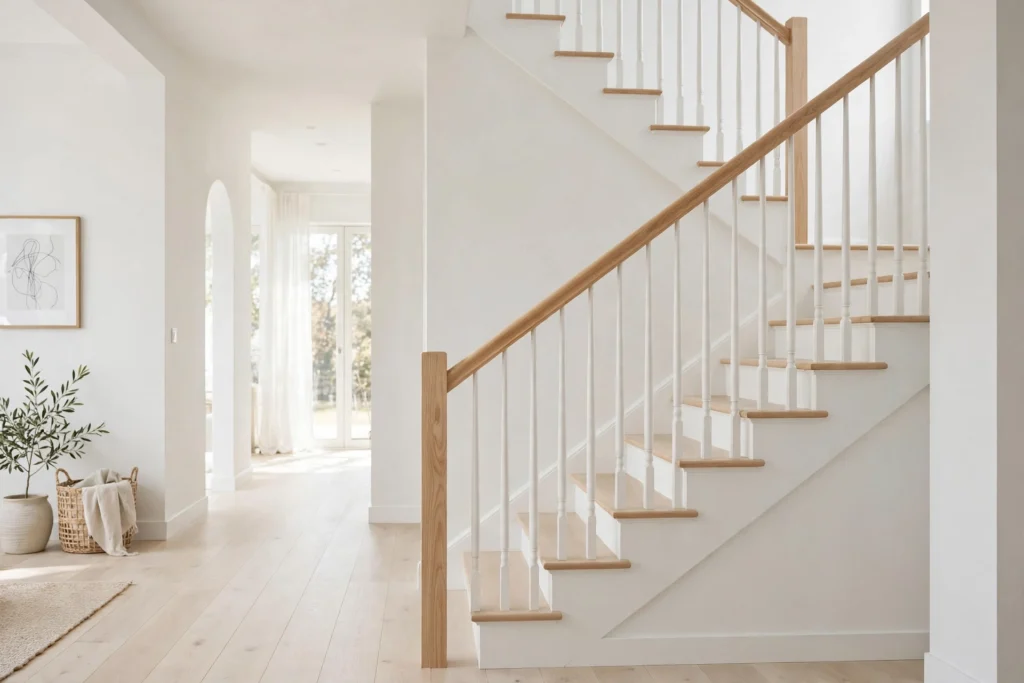
3. Dark Walnut Handrail With Black Iron Balusters
Dark walnut against slim black iron balusters is rich, moody and quietly luxurious. Best for: modern and transitional homes. Styling tip: black newel caps. Pro tip: keep walnut oiled, not varnished.
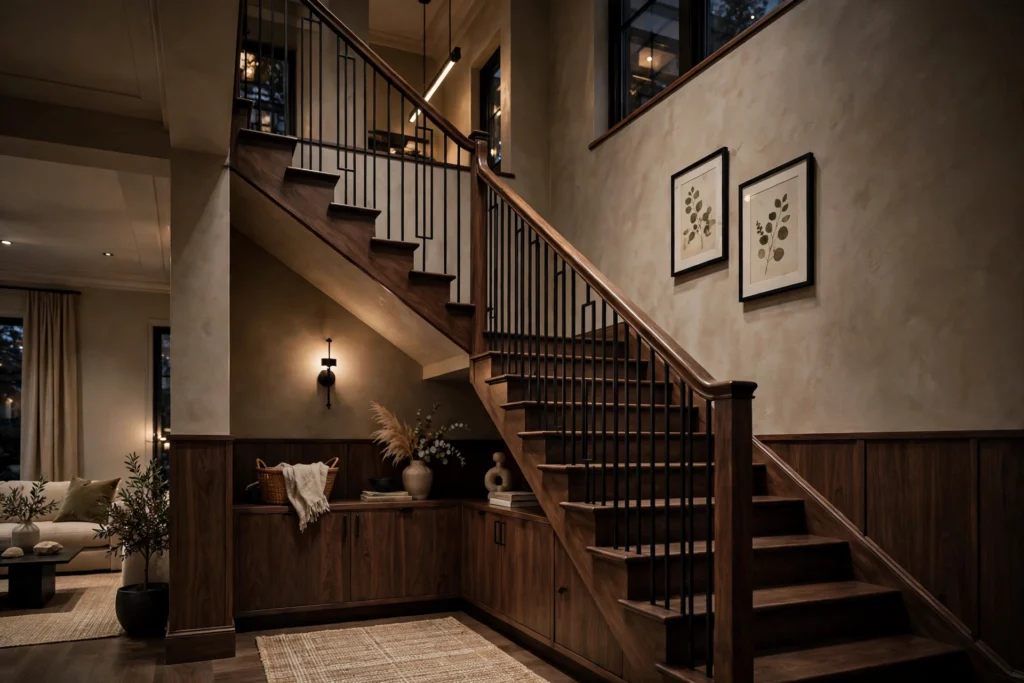
4. White Spindles With a Stained Handrail
White spindles with a stained handrail is the most forgiving two-tone mix, light on the stair and warm at hand. Best for: farmhouse and family homes. Styling tip: walnut rail, white risers. Pro tip: paint spindles before fitting.
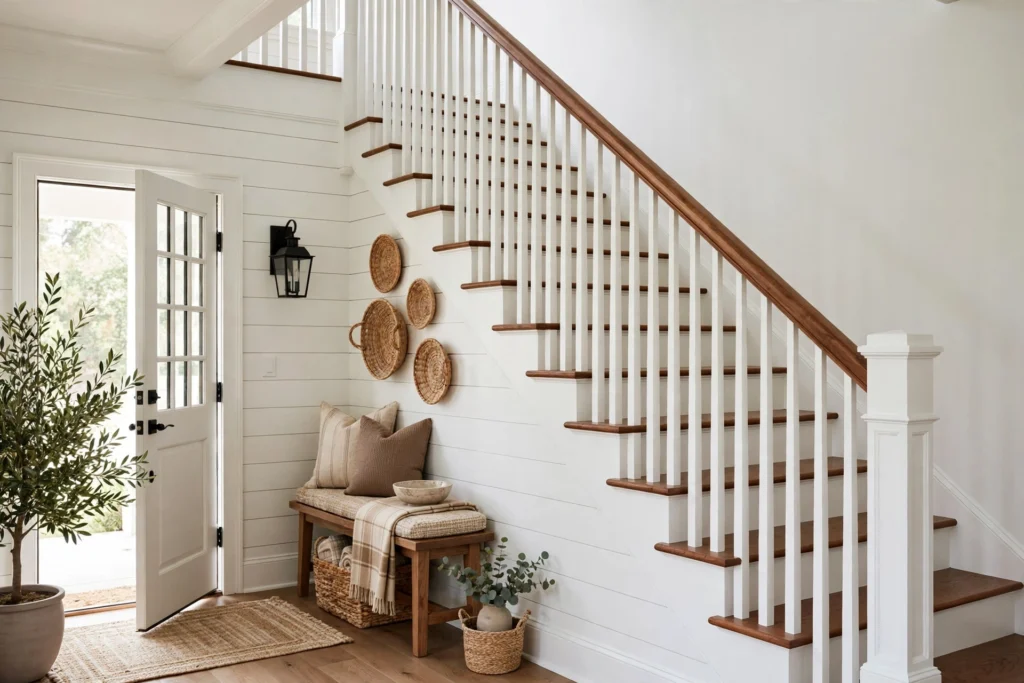
5. Slim Square Balusters for a Craftsman Look
Slim square balusters give a clean Craftsman line, honest and easy to dust. Best for: Craftsman and Shaker homes. Styling tip: square newels, warm stain. Pro tip: keep spacing even.
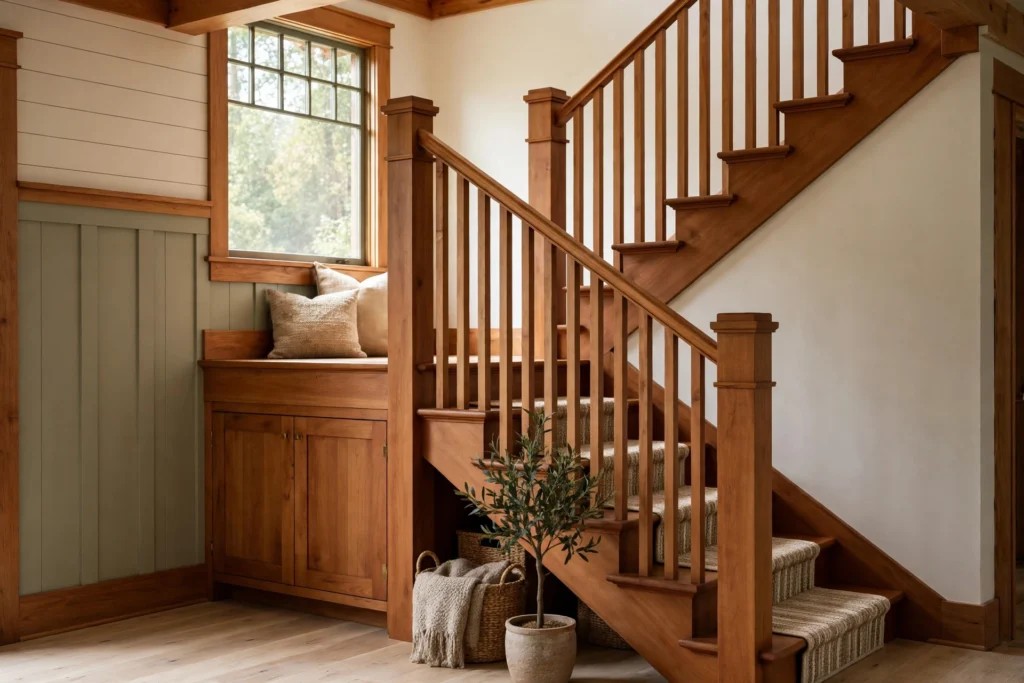
6. Horizontal Wood Slats
Horizontal wood slats run like a warm fence along the stair, open and modern. Best for: contemporary and mid-century homes. Styling tip: pale oak slats. Pro tip: check local code first.
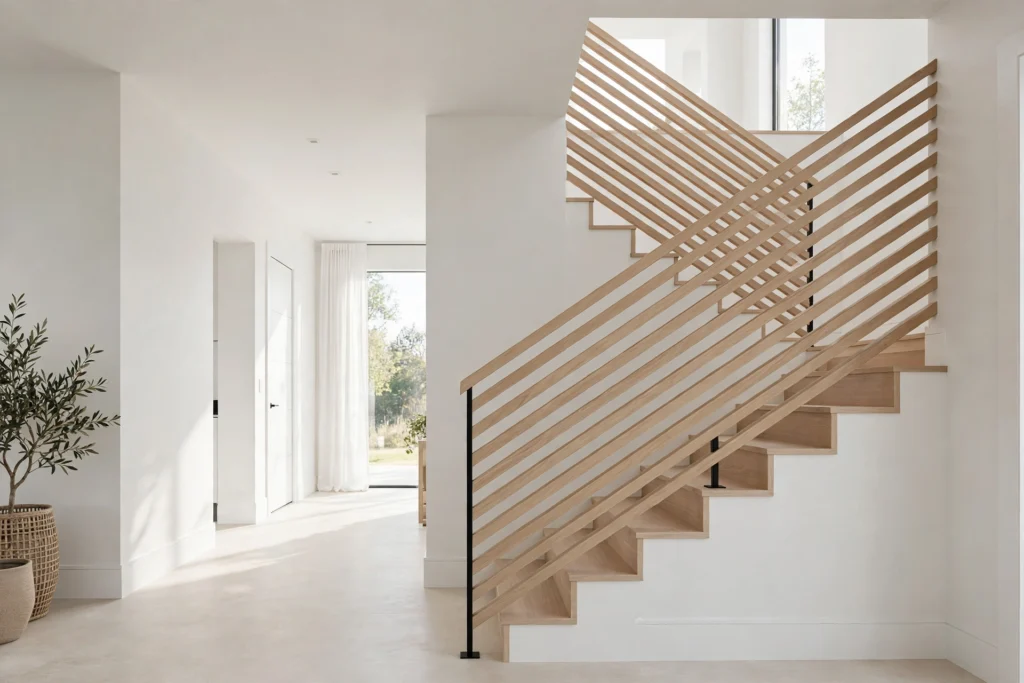
7. Reclaimed Barn Wood Railing
Reclaimed barn wood brings nail holes, saw marks and a century of character. Best for: rustic and farmhouse homes. Styling tip: rough timber, black brackets. Pro tip: seal reclaimed wood well. Pair it with a broader staircase design plan so the rustic rail suits the whole hall.
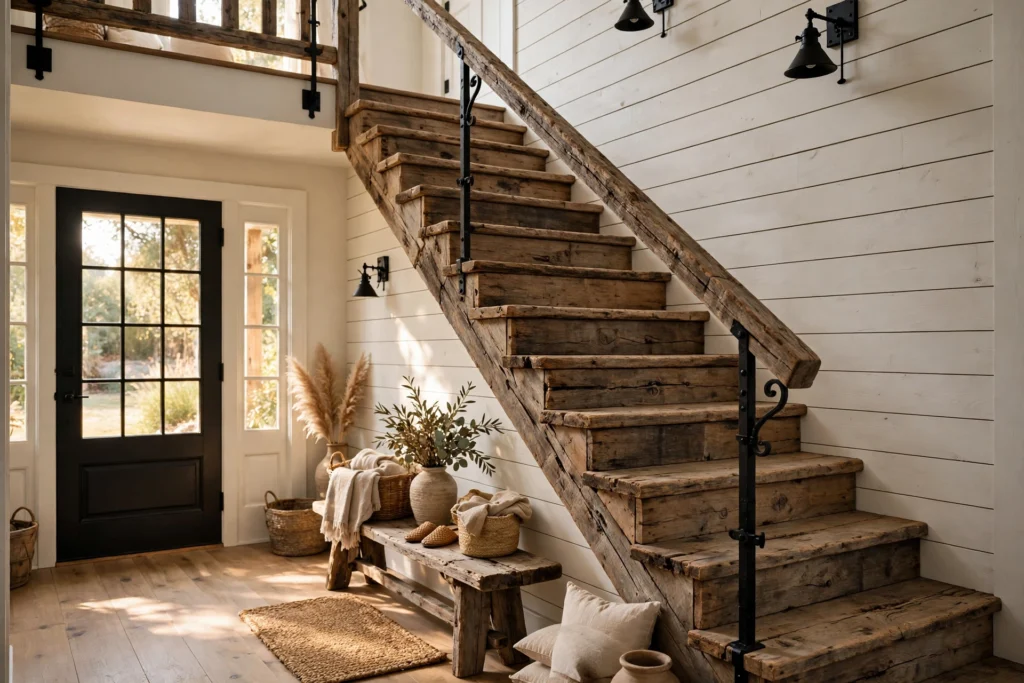
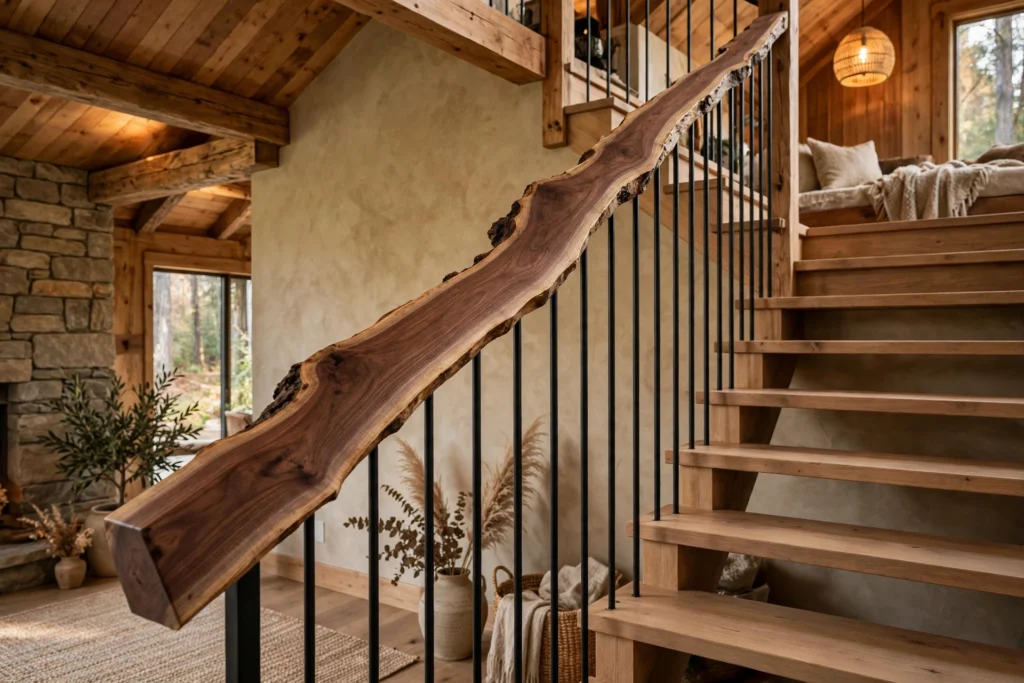
8. Live-Edge Wood Handrail
A live-edge handrail keeps the tree’s natural edge, so no two stairs ever match. Best for: organic and cabin-style homes. Styling tip: walnut slab rail, black spindles. Pro tip: sand the live edge smooth.
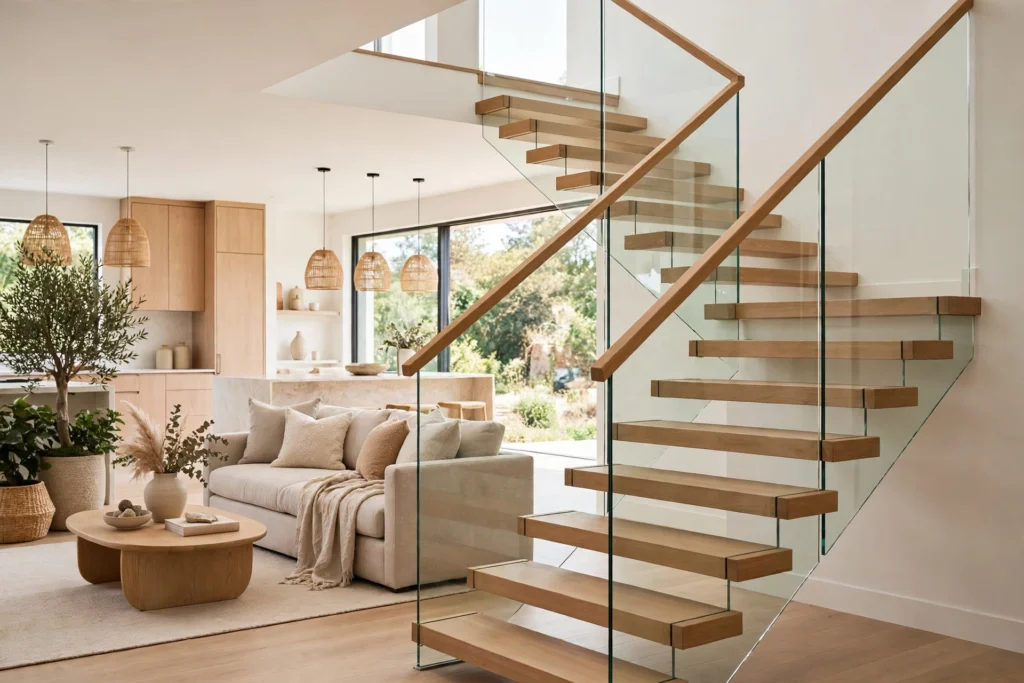
9. Wood Handrail With Glass Panels
A wood handrail over clear glass panels keeps the warmth and opens the view. Best for: open-plan and light-filled homes. Styling tip: oak rail, frameless glass. Pro tip: use toughened glass in grooved oak shoes.
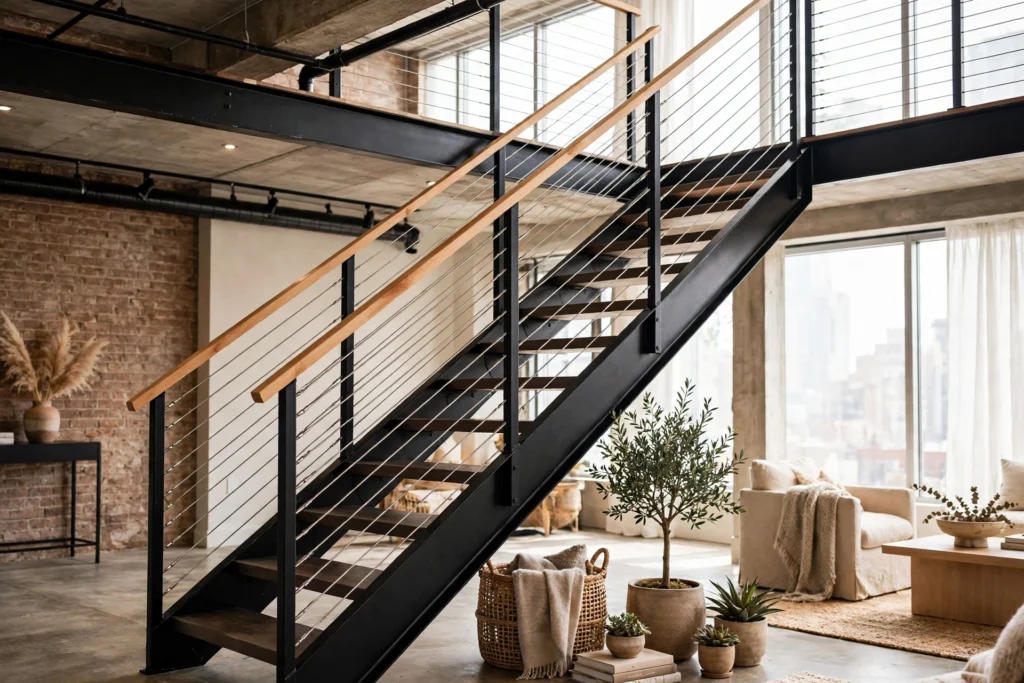
10. Wood Handrail With Steel Cable Infill
Steel cables under a wood handrail feel airy and industrial, the wood softening the steel. Best for: lofts and modern homes. Styling tip: maple rail, black posts. Pro tip: tension cables properly.
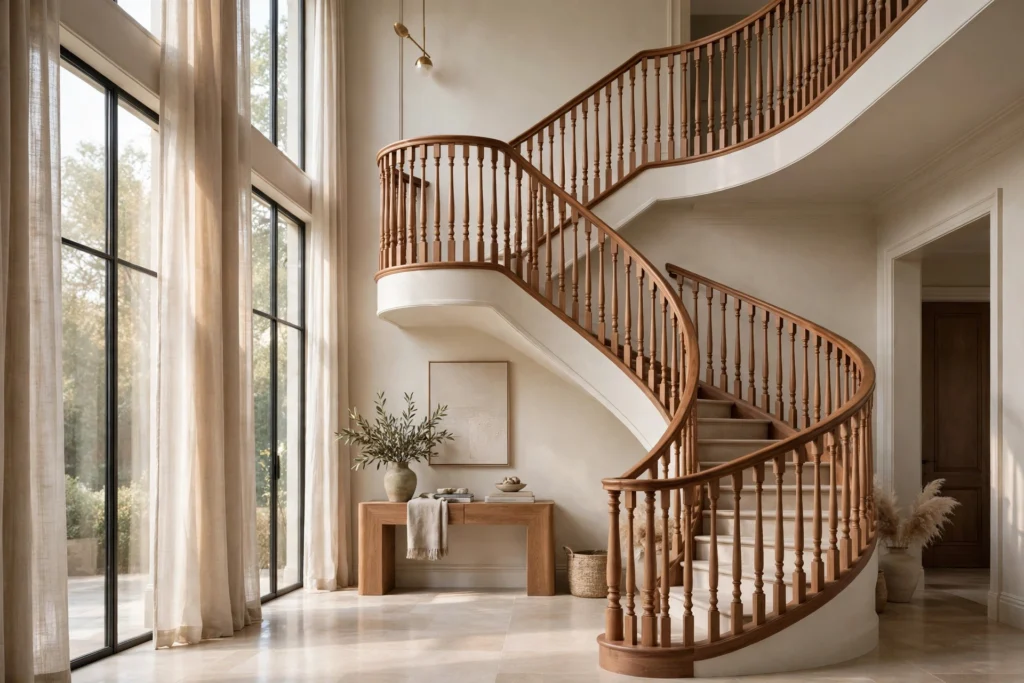
11. Curved Wood Handrail
A curved wood handrail sweeps around a landing or spiral stair like sculpture. Best for: grand and curved staircases. Styling tip: continuous grain. Pro tip: curved rails need a specialist joiner.
12. Chunky Square Newel Posts
Chunky square newel posts anchor the railing with solid presence. Best for: contemporary and Craftsman stairs. Styling tip: flat caps. Pro tip: make the newel slightly darker than the rail.
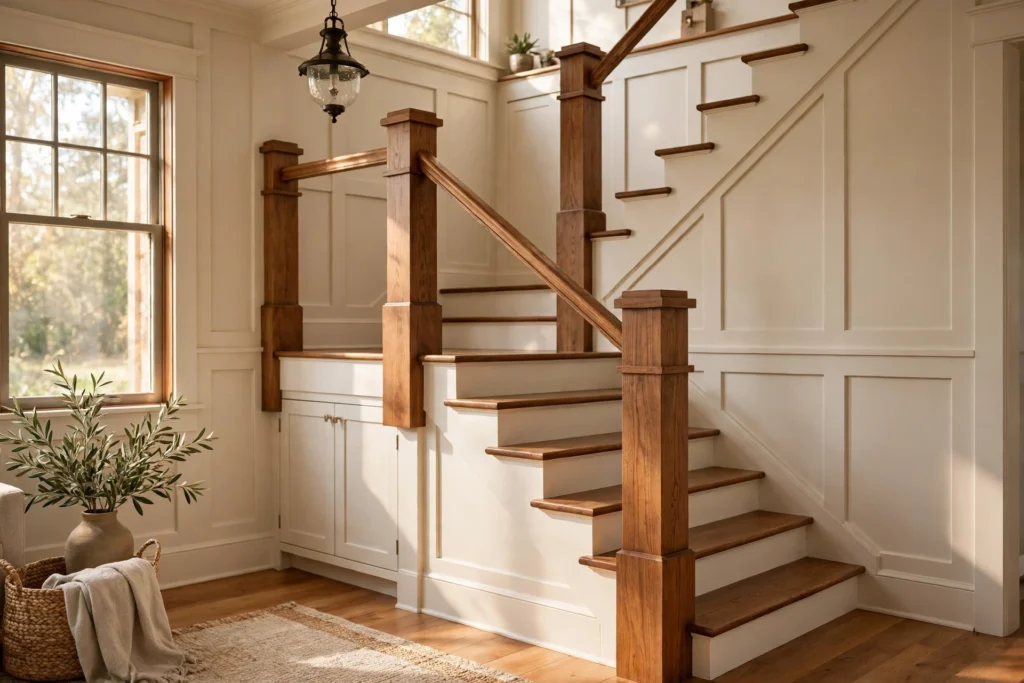
13. Painted Pine Cottage Railing
Painted pine in soft white or sage gives a cottage stair a fresh, chalky charm. Best for: cottages and coastal homes. Styling tip: sage paint. Pro tip: pine dents easily.
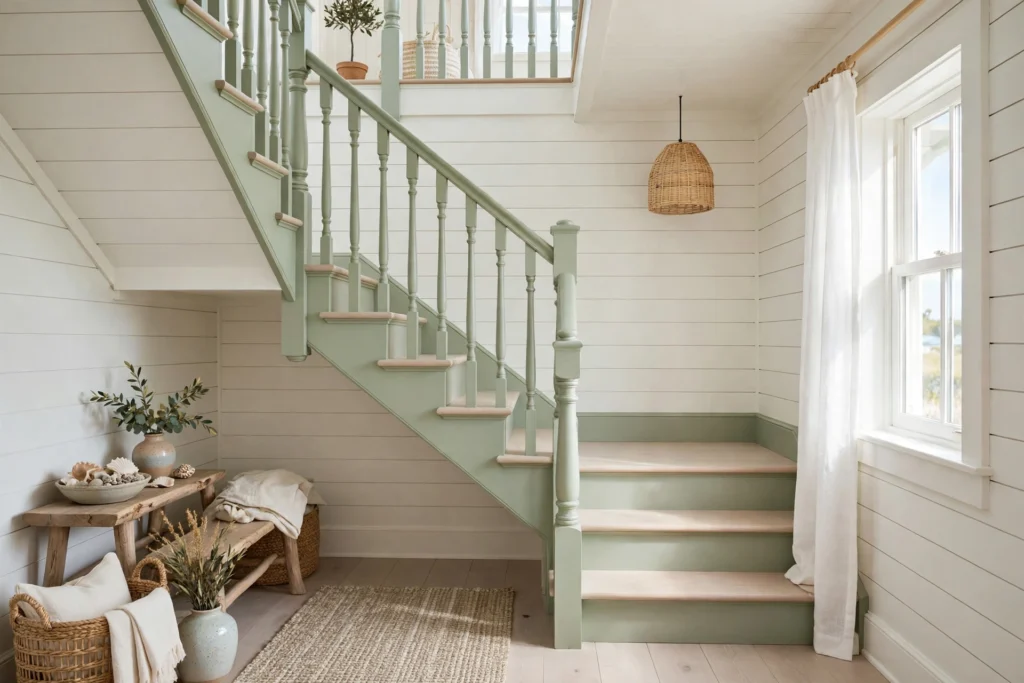
14. Maple Handrail Matched to the Floor
A maple handrail matched to maple floors makes the stair feel built into the house. Best for: calm, cohesive interiors. Styling tip: same stain and sheen. Pro tip: test stain on offcuts first.
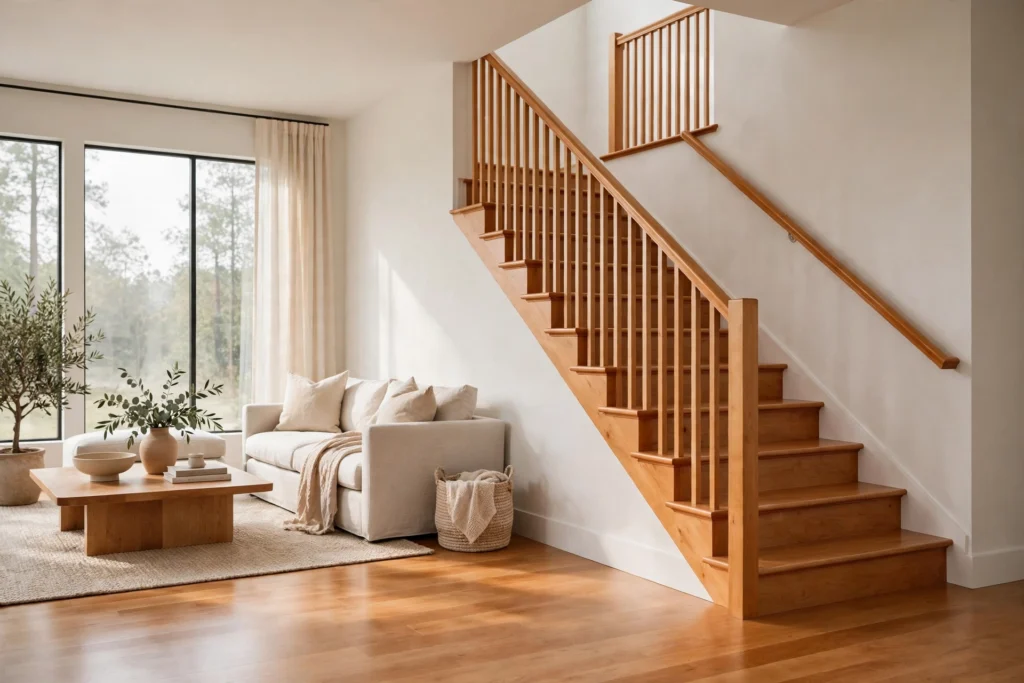
15. Light Oak Rail Against Dark Treads
Light oak rails against dark walnut treads create a striking contrast. Best for: bold modern halls. Styling tip: dark runner. Pro tip: repeat the light oak in a bench or shelf.
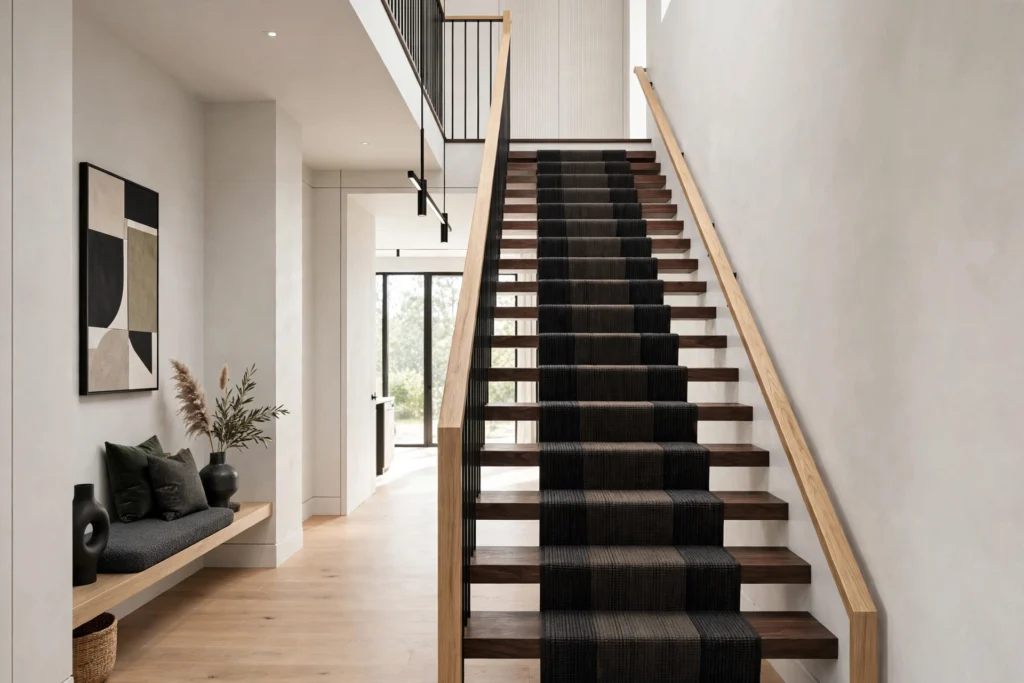
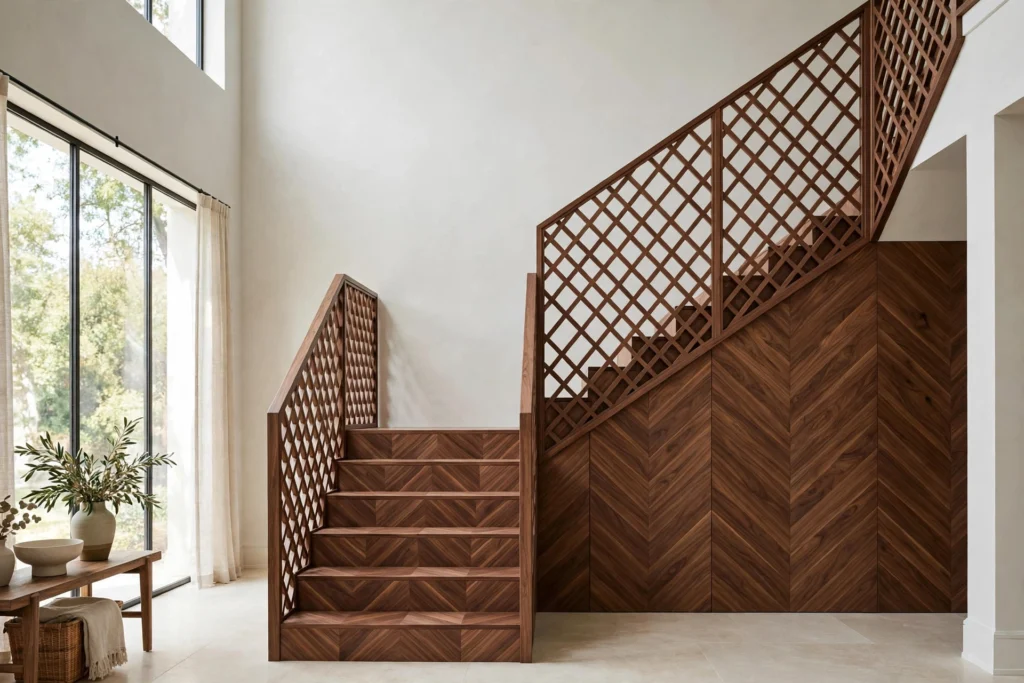
16. Geometric Wood Pattern Railing
Geometric wood panels, chevrons or lattice, turn the railing into art. Best for: statement staircases. Styling tip: walnut lattice. Pro tip: keep it to one flight.
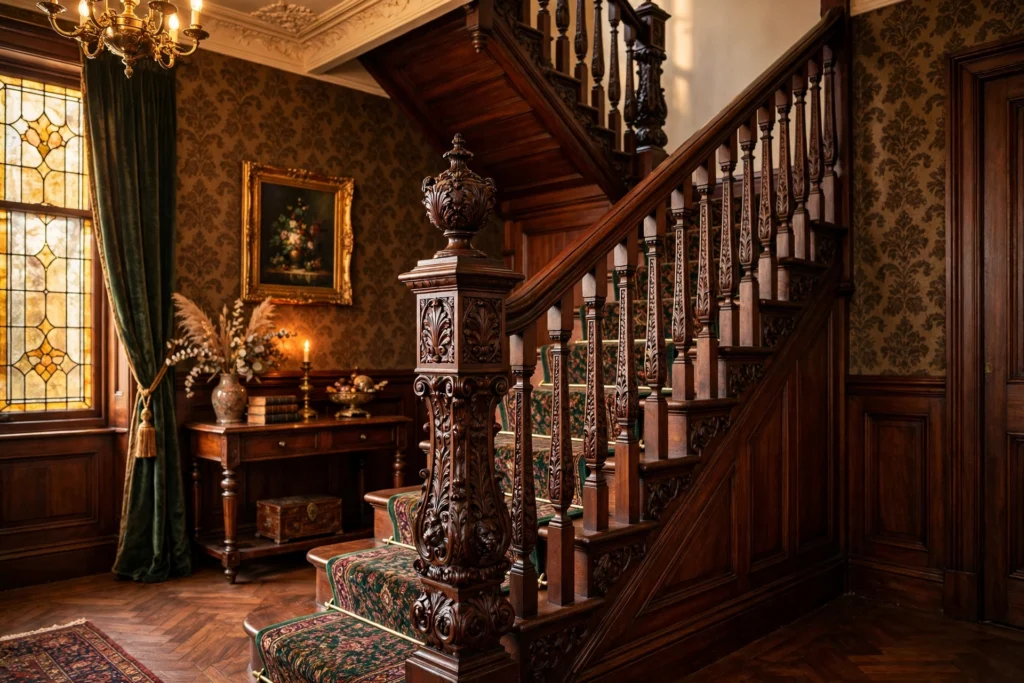
17. Hand-Carved Wood Details
Hand-carved balusters and newel caps add old-world craft no machine can fake. Best for: period and Victorian homes. Styling tip: carved newel. Pro tip: carve sparingly.
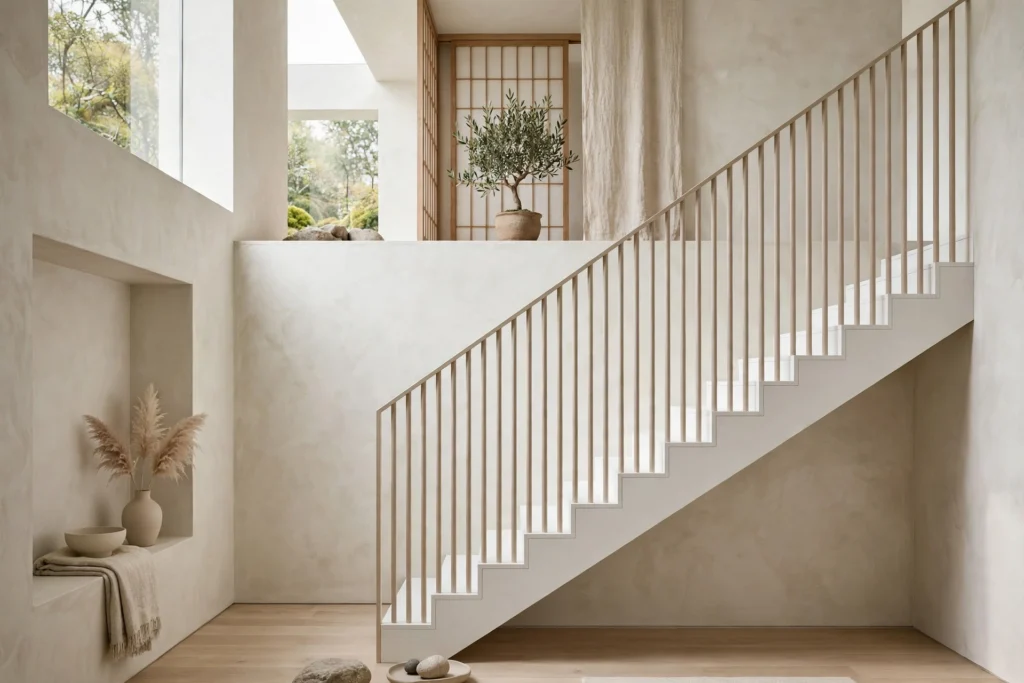
18. Thin Wooden Dowels for a Minimalist Look
Thin wooden dowels in a row feel light, rhythmic and almost weightless. Best for: minimalist and Japanese-inspired homes. Styling tip: pale ash dowels. Pro tip: check code before fitting.
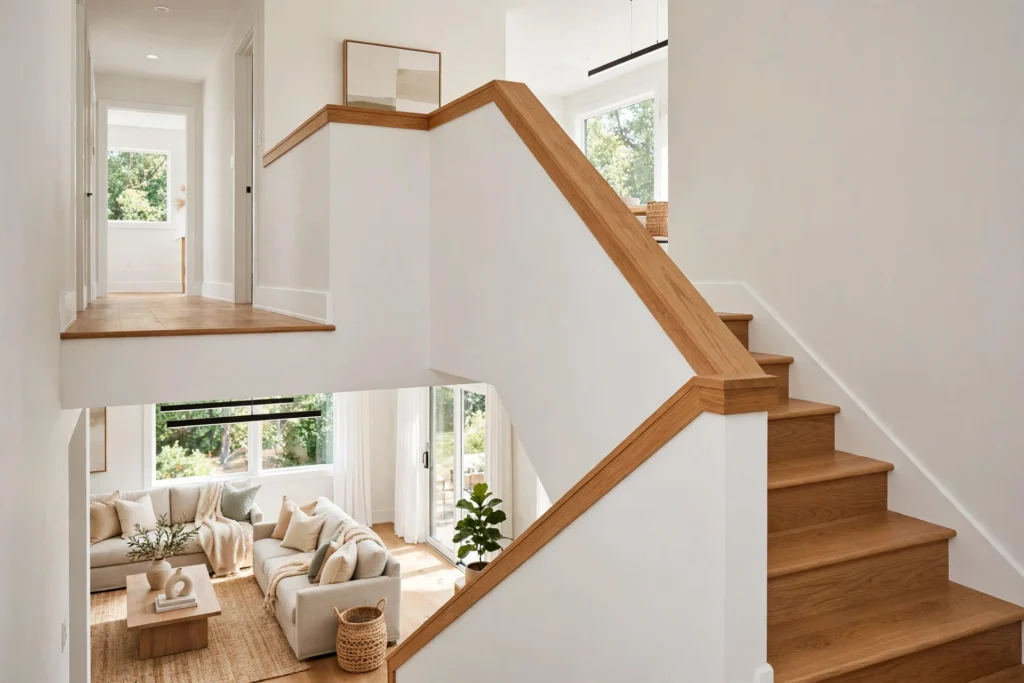
19. Half-Wall With a Wood Cap Rail
A half-wall topped with a wood cap rail gives safety and a handy shelf in one. Best for: split-level and family homes. Styling tip: wide oak cap. Pro tip: round the cap edges.
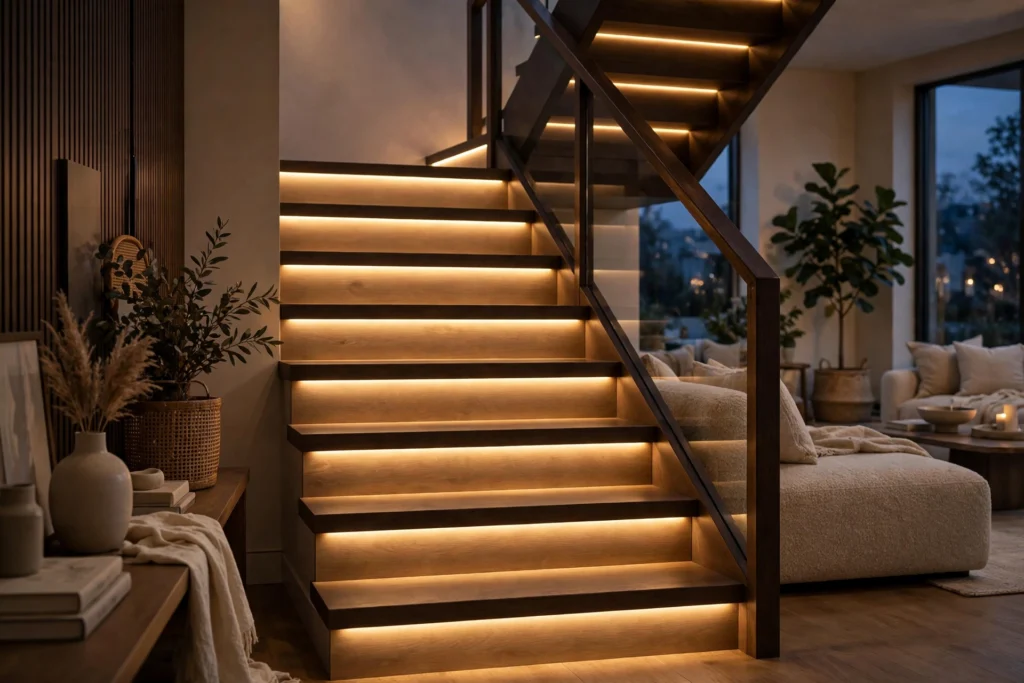
20. Wood Railing With Under-Step Lighting
Warm LED strips under the treads make the wood glow after dark. Best for: evening drama and safety. Styling tip: warm 2700K light. Pro tip: hide the strip in a groove. If the whole stair needs a refresh, see these staircase makeover ideas before you start.
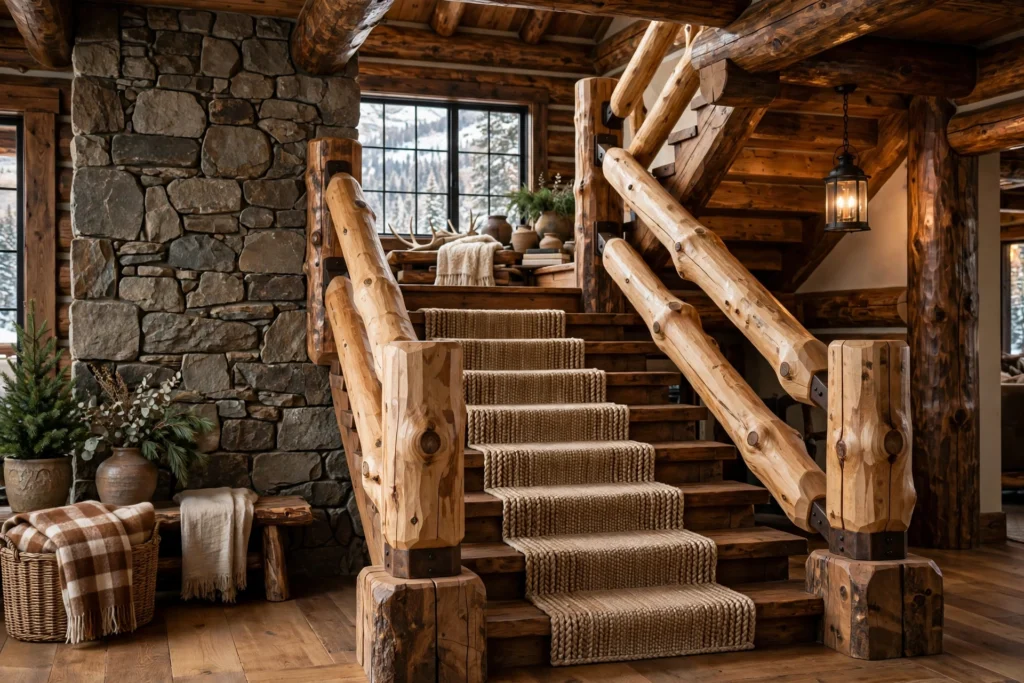
21. Rustic Log Cabin Style
Thick log rails and chunky posts bring cabin warmth, knots and all. Best for: cabins and mountain homes. Styling tip: peeled log rail. Pro tip: let logs dry fully before fitting.
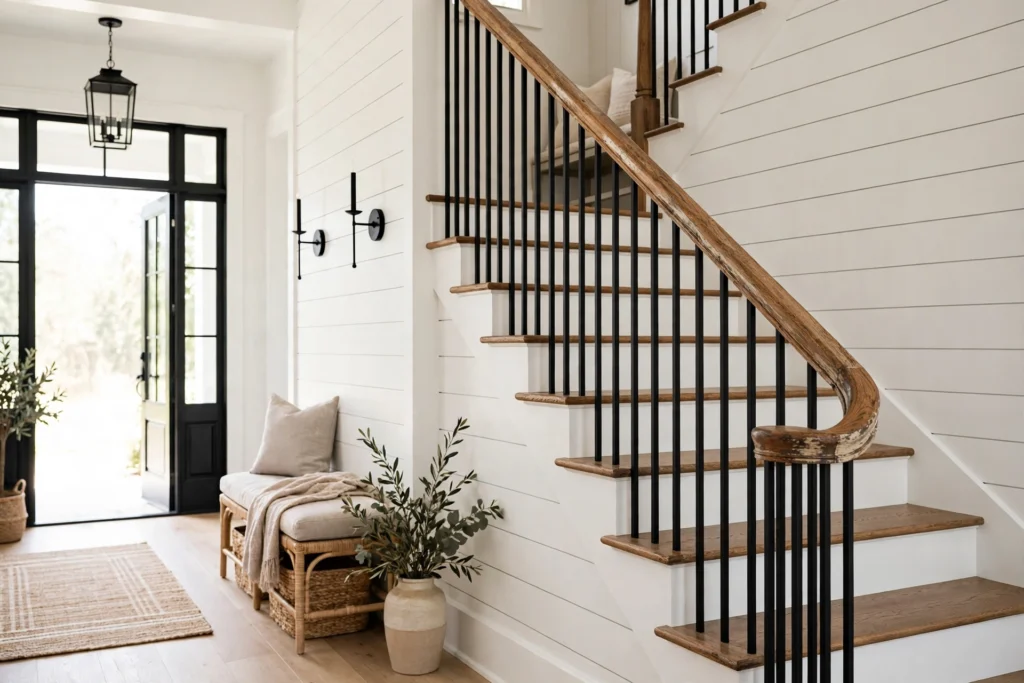
22. Farmhouse Wood and Metal Mix
Warm wood rails with black metal brackets balance farmhouse softness with edge. Best for: modern farmhouse homes. Styling tip: distressed oak, black hardware. Pro tip: keep the metal matte.
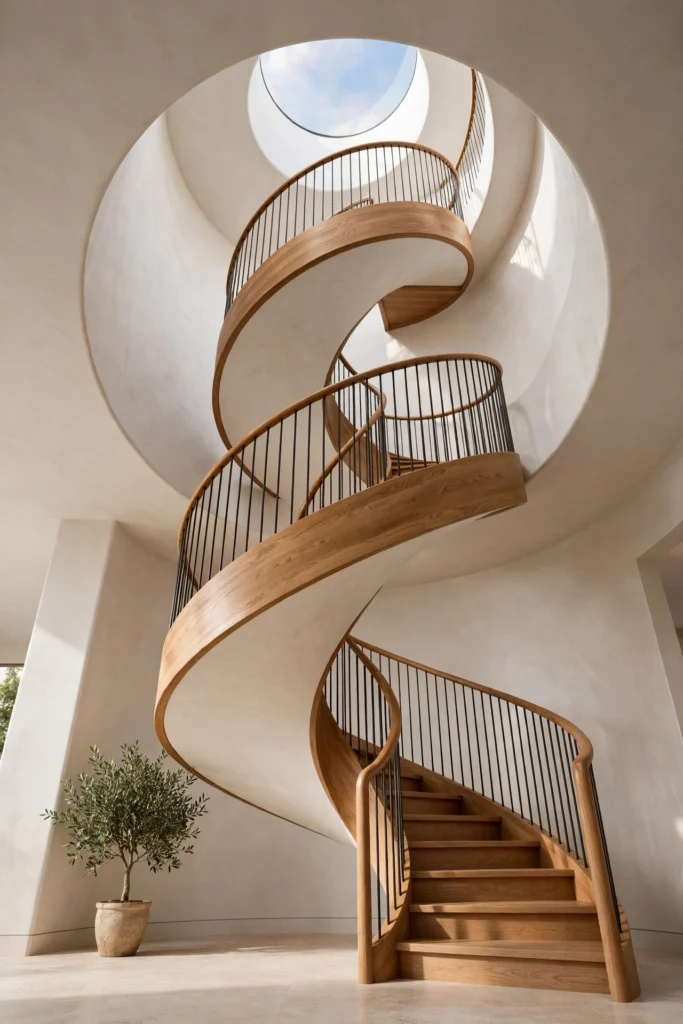
23. Spiral Staircase Wood Handrail
A continuous wood handrail winding up a spiral stair is pure craftsmanship. Best for: compact and feature staircases. Styling tip: bent oak rail. Pro tip: spiral rails are steam-bent.
24. Continuous Handrail Over the Newels
A handrail that flows unbroken over the newels feels smooth and custom-built. Best for: flowing, high-end stairs. Styling tip: matching grain. Pro tip: hire a stair specialist for goosenecks.
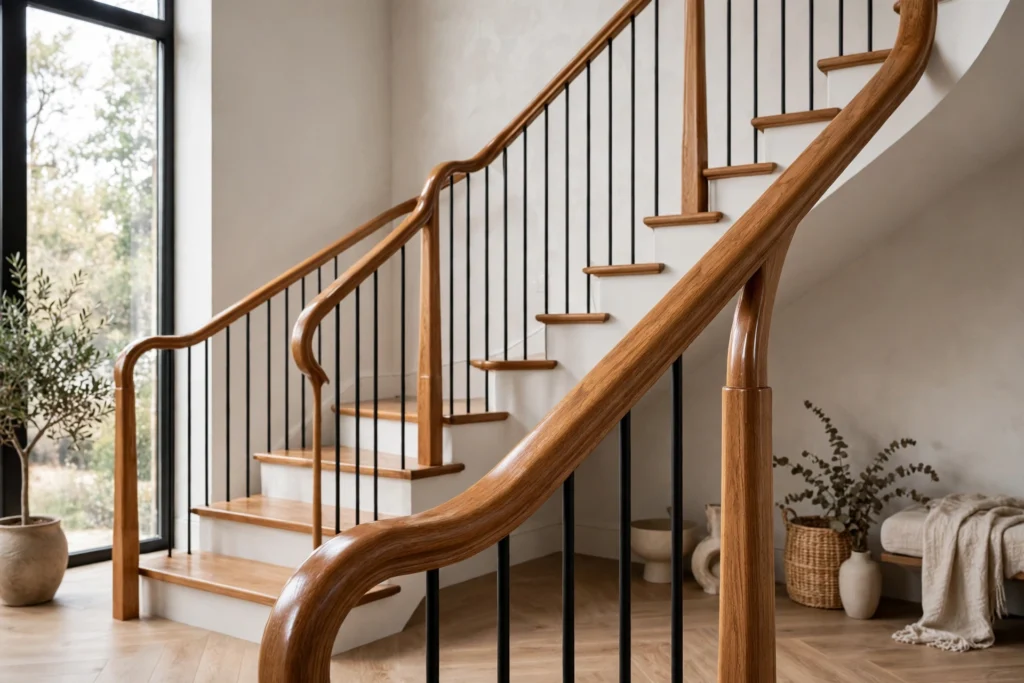
25. Wood Railing Extended Onto the Landing
Carrying the wood railing along the landing ties the stair to the upper floor. Best for: open landings and galleries. Styling tip: same balusters and rail. Pro tip: match landing spacing to the flight.
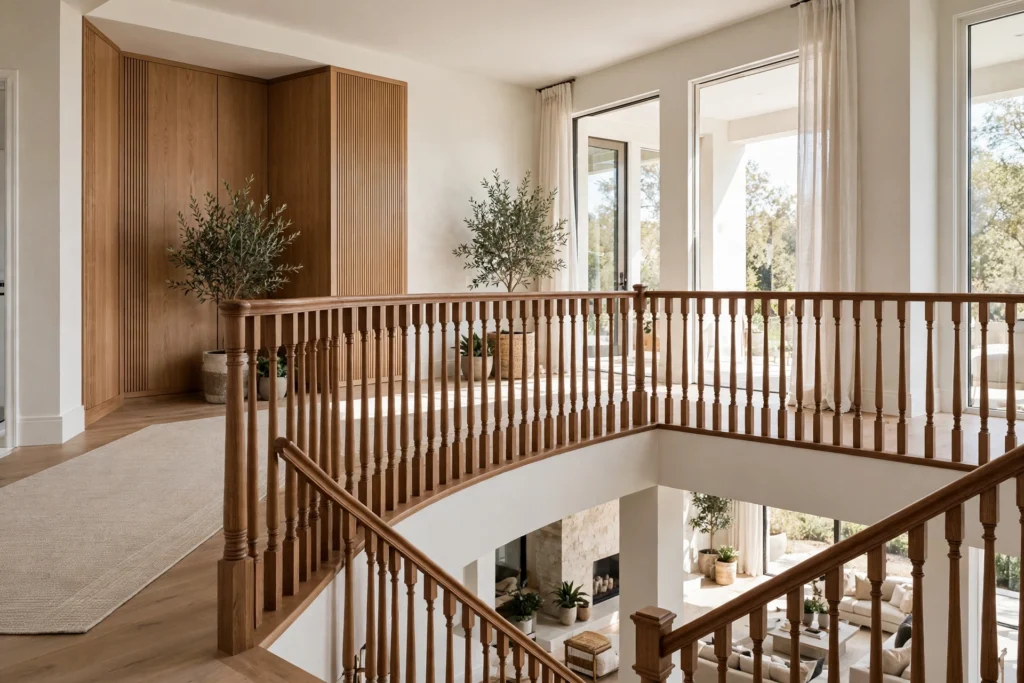
26. Clear Matte Seal to Show the Grain
A clear matte seal lets the wood’s grain do the talking, with no shine to hide behind. Best for: beautiful natural timber. Styling tip: figured oak or ash. Pro tip: re-oil once a year in busy homes.
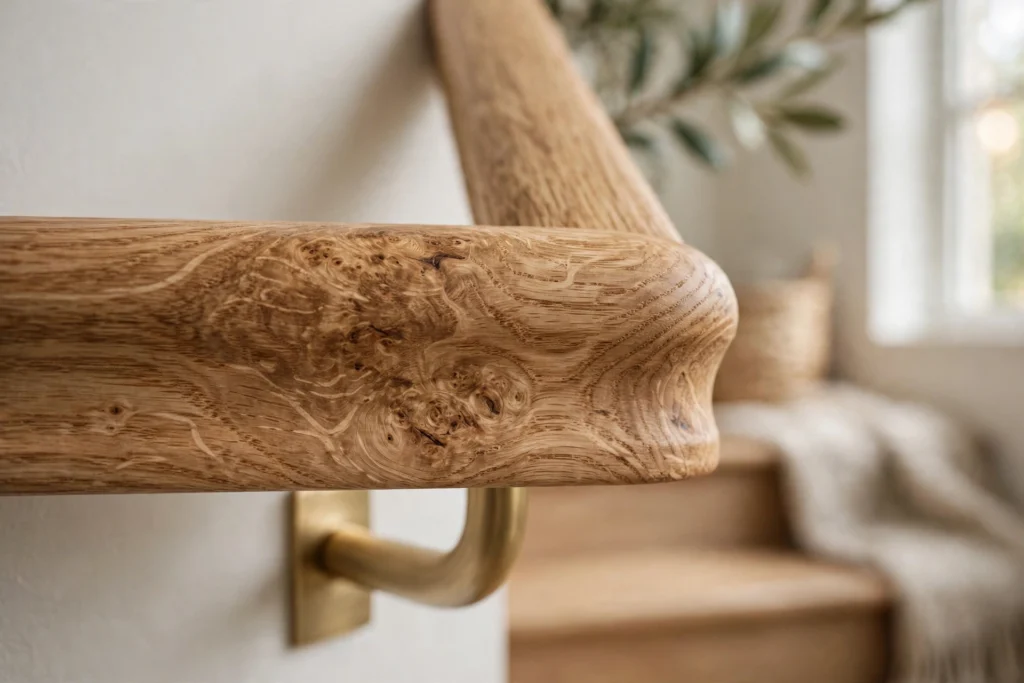
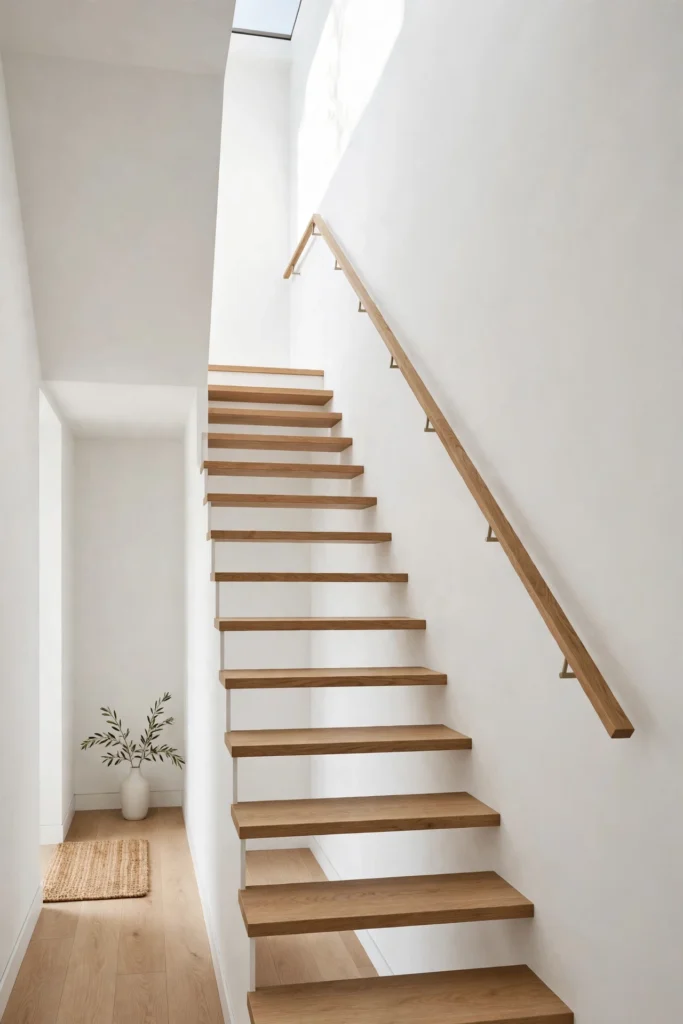
27. Slim Wall-Mounted Wood Handrail Only
Sometimes a slim wall-mounted wood rail is all a stair needs, clean and honest. Best for: narrow stairs and tight budgets. Styling tip: single oak rail. Pro tip: fix brackets into studs every four feet.
Pick the wood, the finish and the baluster style that suit your home, and the stair will stay warm for decades.
What is the best wood for a staircase railing?
Oak is the top choice: hard, durable and beautiful under oil or stain, suiting traditional and modern homes alike. Maple is pale and smooth, walnut adds rich depth, ash is strong and light. For painted railings, pine and poplar cost less and take paint well, though they dent more easily.
How much does a wood staircase railing cost?
A simple wood railing costs roughly $30 to $80 per linear foot installed, depending on species and baluster style. Turned balusters and curved handrails cost more; painted pine and square spindles cost less. Replacing only the handrail and balusters keeps the project affordable.
How far apart should wood balusters be spaced?
Balusters should be spaced so a 4-inch sphere cannot pass between them, usually a gap of about 4 inches or less. Exact rules vary by local building code, so check your area’s requirements before installing. Safe spacing matters most on stairs used by small children.
Can I paint a wood staircase railing?
Yes, painting is one of the cheapest ways to transform a staircase. Sand lightly, prime with a stain-blocking primer, then apply two coats of durable satin or semi-gloss paint. White balusters with a stained handrail is the classic two-tone look, and painted pine gives the smoothest finish.
How do I keep a wood staircase railing looking good?
Dust balusters weekly and wipe the handrail with a damp cloth and mild wood cleaner. Re-oil oiled railings once a year in busy homes, and touch up paint chips promptly so moisture cannot reach the wood. Avoid harsh cleaners and steam mops, which can lift finishes and dull the grain.
Should the wood railing match the floor?
Matching the railing to the floor creates a calm, cohesive look, which suits traditional and Scandinavian homes. A deliberate contrast also works: light oak rails against dark treads, or a dark walnut handrail on pale stairs, adds energy and makes the staircase a feature. Repeat the wood tone once more in the room.
