
35 Smart Drop Zone Storage Ideas That End Entryway Chaos for Good
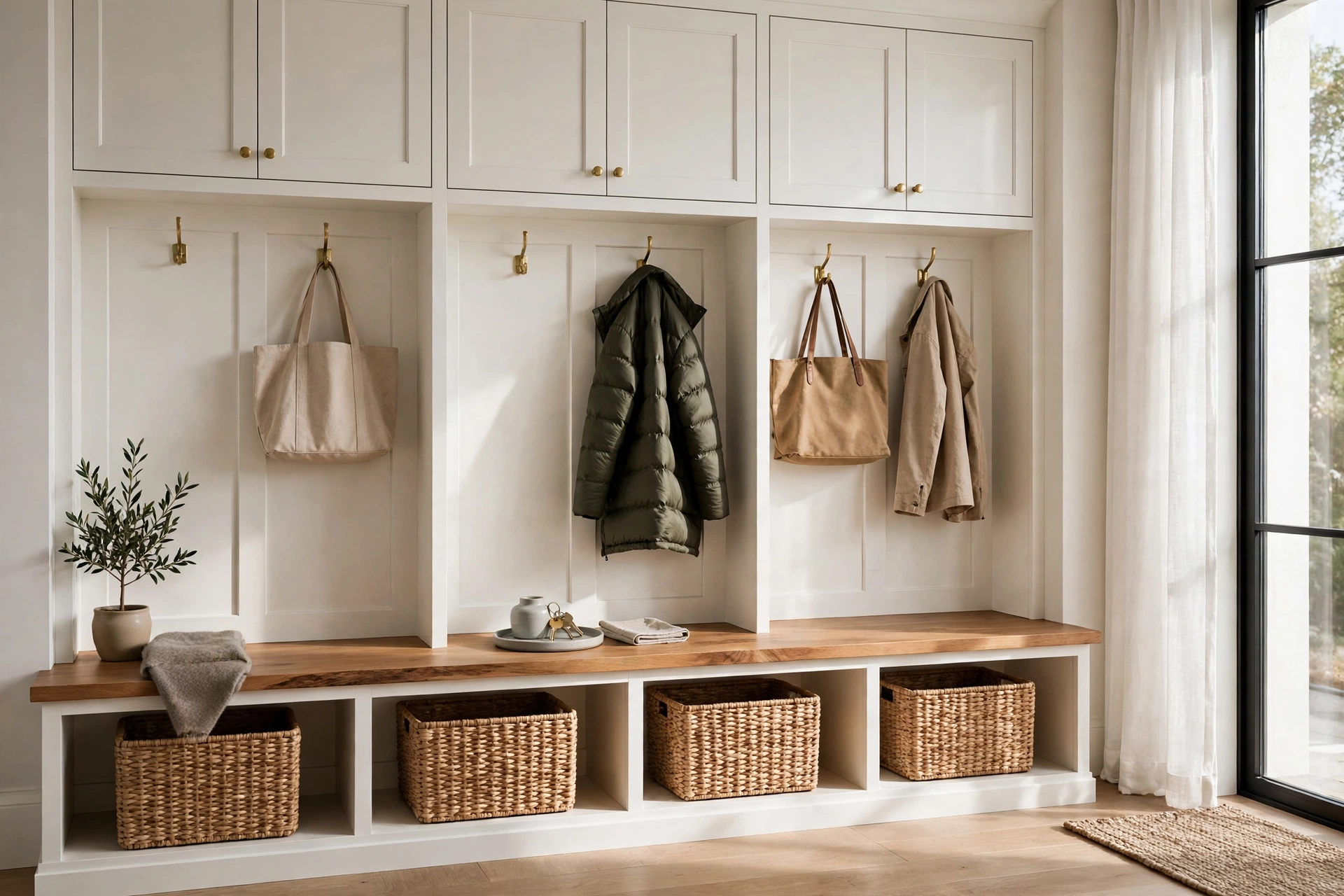
Keys on the counter, shoes by the door, mail on the stairs — the entryway collects everything because nothing has a home. A drop zone fixes that: every item gets one spot. For the bigger picture, see our drop zone ideas guide first, then build from the 35 ideas below.
1. Slim Shoe Cabinet
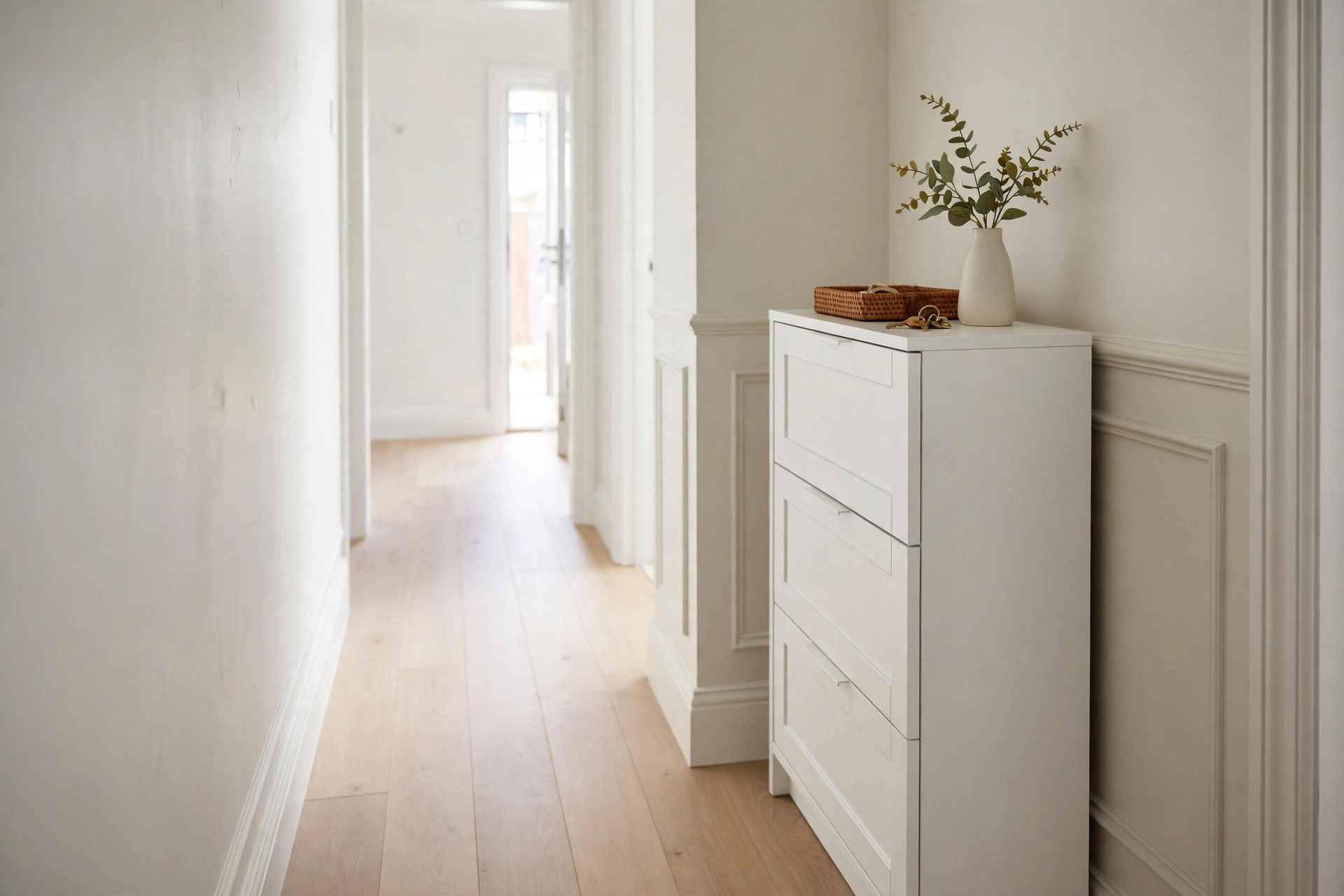
A tilt-out cabinet hides 4–6 pairs in six inches of depth. Best for: narrow hallways. Styling tip: top it with a small key tray.
2. One Hook Per Person
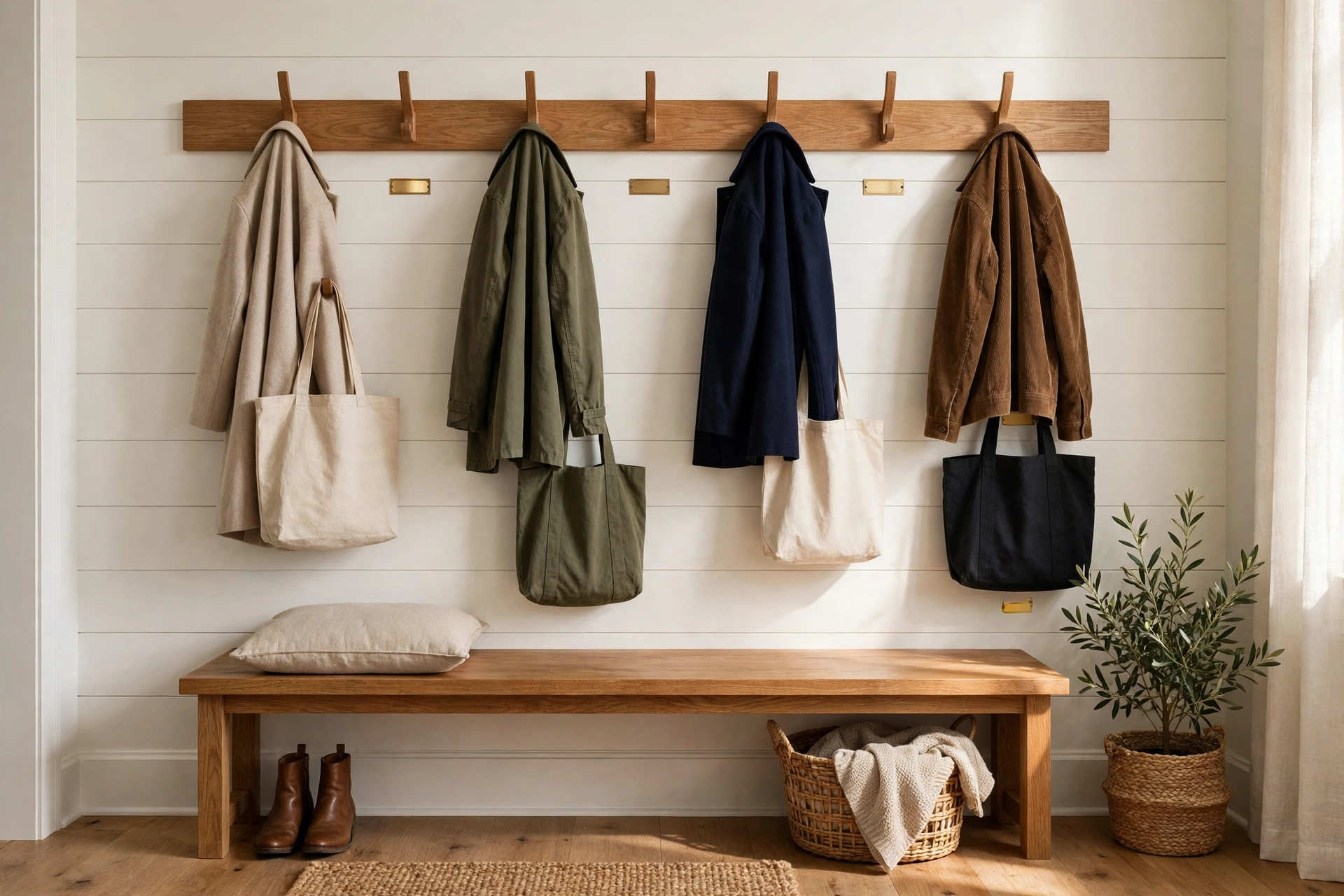
One sturdy hook per person on a wall rail ends the coat pile. Best for: families. Styling tip: space hooks eight inches apart.
3. Bench With Lift-Top Storage
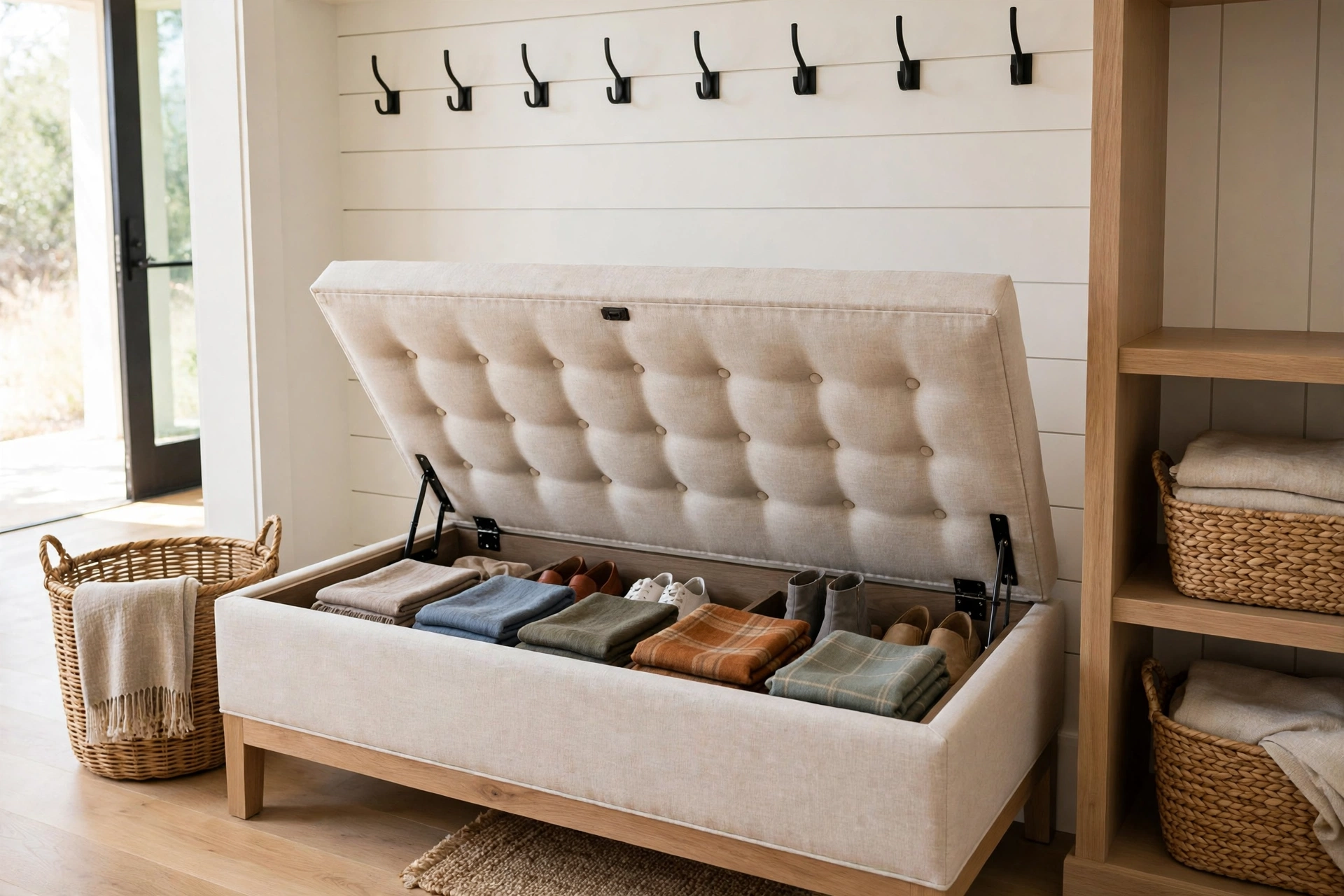
A lift-top bench hides shoes and gear and gives you a seat. Best for: small mudrooms. Styling tip: choose a wipeable cushioned top.
4. Open Cubbies Per Person

One cubby each means backpacks and gloves land in the same square. Best for: school mornings. Styling tip: label each cubby with a name tag.
5. Boot Tray by the Door

A lipped tray catches mud and rain before it reaches the floor. Best for: wet climates. Styling tip: pick a tray two feet wide.
6. Key Valet Tray
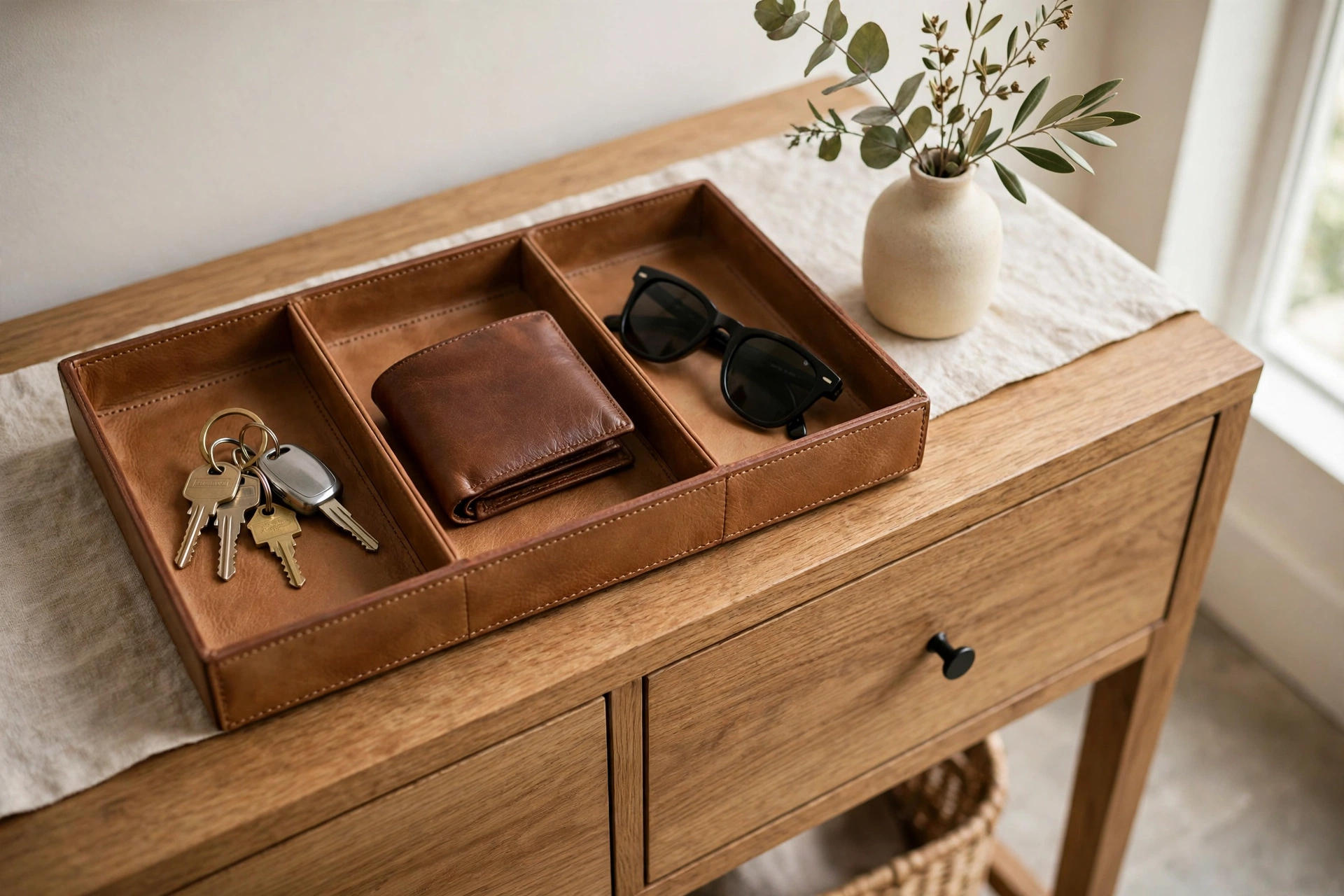
A shallow divided tray on a shelf ends lost keys. Best for: everyone. Styling tip: keep only keys, wallet and sunglasses in it.
7. Wall-Mounted Mail Sorter

A three-slot sorter (to do, to file, to recycle) stops paper spreading. Best for: busy households. Styling tip: empty the recycle slot weekly.
8. Woven Baskets Under the Bench
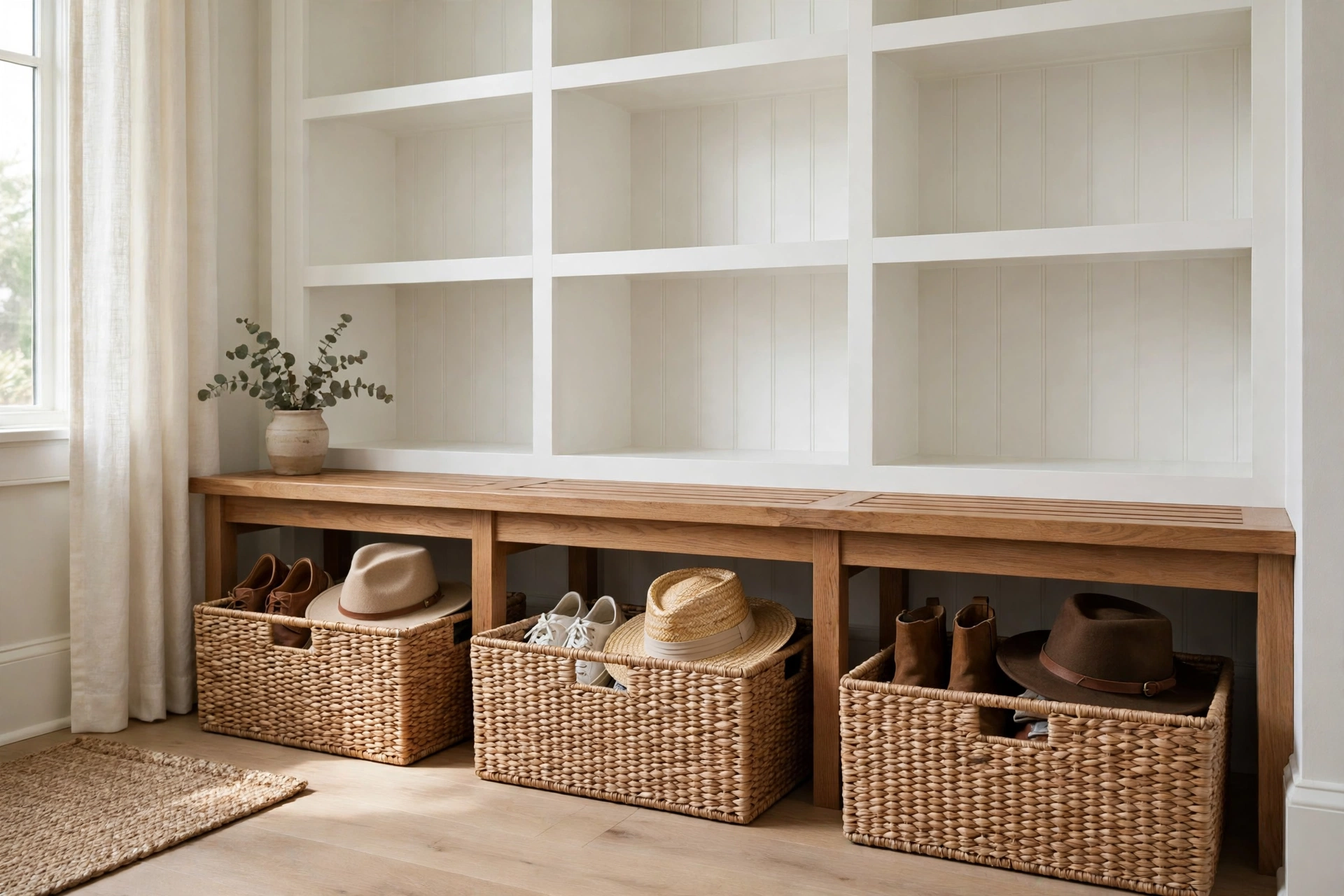
Baskets under a bench swallow shoes and gear — see more in our mudroom organization ideas. Best for: quick cleanups. Styling tip: use matching baskets for calm.
9. Pegboard Wall
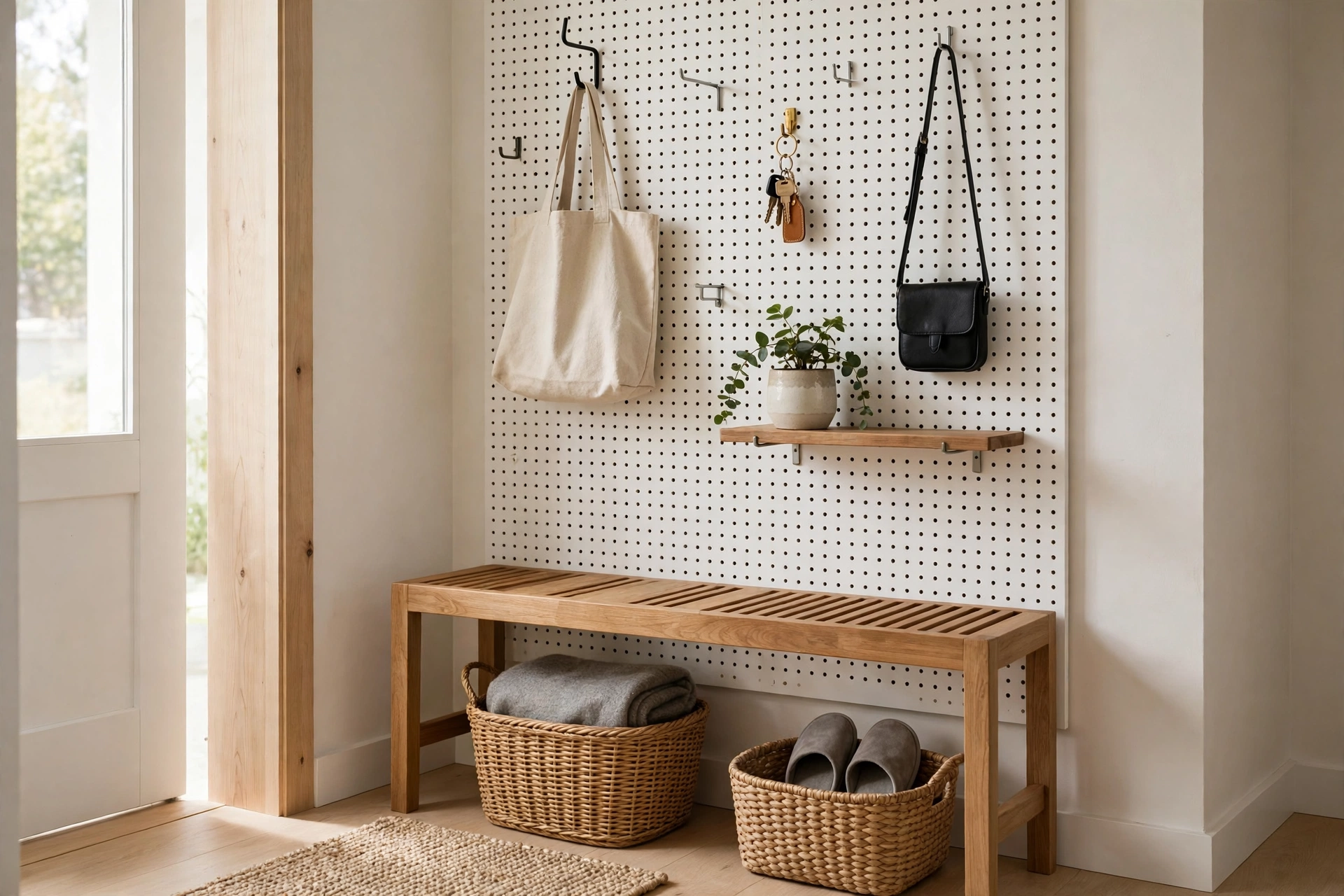
A pegboard with movable hooks and bins adapts as needs change. Best for: renters and small walls. Styling tip: paint it the wall colour.
10. Floating Console Shelf
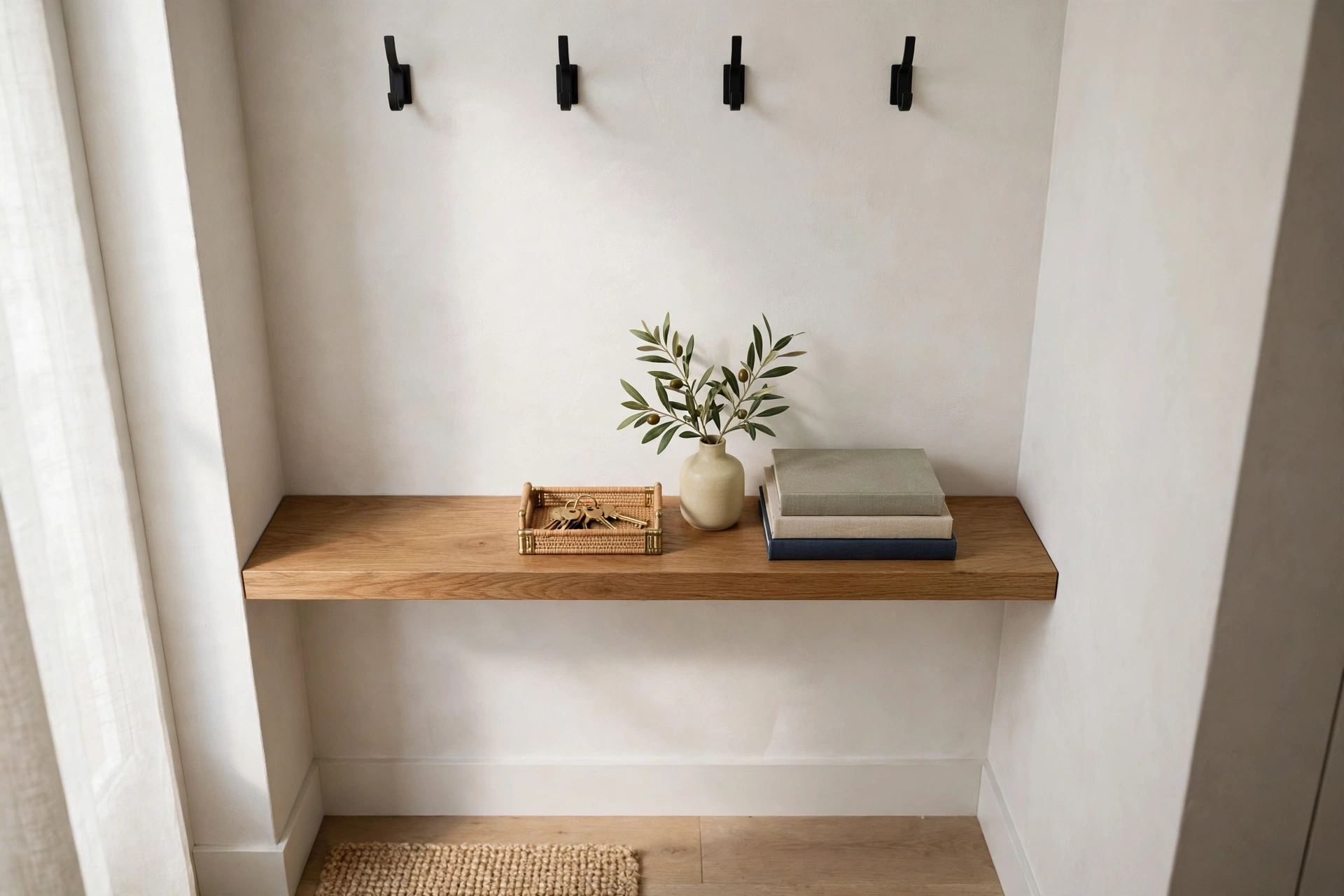
A narrow floating shelf gives a landing surface without legs. Best for: tiny entries. Styling tip: keep it 30 inches wide, 10 deep.
11. Over-the-Door Organizer
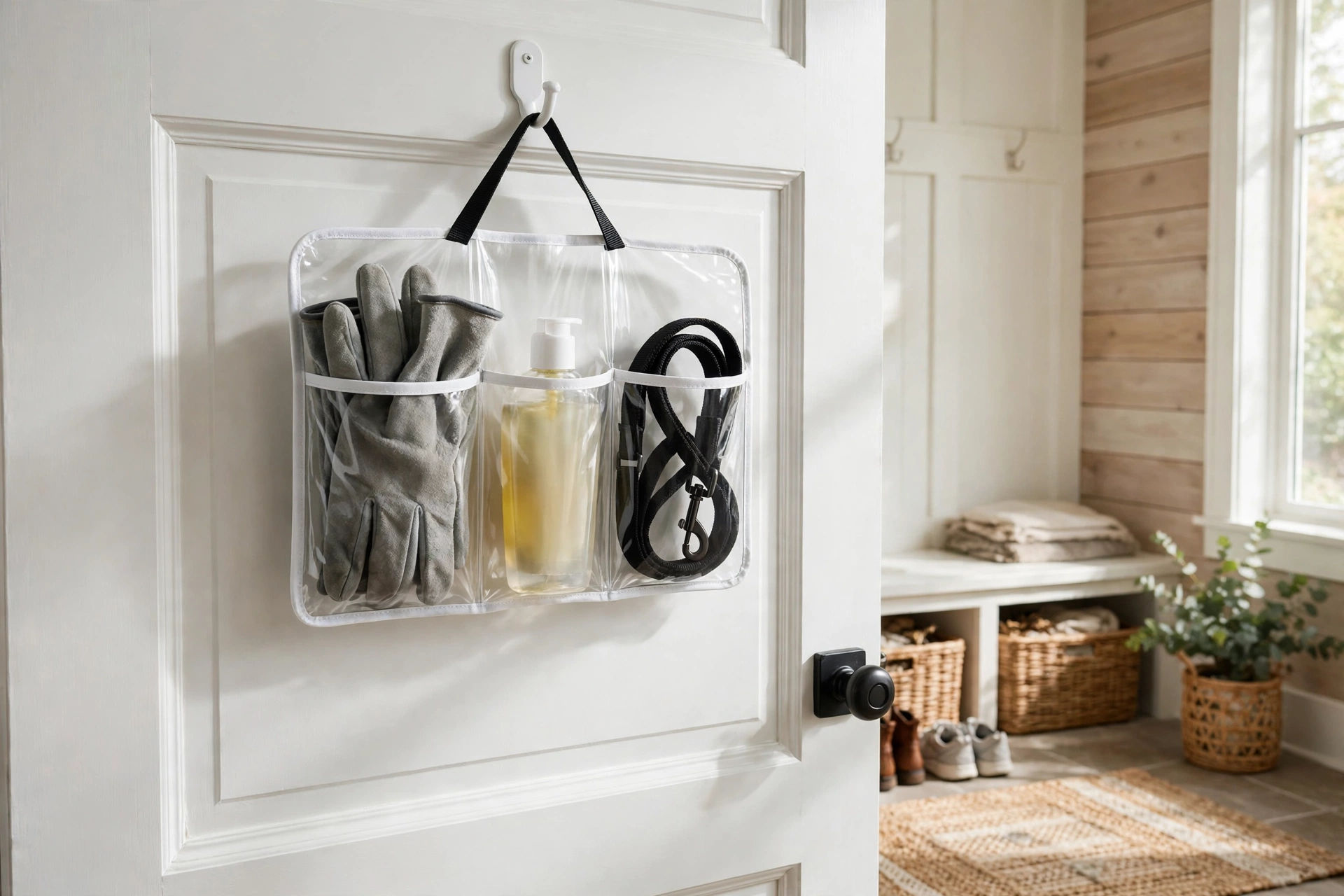
Clear pockets on the door back hold gloves and leashes. Best for: rentals with no drilling. Styling tip: use it for seasonal overflow too.
12. Mirror With Hidden Storage

A mirror cabinet above the shelf hides keys behind its door. Best for: small foyers. Styling tip: hang it at eye level.
13. Charging Drawer
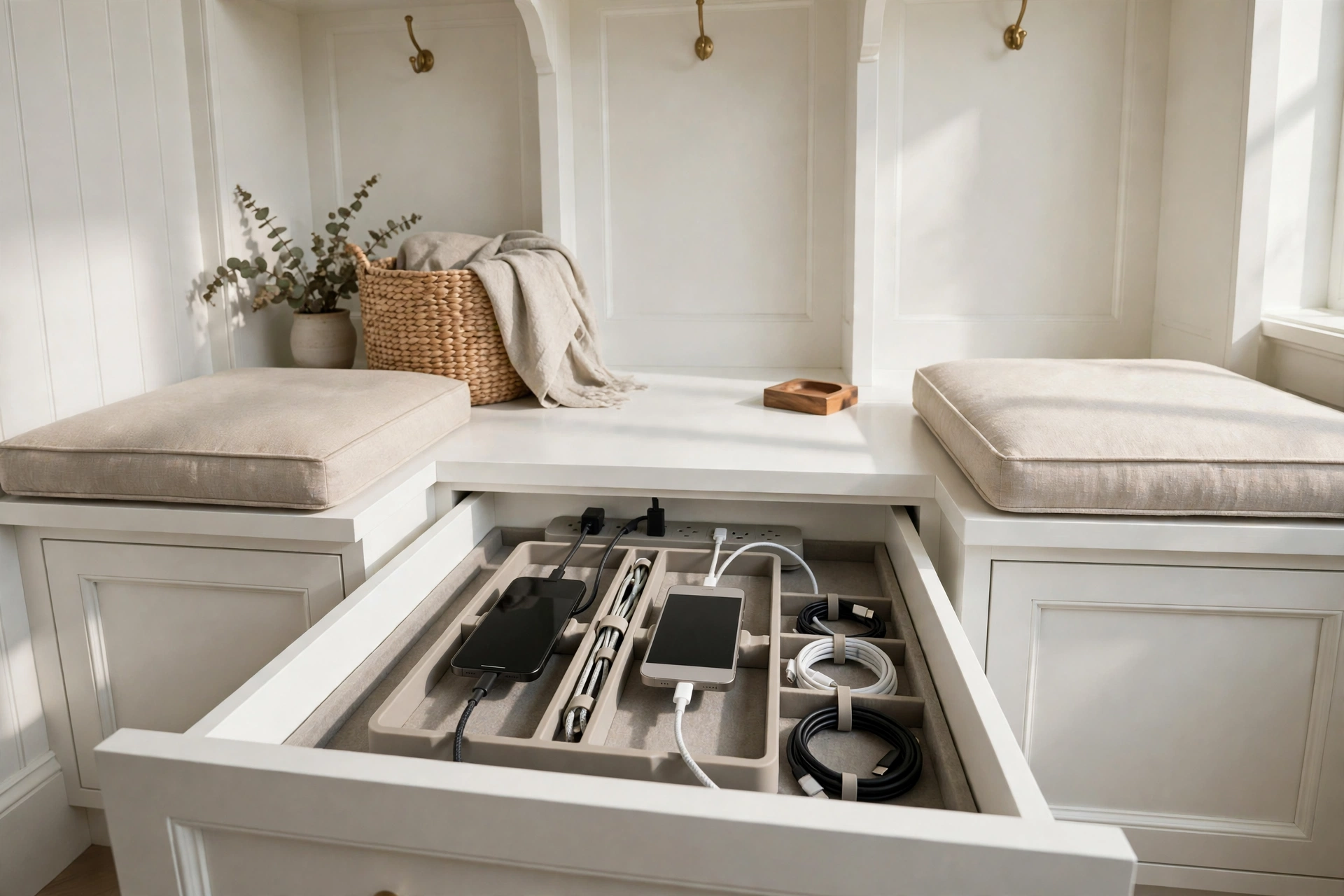
A shallow drawer with an outlet hides phones and cables. Best for: tech-heavy families. Styling tip: add a cable clip inside.
14. Labeled Bins Per Person
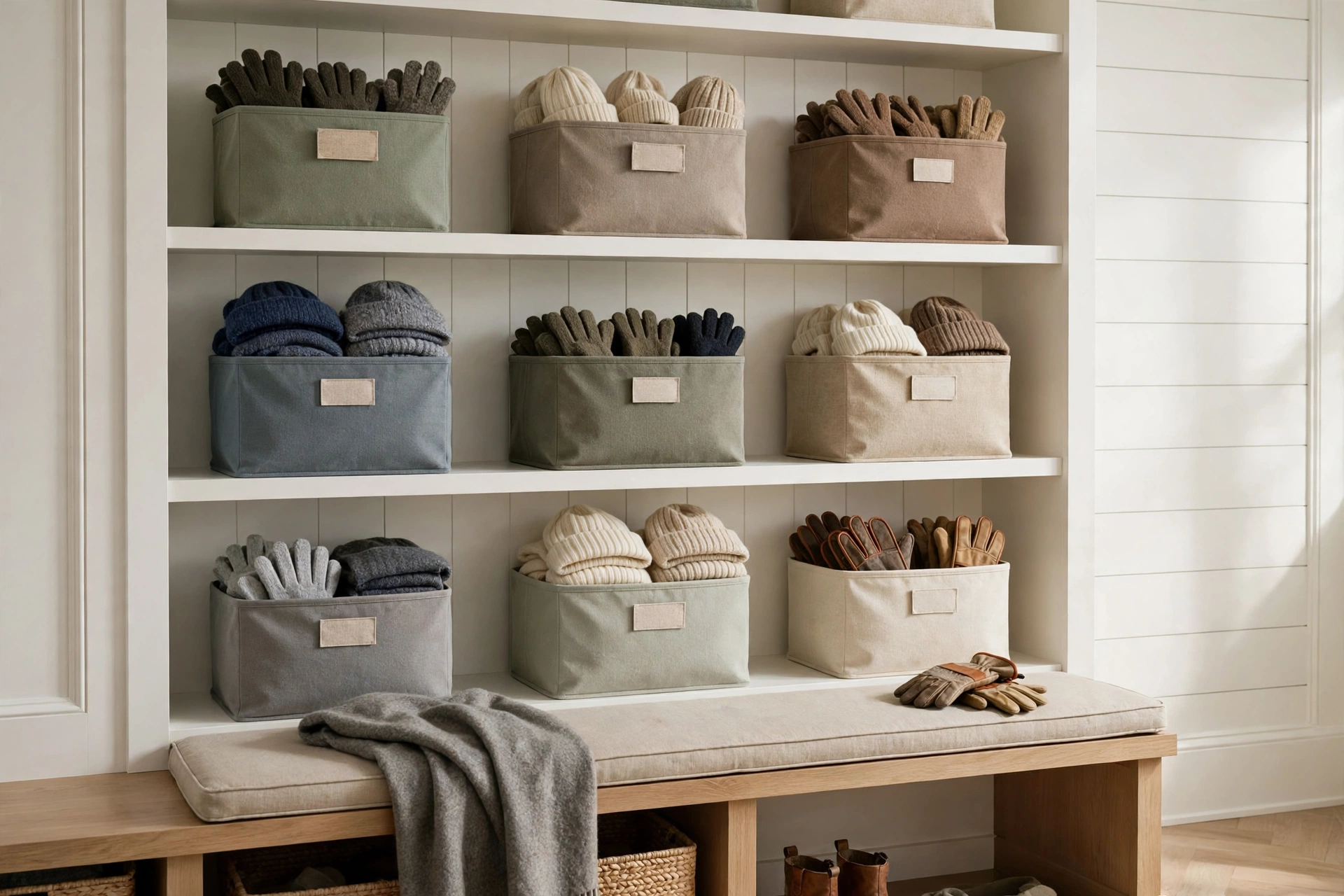
One labeled bin each for gloves and hats stops morning scrambles. Best for: kids. Styling tip: use picture labels for young children.
15. Tall Narrow Locker Cabinet
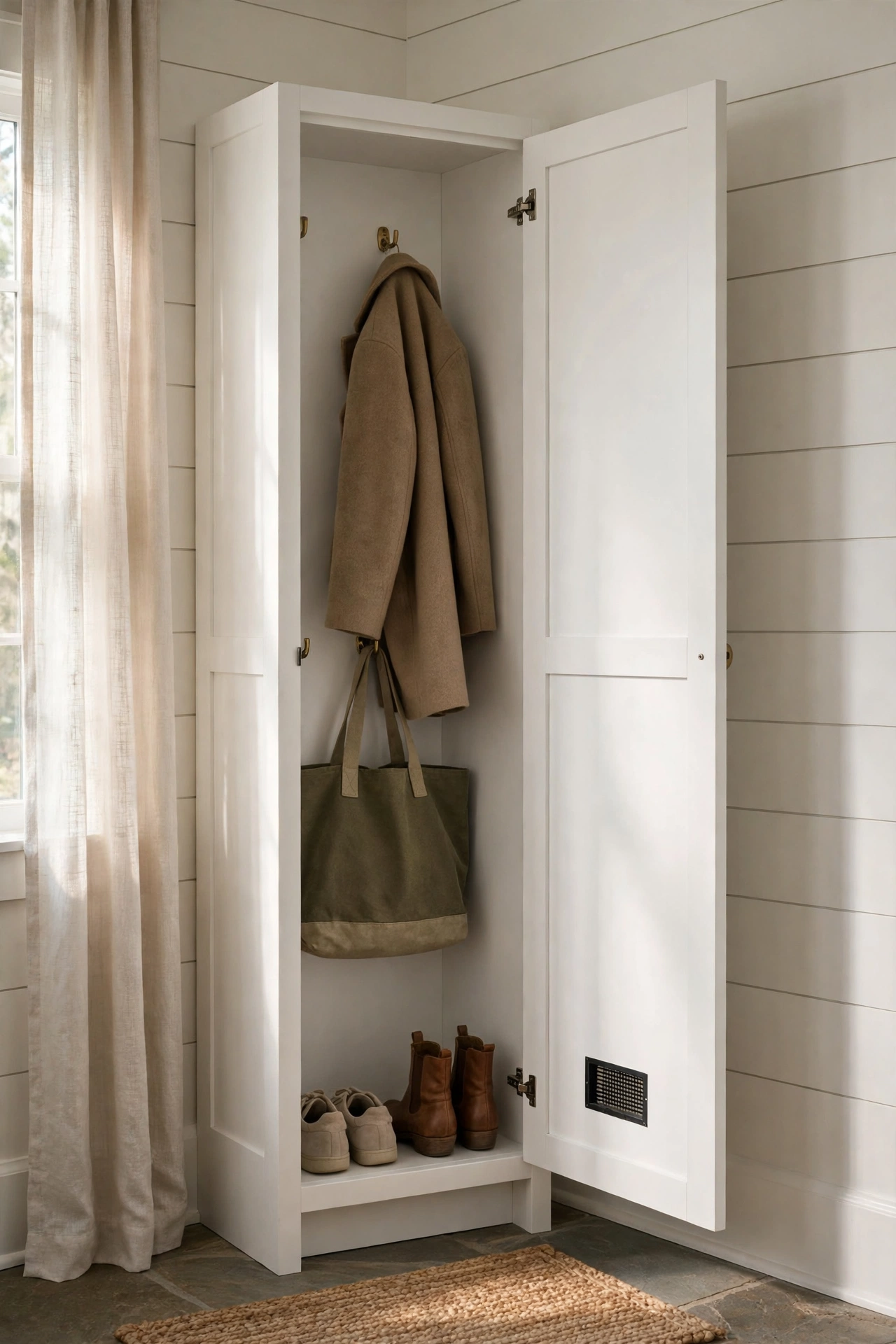
One tall locker holds coat, bag and shoes vertically. Best for: tight corners. Styling tip: add a vent so damp coats dry.
16. Shoe Cubby Tower

A tall tower stores 8–10 pairs in one square foot. Best for: shoe lovers. Styling tip: keep daily pairs at knee height.
17. Hooks at Two Heights
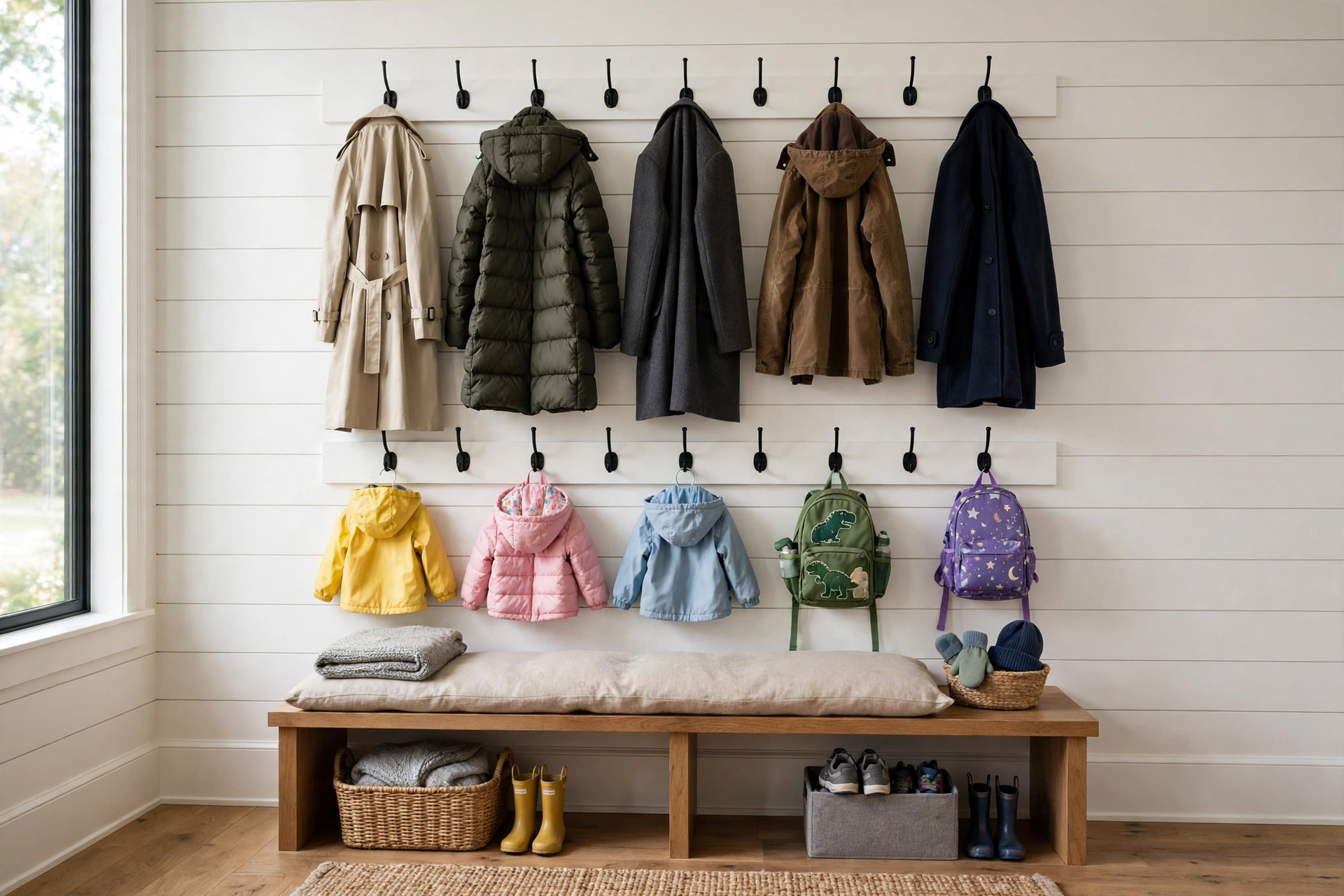
Adult hooks at 66 inches, kids’ at 42, let everyone hang their own coat. Best for: growing families. Styling tip: use double-prong hooks.
18. Under-Bench Shoe Slots
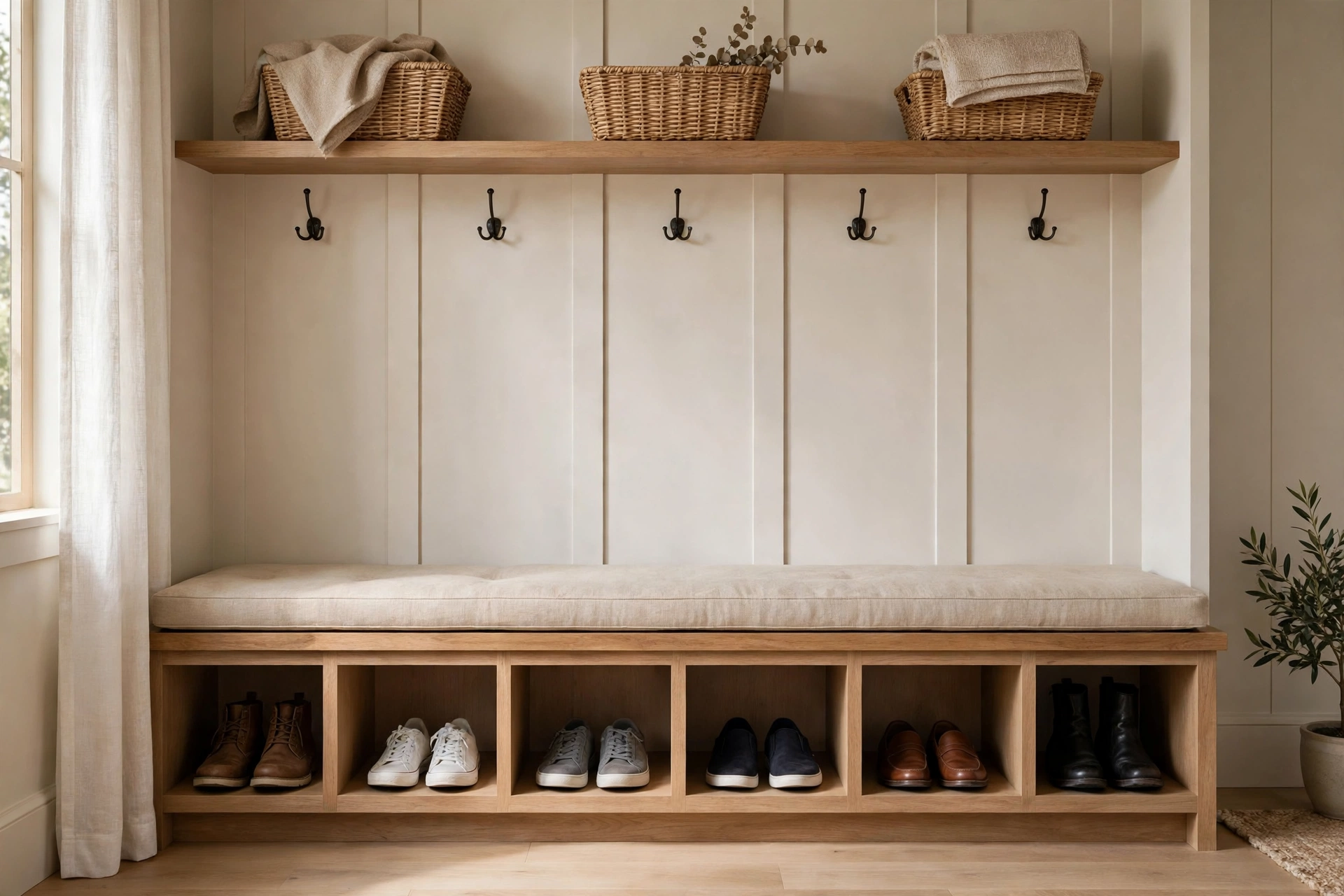
Open slots under the bench keep daily shoes visible. Best for: muddy boots. Styling tip: leave one slot empty.
19. Umbrella Stand and Drip Tray

A weighted stand with a drip tray keeps wet umbrellas off floors. Best for: rainy regions. Styling tip: match the stand to your baskets.
20. Pet Station

Two leash hooks, a treat bin and a bowl mat contain pet gear. Best for: dog owners. Styling tip: hang the leash at hand height.
21. Low Backpack Hooks for Kids
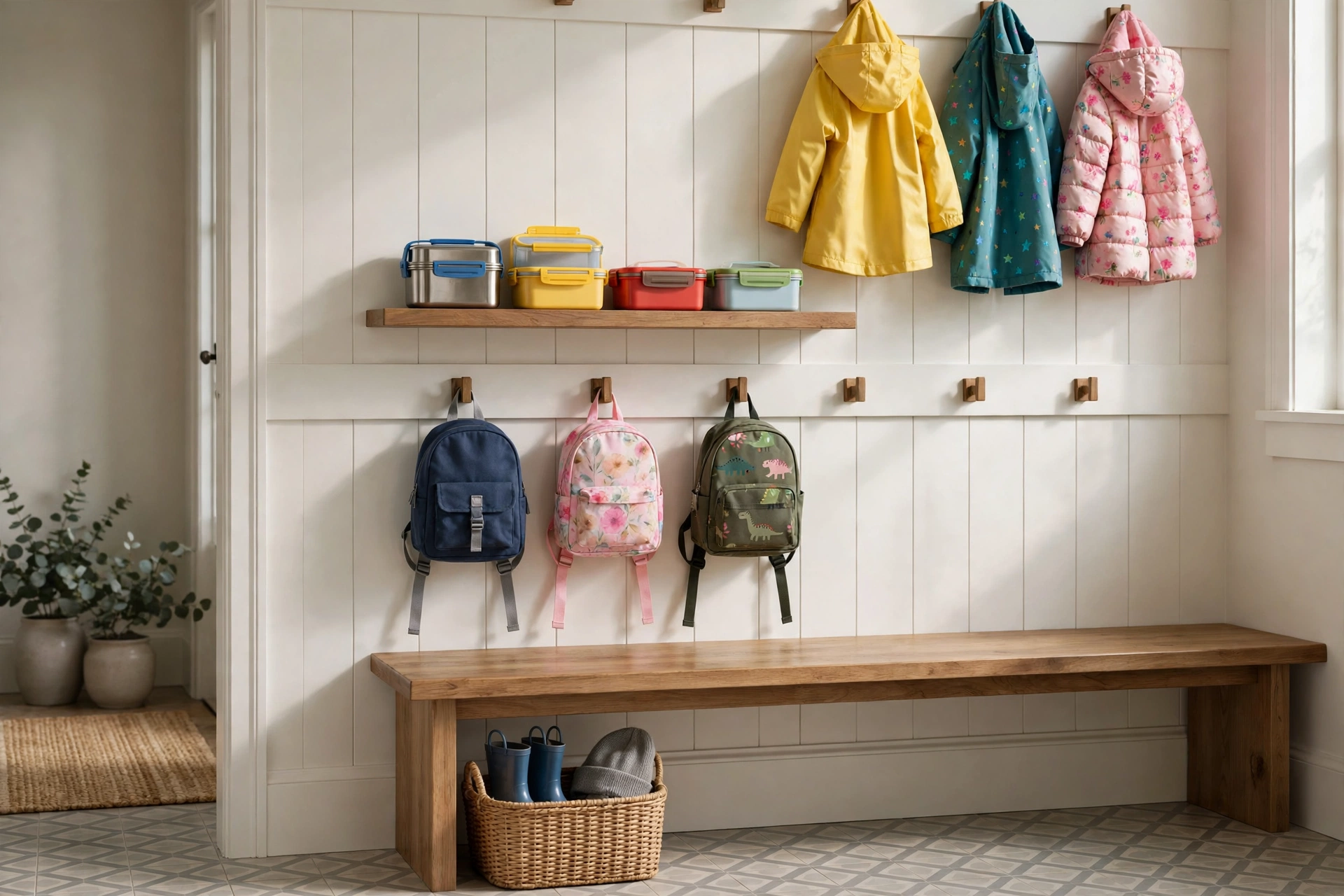
Hooks at kids’ shoulder height put backpacks on the wall. Best for: school-age kids. Styling tip: add a shelf for lunchboxes.
22. Built-In Lockers With Bench

Floor-to-ceiling lockers with a bench give each person a bay. For inspiration, browse the Houzz mudroom ideas gallery first. Best for: renovations. Styling tip: keep daily items at knee-to-eye height.
23. Rolling Cart for Seasonal Gear
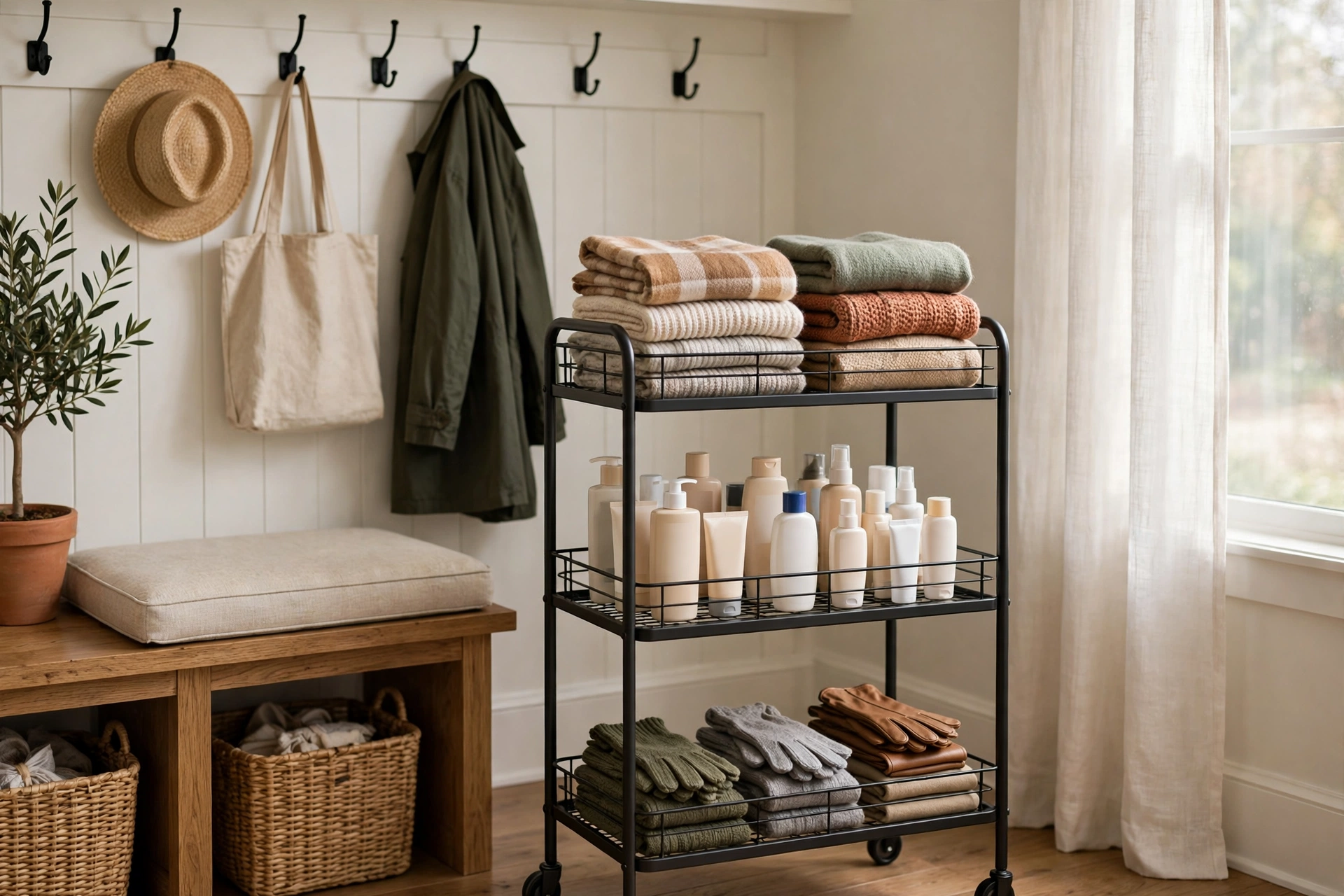
A slim cart holds scarves in winter and sunscreen in summer. Best for: seasonal swaps. Styling tip: label each tier.
24. Wall Coat Rack With Shelf

Hooks below, shelf above: coats, hats and bags in one unit. Best for: hallway walls. Styling tip: mount it into studs.
25. Divided Drawer for Small Essentials
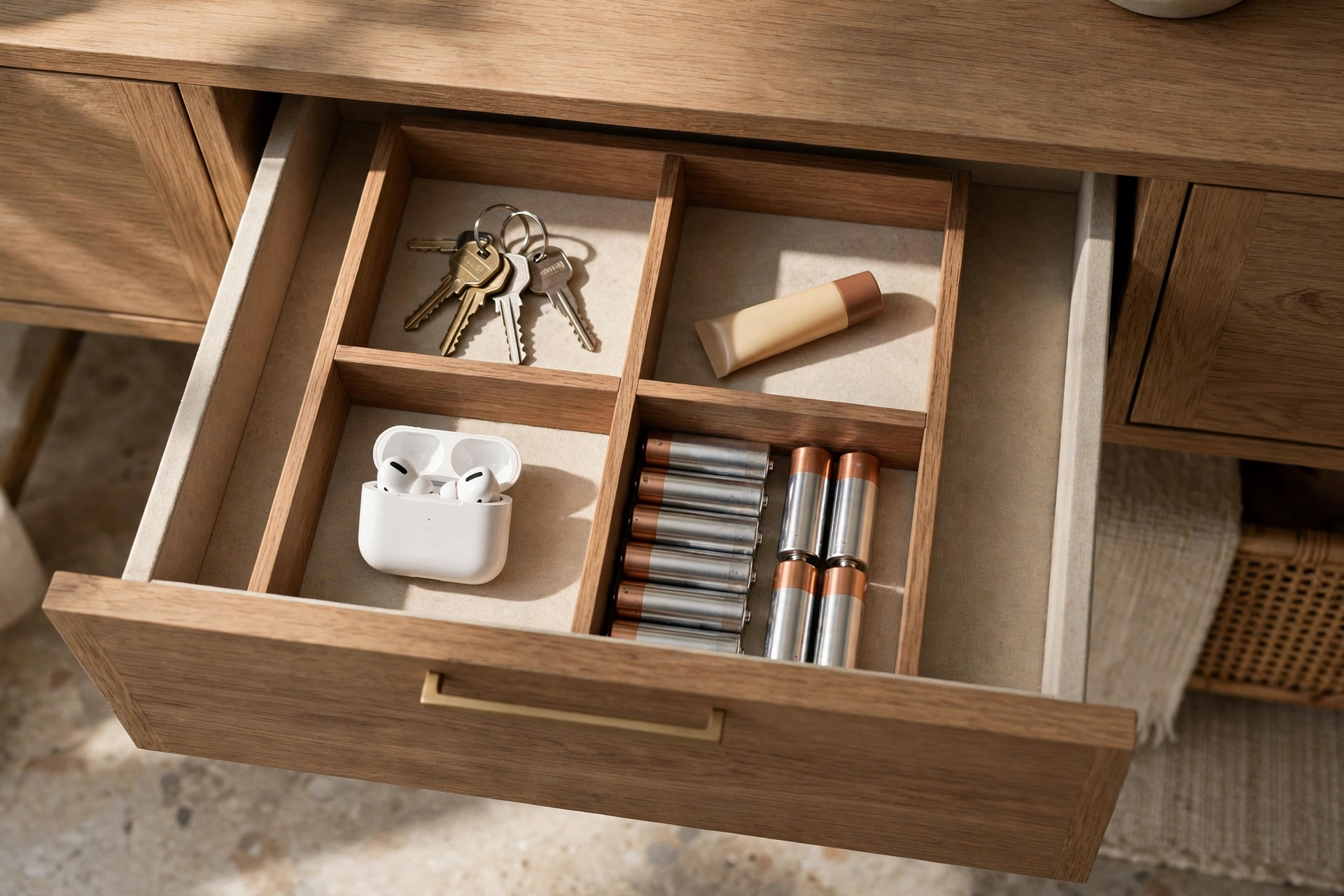
A divided drawer sorts spare keys, lip balm and earbuds. Best for: clutter magnets. Styling tip: one divider per category.
26. Garage-Entry Drop Zone
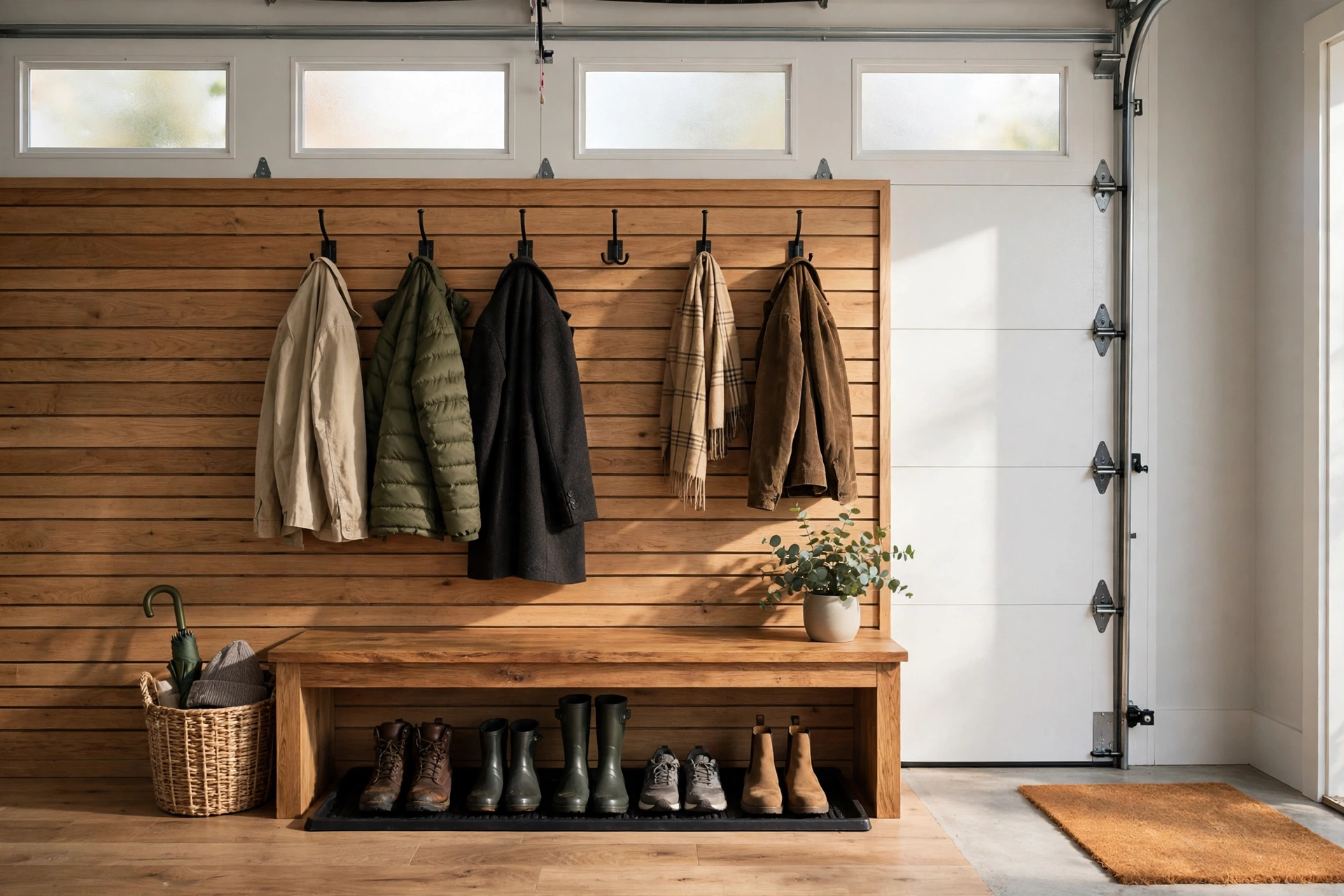
Garage-entry family? Build the zone there: bench, hooks, tray. Best for: garage-entry homes. Styling tip: keep a 36-inch clear walkway.
27. Corner Drop Zone
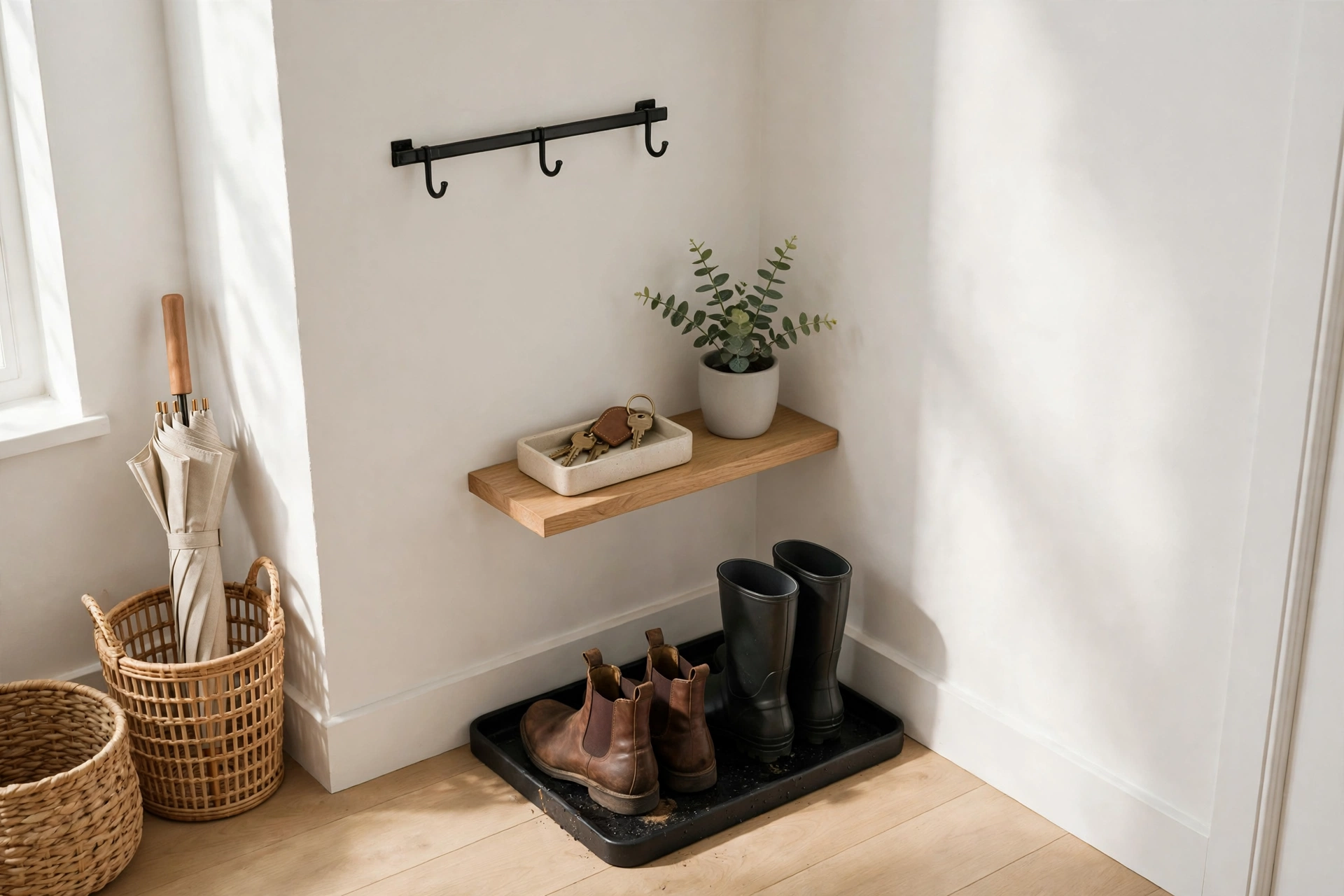
One corner with hook rail, shelf and boot tray fits two feet. Best for: apartments. Styling tip: go vertical and skip the bench.
28. Hall Tree
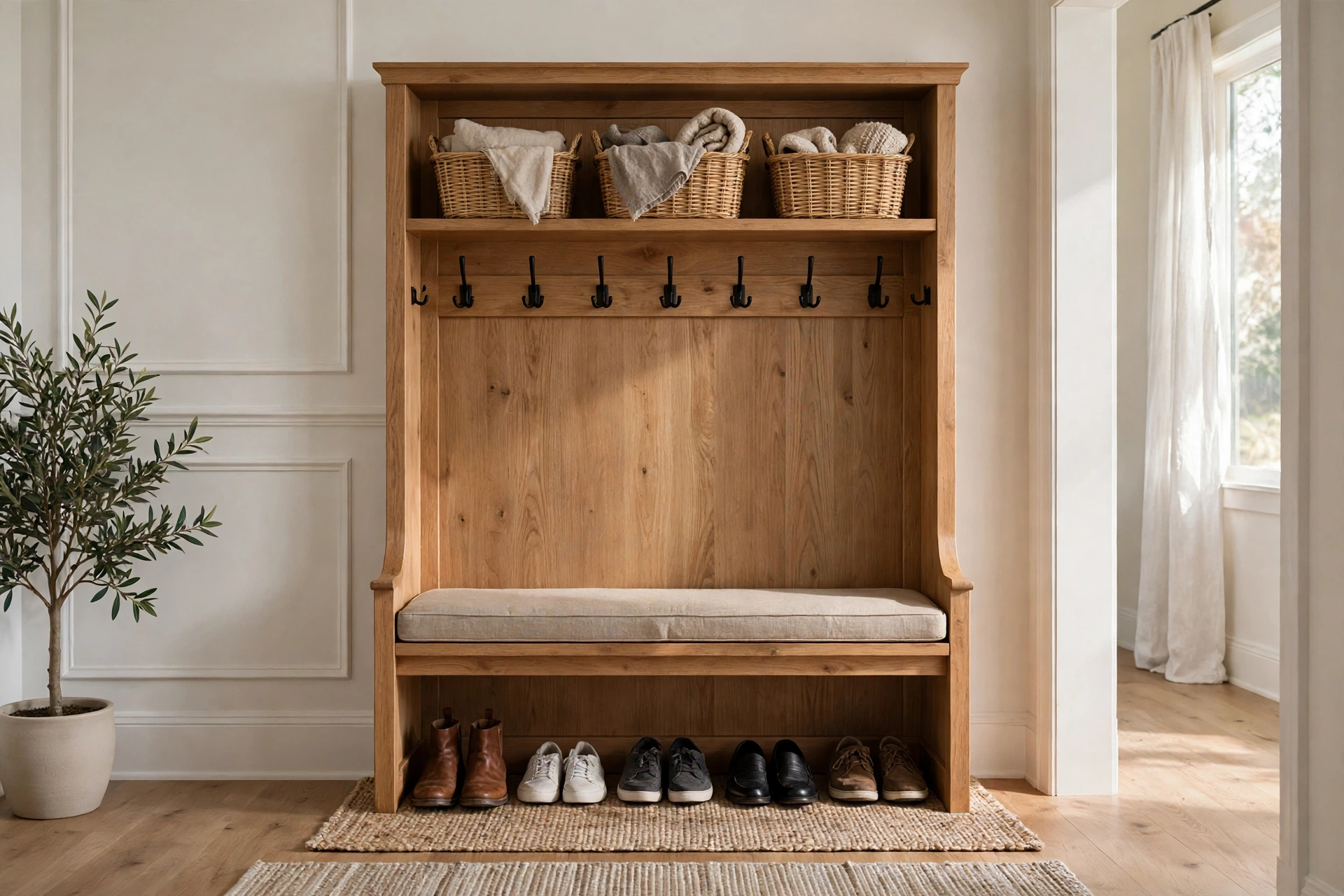
A hall tree combines bench, hooks and shelf in one piece. Best for: instant setups. Styling tip: anchor it to the wall.
29. High-Shelf Baskets
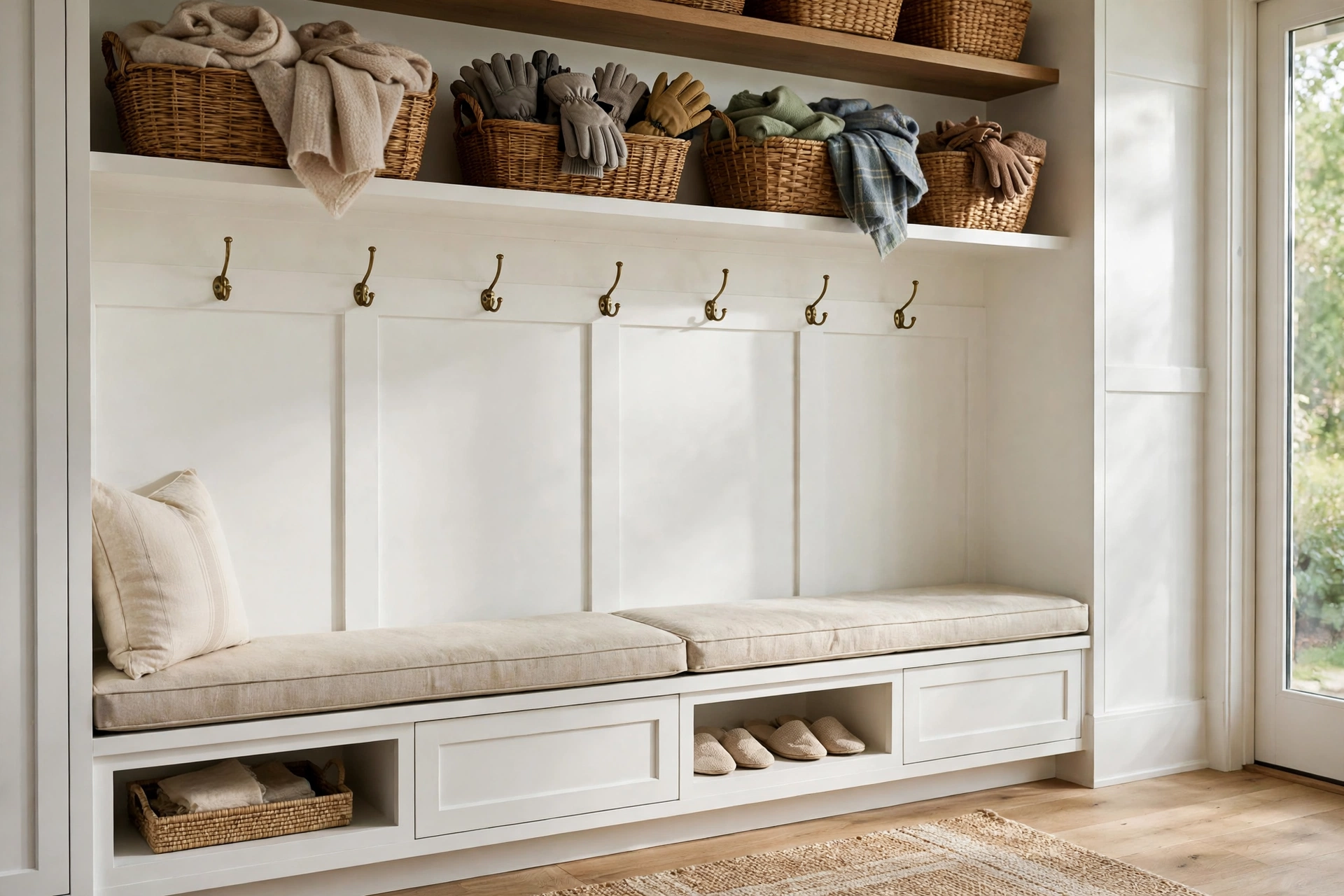
High baskets store out-of-season gloves and scarves. Best for: small spaces. Styling tip: rotate them down each season.
30. Magnetic Key Strip

A magnetic strip by the door gives keys one obvious home. Best for: minimalists. Styling tip: mount it beside the handle.
31. Dedicated Bag Hooks
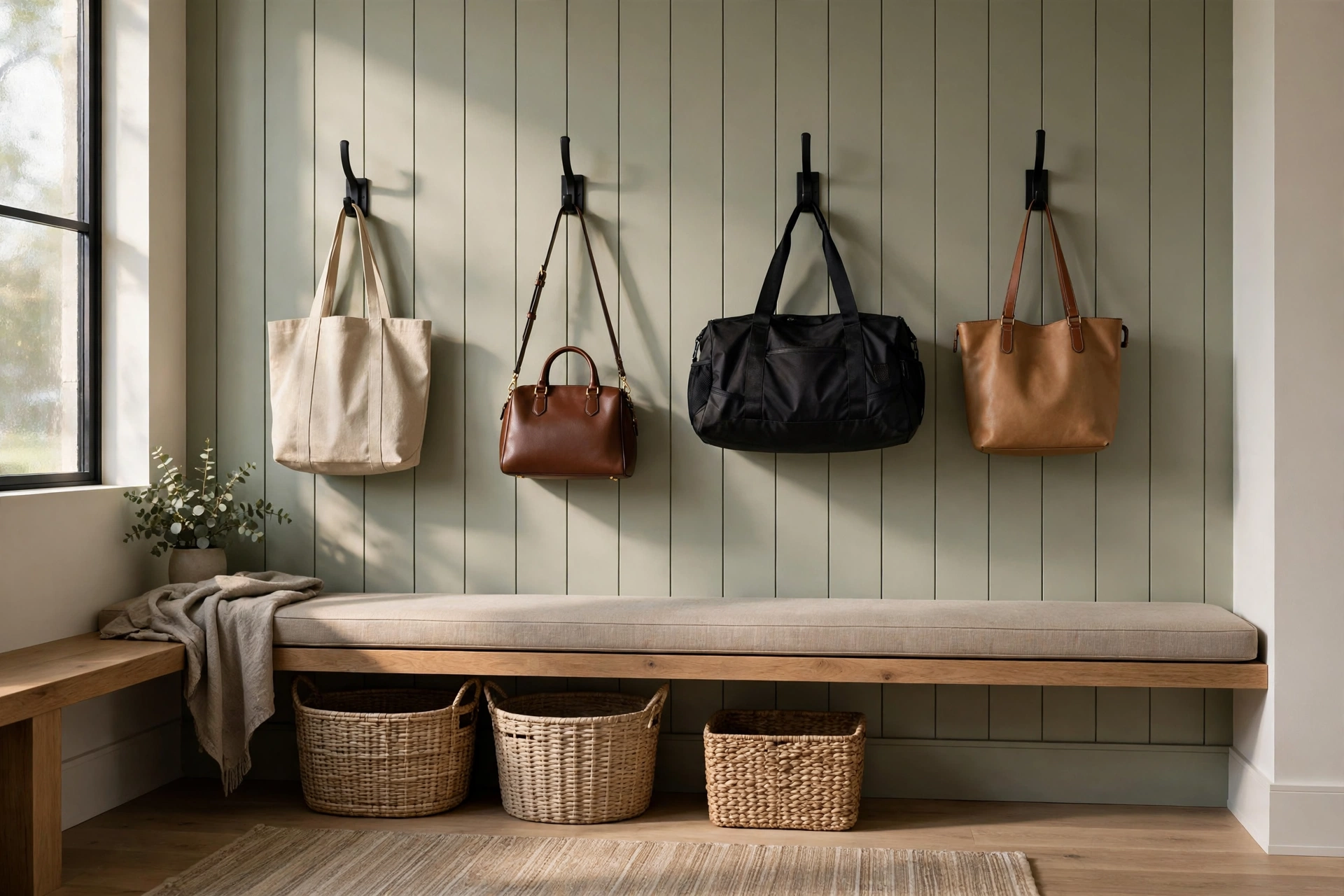
One deep hook per bag stops bags on chairs. Best for: bag collectors. Styling tip: hang the most-used bag nearest the door.
32. Family Command Centre

A board with calendar, mail slots and pen cup is mission control. Best for: busy weeks. Styling tip: update it every Sunday.
33. Hidden Cabinet for Out-of-Season Gear
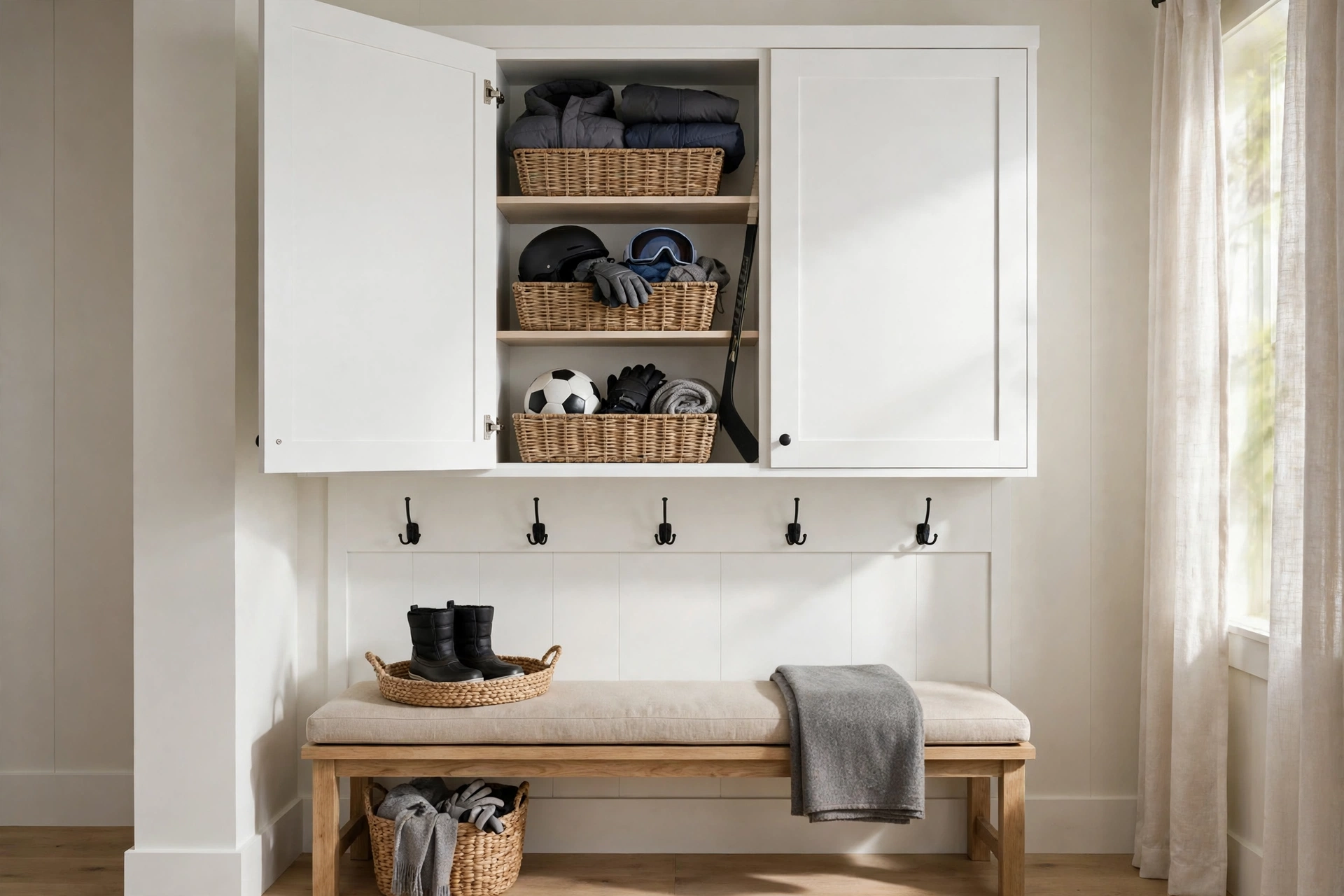
A closed cabinet above the hooks swallows bulky coats. Best for: four-season homes. Styling tip: store gear in labelled bins inside.
34. Washable Rug and Shoe Line
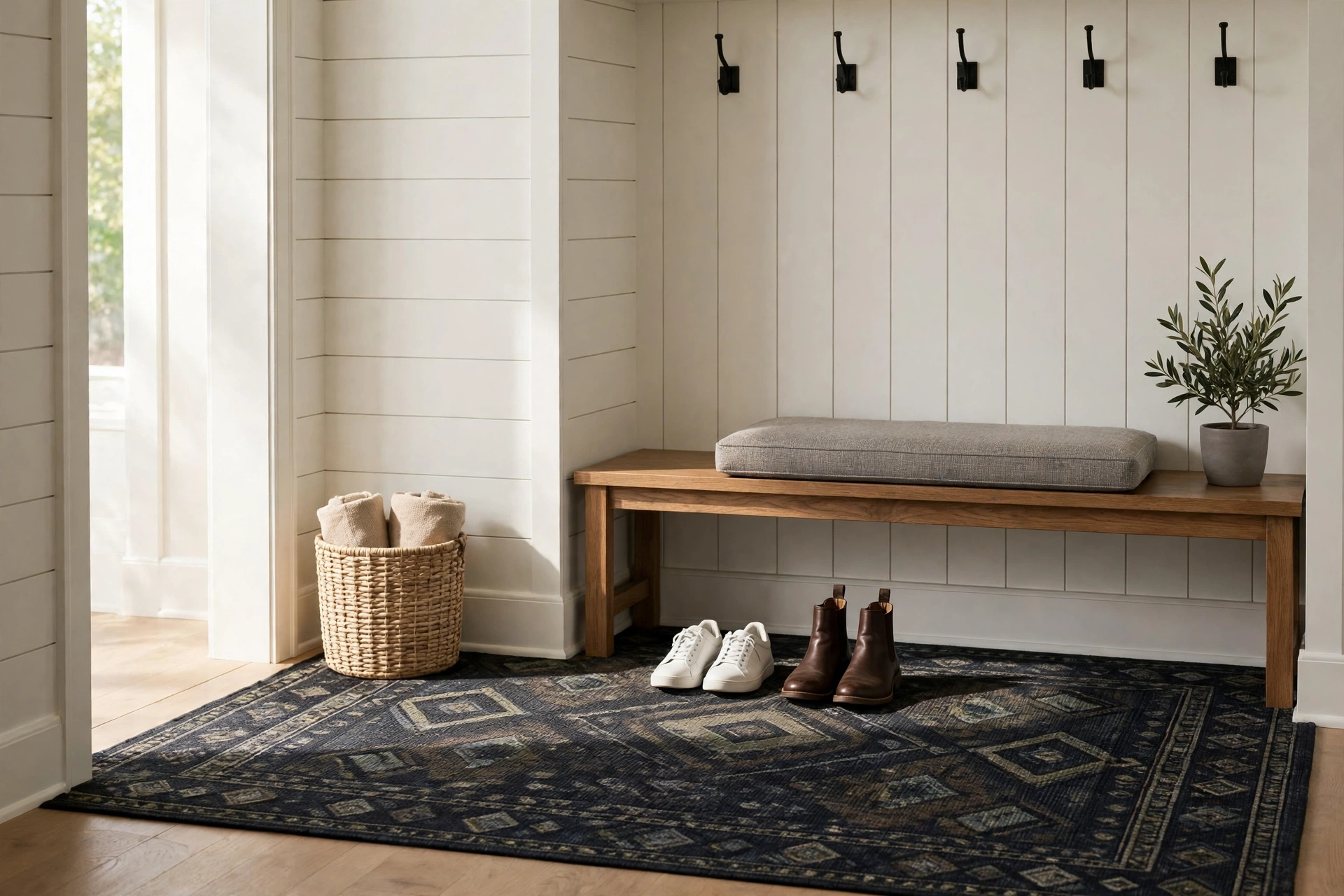
A washable rug marks the shoe zone; two pairs per person keeps it honest. Best for: high-traffic doors. Styling tip: pick a dark patterned rug.
35. Nightly Reset Basket

One “returns” basket collects library books and parcels to take out. Best for: everyone. Styling tip: empty it every evening.
A drop zone works when it is boring: same hook, same tray, same basket, every day. Pick three ideas matching your biggest pile, set them up this weekend, and the entryway stays tidy.
What is a drop zone in a home?
A drop zone is a small, planned landing area just inside an entry door where everyday items get a fixed home. It usually combines hooks, a bench or shelf, shoe storage below, and a tray for keys and mail. It can be as small as a 24-inch wall strip or as large as a full mudroom, and its job is to catch clutter before it spreads through the house.
How do I create a drop zone with no entryway?
Start with a single wall near the door, even a corner. Mount a hook rail at shoulder height, add a narrow floating shelf or small stool for a key tray, and place a boot tray or basket below for shoes. A slim shoe cabinet or over-door organizer adds storage without floor space — keep it to one tray, one hook row, one shoe spot.
What should every drop zone include?
Every drop zone needs four things: a place to hang (hooks), a place to sit or land items (bench or shelf), a place for shoes (tray, cubbies or cabinet), and a place for small essentials (tray, drawer or wall pocket). Add a mail sorter and charging spot if needed; any missing category piles up elsewhere.
How wide should a drop zone be?
A functional drop zone fits in 24 to 36 inches of wall for one or two people, while a family of four usually needs four to six feet with one bay per person. Each person needs 12 to 15 inches of hook width plus shoe space below, and a 36-inch clear walkway keeps the door swinging freely.
How do I keep a drop zone tidy?
Limit capacity: one hook and one bin per person, two pairs of shoes by the door. Run a two-minute reset each evening — keys in the tray, shoes in place, mail sorted or recycled, bags on their hooks. When something has no home, it either earns a hook or leaves the zone, because a tidy drop zone is a habit supported by storage, not storage alone.
Are built-in mudroom lockers worth it?
Built-ins are worth it if your family enters through the same door daily with lots of gear — one bay per person ends the morning scramble and adds resale appeal. They cost far more than freestanding pieces, so start with a bench, hooks and baskets first, and build in only if the simple setup gets used every day.
