
Glass staircase railing ideas make a hall feel bigger, brighter and more modern. A clear glass staircase balustrade lets light travel between floors, shows off the stairs, and makes even a narrow hall feel open. These 26 ideas — frameless panels, wood handrails, smoked glass and LED-lit channels — suit every home style and budget.
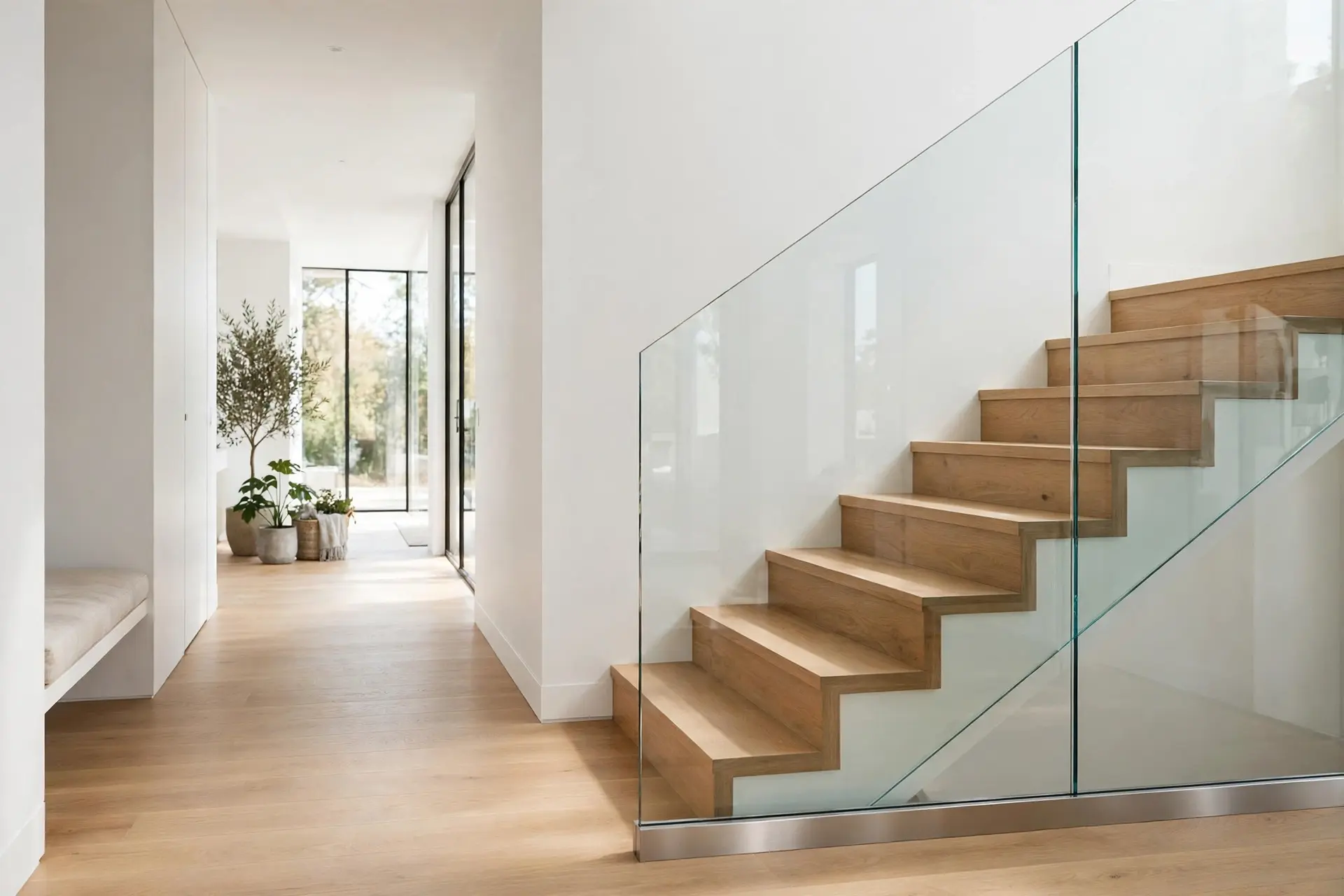
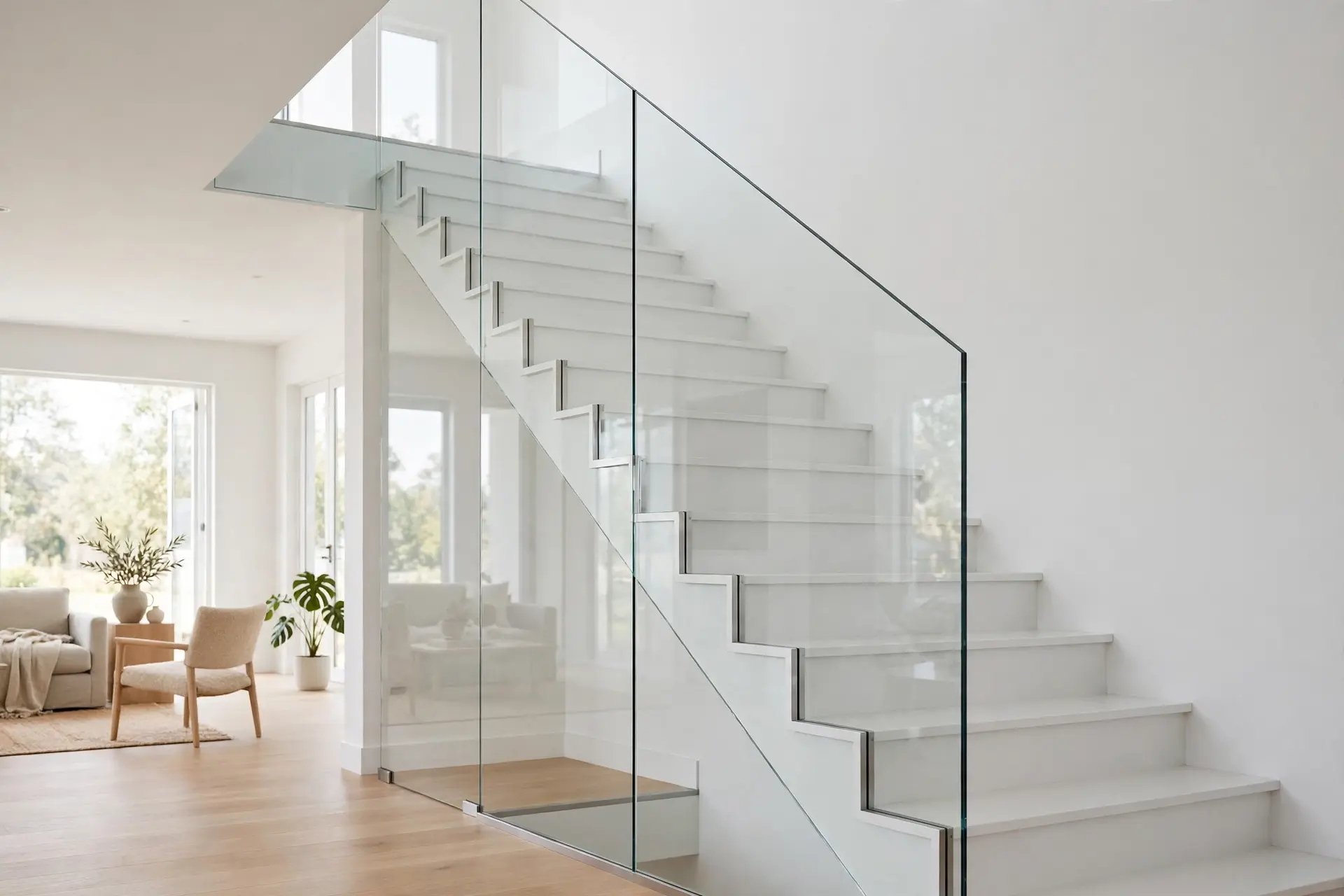
1. Frameless Panels in a Slim Base Channel
Thick glass panels slot into a slim metal channel with no posts, so the railing disappears.
Best for: minimalist halls. Styling tip: pale floors. Pro tip: low-iron glass stays clear.
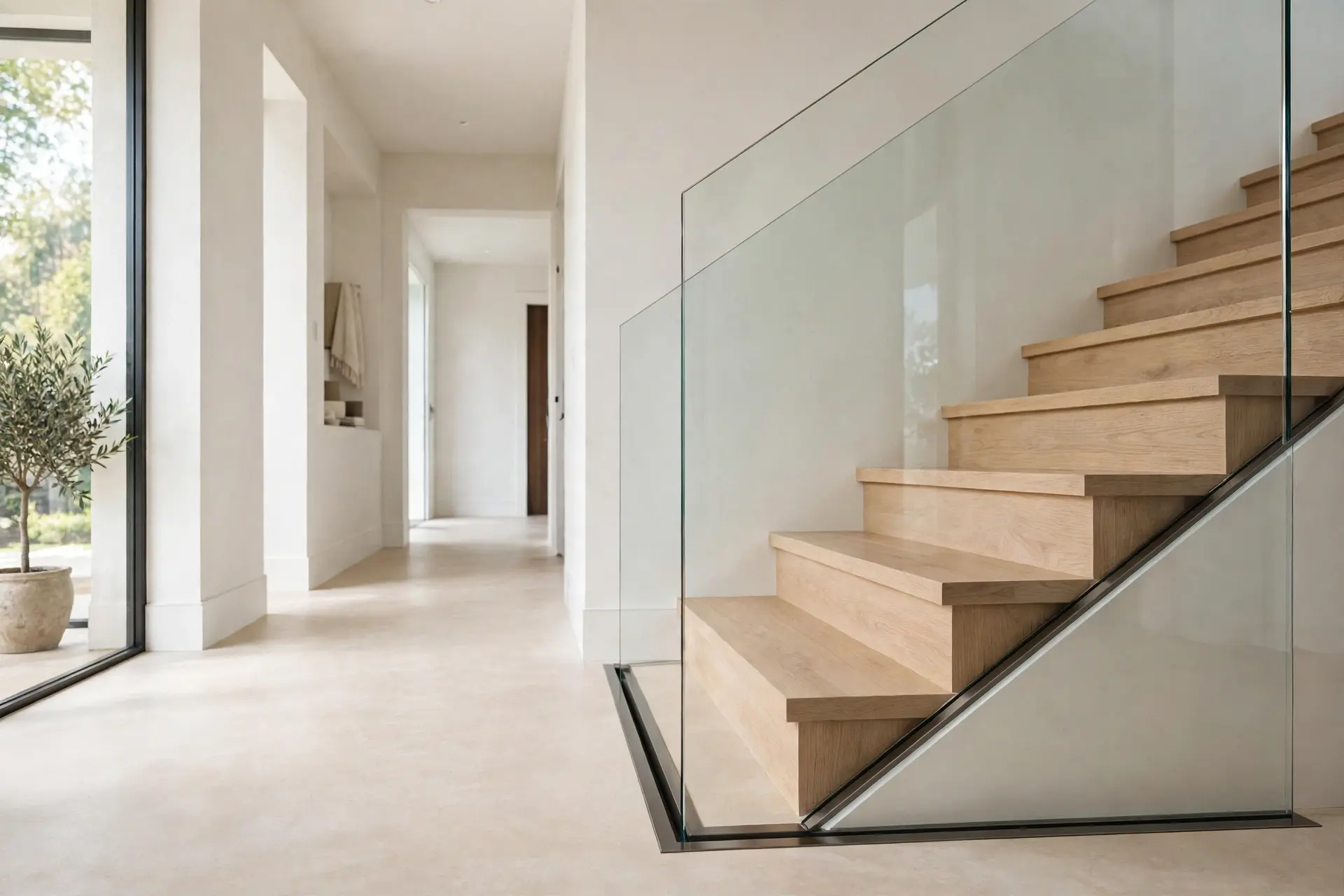
2. Frameless Glass With a Warm Wood Handrail
A slim wood handrail tops frameless glass, adding warmth and grip without blocking light.
Best for: family homes. Styling tip: match handrail to treads. Pro tip: walnut warms white halls.
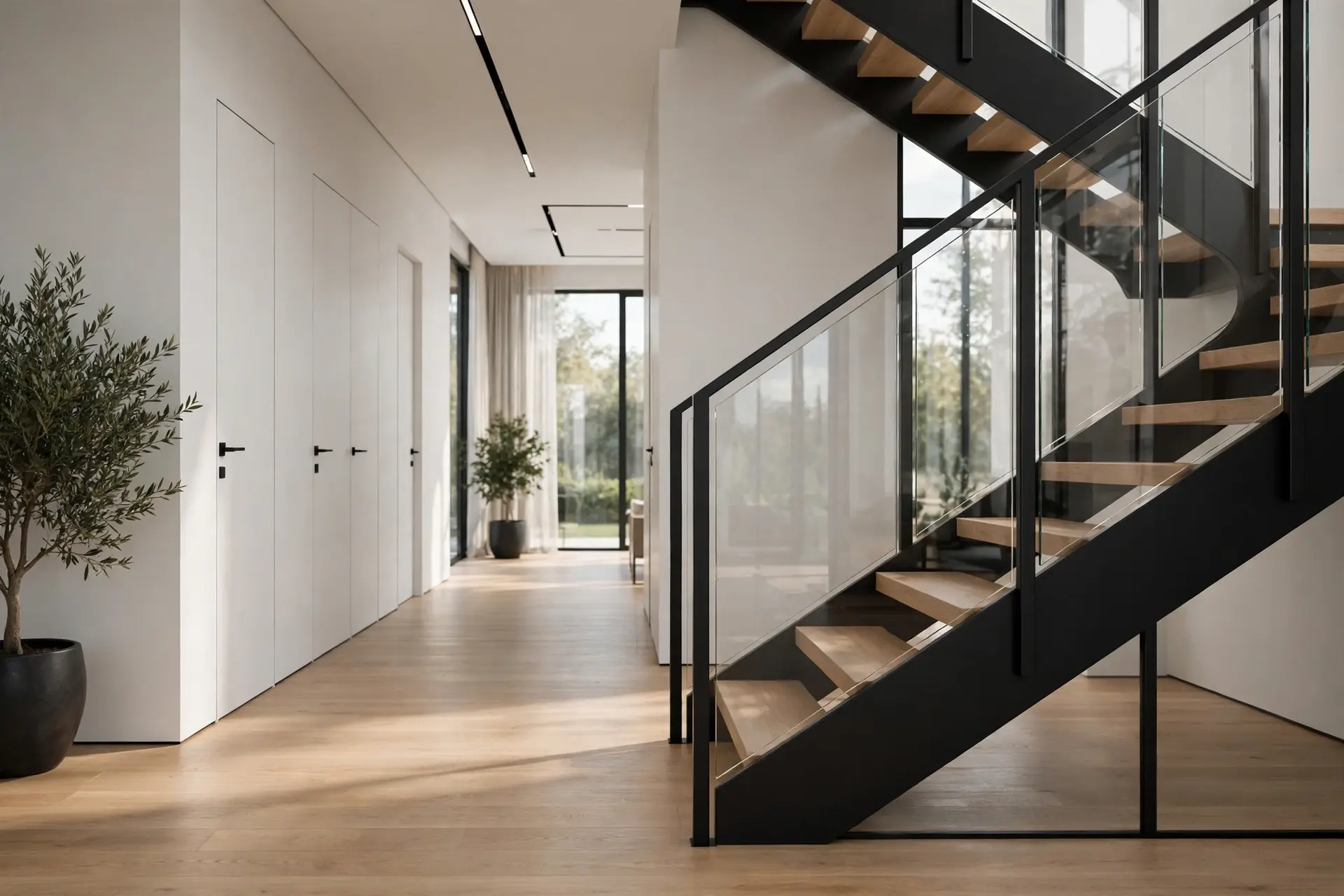
3. Matte Black Posts With Clear Glass Infill
Matte black posts frame clear glass panels for a crisp industrial look that suits modern halls.
Best for: modern contrast. Styling tip: repeat black in lighting. Pro tip: see our staircase railing ideas for post styles.
4. Low-Iron Glass for a Crystal-Clear View
Standard glass shows a green edge tint; low-iron glass stays almost perfectly clear on long panels.
Best for: long runs. Styling tip: pair with white stairs. Pro tip: worth the cost.
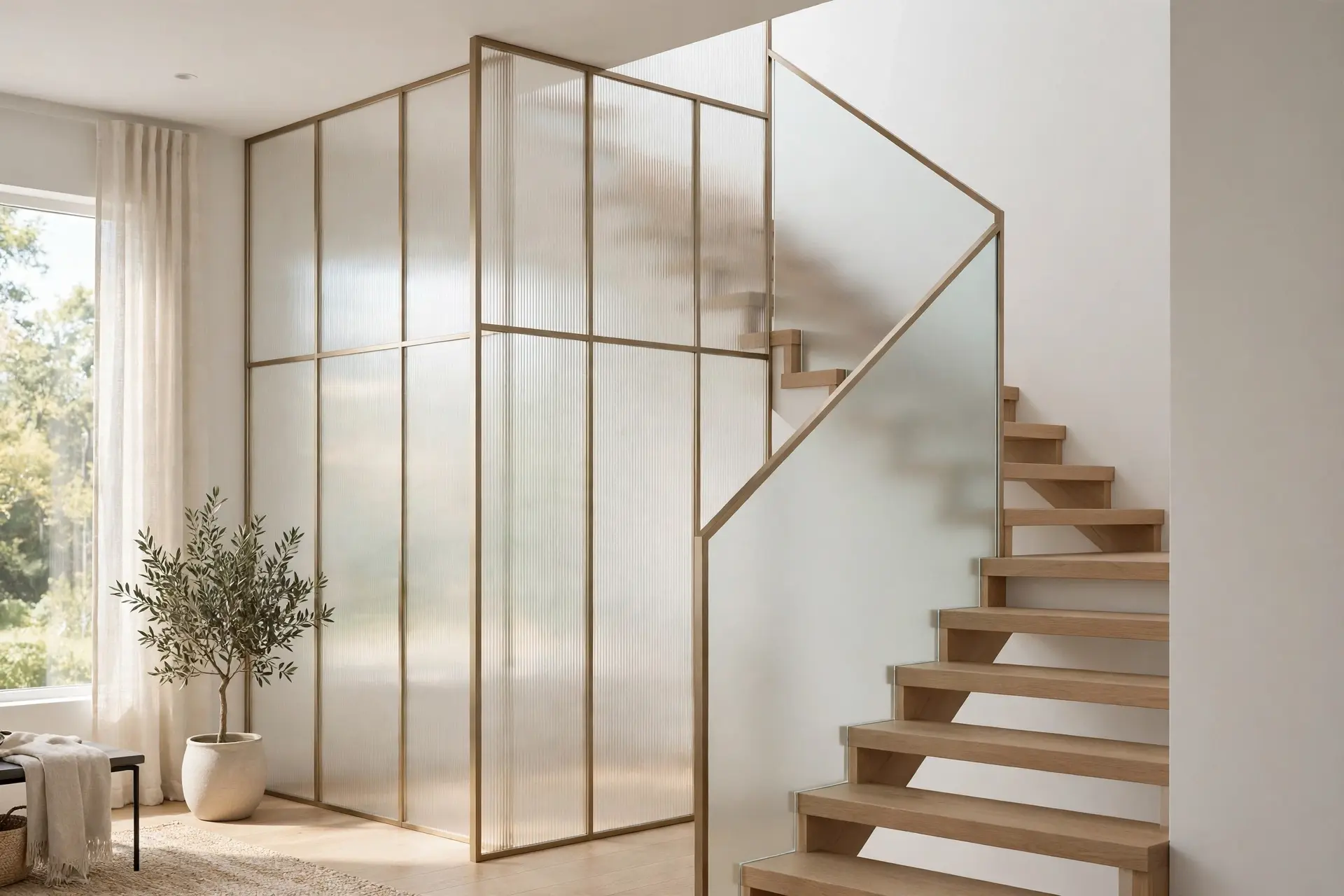
5. Frosted Glass Panels for Privacy
Frosted glass softens views through the stairs, giving privacy while daylight still passes through.
Best for: bedrooms above. Styling tip: frost lower panels only. Pro tip: acid-etched frost never peels.
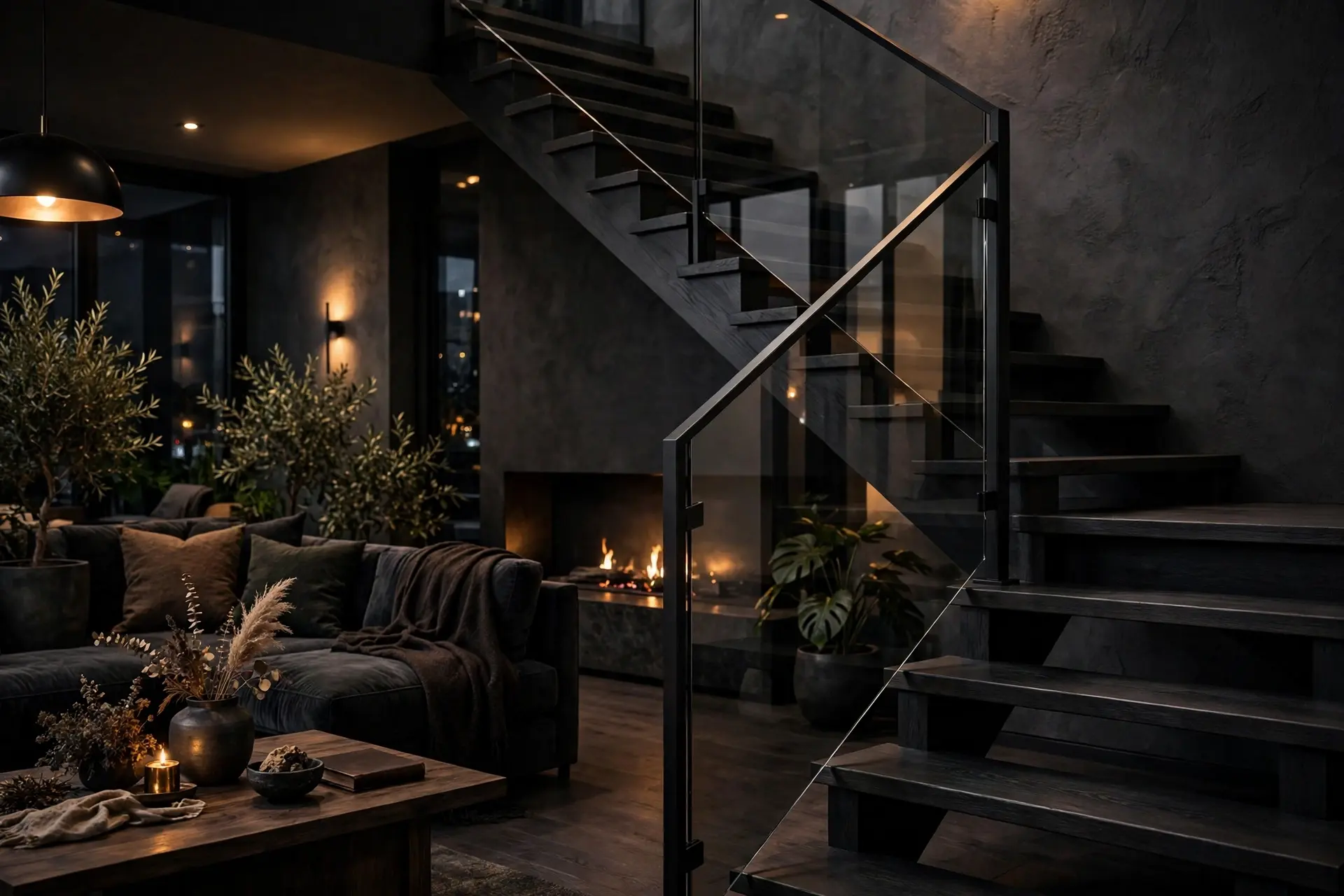
6. Smoked Grey Glass for a Moody Look
Smoked grey glass adds depth and drama, softening bright halls and pairing well with dark wood.
Best for: moody interiors. Styling tip: add warm lighting. Pro tip: check tint in daylight.
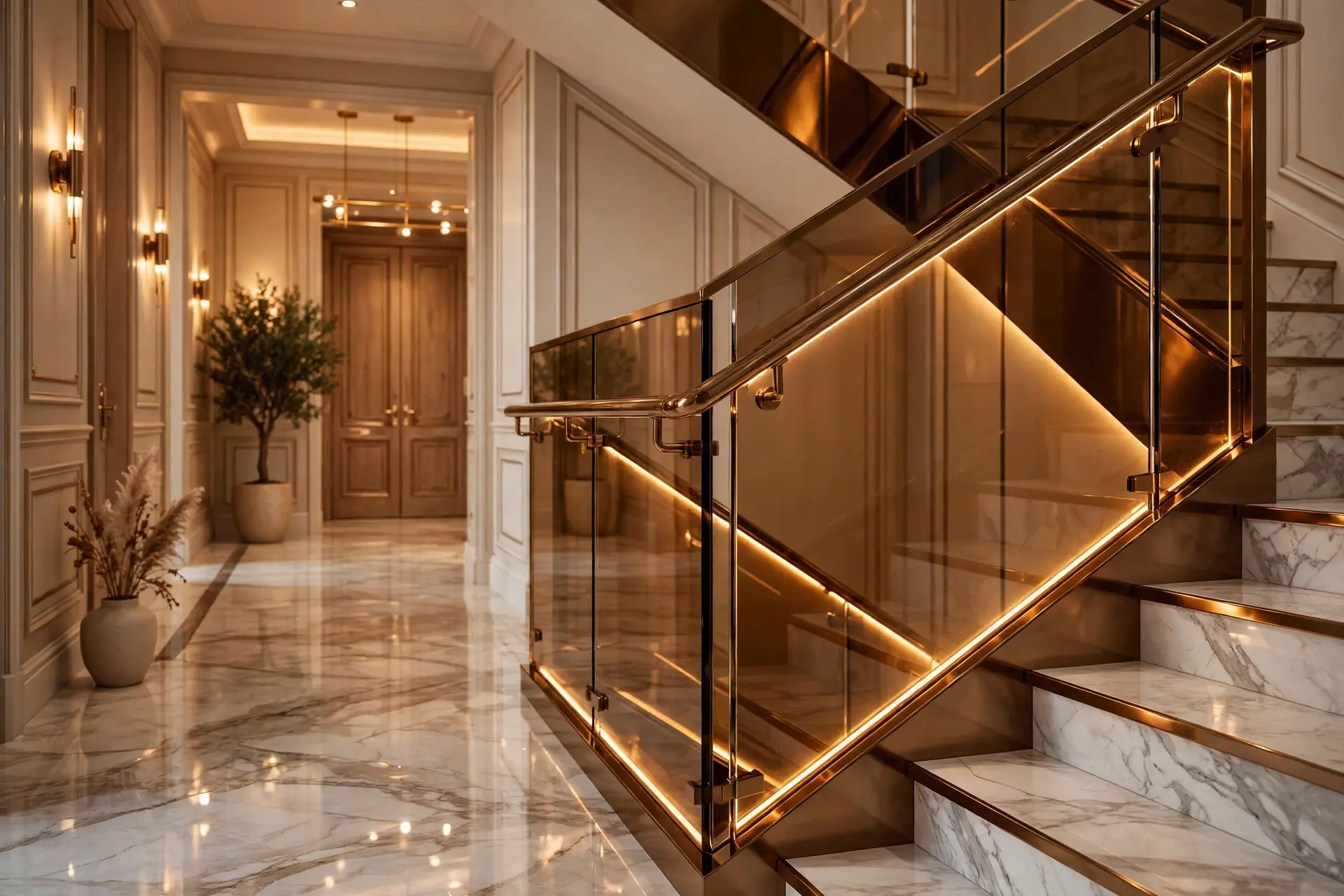
7. Bronze-Tinted Glass for Warmth
Bronze-tinted glass throws a warm golden glow across the hall, turning a plain staircase into a focal point.
Best for: warm schemes. Styling tip: echo brass fittings. Pro tip: keep walls pale for balance.
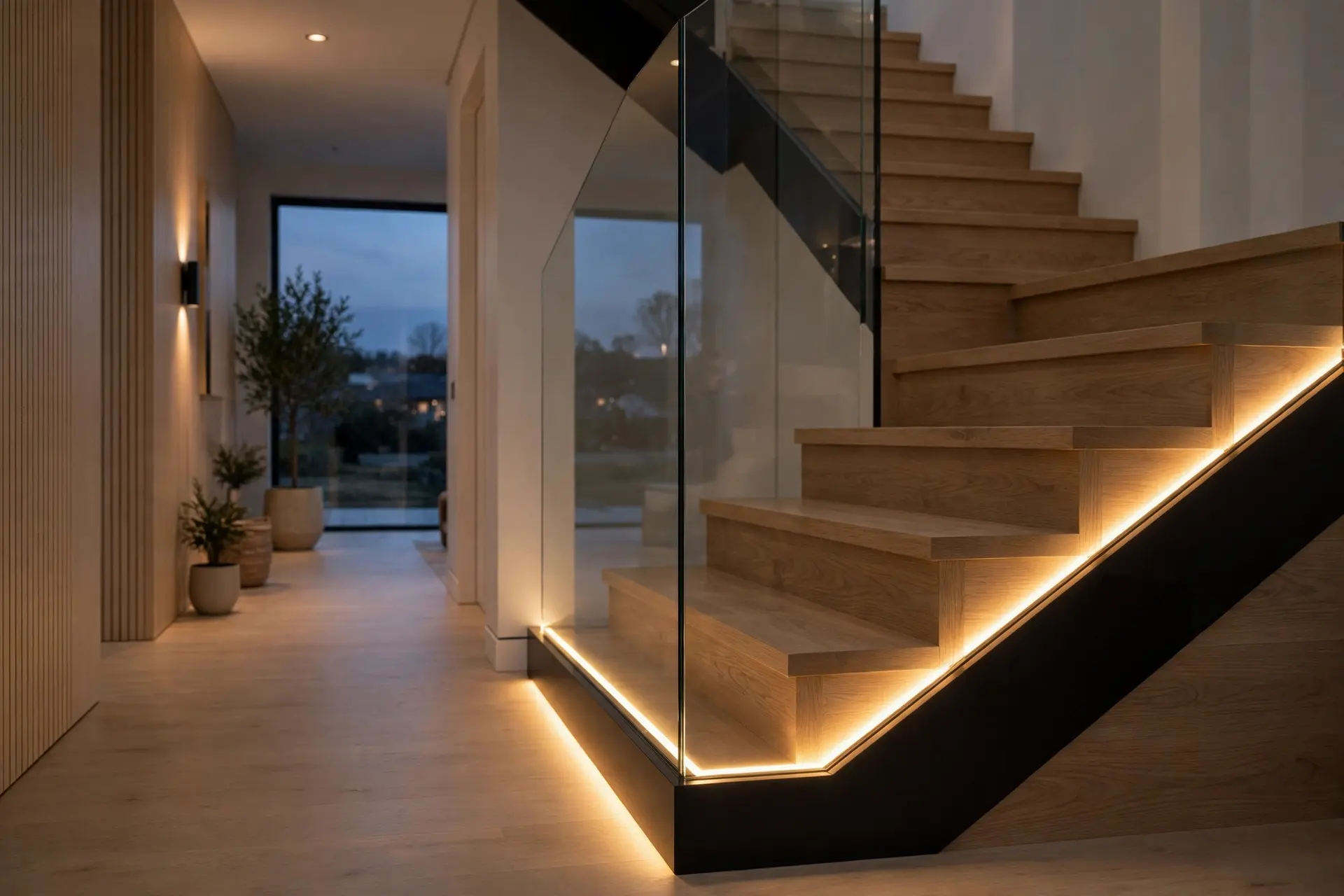
8. LED-Lit Base Channel for Evening Glow
A warm LED strip in the base channel lights the glass from below, so stairs glow after dark.
Best for: evening drama. Styling tip: warm white, not cool. Pro tip: dimmable strips suit bedrooms.
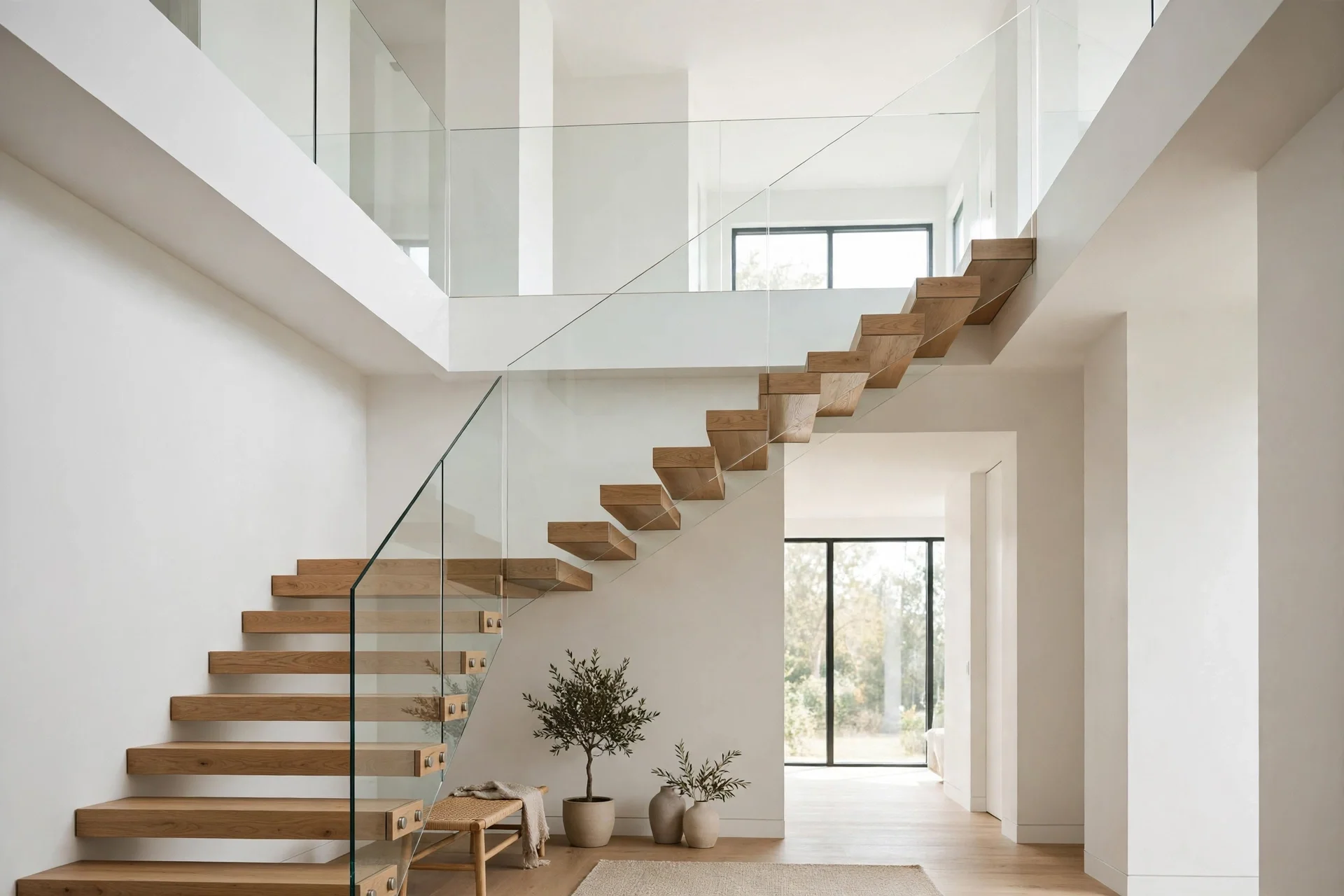
9. Floating Treads With a Glass Balustrade
Open floating treads with a frameless glass balustrade look weightless, light flowing under each step.
Best for: double-height halls. Styling tip: keep under-stair space clear. Pro tip: check weight ratings.
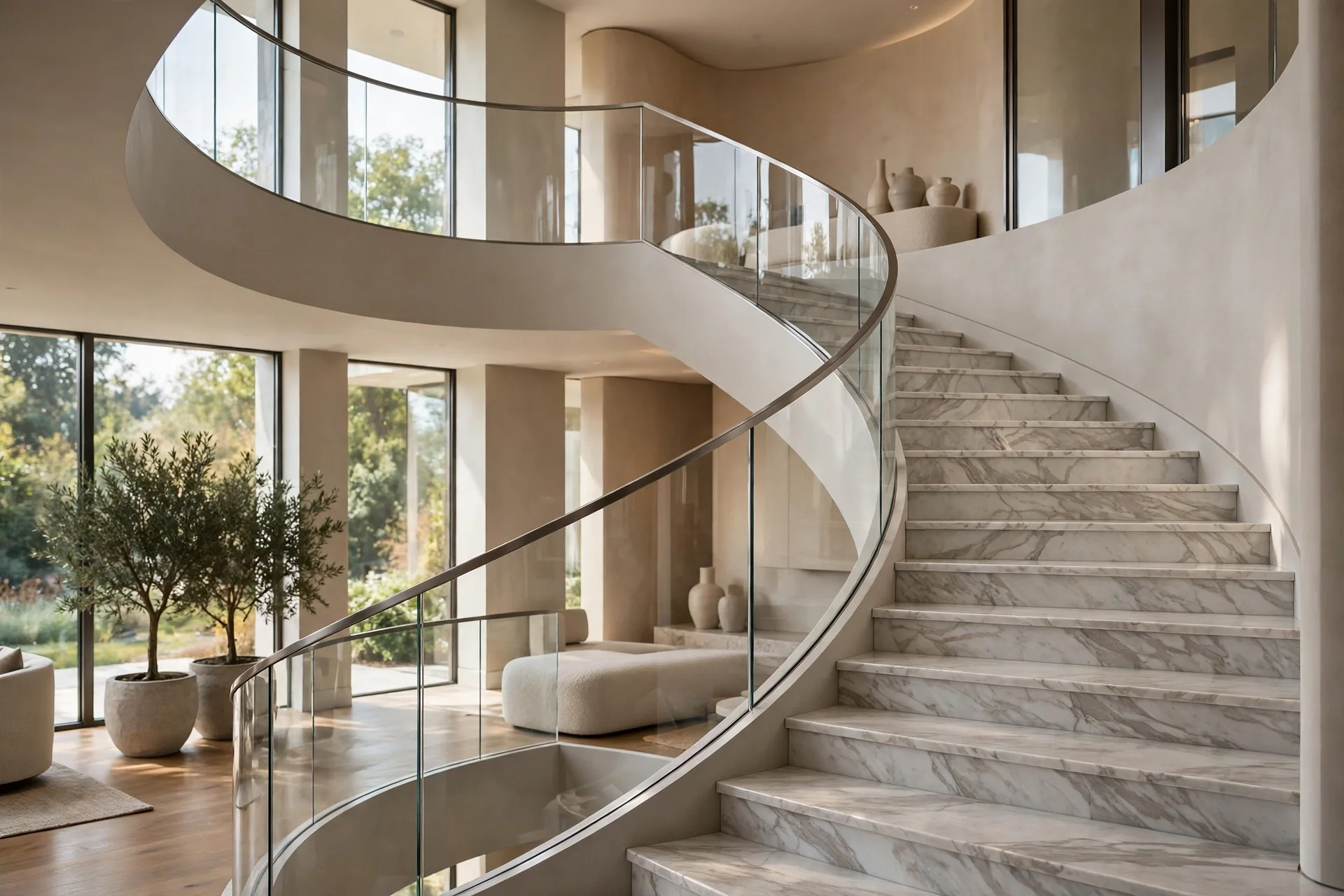
10. Curved Glass for a Sweeping Staircase
Bent glass panels follow a curved staircase in one smooth sweep, a sculptural centrepiece no straight railing can match.
Best for: statement halls. Styling tip: keep nearby decor minimal. Pro tip: order early — curved glass is bespoke.
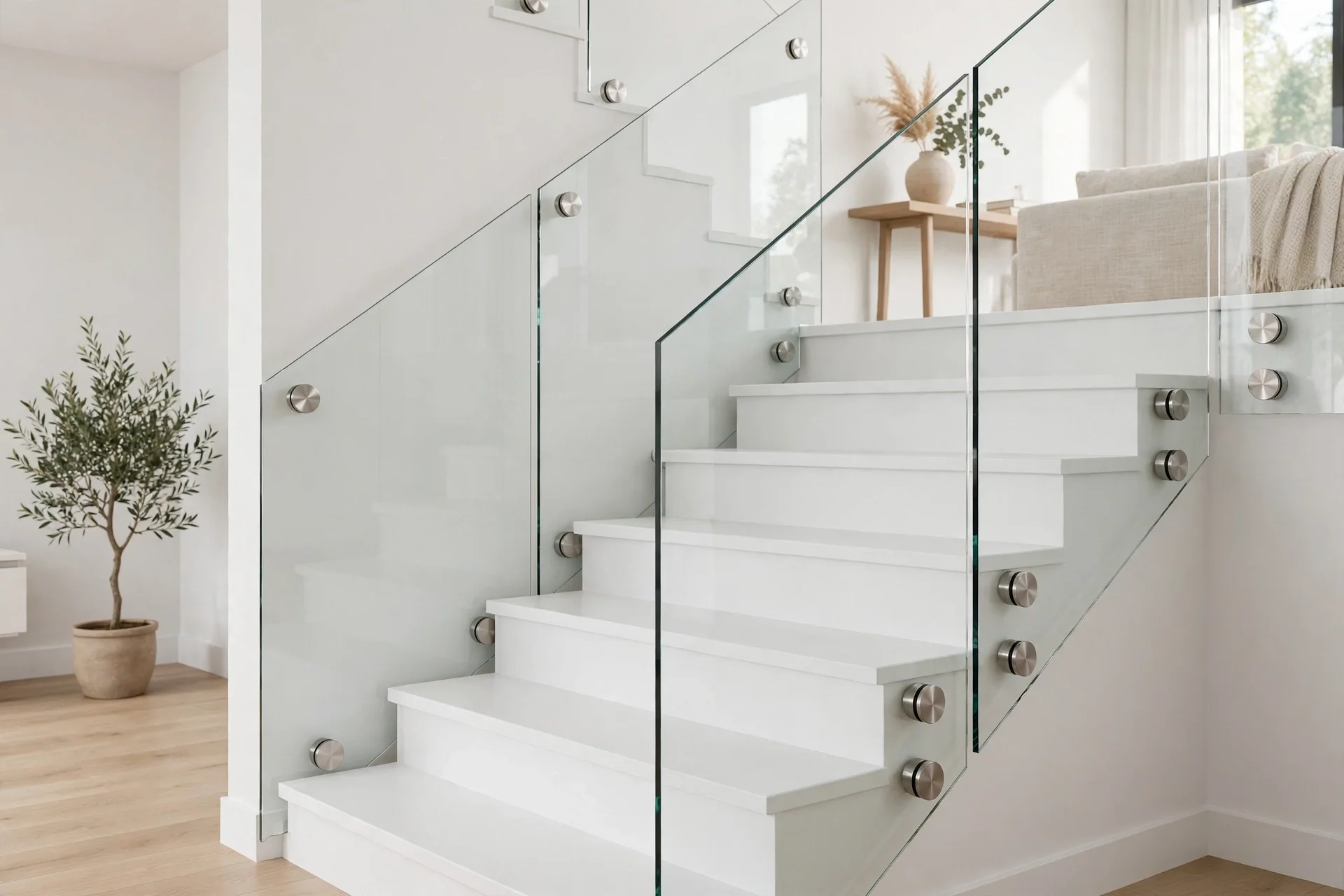
11. Glass Panels on Stainless Steel Standoffs
Round steel discs bolt glass to the stringer, leaving a small gap that reads light and technical.
Best for: contemporary homes. Styling tip: brushed steel suits cool palettes. Pro tip: space standoffs evenly.
12. Brass Hardware for a Touch of Glamour
Polished brass clamps warm up clear glass, adding a jewellery-like finish that suits elegant and Art Deco halls.
Best for: glamorous halls. Styling tip: match brass to lights. Pro tip: lacquered brass needs less polishing.
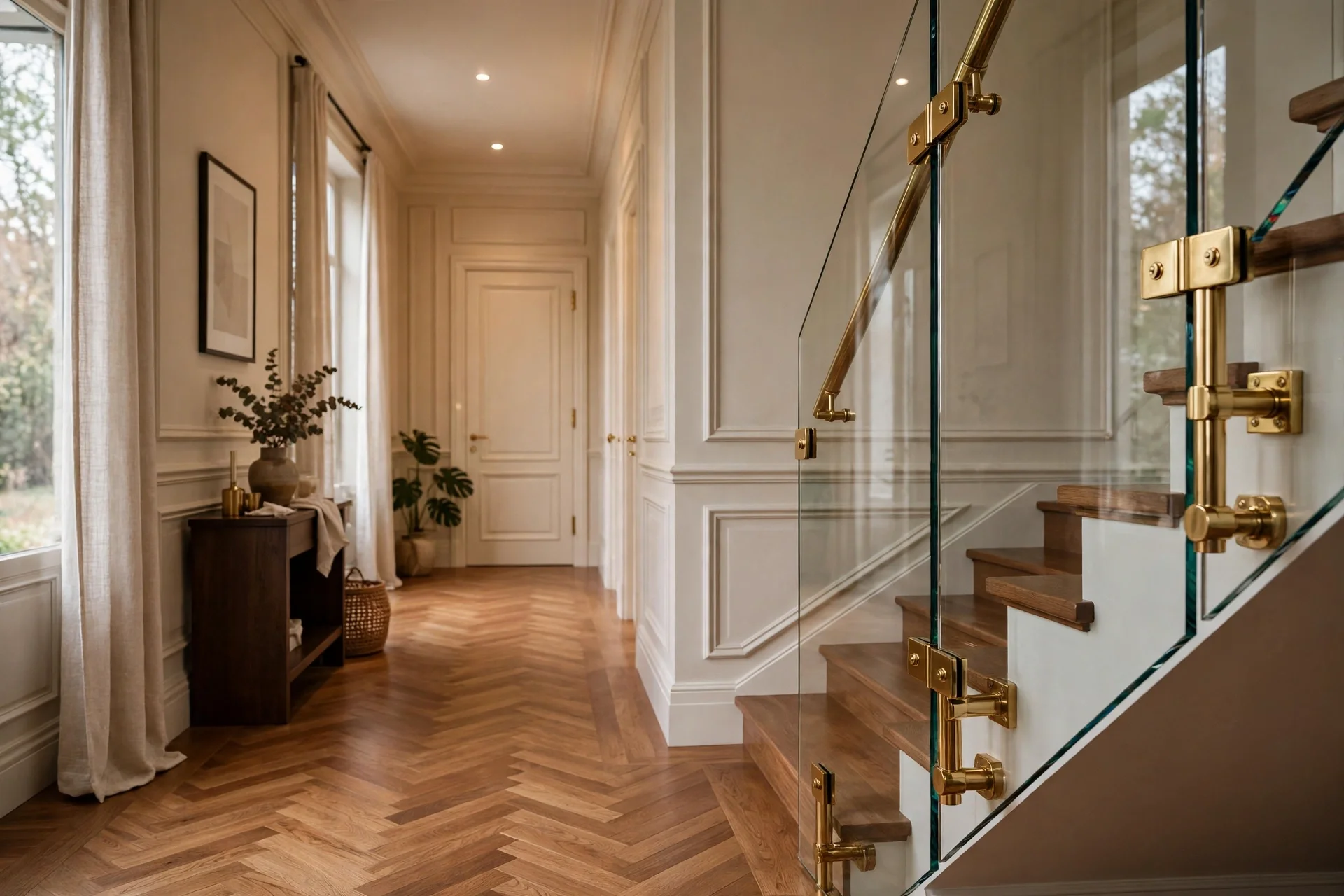
13. Glass Balustrade on a Spiral Stair
Curved glass panels wrap a spiral staircase without chopping the view, keeping its sculptural shape visible from every angle.
Best for: compact footprints. Styling tip: keep centre pole slim. Pro tip: measure twice — spirals allow no slack.
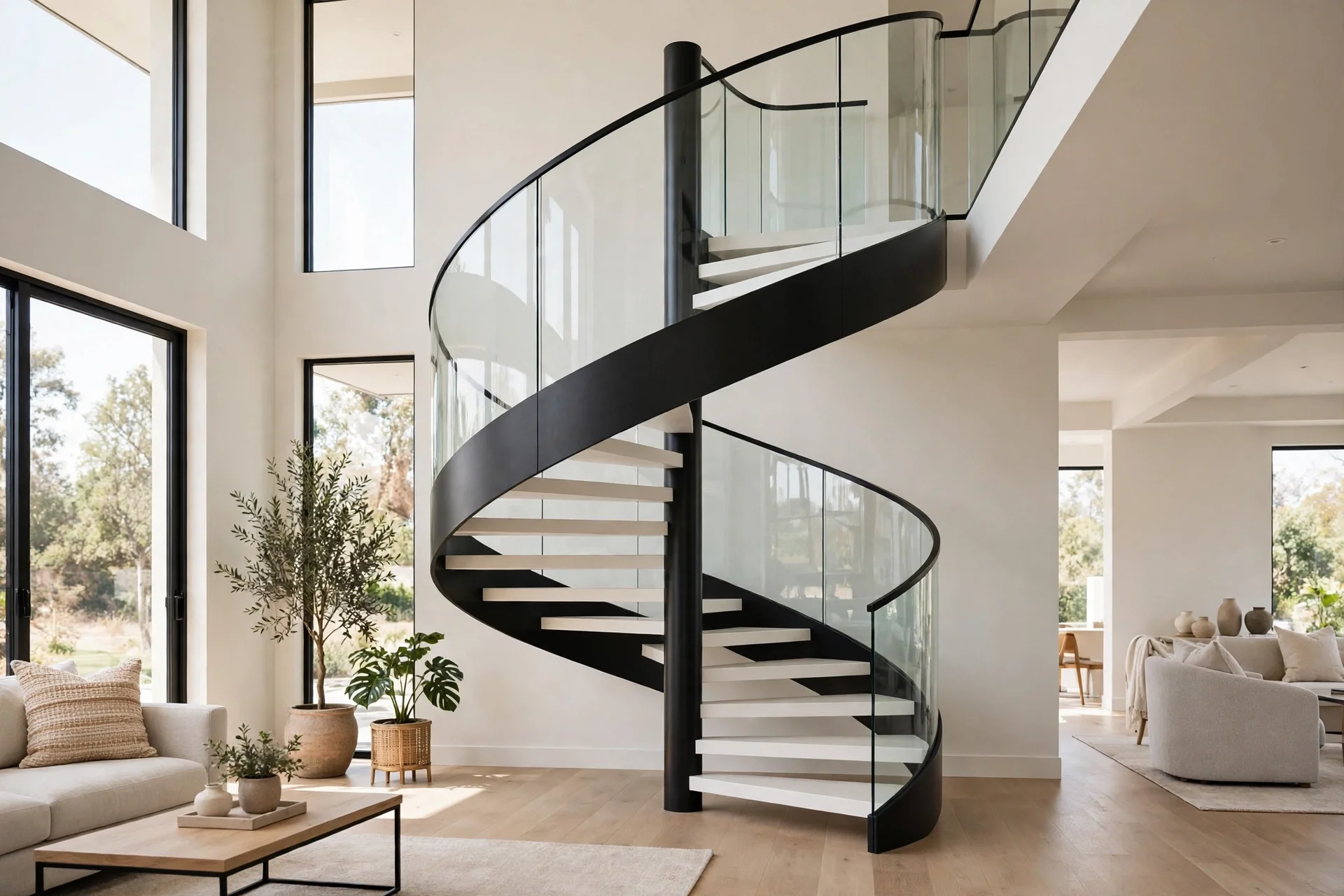
14. Glass Railing With Open Risers
Open risers and glass panels remove every visual barrier, so light and sightlines pass straight through the staircase.
Best for: small halls. Styling tip: add a runner for grip. Pro tip: mind codes on riser gaps.
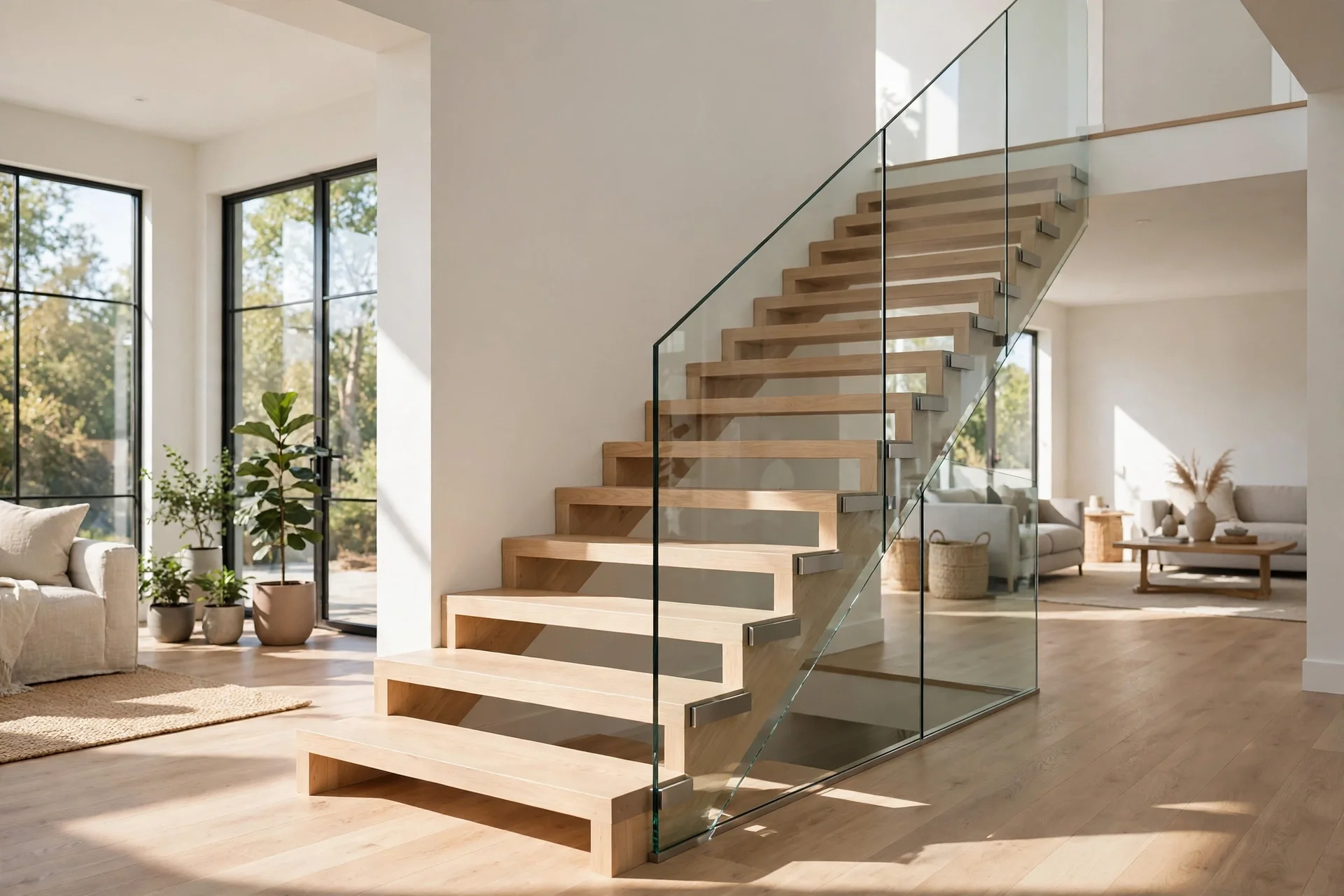
15. Black Steel Handrail Over Clear Glass
A slim black steel handrail caps clear glass, giving a firm grip and a sharp line.
Best for: industrial style. Styling tip: echo black in frames. Pro tip: flat top rails feel best.
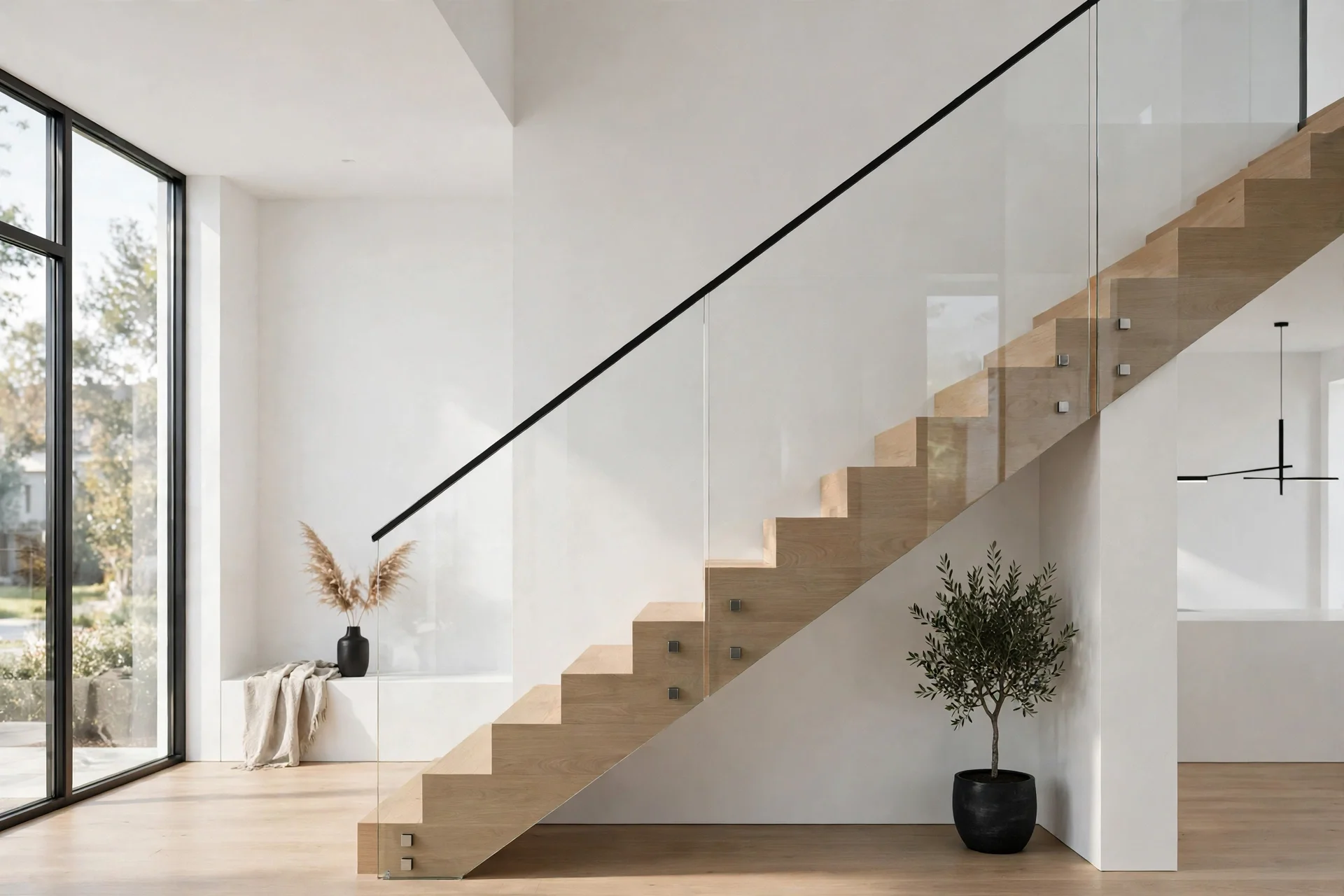
16. Half-Wall Topped With Glass
A solid half-wall topped with glass gives a sturdy base and clear view above, ideal for homes with children.
Best for: family safety. Styling tip: paint the wall bold. Pro tip: glass adds light, not height.
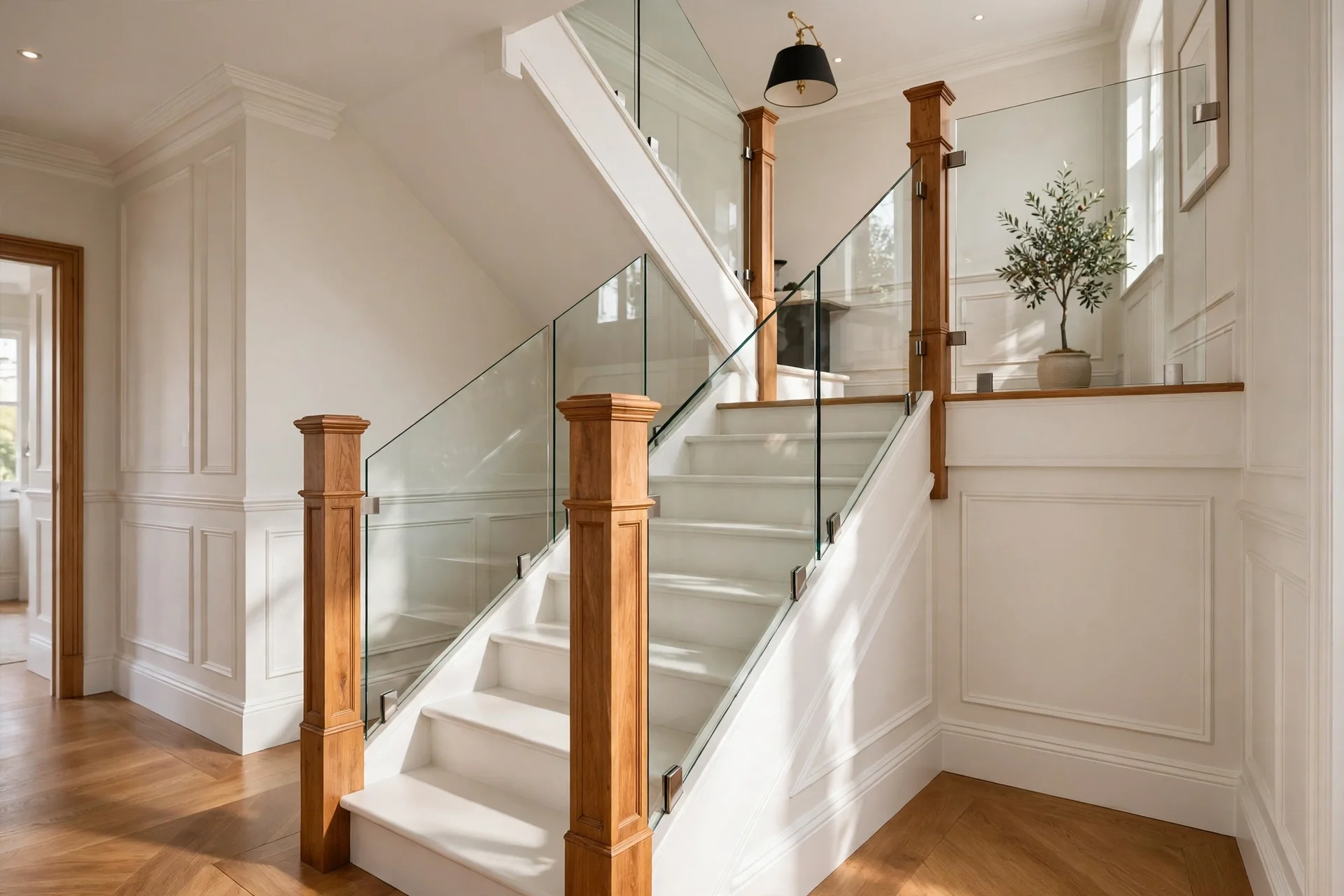
17. Glass Panels Between Wood Newel Posts
Chunky wood newel posts anchor glass panels, blending a traditional frame with a light, modern infill.
Best for: classic homes. Styling tip: stain posts to match floors. Pro tip: square newels look modern.
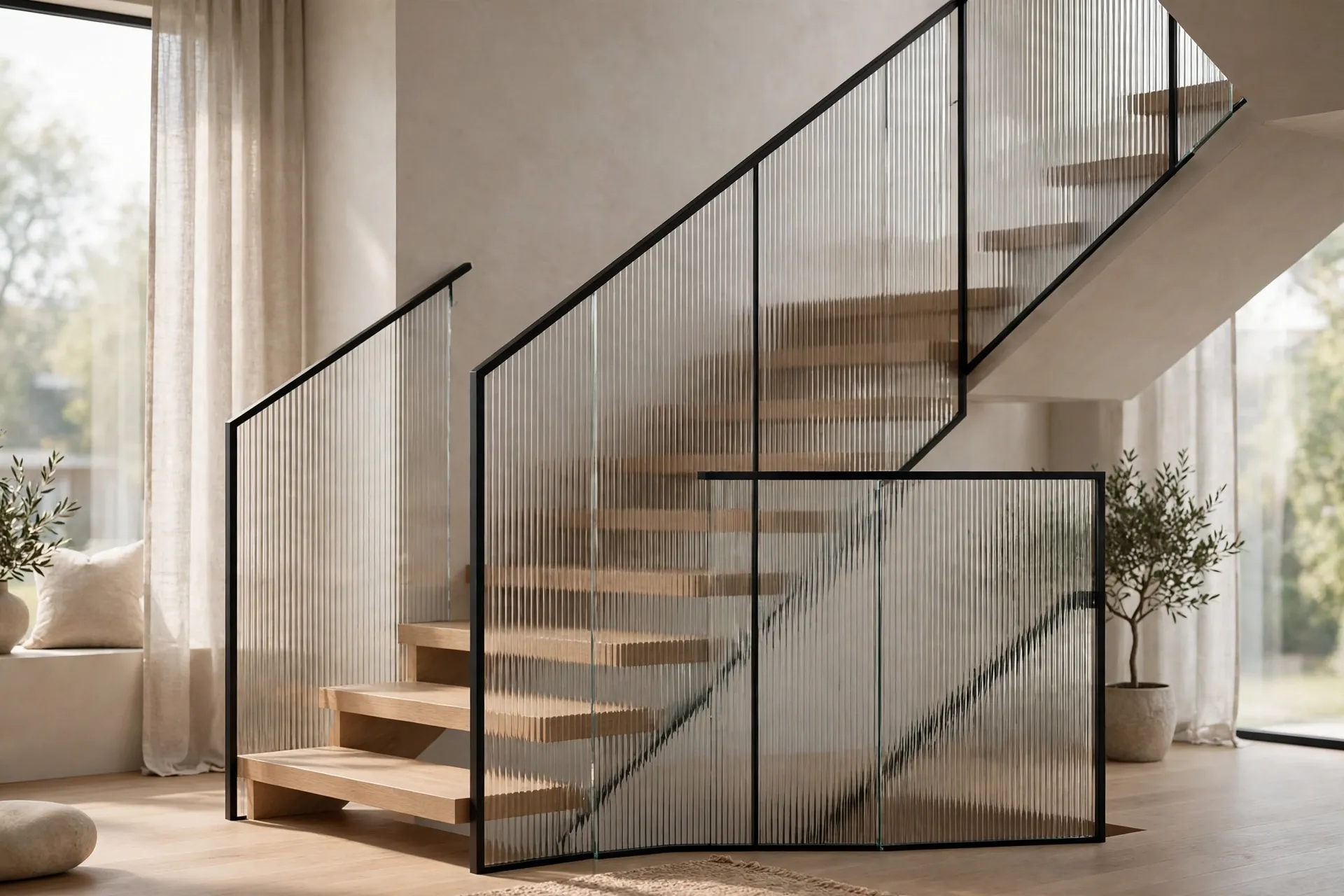
18. Fluted Glass for Soft Texture
Fluted glass bends light into soft vertical stripes, adding texture and privacy while keeping the stairs bright.
Best for: texture lovers. Styling tip: pair with plain walls. Pro tip: flutes hide smudges well.
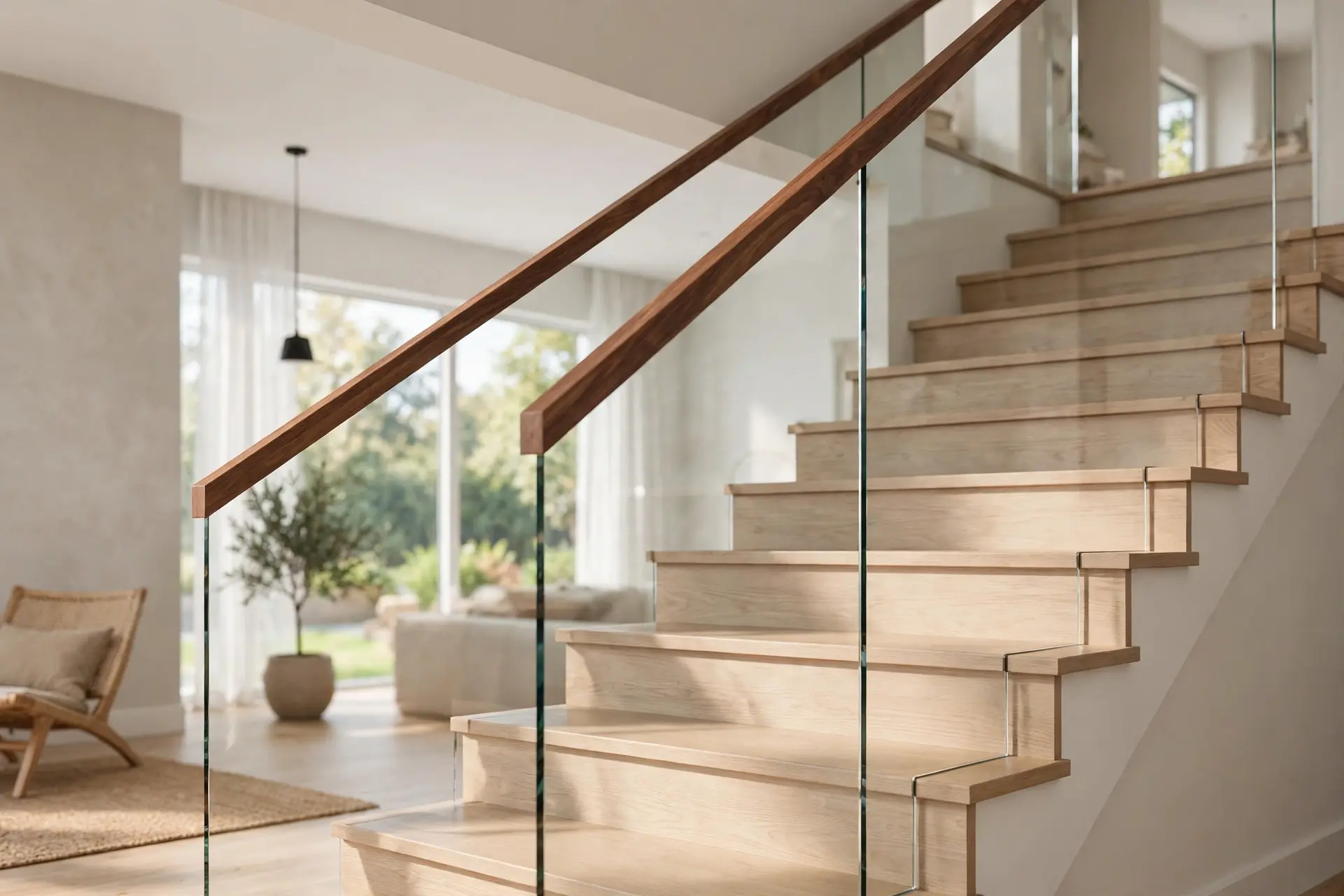
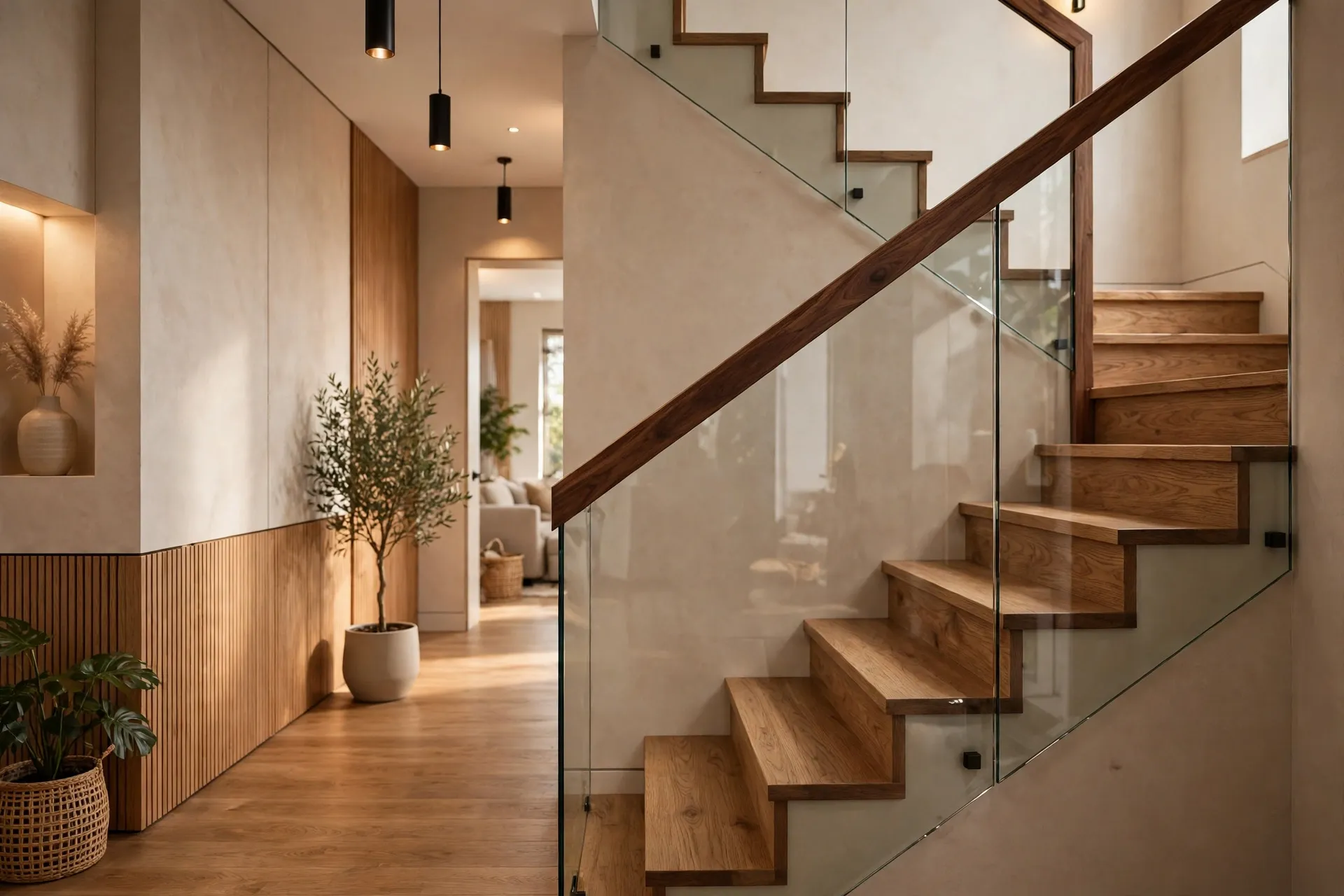
19. Walnut Top Rail on Frameless Glass
A rich walnut top rail crowns frameless glass, warming a modern staircase with natural wood.
Best for: warm modern halls. Styling tip: repeat walnut in furniture. Pro tip: oil the rail yearly.
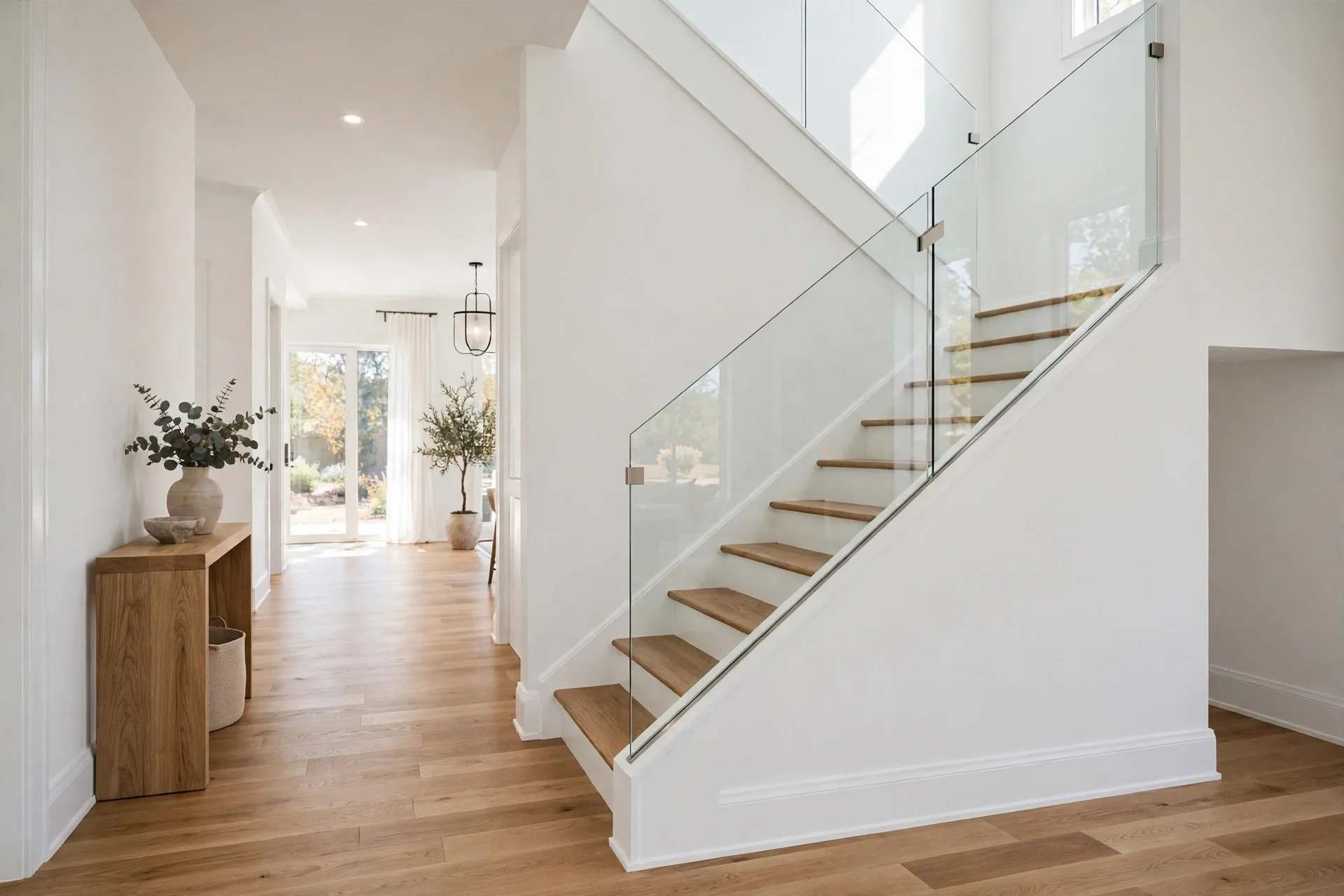
20. Glass Railing Around the Landing
Continue the glass around the upstairs landing so the upper floor feels open, with views down into the hall.
Best for: open landings. Styling tip: one continuous run looks best. Pro tip: see our staircase design ideas for layouts.
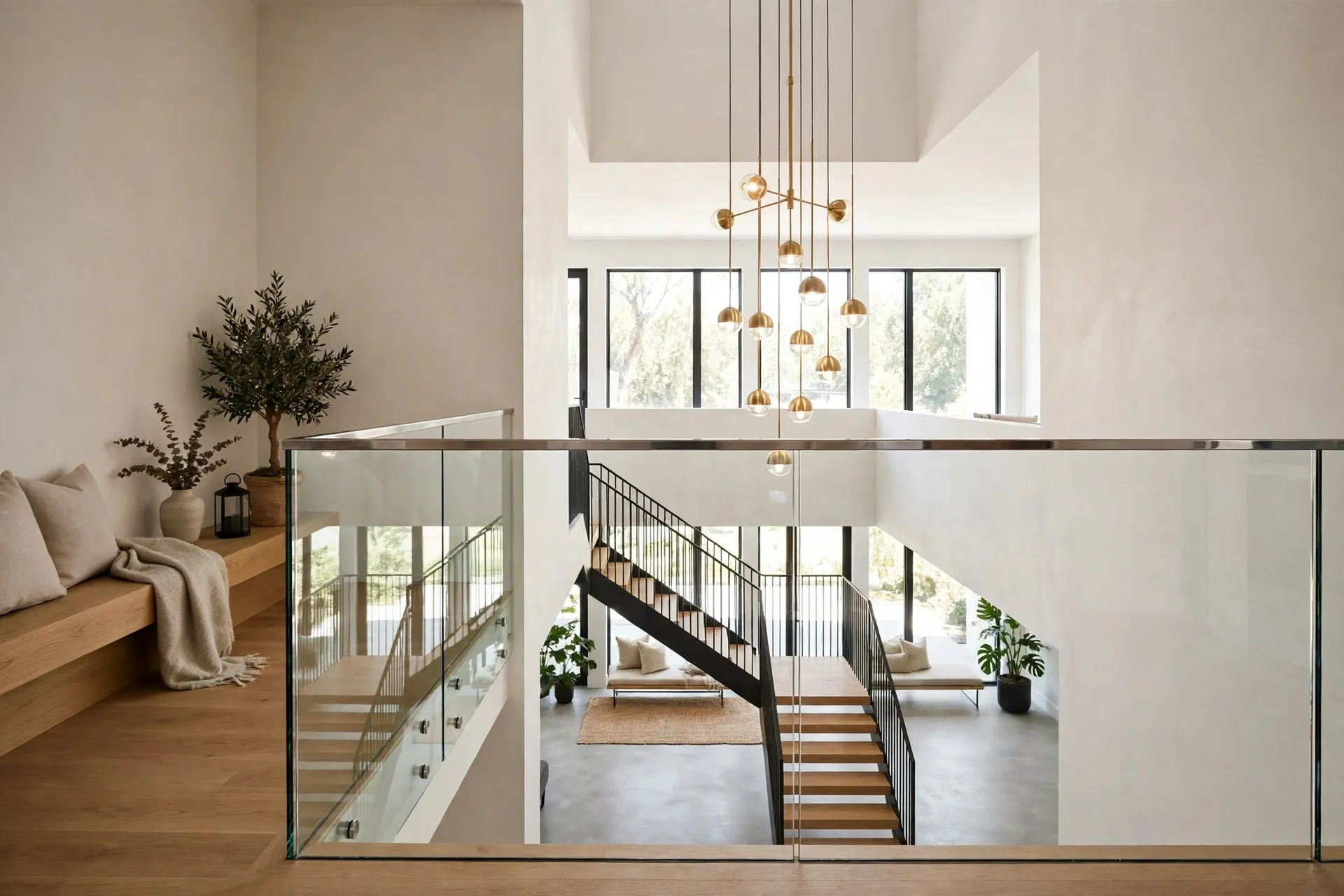
21. Glass Panels Between Slim Iron Balusters
Slim iron balusters frame glass panels in a rhythmic pattern, mixing the lightness of glass with metalwork.
Best for: transitional homes. Styling tip: keep balusters evenly spaced. Pro tip: black iron suits most palettes.
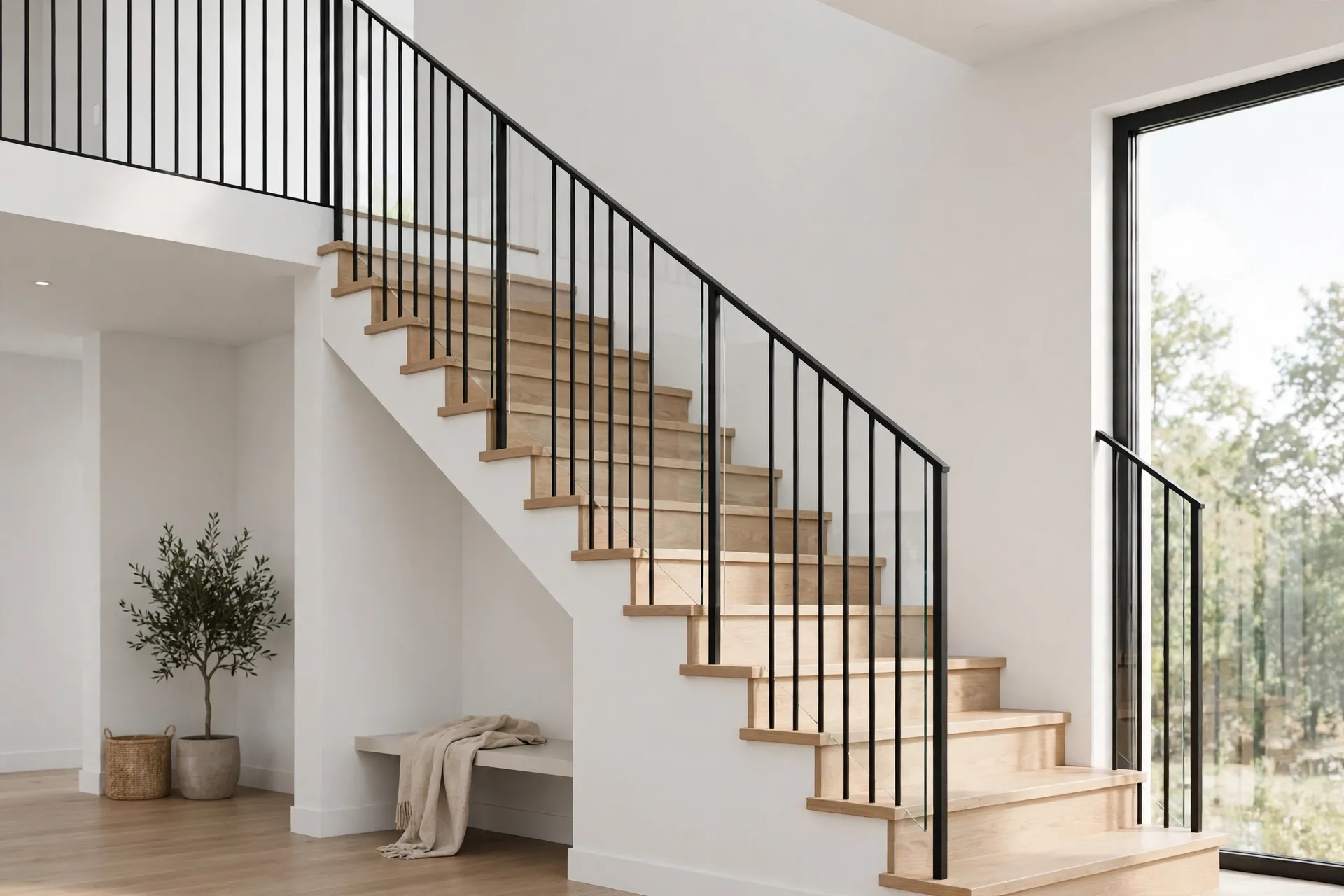
22. Glass That Shows Off Under-Stair Shelving
Clear glass lets the eye travel to built-in shelving under the stairs, turning storage into part of the display.
Best for: storage lovers. Styling tip: style shelves simply. Pro tip: leave breathing room.
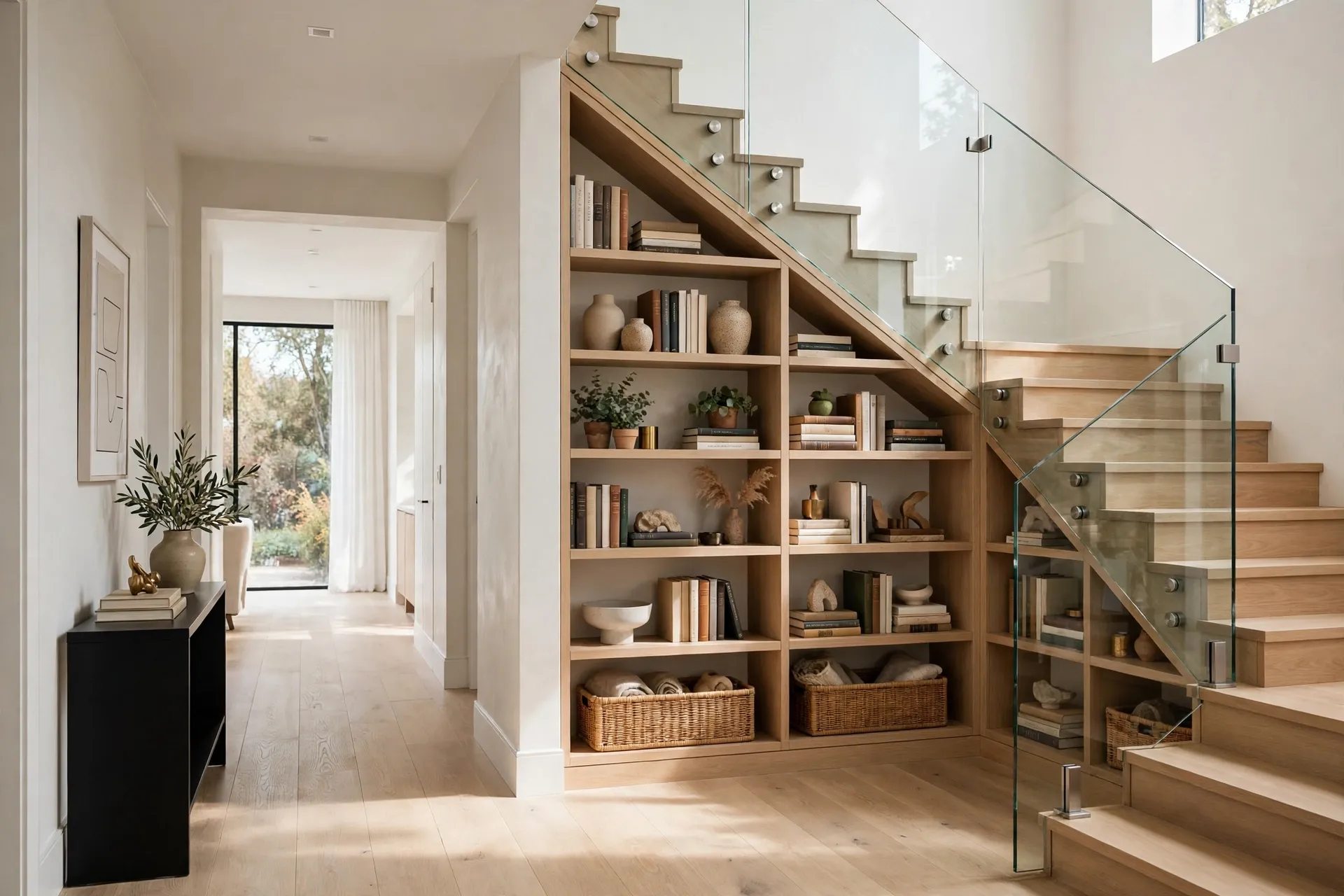
23. Mirror-Tinted Glass for Extra Light
Mirror-tinted glass reflects daylight around the hall, doubling the sense of space while keeping stairs enclosed.
Best for: dark halls. Styling tip: face it toward windows. Pro tip: lighter tints avoid dazzle.
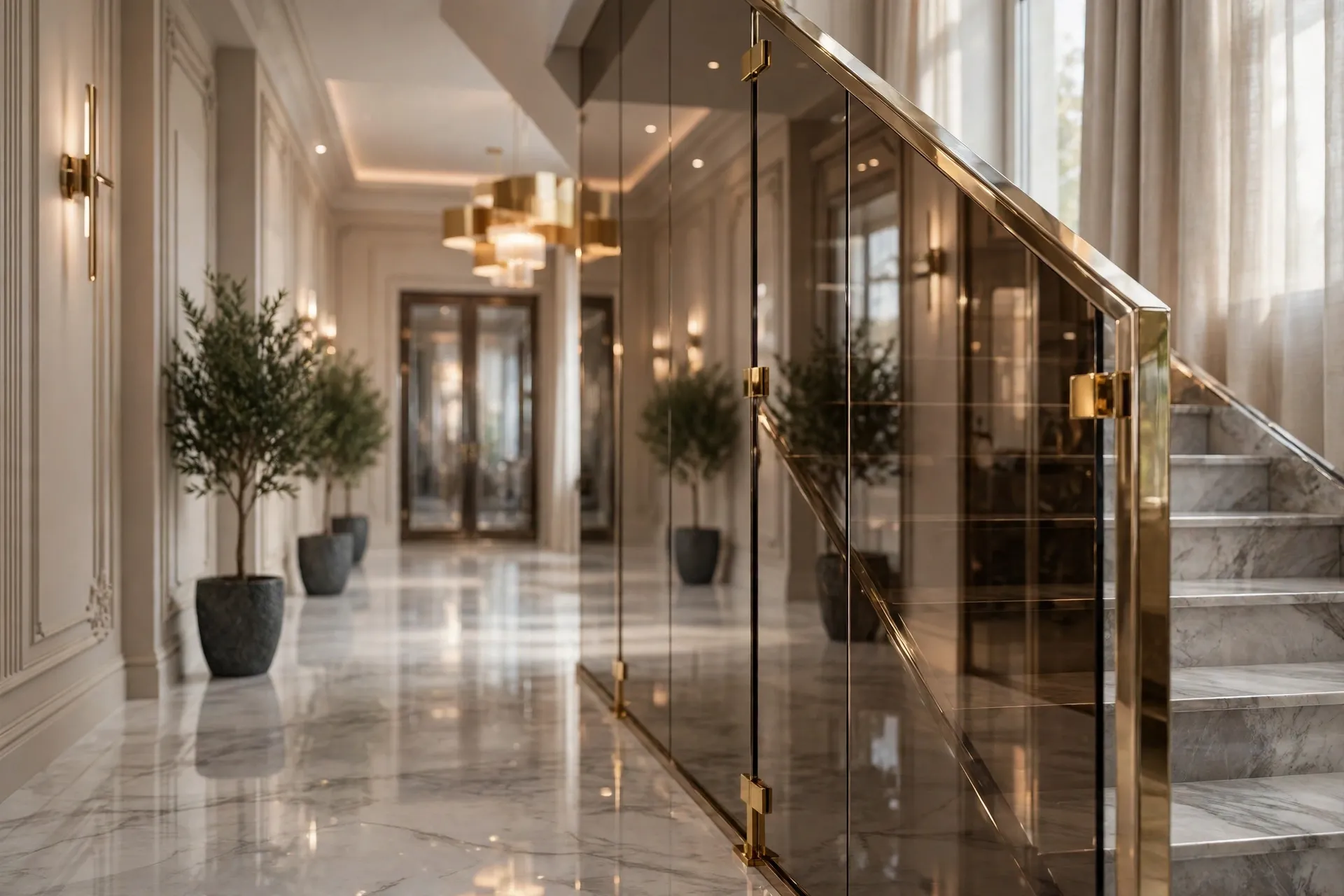
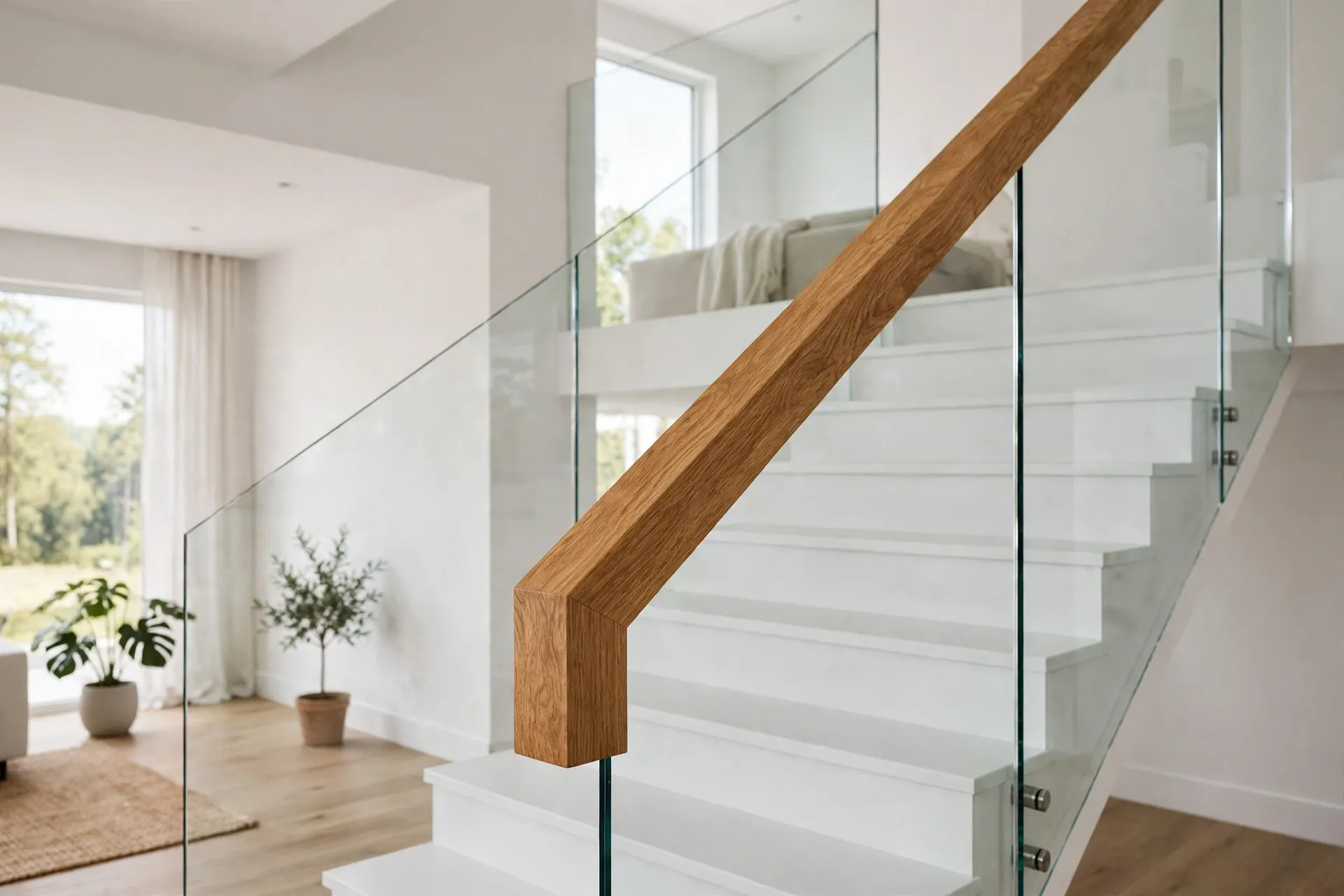
24. Chunky Oak Handrail Over Frameless Glass
A chunky oak handrail softens frameless glass with a solid grip that feels warm year-round.
Best for: cosy modern homes. Styling tip: match oak to flooring. Pro tip: rounded edges feel best.
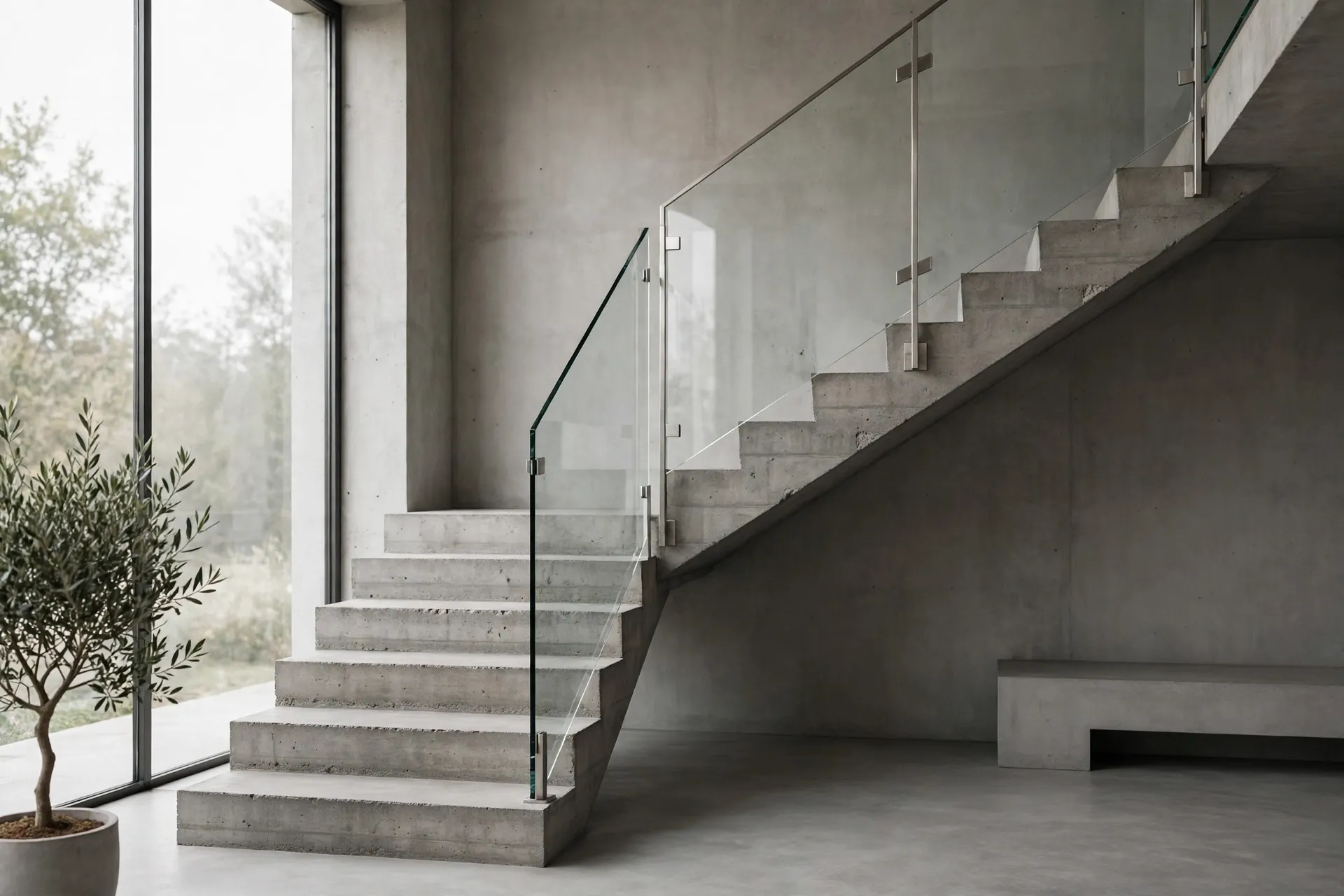
25. Glass on a Raw Concrete Staircase
Clear glass panels soften raw concrete stairs, balancing industrial texture with transparency so stairs never feel heavy.
Best for: industrial lofts. Styling tip: add warm wood. Pro tip: seal concrete to stop dust.
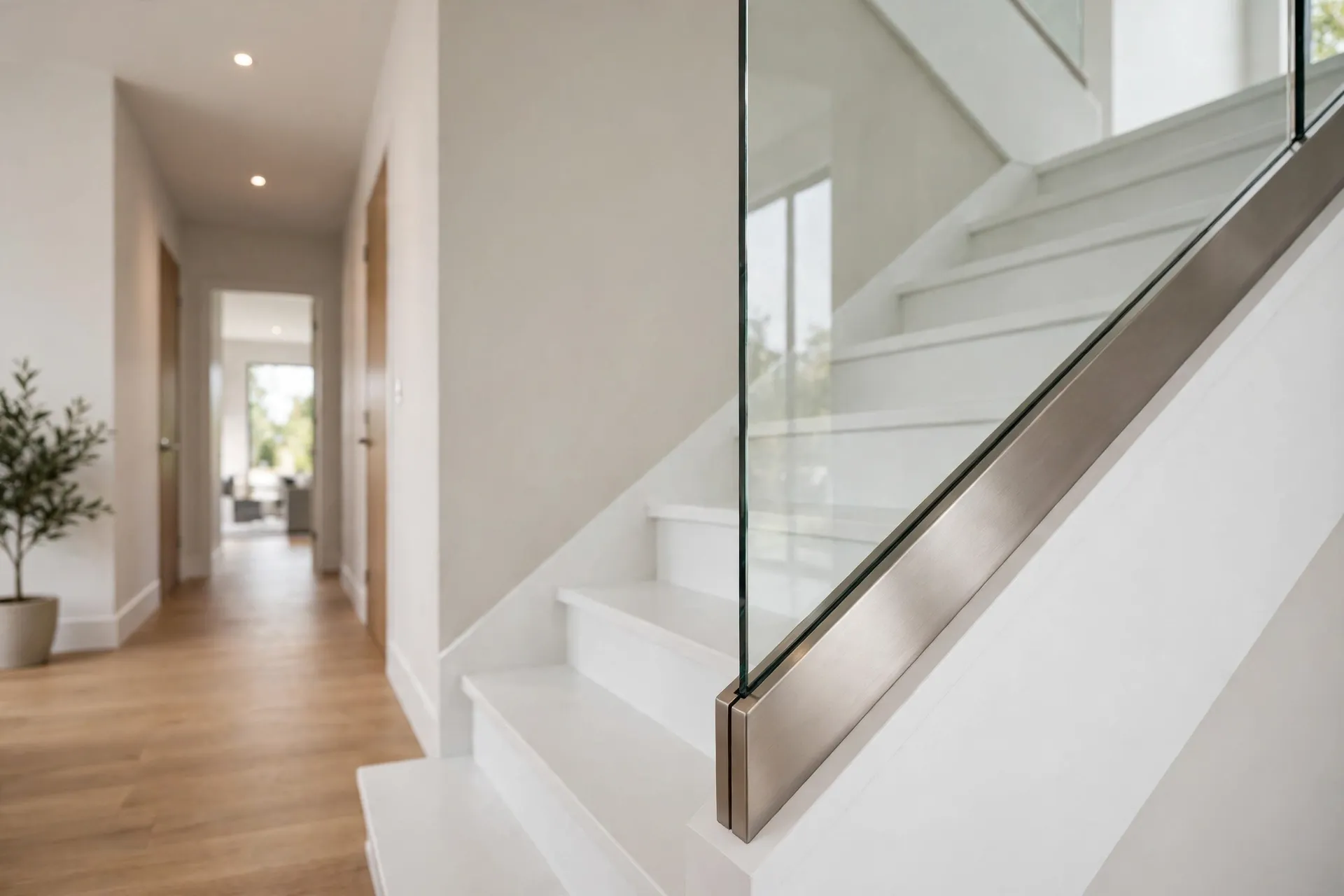
26. Brushed Nickel Base Shoe for a Cool Finish
A brushed nickel base shoe holds the glass with a cool metallic line, quieter than black or brass hardware.
Best for: cool palettes. Styling tip: match nickel to taps. Pro tip: brushed finishes hide fingerprints well.
Pick the glass and hardware that suit your hall, then keep the rest simple — clear panels do the work. Start with one idea here, and your staircase will feel lighter by the weekend.
Is a glass staircase railing safe?
Yes, when it uses tempered or laminated safety glass, designed to break into small blunt pieces or stay held together if damaged. Panels are usually 10–12 mm thick, fixed into a channel or with rated clamps. Check your local building code for minimum heights, and use a qualified installer for structural fixings.
How much does a glass staircase railing cost?
Costs vary widely with glass type, hardware and installer, so no single figure fits every staircase. Frameless channel systems usually cost more than post-and-panel systems, and curved or low-iron glass adds to the price. Get two or three local quotes today for your exact stair run and compare like-for-like specifications.
How do I clean a glass stair railing?
Wipe panels with a microfibre cloth and warm soapy water, then buff dry with a second clean cloth to avoid streaks. Avoid abrasive pads and ammonia cleaners, which can damage coatings and tinted films. Clean the channel and clamps with a damp cloth, and check fixings once a year for tightness.
Does a glass railing make a small hall look bigger?
Yes — that is its biggest advantage. Solid balustrades block sightlines and chop a hall into pieces, while clear glass lets the eye travel through the whole space and daylight reach further. The effect is strongest with frameless panels, pale walls and light floors, which make a narrow hall feel open.
Frameless or framed glass railing — which is better?
Frameless glass gives the cleanest, most open look and suits modern halls, but it costs more and needs precise installation. Framed systems with posts or standoffs are sturdier, easier to fit and simpler to repair, and they suit traditional or transitional homes. Choose frameless for the view, framed for budget.
Can I add a glass railing to existing stairs?
In most cases, yes. Glass panels can be retrofitted to existing stairs using a surface-mounted base channel, standoff discs or clamps fixed to the stringer or treads. The stairs must be structurally sound and fixings correctly rated, so have a professional check the structure first. Existing handrails and newels can often stay.
