
A garage stops feeling like a dumping ground once clutter gets a door to hide behind. These 34 garage cabinet ideas turn tools, sports gear and paint tins into tidy storage. A cabinet is a box with doors — but the right system makes the garage work harder.
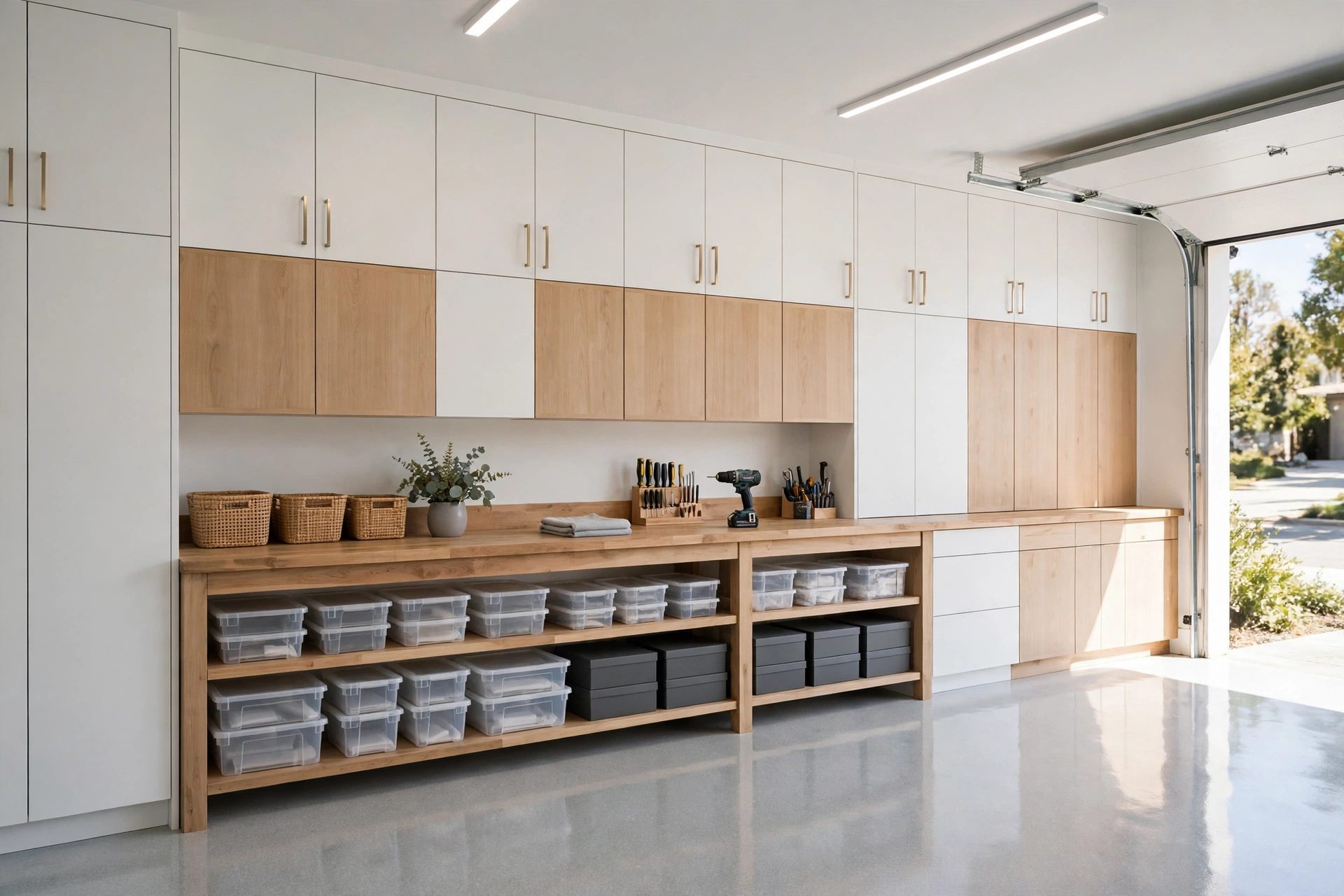
1. Floor-to-Ceiling Cabinet Wall
Floor-to-ceiling cabinets turn one wall into storage for everything. Best for: whole-garage resets. Styling tip: match the wall. Pro tip: daily items low.
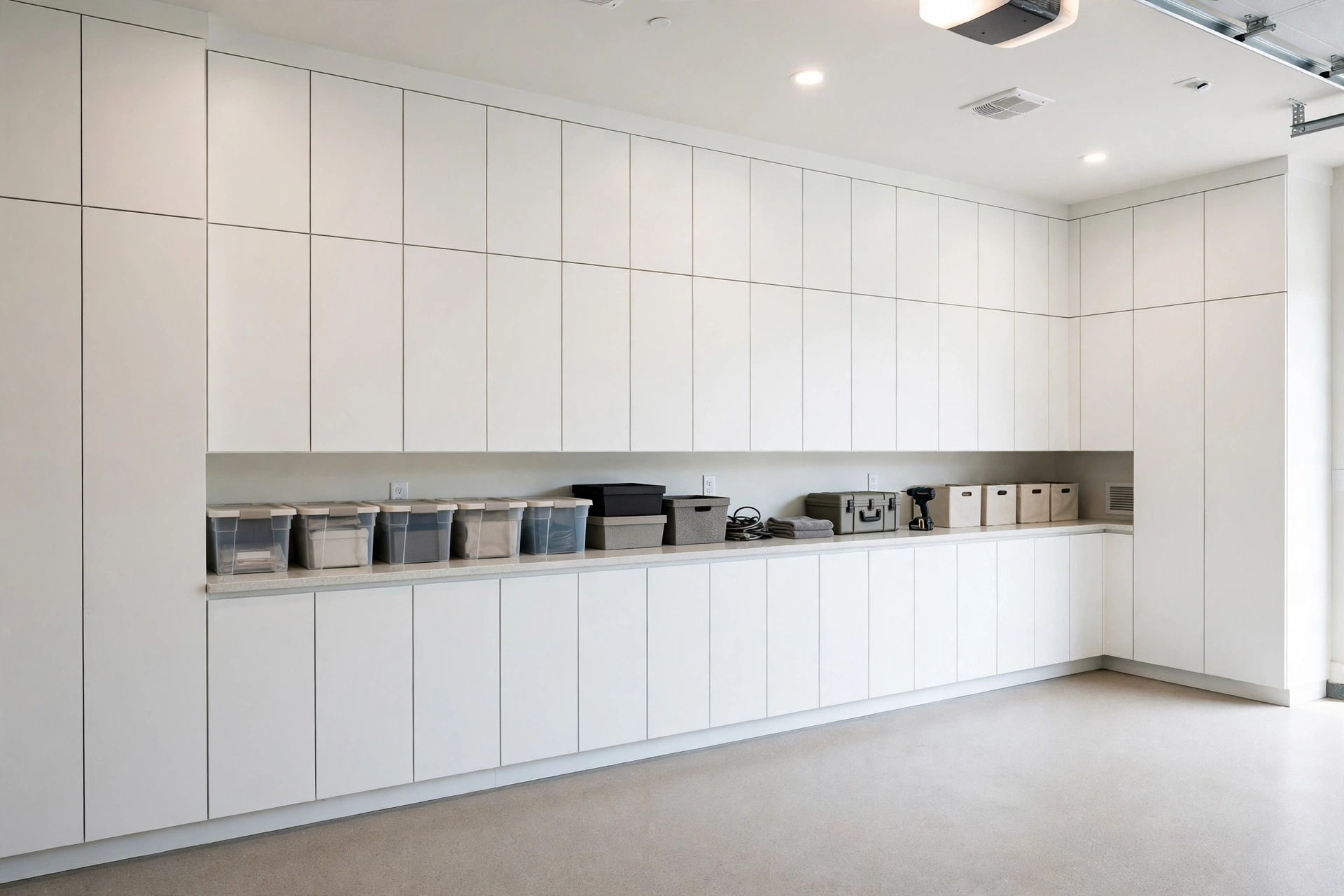
2. Matte Black Steel Cabinets
Matte black steel looks sharp and shrugs off dents. Best for: workshops. Styling tip: add a wood top. Pro tip: wipe with a damp cloth.
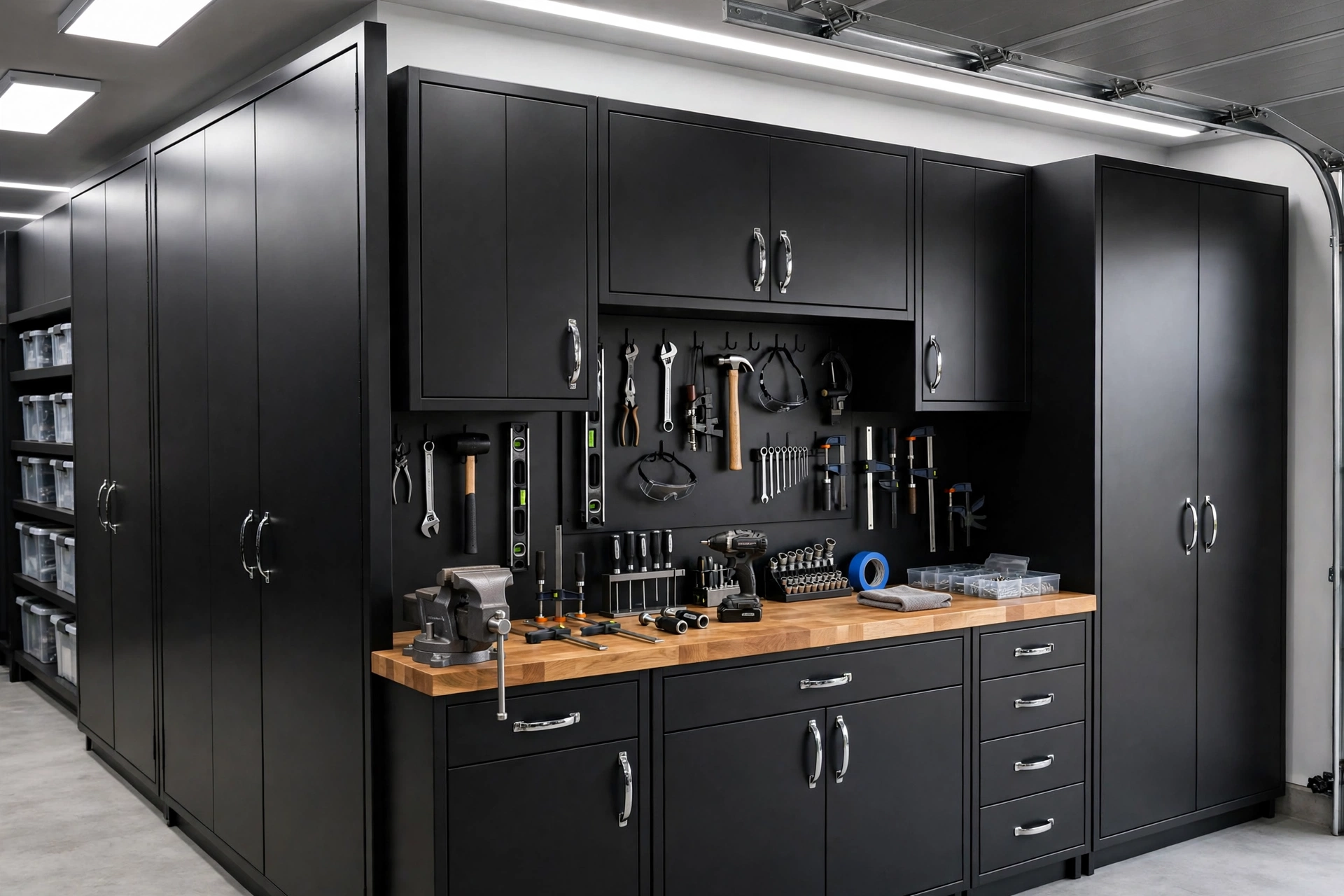
3. White Cabinets and Wood Bench
White cabinets brighten a dark garage; a wood top stops it feeling clinical. Best for: windowless garages. Styling tip: black handles. Pro tip: seal the wood.
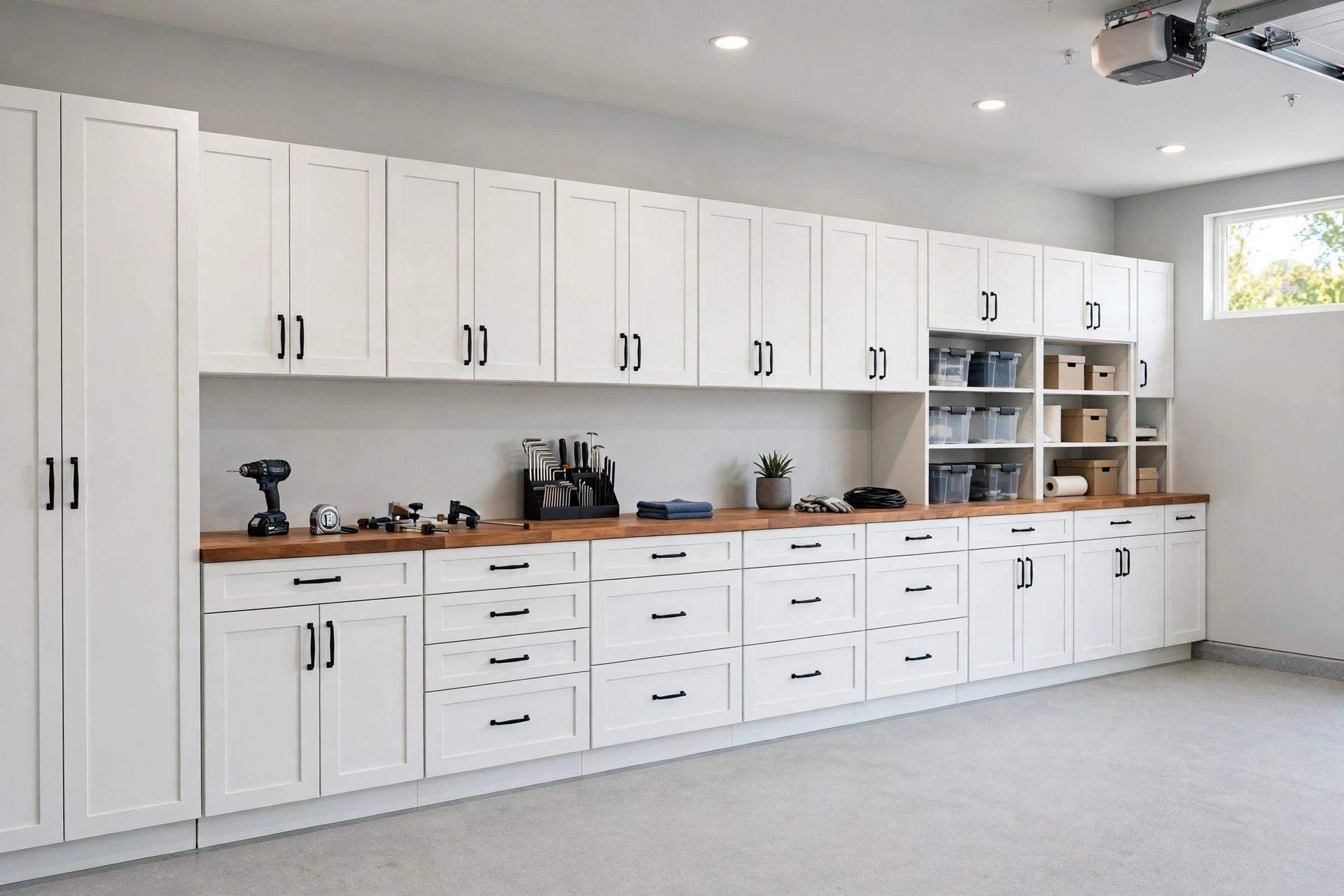
4. Wall Cabinets Over the Bench
Wall-mounted uppers keep tools off the bench, within reach. Best for: small work areas. Styling tip: clear space above the bench. Pro tip: fix into studs only.
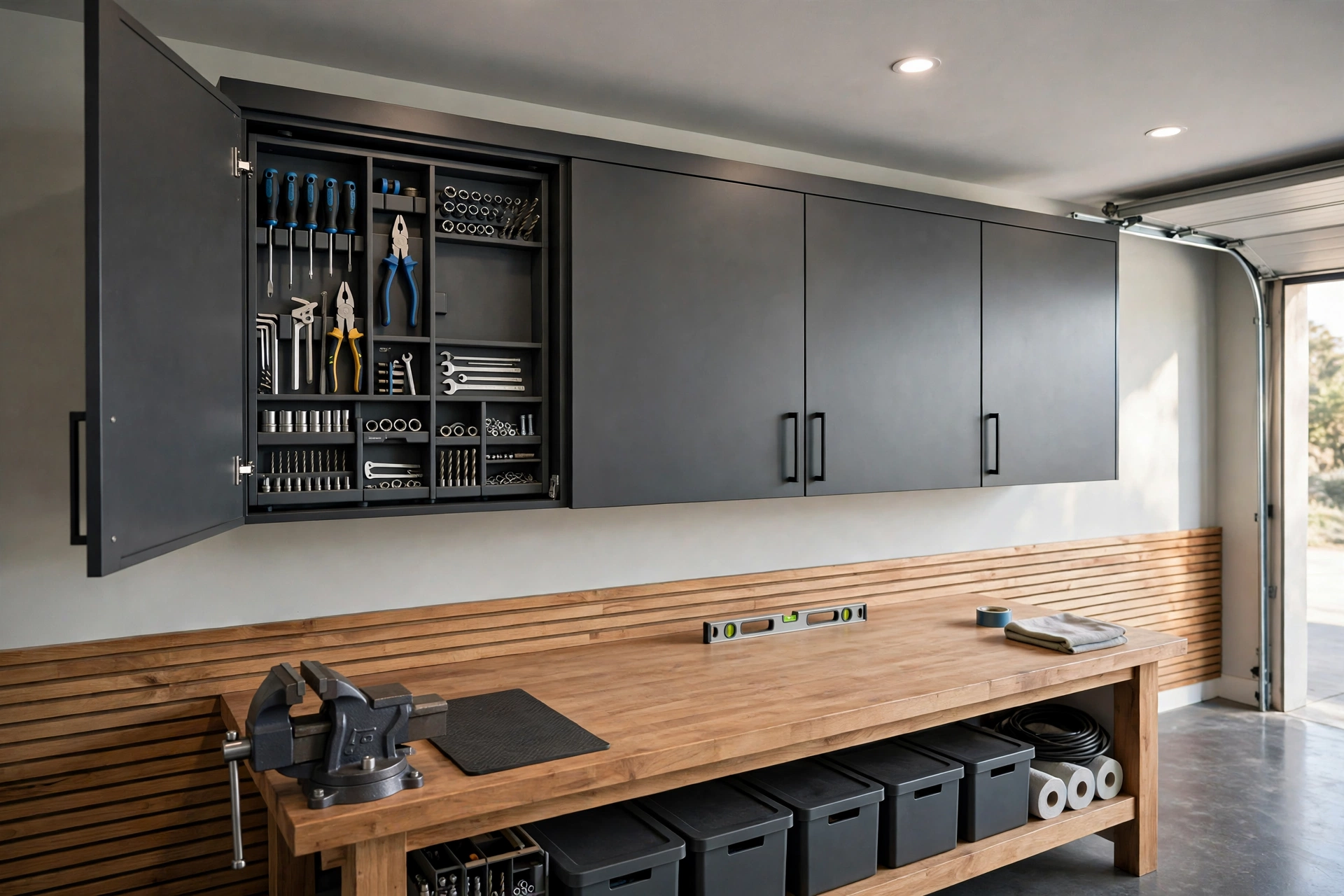
5. Tall Locker Cabinets
Tall lockers swallow balls, bats and helmets in one sweep. Best for: family garages. Styling tip: one locker per person. Pro tip: hooks inside the doors.
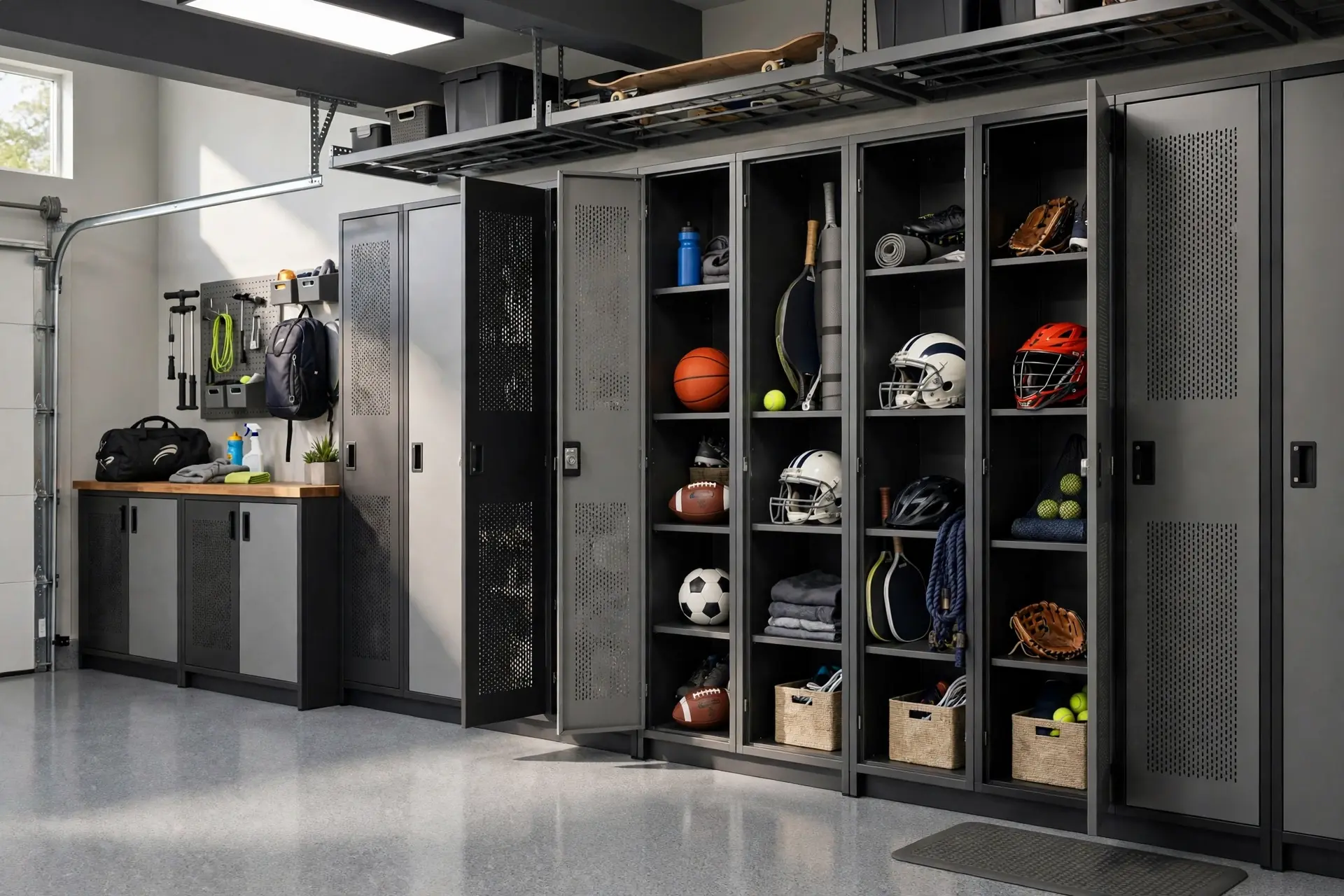
6. Base Cabinets, Butcher-Block Bench
Base cabinets under a butcher-block top give bench and storage. Best for: DIY repairs. Styling tip: pale top, dark bases. Pro tip: leave knee space.
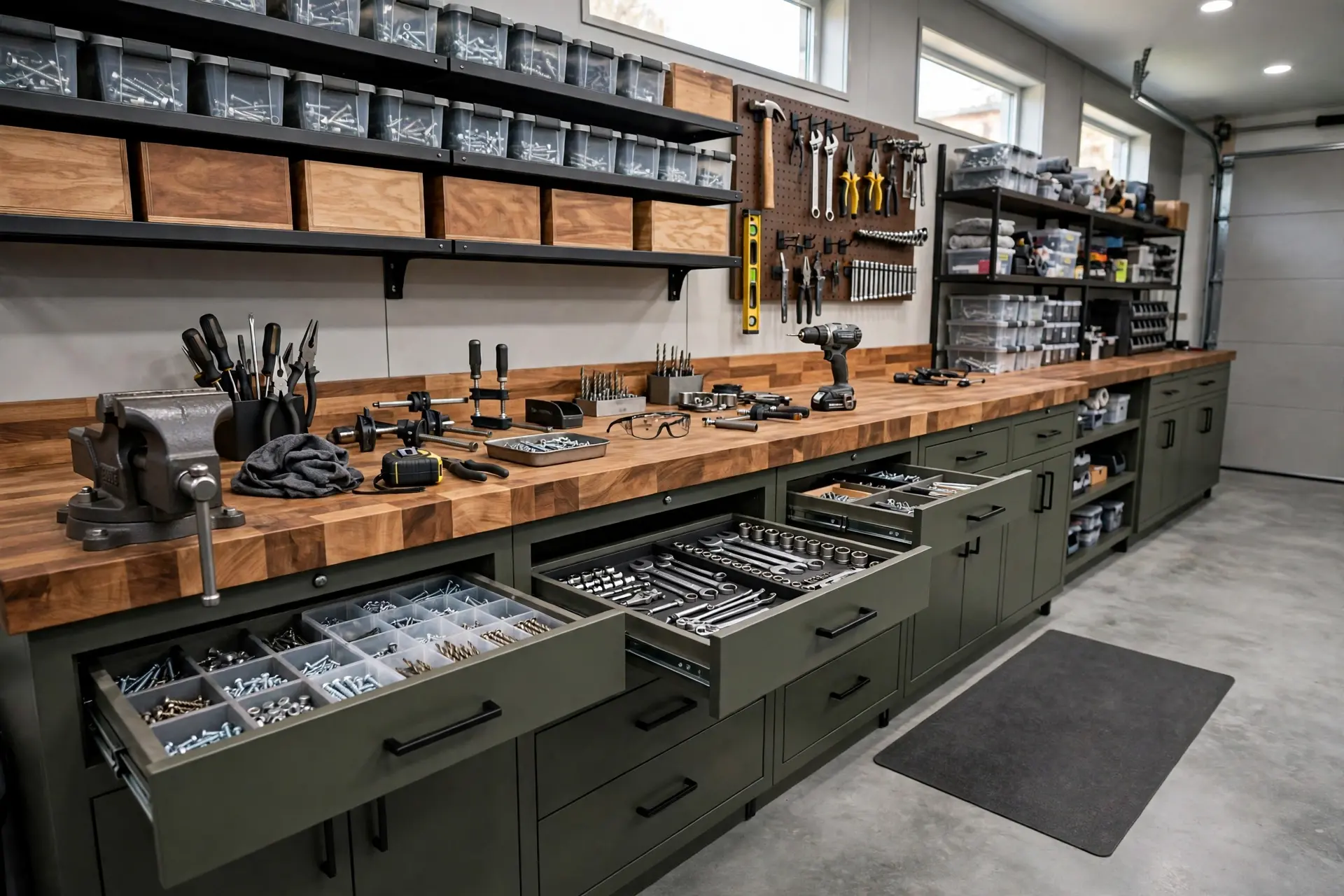
7. Overhead Cabinets
Overhead cabinets use dead space above head height. Best for: paint and camping gear. Styling tip: match the wall. Pro tip: never store heavy items overhead.
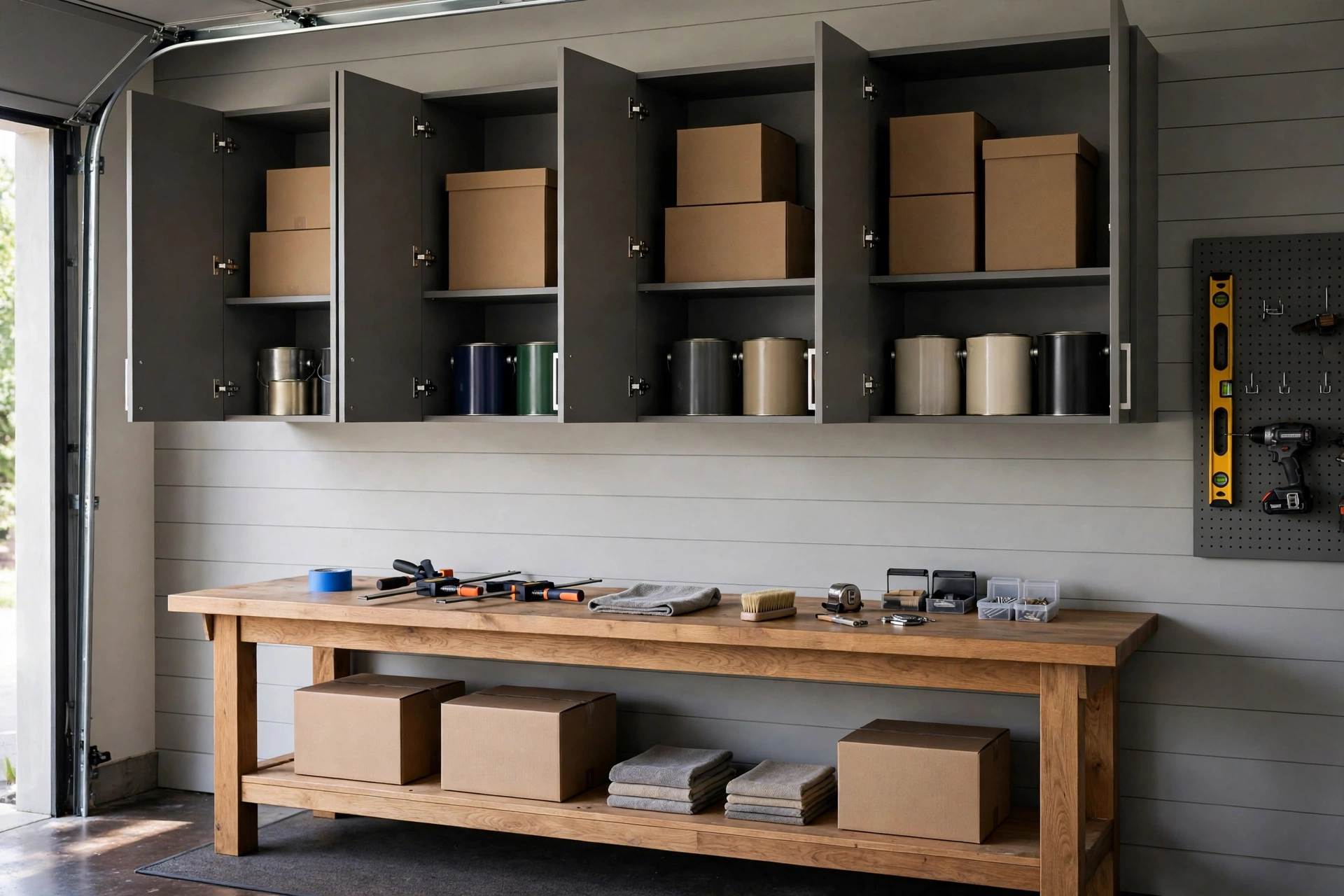
8. Two-Tone Cabinets
Dark bases hide scuffs; light uppers open the garage. Best for: modern makeovers. Styling tip: dark tone on the mat. Pro tip: test paint in garage light.
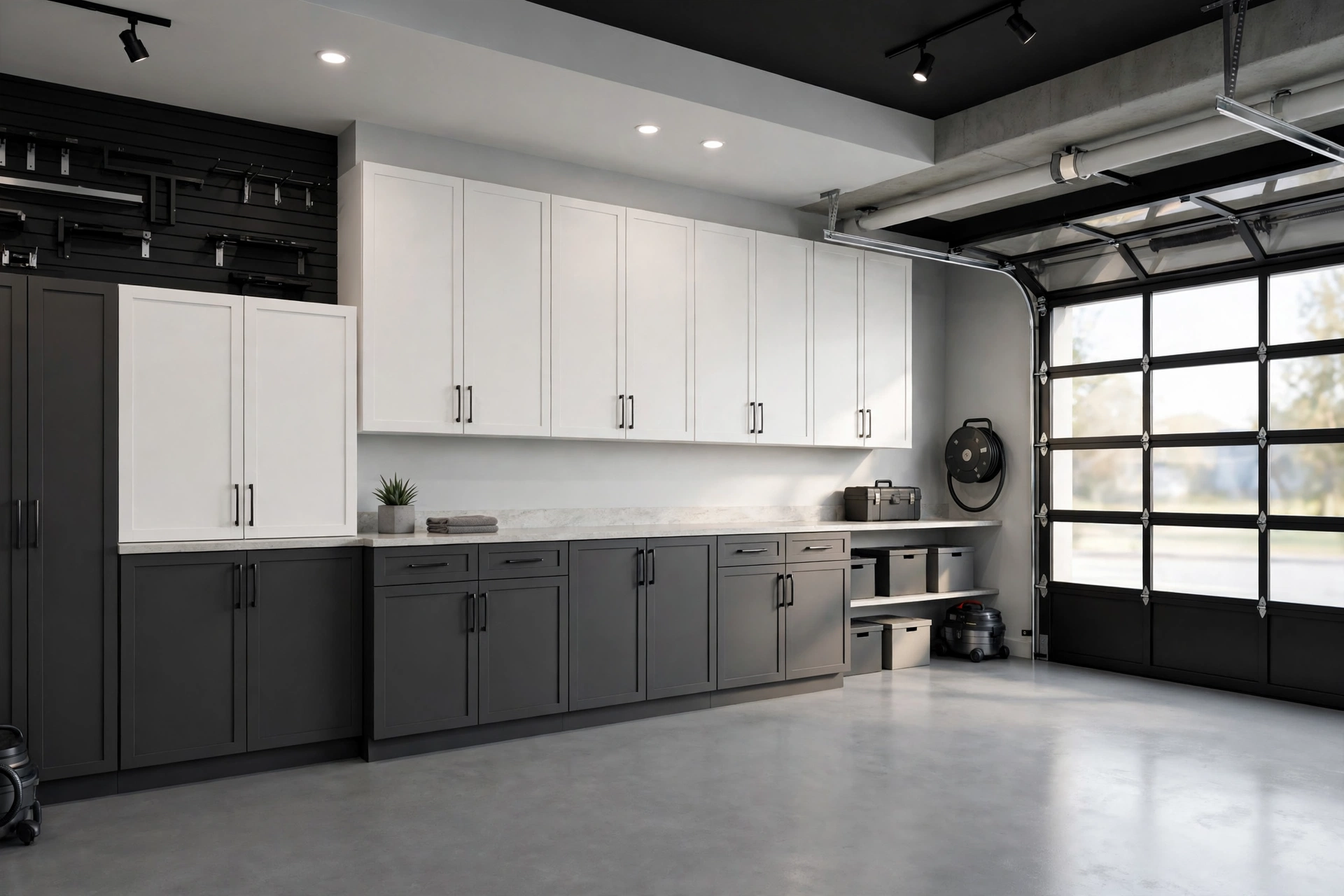
9. Slat-Wall and Cabinets
A slat-wall strip above base cabinets holds tool hooks; cabinets hide the rest. Best for: tool-heavy garages. Styling tip: one slat-wall colour. Pro tip: hang weekly tools only.
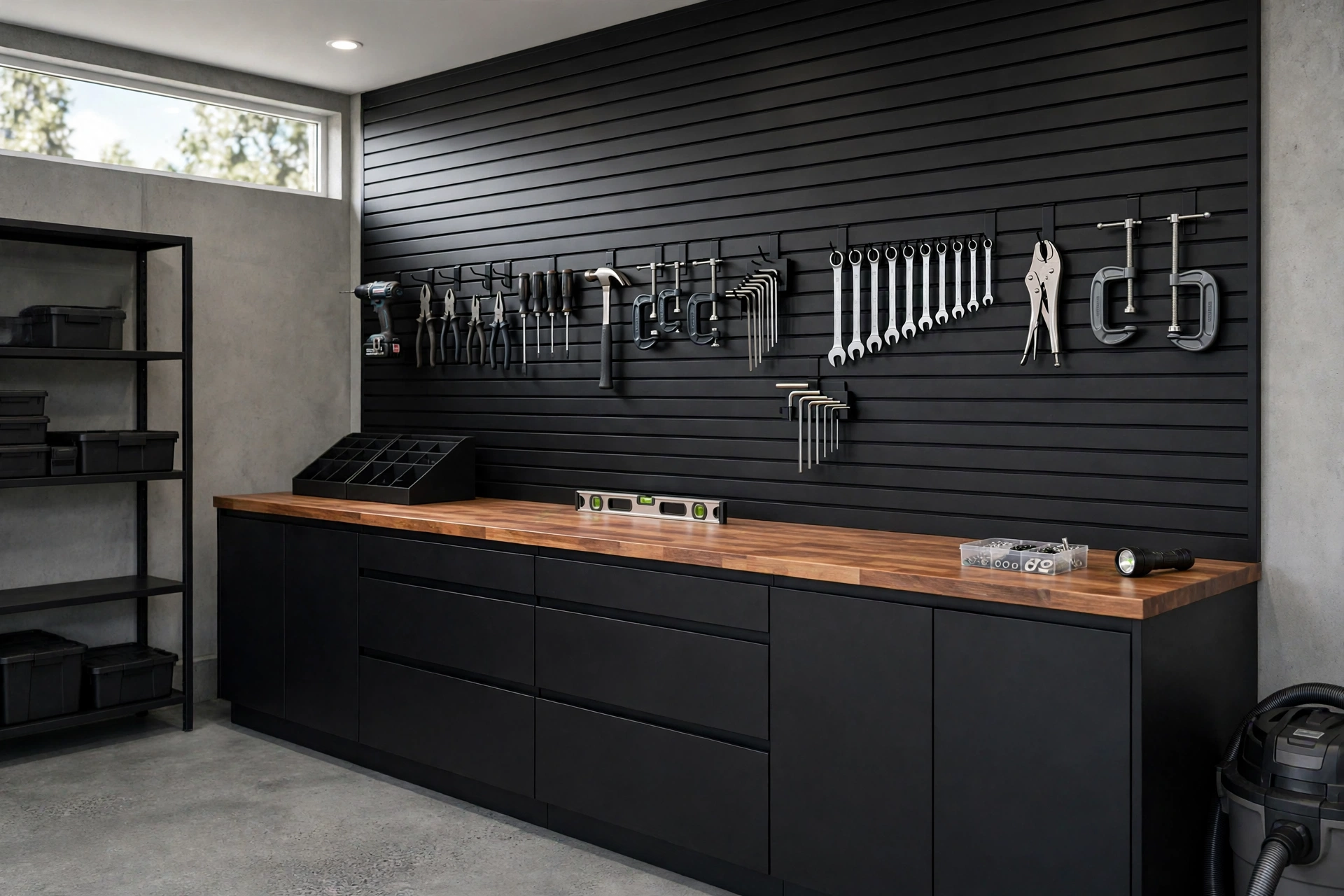
10. Mobile Cabinets on Castors
Cabinets on lockable castors roll to the car, bench or driveway. Best for: multi-use garages. Styling tip: match your tool chest. Pro tip: lock wheels first.
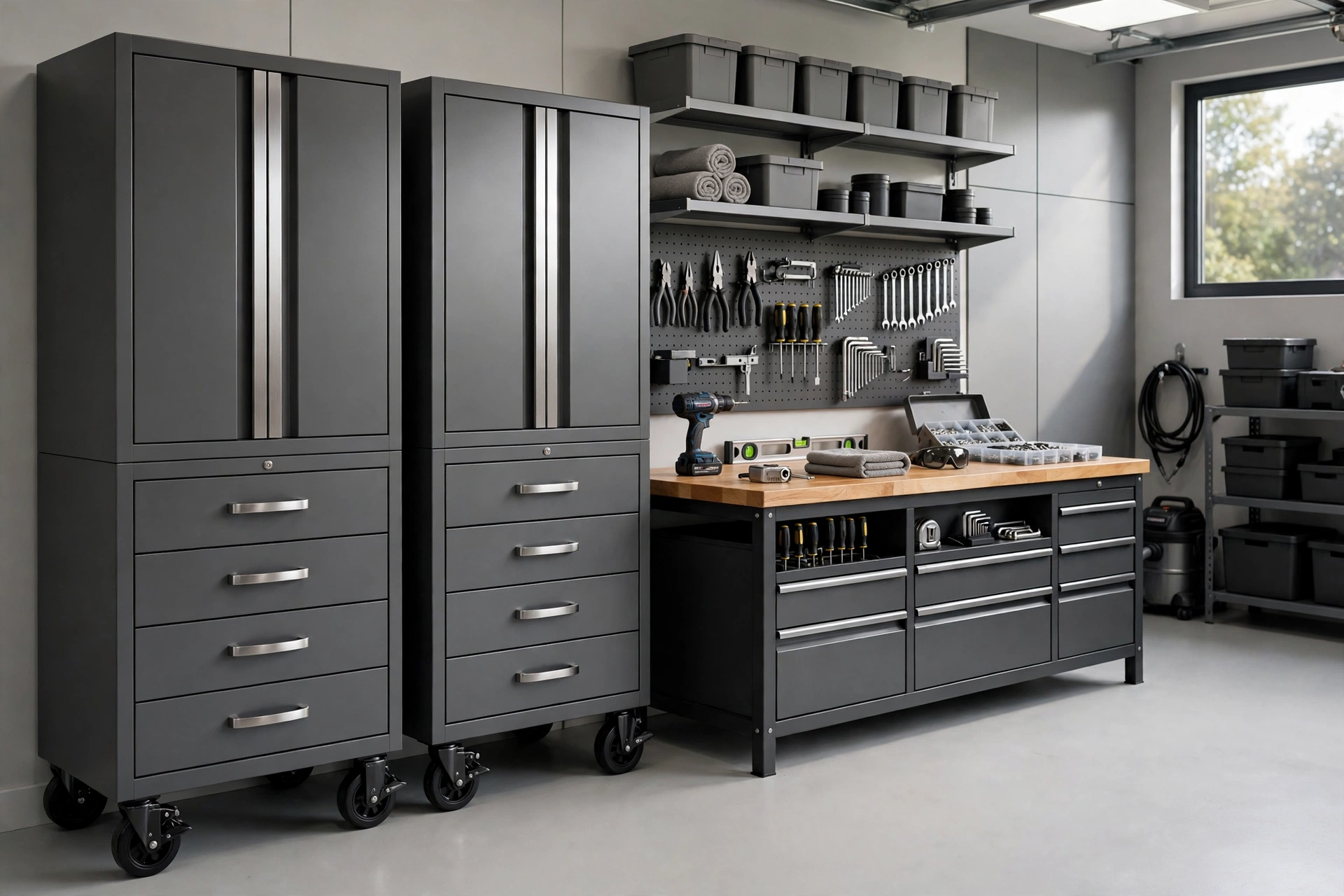
11. Corner Cabinets
Angled corner cabinets turn dead corners into deep storage. Best for: L-shaped garages. Styling tip: add a lazy Susan. Pro tip: measure the door swing.
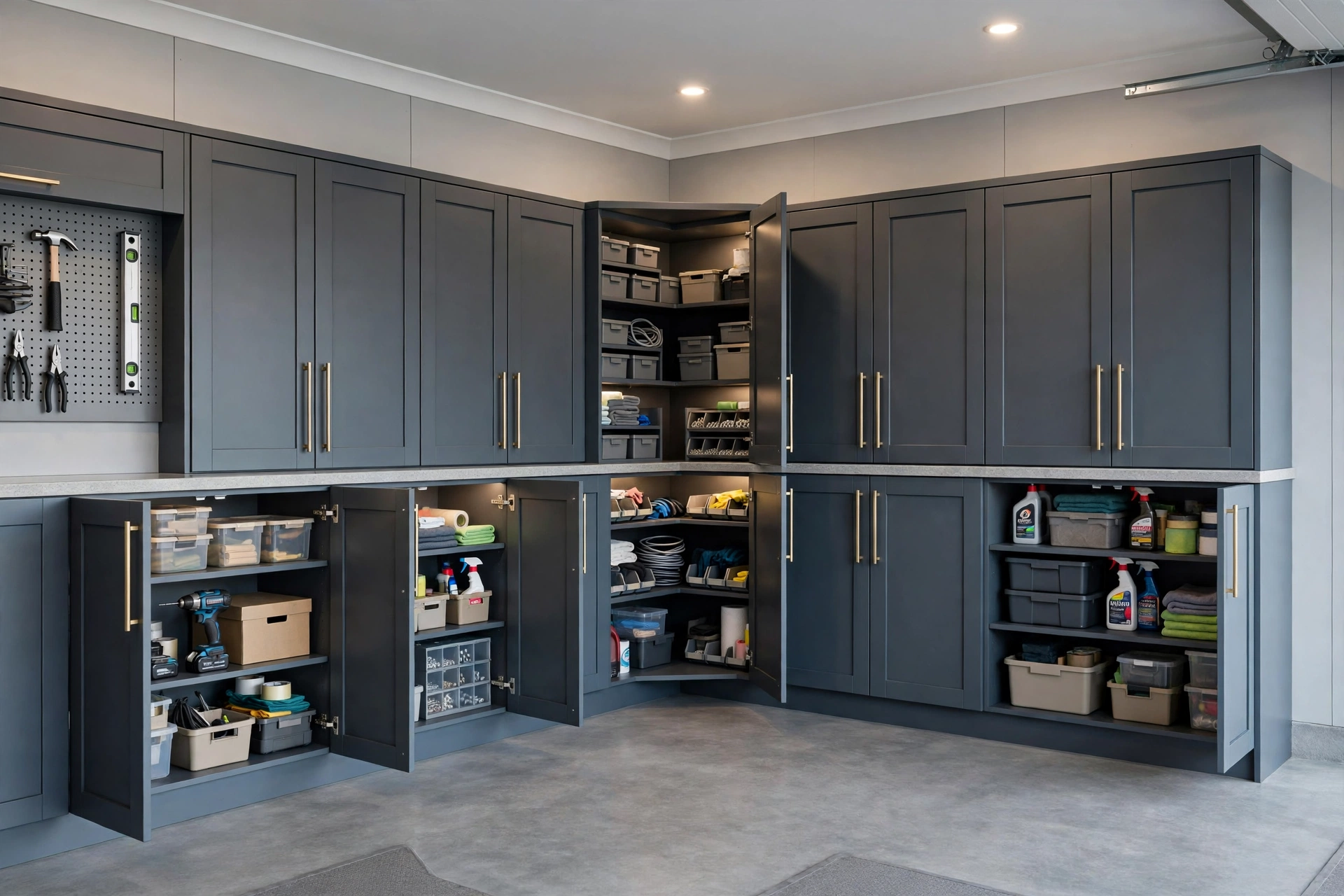
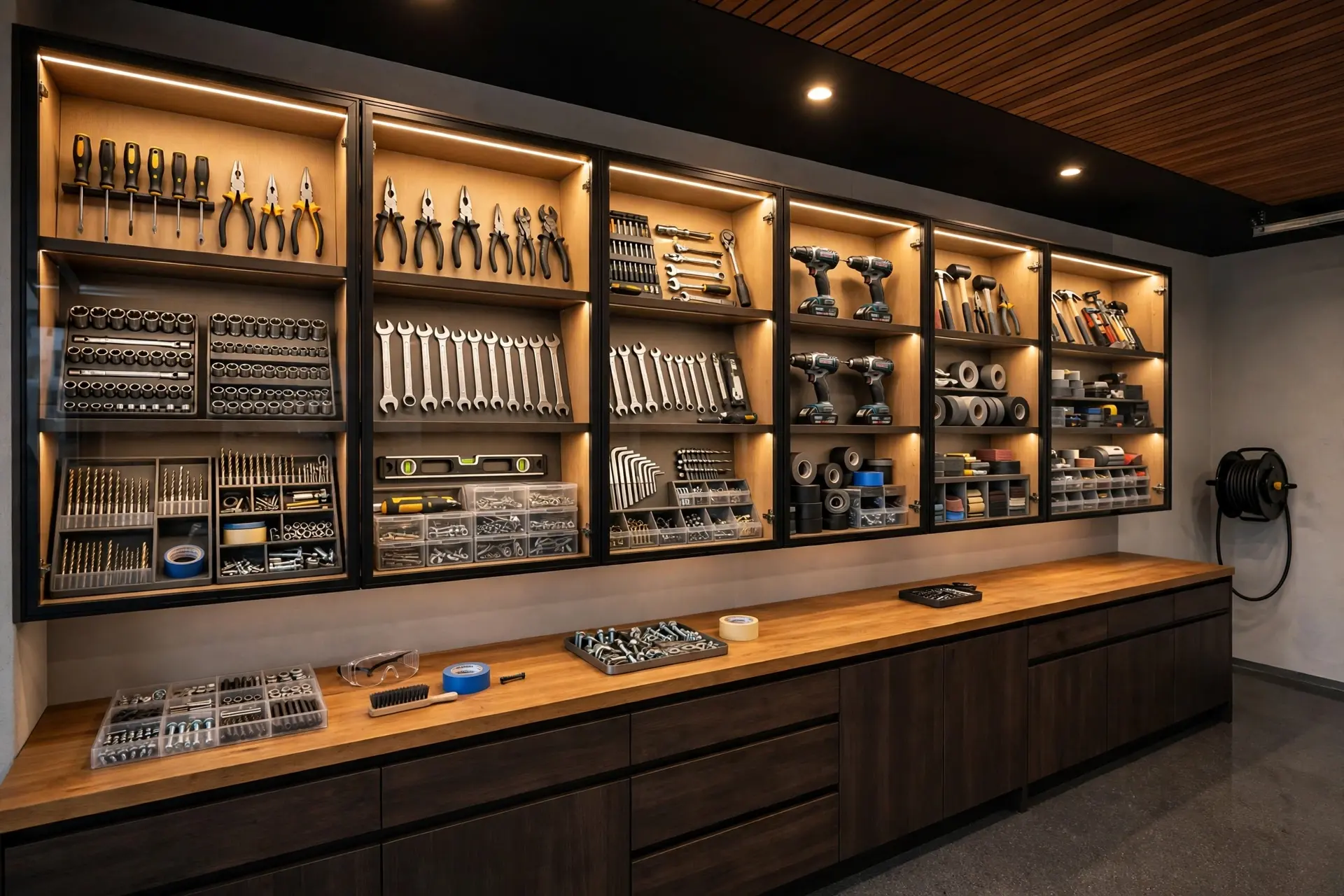
12. Glass-Front Cabinets for Tools
Glass-front doors display tidy tools while keeping dust out. Best for: prized tools. Styling tip: dark back panel. Pro tip: keep shelves sparse.
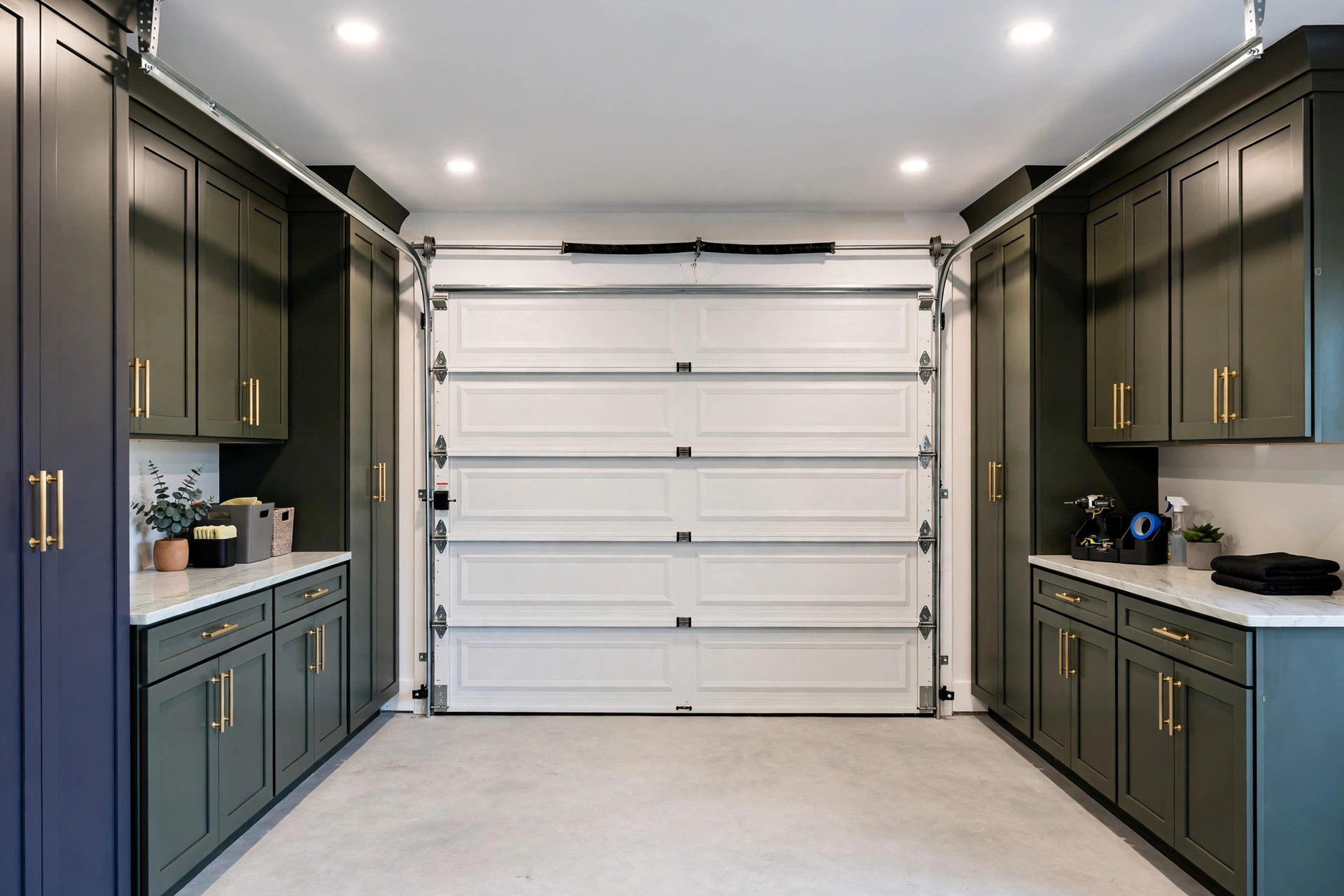
13. Built-Ins by the Garage Door
Built-ins flanking the garage door use narrow wall strips well. Best for: single-car garages. Styling tip: match the door trim. Pro tip: mind car-door clearance.
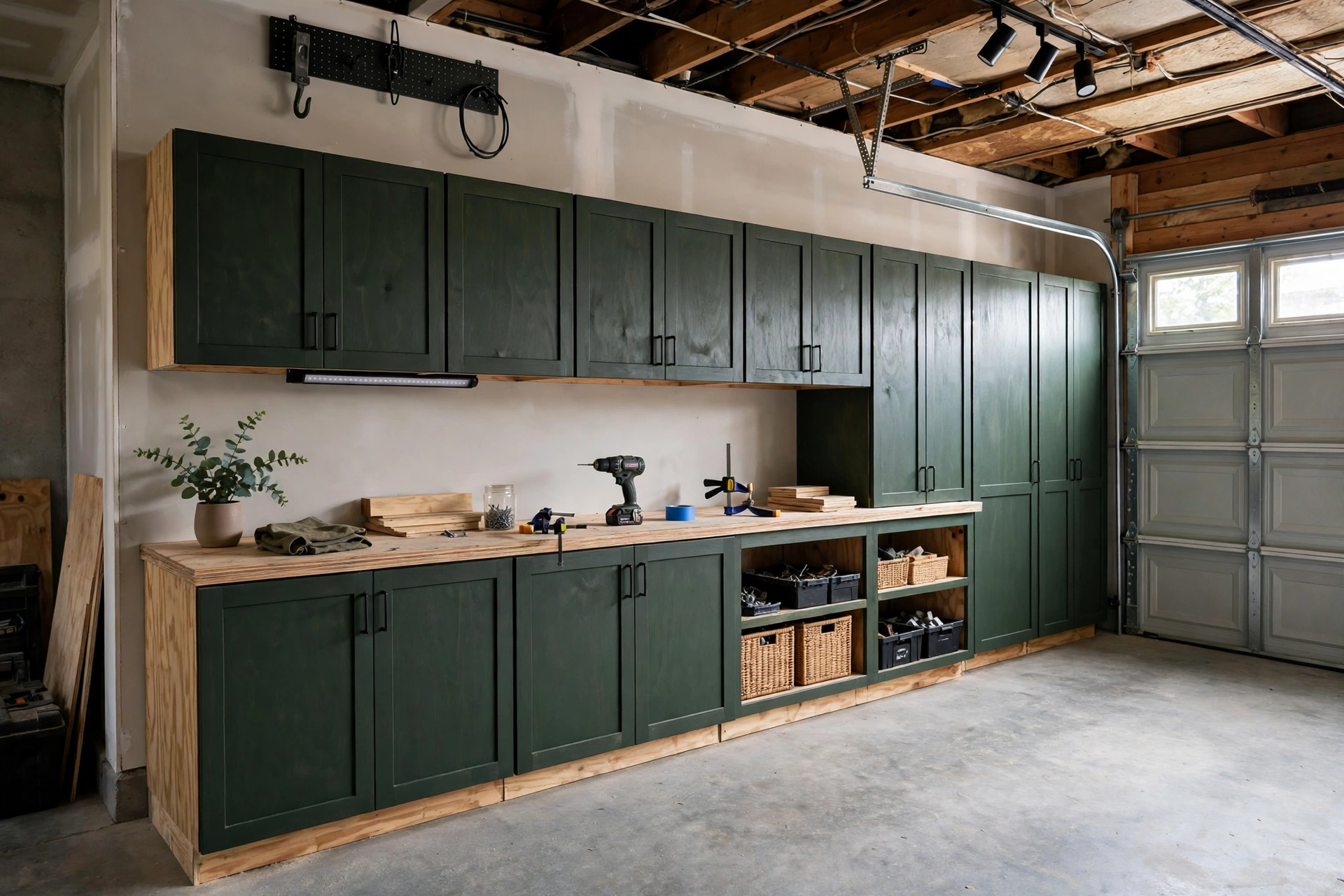
14. Budget DIY Plywood Cabinets
Plywood boxes with simple doors cost a fraction of branded systems. Best for: tight budgets. Styling tip: one bold colour. Pro tip: 18 mm plywood, no sagging.
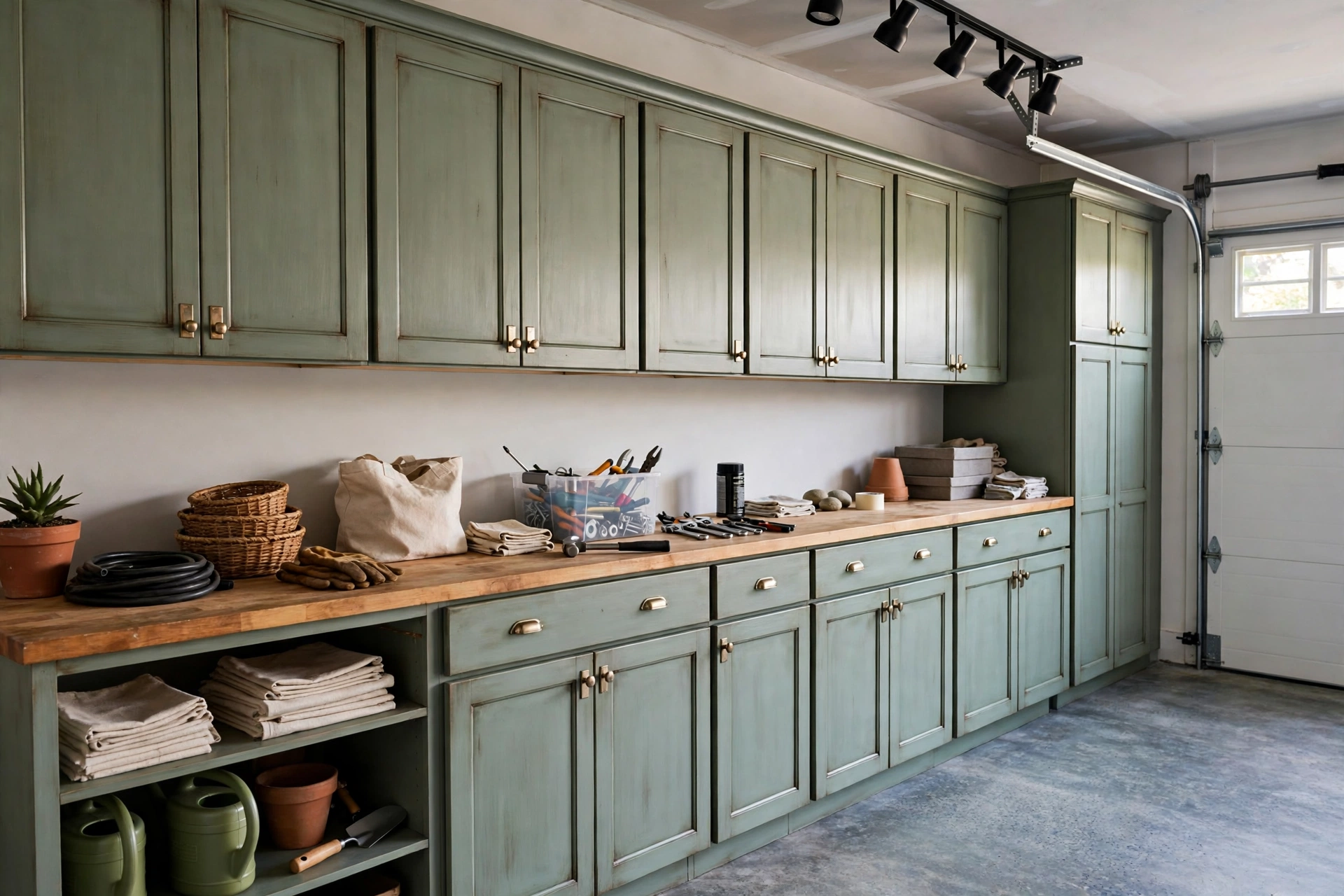
15. Repurposed Kitchen Cabinets
Old kitchen cabinets get a second life with fresh paint. Best for: thrifty makeovers. Styling tip: chunky metal handles. Pro tip: check the carcass is square.
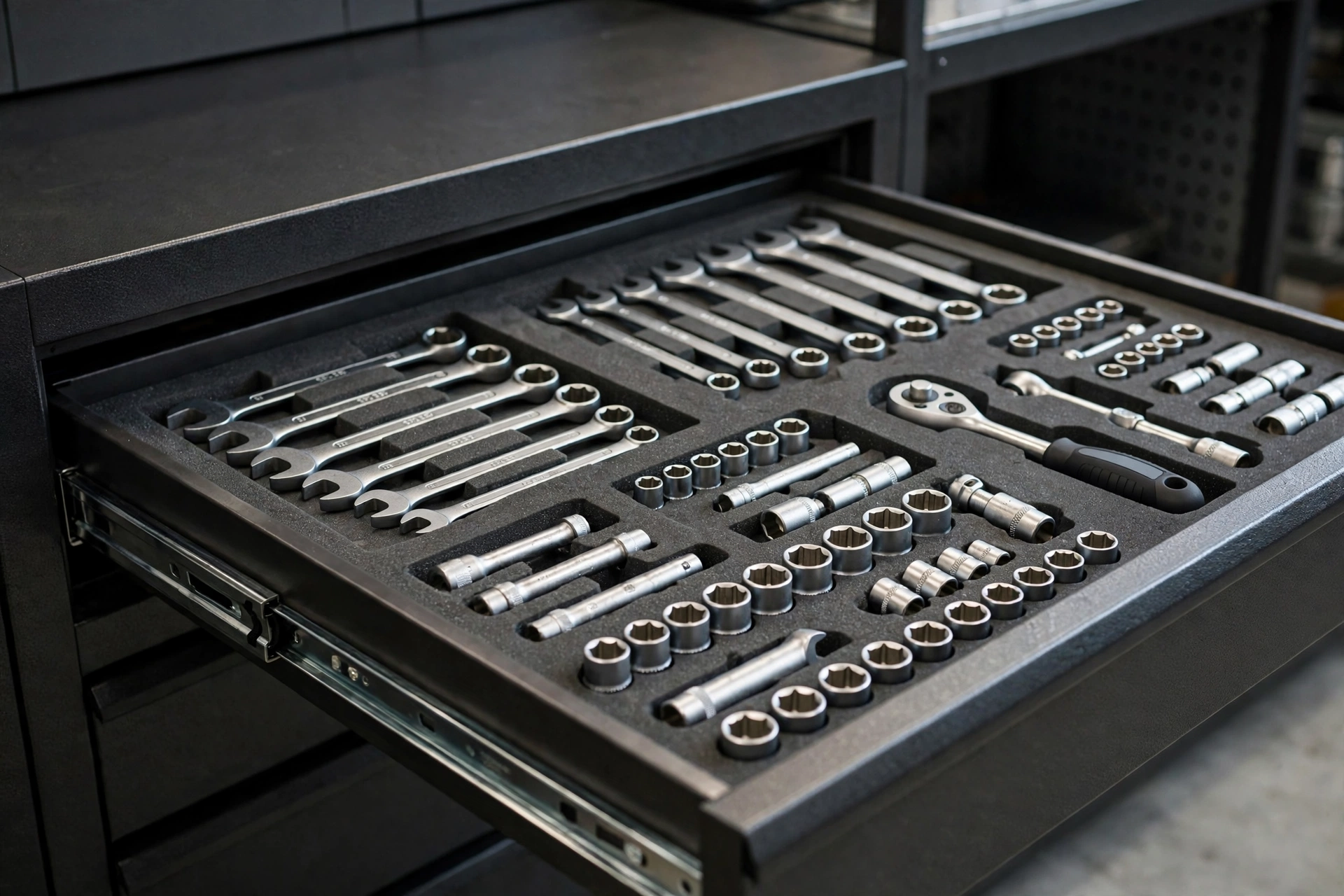
16. Tool-Specific Drawer Cabinets
Shallow foam-lined drawers keep every spanner in its slot. Best for: mechanics — see our garage workshop ideas. Styling tip: label drawers. Pro tip: trace tools on foam.
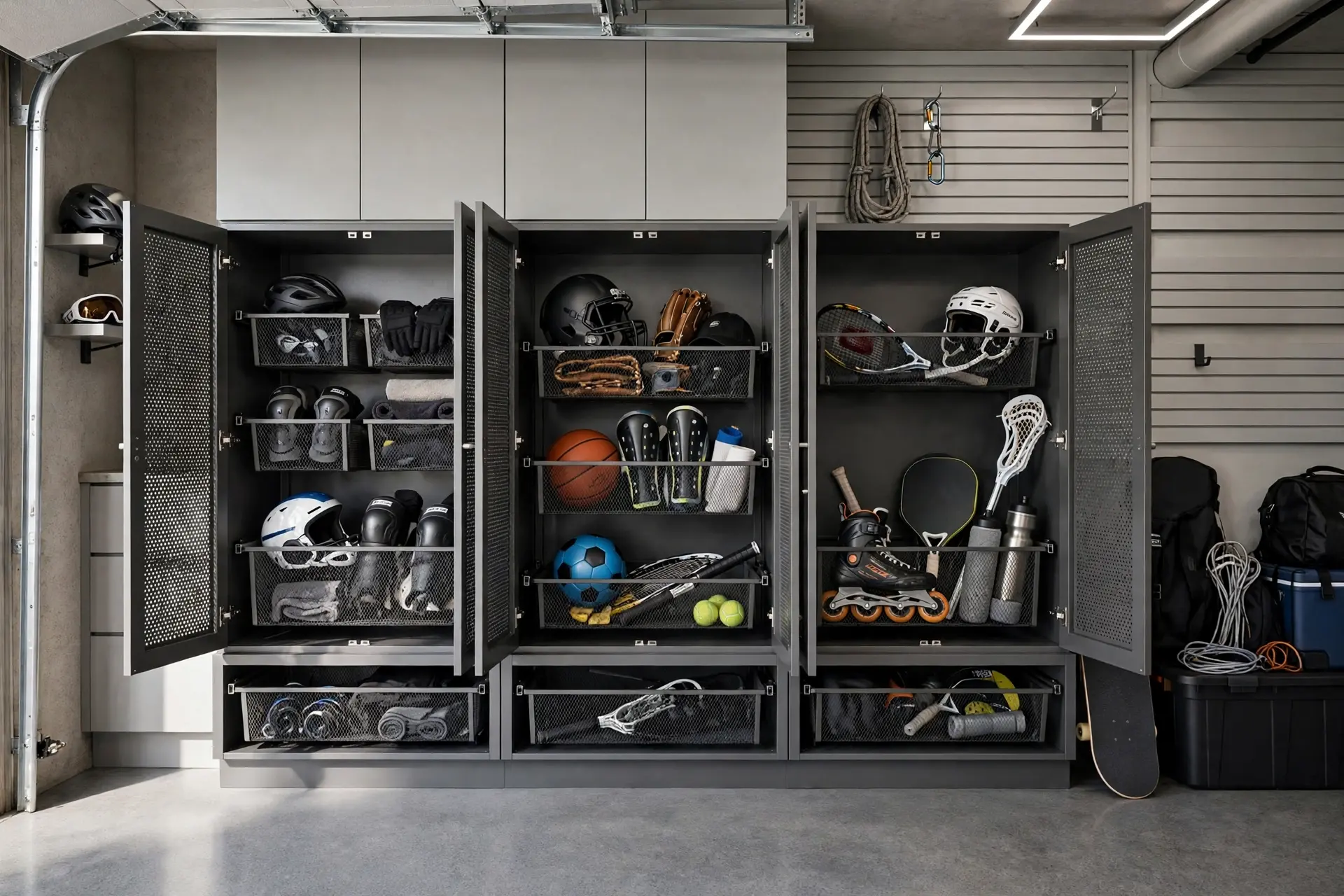
17. Vented Sports Cabinets
Vented doors let damp kit breathe, so gear dries, not smells. Best for: active families. Styling tip: mesh baskets inside. Pro tip: air gear out first.
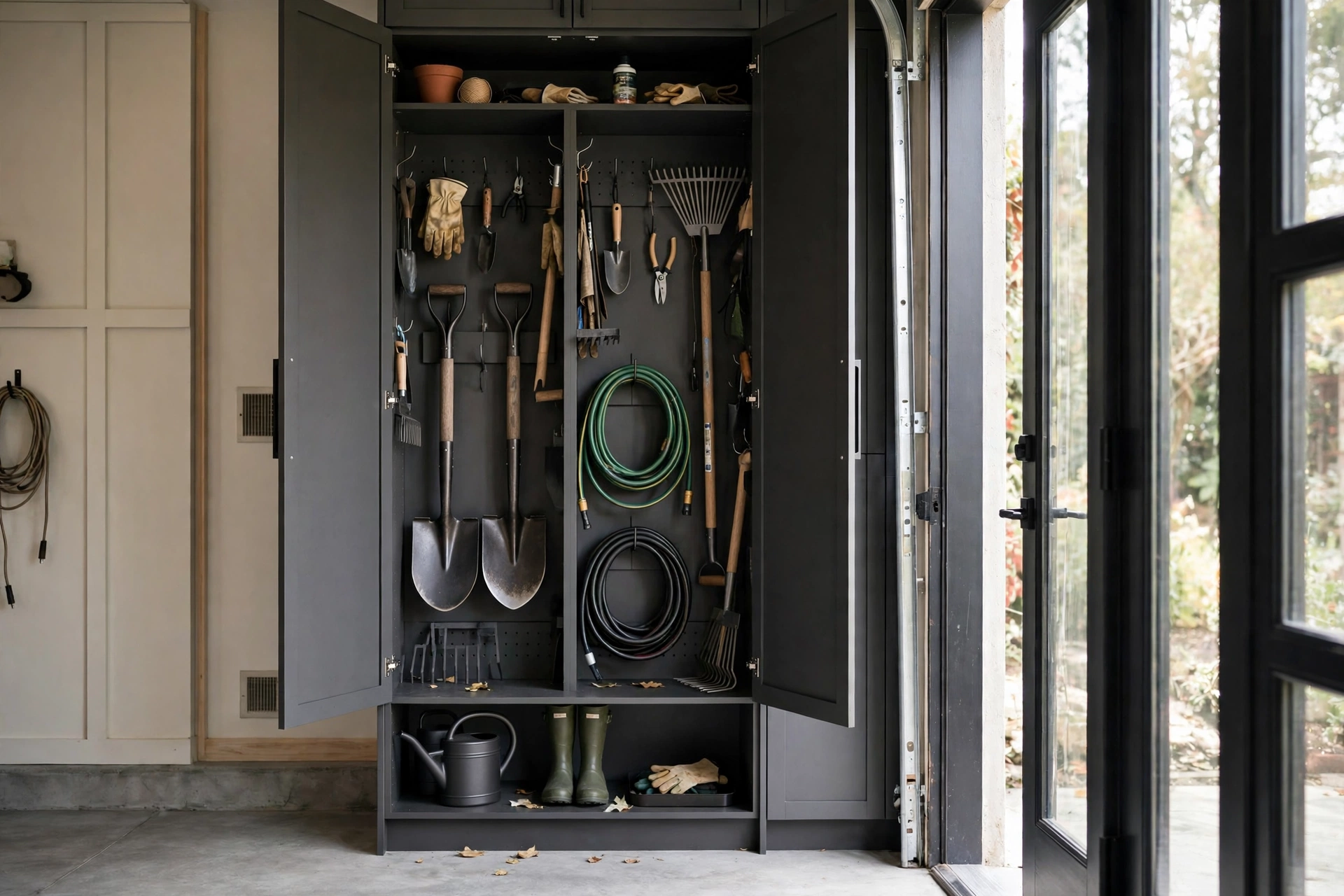
18. Tall Garden-Tool Cabinet
One tall cabinet with hooks and slots tames spades and hoses. Best for: gardeners. Styling tip: near the side door. Pro tip: add a drip tray.
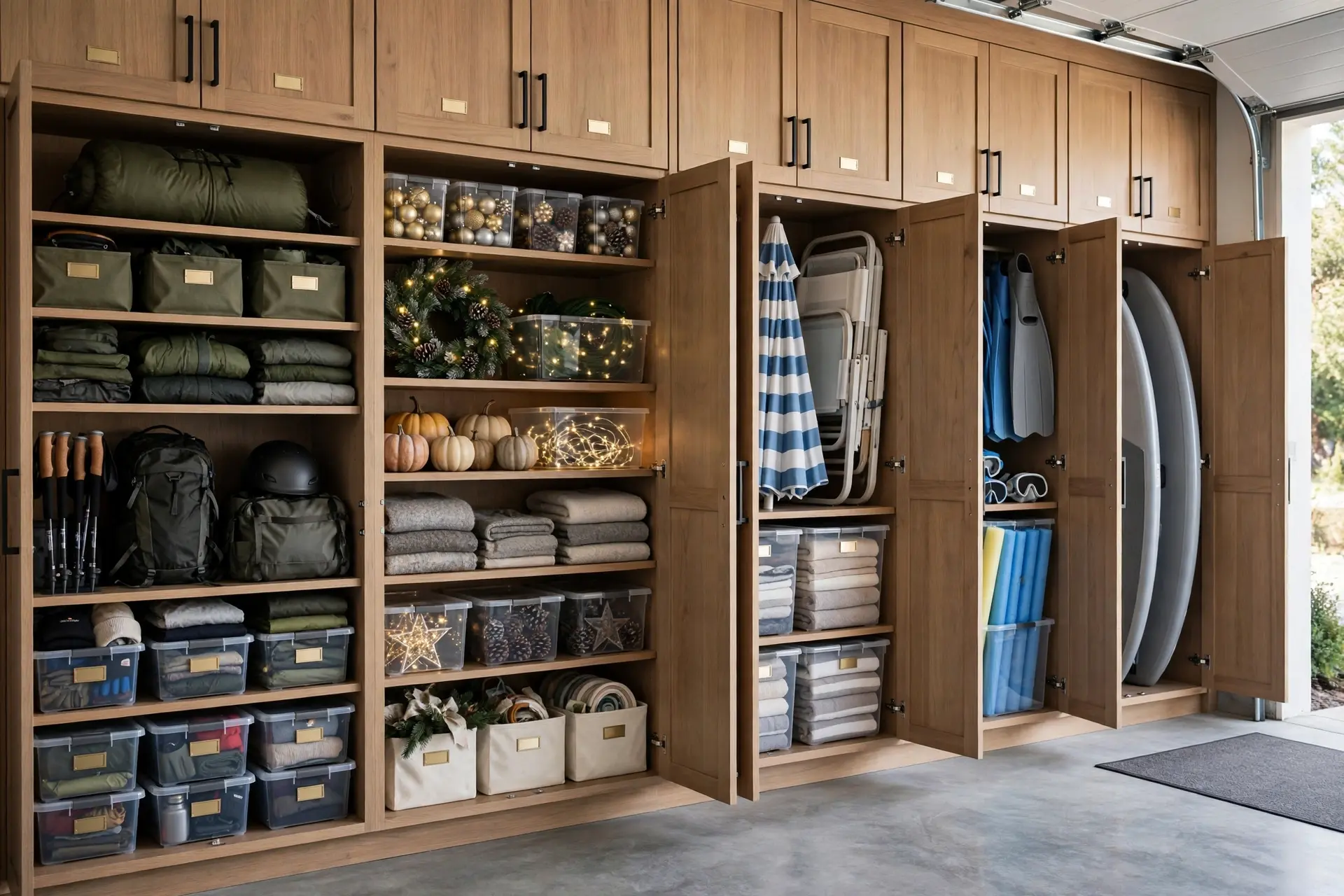
19. Labelled Seasonal Cabinets
Labelled cabinets for lights, camping kit and ski gear end the shuffle. Best for: holiday storage. Styling tip: one label style. Pro tip: rotate stock each season.
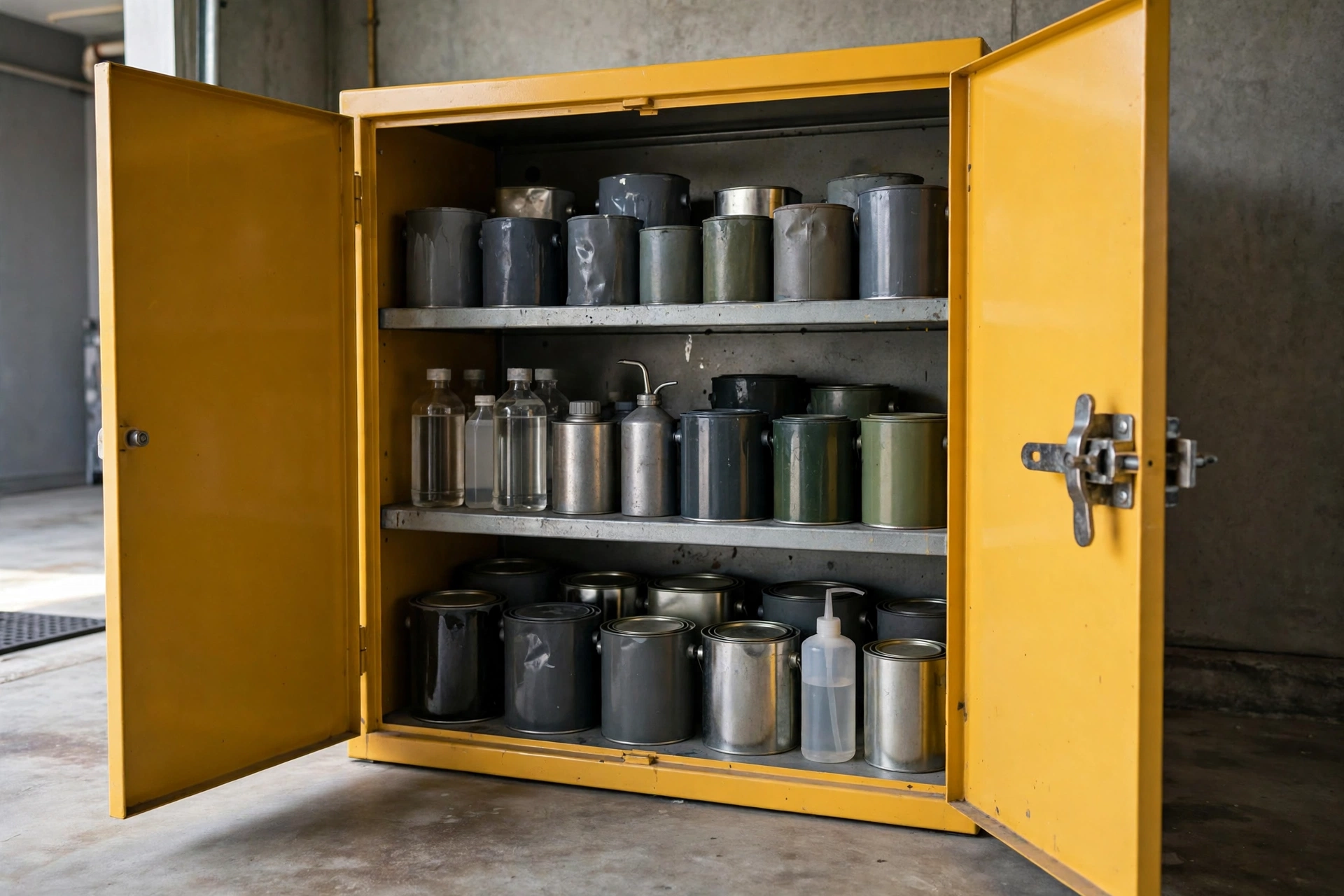
20. Fire-Safe Cabinet for Paints
A latched metal cabinet keeps paints and solvents from sparks and children. Best for: safety-first garages. Styling tip: small warning label. Pro tip: never store petrol beside paint.
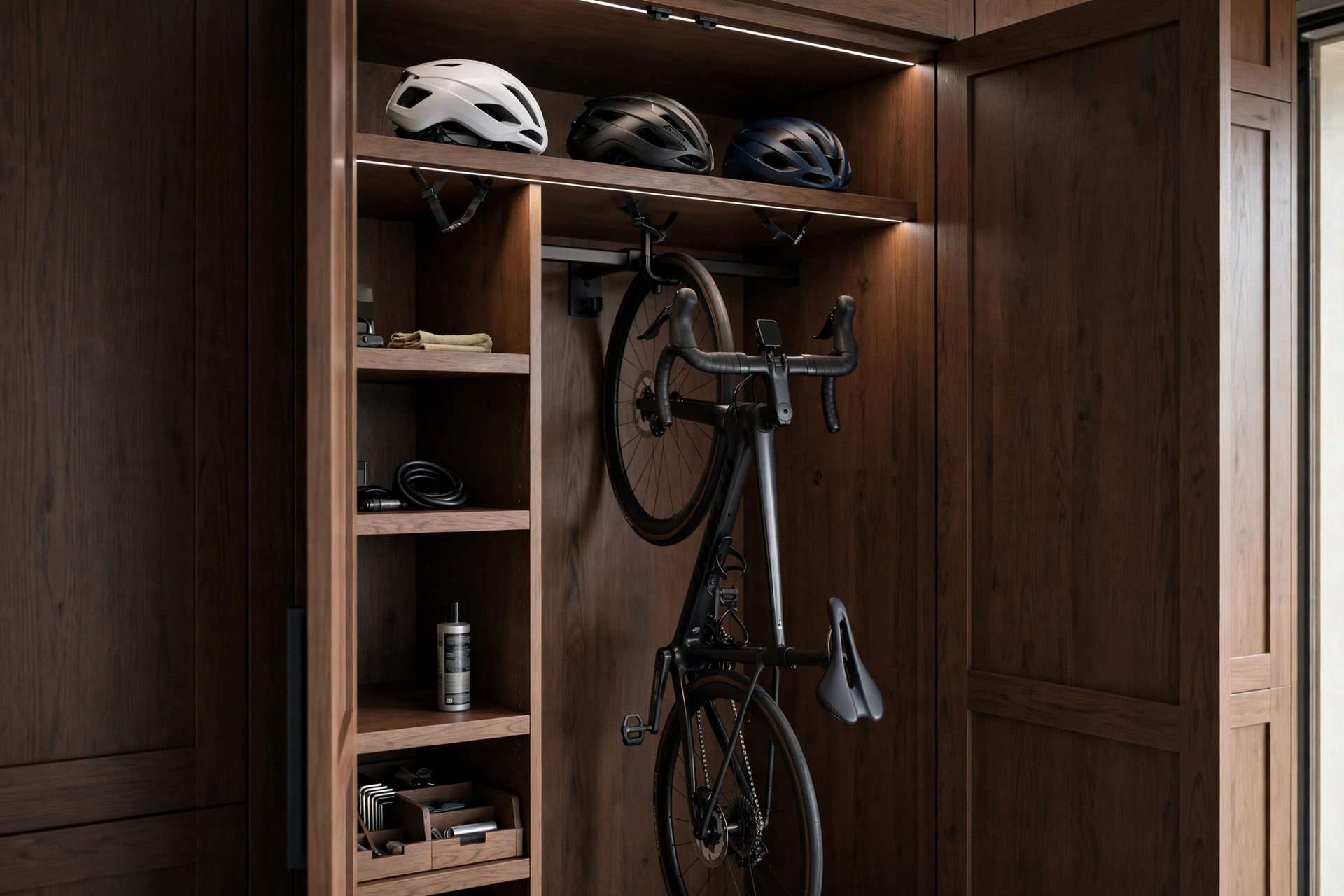
21. Bike Cabinet, Vertical Hook
A deep cabinet with a vertical hook hides bikes and helmets. Best for: cyclists. Styling tip: shelf above for helmets. Pro tip: wipe tyres first.
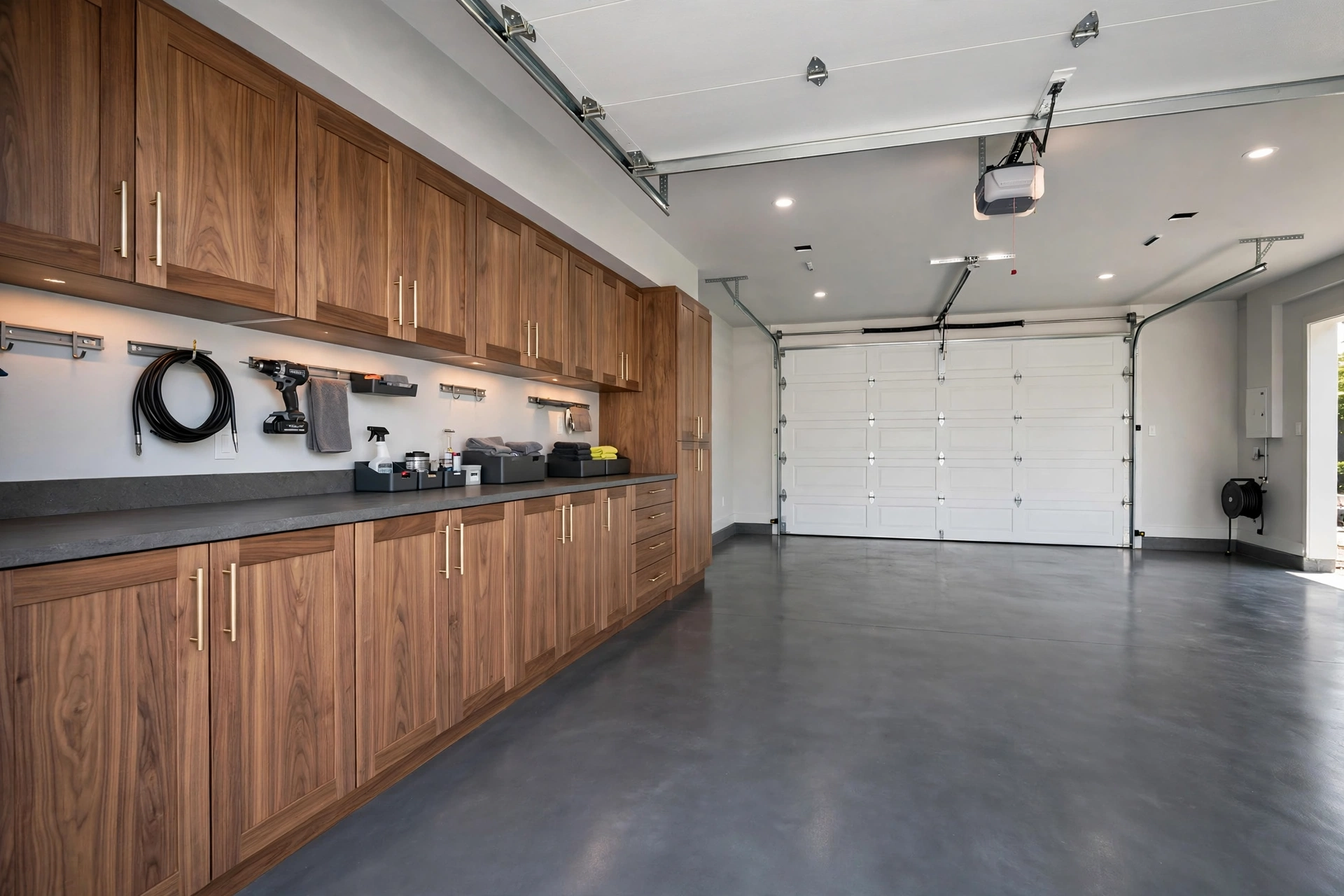
22. Overhead and Base Cabinets, Small Garage
A short base run plus uppers doubles storage, saving floor space. Best for: compact garages. Styling tip: one wall only. Pro tip: measure car clearance first.
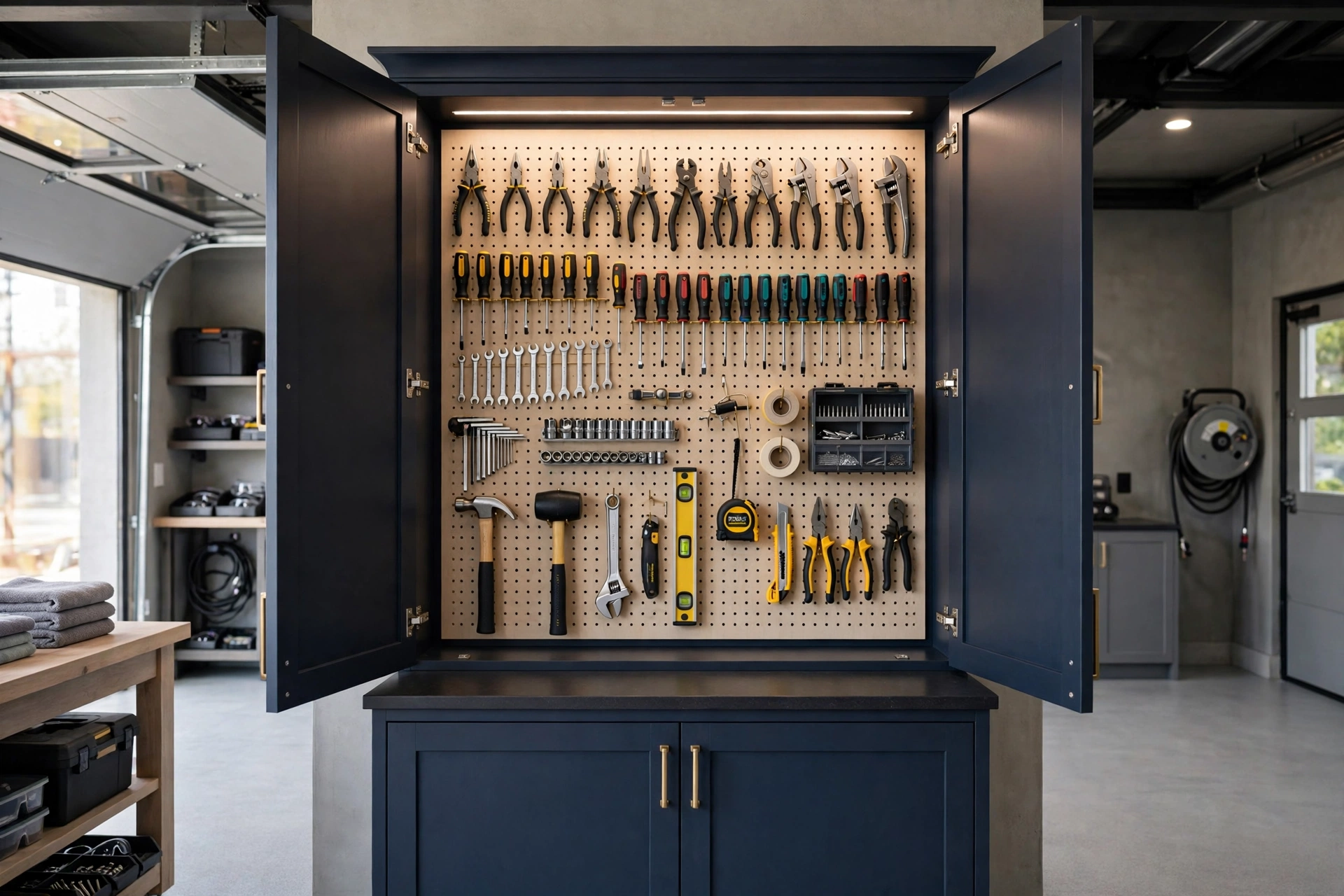
23. Cabinets With Pegboard Doors
Pegboard inside cabinet doors doubles tool space for hand tools. Best for: tool collectors. Styling tip: outline tools in marker. Pro tip: short hooks so doors close.
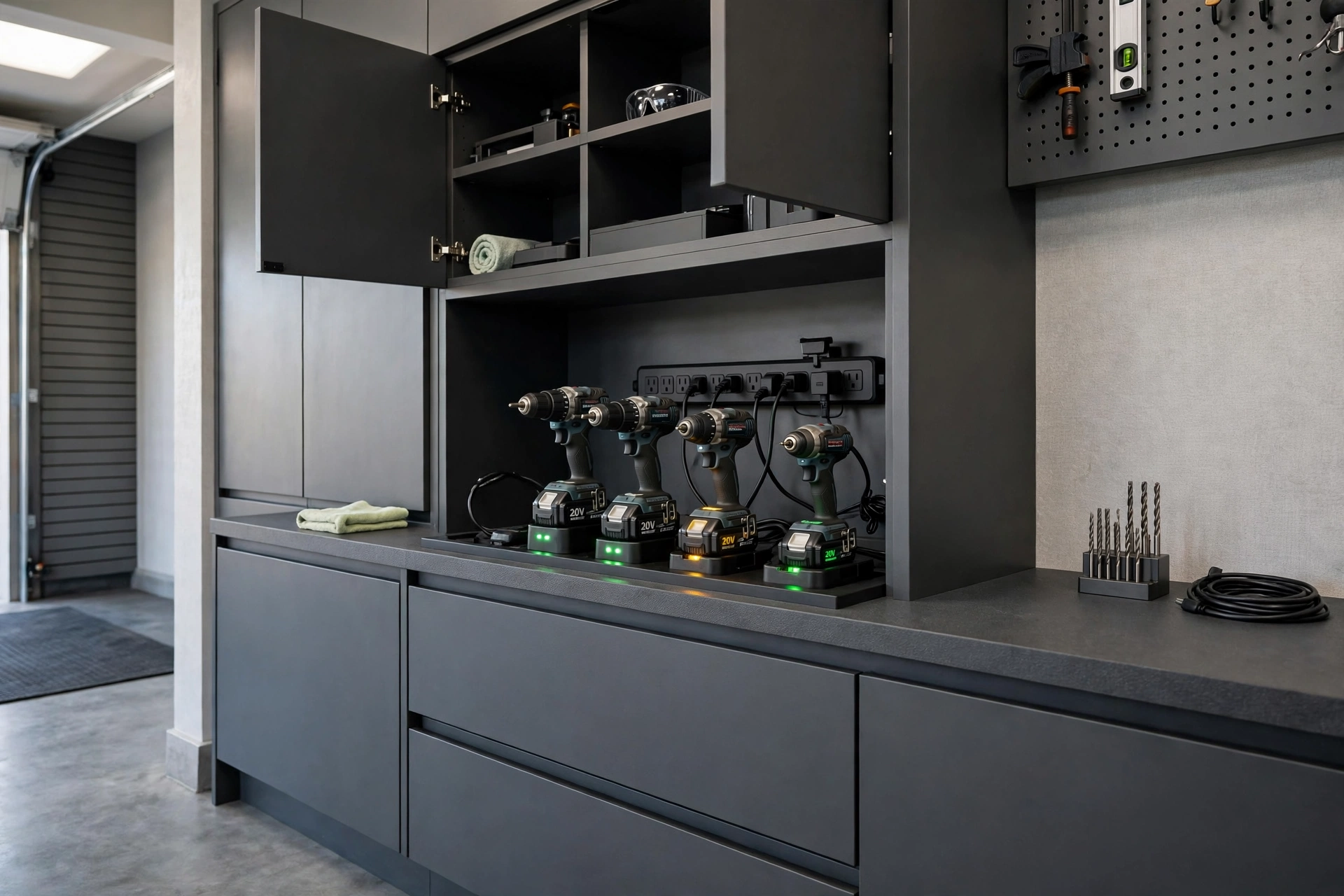
24. In-Cabinet Charging Station
A cabinet with a power strip inside charges drills out of sight. Best for: cordless tool users. Styling tip: discreet cable hole. Pro tip: never charge damaged batteries.
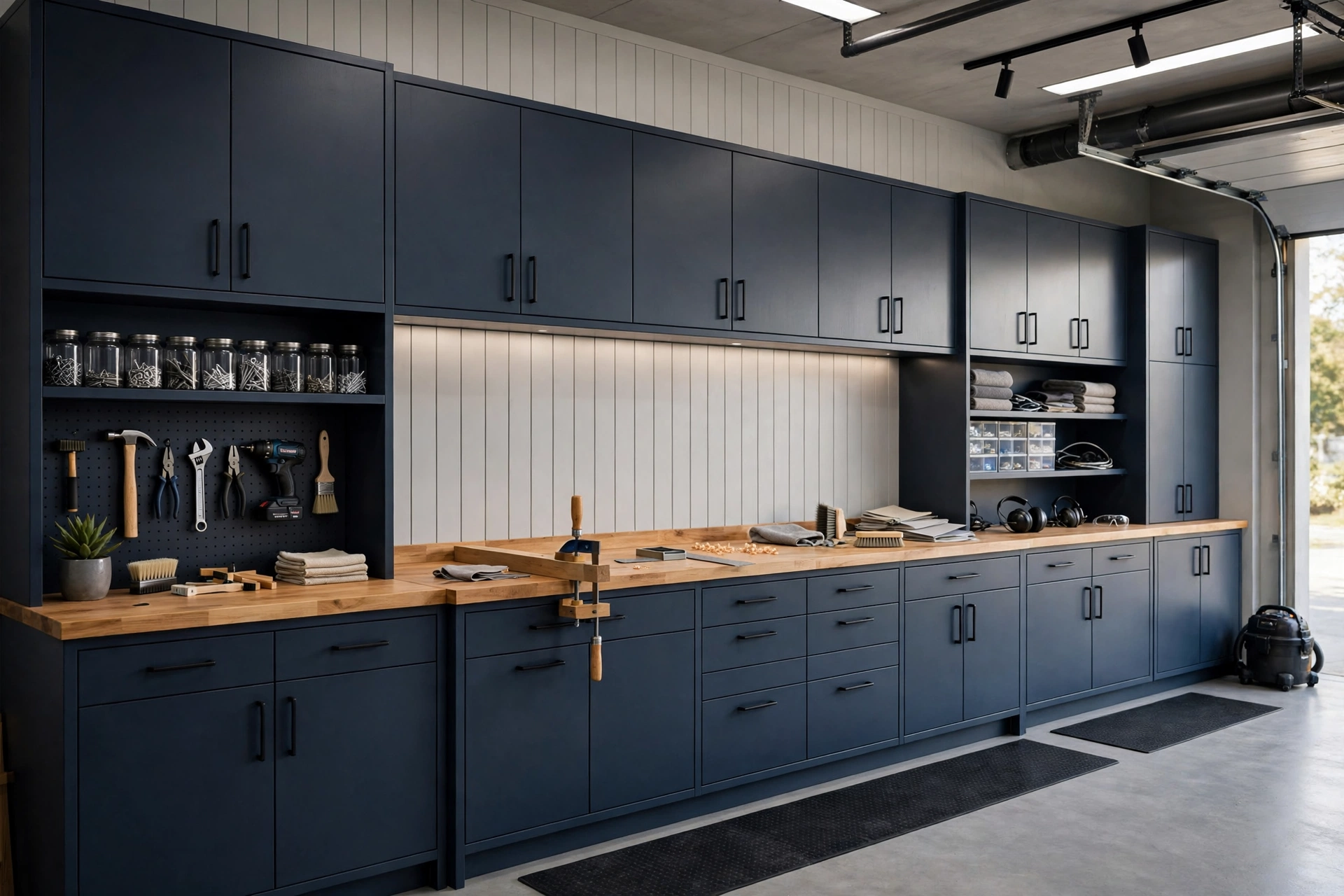
25. Workbench and Cabinets
A workbench framed by cabinets keeps materials close. Best for: makers — see our garage design ideas. Styling tip: one long top. Pro tip: anchor tall units.
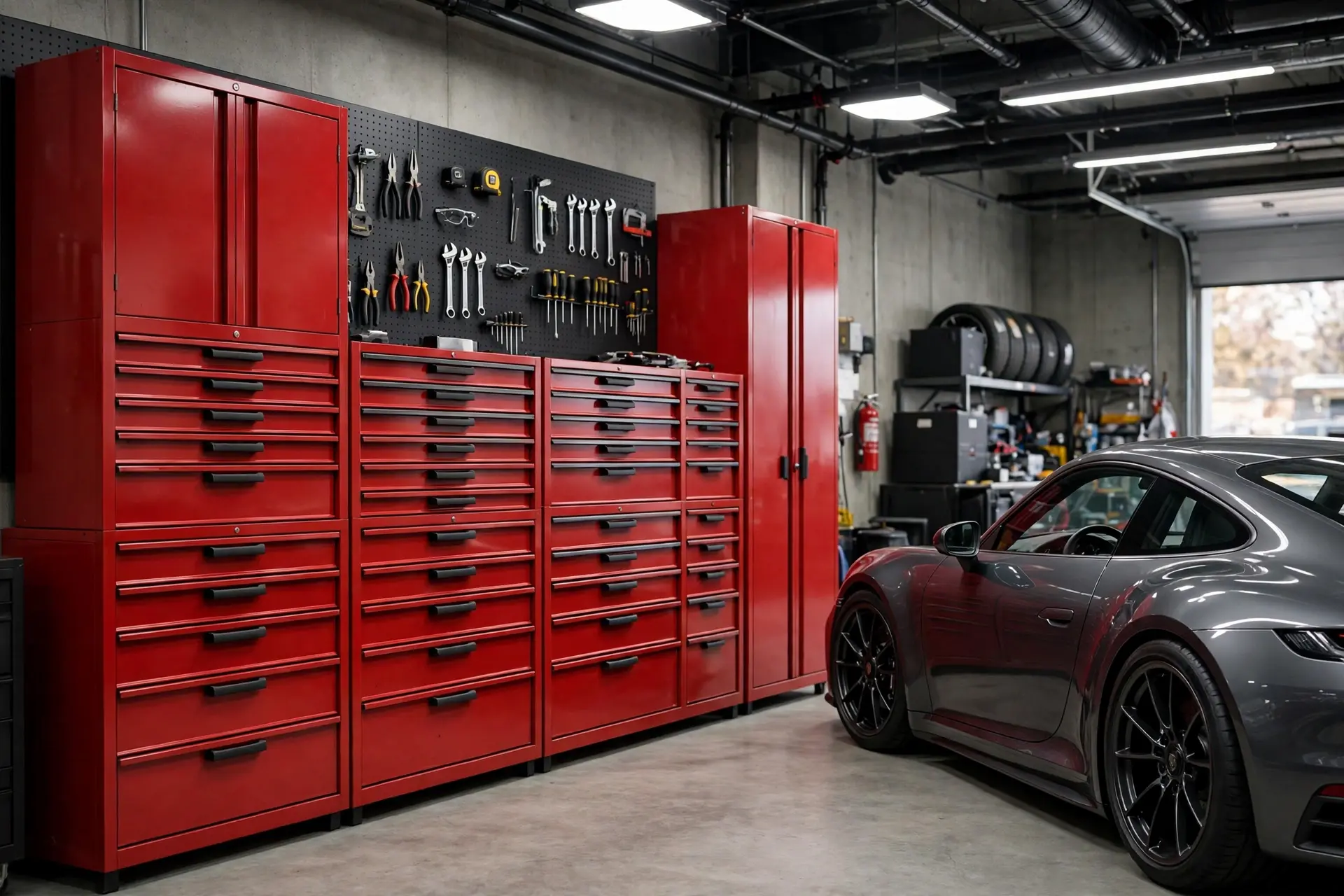
26. Red Tool-Chest Cabinets
Classic red tool-chest cabinets bring workshop energy and hide grime well. Best for: car enthusiasts. Styling tip: grey walls balance it. Pro tip: ball-bearing drawers for heavy tools.
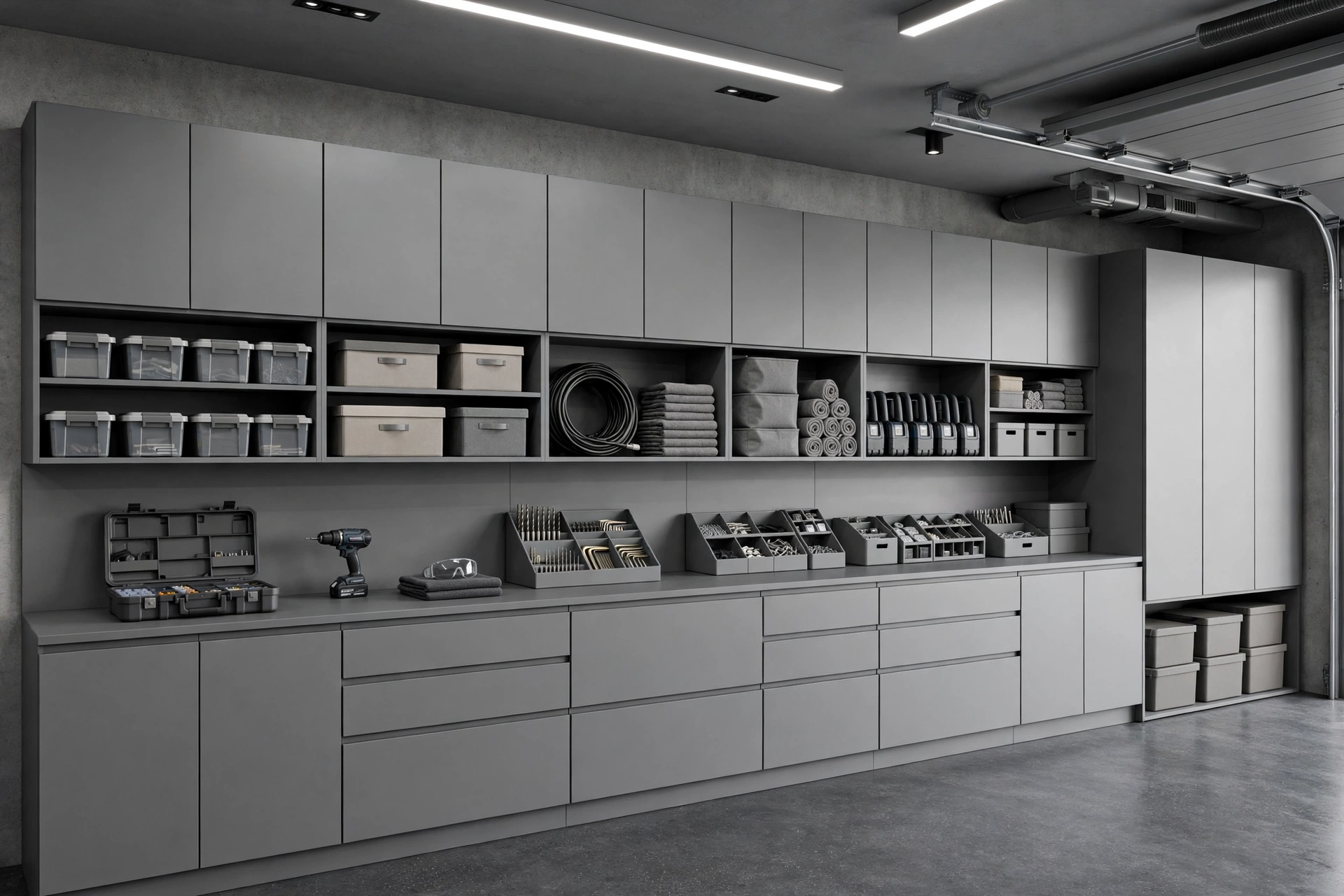
27. Grey Modular Cabinet System
Grey modular units mix and match, so start small, add later. Best for: growing storage. Styling tip: one grey tone. Pro tip: same range, matching doors.
28. Pull-Out Bins in Deep Cabinets
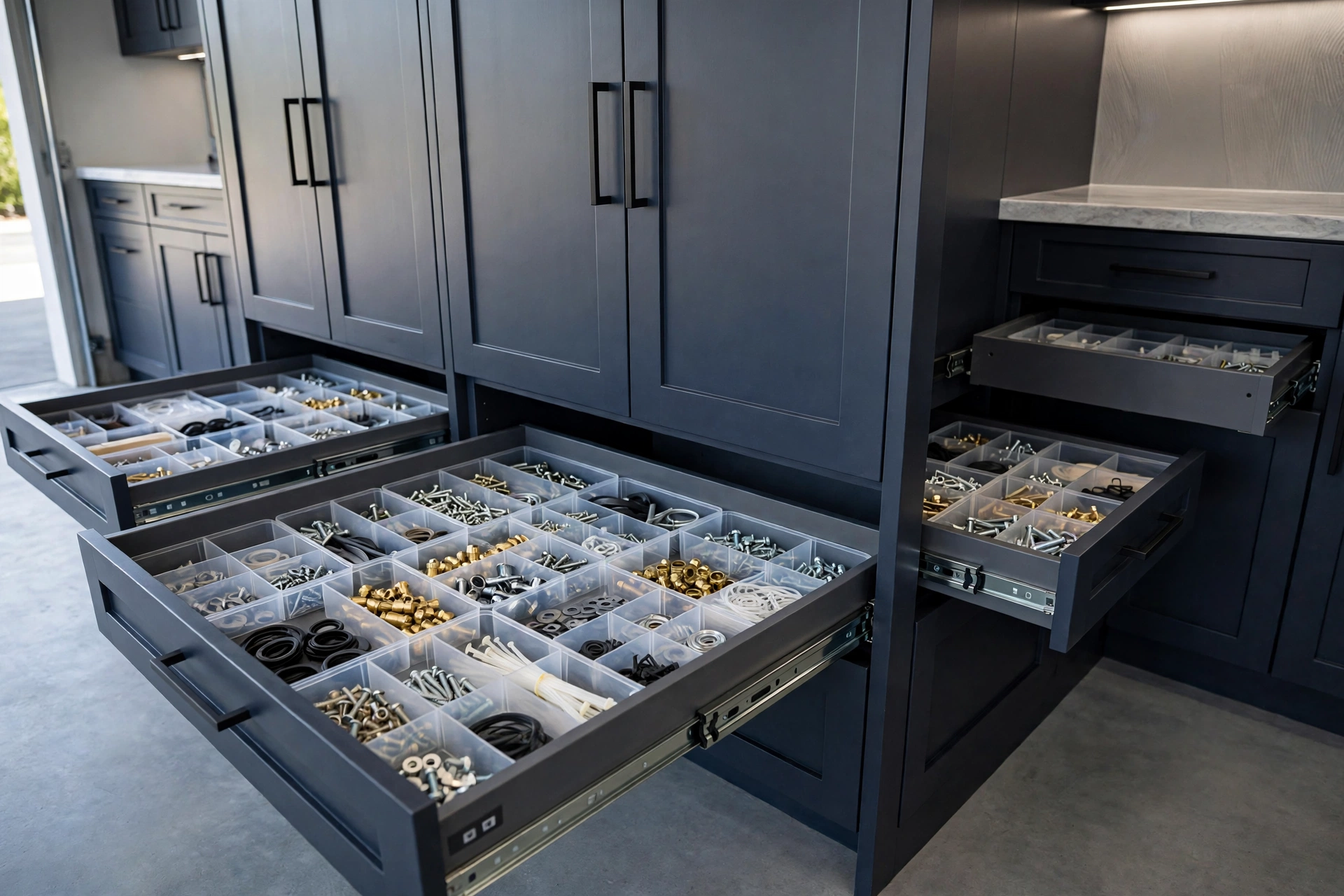
Pull-out bins bring the back of deep cabinets forward; nothing lost. Best for: small parts. Styling tip: clear bins, white labels. Pro tip: sort by project.
29. Pet-Supply Cabinet
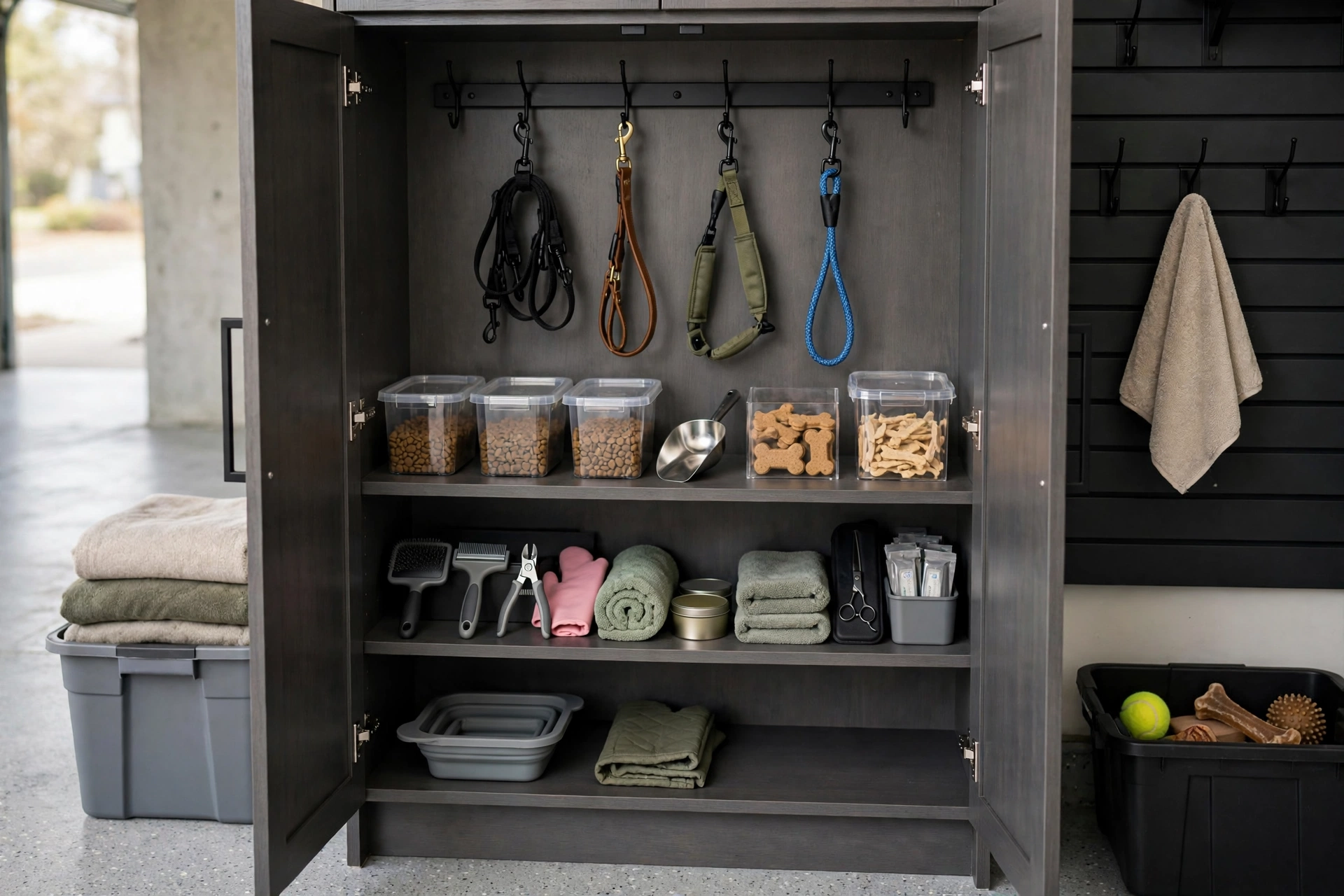
One cabinet for leads and food keeps pet clutter out of the kitchen. Best for: dog owners. Styling tip: hook rail in the door. Pro tip: sealed food tubs only.
30. Low Kids’-Gear Cabinets
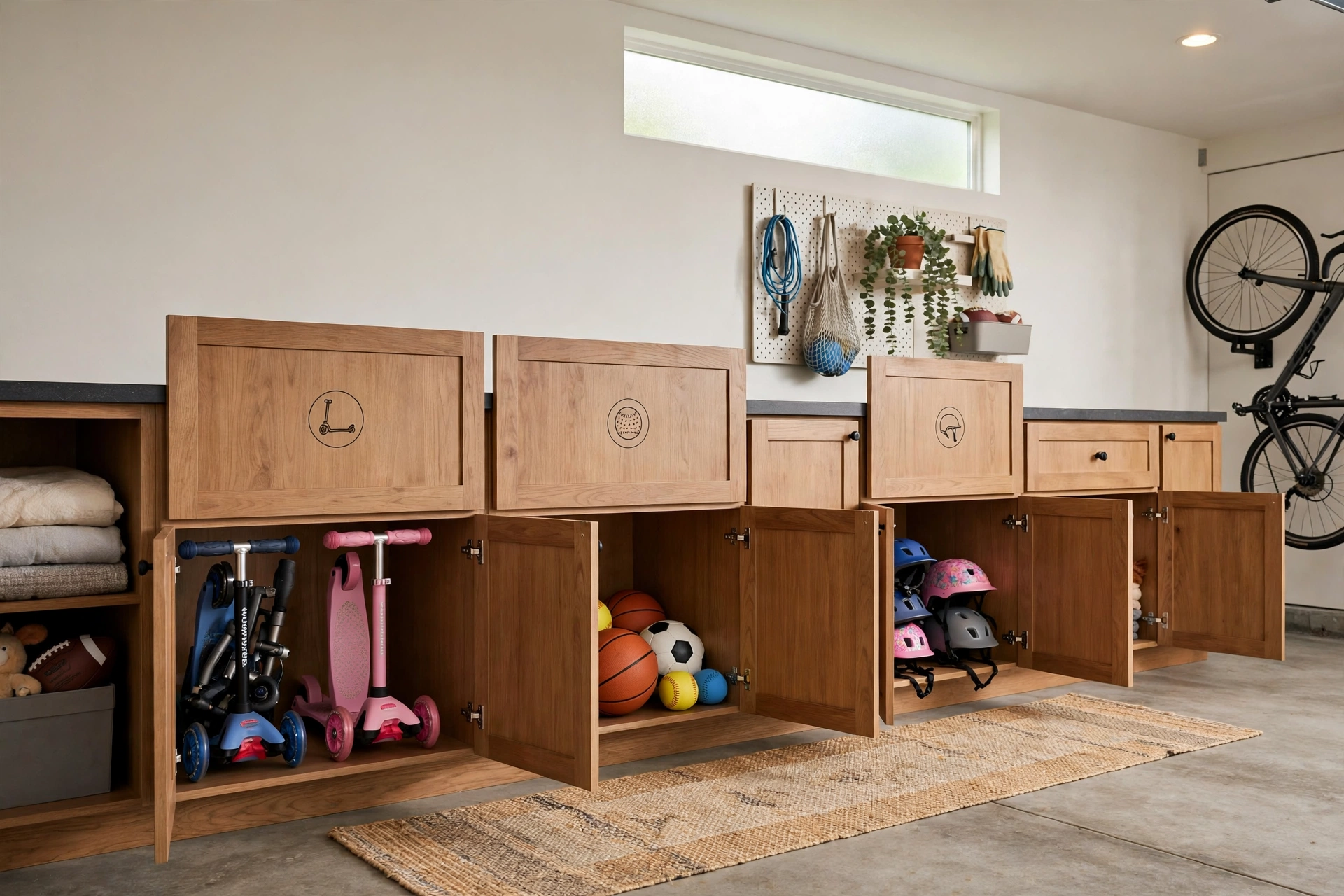
Low, labelled cabinets let kids grab and return scooters and helmets. Best for: young families. Styling tip: picture labels for pre-readers. Pro tip: soft-close hinges for fingers.
31. LED-Lit Cabinets
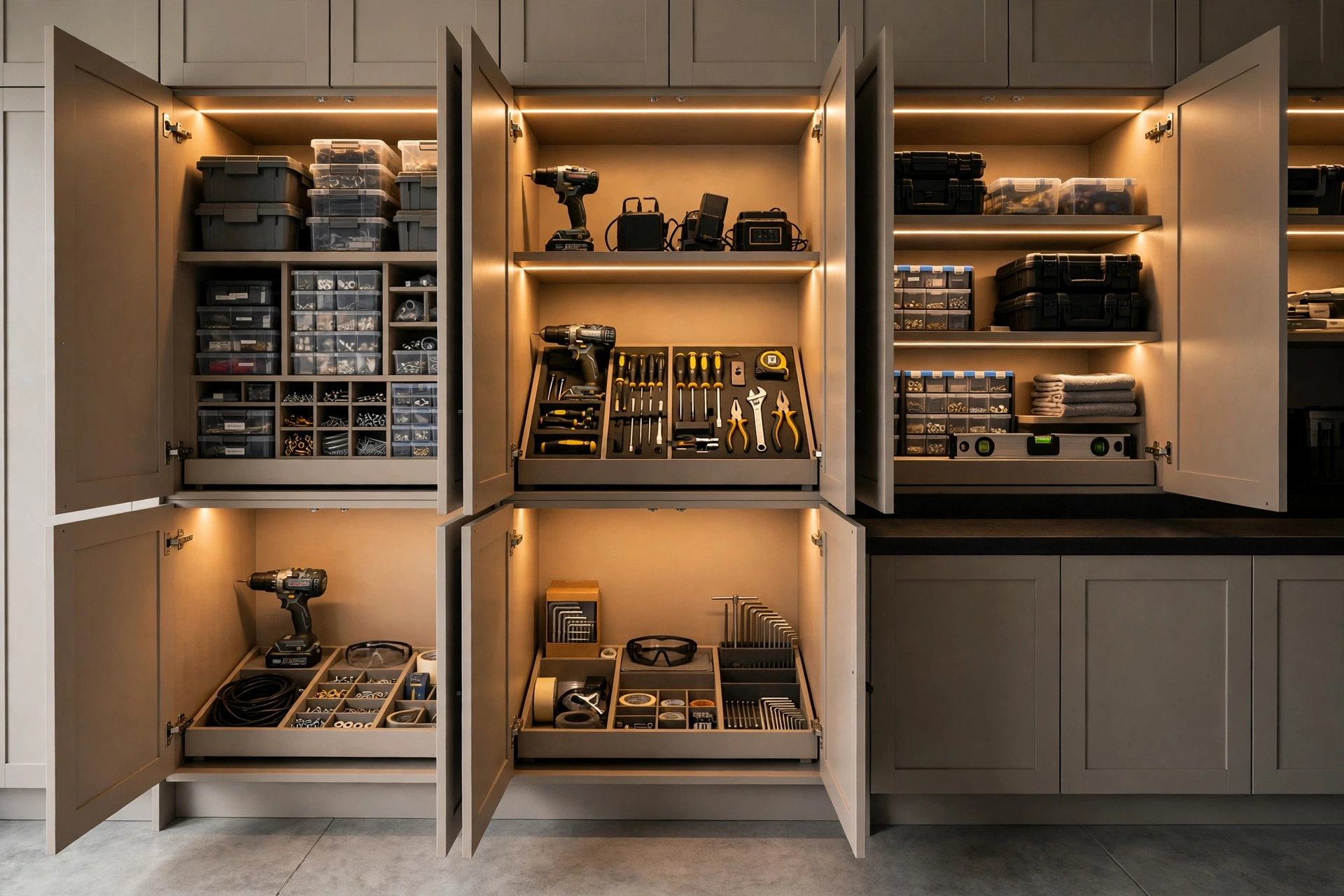
LED strips light dark cabinet corners. Best for: deep units. Styling tip: warm white, not blue-white. Pro tip: motion sensors save power.
32. Recessed Cabinets Between Studs
Shallow cabinets between studs store cans and tools, stealing no floor space. Best for: narrow garages. Styling tip: doors match the wall. Pro tip: check for wiring first.
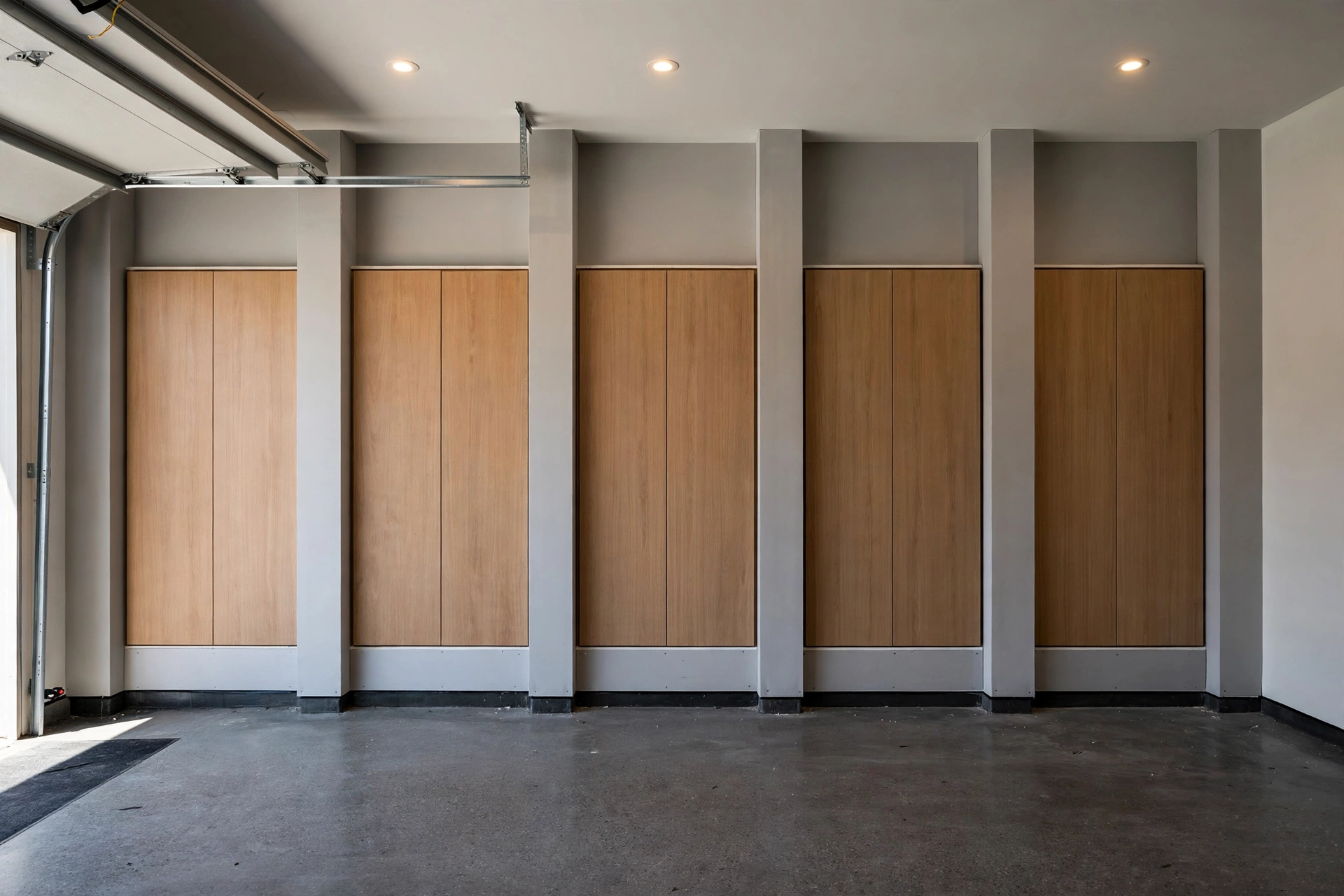
33. Fold-Down Workbench Cabinets
A fold-down bench doubles as a work surface, then folds away. Best for: one-car garages. Styling tip: keep the top clear. Pro tip: heavy-duty hinges for the load.
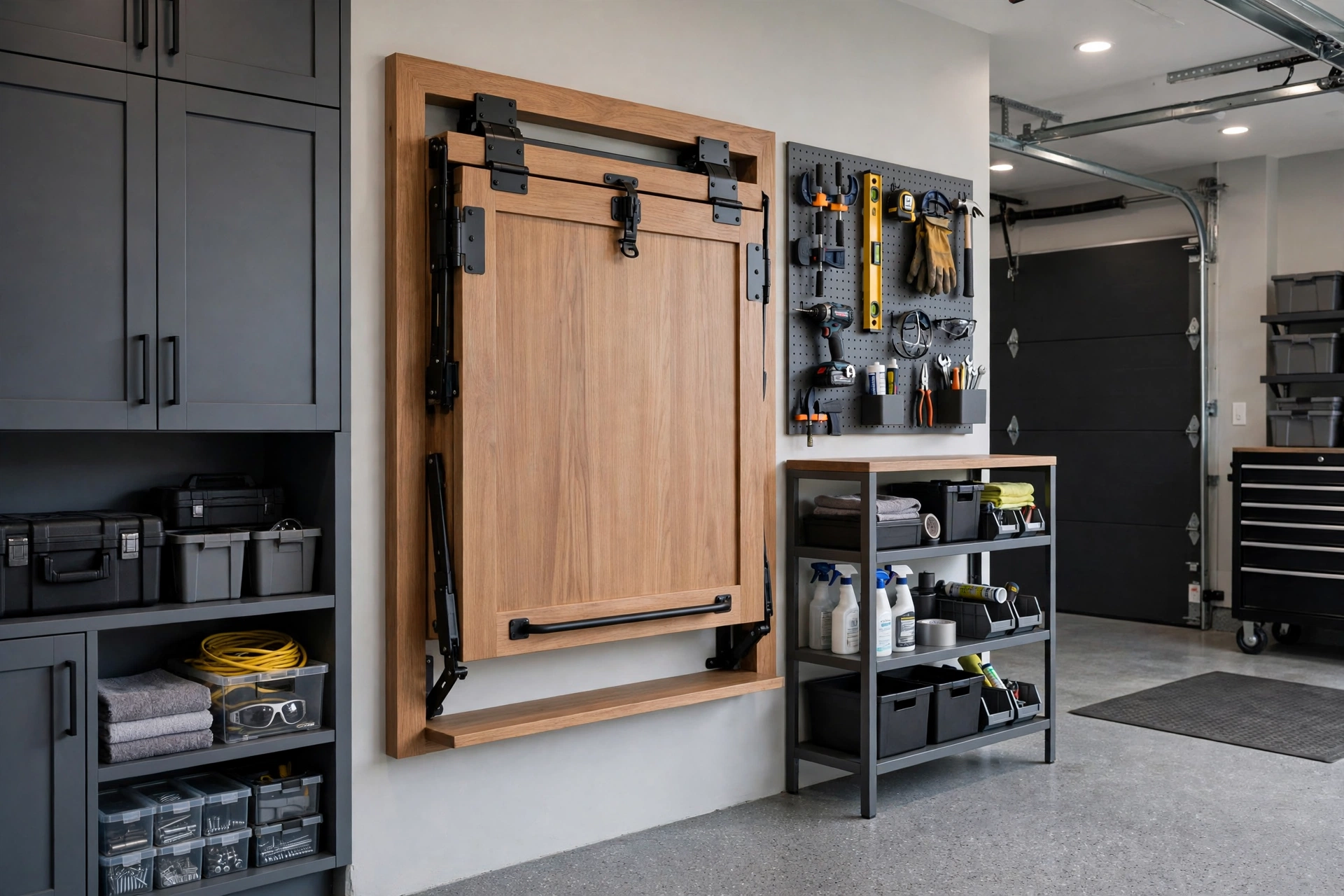
34. Budget Flat-Pack Cabinets
Flat-pack cabinets assemble in an afternoon, far cheaper than custom joinery. Best for: first-time organizers. Styling tip: matching handles throughout. Pro tip: glue joints as well as screwing.

Good garage cabinets hide the mess and make the garage a room you want to use. Pick two or three ideas, start with the wall you see first, and the clutter will follow.
How much do garage cabinets cost?
Garage cabinets range from budget flat-packs at around $100 per unit to custom built-ins that run into thousands for a full wall. A mid-range modular system for one wall costs roughly $800 to $2,500, depending on material and size. Steel costs more than melamine but lasts longer in damp garages.
Are metal or wood garage cabinets better?
Metal cabinets handle moisture, dents and heavy loads better, so they suit damp garages and workshops. Wood or melamine cabinets look warmer and cost less, but they can swell if the garage gets wet. For most homes a mix works best: steel for the bench zone, wood for general storage.
How deep should garage cabinets be?
Most garage base cabinets are 45 to 60 cm deep, which fits toolboxes, paint tins and sports gear without swallowing the floor. Wall cabinets are usually 30 to 40 cm deep so they clear car doors and heads. Go deeper only for bulky items, and add pull-out trays so nothing gets stranded.
Can I install garage cabinets myself?
Yes, most flat-pack and modular garage cabinets are designed for DIY installation with basic tools. The key steps are finding the wall studs, levelling the first cabinet, and anchoring every tall unit so it cannot tip. Wall-mounted cabinets must be fixed into studs or masonry, never plasterboard alone. If in doubt, hire a handyman.
How do I organize inside garage cabinets?
Group items by zone: tools near the bench, sports gear by the door, and seasonal items up high. Use bins and labels so every item has a named home, and keep weekly-use items at waist height. Pull-out trays and drawer dividers stop small items sliding to the back. Tidy every season.
Do garage cabinets add value to a home?
Built-in garage cabinets can add value because buyers see an organized, usable garage rather than a cluttered one. A tidy wall of matching cabinets photographs well and signals that the home is cared for. The return is strongest when cabinets look built in and match the home. Freestanding units count as furniture.
