
That awkward empty corner in your bedroom or living room? It could be the most productive square metre in your home. Corner desk ideas are brilliant for small spaces because they use two walls instead of one — more surface area, less floor space than a freestanding desk.
Whether you’re setting up a full work-from-home station or just need a landing spot for your laptop, these 13 corner desk ideas prove that a tight corner can still feel open, organised and genuinely inviting.
1. The L-Shaped Workstation
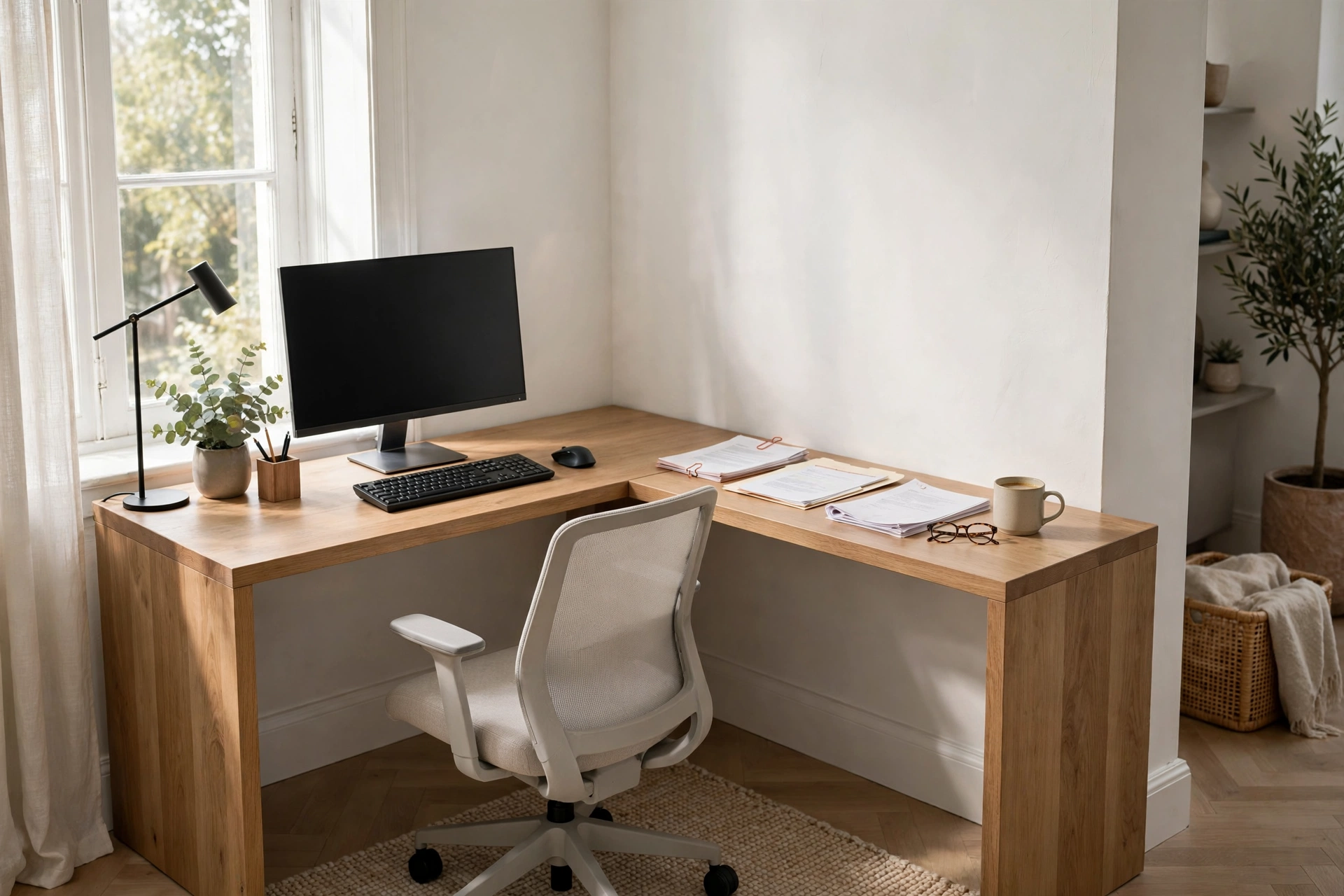
An L-shaped desk is the classic corner solution for good reason: it wraps around you, doubling your usable surface without stealing extra floor space. Dedicate one arm to your monitor and keyboard and the other to paperwork, a printer or your coffee. This layout is ideal for multitaskers who hate shuffling piles around. Look for a reversible design so it suits either side of the corner.
2. A Floating Wall-Mounted Desk
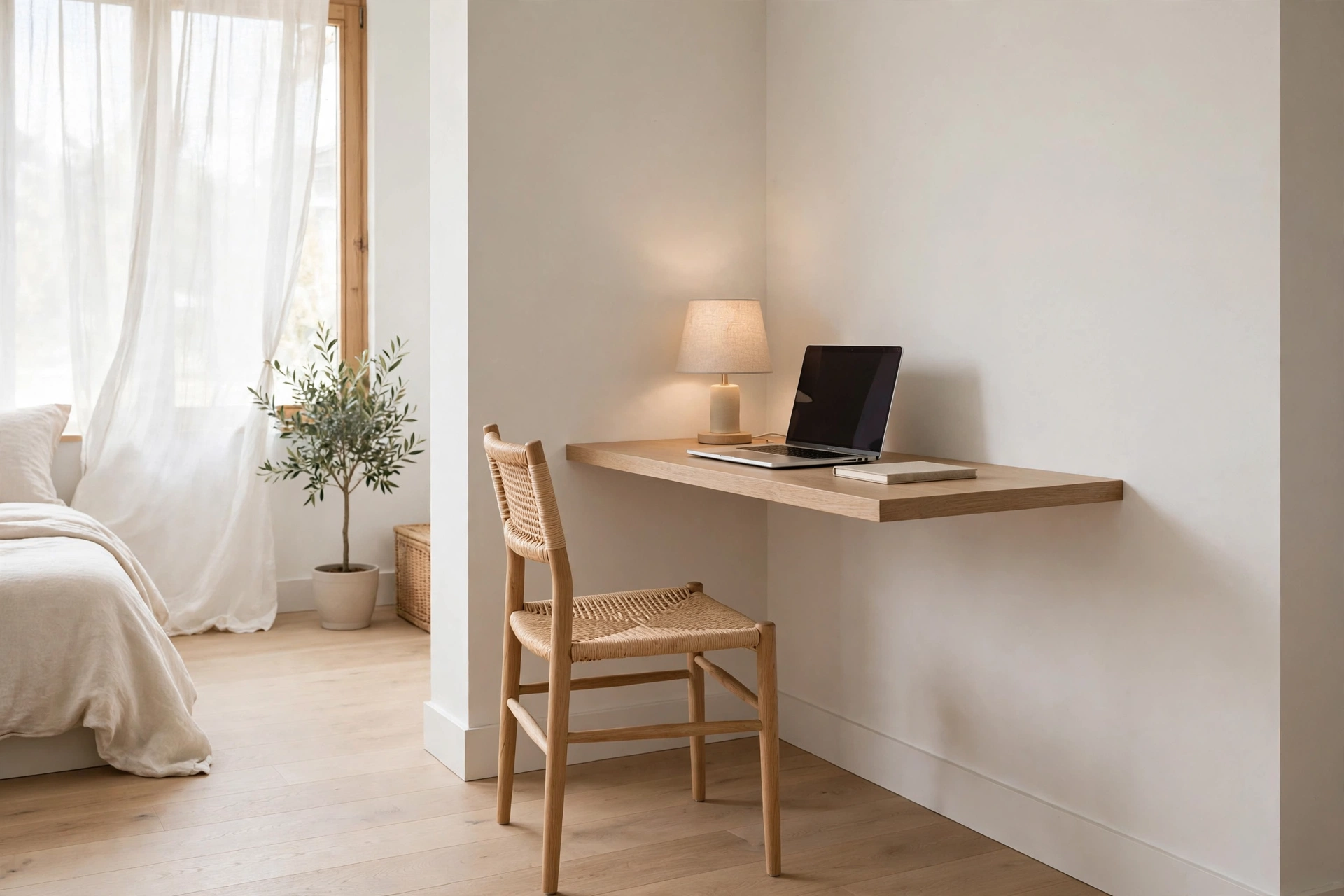
When floor space is at an absolute premium, ditch the legs entirely. A sturdy floating shelf desk fixed to the corner at desk height gives you a clean work surface that visually disappears, making the whole room feel bigger. It suits laptop-based work perfectly. You’ll need wall anchors rated for real weight, and a chair that slides fully underneath. Style it minimally with a single lamp and a small plant. For more inspiration for tight quarters, browse our small home office ideas that maximise every centimetre.
3. The Sit-Stand Corner Setup
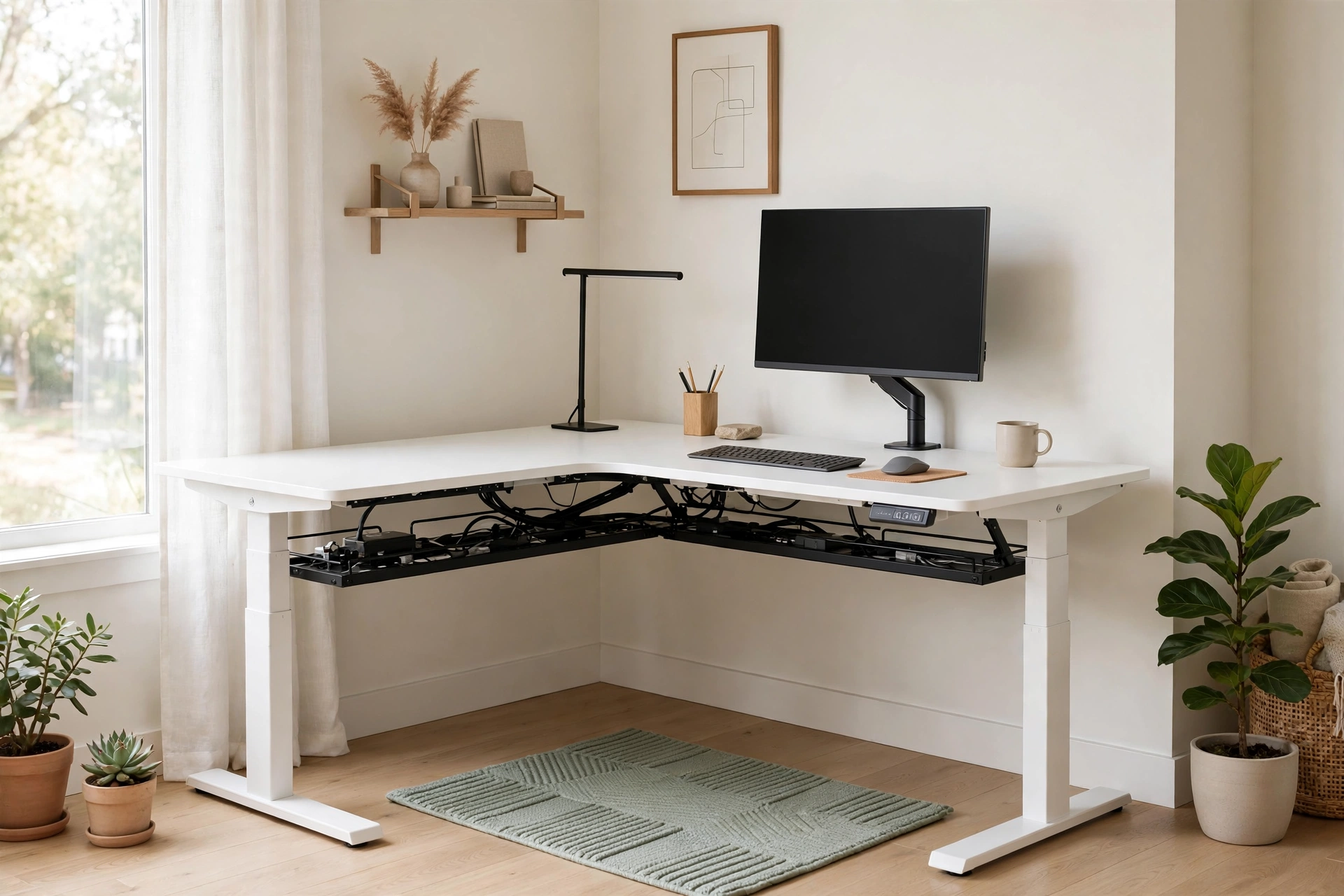
If long hours at your desk leave you stiff, bring a sit-stand desk into the corner. Electric corner standing desks with L-shaped tops are widely available now, and alternating between sitting and standing through the day genuinely changes how your back and shoulders feel by evening. Keep cables managed with an under-desk tray so nothing snags when the desk rises, and position it where you can see across the room — standing while facing a wall feels far less appealing.
4. A Ladder Desk With Vertical Shelving
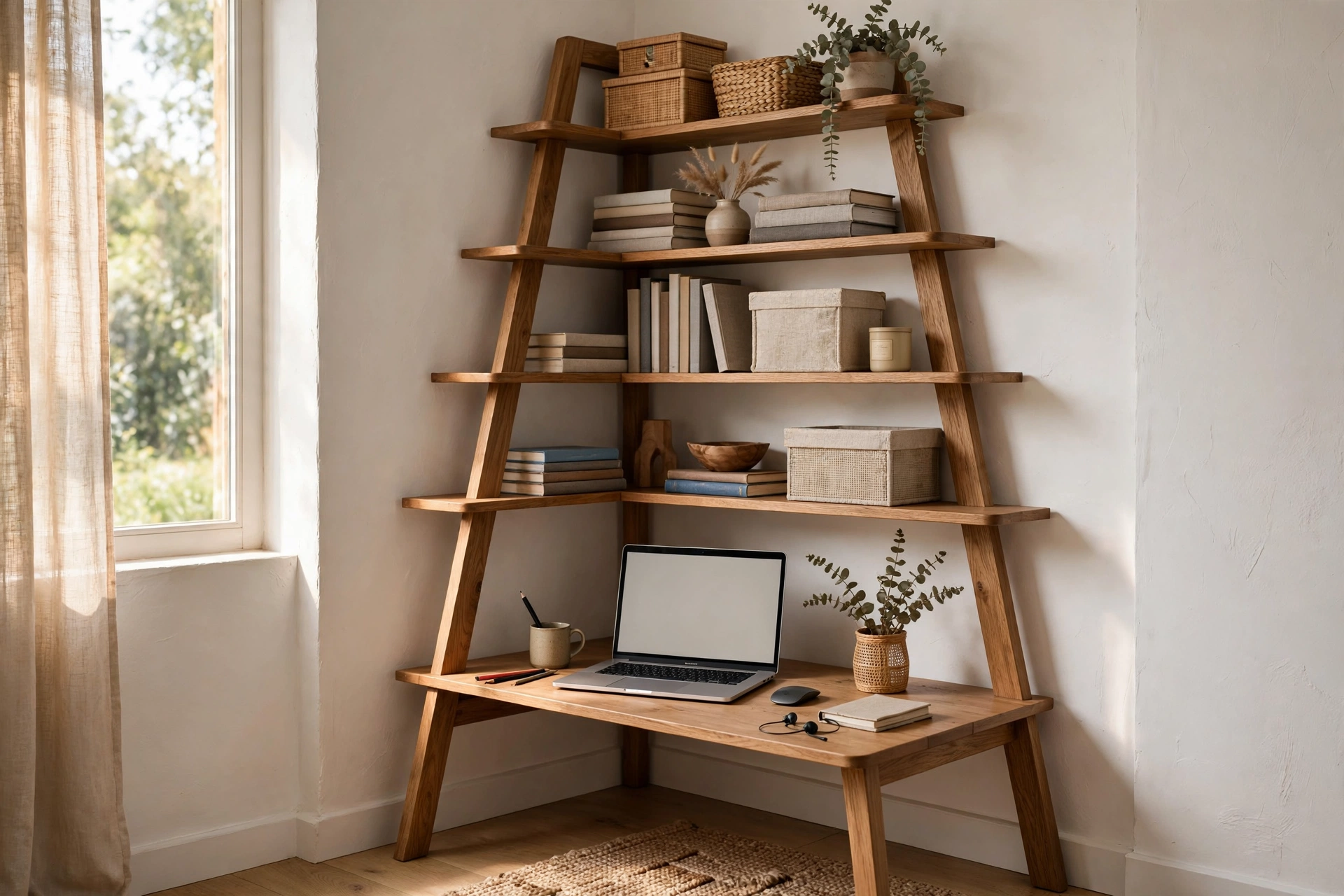
Short on storage but rich in wall height? A ladder-style corner desk solves both problems at once. The graduated shelves above the work surface hold books, boxes and decorative pieces while the compact desktop below handles your laptop and lamp. Because the footprint is so narrow, this style fits corners that are barely a metre wide. Keep heavier items on the lower shelves for stability, and lighter display pieces up top.
5. The Window-Facing Corner Desk
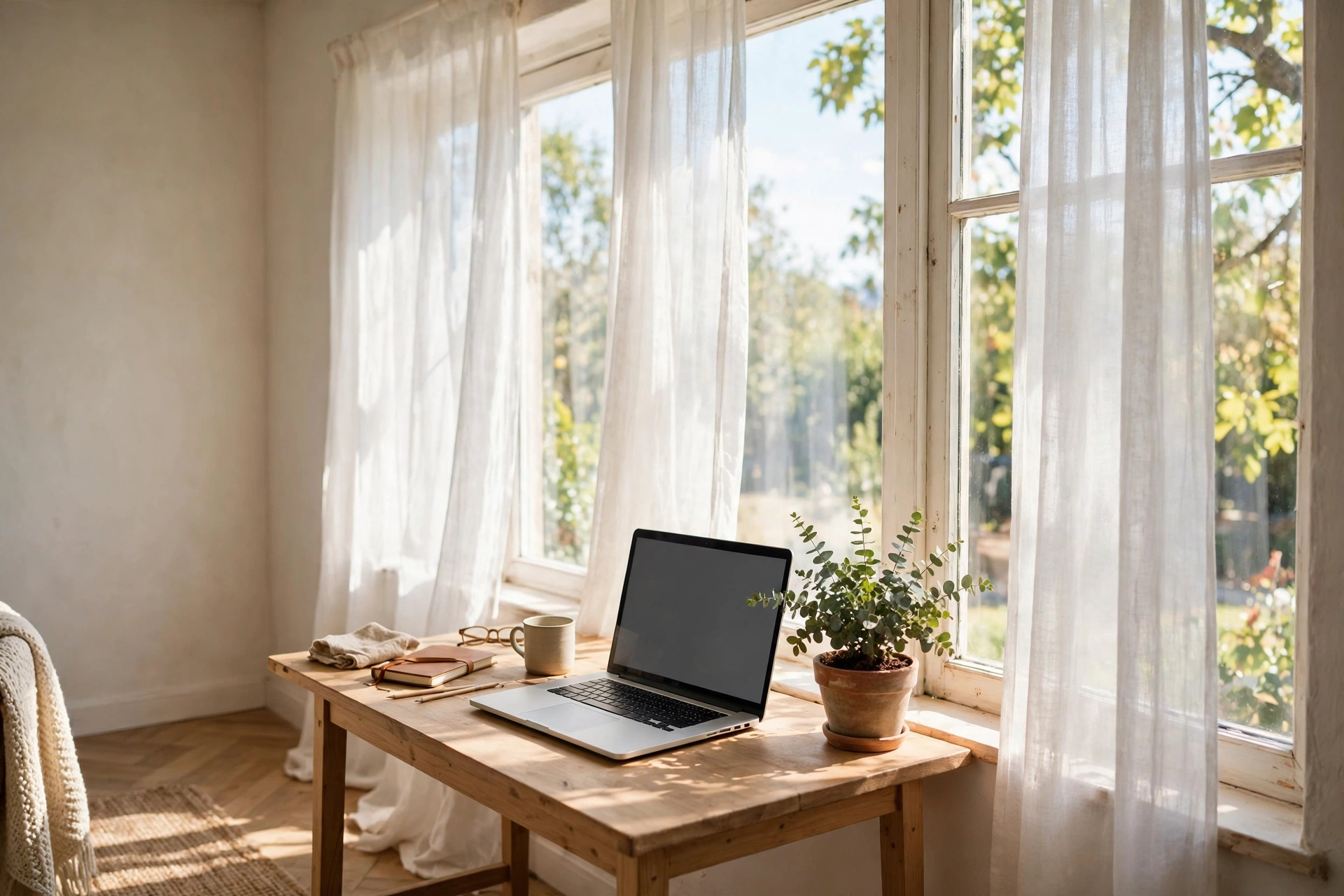
Corners near windows are wasted potential. Positioning your corner desk so you face the daylight — or at least sit beside it — transforms your working mood, cuts your reliance on artificial light and makes a small room feel noticeably larger. Add a sheer blind to tame mid-afternoon glare on your screen, and keep the window ledge clear so the light flows in freely.
6. A Compact Triangular Desk
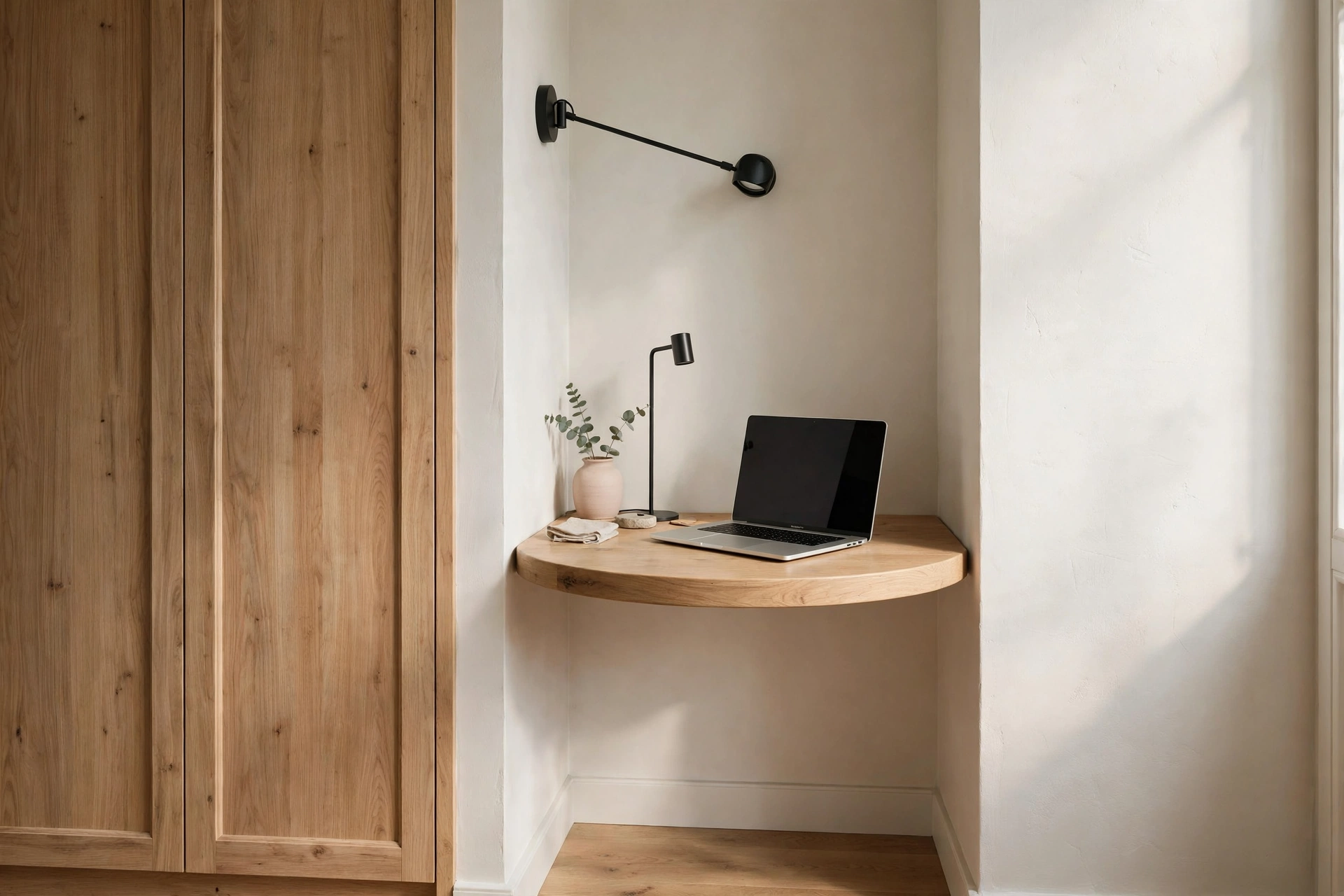
For truly tiny nooks — the dead space beside a wardrobe or at the end of a hallway — a compact triangular or curved corner desk tucks in where a rectangular desk never could. The angled front edge gives you more knee room than you’d expect from the footprint. Choose a design with rounded edges to soften tight corners, mount your lighting on the wall to save surface space, and keep the decor minimal: a slim lamp and one tidy organiser are all a micro-desk needs.
7. A DIY Built-In Corner Desk
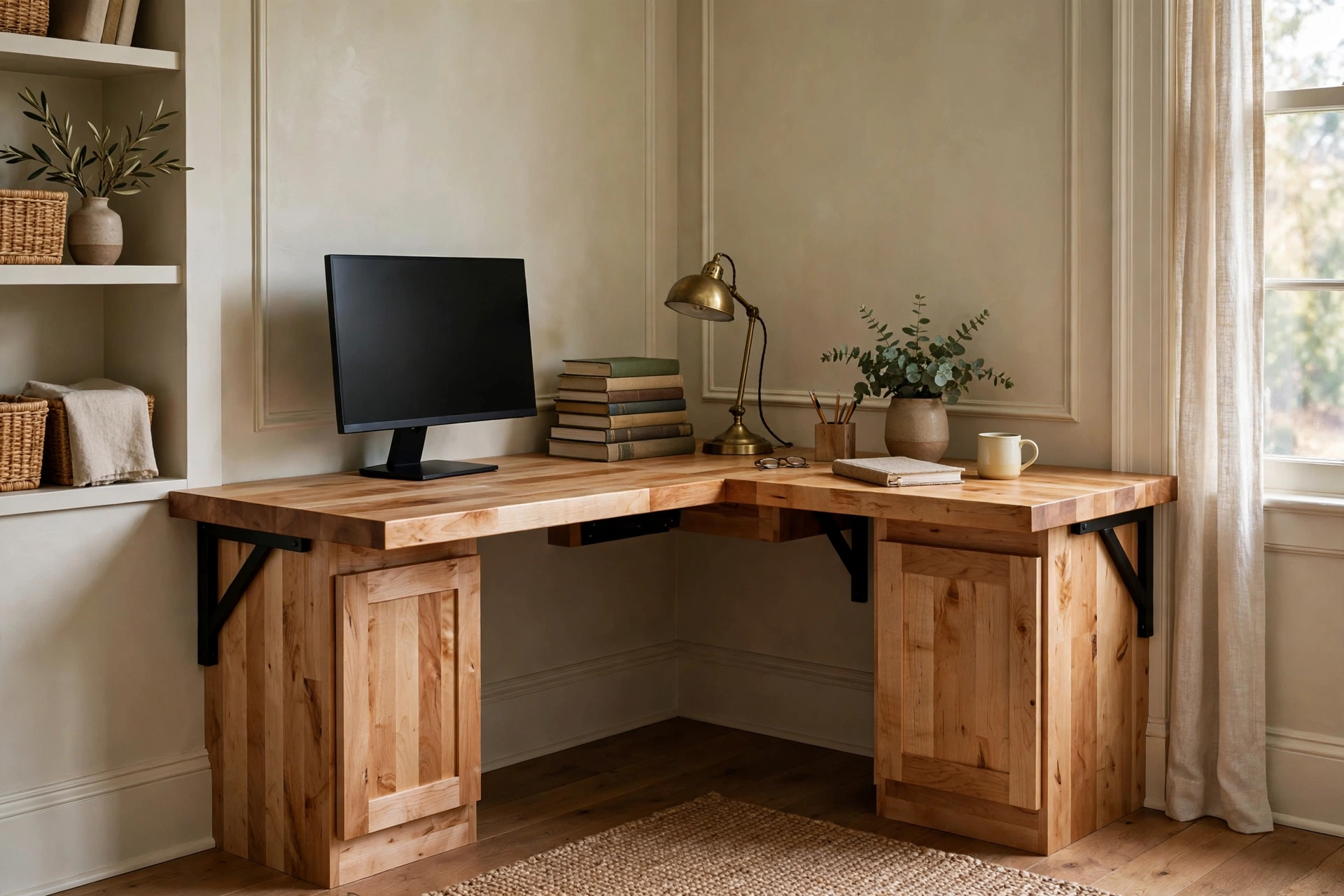
A built-in desk cut to fit your exact corner looks expensive, but it’s one of the most achievable DIY projects for a confident beginner. A solid wood worktop — a butcher-block offcut works beautifully — mounted on sturdy brackets or short cabinets turns an awkward angle into a seamless, custom workspace that looks like it came with the house. For built-in inspiration, This Old House’s office makeover shows how custom-fit work transforms a small, awkward space.
8. The Glass Corner Desk
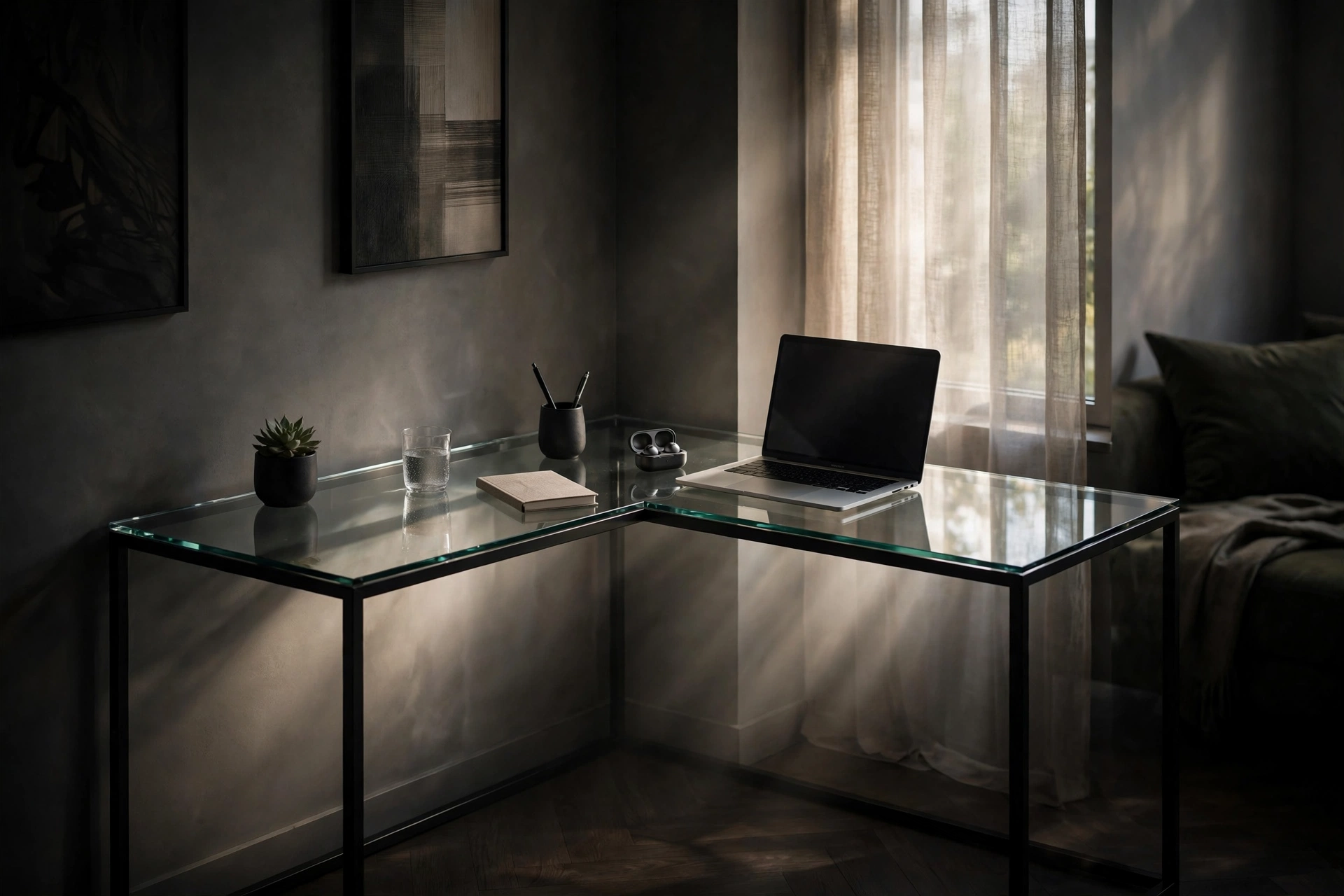
If your corner sits in a dark room, a glass-top desk is a clever optical trick. The transparent surface lets light pass straight through, so the desk feels almost weightless and the corner never looks boxed in. Pair it with a slim metal frame in black or brass for a polished look. The one honest caveat: fingerprints and dust show quickly on glass, so keep a microfibre cloth in the drawer. It’s the best choice when you want function without any visual bulk.
9. A Corner Desk With Upper Cabinets
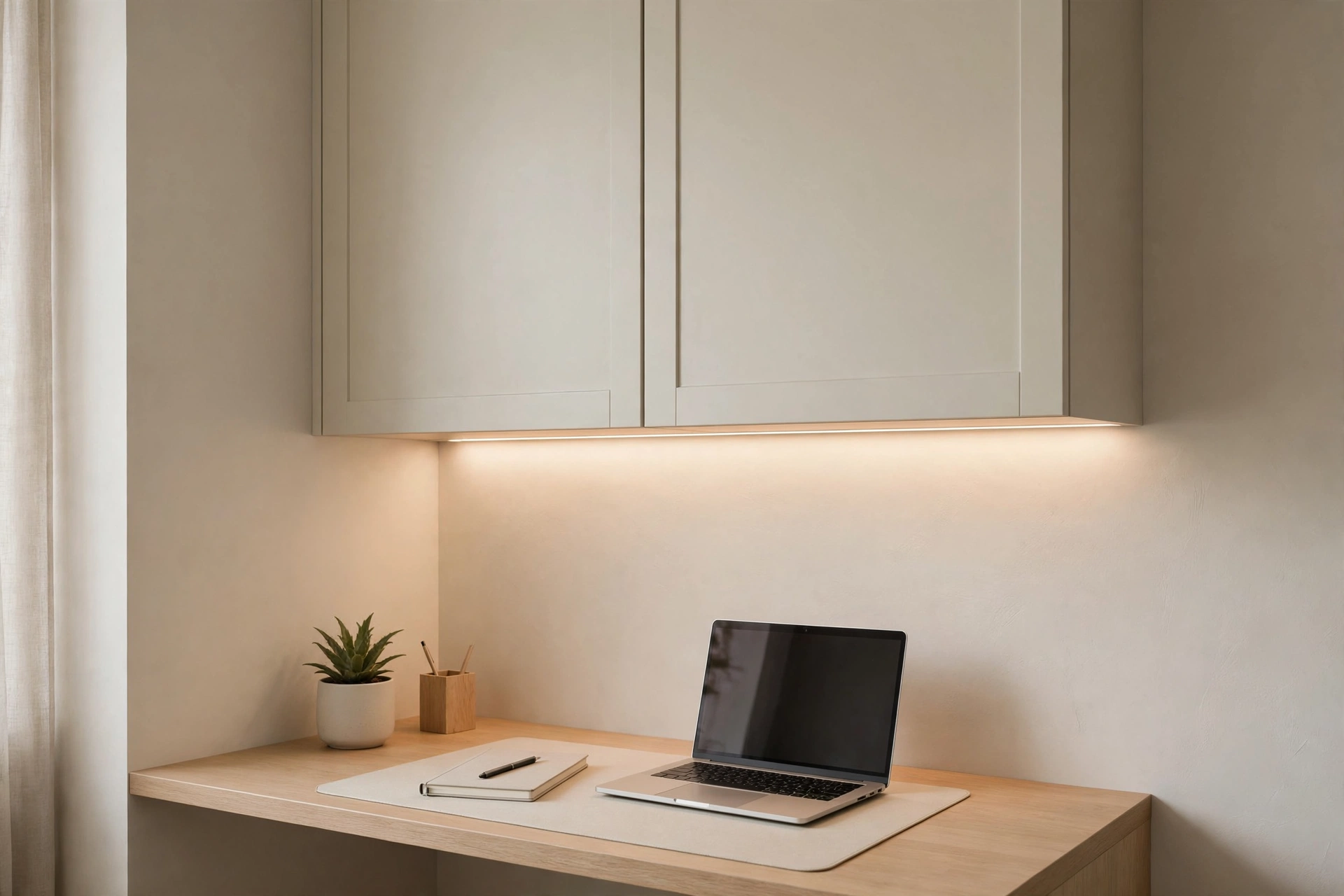
A corner desk topped with wall-mounted upper cabinets keeps everything hidden but within arm’s reach — ideal if you like a clean workspace but can’t go fully paperless. Under-cabinet LED strips are a worthwhile add-on, washing the desk with glare-free task light.
10. The Fold-Down Murphy Desk
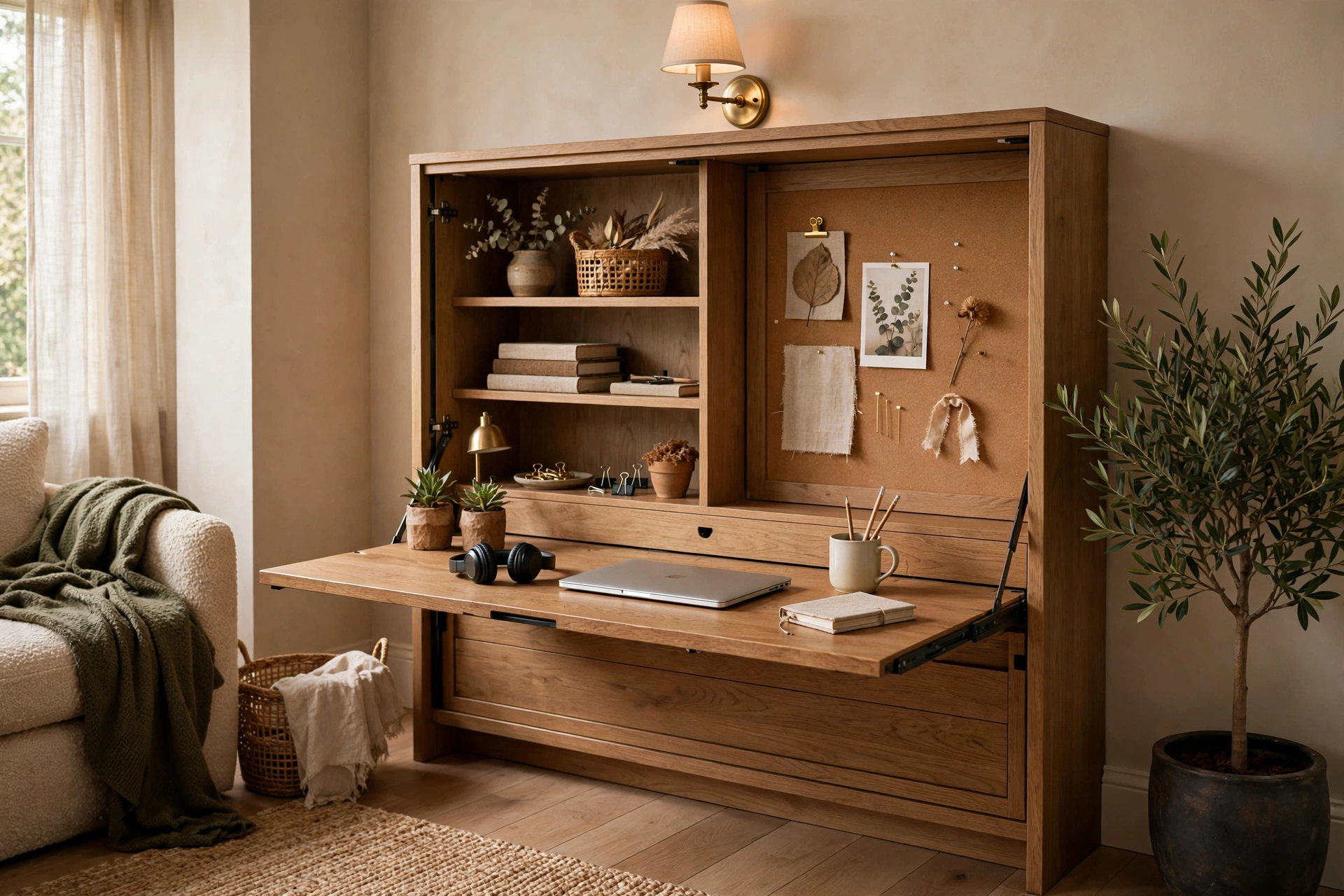
A fold-down wall desk gives you a proper work surface during the day and a flat, picture-like panel at night — perfect for living rooms and bedrooms where the office must disappear. Mount it into a stud (not just plasterboard), check the folded depth stays slim enough to walk past comfortably, and add a wall-mounted light above so you’re not depending on a desk lamp that has nowhere to sit.
11. A Rustic Farmhouse Corner Desk
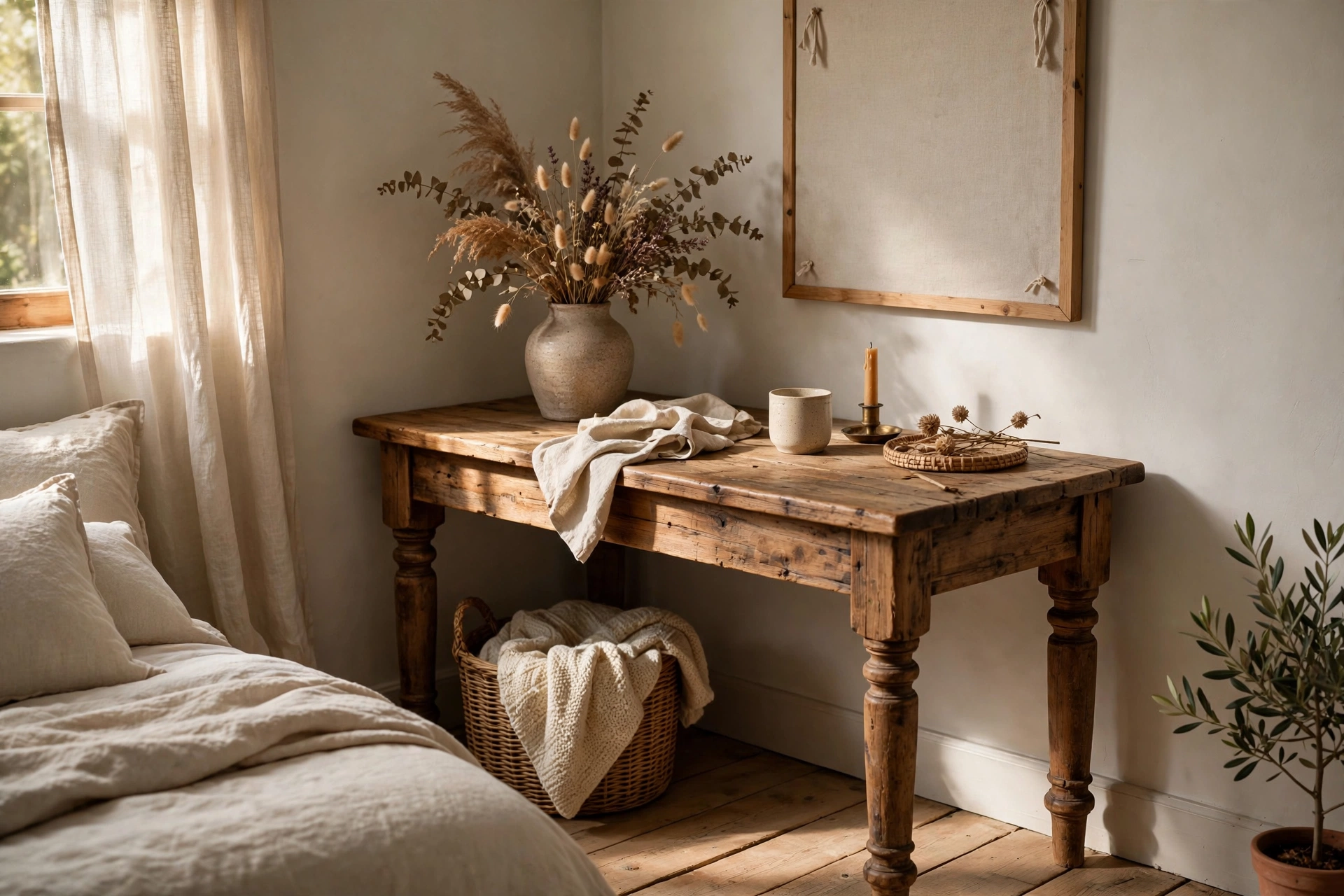
Who says a workspace has to look like an office? A chunky wooden corner desk in a warm, rustic finish brings character that flat-pack never will — think reclaimed timber tops, turned legs and a worn-in patina. Style it with a ceramic vase, a linen pinboard and soft neutrals, and the corner becomes one of the prettiest spots in the room rather than a utilitarian afterthought. This look works beautifully in bedrooms and living rooms where the desk needs to blend into your decor, not shout about work.
12. The Desk-Dresser Double Act
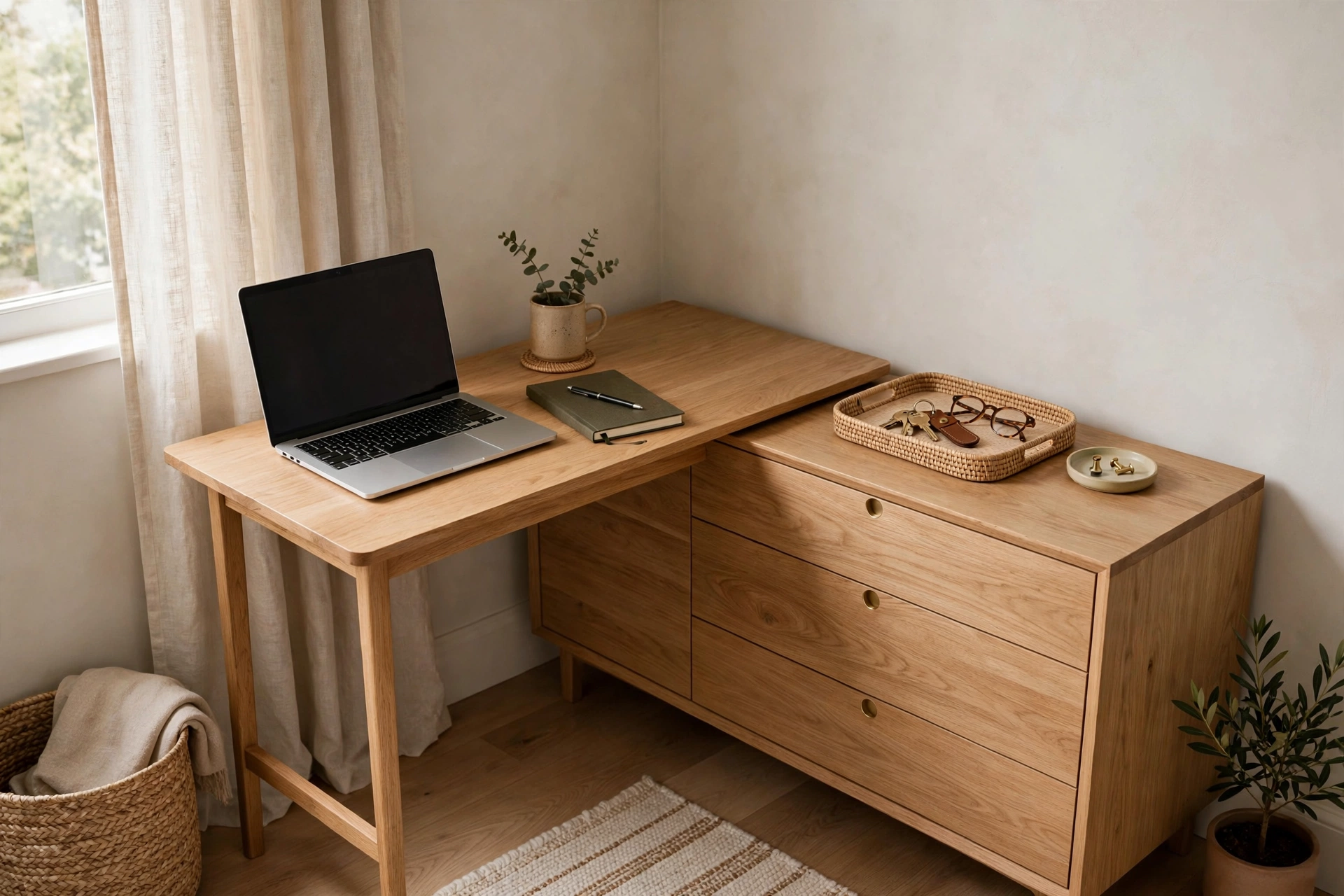
In a small bedroom, every piece of furniture should earn its floor space. Pushing a slim desk against a low dresser or chest of drawers in the corner creates a combined work-and-storage station: laptop zone on top, clothes or office supplies in the drawers below. Coordinate the finishes so it reads as one intentional unit. Top the dresser side with a tray for keys and glasses so the surface stays tidy, and you’ve effectively hidden an office inside a bedroom without anyone noticing.
13. A Dark-Painted Pegboard Nook
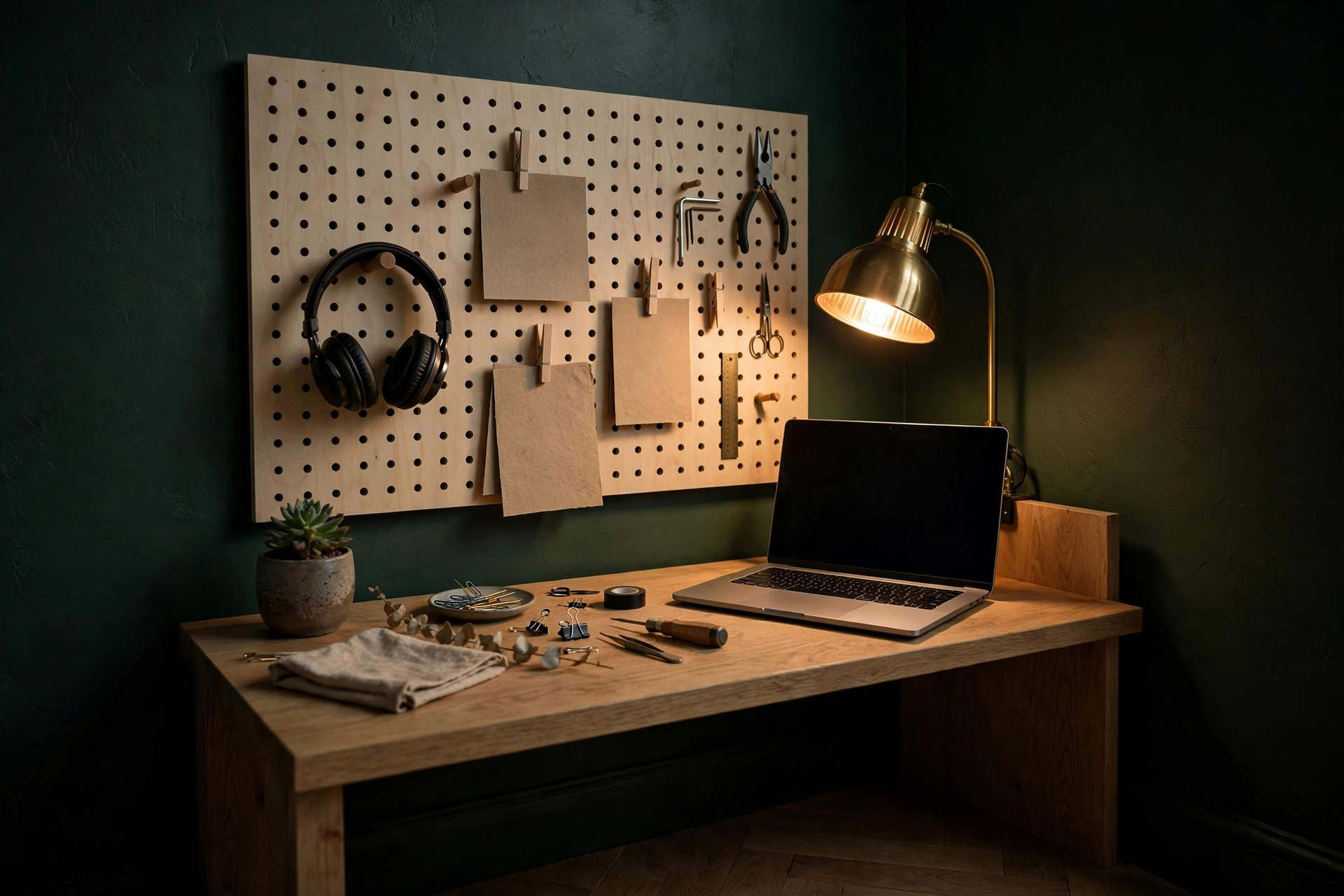
For a corner with real personality, paint the two walls in a deep, moody shade — forest green, ink navy or charcoal — then mount a pegboard panel above a simple wooden desk. The dark backdrop makes everything on the pegboard pop, and the board itself keeps tools, headphones, cables and inspiration within reach without eating a centimetre of desk space. Add a warm brass task lamp to cut through the moodiness, and suddenly your smallest corner is the most interesting spot in the room — especially combined with a few of our home office upgrades for long working days.
FAQs
What is the best desk shape for a corner?
An L-shaped desk gives you the most usable surface, while a triangular or curved desk fits the tightest nooks. For the smallest corners, a simple desktop mounted across the angle — or a floating shelf desk — wastes the least space.
How much space do you need for a corner desk setup?
Allow at least 90cm of chair clearance in front of the desk and roughly 120cm of wall on each side. Compact triangular desks can work with as little as 80cm per wall if you’re using a laptop rather than a full monitor setup.
Are corner desks good for small rooms?
Yes — they’re one of the best choices for small rooms. Corners are usually dead space, so a corner desk adds a full workstation without claiming the middle of the room, while two walls of surface give you more room than a standard straight desk.
How do I set up an ergonomic corner desk for working from home?
Position your monitor about an arm’s length away with the top of the screen at or just below eye level, keep your keyboard and mouse at elbow height, and choose a chair with proper lumbar support. A monitor arm and an adjustable chair make the biggest difference.
Should a corner desk face the wall or the window?
Facing a window gives you natural light and a view, which most people prefer — just manage glare with a sheer blind. If the window isn’t an option, facing into the room feels more open than staring at a blank wall, and a small mirror or artwork on the wall ahead adds depth.
Conclusion
A corner is never just a corner — it’s a workstation waiting to happen. From space-saving floating desks to characterful farmhouse setups, these 13 corner desk ideas prove small spaces need no big compromises. Pick the setup that fits your corner and your working style, keep the styling simple, and enjoy a home office that finally works as hard as you do.
