
Whether you are working with a shoestring budget or planning a full workspace makeover, your home office should be somewhere you genuinely love spending time. From free layout tweaks to dreamy custom cabinetry, these 17 home office ideas are organised by budget — budget-friendly, mid-range and splurge-worthy — so whatever you have to spend, you can build a workspace that works as hard as you do.
Budget-Friendly Home Office Ideas
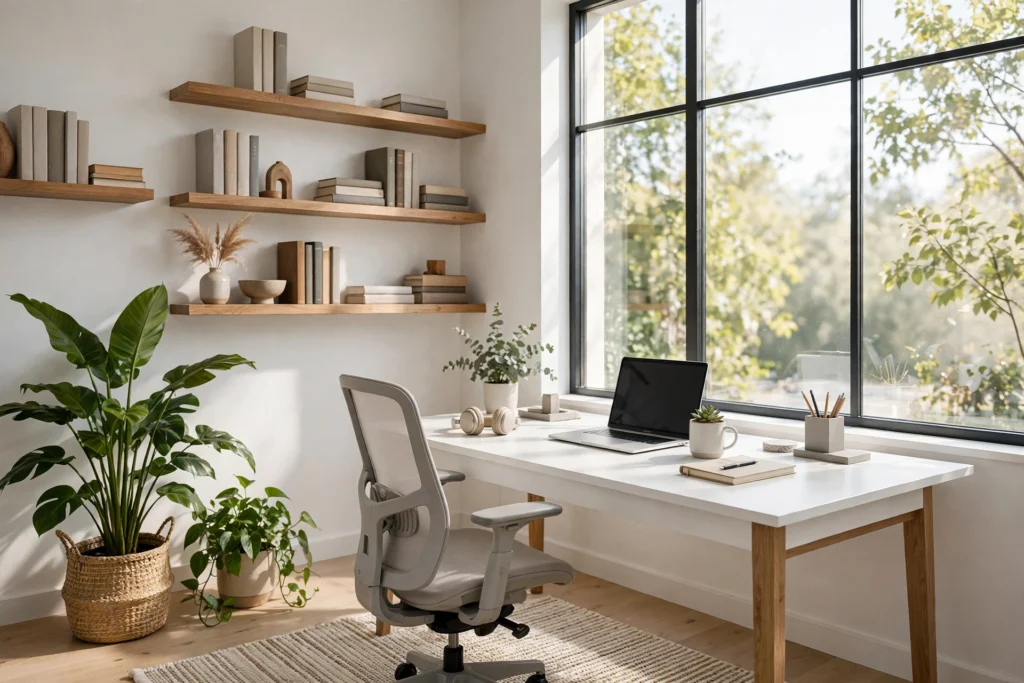
1. Turn your desk to face the window
The single biggest free upgrade you can make is changing what you look at. Push your desk against the window rather than the wall: natural daylight reduces eye strain, keeps your energy up, and makes even a basic setup feel intentional. Position your monitor perpendicular to the window to avoid glare, and you have instantly improved your workspace for £0.
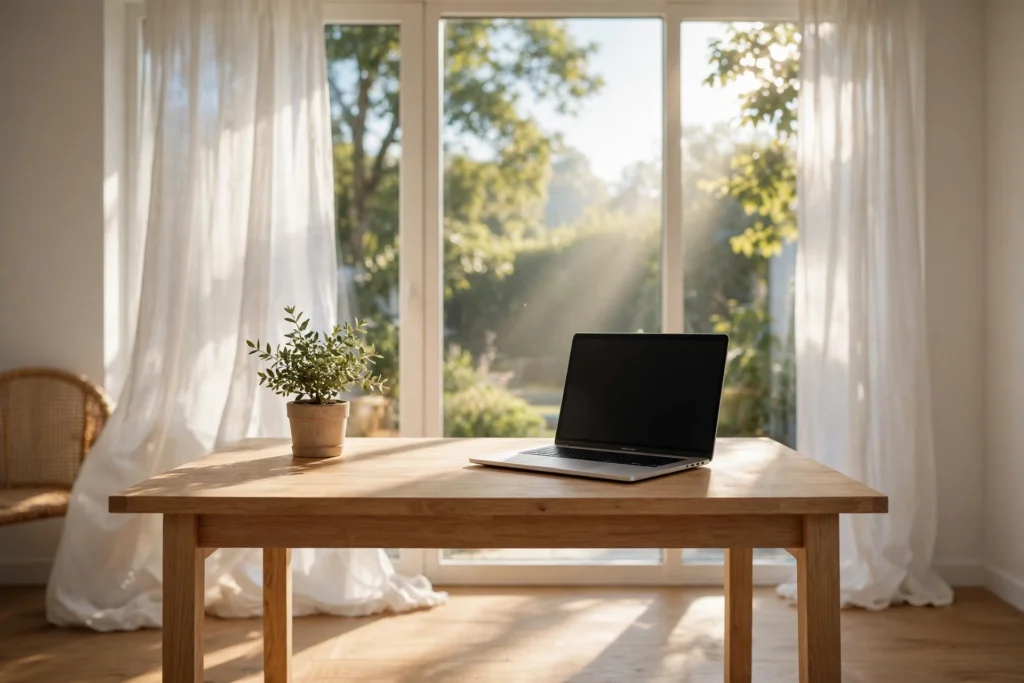
2. Add floating shelves above your desk
Vertical space is free real estate. A pair of inexpensive floating shelves above your desk holds books, folders and decor without eating a centimetre of your work surface. Keep the arrangement airy — closed boxes mixed with open display — and your desk instantly feels bigger.
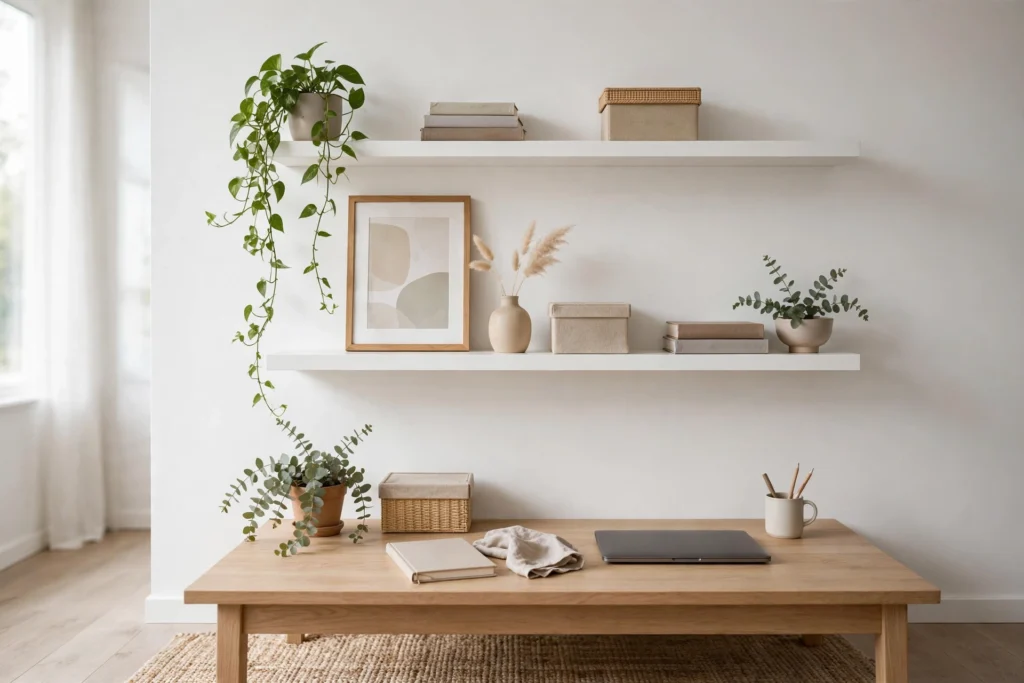
3. Mount a pegboard for supplies
Pegboards are the budget hero of home office decor: one board, a few hooks and cups, and every pen, headphone and notebook has a visible home. Paint it to match your wall colour for a seamless look, or in a contrasting shade to make it a feature. Everything stays within arm’s reach, and nothing lives on your desk that doesn’t need to.
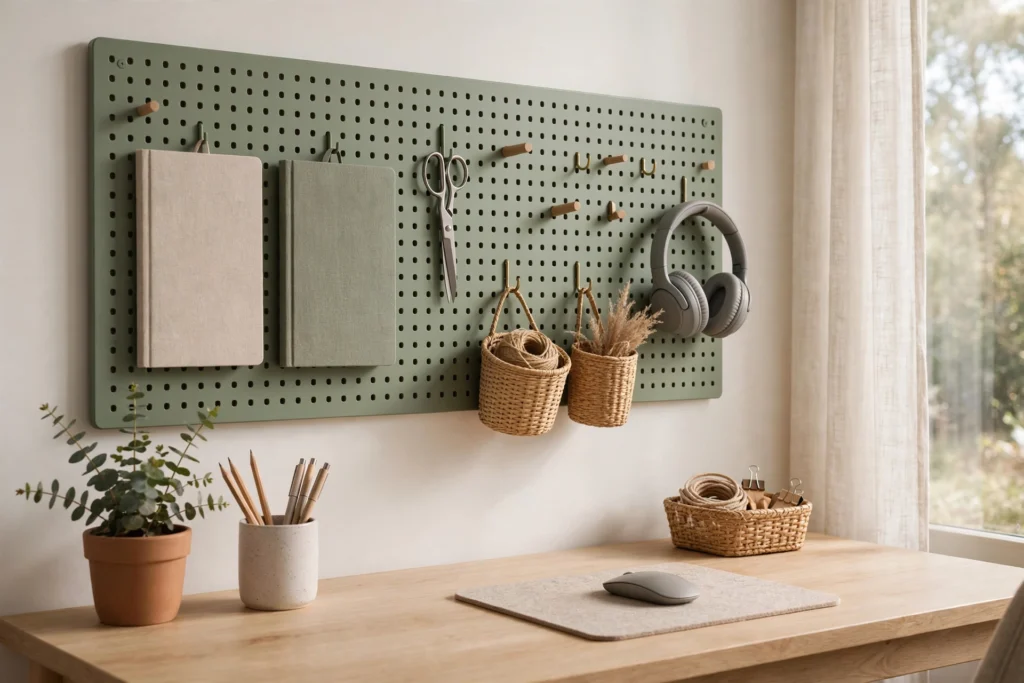
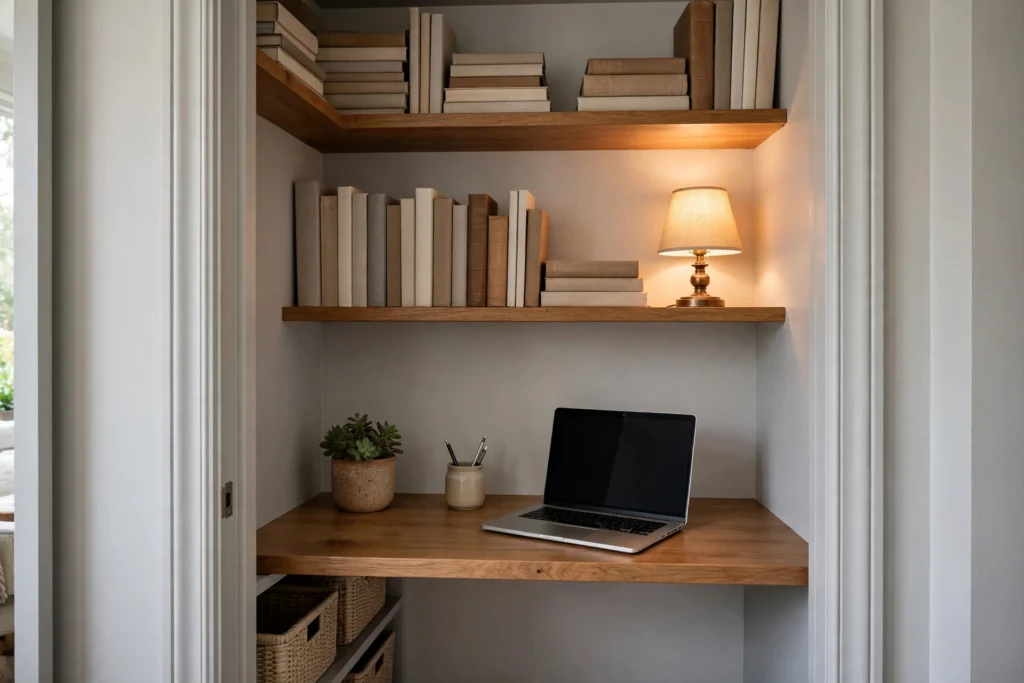
4. Convert a closet into a “cloffice”
If you lack a spare room, steal a closet. Remove the doors, add a shelf at desk height plus one overhead, tuck in a stool, and you have a compact workstation that closes away behind a curtain or sliding door at 6 pm. It is one of the cleverest small-space office design ideas around — and costs little more than a shelf and a coat of paint.
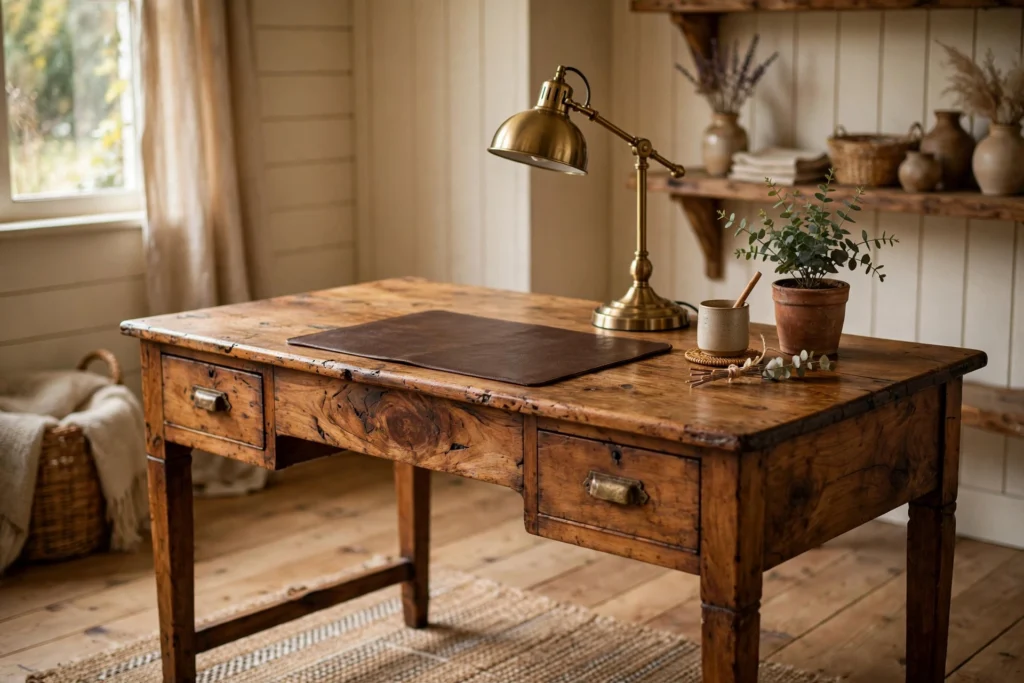
5. Rescue a second-hand desk
A solid-wood desk from a charity shop or marketplace listing usually costs less than a flat-pack one and looks infinitely better. Sand, paint or oil it, swap the handles, and you have a characterful, sturdy workspace with a fraction of the footprint of new furniture. This is home office decor with a story — and proof that style is about curation, not spend.
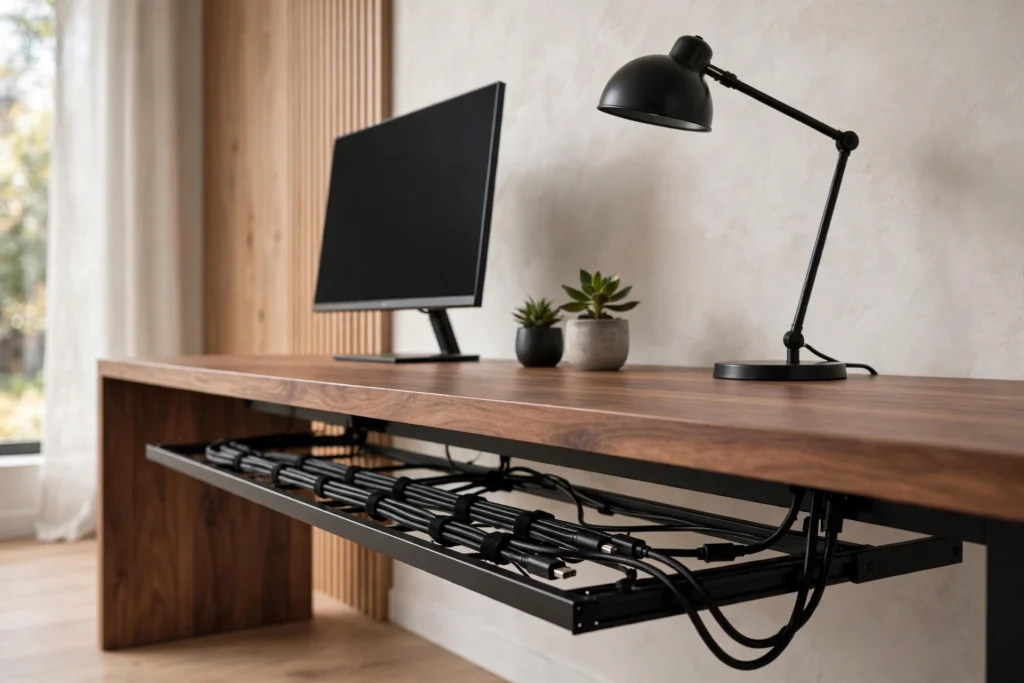
6. Hide the cable chaos
Nothing says ‘temporary setup’ like a tangle of chargers. A £10 cable tray under the desk plus a handful of adhesive clips turns wire spaghetti into invisible infrastructure. Route everything down one desk leg, and your workspace instantly reads as calm and deliberate.
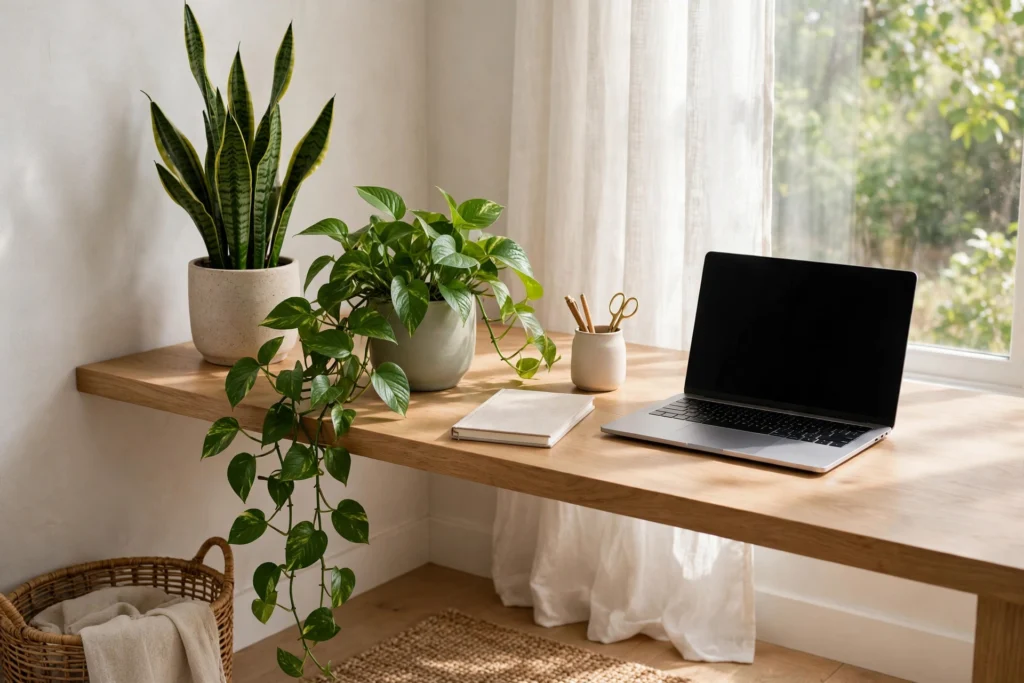
7. Bring in low-maintenance plants
A snake plant or pothos on the desk corner softens hard furniture lines and adds life to video-call backgrounds. Plants are the cheapest decor upgrade that keeps working: they fill awkward gaps, frame windows beautifully, and make a plain corner look styled. Start with one or two.
Mid-Range Home Office Upgrades
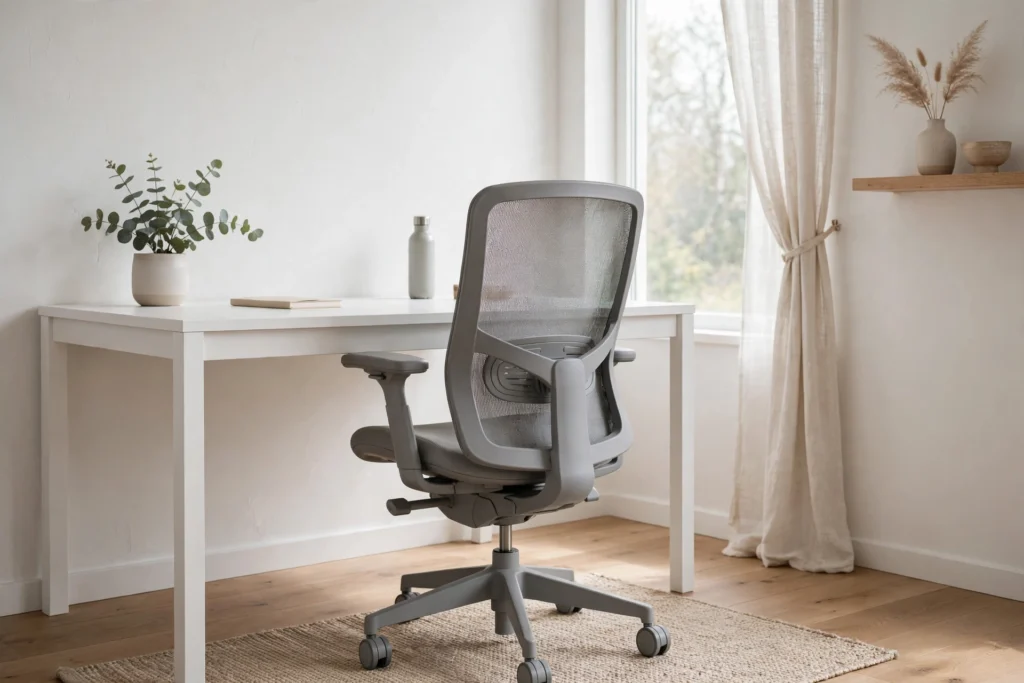
8. Invest in a proper ergonomic chair
You sit in it for eight hours a day — your chair is the one item worth spending on. A good ergonomic chair with lumbar support, adjustable arms and a breathable back transforms how you feel at 5 pm. If you already have your furniture sorted and want performance-focused tweaks instead, our guide to home office upgrades goes deeper on setup improvements that boost comfort and output.
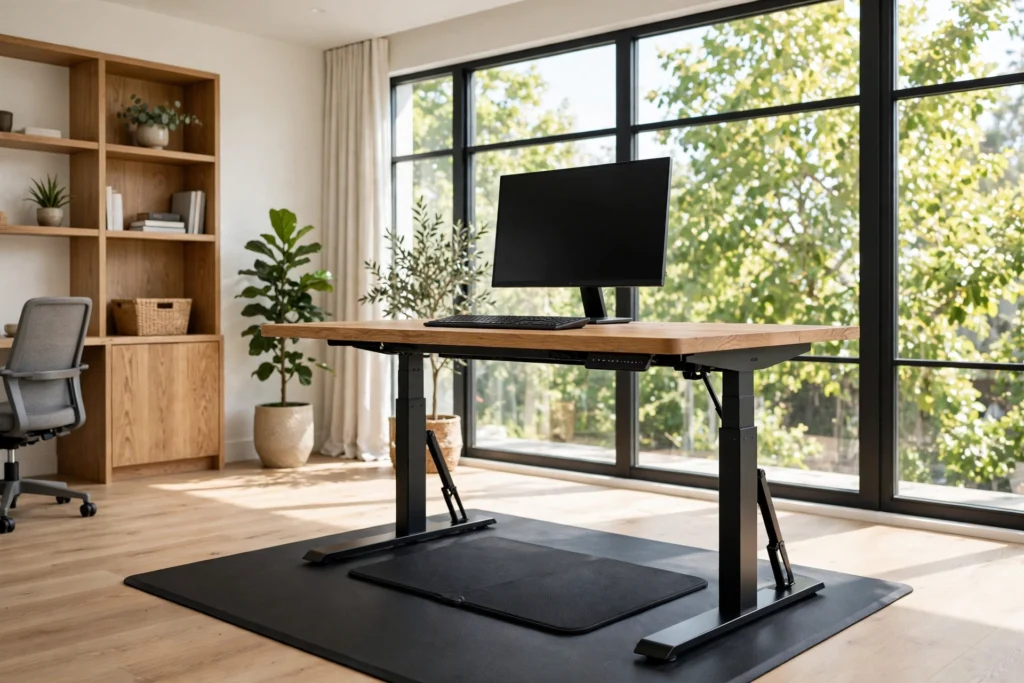
9. Switch to a sit-stand desk
Alternating between sitting and standing keeps your energy steadier through long workdays, and modern electric sit-stand frames are far slimmer than they used to be. Set a memory preset for each height so the switch takes one tap. Pair it with an anti-fatigue mat and your workspace quietly supports movement instead of punishing stillness.
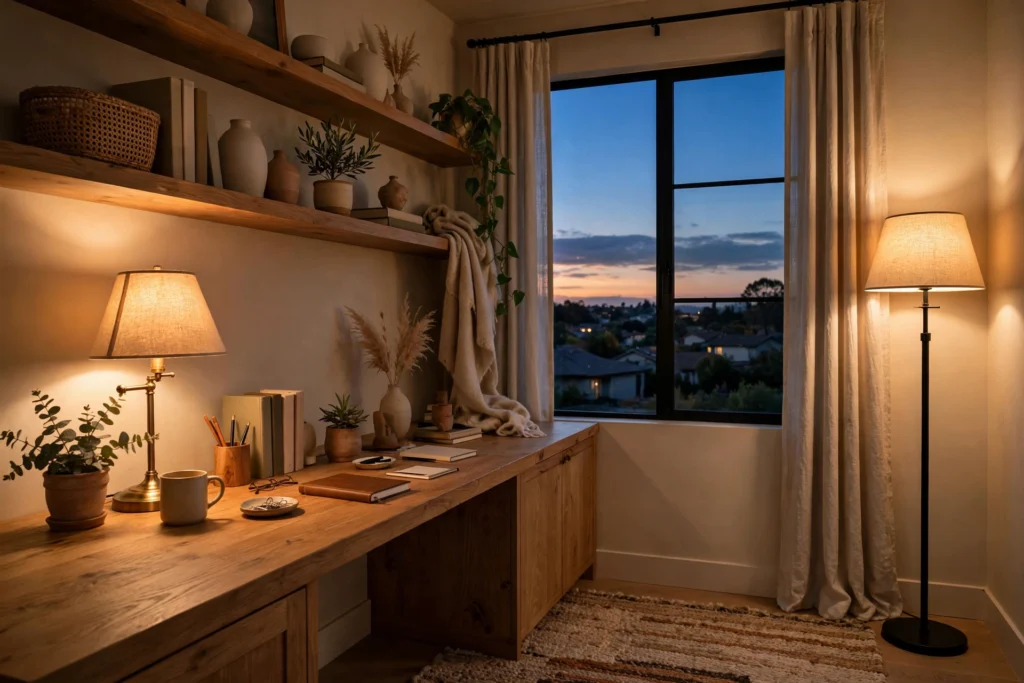
10. Layer your lighting
Overhead lighting alone flattens a room and tires your eyes. Layer three sources: daylight from the window, a focused task lamp on the desk, and a warm floor lamp for ambient glow. The result feels designed rather than utilitarian — dim the overheads on grey afternoons for a calmer, cosier atmosphere.
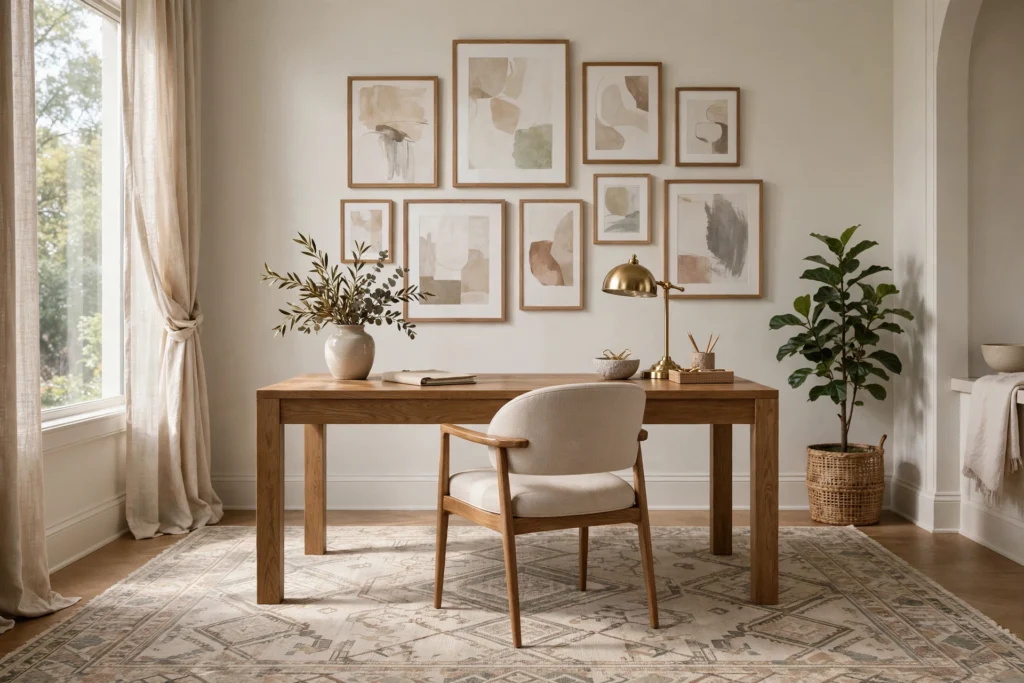
11. Anchor the room with a rug and art
A rug under your desk zone does two jobs: it visually separates the office from the rest of the room, and it softens acoustics. Hang one large piece of art (or a gallery cluster) above the desk to give the wall purpose. Together, they are the fastest way to make a workspace feel like a designed room rather than a desk dropped in a corner.
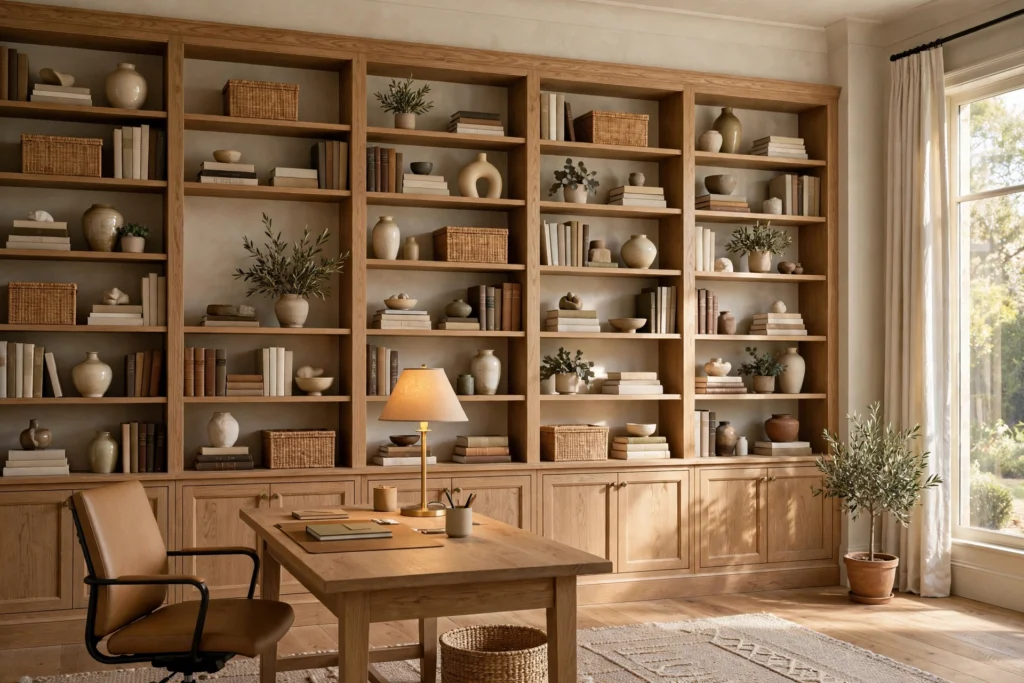
12. Build a bookcase wall
A full wall of open bookcases is storage, decor and personality in one. Style the shelves with a rhythm of books, boxes and objects — roughly two-thirds practical, one-third decorative — and leave breathing room so it doesn’t read as clutter. It also makes an excellent video-call backdrop.
Splurge-Worthy Home Office Ideas
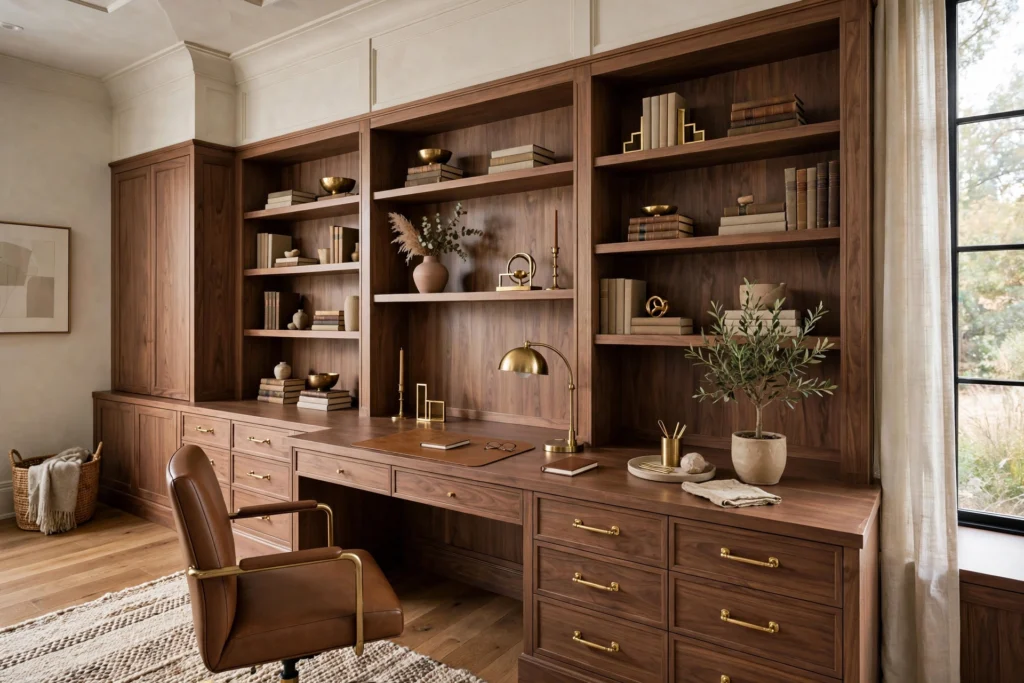
13. Commission custom built-in cabinetry
The ultimate home workspace idea is furniture made for your exact room: a desk that runs wall to wall, drawers sized for your kit, and shelves that fit your books. Custom millwork turns awkward alcoves and sloped ceilings into beautiful storage — and because everything has a place, the room stays tidy.
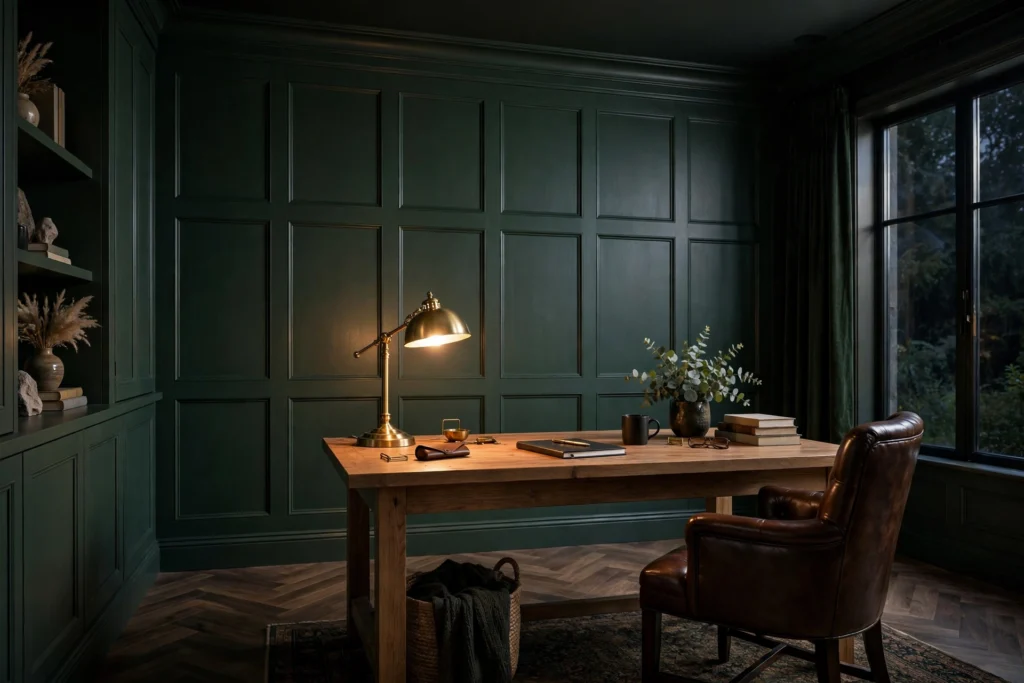
14. Add a panelled accent wall
Wall panelling behind the desk creates instant depth and a designer finish that paint alone can’t achieve. Slim vertical slats or classic shaker panels in a deep, moody colour make the workspace feel deliberate and grown-up, while the rest of the room can stay light. It is a one-wall change with whole-room impact.
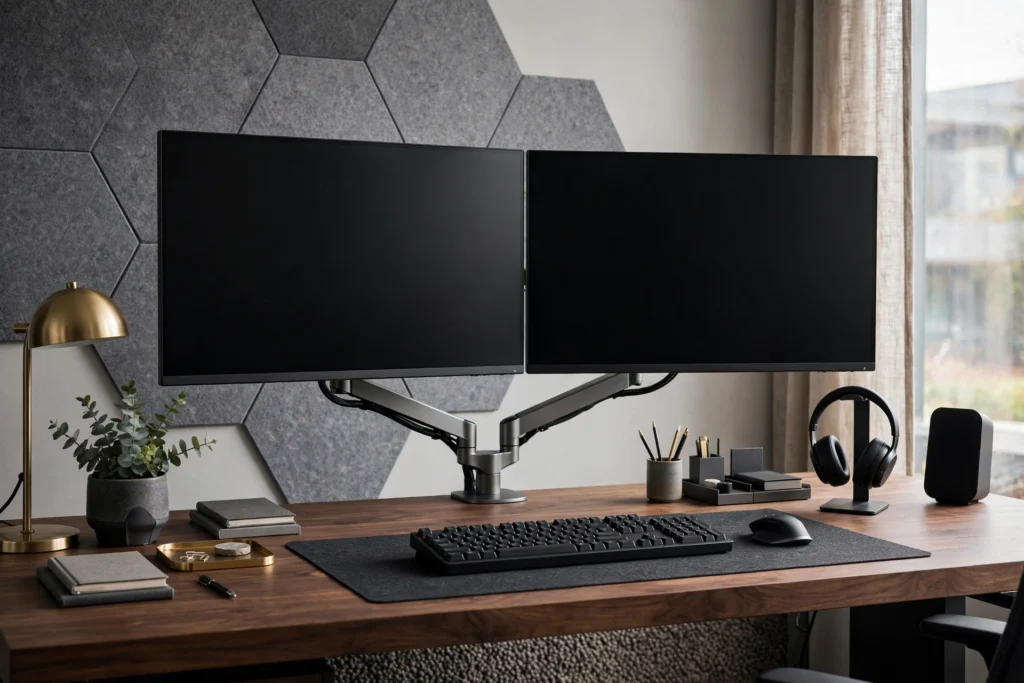
15. Build a dual-monitor command centre
For serious multitaskers, a dual-monitor (or ultrawide) setup on monitor arms frees the entire desk surface while doubling screen real estate. Add a mechanical keyboard, a proper webcam light and acoustic treatment, and you have a workstation that rivals any corporate office. If you need help with the layout side of things, Apartment Therapy’s home office layout ideas show 13 real rooms arranged for flow and focus.
16. Carve out a reading and thinking corner
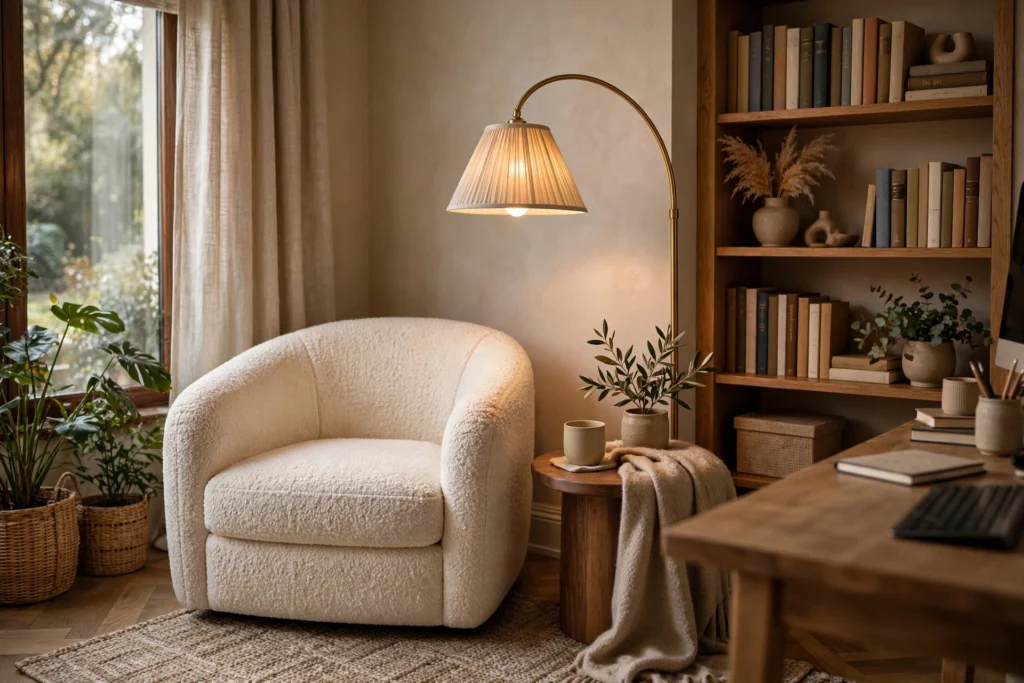
Your best ideas rarely arrive while staring at a screen. If space allows, add a comfortable armchair, a small side table and a reading lamp in the office corner — a spot for reviewing documents, brainstorming, or simply taking a proper break. This corner-nook trick works beautifully in other rooms too: our bedroom upgrades guide shows how to style the same idea in a sleeping space.
17. Treat acoustics and smart tech
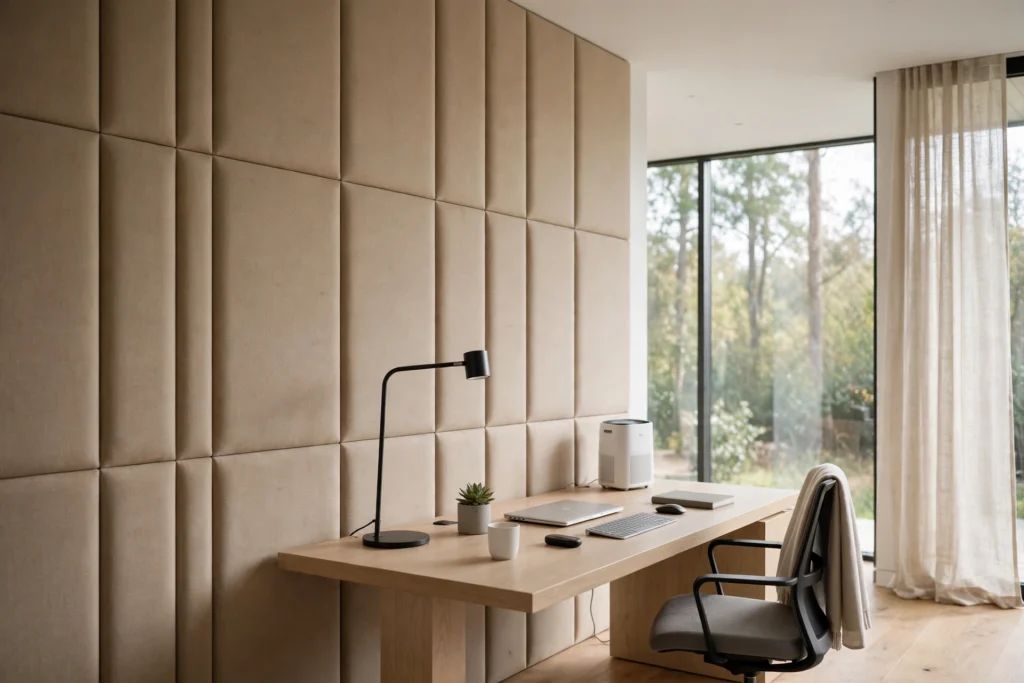
A premium-feeling office is a quiet, responsive one. Fabric acoustic panels on one wall tame echo on calls, a smart plug schedules your lighting, and a small air purifier keeps the room fresh through long sessions. These invisible upgrades won’t photograph as loudly as panelling — but they are the difference between a room that looks like an office and one that works like a dream.
Frequently Asked Questions
What is the best layout for a small home office?
Face the desk toward the window for natural light, use vertical storage like floating shelves or a pegboard, and keep the footprint compact with a wall-mounted or fold-down desk. A rug defines the zone so even a corner feels like a real office.
How much does it cost to set up a home office?
A comfortable setup can cost under £150 with a second-hand desk, a budget chair and clever storage. A solid mid-range setup runs £300–£800, while custom cabinetry and premium ergonomics can take you well beyond £2,000. Upgrade comfort first.
How can I make my home office look professional on video calls?
Keep the background tidy and intentional: a bookcase wall, one piece of art, or a plant-framed corner all read well on camera. Face a window for flattering light and keep clutter out of frame.
What colours work best for a home office?
Soft neutrals — warm whites, greys and beiges — keep the space calm and make small rooms feel larger. Add colour through one accent: a deep green or navy panelled wall, or earthy terracotta in textiles and art.
Do I need a separate room for a home office?
No. A converted closet, a living-room corner or a hallway nook can work brilliantly with the right zoning. The key is a visual boundary — a rug, shelving or lighting change — that tells your brain “this is where work happens.”
Conclusion
A great home office isn’t about budget — it’s about intention. Start with the free wins (light, layout, decluttering), invest where your body meets the furniture, and save the splurges for changes that transform how the room feels. Pick one idea from each tier and you’ll soon have a workspace that works as hard as you do.
