
Table of Contents
- Classic White Subway Tile With Warm Grey Grout
- Peel-and-Stick Tile for Renters
- Zellige Accent Wall Behind the Range
- Full-Height Slab Backsplash
- Herringbone Subway Tile
- Painted Tile Backsplash
- Beadboard Backsplash
- Brick or Brick-Veneer Backsplash
- Terrazzo-Look Porcelain Tile
- Vertical Stacked Tile
- Dark and Moody Backsplash
- Marble-Look Porcelain
- Patterned Cement-Look Tile
- Glass Tile Backsplash
- Brass Inlay Strips With Basic Tile
A kitchen backsplash covers a surprisingly small stretch of wall — usually under three square metres — which makes it the single best place to fake a custom kitchen. Even genuinely premium materials stay affordable at that scale, and a few clever styling tricks can make a £150 weekend project read like a £2,000 designer job. These 15 kitchen backsplash ideas are sorted by real-world cost, from renter-friendly fixes to quiet-luxury statements, so every reader finds their match. If you are planning a bigger refresh, start with our kitchen remodel ideas with the biggest visual payoff to decide where every pound should go.
1. Classic White Subway Tile With Warm Grey Grout
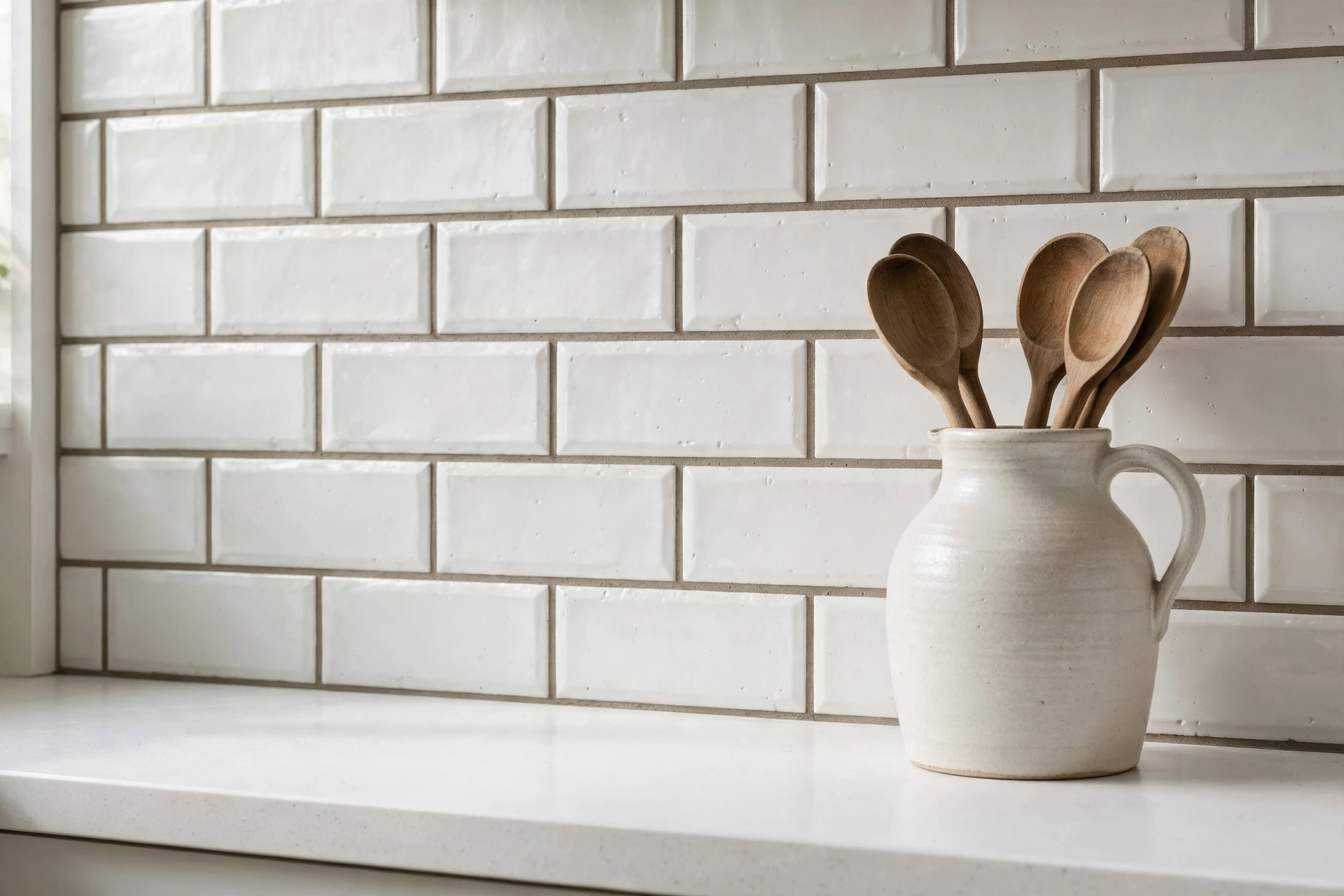
The safest custom look in the book. Run budget-friendly white ceramic subway tiles in a classic offset pattern, then swap harsh white grout for a warm grey — the contrast makes plain tile look hand-finished instead of builder-basic. Elongated 4×12 tiles read even more current than the standard 3×6 and cost roughly the same. Expect £400–£700 fitted for a typical kitchen, which is remarkable for something that never dates.
2. Peel-and-Stick Tile for Renters
Modern peel-and-stick backsplash tiles are a world away from the plasticky sheets of a decade ago. Thick, grouted-look panels in subway, herringbone and zellige styles apply in an afternoon with no tools beyond a craft knife, and they come off cleanly when you move out. Keep them away from direct heat behind the hob, though — adhesives soften with sustained high temperatures. Around £50–£120 for a full kitchen.
3. Zellige Accent Wall Behind the Range
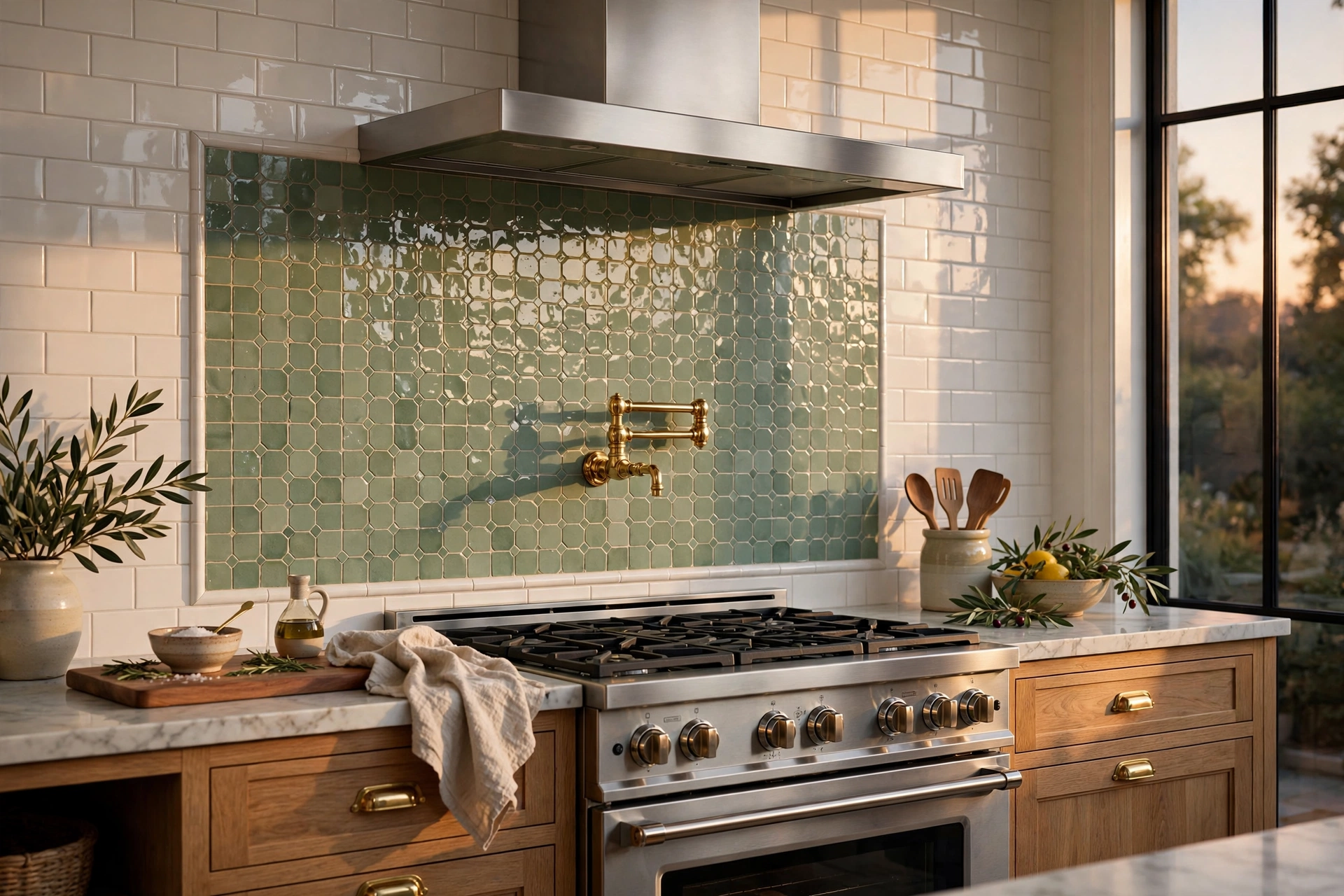
Real handmade-look zellige tile costs £60+ per square metre, so skip doing the whole kitchen. Run plain, inexpensive subway tile everywhere else and splash out on a single zellige panel behind the range. That one shimmering, imperfect focal wall reads as fully custom while costing roughly a third of a full zellige installation — about £250–£450 in materials for the feature zone.
4. Full-Height Slab Backsplash
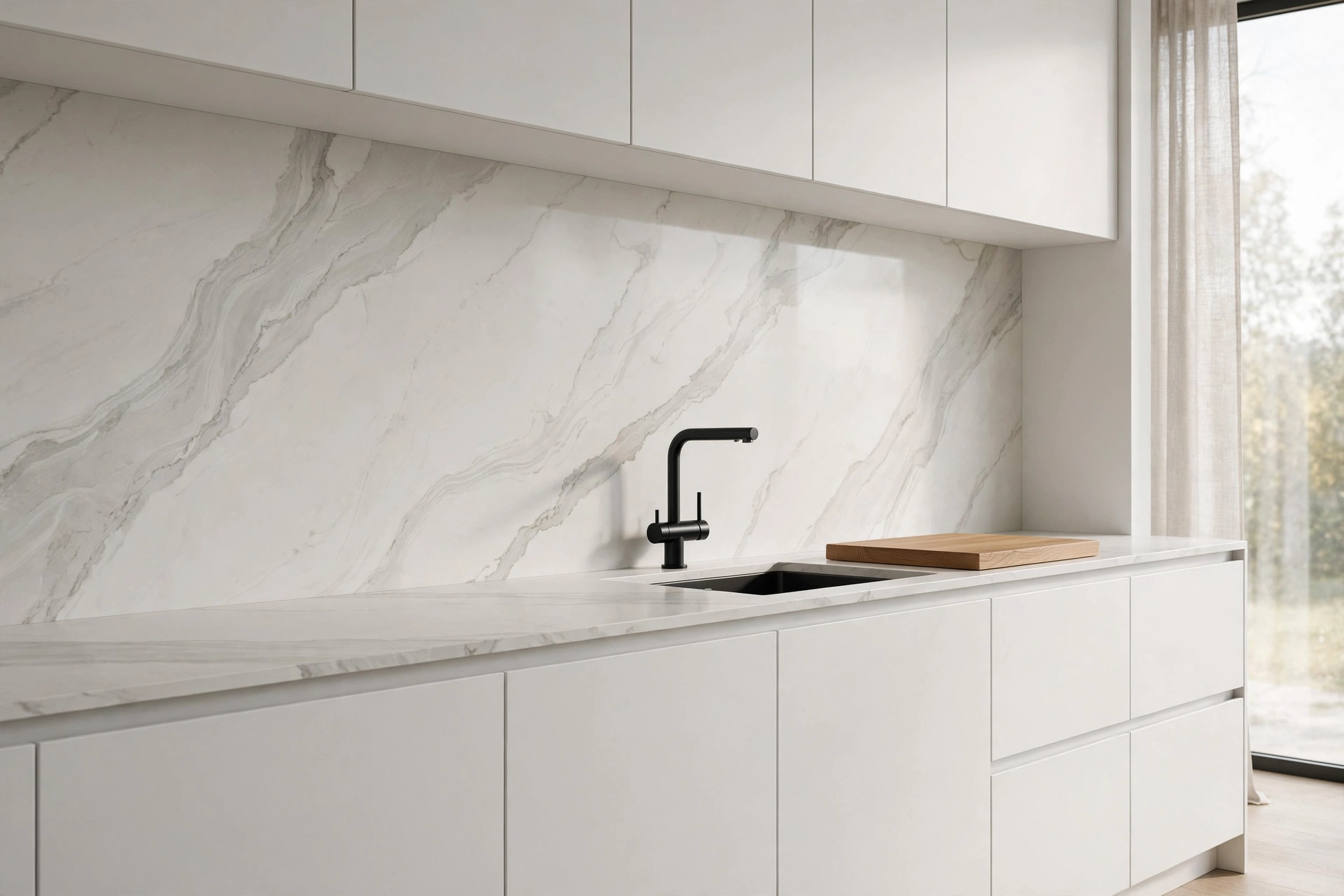
Take your worktop material and run it all the way up to the wall units — or straight to the ceiling behind the range. With zero grout lines the wall reads as one continuous, expensive surface. Large-format porcelain slabs imitate marble at a fraction of the price and wipe clean with a cloth. Best value at £900–£1,800 fitted, and it suits handleless modern kitchens better than any tile could.
5. Herringbone Subway Tile
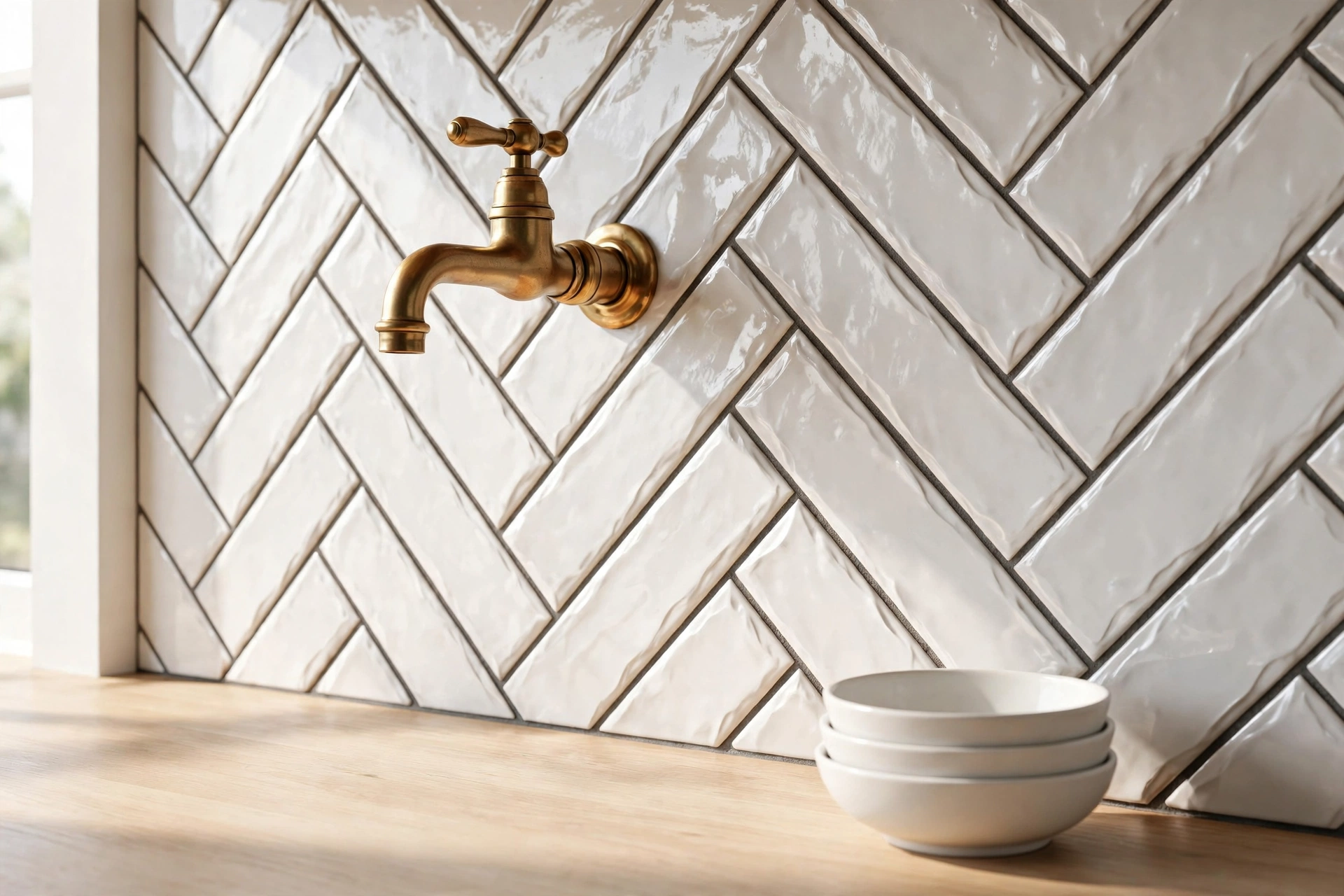
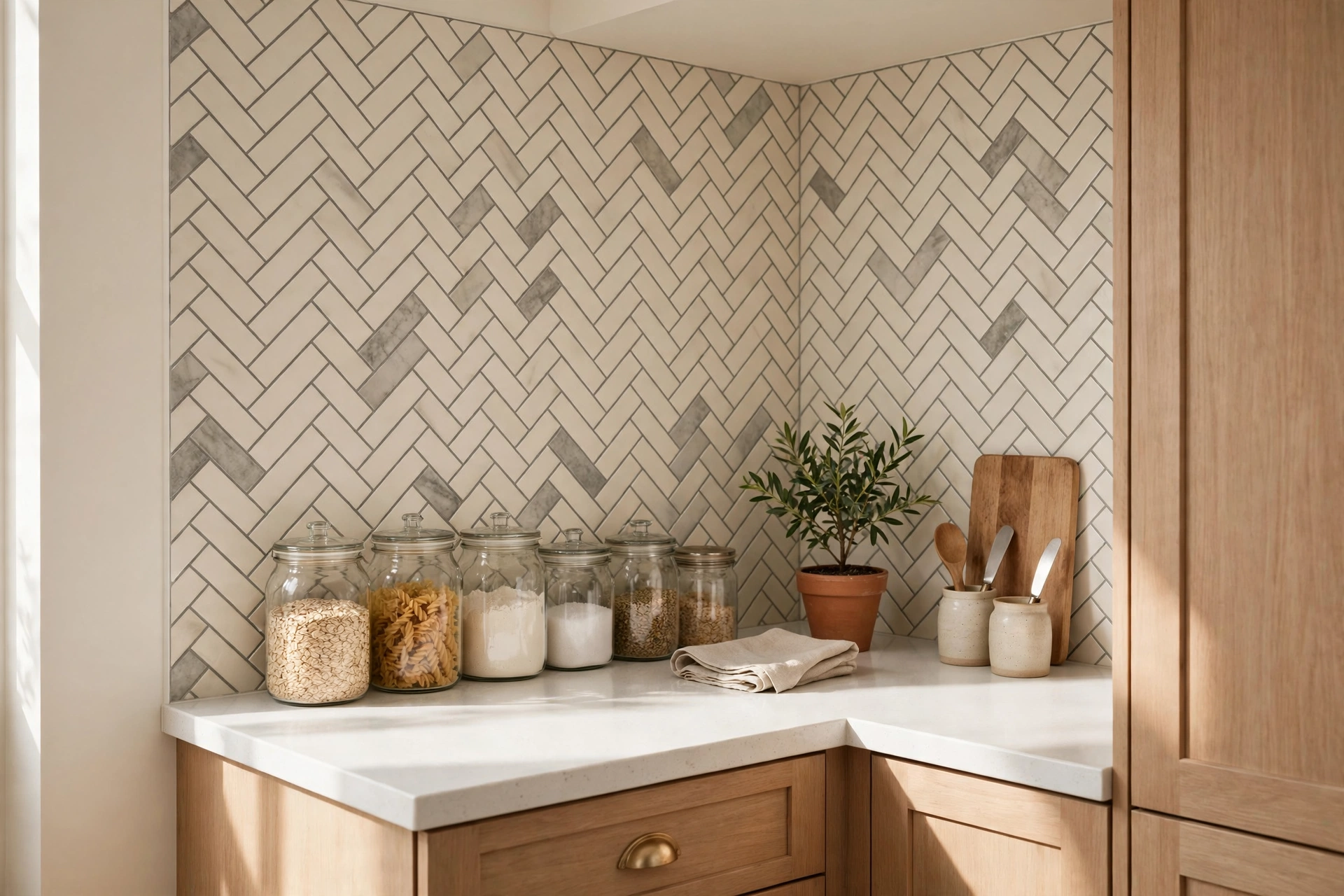
The same cheap subway tile from idea 1, laid at 45 degrees, costs only a little more in labour (roughly 25–40% extra) yet looks entirely bespoke. The zigzag catches light and movement that a straight grid never will. Use a contrasting grout to make the pattern pop, or match the grout for a subtler, woven-linen effect. Budget £600–£1,000 fitted — pattern does the talking, not the material.
6. Painted Tile Backsplash
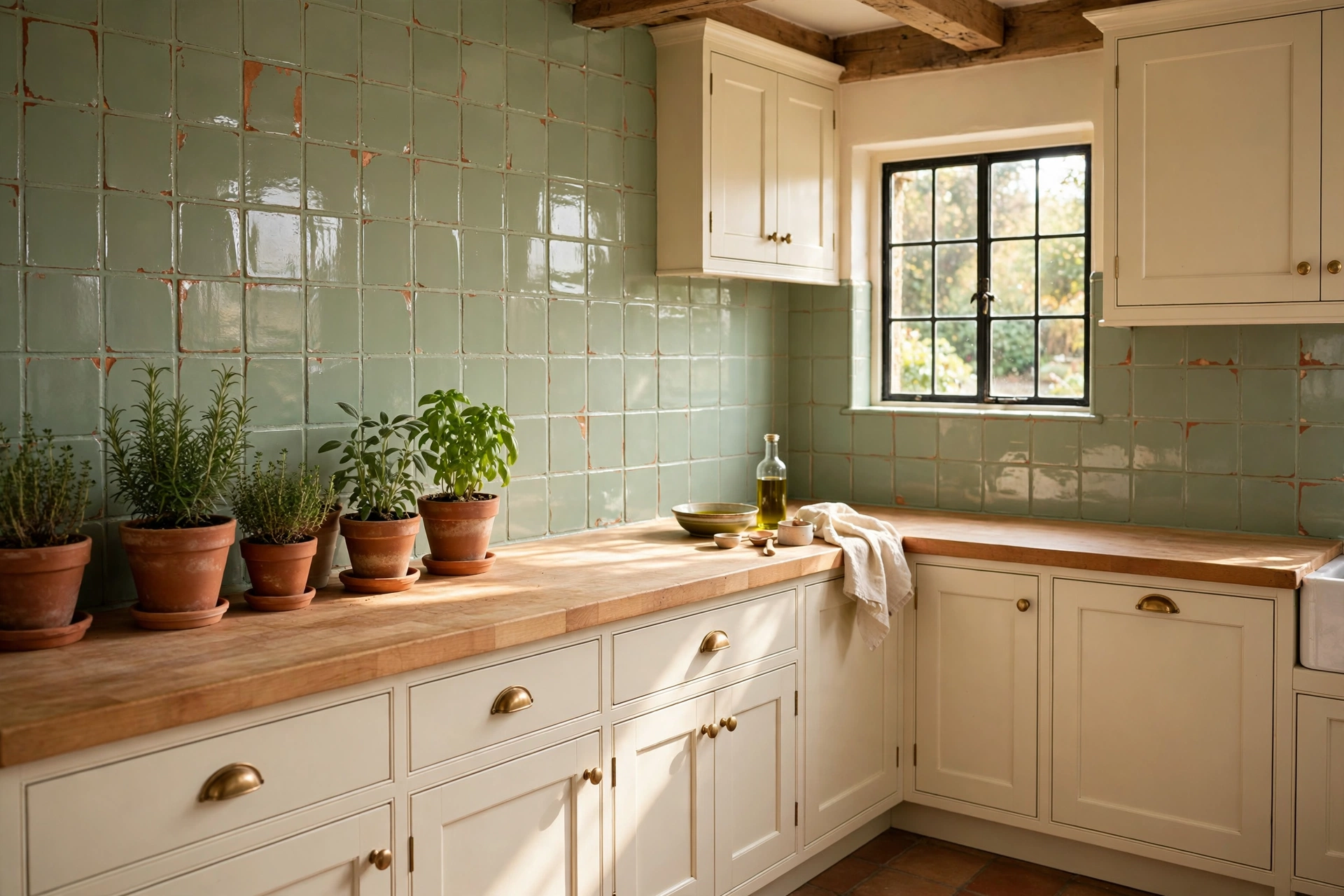
The cheapest transformation on this list. Specialist tile paint or a bonding primer plus quality semi-gloss paint can take a dated terracotta or patterned backsplash to crisp white, soft sage or inky charcoal in a single weekend. Prep matters more than the paint: degrease thoroughly, sand lightly, and seal with a clear topcoat. Around £40–£80 all-in, and it buys you years while you save for a proper re-tile.
7. Beadboard Backsplash
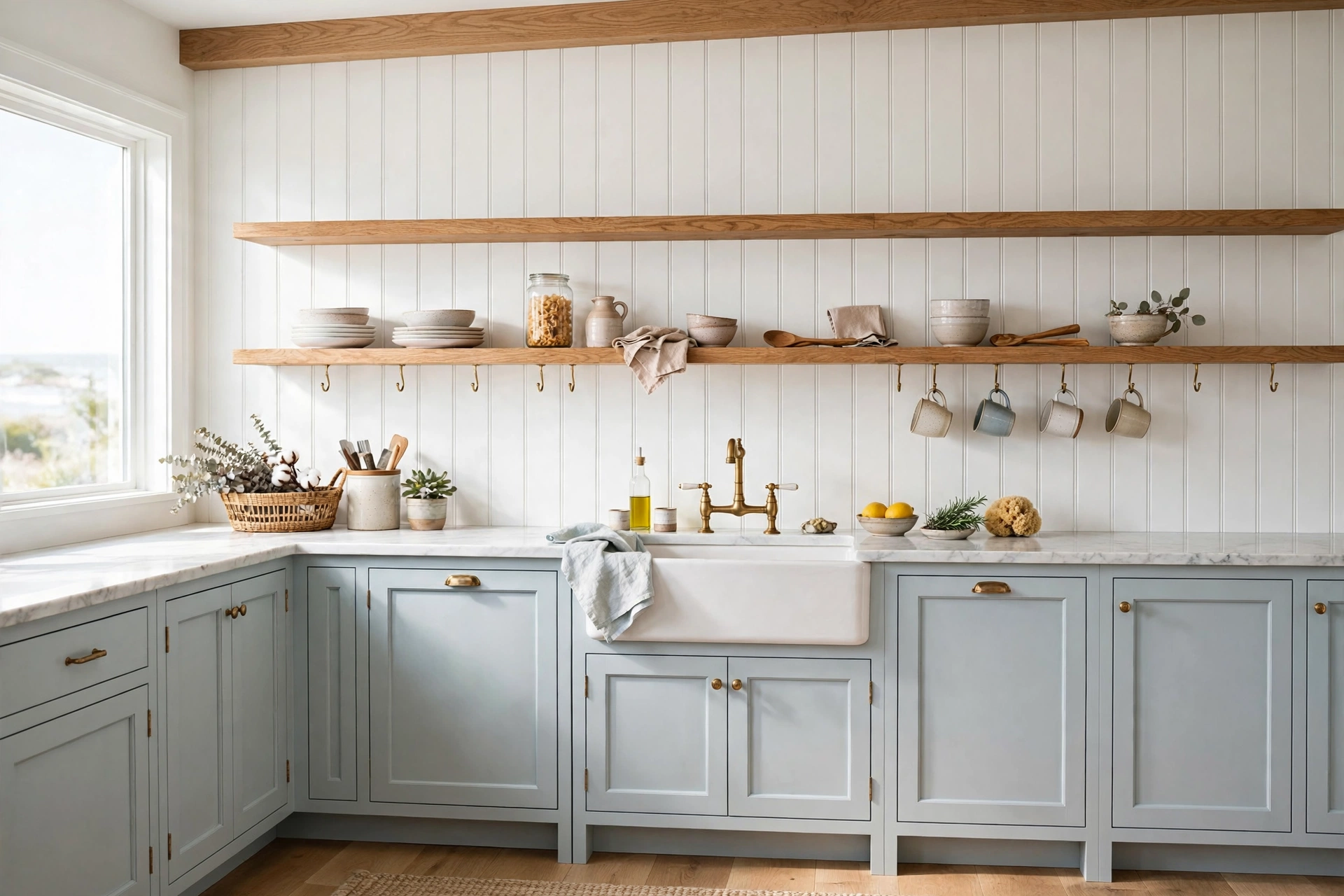
Painted beadboard panelling brings farmhouse and coastal kitchens to life for the price of a few MDF boards. It looks especially custom when painted to match the cabinetry exactly, so the wall and units read as one built-in piece of furniture. Seal it well — kitchens are steamy — and expect £120–£250 in materials. It is a genuinely easy DIY: cut, glue, caulk, paint.
8. Brick or Brick-Veneer Backsplash
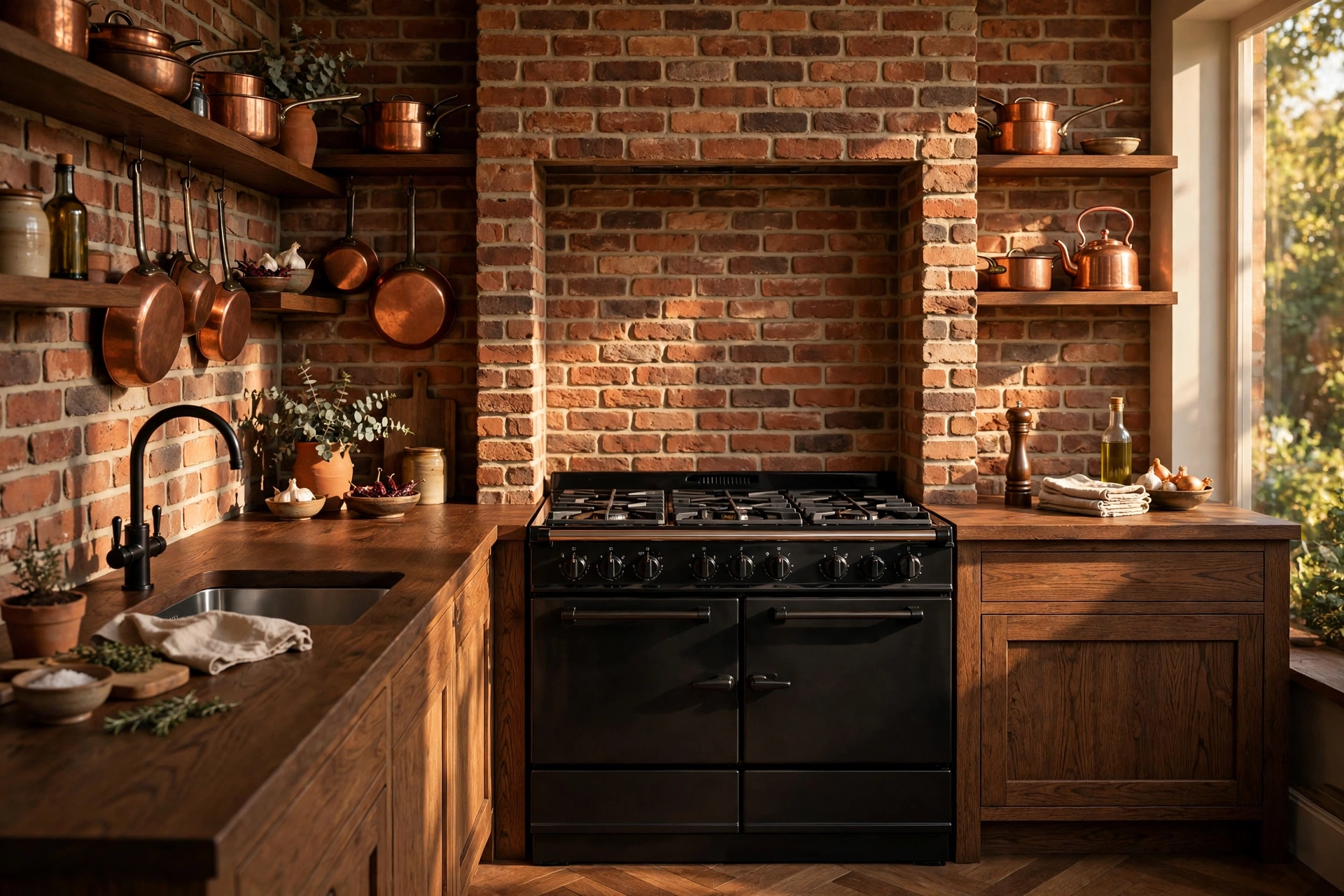
Exposed-brick walls are a luxury in real lofts and an afternoon job everywhere else thanks to brick-veneer slips. They add texture and warmth that no flat tile can match, and they age beautifully, hiding splashes and scuffs in the patina. Pair with black taps and open shelving for a bistro feel. Thin veneer slips cost £300–£600 in materials and install over standard plasterboard.
9. Terrazzo-Look Porcelain Tile
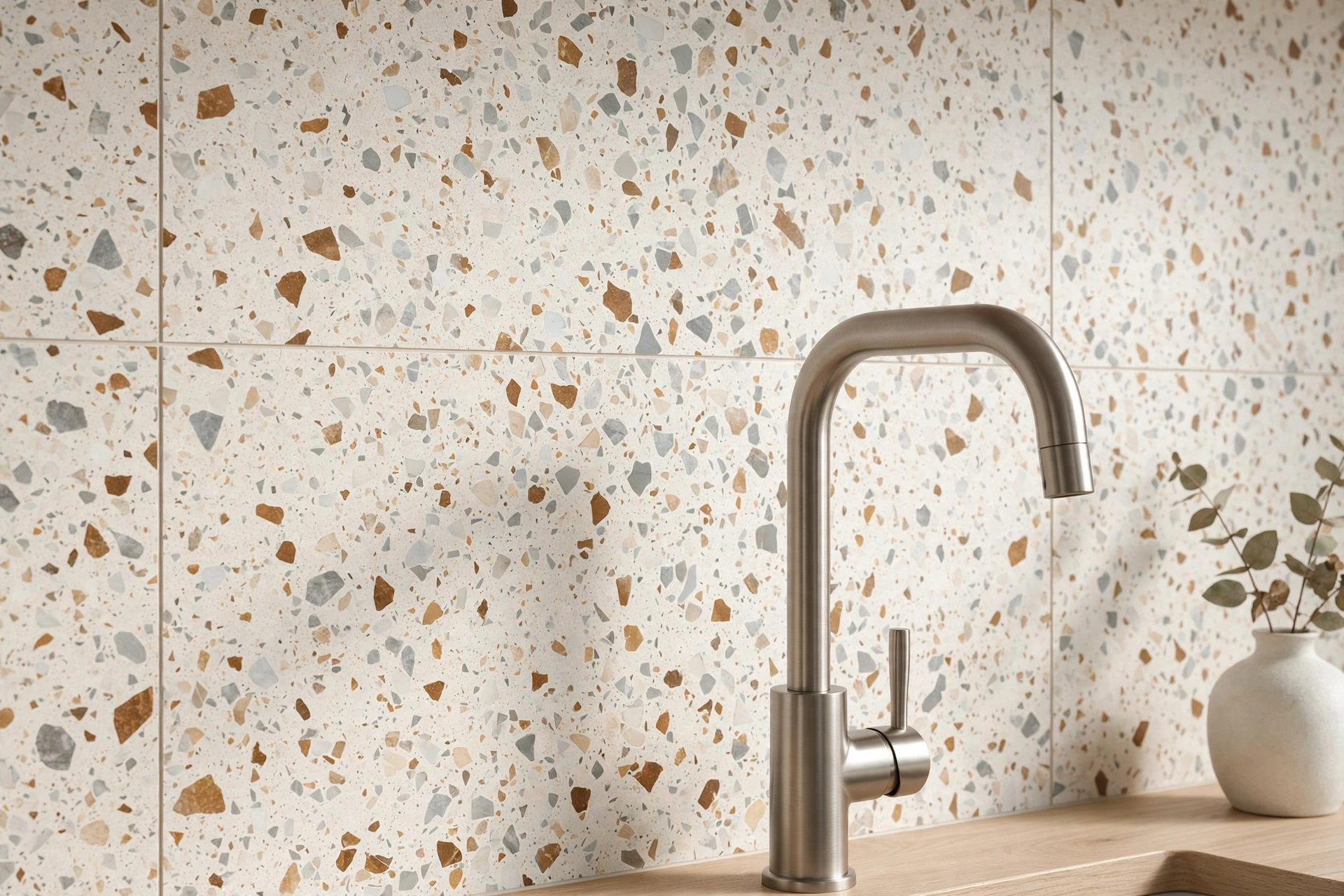
Real terrazzo is a luxury material; terrazzo-look porcelain delivers 90% of the look at ceramic-tile prices. The speckled surface is forgiving — it hides water spots and cooking splashes between cleans — and the confetti pattern adds personality without overwhelming small kitchens. Large-format tiles mean fewer grout lines and a calmer look. Budget £500–£900 fitted.
10. Vertical Stacked Tile
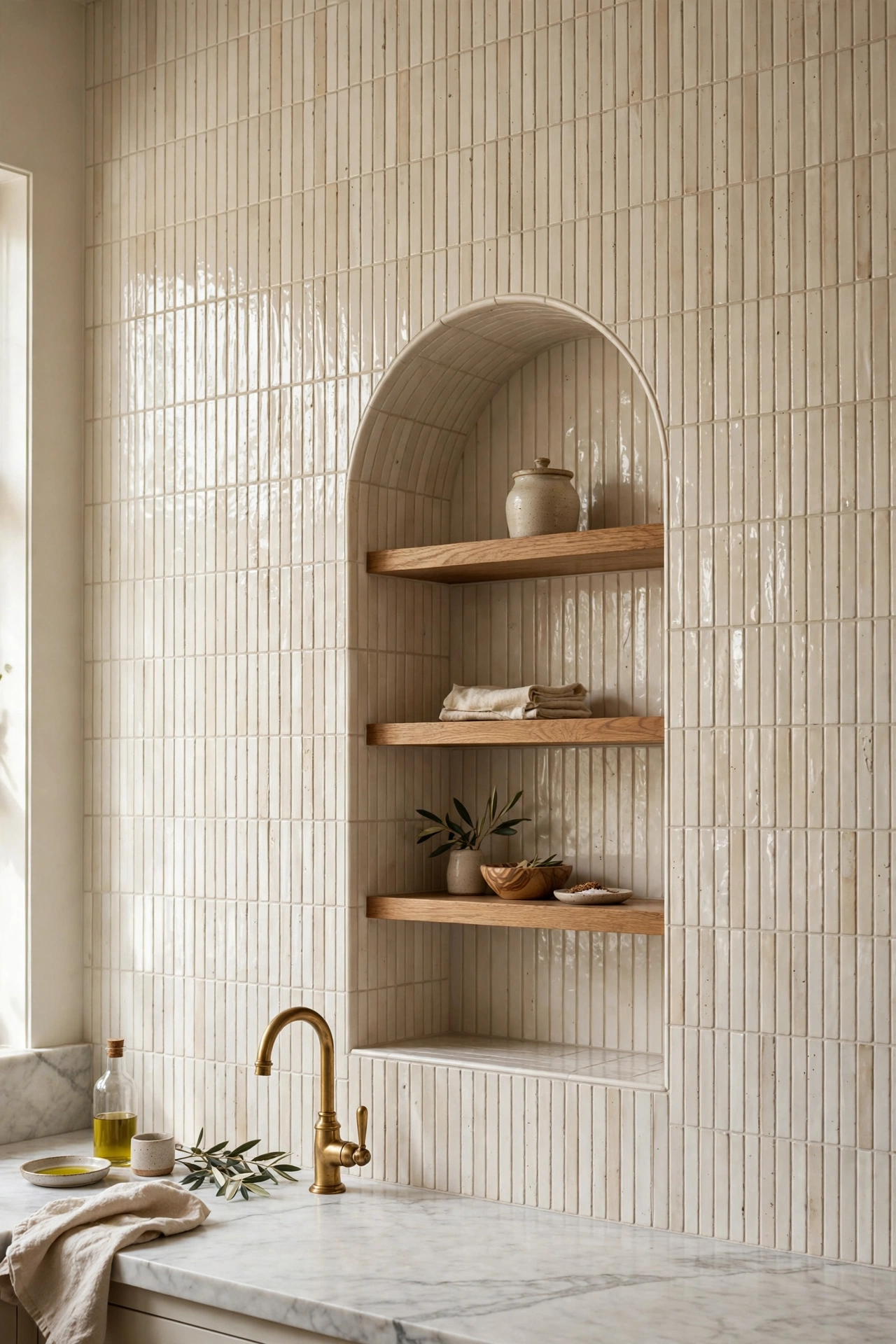
Lay slim rectangular tiles in a straight vertical stack instead of the usual horizontal offset and a plain kitchen instantly feels taller and more designed. The trick costs nothing extra in materials — it is purely a layout decision — yet it reads as a deliberate, architect-chosen detail. Try it with elongated 75×300mm tiles in a handmade-look glaze for maximum effect. Fitted cost: £450–£800.
11. Dark and Moody Backsplash
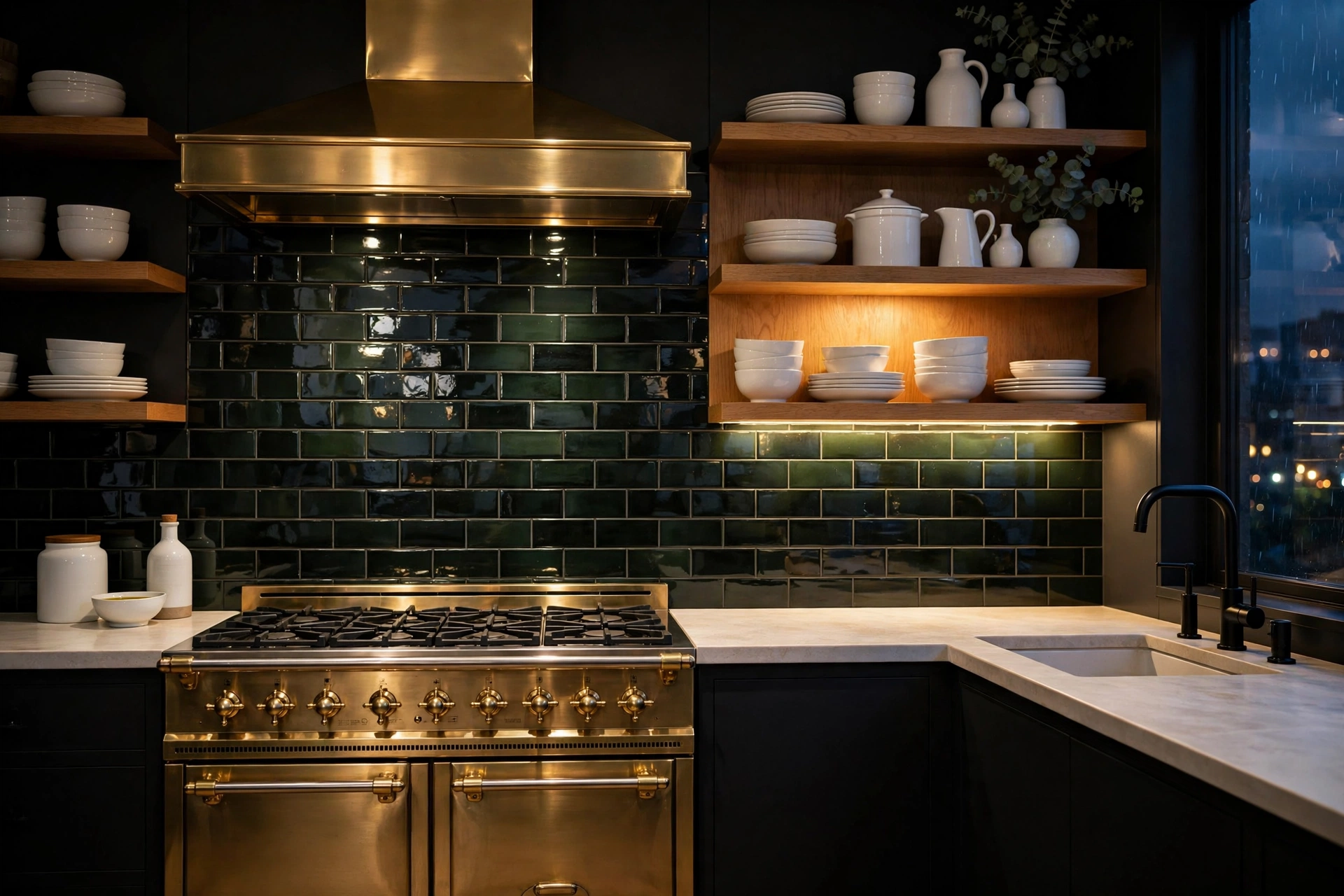
Charcoal, forest green and ink-navy tiles turn the backsplash into a jewel-box feature, especially against pale worktops and warm wood shelving. Dark grout on dark tile keeps the surface visually calm and hides the daily grime of a working kitchen. Gloss finishes bounce light around; matte finishes feel more gallery-like. This is a £500–£900 look that photographs like a magazine spread.
12. Marble-Look Porcelain
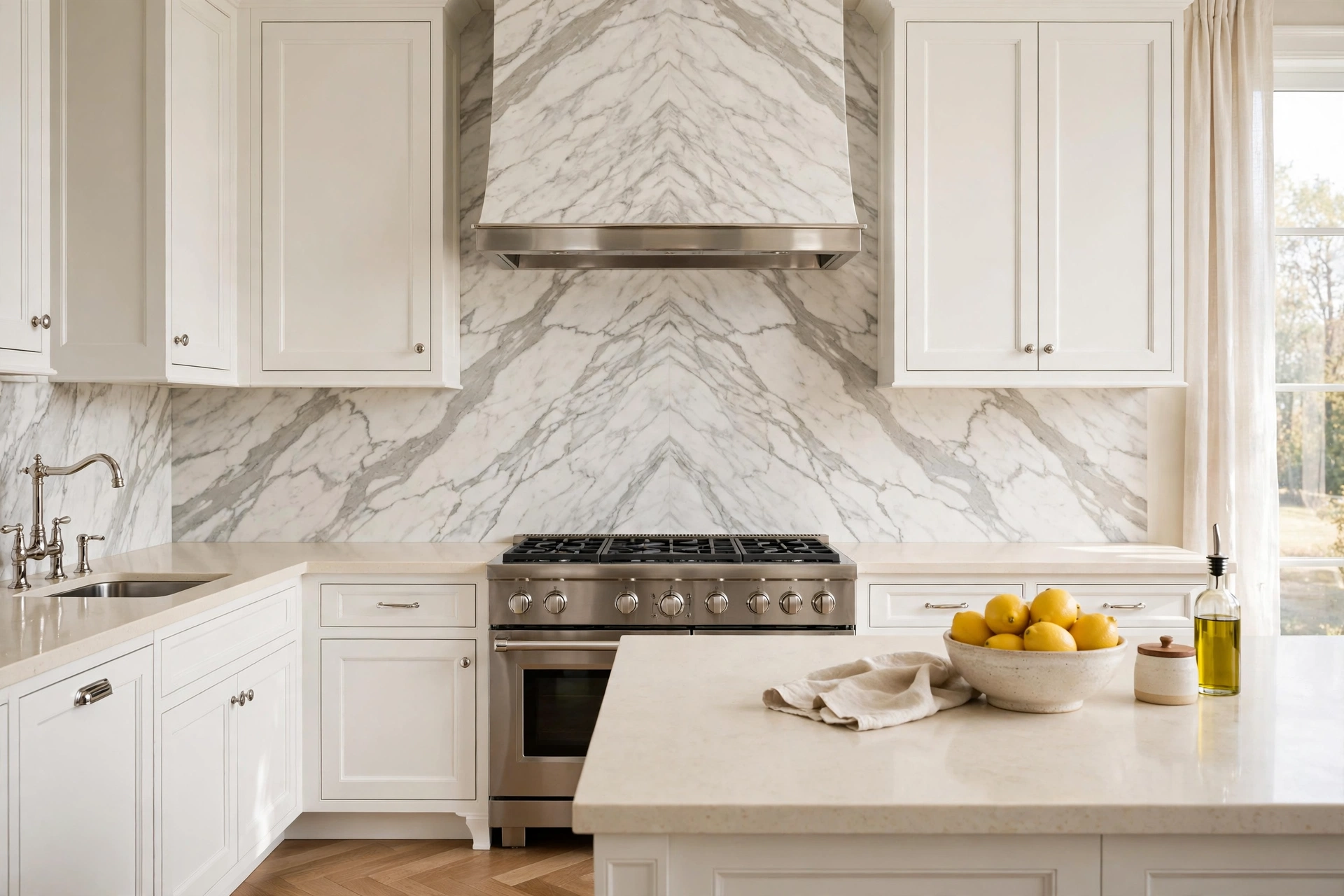
Carrara marble is stunning and high-maintenance — it stains, etches and costs a fortune. Marble-look porcelain tiles copy the veining convincingly, shrug off lemon juice and red wine, and cost a fifth of the real stone. Go large-format and bookmatch the veining across the range wall for a genuinely custom-stone effect. Expect £700–£1,200 fitted.
13. Patterned Cement-Look Tile
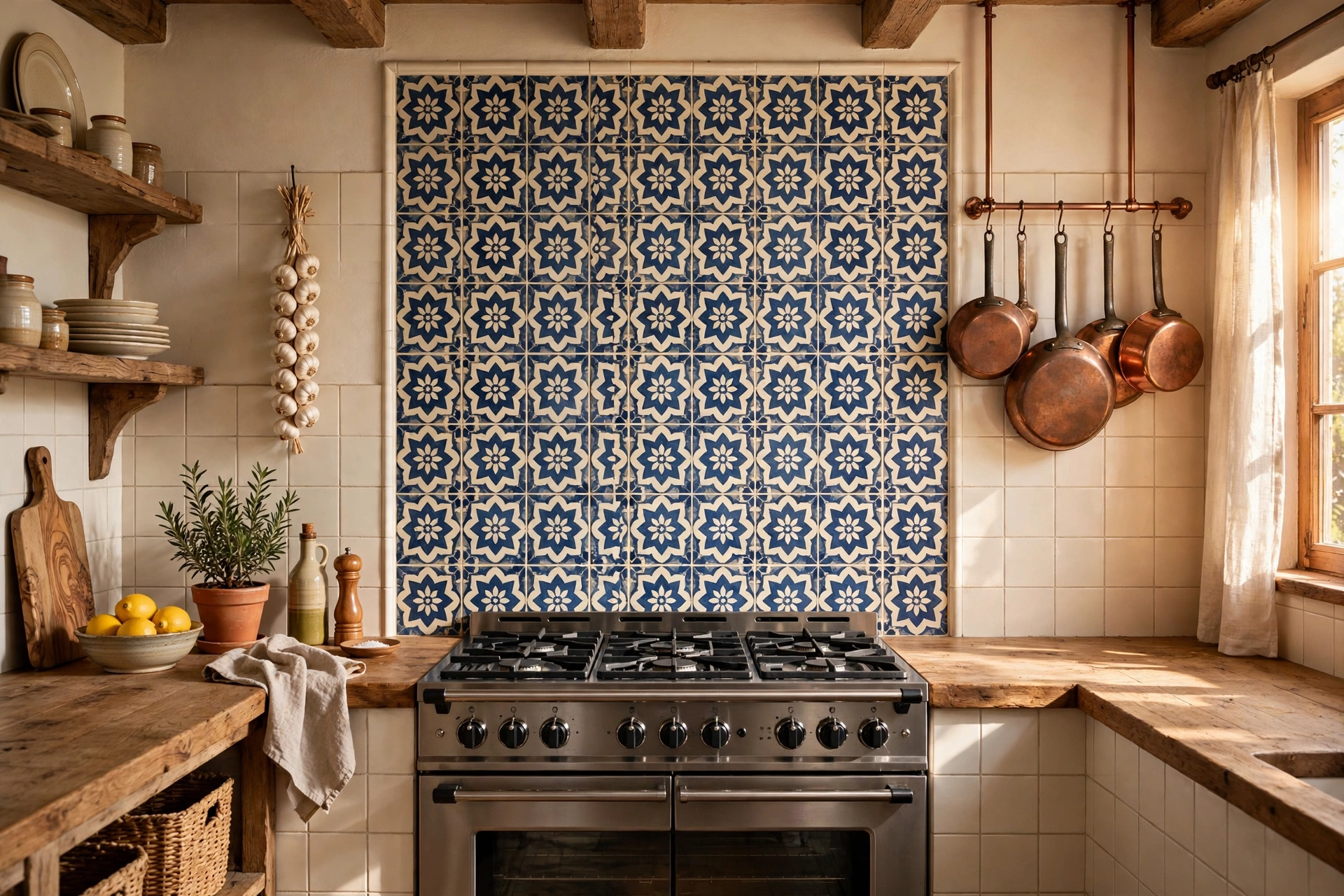
Encaustic-look cement tiles bring handcrafted, Mediterranean character that flat tiles cannot. Modern porcelain versions give the patterned look without the sealing and staining worries of real cement. Use them as a feature strip behind the range or sink, with plain tiles elsewhere, to keep costs (and visual noise) in check. Feature-zone materials: £200–£400.
14. Glass Tile Backsplash
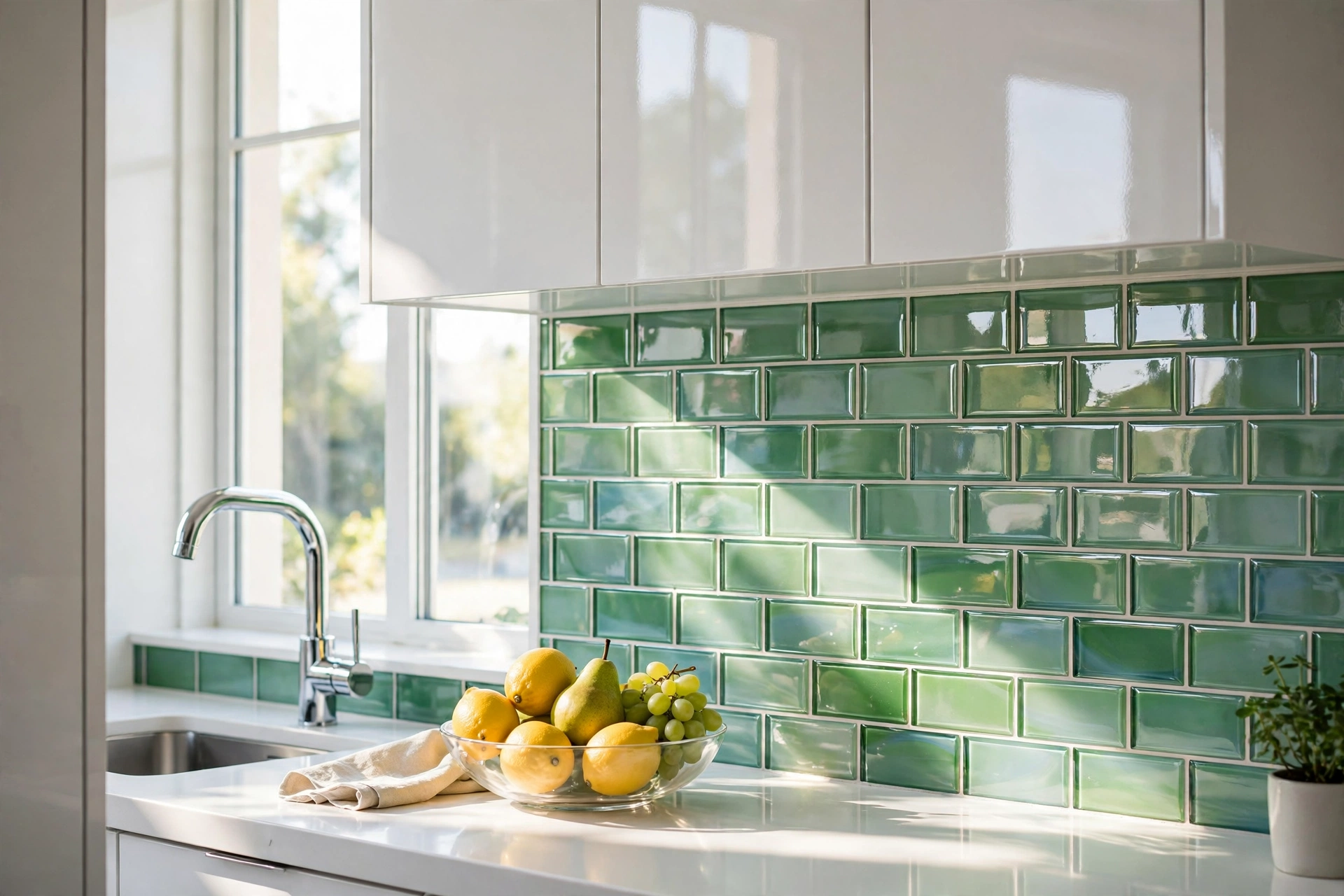
Glossy glass tiles reflect light around the room, making small or north-facing kitchens feel bigger and brighter — a classic estate-agent trick. Subway-shaped glass in soft sea-glass tones is timeless; tiny mosaic sheets in iridescent finishes are the statement option. Glass is easy to wipe clean but shows every smear during installation, so hire a careful tiler. Budget £600–£1,100 fitted.
15. Brass Inlay Strips With Basic Tile
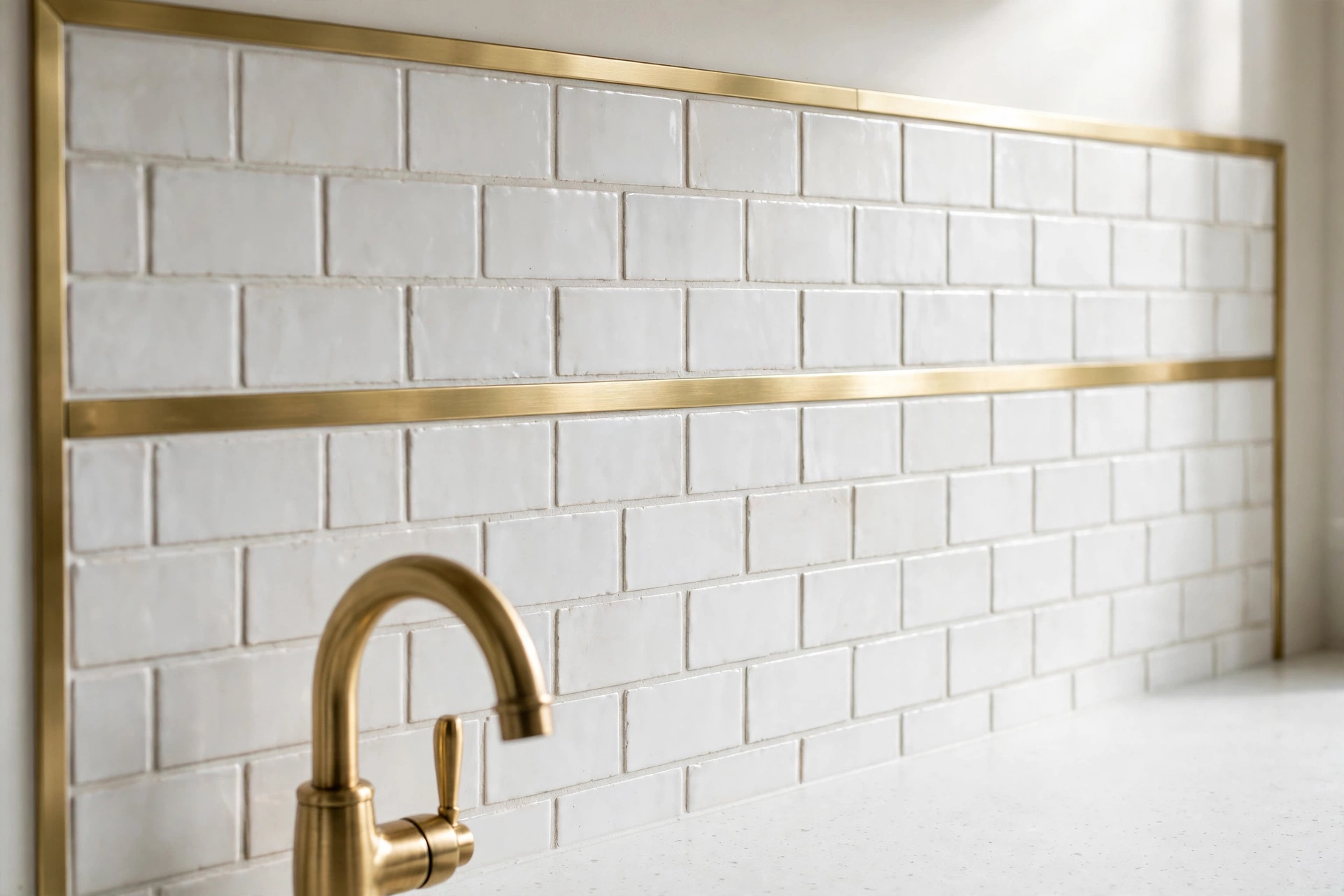
The ultimate custom cheat: run slim brass or copper inlay strips through a plain white-tile field. A few metal accent strips cost under £100, take an hour to set during tiling, and read as a designer detail lifted from a high-end showroom. Keep the metal to one horizontal band or a simple border around the range — restraint is what makes it look expensive, not excessive. Total addition to a standard tile job: £80–£150.
Frequently Asked Questions
How much does a kitchen backsplash cost in the UK?
A basic ceramic tile backsplash fitted by a tiler typically costs £400–£900. DIY peel-and-stick or painted options start under £100, while full-height stone slabs or extensive handmade tile can reach £1,800+. Our kitchen remodel cost breakdown puts backsplash spending in the context of a full renovation budget.
What is the cheapest backsplash that still looks good?
Painted tile (£40–£80) and beadboard (£120–£250) are the cheapest routes to a genuinely attractive result. For something removable, quality peel-and-stick tiles at £50–£120 now look remarkably convincing in photographs.
Can I install a kitchen backsplash myself?
Yes — a straight subway-tile backsplash is one of the most beginner-friendly tiling jobs. Complex patterns like herringbone, heavy materials like slab, and anything involving electrical sockets near water are worth hiring a professional for. For technique guidance, see This Old House’s tile installation guide, which walks through adhesive, setting and grouting step by step.
Which backsplash is best for a small kitchen?
Light, reflective options: glossy subway tile, glass tile or a full-height light slab. Vertical stacked layouts draw the eye upward and make the ceiling feel higher. Keep the grout close to the tile colour for a calm, unbroken surface.
Is peel-and-stick backsplash safe behind a hob?
Most manufacturers advise against placing adhesive-backed tile directly behind gas hobs or within the heat zone of any cooker. Use it on the surrounding walls and choose heat-rated tile or a stainless panel for the strip directly behind the heat source.
Conclusion
A custom-looking kitchen backsplash is never really about the budget — it is about where you put the money you have. One shimmering zellige panel behind the range, a £60 tin of tile paint, or a single brass inlay strip can each deliver the designed-not-decorated feeling for a fraction of a full renovation. Pick the idea that fits your wallet, execute it neatly, and your kitchen will look like it cost three times what it did.
