
That triangle of dead space beneath the stairs is one of the most wasted spots in the house. These under stair storage ideas turn it into drawers, cupboards, shelves and cosy nooks that hold coats, shoes, pantry goods and hobby kit — without taking a single centimetre from your rooms. Below are 29 ideas, grouped by how they work, so you can pick the ones that fit your staircase shape, your budget and how much building work you want to take on.
Why You’ll Love These Under Stair Storage Ideas
Under-stair storage works because it uses space you already own. The slope gives you tall storage at one end and shallow storage at the other, so one run can hold coats, shoes, linen and hobby kit at once. Closed fronts keep halls calm, open shelves keep daily items in reach, and the best ideas mix the two: doors where you want calm, open cubbies where you want speed.
How to Choose the Right Under Stair Storage for Your Stairs
Measure first: the height at the tall end, the depth at the back wall and the clear walkway beside the stairs. The tall end suits closets and desks, the middle suits drawers and shelves, and the shallow end suits hooks, baskets and slim consoles. Check what sits behind the wall before cutting — pipes, wiring and load-bearing studs all change the plan. Our staircase ideas show how the stair wall can carry storage without looking like an afterthought.
Pull-Out and Hidden Storage
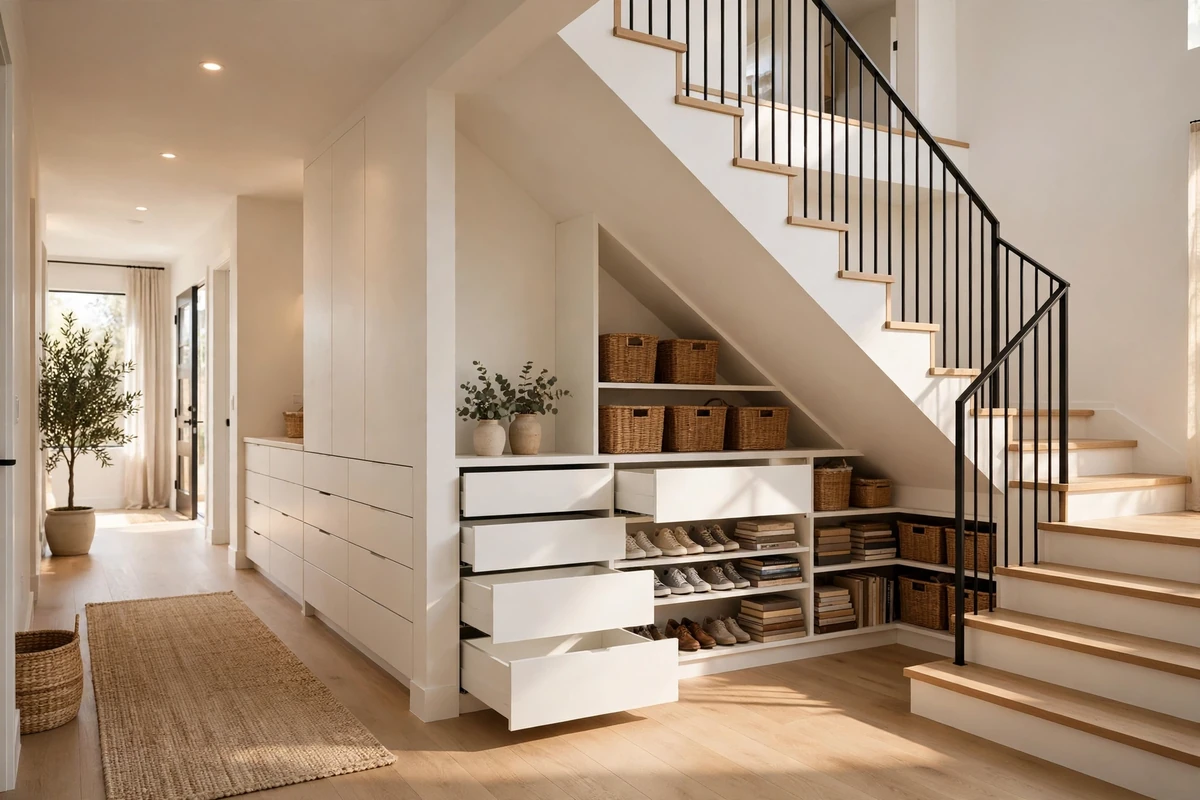
1. Pull-Out Drawer Towers
Deep drawers that step down with the slope turn the deepest part of the void into storage you can actually reach. Each drawer pulls fully out, so nothing hides at the back.
Best for: Homes with a straight run of stairs and lots of everyday clutter.
Styling tip: Paint drawer fronts the wall colour so the run reads as panelling, not furniture.
Pro tip: Fit full-extension runners rated for the load; half-extension slides waste the deepest 30 cm.

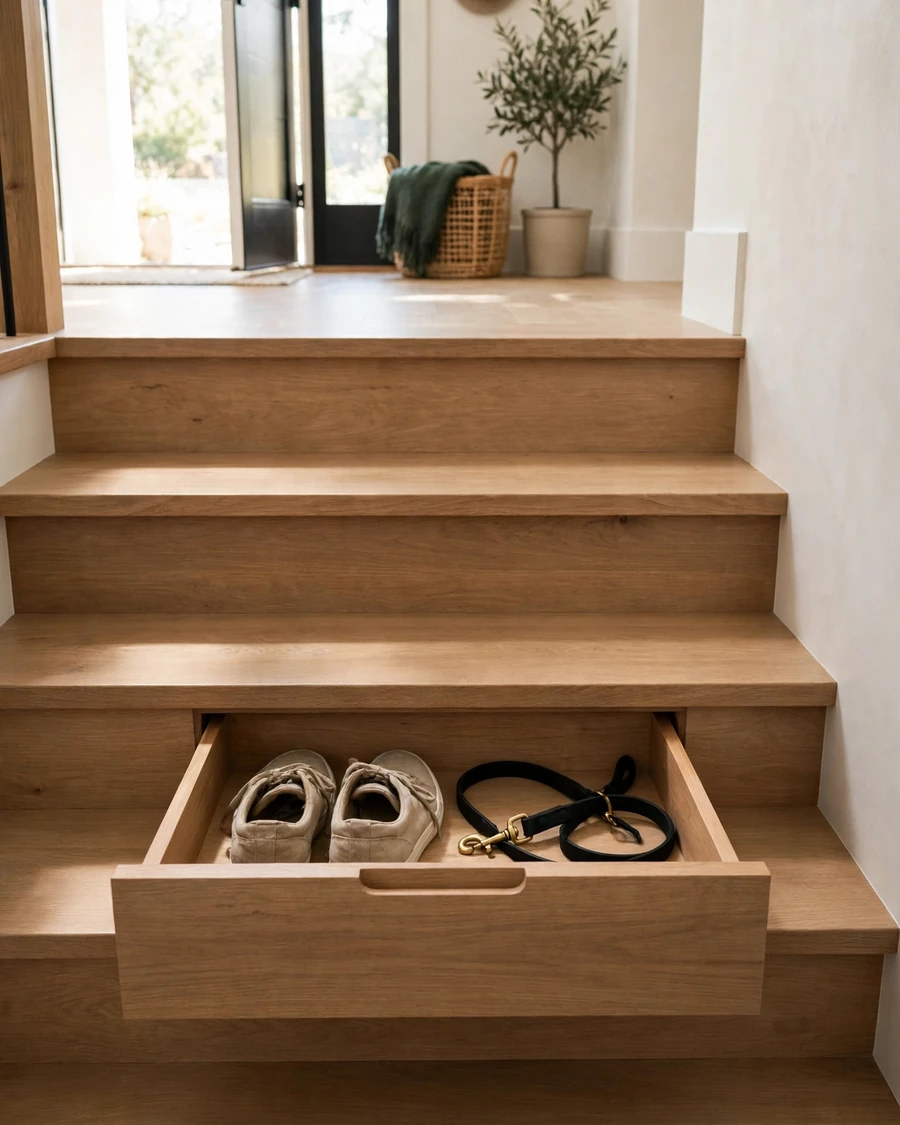
2. Drawers Built Into the Steps
Each tread front becomes a shallow drawer for shoes, dog leads, torches and charging cables. The storage is invisible until you pull it open.
Best for: Hallways with no spare wall for a cupboard.
Styling tip: Keep one tread for each person so the system stays tidy.
Pro tip: Check tread depth first; most step drawers only suit treads at least 25 cm deep.
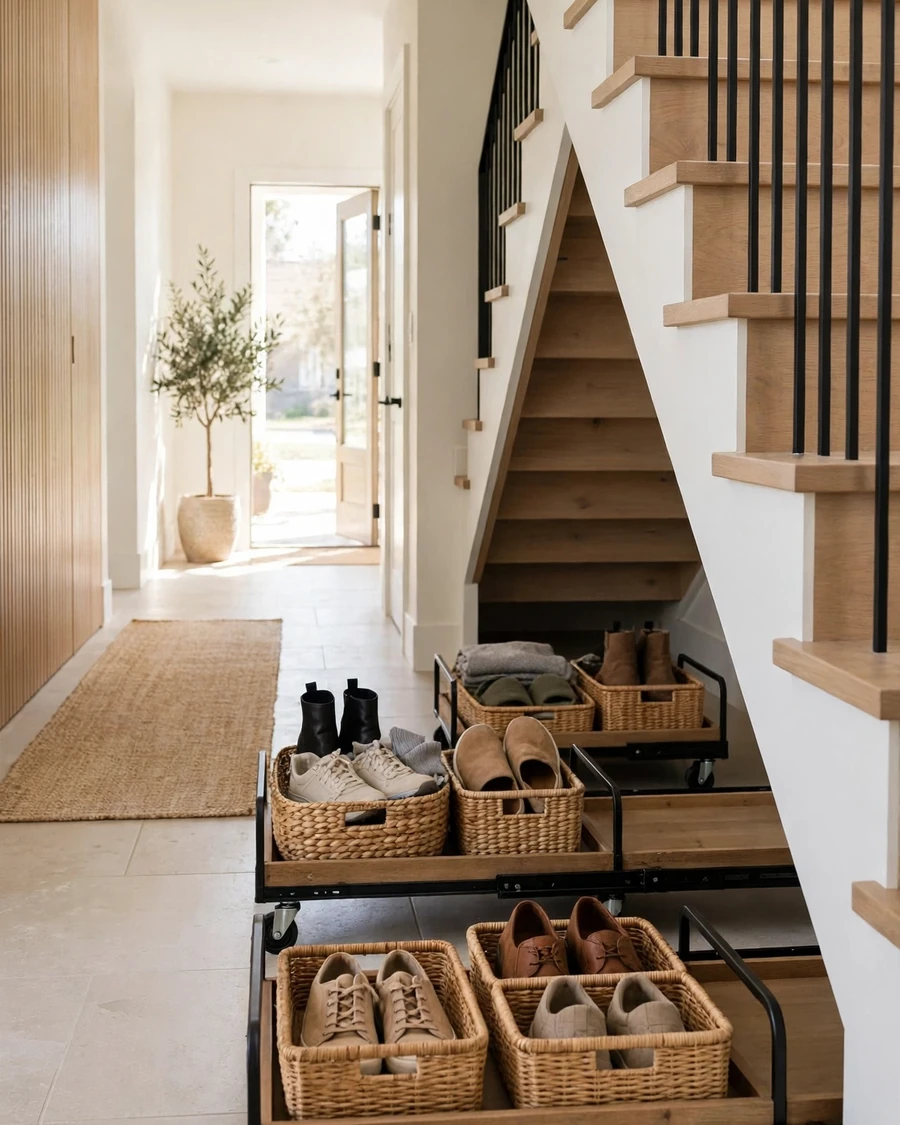
3. Rolling Under-Stair Carts
Low carts on castors slide into the low end of the slope and roll out for cleaning or restocking. They suit awkward triangles that fixed joinery cannot fill.
Best for: Renters and anyone who wants storage without building work.
Styling tip: Choose carts with brakes so they never creep onto the walkway.
Pro tip: Measure the lowest opening height, then buy 3 cm shorter to clear thresholds and skirting.
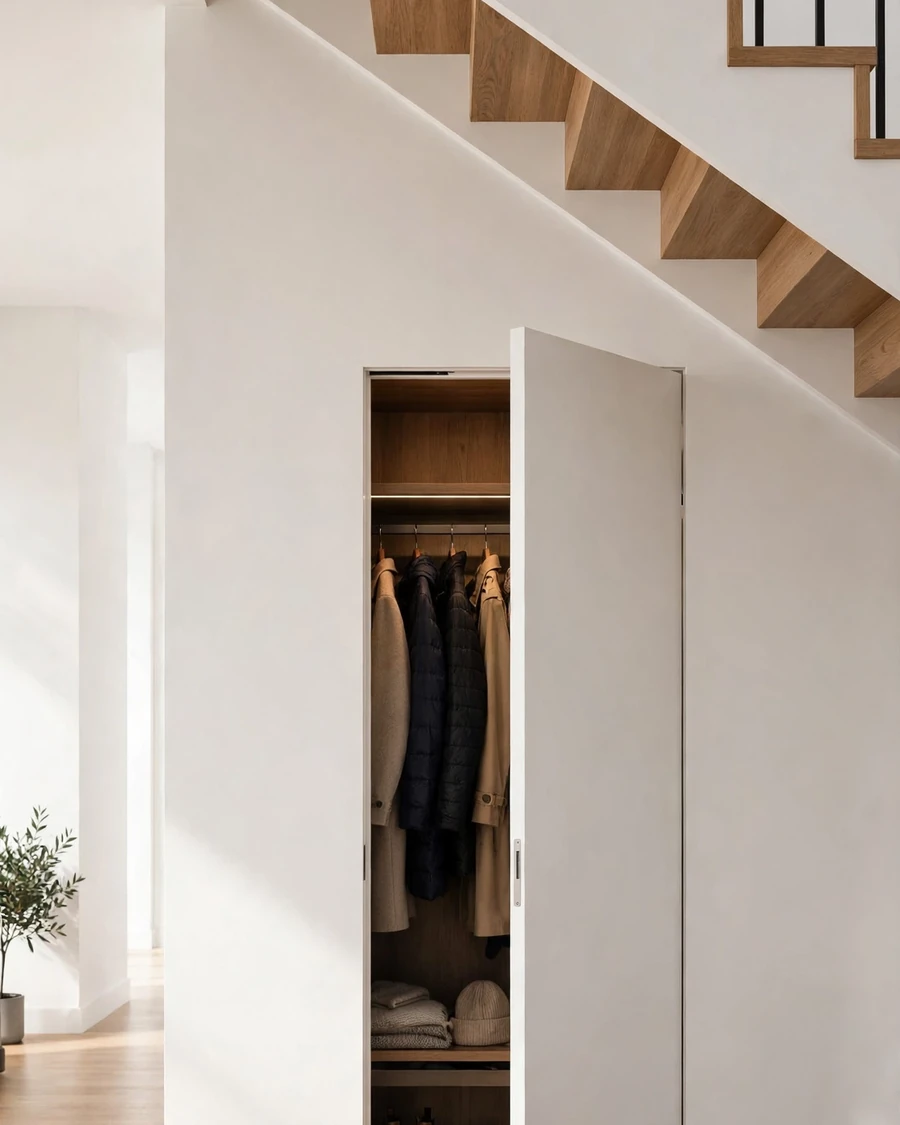
4. Flush Hidden Panel Doors
Handle-free panels that match the wall hide a full cupboard behind a seamless surface. Push-to-open catches keep the look completely flat.
Best for: Minimal interiors where a cupboard door would spoil the wall.
Styling tip: Run the skirting across the panel base for a truly invisible join.
Pro tip: Leave a 3 mm shadow gap around each panel so seasonal movement never jams it shut.
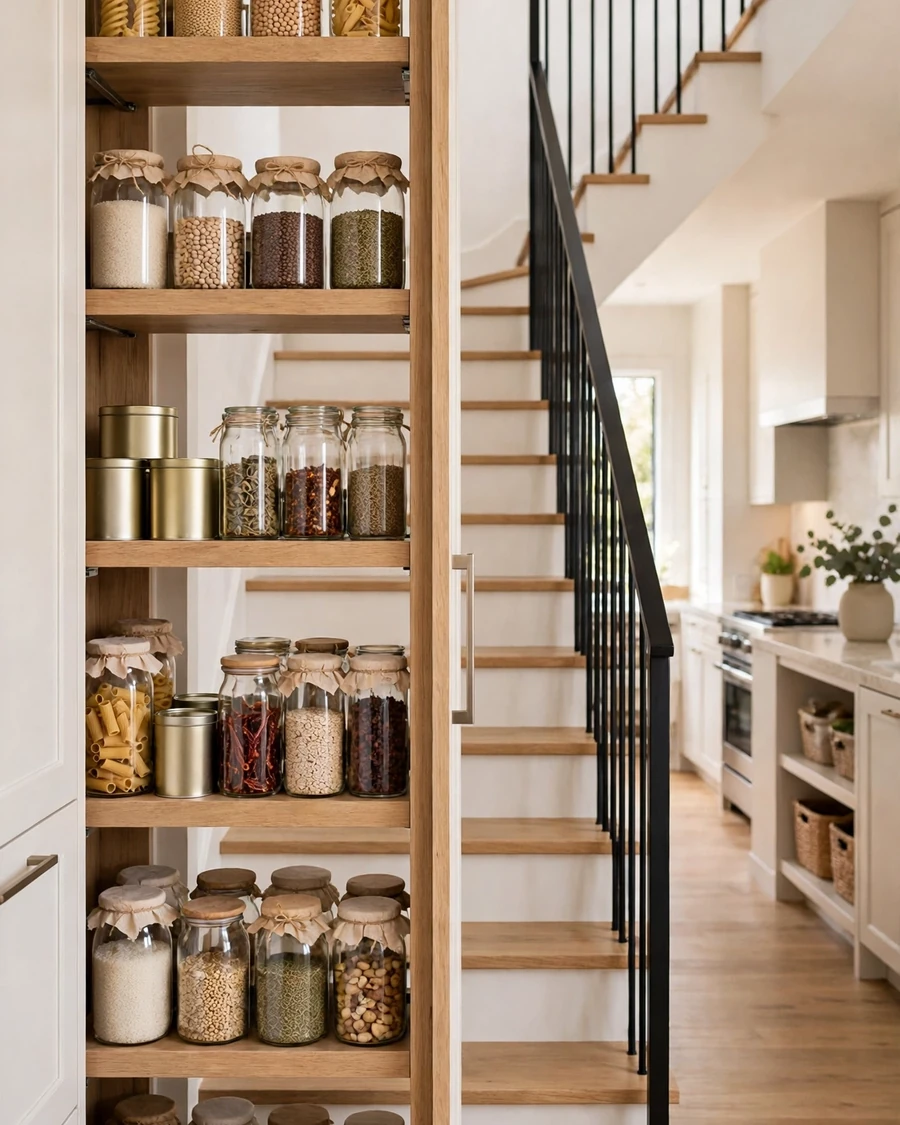
5. Pull-Out Pantry Tower
A tall, narrow tower on runners holds tins, jars and dry goods in tiers you can see at a glance. It suits stairs beside the kitchen best.
Best for: Small kitchens short on pantry space.
Styling tip: Label the top of each tier; you read a pantry tower from above.
Pro tip: Keep heavy jars low and light packets high so the tower never feels top-heavy when extended.
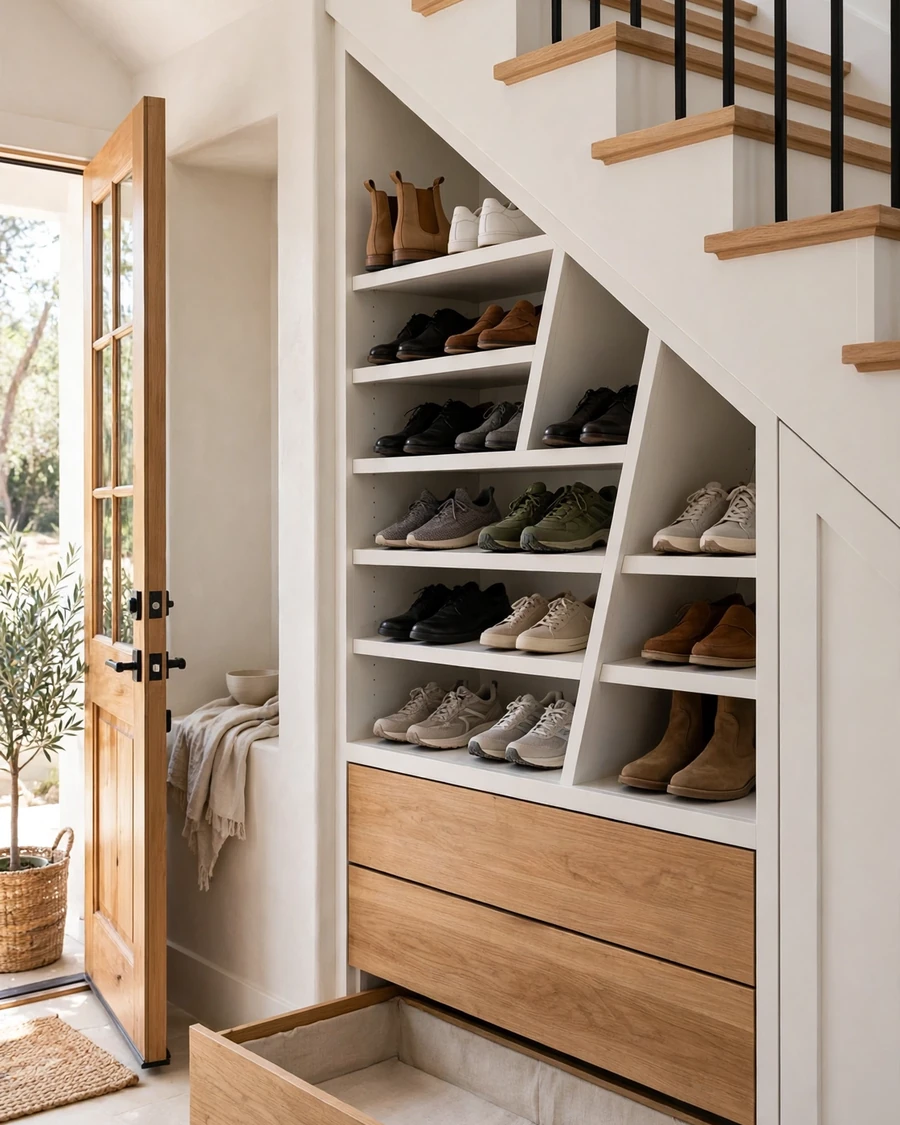
6. Angled Shoe Drawer Bank
Sloped shelves inside deep drawers hold shoes toe-down, so pairs stay visible and air can move around them. One bank can hold a whole household.
Best for: Busy entries where shoes pile by the door.
Styling tip: Add a washable liner to each drawer for muddy days.
Pro tip: Angle shelves at about 30 degrees; flat shelves hide the back pair completely.
7. Tall Vertical Pull-Out Locker
A slim vertical unit pulls out to reveal hooks on one side and shelves on the other, using height the slope usually wastes.
Best for: Narrow halls that need coat and bag storage in one unit.
Styling tip: Hang a mirror on the outer face to double its usefulness.
Pro tip: Anchor the carcass to the wall; a loaded vertical pull-out can tip forward.

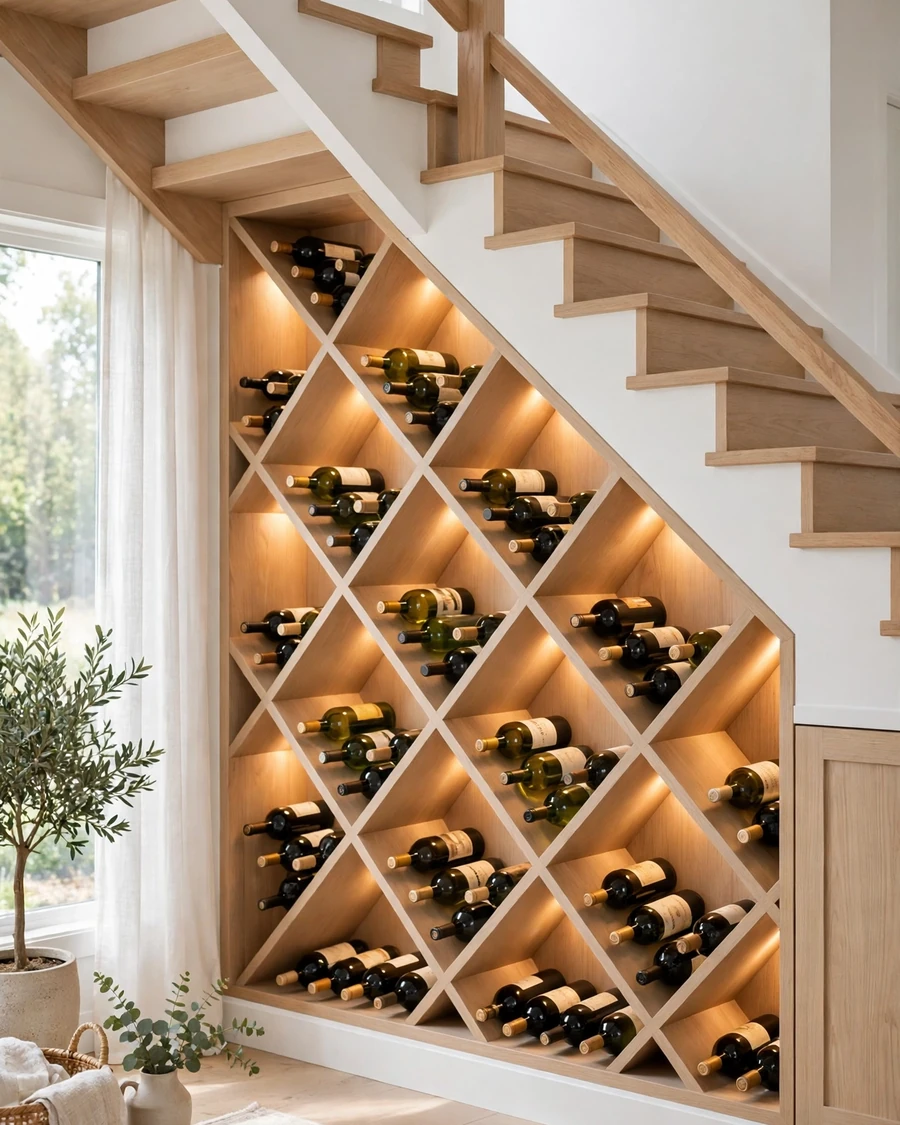
8. Angled Wine Storage Wall
Diamond or angled cubbies follow the slope and cradle bottles safely, turning dead space into a compact cellar display.
Best for: Homes with a cool, dark understair void away from radiators.
Styling tip: Back the cubbies with warm LED strips for a cellar feel.
Pro tip: Store bottles on their sides and keep the wall away from heat sources so corks stay moist.
Cupboards, Closets and Drop Zones
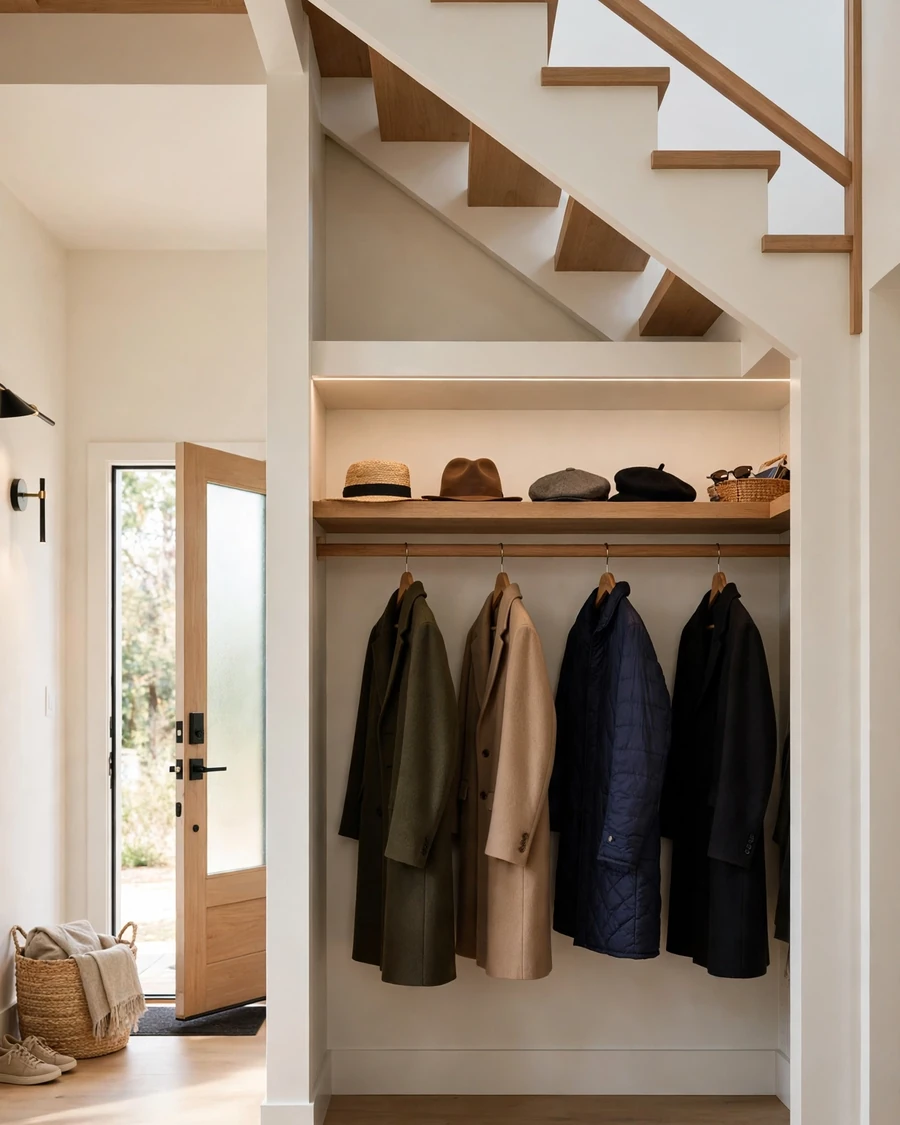
9. Full-Height Coat Closet
A proper closet at the tall end takes winter coats, bags and umbrellas on a rail, with a shelf above for hats. It frees the hall of its bulkiest items.
Best for: Families whose coats currently live on the banister.
Styling tip: Add a second, lower rail for children so their coats never end up on the floor.
Pro tip: Fit a rail at least 130 cm long for adult coats; shorter rails force coats to bunch and crease.
10. Linen and Bulk-Storage Closet
Deep shelves at the tall end hold spare bedding, towels and bulk buys in labelled boxes. The slope above the shelves suits light, rarely used items.
Best for: Homes with no airing cupboard.
Styling tip: Use one box size throughout so shelves stack neatly.
Pro tip: Put the bulkiest bedding on the middle shelf; top shelves are for light items you lift rarely.
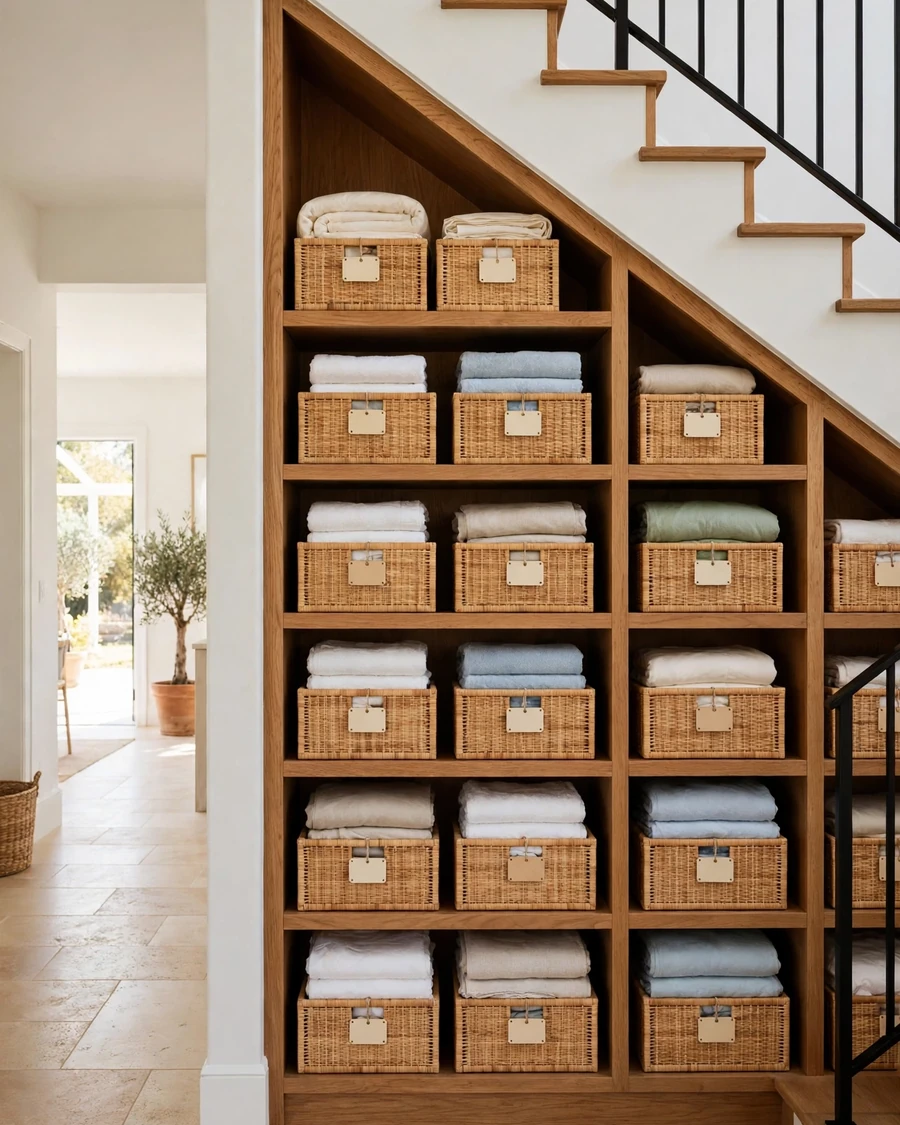
11. Broom and Cleaning Cupboard
A tall, narrow cupboard with wall hooks takes mops, brooms, a vacuum and cleaning sprays in one upright run. It ends the utility clutter in the hall.
Best for: Homes where cleaning kit lives in three different rooms.
Styling tip: Hang a small caddy on the door for cloths and sprays.
Pro tip: Fit a socket inside only if the vacuum charger is rated for enclosed spaces; otherwise charge it elsewhere.

12. Seasonal Bin Closet
Labelled bins on deep shelves rotate decorations, summer kit and winter gear in and out of season. The deepest shelf suits the items you need least.
Best for: Homes drowning in Christmas boxes and beach bags.
Styling tip: Label bins on the short end you see first.
Pro tip: Photograph each bin as you pack it; the photo beats a written list when you hunt for one item.

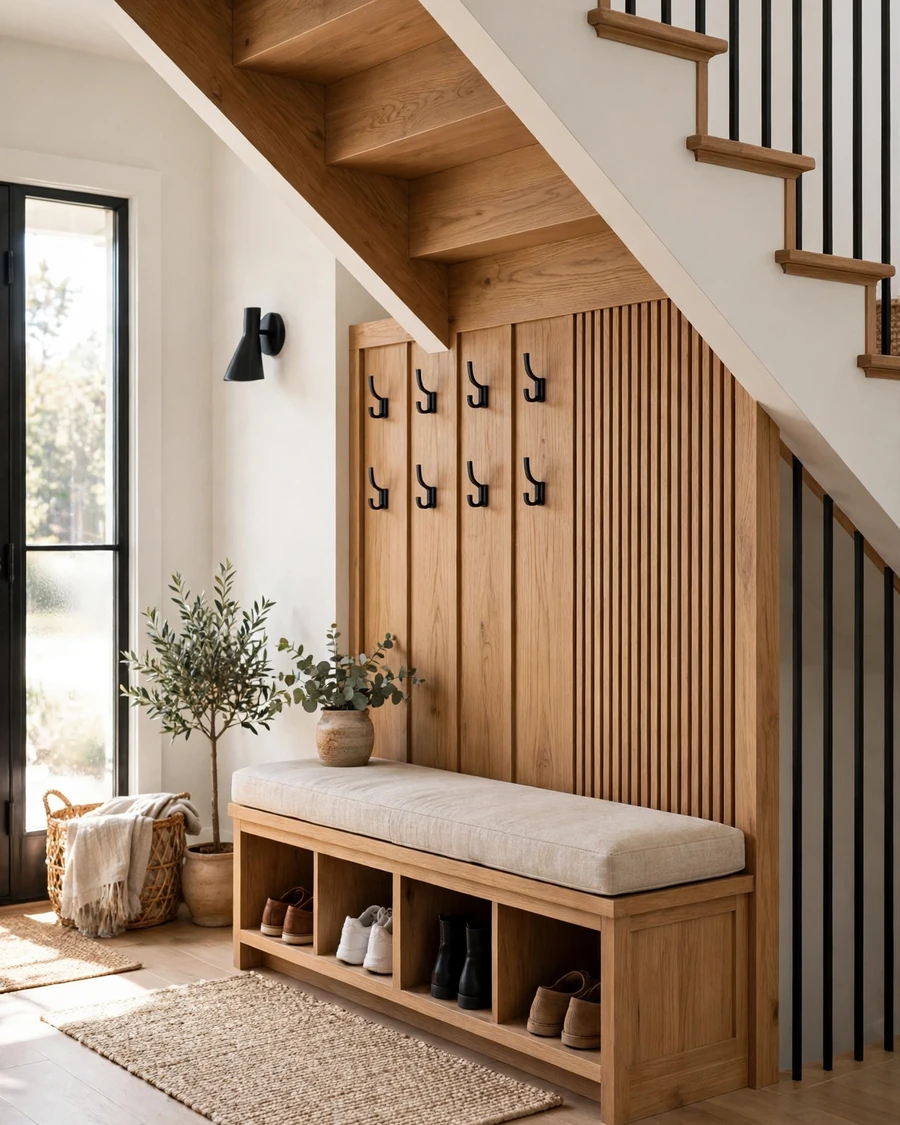
13. Entry Drop Zone With Bench
A bench, hooks and shoe storage at the tall end give every arrival a place to land. It works best when the stairs sit near the front door.
Best for: Households with a daily school and work run.
Styling tip: Keep one hook empty per person; a full rail is a rail nobody uses.
Pro tip: Set the bench seat at 45 cm high so shoes go on without crouching.
14. Pet Retreat and Feeding Nook
A low, lined nook with a bed and bowls gives pets a calm corner out of the walkway. A half-door or curtain keeps it cosy without shutting them in.
Best for: Homes with a dog or cat that claims the hallway.
Styling tip: Use washable, wipe-clean lining for muddy paws.
Pro tip: Leave an air gap at the top of any enclosure so the nook never gets stuffy.

15. Charging and Tech Drawer
A drawer with a cable tray and a power strip charges phones, tablets and torches out of sight. It stops chargers colonising every surface.
Best for: Households with more devices than sockets.
Styling tip: Drill a small cable slot at the back so leads never snag.
Pro tip: Use a power strip with surge protection and never charge damaged batteries inside a closed drawer.

Open Shelves and Display
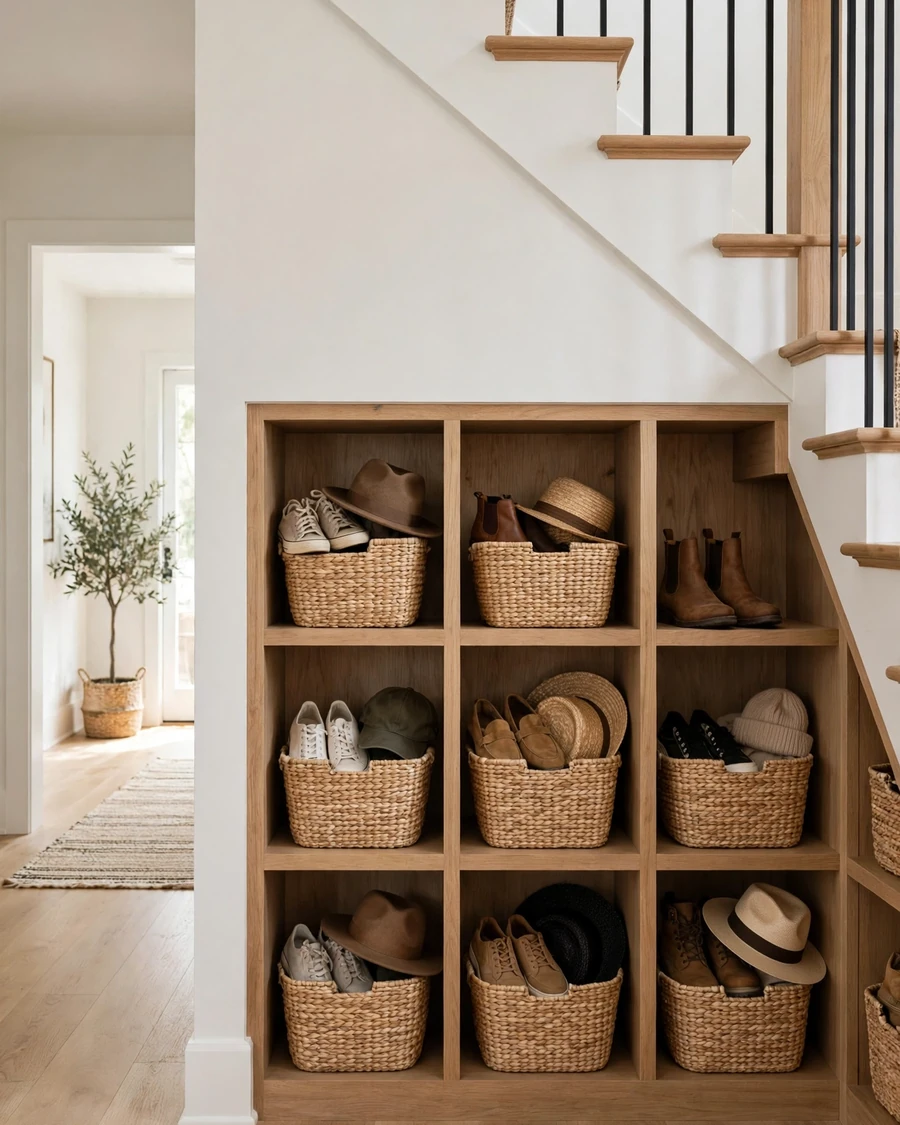
16. Open Cubby Shelves
Square cubbies with baskets sort shoes, hats and hobby kit by person or purpose. Open fronts mean you see what you own.
Best for: Families who need grab-and-go storage.
Styling tip: Match baskets in one material for a calm look.
Pro tip: Leave the bottom cubby empty as an overflow slot; full systems fail first.
17. Floating Shelves That Follow the Slope
Short shelves stepping down with the stair line display books, plants and baskets without any doors. The stepped line itself becomes the feature.
Best for: Living rooms where the stairs are on show.
Styling tip: Style the highest shelf lightest so the slope feels airy.
Pro tip: Fix every shelf into studs; books get heavy fast on a long run.

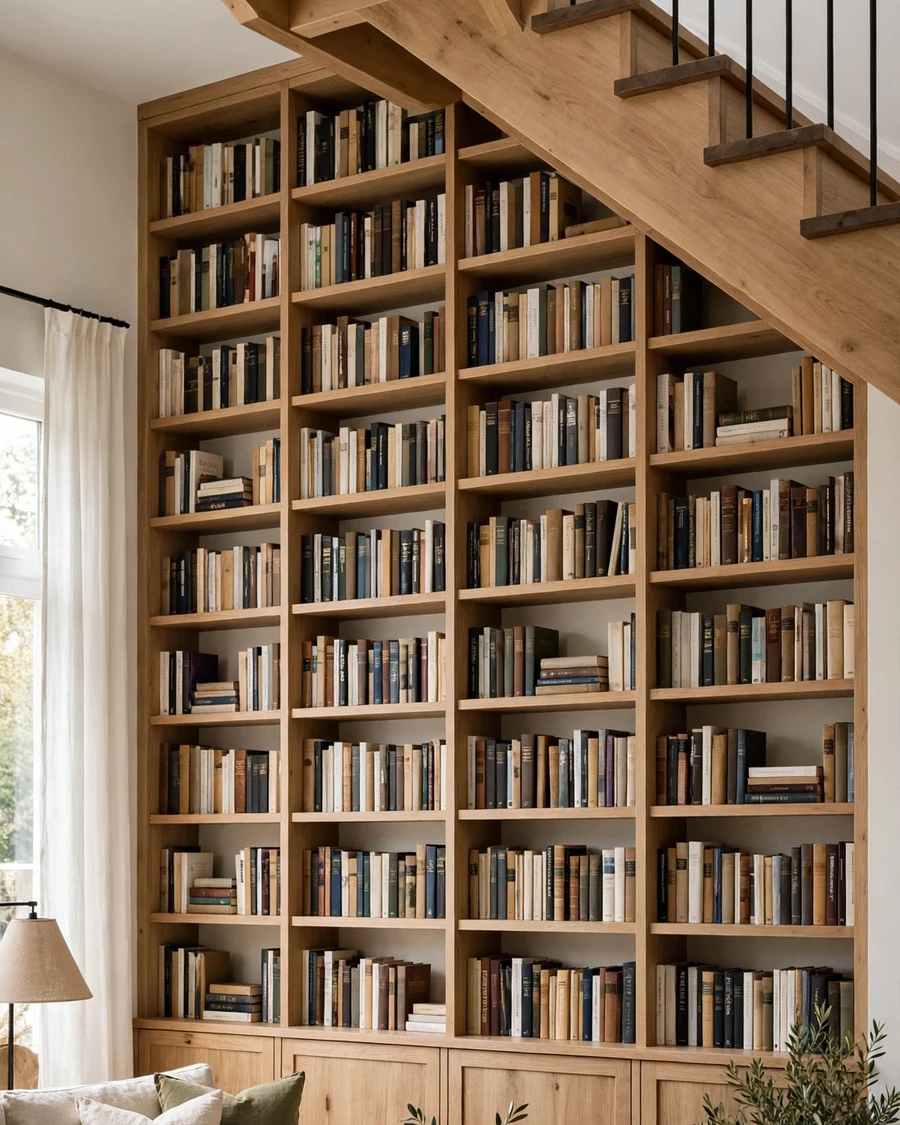
18. Full Bookcase Wall
Shelves floor to slope turn the whole wall into a library, with the tallest shelves at the high end and picture books at the low end.
Best for: Book lovers short on wall space elsewhere.
Styling tip: Mix horizontal stacks among vertical rows to break long runs.
Pro tip: Anchor tall bookcases to the wall, especially in homes with small children.
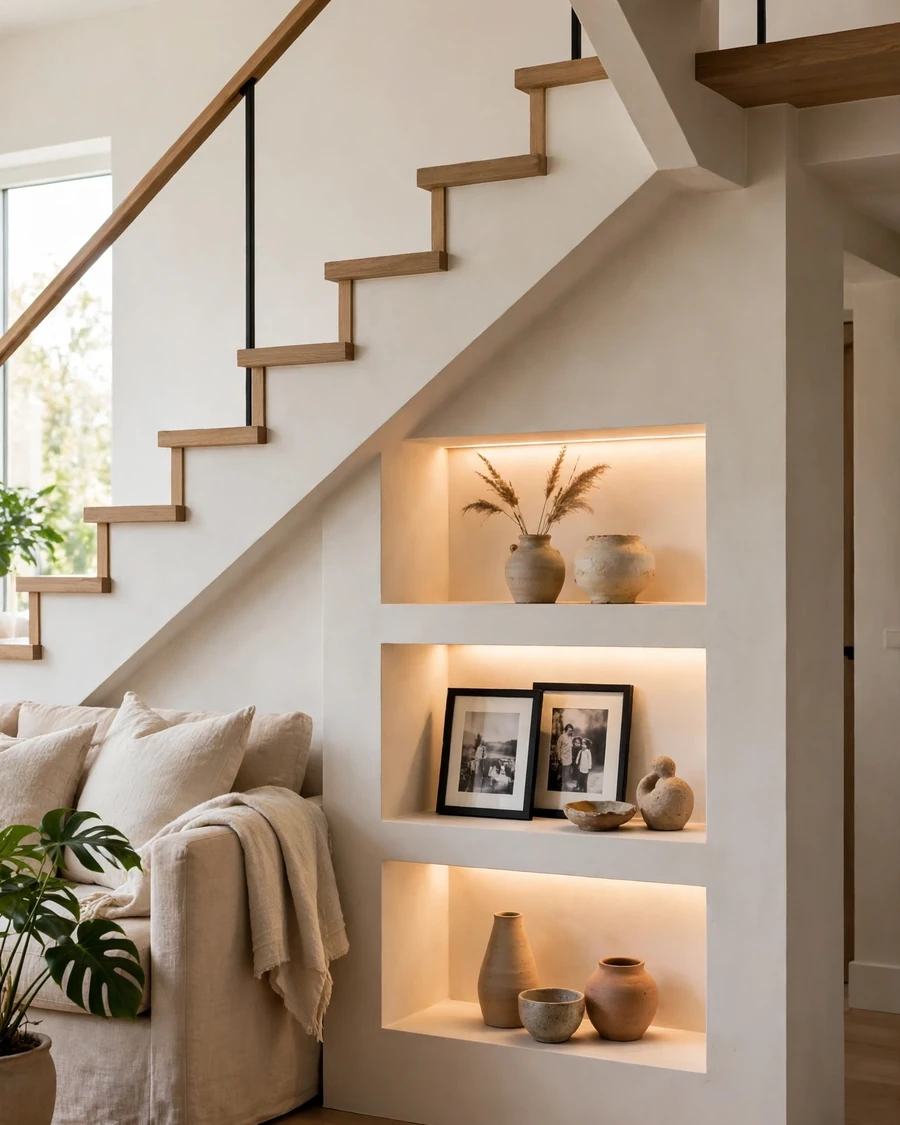
19. Lit Display Niches
Shallow niches with warm lighting show ceramics, travel finds and framed photos in the slope. Lighting turns storage into a feature wall.
Best for: Homes where the understair wall faces the living room.
Styling tip: Use 2700K warm light so the display feels like evening light.
Pro tip: Fit LEDs on a dimmer; full brightness makes a display niche look like a shop window.
20. Basket Shelf Wall
Open shelves with labelled baskets hide the mess while keeping everything reachable. It is the cheapest way to make a slope look intentional.
Best for: Budget makeovers and playrooms.
Styling tip: Use the same label style on every basket.
Pro tip: Keep baskets shallow enough to lift with one hand; deep baskets become dumping grounds.

Useful Rooms Tucked Under the Stairs
21. Cosy Reading Nook
A bench, cushions and a reading light tucked into the tall end make a quiet corner for one reader. Books live on the shelves beside the seat.
Best for: Homes with a reader and no spare room.
Styling tip: Add a small side shelf for a mug and current book.
Pro tip: Fit the light on the side away from the walkway so passers-by never block it.

22. Mini Home Office
A slim desk, a chair and a shelf or two fit the tall end of many stairs, giving a focused corner for laptop work. It suits short work sessions best.
Best for: People working from home in small flats.
Styling tip: Paint the nook a shade darker than the room to mark it as a workspace.
Pro tip: Check headroom at the desk chair; you need to stand up without ducking under the slope.

23. Compact Laundry Nook
A stacked washer and dryer, or a washer with a folding surface above, fits the tall end near plumbing. A curtain or louvre door hides it between washes.
Best for: Small homes with no utility room.
Styling tip: Use louvre doors so damp air escapes.
Pro tip: Confirm drainage, water supply and ventilation before buying machines; plumbing decides this idea, not space alone.

24. Kids Play Nook and Toy Storage
A low, curtained den with toy bins at child height gives children their own corner and keeps toys out of the living room.
Best for: Families with young children.
Styling tip: Use soft, washable cushions and low bins children can reach.
Pro tip: Keep the den open at the top for air and adult supervision; never fully enclose a play space.

25. Under-Stair Drinks Station
A counter, glass shelves and a small cooler turn the slope into a drinks corner for evenings in. It suits stairs near the dining or living room.
Best for: Hosts who entertain at home.
Styling tip: Keep glassware on the highest shelf and mixers below.
Pro tip: Check the cooler has ventilation space around it; enclosed coolers overheat and fail early.

Small, Shallow and Renter-Friendly Fixes
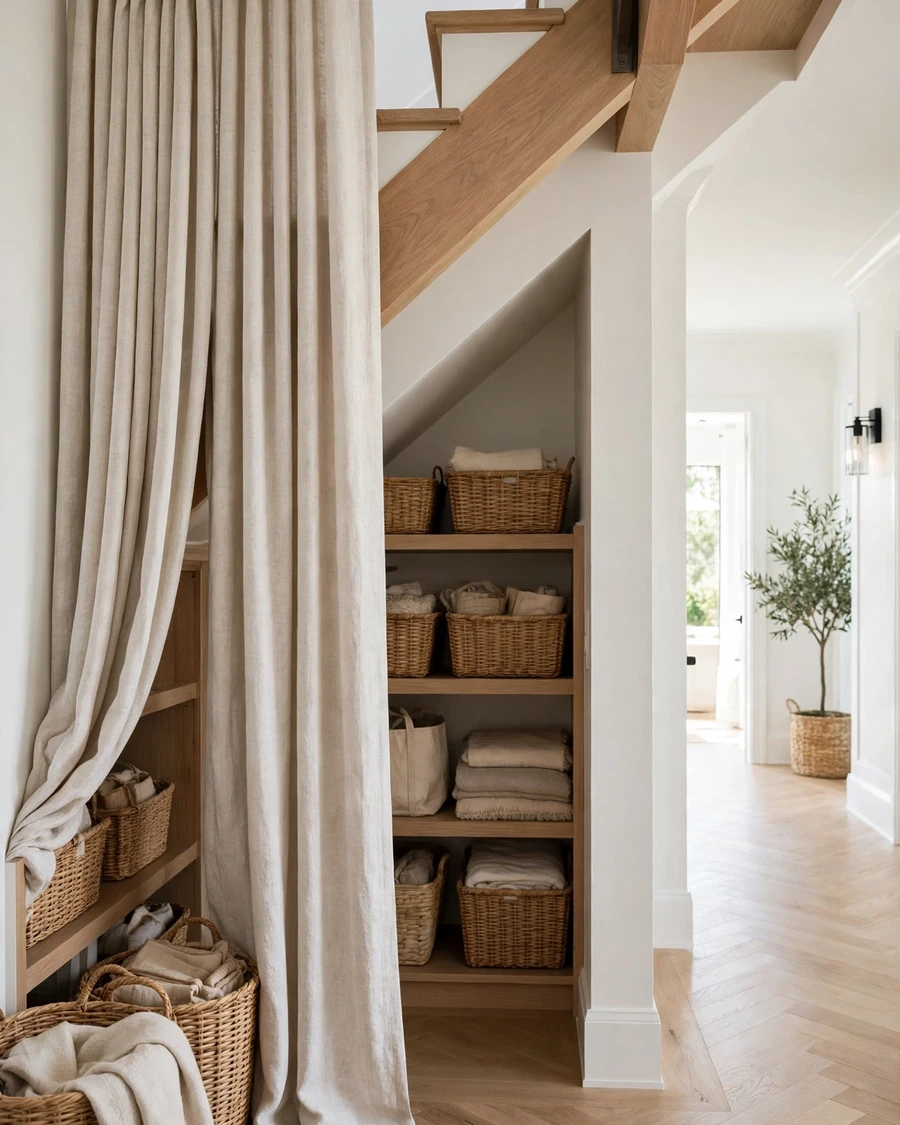
26. Curtain-Front Storage Bay
A tension rod and a floor-length curtain hide bins and shelves behind a soft front. It costs little, needs no doors and changes with the room.
Best for: Renters and budget makeovers.
Styling tip: Choose a curtain that matches the wall for a built-in feel.
Pro tip: Hem the curtain 2 cm above the floor so it never drags or trips anyone.
27. Freestanding Stackable Bins
Stackable bins and crates fill the slope without a single screw. They suit the shallow end, where fixed joinery rarely pays.
Best for: Renters and anyone testing a layout before committing.
Styling tip: Use clear or labelled fronts so you never open five bins to find one item.
Pro tip: Stack no higher than you can safely lift down; top bins hold light items only.

28. Pegboard Tool Wall
A pegboard panel on the flat back wall holds tools, craft supplies and hobby kit on hooks and small bins. Everything stays visible and movable.
Best for: DIY and craft households.
Styling tip: Outline each tool in chalk so missing items are obvious.
Pro tip: Fix the pegboard to battens, not just plasterboard, so loaded hooks never pull away.

29. Slim Console and Hooks on the Stair Wall
A narrow console, a row of hooks and a mirror use the shallow end for keys, bags and coats without blocking the walkway.
Best for: Tiny halls where the slope leaves almost no depth.
Styling tip: Keep the console top mostly clear; one tray for keys is enough.
Pro tip: Fix hooks into studs and keep the walkway at least 70 cm clear beside the console.

Under Stair Storage Care and Upkeep
Once a season, pull out the bins and drawers, wipe the shelves and check for damp — enclosed slopes trap moisture after wet winters. Rotate seasonal items when you do it, so the front of every cupboard holds what you actually use. For more stair-wall inspiration, our staircase railing ideas show how lighting and colour lift a storage wall. For practical dimensions and build notes, this hidden storage guide covers cupboard and drawer layouts in detail.
FAQs
How much usable space is really under a typical staircase?
A straight staircase usually hides between one and three square metres of floor area, depending on its length and the headroom at the tall end. The usable part is smaller than the triangle suggests, because the shallow end is too low for most storage. Measure the height at several points along the run: anything above 60 cm suits shelves and drawers, while the tall end alone may suit a closet or desk. Plan around those heights rather than the total footprint, and you will avoid building storage you cannot reach or use.
Do I need to check the structure before cutting into the stair wall?
Yes. Some understair walls carry load, and others hide pipes, wiring or heating runs that must not be disturbed. Before cutting any opening, find out whether the wall is load-bearing and where services run, and get professional advice if you are unsure. Many storage ideas need no cutting at all: freestanding bins, rolling carts and curtain-front bays use the space as it is. If you do open the wall, keep the stair stringers and supports untouched and restore fire separation where it existed.
What works best for a shallow under-stair space?
Shallow spaces suit slim, front-facing storage: hooks, a narrow console, shallow baskets and shelves no deeper than the space allows. Avoid deep cupboards here, because reaching the back means emptying the front first. Rolling carts and stackable bins work well because they come to you. At the very shallow end, below about 40 cm of height, use the wall itself — hooks for bags and a mirror — rather than trying to fit furniture into a triangle that will not take it.
How do I stop under-stair cupboards smelling musty?
Mustiness comes from damp air with nowhere to go, so build in airflow from the start. Leave small gaps behind shelves, choose louvre or slatted doors for enclosed cupboards, and avoid packing damp coats or shoes straight into a sealed space. Wipe shelves once a season and check the wall behind them for damp after wet weather. If the wall itself is damp, fix the source of moisture first; no amount of ventilation saves storage built against a leaking wall.
Are pull-out drawers or doors better for under-stair storage?
Drawers win for daily items because everything slides into reach, while doors win for bulky or rarely used things that do not need sorting. The best runs mix both: drawers at the middle of the slope for shoes and everyday kit, and doors at the tall end for coats and seasonal bins. Drawers cost more and need accurate measuring, but they stop the classic understair problem — a cupboard whose back half is forgotten. For rented homes, skip both and use rolling carts instead.
Can renters use under-stair storage without building anything in?
Yes, and several ideas in this list need no screws at all. Freestanding stackable bins, rolling carts, a curtain on a tension rod and a pegboard leaned or hung with removable fixings all use the slope without altering it. A slim console and hooks need only a few small fixings, which most landlords accept if holes are filled on moving out. Always check your tenancy terms first, and photograph the space before you start so returning it to its original state is straightforward.
Final Thoughts
Twenty-nine ideas, one rule: let the slope decide. Tall end for closets and desks, middle for drawers and shelves, shallow end for hooks and baskets. Start with the storage you will use every day, add the hidden cupboards second, and leave one empty bin or shelf as overflow — a system with breathing room is a system that stays tidy.
