
29 Stunning Black Mulch Landscaping Ideas for Instant Curb Appeal
Introduction
Black mulch is the fastest way to make a yard look designed. Its deep colour makes green leaves greener, white flowers brighter, and plain shrub borders intentional — which is why front yards use it for instant curb appeal. It also works hard, holding moisture, blocking weeds, and keeping roots cool. If you are planning the wider space too, start with our backyard landscaping ideas, then use the 29 ideas below to put black mulch to work in every corner of your yard.
Before you start: spread black mulch 2–3 inches thick, a few inches from stems and trunks — see the Royal Horticultural Society mulching guide for basics. Dyed mulch fades in full sun, so top it up yearly.

1. White Hydrangea Foundation Bed

White hydrangeas over black mulch along the foundation glow against the dark ground. Best for: front yards needing polish. Styling tip: add low boxwood in front.
2. Black Mulch and White Rock Border

A narrow white-rock ribbon along a black mulch bed gives sharp, modern street contrast. Best for: contemporary homes, driveway edges. Styling tip: keep the band 4–6 inches wide.
3. Curved Front-Yard Beds with Stone Edging
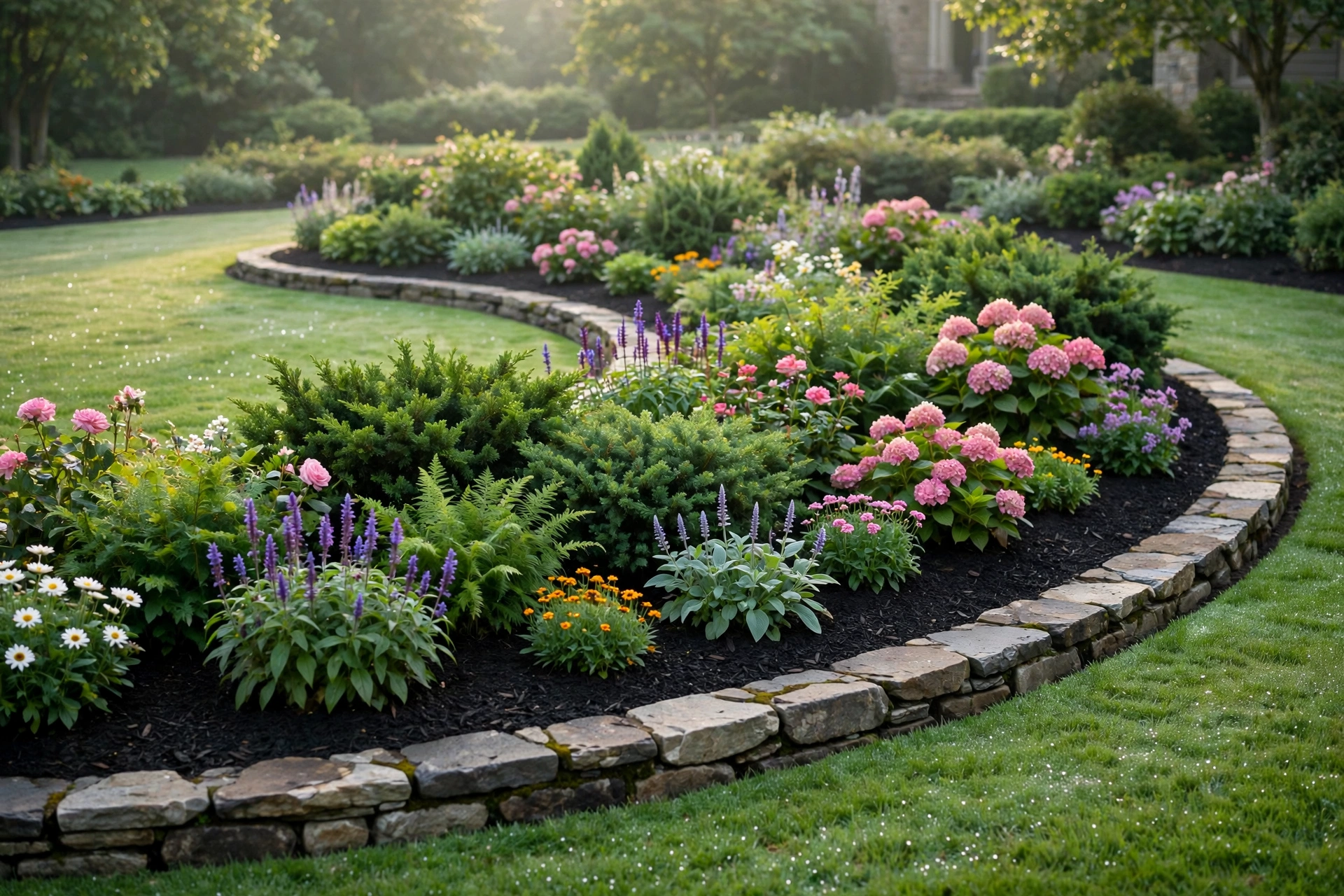
Sweeping curved beds cut into the lawn, edged with stone and filled with black mulch. Best for: softening a boxy front yard. Styling tip: repeat the same curve twice.
4. Tree Rings Around Mature Trees
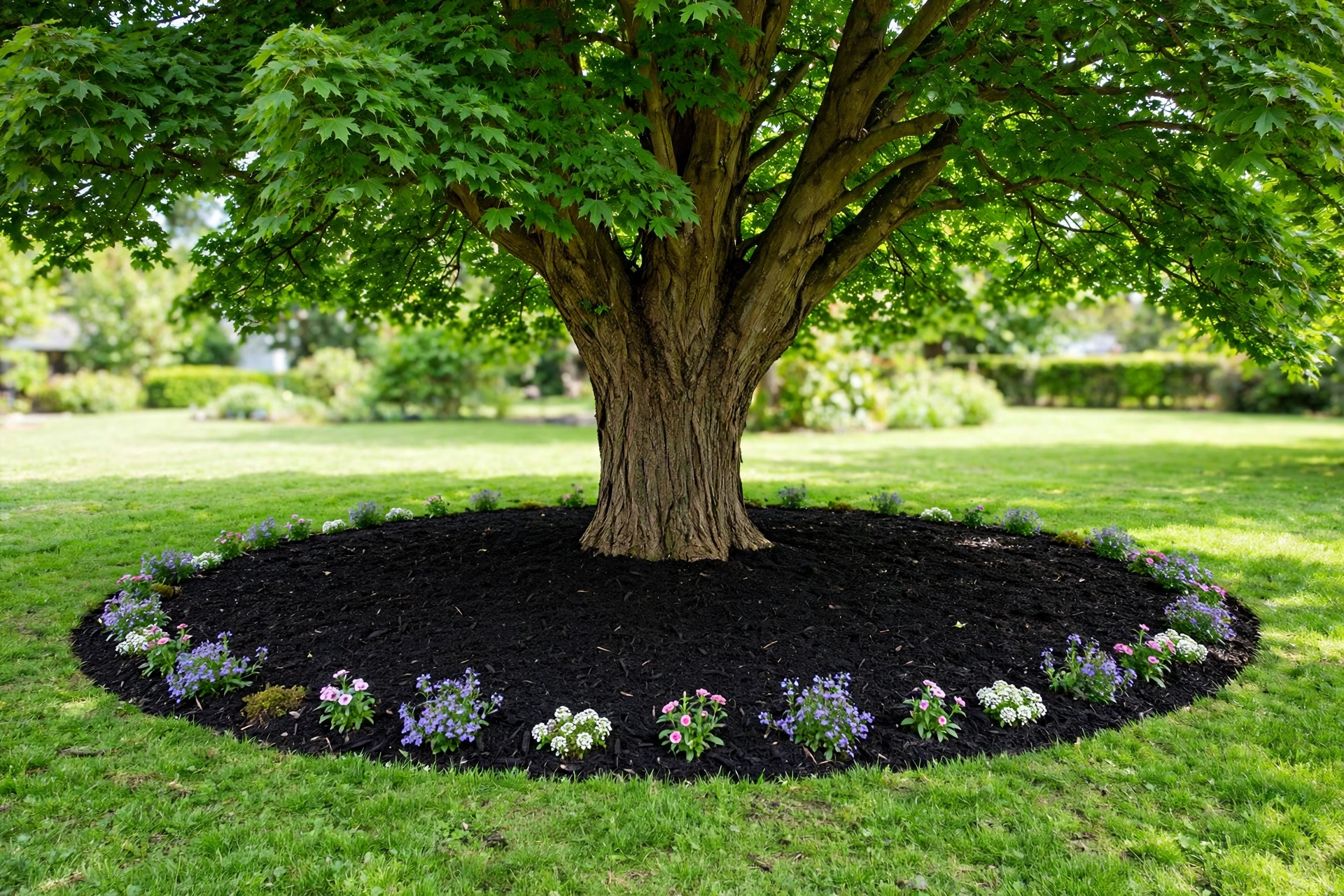
A neat black mulch ring around a mature tree defines the space. Best for: large lawns with established trees. Styling tip: leave a 3-inch gap from the trunk.
5. Bright Annuals Massed in Black Mulch

Bold annuals — red geraniums, yellow marigolds, purple petunias — in big drifts over black mulch. Best for: entry beds, mailbox plantings. Styling tip: plant one colour per drift.
6. Modern Boxwood and Black Mulch Foundation
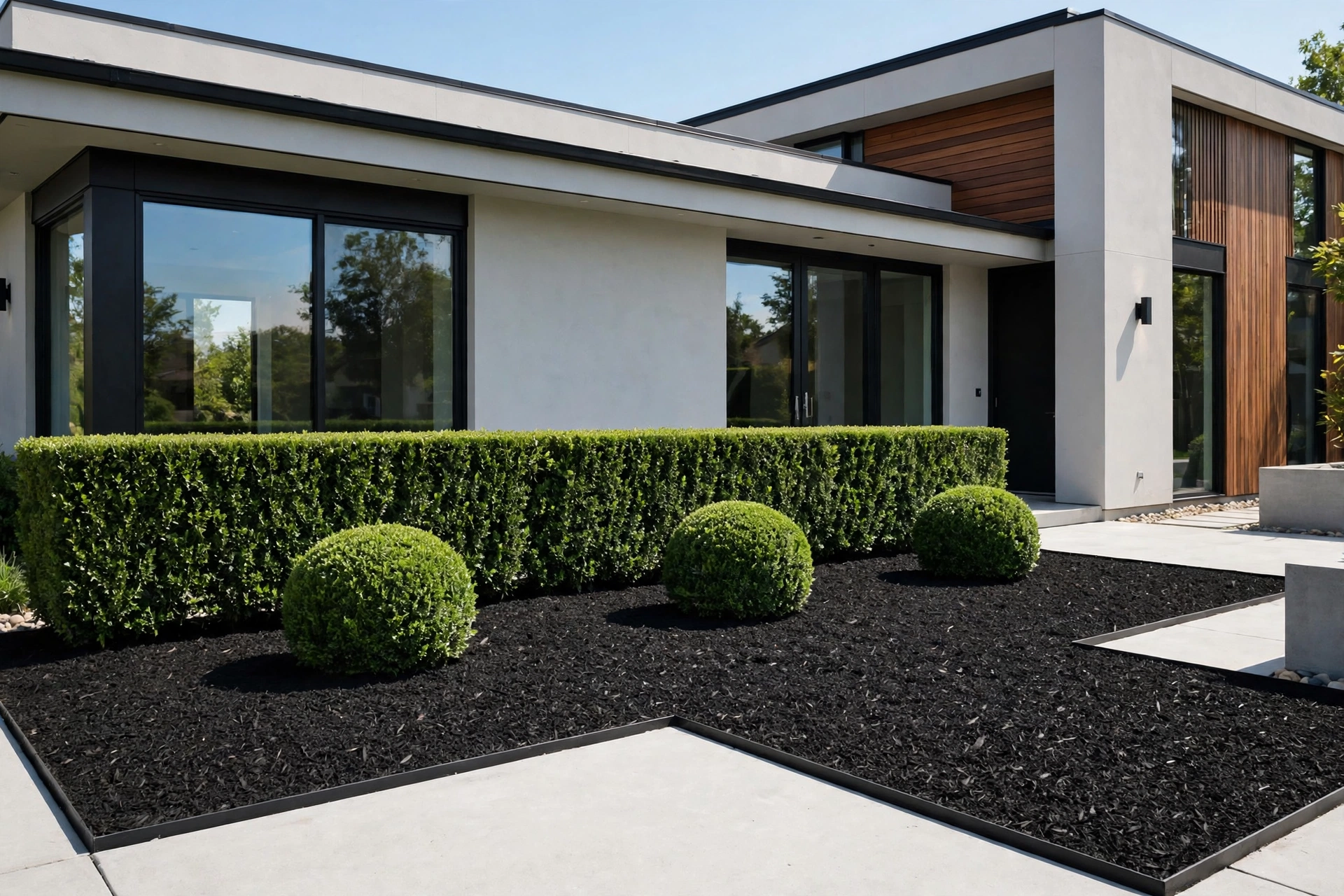
Clipped boxwood over flat black mulch gives a calm, architectural look. Best for: minimalist front yards. Styling tip: use straight edges and even spacing.
7. Stone Pathway Through Black Mulch
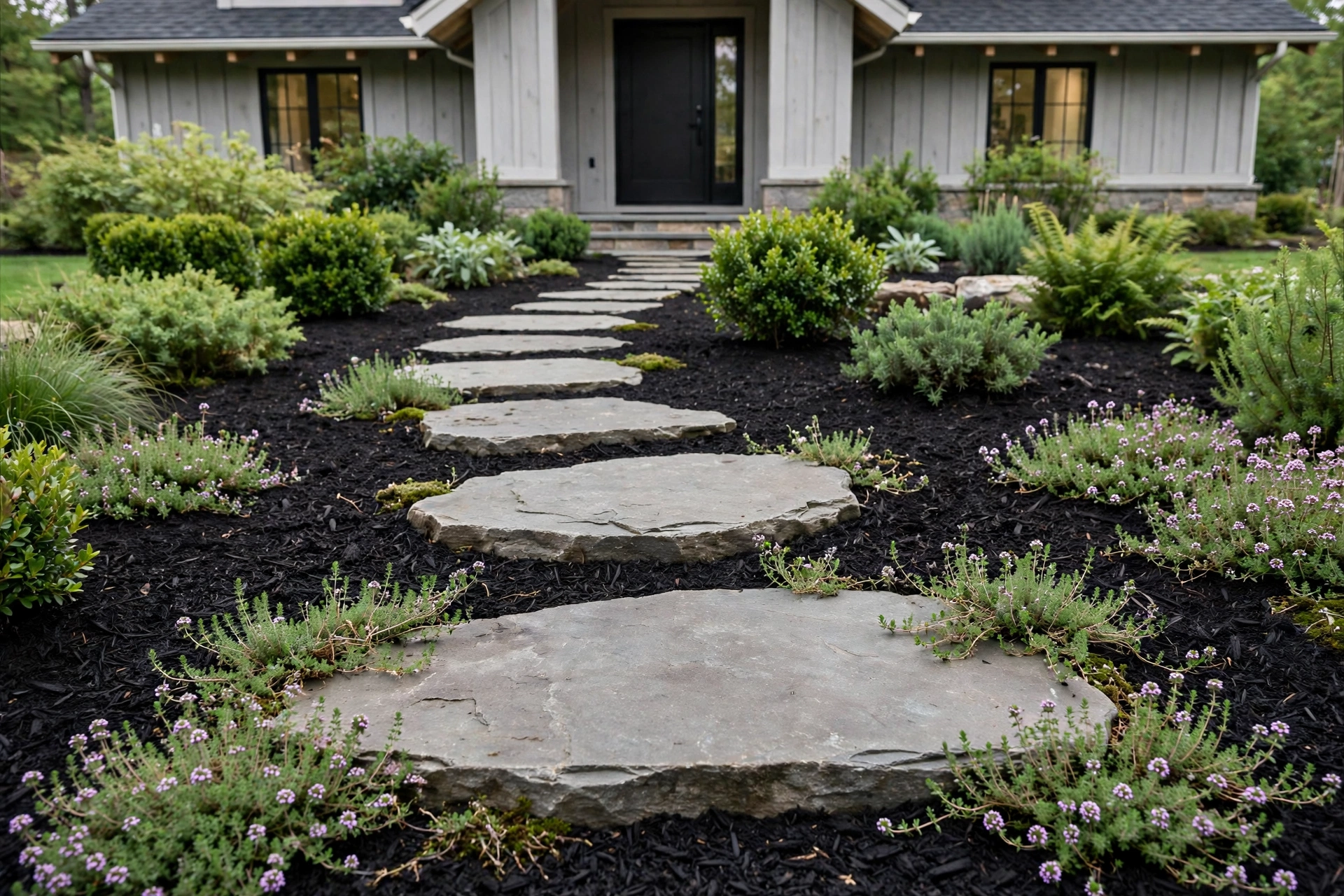
Flat stepping stones through a wide black mulch bed turn a path into a garden walk. Best for: front walks and side yards. Styling tip: plant creeping thyme at the edges.
8. Black Mulch Driveway Border
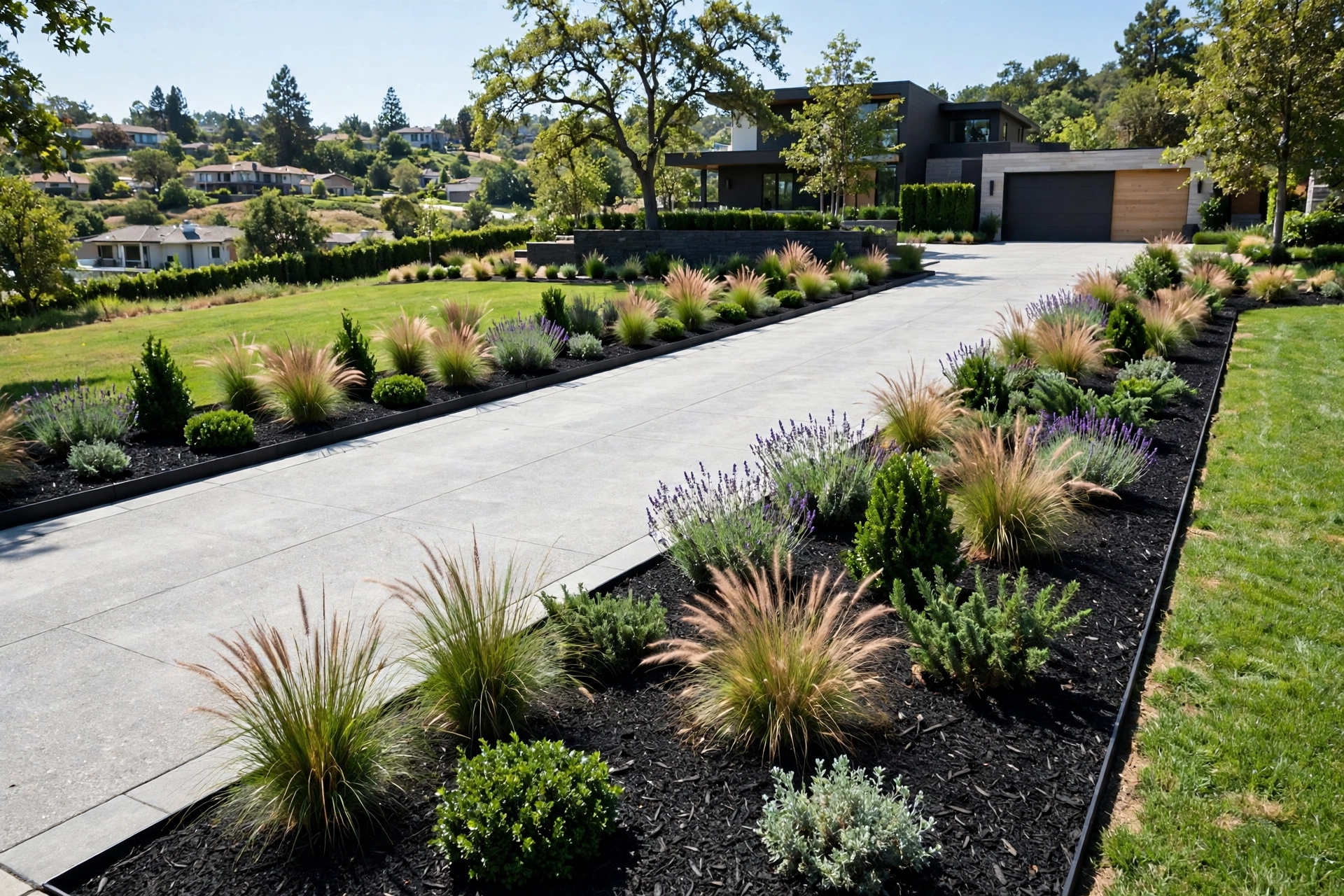
A black mulch strip with low shrubs along the driveway gives a tailored edge. Best for: long driveways that look unfinished. Styling tip: use steel or stone edging.
9. Mailbox Garden Bed

A curved black mulch bed with perennials and a solar light turns the mailbox strip into a showpiece. Best for: budget curb appeal. Styling tip: choose drought-tough plants.
10. Entryway and Front Door Framing

Two matching black mulch beds of evergreens and seasonal colour frame the front door. Best for: making a plain entry welcoming. Styling tip: mirror the planting both sides.
11. Raised Beds Topped with Black Mulch

Black mulch on raised beds holds moisture and warms spring soil. Best for: kitchen gardens, cottage yards. Styling tip: use undyed mulch for edibles.
12. Black Mulch Under Ornamental Grasses
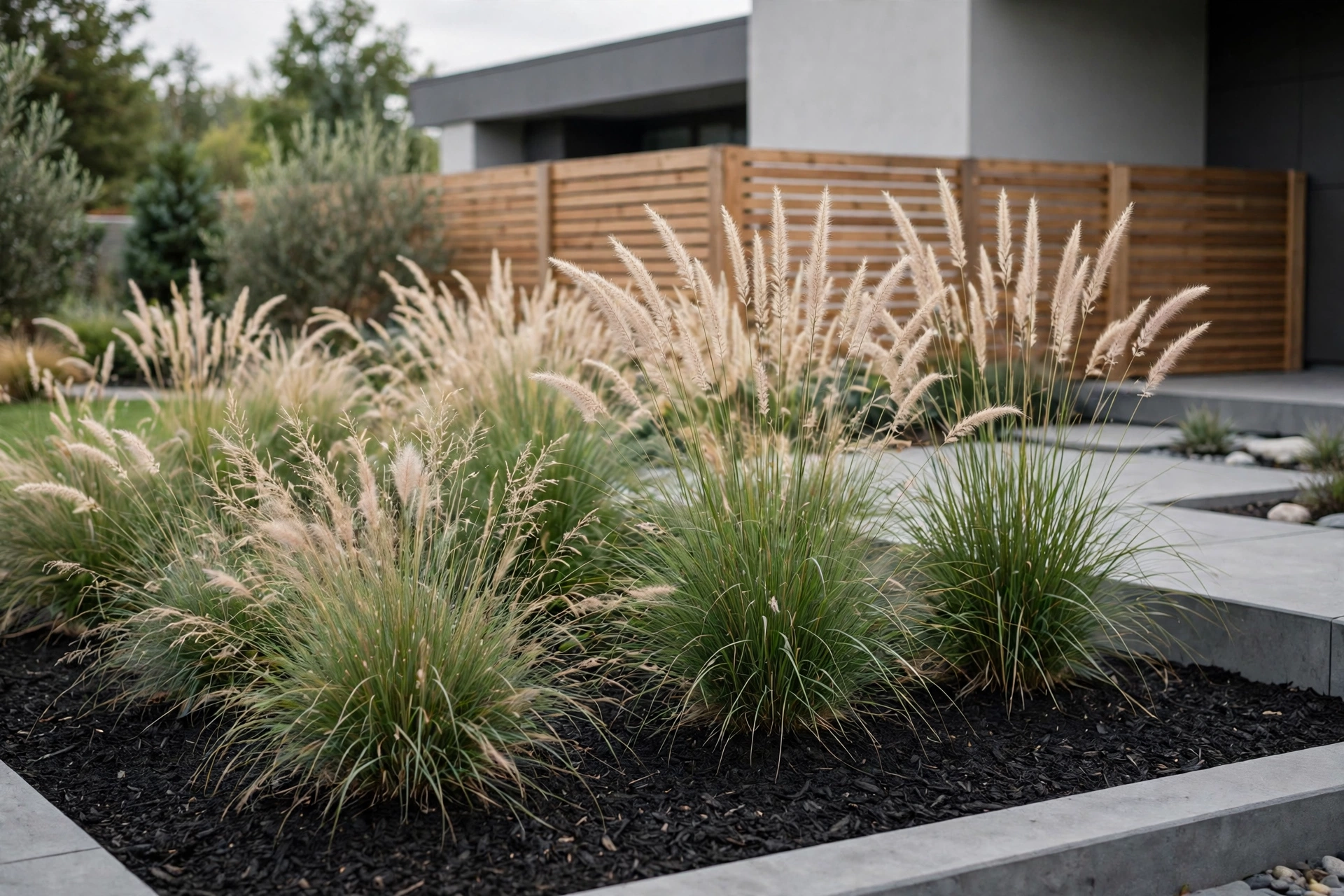
Fountain grass or blue fescue rising from black mulch looks sculptural. Best for: modern and prairie-style yards. Styling tip: plant grasses in threes or fives.
13. Cottage Garden Beds Tamed with Black Mulch
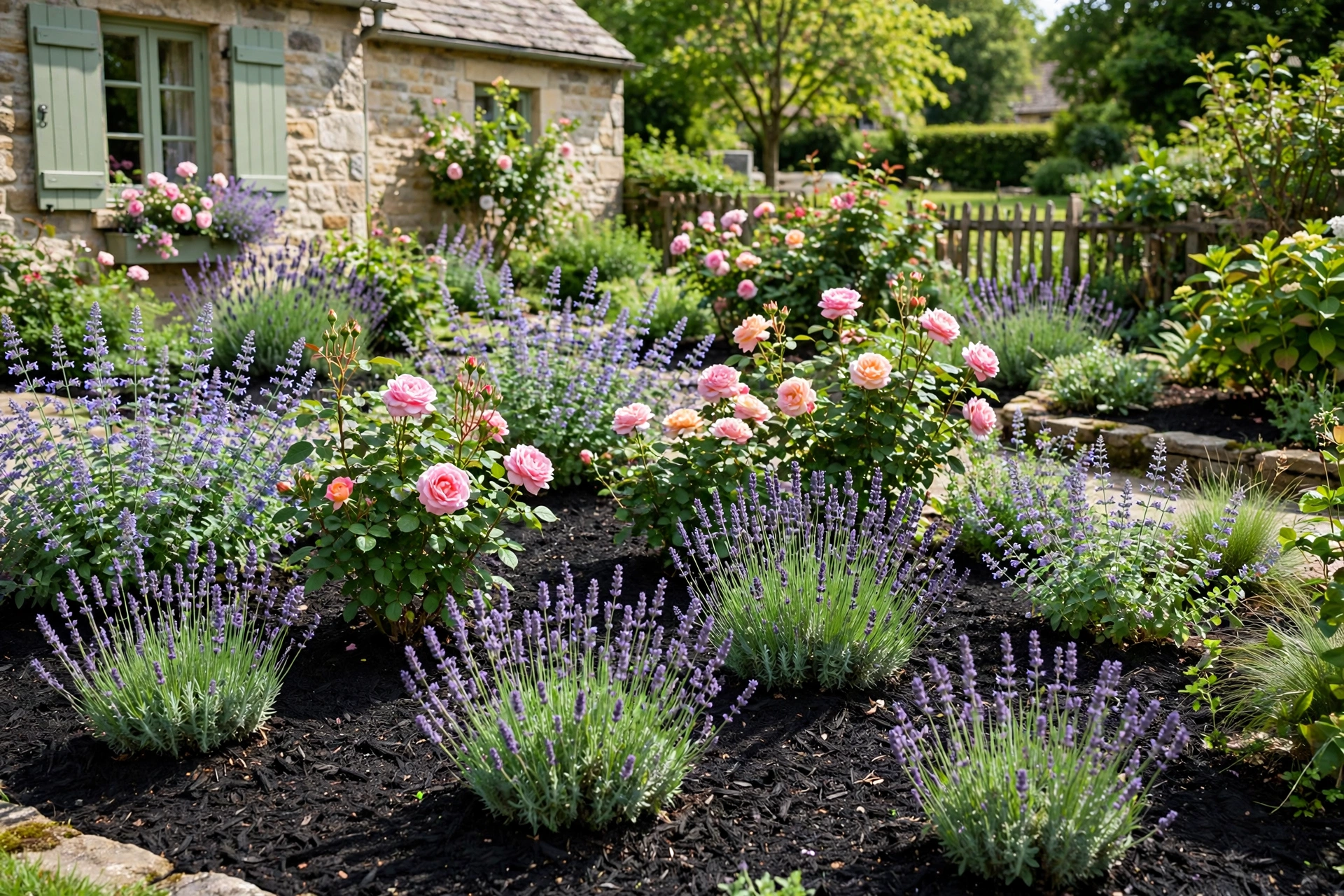
A tidy black mulch base under loose cottage planting reads as style, not mess. Best for: romantic, flower-heavy yards. Styling tip: layer tall at the back.
14. Shady Beds with Hostas and Ferns
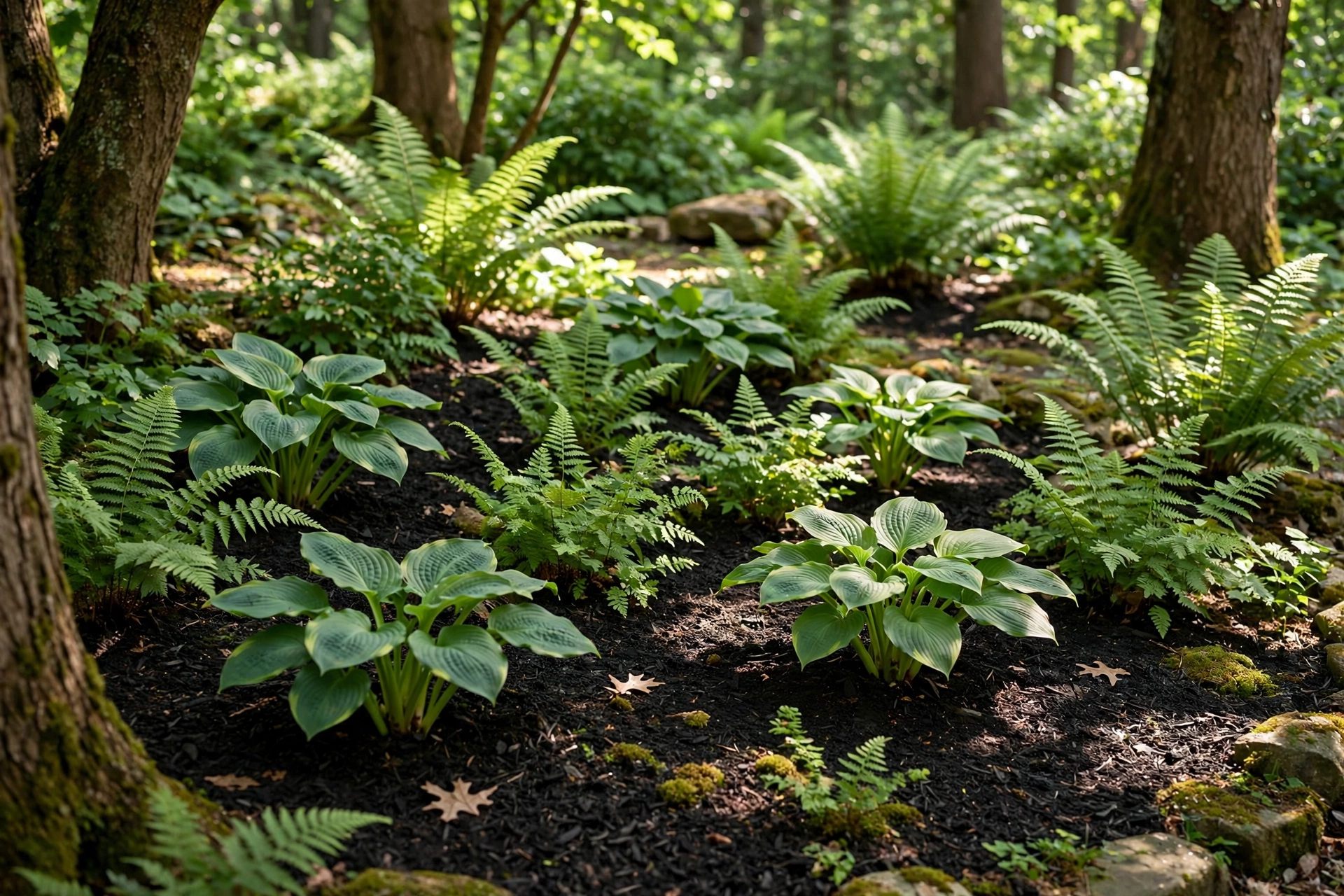
Hostas, ferns, and astilbe over black mulch brighten a shady corner. Best for: north-facing beds, under-tree shade. Styling tip: add white-flowering shade plants.
15. Black Mulch and Boulders Rock Garden
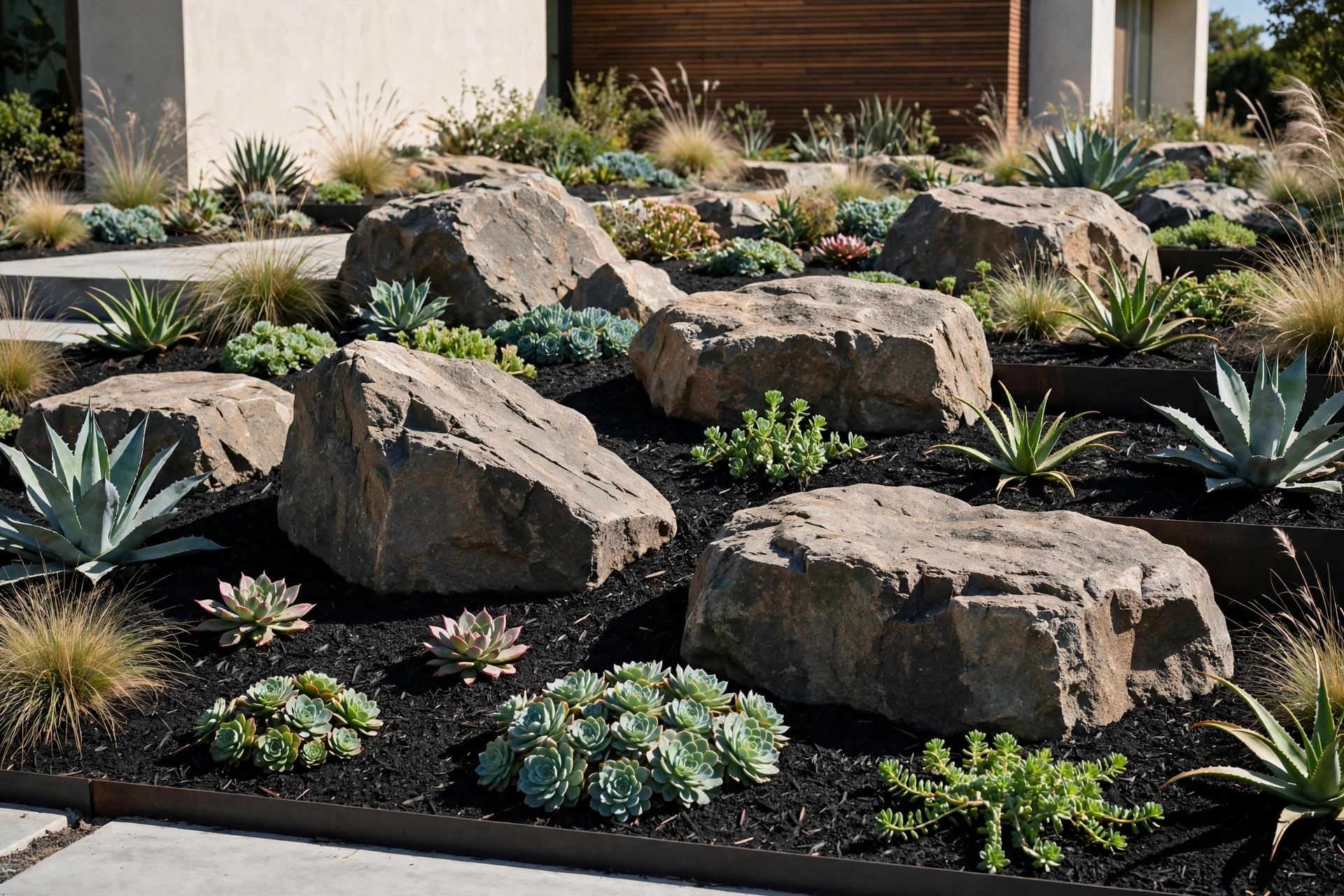
Boulders nestled into black mulch with succulents or dwarf conifers make a low-water feature. Best for: dry slopes, modern rock gardens. Styling tip: bury each boulder one-third deep.
16. Patio Seating Area Framed with Black Mulch

Black mulch beds wrapping a patio make seating feel like a garden room. Best for: backyards that need structure. Styling tip: add fragrant lavender near the chairs.
17. Poolside Beds with Black Mulch
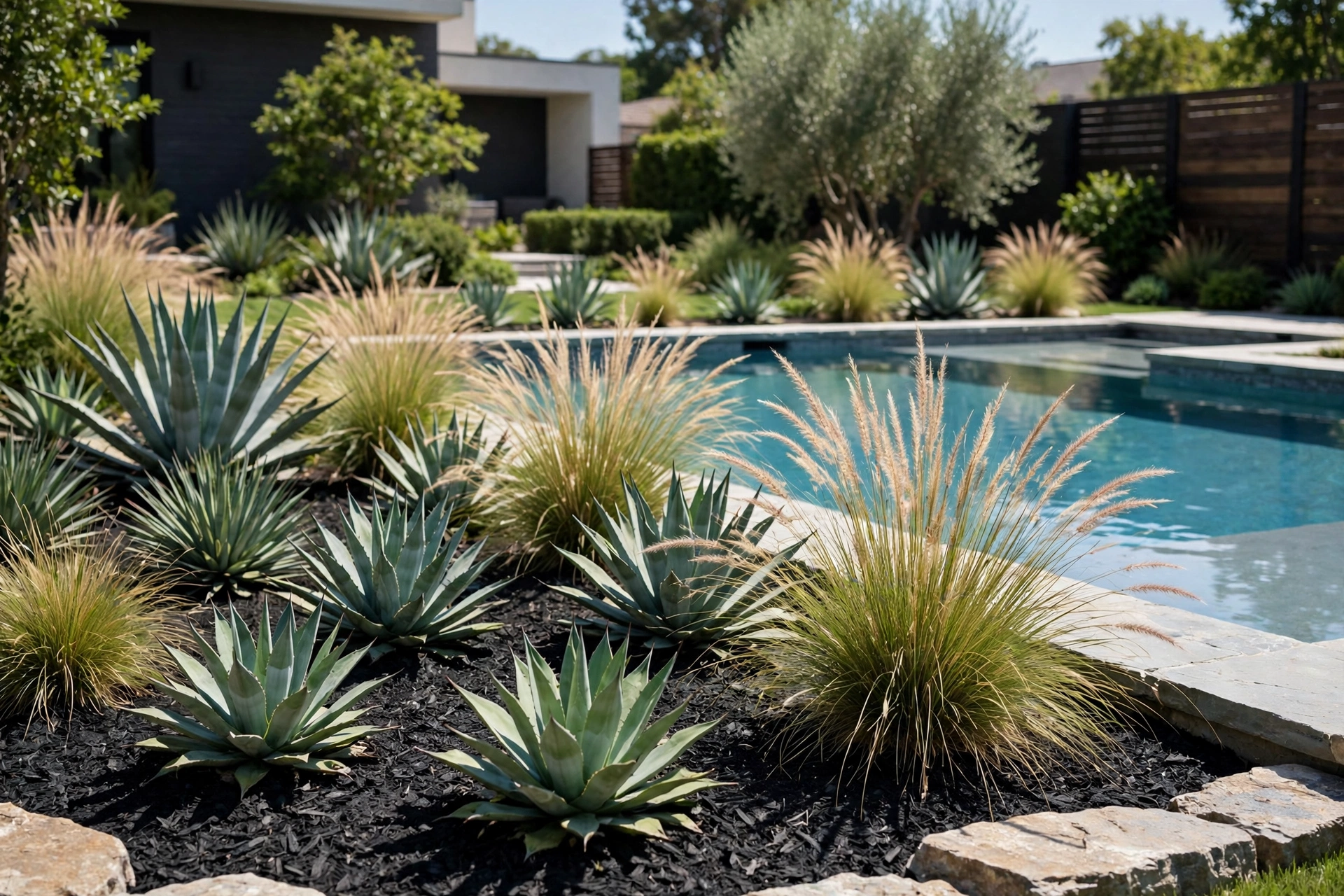
Black mulch beds of agave, grasses, and heat-loving perennials edge a pool with resort style. Best for: pool yards, sunny patios. Styling tip: see our patio ideas for layout help.
18. Vegetable Garden Rows with Black Mulch
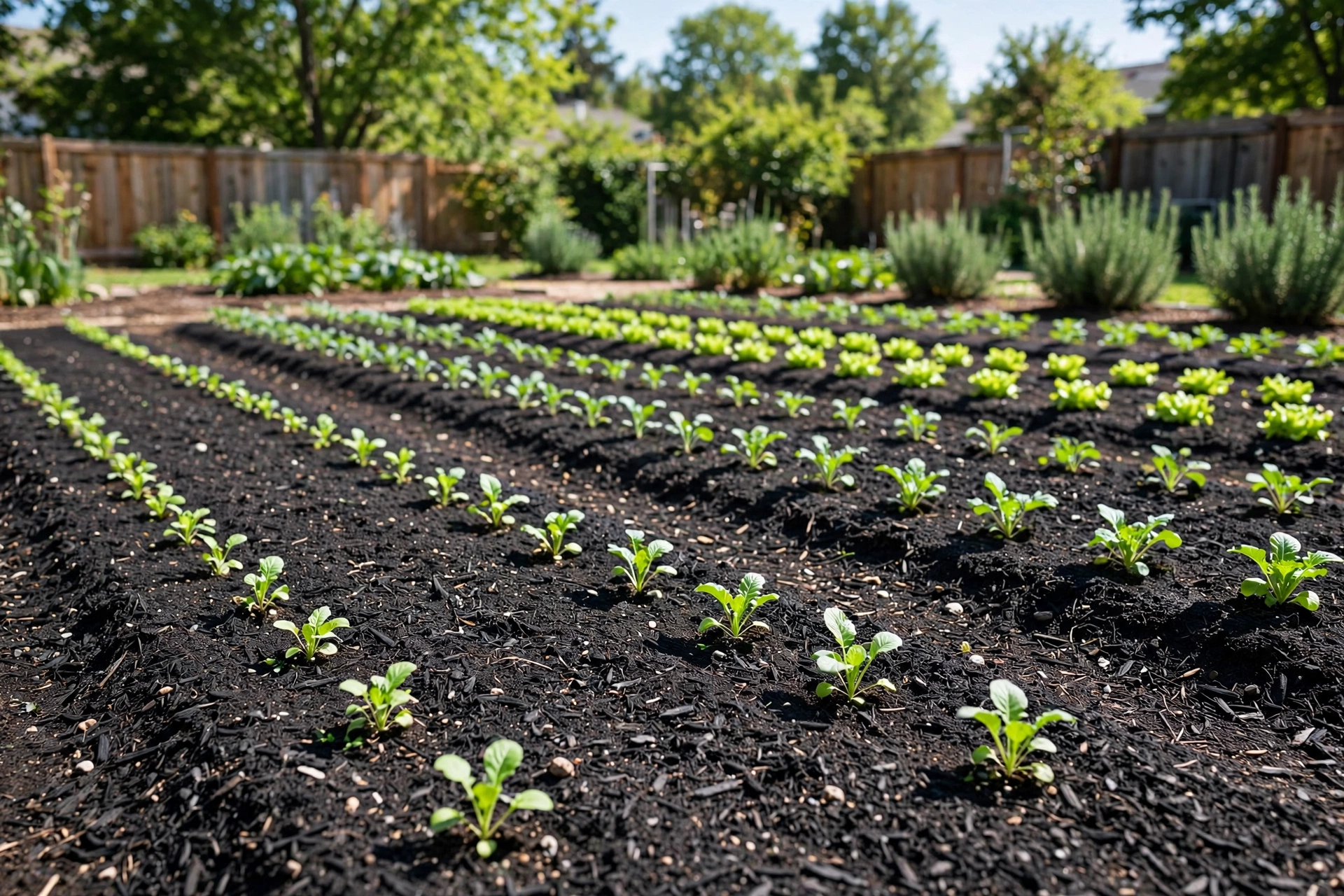
Black mulch between vegetable rows warms soil and keeps paths mud-free. Best for: productive backyard gardens. Styling tip: keep mulch off rows until seedlings are tall.
19. Herb Garden Edged in Black Mulch
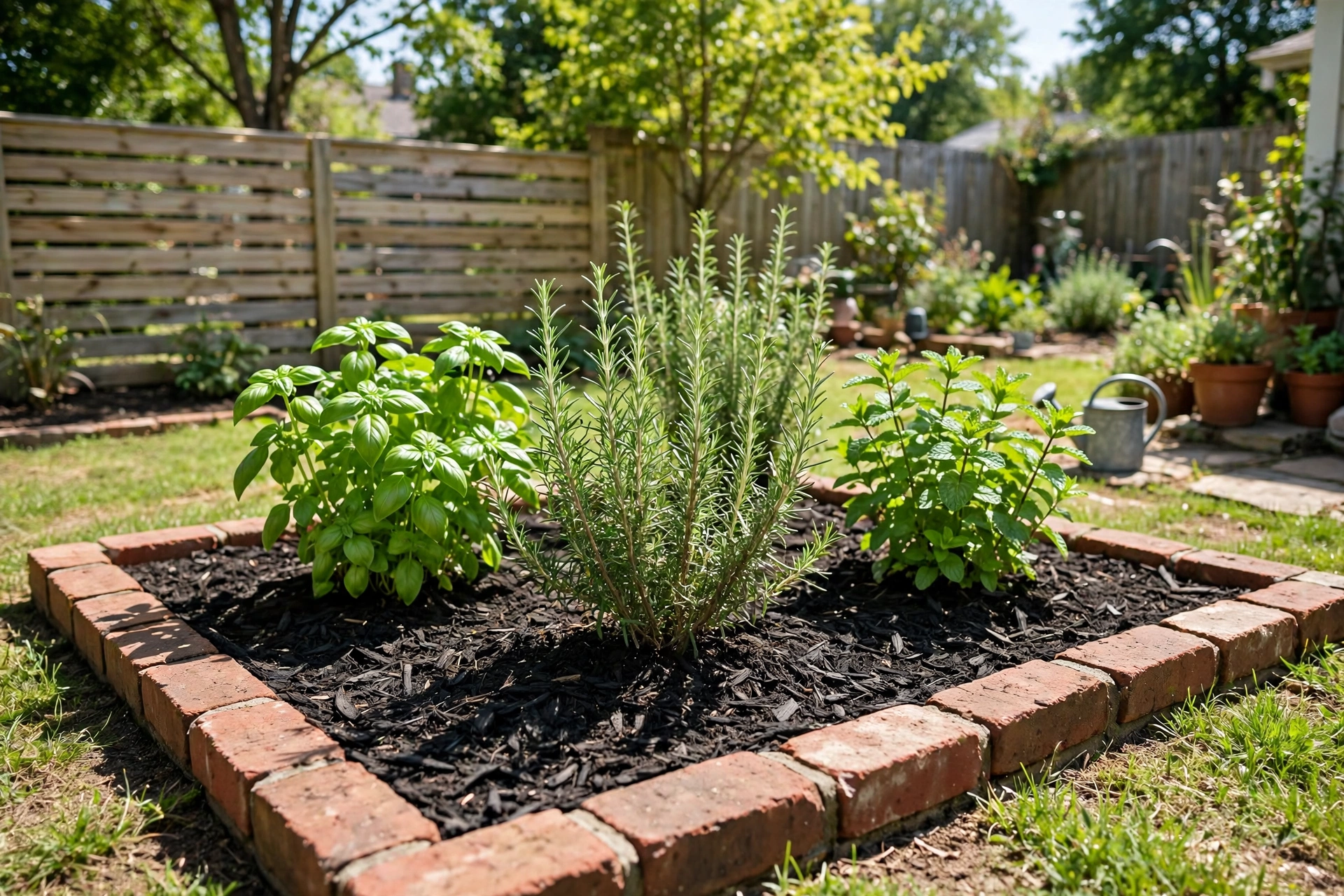
A small herb garden ringed with black mulch and brick looks lush and weeds easily. Best for: kitchen doors, sunny patios. Styling tip: plant mint in a buried pot.
20. Black Mulch Around Shrubs for a Polished Look

A clean black mulch skirt under every shrub makes the border look professionally maintained. Best for: quick weekend refreshes. Styling tip: refresh the top inch each spring.
21. Dry Creek Bed Through Black Mulch
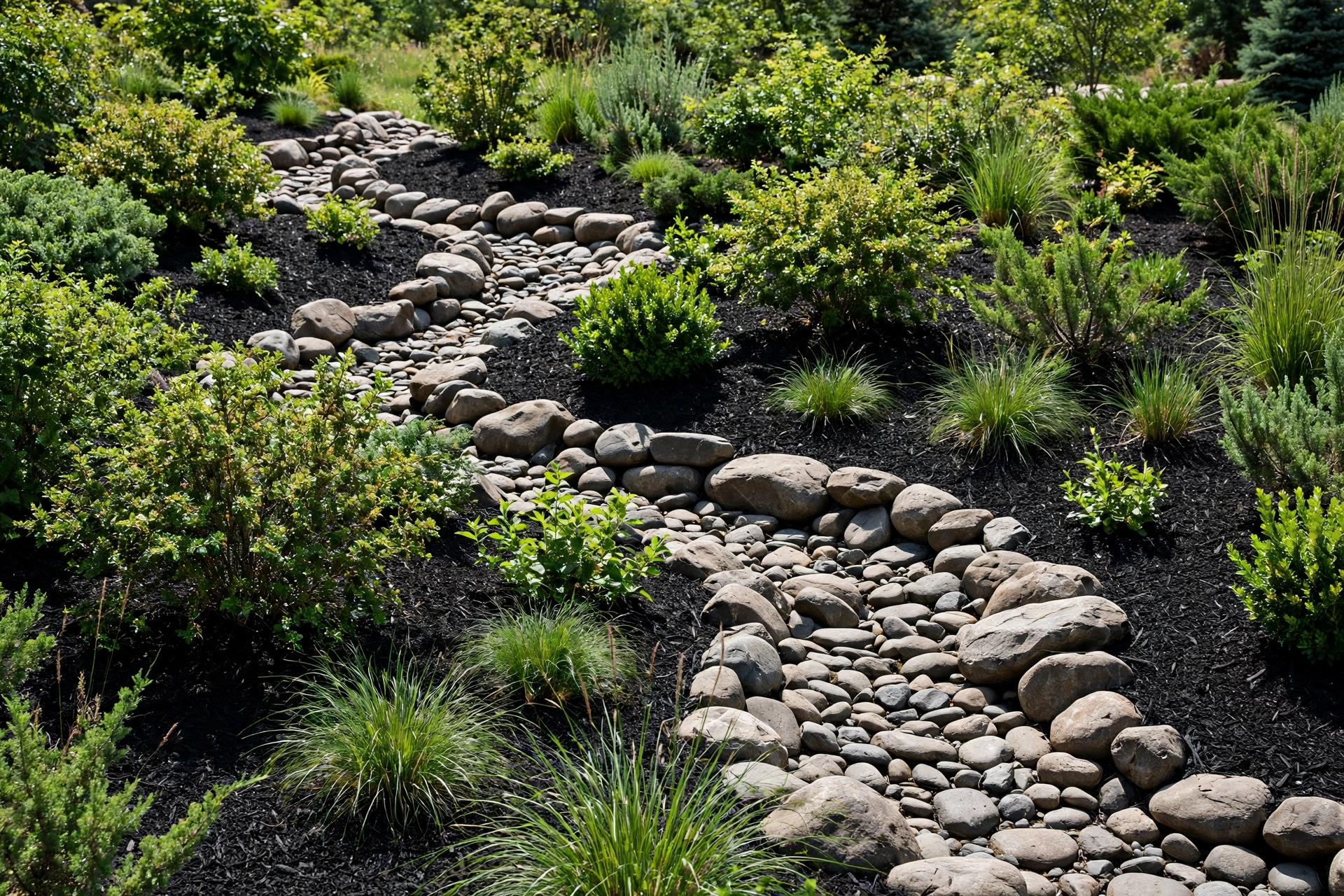
A winding dry creek of river rock through black mulch handles runoff and adds movement. Best for: sloped yards, downspout drainage. Styling tip: use three stone sizes.
22. Black Mulch and Landscape Lighting
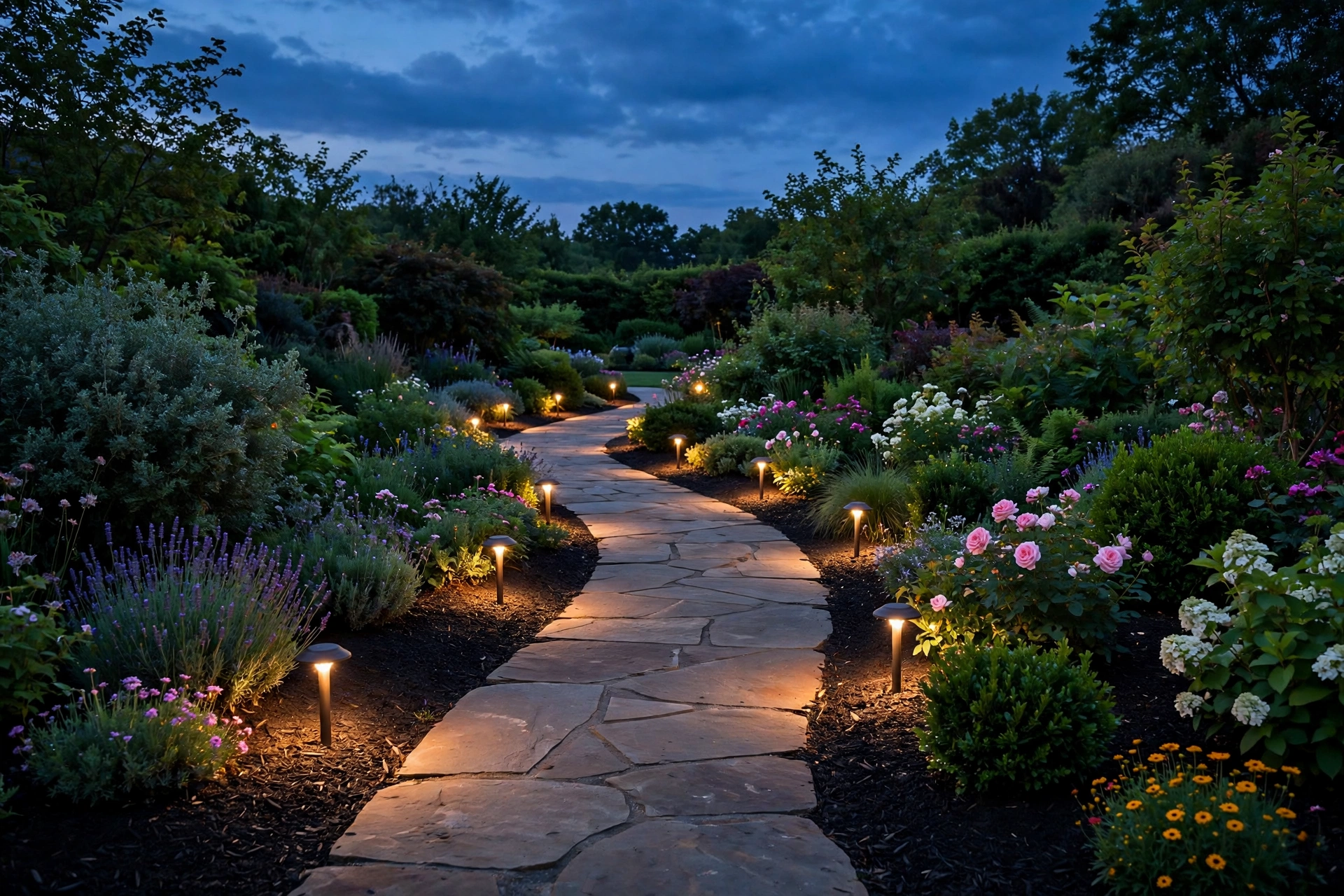
Low-voltage path lights along black mulch beds look dramatic after dusk. Best for: front walks, evening curb appeal. Styling tip: use warm 2700K bulbs.
23. Side-Yard Walkway in Black Mulch
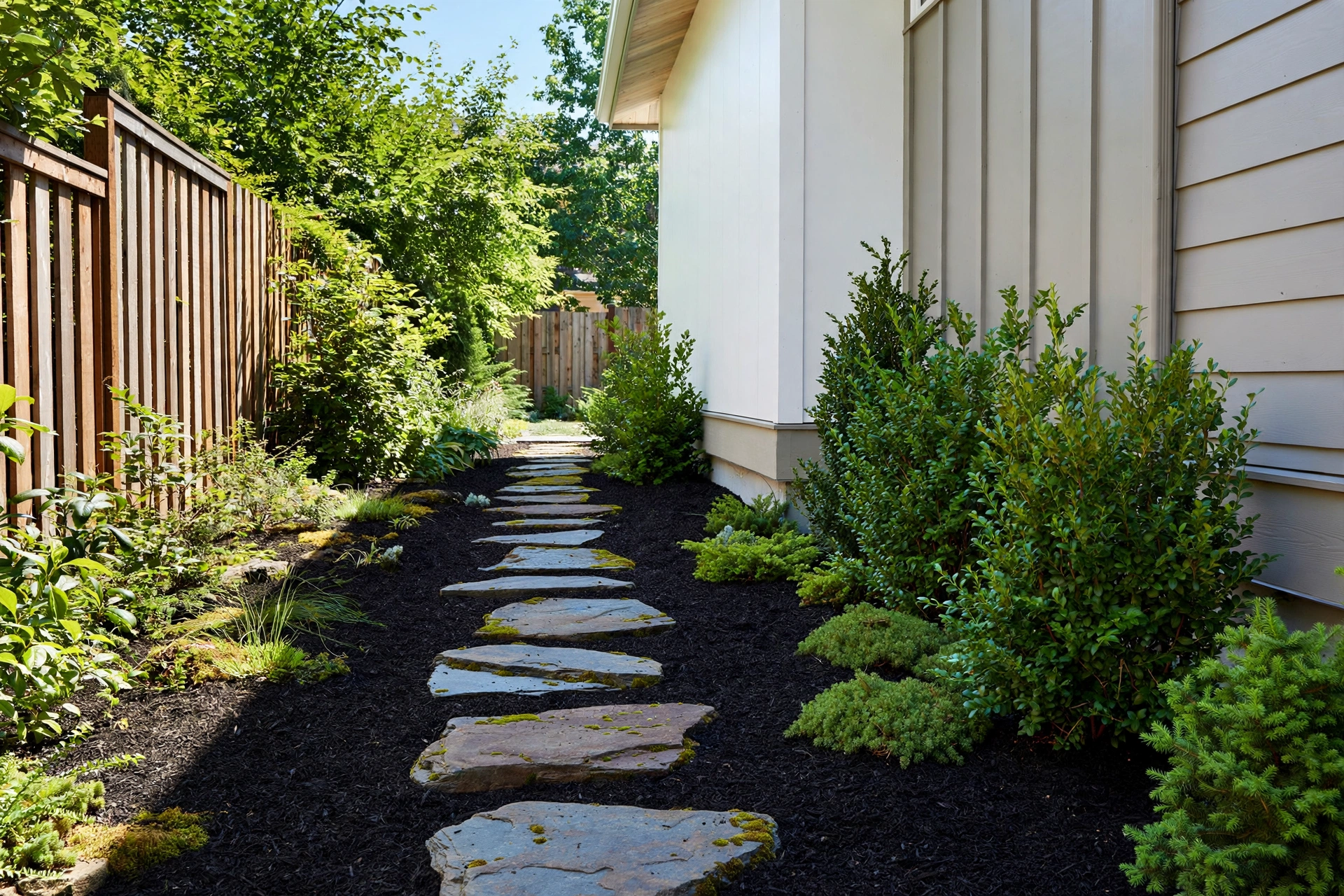
Black mulch, stepping stones, and shade planting turn a narrow side yard into a walk. Best for: strips between house and fence. Styling tip: set the edge first.
24. Slope and Hillside Erosion Control
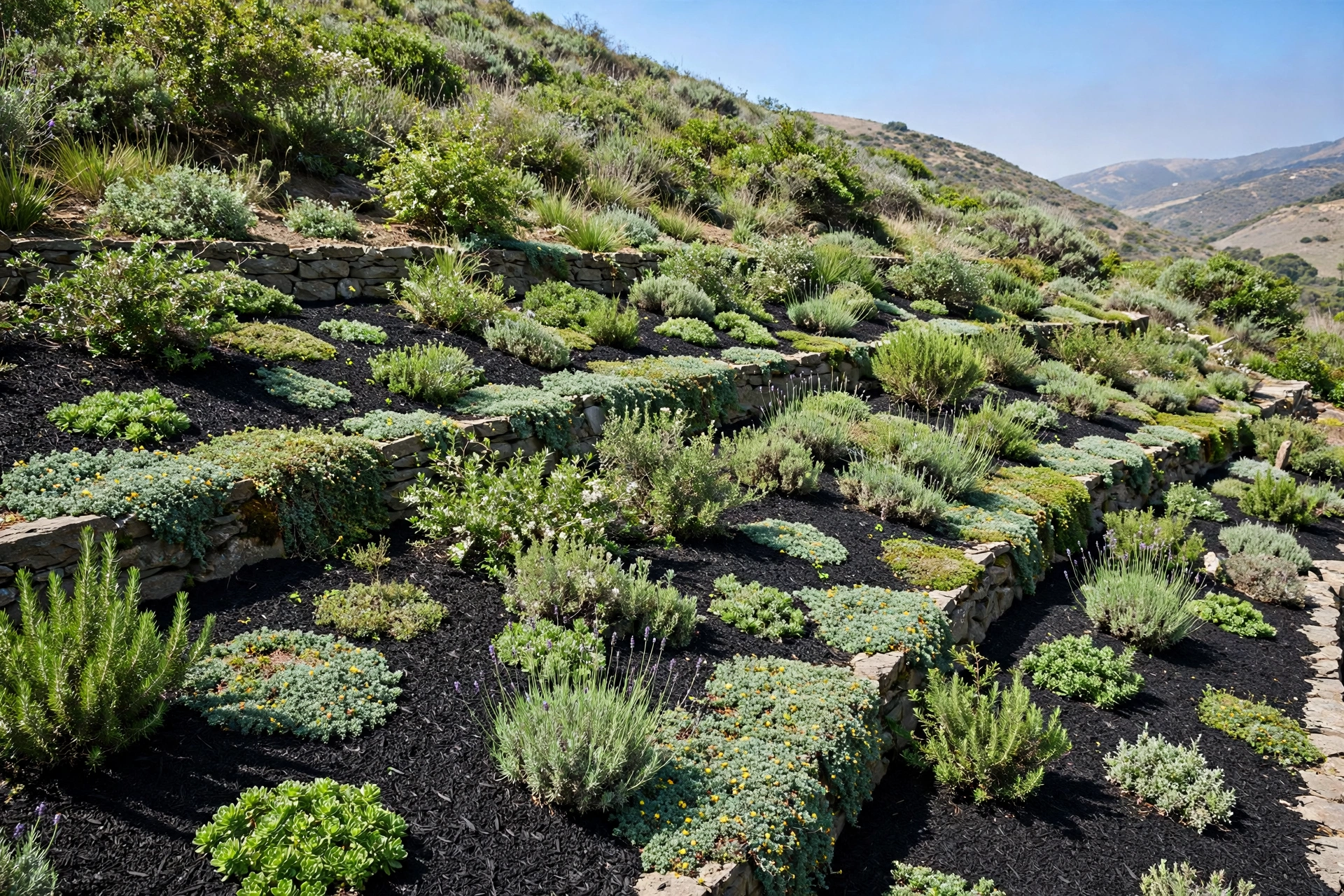
Black mulch with groundcover on a slope slows runoff and holds soil. Best for: front-yard slopes and banks. Styling tip: use shredded mulch — it knits together.
25. Black Mulch Under Roses

Black mulch under roses keeps roots cool and makes bloom colours stand out. Best for: rose gardens, cottage borders. Styling tip: keep mulch off the bud union.
26. Succulent Beds on Black Mulch

Blue-grey succulents and agave against black mulch give a modern, low-water display. Best for: hot, dry, sunny spots. Styling tip: add white gravel around rosettes.
27. Black Mulch with Classic Brick Edging
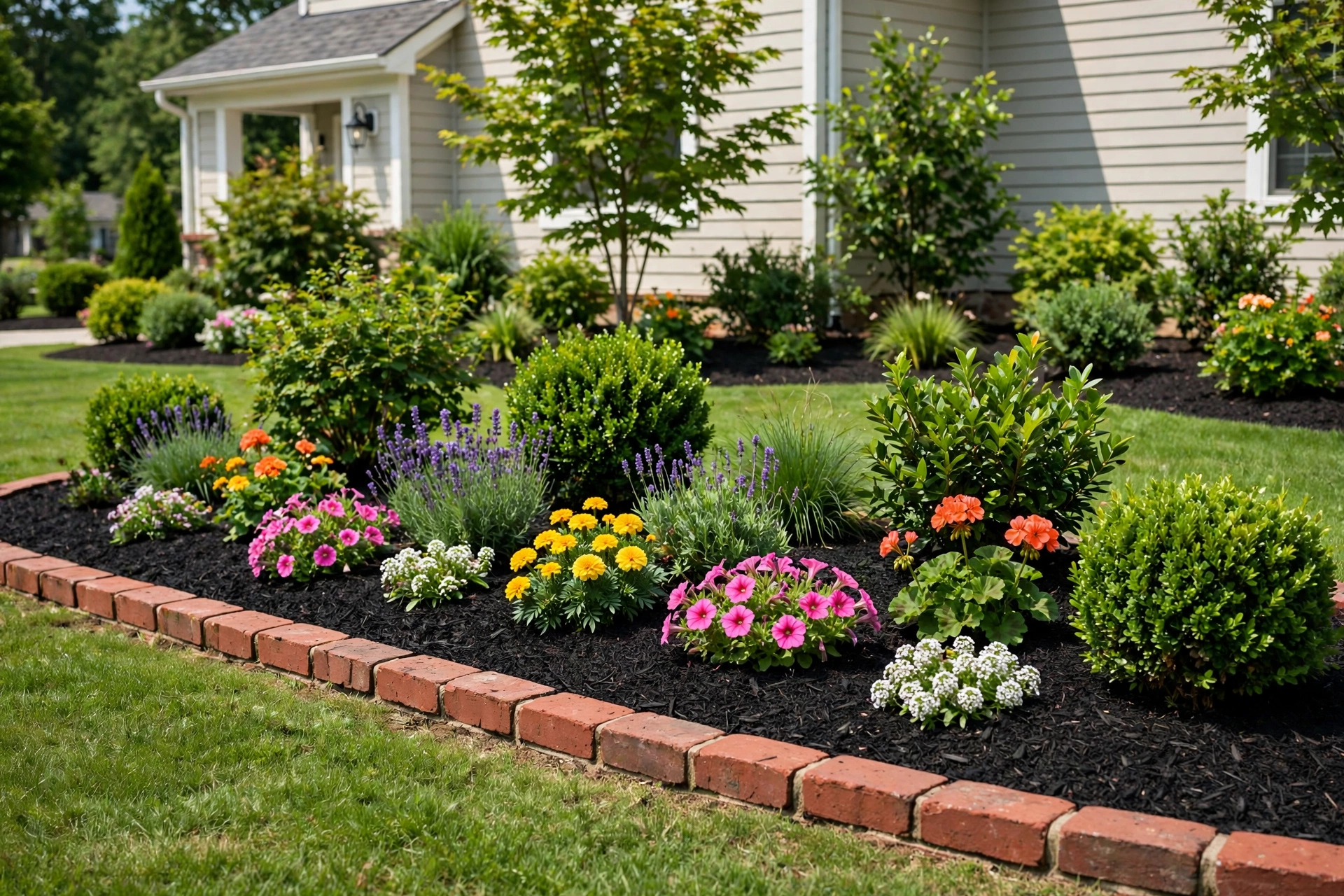
Brick edging around black mulch beds suits colonial and craftsman homes. Best for: older homes, formal front yards. Styling tip: set bricks on edge.
28. Small-Yard Courtyard Garden

In a tiny courtyard, one black mulch bed with a small tree and shrubs does a whole garden’s work. Best for: townhouses, small urban yards. Styling tip: pick one small tree as anchor.
29. Seasonal Colour Rotation Beds
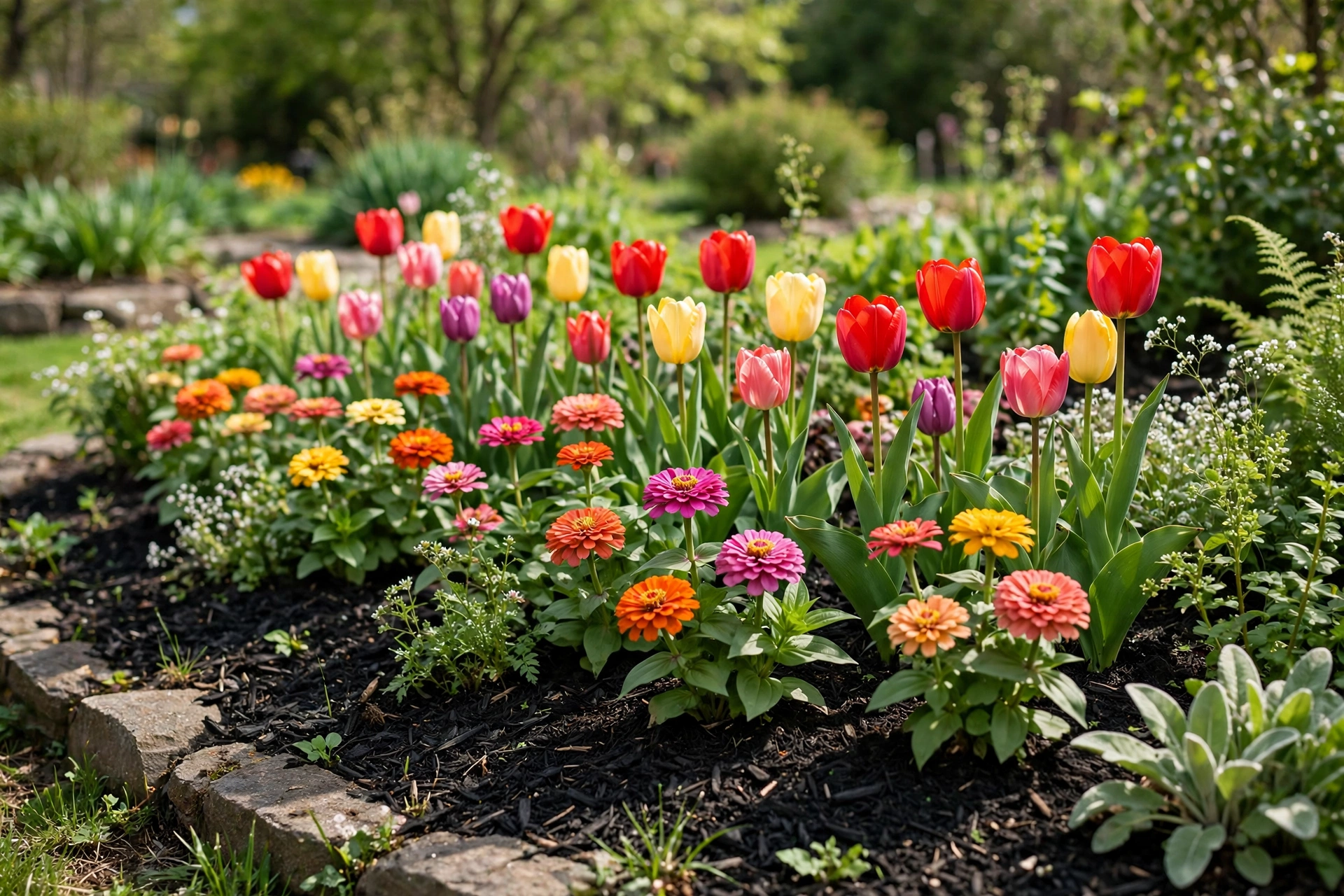
Two or three black mulch “rotation beds”: tulips in spring, zinnias in summer, mums in autumn. Best for: gardeners who love change. Styling tip: swap only the front row.
Conclusion
Black mulch is a small change with an outsized payoff: one dark layer turns ordinary beds into a designed landscape and quietly cuts weeding and watering. Pick two or three ideas — a foundation bed, a tree ring, a path border — and start there. Once you see the contrast from the street, you will wonder why you waited.
FAQs
Does black mulch fade?
Yes — dyed black mulch fades within a few months in full sun, turning grey-brown as UV breaks the colourant down. The mulch still works fine for weeds and moisture; fading is cosmetic. To keep the colour rich, top up with a fresh 1-inch layer each spring. In shade, it holds its colour far longer.
How thick should black mulch be?
Spread black mulch 2–3 inches thick for flower beds and shrub borders — enough to block weeds and hold moisture without suffocating roots. On slopes use the thinner end. Never pile mulch deeper than 4 inches or heap it against stems and trunks, where trapped moisture causes rot. When refreshing, 1 inch of new mulch is usually enough.
Is black mulch safe for plants? Does it overheat?
Black mulch is safe for most plants when applied correctly, but it absorbs more heat than brown mulch, so soil beneath can run a few degrees warmer in full sun. That warmth helps in spring but can stress shallow-rooted plants. Keep mulch a few inches from stems, water deeply rather than often, and in hot climates use it mainly in part-shade beds.
Black mulch vs brown mulch — which is better?
Neither is better overall — it depends on the look you want. Black mulch gives the boldest contrast, makes flowers pop, and suits modern, minimalist designs. Brown mulch looks softer and more natural, blends with wood and brick, and suits cottage and traditional gardens. Functionally they are similar. Choose black for drama, brown for a natural feel.
How often should I replace black mulch?
Top up black mulch once a year, usually in spring, with a fresh 1-inch layer to restore colour and depth. Full replacement is rarely needed — old mulch breaks down into the soil and improves it, so you are mostly adding, not removing. Only strip it out if it has formed a matted crust or smells sour. A yearly top-up keeps beds fresh.
How much black mulch do I need, and what does it cost?
Measure the bed in feet and multiply length by width for square feet. One cubic yard covers about 100 square feet at 3 inches deep, and a standard 2-cubic-foot bag covers about 8 square feet. Bagged dyed black mulch typically costs $3–$6 per 2-cubic-foot bag, while bulk mulch is cheaper for large beds. Always buy about 10% extra.
