
Every mudroom has one hero piece, and it is the bench. It is where boots come off, bags land and everyone pauses for half a second on the way in and out. The trick is choosing a bench that earns its footprint — one that stores as much as it seats. If you are starting from scratch, our roundup of mudroom ideas covers the full layout, but the bench is where the real organisation happens. Here are 13 mudroom bench ideas with storage that genuinely work in real homes, from hidden compartments to designs for the narrowest hallways.
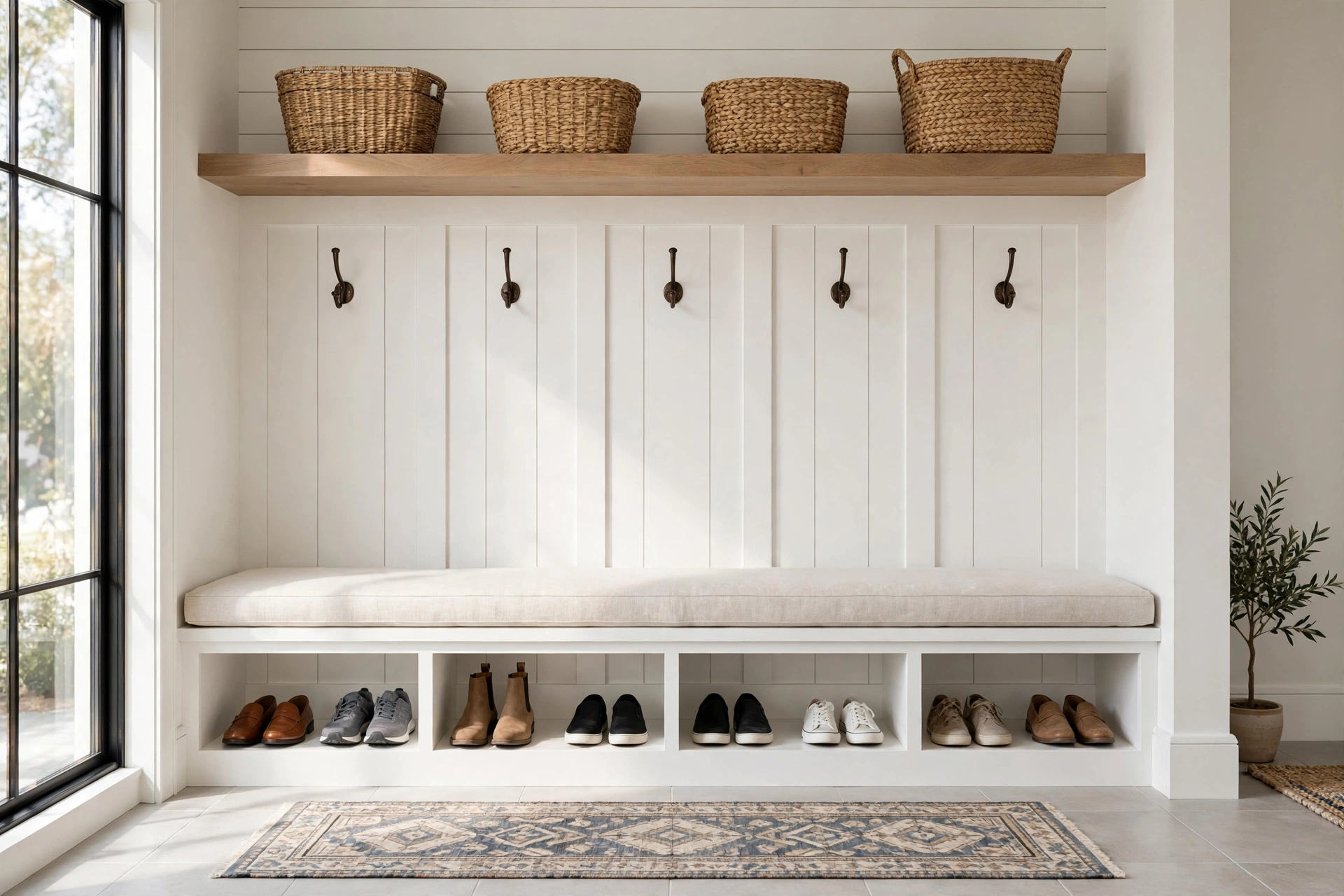
1. Built-in bench with open shoe cubbies
The classic for a reason. A wall-to-wall built-in with open cubbies underneath gives every pair of shoes a visible home, which means shoes actually get put away. Size each cubby roughly 15 cm wide so adult footwear fits without a squeeze, and leave one spare slot per family member as a buffer. Add a row of hooks above and you have solved most entryway chaos with a single piece.
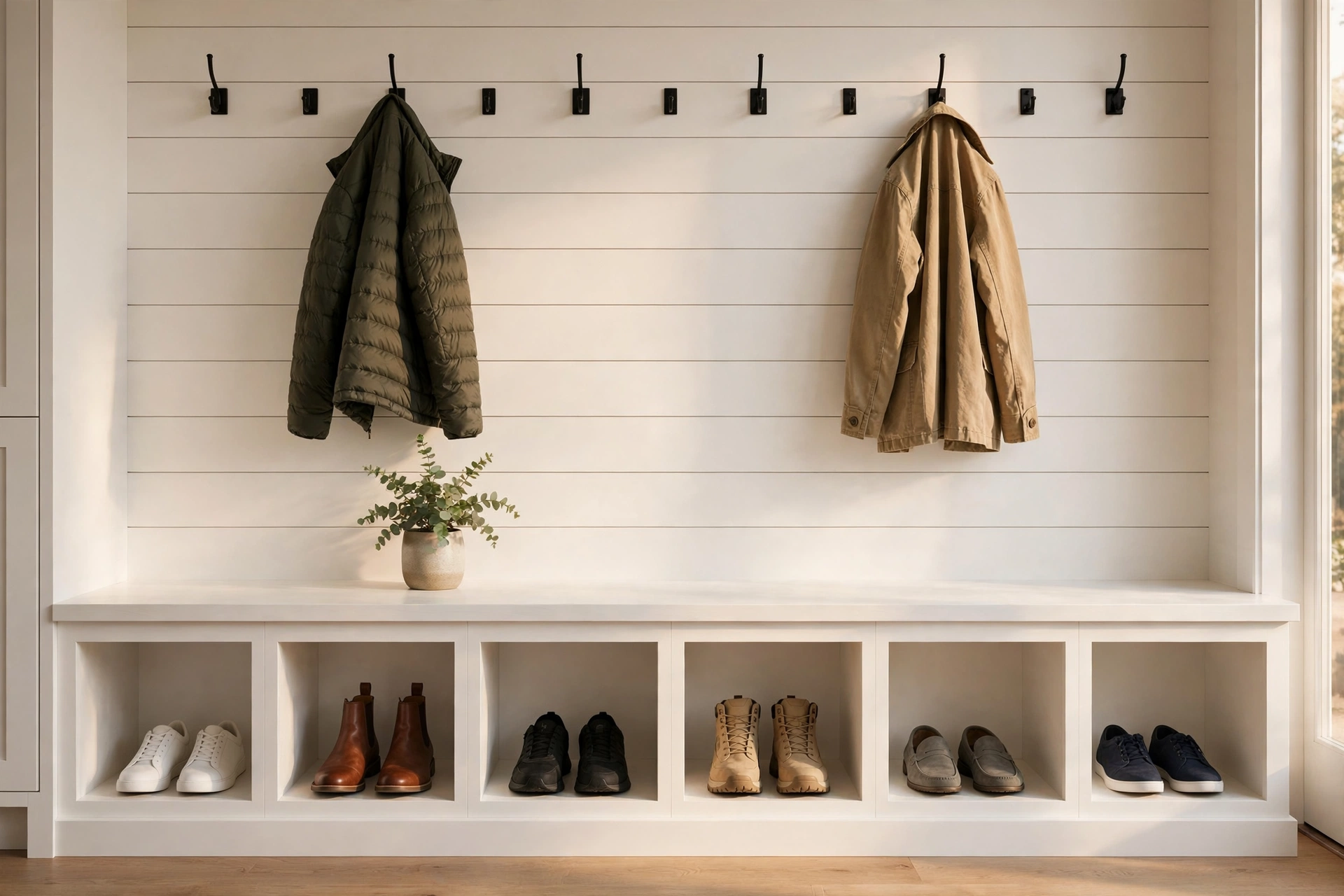
2. Lift-top bench for hidden bulk storage
A hinged seat hides one big compartment underneath — perfect for bulky, rarely used items like camping gear, sports equipment or the dog’s spare supplies. It is the highest storage-to-effort ratio you can get: a simple box, a lid, and everything disappears. Fit soft-close lid supports so it can never slam on small fingers. If you would rather build than buy, This Old House publishes a step-by-step guide to building a simple mudroom bench that walks through the whole project.
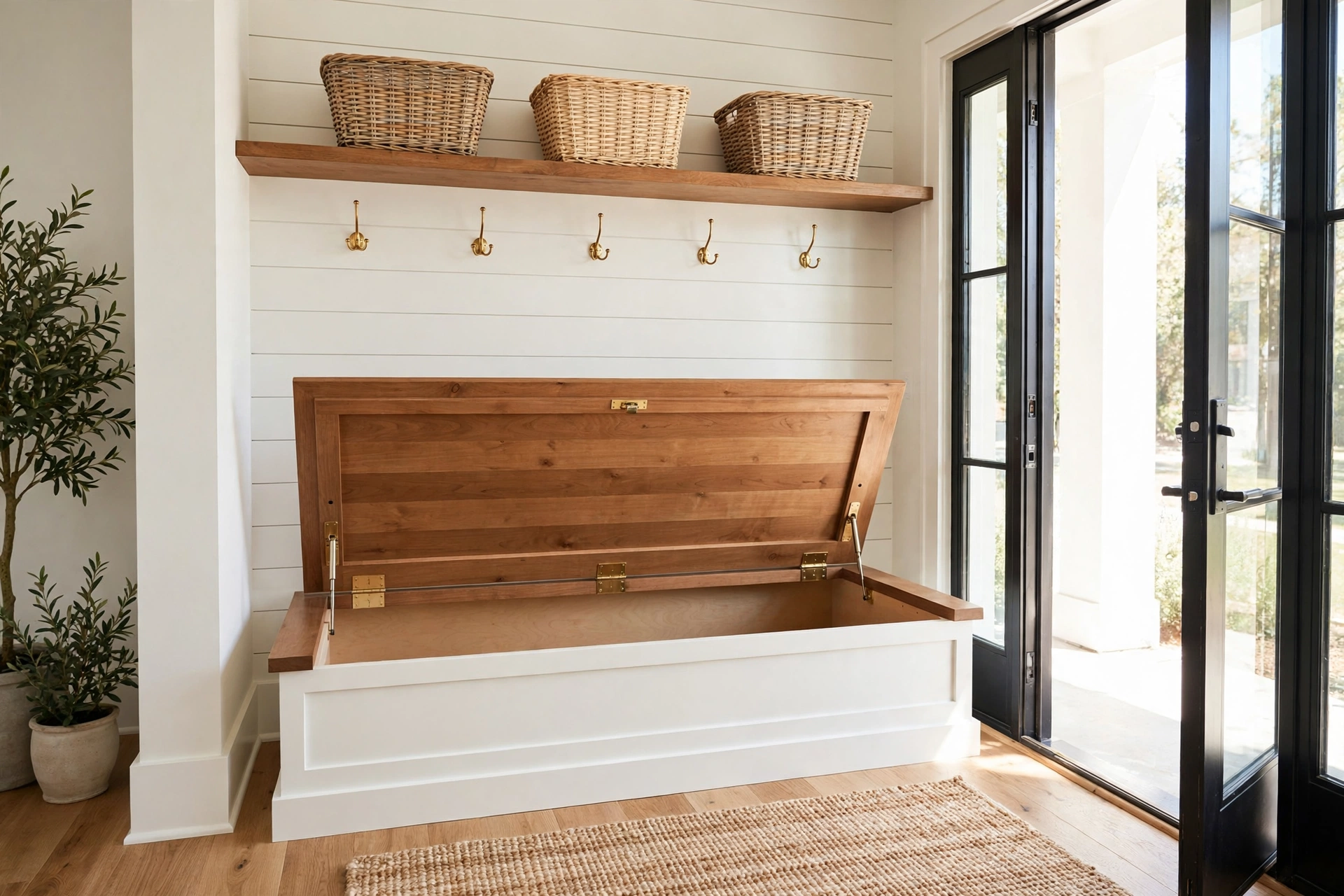
3. Deep drawers for off-season layers
Drawers under the bench are the tidiest way to store the off-season layer: scarves and hats in summer, beach towels and sun hats in winter. Because the fronts sit flush, the bench reads as furniture rather than storage. Use full-extension slides so the back of the drawer stays reachable — that is where things go to be forgotten. A bench around 45 cm deep gives drawers enough room to be genuinely useful.
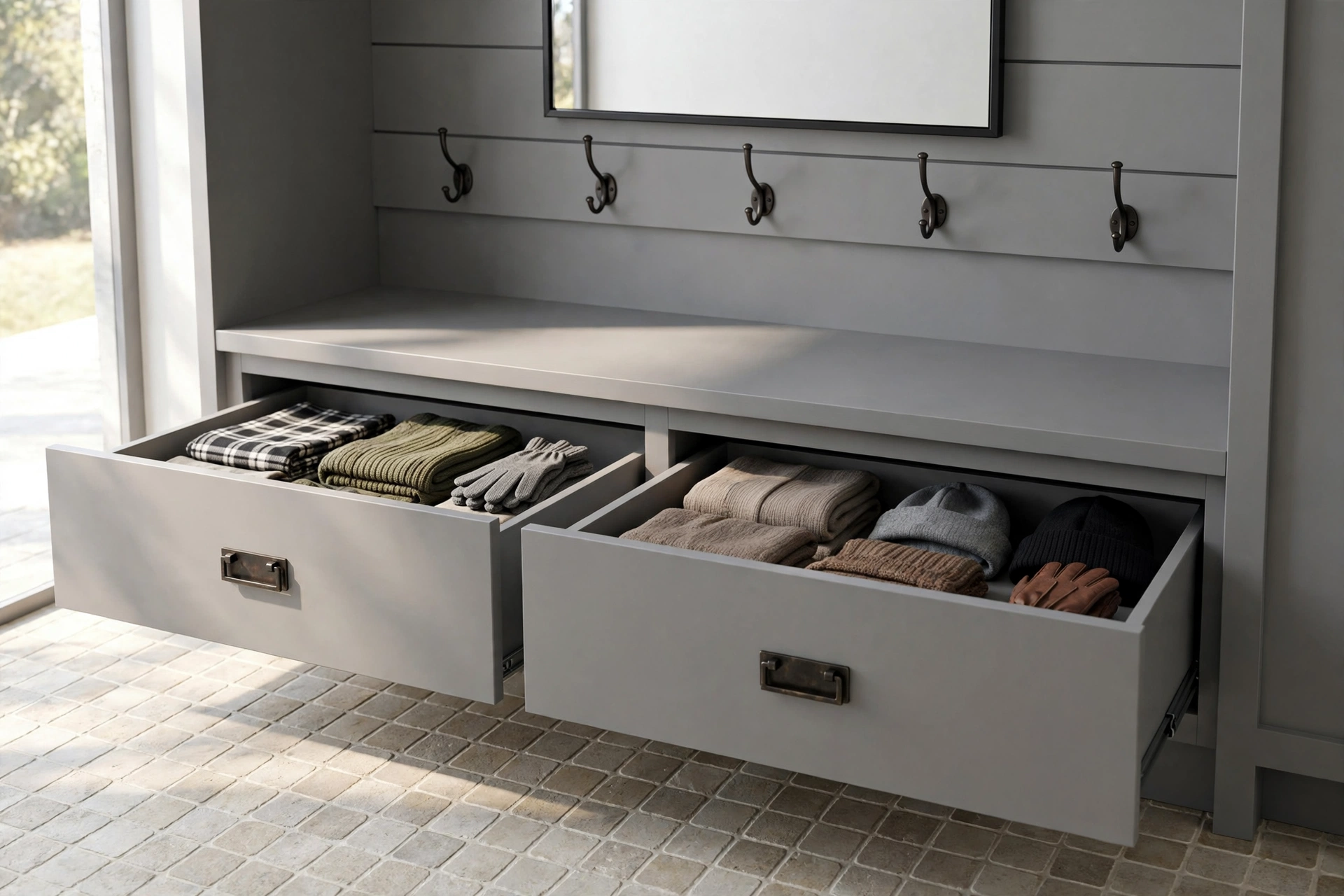
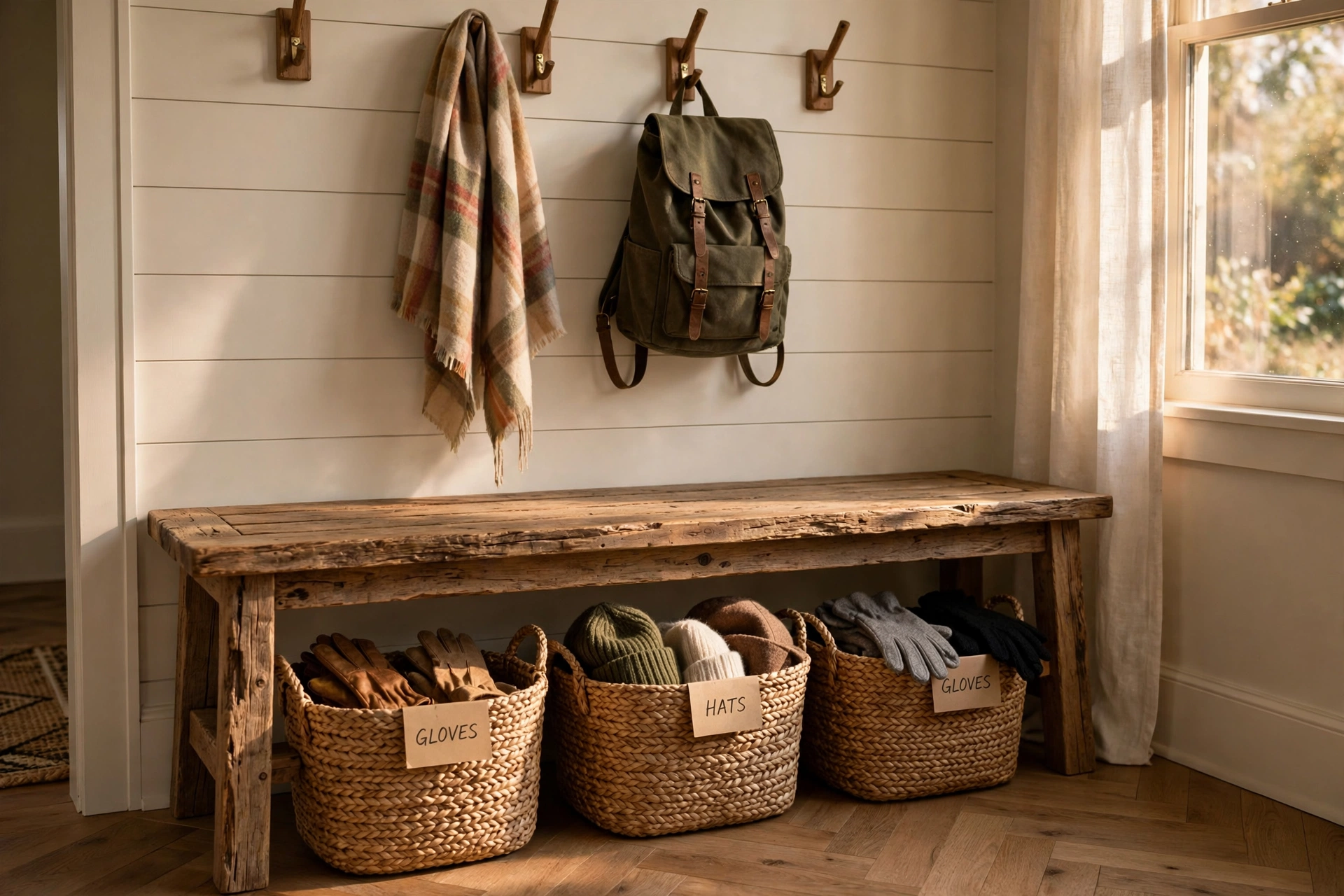
4. Wooden bench with labelled baskets
A simple wooden bench plus storage baskets is the most flexible combination of all. Woven baskets in seagrass or water hyacinth hide gloves, hats and lead dog leads while adding warmth and texture. Give every basket a job and a label — “gloves”, “dog”, “school” — otherwise you have built one large drawer full of everything. Wire baskets work too if you prefer to see what is inside at a glance.
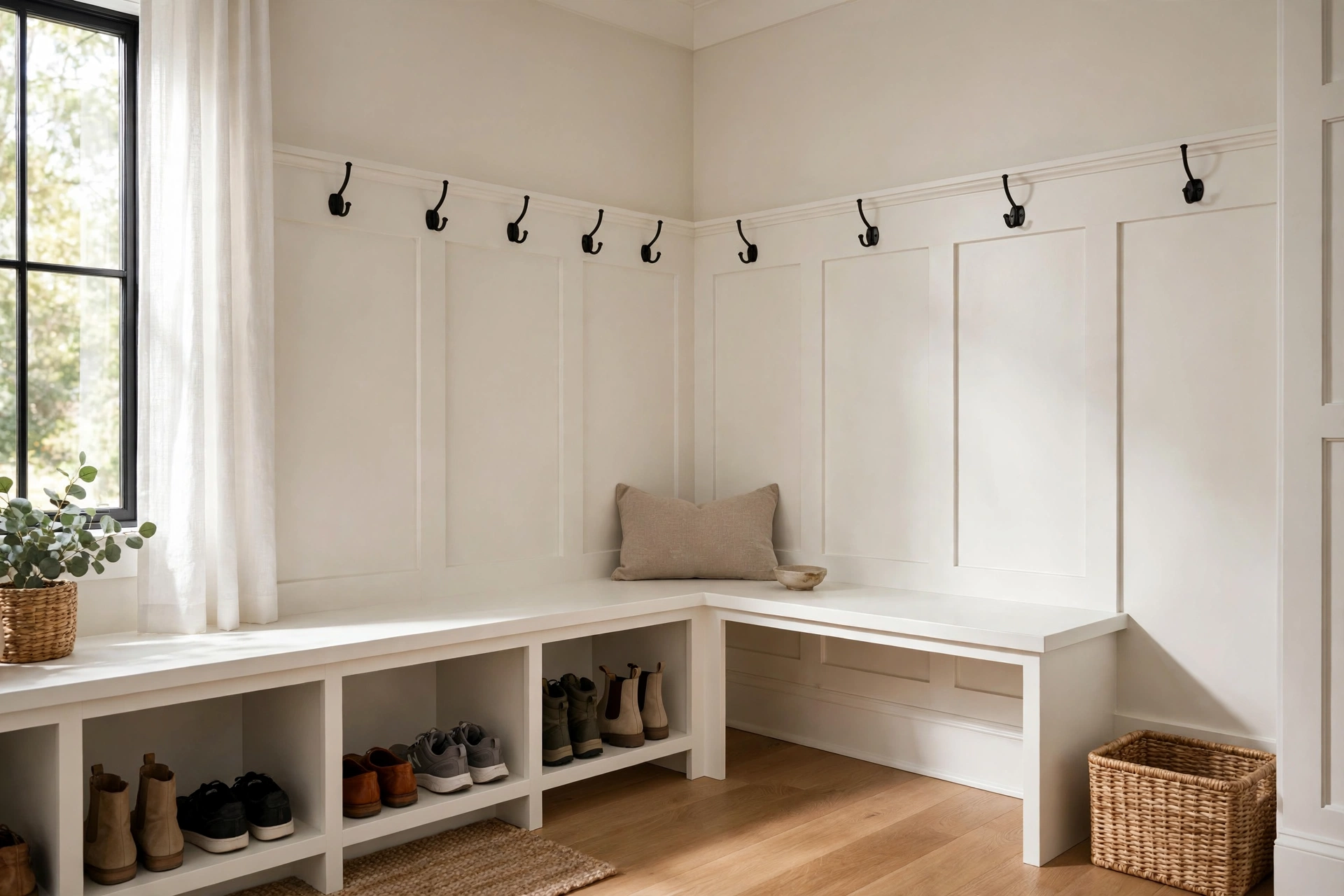
5. L-shaped corner bench that seats two
Corners are usually dead space, and an L-shaped bench turns one into more seating than a small mudroom would otherwise hold. Two people can pull boots on at once, and the short return leg gives you a surface for a bag while you dig for keys. Build storage into the long leg and keep the short leg open underneath so the corner does not feel heavy.
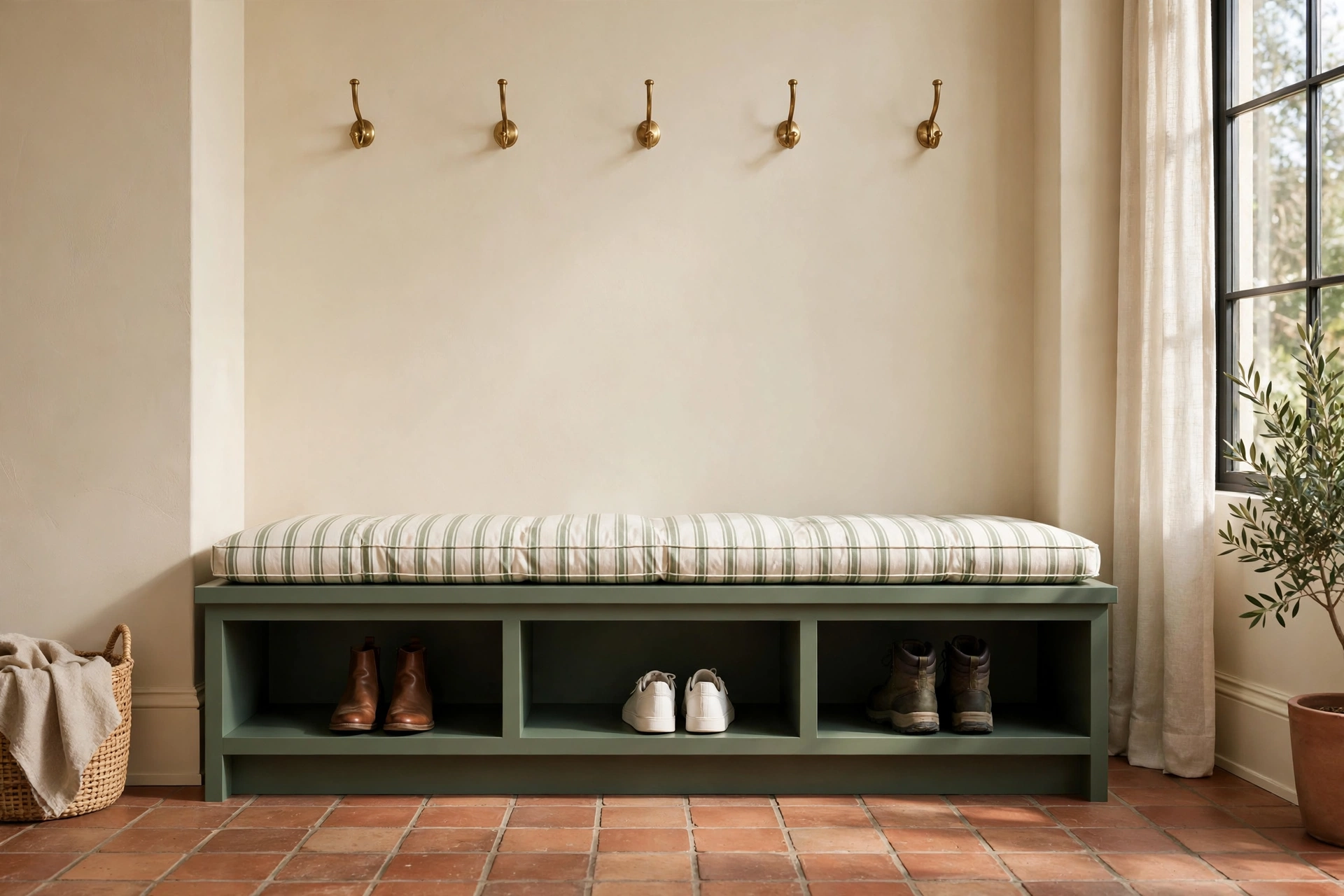
6. Painted statement bench in a bold colour
A bench painted in sage green, navy or deep charcoal becomes the accent piece of the whole mudroom, especially against neutral walls. The colour does the decorating so the rest of the room can stay calm and practical. Choose a durable satin or semi-gloss paint that wipes clean — this is a seat that meets muddy boots and wet coats every single week.
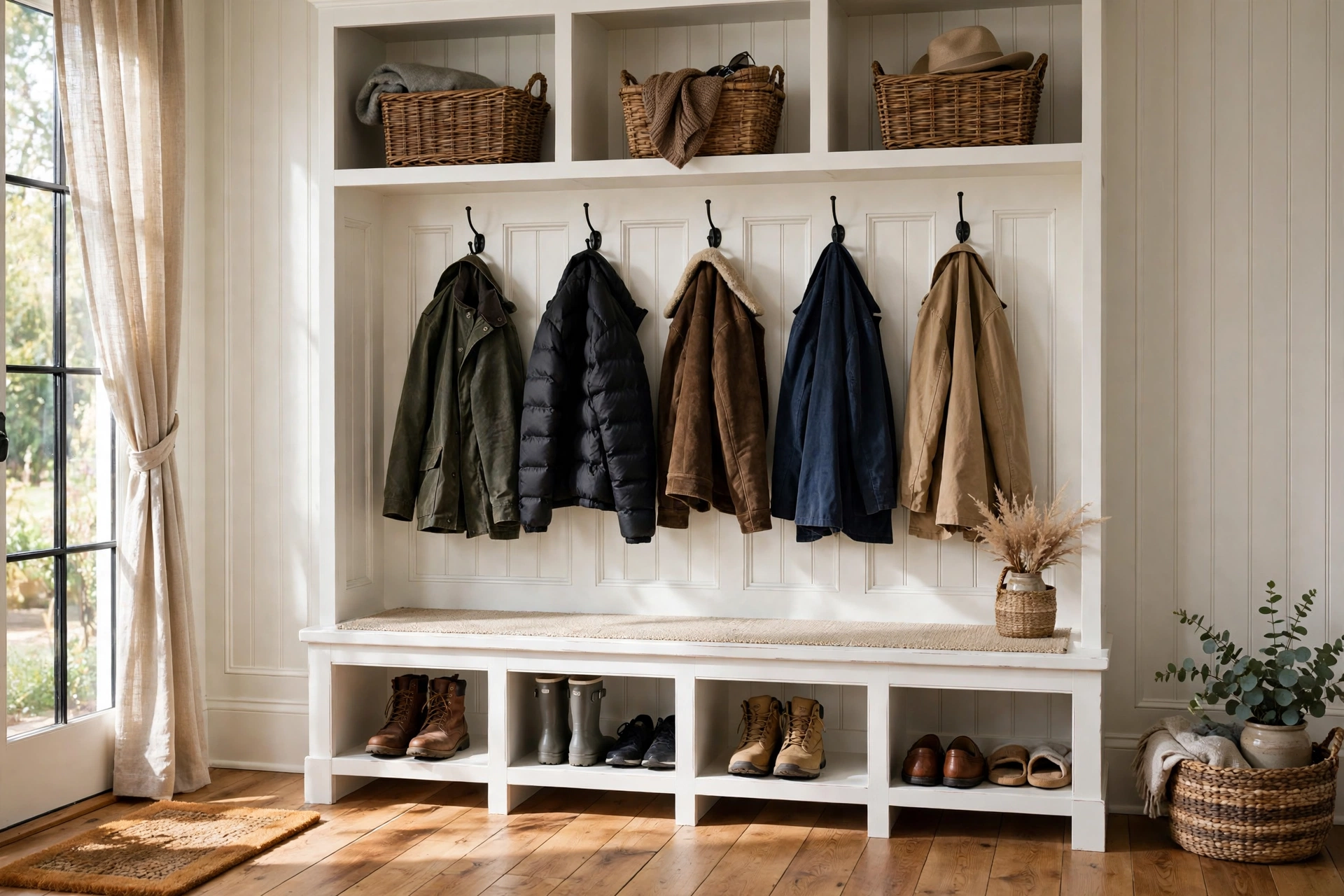
7. Hall tree combo: bench, hooks and overhead cubbies
The hall tree is the all-in-one answer: a bench seat flanked by coat hooks, with open cubbies above and below. It gives every category a designated zone — coats on hooks, shoes below, hats and bags above — so tidying becomes a habit rather than a chore. It suits busy family entryways where four people’s worth of gear needs a home within arm’s reach of the door.
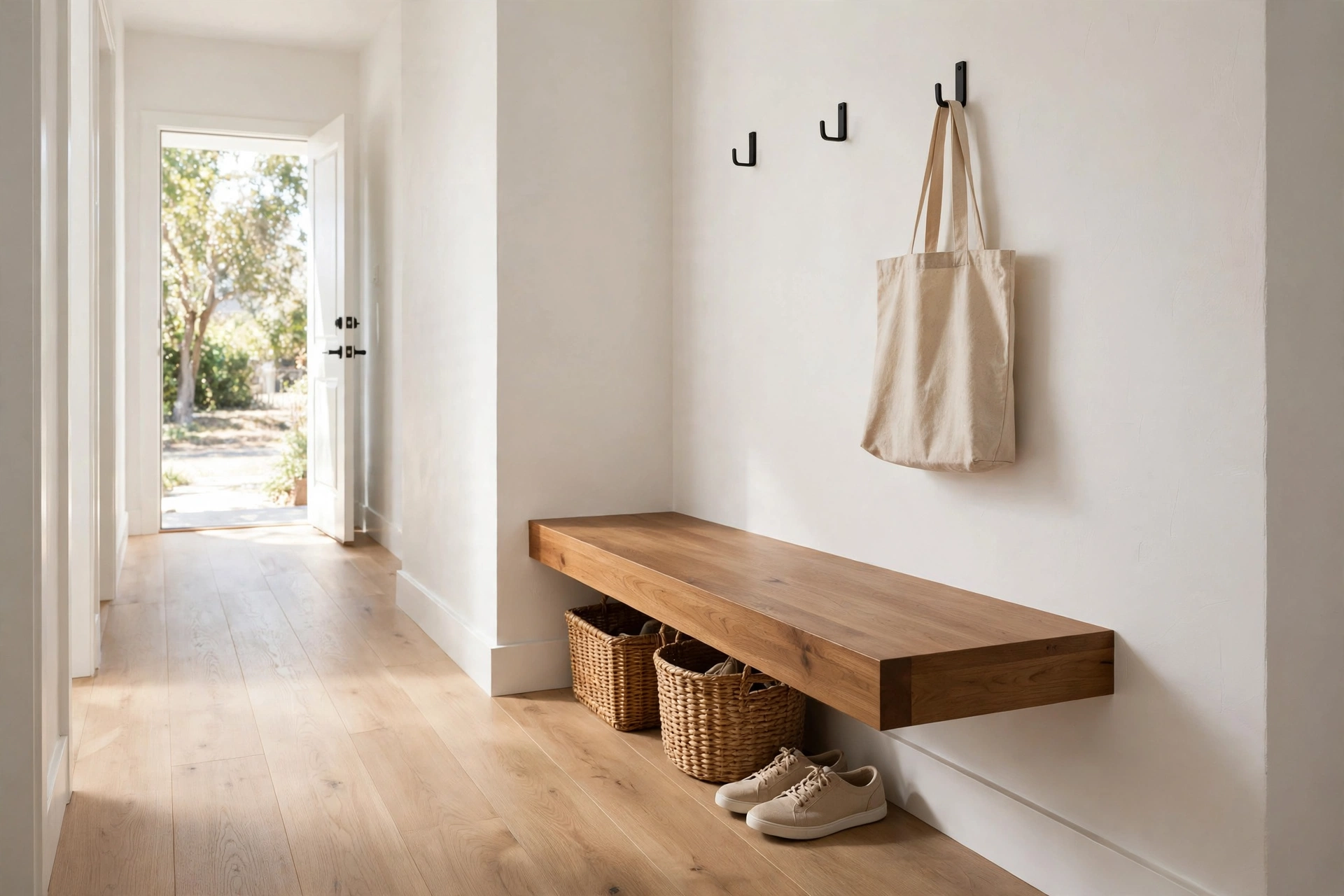
8. Floating wall-mounted bench for a light look
In a narrow entry, the sightline under the seat is what stops the space feeling boxed in. A floating bench bolted to wall studs keeps the floor clear, so the room reads bigger and the floor is easy to sweep. Tuck low baskets or a shoe tray underneath for storage without losing the airy effect. Just be sure it is anchored properly — it needs to hold real sitting weight.
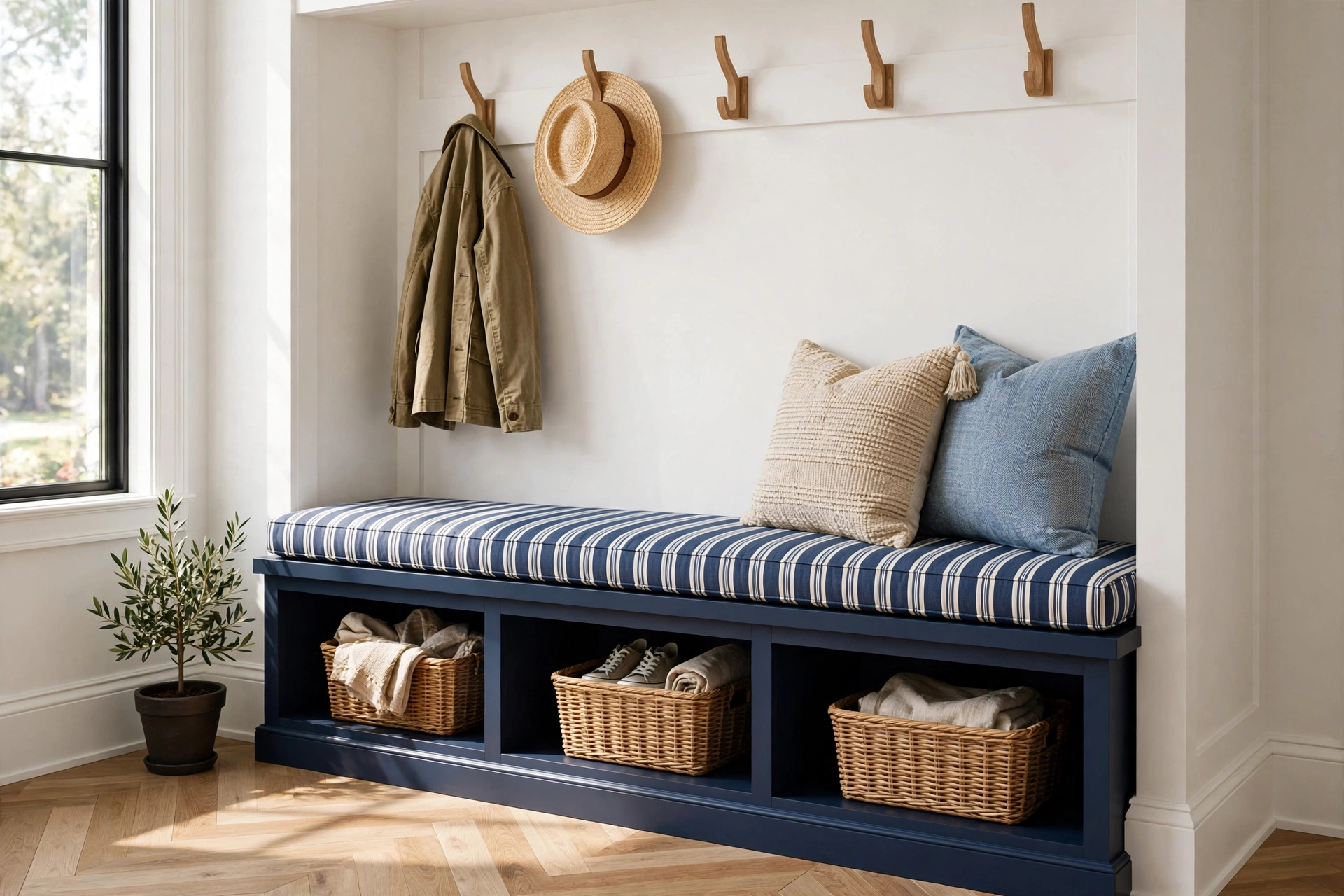
9. Cushioned bench in performance fabric
A long cushion turns the bench into somewhere people actually sit rather than somewhere bags land. Soft texture also takes the edge off a room full of tile and painted cabinetry. Choose an outdoor or performance fabric with a zipped, washable cover, because this cushion will meet wet coats and muddy paws weekly. A neutral stripe or subtle pattern hides wear far better than a flat colour.
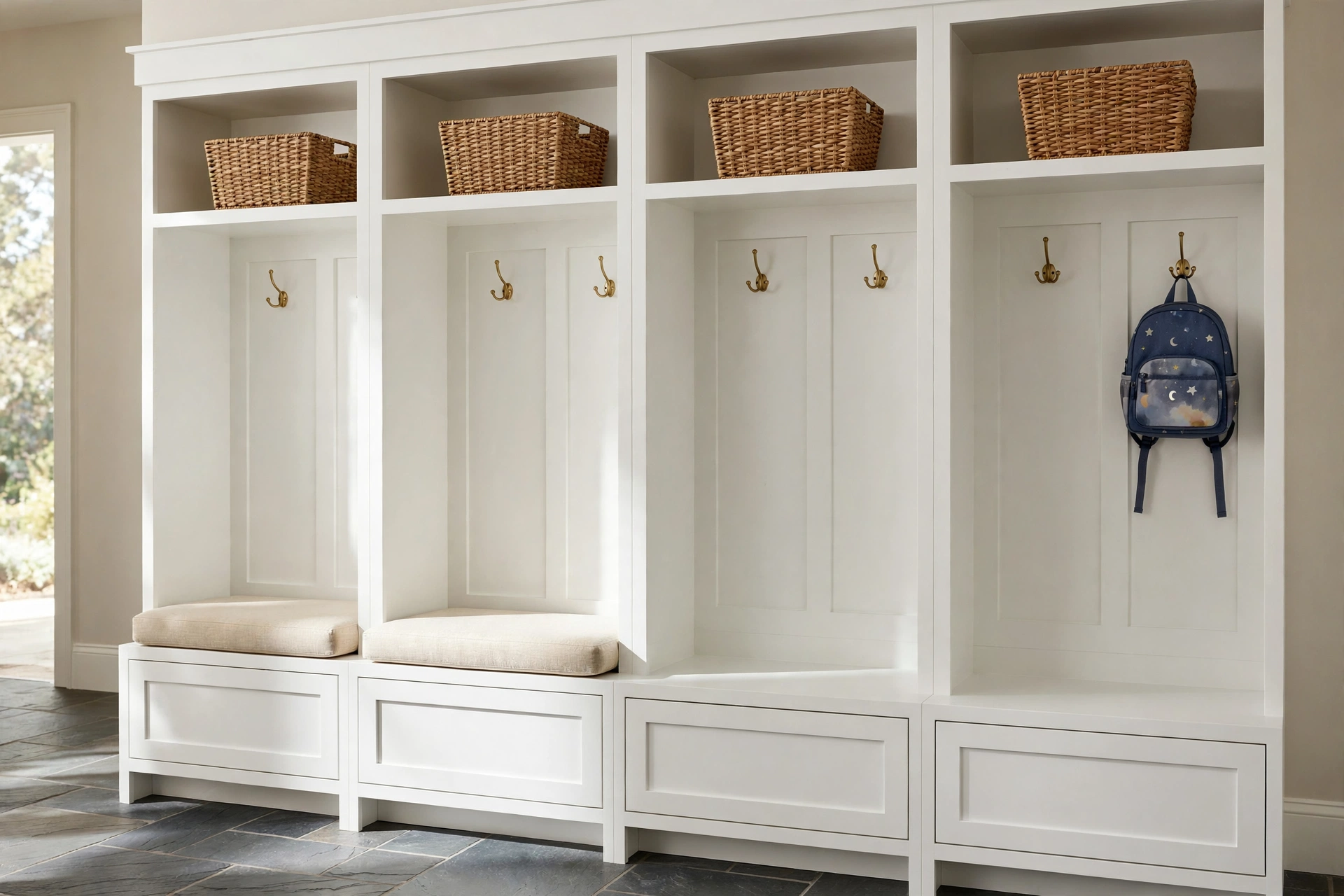
10. One locker per person bench wall
Assign every family member their own vertical locker bay: a bench section below, hooks in the middle, a cubby above. Personal zones end the argument about whose stuff is whose, and kids learn to use their own bay surprisingly fast. Keep the bays narrow — around 40 cm each — so the whole wall fits even in a modest mudroom, and label the top cubbies for the youngest children.
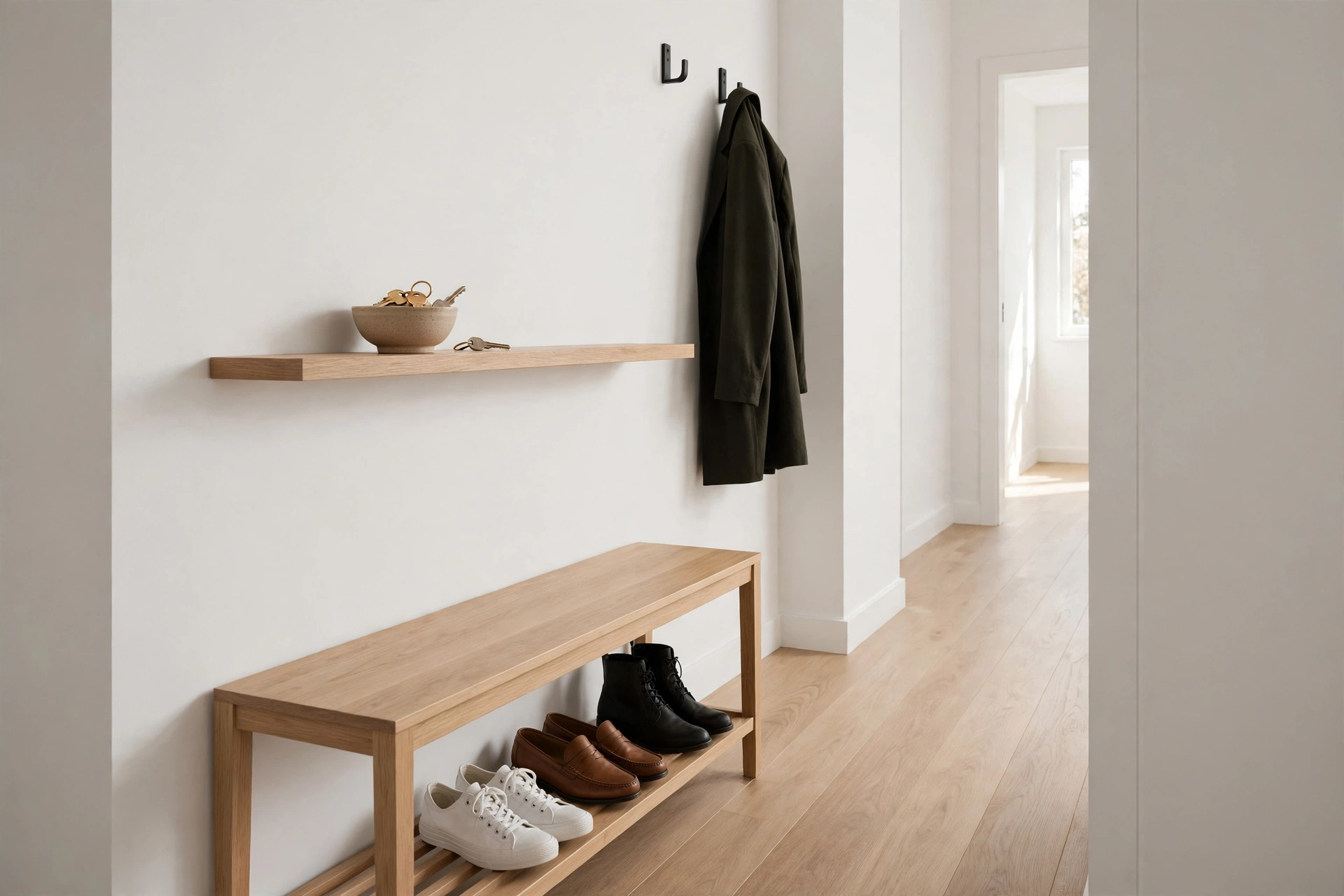
11. Slim bench for a narrow hallway
No mudroom? A slim 30 cm deep bench along a hallway wall still gives you a perch for pulling on shoes and a shelf above for keys and post. Add two hooks and a narrow shoe rack below and you have a micro-mudroom that works in a corridor. Keep the palette light and the design simple so the hallway does not feel narrower than it is.
12. Reclaimed wood bench with a live edge
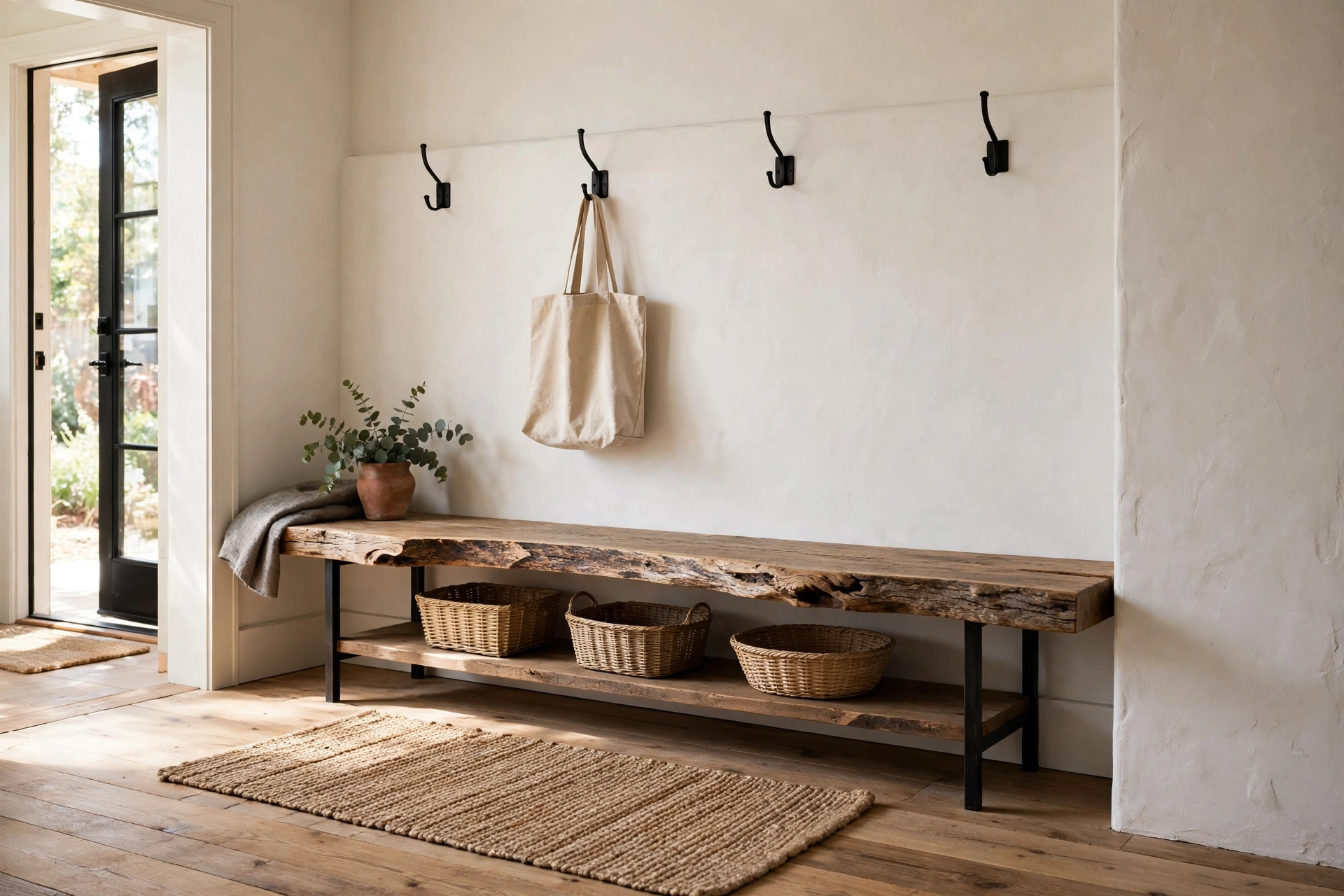
For a warmer, more characterful look, a reclaimed timber bench with a natural live edge brings instant personality. The organic edge softens all the straight lines of cubbies and lockers around it. Pair it with black metal hooks and simple woven baskets so the wood stays the star. Seal the top well — a mudroom bench earns its scratches, and a good finish makes them wipe off.
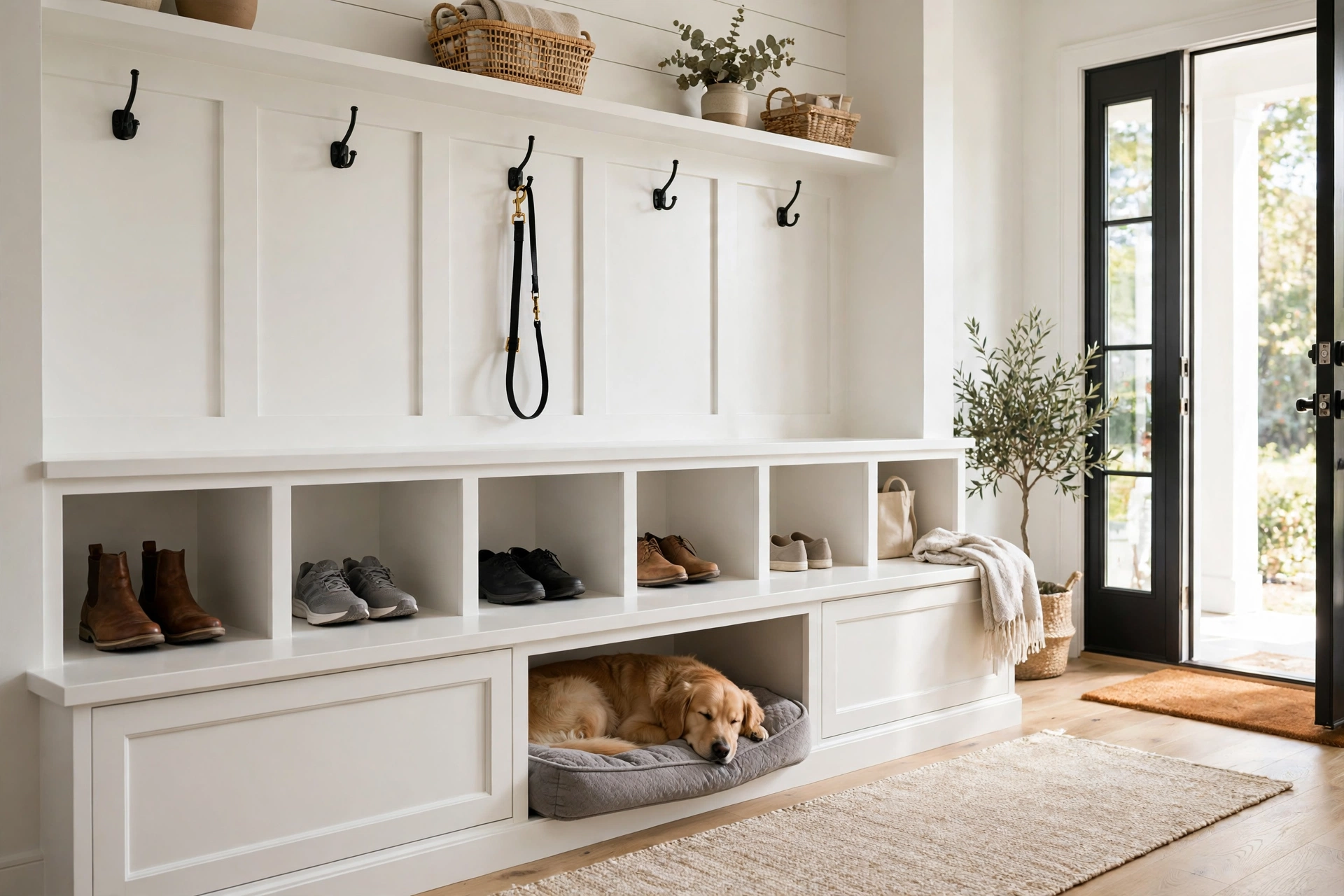
13. Bench with a built-in pet nook underneath
Give the dog their own spot: leave one under-bench bay open with a washable cushion inside and it becomes a built-in pet bed that keeps the dog bed out of the walkway. It works especially well under a longer bench where losing one cubby barely dents shoe storage. And if the kids are the real mess-makers, a dedicated mud kitchen for the kids keeps the messiest play out of the mudroom entirely.
Frequently asked questions
What is the ideal size for a mudroom bench?
Aim for a seat height of 45–50 cm (about dining-chair height), a depth of 35–45 cm and a width of at least 90 cm to seat two people comfortably. For a family of four, 120 cm or more gives everyone elbow room.
Are drawers or open cubbies better under a bench?
Cubbies win for daily grab-and-go shoes because everything stays visible. Drawers win for hiding clutter and storing off-season items. Many of the best benches combine both: cubbies for shoes, a drawer or two for the rest.
How do I stop the bench becoming a dumping ground?
Give every category a home — hooks for coats, cubbies for shoes, one basket per person for the loose bits. When everything has a designated spot, tidying takes seconds and the bench stays a seat rather than a shelf.
What is the best cushion fabric for a mudroom bench?
An outdoor or performance fabric with a removable, washable cover. It resists stains, wipes clean and stands up to wet coats, muddy boots and pets. Avoid light-coloured linen or cotton, which mark within weeks.
Can a bench work in a tiny entryway with no mudroom?
Yes — a slim wall-mounted or 30 cm deep freestanding bench with hooks above creates a micro drop zone. You lose bulk storage, but you keep the two things that matter most: somewhere to sit and somewhere for shoes.
Conclusion
The right mudroom bench does two jobs at once: it gives everyone a place to sit and every stray item a place to live. Pick the idea that matches your space — a slim bench for a hallway, a locker wall for a busy family, a lift-top for hidden storage — and the entryway practically tidies itself.
