
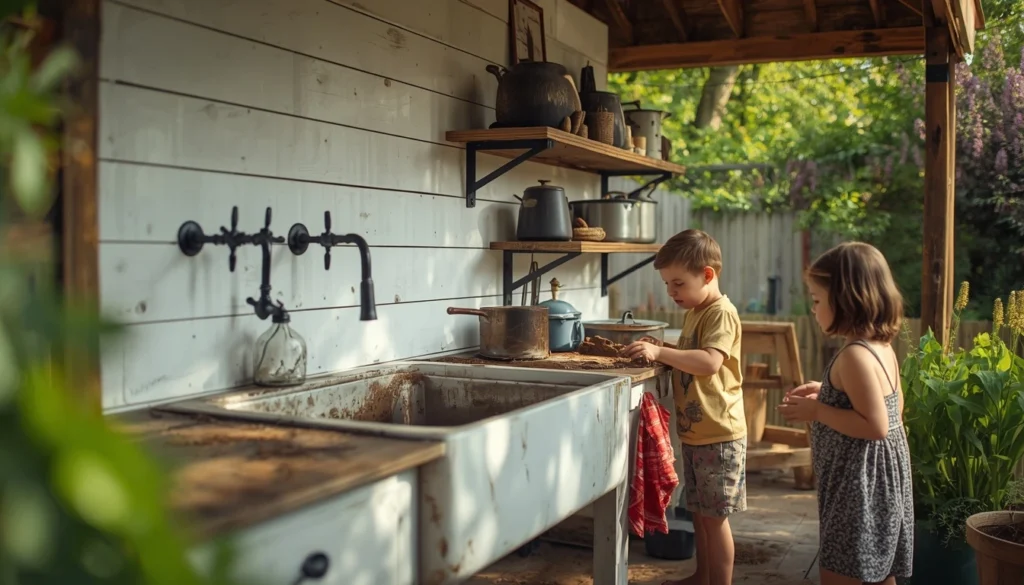
I still remember the first time a client asked me to help her design a mud kitchen, and I laughed because I thought she meant an actual kitchen renovation gone wrong. Turns out, mud kitchens are one of the most requested backyard features I’ve worked on this year, right up there with fire pits and covered patios. Parents want a space that looks intentional, not like a pile of thrifted junk shoved against the fence. So I pulled together thirteen ideas that actually hold up to real weather, real budgets, and real kids who will absolutely try to eat the “soup.”
My Design Notes
When I was working on a backyard project for a client in Austin, Texas, she fell in love with a vintage enamel sink from a local salvage yard. We paired it with white shiplap and black iron hardware to create the classic farmhouse look she wanted.
But Texas heat does not play nice with untreated wood. Within two months, the pine backsplash had started cupping at the edges, and the enamel sink was already showing rust around the drain.
We sealed the wood with an exterior-grade polyurethane and added a stainless steel drainage tray to help slow the rust. The charm stayed intact, but I learned an important lesson: if you love reclaimed pieces for an outdoor mud kitchen, seal them before you fall in love with the patina.
13 Mud Kitchen Ideas for a Fun Backyard Play Space
1. DIY Mud Kitchen: The Repurposed Dresser Hack
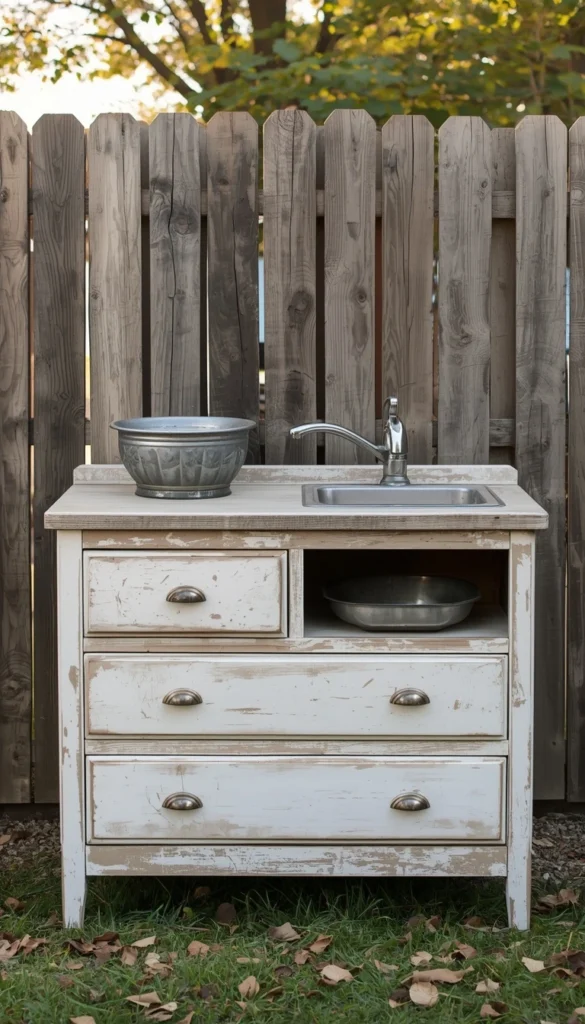
If you’ve got an old dresser sitting in the garage that nobody wants anymore, you’re closer to a mud kitchen than you think. Pull the drawers out, add a waterproof sealant to every surface, and drop in a small basin where one drawer used to be. I’ve seen clients turn a $15 thrift store find into the centerpiece of their whole backyard play area. One thing worth knowing though is that not all wood holds up the same way, so skip particle board and stick with solid wood pieces that can handle a few coats of exterior polyurethane.
2. Backyard Mud Kitchen: Budget Pallet Build
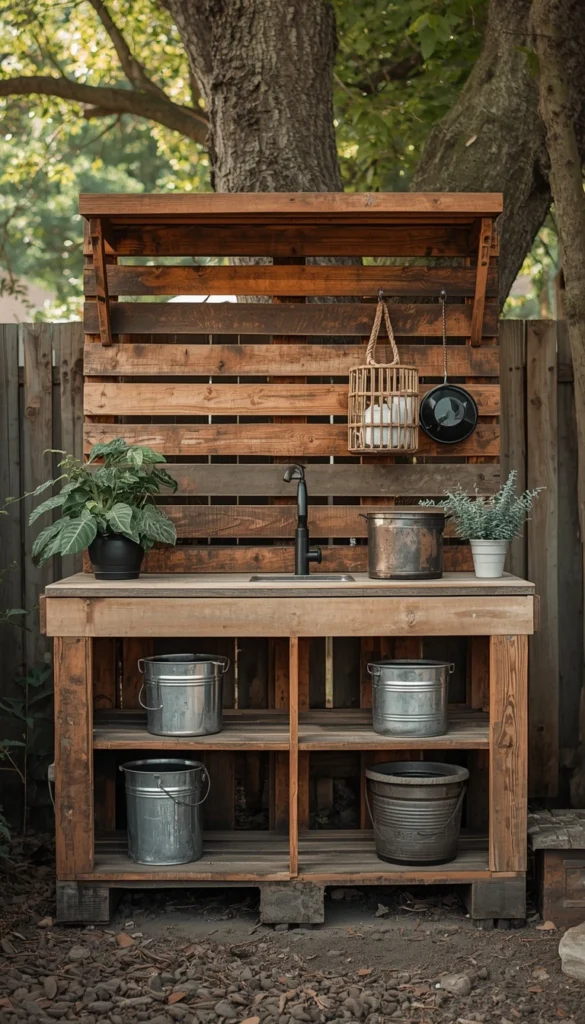
Pallet builds are the fastest way into this project if you’re working with a weekend and a modest budget. Grab two or three pallets, sand down the rough edges, and stack them to create a simple counter with shelving underneath. You’ll want:
- A few 2x4s for structural support
- Exterior wood screws, not nails
- A can of weatherproof stain or paint
Most families I’ve talked to finish this build in a single Saturday afternoon.
3. Mud Kitchen Design: Modern Farmhouse Style
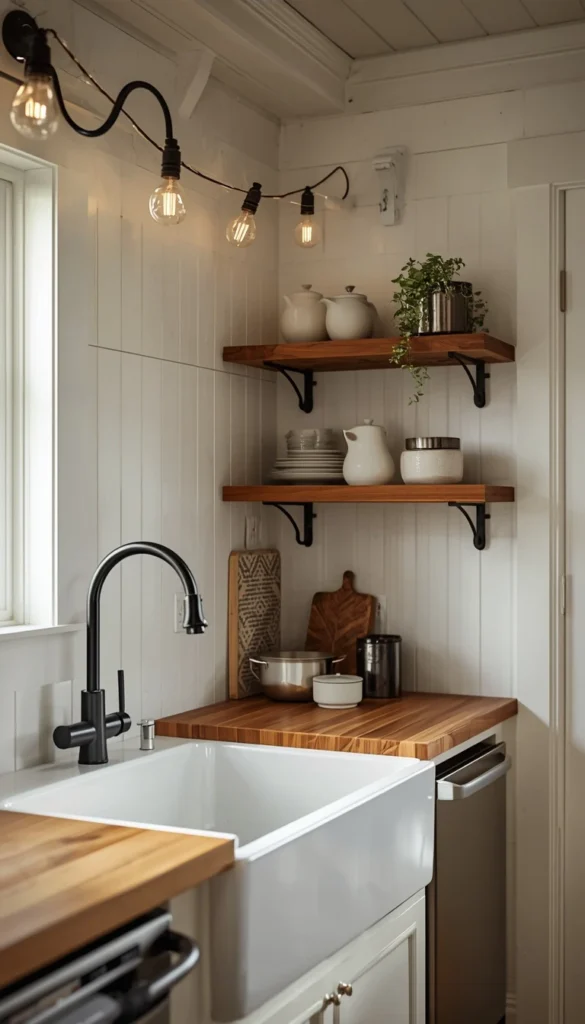
This is where the design side really gets fun. Think white shiplap paneling, black metal hardware, and a single farmhouse style basin as the anchor piece. I love pairing that with open wood shelving stained in a warm walnut tone, it gives the whole space a collected, intentional feel instead of looking like leftover scraps nailed together. A quick trick I’ve learned is to keep the color palette to two or three tones max. Too many colors and the space starts to look cluttered rather than curated, especially once toys and dirt start piling up on every surface.
4. Outdoor Play Kitchen: No Build Cinder Block Setup
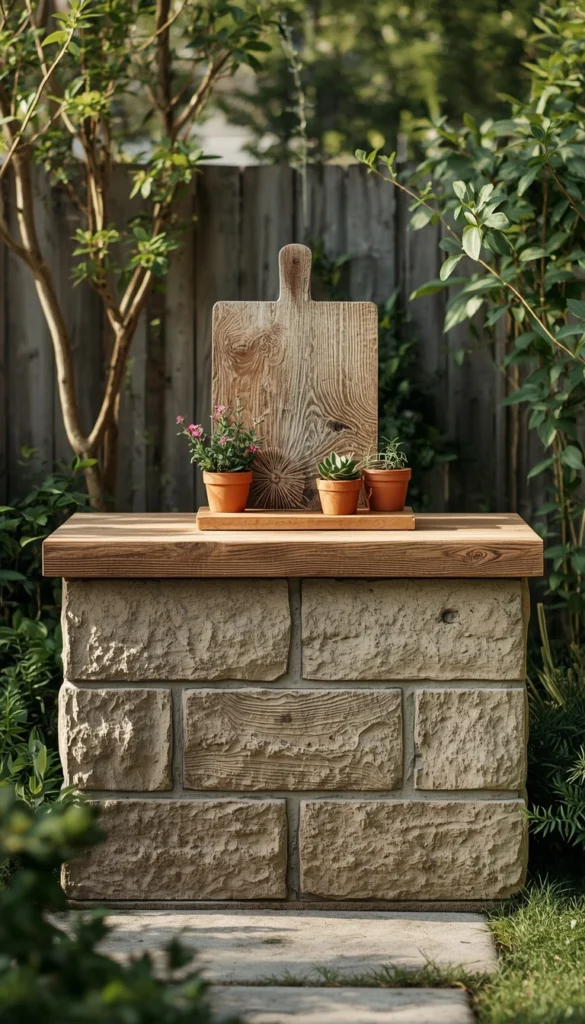
Not everyone wants to pick up a drill, and that’s completely fine. Stack a few cinder blocks into two small towers, lay a sturdy wood board across the top, and you’ve got a workable counter in under ten minutes. It won’t win design awards, but it’s the easiest entry point if you’re testing whether your kids will actually use a mud kitchen before you invest more time or money into one.
Which of these six mud kitchen ideas feels most doable for your backyard right now?
5. Mud Kitchen Ideas for Toddlers: Small Space Balcony Kitchen
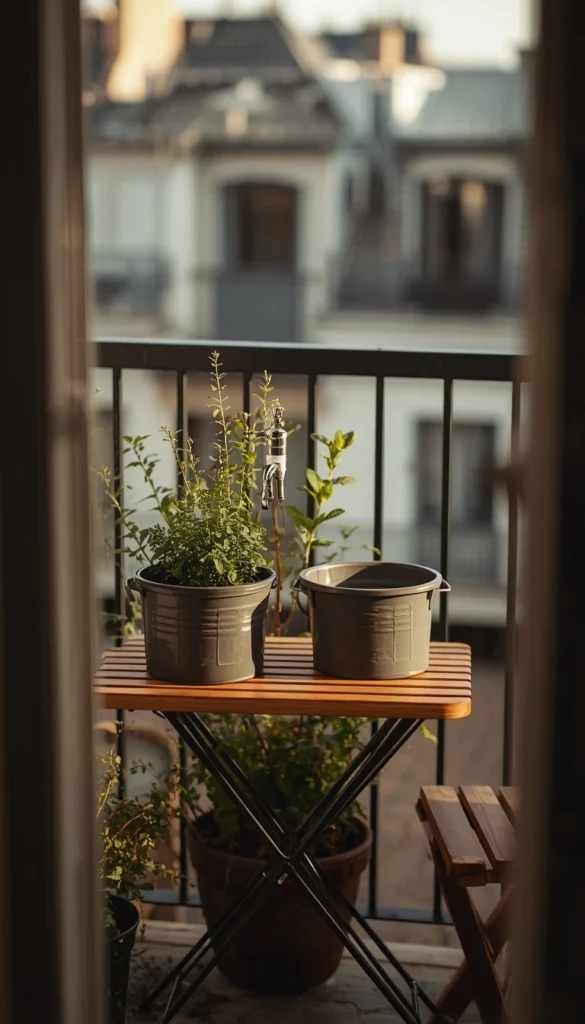
If you’re working with a balcony or a tight patio instead of a full backyard, you don’t need to give up on this idea. Two shallow storage bins, one for dry ingredients and one for water play, can sit side by side on a small folding table. I’ve set these up for clients in condos and townhomes where a full build just wasn’t possible, and honestly, the kids never noticed the difference. A small beverage dispenser with a spigot works great here too, since it gives you water access without the mess of a hose.
6. Outdoor Mud Kitchen: Choosing the Right Sink
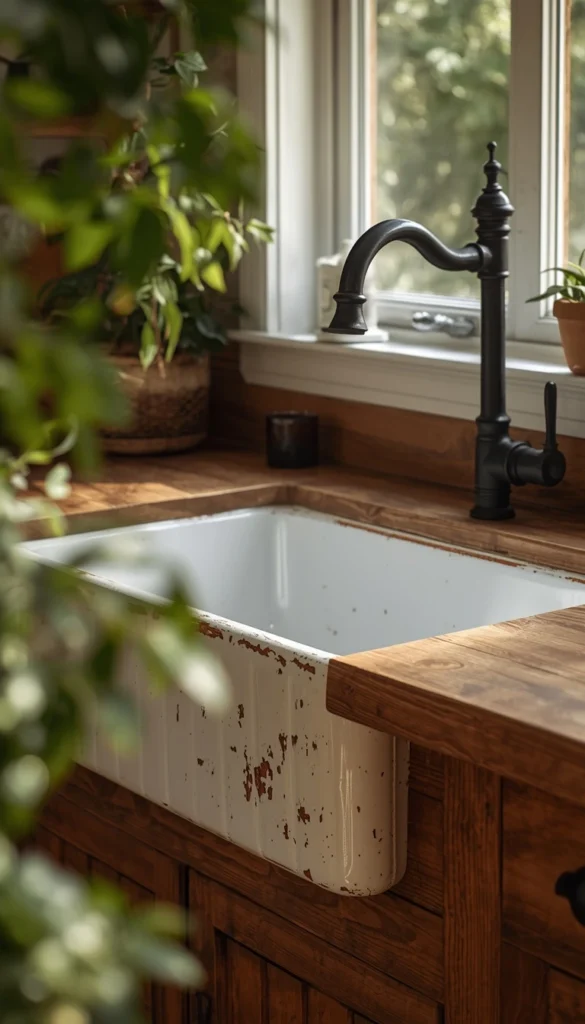
The sink is usually the piece everyone gets excited about, and I get it, a real metal or enamel basin instantly makes the whole thing feel legit. Facebook Marketplace and Habitat ReStore are two of my favorite places to source one affordably. Just know that enamel sinks look charming but chip easily, and once that happens, rust sets in fast. Stainless steel is less romantic looking but it’s the one I recommend if you want something that survives years of outdoor use without babying it.
7. Mud Kitchen Play: Chalkboard Café Style
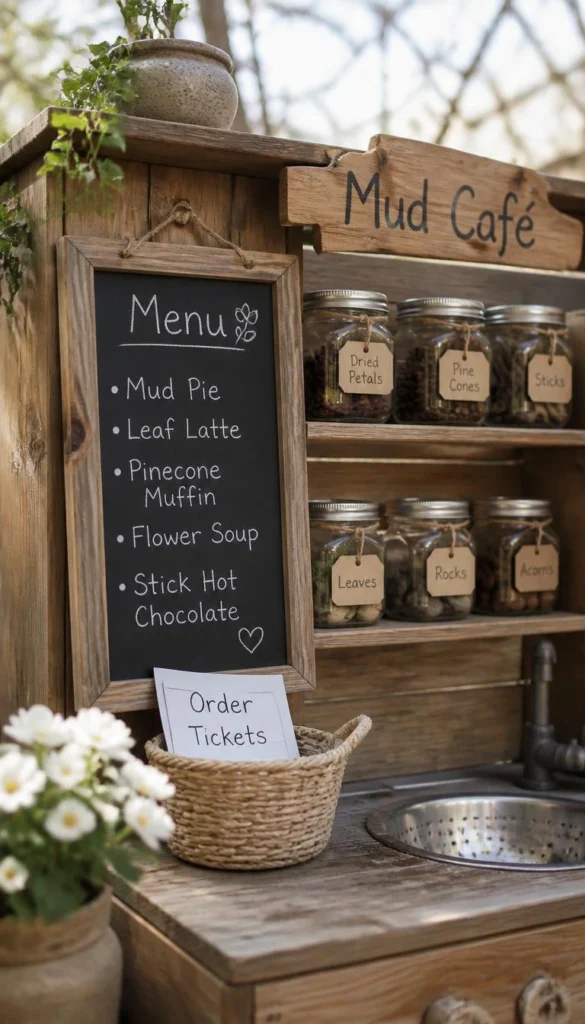
Turning the space into a pretend café is one of the easiest ways to keep kids engaged longer, and it photographs beautifully too. A small chalkboard sign for a daily menu, a few recycled jars for “ingredients,” and a basket for order tickets go a long way.
- Chalkboard menu board
- Labeled recycled jars
- Small notepad and pencil for orders
We added this to a client’s setup last summer and her daughter ran a full pretend restaurant for weeks straight.
8. Mud Kitchen Accessories: Smart Storage and Hooks
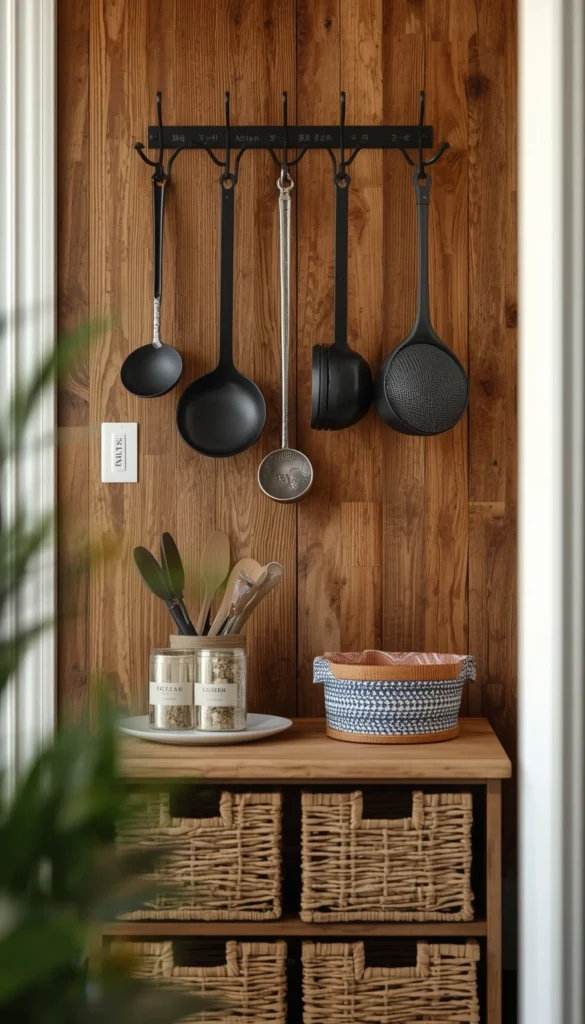
Storage is the part people forget until their mud kitchen turns into a pile of scattered pots within a week. A few screw in hooks along the back panel keep ladles and strainers off the counter, and a low crate underneath handles anything bigger. For more practical storage inspiration, these mudroom storage ideas can help you organize small spaces and everyday items.
9. Mud Kitchen Setup: Weatherproofing for Every Climate
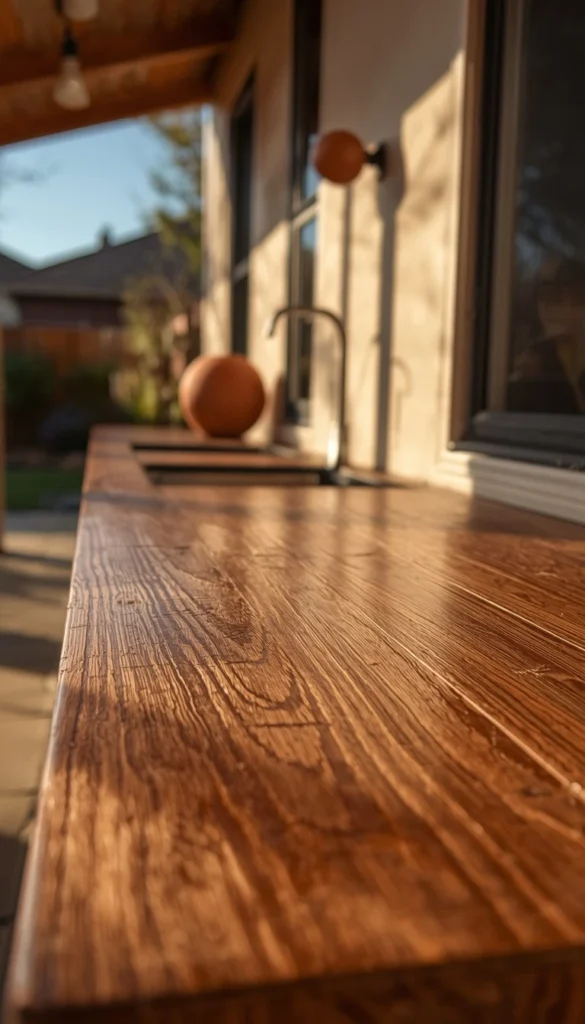
This is the section most guides skip entirely, and it’s honestly where the real money gets wasted if you’re not careful. What works in the Pacific Northwest will not survive a Texas summer, and what survives Texas heat might crack apart during a Midwest freeze thaw cycle. Untreated pine looks rustic and charming at first, but give it a few months of direct sun and rain and you’ll start seeing cupping and splitting along the grain. If you’re in a hot, humid climate, look for pressure treated lumber or seal everything with an exterior grade polyurethane before you even think about painting it.
Are you more of a weekend pallet builder, or would you rather find a vintage sink and create a more complete outdoor mud kitchen?
10. Kids Mud Kitchen: Real Budget Breakdown
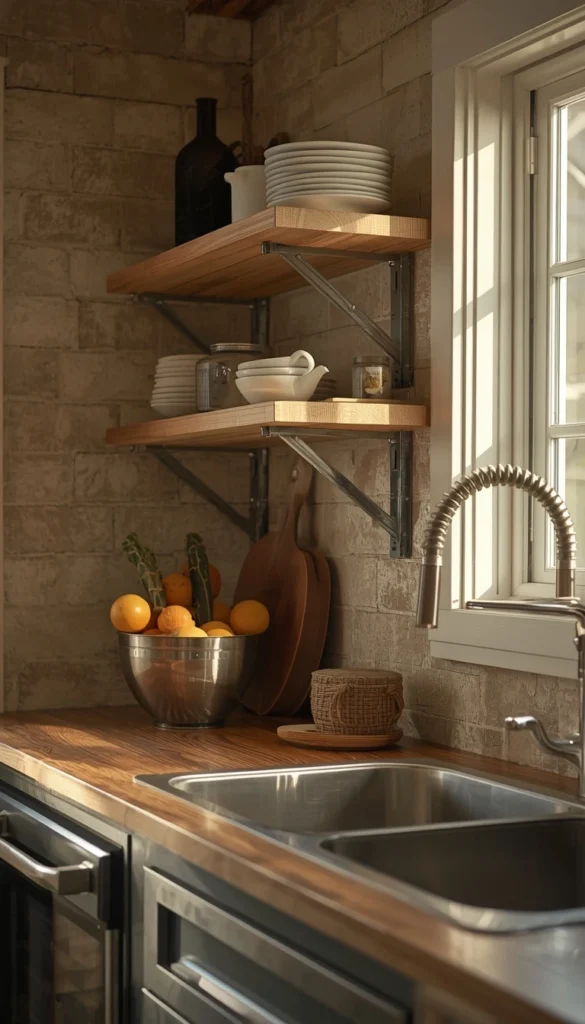
Nobody talks about actual numbers, so here’s what I’ve seen play out with real clients. A no build cinder block setup can run you under $30 if you’re just repurposing what’s around the house. A pallet build with proper sealant and hardware usually lands somewhere between $75 and $150 depending on how much you thrift versus buy new. And a fully designed farmhouse style build with a real sink, shiplap backing, and matching accessories can climb past $300, sometimes closer to $500 if you’re hiring help for the build. None of these price points are wrong, it really just depends on how much of a design statement you want this corner of your yard to make.
11. Mud Play Kitchen: Safety Tips for Toddlers
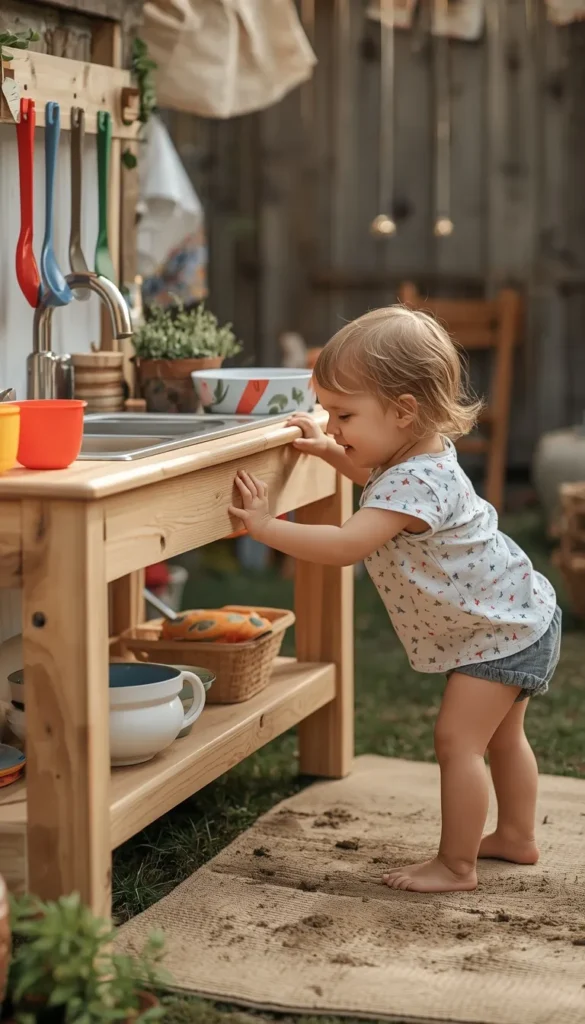
Toddlers play differently than older kids, so the safety considerations shift a bit here. Keep water levels shallow, no more than an inch or two in any container, since even small amounts can be a drowning risk for little ones who aren’t steady on their feet yet. Big grip tools work better than anything delicate. Avoid glass containers entirely and stick with metal, wood, or plastic that can survive a drop without shattering. For additional playground safety guidelines, the U.S. Consumer Product Safety Commission provides recommendations for safer outdoor play areas.
12. Mud Kitchen Outdoor Play: Layouts for Multiple Kids
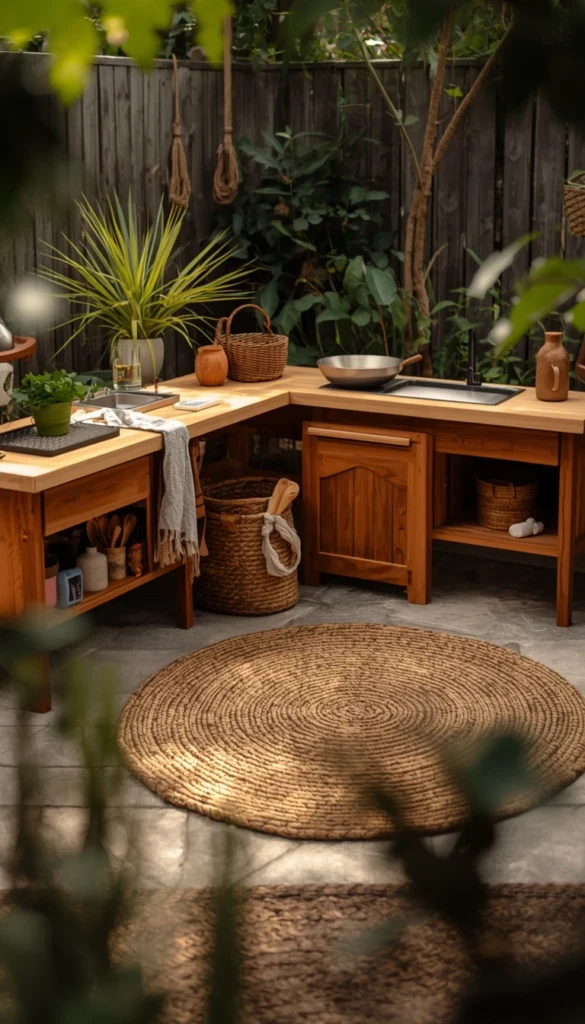
If you’ve got more than one kid, or you’re hosting playdates often, a single small counter is going to create a bottleneck fast. I usually recommend an L-shaped layout so two or three kids can work at different stations without elbowing each other constantly. One side for water and mixing, another for dry ingredients and pretend baking, keeps the traffic flow smooth. A round outdoor rug underneath can also help visually define the play zone, which sounds like a small detail but genuinely cuts down on kids wandering off with muddy hands mid-play. For more guidance on keeping outdoor play areas safe, see these backyard safety tips for kids from the American Academy of Pediatrics.
13. Mud Kitchen Activities: Seasonal Refresh Ideas
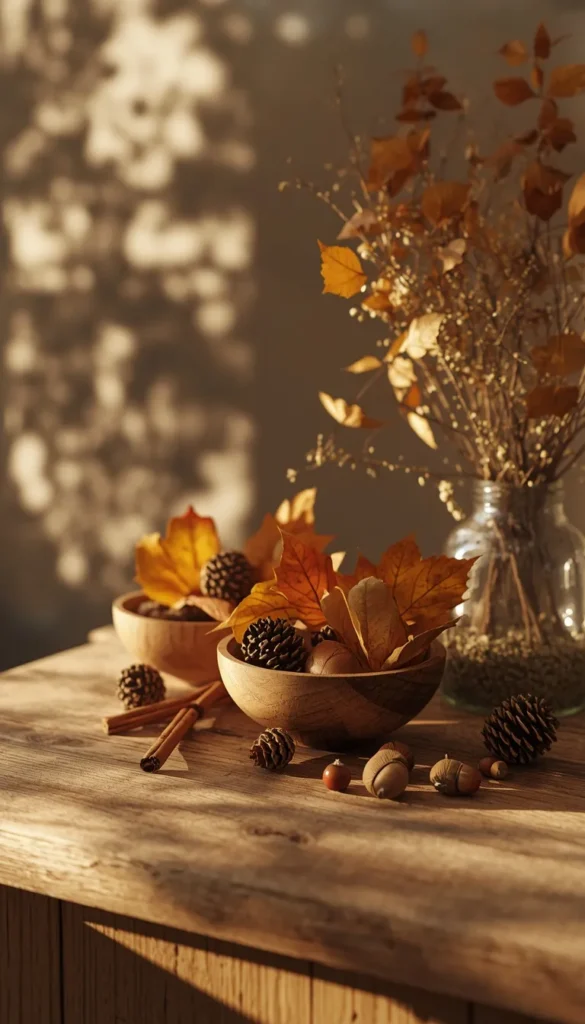
The easiest way to keep a mud kitchen feeling fresh without spending another dime is to rotate what goes into it with the seasons. Summer calls for mint, lavender, and a few smooth pebbles from the yard. Fall brings colorful leaves, acorns, and cinnamon sticks pulled straight from the pantry. Winter can still work too, packed snow bricks and evergreen sprigs turn the same setup into something entirely new. I’ve watched kids lose interest in a mud kitchen around month three, only to fall right back in love with it once a new batch of “ingredients” shows up.
6 Mud Kitchen Ideas at a Glance
| Mud Kitchen Idea | Estimated Price | Maintenance |
|---|---|---|
| Repurposed Dresser Mud Kitchen | $15–$60 | Medium |
| Budget Pallet Mud Kitchen | $40–$100 | Medium |
| Modern Farmhouse Mud Kitchen | $250–$500 | High |
| No-Build Cinder Block Mud Kitchen | $10–$30 | Low |
| Small-Space Balcony Mud Kitchen | $30–$80 | Low |
| Real Sink Mud Kitchen | $50–$150 | High |
These six mud kitchen ideas cover a range of budgets, styles, and maintenance levels, making it easier to find an option that fits your outdoor space and DIY plans.
Which Mud Kitchen Is Right for You?
By Budget
Budget-Friendly Mud Kitchen
- No-Build Cinder Block Mud Kitchen
- Budget Pallet Mud Kitchen
- Small-Space Balcony Mud Kitchen
Higher-Investment Mud Kitchen
- Modern Farmhouse Mud Kitchen
- Real Sink Mud Kitchen
- Multi-Kid Mud Kitchen
By Lifestyle
Small Spaces
- Small-Space Balcony Mud Kitchen
- Repurposed Dresser Mud Kitchen
- No-Build Cinder Block Mud Kitchen
Busy Backyard Families
- Multi-Kid Mud Kitchen
- Modern Farmhouse Mud Kitchen
- Seasonal Mud Kitchen Refresh
Renters & Temporary Spaces
- No-Build Cinder Block Mud Kitchen
- Small-Space Balcony Mud Kitchen
- Chalkboard Café-Style Mud Kitchen
Weekend DIYers
- Budget Pallet Mud Kitchen
- Repurposed Dresser Mud Kitchen
- Real Sink Mud Kitchen
Frequently Asked Questions
How much does a mud kitchen cost to build?
A DIY mud kitchen typically costs around $30 to $300, depending on the materials you use. Repurposed furniture and pallets can keep costs low, while a real sink, durable wood, and upgraded hardware can increase the price.
What is the best wood for an outdoor mud kitchen?
Cedar and pressure-treated lumber are good choices for an outdoor mud kitchen because they handle moisture and outdoor conditions better than untreated wood. If you use pine, seal it properly to help prevent warping and moisture damage.
Can kids use a mud kitchen in winter?
Yes. A mud kitchen can provide sensory play opportunities in winter using snow, ice, and other safe materials. Keep outdoor play sessions age-appropriate and make sure children are dressed warmly.
Does a mud kitchen need a real sink?
No. A real sink is not required for a mud kitchen. A shallow basin, plastic tub, old pot, or bowl can work well for pretend cooking and water play.
How do you keep a mud kitchen from getting moldy?
Allow the mud kitchen, containers, and play tools to dry completely after use. Good drainage and airflow help reduce moisture buildup, while regular cleaning can help prevent mold and mildew.
Conclusion
Your backyard doesn’t need a big renovation budget to create a mud kitchen your kids will actually want to use. A simple $15 dresser, a few mismatched pots, or even a small shelf can become the starting point for hours of creative outdoor play. Pick one mud kitchen idea from this list and start with what you already have. The goal isn’t to build something perfect; it’s to create a fun, hands-on space where kids can explore, imagine, and make plenty of happy, muddy memories.
