
Good living room storage ideas hide the mess without making the room feel like a warehouse. The living room holds more stuff than any other room — remotes, chargers, blankets, books, toys, board games — and most of it has no proper home. The 32 ideas below give every one of those things a place to live, behind doors, inside furniture, or inside a basket that looks like decor.
The trick is the 80/20 rule: keep about 80 percent of storage closed and 20 percent open. Closed doors and lids hide the everyday clutter, while a few open shelves show the things worth seeing. Mix one big hidden-storage piece with a few small organisers, and the room stays tidy with almost no daily effort.

Why You’ll Love These Living Room Storage Ideas
A living room does not need more furniture — it needs its furniture to work harder. These ideas turn pieces you already own, like the coffee table and the sofa, into storage, then add wall storage and baskets where the gaps are. Most cost little, several need no tools at all, and renters will find plenty that lifts out when they move.
How to Choose the Right Living Room Storage for Your Home
Measure first: note the sofa length, the wall space beside the TV, and the gap behind the sofa before buying anything. Pick closed storage for the messy stuff — games, cables, toys — and open shelves only for things that look good on display. Match one material, like warm wood or matte black, across your pieces so the room reads calm. If the room needs a softer feel too, our cozy living room ideas will help you layer warmth over all this practical storage.
Hidden Storage Furniture
1. A Storage Ottoman With a Lift-Up Lid

A storage ottoman looks like a footrest and works like a chest: lift the lid and there is room for blankets, board games and spare cushions. Best for: small living rooms where every piece must do two jobs. Styling tip: pick one in a fabric that matches the sofa so it reads as part of the set. Pro tip: a 30 to 36 inch ottoman holds two folded throws and a stack of games — measure your coffee table gap first.
2. A Sofa With Under-Seat Storage

Some sofas hide a storage compartment under the seat cushions, perfect for the blankets and remotes that never have a home. Best for: households that watch TV every night. Styling tip: keep only soft things inside — blankets, cushions, throws — so the seat stays comfortable. Pro tip: test the lift mechanism in the shop; gas-lift hinges last longer than plain hinges on a daily-use sofa.
3. A Lift-Top Coffee Table

A lift-top coffee table rises to lap height for laptop work or dinner, then drops back down — with a storage compartment hiding underneath the top. Best for: living rooms that double as a home office. Styling tip: keep the top clear except for one tray, so lifting it is never a chore. Pro tip: the hidden compartment fits a laptop, notebooks and chargers; check the weight limit before loading it with books.
4. A Storage Bench Under the Window
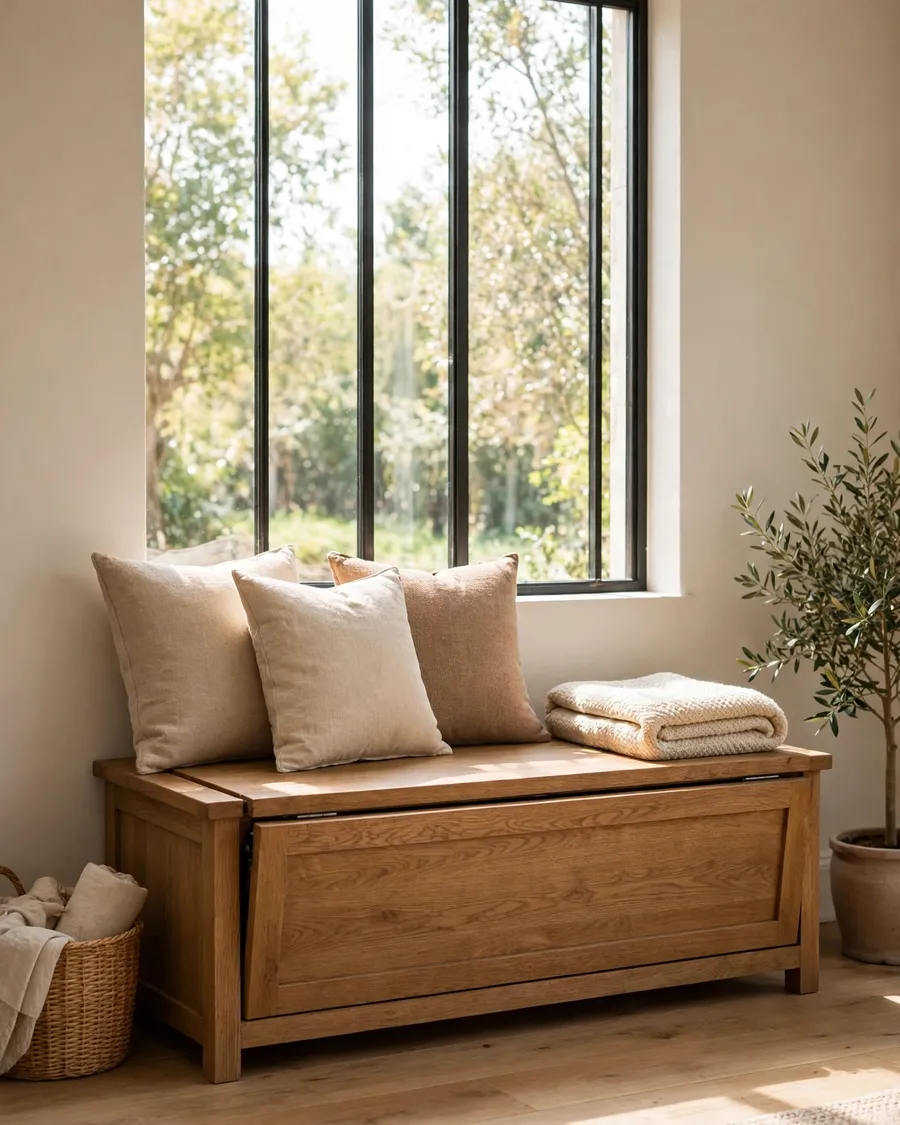
A low bench under the window adds a reading seat and a deep storage box in one piece, ideal for the things that pile up by the sofa. Best for: rooms with a wide window wall and no other seating. Styling tip: add two cushions and a folded throw so it reads as a seat, not a box. Pro tip: a bench 48 inches long and 16 inches deep holds a surprising amount — measure the window width first.
5. A Media Console With Closed Doors

A low media console with solid doors hides the router, game consoles and cable tangle completely, while the TV floats above it. Best for: every living room with a TV. Styling tip: leave one door’s shelf for the items you grab daily, and the rest for the stuff you rarely touch. Pro tip: drill a small cable hole in the back panel so cords exit neatly instead of dangling.
6. A Side Table With a Hidden Drawer
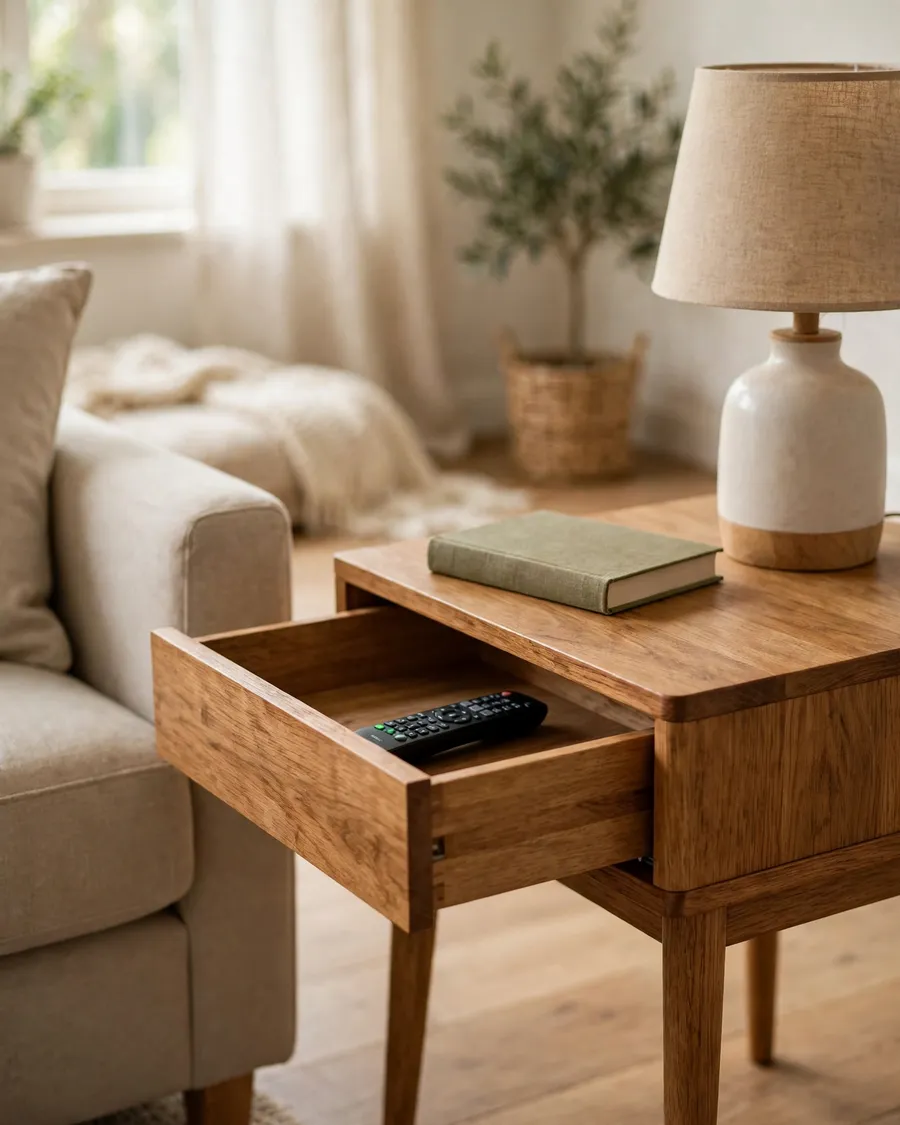
A side table with a slim hidden drawer swallows the remote, reading glasses and phone charger that otherwise live on the sofa arm. Best for: sofa ends with no other storage nearby. Styling tip: keep a lamp and one book on top, and nothing else — the drawer does the hiding. Pro tip: a drawer 12 inches deep fits a paperback and a charger; anything deeper wastes space in a side table.
7. A Storage Chaise in the Reading Corner

A storage chaise turns a quiet reading corner into a hiding place for books, magazines and the extra cushions that never fit anywhere. Best for: large living rooms with an unused corner. Styling tip: drape one throw over the arm and keep the seat clear for sitting. Pro tip: lift-up chaise lids are heavy when loaded, so store light things inside — books belong on shelves, not under your legs.
8. Nesting Tables With a Lower Shelf
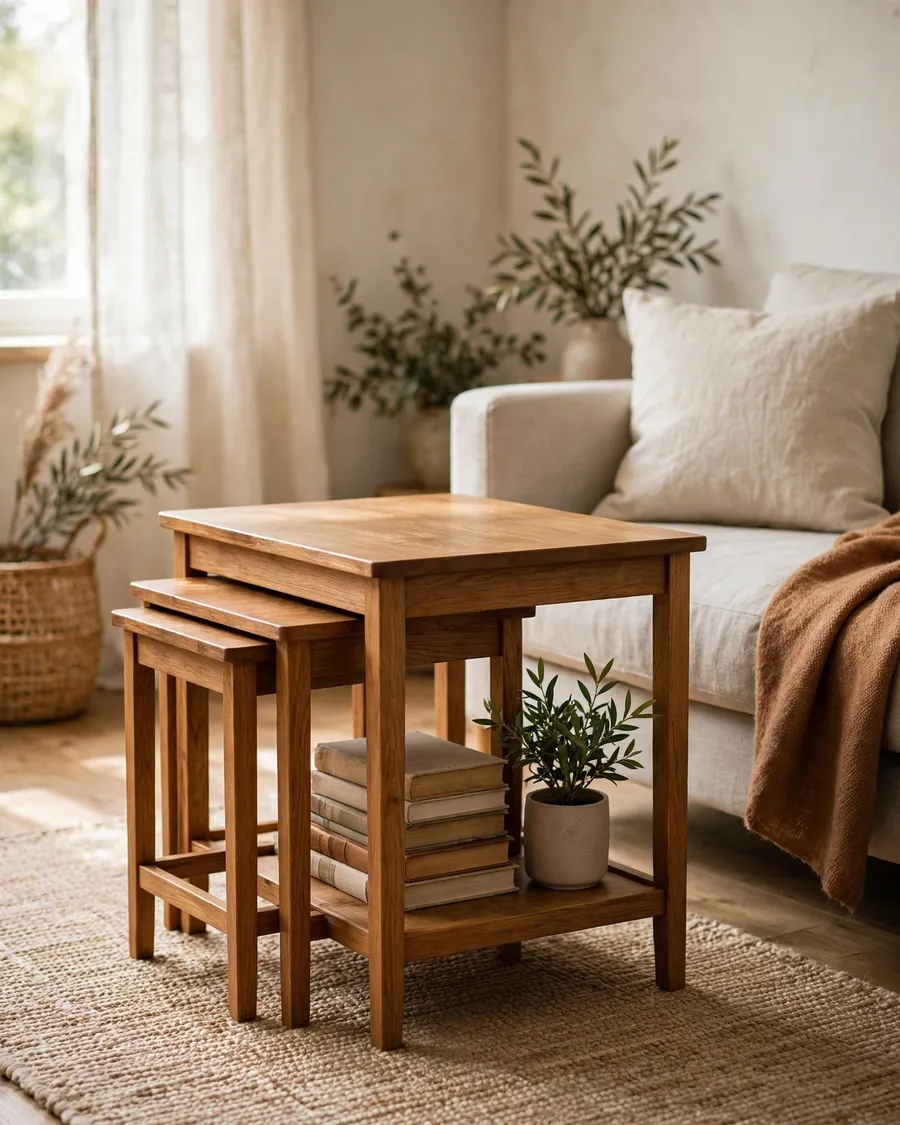
Nesting tables pull apart when guests arrive and tuck together when they leave, and the lower shelf on the larger table holds books and remotes. Best for: small living rooms that host guests often. Styling tip: stack a small plant on the lower shelf and keep the tops clear. Pro tip: a set with a 6 inch height difference nests cleanly; matching heights jam and scratch.
Built-In and Wall Storage
9. Floating Shelves With Baskets on Top

Two floating shelves above the sofa add storage without touching the floor, and a basket on each shelf hides the small stuff. Best for: renters who can use two anchors, and owners who want an easy win. Styling tip: keep one shelf for display and one for baskets, so the wall never looks like a warehouse. Pro tip: shelves 8 to 10 inches deep hold baskets without jutting over the sofa back.
10. Built-In Shelves Around the TV
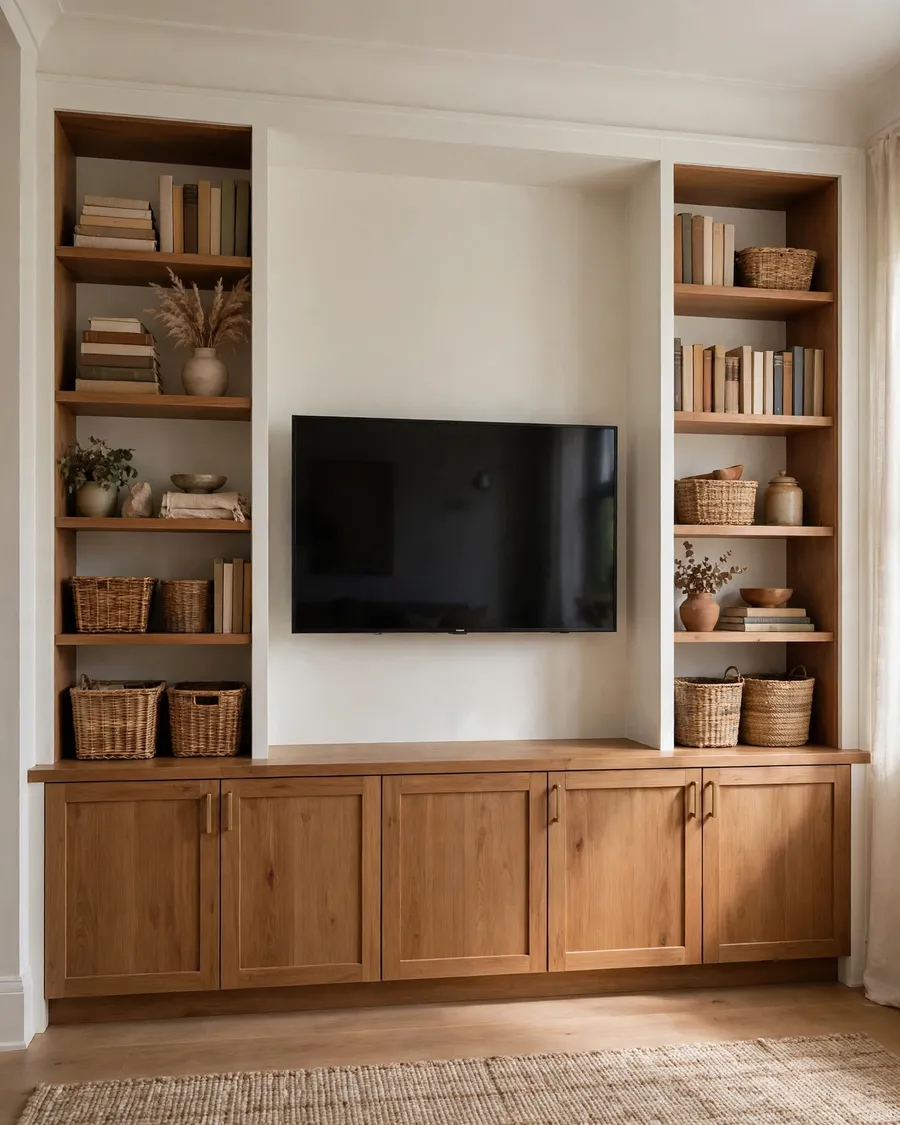
Built-in shelves framing the TV turn the biggest wall in the room into a library, a display and a cupboard all at once. Best for: owners planning a living room refresh. Styling tip: mix closed cabinets at the bottom with open shelves above, following the 80/20 rule. Pro tip: leave a 4 inch gap behind shelves for cables, and plan the TV mount height before the carpenter starts.
11. Wall-Mounted Cabinets That Float

Wall-mounted cabinets float above the floor, so the room looks bigger while games, chargers and paperwork disappear behind closed doors. Best for: small living rooms where floor space matters. Styling tip: mount them at sideboard height, about 30 inches off the floor, so they read as furniture. Pro tip: every cabinet must hit studs or use heavy-duty wall anchors — a loaded cabinet pulls hard on plasterboard.
12. Picture Ledges as Shallow Shelves
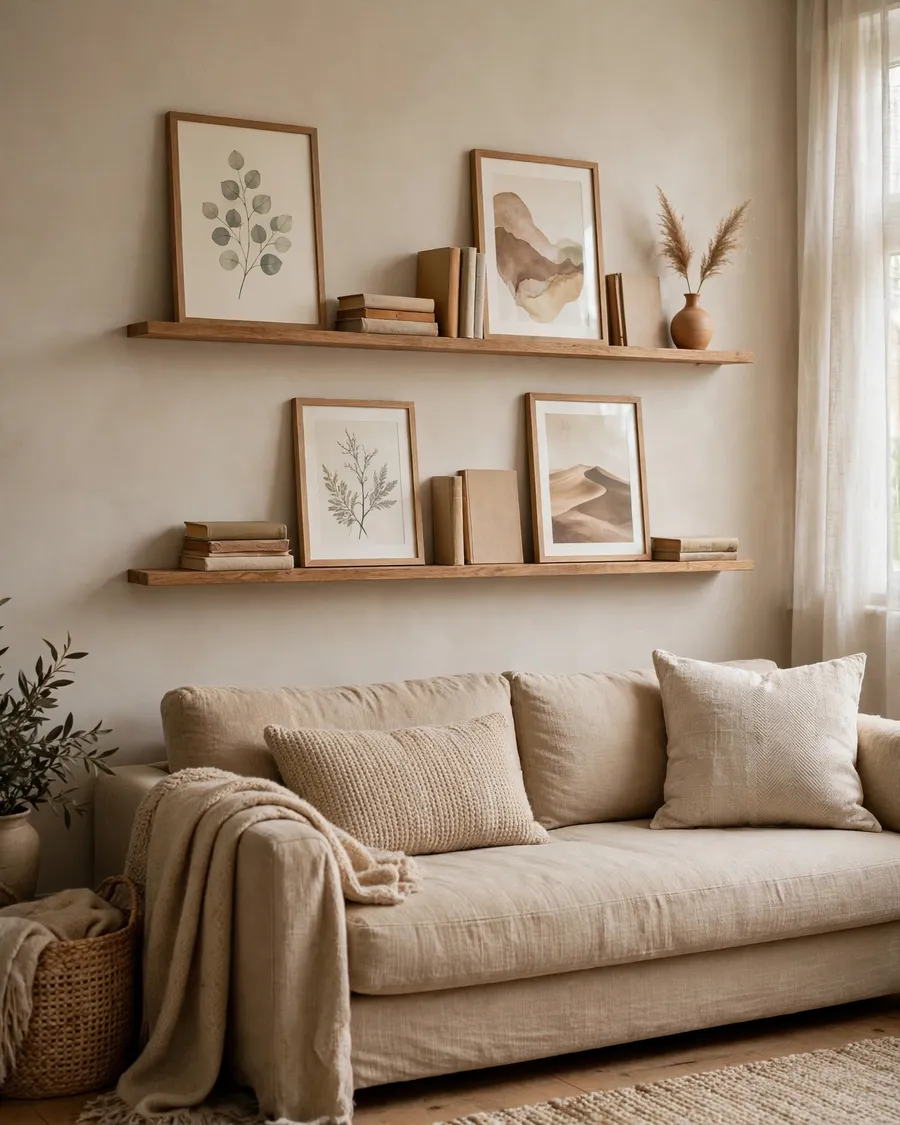
Picture ledges are shallow shelves that hold framed prints, small books and little storage boxes without the bulk of a bookcase. Best for: narrow walls and hallway-facing living rooms. Styling tip: overlap frames in two rows and leave one ledge half empty for breathing room. Pro tip: ledges 3 to 4 inches deep hold frames safely; deeper ledges tempt you to pile things up.
13. A Full Storage Wall Beside the Fireplace

A floor-to-ceiling storage wall beside the fireplace swallows the room’s biggest clutter — board games, photo albums, spare cushions — behind matching doors. Best for: living rooms with one long blank wall. Styling tip: paint the doors the same colour as the wall so the unit nearly disappears. Pro tip: keep the deepest shelves at waist height and the rarely used things up high, where a step stool reaches them.
14. Corner Shelves for Dead Space

Corners are the most wasted space in a living room, and two or three small corner shelves turn one into a home for books and a plant. Best for: awkward layouts and rooms with an empty corner by the sofa. Styling tip: keep corner shelves to two tiers so they never loom over the seating. Pro tip: triangular shelves hold less than they look — reserve them for books and plants, not heavy boxes.
15. A Recessed Niche Beside the Fireplace

A recessed niche built into the wall beside the fireplace adds shelves without taking a single inch of floor space. Best for: renovations and new builds. Styling tip: line the niche with the same paint or tile as the fireplace surround so it reads as architecture. Pro tip: check for pipes and wires before cutting into any wall — a stud finder is not optional here.
Small-Space and Multi-Use Storage
Small living rooms punish every wasted inch, so the storage has to hide in gaps — behind the sofa, under it, and in pieces that move. Our small living room ideas cover the layout side of this, while the ideas below handle the hiding.
16. A Console Table Behind the Sofa
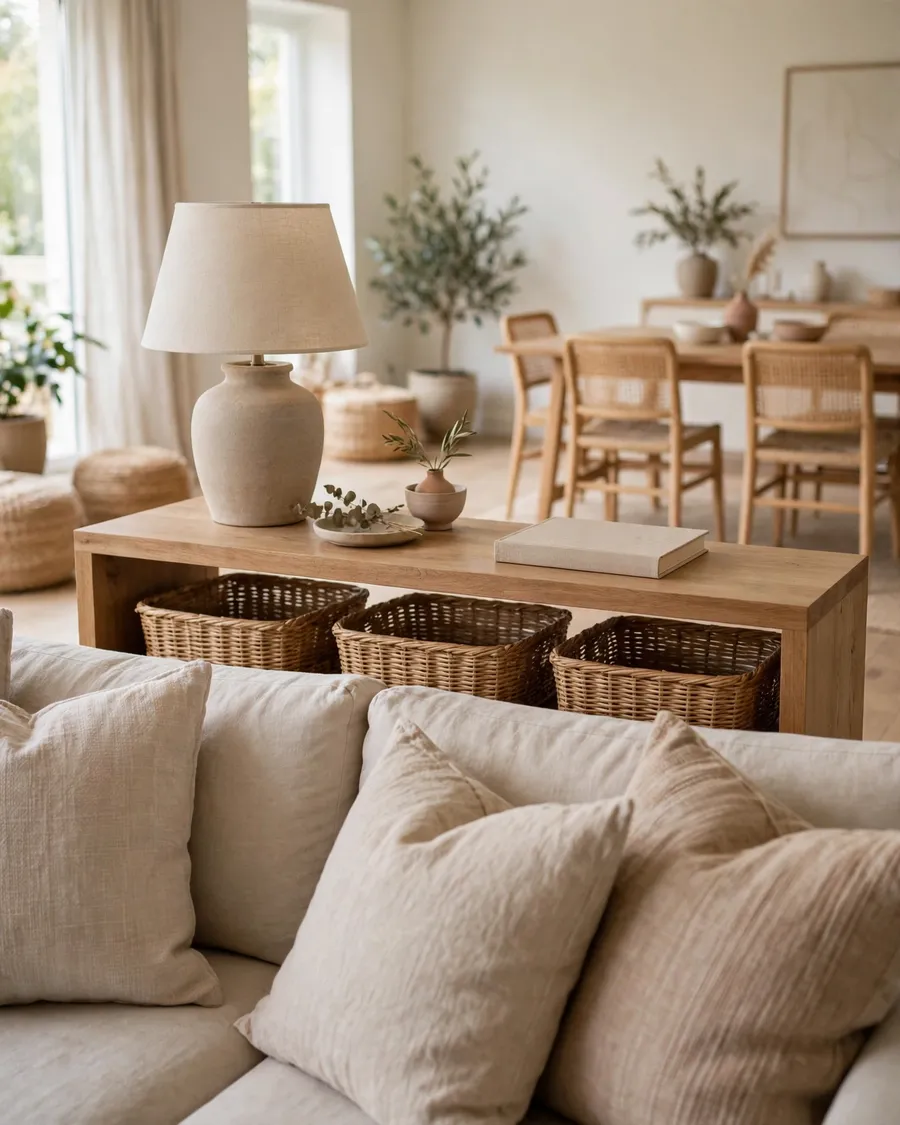
A slim console table behind the sofa creates a whole new storage zone in the gap most rooms waste, with baskets sliding underneath. Best for: open-plan living rooms where the sofa floats in the room. Styling tip: keep the tabletop to a lamp and one book, and let the baskets below do the work. Pro tip: a console 10 to 12 inches deep fits behind most sofas without blocking walkways.
17. Rolling Bins Under the Sofa

Low rolling bins slide under the sofa and out again on small wheels, hiding spare cushions, kids’ toys and the board games nobody plays weekly. Best for: sofas with at least 5 inches of clearance underneath. Styling tip: use matching bins so the room looks planned even when one is half out. Pro tip: measure the sofa clearance before buying — bins come in fixed heights and a centimetre matters.
18. A Basket Under the Coffee Table

The space under the coffee table is free storage: one flat woven basket there holds magazines, remotes and the chargers that always end up on the floor. Best for: every living room, honestly. Styling tip: pick a basket in a natural fibre so it reads as decor, not a bin. Pro tip: a basket 4 to 5 inches tall slides under most coffee tables without scraping the floor.
19. A Slim Rolling Cart Beside the Sofa

A three-tier cart about 5 to 7 inches wide slides into the gap beside the sofa and rolls out when you need something from the back. Best for: living rooms with a gap between sofa and wall. Styling tip: label the tiers — remotes, chargers, snacks — so nothing gets lost at the back. Pro tip: measure the gap first; carts come in fixed widths and a centimetre matters.
20. Storage Poufs That Double as Seats
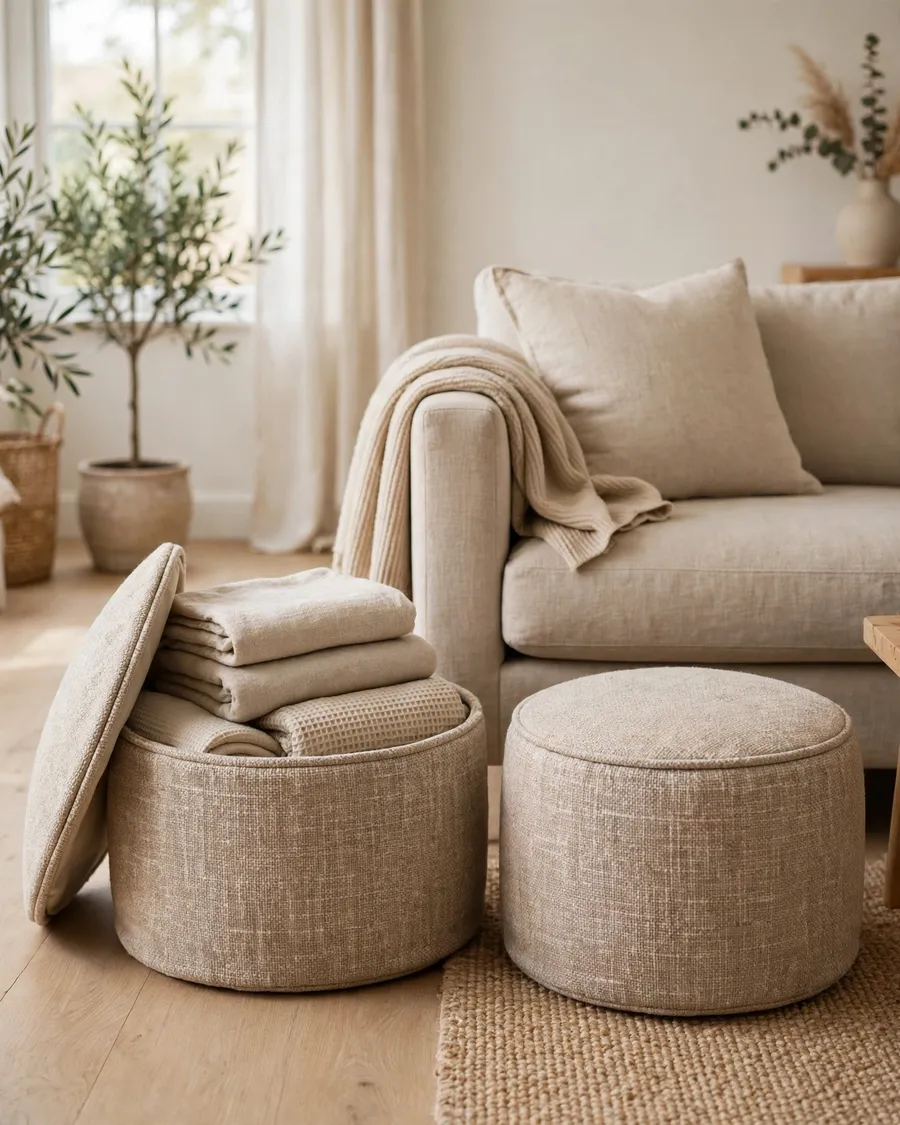
Storage poufs are extra seats when guests arrive and hidden boxes the rest of the time, holding throws, toys or the kids’ craft supplies. Best for: family living rooms that need flexible seating. Styling tip: choose two poufs in the same fabric and tuck them under a console when not in use. Pro tip: check the weight limit — a pouf that holds an adult needs a solid base, not just soft filling.
21. A Fold-Down Wall Cabinet
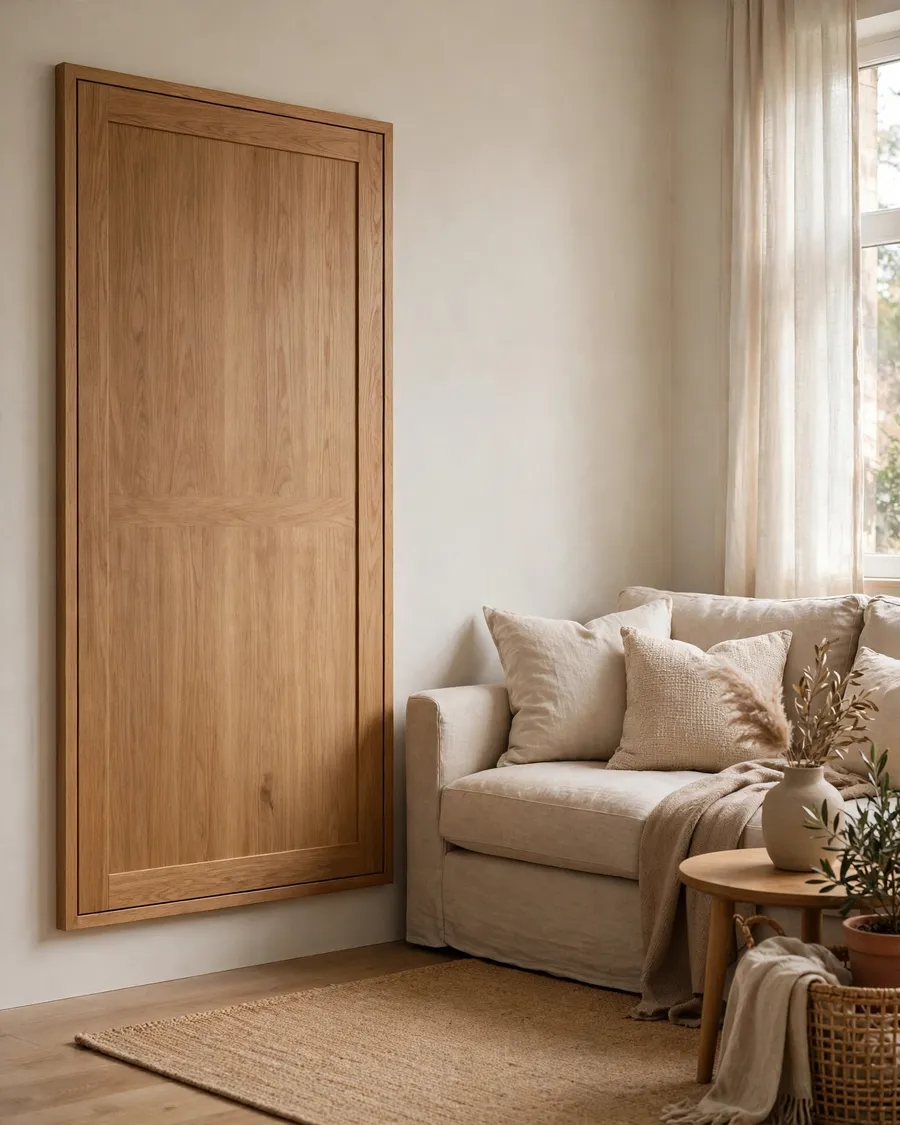
A fold-down wall cabinet opens into a small desk or bar shelf, then folds flat against the wall when the evening is over. Best for: tiny living rooms and studio flats. Styling tip: mount it near an outlet so the folded-down shelf works as a laptop spot. Pro tip: fit it to studs or heavy-duty anchors — a loaded fold-down shelf pulls hard on the wall when it is open.
Baskets, Bins and Everyday Organisers
22. Matching Woven Baskets on Open Shelves

Matching woven baskets on open shelves are the easiest way to make a living room look styled rather than cluttered. Best for: open shelves that show everything. Styling tip: give each basket one category — cables, games, craft supplies — so the eye reads groups, not chaos. Pro tip: baskets about 10 inches wide fit most shelves; measure before buying a set.
23. Labelled Bins Inside the Media Console

Labelled bins inside the media console give every cable, controller and charger one box, and end the daily hunt for the missing remote. Best for: households with game consoles and streaming boxes. Styling tip: keep the labels small and neat — a label maker beats handwriting here. Pro tip: bins 10 to 11 inches wide fit most standard consoles; check before ordering.
24. A Remote and Magazine Caddy on the Sofa Arm

A slim caddy that drapes over the sofa arm holds the remotes, the TV guide and a magazine, so the coffee table stays clear. Best for: sofa ends where remotes always vanish. Styling tip: pick leather or heavy canvas in a colour close to the sofa so it blends in. Pro tip: a caddy with three pockets is enough — more pockets invite clutter back in.
25. A Big Basket Just for Throw Blankets

A big woven basket just for throw blankets keeps them tidy, within reach, and off the sofa back where they always slide down. Best for: every living room with more than two throws. Styling tip: roll the throws instead of folding them — rolled throws fill a basket neatly and look like a shop display. Pro tip: a basket 18 inches wide holds three folded throws; measure the sofa-side gap first.
26. A Toy Chest That Looks Like Furniture
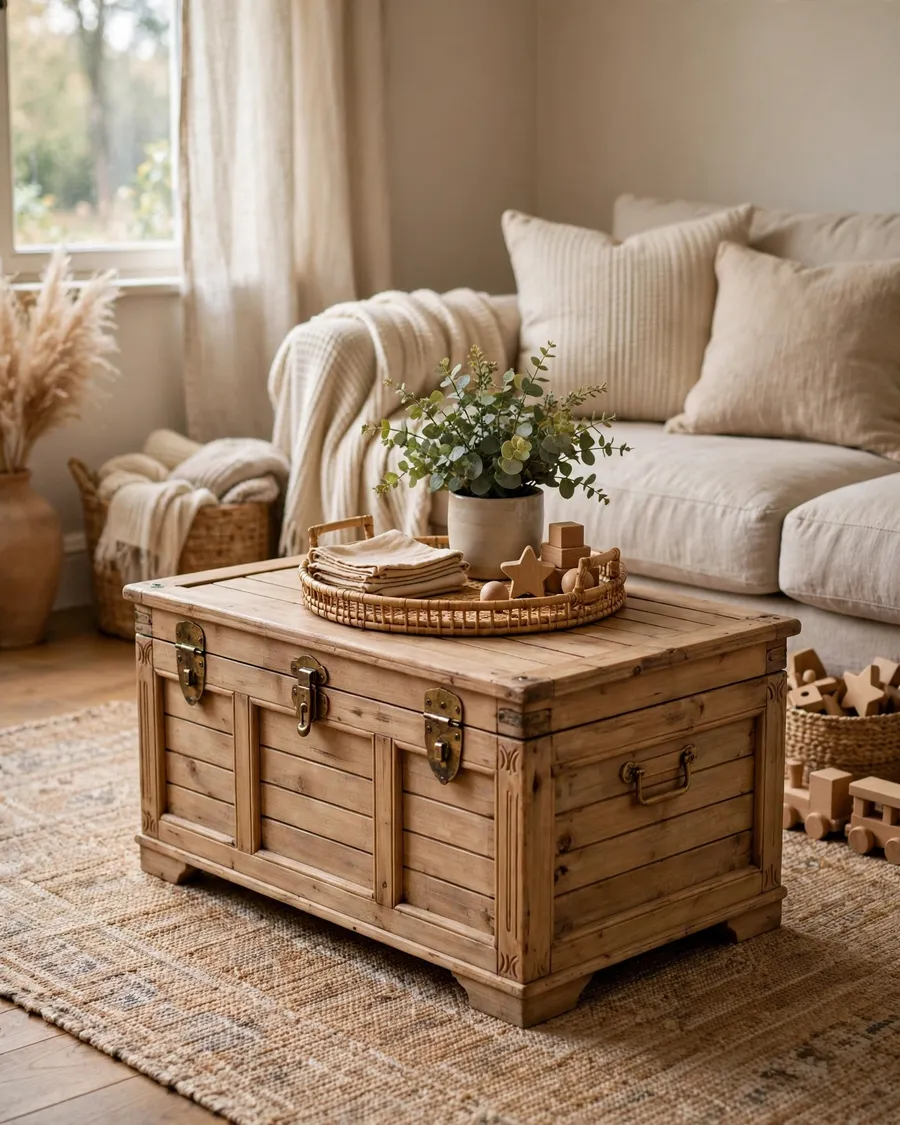
A wooden toy chest styled as a coffee table or bench swallows the toys at the end of the day, and the room looks grown-up again in two minutes. Best for: family living rooms where toys live all day. Styling tip: put a tray on top so it reads as a table, and keep the lid light enough for kids to open. Pro tip: choose a chest with safety hinges that hold the lid open — a heavy lid that slams is a finger trap.
27. A Cord-Hiding Box by the TV

A lidded wooden box beside the TV console hides the power strip and the cable knot, leaving one tidy cord running to the wall. Best for: living rooms where cables trail across the floor. Styling tip: match the box wood to the media console so it disappears into the furniture. Pro tip: pick a box with ventilation slots — a sealed box around a warm power strip is a fire risk.
Styling and Renter Tricks
28. Decorative Storage Boxes on Shelves
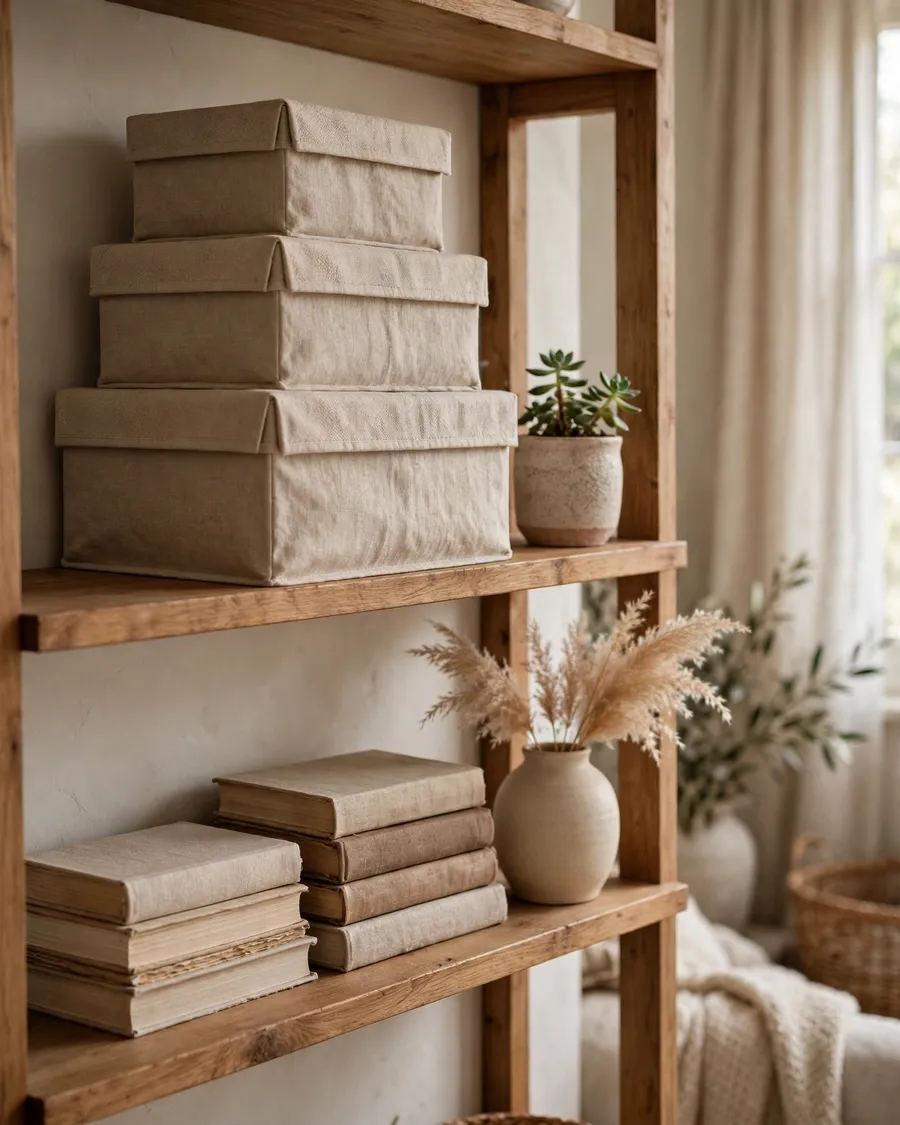
Decorative storage boxes in linen, leather or patterned card turn a shelf of clutter into a shelf of decor, hiding chargers, photos and paperwork. Best for: open shelves that sit at eye level. Styling tip: stack two boxes and leave the third shelf space empty for a plant. Pro tip: boxes 12 inches long fit most bookcase shelves; anything bigger looks like moving boxes.
29. A Cupboard Under the Stairs

The space under the stairs beside the living room fits a shallow cupboard for board games, photo albums and the vacuum — storage the living room never had. Best for: homes where the stairs open into the living room. Styling tip: fit doors that match the stair paint so the cupboard reads as part of the staircase. Pro tip: pull-out drawers beat deep shelves here — nothing gets lost at the back of a triangular space.
30. A Freestanding Shelf Unit, No Drilling

A freestanding shelf unit leans or stands against the wall with no drilling at all, and baskets on every shelf hide the clutter. Best for: renters whose lease forbids wall anchors. Styling tip: keep the heaviest items on the lowest shelf so the unit never leans. Pro tip: anchor tall units to the wall with removable strips if your lease allows it — a full shelf must never wobble near kids.
31. One Closed Cabinet, Styled Not Stuffed

Sometimes the smartest storage is one closed cabinet done well: a plant and two books on top, everything else behind the door. Best for: minimal living rooms and small flats. Styling tip: style in odd numbers with breathing room between groups. Pro tip: if a cabinet fills with more than two closed boxes and one folded throw stack, it has stopped being storage and started being clutter.
32. A Seasonal Rotation System
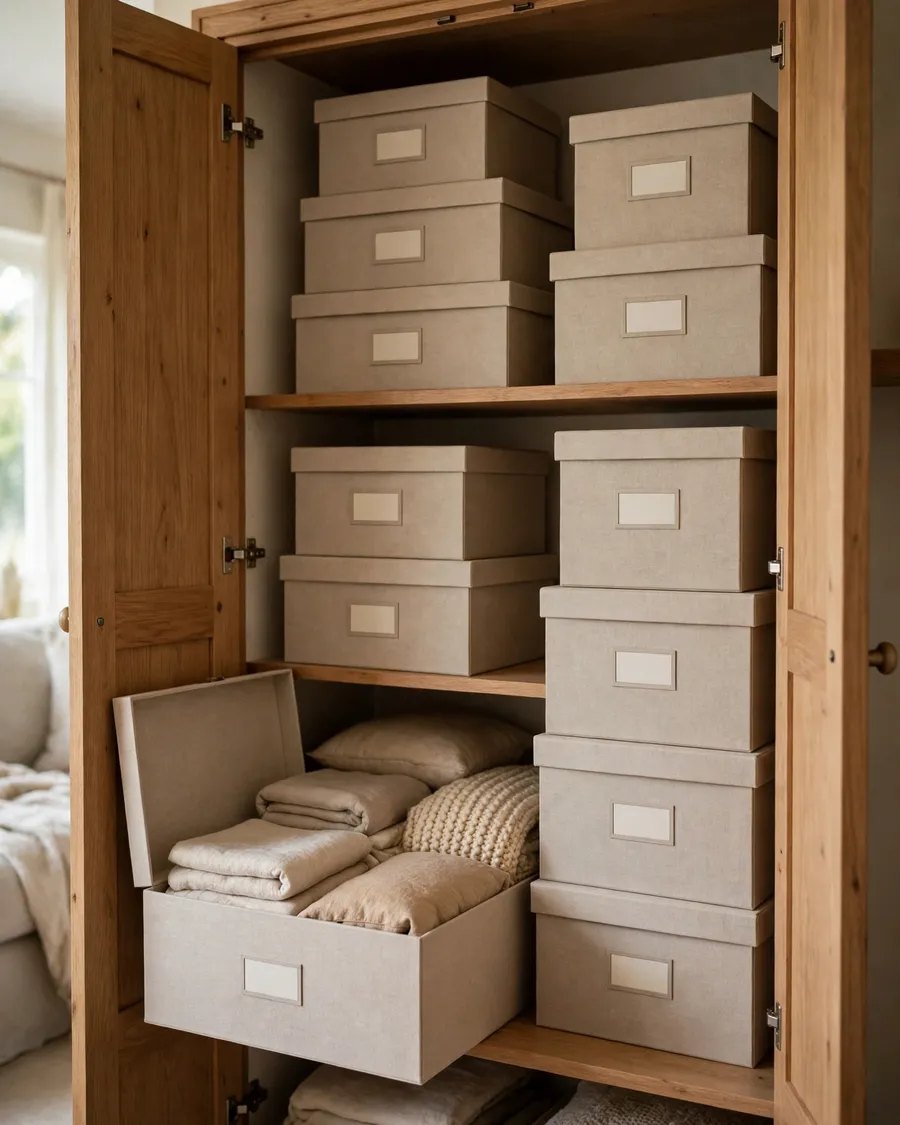
A seasonal rotation system keeps only this season’s throws, cushions and decor in the living room, while the rest waits in labelled boxes elsewhere. Best for: anyone whose living room fills up a little more every season. Styling tip: swap the boxes twice a year, and let the new season’s colours set the room’s accent. Pro tip: one labelled box per season is enough — a second box per season means the system has already failed.
Living Room Storage Care and Upkeep
Living room storage stays tidy with small habits: dust shelves weekly, because open shelves collect dust fast; re-edit the baskets every season — if a box has not been opened in a month, empty it; and keep heavy items low, never above head height. Check wall anchors yearly, and vacuum inside ottomans and chests twice a year. For more storage inspiration beyond the living room, see the IKEA living room storage ideas guide.
Frequently Asked Questions
What is the best hidden storage for a living room?
A storage ottoman and a closed media console are the best starting points for most living rooms: the ottoman hides blankets and games in plain sight, while the console hides routers, game consoles and cables behind solid doors. A storage bench under the window adds a second big hiding place for very little money. If you own your home, built-in shelves around the TV give the most storage per square foot. Renters should start with freestanding pieces — an ottoman, a bench and a shelf unit — because they lift out when you move.
How do I add storage to a small living room without making it look cluttered?
Follow the 80/20 rule: keep about 80 percent of storage closed behind doors and lids, and only 20 percent open on display. Use furniture that hides storage — an ottoman, a lift-top coffee table, a console with doors — instead of adding more open shelves. Match one material across your pieces so the room reads calm, and give every basket one category so the eye reads groups instead of chaos. Measure the gaps behind and under the sofa first, because those hidden spaces hold more than a new bookcase would.
What living room storage furniture is worth the money?
Spend first on the pieces you touch every day: a good storage ottoman, a solid media console with doors, and a lift-top coffee table if you work from the sofa. These three hide the most clutter for the money and last for years. A storage bench under the window is the next best buy, especially in homes with no other seating. Skip cheap open bookcases — they fill up fast and show everything. A well-made closed cabinet costs more upfront but saves you from buying baskets and boxes to hide what it should have hidden itself.
Can renters add living room storage without drilling?
Yes — freestanding pieces are made for renters. A storage ottoman, a storage bench, a freestanding shelf unit and rolling bins under the sofa need no fixings at all and lift out when you move. A ladder-style shelf leans against the wall with no drilling, and a slim rolling cart slides into the gap beside the sofa. Avoid anything that needs wall anchors unless your lease allows it, and use removable strips for tall units if you want extra safety. Check the width of every piece against your sofa and wall gaps before ordering.
How do I hide clutter in a living room with kids?
Give toys one home that closes: a toy chest styled as a coffee table, or a storage bench with a lift-up lid, for a two-minute tidy-up at the end of the day. Use labelled bins inside the media console for controllers and chargers, and a big basket by the sofa for the throws and books that migrate everywhere. Keep the daily toys low where kids can reach them, and the fragile decor up high. A seasonal rotation box helps too — swap outgrown toys out of the living room twice a year instead of letting them pile up.
How much does living room storage cost?
Most living room storage costs very little. A storage ottoman typically costs 40 to 80 dollars, a set of woven baskets 15 to 30 dollars, and a slim rolling cart about 25 to 40 dollars. A lift-top coffee table runs 80 to 150 dollars, while a solid media console with doors costs 120 to 250 dollars depending on size and material. Built-in shelves around the TV are the biggest spend, often several hundred dollars with installation. Start with one ottoman and a set of baskets — most rooms look transformed for under 100 dollars.
Final Thoughts
The living room does not need more stuff — it needs the stuff it already has to hide better. Start with one big piece, a storage ottoman or a closed media console, add baskets where the small things gather, and keep the 80/20 rule in mind. Try one idea this weekend, live with it for a week, and change only what does not work. Save this guide for your next living room refresh.
