
Easter dinner deserves a table that feels as fresh as the season itself, and these easter table decor ideas prove you do not need a big budget or a florist on speed dial to get there. A low vase of grocery-store tulips, a linen runner in sage green, and a handful of speckled eggs can turn an ordinary Sunday table into the prettiest spot in the house.
This list walks you through the whole build in order — linens first, then the centerpiece, then place settings, colour, and the finishing touches — so you can pick one idea or copy the full look. Most of these take under 30 minutes, and plenty use things you already own. If you want a year-round starting point first, these dining table decor ideas cover the everyday foundations this spring look builds on.
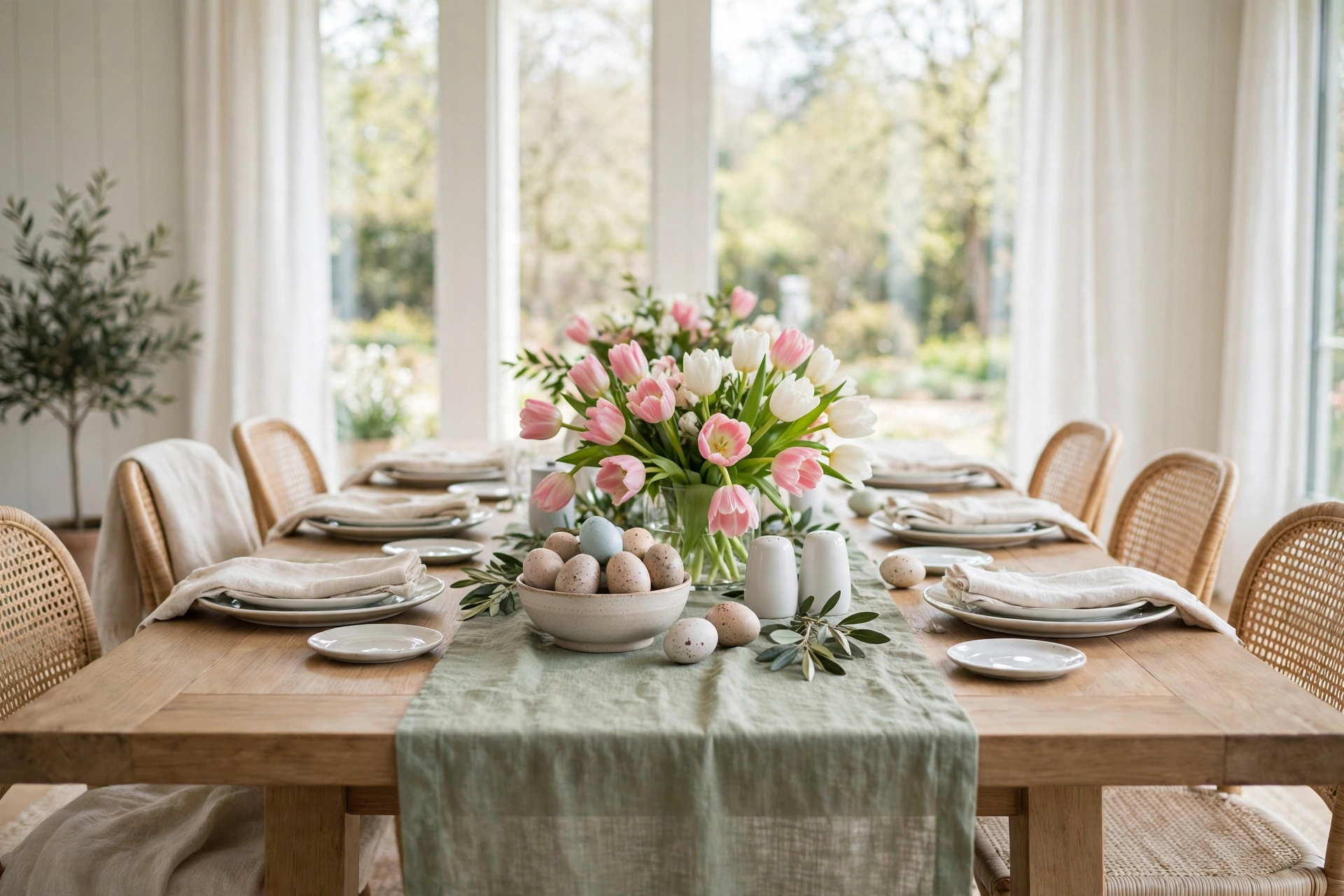
Start With the Foundation — Linens, Runners & Layers
1. Low Tulip Centerpiece in a Glass Vase
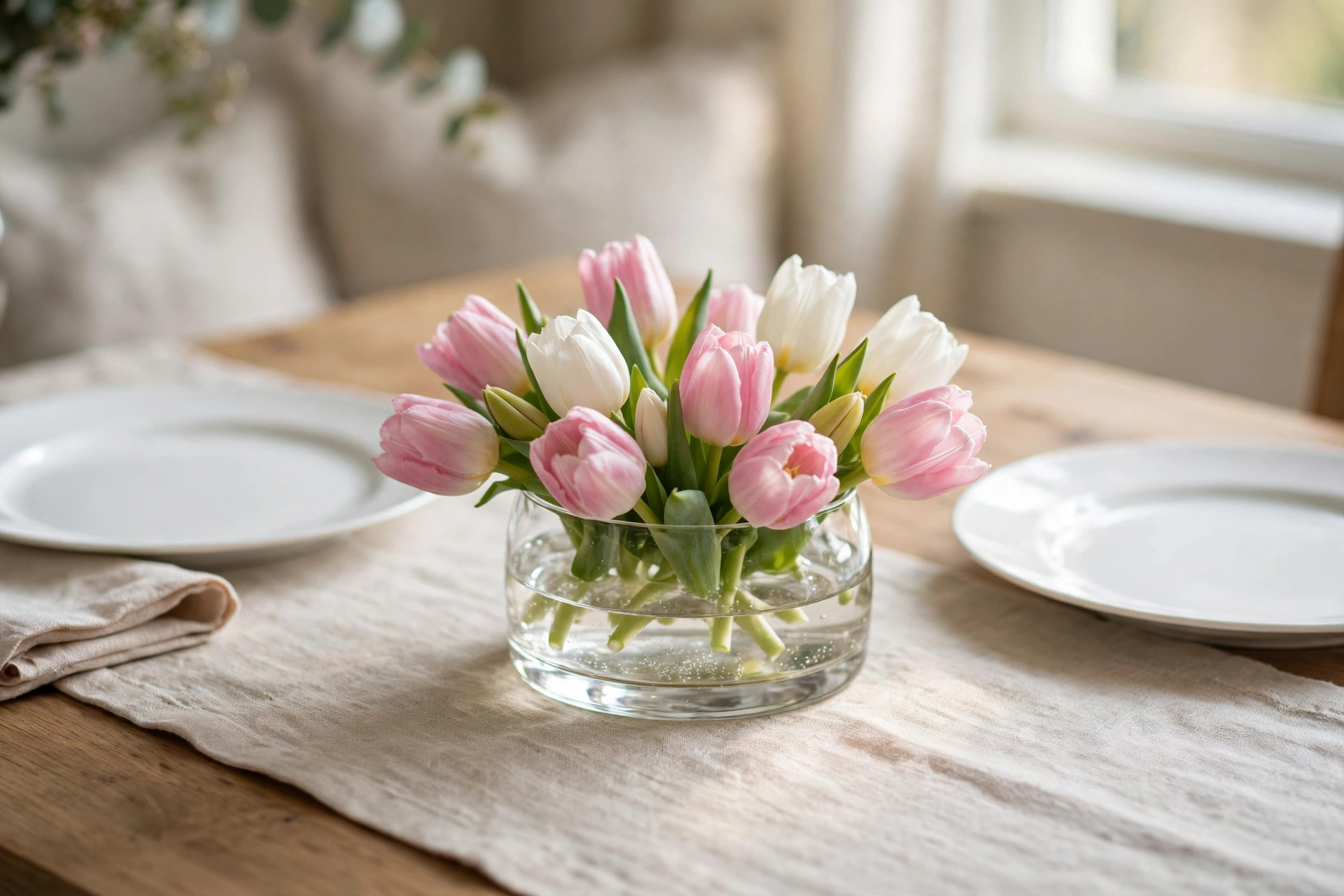
Cut tulip stems to about 6 inches so the blooms sit just above the vase rim and guests can see straight across the table. A short cylinder vase works best because it keeps the arrangement low and stops stems from flopping sideways. Use one colour, or mix pink and white for a soft spring look.
Best for: Long dinners where conversation matters as much as the flowers.
Styling tip: Add a penny to the vase water — the copper slows stem rot and keeps tulips upright a day longer.
Pro tip: Buy tulips two days early and keep them in a cool room; they open slowly and last through Easter weekend.
2. Sage Green Linen Runner
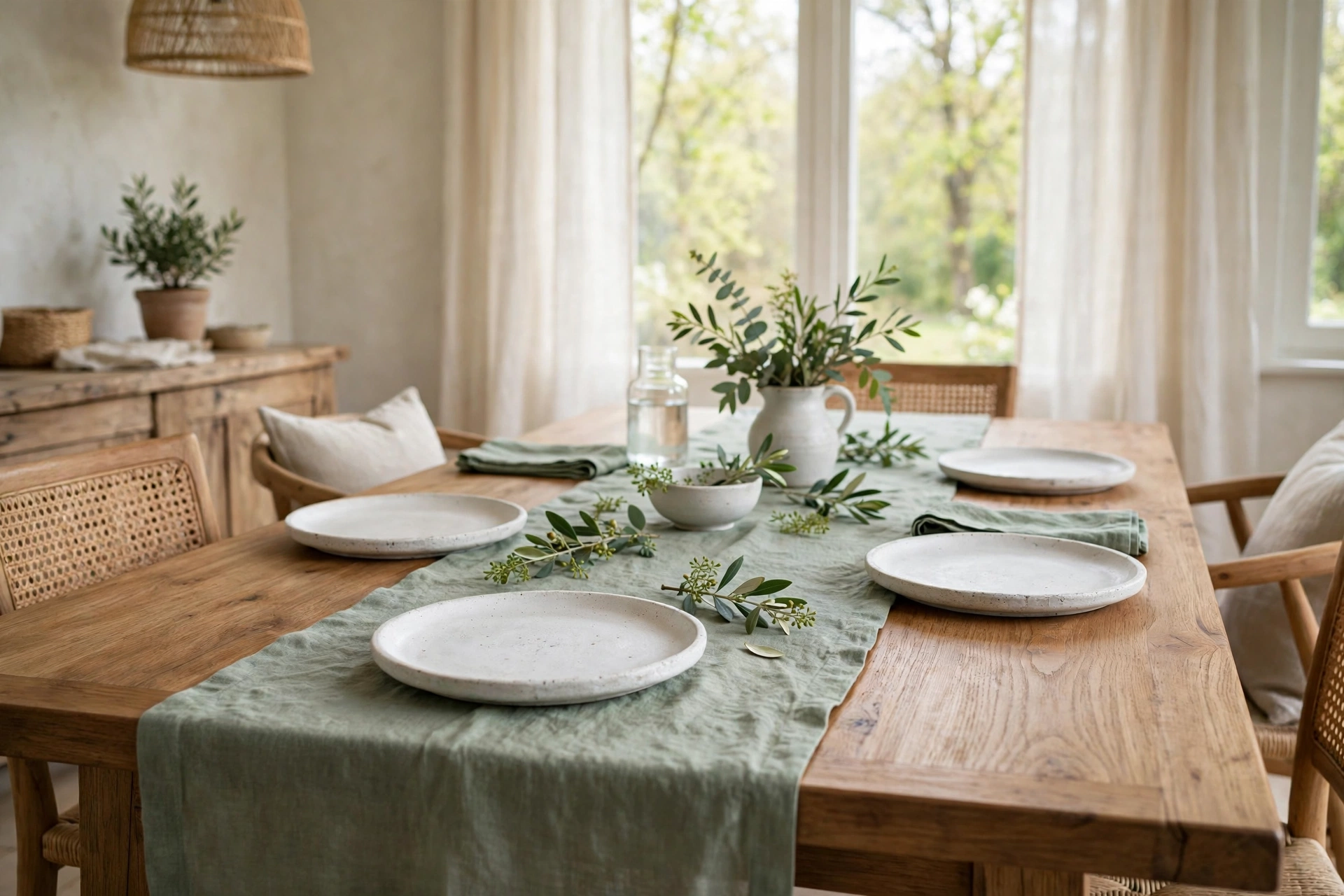
A sage linen runner is the easiest way to set a spring palette without repainting anything. Let it hang 6 to 8 inches past each end of the table so it reads intentional, not like a misplaced placemat. The muted green flatters both white plates and pastel eggs.
Best for: Tables that need colour without a full tablecloth.
Styling tip: Iron the runner with a light steam, then fold it once lengthwise for a narrow, tailored line.
Pro tip: Wash linen in cold water and skip the dryer — air-drying keeps the relaxed texture that makes it look expensive.
3. Layered Placemats

Stack a round woven placemat under a smaller linen one to give each setting depth in seconds. The woven layer adds texture while the linen layer softens it, and the contrast makes plain white plates look styled. Keep the top layer at least 2 inches smaller so the weave shows as a border.
Best for: Plain tables that need instant texture.
Styling tip: Mix rattan with pale pink or mint linen for a spring feel; keep both layers in the same warm-or-cool family.
Pro tip: Wipe woven placemats with a damp cloth the night before so dust does not dull them in daylight photos.
4. White Tablecloth With Pastel Napkins
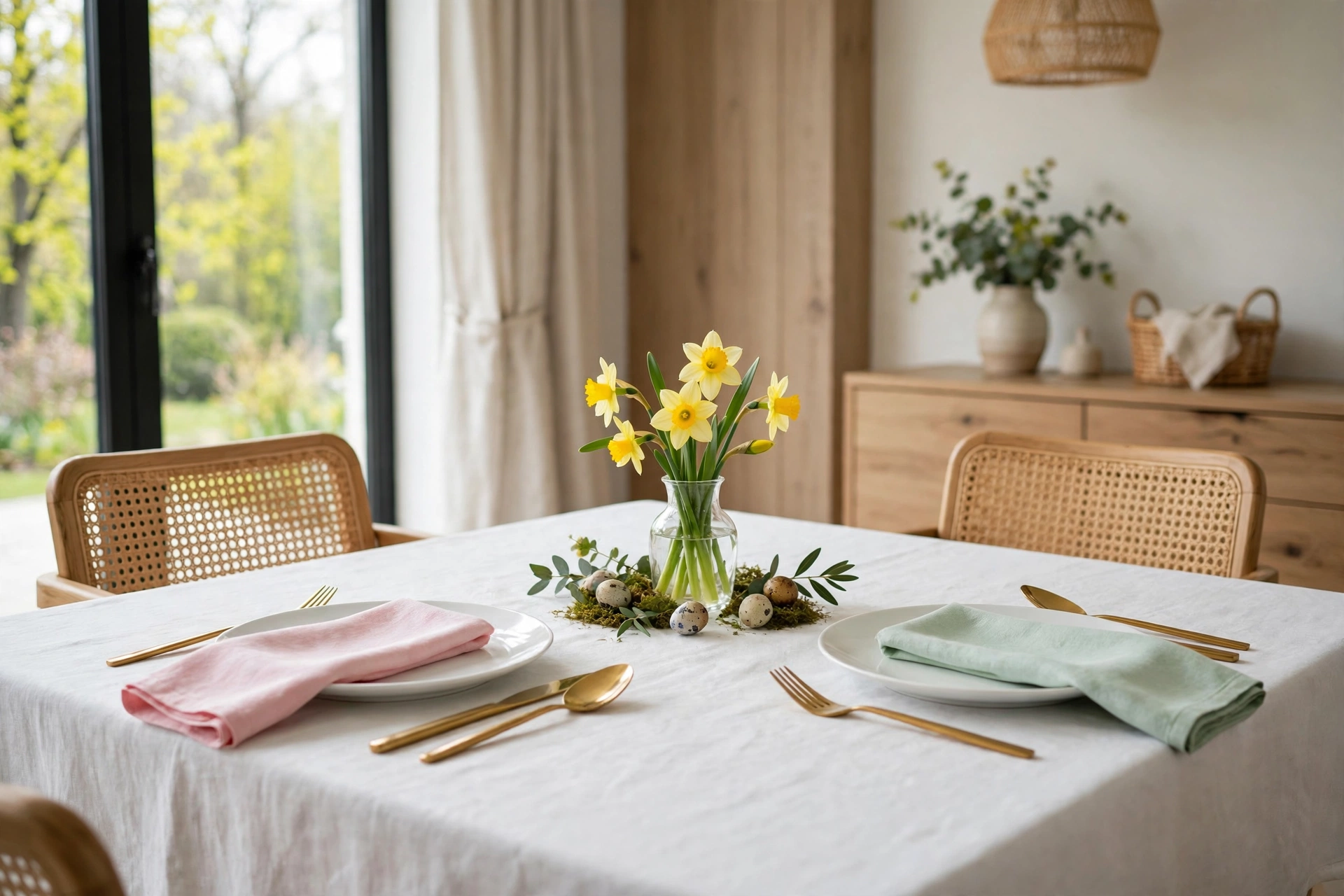
A crisp white tablecloth is a clean canvas, and pastel napkins do all the seasonal work for a few dollars. Fold napkins into a simple rectangle and lay them across the plate rather than under the fork — it keeps the colour visible. Choose two napkin colours at most, or the table starts to look busy.
Best for: Formal Easter lunch when you want a polished, classic look.
Styling tip: Press napkins with a hot iron and fold them while still warm for sharp edges that hold all day.
Pro tip: A cotton-poly blend cloth resists wrinkles better than pure cotton if you are short on ironing time.
5. Moss Table Runner

Sheet moss from a craft store turns a plain table into a garden bed for about the price of a bunch of flowers. Lay it in a strip 12 to 14 inches wide down the centre and tuck speckled eggs and small white blooms straight into it. Mist it lightly before guests arrive so it looks fresh, not dry.
Best for: Rustic or garden-style Easter tables.
Styling tip: Put a thin plastic liner under the moss to protect a wood table from moisture.
Pro tip: Save the moss after Easter — dried and stored flat, it works again for a summer garden party.
6. Gingham Runner for a Family Table

Gingham reads cheerful without feeling childish when you keep the check small — half-inch squares in pale yellow or soft blue. It pairs well with white plates and simple glassware, and it hides the odd crumb better than a solid cloth. A runner, not a full cloth, keeps the wood visible and the look casual.
Best for: Family Easter with kids at the table.
Styling tip: Match the runner to one napkin colour and keep everything else white so the check stays the star.
Pro tip: Gingham cotton washes well, so buy it by the yard and hem the edges yourself for half the shop price.
7. Ceramic Bunny Centerpiece

One white ceramic bunny on a wooden tray is all the Easter symbolism a grown-up table needs. Surround it with three or four pastel eggs and a few eucalyptus sprigs, and keep the whole arrangement under 10 inches tall so it never blocks anyone’s view. A single bunny looks curated; a crowd of them looks like a gift shop.
Best for: Elegant tables that want one clear Easter nod.
Styling tip: Place the tray slightly off-centre for a relaxed look, then balance it with a low candle on the other side.
Pro tip: Thrift shops are full of white ceramic bunnies for a dollar or two — spray-paint any chipped one matte white.
Easter Table Centerpieces That Steal the Show
8. Speckled Egg Bowl
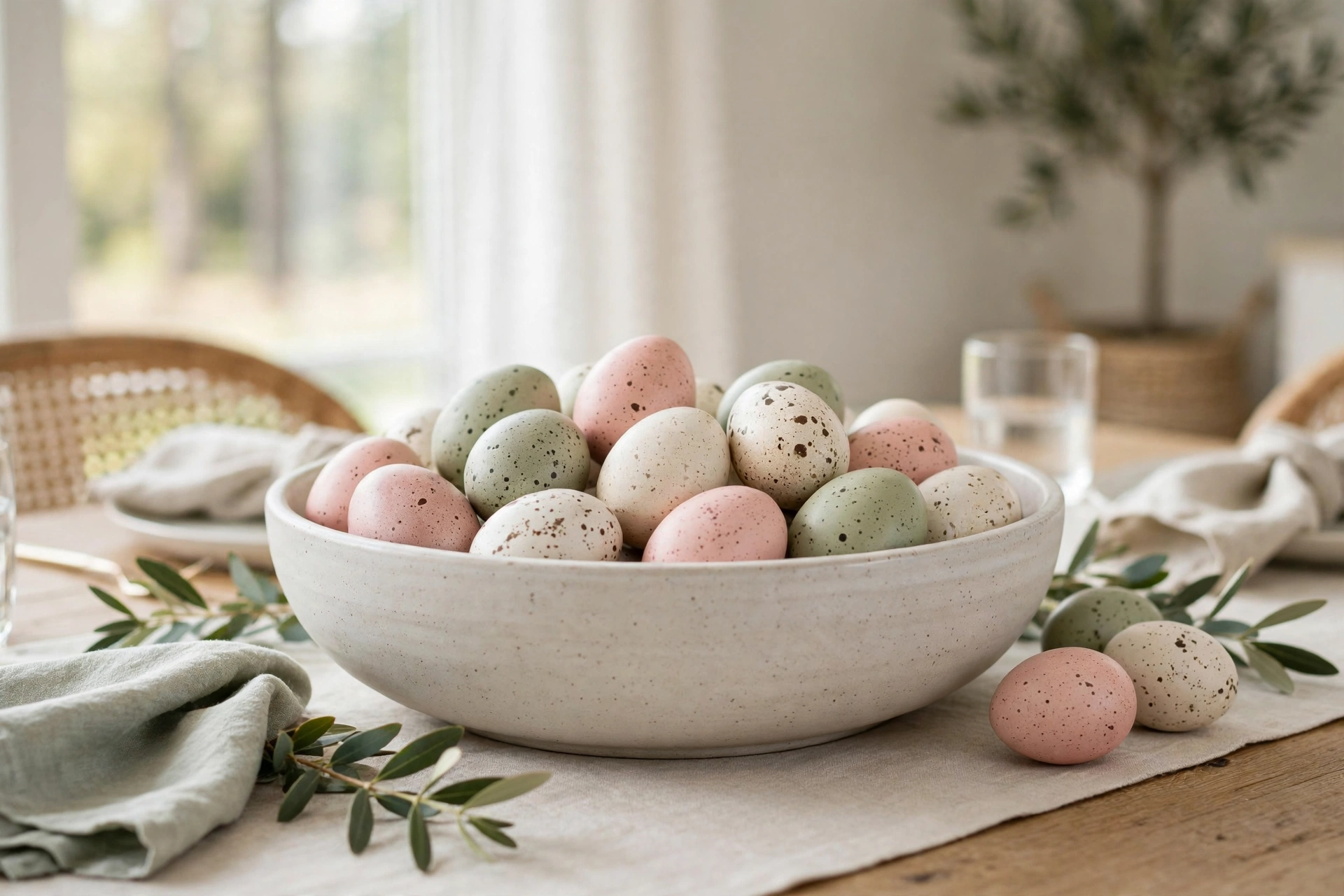
Fill a wide, shallow bowl with speckled eggs in blush, sage, and cream, and you have a centerpiece in under two minutes. A shallow bowl matters — a deep one hides the eggs and eats table space. Mix sizes slightly so it looks collected rather than bought in one bag.
Best for: Last-minute hosts who need a centerpiece fast.
Styling tip: Nestle a few sprigs of moss or dried grass between the eggs to fill gaps.
Pro tip: Keep the bowl for the rest of spring — swap the eggs for lemons in May and it works all season.
9. Pussy Willow Branches in a Tall Vase
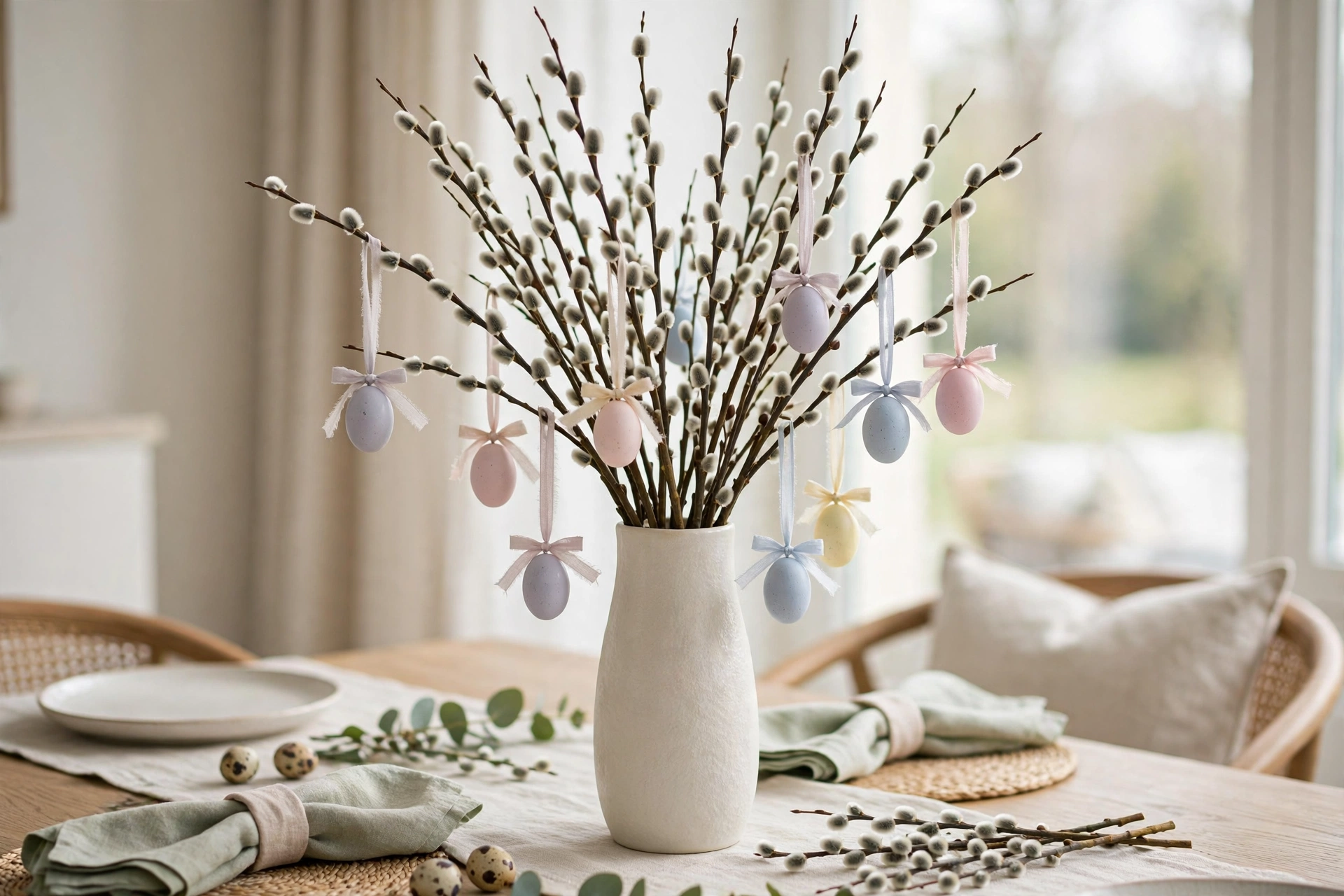
Tall pussy willow branches add height without blocking sightlines because the stems are thin and airy. Hang two or three lightweight painted eggs from the branches with thin ribbon, spaced at different heights. Trim the stems so the vase sits about 18 inches tall on the table — taller than that starts to feel like a barrier.
Best for: Small tables that need drama without bulk.
Styling tip: Use a heavy vase or add a few pebbles at the bottom so tall branches cannot tip.
Pro tip: Pussy willow dries beautifully, so this arrangement can stay up for weeks after Easter.
10. Candlelit Lantern Centerpiece
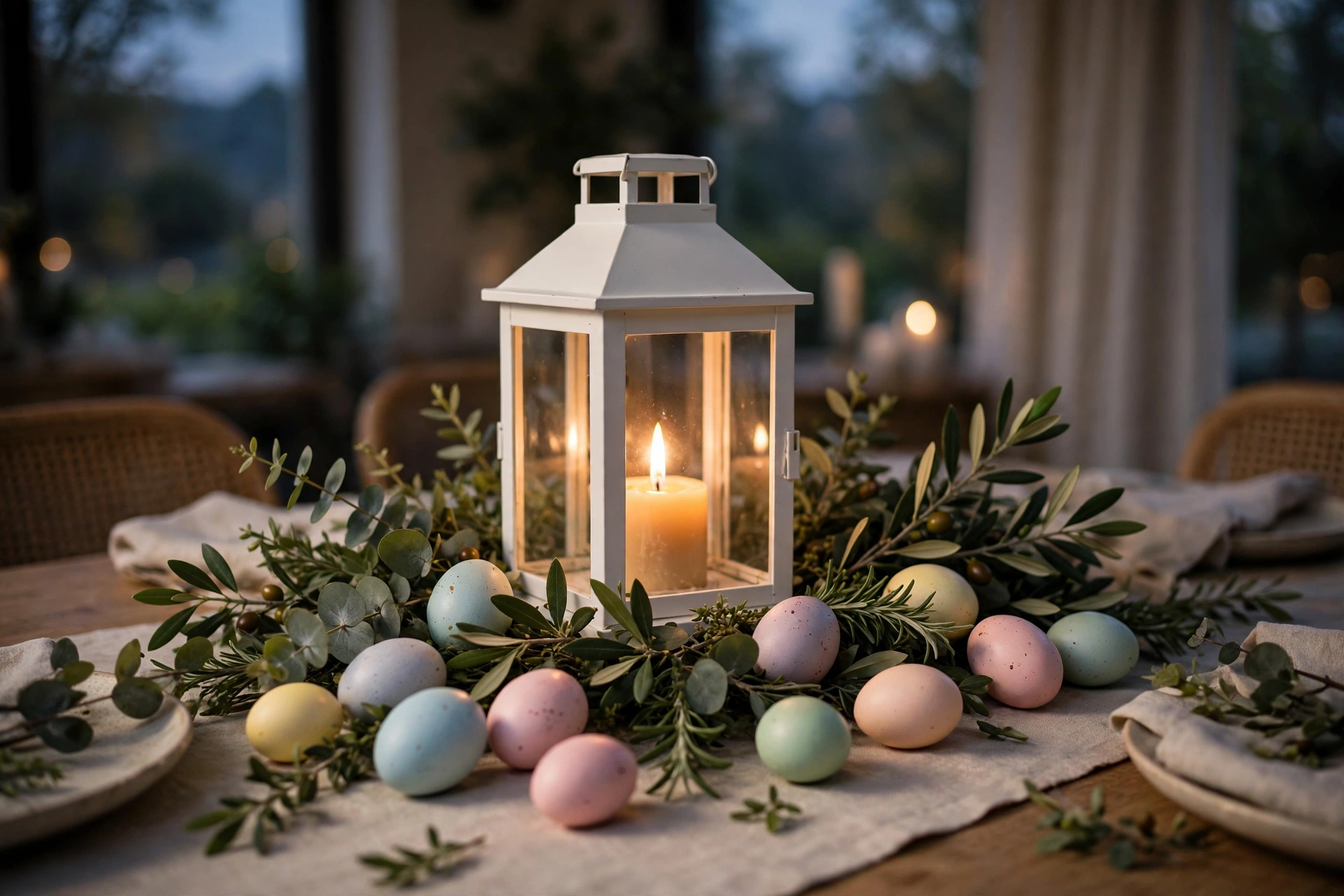
A white lantern with a pillar candle inside gives an evening Easter dinner a warm glow that flowers alone cannot. Surround the base with greenery and a few pastel eggs, and keep the lantern under 12 inches tall so it reads as a centerpiece, not a porch decoration. Battery candles are the safer pick if kids are reaching across the table.
Best for: Easter dinner served after sunset.
Styling tip: Use a warm-white LED pillar candle on a timer so the table is glowing before guests sit down.
Pro tip: One lantern beats two — a pair crowds the centre and leaves no room for serving dishes.
11. Blue-and-White Porcelain Centerpiece

Blue-and-white porcelain brings a classic, collected feel that works with almost any Easter palette. A ginger jar or large vase filled with white tulips keeps the look crisp, and blue-and-white plates echo the pattern without matching exactly. Keep the rest of the table white and wood-toned so the blue stays the accent.
Best for: Traditional dining rooms and heirloom china.
Styling tip: Mix one patterned piece with solid blues and whites — two competing patterns fight each other.
Pro tip: Charity shops often stock blue-and-white vases for a few dollars; a single statement piece is enough.
12. Fresh Herb Centerpiece in Small Pots
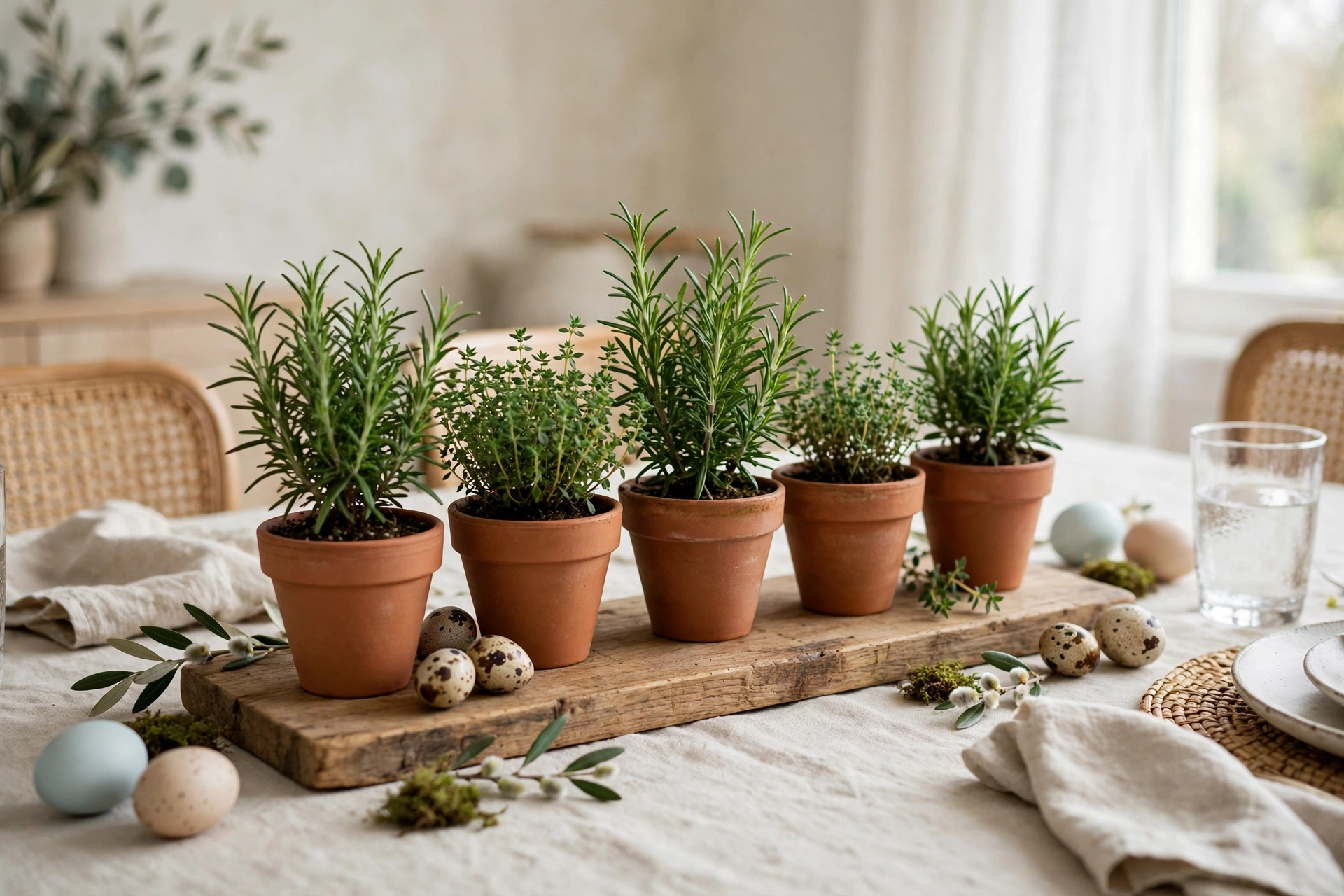
Small pots of rosemary, thyme, and mint make a centerpiece guests can smell as well as see, and they double as take-home favours. Line three or four 3-inch terracotta pots down the centre of the table on a wooden board. Water them the morning of Easter so the soil is damp, not wet, and will not stain the runner.
Best for: Food lovers and garden-style tables.
Styling tip: Tie a thin ribbon and a small name tag around each pot so it doubles as a place card.
Pro tip: Herbs bought a week early and kept on a sunny windowsill look fuller by Easter Sunday.
13. Bird’s Nest Centerpiece
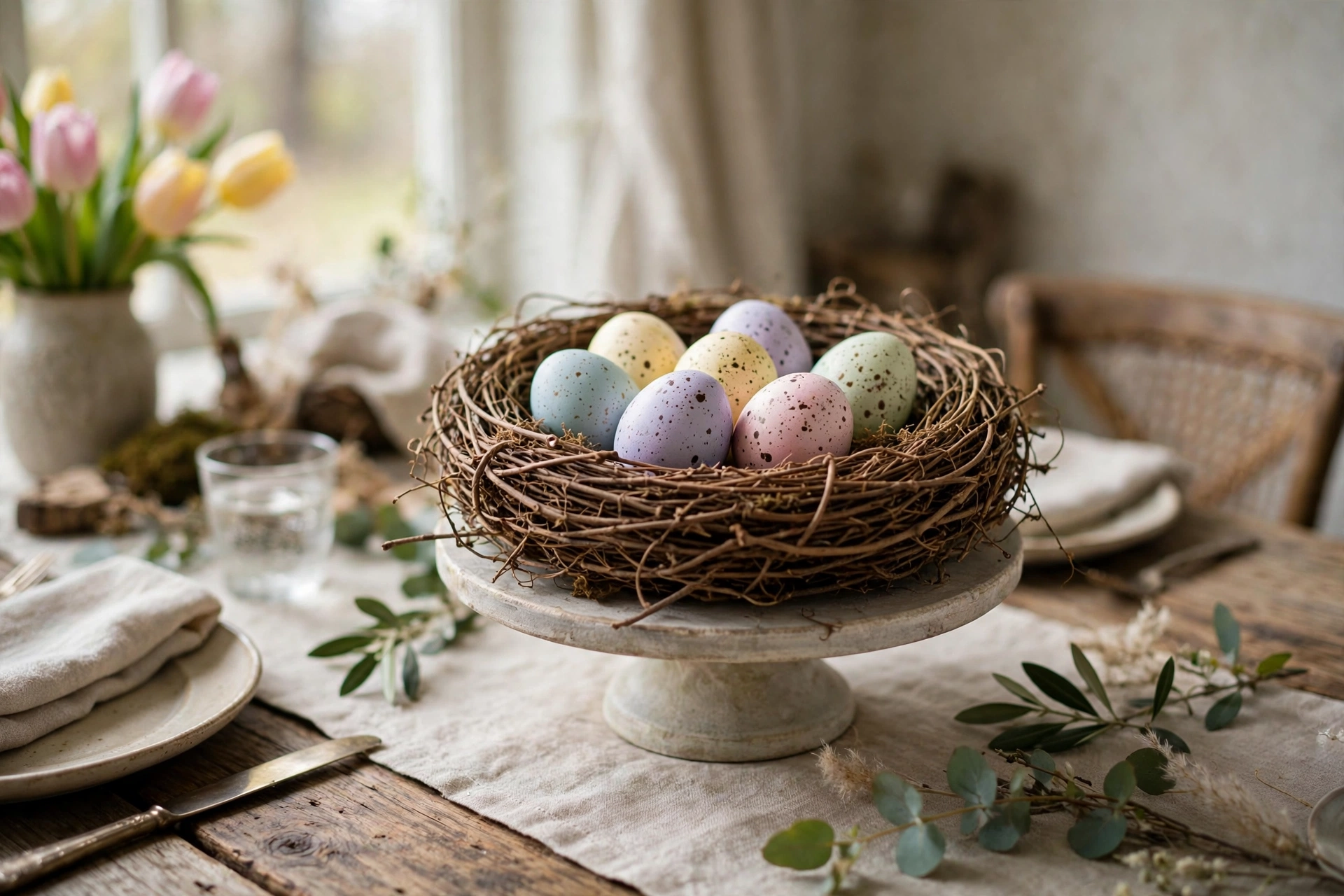
A grapevine nest filled with speckled eggs is the most Easter-specific centerpiece you can make, and it costs almost nothing. Choose a nest about 8 inches wide, set it on a cake stand or low plate to lift it slightly, and add three eggs in different pastel shades. Keep it low and wide rather than tall and narrow.
Best for: Rustic tables and nature-inspired spring decor.
Styling tip: Tuck a few tiny white flowers into the nest edge for a finished look.
Pro tip: Craft-store nests are cheap, but a real grapevine wreath pulled apart and reshaped looks far more natural.
Place Settings & Personal Touches
14. Name Cards Tucked Into Mini Nests

A tiny nest holding a handwritten name card makes every guest feel expected, and it costs pennies. Use nests about 3 inches wide with one speckled egg beside the card, and write names in a dark pen on cream card so they read clearly in daylight. Place the nest on the plate, not beside it, so it is the first thing guests see.
Best for: Seated Easter lunch with assigned places.
Styling tip: Keep the card to first names only — full names look formal and the card gets crowded.
Pro tip: Write the cards the night before; handwriting under time pressure is where smudges happen.
15. Bunny-Ear Napkin Fold

Fold a square cloth napkin into two upright “ears” and stand it in a glass or on the plate for a playful touch that takes about a minute per napkin. Stiff cotton or linen holds the shape; soft jersey-style napkins flop. A small egg or chocolate bunny tucked at the base finishes it.
Best for: Family tables and anyone who wants a smile at each seat.
Styling tip: Iron the napkins first — crisp fabric is the difference between bunny ears and a crumpled cloth.
Pro tip: Practice the fold once on a tea towel; after two tries it becomes muscle memory.
16. A Speckled Egg at Each Plate
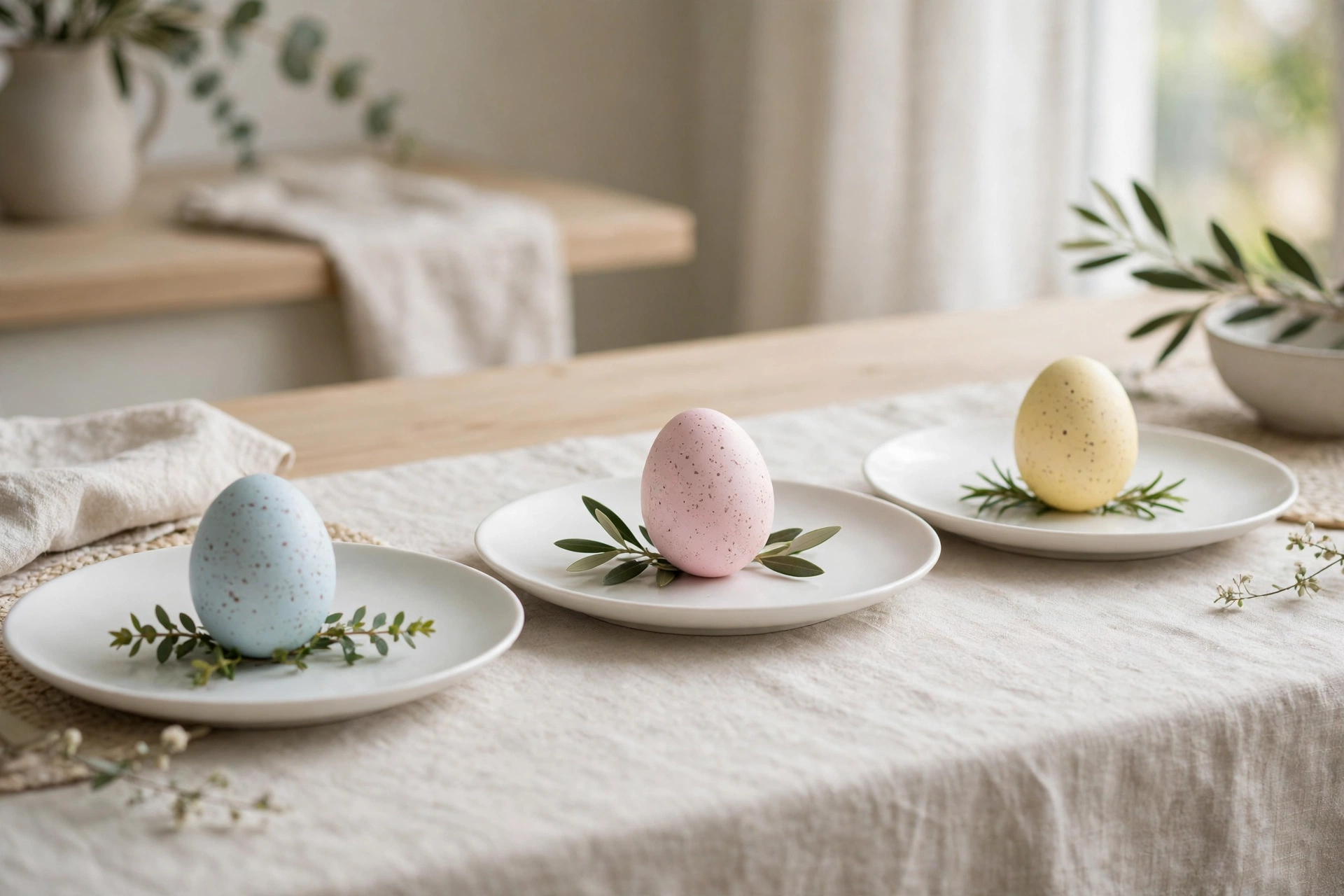
One speckled egg on each plate is the simplest place-setting idea on this list, and it photographs beautifully. Set the egg on a small nest of shredded paper or a folded napkin so it does not roll. Use eggs in one colour family — mixed brights look like a craft project.
Best for: Minimal tables where one detail is enough.
Styling tip: A tiny sprig of greenery under the egg stops it rolling and adds a fresh touch.
Pro tip: Buy speckled eggs in one bag rather than several mixed bags to keep the colours consistent.
17. Mismatched Vintage Plates
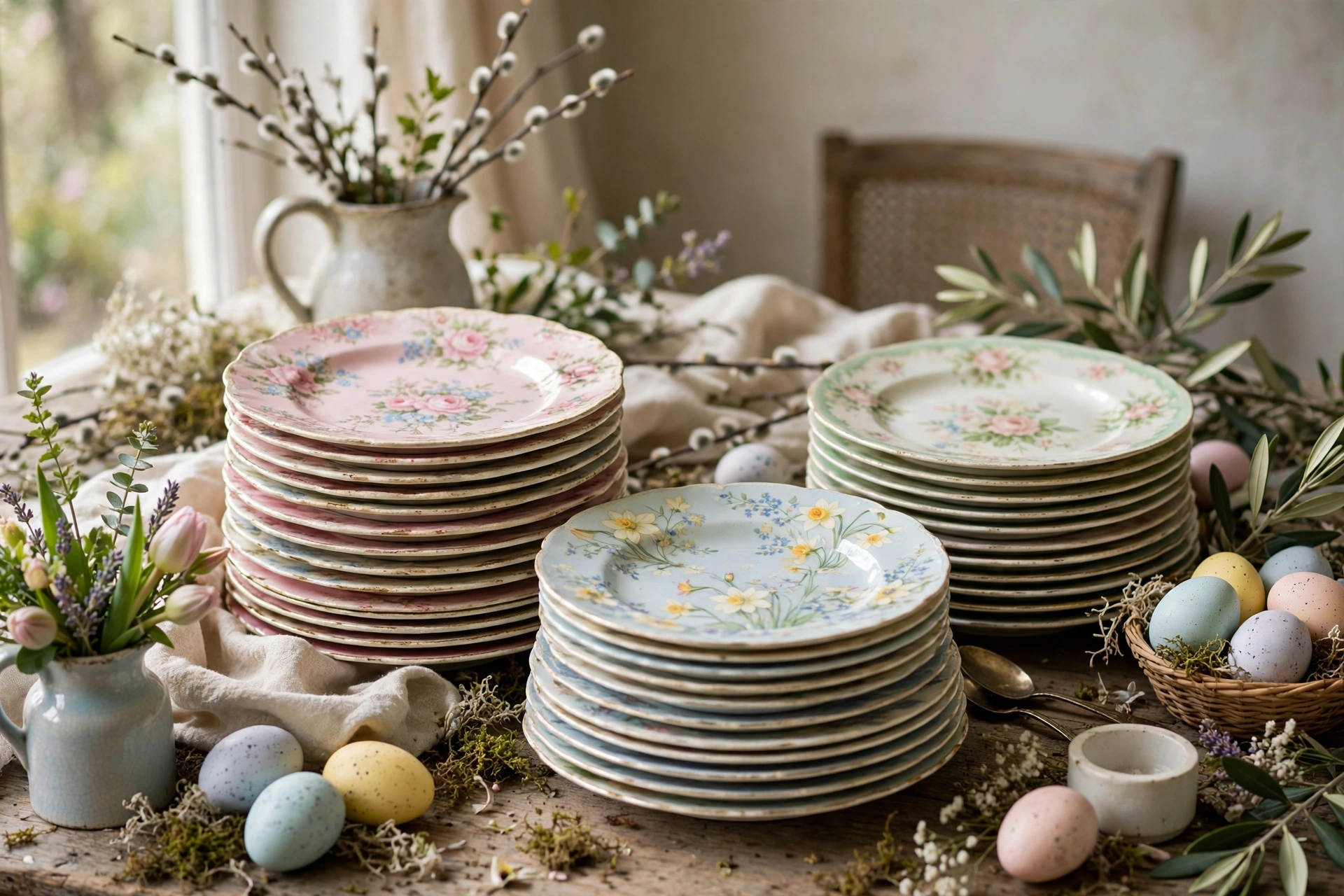
Mismatched vintage plates in soft florals give an Easter table a collected, storied feel no matching set can copy. Keep the palette tight — all pastels, or all blue and white — so the mix reads intentional. Use the same size plate at every seat so the table still looks orderly.
Best for: Vintage lovers and thrifted-table fans.
Styling tip: Put the busiest pattern at the bottom of the stack and a plain plate on top for the food.
Pro tip: Charity shops sell single floral plates for very little; build the set over a few weeks, not in one trip.
18. Gold Flatware With Pastel Plates
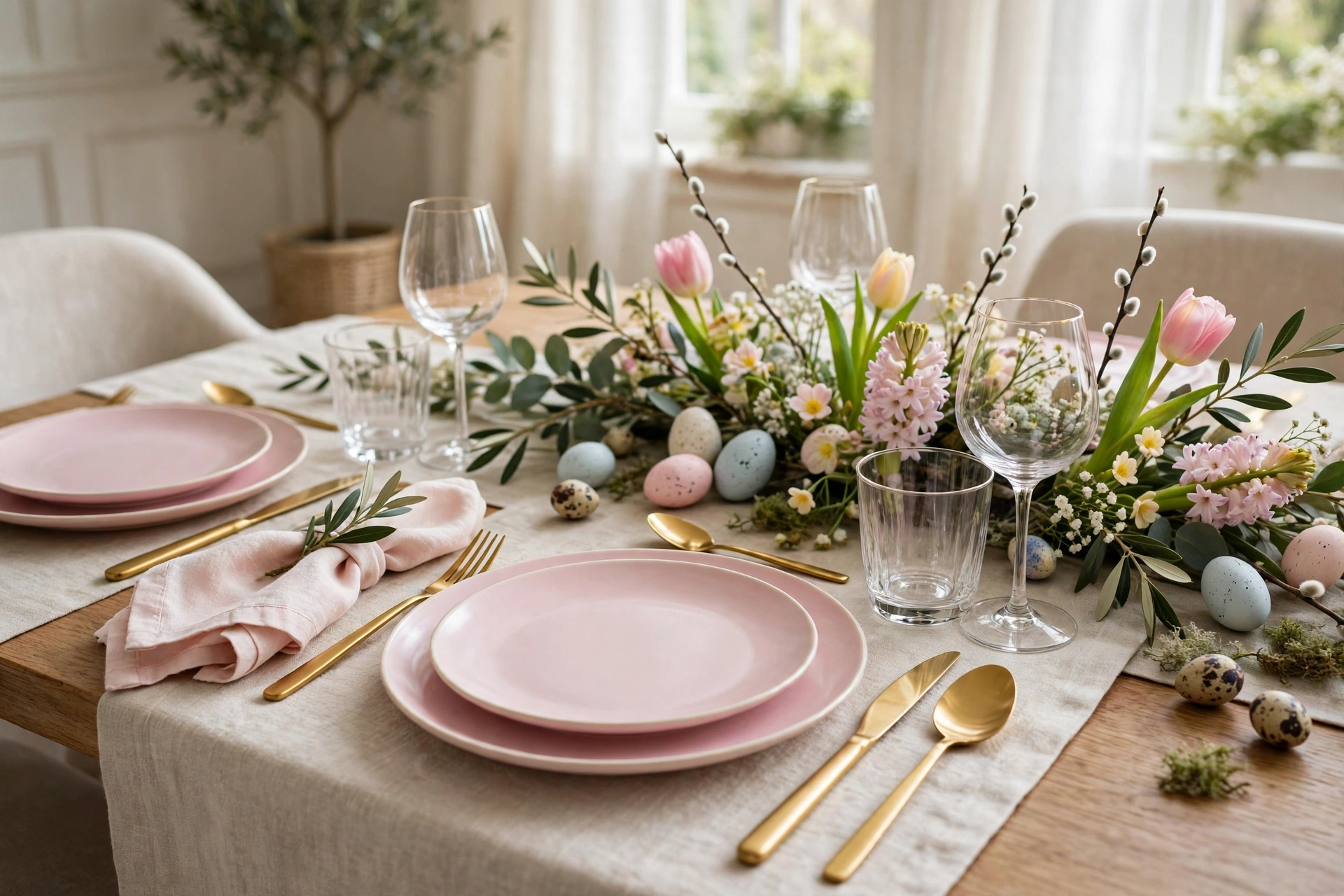
Gold flatware warms up pastel plates instantly and makes a simple table feel dressed up. Use one metallic only — gold with silver serving dishes clashes at close range. Keep the plates matte or soft-glazed so the shine of the flatware stays the highlight.
Best for: Elegant Easter lunch or a first spring dinner party.
Styling tip: Polish gold flatware with a soft cloth the day before; water spots show up fast in daylight.
Pro tip: Gold-tone stainless steel gives the look for a fraction of the price of real brass and goes in the dishwasher.
19. Small Potted Plant Favours

A tiny potted succulent or violet at each place setting is a favour guests actually keep. Choose pots about 2 inches wide so they fit on the plate without crowding the glassware. A small tag with the guest’s name turns the favour into a place card too.
Best for: Hosts who hate single-use party favours.
Styling tip: Wrap the pot in a square of kraft paper tied with twine for a finished, gift-like look.
Pro tip: Water succulents two days before Easter, not the morning of — wet soil and white tablecloths do not mix.
20. Kids’ Table Place Settings
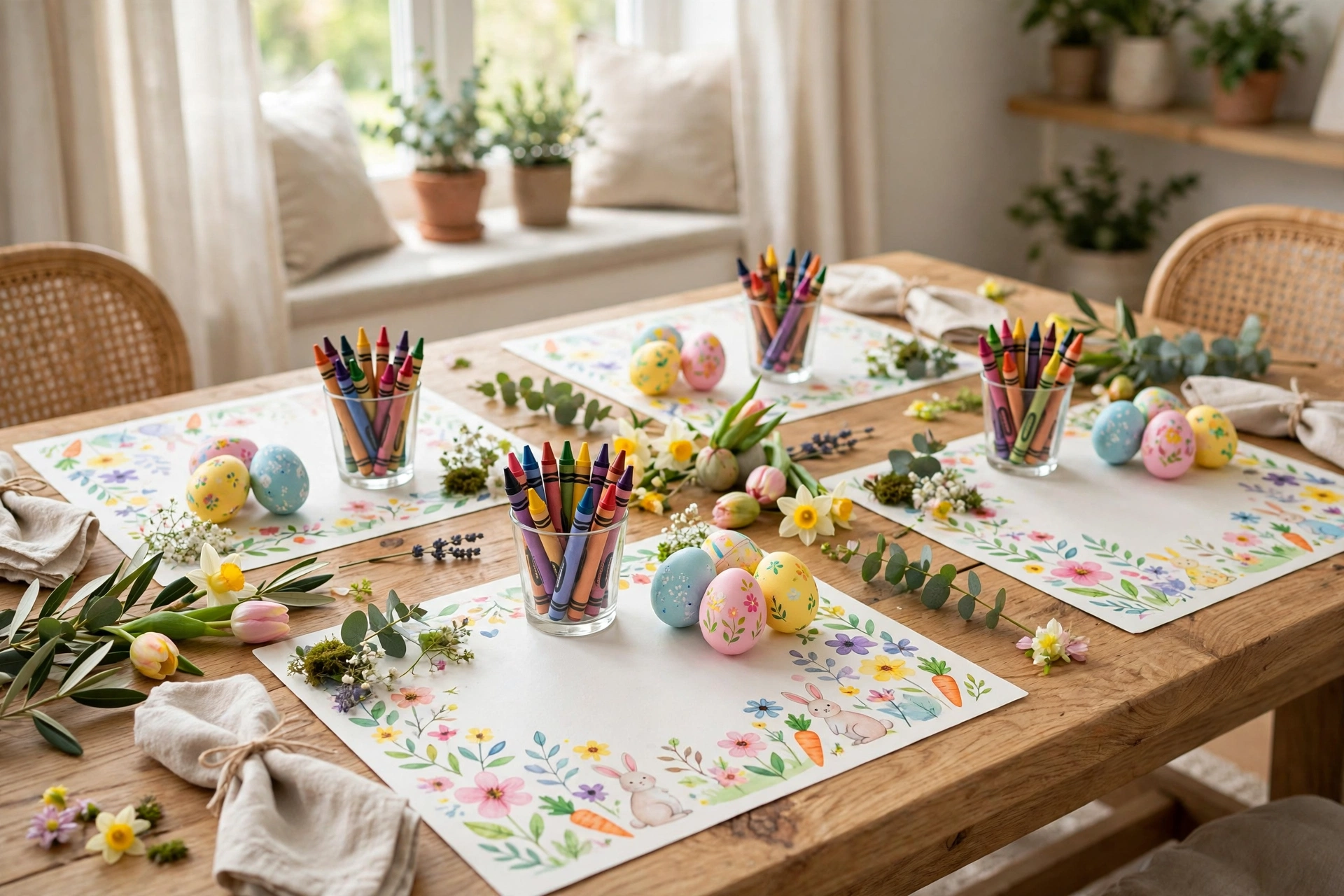
Give kids their own table with paper placemats they can colour, a cup of crayons, and an egg to decorate while dinner is served. Use washable markers and a wipe-clean cloth underneath so the fun does not become a stain emergency. Keep the centrepiece low and unbreakable — a basket of plastic eggs works.
Best for: Families with young children at Easter.
Styling tip: Put the kids’ table near a window or in a corner so the colouring mess stays contained.
Pro tip: Set the kids’ table first; once they sit down, you will not get a second chance to arrange it.
Colour, Texture & Seasonal Details for Easter Tables
21. Dirty Pastels Palette

Dirty pastels — sage, dusty rose, soft lavender, warm cream — look far more grown-up than bright bubblegum pastels. Pick three muted shades and repeat them across the runner, napkins, and eggs, leaving white space between them so the table breathes. The 2026 trend is organic and gathered, and muted colour is the heart of it. For more seasonal inspiration, Homes & Gardens has a thoughtful roundup of Easter decorating ideas.
Best for: Modern homes that want Easter without the kitsch.
Styling tip: Add one natural texture — linen, rattan, or raw wood — in every place setting to ground the pastels.
Pro tip: Hold paint swatches next to your plates before buying; screen colours lie, and dusty rose can read pink in person.
22. Blue-and-White Spring Table
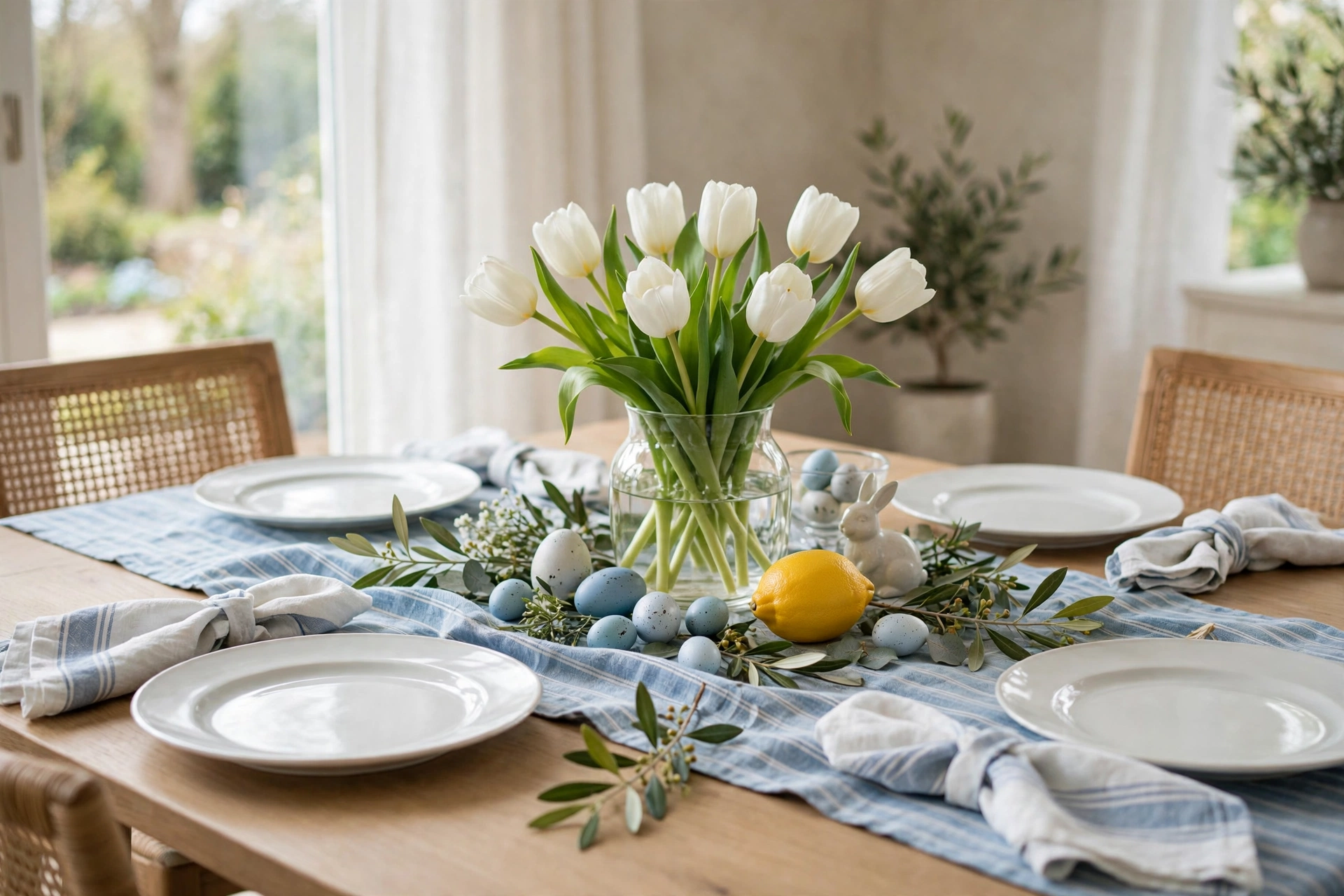
A blue-and-white scheme is the most forgiving Easter palette because it works with white flowers, greenery, and almost any plate you own. Use a striped or checked runner in soft blue, white plates, and one blue accent per setting, such as a napkin or a small vase. Keep the blue to about a third of the table so it feels fresh, not nautical.
Best for: Coastal homes and classic dining rooms.
Styling tip: Add a single yellow accent — a lemon or a daffodil — to stop the blue and white feeling cold.
Pro tip: Navy reads winter; choose sky blue or cornflower for a spring feel.
23. Rustic Wood and Linen Table

Let a bare wooden table show. A linen runner, wooden chargers, and greenery are enough, and the wood grain becomes part of the decoration. Skip the tablecloth entirely and use linen napkins to soften the edges. This look suits farmhouse dining rooms and works with almost any centrepiece on this list.
Best for: Farmhouse and rustic dining rooms.
Styling tip: Oil the wood a week before Easter so it glows; fresh oil on the day can transfer to linens.
Pro tip: Use cork or felt pads under vases and candle holders — condensation rings on raw wood are hard to remove.
24. Elegant All-White Table With Gold
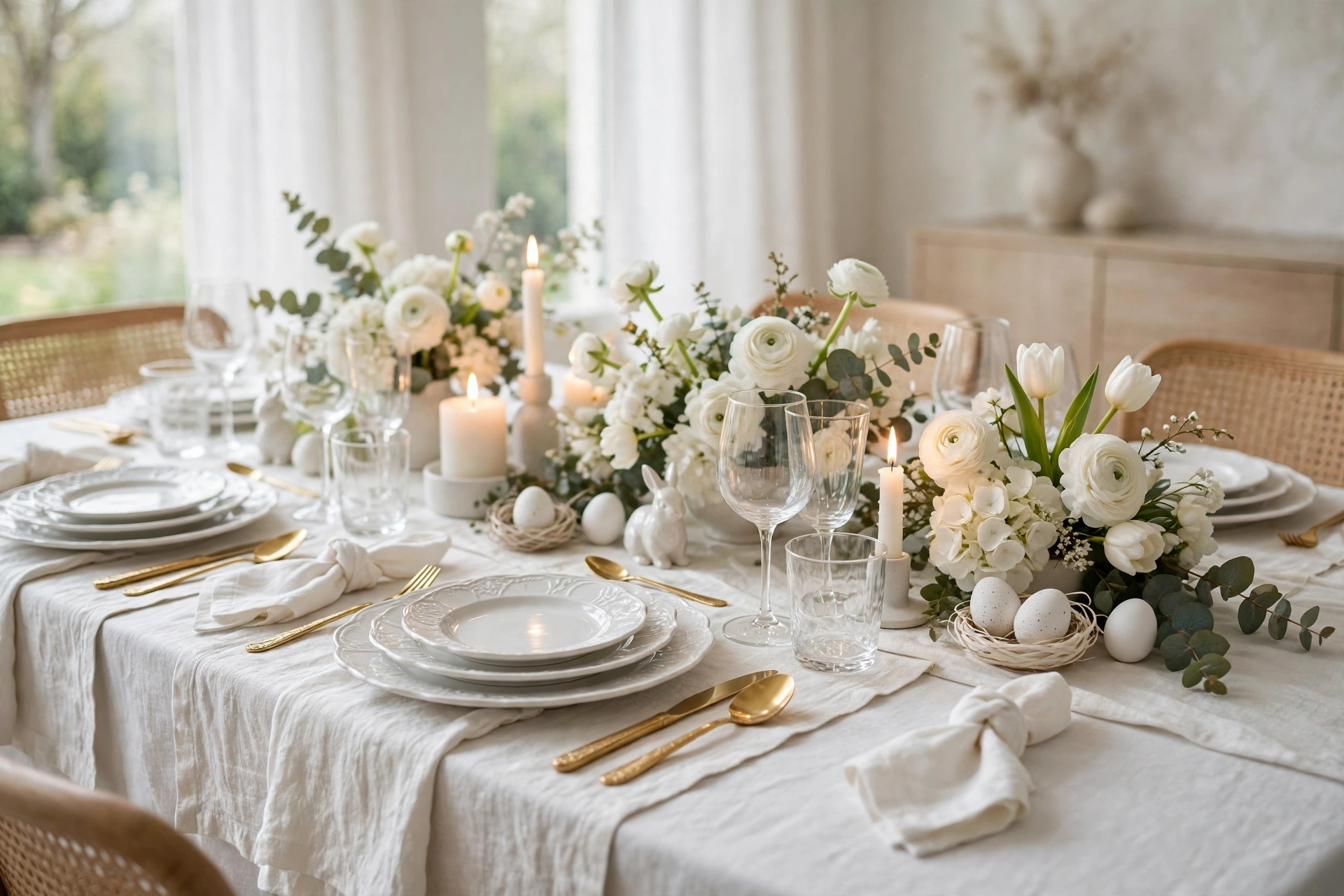
An all-white table with gold flatware and white flowers looks calm and expensive, and it lets the food provide the colour. Layer white on white — a white cloth, white plates, white napkins — and vary the texture instead: linen, ceramic, glass, and metal. Add greenery sparingly, just a sprig per plate, so the white stays dominant.
Best for: Formal Easter dinner and small, candlelit gatherings.
Styling tip: Use warm-white candles, not cool-white; cool light makes white linen look blue.
Pro tip: White on white shows every crumb, so set the table as close to serving time as you can.
25. Floral Garland Down the Centre

A fresh garland of eucalyptus, ruscus, and small white blooms running down the centre of the table is the fastest way to make it look professionally styled. Buy the garland the day before, mist it, and keep it in a cool room overnight. Lay it in a gentle S-curve rather than a straight line for a natural, gathered feel.
Best for: Long tables and big family gatherings.
Styling tip: Tuck battery fairy lights into the garland for evening meals — the glow through the leaves is lovely.
Pro tip: A 6-foot garland suits a table for eight; measure your table before ordering so it does not fall short.
26. Citrus Accents With Tulips
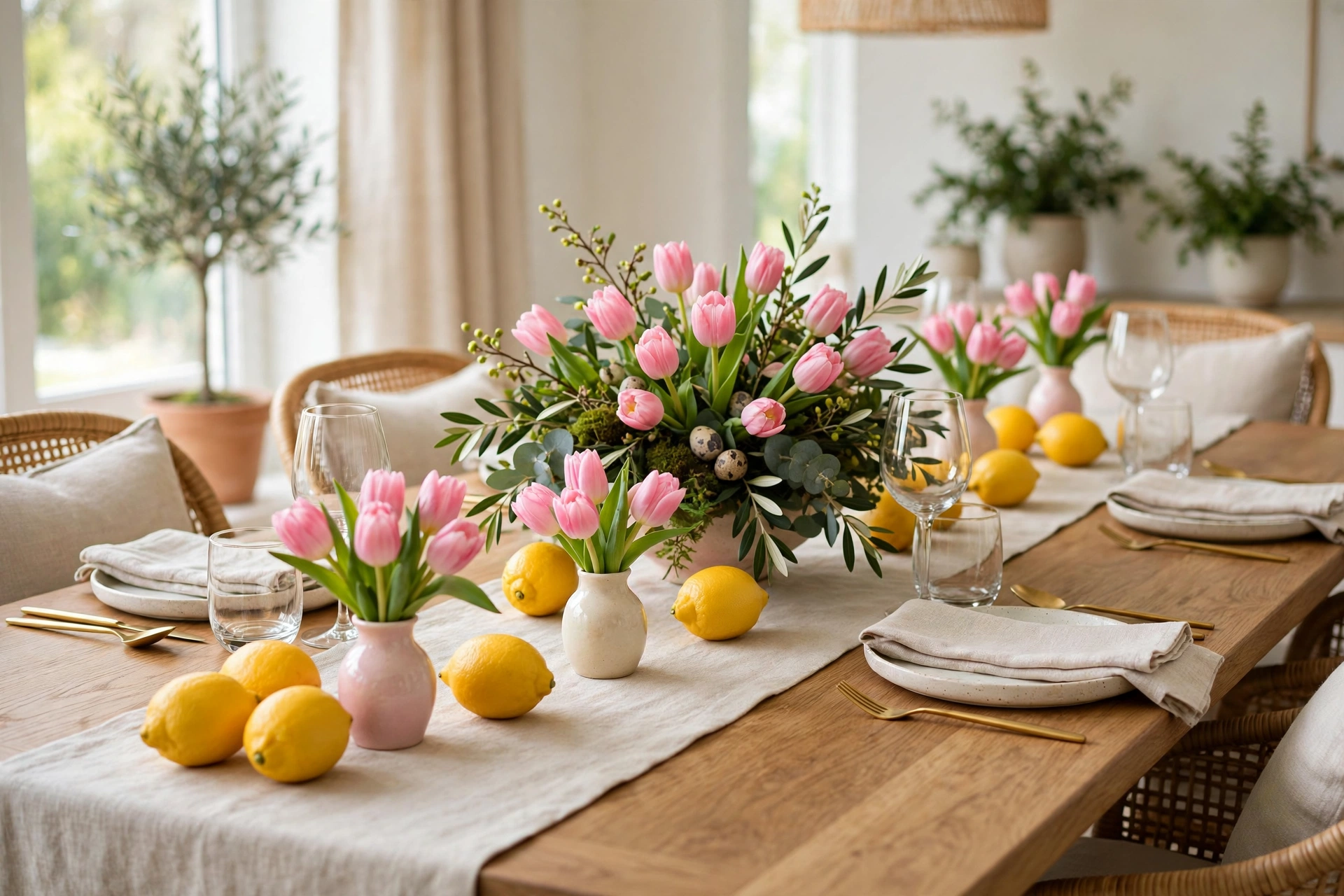
Lemons and tulips are a cheerful, unexpected Easter pairing that costs very little. Scatter whole lemons along the runner between small vases of pink tulips, and add a lemon slice to each water glass. The yellow lifts pastel palettes and stops the table looking washed out. Citrus also smells fresh, which suits a spring meal.
Best for: Bright dining rooms and anyone bored of all-pastel tables.
Styling tip: Use unwaxed lemons and wipe them before placing — waxed fruit looks shiny and unnatural.
Pro tip: Save the lemons afterwards for cooking; this is one centrepiece with zero waste.
Lighting, Finishing Touches & a Table for the Kids
27. Taper Candles in Pastel Holders
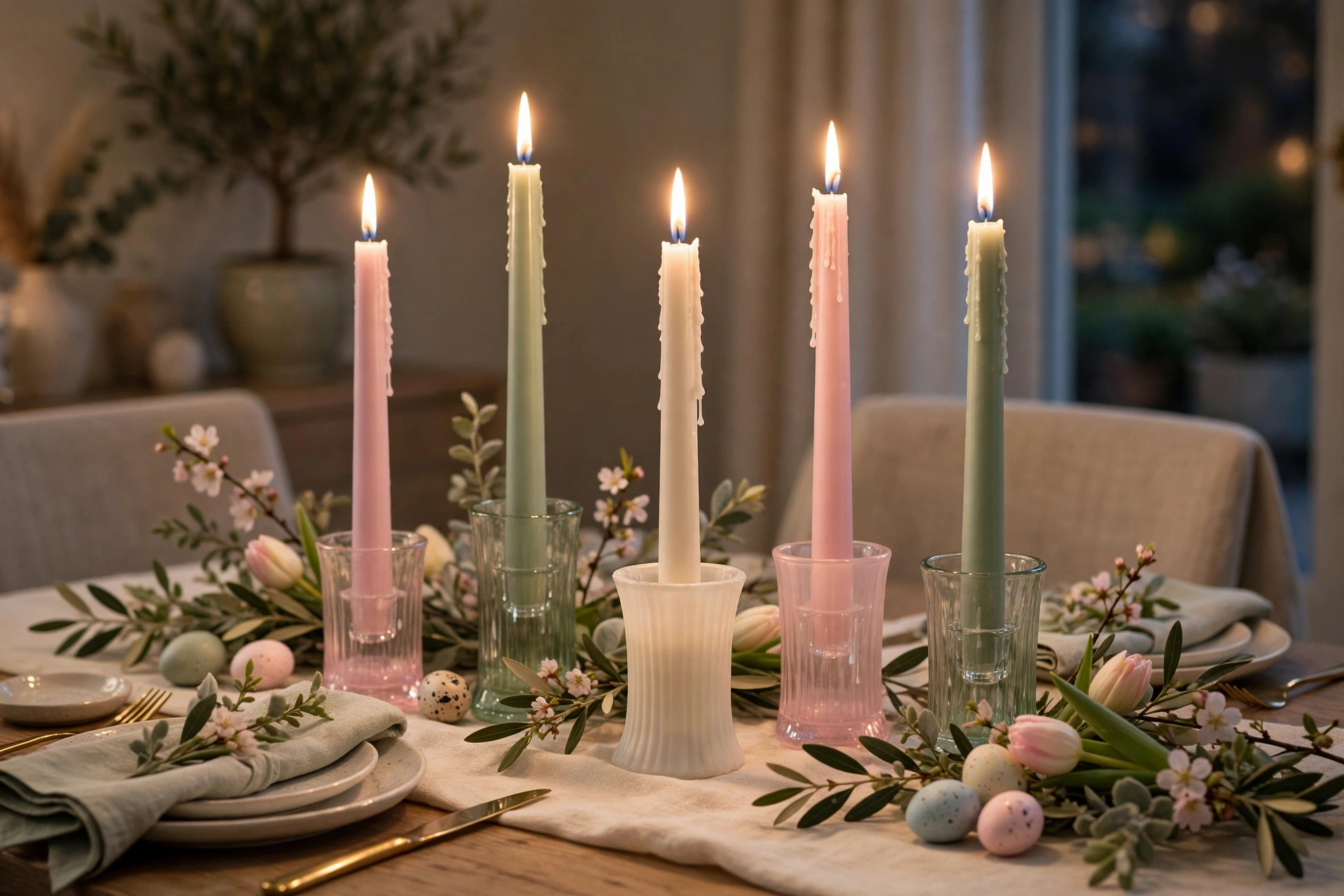
Slim taper candles in pastel holders add height and a soft glow without taking up much table space. Use holders about 4 inches tall with 10-inch tapers, spaced at least 12 inches apart so the flames stay clear of the garland and napkins. Pastel pink, sage, and cream holders echo the Easter palette.
Best for: Evening Easter dinner.
Styling tip: Light the candles just before guests sit down; tapers burn about an inch an hour, so they last the whole meal.
Pro tip: Put a few drops of water in each holder before inserting the candle — it stops wax sticking and makes cleanup easy.
28. Fairy Lights Under a Sheer Runner

Battery fairy lights laid under a sheer white or pale pink runner make the whole table glow from within. Use one 6-foot string of warm-white lights for a standard table, and tape the battery pack under the table edge where it cannot be seen. This works best after sunset, so save it for Easter dinner rather than lunch.
Best for: Evening gatherings and magical, low-light tables.
Styling tip: Choose lights with a timer so they switch off by themselves after six hours.
Pro tip: Keep the runner sheer — a heavy linen hides the lights completely.
29. Easter Egg Tree Branch Display

A bare branch in a tall vase, hung with painted eggs, is a striking sideboard or table-end display that takes ten minutes. Use a branch about 2 feet tall and hang six to eight lightweight eggs at different heights with thin ribbon. Keep it at the end of the table, not the centre, so it frames the meal instead of blocking it.
Best for: Entryways, sideboards, and the ends of long tables.
Styling tip: Mix plain eggs with one or two patterned ones so the display does not look uniform.
Pro tip: Blow out real eggshells for the lightest hangings; plastic eggs are heavier and can tip a light branch.
30. Carrot Bunch Place Markers

A small bunch of baby carrots tied with twine and a name tag is a playful, edible place marker. Use three small carrots per bunch, trim the green tops to about 2 inches, and lay the bunch across the plate. It suits a casual, garden-style Easter and gives kids something to smile about.
Best for: Casual family Easter lunch.
Styling tip: Rinse and dry the carrots well, and keep them chilled until just before serving so the tops stay perky.
Pro tip: Buy carrots with tops still attached — pre-trimmed bags will not work for this idea.
31. Tiered Dessert Stand as a Centerpiece
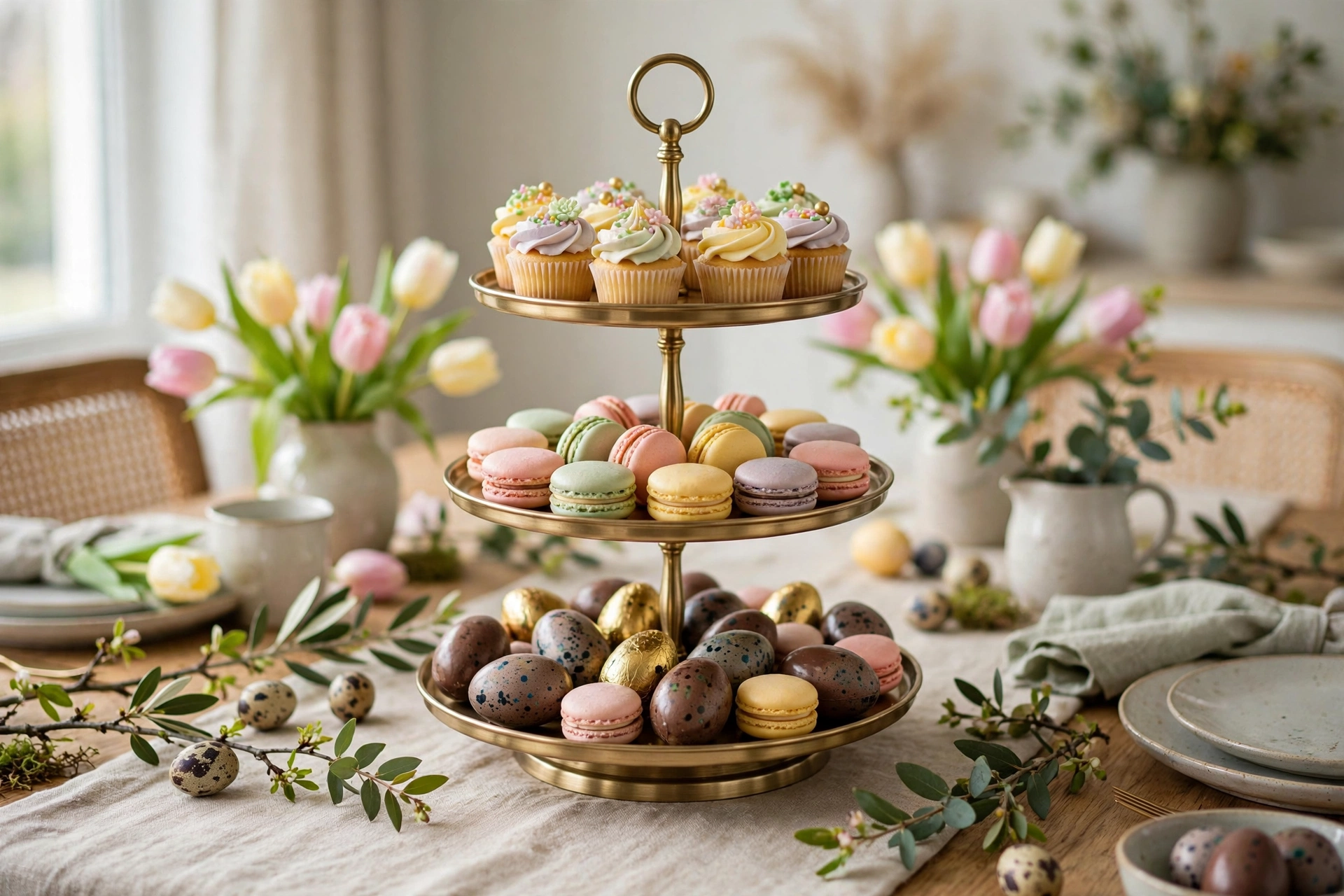
A three-tier dessert stand filled with mini cupcakes, macarons, and chocolate eggs doubles as the centerpiece and the dessert course. Set it in the middle of the table on a round tray to catch crumbs, and keep the tallest tier under 14 inches so guests can still see each other. Fill the bottom tier last, closest to serving time, so nothing dries out.
Best for: Hosts who want dessert to be part of the decoration.
Styling tip: Mix heights on the stand — a tall cupcake next to flat macarons looks more styled than uniform rows.
Pro tip: Line each tier with a paper doily; it stops sliding and makes cleanup a one-minute job.
Frequently Asked Questions
What colours work best for Easter table decor?
Soft pastels are the classic Easter choice, but muted “dirty” pastels like sage green, dusty rose, and warm cream look more modern than bright bubblegum shades. Blue and white is another reliable palette that suits most dining rooms and works with white tulips and greenery. Pick three colours at most and repeat them across the runner, napkins, and eggs so the table feels planned. Leave plenty of white space so the colours can breathe instead of competing with each other.
How do I keep my Easter centerpiece low enough to talk over?
Keep the tallest part of your centerpiece under 12 inches so guests can see each other across the table. Low glass vases with tulips cut to six inches, shallow bowls of speckled eggs, and moss runners all stay well below eye level. Tall elements like pussy willow branches work only because their thin stems do not block the view. Before guests arrive, sit in a chair and check the sightline yourself — what looks fine standing up often blocks faces when seated.
Can I decorate an Easter table on a small budget?
Yes, and most of the ideas in this list cost very little. Grocery-store tulips, a linen runner, and speckled eggs from a craft store can dress a whole table for the price of one takeaway meal. Thrift shops are excellent for white ceramic bunnies and blue-and-white vases, while lemons, herbs, and moss are cheap and reusable. Start with the runner and the centerpiece, then add place-setting details only if the budget allows.
What should I put on an Easter table for kids?
Give children their own table or their own end of the main table with paper placemats they can colour, a cup of crayons, and an egg to decorate. Keep the centerpiece low and unbreakable, such as a basket of plastic eggs, and use a wipe-clean cloth underneath. Bunny-ear napkin folds and carrot place markers add fun without extra cost. Set the kids’ table first, because once they sit down you will not get a chance to rearrange it.
When should I set the Easter table?
Set the table the night before Easter if you can, leaving only fresh flowers, candles, and perishable touches for the morning. Linens, plates, flatware, and the centerpiece base can all be arranged in advance, which frees up Easter morning for cooking. Fresh tulips should go in water the day before so they open slowly, and herbs should be watered that morning. Lighting candles and placing food are the only jobs left for the last hour.
How is Easter table decor different from Christmas table decor?
Easter decor uses light, fresh palettes — pastels, sage, cream, and blue and white — while Christmas leans on deep reds, greens, and metallics. Easter motifs are tulips, speckled eggs, bunnies, and fresh herbs, where Christmas uses pine, berries, and candles in heavier arrangements. Easter tables also tend to be lower and airier so spring daylight fills the room. If you enjoy seasonal tables, our Christmas dining table decor ideas show how the same table can shift moods between holidays.
Final Thoughts
A beautiful Easter table does not need a big budget or a professional stylist — it needs a clear palette, one low centerpiece, and a few personal touches at each place. Start with the runner, add flowers or eggs, and let the rest follow.
Pick three or four ideas from this list, try them this Easter, and keep the ones your family loves for next year. The best spring tables are the ones that get used again, not the ones that stay perfect in photos.
