
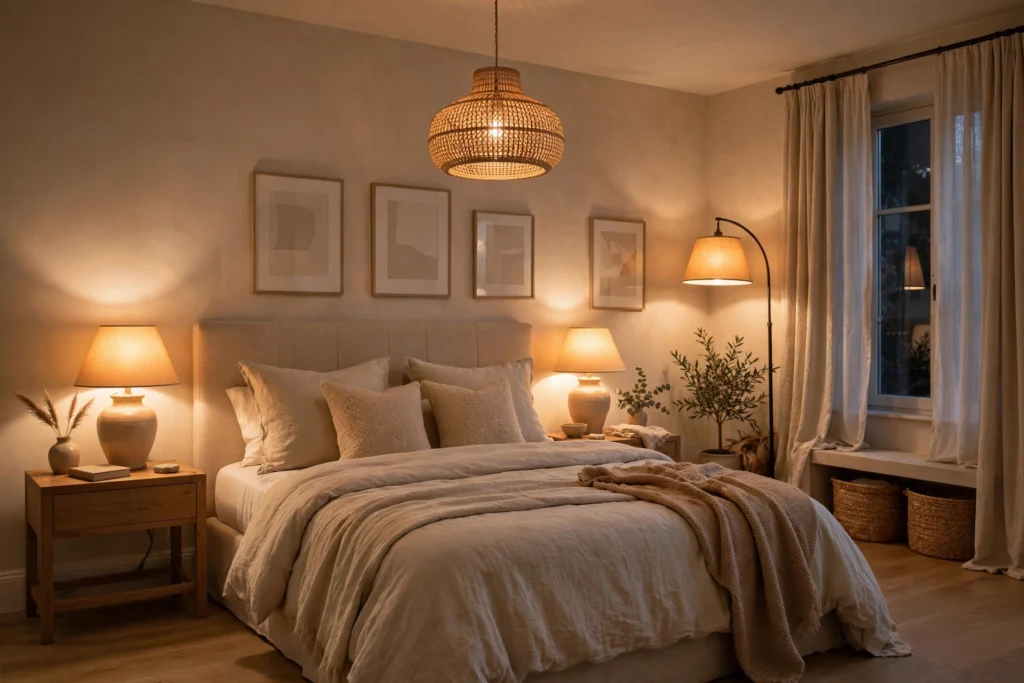
Walk into any bedroom that feels like a boutique hotel and you will notice something before the furniture, before the bedding, even before the paint colour: the light. It glows at three different heights, warm and soft, drawing you in. That effect has a name — layering light — and it is the single most transformative trick interior designers use in a bedroom. This bedroom lighting guide shows you how to layer light like a designer, from the four layers to bedside lamp placement, bulb colour temperature and dimmers.
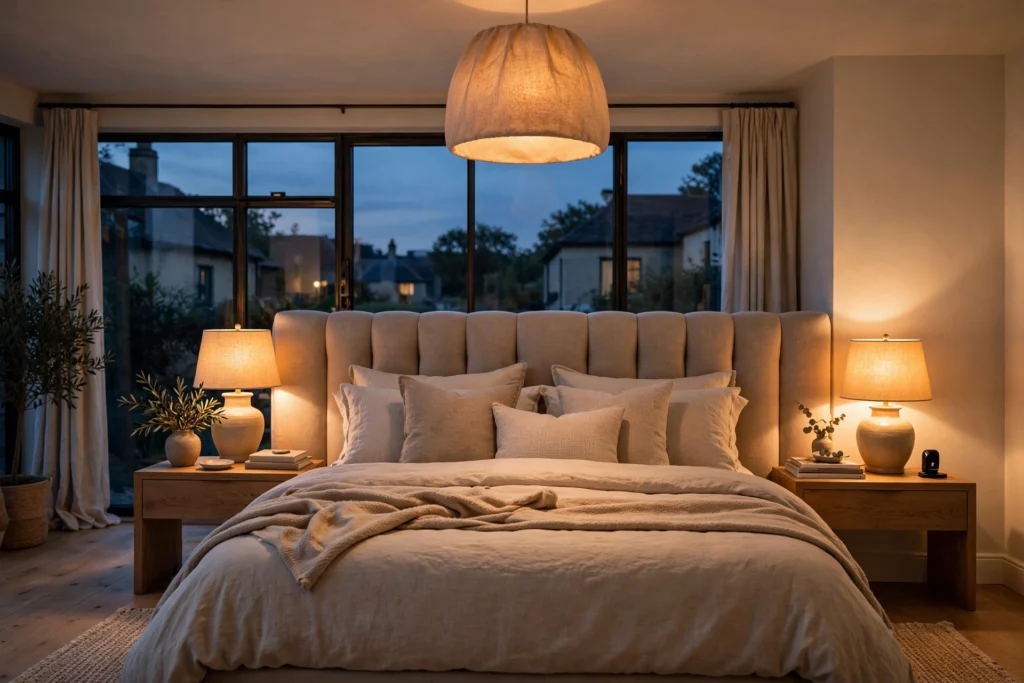
What “Layering Light” Actually Means
Layering light means combining several sources of light, each doing a different job, instead of relying on one ceiling fitting. Designers think in four layers: ambient (overall glow), task (focused light for activities), accent (light that adds depth) and decorative (fixtures that look beautiful even when lit). When all four work together, a bedroom can shift from bright and functional at 7am to soft and romantic at 10pm.
Layer 1: Ambient Lighting — The Foundation
Ambient light is the base layer that fills the room so you can move around, get dressed and find things easily. In a bedroom this usually comes from the ceiling: a pendant, chandelier, flush-mount fitting or recessed downlights. Choose a fixture with a diffuser — frosted glass, fabric or rattan shades — so the light spreads softly instead of glaring. Aim for gentle, even coverage at about 75–150 lux, and keep it warm: this layer sets the overall mood.
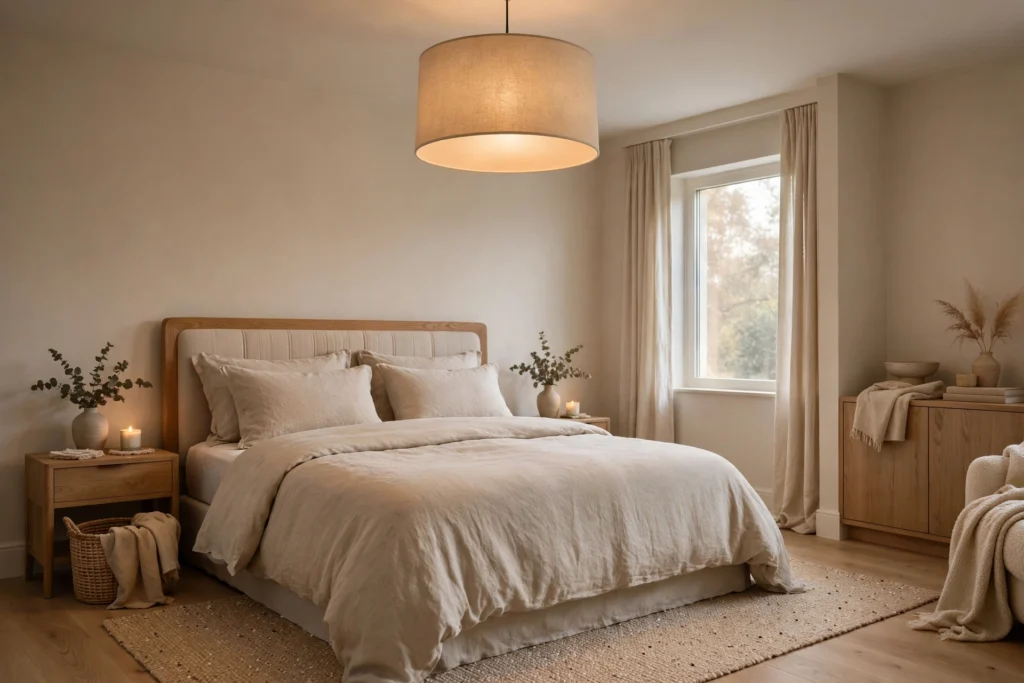
Layer 2: Task Lighting — Focused Light Where You Need It
Task lighting is brighter, directed light for specific jobs: reading in bed, checking your reflection, finding clothes in the wardrobe. Bedside lamps are the classic bedroom task light, casting a pool of roughly 200–400 lux over your book. Reading lamps with adjustable arms, wall sconces with swivel heads and a good desk lamp all count as task lighting. The key rule: task light should come from the side or above the activity, never from behind you — that throws your shadow onto the page.
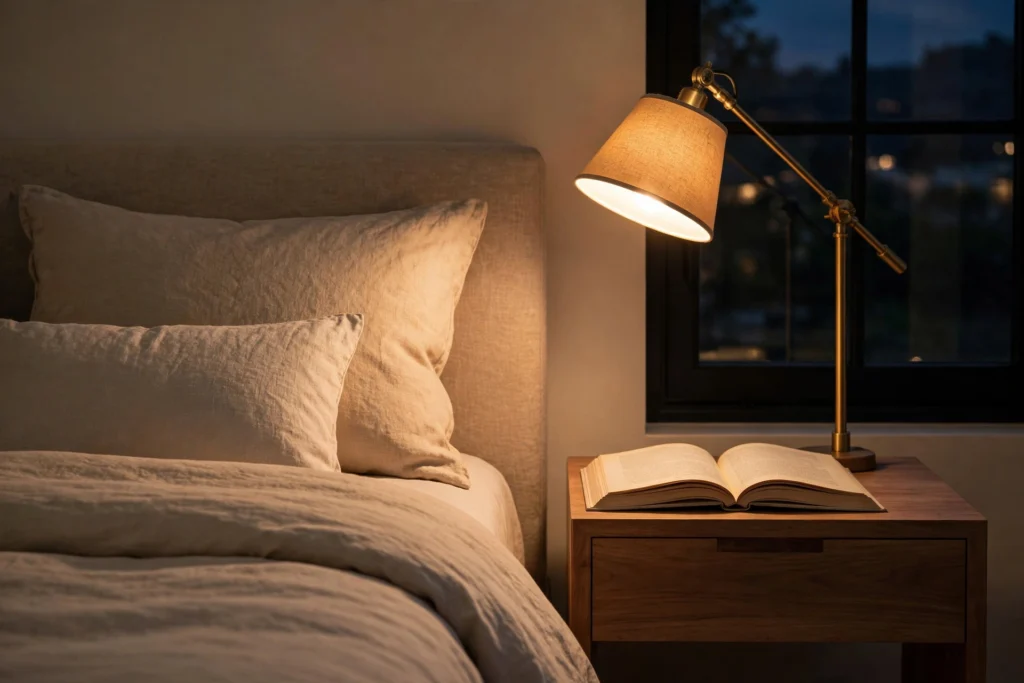
Layer 3: Accent Lighting — Depth and Mood
Accent lighting is what makes a room feel designed rather than simply lit. LED strips behind the headboard, under a floating bed frame or along shelves wash the wall with a soft halo, creating depth that flat overhead light never can. Picture lights over framed art, small uplights in dark corners and strip lighting inside wardrobes all belong here. Accent light should be roughly three times brighter than the ambient light on the feature it highlights — enough to draw the eye, never enough to dominate the room.
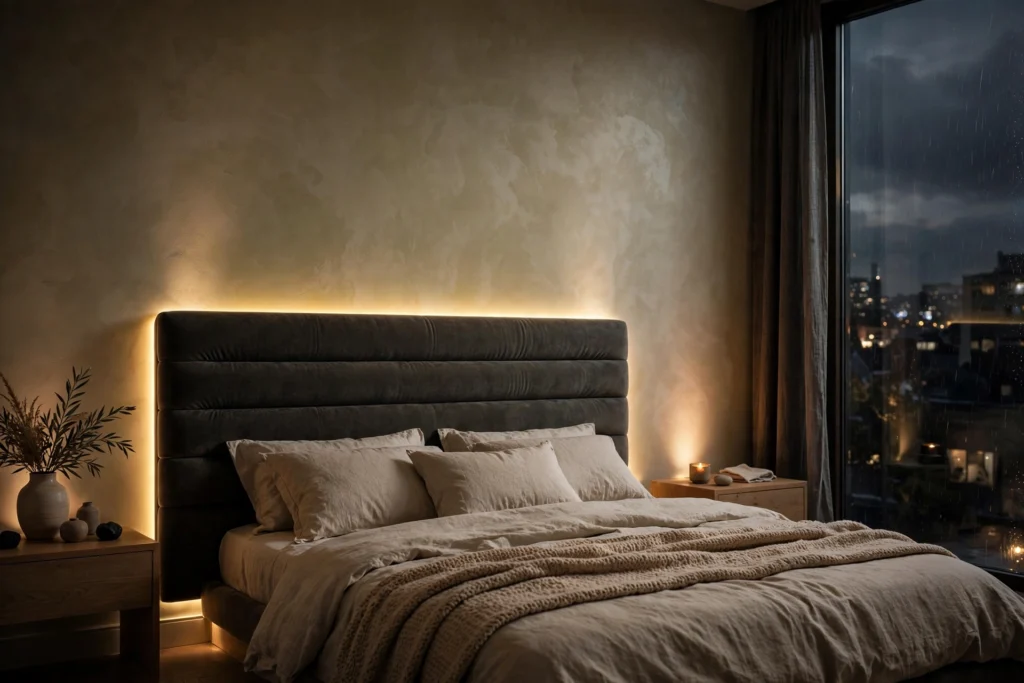
Layer 4: Decorative Lighting — The Jewelry of the Room
Decorative lighting is chosen for how it looks: a sculptural pendant, a string of fairy lights along a bookshelf, a pair of statement bedside lamps that double as décor. This layer does little lifting for brightness, but it delivers personality and is the finishing touch designers never skip. Philips Hue’s own bedroom lighting ideas guide has excellent inspiration for using string lights and strips as decorative layers in the bedroom.
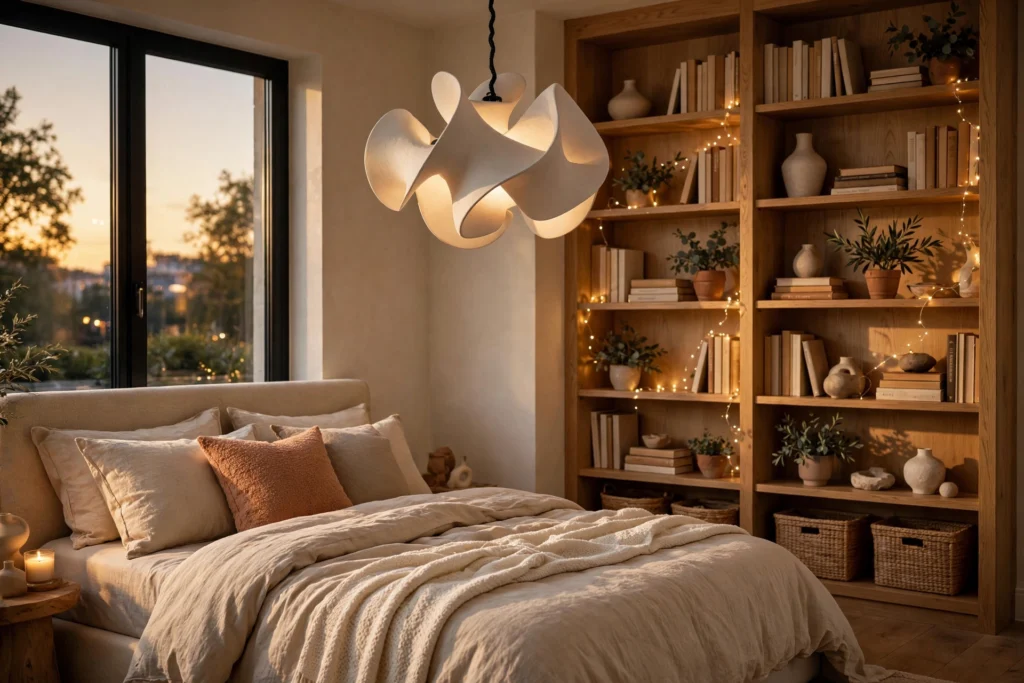
Bedside Lamp Placement Rules
Bedside lamps cause more placement arguments than almost anything in bedroom design, so here are the rules designers follow. The bottom of the lampshade should sit roughly level with the top of your pillows when you are sitting up — around 50–70 cm above the mattress. Shades should be wide enough to spread light but slim enough that the lamp takes up no more than a third of the nightstand. For reading, the light should fall over your shoulder from the side you read on. And do not fear asymmetry: warm bedroom ideas often pair a tall floor lamp on one side with a compact table lamp on the other, which looks curated rather than mismatched.
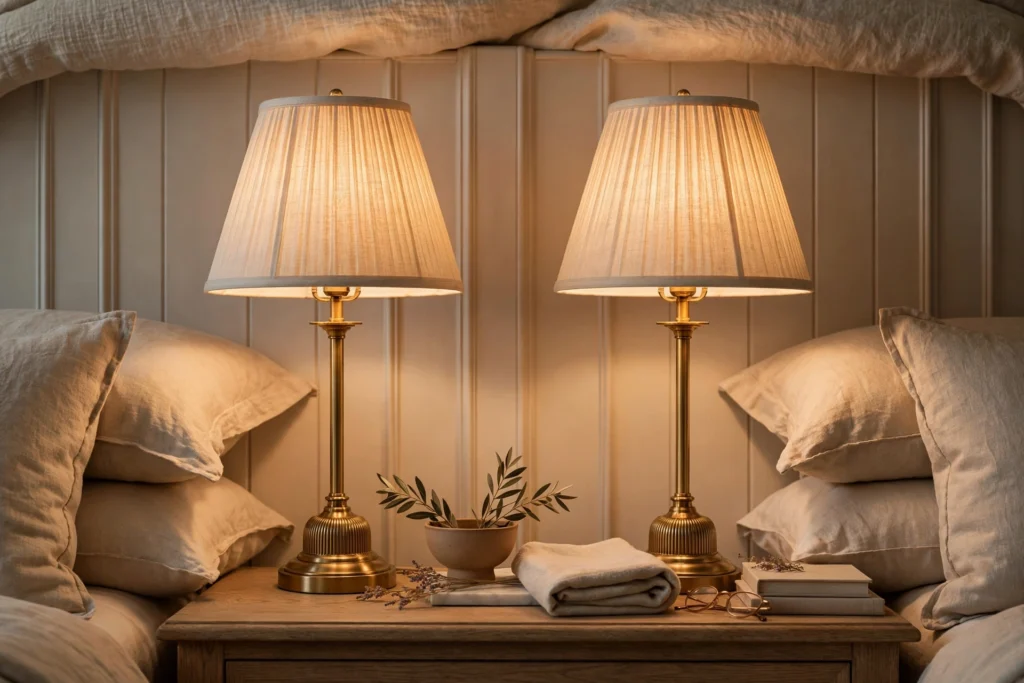
Overhead Lighting Done Right
The overhead fitting is usually the first thing people buy and the thing they regret most. In a bedroom, avoid harsh downlights pointing straight at the pillow. Instead, hang a statement pendant or chandelier slightly toward the foot of the bed, so it never glares into your eyes when you are lying down. For low ceilings, a semi-flush fixture with a diffuser gives presence without crowding. Whatever you choose, put it on a dimmer so the brightest layer in the room is also the most controllable.
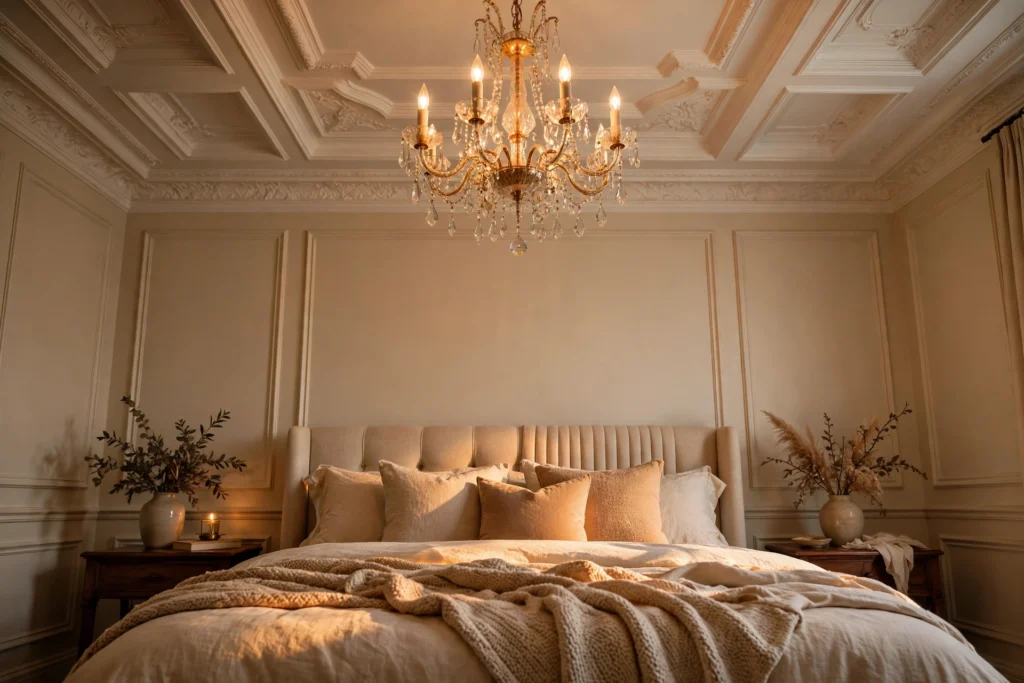
Reading Corners, Vanities and Desk Zones
Every secondary zone deserves its own light. A reading chair needs a floor lamp with the shade bottom at about eye level when you are seated, positioned behind your dominant shoulder. A dressing-table or vanity needs the most honest light in the room: flank the mirror with a pair of sconces or vertical strips at face height on both sides, which eliminates the harsh shadows a single overhead light creates. If the bedroom doubles as a home office, give the desk a dedicated task lamp with a slightly cooler bulb (around 3500–4000K) so you can focus by day, while the rest of the room stays warm.
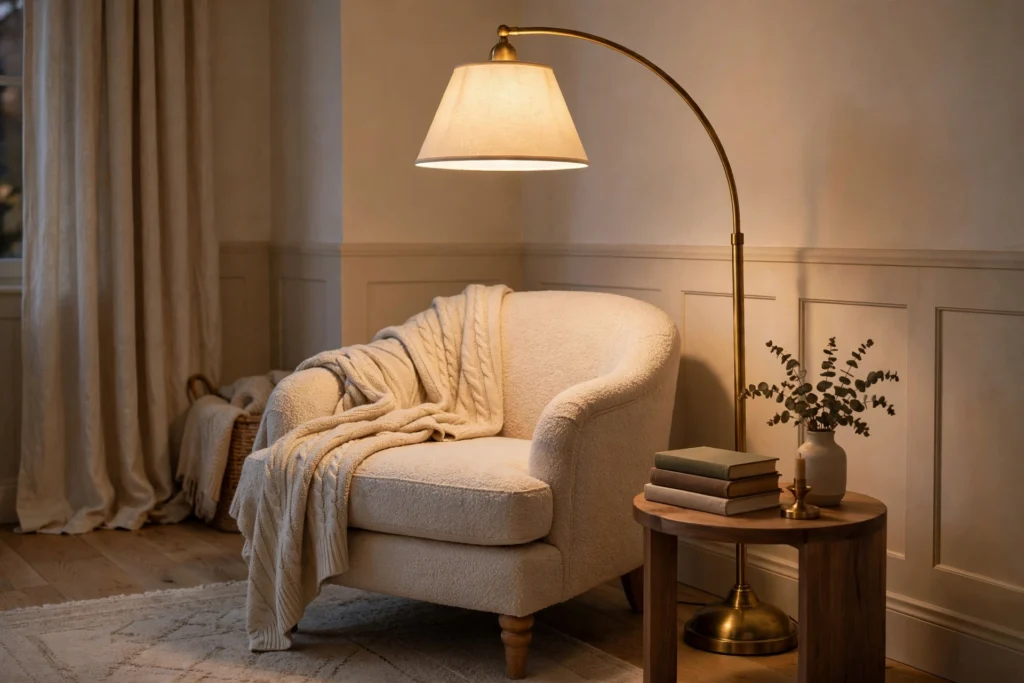
Bulb Colour Temperature: The 2700K Rule
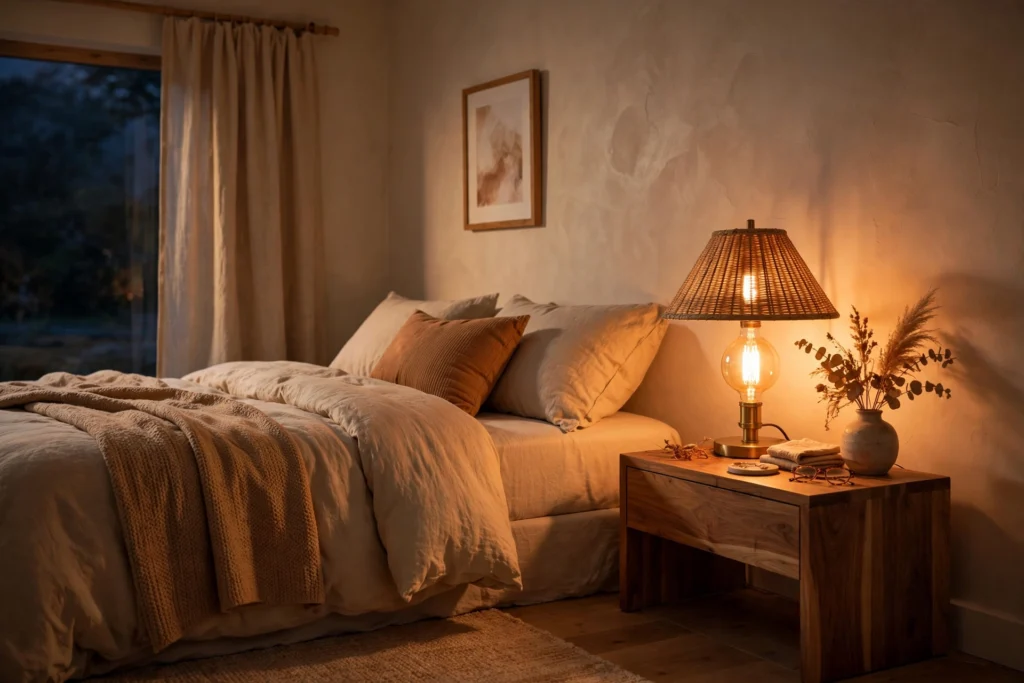
Colour temperature, measured in Kelvin (K), matters more in a bedroom than anywhere else. The designer rule is simple: 2700K warm white. It flatters skin, deepens the glow of your bedroom colour palette and supports your body’s wind-down before sleep. Cool white (4000K+) can look clinical and, at night, blue-leaning light can make it harder to fall asleep. The only exception is a dedicated makeup or work zone, where a neutral 3500–4000K bulb helps you see true colours. Buy “warm white” or “soft white” on every box, and check that all the bulbs in the room match — mixed colour temperatures are one of the fastest ways to make lighting feel wrong.
Dimmers and Smart Controls: The Designer Secret Weapon
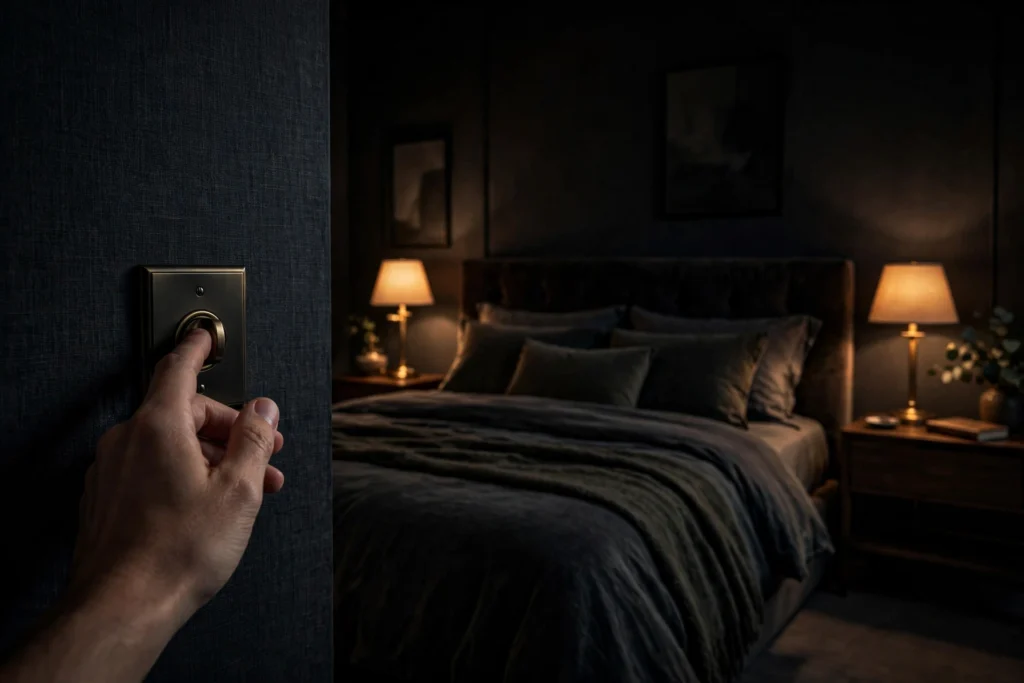
If designers could keep only one lighting upgrade, most would pick dimmers. A dimmer turns every fixture into several moods: full brightness for morning routines, half for evening reading, a low ember-glow for winding down. Fit dimmer switches on the ambient and bedside layers at minimum, and always check the bulbs are dimmable LEDs (non-dimmable LEDs flicker). Smart bulbs take the same idea further: schedule the lights to fade up gently in the morning, set a “wind down” scene that warms and dims everything at 10pm, or control the bedside lamp from your pillow without reaching across the bed.
Common Bedroom Lighting Mistakes to Avoid
Before you shop, steer clear of the mistakes designers see most often. One lonely ceiling light is the biggest: it flattens the room and casts unflattering shadows on faces. Too-bright bulbs turn a bedroom into an interrogation room — go warm and go dimmable. No lighting plan for small bedrooms is another classic; compact rooms actually need layering most, using wall sconces and pendants to free up floor and nightstand space. Ignoring natural light wastes your best free source: keep window treatments sheer by day and use mirrors to bounce daylight around. Finally, forgetting switches — a light you cannot reach from the bed is a light you will never use.
Frequently Asked Questions
How many light sources should a bedroom have?
Designers recommend three to five: one ambient (ceiling), two bedside/task lights, and one or two accent or decorative sources such as a floor lamp or LED strips. More, smaller sources at varying heights always beat one bright fitting.
What is the best colour temperature for bedroom lighting?
2700K warm white is the designer standard. It feels cosy, flatters skin tones and supports better sleep than cool or daylight bulbs. Reserve cooler bulbs (3500–4000K) for a vanity or work desk only.
Where should bedside lamps be placed?
The bottom of the lampshade should sit level with your pillows when you sit up in bed (about 50–70 cm above the mattress), and the lamp should take up no more than a third of the nightstand. The light should fall over your shoulder from the side you read on.
Do bedrooms need a ceiling light?
Not necessarily one harsh one — but every bedroom benefits from an ambient layer. A dimmable pendant, chandelier or a couple of recessed lights on a dimmer gives you that base glow, and you can always rely more on lamps and sconces in small or low-ceilinged rooms.
Are smart bulbs worth it in a bedroom?
Yes, especially for the accent and bedside layers. Scheduling a gradual dim-and-warm “wind down” scene and waking up to a gentle fade-up are genuinely useful, and you can control lamps from bed without stretching for a switch.
Conclusion
Layering light like a designer is not about spending more — it is about assigning every light a job. Start with a warm, diffused ambient base, add focused task light at the bedside, wash the headboard with accent light, and finish with one decorative piece you love. Put the key layers on dimmers, keep every bulb at 2700K, and your bedroom will make you exhale the moment you walk in.
