
Table of Contents
- Start With a Landing Tray for Keys and Wallets
- Mount a Row of Hooks — One Per Person
- Slide In a Storage Bench for Shoes and Seating
- Sort the Mail With a Wall-Mounted Sorter
- Build a Family Command Center
- Give Everyone a Labelled Basket or Bin
- Corral Shoes With Cubbies and a Boot Tray
- Add a Dedicated Charging Station
- Create a Grab-and-Go Launch Spot
- Go Vertical With Floating Shelves and Pegboards
- Protect the System With a Five-Minute Reset
Your keys live on the kitchen counter. Your bag is behind the door. The school permission slip is… somewhere. An entryway drop zone is the cure: a small, well-designed landing pad just inside the door where every coming-and-going item has a home. These 11 drop zone ideas work in hallways, mudrooms and rented flats alike — no renovation required for most of them.
1. Start With a Landing Tray for Keys and Wallets
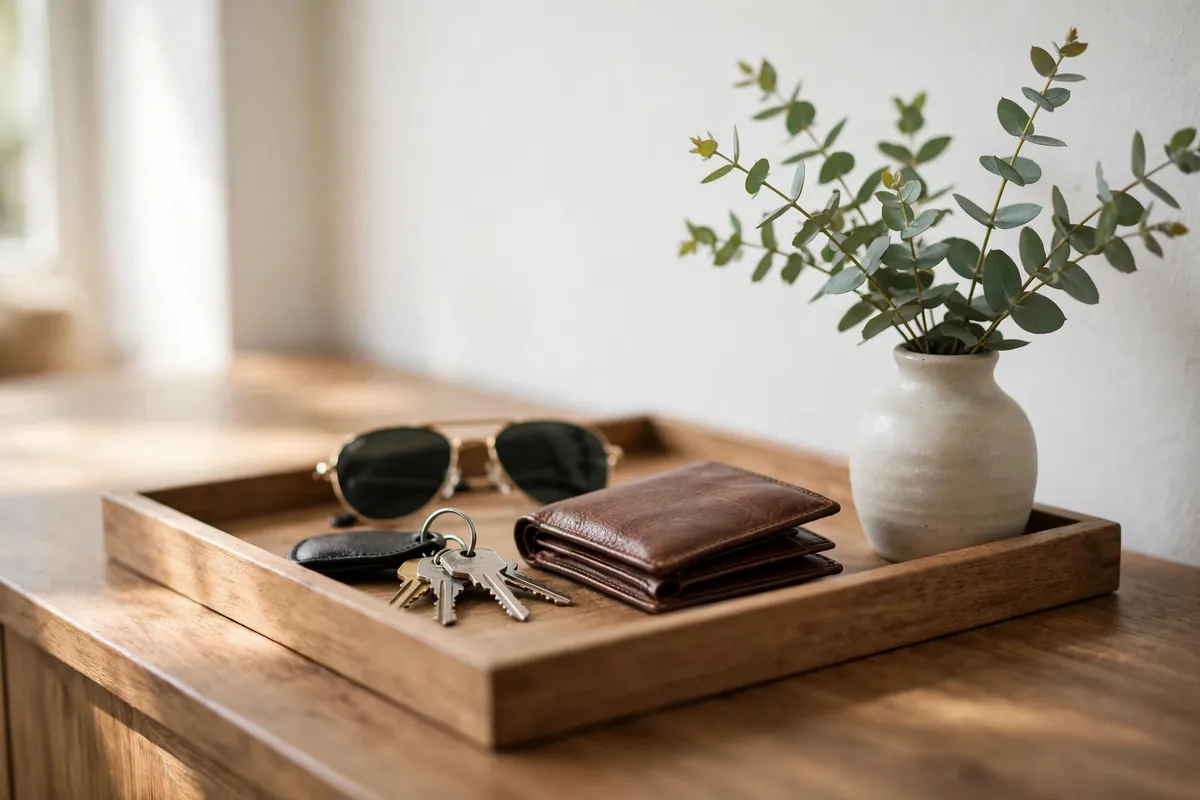
Every good drop zone starts with a single habit: one spot where the small things land. A landing tray on a console or shelf gives keys, wallets and watches a permanent address. Choose something with a lip so nothing slides off, and keep it strictly for pocket items. Place it at the first surface your hand reaches when you walk in; convenience is what makes the habit stick.
2. Mount a Row of Hooks — One Per Person
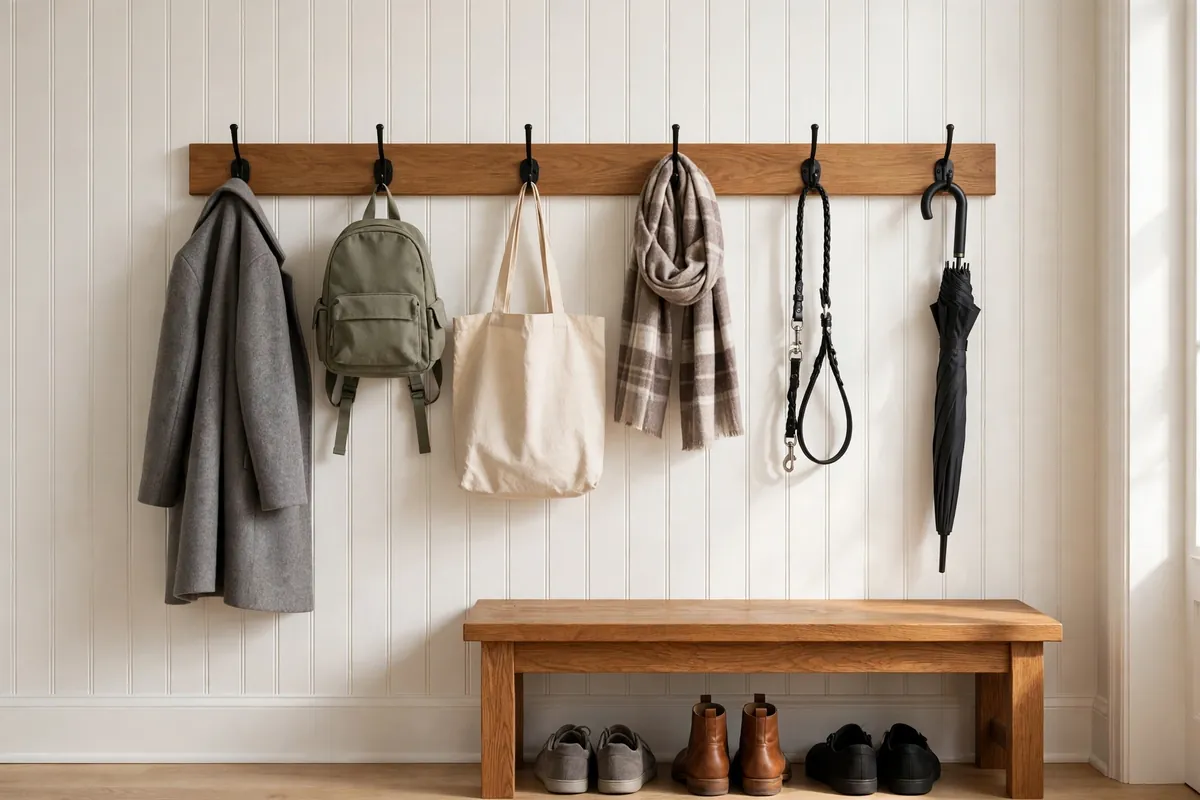
Hooks are the hardest-working item in any entryway drop zone. Coats, bags, dog leads, scarves and umbrellas all hang better than they sit, and a row of hooks keeps them off the floor and visible. The professional organiser rule is simple: one hook per person, minimum — then add a spare for guests. Mount them at different heights if children are in the picture, and always fix them into studs or use serious wall anchors, because a hook full of winter coats is heavier than you think.
3. Slide In a Storage Bench for Shoes and Seating
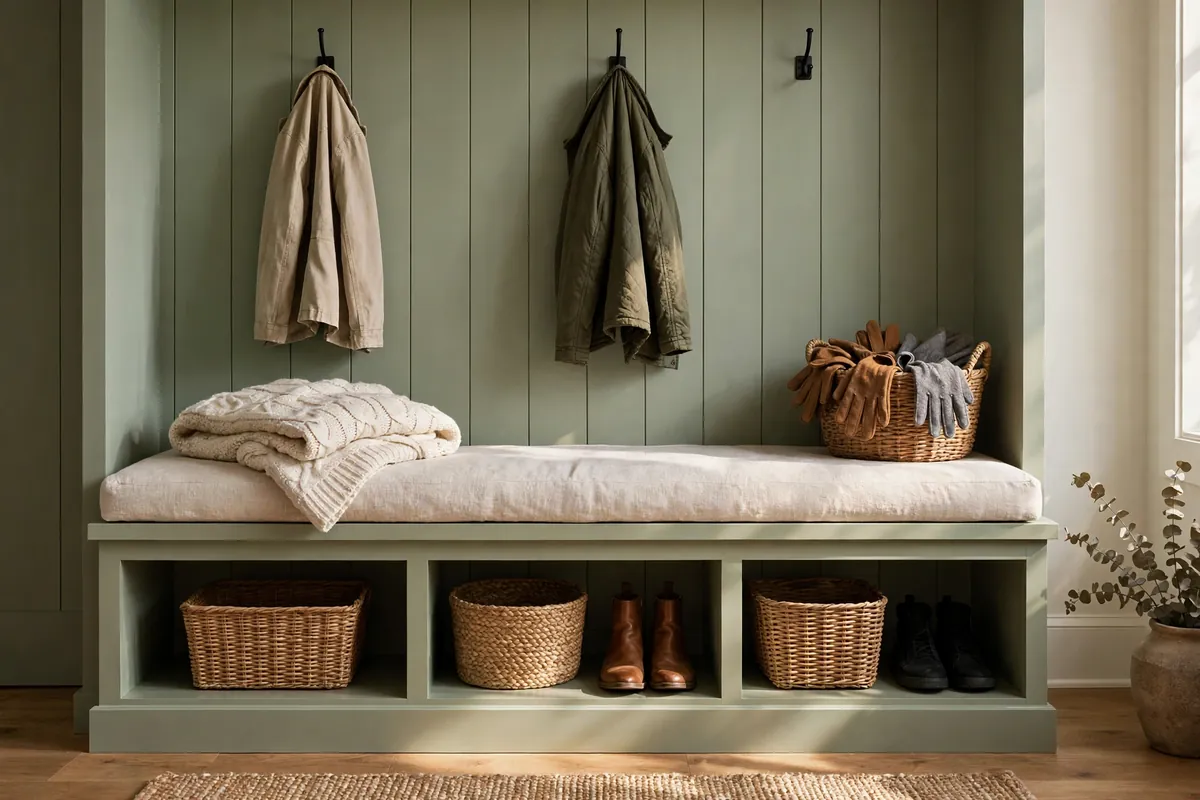
A bench turns your drop zone from a wall into a workstation: somewhere to sit while boots come off, with shoes hidden underneath. Look for designs with lift-up seats, drawers or open cubbies beneath. If you want inspiration for picking the right one, these storage bench ideas show benches that genuinely earn their footprint in narrow halls and full mudrooms alike. A cushion on top makes it inviting, and woven baskets below give every pair of shoes a slot — no more tripping over a pile in the dark.
4. Sort the Mail With a Wall-Mounted Sorter
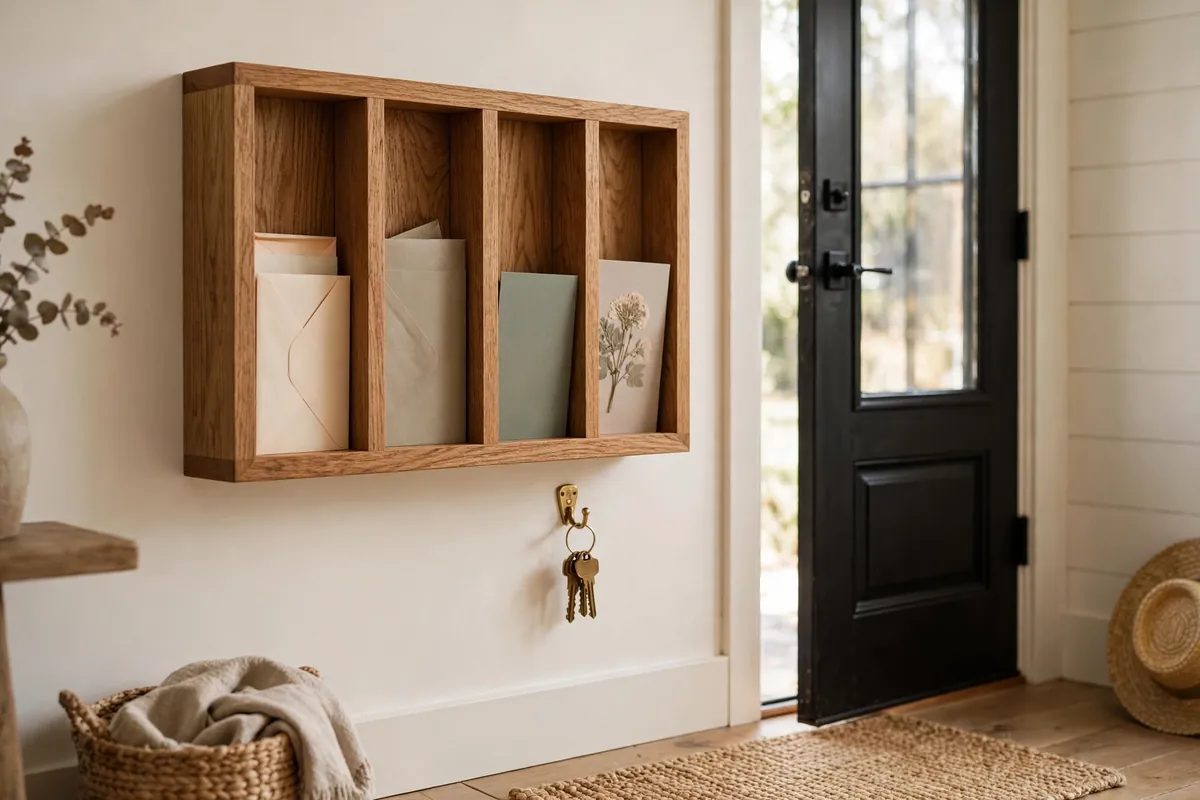
Paper is the silent killer of entryway organisation. A wall-mounted sorter with labelled slots — “action”, “to file”, “recycle” — stops post from migrating to the kitchen table. Even better: make standing over the recycling bin part of the ritual when you walk in, and half the mail never makes it past the door. Keep a small tray for items that need a reply this week and clear it every weekend; the sorter only works if it gets emptied.
5. Build a Family Command Center
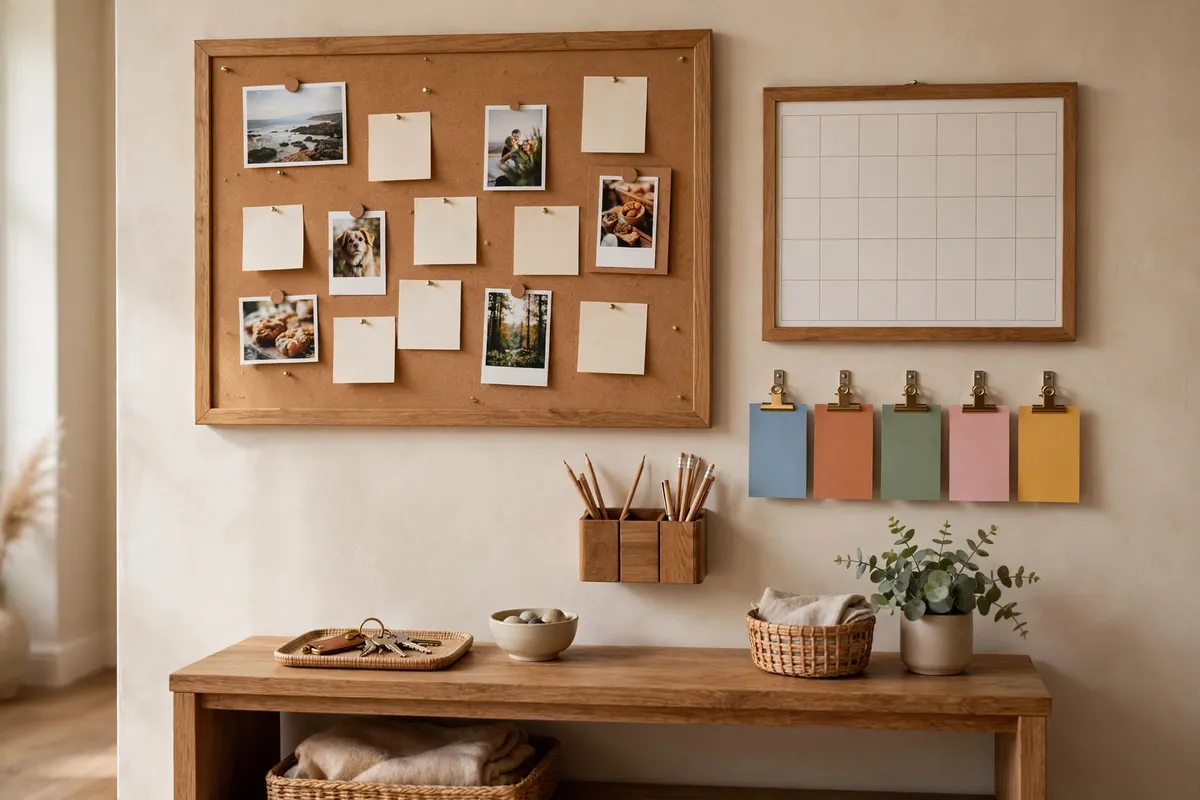
A drop zone manages your stuff; a family command center manages your life. Mount a cork board, magnetic board or framed calendar beside your hooks and add a pen pot, a notepad for shopping lists, and clips for school letters and appointment cards. This is where the week’s chaos becomes visible — permission slips, dentist reminders, football practice times. Position it at eye level where everyone passes, and it becomes the household’s default notice board within days.
6. Give Everyone a Labelled Basket or Bin
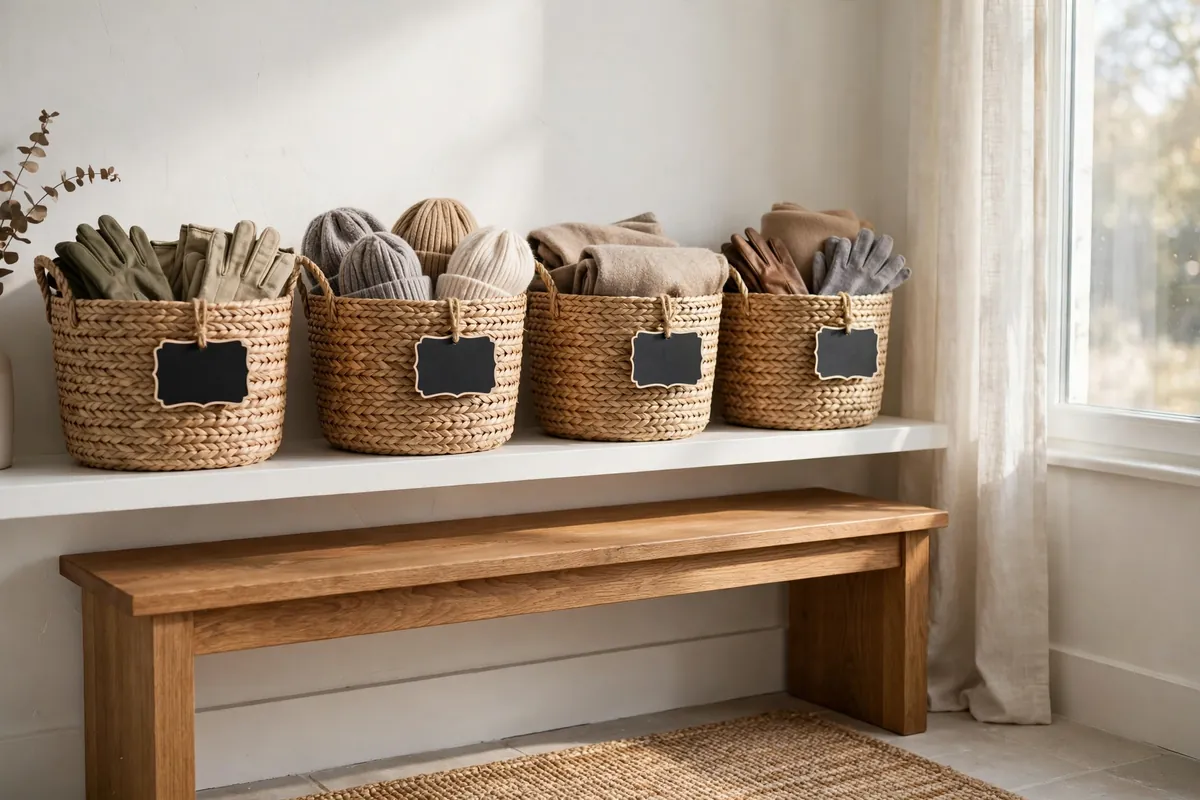
Bins work because they remove decision-making. Each family member gets one basket for their entryway essentials: gloves, hats, spare masks, the gym water bottle, that book that keeps going back and forth. A label maker, chalkboard tag or even masking tape with a marker makes ownership obvious — and removes the “I thought it was yours” argument. Keep the bins identical in size so the shelf or bench looks intentional even when the contents are anything but.
7. Corral Shoes With Cubbies and a Boot Tray
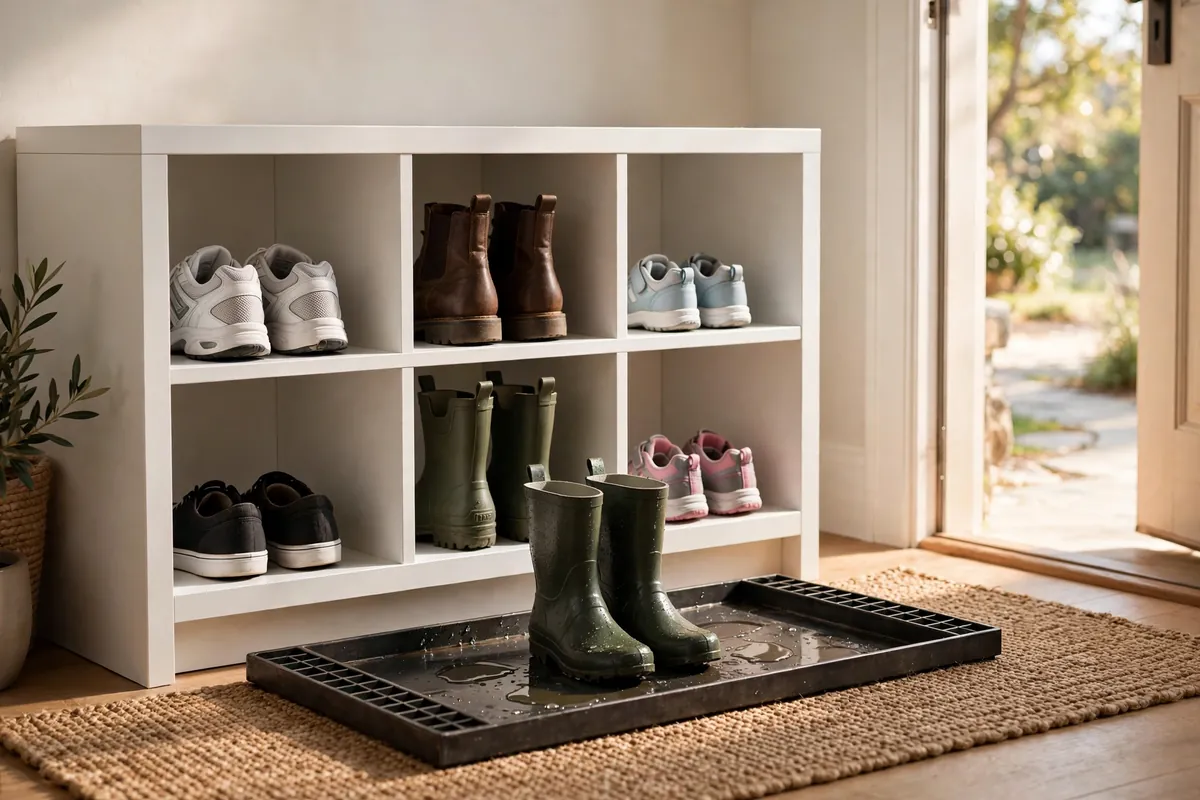
Shoes multiply at the door like rabbits. A set of low cubbies — one cube per person — combined with a boot tray underneath for wet footwear is the classic fix. The boot tray catches rain, mud and melted snow before they reach your floor; just rinse it weekly. In winter, enforce the rule that only the pair in current rotation lives in the cubbies, with everything else banished to the wardrobe. Your hallway will feel twice as big.
8. Add a Dedicated Charging Station
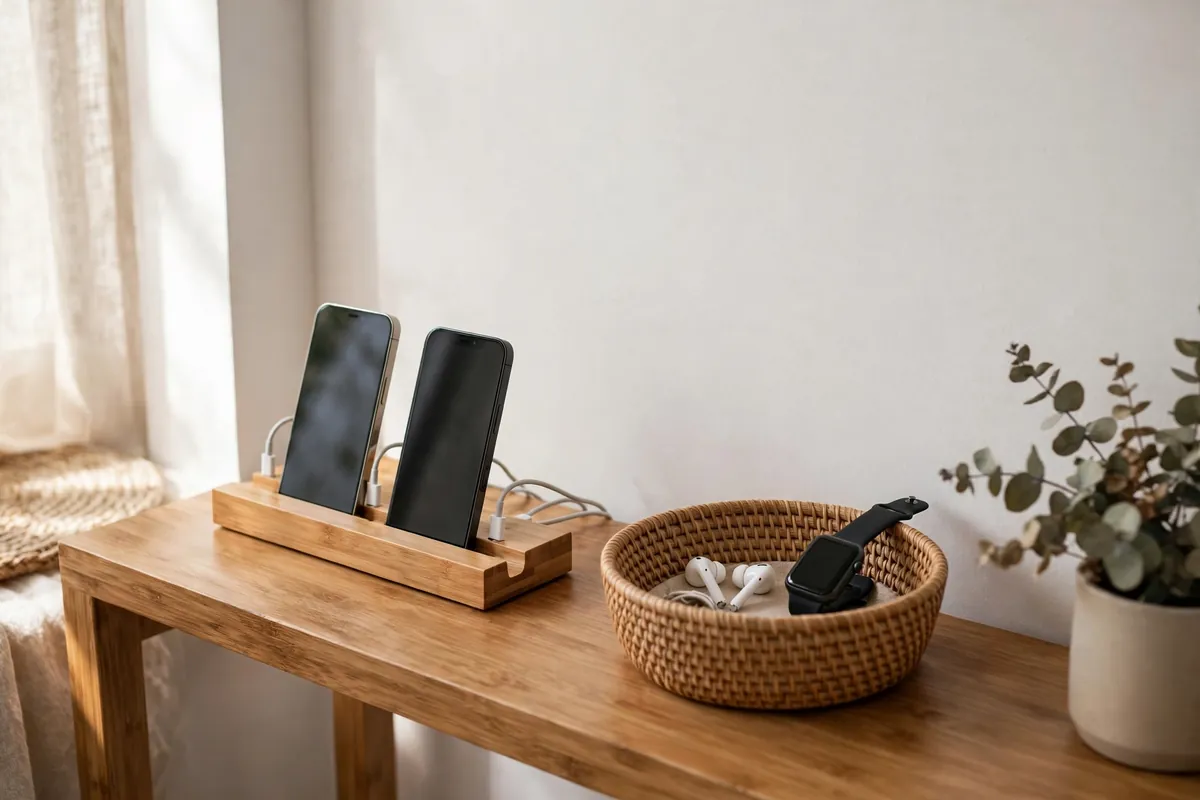
Dead phones cause morning chaos, so give devices their own dock in the drop zone. A slim charging station on the console or a wall-mounted shelf with cable slots means every phone lands in the same spot each evening and leaves fully charged. Use a single multi-port plug with short cables to avoid spaghetti, and add a small basket beneath for earbuds and smartwatches.
9. Create a Grab-and-Go Launch Spot
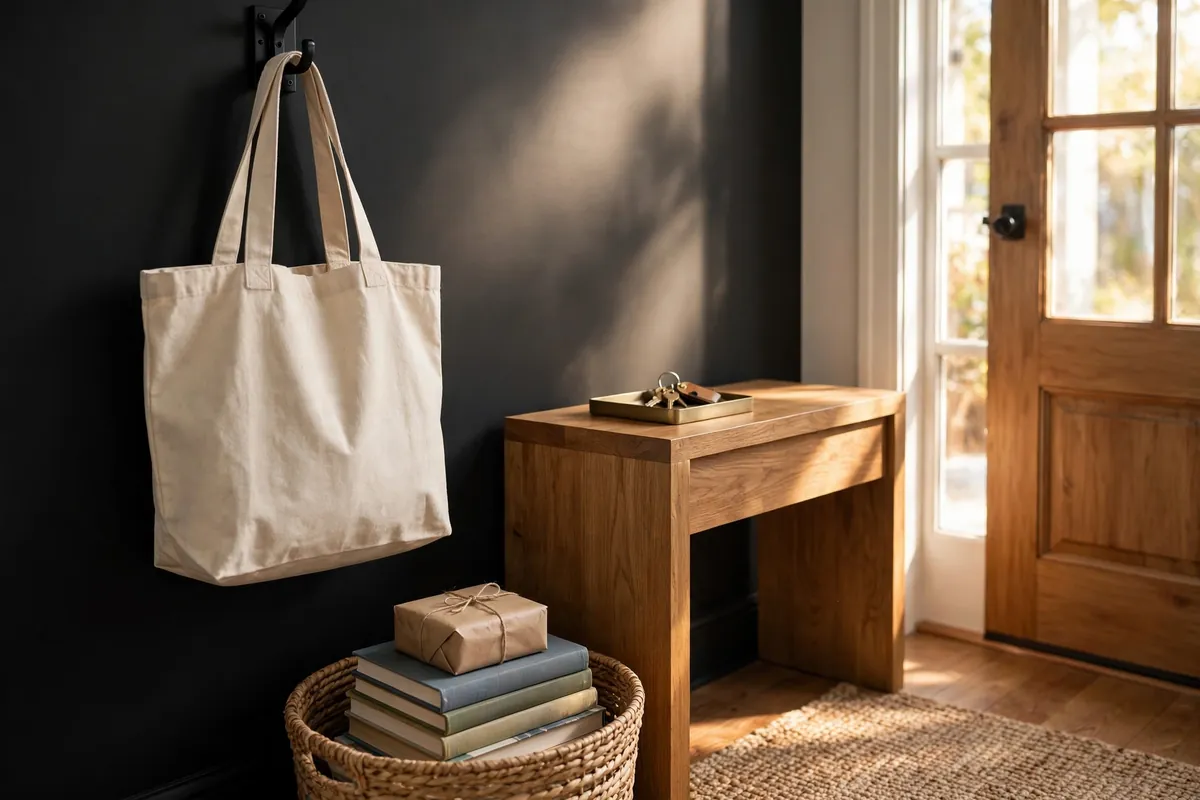
Some things don’t belong in the drop zone permanently — they just need a staging area on their way out. Hang a “grab-and-go” tote or dedicate one basket for library books, parcels for return, dry cleaning and anything that must leave with you next trip. The Better Homes & Gardens real estate team’s entryway ideas suggest repurposing an old console or bench near the door as the base for exactly this kind of system — bins and trays turn a forgotten piece of furniture into a proper launch pad. Check the basket before you leave and half your errands run themselves.
10. Go Vertical With Floating Shelves and Pegboards
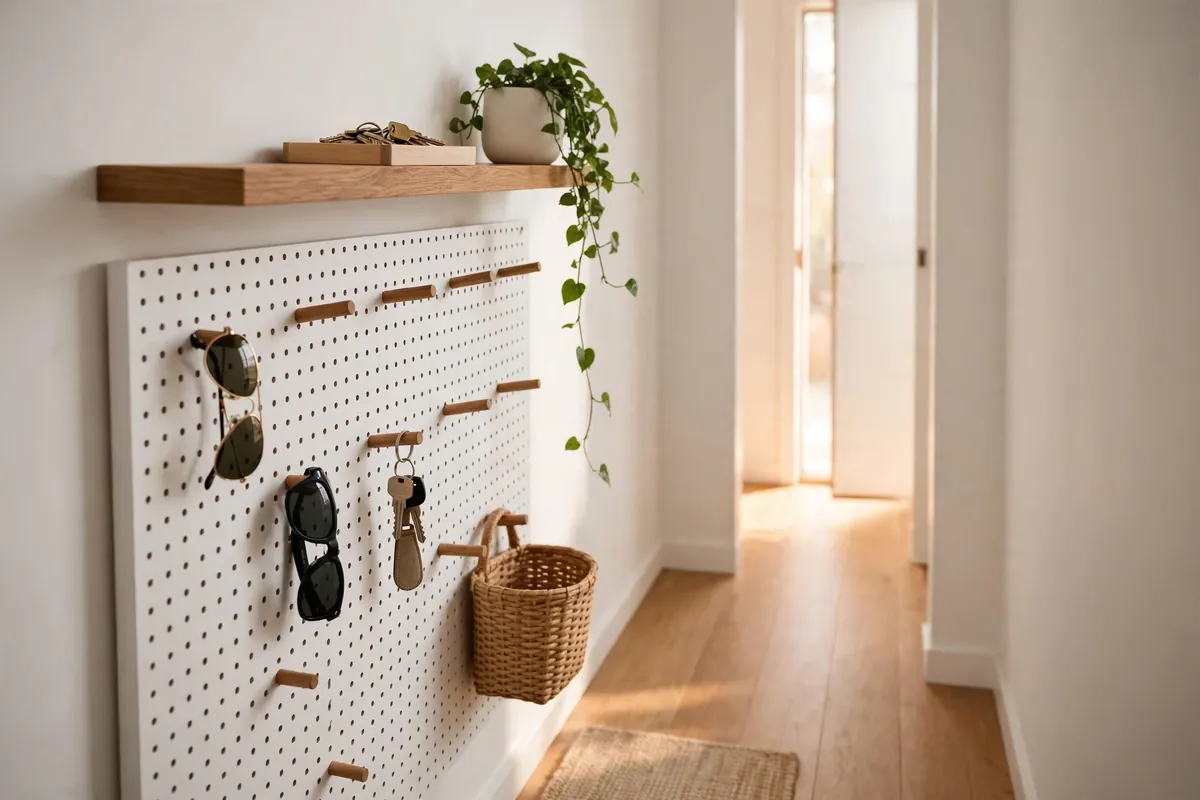
When floor space is zero, the walls are your storage. A floating shelf above the bench holds the landing tray and a small plant; a pegboard beside the hooks organises sunglasses, keys and the dog lead with total flexibility. Pegboards shine because you can rearrange hooks and baskets as your needs change — they are the cheapest way to make a rental entryway feel custom-built. Keep shelves shallow (15–20 cm) so nothing juts into the walkway, and style the top shelf minimally so it reads as decor, not clutter.
11. Protect the System With a Five-Minute Reset
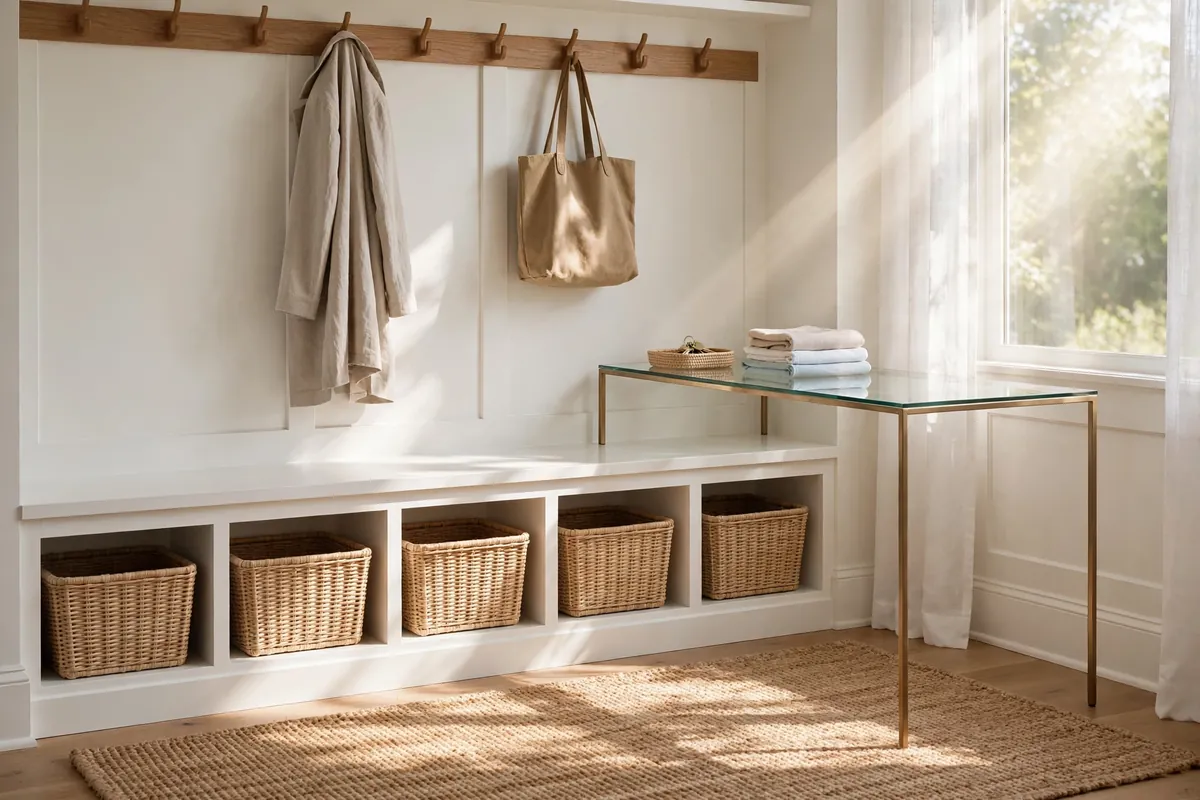
The best drop zone in the world will fail without maintenance, so build in a five-minute reset. Once a week: return strays to their homes, clear the mail sorter, remove out-of-season shoes and check nothing is creeping into the walkway. If the system starts breaking down, don’t blame the family — audit the setup. Items pile up when storage is too small or too awkward to reach, so adjust until putting things away is genuinely the easiest option. A tidy entry is not about perfection; it is about knowing where to start again. For more whole-room systems, these mudroom organization ideas scale the same thinking up to full mudrooms for busy families.
Frequently Asked Questions
What is a drop zone in a house?
A drop zone is a designated area near your front door where everyday items — keys, bags, shoes, coats, mail and devices — are stored as you come and go. It can be as simple as a wall with hooks and a tray, or as elaborate as a built-in bench with cubbies and a family command center.
What should be in an entryway drop zone?
The essentials are hooks for coats and bags, a tray or bowl for keys and wallets, shoe storage, a mail sorter, and a charging station. Families benefit from labelled bins per person and a small command center board for calendars and reminders. Keep only what you use daily; everything else belongs elsewhere.
How do I make a drop zone in a small entryway?
Go vertical: use wall hooks, a slim floating shelf and an over-door or wall-mounted mail sorter. A narrow console table or a bench with cubbies adds storage without eating floor space. Even a single square metre of wall can hold hooks, a key tray and a small bin — the system matters more than the square footage.
How do I keep my drop zone from getting messy?
Three rules: one home per item (labels help), a five-minute weekly reset to clear strays and sort mail, and an overflow rule — when something repeatedly doesn’t fit, the storage needs to grow or the item needs to live elsewhere. Most drop zones fail because they silently become junk drawers; a weekly audit prevents that.
Conclusion
A drop zone is one of the smallest home projects with the biggest daily payoff. Eleven smart choices — a tray, hooks, a bench, a sorter, labelled bins and a weekly reset — and your entryway stops being a dumping ground. Start with one idea this weekend.
