
Table of Contents
- Lay a Linen Runner as Your Everyday Base
- Anchor Everything on a Wooden Tray
- Make a Fruit Bowl Your Functional Centerpiece
- Vary Candle Heights for Instant Warmth
- Use the Rule of Three for Vases
- Rotate Seasonal Greenery Through the Year
- Mix Textures, Not Just Colours
- Let One Statement Vessel Do the Talking
- Layer Placemats and Chargers When You Host
- Add a Living Element: Herbs or a Small Plant
- Build a Candlelit Tablescape for Dinner Parties
- Finish with Personal Touches
Your dining table is the hardest-working surface in the house — the scene of rushed breakfasts, long dinners, and the occasional holiday feast. The trick to decorating it well is a look that survives daily life but scales up for guests: a stylish everyday base with a few quick upgrades for hosting.
These 12 dining table decor ideas do exactly that, from five-minute centerpieces to full dinner-party tablescapes.
1. Lay a Linen Runner as Your Everyday Base
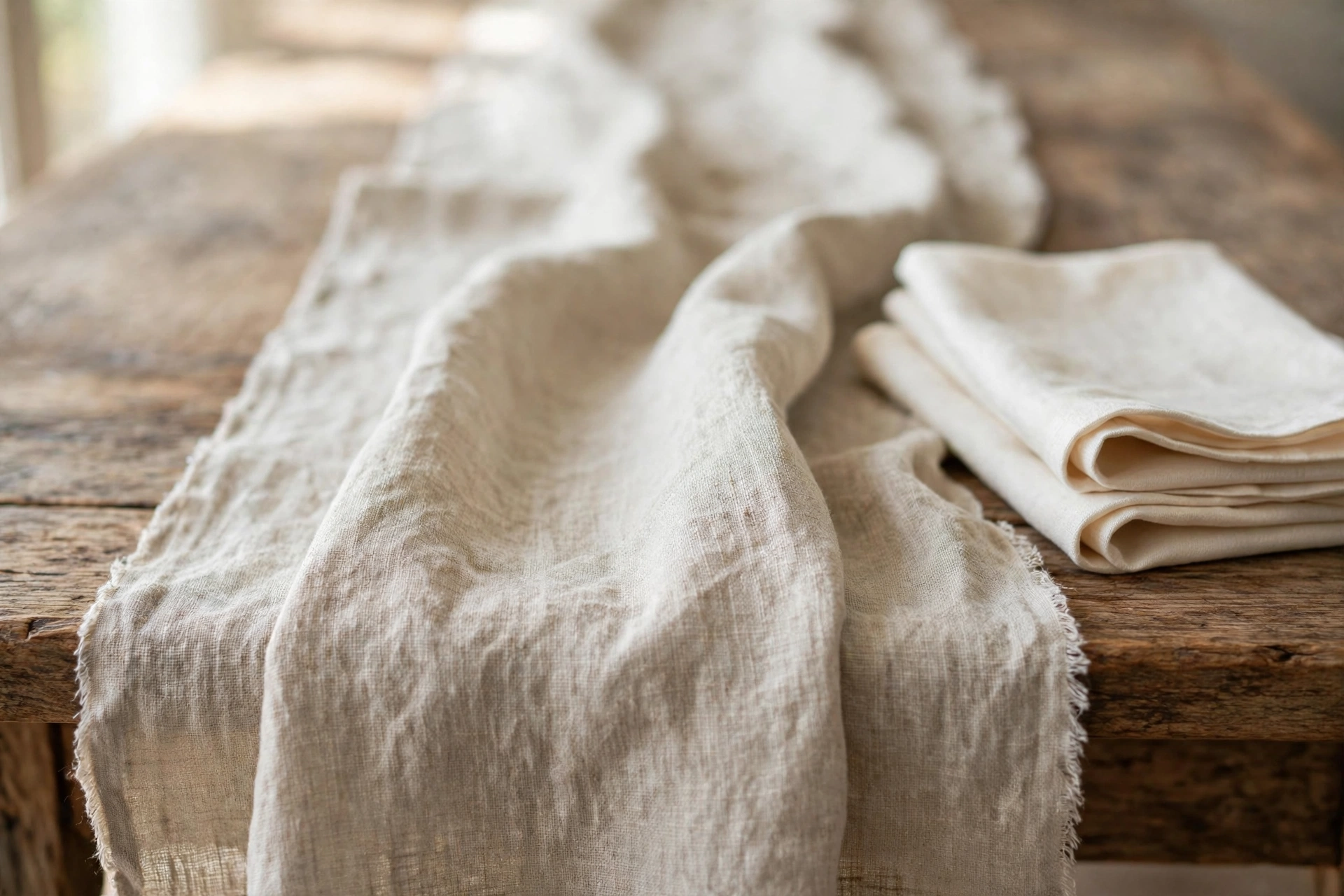
A linen runner is the single easiest upgrade for any dining table. It adds colour, texture, and a visual line that pulls the whole table together, and it protects the surface beneath. Choose a neutral tone for everyday — oatmeal, natural flax, or soft stone — and it will work with whatever you set on top. Washable linen also means you do not panic when dinner gets messy.
2. Anchor Everything on a Wooden Tray
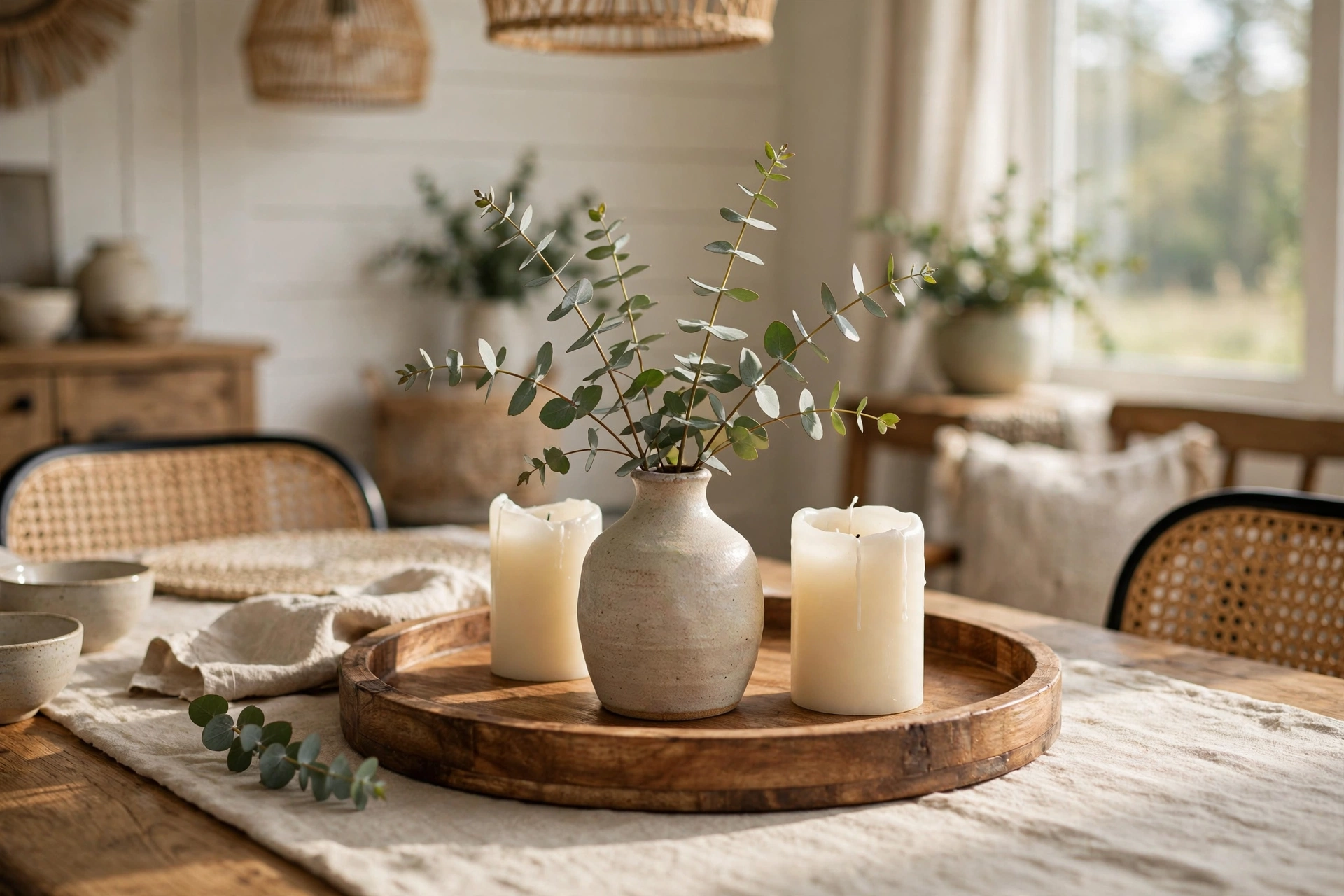
If your centerpiece feels scattered, put it on a tray. A round or rectangular wooden tray gives your styling a boundary, makes the arrangement look intentional, and — best of all — lifts off in one move when you need the table clear. Wood adds warmth against glass and ceramic, and it pairs with every dining chair idea style, from farmhouse to modern. Group two or three small items on the tray and you are done.
3. Make a Fruit Bowl Your Functional Centerpiece
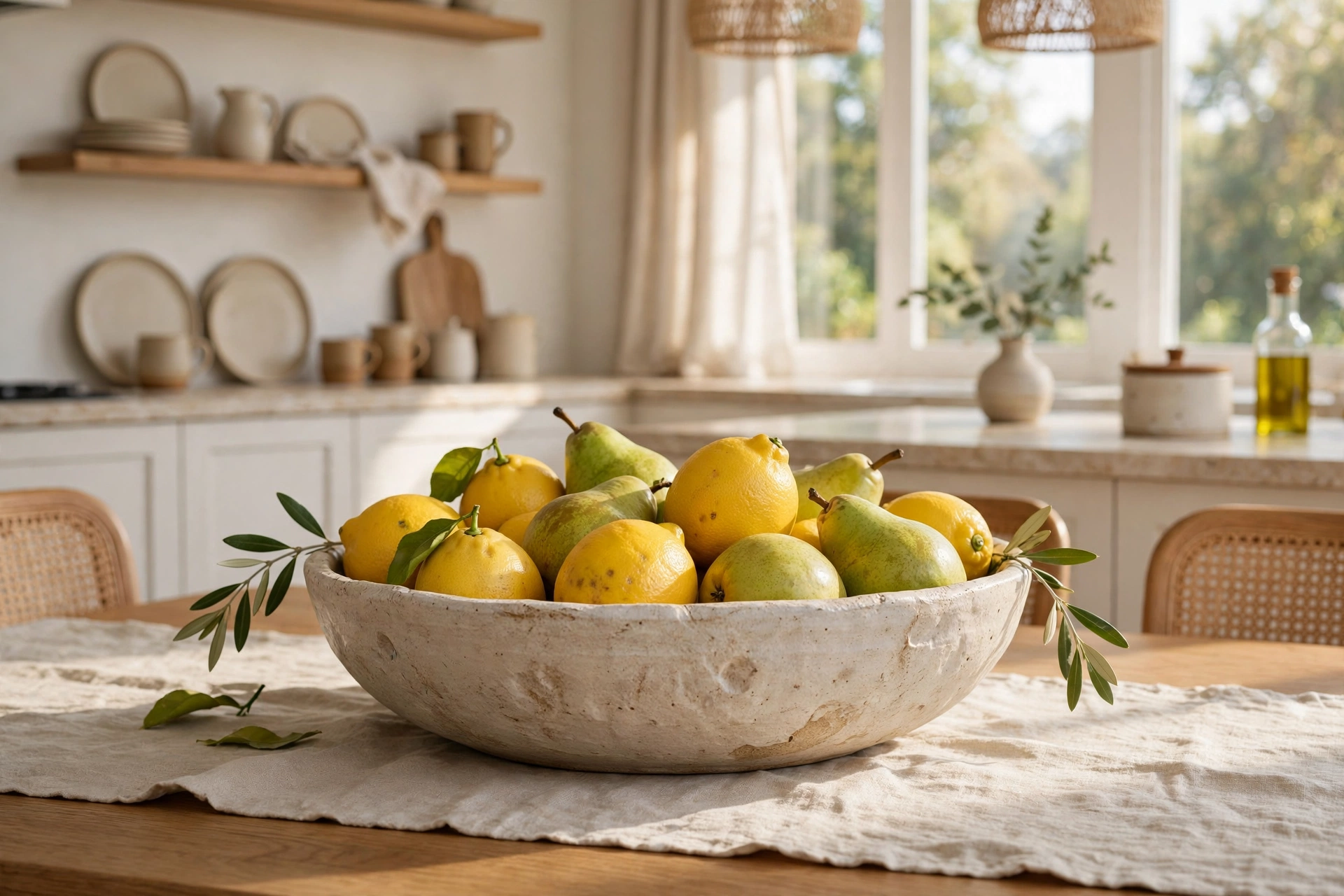
Beautiful and useful beats beautiful alone. A low ceramic or wooden bowl filled with seasonal fruit — lemons, pears, apples — adds colour and texture while staying completely practical. Swap the fruit with the seasons and the table never looks dated. Keep it low so conversation flows across it, and keep it away from direct sunlight so the fruit lasts.
4. Vary Candle Heights for Instant Warmth
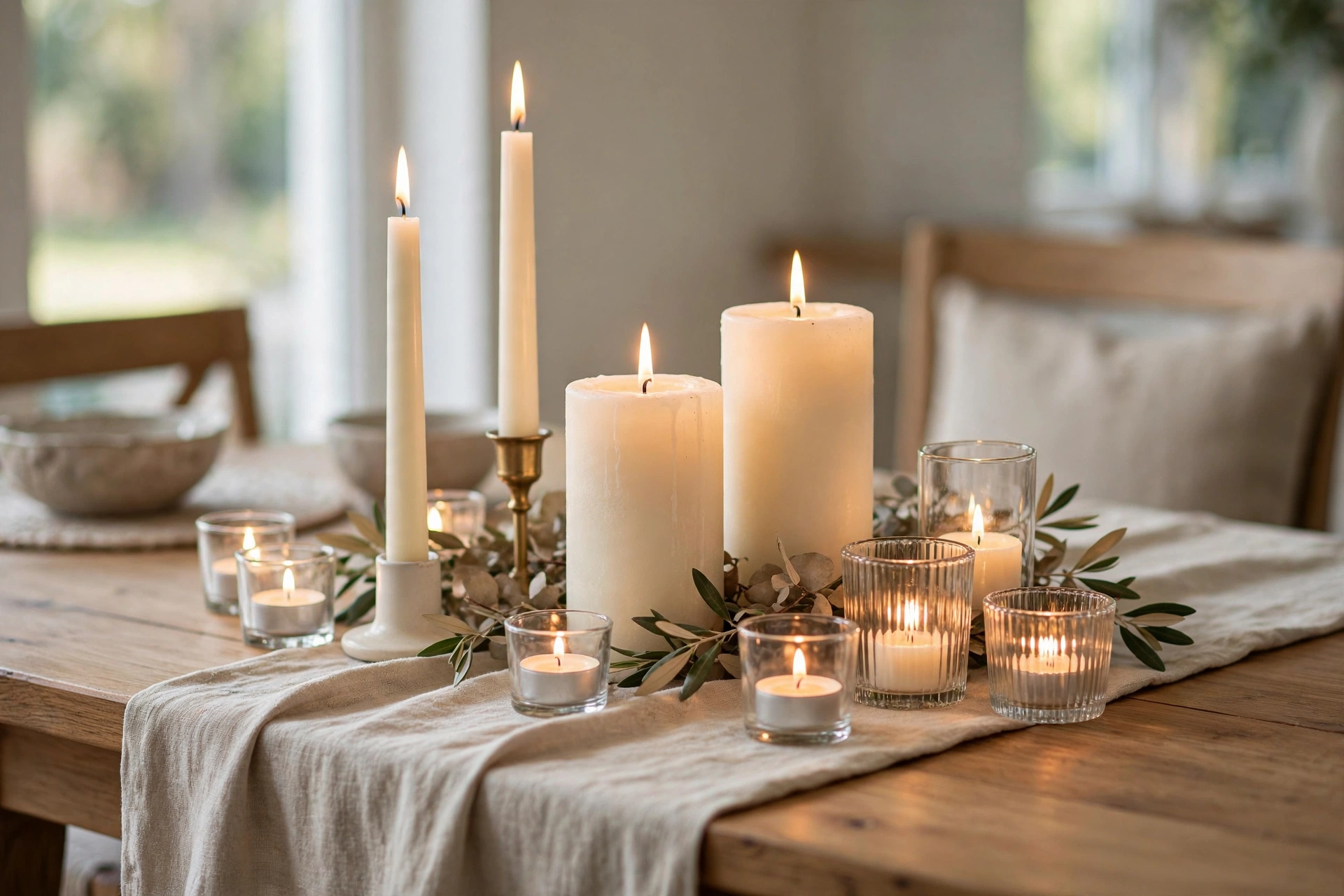
Candles are the fastest way to make a dining table feel styled. The designer trick is height: mix tall tapers, medium pillar candles, and low tea lights in glass holders so the eye travels up and down the arrangement. Odd numbers work best — three or five candle groups. For everyday, unlit candles in brass or ceramic holders look intentional; light them when you host and the whole room changes mood.
5. Use the Rule of Three for Vases
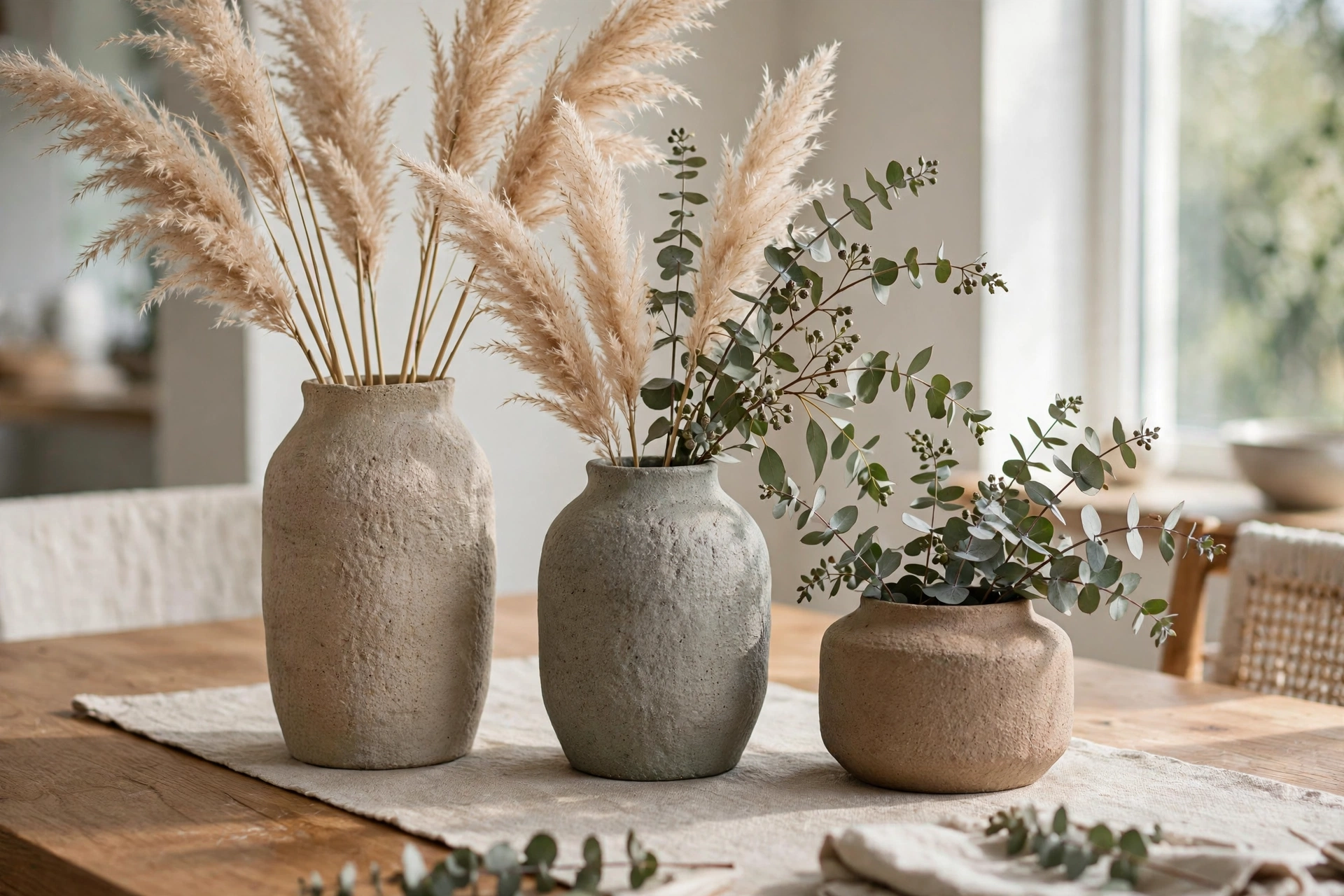
Grouping objects in threes is the no-fail approach behind most professional table styling — the method of pairing a taller vessel with a shorter one and a third accent, as demonstrated in Homes & Gardens’ breakdown of Shea McGee’s no-fail approach, is a perfect example. Try three vases of varying heights in the same material: a tall stem vase with dried eucalyptus, a medium bud vase, and a low bowl of greenery. The varying heights create rhythm without clutter.
6. Rotate Seasonal Greenery Through the Year
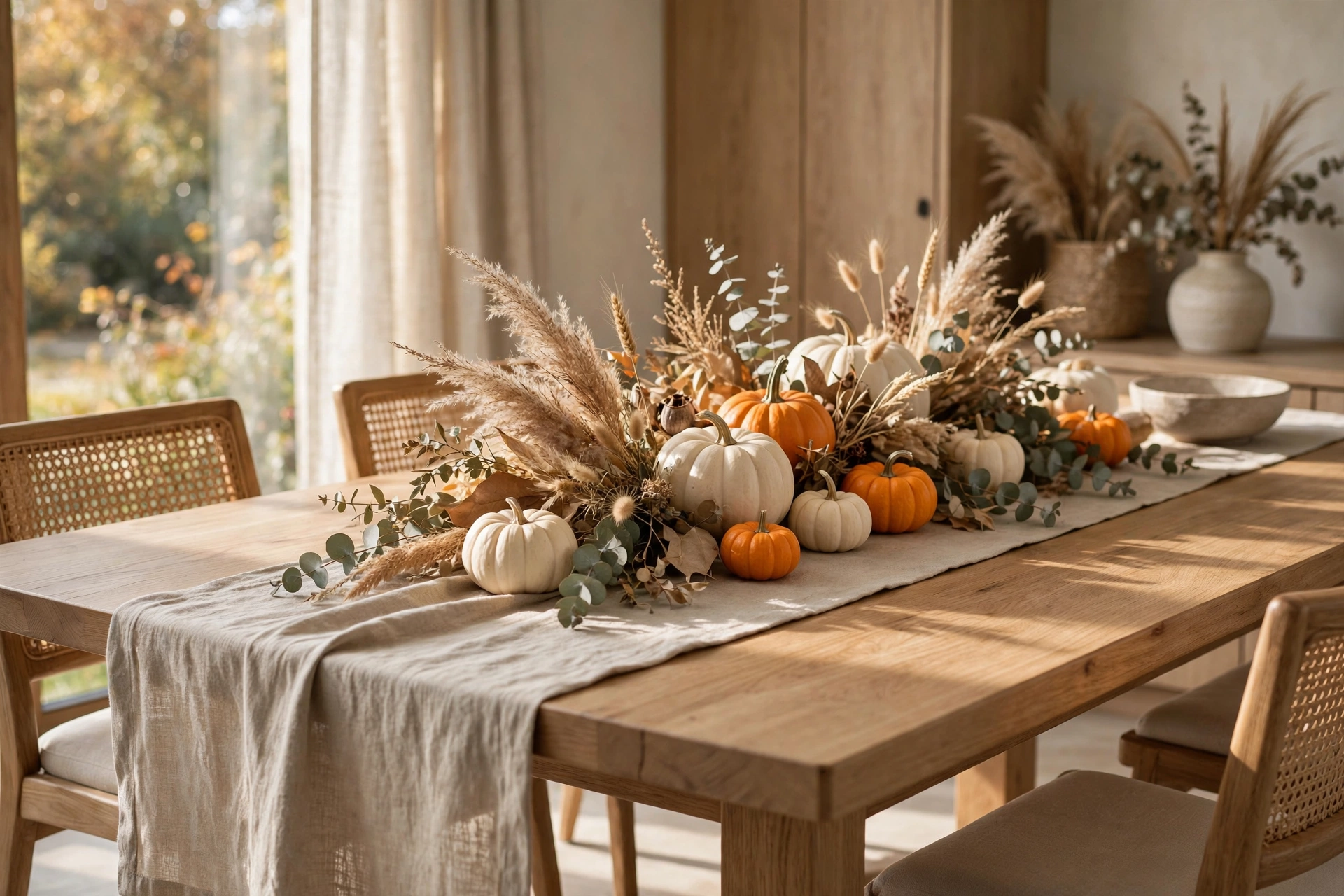
A permanent base with a rotating accent keeps your table fresh year-round. Keep the tray, runner, and candles fixed, then swap one element by season: pumpkins and dried grasses in autumn, evergreen sprigs and pinecones in winter, tulips in spring, seashells or lemons in summer. One seasonal switch takes five minutes and stops the table looking static. If you are refreshing the wider room too, the right pendant above the table makes every season’s look photograph better — our dining room light fixtures guide has options for every style.
7. Mix Textures, Not Just Colours
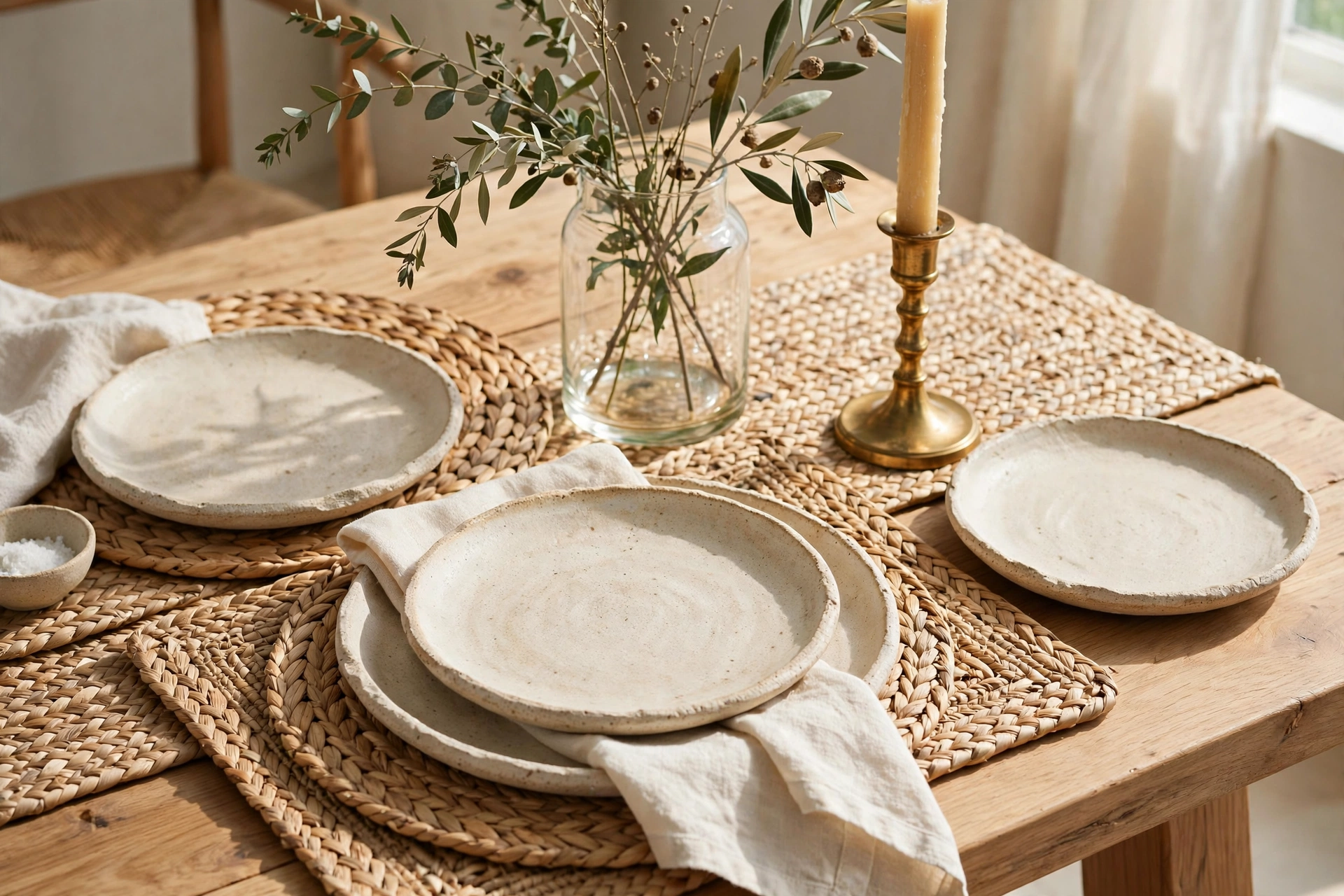
The tables that look expensive share one secret: layered textures. Combine rough linen with smooth ceramic, matte wood with reflective glass, and soft greenery with hard metal. A woven placemat under a stoneware plate, a glass vase beside a brass candlestick — each contrast adds depth. When in doubt, stick to a tight colour palette (creams, woods, one accent) and let texture do the talking.
8. Let One Statement Vessel Do the Talking
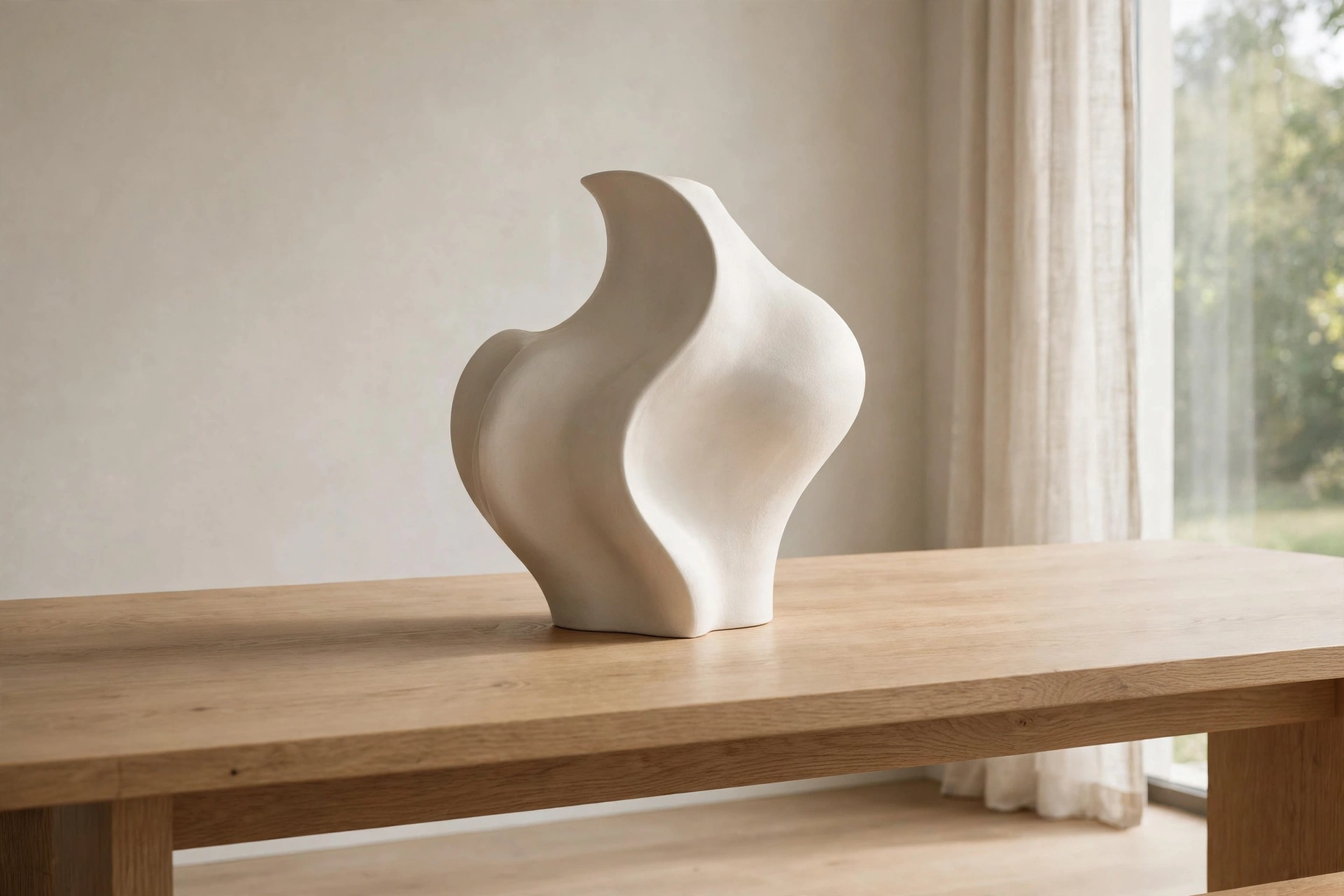
Minimalism is a valid style. A single sculptural piece — an oversized ceramic vase, a hand-thrown footed bowl, a carved wooden bowl with decorative orbs — can carry a whole table on its own. This is the best option for small tables where space is tight: one bold object, nothing else competing. Choose a piece with an interesting silhouette rather than fussy detail so it reads from across the room.
9. Layer Placemats and Chargers When You Host
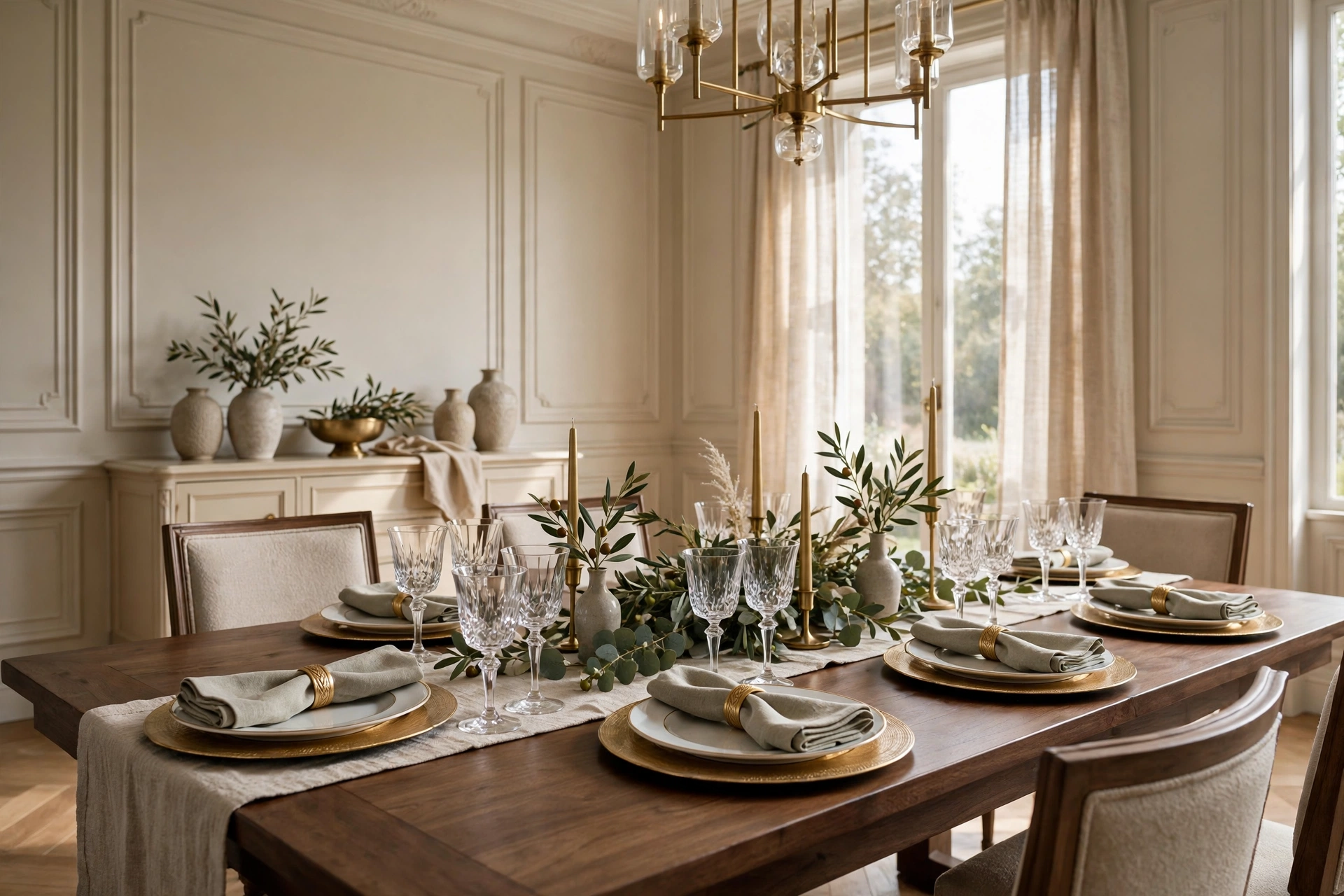
Everyday styling is about the centre; hosting is about the place settings. When guests are coming, layer up: a charger under each dinner plate adds polish instantly, cloth napkins (folded simply or in a ring) beat paper every time, and a placemat in a contrasting texture frames each setting. You do not need matching sets — collected, mixed dinnerware looks more interesting than a department-store box set.
10. Add a Living Element: Herbs or a Small Plant
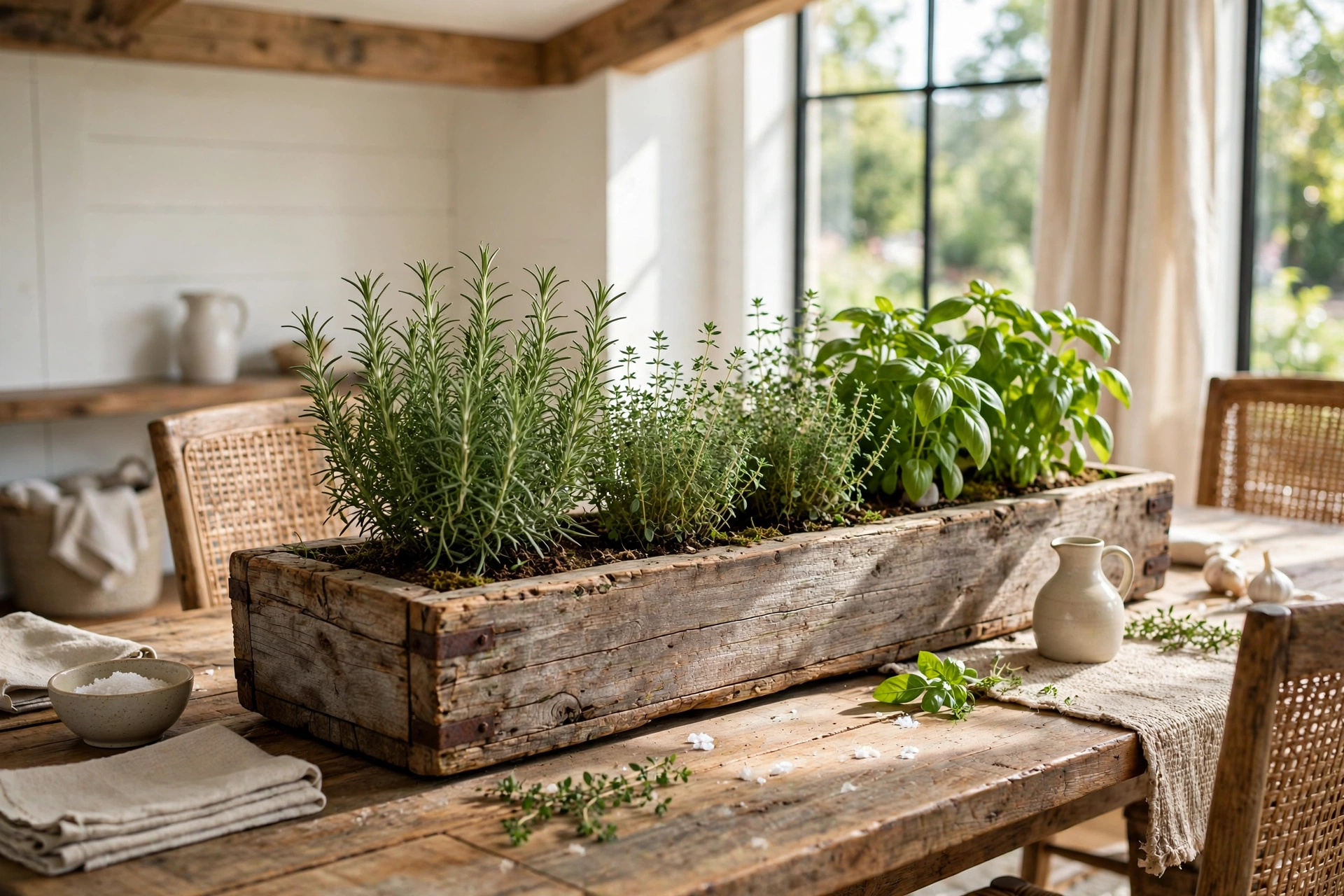
A small potted herb garden — rosemary, thyme, basil in one long trough — is a centrepiece you can eat. It adds life, scent, and colour to the table, and guests love snipping herbs into their food. For lower maintenance, a single easy-care plant like a small olive tree or a cluster of succulents in ceramic pots does the job. Keep pots small enough that they do not block the view across the table.
11. Build a Candlelit Tablescape for Dinner Parties
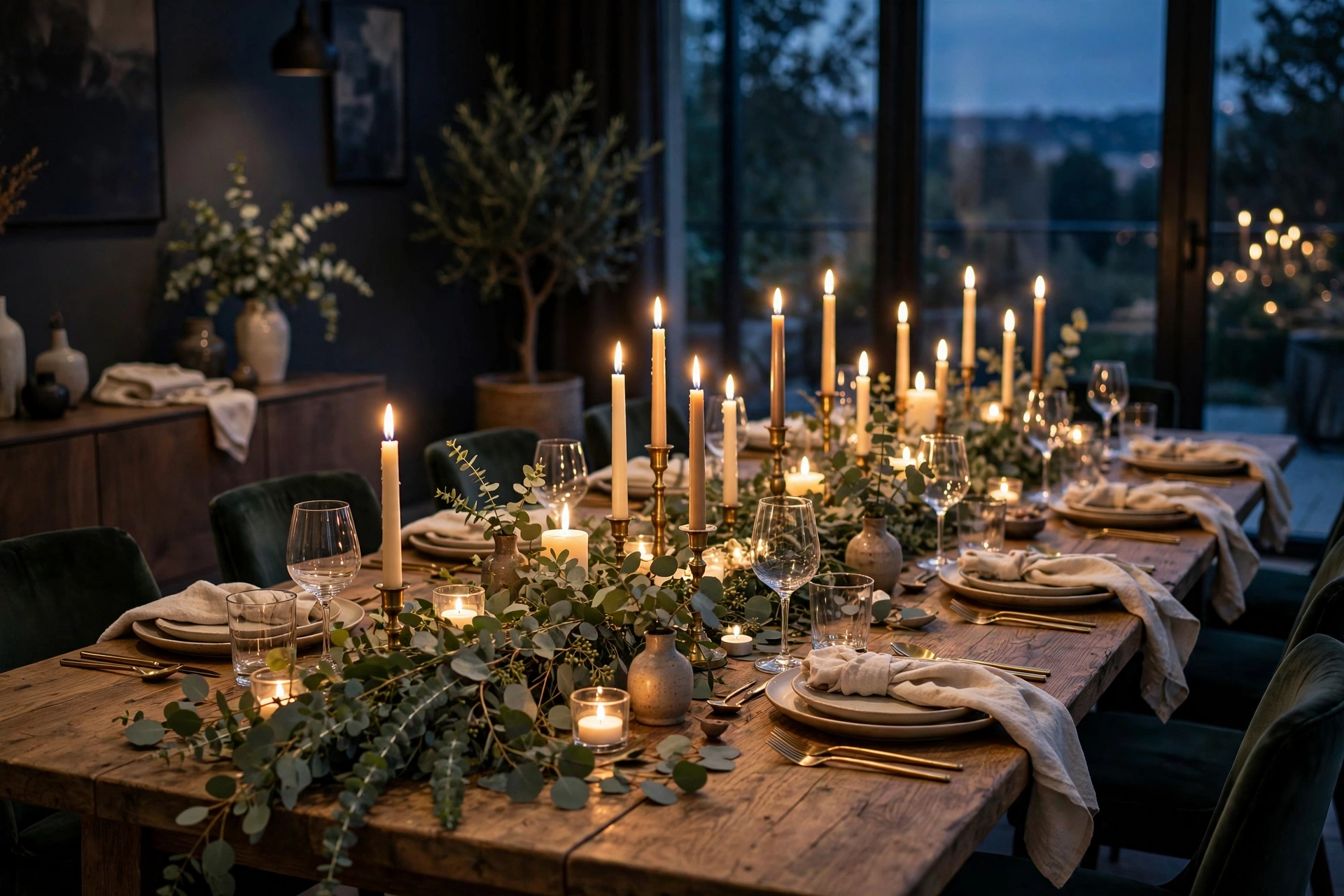
When it is time to host properly, go all in: layered lighting is what separates an everyday table from a memorable dinner party. Turn the overhead light low or off, light a generous spread of tapers and tea lights down the centre of the table, and let the candlelight do the decorating. Add one dramatic element — a garland of greenery, a runner of dried flowers, or low bowls of fruit — and keep it below eye level so conversation is never blocked.
12. Finish with Personal Touches
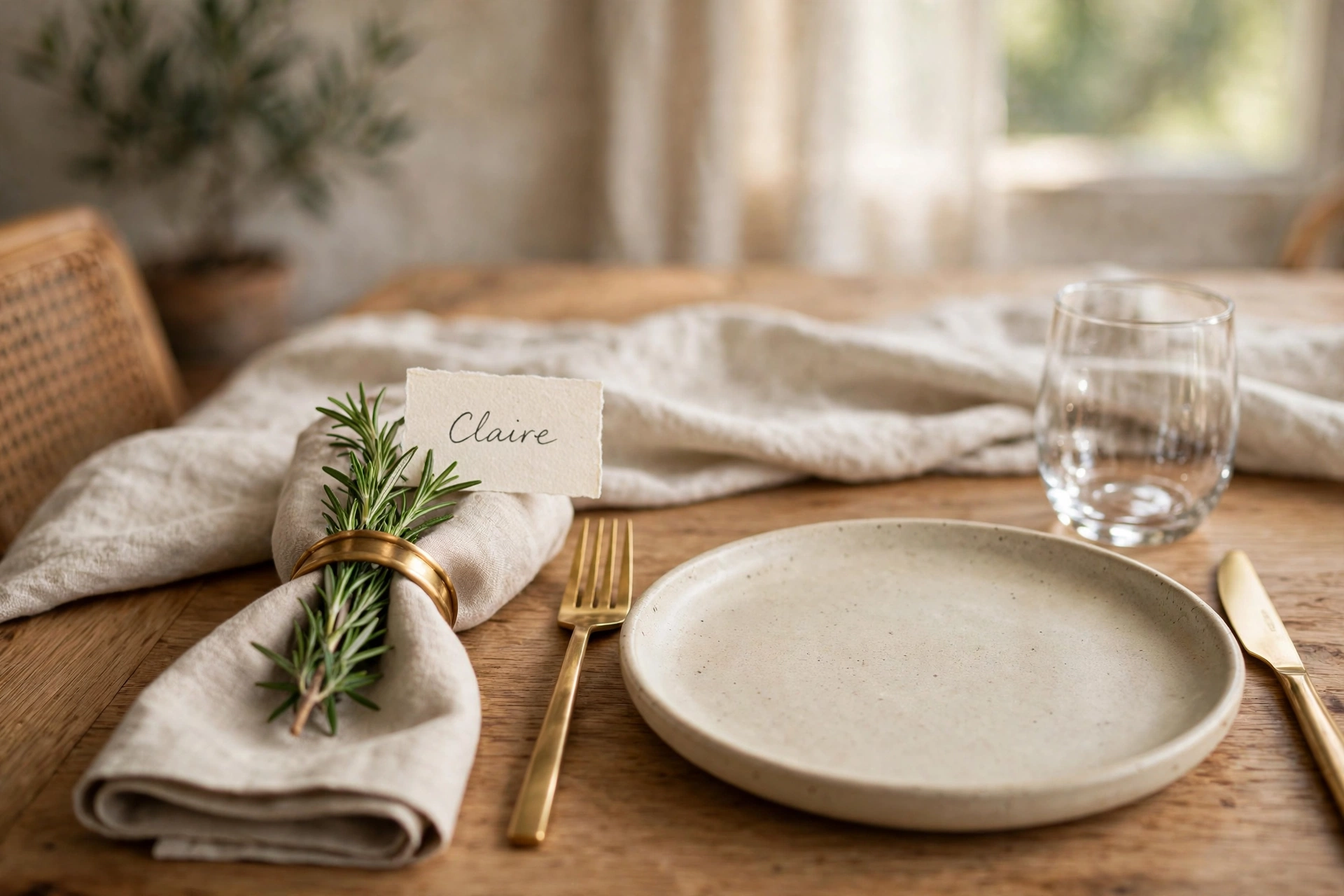
The details guests remember are personal, not expensive: handwritten place cards, a sprig of rosemary tied to each napkin, a small framed photo on the sideboard, napkin rings collected from travels. These touches cost almost nothing and make a hosted dinner feel considered. For everyday, one personal item — a favourite bowl, a candle in a scent you love — is enough to make the table feel like yours.
Frequently Asked Questions
How do I decorate my dining table for everyday use without clutter?
Keep a fixed low base — a runner, a tray, and one vessel — and resist adding more. Everything should lift off in one move when dinner lands. Nothing except candles should sit taller than about 30cm, so sightlines stay open.
What is the best centrepiece for a small dining table?
One statement piece in a tray: a small vase of greenery, a low bowl of fruit, or a single sculptural ceramic. Keep the footprint to roughly a third of the table width and choose a tray base so the whole thing moves aside in seconds.
How can I make my dining table look good for hosting without buying everything new?
Layer what you own: chargers under plates, cloth napkins, candles of varying heights down the centre, and one seasonal accent. Dim the overheads and let candlelight create the atmosphere — lighting upgrades the look more than any new purchase.
Should the centrepiece match my dining room style?
It should coordinate, not match exactly. Echo one or two materials from the room (the wood tone of the table, the metal of your pendant) and keep colours in the same family. A little contrast — vintage pieces on a modern table — usually looks better than a perfect match.
Conclusion
Great dining table decor is not about spending more — it is about a reliable everyday base that you can dress up in minutes when guests arrive. Pick two or three ideas from this list, start with the runner and the tray, and let the rest evolve. Your table will look styled on an ordinary Tuesday and party-ready by Friday.
