
Mud kitchens are pure magic for children. A few old bowls, some water, a patch of dirt — and suddenly your backyard becomes a bakery, a café, or a potion laboratory. If you’ve been thinking about setting one up, these 13 mud kitchen ideas for kids cover everything: kid-sized builds, play recipes, themed stations, and toddler-safe setups that keep the fun going for hours.
1. Pallet Mud Kitchen Built for Little Hands
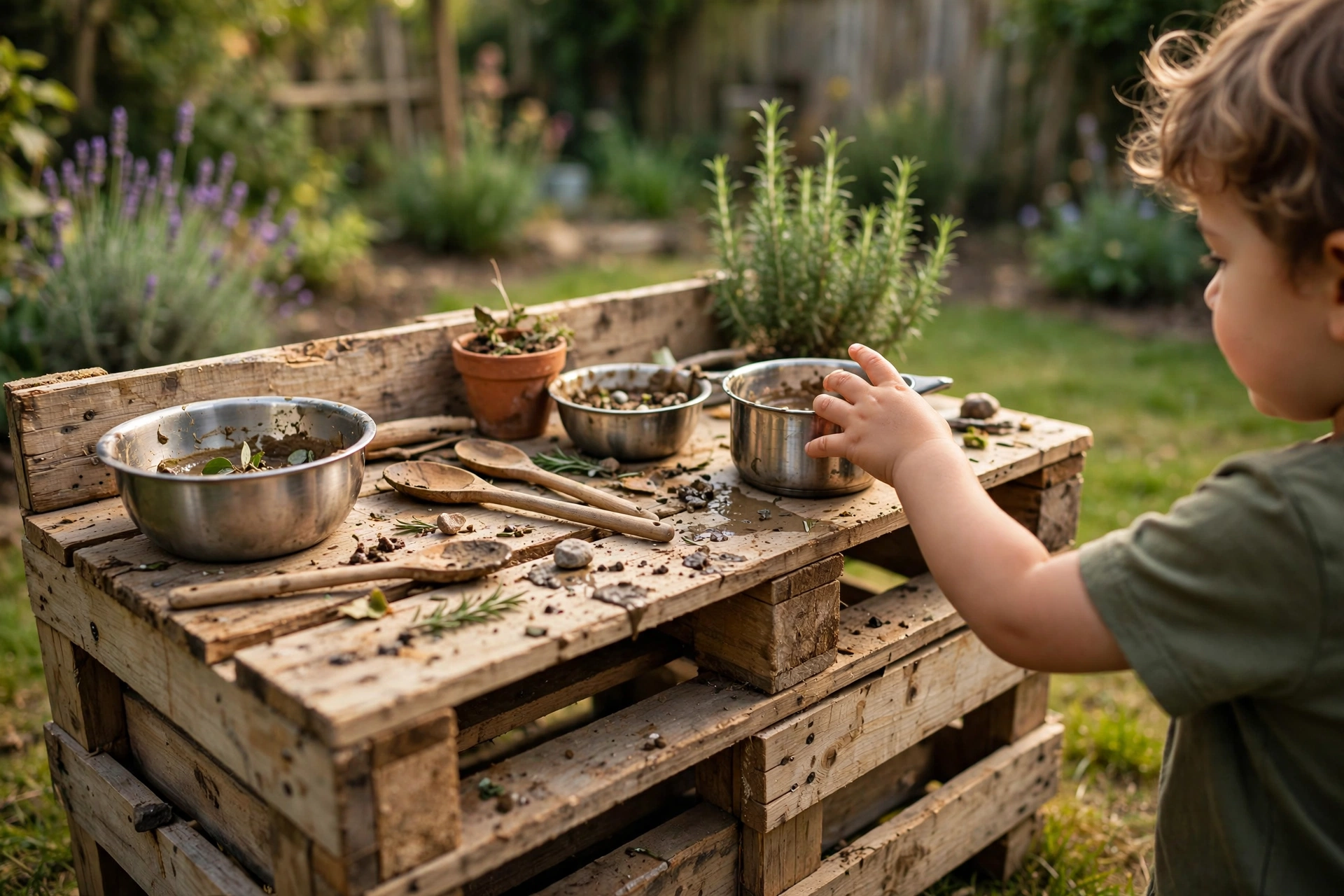
The classic starter build. Two or three untreated wooden pallets become a counter, back shelf, and side storage in an afternoon. Keep the work surface at about knee height for preschoolers so they can reach everything comfortably. Sand every edge smooth and skip any chemically treated wood. Old saucepans, a washing-up bowl set into the counter, and a row of pegs for spoons finish it off. It’s the budget-friendly foundation every other idea on this list builds on.
2. A Working Water Pump Station
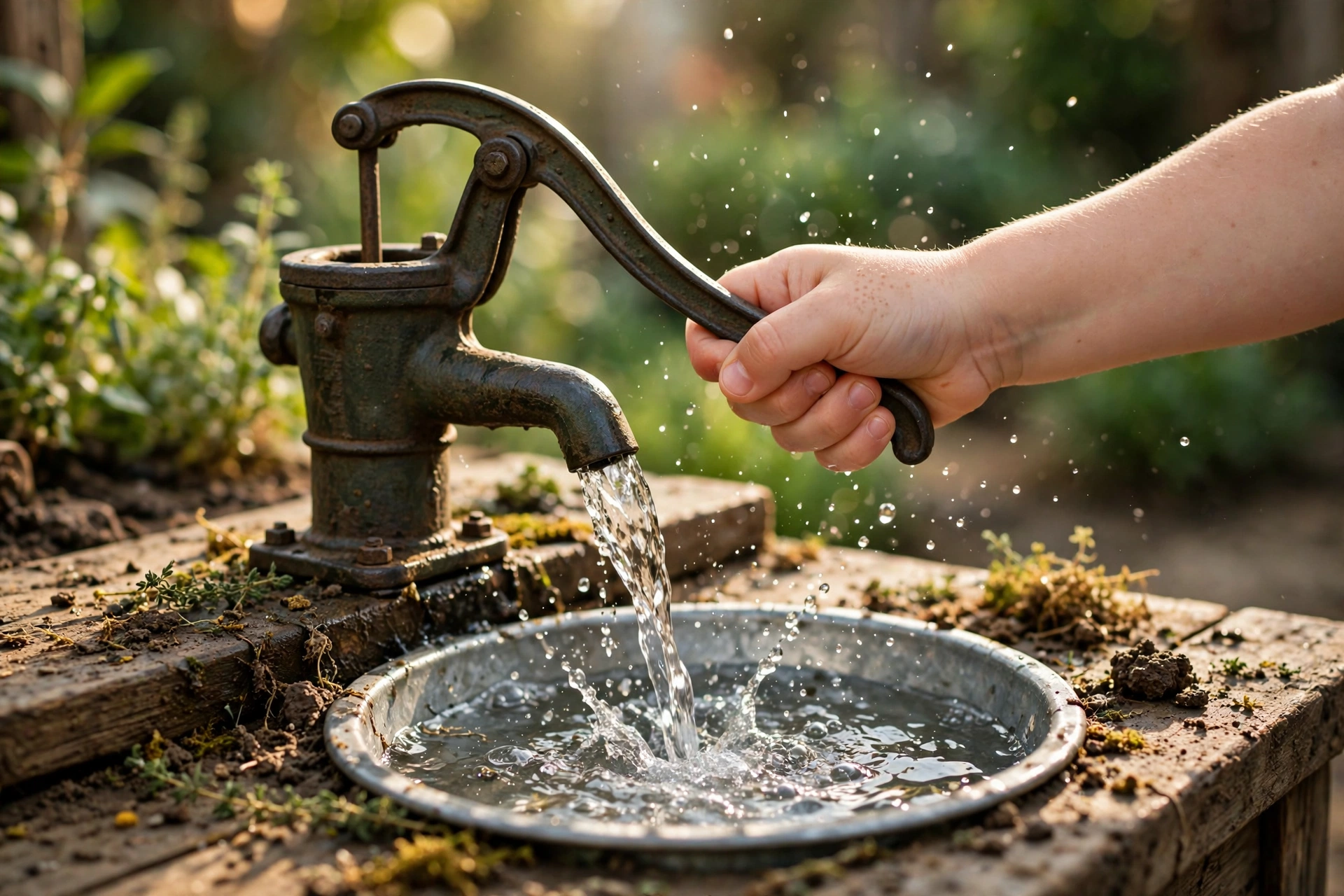
Kids lose track of time at a mud kitchen that has running water. A simple hand pump connected to a bucket or rain barrel under the counter lets them pump their own water into the basin — no hose runs back and forth for you. The pumping action itself is half the fun, and it teaches cause and effect: pump harder, water flows faster. Pair it with a shallow basin so little ones can mix, pour, and “wash dishes” for ages.
3. Mud Bakery Station
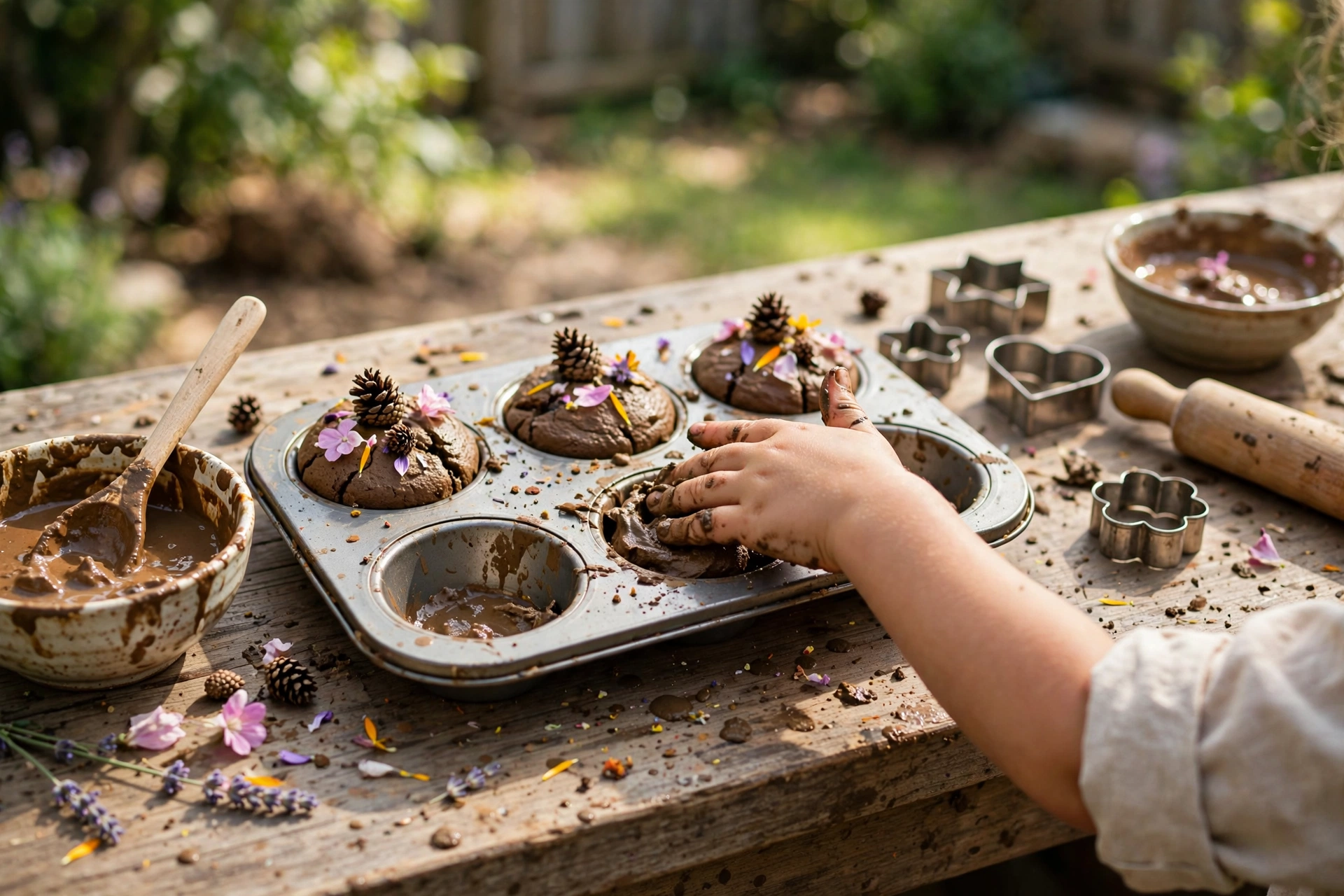
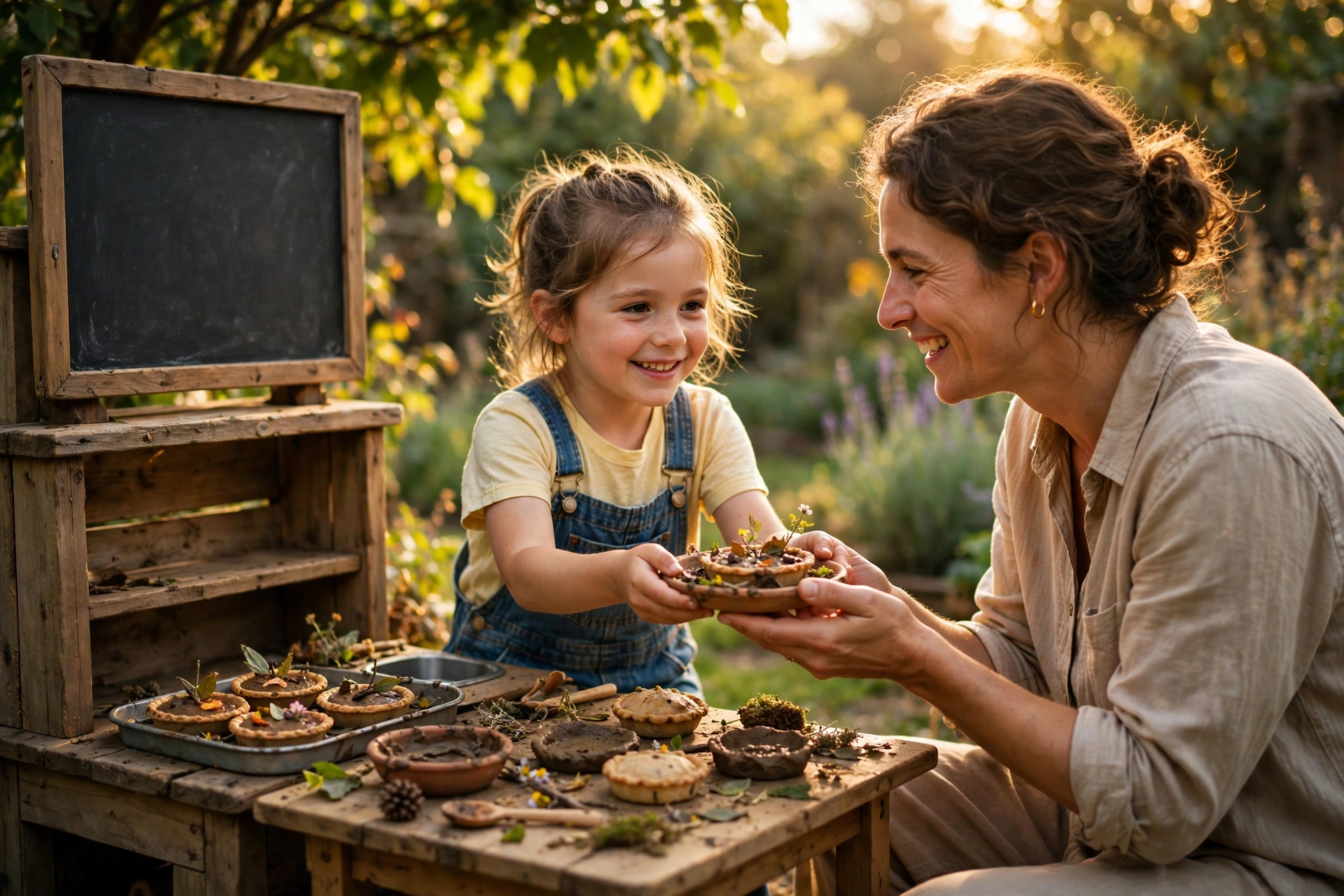
Set up a dedicated baking zone with muffin tins, cupcake cases, a rolling pin, and cookie cutters. Kids press mud into the tins, pat it smooth, and turn out rows of perfect mud pies and nature cupcakes. Pinecones, petals, and pebbles become toppings. Add a little wooden “cooling rack” made from an old crate lid, and you’ve got a toddler mud kitchen activity that develops fine motor skills without them even noticing.
4. Chalkboard Recipe Cards
Give play a little structure with wipeable chalkboard recipe cards. Write simple “recipes” like *3 scoops of mud + 2 handfuls of petals + 1 splash of water = flower soup* and prop them on the shelf. Older kids love following the steps like real chefs, and younger ones enjoy copying the grown-up act. Swap the cards seasonally to keep the play fresh — pumpkin pie in autumn, ice-cream sundaes in summer.
5. Nature Pantry Shelves
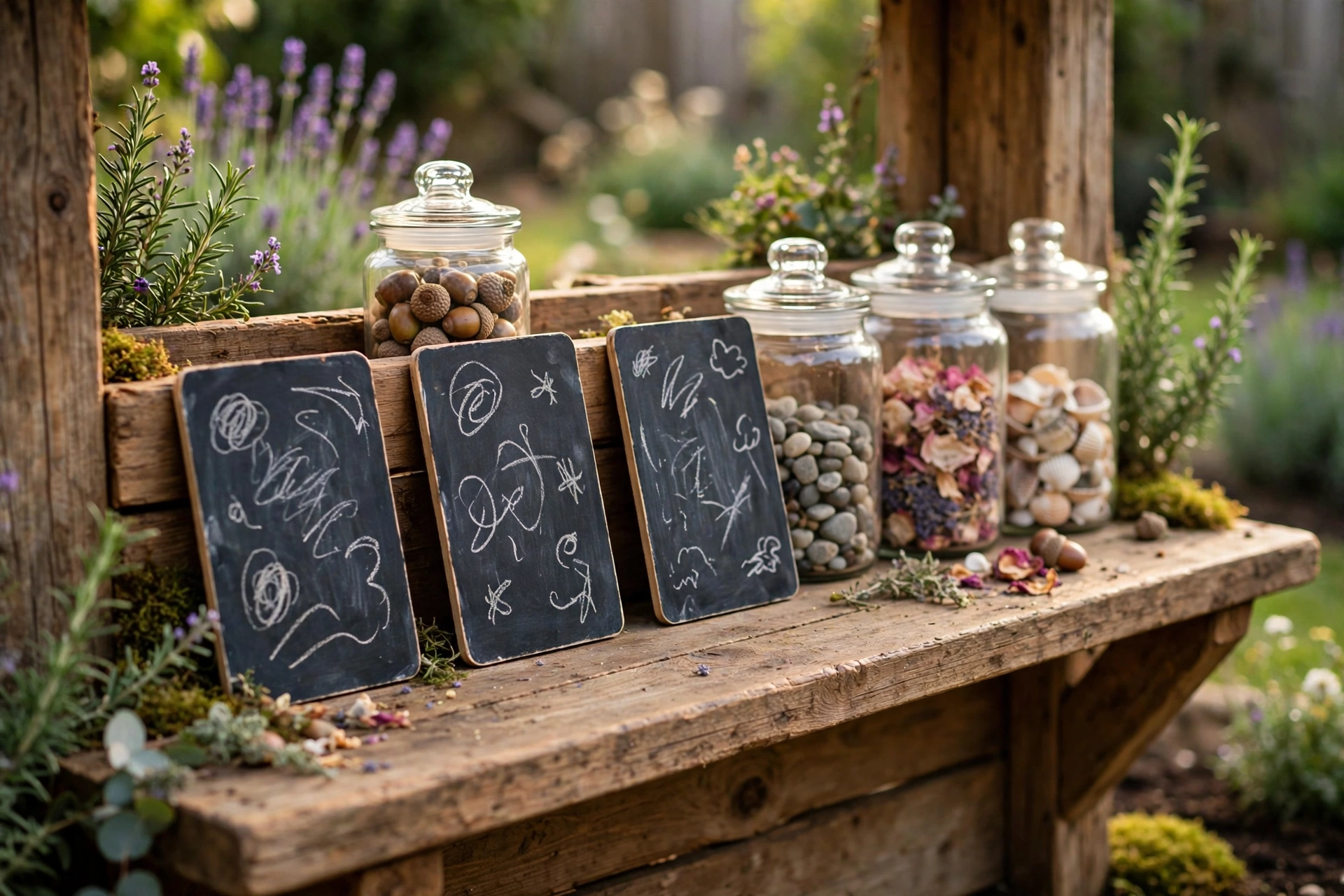
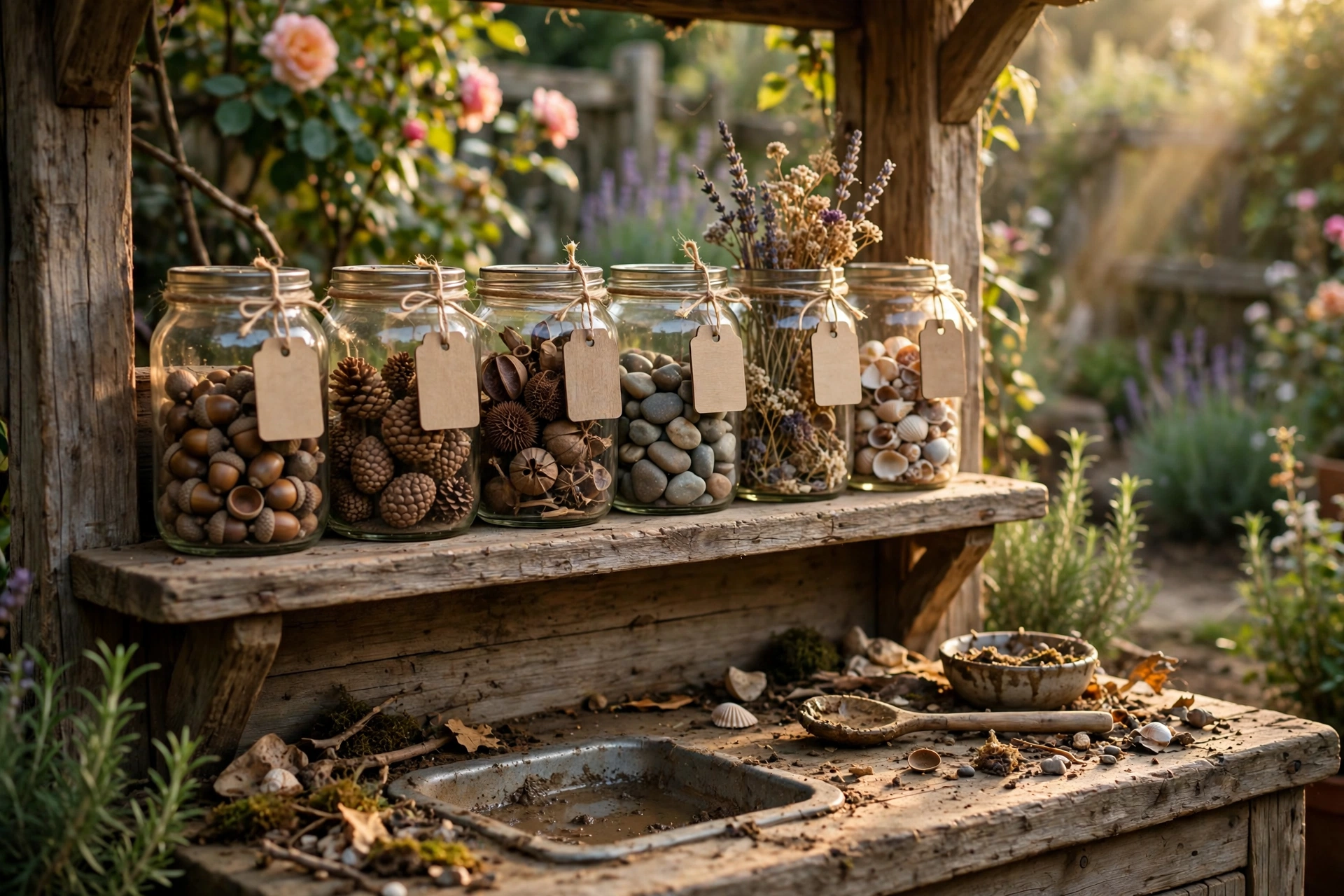
Nothing ends mud kitchen play faster than running out of “ingredients.” Dedicate one shelf as the nature pantry: glass jars or old spice containers filled with acorns, seed pods, pebbles, dried flowers, and shells. Label each jar with a little wooden tag so kids can “shop” for supplies. Refill the pantry on weekend nature walks together — the collecting becomes part of the game.
6. Fairy Garden Potion Kitchen
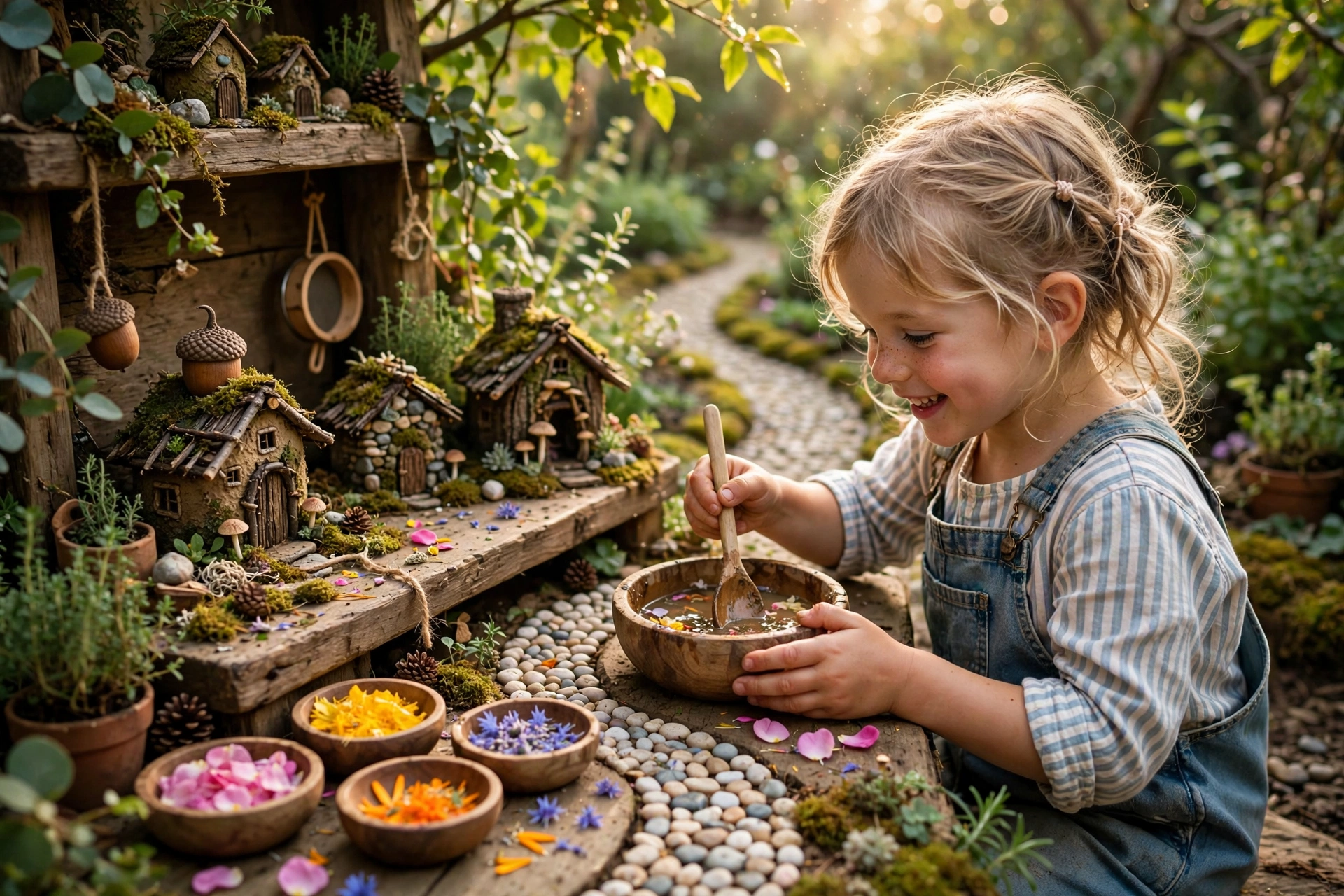
Merge two childhood favorites by adding fairy-garden touches: tiny doors at the base, miniature houses, a pebble pathway, and a pot of marigolds. Kids stir “magic potions” and fairy tea with flower petals and sparkly water. This themed station is catnip for imaginative 4–7 year olds. If you’re already planning the layout, our 13 yard ideas to boost your home’s curb appeal can help the whole play corner blend into the garden beautifully.
7. Herb Planting and Potting Corner
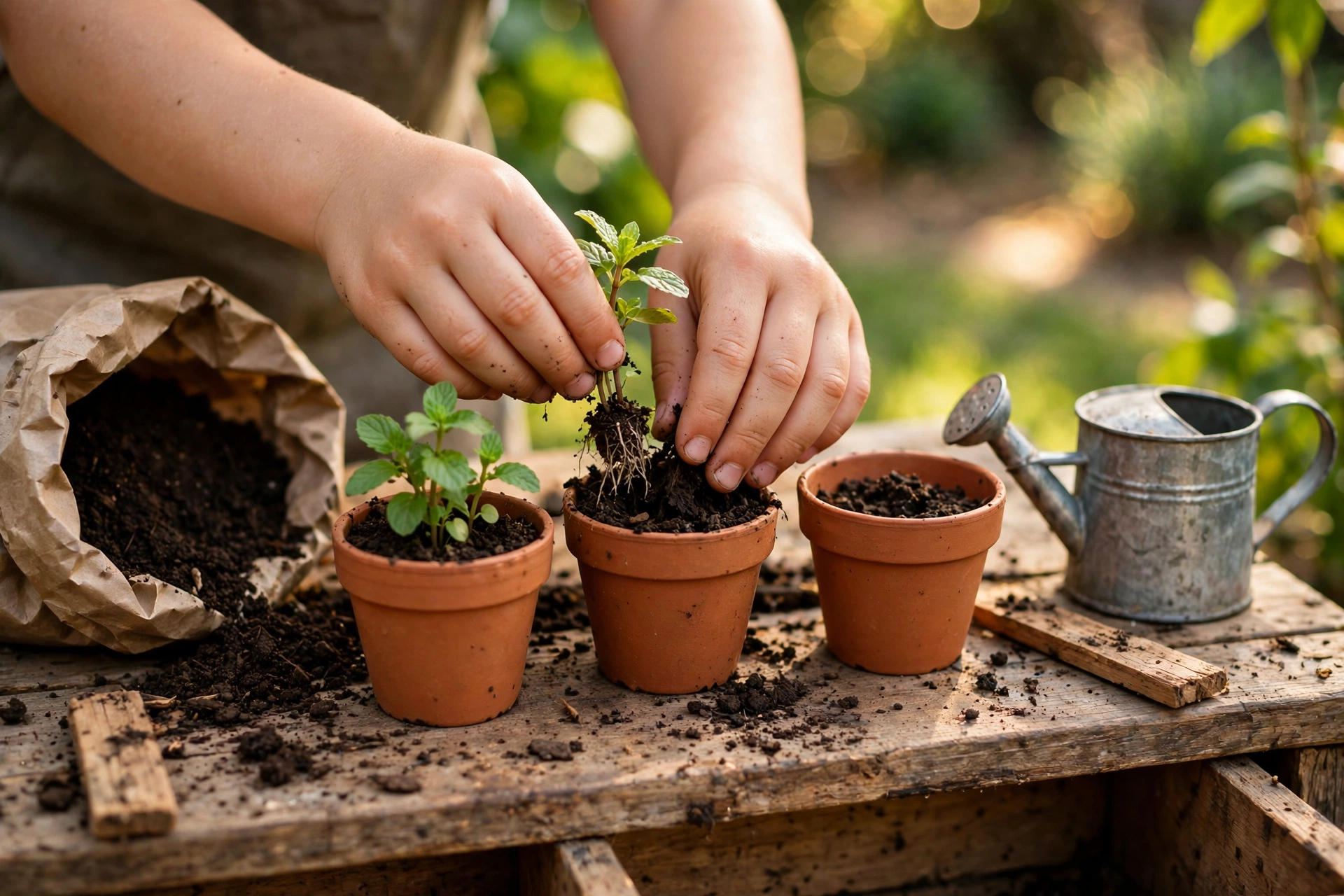
Turn the mud kitchen into a real growing station. A bag of compost, small terracotta pots, and packets of fast-sprouting seeds like cress, mint, or sunflowers give kids a job that matters. They fill pots, pat down soil, water carefully, and check back daily. Mint is the star ingredient here — it grows fast, smells wonderful, and ends up as the “garnish” on every mud dish they make.
8. Mud Paint Art Station
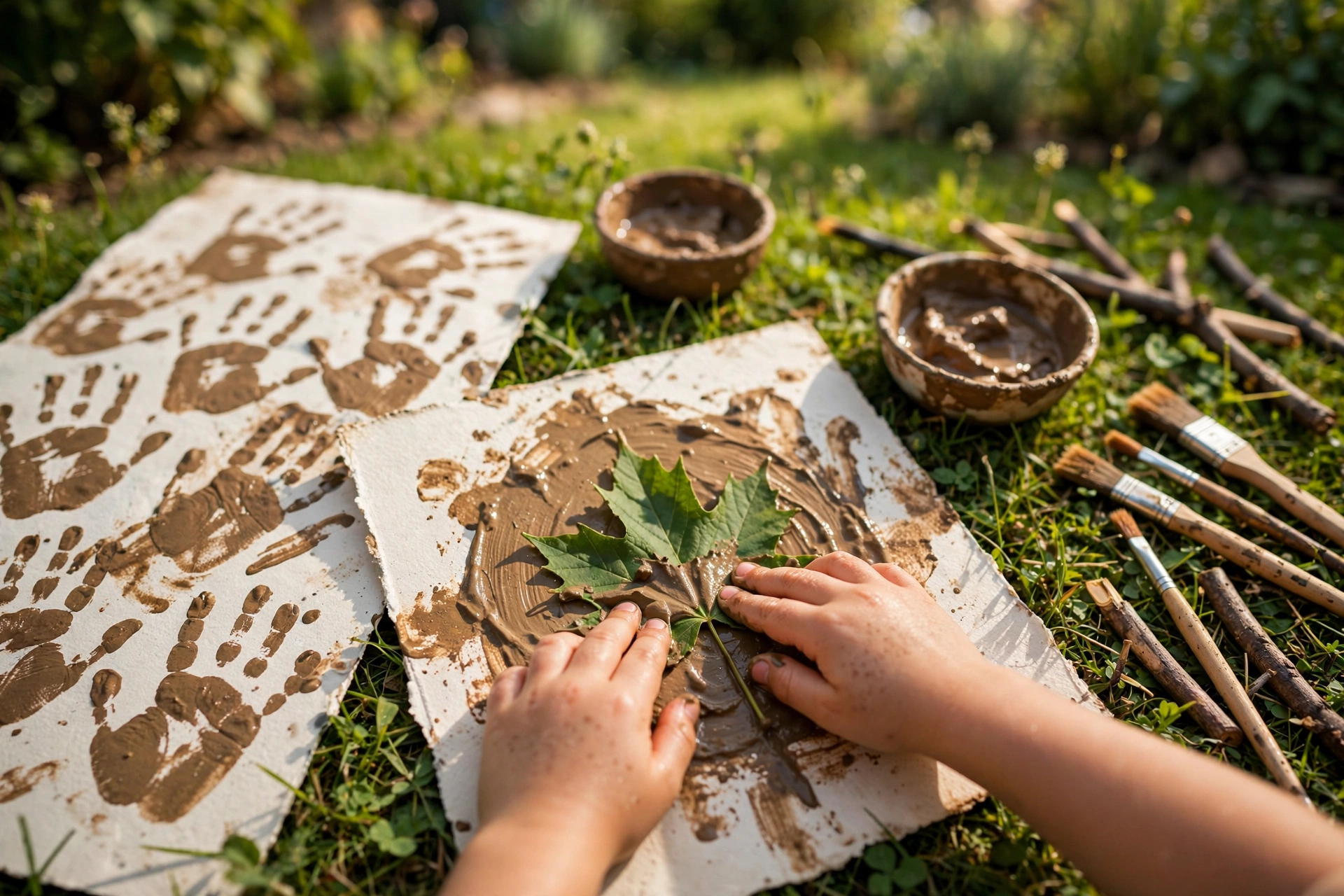
Lay out thick paper or cardboard, mix mud to different thicknesses, and let kids paint with sticks, leaves, and old brushes. Thin mud makes watercolor-style washes; thick mud works like finger paint. Pressing leaves into the wet mud creates gorgeous prints. It’s gloriously messy, so set this one up on grass well away from the patio — and keep a bucket of clean water nearby for hand washing.
9. Ice Block Summer Café
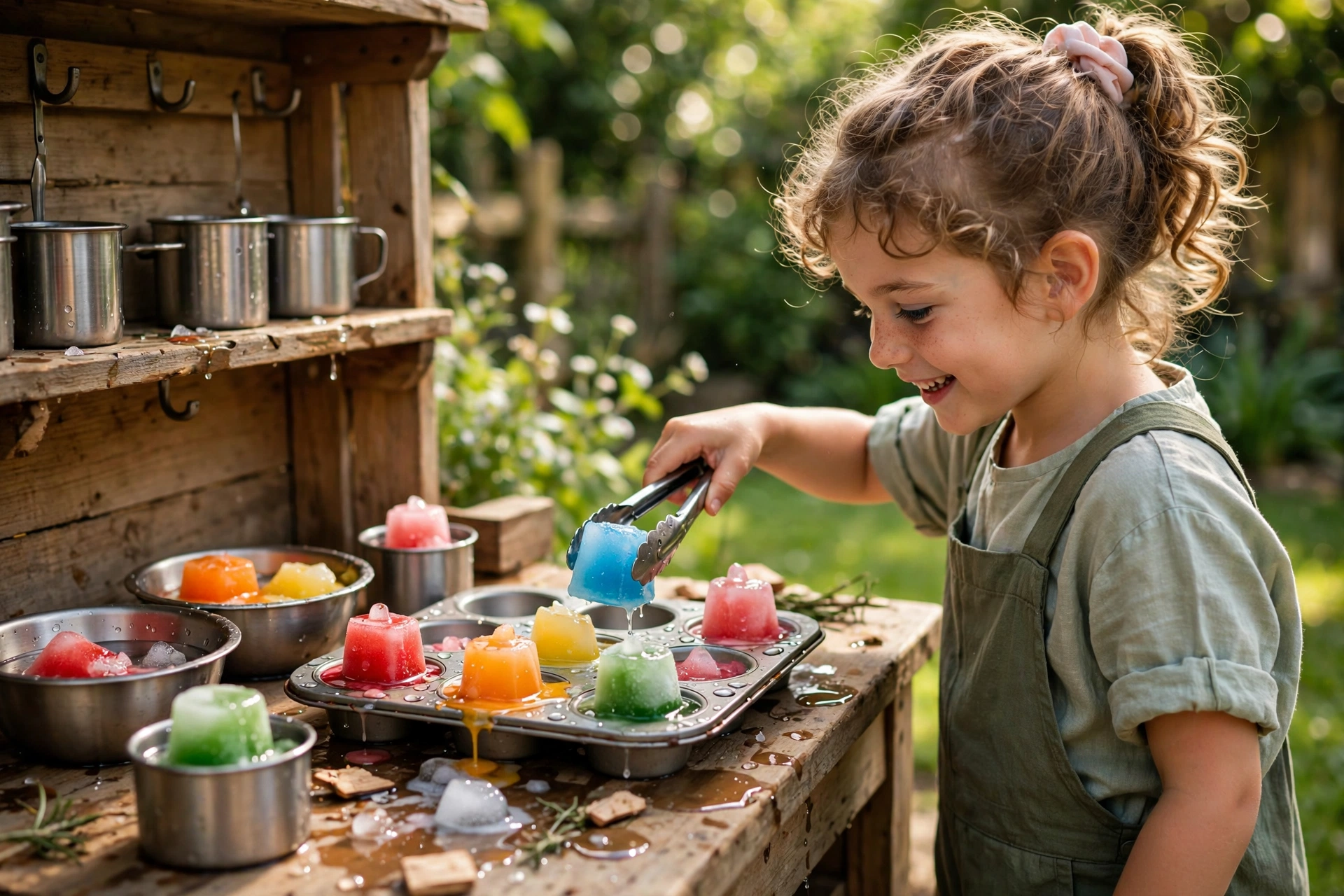
On hot afternoons, freeze water in old margarine tubs, muffin tins, and ice-cream containers overnight. Kids serve “ice blocks” from the kitchen, use them to cool their mud mixtures, and watch them melt and refreeze. Add a few drops of food coloring before freezing for rainbow ice that turns ordinary play into a science experiment. It’s the single best way to keep a mud kitchen in use through summer.
10. Sensory Texture Bar
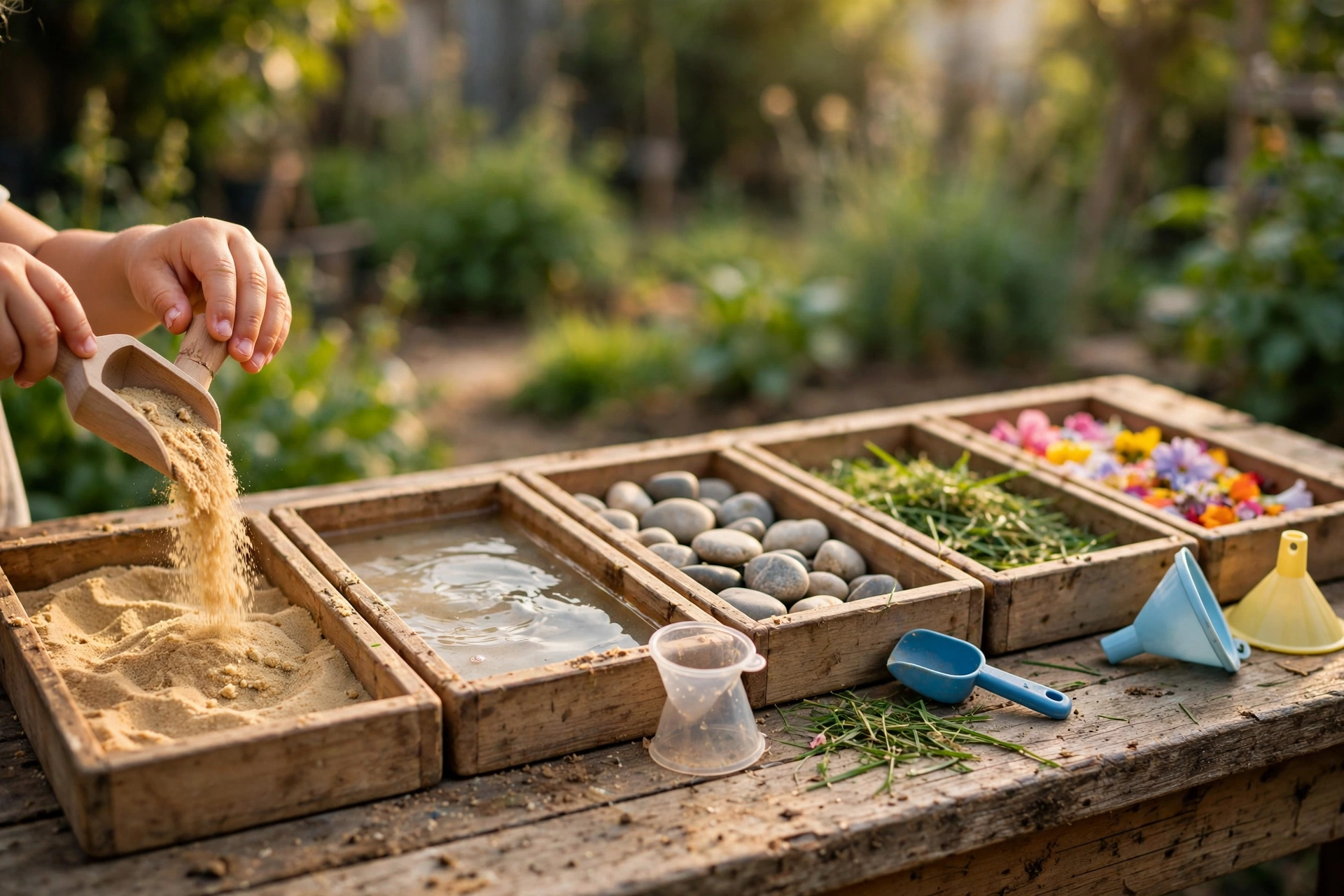
Line up shallow trays of different materials: sand, water, pebbles, grass clippings, flower petals, and of course mud. Kids mix, sort, pour, and compare — this is open-ended sensory play at its best. Scoops, funnels, and sieves multiply the possibilities. Rotate two or three trays each week so the bar always feels new. Occupational therapists love this kind of play, and the BBC Gardeners’ World guide to mud kitchens notes how messy outdoor play supports children’s wellbeing and connection with nature.
11. Mini Café With a Chalkboard Menu
Lean into role play: attach a chalkboard, write up a daily menu, and let kids take orders from the family. “Today’s special: worm spaghetti with leaf salad!” Add a little bell for service, play money cut from card, and a tray for carrying dishes to “customers” on the patio. Siblings naturally fall into chef-and-waiter roles, which makes this one of the best mud kitchen play ideas for social skills and cooperative play.
12. Toddler-Safe Ground-Level Setup
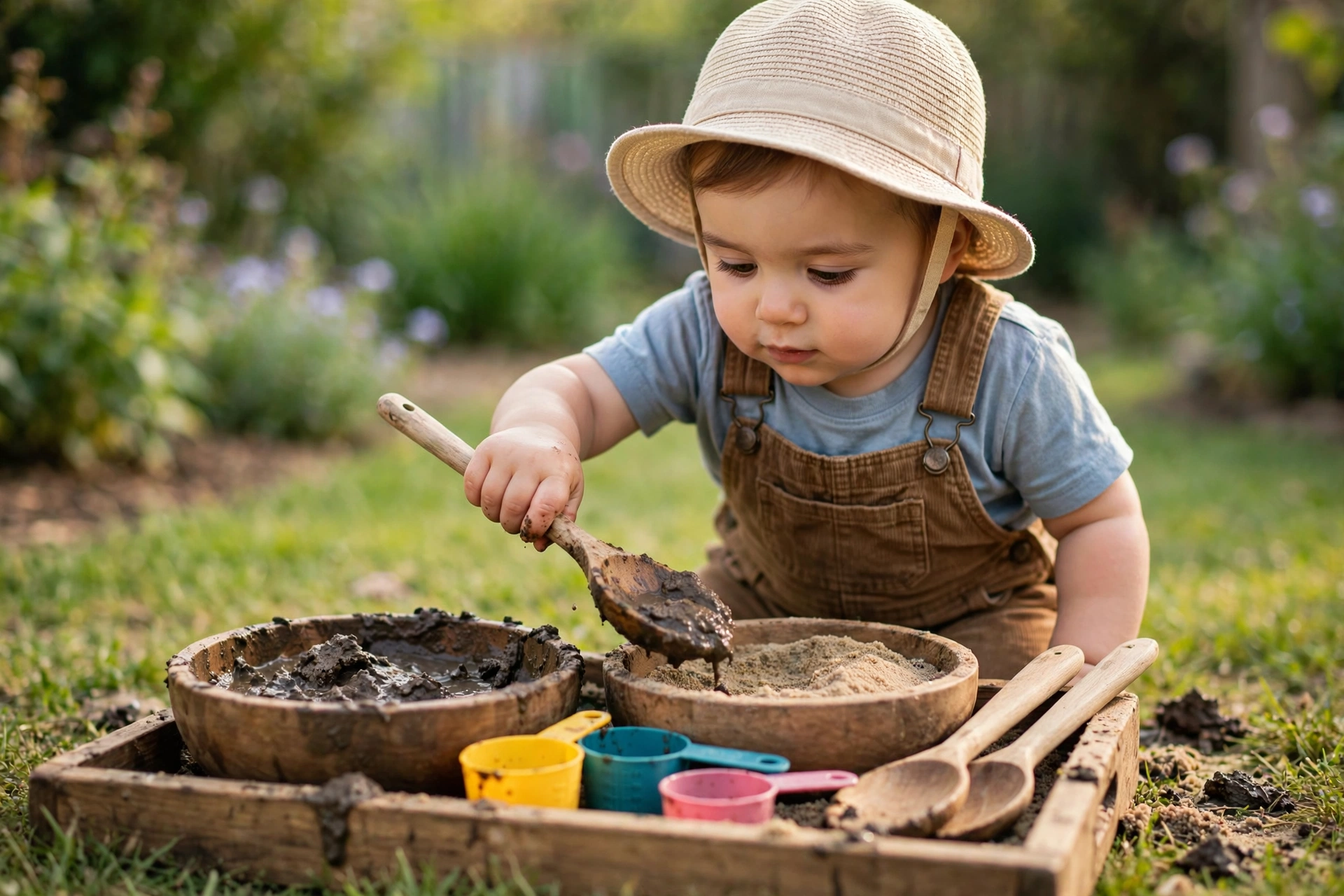
For the under-threes, skip the tall counters and build at ground level: a sturdy low tray or old sandpit shell, a few big bowls, and oversized tools like large wooden spoons and measuring cups. Avoid small parts entirely — no beads, no tiny pebbles, no choking hazards. Use clean, pesticide-free soil and always supervise. Toddlers mostly want to scoop, pour, and squish, and this setup gives them exactly that, safely.
13. Storage and Cleanup Station
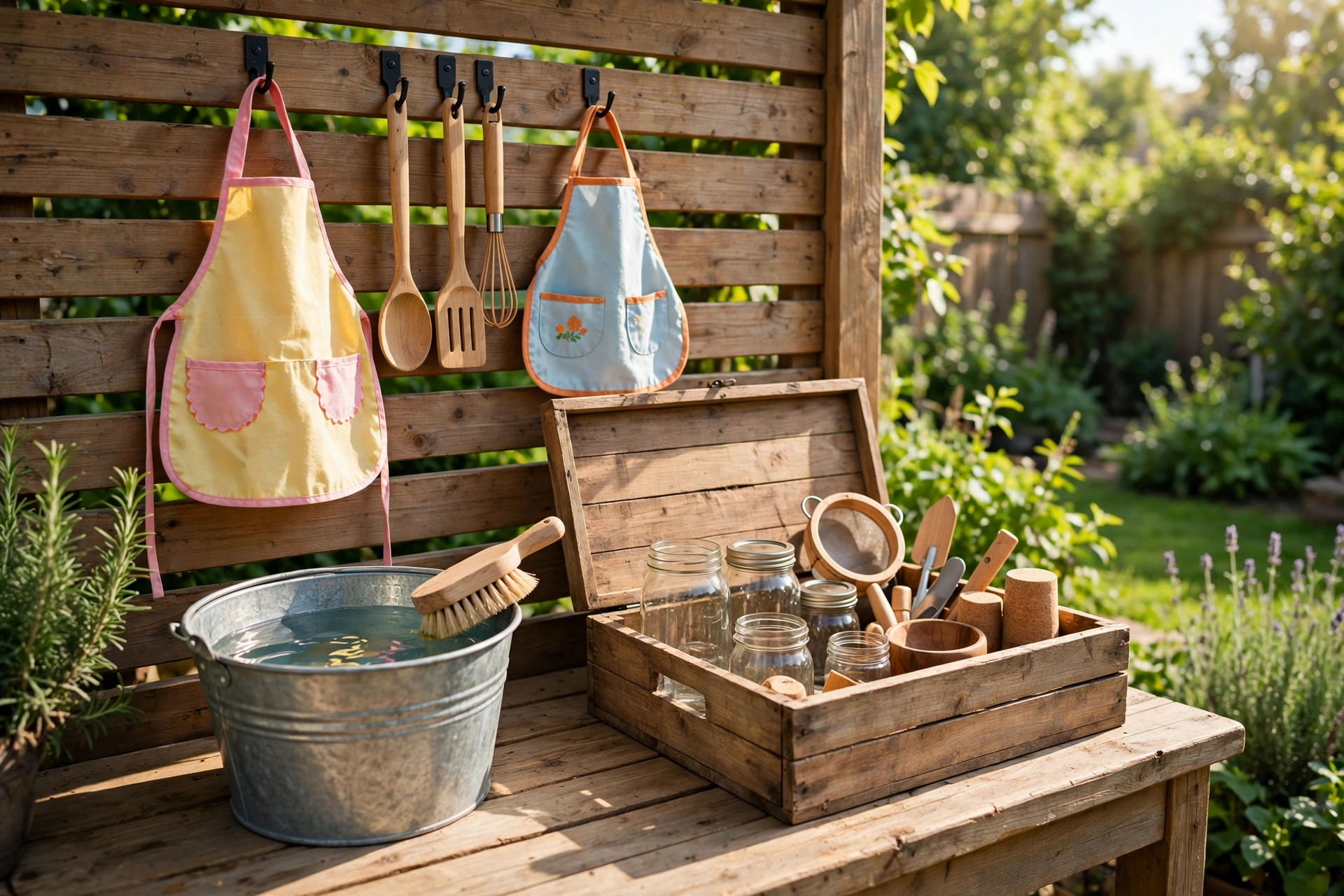
The secret to a mud kitchen that survives the season is a good cleanup zone. Mount hooks for aprons and utensils, park a bucket of water with a brush for washing tools, and add a crate or lidded box for the accessories. Teach the end-of-play tidy-up as part of the game — most kids happily “close the restaurant” by wiping down counters and shelving the jars. A ten-minute reset means tomorrow’s play starts fresh instead of soggy.
FAQs
What age are mud kitchens best for? Mud kitchens are primarily geared toward children aged 2 to 8, though older kids often join in (even when they pretend to be too cool for it). For toddlers under three, use a ground-level setup with oversized tools and no small parts, and always supervise.
What do you put in a mud kitchen for kids? Start with the basics: mud or soil, water, old pots, pans, bowls, wooden spoons, and measuring cups. Then add nature ingredients — leaves, petals, pinecones, pebbles, sticks — and play extras like muffin tins, chalkboard recipe cards, and jars for the pantry shelf.
How do I keep the mud kitchen from getting disgusting? A little maintenance goes a long way: empty stagnant water daily, refresh the mud after heavy rain, hose down counters weekly, and keep accessories in a lidded box. A dedicated cleanup station (idea 13) makes the routine quick and kid-friendly.
Where should I put a mud kitchen in the yard? Choose a spot with access to soil and ideally near a water source, in a safe area you can see from the house. Partial shade is ideal for summer afternoons — a spot under a tree works perfectly. For full build inspiration, see our 13 mud kitchen ideas for fun outdoor play.
Is playing with mud safe for children? Yes — as long as the mud comes from clean, pesticide-free soil and kids wash their hands afterwards. In fact, outdoor messy play supports sensory development, creativity, and even mood, so a little dirt is genuinely good for them.
Conclusion
A mud kitchen doesn’t need to be elaborate to keep kids outside for hours — it just needs variety, a water source, and room for imagination. Start with one simple build, add a couple of play stations from this list, and let your little chefs take it from there. The mess washes off; the memories don’t.
