
A stained concrete slab drags the whole garage down — and you can fix it yourself in one weekend. These DIY garage floor ideas are all doable with basic tools, no contractor needed, from a Saturday-morning paint refresh to snap-together tiles you lay before lunch. Pick one, clear the floor Friday night, and drive back in on Monday.
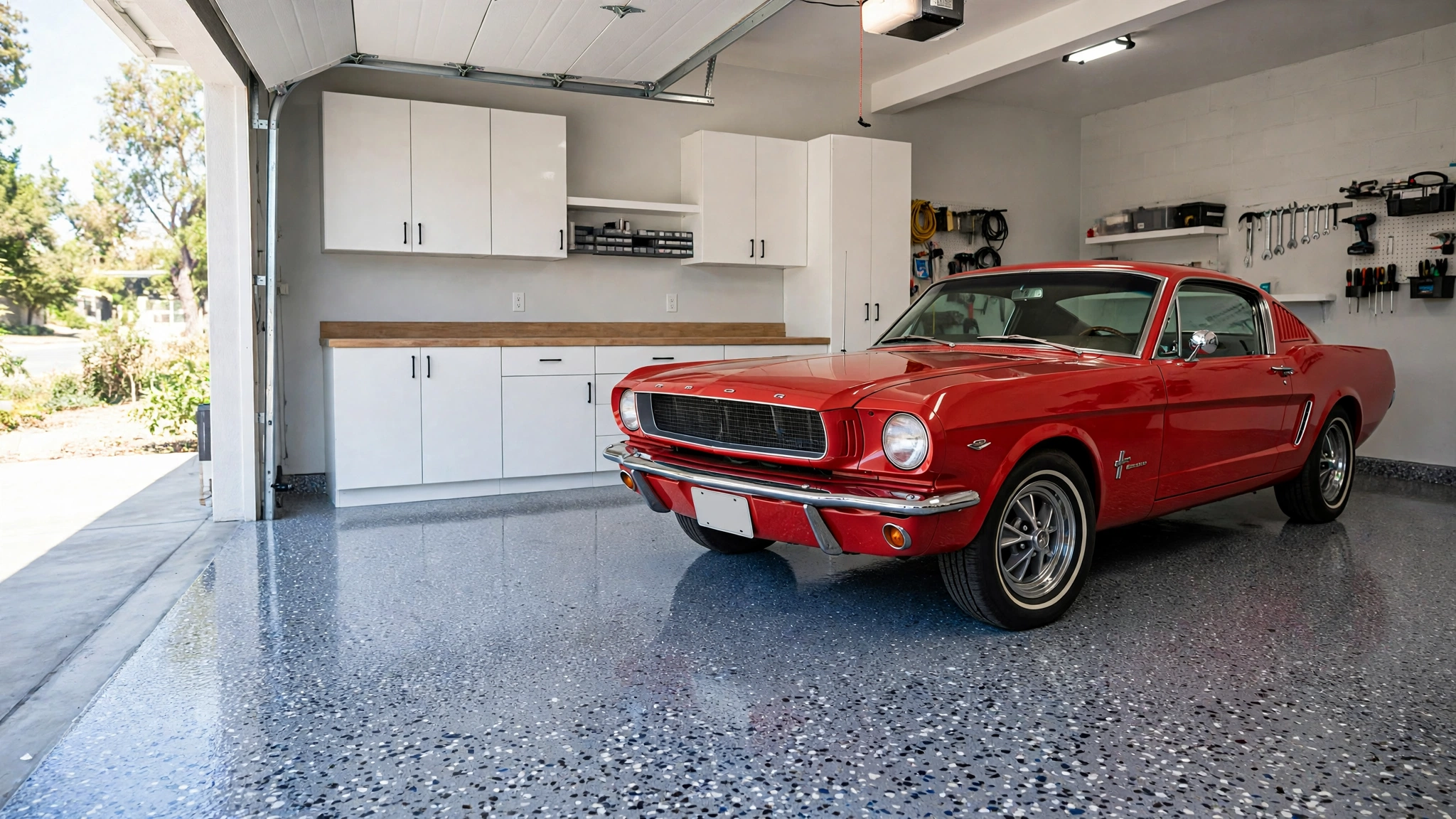
Why DIY Your Garage Floor This Weekend
A garage floor is the highest-impact weekend project in the house: one surface, one weekend, a totally different room. DIY kits and snap-together tiles keep costs low, and most jobs need only a broom, a roller and patience. For the full room, pair the floor with our garage design ideas for storage, lighting and work zones.
How to Pick the Right DIY Garage Floor
Start with your slab: sound concrete takes paint or epoxy, while cracked or damp slabs need a covering that hides damage. Then match the floor to the job — parking, gym, workshop or showroom. Budget a full day for prep; the coating itself is the quick part.
Weekend Coatings You Roll On
1. DIY Epoxy Flake Floor
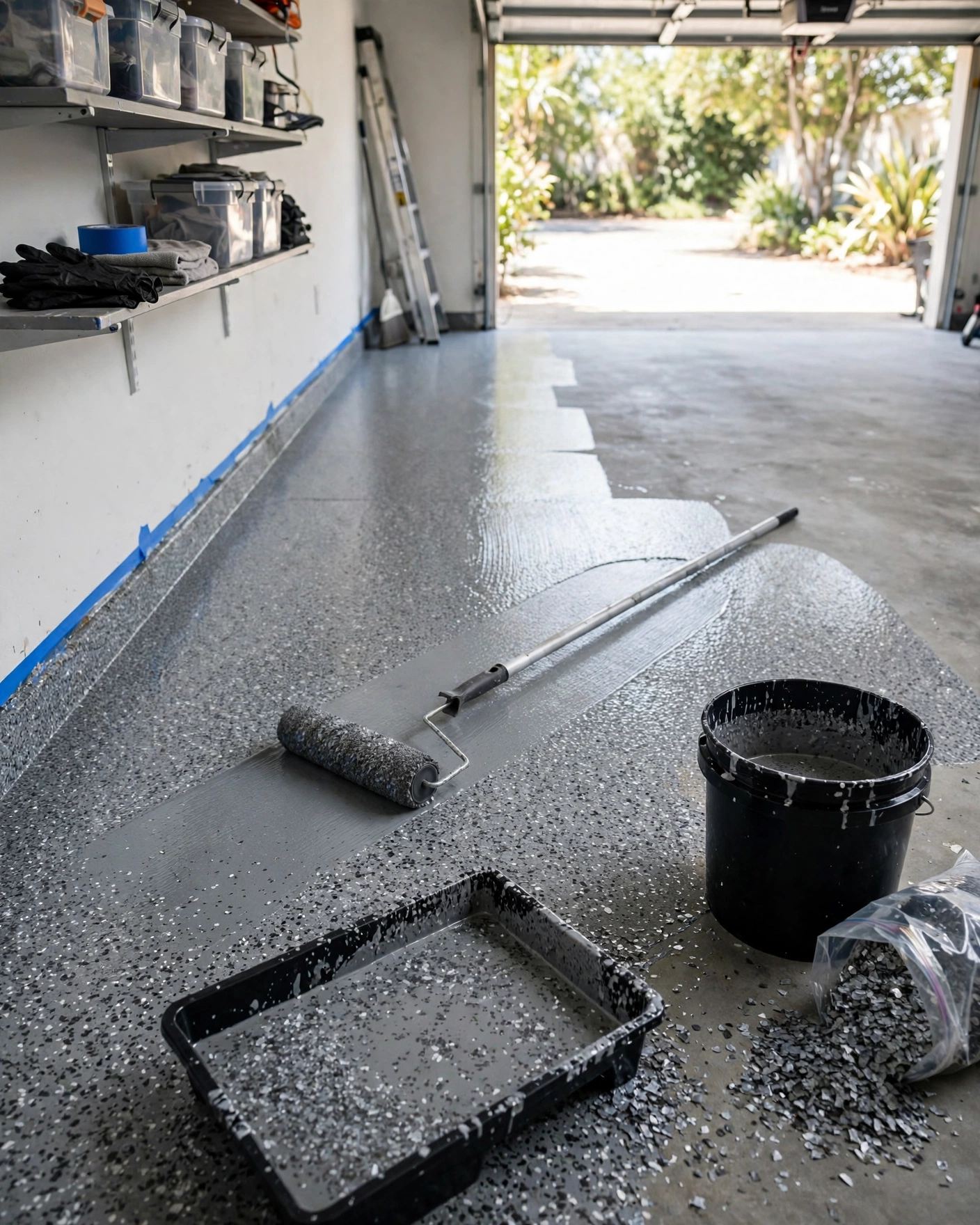
A two-part epoxy kit plus flakes gives a pro showroom look. Best for: sound slabs. Tip: broadcast flakes while wet. Pro tip: keep the car out 72 hours.
2. Garage Floor Paint Refresh
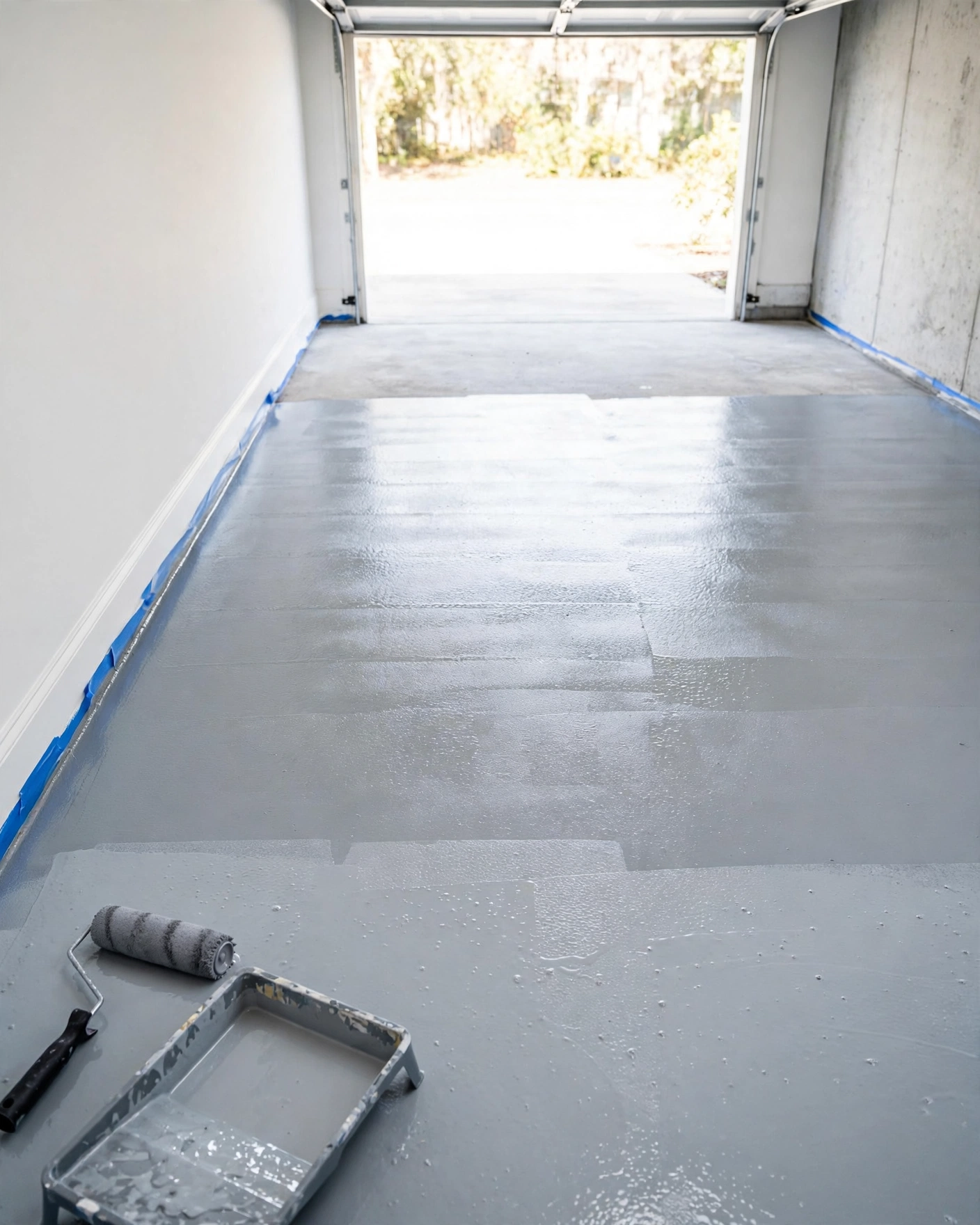
One coat of tough garage paint hides stains and dust-proofs the slab. Best for: tight budgets. Tip: two thin coats. Pro tip: repaint tyre tracks every three years.
3. Concrete Stain Marble Effect

Acid stain soaks in and blooms into a marbled stone look. Best for: showpiece garages. Tip: test a corner first. Pro tip: seal it — stain alone wears fast.
4. Concrete Sealer Dust-Proof Coat
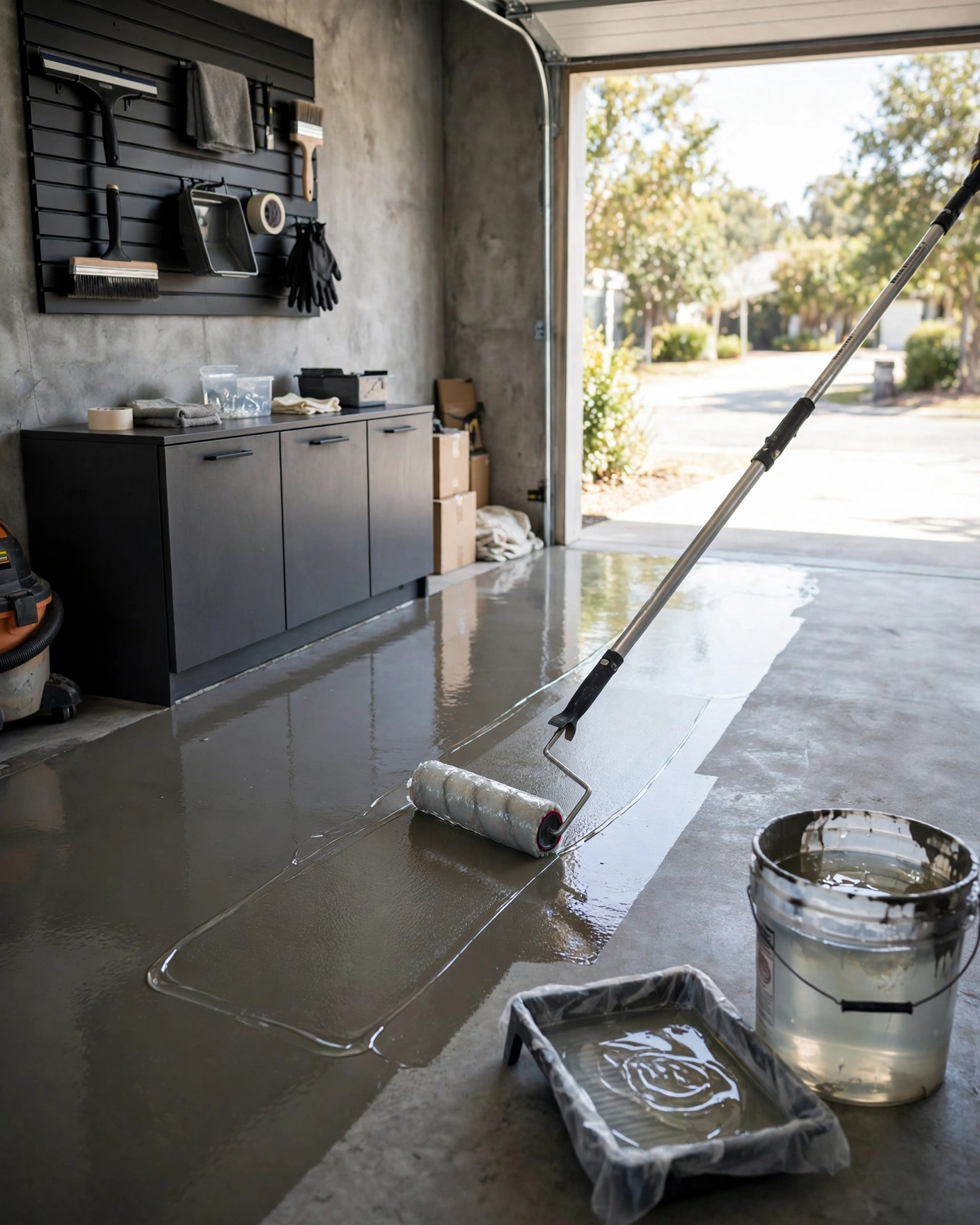
A clear densifier hardens the surface and stops concrete dust. Best for: the fastest upgrade. Tip: clean, dry concrete only. Pro tip: one coat lasts two to three years.
5. Anti-Slip Aggregate Topcoat

Fine grit in the topcoat grips wet boots and tyres. Best for: rainy climates. Tip: stir often — grit sinks. Pro tip: heavier grit by the door.
6. Two-Tone Zone Paint Split

Paint parking bays one colour and the workshop another. Best for: multi-use garages. Tip: tape crisp lines. Pro tip: darker workshop floors hide oil.
7. Checkerboard Painted Squares
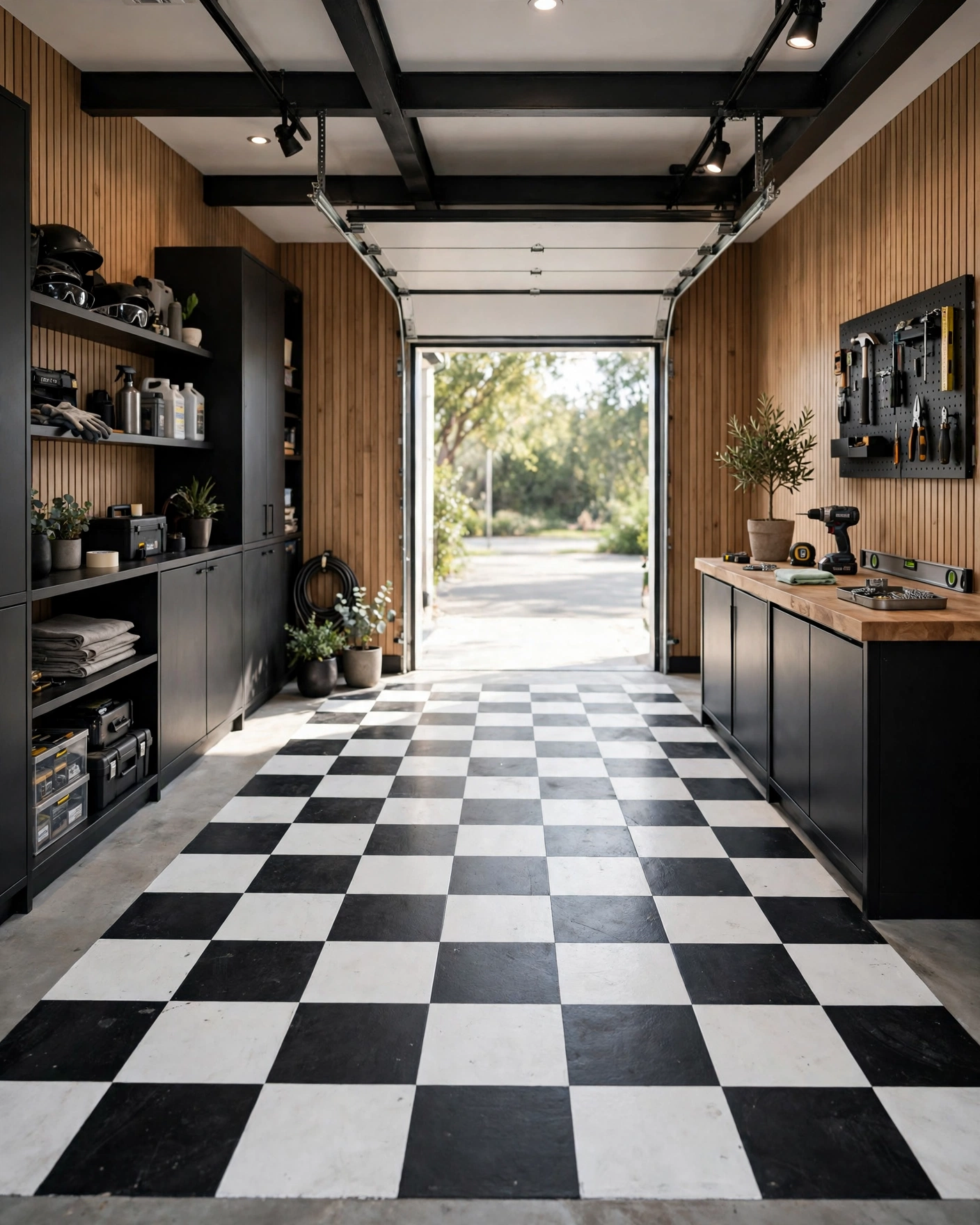
Masked black-and-white squares give the showroom look cheaply. Best for: classic car lovers. Tip: chalk-line grid. Pro tip: seal with clear topcoat.
Snap-Together Coverings, No Glue Needed
8. Interlocking PVC Tiles

PVC tiles snap together like puzzle pieces over cracks. Best for: first-time DIYers. Tip: start from the centre. Pro tip: a rubber mallet seats tiles.
9. Rubber Gym Zone Tiles

Thick rubber tiles cushion drops and deaden sound. Best for: garage gyms. Tip: 8mm minimum for weights. Pro tip: interlocking edges stop creeping.
10. Peel-and-Stick Vinyl Tiles

Peel, stick, done — vinyl tiles lay fast on flat slabs. Best for: small single garages. Tip: warm tiles indoors first. Pro tip: roll each tile firmly.
11. Coin-Top Grip Mats
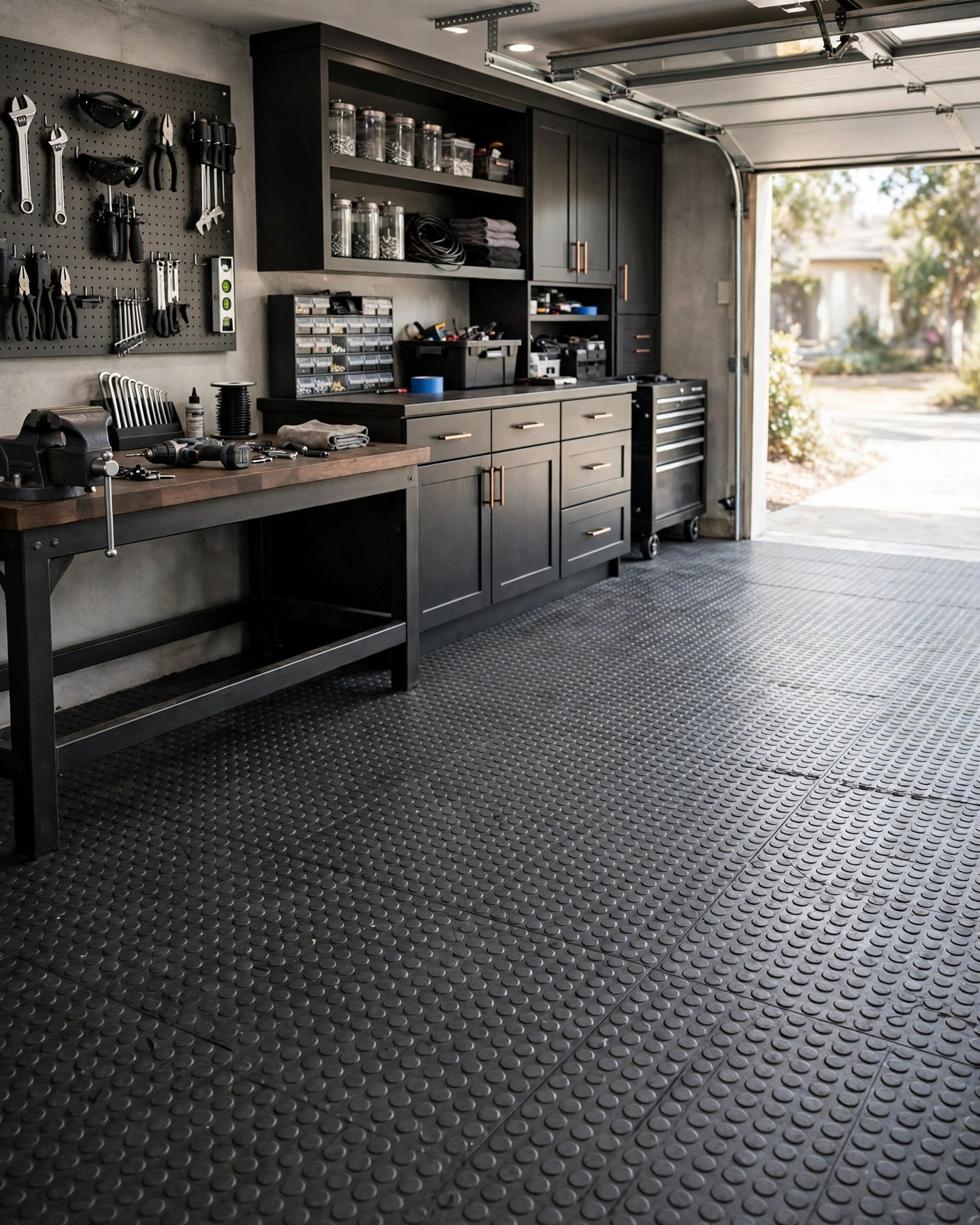
Raised coin discs add traction and a soft step. Best for: workshops. Tip: trim with a utility knife. Pro tip: graphite hides scuffs best.
12. Diamond-Plate Roll-Out Mat

Unroll, trim, drive on — a heavy vinyl mat covers the slab in an hour. Best for: the quickest upgrade. Tip: let it relax overnight. Pro tip: seam tape joins mats.
13. Vented Drainage Tiles

Perforated tiles let water and air flow underneath. Best for: damp garages. Tip: test moisture first. Pro tip: vented tiles suit wash bays too.
14. Foam Workout Corner Tiles
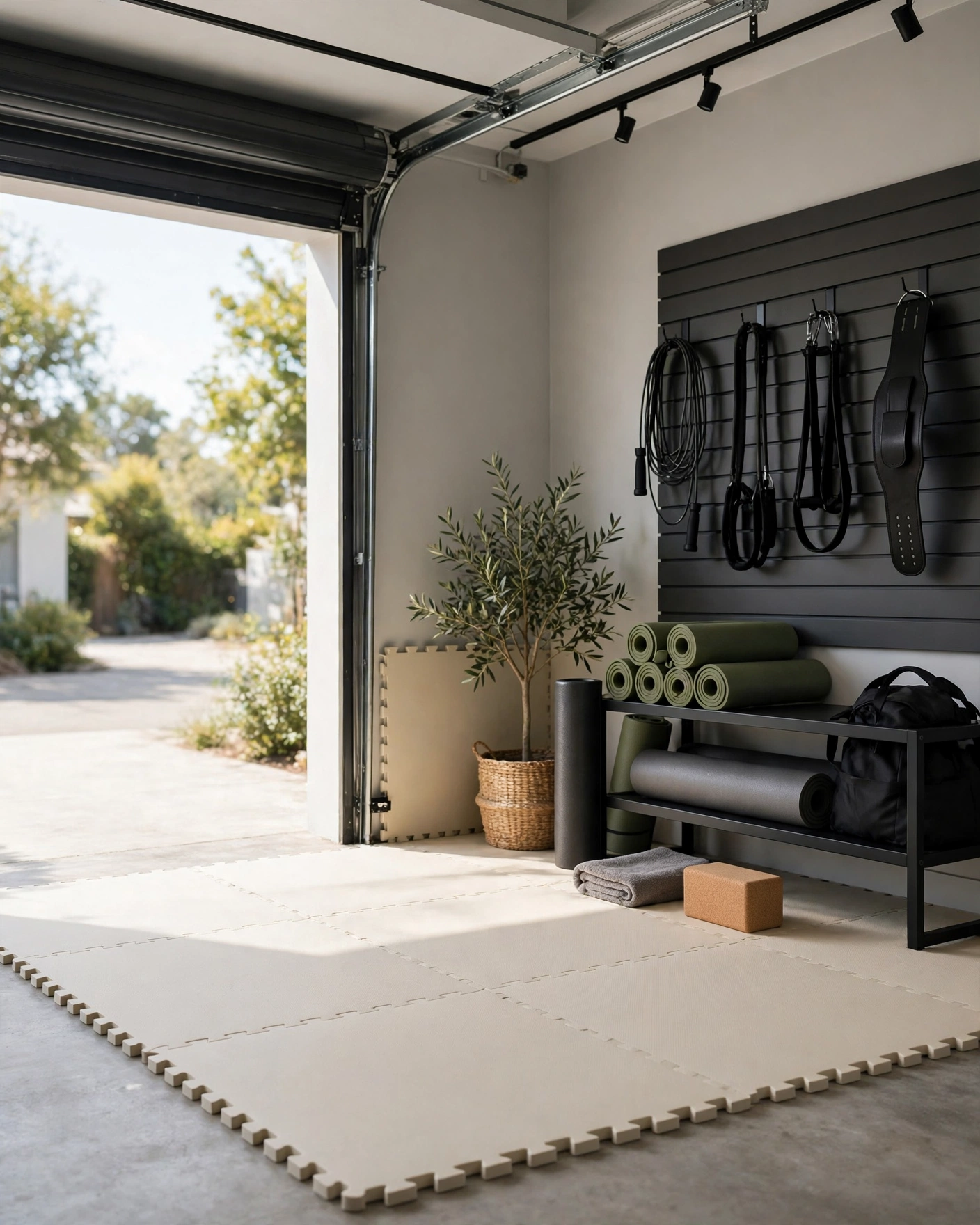
Soft foam tiles turn a cold corner into a stretching spot. Best for: light exercise. Tip: keep out of tyre paths. Pro tip: puzzle edges swap singly.
Prep and Repair First — The Weekend Starts Here
15. Crack Repair Before Coating

Fill cracks with epoxy filler and grind them flush. Best for: every painted floor. Tip: widen hairlines first. Pro tip: overfill slightly — filler shrinks.
16. Degrease and Etch the Slab
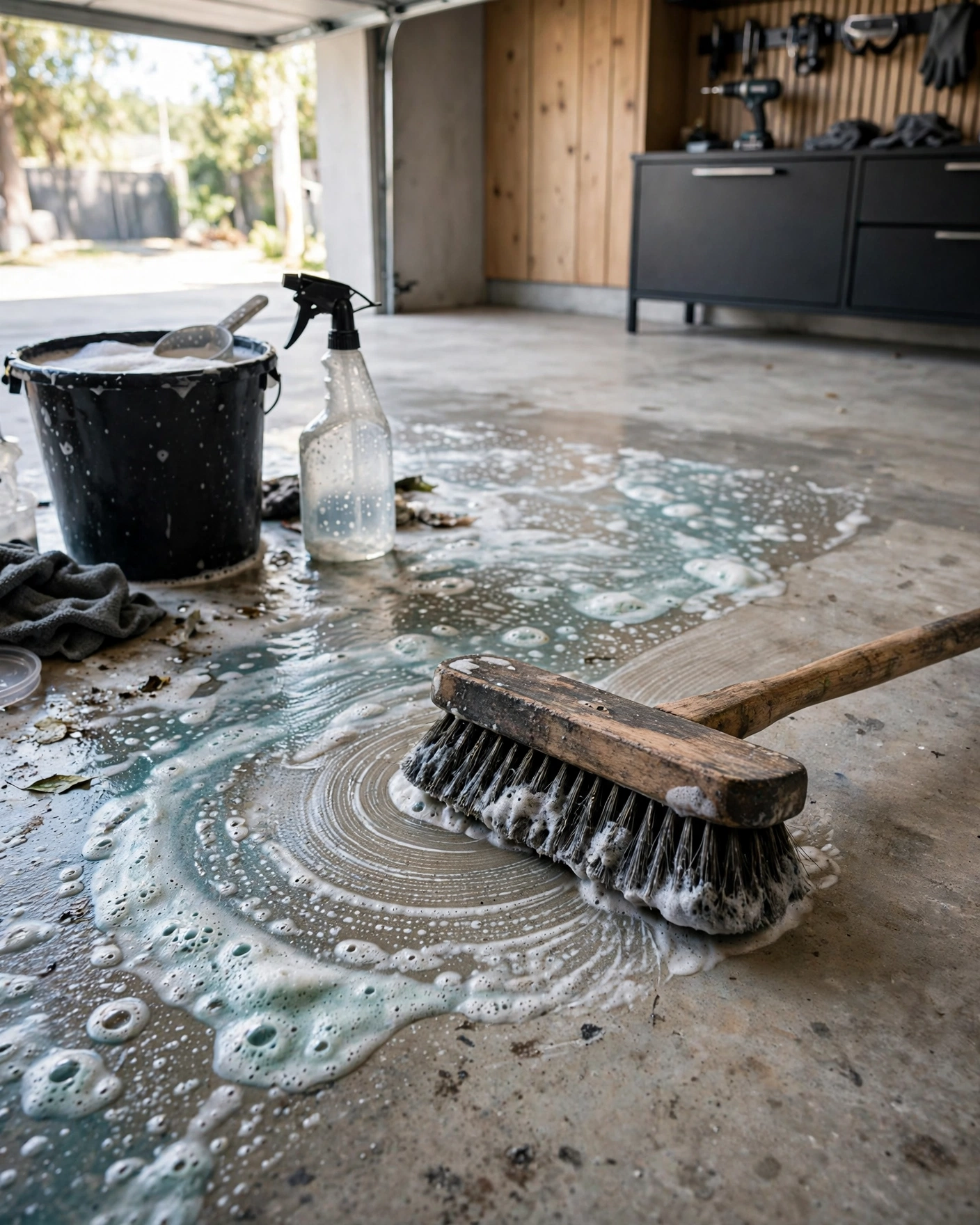
Degreaser plus acid etch opens pores so coatings grip. Best for: epoxy and paint. Tip: rinse twice, dry fully. Pro tip: skip this and paint peels.
17. Moisture Tape Test

Tape clear plastic to the slab for 24 hours. Best for: every coating job. Tip: test two spots. Pro tip: damp slab? Use vented tiles.
18. Self-Levelling Patch
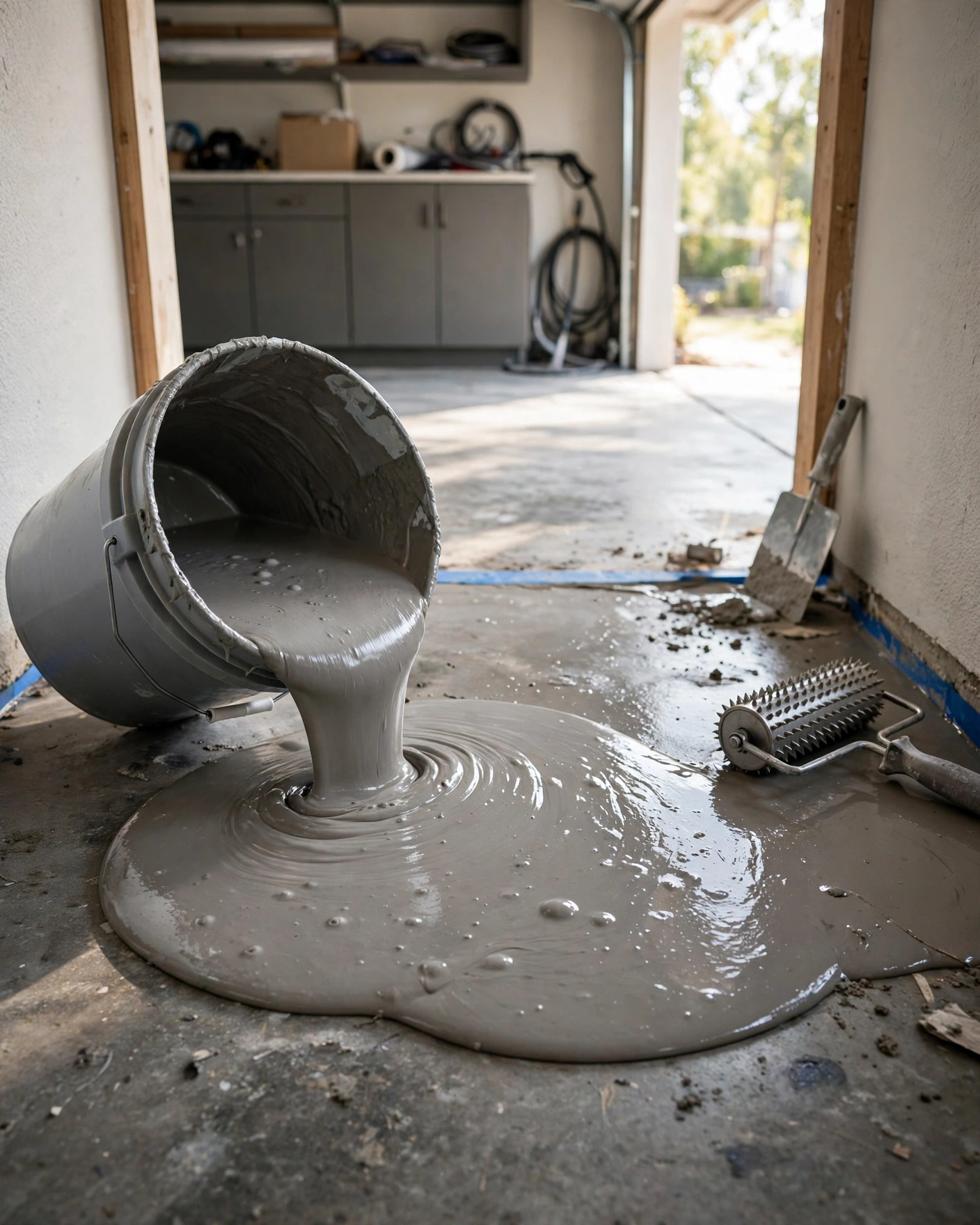
Pour self-levelling compound into dips; gravity does the work. Best for: uneven slabs. Tip: prime first. Pro tip: it sets in 20 minutes.
19. Edging Strips and Borders
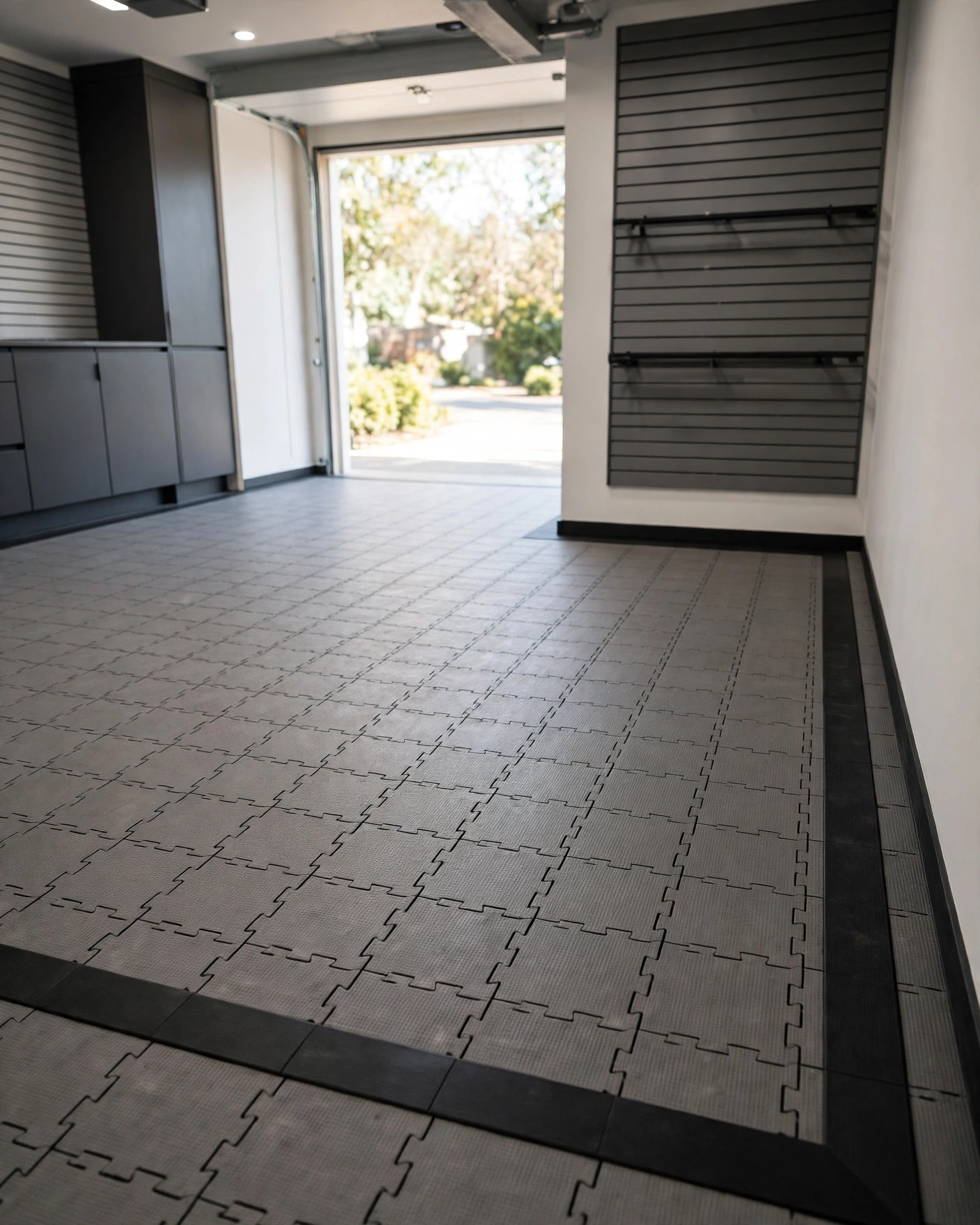
Edging ramps finish tile edges so nothing catches. Best for: every tiled floor. Tip: match tile colour. Pro tip: glue ramps at doorways only.
Style and Use Zones
20. Racing Stripe Down the Centre

One bold stripe turns a plain floor into a motorsport statement. Best for: car enthusiasts. Tip: two stripes frame better. Pro tip: use the floor paint.
21. Parking Bay Markings

Painted bay lines keep cars straight and bikes clear. Best for: two-car garages. Tip: measure from the door. Pro tip: add a stop line.
22. Workshop Zone Floor
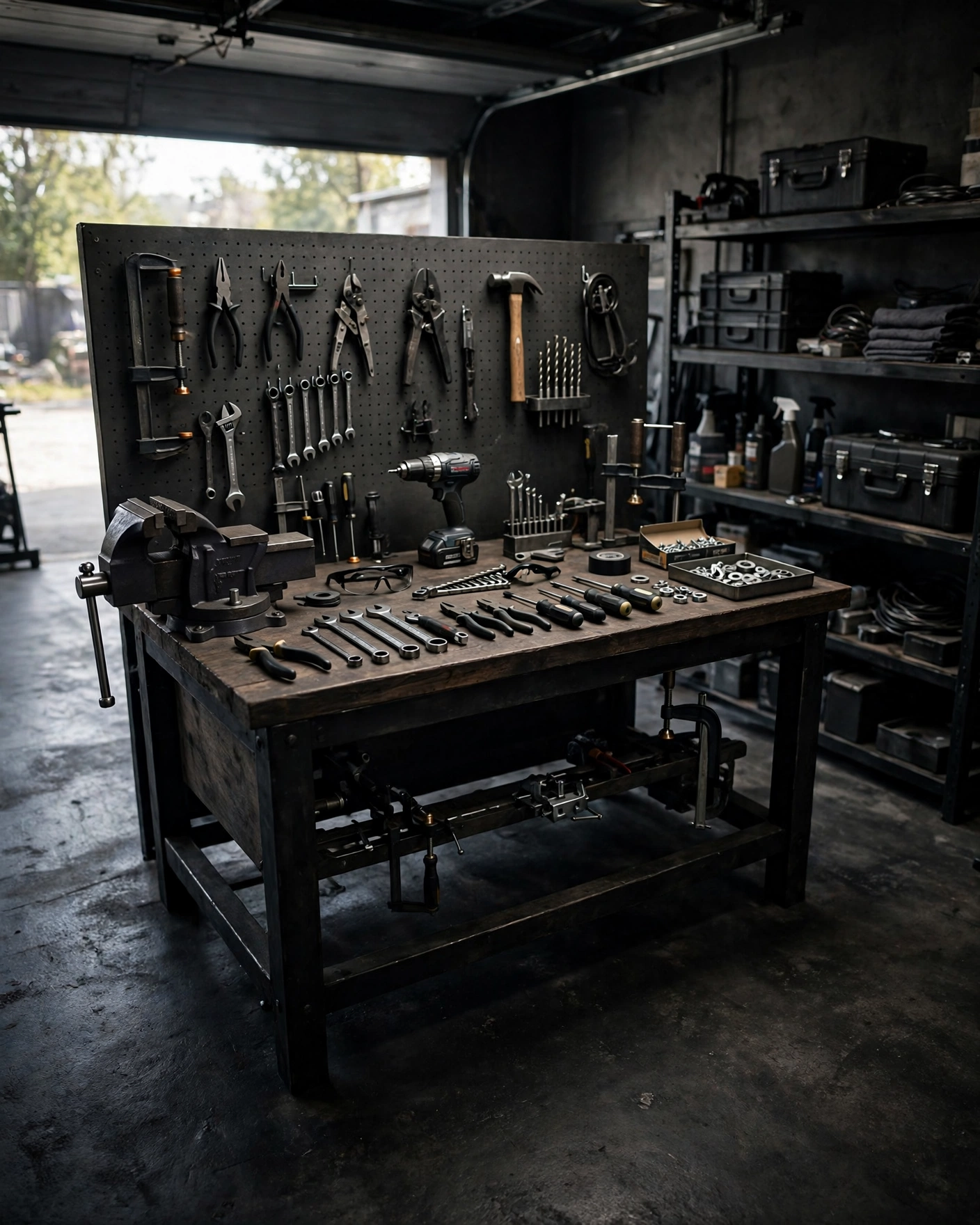
A dark, tough zone under the bench hides oil. Best for: makers. Tip: rubber tiles beat paint here. Pro tip: keep the zone one colour.
23. Showroom Gloss Finish

A clear gloss topcoat over epoxy mirrors the car. Best for: showpiece garages. Tip: two clear coats. Pro tip: gloss shows dust — sweep often.
24. Stencilled Floor Pattern

A large stencil and two paints fake expensive tile. Best for: creative DIYers. Tip: four polyurethane coats. Pro tip: practice on cardboard first.
25. Recycled Rubber Eco Floor

Recycled rubber tiles are tough, quiet and planet-kind. Best for: eco-minded homes. Tip: air them outside first. Pro tip: they insulate cold slabs.
26. Glow Safety Path Edges
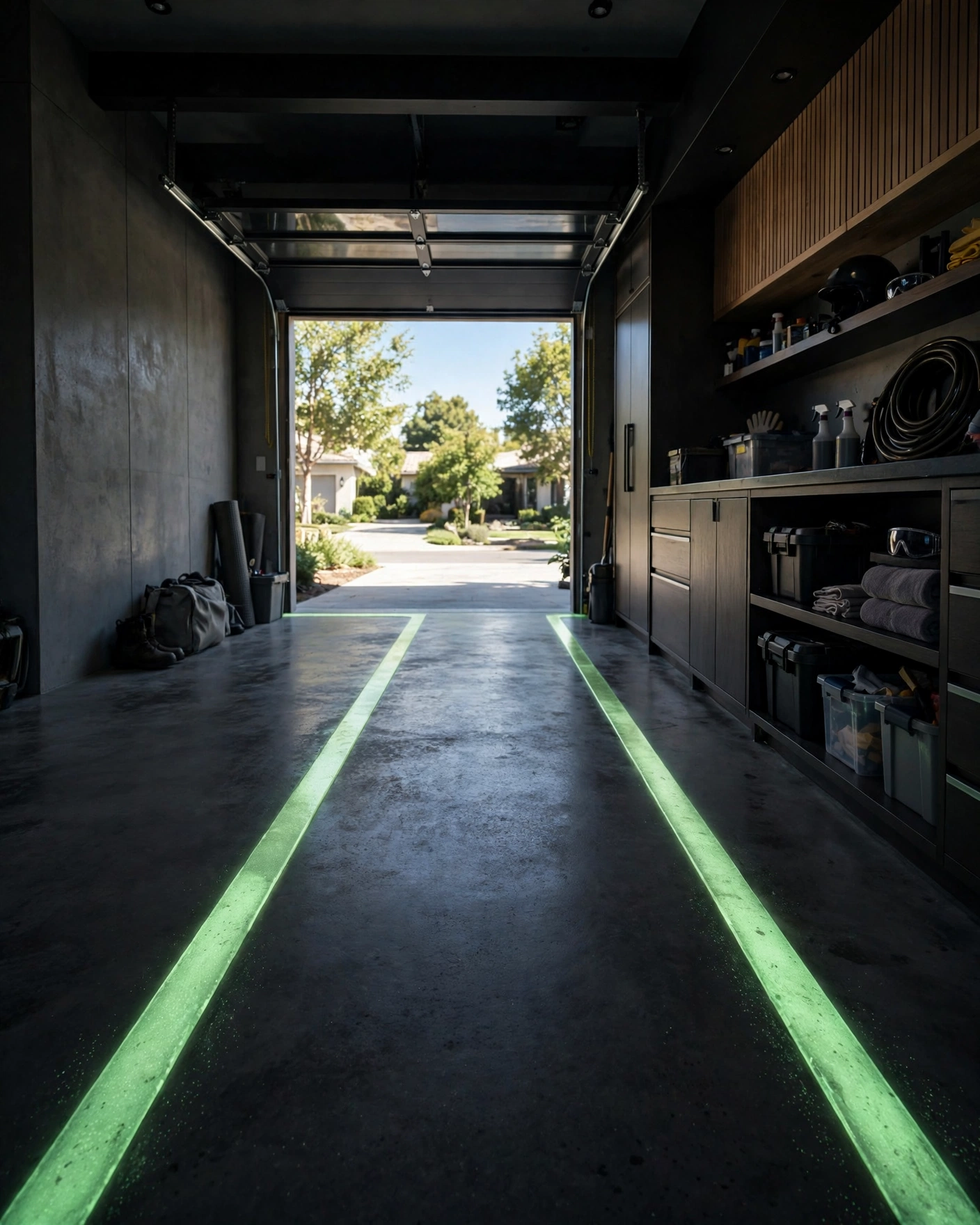
Glow tape along walkway edges guides you at night. Best for: dark garages. Tip: charge it with daylight. Pro tip: edge the steps too.
DIY Garage Floor Care and Upkeep
Sweep weekly, mop with warm water and mild detergent, and wipe oil spills fast so they never stain. Recoat paint every three years and reseal epoxy topcoats when the gloss dulls. For a full comparison of floor types before you buy, see the Bob Vila guide to garage floor options. And if you want pure epoxy looks, our epoxy garage floor ideas show 32 finishes to copy.
Final Thoughts
The best DIY garage floor is the one that matches your slab, your budget and your weekend. Prep properly, pick a finish you can finish in two days, and let the floor do the talking. Clear the garage Friday night — by Monday it will look like a different room.
Frequently Asked Questions
Can I DIY a garage floor in a weekend?
Yes — most fit a weekend. Mats and interlocking tiles take hours, paint takes a day plus drying, and epoxy takes Saturday to coat plus Sunday to cure. Keep the car out 72 hours after epoxy. Prep on Friday night: clear the garage, clean the slab and stage tools before Saturday morning.
What is the cheapest DIY garage floor?
Garage floor paint is cheapest, usually under $1 per square foot, followed by a clear sealer. A stencilled pattern costs about the same and looks far more expensive. Mats and interlocking tiles cost more but need no prep chemicals or drying time. Always budget for degreaser, etch and rollers on top.
Do I need to etch concrete before epoxy?
Yes — etching opens the concrete pores so epoxy can grip, and skipping it is the top reason DIY epoxy peels. Degrease first, then etch with acid or a diamond grinder, rinse twice and dry fully. Test it: sprinkle water — if it beads, etch more. Never coat a damp slab — wait until it is fully dry.
How long does DIY epoxy last?
A DIY epoxy kit typically lasts three to five years on a well-prepped slab; professional systems last ten or more. Hot tyres, road salt and dropped tools wear kits fastest. A clear topcoat and quick clean-ups stretch its life. If yours peels within a year, the prep — not the product — was the problem.
Can I lay tiles over a cracked concrete floor?
Yes for coverings, no for coatings. Interlocking PVC, rubber and foam tiles bridge small cracks and hide stains with no prep beyond sweeping, and a damaged tile swaps out alone. Paint and epoxy follow every crack and peel where moisture rises. Fill wide cracks first, and run the 24-hour moisture test.
What is the easiest garage floor for beginners?
A roll-out vinyl mat is easiest — unroll it, trim the edges and drive on, all inside an hour. Interlocking PVC tiles are next: they snap together without glue and a two-car garage takes about a day. Both forgive imperfect slabs and need no curing time. Start with a mat for instant results.
