
These garden lighting ideas turn a dark garden into a glowing evening retreat. This guide is garden-specific — beds, trees, planting and water features — not driveway or security lighting. For the wider yard, see our outdoor lighting ideas. Here are 35 ways to layer warm light through your planting.

Why Garden Lighting Changes Everything After Dark
A garden without light disappears at sunset, however pretty it looks by day. A few warm glows change that: paths feel safe, trees gain shape, and flower beds glow like a painting. Light also stretches evenings outside — dinner under festoon lights, a quiet drink beside a lantern-lit pond. The best garden lighting feels soft and layered, never harsh, so planting stays the star and bulbs stay almost invisible.
How to Layer Garden Lighting Like a Pro
Layer three kinds of light: ambient for overall glow, task for paths and steps, and accent for trees and features. Stick to warm white, 2700–3000K, so foliage looks natural and the mood stays cosy. Solar suits beds and borders with no wiring; low-voltage kits suit trees and walls. Choose IP44 or higher outdoors, and check an outdoor lighting ideas guide before buying fittings. Hide the source and light the plant, not the eye.
String Lights and Glowing Canopies
1. Festoon Canopy Over the Patio

Swags of warm festoon bulbs across the patio make instant evening magic. Best for: outdoor dining. Pro tip: hang strands 2.4 m high with a slight sag.
2. Bistro String Lights Along the Fence

One run of bistro lights along the fence frames the whole garden. Best for: small gardens. Pro tip: use 2700K bulbs spaced 30 cm apart.
3. Fairy Lights Through Climbing Roses

Tiny fairy lights woven through climbing roses sparkle between blooms. Best for: cottage gardens. Pro tip: choose solar lights with 8 hours of charge.
4. Curtain Lights on the Pergola

Curtain lights falling from a pergola roof make a glowing outdoor room. Best for: pergola seating. Pro tip: leave a 15 cm gap above wet grass.
5. Globe String Lights Over the Dining Table

Milky globe bulbs over the table give soft, flattering dinner light. Best for: garden dinners. Pro tip: hang them 75 cm above the tabletop.
6. Solar Fairy Lights in the Hedges

Solar fairy lights threaded through hedges twinkle with no wiring. Best for: borders and hedges. Pro tip: place the panel in full sun for 6 to 8 hours of light.
7. Edison Bulb Festoon Swags

Exposed Edison bulbs on swagged cables add vintage warmth anywhere. Best for: rustic gardens. Pro tip: pick LED Edison bulbs at 2200K.
8. Festoon Lights Over a Hammock
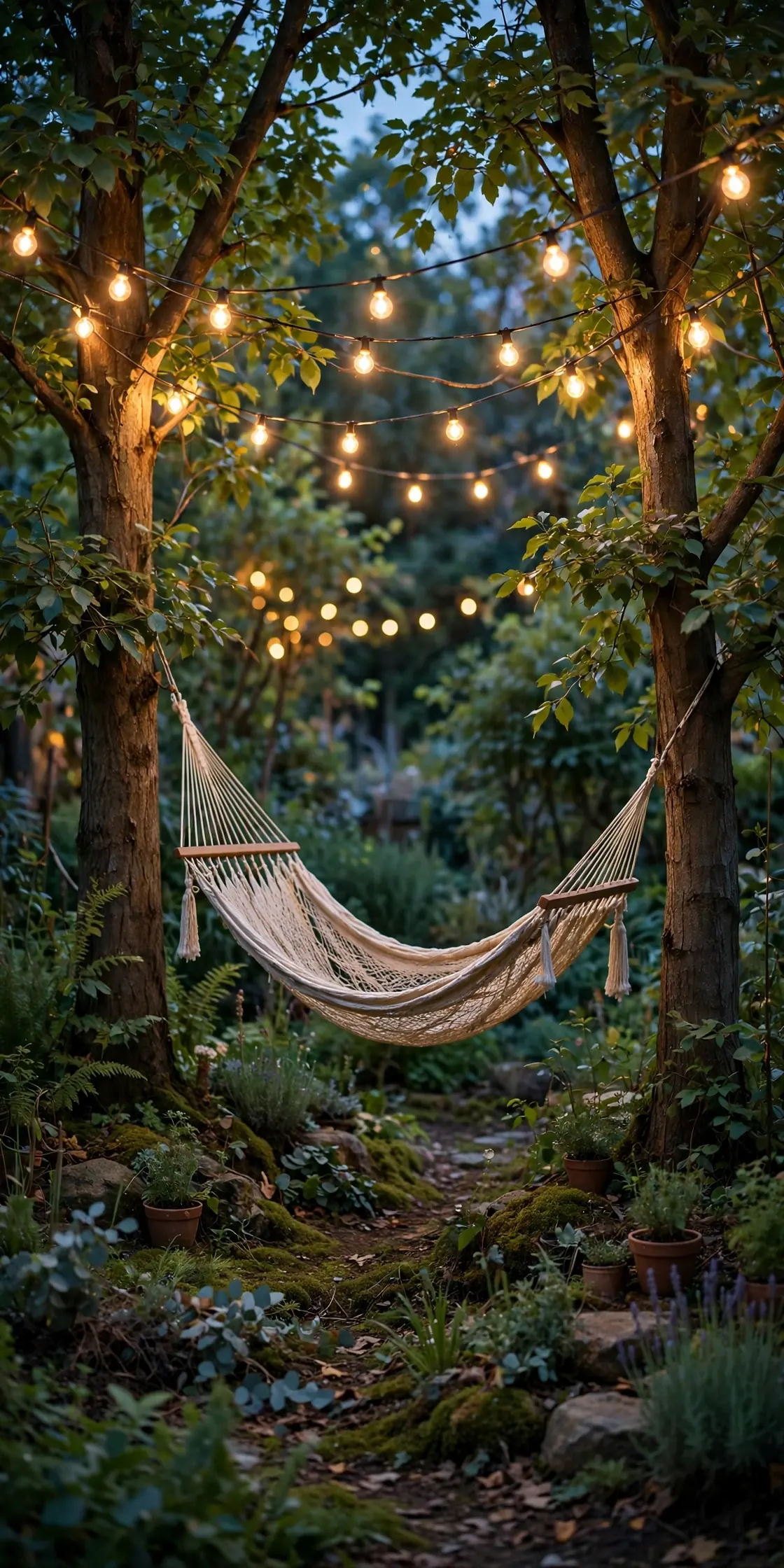
A low festoon run over a hammock turns a quiet corner into a hideaway. Best for: reading nooks. Pro tip: string lights 2 m high to sit up freely.
9. String Lights Around the Garden Arbour

String lights wrapped around an arbour frame the walkway into the garden. Best for: garden entrances. Pro tip: wind lights loosely so stems can grow through.
Paths, Trees and Uplighting
10. Solar Stake Path Lights
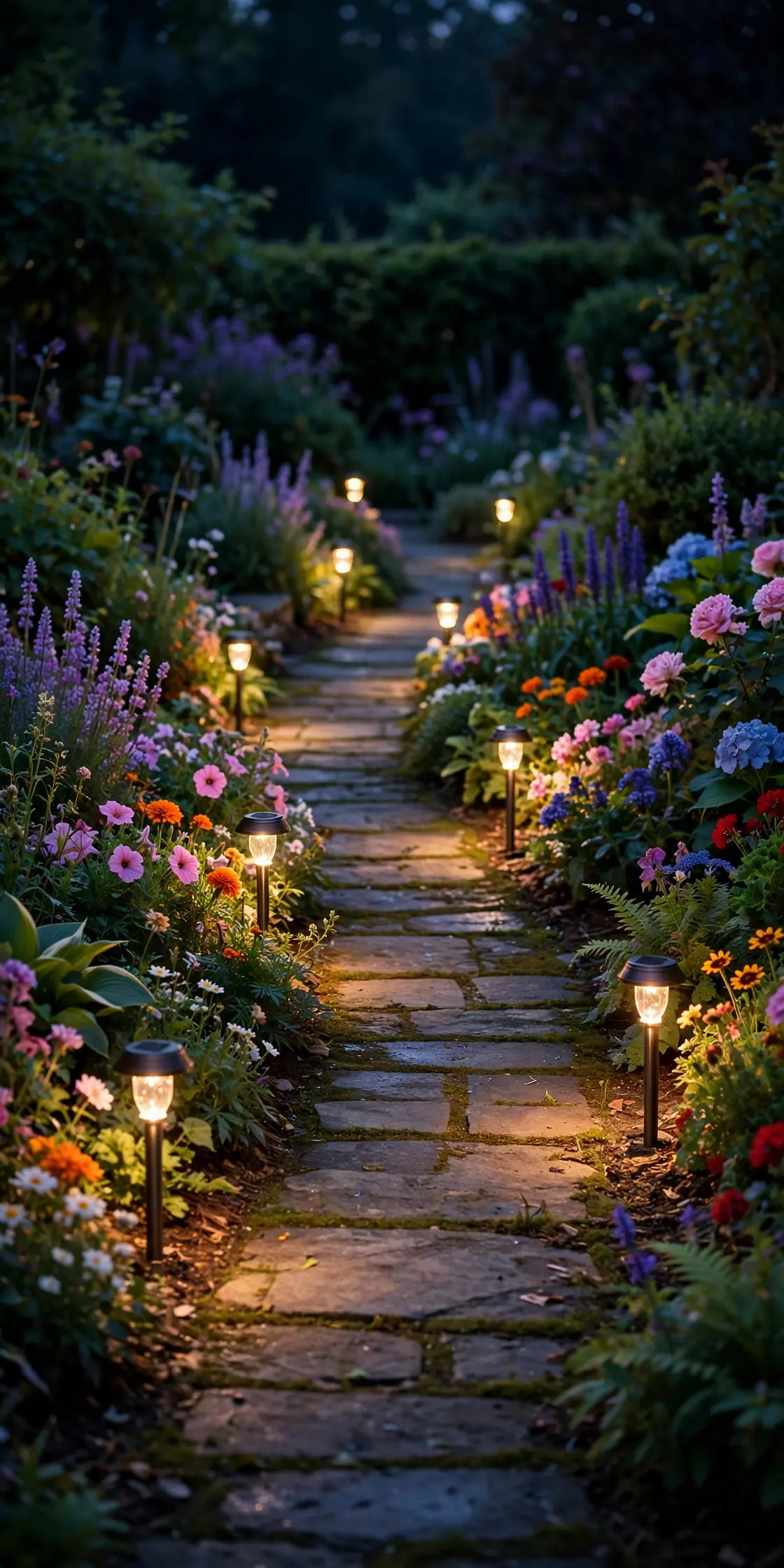
Push-in solar stakes mark the path with a gentle pool of light. Best for: winding paths. Pro tip: space stakes 1.5 m apart, staggered on both sides.
11. Low-Voltage Bollard Lights

Slim bollards give steady, low-glare light exactly where feet fall. Best for: main paths. Pro tip: choose IP44 rated bollards at 3000K.
12. Recessed Deck Step Lights

Tiny recessed lights in deck steps make every tread clear after dark. Best for: decked gardens. Pro tip: fit lights on the riser, never the tread.
13. Tree Uplighting

A ground spotlight aimed up a trunk turns a tree into a night sculpture. Best for: mature trees. Pro tip: set the spike 60 cm out, angled 30 degrees.
14. Moonlighting From High Branches

A downlight high in a tree casts soft, moon-like shadows below. Best for: lawns and seating. Pro tip: mount it 4 to 5 m up, aimed through leaves.
15. Spotlights on Feature Shrubs

One spotlight on a sculptural shrub gives the border a focal point. Best for: specimen shrubs. Pro tip: use a narrow 25-degree beam.
16. Wash Lights on a Garden Wall
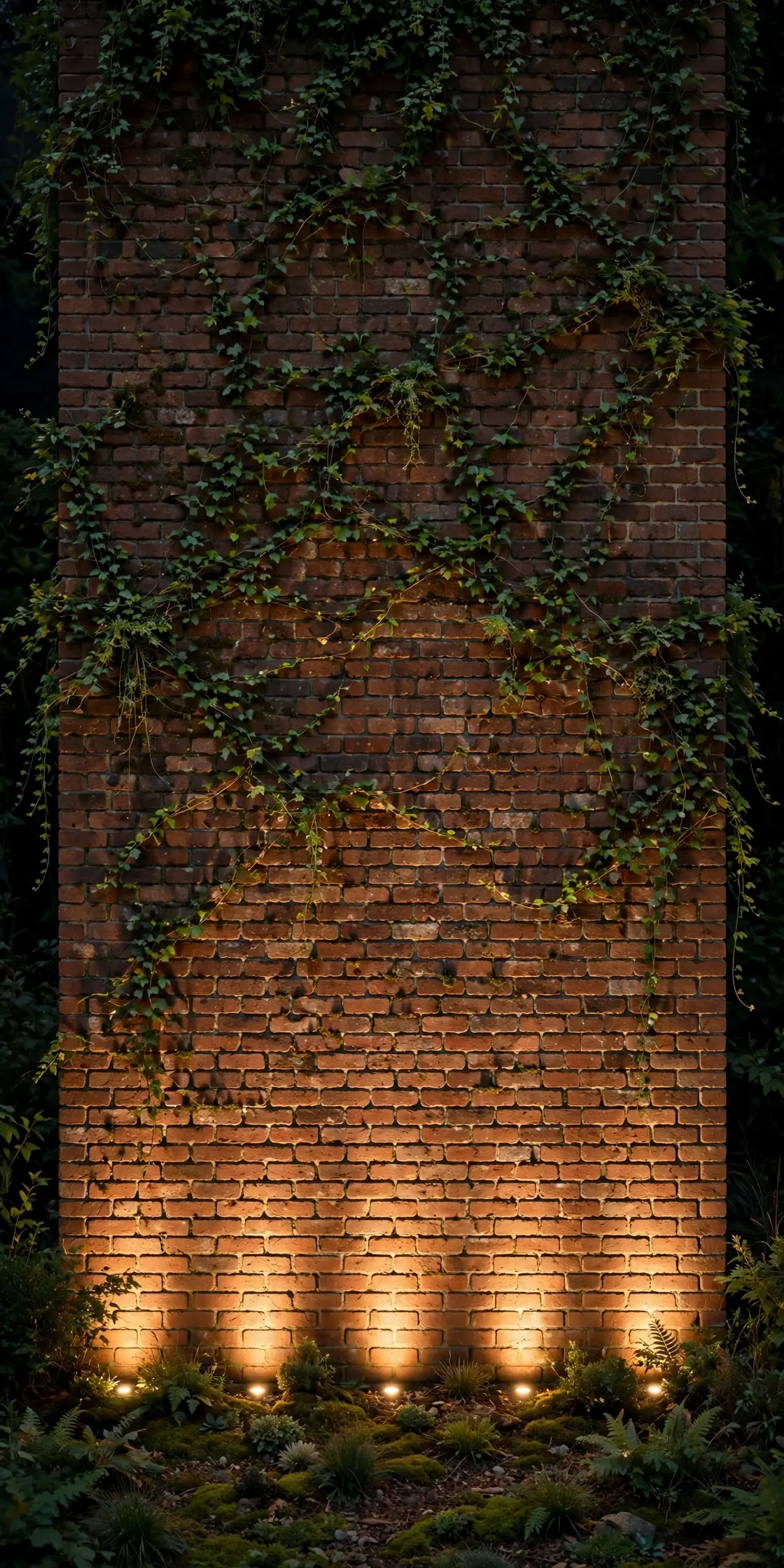
A soft wash across a brick or stone wall adds depth and texture. Best for: walled gardens. Pro tip: place lights 30 cm from the wall.
17. Silhouette Lighting Behind Grasses

Light behind tall grasses throws their shapes onto the wall. Best for: grass borders. Pro tip: hide the fitting behind the clump.
18. Canopy Downlights Over Seating
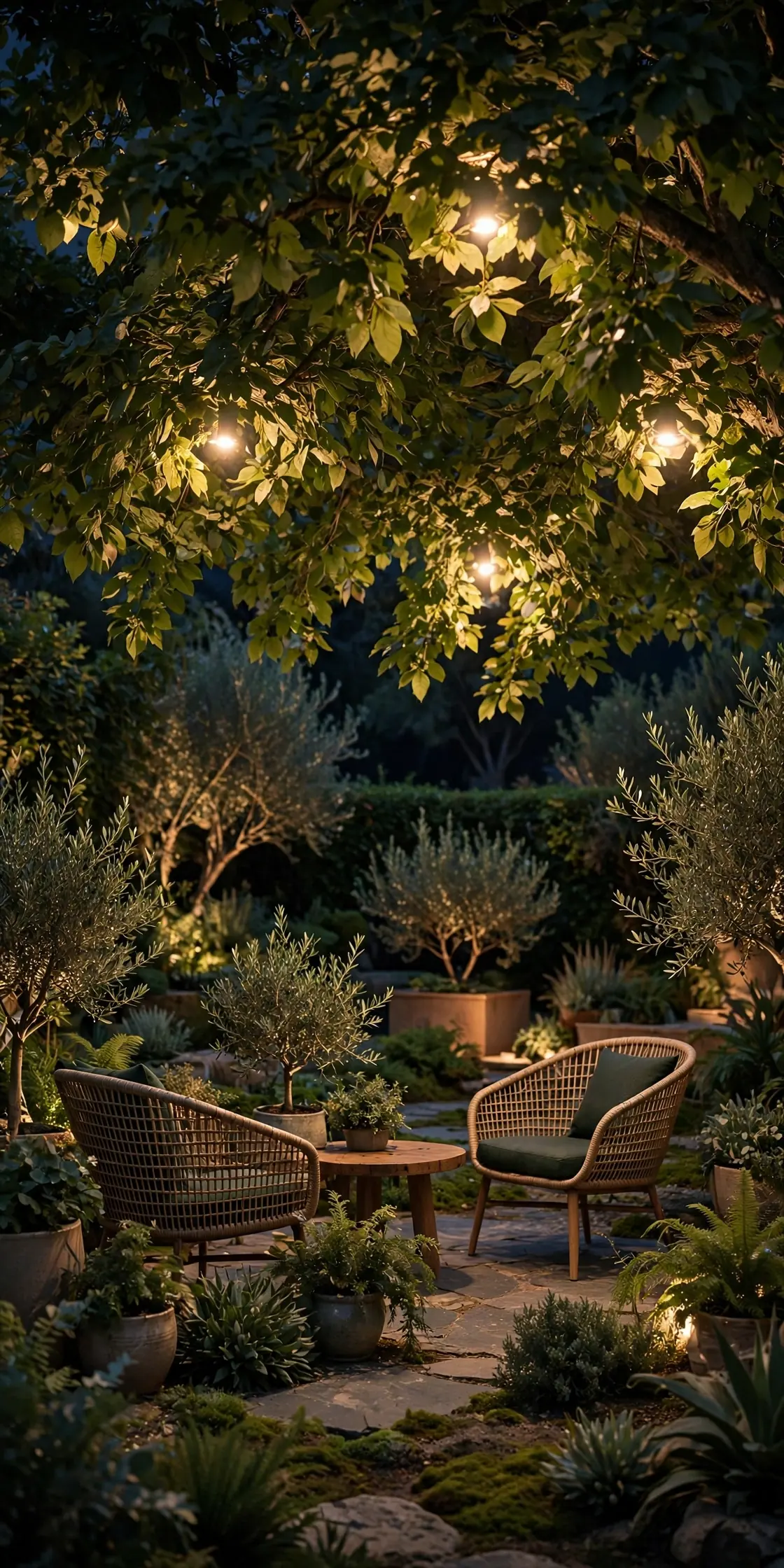
Downlights tucked in the canopy light seating below like a chandelier. Best for: shaded seating. Pro tip: use two 2700K downlights, 2 m apart.
Water Features and Lantern Glow
19. Pond Underwater Lights

Submersible lights make pond water glow softly from within. Best for: garden ponds. Pro tip: use IP68 lights aimed at the liner.
20. Floating Solar Pond Lights

Floating solar orbs drift across the pond like glowing lily pads. Best for: small ponds. Pro tip: charge in direct sun for 6 hours.
21. Waterfall Accent Lights
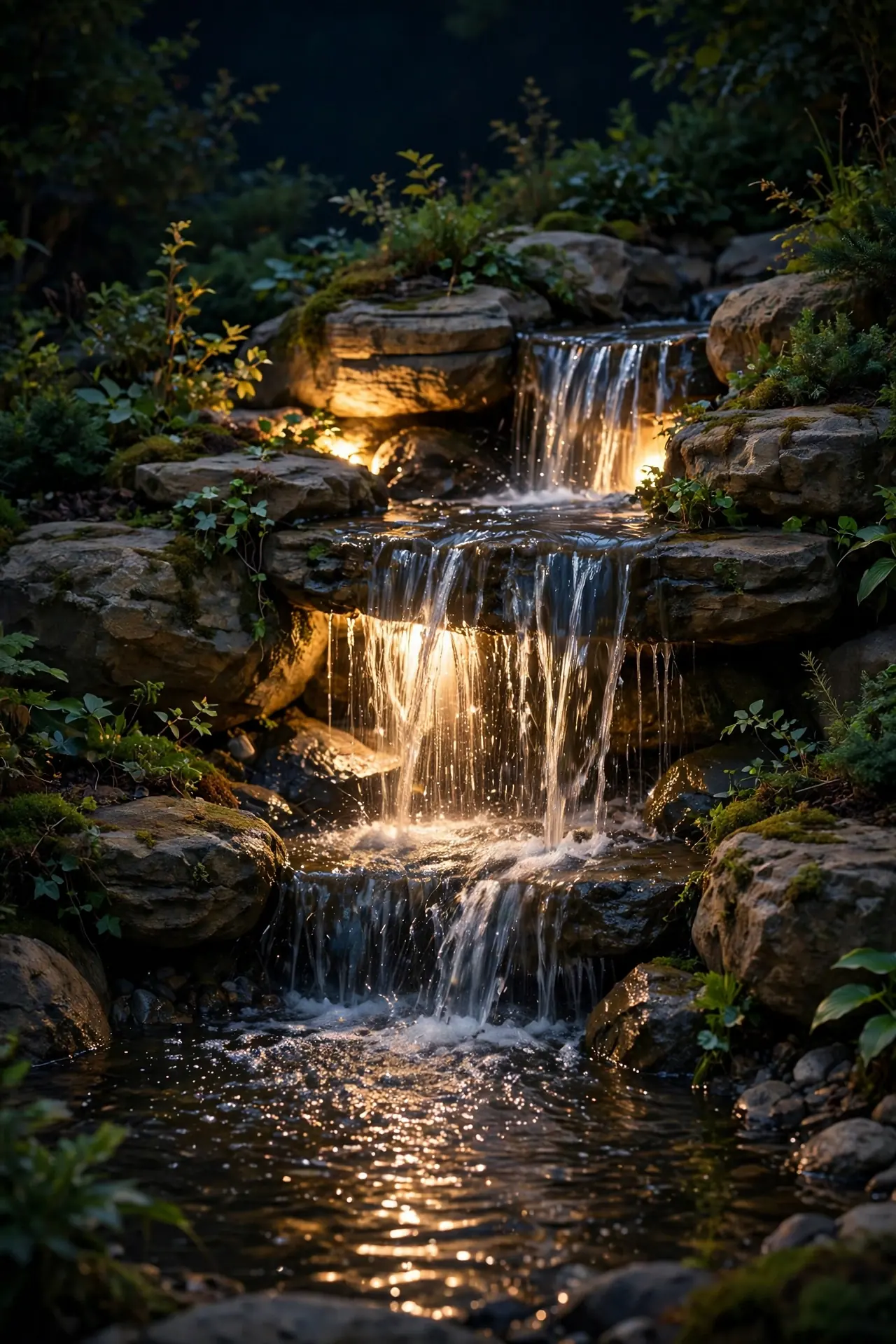
A light behind falling water makes the cascade shimmer after dark. Best for: rock waterfalls. Pro tip: place the light behind the water sheet.
22. Birdbath Glow Light

A small uplight under a birdbath turns a daytime ornament into a night feature. Best for: cottage gardens. Pro tip: use a 2700K spike light 40 cm away.
23. Lantern Cluster on the Patio Table

Three lanterns of different heights make a simple, glowing centrepiece. Best for: patio tables. Pro tip: mix heights of 20, 30 and 40 cm.
24. Hurricane Lanterns on Wall Brackets

Wall-hung hurricane lanterns give flickering, wind-proof light by the door. Best for: patio walls. Pro tip: hang brackets at 1.6 m high.
25. Candle Lanterns by the Fire Pit

Candle lanterns ringing the fire pit add a second, softer ring of light. Best for: fire pit corners. Pro tip: use LED candles so wind never blows them out.
26. Glow-in-the-Dark Planters

Planters that glow after sunset light plants from below. Best for: modern patios. Pro tip: charge them in full sun all day.
27. Illuminated Garden Orb Lights
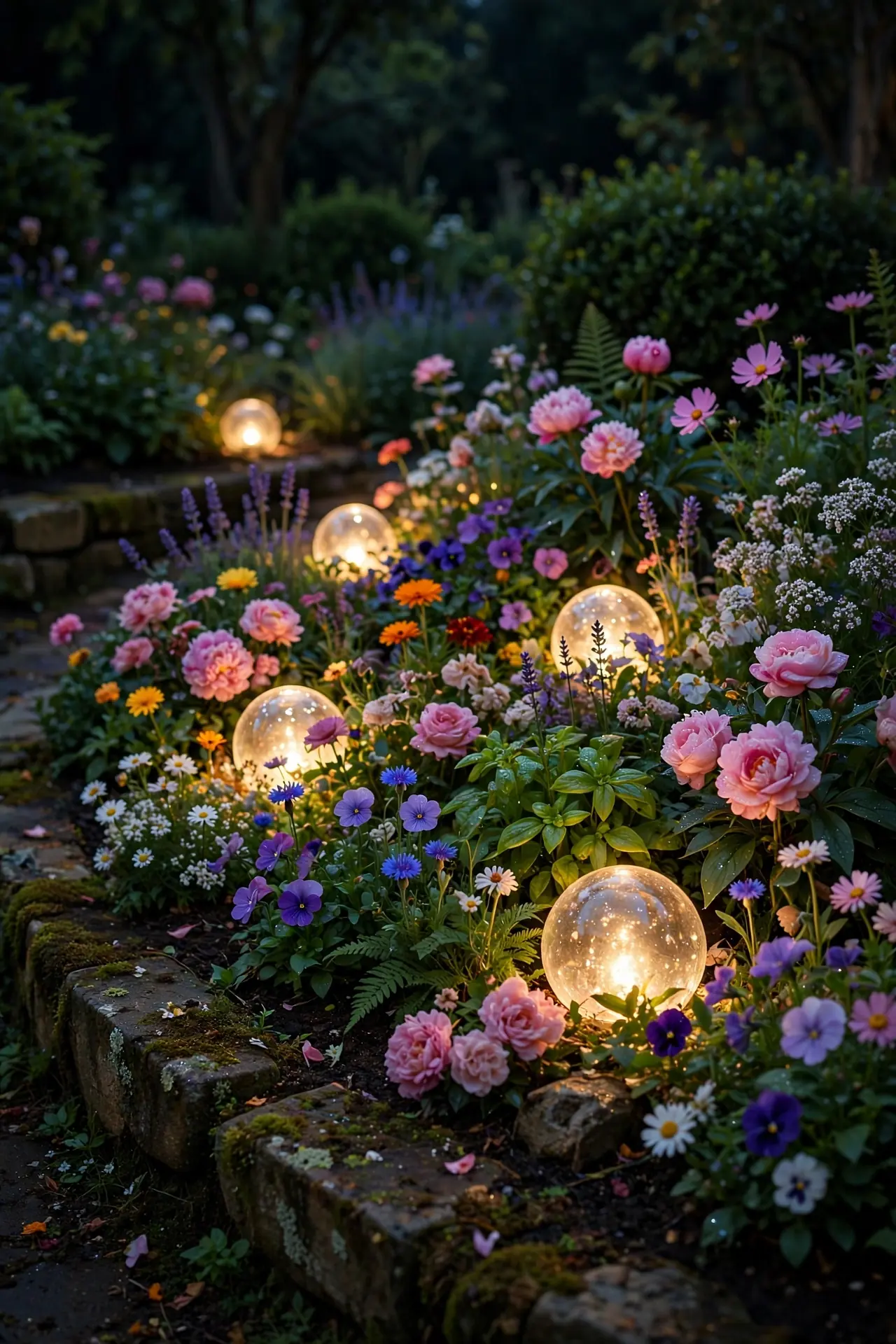
Glowing orbs nestled in beds look like fallen moons among flowers. Best for: flower borders. Pro tip: group orbs in odd numbers, 25 to 40 cm wide.
Solar, Smart and Finishing Touches
28. Solar Spike Lights in Flower Beds

Solar spikes pushed into beds light blooms from below, with zero wiring. Best for: flower beds. Pro tip: angle spikes 45 degrees toward the blooms.
29. Smart Colour-Changing Garden Lights

App-controlled lights shift from warm white to soft colour for parties. Best for: garden parties. Pro tip: keep the default at 2700K warm white.
30. Motion-Sensor Path Lights

Motion-sensor lights wake only when someone walks the path. Best for: side paths. Pro tip: set the sensor range to 5 m.
31. Solar Mushroom Lights Along the Border

Whimsical mushroom lights add a storybook glow along low borders. Best for: family gardens. Pro tip: space mushrooms 60 cm apart.
32. LED Strip Under Raised Beds

LED strips under raised bed edges float the beds above the ground. Best for: herb beds. Pro tip: use IP65 rated strips at 2700K.
33. Rope Lights Around Tree Trunks

Rope lights spiralled up trunks outline trees with a warm, even glow. Best for: avenue trees. Pro tip: wrap loosely with a 10 cm spiral gap.
34. Fairy Light Net Over Shrubs

A net of fairy lights draped over a shrub turns it into a glowing mound. Best for: rounded shrubs. Pro tip: choose a 2 by 1 m net with 100 LEDs.
35. Lantern Garland on the Garden Gate

A garland of small lanterns on the gate welcomes you into the glowing garden. Best for: garden gates. Pro tip: hang lanterns 25 cm apart with solar tea lights.
Keeping Your Garden Lights Glowing
Care keeps garden lights bright for years. Wipe solar panels monthly so they charge fully, and clear leaves from path lights each week. Swap bulbs promptly and keep spare warm white LEDs handy. Store delicate lanterns and fairy nets indoors over winter, and check low-voltage cables each spring for nicks or wear. For the wider yard, pair these ideas with our backyard landscaping ideas. Never run mains cables across a lawn — use low-voltage or solar fittings.
Frequently Asked Questions
What is the best colour temperature for garden lighting?
Warm white at 2700 to 3000K suits most gardens — it flatters green foliage, brick and timber, and feels cosy after dark. Cooler light above 4000K can look harsh and clinical outdoors, washing out flower colours. Use 2200K filament-style bulbs for a candle-like glow in lanterns, and keep all the lights in one garden close in temperature so the scheme feels calm and unified.
Are solar garden lights bright enough?
Modern solar lights are bright enough for paths, beds and accents, but not for task lighting or large trees. Their brightness depends on the panel charging in direct sun for six to eight hours, so shade cuts their output sharply. For feature trees, walls and seating areas, low-voltage mains lights give stronger, steadier light. Mix solar for decoration and low-voltage for the features that matter most.
How many lights does a garden need?
Most small gardens need 10 to 20 lights, while larger gardens need 30 or more, but the number matters less than the layers. Start with path lights for safety, add two or three accent lights for trees and features, then finish with string or fairy lights for ambience. Add lights slowly and test at night — too many lights flatten the garden, while a few well-placed ones create depth and shadow.
What IP rating do garden lights need?
Choose IP44 or higher for any light left outside — IP44 resists rain splashes from all directions, which suits paths, walls and trees. Ground and deck lights need IP65 or IP67 because water pools around them. Underwater pond lights must be IP68, fully submersible. Check the rating before buying, since a garden light with too low a rating can fail after one wet winter.
How do I light a garden without glare?
Hide the light source and light the plant, not the eye. Aim spotlights at trees and walls, never toward seating or the house. Use shields, hoods or recessed fittings, and keep bulbs low-wattage and warm. Place path lights low with the beam aimed down, and test every light from the seating area at night. If you can see a bare bulb from your chair, move or shield it.
Can garden lights stay out all winter?
Most IP44 and higher outdoor lights can stay out all winter, but solar lights charge weakly in short, cloudy days and may glow for only a few hours. Bring delicate lanterns, fairy nets and battery lights indoors, and store them dry. Check cables and connections in spring for frost damage, clean solar panels, and replace any bulbs that dimmed over winter before the evenings return.
Final Thoughts
Start small: one festoon canopy, a lit path and a single uplight on your favourite tree. That trio alone changes how your garden feels after dark. Then add lanterns, fairy lights and water glow one layer at a time, testing each at night. Your garden needs warm, well-placed light — not dozens of fittings — to let the planting shine.
